
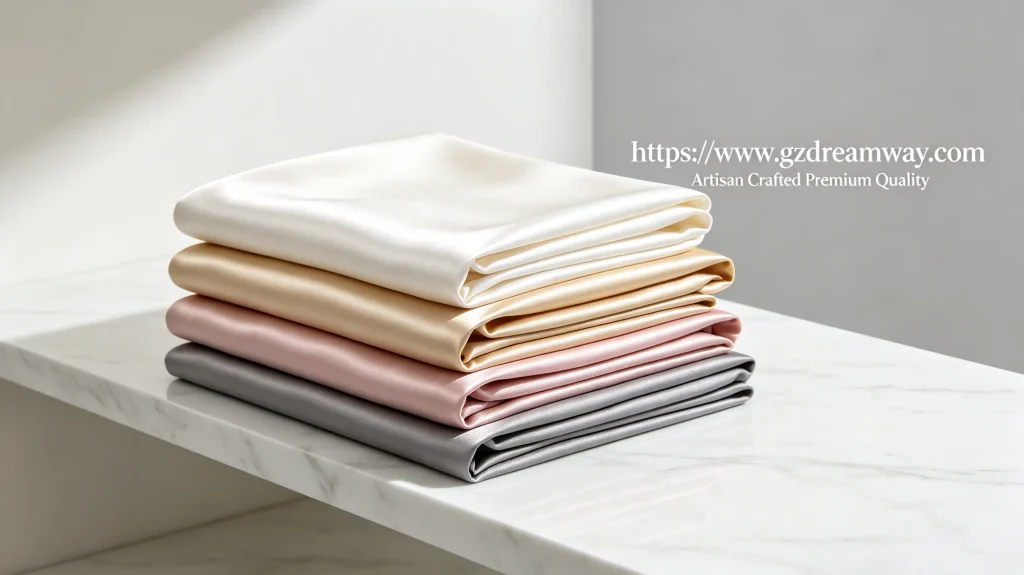
Imagine your customers waking up feeling refreshed, knowing their skin has only touched the purest, safest silk on earth. That confidence starts with OEKO-TEX Standard 100 certification—the gold standard that separates truly safe silk sleep accessories from those that merely look luxurious. If you are sourcing silk eyemasks or pillowcases for your brand, understanding this certification is not optional; it is the foundation of every responsible, market-ready product line.
In the competitive landscape of wholesale silk sleep products, beauty and quality are baseline expectations. What truly differentiates a premium supplier from a budget manufacturer is the invisible layer of safety assurance that OEKO-TEX Standard 100 provides. This independent, scientifically rigorous testing protocol evaluates every thread, every dye molecule, and every finishing agent in your silk products before they ever reach a consumer’s bedside.
Explore Our Silk Knowledge Hub
Deep-dive guides on mulberry silk sourcing, quality standards, and manufacturing insights for silk professionals.
What Exactly Is OEKO-TEX Standard 100?
OEKO-TEX Standard 100 is a comprehensive product certification system developed by the International OEKO-TEX Association, a network of 17 independent research and testing institutes across Europe and Japan. Unlike generic quality claims, this certification applies to every component of a finished textile product. For silk eyemasks and silk pillowcases, this means the outer silk fabric, the inner filling (in the case of padded eye masks), the elastic headband, the stitching thread, the zipper, and even the label ink all undergo standardized laboratory testing.
The testing criteria are updated annually and encompass over 100 harmful substances, including:
- Forbidden and regulated carcinogenic colorants and aromatic amines
- Formaldehyde and pesticide residues
- Heavy metals (lead, cadmium, mercury, and more)
- Phthalates and organotin compounds
- PFAS (per- and polyfluoroalkyl substances) and flame retardants
- pH value, colorfastness, and odor thresholds

The certification follows a four-tier product classification system:
| Product Class | Description | Testing Intensity |
|---|---|---|
| Class I | Products for infants (under 36 months) | Most stringent — lowest permitted limits across all substance categories |
| Class II | Articles worn close to the skin (e.g., silk pillowcases, sleepwear) | High stringency — direct skin contact products |
| Class III | Articles not worn close to the skin (e.g., lining fabrics) | Moderate stringency |
| Class IV | Home textiles and decorative materials | Standard stringency |
Most silk eyemasks and pillowcases fall into Class II, as they are used in direct, prolonged contact with the skin during sleep—often 7–8 hours every night. This proximity makes chemical safety paramount, particularly for consumers with sensitive skin, allergies, or dermatological conditions.
Why Silk Eyemasks and Pillowcases Carry Special Certification Weight
Silk is uniquely demanding when it comes to chemical safety for several compelling reasons. First, the mulberry silk fabric used in premium sleep accessories is a protein-based natural fiber with an exceptionally smooth surface. While this smoothness benefits skin and hair, it also means that any residual chemicals from processing adhere more visibly and transfer more readily to the skin during the extended contact hours of sleep.
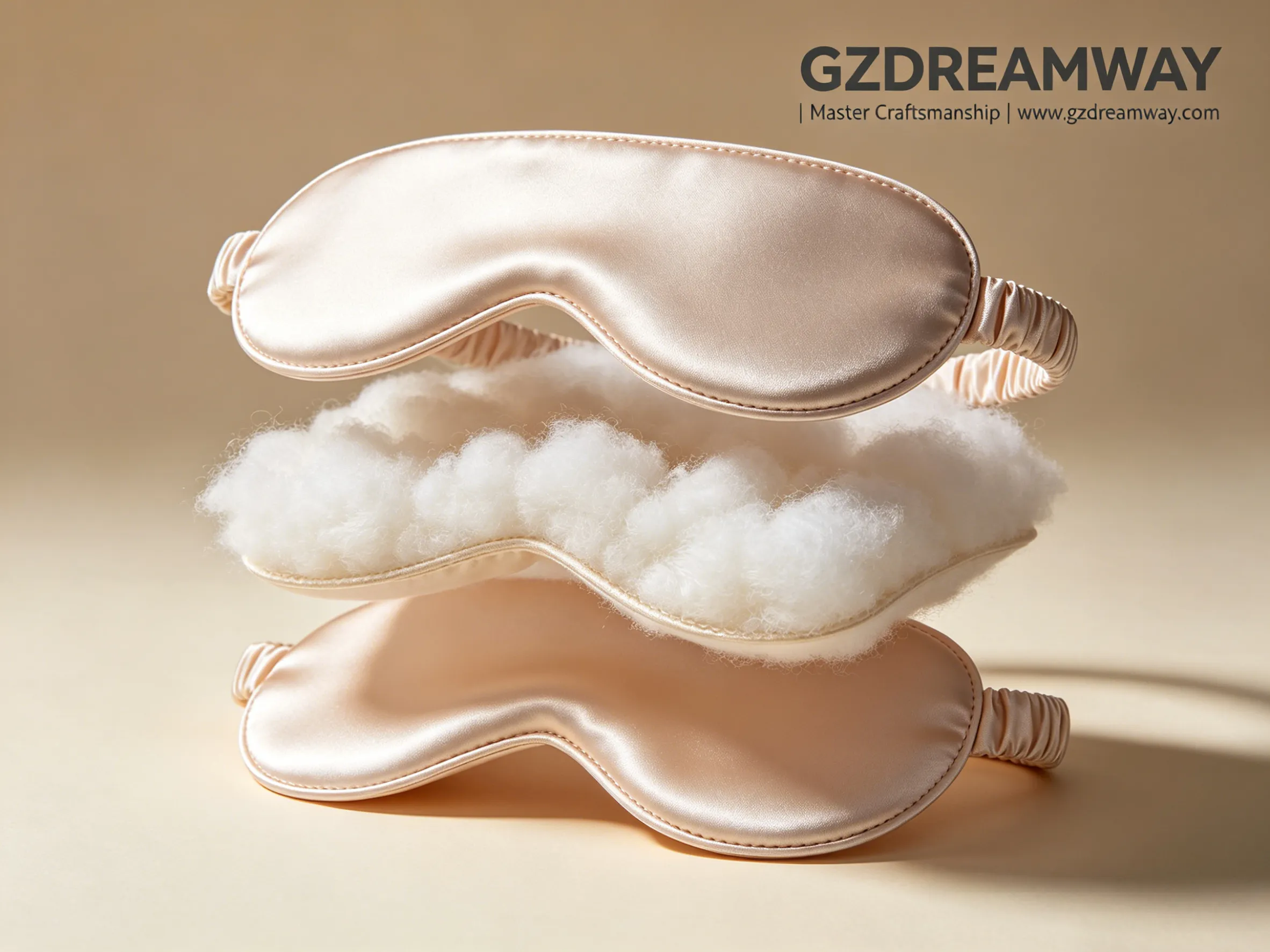
Second, silk products are frequently marketed to health-conscious and beauty-aware demographics—precisely the consumers who are most likely to research product safety, recognize certification labels, and pay premium prices for verified purity. When a customer sees the OEKO-TEX Standard 100 label on a silk eye mask, they are making a subconscious quality association that goes far beyond aesthetics.
Third, the global regulatory landscape is tightening. The European Union’s REACH regulation, California’s Proposition 65, and analogous frameworks in the UK, Canada, and Australia are all raising the bar for textile chemical safety. Products bearing OEKO-TEX Standard 100 certification are already compliant with the most demanding of these regulations, dramatically reducing legal and reputational risk for brands selling internationally.
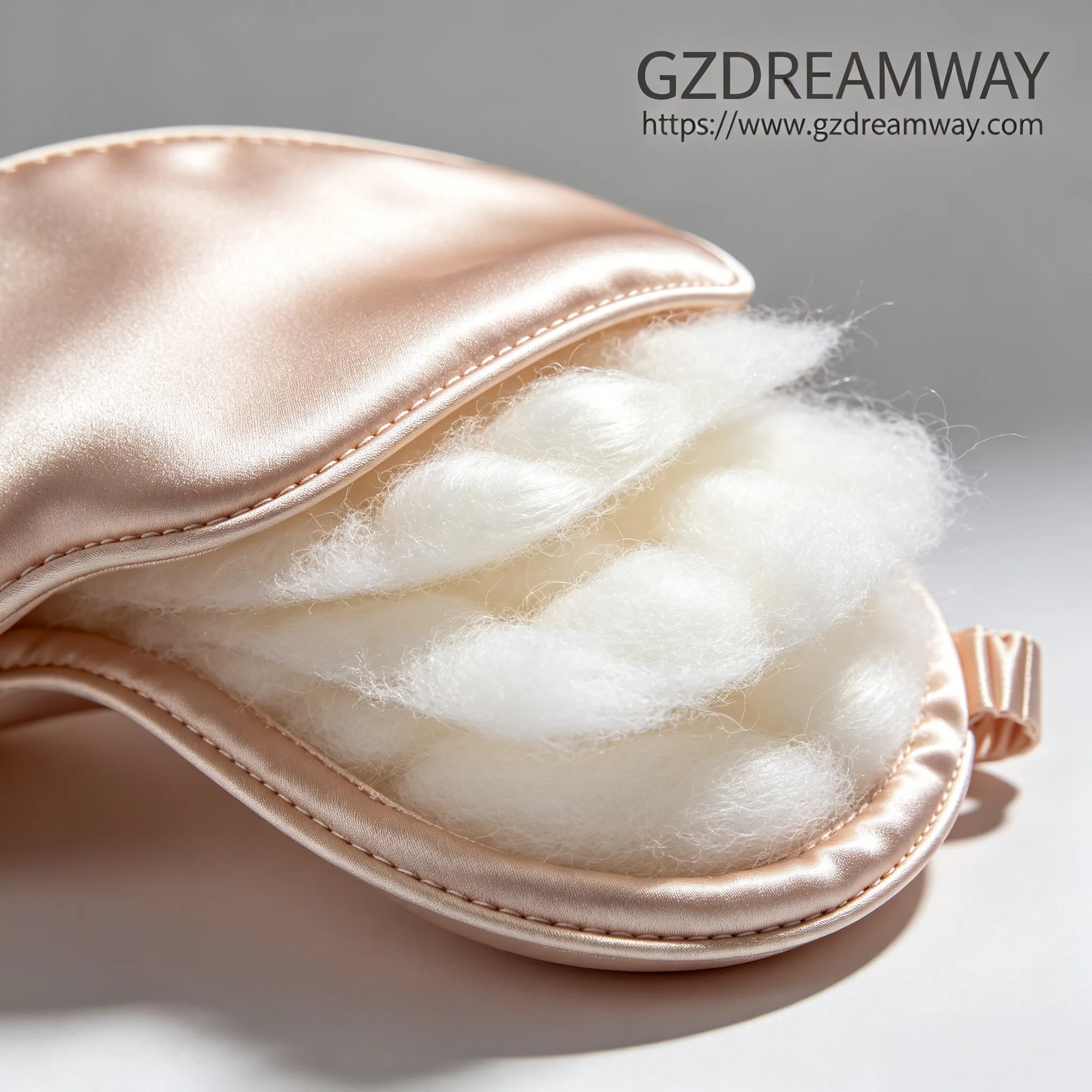
Shop Premium Silk Sleep Essentials
Discover our curated collection of OEKO-TEX certified silk pillowcases, eyemasks, and accessories available for wholesale and custom orders.
The OEKO-TEX Certification Process: What Every Buyer Should Know
Understanding the OEKO-TEX certification workflow empowers procurement managers and brand owners to evaluate suppliers with confidence. Here is how the process unfolds when you source from a certified manufacturer like GzDreamway:
Step 1 — Application and Product Classification
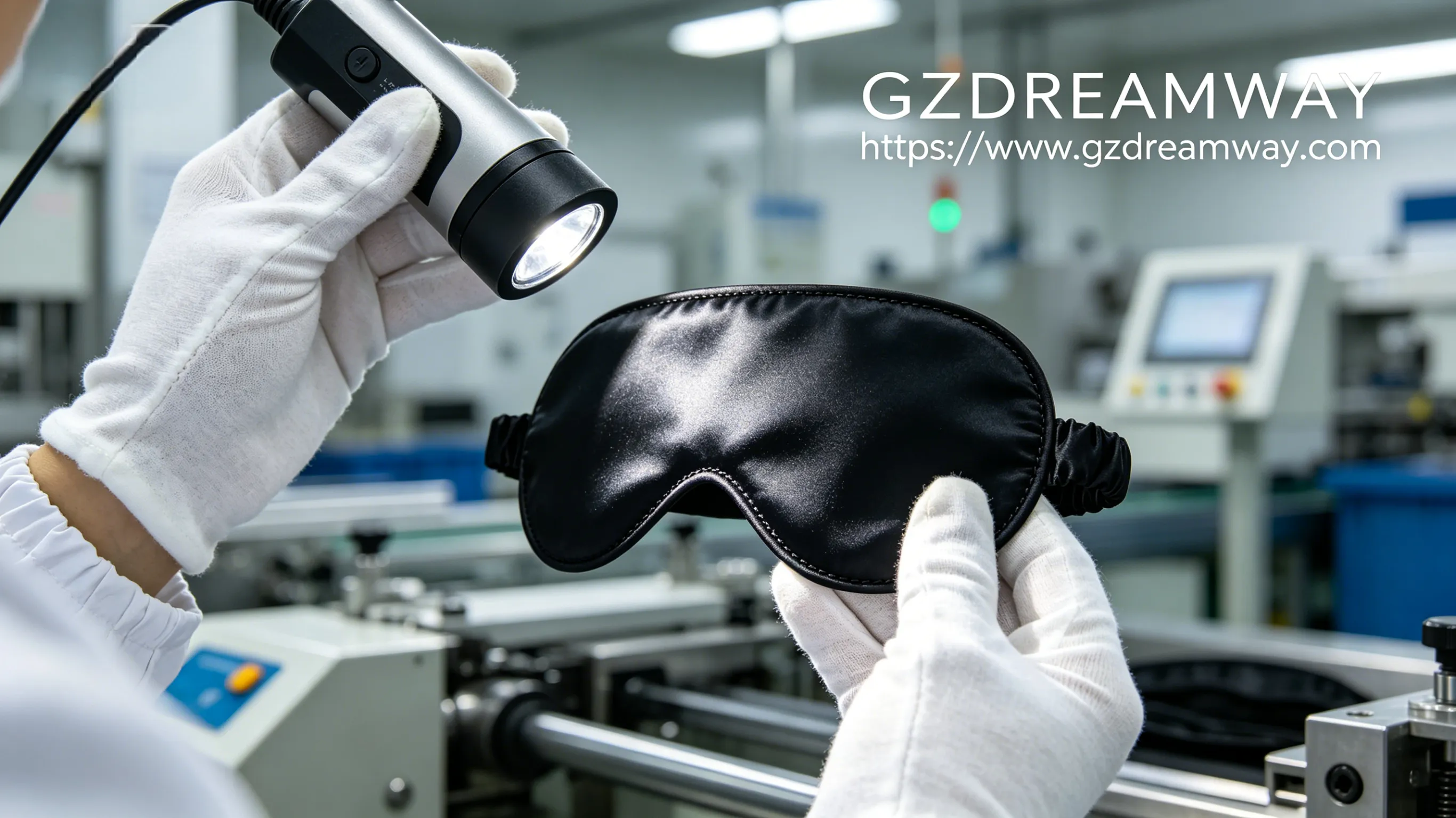
The process begins when the manufacturer submits an application to an OEKO-TEX member institute, specifying every component of the silk product. For a mulberry silk eye mask, this includes the 22mm mulberry silk outer shell, the silk-cotton filling layer, the elastic headband, the stitching thread, and any decorative elements. The institute classifies the product and determines the relevant testing criteria.
Step 2 — Laboratory Testing of All Components
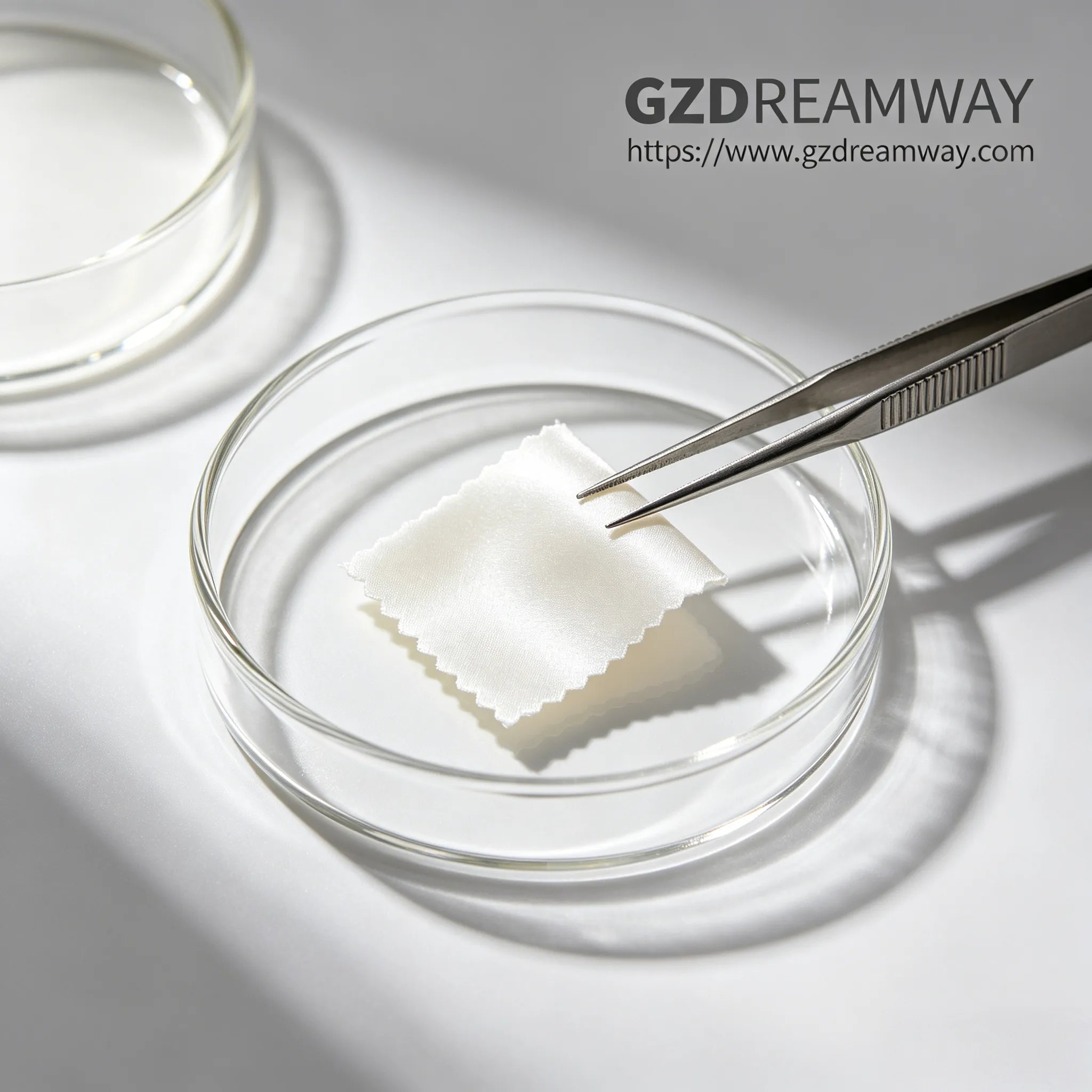
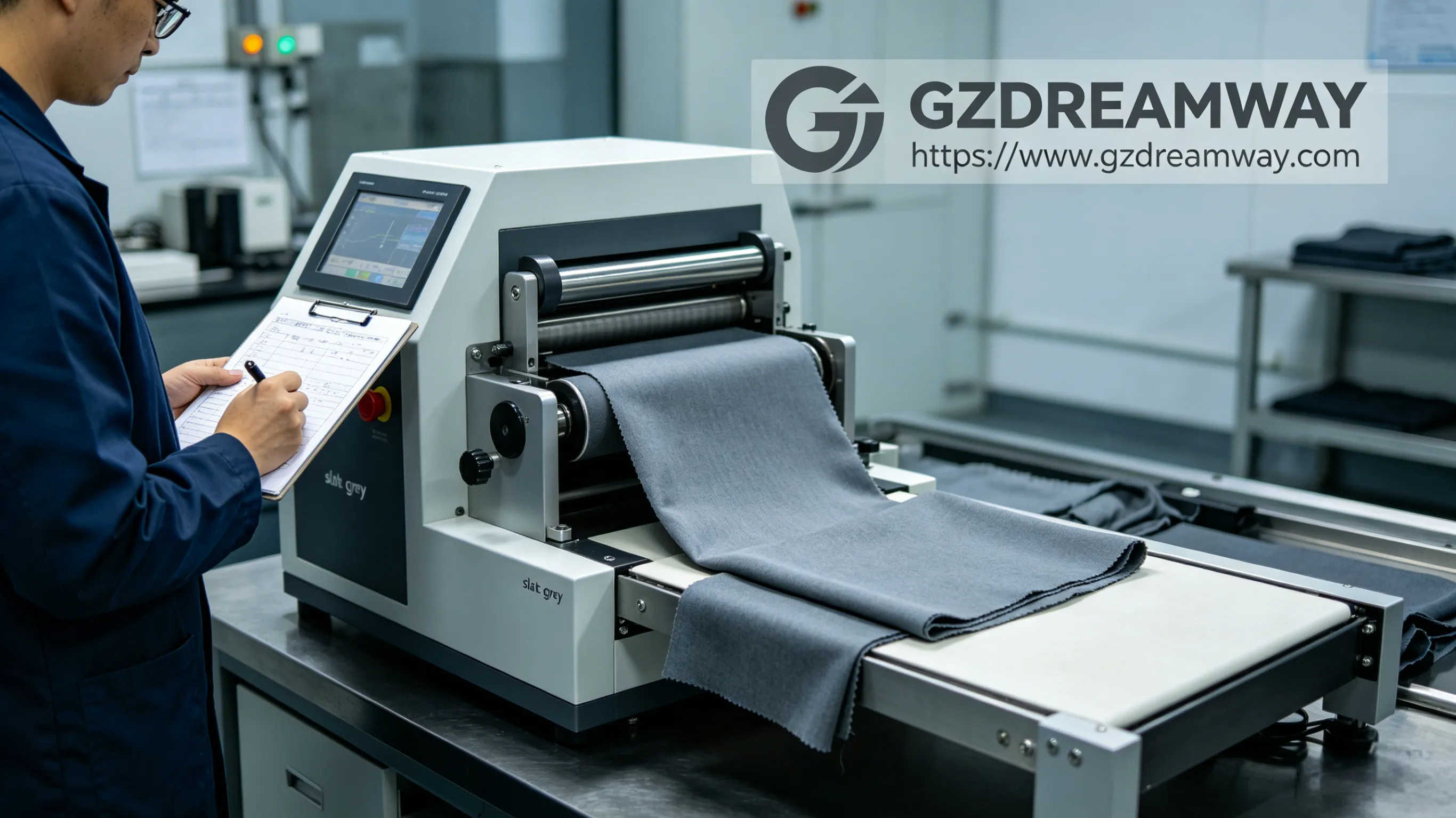
Every component is tested independently in an OEKO-TEX accredited laboratory. Testing follows standardized methods for each substance class. For example, colorants are analyzed for banned aromatic amines using GC-MS (Gas Chromatography-Mass Spectrometry), while heavy metals are quantified using ICP-MS (Inductively Coupled Plasma Mass Spectrometry). The silk fabric is tested for pesticide residues, formaldehyde content, and pH value as primary concerns for skin-contact products.
Step 3 — Quality Inspection of Manufacturing Facility
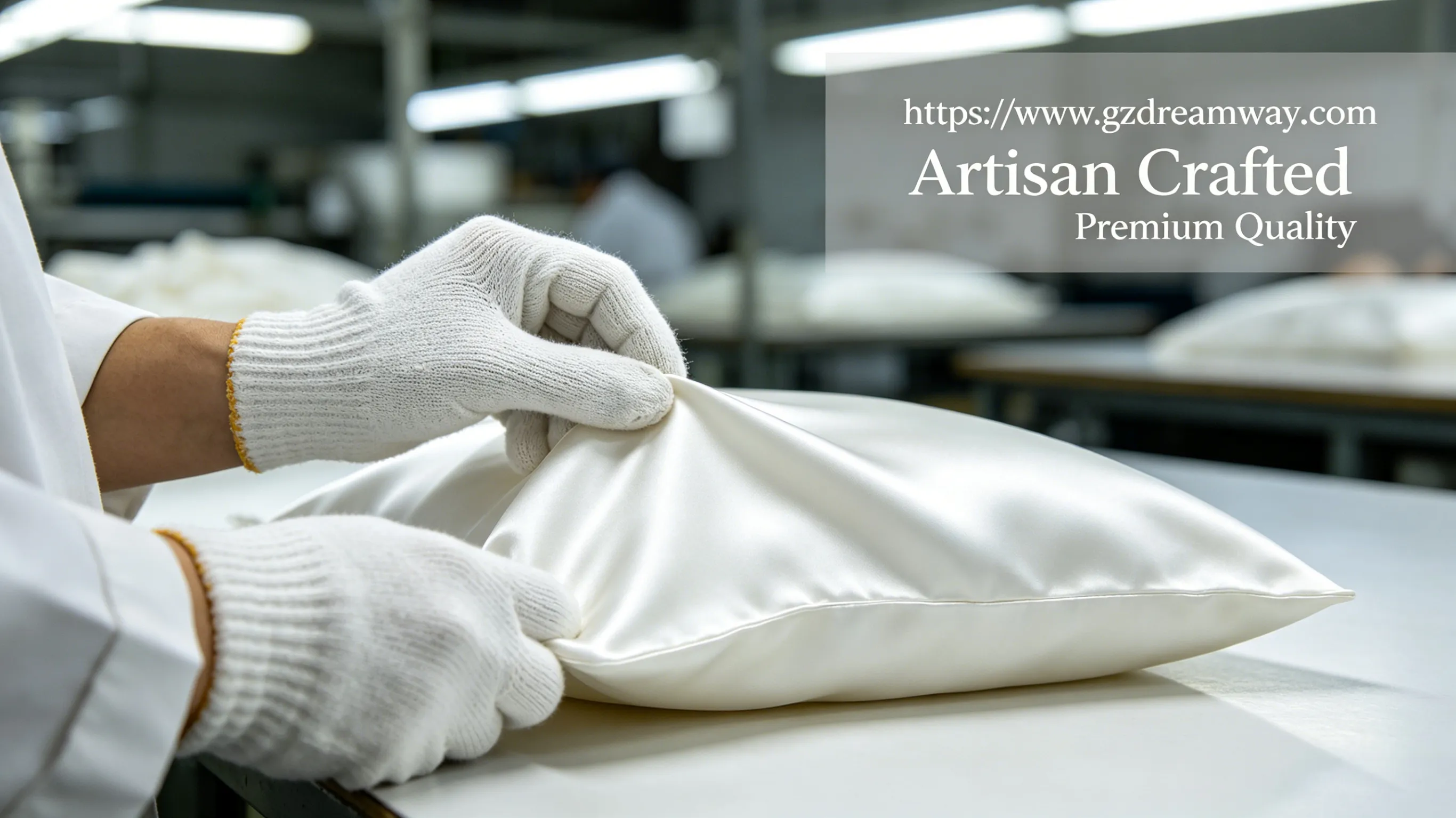
OEKO-TEX requires annual on-site audits of the manufacturing facility. These inspections verify that production processes maintain the same chemical safety standards as the tested samples. For silk product factories, this includes monitoring dye bath chemistry, ensuring proper rinsing procedures, and verifying that raw silk materials are sourced from approved suppliers.
Step 4 — Certification Issuance and Ongoing Surveillance
Upon successful testing and factory audit, the OEKO-TEX certificate is issued with a unique certification number (e.g., “OWEKO-TEX Standard 100 — XX 0000000”). The certificate is valid for 12 months, after which renewal requires re-testing and re-audit. This annual cycle ensures that every certified product on the market maintains its safety standard continuously.
“OEKO-TEX certification is not a one-time checkbox. It is a living commitment to chemical safety that suppliers and brands must renew together, every single year.”
Key Benefits for B2B Buyers and Brands
For businesses sourcing silk sleep accessories for wholesale, private label, or custom brand programs, OEKO-TEX Standard 100 certification delivers measurable commercial value that extends well beyond regulatory compliance.
Market Access
Major European retailers, North American department stores, and premium e-commerce platforms increasingly require OEKO-TEX certification as a baseline procurement condition. Without it, your product simply cannot reach certain shelves or marketplaces.
Consumer Confidence
Research consistently shows that consumers associate the OEKO-TEX label with trust and quality. In a market flooded with counterfeit “silk” products (many of which are actually polyester satin), the certification provides instant, credible differentiation.
Risk Mitigation
Product recalls due to chemical safety issues are catastrophic for brand reputation and financially devastating. OEKO-TEX certification shifts the testing burden to independent laboratories, dramatically reducing the risk of non-compliance.
Premium Positioning
Certified silk products command higher price points and stronger margins. The label justifies a 20–40% price premium over non-certified alternatives in the eyes of quality-focused consumers and retail buyers.
Comprehensive Testing Guide for Wholesale Silk Products
Learn how to verify silk quality, authenticate certifications, and conduct your own incoming quality checks for bulk silk orders.
OEKO-TEX vs. Other Silk Certifications: A Comparison
The textile certification landscape includes several standards, and it is important to understand which ones matter most for silk eyemasks and pillowcases:
| Certification | Focus | Relevance to Silk Eyemasks & Pillowcases | Testing Scope |
|---|---|---|---|
| OEKO-TEX Standard 100 | Chemical safety of all product components | Essential — direct skin contact products | 100+ harmful substances |
| OEKO-TEX Made in Green | Sustainable production + chemical safety | Valuable add-on for eco-conscious brands | Supply chain + chemical safety |
| GOTS (Global Organic Textile Standard) | Organic fiber content | Relevant only for organic-labeled silk | Organic farming + processing |
| Bluesign | Environmental impact of manufacturing | Secondary — factory-level environmental standard | Chemicals, water, energy, emissions |
| ISO 9001 | Quality management systems | Complementary — operational excellence | Process and documentation |
For most brands specializing in silk sleep accessories, OEKO-TEX Standard 100 is the non-negotiable foundation. Additional certifications like Made in Green or GOTS can enhance your marketing story but should never replace the core chemical safety certification.
Common Chemical Risks in Non-Certified Silk Products
Understanding what OEKO-TEX testing guards against helps procurement teams articulate why this certification is worth the investment. Here are the primary chemical concerns that certified testing eliminates:
Formaldehyde Resin Finishes
Some silk manufacturers use formaldehyde-based resins to improve wrinkle resistance and dimensional stability. While effective, these finishes can release formaldehyde over time, causing skin irritation, allergic reactions, and respiratory issues with prolonged exposure—particularly concerning for products worn on the face for hours.
Azo Colorants and Carcinogenic Amines
Azo dyes are widely used in textile coloring, but certain azo compounds can break down into carcinogenic aromatic amines when metabolized by skin bacteria or through perspiration. OEKO-TEX testing specifically screens for all 24 banned azo colorants regulated under REACH.
Pesticide Residues in Raw Silk
Mulberry silk is produced by silkworms fed exclusively on mulberry leaves. If those leaves are treated with pesticides, trace residues can persist in the raw silk fiber. OEKO-TEX testing for Class II products includes comprehensive pesticide screening, ensuring that the raw material itself is as pure as the finished fabric.
Heavy Metal Contamination
Metal-based mordants and catalysts used in silk dyeing can introduce heavy metals such as lead, cadmium, chromium, and mercury into the fabric. These substances accumulate in the body over time and are linked to neurological, developmental, and reproductive health concerns.
Silk vs. Bamboo: Which Is Better for Sleep Accessories?
A data-driven comparison of silk and bamboo fabric properties, chemical processing, skin benefits, and sustainability for sleep product brands.
How to Verify Your Supplier’s OEKO-TEX Certificate
A verbal claim of certification is not enough. Sophisticated buyers verify certificates independently through the official OEKO-TEX database. Here is a practical verification workflow:
- Request the supplier’s OEKO-TEX certificate PDF, which includes the unique certification number.
- Visit the OEKO-TEX public database (available at oeko-tex.com) and search by the certification number.
- Confirm that the certified products listed match exactly what you are purchasing—fabric weight, product type, and component materials.
- Check the certificate validity date to ensure it has not expired.
- For ongoing orders, request updated test reports with each production batch, as formulations can change between certification cycles.
At GzDreamway, every silk eye mask and pillowcase product is backed by current OEKO-TEX Standard 100 certification. Our certificates are publicly verifiable and cover all product classes relevant to your order.
Sourcing OEKO-TEX Certified Silk Products: MOQ and Customization Options
One of the most common concerns for emerging brands and boutique retailers is the minimum order quantity (MOQ) for custom silk sleep accessories. At GzDreamway, we understand that not every brand is ready to commit to thousands of units from day one. We offer flexible MOQ starting at 50 pieces per color per style, making premium OEKO-TEX certified silk products accessible to brands at every stage of growth.
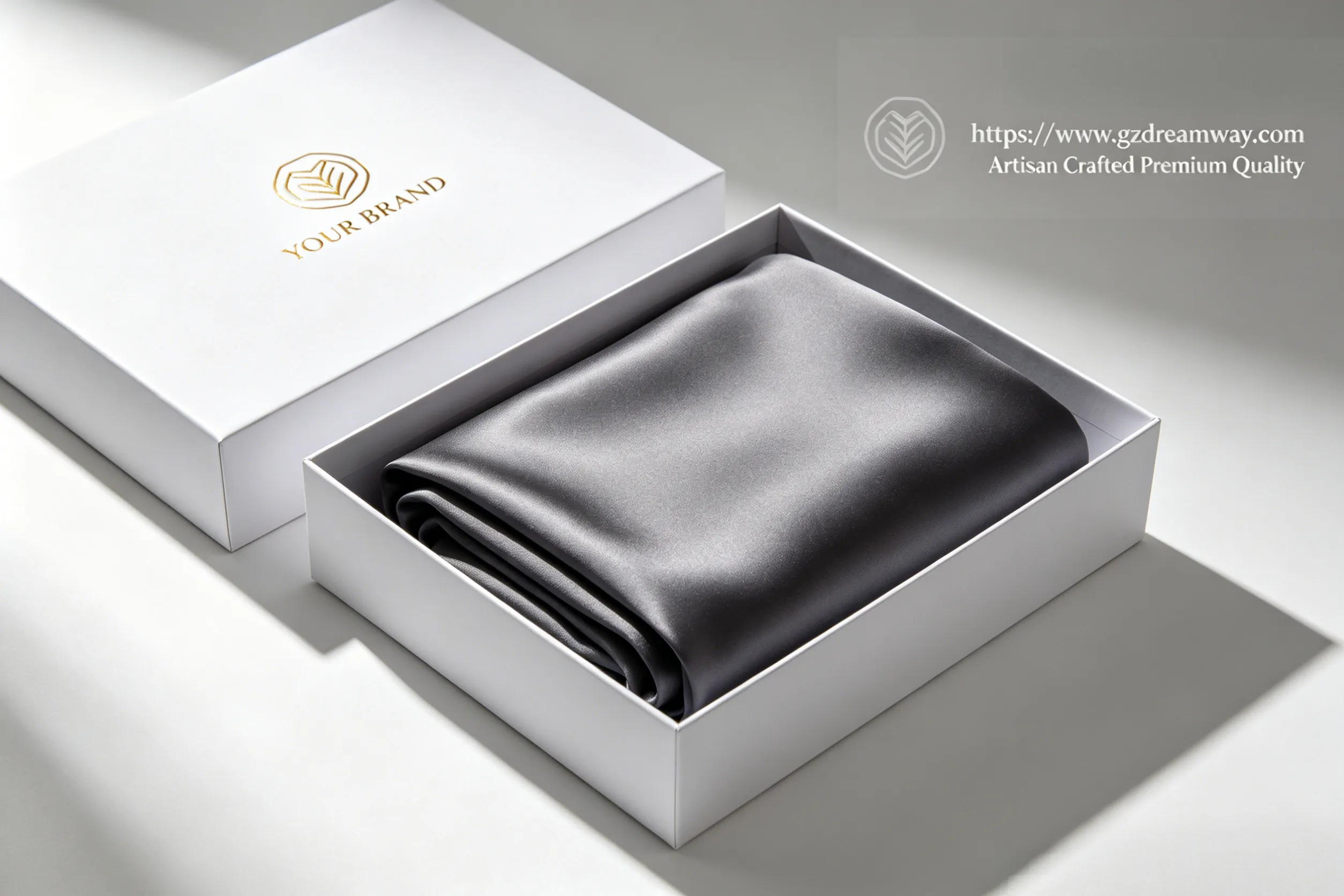
Our customization capabilities include:
- Brand labeling — Custom woven labels, printed tags, and hang tags with your brand identity
- Color matching — Pantone color matching for bespoke silk hues with MOQ 50+ per color
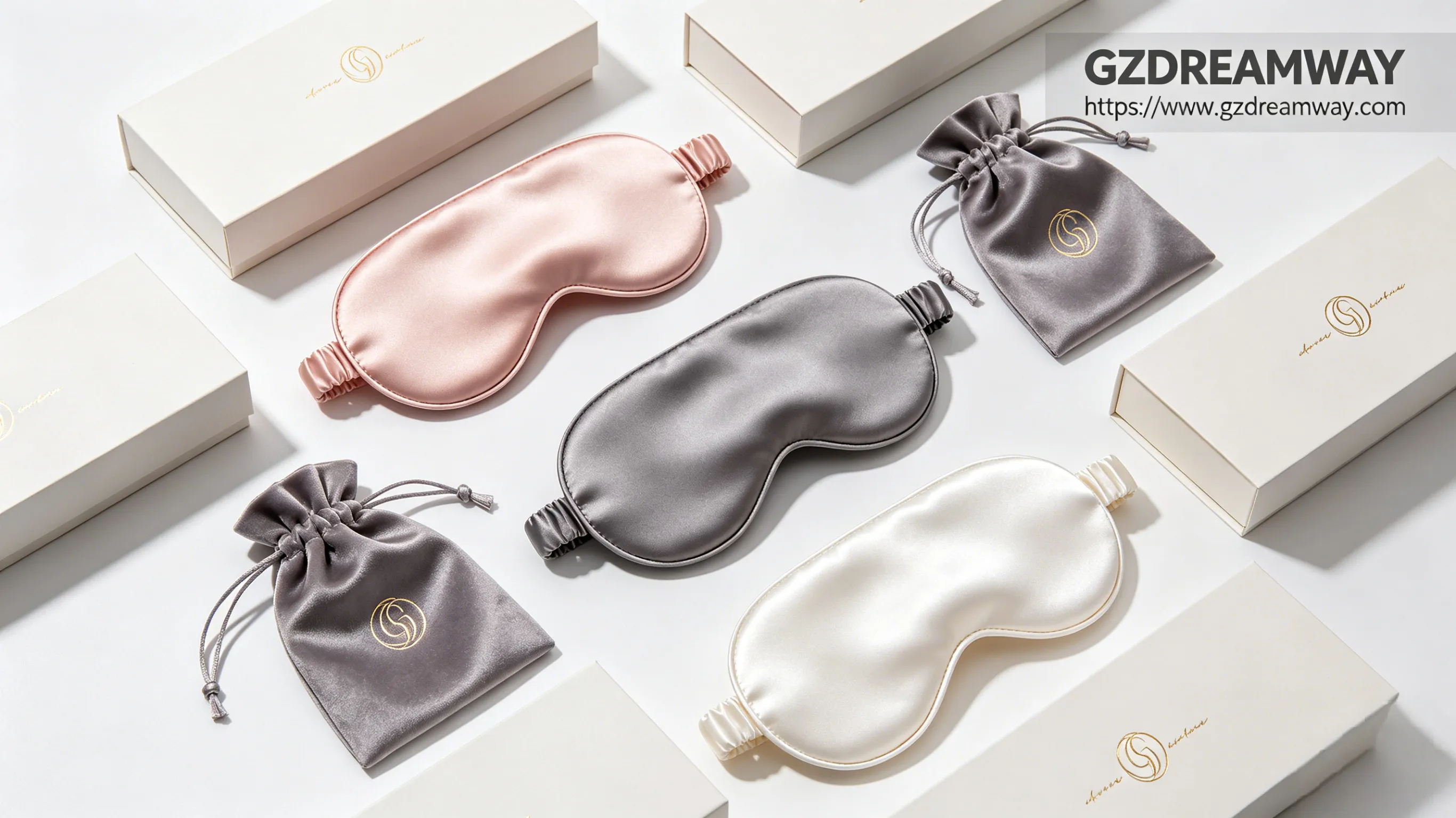
- Packaging design — From poly bags to premium magnetic closure gift boxes with gold foil stamping
- Logo printing — Screen printing, digital printing, and embroidery for silk products
- Product dimensions — Custom pillowcase sizes and eye mask shapes to fit your brand’s specifications
- Silk weight selection — 19mm, 22mm, or 25mm mulberry silk, each with different drape, weight, and price points
Private Label Silk Accessories: Low MOQ Wholesale Program
Everything you need to know about launching your own branded silk product line with MOQ as low as 50 pieces, from design to delivery.
OEKO-TEX and Silk Quality: Why 22 Momme Is the Industry Standard
Alongside chemical safety, fabric quality defines the sensory experience of silk sleep accessories. In the silk industry, momme (mm) is the unit of measurement for silk fabric weight. For premium silk eyemasks and pillowcases, 22 momme mulberry silk has emerged as the industry standard—a perfect balance of durability, sheen, and breathability.
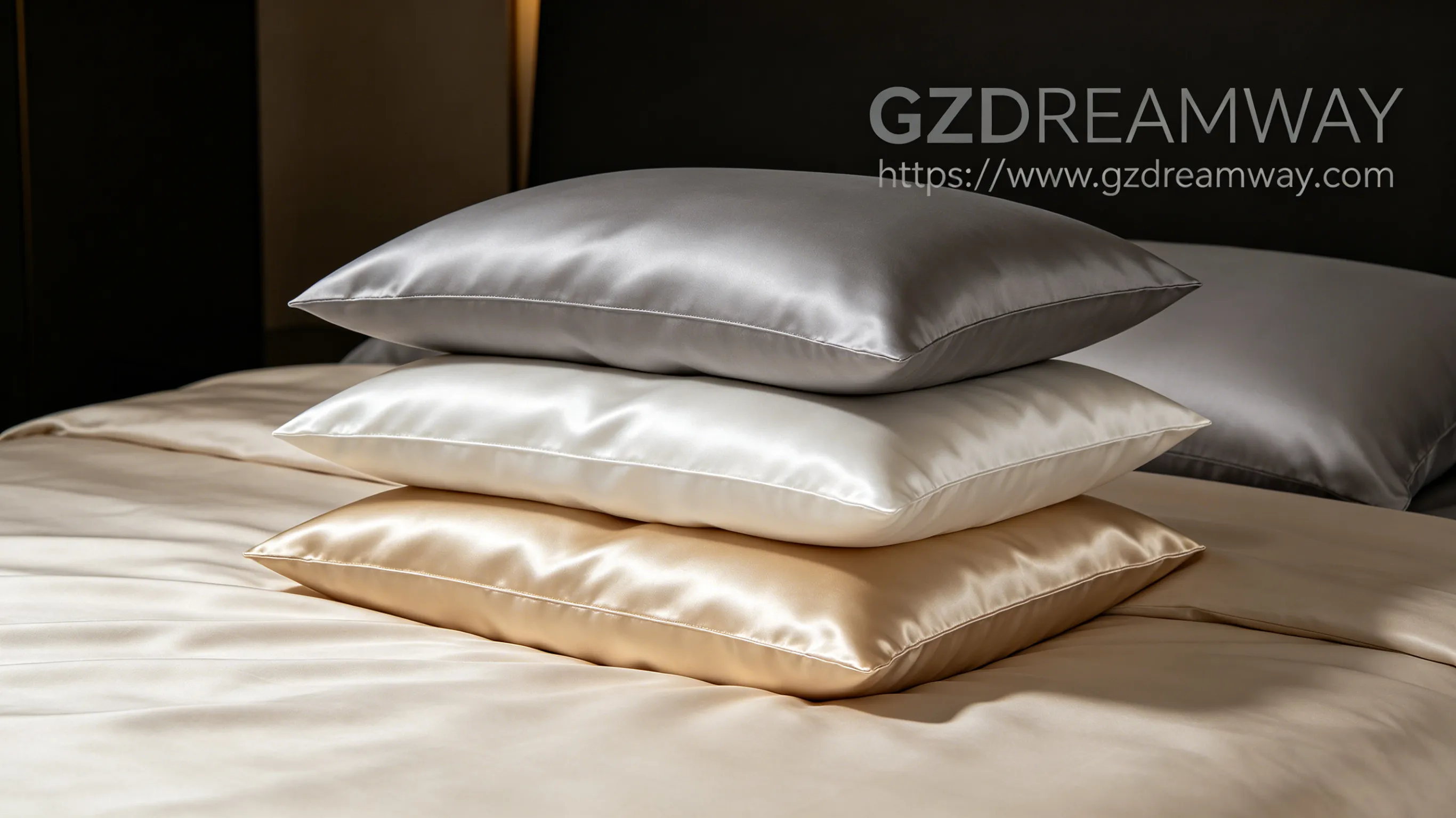
To understand why, consider the alternative: 19 momme silk is lighter and less expensive but more prone to transparent sheerness and wears faster with repeated washing. 25 momme silk is heavier and more luxurious but significantly more expensive, making it impractical for most pillowcase applications where cost-to-value ratio matters.
Our 22 momme mulberry silk eye mask (601) and 桑蚕丝眼罩 602 both feature OEKO-TEX Standard 100 certification as standard, ensuring that beauty never comes at the cost of safety.
The Complete Guide to Sourcing Mulberry Silk Fabric
Everything you need to know about mulberry silk grades, momme weights, certification standards, and how to evaluate silk fabric quality for your products.
Caring for OEKO-TEX Certified Silk Products
Proper care instructions are essential for maintaining both the beauty and the certified safety of silk sleep accessories. Even the finest OEKO-TEX certified silk pillowcases will degrade prematurely if washed or dried incorrectly. We recommend:
- Hand wash in lukewarm water (30°C / 86°F) with a pH-neutral silk-specific detergent
- Machine wash on the delicate/silk cycle at 30°C in a laundry mesh bag — acceptable for everyday maintenance
- Never tumble dry — air dry flat or on a padded hanger away from direct sunlight
- Avoid bleach and fabric softeners — these can degrade silk fibers and compromise the certification-relevant finishes
- Iron on low heat with a protective cloth if needed — silk’s natural drape recovers quickly with proper care
Including clear, correct care instructions with your silk products protects both the consumer experience and reinforces the premium positioning of your brand.
Silk Pillowcase Packaging: Wholesale Options for Premium Brands
From poly bags to luxury magnetic closure boxes with gold foil stamping — explore packaging solutions that match your brand tier and budget.
Real Silk vs. Fake Silk: How OEKO-TEX Helps Distinguish Quality
The market is saturated with products labeled as “silk” that are actually polyester satin, acetate, or blended fabrics. OEKO-TEX certification serves as an objective third-party guarantee of material authenticity, but there are additional quick checks you can perform:
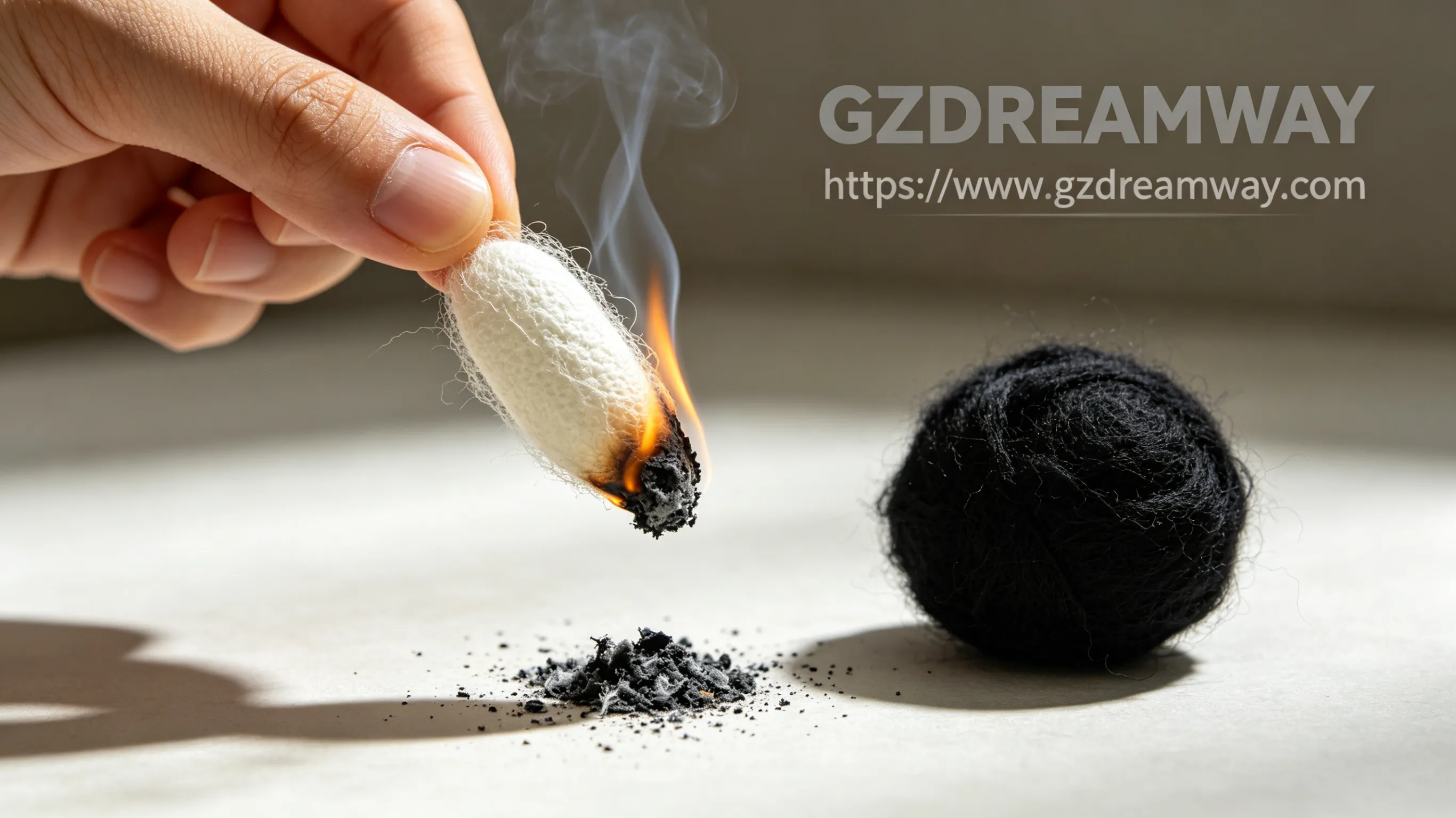
- The burn test — Real silk burns slowly with a smell of burnt hair, turning to black powder ash. Polyester melts into a hard bead.
- The sheen test — Real silk has a soft, multi-dimensional pearlescent luster. Polyester satin has a flat, mirror-like shine.
- The price test — If the price seems too good to be true, it probably is. Premium 22 momme mulberry silk pillowcases have a minimum cost floor that reflects raw material and processing quality.
- The touch test — Real silk feels cool and smooth, adapting quickly to body temperature. Satin feels slippery and cool in a different, less natural way.
- The OEKO-TEX verification — Cross-reference the certificate number in the official OEKO-TEX database.
Wholesale Silk Pillowcases: Bulk Shipping and Lead Time Guide
Understand production timelines, shipping options, and cost optimization strategies for bulk silk pillowcase orders from China.
The Business Case: OEKO-TEX as a Revenue Driver
Beyond compliance and risk management, OEKO-TEX Standard 100 certification is a measurable revenue driver. Here is why forward-thinking brands treat it as a marketing asset, not just a cost center:
First, the certification unlocks premium retail channel access. Department stores like Nordstrom, Selfridges, and Harrods actively prioritize OEKO-TEX certified products in their silk and bedding categories. These flagship placements drive brand visibility and credibility that no advertising budget can replicate.
Second, certification-based marketing copy converts. Phrases like “OEKO-TEX Standard 100 Certified — Free from 100+ Harmful Substances” on your product pages and packaging create immediate trust signals that reduce purchase hesitation. A/B testing data from major e-commerce platforms consistently shows measurable conversion rate improvements when safety certifications are prominently displayed.
Third, the certification supports higher price points. Consumers understand that safety has a cost, and they are willing to pay for it. Brands with OEKO-TEX certified silk products routinely price 25–35% above non-certified competitors while maintaining equivalent or better sales velocity.
Silk Pillowcase Manufacturing Cost: A Transparent Breakdown
Understand the true cost drivers behind silk pillowcase production—fabric, labor, certification, packaging, and shipping—so you can negotiate confidently.
How GzDreamway Supports Your OEKO-TEX Certified Silk Journey
Sourcing certified silk products should not feel like navigating a maze. At GzDreamway, we have streamlined the entire process so that brands—from boutique startups to established retailers—can access OEKO-TEX certified silk eyemasks and pillowcases with minimal friction.

Our in-house manufacturing capabilities include complete OEKO-TEX Standard 100 certification for all our silk products, independent third-party laboratory testing, custom silk printing and embroidery, private label programs with MOQ starting at 50 pieces, and DDP (Delivered Duty Paid) shipping solutions to major global markets.
We also provide our retail and wholesale partners with a comprehensive compliance documentation package for every order, including the OEKO-TEX certificate, test reports for all components, care label drafts, and packaging specification sheets—everything your regulatory and merchandising teams need to move forward with confidence.
Silk Pillowcase Manufacturer: Custom Stitching and Finishing
Explore our advanced custom stitching options—envelope closures, invisible zippers, custom embroidery, and hand-rolled edges—for premium silk pillowcase production.
Frequently Asked Questions
What is OEKO-TEX Standard 100 and why does it matter for silk products?
OEKO-TEX Standard 100 is an independent third-party certification that tests every component of a textile product for over 100 harmful substances, including carcinogenic dyes, formaldehyde, heavy metals, and pesticides. For silk eyemasks and pillowcases—products worn against the skin for hours every night—this certification ensures consumer safety and regulatory compliance across major markets including Europe, North America, and the UK.
How long does OEKO-TEX certification last?
OEKO-TEX Standard 100 certification is valid for 12 months from the date of issue. To maintain the certification, the manufacturer must renew annually through re-testing of products and re-audit of the manufacturing facility. This annual renewal cycle ensures ongoing compliance rather than a one-time verification.
What is the minimum order quantity for custom OEKO-TEX certified silk products?
At GzDreamway, our MOQ for custom OEKO-TEX certified silk eyemasks and pillowcases starts at 50 pieces per color per style. This low MOQ program is designed to make premium certified silk products accessible to emerging brands, boutique retailers, and private label programs at every growth stage.
Does OEKO-TEX certification cover the entire silk eye mask or just the fabric?
OEKO-TEX Standard 100 certification covers every component of the finished product. For a silk eye mask, this includes the outer silk shell, the inner filling layer, the elastic headband, all stitching threads, any decorative elements, labels, and even the ink used for printing. Nothing that comes into contact with the wearer—or that could off-gas into the sleeping environment—is excluded from testing.
Can I verify OEKO-TEX certification independently?
Yes. Every OEKO-TEX certificate includes a unique certification number that can be verified free of charge through the official OEKO-TEX public database at oeko-tex.com. You can search by certificate number, supplier name, or product category to confirm that the certification is current, valid, and covers the specific products you are sourcing.
What silk momme weight is best for pillowcases and eye masks?
For premium silk pillowcases and sleep eye masks, 22 momme mulberry silk is the industry standard recommendation. It offers an optimal combination of 22mm silk fabric durability, rich pearl-like sheen, comfortable breathability, and appropriate weight that prevents transparency while remaining affordable enough for everyday use. GzDreamway’s signature silk products all feature 22 momme mulberry silk as the default specification.
Does OEKO-TEX certification apply to silk printing and custom branding?
Yes, as long as the printing inks and processes used are also OEKO-TEX compliant. When you order custom-branded silk products from GzDreamway, we ensure that all screen printing, digital printing, and embroidery threads used in your private label program meet the same OEKO-TEX chemical safety standards as the base silk fabric, so your branded products maintain full certification coverage.

Visit Our Manufacturing Facility
Explore our production floor, quality control stations, and OEKO-TEX compliant manufacturing processes that power our certified silk product line.
Care Labels Guide: Compliant Textile Care Instructions
Learn how to design compliant, informative care labels for your silk products that meet international textile labeling standards and enhance the customer experience.
Custom Leather Bag & Silk Set Wholesale Program
Discover our luxury跨界 collections that pair premium leather goods with matching silk accessories—ideal for high-end gift sets and co-branded product lines.
Custom Branded Silk Eye Masks for Corporate Gifts
Premium silk eye masks customized with your brand logo—perfect for luxury corporate gift programs, hotel amenities, and VIP loyalty rewards.
Ready to Source Premium OEKO-TEX Certified Silk Products?
Stop settling for uncertified alternatives. Whether you need 50 pieces or 5,000, our team is standing by to help you bring your certified silk product line to life—backed by OEKO-TEX Standard 100, competitive pricing, and world-class production quality.
Get Your Free Sample & Quote Now — Let’s Talk!
Customer Reviews145 Reviews