
How to Spot Fake Silk: A Factory Guide to Testing Real Mulberry Silk for B2B Buyers

In the silk industry, distinguishing authentic mulberry silk from counterfeits is critical for B2B buyers. This comprehensive factory guide reveals professional testing methods including burn tests, microscopic fiber analysis, and chemical examinations that manufacturers use to verify 100% mulberry silk quality. Learn the telltale signs, understand the science behind silk authentication, and protect your supply chain from fraudulent suppliers with our expert procurement insights tailored for wholesale silk buyers worldwide.

The global silk market has witnessed a surge of counterfeit products, making it increasingly challenging for B2B buyers to source genuine mulberry silk with confidence. When you are placing bulk orders for silk pillowcases or luxury sleep accessories, verifying authenticity is not optional—it is essential for protecting your brand reputation and ensuring customer satisfaction.

As a trusted silk manufacturer with years of production experience, we have compiled this definitive guide to help wholesale buyers identify real mulberry silk before committing to large orders.
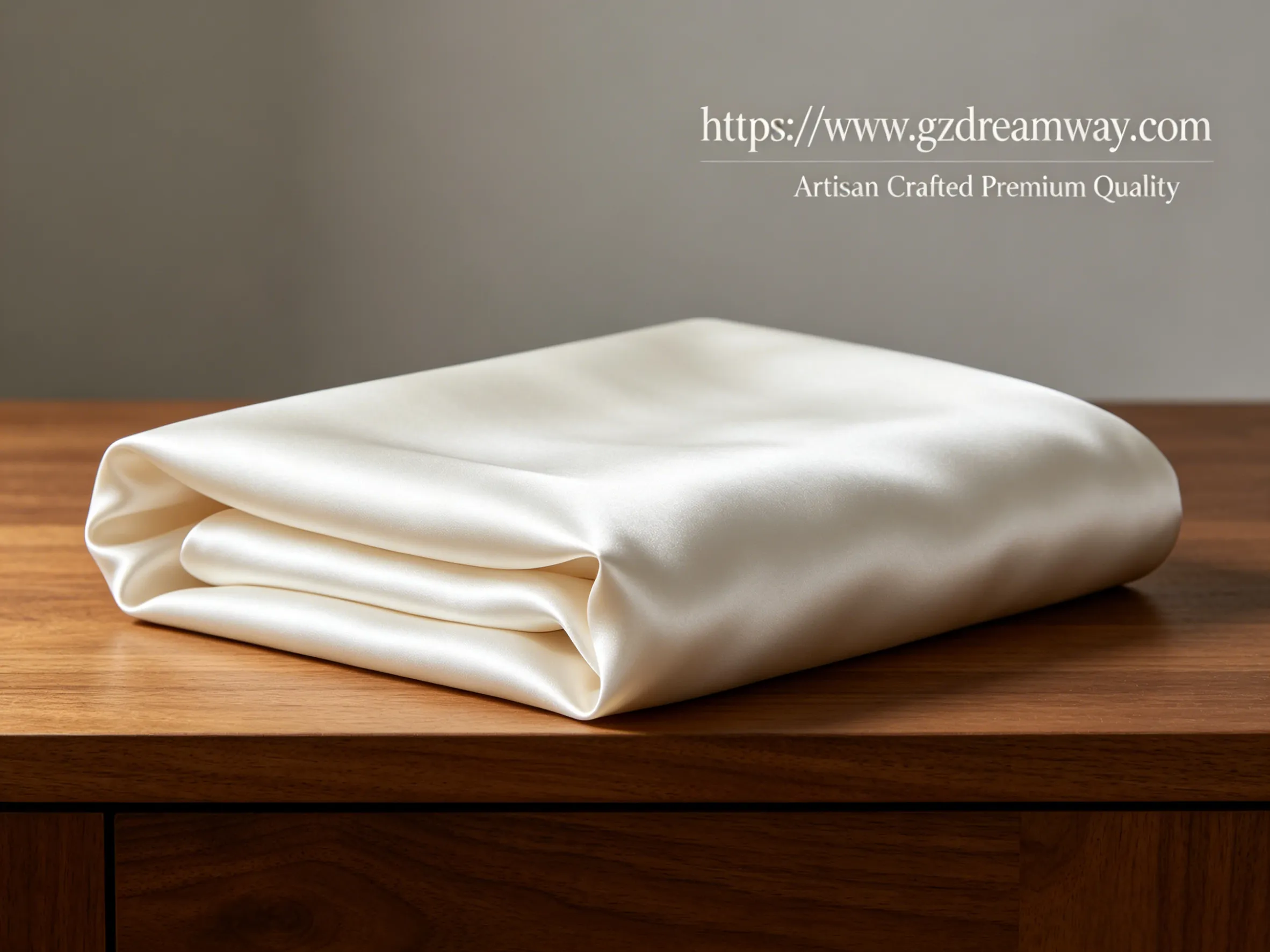
Premium 100% Mulberry Silk Pillowcase Displayed on Minimalist Wooden Surface
Elegant ivory white silk pillowcase showcasing natural pearl luster and smooth texture

Why B2B Buyers Must Master Silk Authentication

When sourcing mulberry silk fabric for your private label products, the financial stakes are substantial. A single container of 22mm silk fabric represents a significant investment, and receiving inferior polyester disguised as silk can devastate your business.

Beyond financial losses, counterfeit silk damages brand credibility. Your customers expect the luxurious feel and skin benefits of genuine silk—polyester alternatives cannot deliver these experiences. Understanding how to test real silk has become a non-negotiable skill for every silk procurement professional.

The Science Behind Authentic Mulberry Silk

Genuine mulberry silk originates from the cocoons of Bombyx mori silkworms that feed exclusively on mulberry leaves. This specialized diet produces silk fibers with unique molecular structures that define authentic silk’s exceptional properties:

  • Triangular prism structure: Refracts light at different angles, creating silk’s characteristic iridescent sheen
  • Protein-based composition: Contains 18 amino acids beneficial for skin and hair
  • Natural temperature regulation: Keeps users cool in summer and warm in winter
  • Moisture-wicking properties: Absorbs moisture without feeling damp

These properties are impossible to replicate with synthetic fibers, which is why professional silk product testing methods can reliably detect authenticity.

Professional Testing Methods for Authenticating Silk

1. The Burn Test: The Gold Standard

Perhaps the most reliable field test for silk pillowcase manufacturers and buyers alike is the burn test. Here is how professionals conduct this examination:

Take a small fiber sample and hold it with tweezers near a flame. Observe the following characteristics:

Characteristic Authentic Mulberry Silk Synthetic Imitation
Ignition behavior Slow to ignite, self-extinguishing Melts first, then burns rapidly
Flame color Small yellow flame Bright orange flame with melting
Odor Resembles burning hair or feathers Smells like burning plastic or chemicals
Ash residue Crushable black ash Hard bead-like residue
Smoke Minimal, gray smoke Black, acrid smoke

Our quality control team performs this test on every batch. When manufacturing silk accessories, we ensure each production run meets strict authenticity standards.
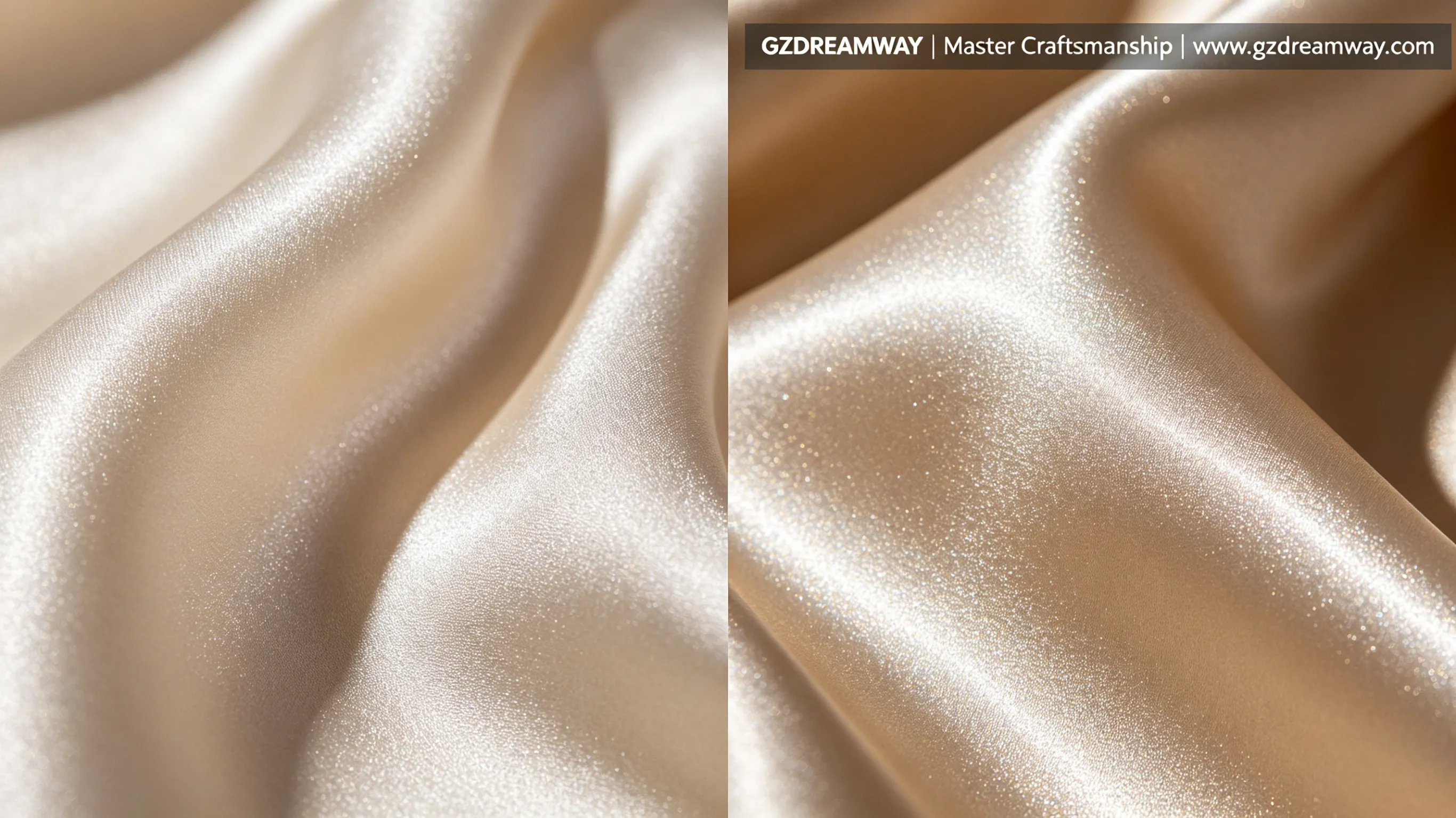
Side-by-side Fabric Comparison: Real Silk vs Polyester Satin
Visual comparison demonstrating the dramatic difference between authentic silk luster and synthetic sheen

2. Microscopic Fiber Analysis

Under magnification, genuine silk fibers display distinctive characteristics invisible to the naked eye. Professional laboratories and experienced silk product manufacturers use this method for definitive authentication:

  • Fiber uniformity: Natural silk shows consistent diameter throughout
  • Smooth surface: Fibers appear glossy and uniformly structured
  • No splitting: Individual fibers remain intact under magnification
  • Natural irregularities: Subtle variations confirm organic origin

Synthetic polyester, even high-quality “silk-like” fabrics, shows obvious manufacturing imperfections under the microscope—visible seams, uniform plastic appearance, and mechanical uniformity that betrays its artificial nature.

3. The Water Absorption Test

Genuine mulberry silk demonstrates remarkable hydrophilicity due to its protein structure. When a water droplet contacts authentic silk, it spreads rapidly and absorbs within seconds. Polyester and other synthetics repel water, causing droplets to bead and roll off the surface.

This test is particularly valuable when inspecting finished products like wholesale silk pillowcases without damaging them.

4. Chemical Testing for Definitive Results

For absolute certainty in silk authenticity verification, chemical tests provide conclusive evidence:

  • Sulfuric acid test: Silk dissolves in concentrated sulfuric acid while synthetics do not
  • Acetone test: Genuine silk remains unaffected; some synthetics dissolve or discolor
  • Zinc chloride test: Authentic silk fibers swell and dissolve in this solution

These tests require laboratory conditions but offer the highest level of certainty for B2B silk procurement professionals making significant purchasing decisions.
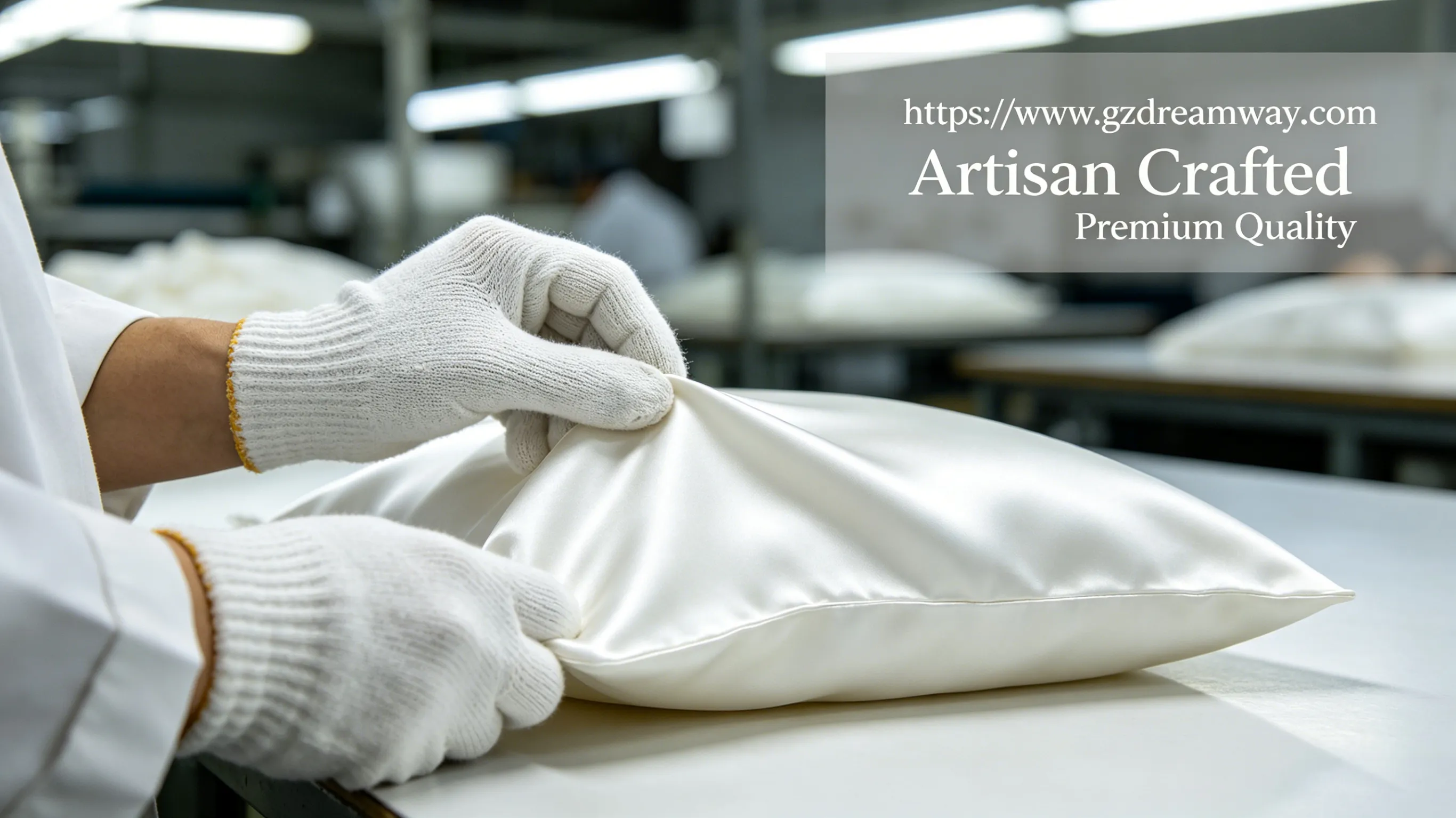
Factory Quality Control Inspector Examining Silk Pillowcase Under Bright Lighting
Professional quality control inspection ensures every silk product meets authentication standards

Physical Characteristics: What to Look For

Beyond laboratory testing, experienced silk buyers develop an eye for authentic silk through careful observation of physical properties:

Luster and Sheen

Authentic mulberry silk displays what experts call a “soft, diffused luster”—a gentle, multi-dimensional shine that shifts with viewing angle. Counterfeit silk typically shows a flat, plastic-like sheen or an unnaturally bright shine that looks artificial under lighting.

Touch and Feel

The tactile experience of genuine silk is unmistakable:

  • Temperature: Authentic silk feels cool to the touch and quickly warms with skin contact
  • Texture: Smooth without slipperiness, with a subtle grip that feels luxurious
  • Weight: Real silk has a characteristic weight that feels substantial yet light
  • Drape: Flows naturally without stiffness or excessive fluidity

Comparing authentic silk against known samples, as demonstrated in our silk versus bamboo comparison, helps train procurement teams to recognize quality.

The Wrinkle Test

Genuine silk wrinkles differently than synthetic alternatives. When crumpled, authentic silk forms soft, flowing wrinkles with gentle creases. Polyester tends to form sharp, plastic-like creases that persist and may even appear permanent.

Understanding Momme Weight and Quality Grades

Authentic silk quality is measured in momme (mm), with higher numbers indicating denser, more luxurious fabric. Professional B2B silk buyers understand this grading system:

Momme Weight Quality Grade Best Applications Characteristics
8-12 mm Lightweight Lining, scarves Sheer, delicate appearance
14-16 mm Standard Pillowcases, light garments Balance of quality and affordability
19-22 mm Premium Luxury bedding, sleepwear Rich luster, substantial feel
25-30 mm Ultra-Premium Luxury accessories, high-end bedding Maximum durability and opulence

When sourcing private label silk accessories, specifying momme weight protects you from receiving inferior products disguised under vague descriptions.

Certifications and Documentation

Reputable silk suppliers provide comprehensive documentation to verify authenticity:

  • Oeko-Tex Standard 100: Certifies absence of harmful substances
  • GOTS certification: Confirms organic silk production methods
  • Laboratory test reports: Provides scientific verification of fiber composition
  • Raw material certificates: Documents the source of silk cocoons

Our commitment to transparency means we provide full documentation for every order, as detailed in our quality assurance processes.

Protecting Your Silk Supply Chain

Establishing reliable silk sourcing relationships requires multiple verification layers:

Supplier Verification Checklist

  • Request physical samples before placing bulk orders
  • Conduct or request third-party laboratory testing
  • Verify supplier manufacturing capabilities and certifications
  • Request references from other B2B clients
  • Start with smaller trial orders to establish trust

The investment in thorough verification protects against far greater losses from counterfeit products. Our team at GzDreamway welcomes contact for custom silk manufacturing inquiries, where we demonstrate our commitment to authentic, premium-quality silk products.

Conclusion: Knowledge is Your Best Defense

Distinguishing authentic mulberry silk from imitations requires a combination of scientific understanding, practical testing skills, and supplier due diligence. By mastering the methods outlined in this guide, B2B buyers can confidently source genuine silk products that meet their quality standards and brand expectations.

Whether you are launching a new line of custom branded silk accessories or expanding your existing collection with premium pillowcases, the knowledge to authenticate silk protects your investment and ensures customer satisfaction.

For expert guidance on sourcing authentic silk products and understanding silk industry essentials, connect with our experienced team. We specialize in helping B2B buyers navigate the complexities of silk procurement with confidence.

Remember: In silk sourcing, there are no shortcuts to quality. Invest in knowledge, verify thoroughly, and partner with manufacturers who prioritize authenticity above all else.

Frequently Asked Questions

What is the minimum order quantity for authentic mulberry silk products?

At our manufacturing facility, the minimum order quantity (MOQ) is 50 pieces per design for silk products. This MOQ applies to standard pillowcases, eye masks, and other silk accessories. For custom private label orders, we offer flexible production options that accommodate various order volumes while maintaining our rigorous quality standards. Bulk orders typically qualify for additional pricing benefits and priority production scheduling.

How can I verify silk authenticity without damaging the product?

Non-destructive testing methods include examining luster quality under different lighting conditions, performing the water absorption test on hidden areas, checking fabric weight against stated momme specifications, and observing how the fabric drapes and wrinkles. For valuable finished products, we recommend working with third-party textile testing laboratories that specialize in fiber authentication using microscopic and chemical analysis methods.

What certifications should I look for when sourcing silk?

Essential certifications include Oeko-Tex Standard 100 (safety), GOTS (organic), and ISO quality management certifications. Request documentation of fiber composition testing, which should confirm 100% mulberry silk content. Reputable manufacturers provide certificates of authenticity and laboratory test reports from recognized testing facilities.

Why does authentic mulberry silk cost more than alternatives?

Genuine mulberry silk requires specialized production: silkworms fed exclusively on mulberry leaves, careful cocoon harvesting, delicate fiber reeling processes, and skilled weaving. This labor-intensive, time-sensitive production explains the premium pricing compared to synthetic alternatives that can be manufactured rapidly with automated processes.

Can I request samples before placing bulk silk orders?

Absolutely. We strongly encourage all B2B clients to request samples before committing to large orders. Sample orders allow you to conduct your own authenticity testing, evaluate physical properties, and ensure the silk meets your quality expectations. Contact us to discuss sample options for your specific requirements.

Customer Reviews31 Reviews

アンドレア・モリーナ2026-07-20
最近イタリアの高級ハンドバッグブランド向けに100%マルベリーシルクの裏地サンプルを受け取りましたが、ラベルには純粋なシルクと書いてあるのに、触り心地が硬くて光沢が鈍く、日本のような細かい品質基準を求める市場では非常に困惑しています。特にOEM発注ではcolor consistencyとtraceability of silk supply chainが不可欠で、momme weight testingやFTIR silk analysisを通じたsericin residue checkの実施状況と、small pilot runsを用いたOEM color approval processの具体的な流れを教えてください。最初のロットで色が合わなかった経験があり、少量パイロットで問題を解決できるか確認したいです。
GZDreamway2026-07-20
申し訳ありません、アンドレア様。硬い触感と鈍い光沢は確かに懸念点ですが、当工場ではこの問題を解決するためにまずincoming QCとしてmomme weight testingとmicroscopic fiber IDを実施し、100%純粋なマルベリーシルクかを迅速に判定します。その後、FTIR silk analysisで合成繊維の混入がないか確認し、sericin residue checkで残存セリシンを評価して、必要に応じて追加のdegumming工程を提案します。OEM color approval processでは、まずお客様からcolor swatchesをお送りいただき、lab-dyeで色を合わせ、分光光度計でΔEを測定した後、small pilot runs(推奨MOQは100〜500メートル)でcolor consistencyと手触りを検証します。パイロット段階で問題があれば、直ちにnon-conformance reportを発行し、recolorやretestのオプションを提示します。全プロセスを通じてbatch-level SGS reportsとOEKO-TEX証明書を提供し、traceability of silk supply chainを完全に可視化します。サンプルと色見本をお送りいただければ、イタリア市場向けの詳細なテストプランと項目別費用見積もりを迅速にご提案します。

We apologize for the inconvenience, Andrea. Hard texture and dull luster are concerns, but our factory addresses this by starting incoming QC with momme weight testing and microscopic fiber ID to quickly verify 100% pure mulberry silk. We then perform FTIR silk analysis to check for synthetic blending and conduct sericin residue checks to assess residual sericin, offering additional degumming if needed. For the OEM color approval process, we begin with your color swatches, match colors via lab-dye using spectrophotometric ΔE measurement, and then run small pilot runs (recommended MOQ 100–500 meters) to validate color consistency and hand feel. If issues arise during the pilot, we issue a non-conformance report and propose recolor or retest options. Throughout, we provide batch-level SGS reports and OEKO-TEX certificates for full traceability of the silk supply chain. Please send representative samples and color swatches, and we will quickly prepare a detailed test plan with itemized costs tailored for the Italian market.
María Fernández2026-07-19
Acabo de recibir muestras de forro de seda de morera para bolsos de mano para mi marca en Madrid, y aunque la etiqueta dice 100% seda, la textura es más áspera y tiene un brillo apagado, lo que es frustrante para nuestra línea de lujo que exige alta calidad y consistencia de color. En el mercado español, la certificación OEKO-TEX y la trazabilidad de la cadena de suministro son esenciales, y necesito un proveedor que pueda garantizar pruebas de pureza como el momme weight testing y el análisis FTIR. ¿Cómo manejan el control de residuos de sericina para mejorar el tacto, y ofrecen lotes piloto pequeños de 100-500 metros para la aprobación del color OEM antes de la producción en masa?
GZDreamway2026-07-19
Hola María, gracias por compartir tu experiencia con las muestras. Entendemos tu frustración y la textura áspera a menudo se debe a residuos de sericina o mezclas de fibras. En nuestra fábrica, hemos desarrollado un flujo de verificación sistemático para el mercado español que comienza con el momme weight testing y la identificación microscópica de fibras para confirmar la pureza de la seda de morera. Luego, realizamos un análisis FTIR para detectar cualquier contaminación sintética. Para el tacto, llevamos a cabo una verificación de residuos de sericina (sericin residue check) y ofrecemos un desgomado adicional para lograr la suavidad deseada. En cuanto a la aprobación del color, nuestro proceso OEM de aprobación de color incluye el envío de muestras de color, teñido de laboratorio y luego lotes piloto pequeños de 100 a 500 metros para validar la consistencia del color y el tacto antes de la producción en masa. Proporcionamos informes SGS por lote y certificados OEKO-TEX para garantizar una trazabilidad completa. Si surge alguna no conformidad, emitimos un informe de no conformidad y proponemos opciones de reteste o recoloración. Por favor, envíanos tus muestras representativas y muestras de color para preparar un plan de prueba detallado con presupuestos por artículo.

Hello María, thank you for sharing your experience with the samples. We understand your frustration, and the rough texture is often due to sericin residues or fiber blends. In our factory, we have developed a systematic verification flow for the Spanish market that begins with momme weight testing and microscopic fiber ID to confirm mulberry silk purity. We then perform FTIR analysis to detect any synthetic contamination. For the hand feel, we conduct a sericin residue check and offer additional degumming to achieve the desired softness. Regarding color approval, our OEM color approval process includes sending color swatches, lab dyeing, and then small pilot runs of 100 to 500 meters to validate color consistency and hand feel before mass production. We provide batch-level SGS reports and OEKO-TEX certificates to ensure full traceability. If any non-conformance arises, we issue a non-conformance report and propose retest or recolor options. Please send your representative samples and color swatches so we can prepare a detailed test plan with itemized quotes.
كريم الجابر2026-07-18
أنا مدير مشتريات لعلامة تجارية للحقائب الجلدية في الدوحة، قطر. تلقيت عينات من بطانة حرير التوت بنسبة 100%، لكن الملمس كان جافاً واللمعان باهتاً، وهذا محبط لأن السوق القطري يطلب جودة فائقة وألواناً ثابتة تماماً قبل الإنتاج الكبير. نحتاج إلى مورد يضمن نقاء الحرير عبر اختبارات مثل وزن المومي وتحليل FTIR، ويهمني جداً معرفة آلية اعتماد الألوان بكميات صغيرة لضمان تطابق الظل. هل لديكم عينات تجريبية صغيرة لاختبار الثبات اللوني قبل البدء بطلب كبير؟
GZDreamway2026-07-18
أهلاً كريم، شكراً لتواصلك ونحن نتفهم إحباطك من الملمس الجاف واللمعان الباهت، فهذه مؤشرات شائعة لبقايا السيريسين أو خلط ألياف صناعية. في مصنعنا، نبدأ بفحص الوزن النوعي (وزن المومي) والفحص المجهري للألياف لتأكيد نقاء الحرير، ثم ننتقل لتحليل FTIR للكشف عن أي شوائب. لضمان الملمس الناعم المطلوب لسوق قطر، نجري فحصاً دقيقاً لبقايا السيريسين ونوفر إزالة الصمغ الإضافية. بالنسبة لاعتماد الألوان، نقدم دفعات تجريبية صغيرة (100-500 متر) لاختبار ثبات اللون باستخدام مقياس الطيف الضوئي لقياس ΔE، ونرفق تقارير SGS وشهادات OEKO-TEX لكل دفعة لضمان الشفافية الكاملة. يمكننا توفير عينات تجريبية مجانية لاختبار الثبات اللوني قبل الالتزام بأي طلب كبير. أرجو إرسال عينات الألوان والعينات التمثيلية لإعداد خطة اختبار مفصلة مع قائمة تكاليف لكل اختبار.

Hello Karim, thank you for reaching out and we understand your frustration with the dry texture and dull luster, which are common signs of sericin residues or fiber blends. In our factory, we start with momme weight testing and microscopic fiber ID to confirm silk purity, then proceed to FTIR analysis to detect any contamination. To ensure the soft hand feel required for the Qatari market, we perform a thorough sericin residue check and offer additional degumming. For color approval, we provide small pilot runs (100-500 meters) to test colorfastness using a spectrophotometer for ΔE measurement, and we include batch-level SGS reports and OEKO-TEX certificates for full transparency. We can provide free swatches for color testing before any large commitment. Please send your color swatches and representative samples so we can prepare a detailed test plan with itemized costs for each test.
Hans Gruber2026-07-17
Ich bin als Materialeinkäufer für eine österreichische Lederwaren-Manufaktur tätig und habe vor kurzem Muster von 100% Handbag Lining Mulberry Silk eines asiatischen Zulieferers erhalten. Das Material fühlte sich leider rauer an als erwartet und der Glanz war eher matt – für unsere Premium-Linie in Wien ist das enttäuschend, denn wir legen größten Wert auf Color Consistency und eine lückenlose Traceability of Silk Supply Chain mit OEKO-TEX- und REACH-Zertifikaten. Mich würde interessieren, wie genau der OEM Color Approval Process mit Small Pilot Runs abläuft, speziell in Bezug auf Momme Weight Testing und FTIR Silk Analysis. Könnten Sie mir erklären, wie Sie mit Sericin Residue Checks umgehen, um diesen typisch seidigen Griff zu erreichen?
GZDreamway2026-07-17
Vielen Dank für Ihre Nachricht, Herr Gruber. Wir verstehen Ihre Enttäuschung über die raue Haptik und den matten Glanz – diese Abweichungen sind oft auf Rückstände von Sericin oder eine Beimischung synthetischer Fasern zurückzuführen. In unserer Fabrik haben wir einen speziellen Workflow für den österreichischen Markt entwickelt. Wir beginnen mit einem parallelen Momme Weight Testing und einer mikroskopischen Faseridentifikation, um die Reinheit der 100% Mulberry-Seide sofort zu bestätigen. Bei Unstimmigkeiten folgt eine FTIR Silk Analysis, die synthetische Verunreinigungen präzise erkennt. Für den OEM Color Approval Process nutzen wir Ihre Farbmuster für eine Lab-Dye-Probe, deren Farbechtheit mit einem Spektrophotometer (ΔE-Messung) überprüft wird. Anschließend führen wir einen Small Pilot Run von 100–500 Metern durch, um sowohl die Farbrezeptur als auch das Handgefühl unter Produktionsbedingungen zu validieren. Ein wichtiger Schritt ist der Sericin Residue Check: Wir bewerten die Rest-Seidenleim-Menge und bieten bei Bedarf eine zusätzliche Entschlichtung an, um die gewünschte Weichheit und den typischen Glanz zu erreichen. Nach erfolgreichem Pilotlauf stellen wir batch-level SGS-Reports sowie OEKO-TEX- und REACH-Konformitätszertifikate aus, um die vollständige Traceability of Silk Supply Chain zu gewährleisten. Sollte der Pilotlauf nicht Ihren Erwartungen entsprechen, erstellen wir einen detaillierten Non-Conformance Report mit konkreten Korrekturvorschlägen (z. B. Nachfärbung oder erweiterte Entschlichtung). Bitte senden Sie uns repräsentative Muster und Ihre Farbvorgaben; wir bereiten dann einen maßgeschneiderten Testplan mit detaillierten Kostenaufstellungen für jede Prüfung vor.

Thank you for your inquiry, Mr. Gruber. We understand your disappointment with the rough hand feel and matte luster – these deviations are often caused by sericin residues or synthetic fiber blends. In our factory, we have developed a specific workflow for the Austrian market. We begin with parallel momme weight testing and microscopic fiber identification to immediately confirm 100% pure mulberry silk. If discrepancies arise, we perform an FTIR silk analysis to accurately detect synthetic contamination. For the OEM color approval process, we use your color swatches for a lab-dye strike-off, and verify colorfastness with a spectrophotometer (ΔE measurement). We then conduct a small pilot run of 100–500 meters to validate both the color recipe and hand feel under production conditions. A critical step is the sericin residue check: we evaluate the residual silk gum level and offer additional degumming if needed to achieve the desired softness and typical luster. Upon successful pilot run, we provide batch-level SGS reports and OEKO-TEX/REACH compliance certificates to ensure full traceability of the silk supply chain. If the pilot run does not meet your expectations, we issue a detailed non-conformance report with concrete corrective proposals (e.g., recolor or extended degumming). Please send us representative samples and your color specifications; we will then prepare a tailored test plan with itemized cost estimates for each analysis.
田中 誠2026-07-16
私は東京で高級ハンドバッグブランドの調達責任者をしています。先日、アジアのサプライヤーから届いた100%マルベリーシルクの裏地サンプルについて、触感が予想以上に硬く、光沢も薄いと感じました。日本市場では「color consistency」と「traceability of silk supply chain」が非常に重要で、特にOEM生産では「momme weight testing」と「FTIR silk analysis」が欠かせません。もう少し具体的に、「small pilot runs」を使った「OEM color approval process」の手順と、硬さの原因である「sericin residue check」や「colorfastness testing」を含めた品質管理プロセスを教えてください。大ロット発注の前に、しっかり確認したいです。
GZDreamway2026-07-16
貴重なご質問をありがとうございます、田中様。まず、サンプルの硬さと光沢不足について、私どもの工場では「incoming QC」として「momme weight testing」と顕微鏡による「microscopic fiber ID」を行い、純度100%のマルベリーシルクかを迅速に判断します。もし硬さが気になる場合は、直ちに「FTIR silk analysis」を実施し、ポリウレタン加工やポリエステルの混入がないかを確認します。特に日本市場向けには、「sericin residue check」と追加の「degumming」工程を提案して、本来の柔らかさとドレープ性を再現します。色味に関しては、「color swatches」に基づく「lab-dye」で試作後、「small pilot runs」(推奨100~500メートル)により「ΔE」測定を繰り返し、「color consistency」を担保します。さらに、全バッチに「batch-level SGS reports」と「OEKO‑TEX」証明書を添付し、「traceability of silk supply chain」を完全に可視化します。もしパイロットで品質基準に満たない場合は「Non‑Conformance Report」を発行し、再テストや再染色のオプションと共に、明確な「acceptance criteria」を提示して合意を得ます。サンプルと色見本を送っていただければ、項目別の費用明細と共に、日本市場向けの詳細なテストプランをお作りします。

Thank you for your valuable inquiry, Tanaka-san. We start with incoming QC using momme weight testing and microscopic fiber ID to confirm 100% pure mulberry silk. If the hardness persists, we immediately perform FTIR silk analysis to detect any polyurethane coating or polyester blending. For the Japanese market, we propose sericin residue checks and additional degumming to restore the original softness and drape. For color, we use lab-dyeing based on your color swatches, followed by small pilot runs of 100–500 meters to measure ΔE with a spectrophotometer, ensuring color consistency. All batches are accompanied by batch-level SGS reports and OEKO‑TEX certificates for full traceability. If a pilot does not meet your standards, we issue a Non‑Conformance Report and propose retest or recolor options with clear acceptance criteria. Please send representative samples and color swatches; we will prepare a detailed test plan with itemized costs for the Japanese market.
Elena Russo2026-07-15
Ich bin als Materialeinkäuferin für eine italienische Luxus-Handtaschenmarke tätig und habe kürzlich Muster von 100% Handbag Lining Mulberry Silk erhalten. Das Material fühlte sich leider kratzig an und hatte einen matten Glanz, was für unsere hochpreisige Kollektion in Mailand enttäuschend ist. Wir legen großen Wert auf Color Consistency und eine lückenlose Traceability of Silk Supply Chain mit OEKO-TEX- und REACH-Zertifikaten. Können Sie mir einen praxisnahen OEM Color Approval Process mit Small Pilot Runs (etwa 100–500 Meter) skizzieren, der die Colorfastness Testing und das Momme Weight Testing integriert? Auch der Umgang mit Sericin Residue Check ist für uns entscheidend, um den typisch seidigen Griff zu erreichen.
GZDreamway2026-07-15
Grazie per la sua richiesta, Elena. Comprendiamo perfettamente la sua frustrazione riguardo alla ruvidità e alla lucentezza opaca dei campioni, che spesso indicano residui di sericina o miscele di fibre. Nel nostro stabilimento, abbiamo sviluppato un processo di verifica robusto per il mercato italiano. Iniziamo con un Momme Weight Testing parallelo e un'identificazione microscopica delle fibre per confermare la purezza al 100% della seta di gelso. Se sospettiamo miscele, eseguiamo un'analisi FTIR per rilevare contaminazioni sintetiche. Per il processo di approvazione del colore OEM, il nostro flusso di lavoro pratico prevede la ricezione dei campioni di colore, una tintura in laboratorio (Lab-Dye), seguita da una piccola corsa pilota di 100-500 metri per convalidare le ricette cromatiche e la consistenza al tatto. Durante questa fase, eseguiamo test di solidità del colore con misurazione ΔE tramite spettrofotometro per garantire la consistenza cromatica. Eseguiamo anche un controllo dei residui di sericina e offriamo una sgommatura aggiuntiva per ottenere la morbidezza desiderata. Forniamo rapporti SGS per lotto e certificazioni OEKO-TEX, assicurando la completa tracciabilità della filiera della seta. Se il lotto pilota non dovesse soddisfare le sue aspettative, emettiamo un rapporto di non conformità e proponiamo opzioni di ritintura o ritest. La invitiamo a inviarci i suoi campioni rappresentativi e i campioni di colore; prepareremo un piano di test dettagliato con preventivi specifici per ogni analisi, che include Momme Weight Testing, analisi FTIR, test di solidità del colore e il piccolo lotto pilota. Il tempo medio dal ricevimento del campione all'approvazione del colore è di circa 10-15 giorni lavorativi.

Thank you for your inquiry, Elena. We fully understand your frustration with the rough texture and dull luster of the samples, which are often signs of sericin residues or fiber blends. In our factory, we have developed a robust verification process for the Italian market. We start with parallel Momme Weight Testing and microscopic fiber identification to confirm 100% pure mulberry silk. If blends are suspected, we perform FTIR analysis to detect synthetic contamination. For the OEM color approval process, our practical workflow involves receiving color swatches, a Lab-Dye strike-off, and then a Small Pilot Run of 100-500 meters to validate color recipes and hand feel. During this phase, we conduct colorfastness testing with ΔE measurement using a spectrophotometer to ensure color consistency. We also perform a sericin residue check and offer additional degumming to achieve the desired softness. We provide batch-level SGS reports and OEKO-TEX certifications, ensuring full Traceability of the Silk Supply Chain. If the pilot lot does not meet your expectations, we issue a Non-Conformance Report and propose recolor or retest options. Please send your representative samples and color swatches; we will prepare a detailed test plan with itemized quotes for each analysis, covering Momme Weight Testing, FTIR analysis, colorfastness tests, and the small pilot run. The typical lead time from sample receipt to color approval is around 10-15 business days.
مارينا سانتوس2026-07-14
مرحباً، أنا مشتري لحقيبة فاخرة في دبي وقد تلقيت عينات من بطانة حرير التوت 100% والتي شعرت بخشونة شديدة ولمعان خافت، وهذا محبط جداً قبل الطلبية الكبيرة خاصة مع وجود طلبات ألوان مخصصة من عملائنا في الإمارات. السوق الإماراتي يتطلب جودة عالية وألواناً ثابتة تماماً مع شهادات OEKO-TEX وSGS. هل توفرون إجراءات اختبار دقيقة مثل اختبار وزن المومي (momme weight testing) وتحليل FTIR (FTIR silk analysis) للتأكد من النقاء؟ كما أرغب في تفاصيل حول عملية الموافقة على الألوان OEM (OEM color approval process) مع دفعة تجريبية صغيرة (small pilot runs) تتراوح بين 100 و500 متر لضمان توافق الألوان (color consistency) قبل بدء الإنتاج بالجملة. أرجو توضيح كيف تتعاملون مع بقايا السيريسين (sericin residue check) لتحسين الملمس الناعم المطلوب للحقائب الفاخرة في سوقنا. شكراً
GZDreamway2026-07-14
أهلاً مارينا، أشكرك على تواصلك ونحن نتفهم تماماً إحباطك من الخشونة واللمعان الخافت في العينات، وهذه مؤشرات شائعة لبقايا السيريسين أو خلط ألياف صناعية. في مصنعنا، نتبع إجراءات صارمة لضمان نقاء حرير التوت 100%، نبدأ باختبار وزن المومي (momme weight testing) باستخدام موازين معايرة والفحص المجهري للألياف (microscopic fiber ID) لتأكيد التركيب، ثم ننتقل إلى تحليل FTIR للكشف عن أي مواد صناعية مخلوطة. لتحسين الملمس، نجري فحصاً دقيقاً لبقايا السيريسين (sericin residue check) ونعرض عليك خيار إزالة الصمغ الإضافي (extra degumming) لتحقيق النعومة المطلوبة. بالنسبة لعملية الموافقة على الألوان OEM، نبدأ باستلام عينات الألوان الخاصة بك، ثم نقوم بصناعة عينة مخبرية (lab-dye) ونقيّمها باستخدام مقياس الطيف الضوئي لقياس فرق اللون (ΔE)، وبعد موافقتك ننتقل إلى دفعة تجريبية صغيرة من 100 إلى 500 متر لاختبار تماسك اللون والملمس قبل الإنتاج الضخم. نقدم تقارير SGS على مستوى الدفعة وشهادات OEKO-TEX لضمان الشفافية الكاملة. أرجو إرسال العينات التمثيلية وعينات الألوان، وسنقوم بإعداد خطة اختبار مفصلة مع قائمة تكاليف لكل اختبار لحل المشكلة بسرعة.

Hello Marina, thank you for reaching out and we fully understand your frustration with the roughness and dull luster in the samples; these are common indicators of sericin residues or synthetic fiber blends. In our factory, we follow strict procedures to ensure 100% pure mulberry silk, starting with momme weight testing using calibrated scales and microscopic fiber ID to confirm composition, then moving to FTIR analysis to detect any synthetic contamination. To improve texture, we conduct a detailed sericin residue check and offer extra degumming to achieve the required softness. For the OEM color approval process, we start by receiving your color swatches, then produce a lab-dye sample evaluated with a spectrophotometer to measure ΔE color difference, and upon your approval we move to a small pilot run of 100 to 500 meters to test color consistency and hand feel before mass production. We provide batch-level SGS reports and OEKO-TEX certificates for full transparency. Please send your representative samples and color swatches, and we will prepare a detailed test plan with itemized costs for each test to resolve the issue promptly.
Elena Russo2026-07-13
J'ai récemment reçu des échantillons de doublure en soie de mûrier pour un projet de sacs à main de luxe destiné au marché italien. Bien que l'étiquette indique 100 % soie pure, le tissu avait un toucher rugueux et un éclat synthétique, ce qui est décevant pour notre ligne haut de gamme. Nous exigeons une grande précision dans les tests de pureté de la soie, notamment le pesage momme et l'analyse FTIR. De plus, le processus d'approbation des couleurs OEM avec de petits lots pilotes est crucial pour garantir la cohérence des couleurs. Pourriez-vous nous expliquer comment vous gérez les résidus de séricine pour améliorer le toucher et quelles certifications (OEKO-TEX, SGS) sont fournies pour chaque lot ? Merci.
GZDreamway2026-07-13
Bonjour Elena, merci pour votre question. Nous comprenons parfaitement votre préoccupation concernant le toucher rugueux et l'éclat synthétique, qui sont souvent des signes de résidus de séricine ou de mélanges de fibres synthétiques. Dans notre usine, nous avons développé un processus rigoureux pour garantir la pureté de la soie de mûrier. Nous commençons par un test de pesage momme (momme weight testing) et une identification microscopique des fibres (microscopic fiber ID) pour confirmer la composition à 100 % soie de mûrier. Si un doute subsiste, nous effectuons une analyse FTIR (FTIR silk analysis) pour détecter toute contamination synthétique. Pour résoudre le problème de toucher, nous réalisons un contrôle des résidus de séricine (sericin residue check) et proposons un dégommage supplémentaire pour obtenir la douceur requise pour les doublures de luxe. En ce qui concerne le processus d'approbation des couleurs OEM (OEM color approval process), nous commençons par vos échantillons de couleur (color swatches), puis nous effectuons une teinture en laboratoire (lab-dye) et un petit lot pilote (small pilot run) de 100 à 500 mètres pour valider la recette de couleur et la consistance du toucher. Nous fournissons des rapports SGS par lot (batch-level SGS reports) et des certificats OEKO-TEX pour garantir la traçabilité complète de la chaîne d'approvisionnement (traceability of silk supply chain). Veuillez nous envoyer vos échantillons représentatifs et vos échantillons de couleur ; nous préparerons un plan de test détaillé avec des devis pour chaque analyse.

Hello Elena, thank you for your question. We fully understand your concern about the rough texture and synthetic sheen, which are often signs of sericin residues or synthetic fiber blends. In our factory, we have developed a rigorous process to ensure the purity of mulberry silk. We start with momme weight testing and microscopic fiber ID to confirm 100% mulberry silk composition. If any doubt remains, we perform FTIR silk analysis to detect any synthetic contamination. To address the texture issue, we conduct a sericin residue check and offer additional degumming to achieve the softness required for luxury linings. Regarding the OEM color approval process, we begin with your color swatches, then perform lab-dyeing and a small pilot run of 100 to 500 meters to validate the color recipe and hand feel consistency. We provide batch-level SGS reports and OEKO-TEX certificates to ensure full traceability of the silk supply chain. Please send your representative samples and color swatches; we will prepare a detailed test plan with itemized quotes for each analysis.
محمد العطار2026-07-12
أعمل كمدير مشتريات لعلامة تجارية للحقائب الجلدية الفاخرة في مدينة الرياض، المملكة العربية السعودية. مؤخراً، تلقيت عينة من قماش بطانة حرير التوت بنسبة 100%، لكنها شعرت بخشونة شديدة وغير معتادة، كما أن اللمعان كان غير طبيعي تقريباً. هذا الأمر مزعج حقاً، خاصة وأن سوقنا يطلب جودة عالية وألواناً ثابتة تماماً مع شهادات مطابقة مثل OEKO-TEX وSGS. السوق السعودي حساس جداً لاتساق الألوان (color consistency) في الحقائب الفاخرة، وأحتاج إلى طمأنة قبل الطلبية الكبيرة. هل يمكنكم توضيح بالضبط كيف تتحققون من أن الحرير نقي باستخدام اختبارات مثل اختبار وزن المومي (momme weight testing) وتحليل FTIR؟ أيضاً، كيف تتم عملية الموافقة على اللون (OEM color approval process) مع دفعات تجريبية صغيرة جداً، وتفاصيل حول إدارة بقايا السيريسين التي قد تؤثر على النعومة المطلوبة لسوقنا؟
GZDreamway2026-07-12
نشكرك محمد على تواصلك معنا، ونحن نتفهم تماماً ما ذكرته من خشونة غير متوقعة ولمعان غير طبيعي في العينة التي استلمتها. في مصنعنا، نأخذ مسألة التحقق من نقاء الحرير على محمل الجد، خاصة للأسواق الطموحة مثل السوق السعودي الذي يتطلب جودة عالية وثبات ألوان. خطتنا تبدأ بتطبيق اختبار وزن المومي (momme weight testing) بدقة عالية باستخدام موازين معايرة، بالتوازي مع الفحص المجهري للألياف (microscopic fiber ID) للتأكد بنسبة 100% من أنه حرير توت نقي. إذا ما بقي أي شك، ننتقل مباشرة إلى تحليل FTIR للكشف عن أي شوائب صناعية أو خلطات. بالنسبة للخشونة، نقوم بإجراء فحص دقيق لبقايا السيريسين (sericin residue check) ونقدم لك خيار إزالة الصمغ الإضافية (extra degumming) لضمان الوصول إلى الملمس الناعم المطلوب للبطانات الفاخرة. أما بالنسبة لـ OEM color approval process، فلدينا بروتوكول عملي يبدأ باستلام عينات الألوان الخاصة بك، ثم نقوم بصناعة عينة مخبرية (lab-dye) ونقيّمها باستخدام مقياس الطيف الضوئي (spectrophotometer) لقياس الفرق اللوني (ΔE). بعد موافقتك على هذه العينة المخبرية، ننتقل إلى إنتاج دفعة تجريبية صغيرة (small pilot run) تتراوح بين 100 و500 متر لاختبار تماسك اللون والملمس على نطاق أوسع. خلال هذه المرحلة، نقدم لك تقارير SGS على مستوى الدفعة وشهادات OEKO-TEX لضمان الشفافية والمطابقة الكاملة. هذه العملية تمكننا من حل أي مشكلة متعلقة بالقوام أو اللون قبل بدء الإنتاج بالجملة، مما يوفر عليك عناء إعادة العمل أو الخسائر. يمكنك إرسال العينات التمثيلية وعينات الألوان، وسنقوم على الفور بإعداد خطة اختبار مفصلة مع قائمة تكاليف لكل اختبار.

Thank you for reaching out, Mohammed. We completely understand your frustration with the rough texture and unnatural sheen of the sample you received. In our factory, we take the verification of silk purity very seriously, especially for demanding markets like Saudi Arabia which require high quality and color consistency. Our process begins with precise momme weight testing using calibrated scales, in parallel with microscopic fiber ID to confirm 100% pure mulberry silk. If any doubt remains, we immediately proceed with FTIR analysis to detect any synthetic contamination or blends. For the roughness, we conduct a detailed sericin residue check and offer optional extra degumming to achieve the soft hand feel required for luxury linings. Regarding the OEM color approval process, we have a practical protocol starting with receiving your color swatches, then producing a lab-dye sample which we evaluate using a spectrophotometer to measure the ΔE color difference. Upon your approval of this lab-dye, we move to a small pilot run of 100 to 500 meters to test color consistency and hand feel on a larger scale. Throughout this stage, we provide batch-level SGS reports and OEKO-TEX certificates to ensure full transparency and compliance. This workflow allows us to resolve any texture or color issues before mass production begins, saving you from costly rework or losses. Please send your representative samples and color swatches, and we will immediately prepare a detailed test plan with a breakdown of costs for each test.
Riccardo Moretti2026-07-11
I run a small leather goods atelier in Milan specializing in limited-edition handbags, and I've been sourcing mulberry silk linings for a new collection. The latest batch of samples labeled as pure silk arrived with a noticeably synthetic sheen and a stiff, almost papery hand feel. For the Italian luxury market, where la qualità della materia prima and la consistenza cromatica are non-negotiable, this is a red flag. We are particularly concerned about the handbag lining mulberry silk passing momme weight testing and FTIR silk analysis before we commit to a bulk order. Could you outline your specific protocol for verifying silk purity and achieving OEM color approval process with small pilot runs? The inconsistent texture is frustrating, as it delays our sample season. I would also appreciate details on how you manage sericin residue checks to ensure the fabric's drape meets Italian tailoring standards.
GZDreamway2026-07-11
Ciao Riccardo, I completely understand your frustration with the synthetic sheen and stiff hand feel—this is unfortunately a common issue with lower-grade printed silks or those with high sericin residues. In our factory, we have developed a systematic workflow specifically for B2B buyers like you who require verifiable authenticity. We start with a parallel momme weight testing and microscopic fiber identification to immediately flag any deviation from 100% mulberry silk. If the feel or sheen raises suspicion, we move directly to FTIR silk analysis, which provides a chemical fingerprint to detect polyurethane coatings or polyester blending. For the Italian market, where hand feel and drape are critical, we also perform a sericin residue check with a controlled degumming test to assess if additional washing cycles are needed to achieve that soft, fluid drape. Our OEM color approval process begins with your Pantone or swatch reference; we produce a lab-dye strike-off and then run a small pilot run (we recommend 300–500 meters for a standard lining order) to validate color consistency using ΔE measurement with a spectrophotometer. This pilot also confirms momme weight stability across the batch. If the sample feels stiff or has an unnatural sheen, we issue a Non-Conformance Report and can offer a recolor or a re-processed degumming batch before your bulk order. Please send your representative samples and color swatches; we will prepare a tailored test plan that includes itemized costs for momme weight testing, FTIR analysis, sericin residue checks, and the small pilot run. This ensures you have full traceability and documentation before committing to mass production. We aim to resolve the texture issue by providing a pre-production sample that matches your luxury standards in both hand feel and color consistency.
佐々木 彩2026-07-10
私は東京のハンドバッグブランドで調達を担当しています。先日、サプライヤーから届いた100%マルベリーシルクの裏地サンプルについて、ラベルにはそう書いてあるのに触感が硬く、光沢も不自然で疑惑を感じています。日本市場では品質とカラーコンシステンシーが必須ですが、届いたサンプルは色むらがあり、これは本物のシルクか疑わしいです。特に「handbag lining mulberry silk」のB2B調達では、momme weight testing、FTIR silk analysis、そしてOEKO-TEX認証の確認がどの程度重要か、そしてsmall pilot runsを使ったOEM color approval processの効率的な進め方を教えてください。少し不安なまま大ロット発注に踏み切れません。
GZDreamway2026-07-10
こんにちは、佐々木様。ラベルと実感の不一致はごもっともなご懸念です。実はこの問題は初回サンプル段階で非常に多く、当工場では入荷時に即座にmomme weight testingと顕微鏡による繊維同定(microscopic fiber ID)を実施し、純度を確認します。これで「100% mulberry silk」かどうかを迅速に判断できます。次に、FTIR silk analysisで合成繊維の混入がないかを厳密にチェック。また、色むらや光沢の不自然さに対しては、分光光度計を使ったcolorfastness testing(ΔE測定)を実施し、カラーコンシステンシーを確保します。さらに、セリシン残留確認(sericin residue check)で触感を評価し、OEKO-TEXやSGS証明書によるトレーサビリティ(traceability of silk supply chain)も徹底。OEM color approval processとしては、まずお客様のカラースウォッチに基づいてラボダイ(lab-dye)で色合わせを行い、その後small pilot runs(推奨MOQ 100〜500メートル)でカラー手触りを検証します。万が一サンプルに不具合があれば、Non-Conformance Reportを発行し、リカラーやリテストのオプションを提供します。これにより大ロット発注前のリスクを完全に排除できます。代表サンプルと色見本をお送りいただければ、すぐに検査プランと詳細見積もりをご提案します。

Hello, Sasaki-san. Your concern about the mismatch between labels and actual feel is completely valid. This issue is quite common at the first sample stage, and our factory implements a strict incoming QC protocol. We start with momme weight testing and microscopic fiber ID to quickly confirm whether it is 100% mulberry silk. If there are doubts, we immediately proceed with FTIR silk analysis to detect any synthetic contamination. For color variations and unnatural luster, we use spectrophotometric colorfastness testing (ΔE measurement) to ensure color consistency. Additionally, we perform sericin residue checks to evaluate hand feel, and secure OEKO-TEX and batch-level SGS reports for full traceability of the silk supply chain. For the OEM color approval process, we begin by matching colors through lab-dye based on your color swatches, then run small pilot runs (recommended MOQ of 100–500 meters) to validate both color and hand feel before mass production. If any sample fails, we issue a Non-Conformance Report and offer recolor or retest options. Please send your representative samples and color swatches, and we will promptly provide a customized test plan and itemized quotes.
山本 健太2026-07-09
こんにちは、私は日本のhandbag factoryで調達を担当しています。100%のhandbag lining mulberry silkをB2Bで探していますが、届いたサンプルのラベルが怪しくて困っています。少しイライラしていますが、日本の市場ではcolor consistencyやtraceabilityが求められます。モメ(momme weight testing)やFTIR silk analysis、SGS証明書、OEKO‑TEX、サプライチェーンのトレーサビリティなど、どの検査を優先し、small pilot runsでOEM color approval processをどのように進めるべきかアドバイスをお願いします。
GZDreamway2026-07-09
こんにちは、山本様。ラベル不一致の問題、非常に理解できます。実はこれらの問題は初回サンプル段階で起こりやすい課題で、私たちの工場では次のような優先順位でQA対策を整えています。第1に、入荷時にmomme weight測定と顕微鏡によるfiber ID(microscopic fiber ID)で原料純度を迅速にチェックします。これで100%マルベリーシルクかどうか確認。第2に、FTIR silk analysisで合成繊維の混入がないか精査。第3に、color consistencyを担保するために、分光光度計(spectrophotometer)でΔE測定を含むcolorfastness testingを実施します。第4に、セリシン残留(sericin residue check)で手触りや縫製性を評価。第5に、OEKO‑TEXやREACH、そしてバッチごとのbatch-level SGS reportsで完全なトレーサビリティ(traceability of silk supply chain)を確保します。OEM color approval processとしては、まずお客様から頂いたcolor swatchesを基にlab-dyeで色を合わせ、その後small pilot runs(推奨MOQは100〜500メートル)でカラーと手触りを実証テストします。もしここで問題があれば、Non‑Conformance Reportを発行し、リカラーかリテストのオプションを提示して顧客と合意する形を取っています。これはラグジュアリーライン向けの手袋工場様には確実な準備です。サンプルや色見本を送っていただければ、検査プランと見積もりをすぐにご提示します。

Hello Yamamoto-san, we completely understand your frustration with label mismatches. These are common issues at the initial sample stage, and our factory implements a prioritized QA workflow. First, we perform momme weight testing and microscopic fiber ID to quickly confirm 100% mulberry silk. Second, FTIR silk analysis detects any synthetic contamination. Third, colorfastness testing with ΔE measurement using a spectrophotometer ensures color consistency. Fourth, sericin residue checks help confirm hand feel and sewing behavior. Fifth, we secure OEKO‑TEX/REACH compliance and batch-level SGS reports for full traceability of the silk supply chain. For the OEM color approval process, we start with your color swatches and lab dyeing, then run small pilot runs (recommended MOQ 100–500 meters) to validate color and hand feel before mass production. If any issue arises, we issue a Non‑Conformance Report and offer recolor or retest options with clear acceptance criteria. Please send representative samples and color swatches — we will provide a tailored test plan and itemized quotes for all checks.
أحمد السعيد2026-07-08
مرحباً، كنت أبحث عن بطانة من الحرير لحقائب اليد لشركتنا في مصر، لكن العينات التي تلقيتها كانت خشنة ولها لمعان خافت، رغم أنها مكتوب عليها 100% حرير، وهذا محبط بعض الشيء لأننا نستهدف السوق الفاخر هنا. السوق المصري يحتاج إلى جودة عالية وأسعار تنافسية، فهل تقدمون حلولاً عملية مثل اختبار الوزن والفحص المجهري للتأكد من النقاء؟ كيف تتعاملون مع مشكلة الملمس الخشن وهل لديكم عينات صغيرة لاختبار اللون قبل الشراء بالجملة؟
GZDreamway2026-07-08
شكراً لتواصلك يا أحمد. نفهم تماماً هذا الإحباط من العينات غير المطابقة للمواصفات، خاصة للسوق المصري الذي يطلب الجودة العالية. بالنسبة للملمس الخشن، غالباً ما يكون سببه بقايا السيريسين أو خلط ألياف صناعية، ونحن نعالج هذه المشكلة بإجراء فحص بقايا السيريسين وخيار إزالة الصمغ الإضافي. نبدأ أيضاً بفحص وزن المومي (momme weight testing) والفحص المجهري للألياف للتأكد من نقاء الحرير بنسبة 100%. إذا ظهرت شكوك، ننتقل إلى تحليل FTIR للكشف عن الخلطات. لدينا جولات تشغيل صغيرة (small pilot runs) من 100-500 متر لاختبار الألوان والملمس قبل الإنتاج الضخم. بإرسال عينات التمثيل وعينات الألوان لك، سنقدم خطة اختبار مفصلة وتقارير SGS على مستوى الدفعة لضمان الجودة.

Thank you for reaching out, Ahmed. We fully understand the frustration with non-conforming samples, especially for the Egyptian market that values high quality. For the rough texture, it’s often caused by residual sericin or synthetic blending, which we address through sericin residue checks and optional degumming. We start with momme weight testing and microscopic fiber ID to verify 100% mulberry silk purity. If doubts remain, we perform FTIR silk analysis to detect blends. We also offer small pilot runs of 100–500 meters for color and texture validation before bulk orders. Please send your representative samples and color swatches; we will provide a detailed test plan and batch-level SGS reports to guarantee quality.
Elena Voss2026-07-07
Como compradora para uma marca de acessórios na Itália, recentemente testei amostras de forro de seda de moranga para bolsas. Embora o rótulo dissesse 100% seda, o tecido parecia áspero e sem brilho, o que é frustrante para a nossa linha de luxo, que exige alto padrão. O mercado italiano valoriza certificações como OEKO-TEX e REACH, e a consistência de cor é crucial. Poderiam explicar como realizam o teste de peso momme e a análise FTIR para verificar a pureza? Também preciso de um processo claro para aprovação de cor com lotes piloto pequenos, algo em torno de 100 a 500 metros, para evitar surpresas na produção em massa.
GZDreamway2026-07-07
Obrigado pelo seu contato, Elena. Entendemos sua frustração com amostras que não correspondem às expectativas, especialmente para o exigente mercado italiano de acessórios de luxo. Para resolver isso, nosso fluxo de verificação começa com o momme weight testing e a identificação microscópica das fibras para confirmar se é 100% seda de moranga. Se houver suspeita de mistura, realizamos uma análise FTIR silk analysis, que detecta contaminações sintéticas com alta precisão. Para a consistência de cor, essencial para a sua marca, implementamos um processo de aprovação de cor OEM que inclui o envio de amostras de cor para laboratório de tingimento (lab-dye) e, em seguida, pequenos lotes piloto (small pilot runs) de 100 a 500 metros para validar as receitas de cor e o toque. Oferecemos também relatórios de lote (batch-level SGS reports) e certificações OEKO-TEX. Se houver qualquer não conformidade, emitimos um relatório e propomos ajustes antes da produção em massa. Envie-nos suas amostras representativas e amostras de cor para prepararmos um plano personalizado.

Thank you for reaching out, Elena. We understand your frustration with samples that don't match expectations, especially for the demanding Italian luxury accessories market. To solve this, our verification flow starts with momme weight testing and microscopic fiber identification to confirm 100% mulberry silk. If blending is suspected, we perform FTIR silk analysis, which detects synthetic contamination with high precision. For color consistency, crucial for your brand, we implement an OEM color approval process that includes sending color swatches for lab-dyeing, followed by small pilot runs of 100 to 500 meters to validate color recipes and hand feel. We also provide batch-level SGS reports and OEKO-TEX certifications. If any non-conformance arises, we issue a report and propose adjustments before mass production. Please send your representative samples and color swatches so we can prepare a tailored plan.
Beatriz Lopes2026-07-06
Recebi recentemente amostras de forro de seda de moranga para bolsas de um fornecedor asiático, e apesar de o rótulo dizer 100% seda, o tecido parece mais grosso e com menos brilho do que o esperado para a nossa linha premium. Como compradora para uma marca de acessórios em Lisboa, a consistência de cor e a rastreabilidade são fundamentais, especialmente para o mercado português que valoriza certificações como a OEKO-TEX. Fiquei frustrada porque preciso de garantir que o material é autêntico antes de fazer um pedido grande. Poderiam explicar como verificam a pureza da seda, que testes recomendam para a aprovação de cor e se oferecem lotes piloto pequenos para testar antes da produção?
GZDreamway2026-07-06
Olá Beatriz, agradecemos pelo seu contacto e compreendemos a sua frustração com amostras que não correspondem ao esperado. Para resolver essa questão de forma eficiente, implementámos um fluxo de verificação que começa com o teste de peso momme (momme weight testing) e a identificação microscópica das fibras para confirmar se é 100% seda de moranga. Se houver suspeitas de mistura, realizamos uma análise FTIR (FTIR silk analysis) que deteta contaminações sintéticas. Para a consistência de cor, essencial para o mercado português, o nosso processo OEM color approval process inclui o envio de amostras de cor (color swatches) para um laboratório de tingimento (lab-dye) e, em seguida, lotes piloto pequenos (small pilot runs) de 100 a 500 metros para validar as receitas de cor e o toque. Oferecemos ainda relatórios de lote (batch-level SGS reports) e certificações OEKO-TEX. Se houver alguma não conformidade, emitimos um relatório e propomos ajustes. Envie-nos as amostras representativas e as amostras de cor para prepararmos um plano personalizado.

Hello Beatriz, thank you for reaching out and we understand your frustration with samples that don't match expectations. To solve this effectively, we have implemented a verification flow starting with momme weight testing and microscopic fiber ID to confirm 100% mulberry silk. If blending is suspected, we perform FTIR silk analysis to detect synthetic contamination. For color consistency, crucial for the Portuguese market, our OEM color approval process includes sending color swatches for lab-dyeing followed by small pilot runs of 100 to 500 meters to validate color recipes and hand feel. We also provide batch-level SGS reports and OEKO-TEX certifications. If any non-conformance arises, we issue a report and propose adjustments. Please send representative samples and color swatches so we can prepare a tailored plan.
Shopping Cart
Leave a Message
×
Message submitted successfully.