
Is Recycled PU Leather Toxic? Safety, Chemical Risk & Buyer Guide
A sourcing-grade guide for sustainable fashion brands, private-label buyers, and eco-conscious retailers — written by the engineering desk at Dreamway, a bag manufacturer based in Guangzhou since 2008.
Recycled PU leather is not inherently toxic. Its safety depends entirely on chemical formulation, manufacturing controls, and compliance testing such as REACH, OEKO-TEX, and other applicable standards. Always request material documentation before making any safety or sustainability claims.
.webp)
Introduction
Across every sourcing conversation we have at Dreamway — from Parisian boutique buyers to sustainable fashion brands in New York — the same question keeps surfacing in 2026: Is recycled PU leather toxic?
The short answer: not automatically. But the long answer matters far more than the short one.
The recycled PU leather conversation sits at the intersection of three powerful forces: the global push toward circular economy, increasing regulatory scrutiny of chemical safety, and the demands of eco-conscious consumers who expect brands to do better. Recycled polyurethane is being celebrated as a sustainable win — and in many ways, it is. But sustainability does not automatically equal safety, and the recycled label alone tells you nothing about what is actually in the material.
This guide cuts through the noise. We will walk you through what recycled PU leather actually is, what chemicals may be present, how to evaluate safety, which certifications matter, and what questions you should be asking your supplier before you place an order. By the end, you will have a practical buyer checklist — and a clearer picture of whether the recycled PU you are considering is safe for your product line.
- What Is Recycled PU Leather?
- Is Recycled PU Leather Toxic?
- What Chemicals Should Buyers Check?
- Certifications for Safe Recycled PU Leather
- Recycled PU vs PVC: Which Has Higher Safety Risks?
- How to Verify Quality Before Ordering
- How Recycled PU Is Used in Custom Bags
- Expert Insights: Material Selection for Sustainable Bag Production
- Frequently Asked Questions
What Is Recycled PU Leather?
The Basics of PU Leather
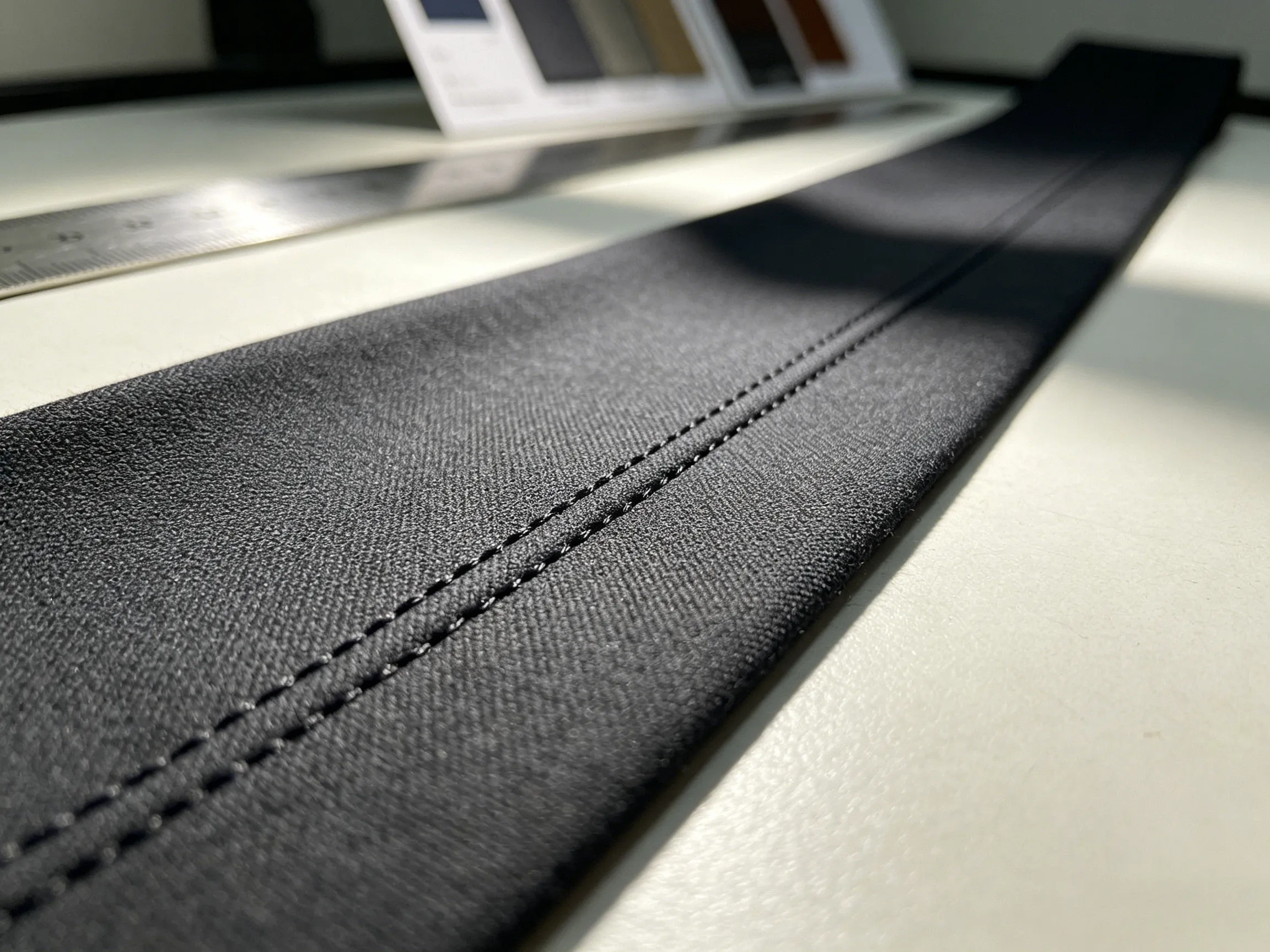
Before we can evaluate recycled PU safety, we need to understand what we are working with. PU leather — shorthand for polyurethane leather — is a synthetic leather alternative. At its core, every PU leather consists of three engineered layers:
- Polyurethane coating — the polymer surface layer that gives the material its leather-like appearance, flexibility, and texture.
- Synthetic leather structure — the backing layer that provides dimensional stability and tensile strength.
- Fabric backing — typically polyester or a blended knit that holds everything together.
.webp)
Where Recycled PU Comes From
Recycled PU leather is engineered the same way as standard PU leather, but with one critical difference: a portion of the polyurethane resin is sourced from recycled PU feedstock rather than 100% virgin petrochemical polymers.
The recycled content typically comes from:
- Production waste — off-cuts and scrap from PU manufacturing lines that would otherwise go to landfill.
- PU scraps — post-industrial material that has been collected, cleaned, and reprocessed.
- Industrial leftovers — material recovered from end-of-life PU products that have been depolymerized and re-engineered.
Is Recycled PU Leather Toxic?
This is the question that brought you here, so let us address it directly.
Recycled PU leather is not automatically toxic — but it is also not automatically safe. The safety profile depends entirely on three factors:
- What chemicals were used in the original material that became the recycled feedstock.
- What chemicals are used during reprocessing to create the new PU resin.
- What chemical compliance testing has been performed on the final product.
Does Recycled PU Leather Contain Harmful Chemicals?
Here is where responsible sourcing gets complex. Recycled PU may involve chemicals that concern buyers:
- Solvents — used during PU coating and finishing processes.
- Plasticizers — added to increase flexibility and hand-feel.
- Residual chemicals — from the original material that entered the recycling stream.
However — and this is critical — so does virgin PU leather. The presence of these chemical categories does not automatically make a material unsafe. What matters is the concentration, the type, and whether the material has been tested against restricted substance limits.
Is Recycled PU Safer Than Regular PU?
This is one of the most common misconceptions we encounter. There is no universal answer. Let us compare:
| Factor | Recycled PU | Virgin PU |
|---|---|---|
| Raw Material Source | Recycled PU sources (variable quality) | New petrochemical-derived chemicals |
| Chemical Safety | Depends entirely on supplier controls | Depends entirely on supplier controls |
| Sustainability Profile | Potentially better — lower virgin resource demand | Lower — full virgin feedstock |
| Cost | Usually slightly higher | Lower |
| Traceability | More complex — requires GRS chain of custody | More straightforward |
The takeaway: safety is not determined by whether a material is recycled or virgin. Safety depends on manufacturing process controls, chemical testing, and compliance verification. Both recycled and virgin PU can be safe — or unsafe — depending entirely on how they are made and tested.
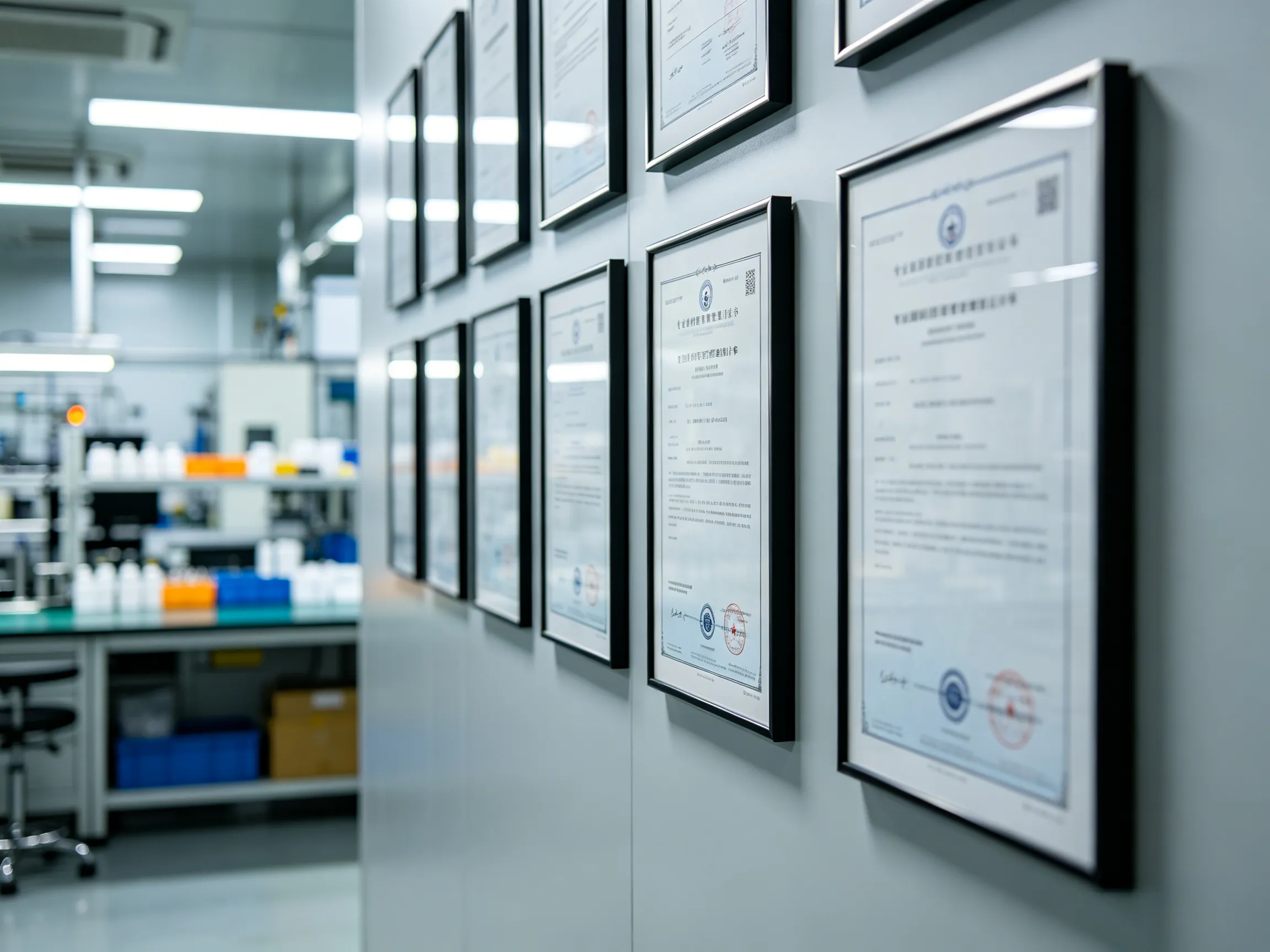
The question should never be “Is recycled PU toxic?” The question should always be: “Has this specific recycled PU been tested against REACH restricted substance limits and certified safe for its intended end use?”
What Chemicals Should Buyers Check in Recycled PU Leather?
For buyers who want a systematic approach to chemical safety, here are the categories that matter most when evaluating recycled PU leather for bags and accessories.
1. VOC Emissions
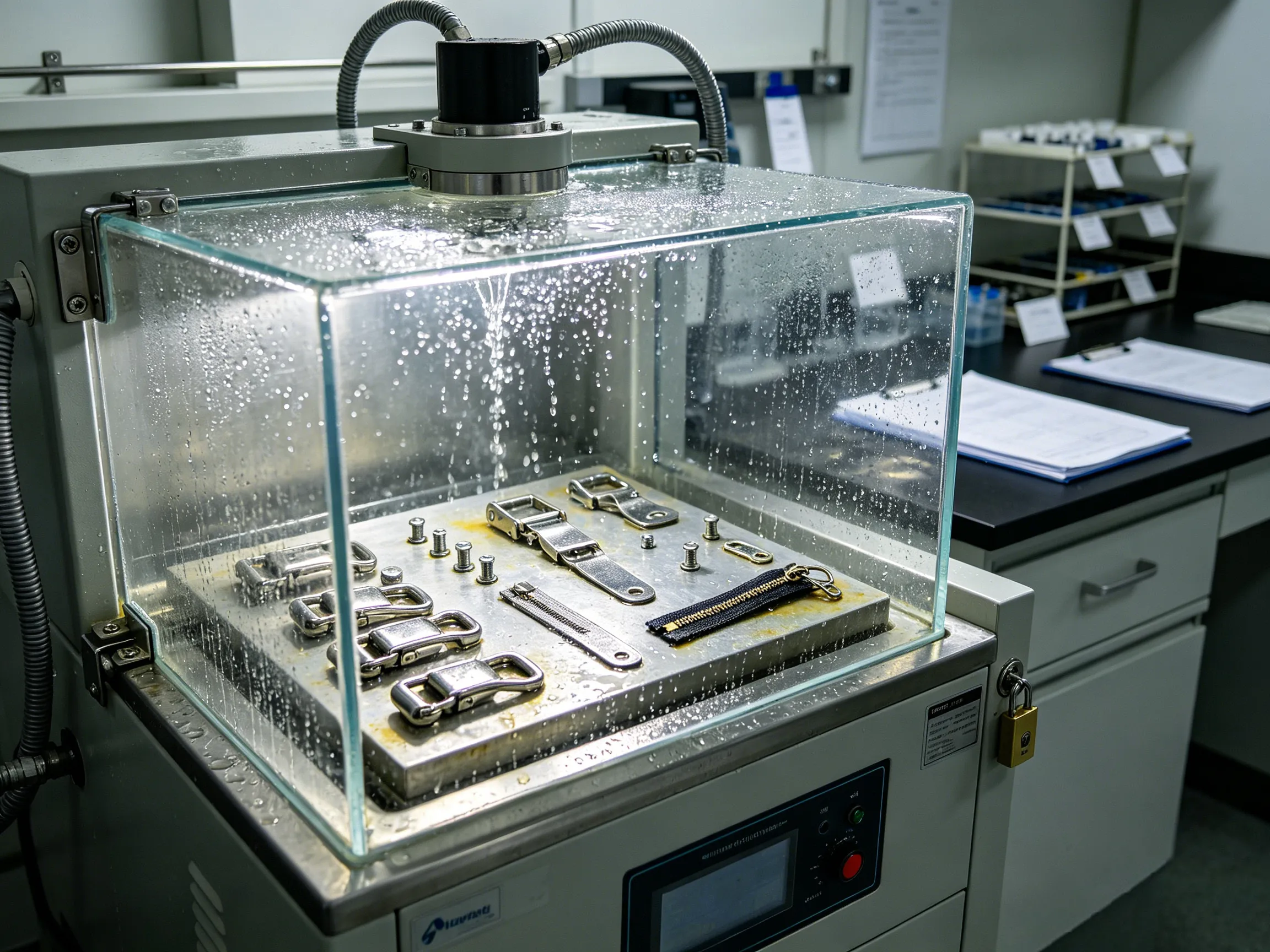
VOCs (Volatile Organic Compounds) are chemicals that off-gas from PU materials, particularly in warm or enclosed environments. For bags that will be stored in closets, shipped in containers, or used in cars, VOC levels matter.
2. Formaldehyde
Formaldehyde can be present in some PU coatings and finishes. Many international safety standards — including OEKO-TEX Standard 100 and REACH — set strict limits on formaldehyde content in products intended for skin contact.
3. Heavy Metals
Some colorants and coatings used in PU leather may contain restricted heavy metals such as lead, cadmium, chromium, and mercury. These are restricted under REACH and other regulatory frameworks.
4. Phthalates
Phthalates are plasticizers used to increase flexibility in PU materials. Certain phthalates — notably DEHP, DBP, and BBP — are restricted in children’s products and are under increasing regulatory scrutiny in the EU and US for adult accessories.
5. Restricted Substances
The REACH regulation (Registration, Evaluation, Authorisation, and Restriction of Chemicals) maintained by the European Chemicals Agency (ECHA) provides the most comprehensive list of restricted substances for materials sold in the EU market.
Buyer Chemical Safety Checklist
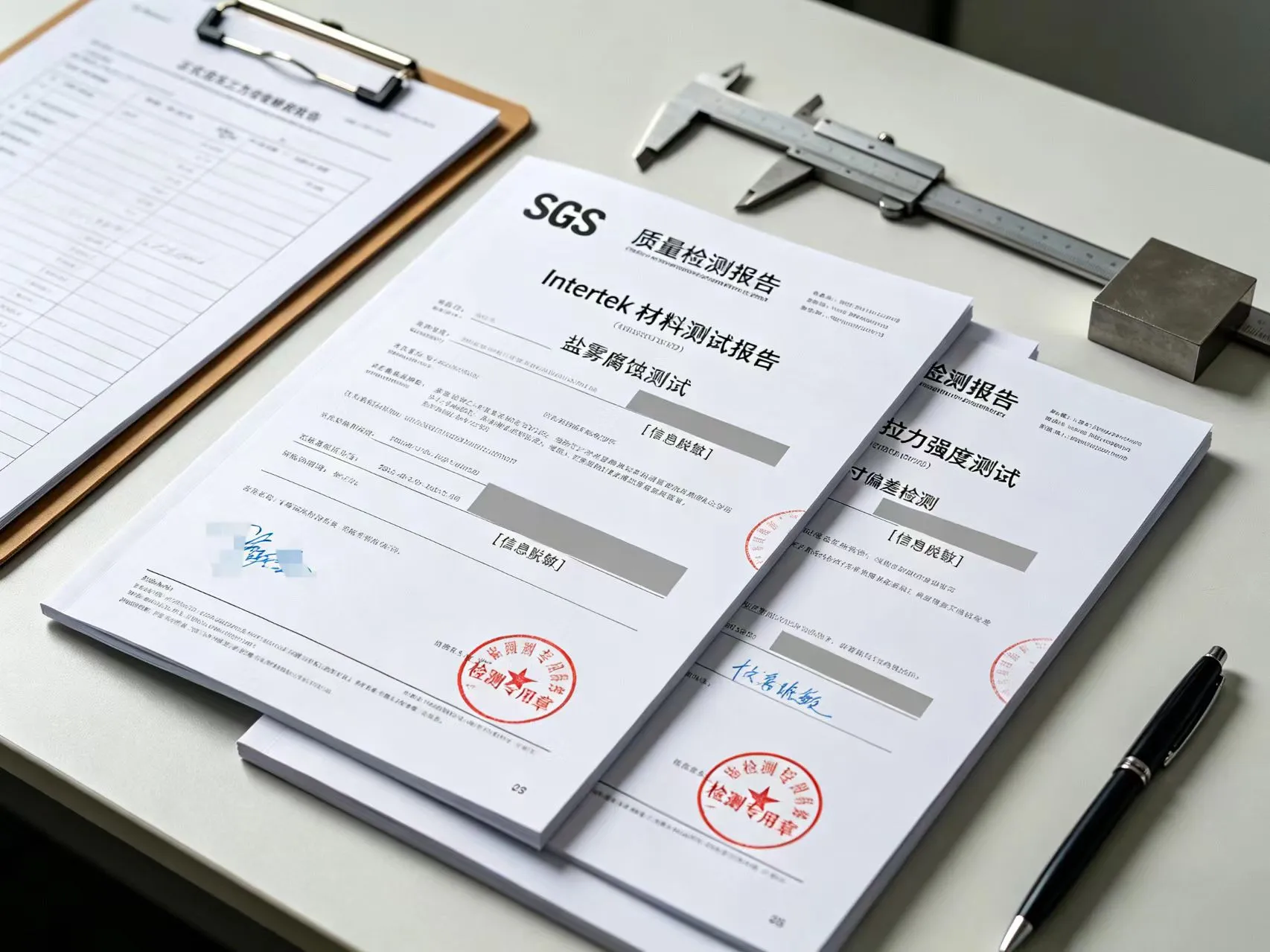
- Request Material Test Report (MTR)
- Request Chemical Compliance Report
- Request Supplier Declaration of Conformity
- Verify Third-Party Inspection Certificate
- Confirm REACH compliance for EU market
- Check OEKO-TEX certification status
Certifications for Safe Recycled PU Leather
Certifications are how the industry verifies that a material is actually what the supplier claims. Here are the certifications that matter most for recycled PU safety and compliance.
OEKO-TEX Standard 100
OEKO-TEX Standard 100 is one of the most recognized textile safety certifications globally. It tests finished products — including PU leather — for harmful substances and verifies they are safe for human skin contact.
What it covers: Restricted substances, harmful chemicals, VOC emissions, and pH levels.
Best for: Brands selling to European and North American retail markets where consumer safety standards are high.
REACH Compliance
REACH (Registration, Evaluation, Authorisation and Restriction of Chemicals) is the European Union’s regulatory framework for chemical safety. It is not a product certification — it is a legal requirement for materials sold in the EU.
What it covers: Over 200 restricted substances, including phthalates, azo dyes, heavy metals, and formaldehyde.
Best for: Any brand selling in the European Union market or working with EU-based retail partners.
California Proposition 65
California Proposition 65 is a California state law requiring businesses to warn consumers about significant exposure to chemicals known to cause cancer, birth defects, or other reproductive harm.
What it covers: A broader list of chemicals than REACH, including some phthalates and flame retardants.
Best for: Brands selling in California or to US retail markets that require Prop 65 compliance.
GRS (Global Recycled Standard)
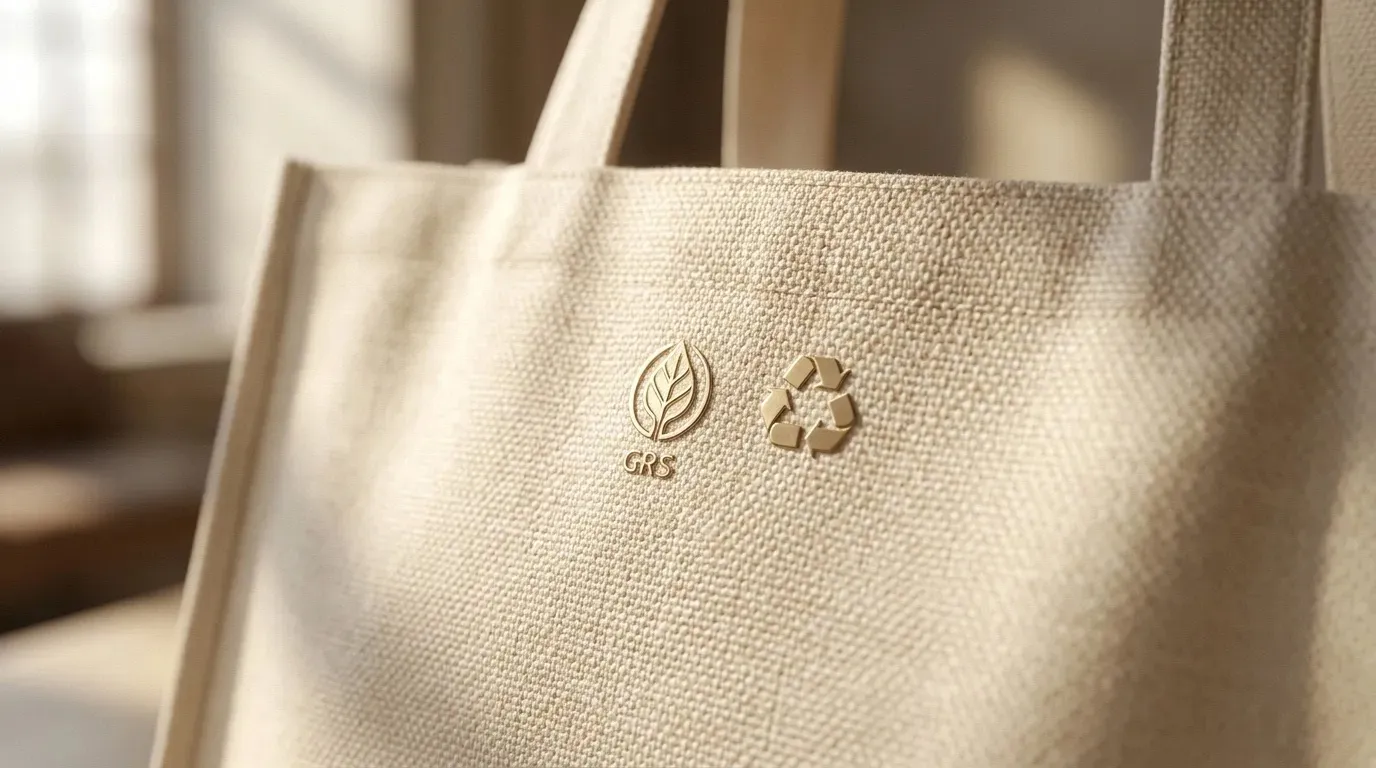
The GRS is administered by Textile Exchange and verifies that a product contains recycled content and tracks the chain of custody from source to final product.
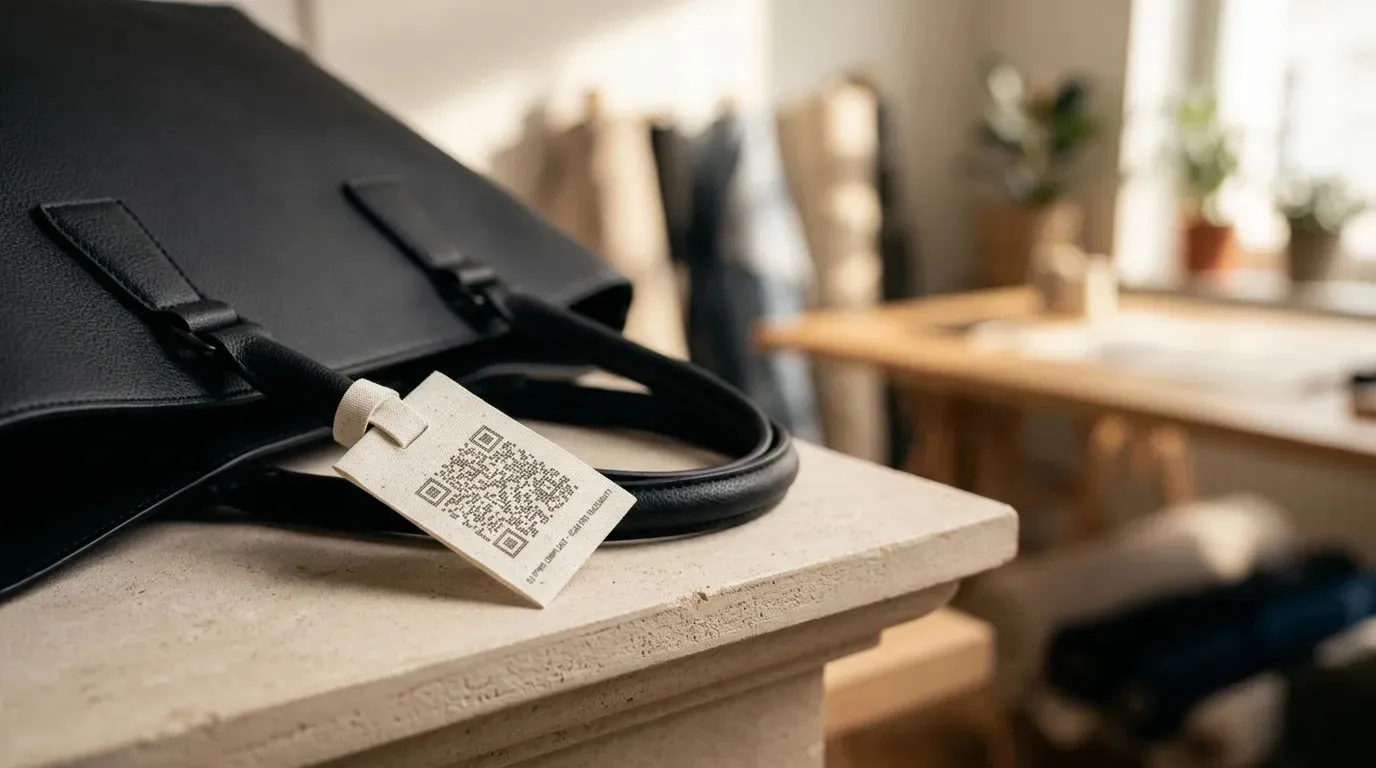
Important: GRS certifies recycled content and traceability — it does not certify that a material is “non-toxic” or “safe for skin contact.” A GRS-certified recycled PU can still contain restricted substances. Always combine GRS certification with chemical compliance testing.
Recycled PU vs PVC: Which Material Has Higher Safety Risks?
Buyers frequently ask how recycled PU compares to PVC — another synthetic leather widely used in the bag industry. Here is a balanced comparison.
| Factor | Recycled PU | PVC (Vinyl) |
|---|---|---|
| Flexibility | Better — softer hand-feel | Medium — can be stiff without plasticizers |
| Chlorine Content | No chlorine — PU is chlorine-free | Contains chlorine — the base monomer is vinyl chloride |
| Environmental Profile | Better potential — reduces virgin resource demand | Lower — less recyclable, energy-intensive production |
| Application Range | Premium bags, fashion accessories, cosmetic bags | Mass-market bags, low-cost promotional items |
| Regulatory Risk | Lower — fewer global restrictions | Higher — more regulatory scrutiny globally |
Do not interpret this comparison as a categorical statement that PVC is “toxic.” Safety depends on formulation and compliance testing. Both well-formulated PVC and well-formulated PU can be safe; both poorly controlled materials can present risks. Always request test reports, never assume safety based on material category alone.
.webp)
How Bag Brands Can Verify Recycled PU Quality Before Ordering
This is the practical section for brand buyers who are ready to place orders. Follow these five steps before committing to a recycled PU program.
Step 1: Request Material Specification
Ask your factory or supplier for the complete material specification sheet (tech pack) for the recycled PU they are proposing. This should include:
- Recycled content percentage
- Thickness and weight
- Backing fabric composition
- Topcoat formulation
- Available colors and finishes
Step 2: Check Recycled Content
Request the GRS transaction certificate that verifies the recycled content percentage and chain of custody. This proves the material is genuinely recycled and traces it back to certified recycling sources.
Step 3: Review Compliance Reports
Request the chemical compliance reports, including:
- REACH compliance declaration
- OEKO-TEX certificate (if applicable)
- Proposition 65 compliance status
- Restricted substances test report
Step 4: Approve Samples
Order material swatches and prototype samples before mass production. Evaluate:
- Hand-feel and surface appearance
- Odor — recycled PU should not have strong chemical smell
- Flex and crease behavior
- Color consistency across dye lots
Step 5: Conduct Pre-Production Inspection
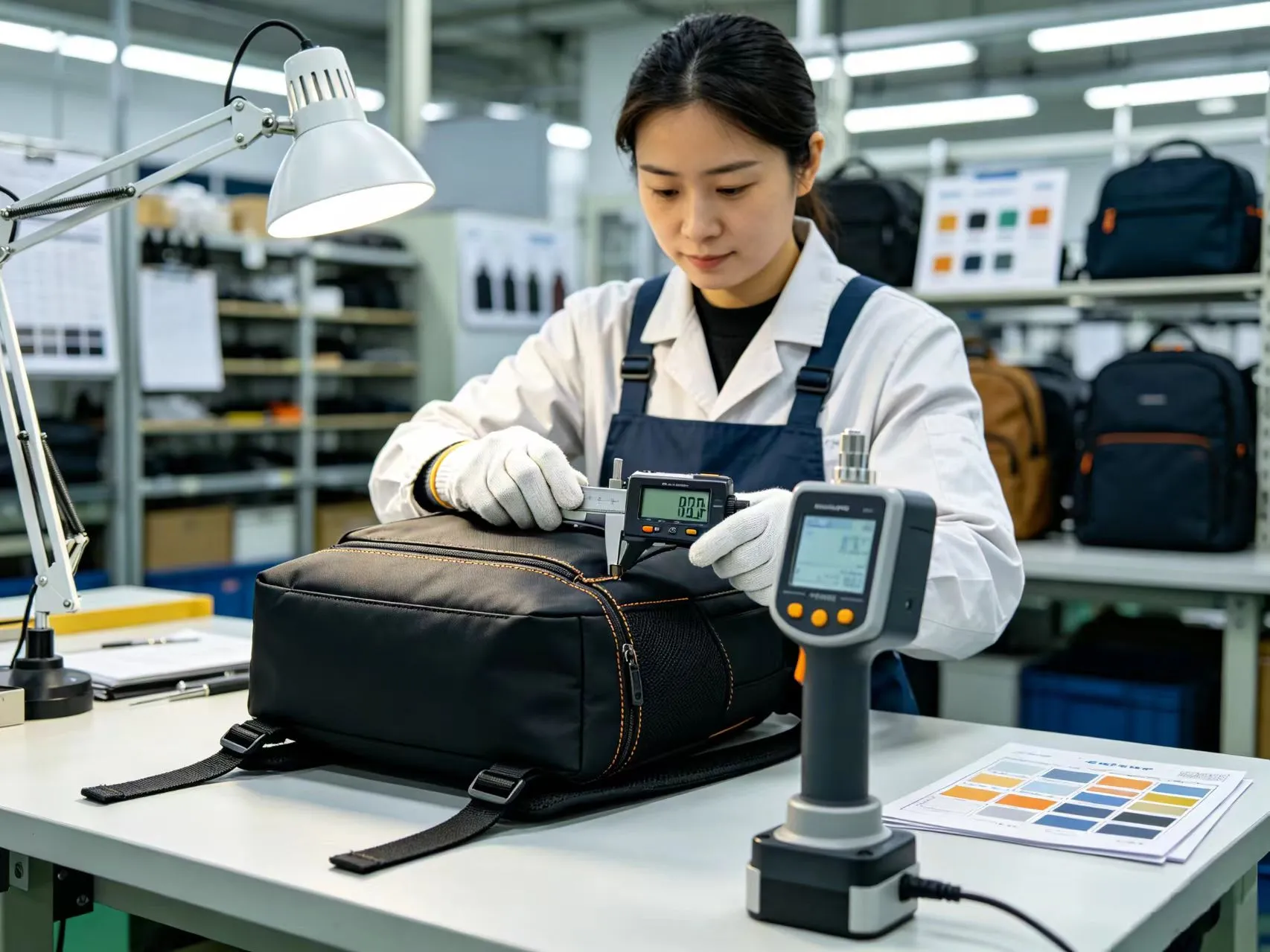
Before mass production begins, have the factory present the first article inspection (FAI) report. At Dreamway, we provide:
- Incoming material inspection report
- First article approval sample
- Color and thickness verification
- Chemical compliance documentation
How Recycled PU Leather Is Used in Custom Bags
Recycled PU leather has found broad application across the bag industry, particularly among brands that are building sustainable fashion collections and seeking credible environmental credentials without sacrificing product quality.
Common Applications
- Handbags — fashion handbags, totes, and shoulder bags where visual richness and brand story matter.
- Cosmetic bags — makeup cases and beauty organizers where soft hand-feel and easy cleaning are valued.
- Tote bags — reusable shopping totes and brand merch where sustainability messaging drives the purchase.
- Backpacks — casual and fashion-forward backpacks for eco-conscious consumers.

What Brands Are Saying
The brands we work with consistently tell us two things about recycled PU:
- It passes the visual test — consumers cannot tell the difference between premium recycled PU and standard PU on the shelf.
- It needs a credible story — the sustainability claim has to be verifiable, not just a label. GRS certification, chemical test reports, and transparent supply chain communication are non-negotiable for serious brands.


Expert Insights: Material Selection for Sustainable Bag Production
The following insights come from our manufacturing team — the people who live with recycled PU on the production floor every day.

Emily
Senior Project Manager · 12 Years in OEM Manufacturing“What questions do brands ask most about recycled PU?”
The most common questions are about documentation — buyers want the GRS certificate, the exact recycled content percentage, and full traceability. Right after that comes MOQ, because recycled PU often requires a higher minimum than standard PU. Then color options, finishing capability, and — almost always — the cost premium versus standard PU. I always advise brands to think about their sustainability story the same way they think about their bag’s design: it has to be authentic, verified, and ready to defend in front of their own customer.
“How do buyers evaluate sustainable materials?”
The most sophisticated buyers come with a compliance checklist. They want REACH declarations, OEKO-TEX certificates, GRS chain of custody, and restricted substances reports — all before they even ask about price. The brands that are serious about sustainability have done their homework.
“What documents should factories provide?”
At minimum: the GRS transaction certificate, the REACH compliance declaration, the restricted substances test report, and the OEKO-TEX certificate if available. We also provide full material specification sheets and first article inspection reports. If a factory cannot provide these documents, that is a red flag.
Kevin
Pattern Development Engineer · 15 Years Experience“How is recycled PU quality tested?”
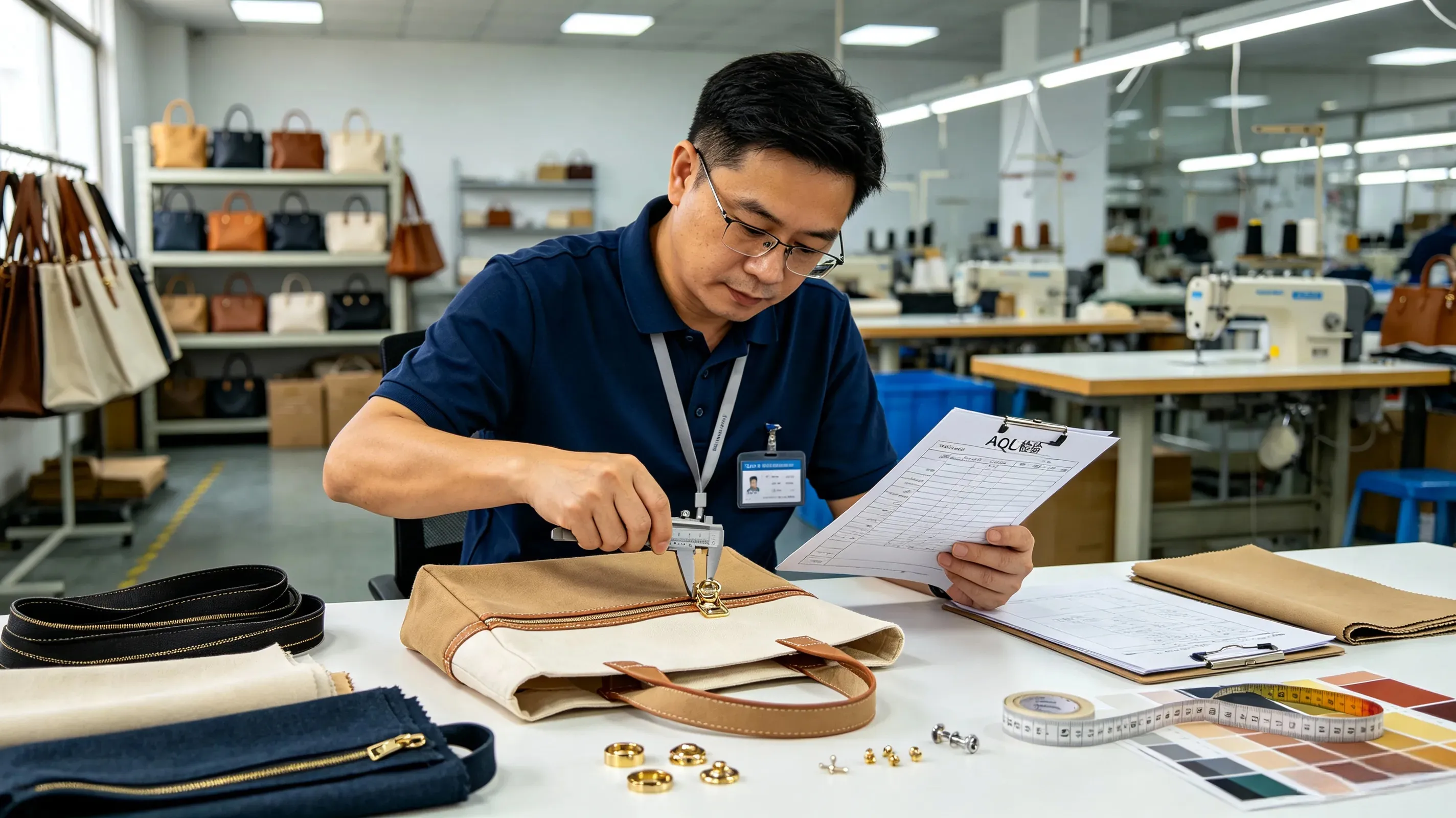
We start with incoming material inspection — checking thickness, color, and hand-feel against the approved golden sample. Then we run surface inspection under our standardized QC lighting, followed by durability testing on representative samples. Recycled PU is not a single product; it is a family of blends with varying formulations, so we treat every new lot as a fresh qualification. We verify the supplier’s recycled-content documentation and request the GRS transaction certificate before cutting the first panel.
“What defects should buyers watch for in recycled PU?”
Common issues include color batch variation (dye lots can shift more than with standard PU), surface orange-peel texture inconsistencies, and in some lower-quality formulations, a slightly stiffer hand-feel. We always recommend ordering multiple swatch samples across different dye lots before approving mass production.
“How does material choice affect durability?”
Durability in PU — whether recycled or virgin — is driven by coating formulation, coating thickness, backing fabric, and topcoat selection. A well-engineered recycled PU with proper testing will perform identically to a well-formulated virgin PU. The key is testing, not the label.
Frequently Asked Questions
Conclusion
Recycled PU leather is not automatically toxic — and it is not automatically sustainable. Both labels miss the point. What matters is this:
- Raw material sourcing — where the recycled feedstock comes from and what controls were in place.
- Manufacturing process — what chemical formulations are used and how quality is controlled.
- Chemical testing — whether the material has been tested against REACH restricted substance limits and certified by OEKO-TEX or equivalent.
- Supplier transparency — whether the factory can provide GRS chain of custody, REACH declarations, and restricted substances reports.
Ask for the test reports. Verify the certifications. Understand the recycled content percentage. And do not let the word “recycled” do the work that documentation should do.
At Dreamway, we work with brands worldwide who are serious about material safety and sustainability transparency. Our small team of 30+ professionals in Guangzhou serves clients across 50+ countries, providing complete material documentation, third-party inspection services, and full compliance support for recycled PU programs. Visit our website to discuss your next sustainable bag collection.
- Recycled PU vs PVC: Which Material Is Better for Sustainable Bags?
- Is Recycled PU Leather Toxic? Safety, Chemical Risks & Buyer Guide
- Recycled PU Leather: Is It Sustainable? Bag Brand Guide
- Recycled PU vs PU Leather: Which Is Better for Bags?
- What Is Recycled PU Leather? Complete Guide for Bag Brands
- PU vs. Polyester for Bags: Which Material Is Better for Your Brand?
- Silk vs. Bamboo vs. Tencel: Why Luxury Wellness Brands Still Choose Real Mulberry Silk for Bedding
- How to Spot Fake Silk: A Factory Guide to Testing Real Mulberry Silk for B2B Buyers
- The Ultimate Guide to Sourcing Mulberry Silk: 16mm vs 19mm vs 22mm Compared
- Canvas vs. Polyester vs. PU: Material Comparison
- Guide to Sustainability: GRS, OEKO-TEX & FSC
- Canvas Fabric Weight Guide: GSM and Oz Explained
- The Future of Vegan Leather: Pineapple, Cactus, and Apple Fiber
- Water-Based PU vs Recycled PU: Which Is Better for Bags?
- Why Water Based PU Leather is so popular?
- Comparing Cotton vs. Blended Canvas for Tote Bags
- Eco-Friendly and Sustainable Canvas Tote Bags
- Canvas Tote Bag Material & Weight Guide: oz/GSM Chart for Every Bag Type
- Sustainable Custom Tote Bags with Logo: Certifications, Materials & Greenwashing Red Flags
- Canvas Tote Bag Factory: What Affects the Durability?
- Cotton Tote Bag Factory: Grades, GSM Options & Fabric Testing
- Luxury Tote Bag Factory for Premium Brands (PU/Leather Options)
- Recycled Tote Bag Factory: RPET, Organic Cotton & Eco-Friendly Materials
- Top Custom PU Handbag Factories & Pro Tips for Choosing Quality
DREAMWAY
Custom Bag & Silk Manufacturer · Shiling, Guangzhou
Company
Products
Guides & Insights
Ready to Bring Your Bag Idea to Life? Let’s Talk Today.
From your first sketch to bulk delivery, our team replies within 12 hours with expert advice and a free quote. No pressure — just honest manufacturing guidance.

Prefer a call? +86-020-87682749 · Mon–Sat, 9:00–18:00 (GMT+8)