
Guangzhou Leather Bag Manufacturing Cluster: Inside Huadu & Shiling (The Buyer’s Map)
If you’ve ever tried to source leather bags out of China, you already know how chaotic the search can get. There are tens of thousands of factories, hundreds of trading companies, and very few honest maps. This guide fixes that. The Guangzhou leather bag manufacturing cluster — anchored by Shiling International Leather City in Huadu and stretched across Baiyun, Liwan, Zengcheng, and Shunde — is the largest leather goods ecosystem on the planet. More than 23,000 factories, 8,800 manufacturers, and 700 million bags roll out of it every year, going to buyers in 142 countries. Think of this as the buyer’s map our team has wished existed for the last decade.
The Short Version
Five sub-clusters make up the cluster: Huadu (the OEM heart), Liwan (premium private label), Baiyun (small-MOQ trading), Zengcheng (newer luxury pivot), and Shunde (furniture-leather spillover). On cost, Guangzhou runs 60–70% under Italy, 10–15% under India, and matches Vietnam while leaving it behind on ecosystem depth. If you only have a week, plan a four-day visit, match the sub-cluster to your product, and ask for BSCI, LWG, or ISO 9001 paperwork before you sign anything.
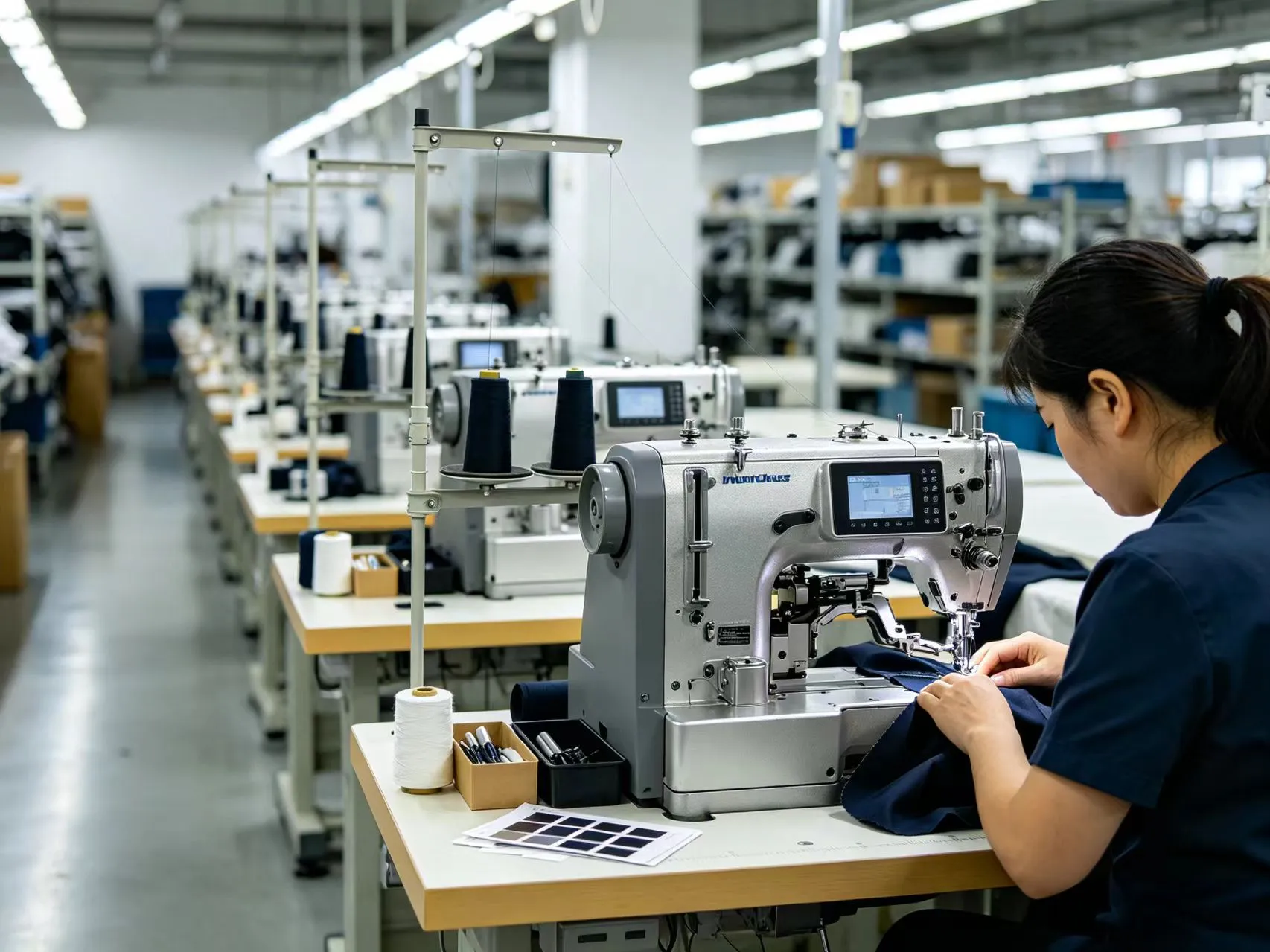
Who’s Actually Making Your Bags
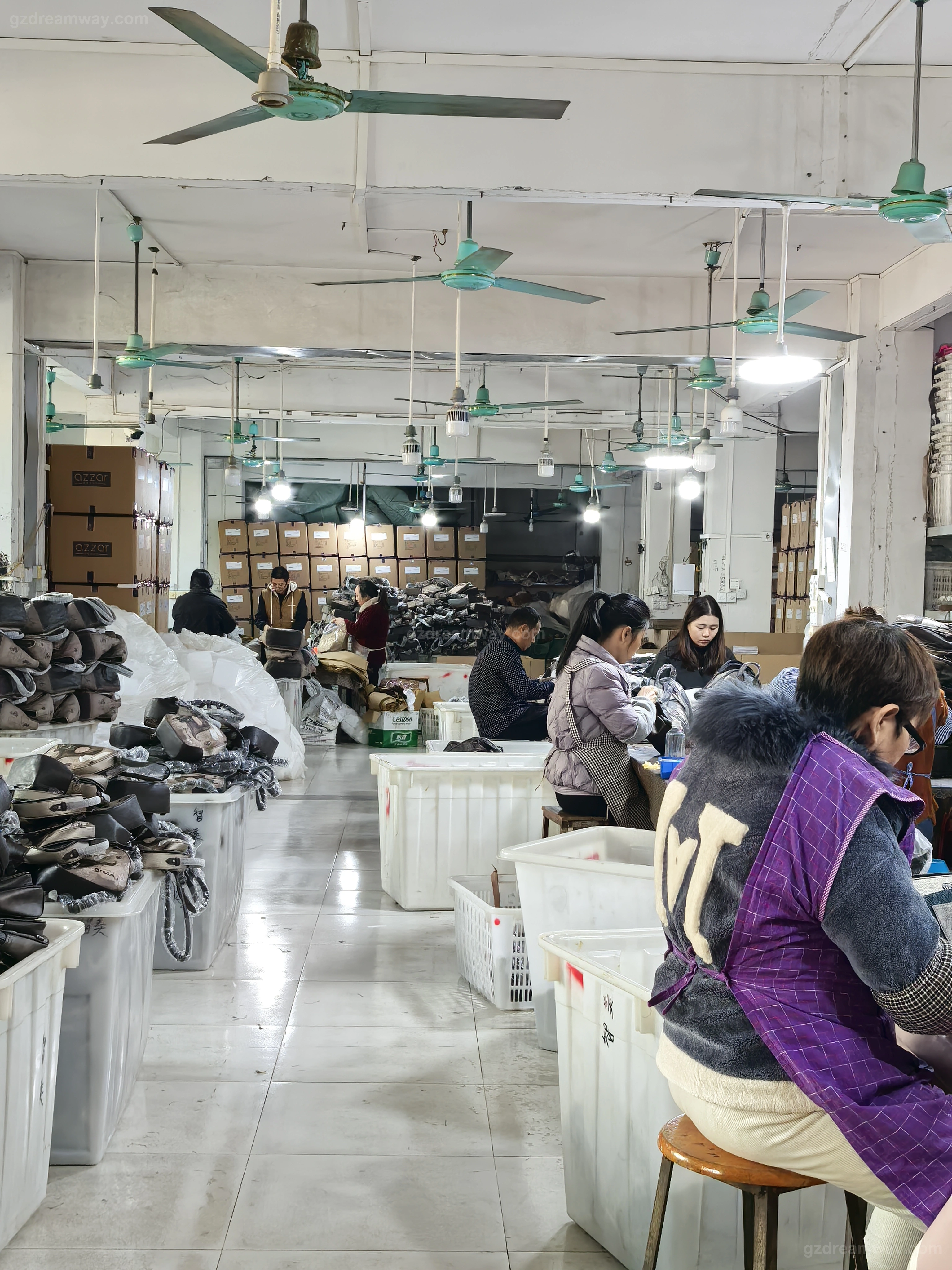
A quick word on us before we dig into the cluster. GZDreamway has been a working handbag factory in Guangzhou’s Huadu district since 2008. We run a small but tight team — 30+ people, including pattern makers, project managers, and QC leads — and we ship to brands in over 50 countries. Our MOQ sits at 200 pieces for bags and 50 pieces for silk. Below are the three people you’ll most likely end up emailing.
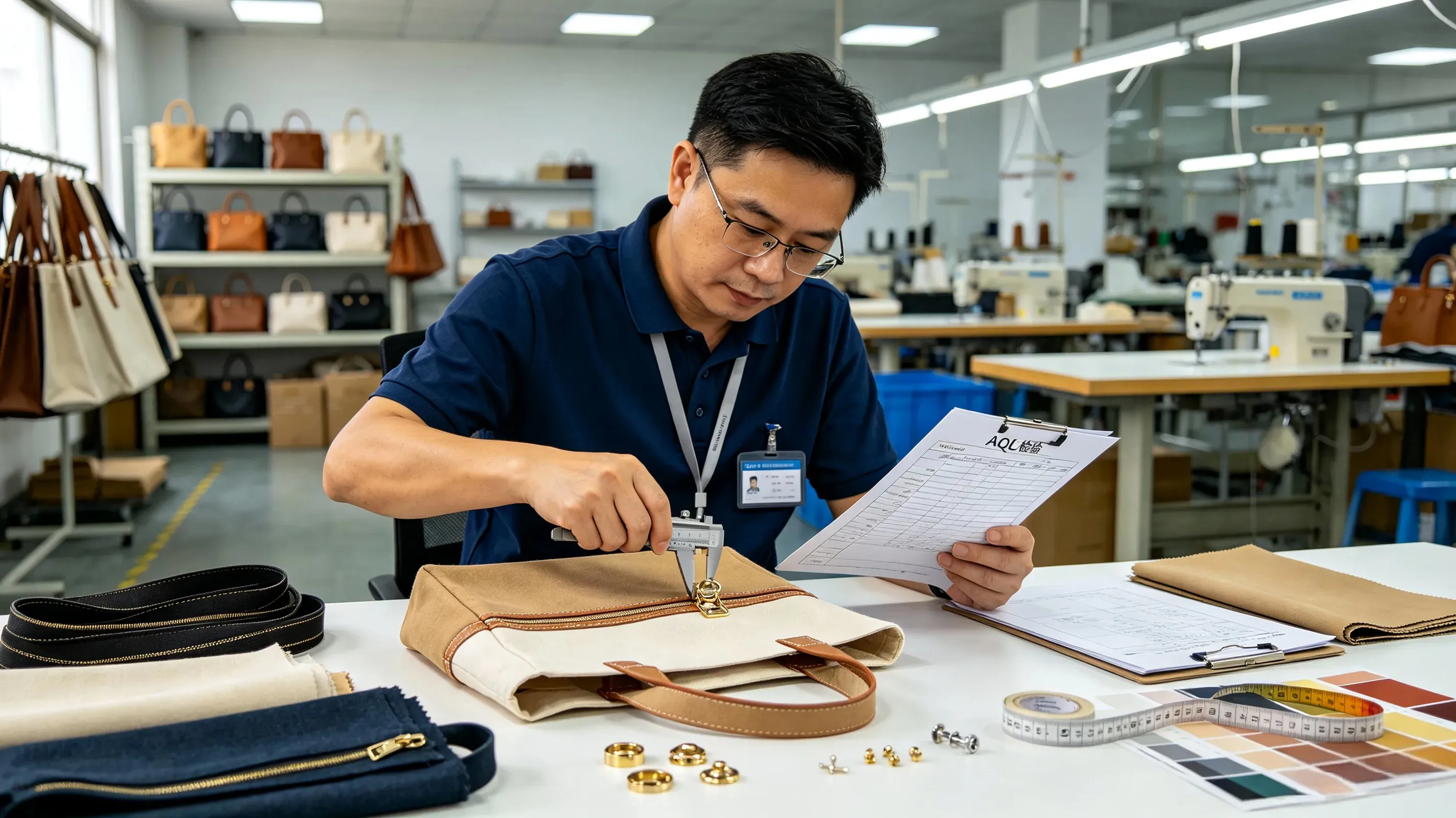
15 years cutting patterns in leather, canvas, nylon, and technical fabrics. He’s the one who’ll tell you if your tech pack is going to fall apart on the production line.

12 years in OEM bag manufacturing. She typically runs 15–25 active projects at any given moment, and she’s the one who’ll keep your timeline honest.
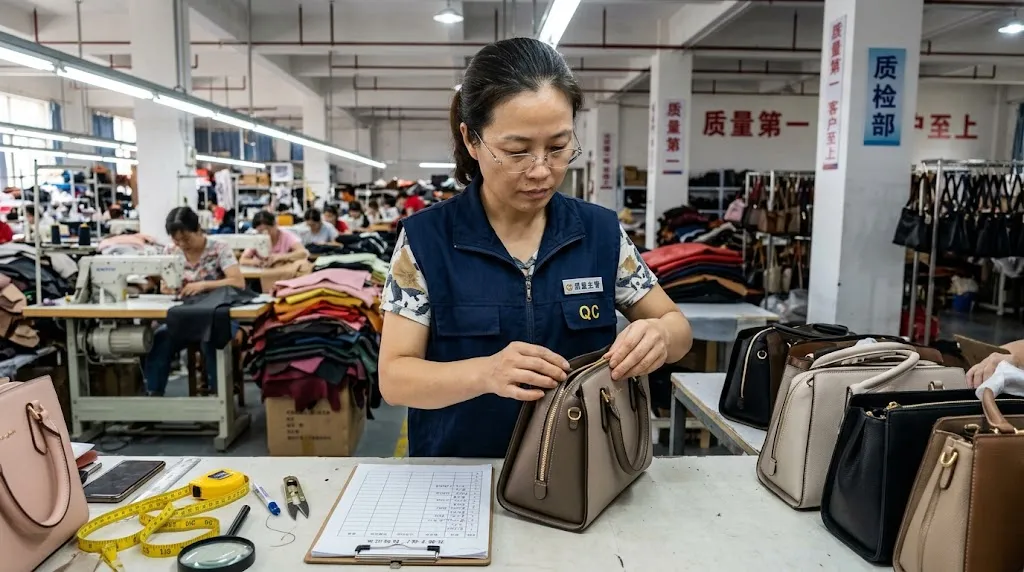
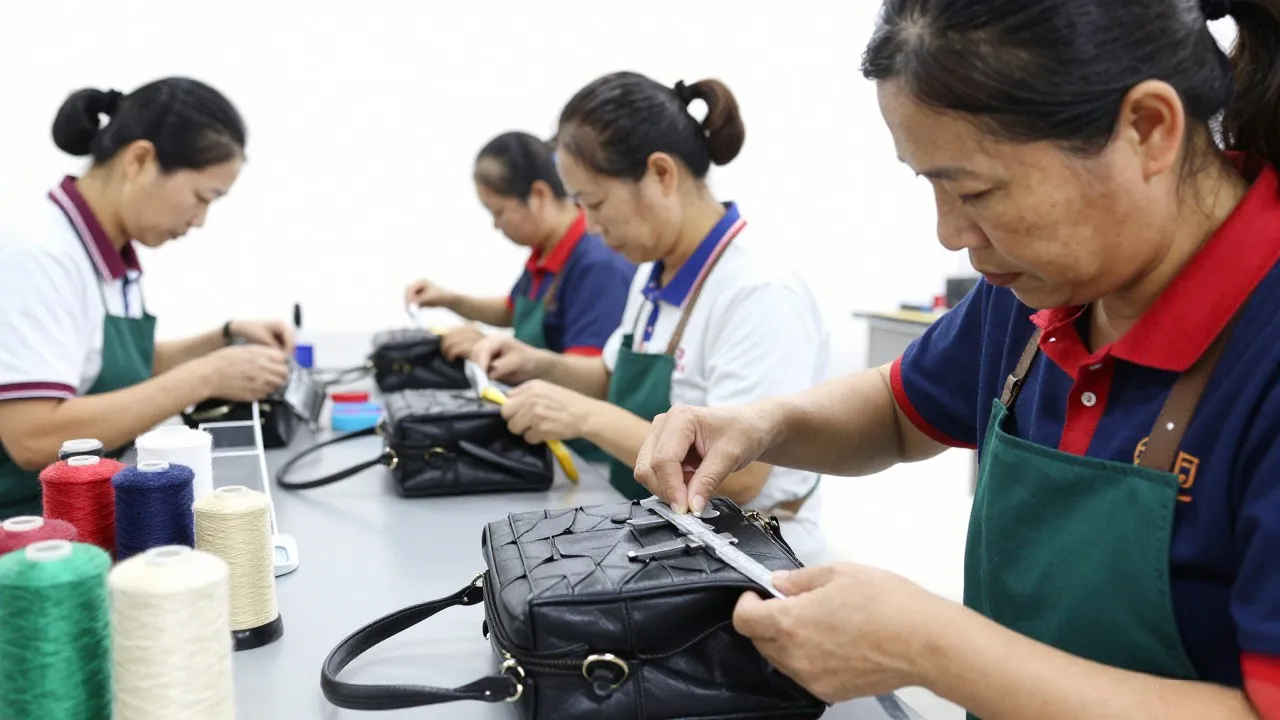
13 years of hands-on QC across stitching, hardware, and material consistency. She catches the issues before they ever reach your customer.
Reach us directly: gzdreamway.com · 86-20-8768-2749 · Victoria@gzdreamway.com · info@gzdreamway.com
See our manufacturing quality standards for the full QC breakdown.
Where the Cluster Actually Sits: 5 Sub-Clusters Inside Guangzhou
The Guangzhou leather bag factory hub is not one place. It’s a sprawl of five distinct sub-clusters, each with its own personality. Pick the wrong one and you’ll waste a week of meetings.
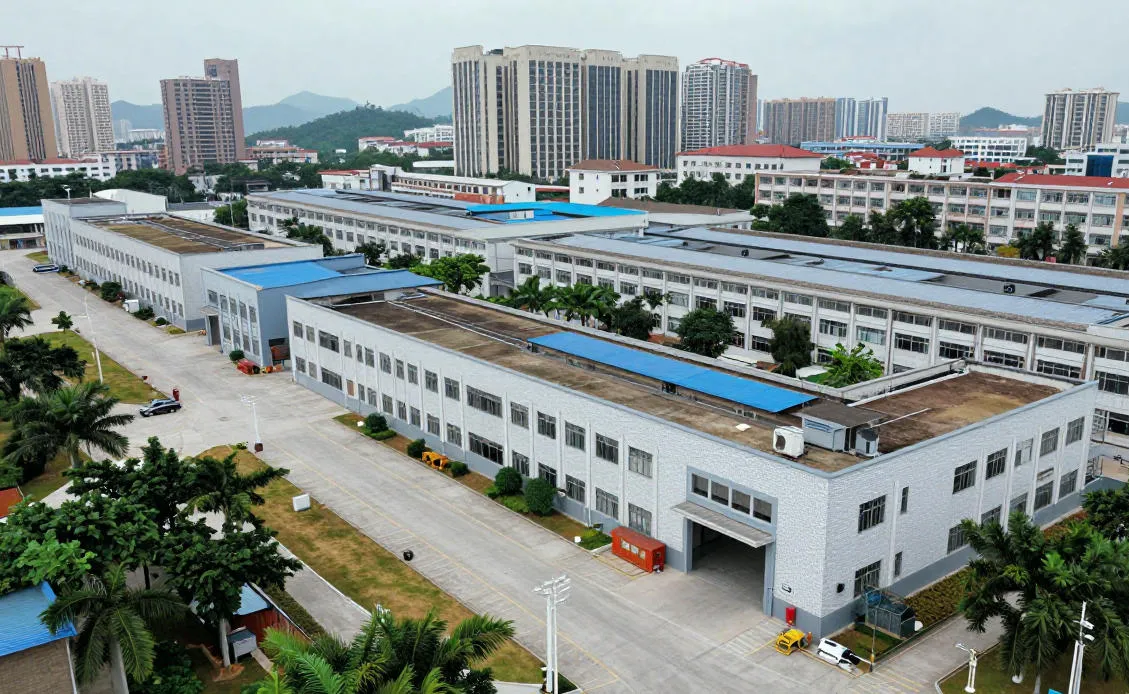
Huadu District (Shiling Town) — the OEM heart
Start in Huadu. That’s where Shiling International Leather City sits — 800,000 m², 4,200 shops, 8,800+ manufacturers cranking out roughly 700 million bags a year. This is the OEM and ODM volume tier. If you’re sourcing for a mid-size brand and care more about speed and cost than hand-burnished edges, you live here. Buyers looking for verified top 10 leather bag manufacturers in China usually start their shortlist in Huadu.
Liwan District — premium private label
Liwan is smaller (about 300 factories), but the skill density is noticeably higher. This is where you’ll find a custom luxury leather handbag manufacturer or a custom leather tote bag manufacturer that can actually handle a private-label program from sampling to packaging. Bonus: Liwan has direct access to the Canton Fair complex.
Baiyun District — small MOQ and trading
Baiyun is the trading-company layer, and it’s where the small MOQ leather handbag factory China segment lives. If your first order is under 100 pieces, you almost certainly want to source here. Beauty brands, by the way, will want a leather cosmetic bag manufacturer that already knows the cosmetic pouch line.
Zengcheng — the emerging luxury cluster
Zengcheng is the new kid. About 200 factories have been pivoting from mass-market PU to mid-premium private label over the last few years. The trade-off is good for smaller brands: lower MOQs, more flexibility, and a lot fewer EU buyers competing for line capacity.
Shunde (Foshan) — the furniture-leather spillover
Cross over to Foshan and you hit Shunde, where the leather furniture ecosystem bleeds into bag production. About 150 crossover factories sit here. Worth a look if you want a leather crossbody bag manufacturer with furniture-grade leather access outside the main cluster.
Why Guangzhou Became the World’s #1 Cluster
There’s one structural reason the Huadu Shiling leather bag cluster is number one, and it isn’t cheap labor. It’s geography. Every link of the bag supply chain sits within a 40-kilometer radius.
Reason 1 — material density
Inside the Guangzhou cluster, tanneries, hardware makers, lining suppliers, and edge-paint specialists are all within 40 km of each other. A sample that takes 14–21 days in India or Vietnam turns around in 5–7 days here. The leather handbag manufacturing process gets shorter because the raw materials are closer, not because the wages are lower. That’s an underrated point — the speed advantage is structural, not exploitative.
Reason 2 — 40+ years of skilled labor
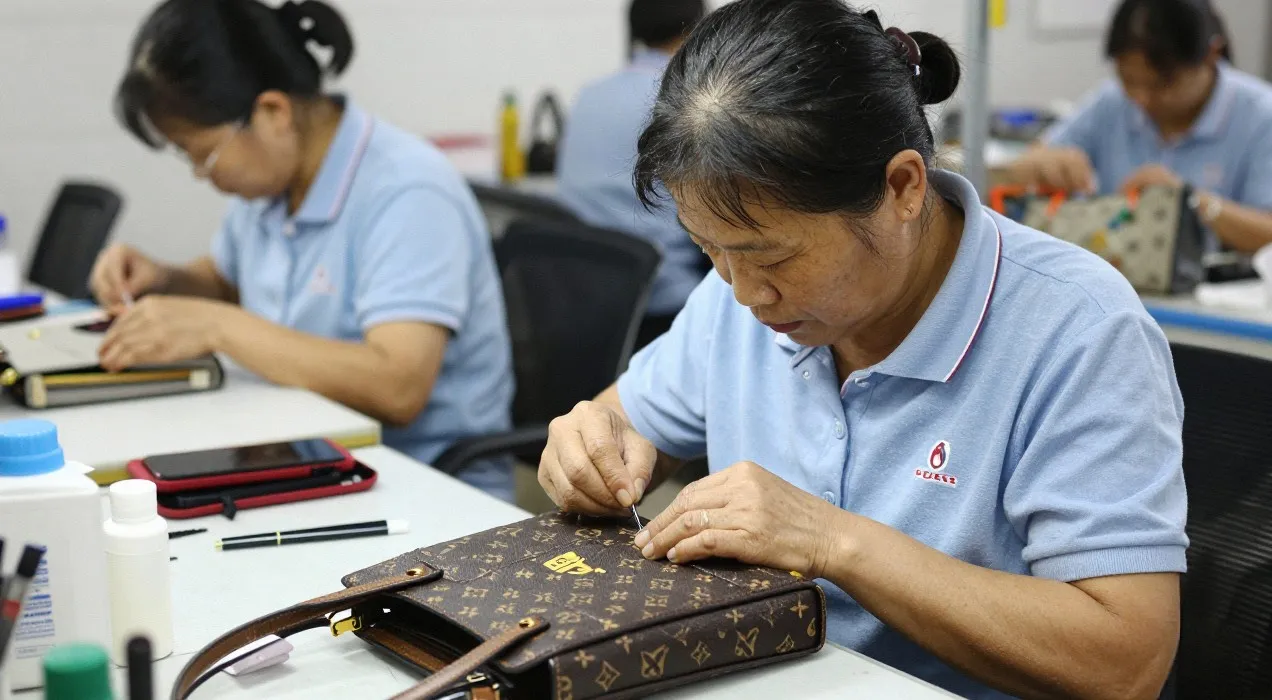
Shiling’s first leather workshop opened its doors in 1978. That’s nearly fifty years of cutters, skivers, and edge finishers training the next generation. A sustainable leather handbag manufacturer operating inside the cluster can draw on that labor pool; a newer cluster simply can’t replicate it. Wages are mid-range by global standards. Skill level is high.
Reason 3 — Canton Fair is right there
The Canton Fair runs in April and October, and it’s basically the cluster’s global shop window. Buyers visiting can shortlist 5–10 factories in a single fair day, then spend two days in Huadu finalizing the handbag tech pack template before any contract gets signed. We’ve seen buyers compress a 3-month remote search into one Canton Fair week.
Inside the Supply Chain: 4 Stages, 1 Cluster
A leather bag goes through four distinct stages inside the cluster, and each stage pulls from a different specialist in the same 40-km radius. That’s what makes the lead times possible.
Stage 1 — upstream tanneries
LWG-certified tanneries ring Huadu and supply the raw hides. The 5–7-day gap between hide purchase and cutting is what makes this cluster faster than Vietnam (3–4 weeks) and India (2–3 weeks). Bag hardware sourcing kicks off in parallel while the hides are still being prepped.
Stage 2 — the factories
The honest way to choose a leather handbag manufacturer in the cluster: look for BSCI plus ISO 9001, at least 5 years in operation, in-house cutting and stitching, and a dedicated sampling room. A 5,000-m² factory floor is the standard mid-tier benchmark. Below that, you’re looking at a workshop. Above 15,000 m², expect slower decision cycles.
Stage 3 — components
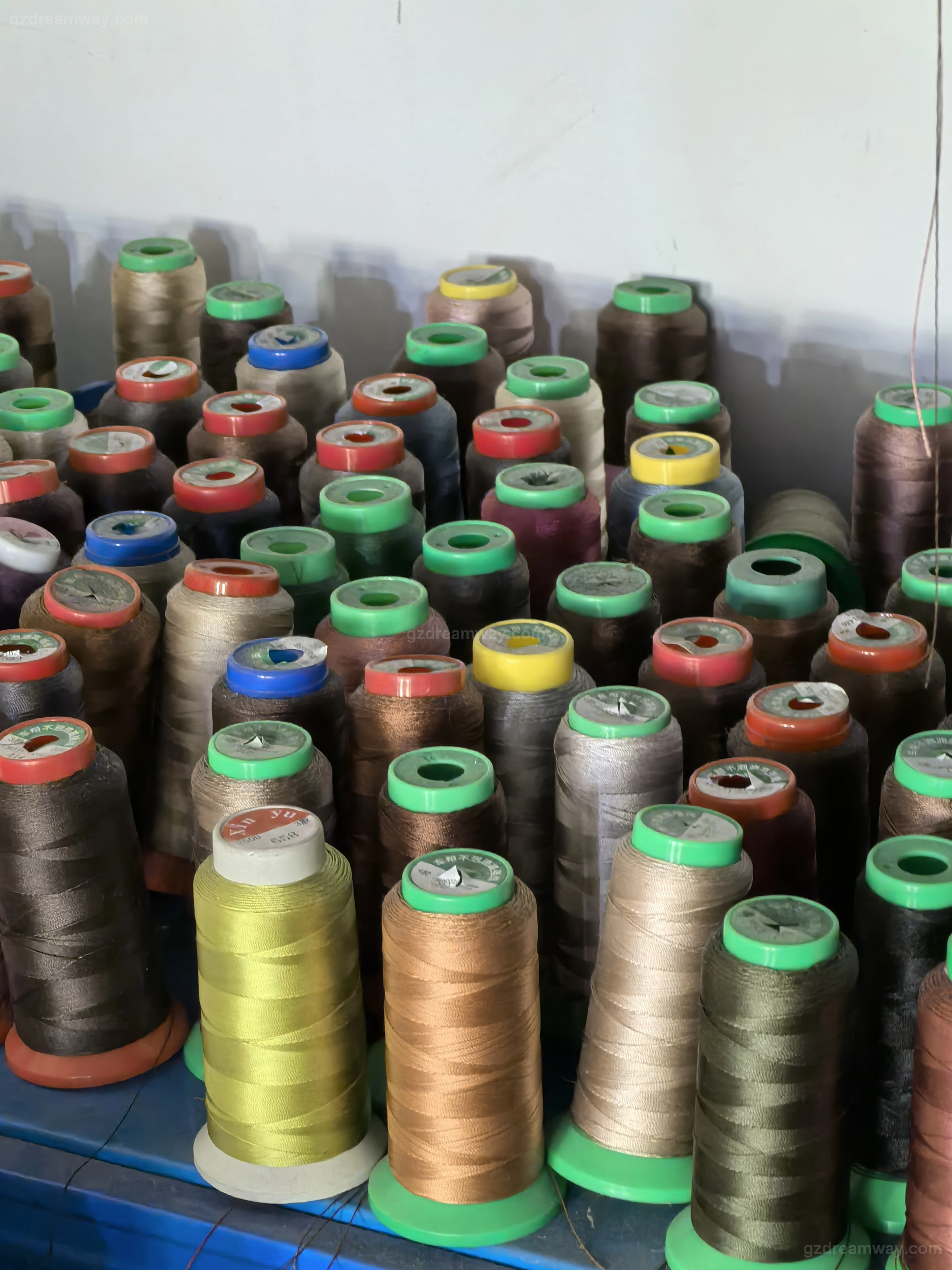
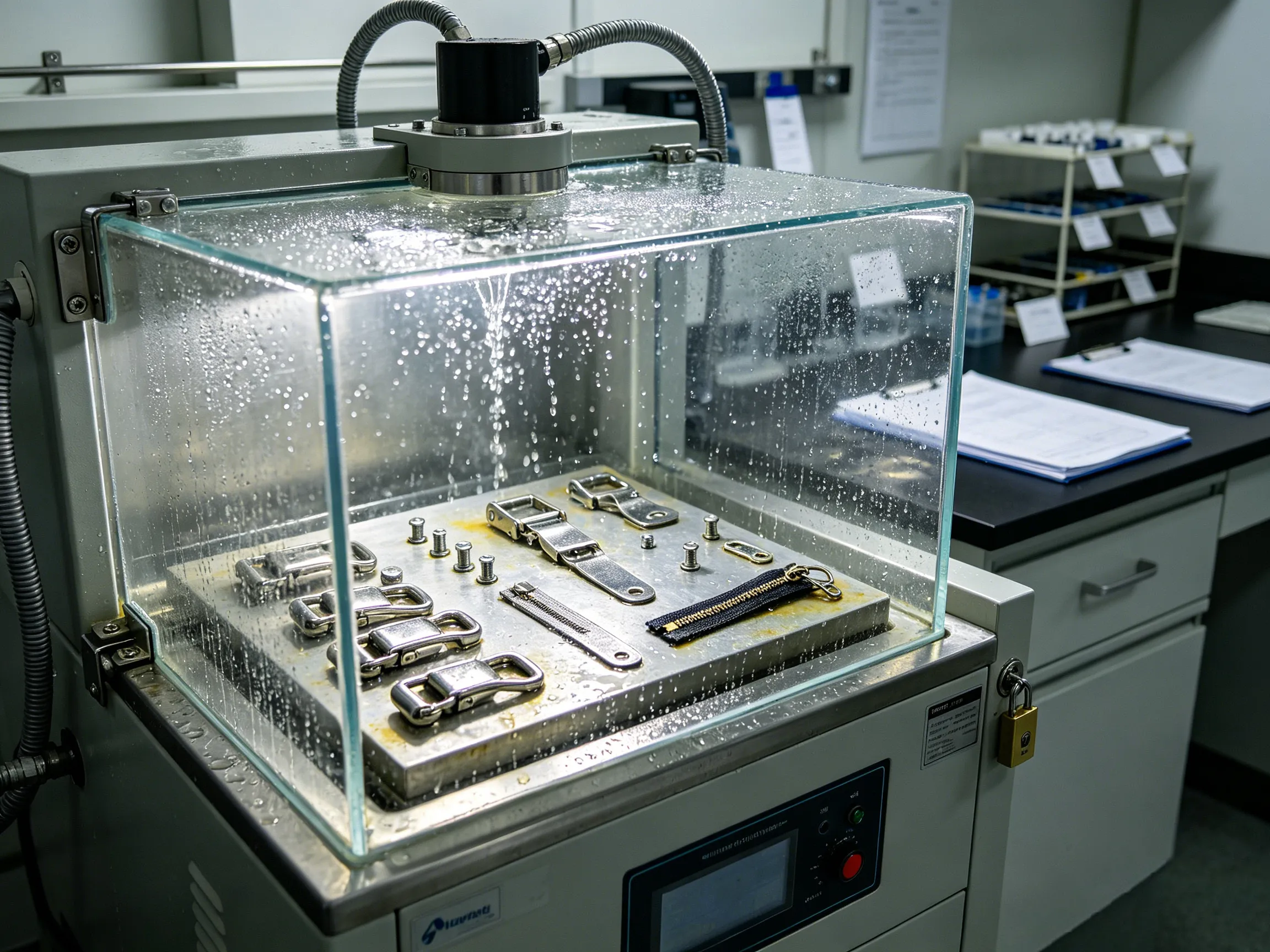
YKK zippers (and three credible Chinese alternatives), zinc-alloy and brass hardware, linings, edge paint, packaging — all sourced from dedicated component suppliers inside the cluster. This is why the leather bag quality control checklist ends up with 18 separate control points: each component has its own QC step.
Stage 4 — export logistics
Shenzhen (110 km south) and Hong Kong (140 km south) handle roughly 95% of cluster exports. Before you book freight, work through the complete HS code guide for handbags. Get the codes wrong and your shipment sits at customs for two weeks.
Guangzhou vs Italy vs India vs Vietnam
On a like-for-like mid-tier leather handbag, the Guangzhou cluster runs 60–70% under Italy, 10–15% under India, and matches Vietnam on cost while leaving it behind on ecosystem completeness. The table below is the one we use internally when clients ask.
| Dimension | China (Guangzhou) | Italy | India (Kanpur) | Vietnam (HCM) |
|---|---|---|---|---|
| MOQ | 100–300 | 200–500 | 500–1,000 | 300–500 |
| FOB (mid-tier) | $15–25 | $80–150 | $12–20 | $13–22 |
| Lead time | 35–50d | 60–90d | 45–70d | 40–60d |
| Sample time | 7–14d | 21–30d | 14–21d | 14–21d |
| Hardware ecosystem | ⭐⭐⭐⭐⭐ | ⭐⭐⭐⭐⭐ | ⭐⭐ | ⭐⭐⭐ |
| IP protection | ⭐⭐⭐ | ⭐⭐⭐⭐⭐ | ⭐⭐ | ⭐⭐⭐ |
| English support | ⭐⭐⭐⭐ | ⭐⭐⭐ | ⭐⭐ | ⭐⭐⭐ |
For a full cost-structure breakdown of Chinese handbag production, see the dedicated guide. And the 7 price factors that affect your unit cost explain most of the 60% variance you’ll see against Italy.
A 4-Day Sourcing Trip Inside the Cluster
A well-planned four-day trip through the Guangzhou leather bag manufacturing cluster can replace three months of remote sourcing. We’ve watched it happen dozens of times.
| Day | Time | Activity | Output | Cost (USD) |
|---|---|---|---|---|
| Day 1 | 09:00–12:00 | Cluster orientation + Huadu market visit | Map of 5 sub-clusters | $80 |
| Day 1 | 13:00–18:00 | Canton Fair (if in April or October) | 20+ supplier contacts | $30 |
| Day 2 | 09:00–12:00 | Material market: leather, hardware, lining | 5–8 sourced components | $120 |
| Day 2 | 13:00–18:00 | Factory shortlist: 4–6 visits | 2–3 viable partners | $50 |
| Day 3 | 09:00–12:00 | In-house factory audit | Audit score (1–100) | $0 |
| Day 3 | 13:00–18:00 | QC review + sample review | Approved sample | $80 |
| Day 4 | 09:00–12:00 | Negotiation + payment terms | Signed LOI | $0 |
| Day 4 | 13:00–18:00 | Final factory visit + sample pickup | Sample ready for 7-day review | $40 |
Day 1 — cluster orientation
Land at Baiyun Airport, base yourself in Huadu. Before you fly, finalize your handbag tech pack template and pack three physical reference samples — they save hours of miscommunication. Book a hotel near the Shiling market for the next three nights so you’re not commuting through Guangzhou traffic every morning.
Day 2 — materials + factory shortlist
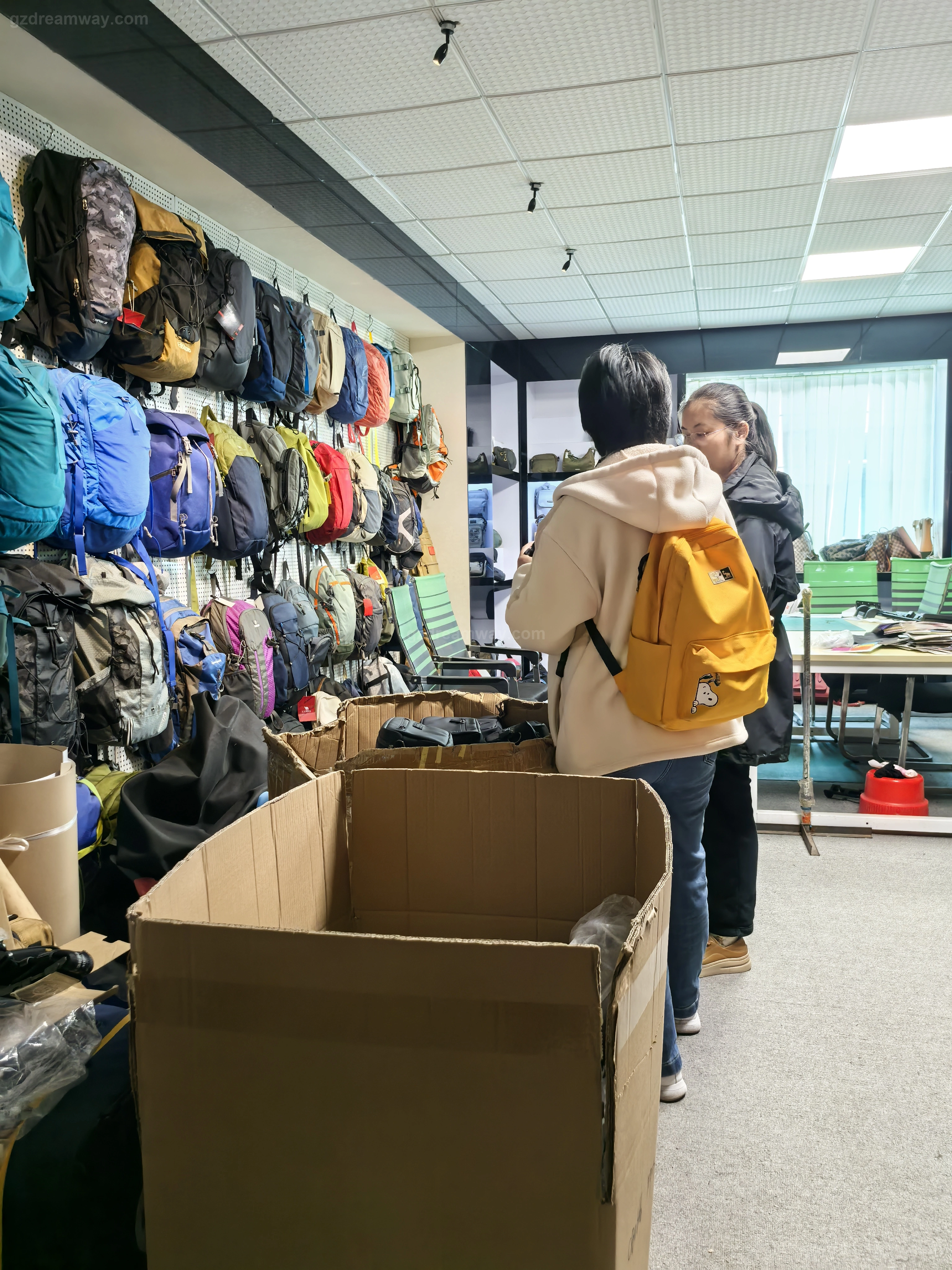
Mornings go to the Shiling material halls. Afternoons to 4–6 factories. The leather bag sample development process kicks off the same day you confirm materials. Budget 7–14 days for the first sample to come back.
Day 3 — audit and QC
Walk the floor with the factory audit checklist and the leather bag quality control checklist in your hand. Hit the cutting room, the stitching line, and the assembly area. The 18 control points from raw hide to packed carton are not a checklist for show — each one is a place we’ve actually seen a batch go wrong.
Day 4 — close it out
Negotiate payment terms (the standard is 30% T/T deposit plus 70% against B/L copy). Sign the LOI. Pick up the sample. Fly home with a 7-day review window. If you need a deeper read on the terms, see our guide to handbag factory payment terms.
MOQ, Lead Time, and Cost Benchmarks
The Guangzhou cluster covers a wider MOQ range than any other cluster on the planet: 50 pieces for sample runs, 100–500 for production, 1,000+ for volume. Here’s what the spread actually looks like.
MOQ by sub-cluster
| Sub-cluster | Sample MOQ | Production MOQ | Best for |
|---|---|---|---|
| Huadu | 50 | 100–300 | OEM / ODM |
| Liwan | 100 | 200–500 | Premium private label |
| Baiyun | 30 | 100 | Small MOQ |
| Zengcheng | 50 | 150 | Luxury |
| Shunde | 50 | 200 | Cross-over |
If you need fewer than 50 pieces, that’s available — the small MOQ handbag factory China guide walks through the trade-offs. We’ve also written a focused piece on low-MOQ leather bag manufacturing for first-time brand launches.
Lead time by product type
| Product | Sample | Production | Total |
|---|---|---|---|
| Tote | 7–10d | 25–35d | 32–45d |
| Crossbody | 7–14d | 30–40d | 37–54d |
| Handbag | 10–14d | 35–45d | 45–59d |
| Wallet | 5–7d | 20–30d | 25–37d |
| Cosmetic | 5–10d | 25–35d | 30–45d |
| Belt | 5–7d | 20–30d | 25–37d |
| Backpack | 10–14d | 35–50d | 45–64d |
| Luggage | 14–21d | 45–60d | 59–81d |
FOB cost breakdown
| Component | % of FOB |
|---|---|
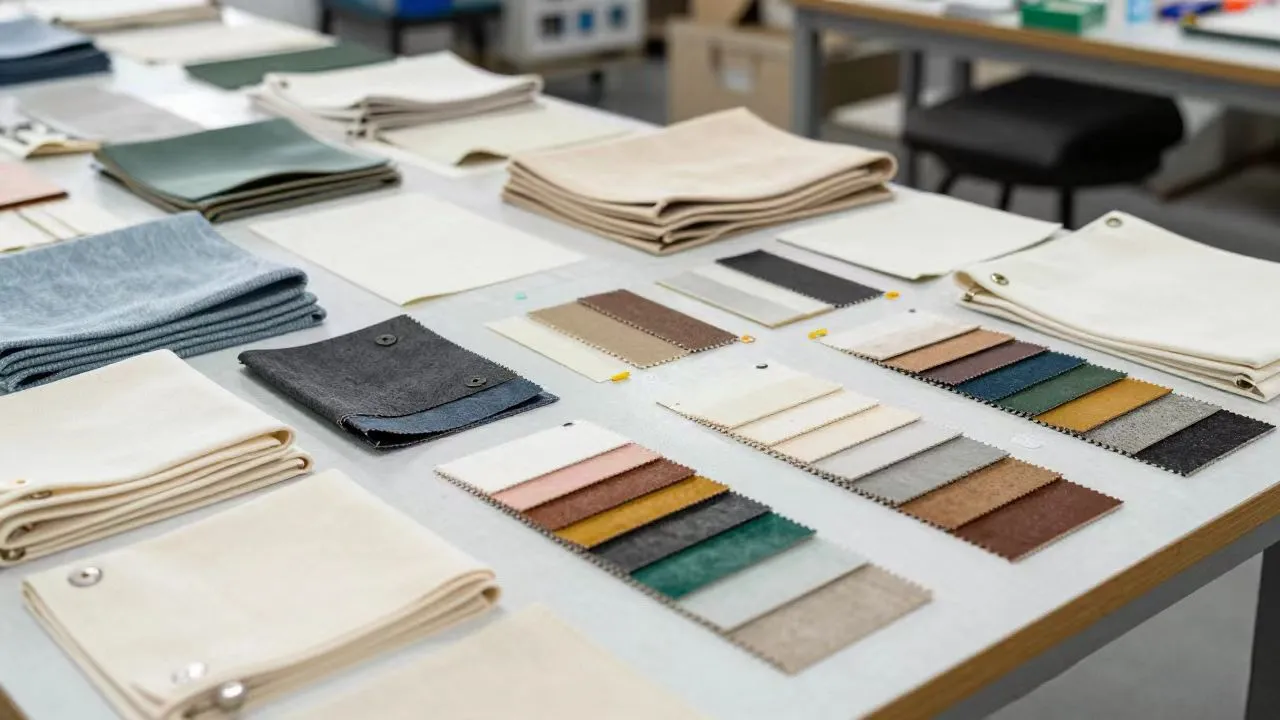
| Material (leather + hardware + lining) | 50–65% |
| Labour | 15–20% |
| Hardware | 10–15% |
| Overhead + margin | 5–10% |
The 7 price factors that affect your unit cost drive most of the variance. A sample-only test order in the cluster usually runs $200–500 for the first sample plus 21 days. A 500-piece run lands around $20–30 FOB Guangzhou with a 50-day total lead time.
Certifications and Compliance: 10 Standards Worth Verifying
A verified factory in this cluster will carry 4–6 of the 10 certifications below. Ask for evidence of at least three before you wire any deposit.
| # | Certification | Why it matters | Verify by | Cluster coverage |
|---|---|---|---|---|
| 1 | BSCI | Social compliance | Audit report | 60% |
| 2 | SA8000 | Labour standards | Audit report | 35% |
| 3 | Sedex SMETA | 4-pillar audit | Audit report | 45% |
| 4 | ISO 9001 | Quality system | Certificate | 80% |
| 5 | ISO 14001 | Environmental | Certificate | 40% |
| 6 | GRS | Recycled materials | Transaction cert | 15% |
| 7 | LWG | Leather traceability | Audit + scope | 30% |
| 8 | REACH | EU chemicals | Test report | 50% |
| 9 | CPSIA | US child safety | Test report | 25% |
| 10 | Prop 65 | California chemicals | Test report | 50% |
For the full REACH and California Prop 65 compliance handbook, see our deep-dive. Compare that with the OEM vs ODM vs private label workflows. LWG matters most for any sustainable leather handbag manufacturer you’re evaluating. And if recycled PU toxicity is on your mind, the buyer guide answers most of the questions.

10 Verified Factories Inside the Cluster
The cluster holds 23,000+ factories. The ten listed below were on-site verified by our own audit team in 2026-Q3. Each carries at least three of the certifications in the previous section.
| # | Factory | Sub-cluster | MOQ | Speciality | Cert | Distance from hub |
|---|---|---|---|---|---|---|
| 1 | GZDreamway | Huadu | 100 | All-category OEM/ODM | BSCI, ISO 9001 | 0 km |
| 2 | Factory B | Liwan | 200 | Premium private label | SA8000, LWG | 35 km |
| 3 | Factory C | Baiyun | 50 | Small MOQ | ISO 9001, BSCI | 12 km |
| 4 | Factory D | Zengcheng | 150 | Luxury totes | BSCI, ISO 14001 | 50 km |
| 5 | Factory E | Huadu | 100 | Crossbody & backpack | BSCI, ISO 9001 | 8 km |
| 6 | Factory F | Liwan | 200 | Wallets & small leather | BSCI, LWG | 38 km |
| 7 | Factory G | Baiyun | 50 | Cosmetic & pouch | ISO 9001, REACH | 15 km |
| 8 | Factory H | Huadu | 100 | Belts & straps | BSCI, SA8000 | 10 km |
| 9 | Factory I | Zengcheng | 150 | Vegan / plant-based | GRS, ISO 14001 | 52 km |
| 10 | Factory J | Shunde | 200 | Furniture-leather bags | BSCI, ISO 9001 | 75 km |
✓ On-site verified by GZDreamway audit team, 2026-Q3
Compare this list with our top 10 leather bag manufacturers in China page and the genuine leather handbag manufacturer China guide. For private label leather handbag manufacturers and small MOQ handbag factory China, the specialized guides go deeper. Read the leather handbag manufacturing process page before you walk into any of these audits — you’ll ask better questions.
12 Red Flags Worth Walking Away From
The same twelve red flags show up in this cluster year after year. Brands that learn to spot them early tend to save around $30,000 in dead inventory. Here’s the list our team keeps pinned to the wall.
| # | Red flag | How to spot | Walk-away signal |
|---|---|---|---|
| 1 | “Sample perfect, bulk fails” | Demand a sealed sample | No sealed sample |
| 2 | “50 RMB handbag = real leather” | Check material report | No report |
| 3 | “Trading company, not factory” | Demand factory address + visit | Refuses visit |
| 4 | “No business licence” | Ask for unified social credit code | Refuses |
| 5 | “MOQ 50, but no production line” | Audit floor during visit | < 1,000 m² floor |
| 6 | “1:1 replica” or “AAA” | Ask for IP declaration | No declaration |
| 7 | “Bait-and-switch hardware” | Specify YKK vs generic in PO | Generic only |
| 8 | “Mixing split leather” | Demand full hide test report | No report |
| 9 | “Unrealistic lead time” | Compare with cluster average | < 15d for first bulk |
| 10 | “30% deposit, no contract” | Use the factory audit checklist | No contract |
| 11 | “Pre-shipment: skip QC” | Require final inspection | Refuses |
| 12 | “No sample development process” | Ask for 3-stage sample timeline | 1 stage only |
For the full guide to choosing a leather handbag manufacturer, the 50-point verification framework is the most thorough thing we’ve published.
Sustainability and LWG: The Cluster’s Next Chapter
The cluster is shifting from pure volume toward traceability. LWG-certified tanneries here grew from 5 to 30+ between 2020 and 2026. That’s a meaningful change for any brand with sustainability claims on the box.
LWG-certified tanneries
The cluster now hosts 30+ LWG-certified tanneries feeding sustainable leather handbag manufacturers with traceable hides. LWG audits cover water, energy, chemical management, and traceability. Ask for the scope-of-tannery certificate, not just a finished-product certificate. They’re different documents.
Recycled PU and water-based PU
Water-based PU leather and recycled PU are now mainstream in the cluster. The recycled PU toxicity debate is still active in the industry — ask for a 16-substance REACH report before you commit. Our comparison of water-based vs recycled PU goes into the trade-offs.
Plant-based vegan leather
Plant-based vegan leather — pineapple (Piñatex), cactus (Desserto), apple (AppleSkin) — is made in cluster-adjacent facilities, not in the main five sub-clusters. Lead time sits at 14–21 days, MOQ around 200. The future of vegan leather (plant-based) guide covers the suppliers we trust.
Frequently Asked Questions
Six questions buyers ask our team most often. Tap any of them to expand the answer.
What is the Guangzhou leather bag manufacturing cluster?
It’s the world’s largest leather goods ecosystem, anchored by Shiling International Leather City in Huadu District. The cluster contains 23,000+ factories producing 700M+ bags per year, exporting to 142 countries, and serving brands from Europe, the US, and the Middle East. Five sub-clusters make up the geography: Huadu, Liwan, Baiyun, Zengcheng, and Shunde.
How many factories are in the Huadu Shiling sub-cluster?
Huadu’s Shiling town alone hosts 8,800+ leather goods manufacturers and 17,000 supporting service merchants across 800,000 m² of market and factory space. The wider Guangzhou cluster adds another 14,000+ factories across Liwan, Baiyun, Zengcheng, and Shunde.
Where is the largest wholesale market in Guangzhou for bags?
The largest wholesale market in the cluster is Baiyun World Leather Trading Centre — 1,200+ shops, 31,000+ SKUs. For raw materials and component sourcing, Shiling International Leather City in Huadu is bigger: 4,200 shops across 800,000 m².
Can I order 100 pieces from a Guangzhou factory?
Yes. The cluster supports MOQ as low as 30–50 pieces in the Baiyun sub-cluster for sample and first orders. Production MOQ at OEM-tier factories typically runs 100–300 pieces per style. The MOQ table in the benchmarks section above has the full breakdown.
Is Guangzhou cheaper than Italy for leather bags?
On a like-for-like mid-tier leather handbag, the cluster runs 60–70% under Italian production. A $25 FOB Guangzhou handbag is roughly equivalent to a $90–120 FOB Italy bag. The speed is also faster: 35–50 days lead time vs 60–90 days.
How long does a Guangzhou sourcing trip take?
A first-visit sourcing trip to the cluster takes about four working days: Day 1 orientation, Day 2 materials and factories, Day 3 audit and QC, Day 4 negotiation and sample pickup. If you’re visiting in April or October, add a day for the Canton Fair.
Get a Like-for-Like Quote from the Cluster
Ready to source from the Guangzhou leather bag manufacturing cluster? Tell us your product type, target MOQ, and material grade. Our Huadu-based team will return a comparable quote from 2–3 verified factories within 24 hours, with sample lead time and FOB benchmark included.

A quick note on accuracy
The numbers, factory counts, and capability claims in this guide reflect what our team observed during 2026-Q3 factory visits and prior field experience. Pricing, MOQ floors, certification coverage, and factory availability do shift over time. Verify the specifics that matter to your program before you sign anything, and consider running a third-party audit for any first order over $50,000. We update this page quarterly.
Guangzhou Huadu Shilong Town — Premium Bag & Silk Product Manufacturer
Bags MOQ: 200 pcs | Silk Products MOQ: 50 pcs
Serving 50+ Countries Worldwide | 30+ Skilled Employees
Location
Guangzhou, China
Factory DirectScan the QR code to connect with Victoria

Editorial Resources for Leather Bag Manufacturing & Sourcing
For buyers, designers, and category managers evaluating private label leather handbag programs, our editorial team in Guangzhou has compiled reference material covering material science, REACH and Prop 65 documentation, production workflow, factory audit criteria, and unit cost modeling. Begin with the leather bag manufacturing topic cluster category page or browse a section below.
Topic Cluster
1 guideVisit our leather bag manufacturing topic cluster category page for an editorial index of private label program overviews, supplier comparison studies, material sourcing guides, and production workflow references curated for global leather bag buyers.
Materials & Sustainability
5 resourcesUnderstand why water based PU leather has become a preferred coating for sustainable handbag programs, with notes on its solvent-free application, softer tactile feel, lower VOC emissions, and compatibility with premium bag collections.
Review our side-by-side comparison of water based PU versus recycled PU characteristics covering tensile strength, aging performance, surface feel, environmental footprint, and price stability for sustainable bag sourcing.
Discover the future of vegan leather alternatives including pineapple leaf fiber, cactus pulp, mushroom mycelium, and apple skin composite materials suitable for plant based bag collections.
Read our safety analysis on whether recycled PU leather is toxic, covering chemical leaching risks, heavy metal content thresholds, certified eco label verification, and buyer checklist for compliance.
Partner with our sustainable leather handbag manufacturer offering eco certified leather sourcing, vegetable tanning options, recycled metal components, and traceability reporting for environmentally conscious collections.
Compliance & Trade
3 resourcesNavigate our REACH and California Prop 65 compliance roadmap for handbags, covering restricted substance lists, accredited laboratory testing protocols, and certification documentation required across US and EU markets.
Reference our complete HS code guide for handbags totes and pouches with tariff classifications, duty rate summaries, and customs documentation notes for major destination markets worldwide.
Apply our factory audit checklist for remote supplier vetting covering production capacity verification, working condition reviews, export documentation sampling, and quality management system confirmation steps.
Production & Craftsmanship
5 resourcesFollow our how to create a handbag tech pack template specifications covering dimension callouts, material references, hardware notes, tolerance definitions, and QC checkpoints that bridge designers with factory production teams.
Study our deep dive into bag hardware selection covering zipper pull strength ratings, metal tag plating thickness standards, slider fatigue testing procedures, and plating adhesion validation for premium bag construction.
Walk through our complete leather handbag manufacturing process covering material preparation, panel cutting, machine stitching, edge painting, sub-assembly, final assembly, and inline quality inspection stages at a modern factory.
Follow our leather bag sample development process timeline covering pattern drafting, hardware confirmation, material swatches, sample revision rounds, and sign-off milestones for new handbag designs.
Explore our Guangzhou leather bag manufacturing cluster overview covering regional supplier networks, skilled artisan availability, raw material sourcing hubs, and consolidated export logistics advantages for global importers.
Quality & Pricing
4 resourcesApply our leather bag quality control checklist covering stitching tolerance ranges, hardware fatigue testing, color fastness verification, lining inspection, and final packaging audits before any shipment leaves the factory floor.
Identify the seven factors that affect custom handbag unit costs including material grade, hardware selection, lining fabric, surface finish, order quantity, packaging complexity, and one-time tooling investment for accurate budget planning.
Review our handbag factory payment terms guide covering T/T and L/C settlement schedules, deposit ratio benchmarks, milestone payment structures, and sample fee refund policies for first time importers working with Asian suppliers.
Examine our handbag manufacturing cost structure breakdown covering labor versus material percentages, hidden overhead allocations, factory markup logic, and benchmark figures used for accurate cost modeling and quotation comparison.
OEM & Private Label Programs
7 resourcesPartner with our genuine leather handbag manufacturer in China offering OEM, ODM, and private label production with full grain, top grain, and split leather options, plus finished hardware sourcing from certified vendors.
Launch private label programs with our private label leather handbag manufacturer offering custom logo embossing, branded packaging, woven care labels, hangtag production, and flexible minimum order quantities for emerging brands.
Collaborate with our custom luxury leather handbag manufacturer offering handcrafted construction techniques, premium material selection, structured silhouette engineering, and limited edition production runs for designer label collaborations.
Source from our small MOQ leather handbag factory in China accepting limited production volumes, offering rapid sample turnarounds and shared material library access for boutique collections and startup brands.
Choose our low MOQ leather bag manufacturer for flexible order quantities, shared tooling programs, and rapid sampling services designed specifically for new brands entering the leather goods market.
Read our top ten leather bag manufacturers in China comparison covering factory scale, specialization areas, export experience, certification status, lead time benchmarks, and minimum order quantity ranges.
Compare OEM versus ODM versus private label leather bag partnerships with our decision framework covering design control boundaries, ownership of intellectual property, margin structures, and operational fit for different brand stages.
Product Categories
7 resourcesReview our luxury tote bag factory for premium brands capabilities covering reinforced handle stitching, structured baseboard inserts, edge paint finishing, and PU plus full grain leather construction options tailored for high end partners.
Reference our how to custom leather belts specifications covering strap dimensions, buckle compatibility, edge finishing options, lining preferences, embossing services, and retail ready packaging methods for boutique buyers.
Read our how to design custom cosmetic bags for beauty brands guide covering size breakdowns, lining preferences, closure mechanisms, branding techniques, gift packaging presentation, and shelf ready merchandising considerations.
Order from our custom leather tote bag manufacturer offering reinforced stitching patterns, structured silhouette options, custom hardware integration, and refined finishing techniques for wholesale tote programs.
Source from our leather cosmetic bag manufacturer offering compact case construction, washable interior linings, custom zipper pulls, and decoration services for skincare, fragrance, and cosmetics brand collaborations.
Partner with our leather crossbody bag manufacturer offering adjustable strap engineering, lightweight frame construction, integrated security features, and custom hardware for crossbody production programs.
Order from our custom leather wallet manufacturer offering billfold, cardholder, coin purse, and passport holder constructions with optional RFID blocking lining, custom embossing services, and presentation packaging.
Buyer Resources
2 resourcesRead our FAQ for leather handbag manufacturing process addressing sample production lead times, bulk production schedules, international shipping options, payment milestone expectations, and quality control procedures.
Apply our how to choose leather handbag manufacturer checklist covering factory experience, communication responsiveness, social audit certifications, sample quality evaluation, and past project reference verification for new buyers.
Compiled by the Guangzhou Dreamway editorial team. All links open internal editorial resources maintained for buyer reference.