
How Much Does It Actually Cost to Make a Handbag? Labor vs. Material Percentages

This article breaks down the real production cost of custom handbags, focusing on labor vs. material cost percentages. We reveal industry-standard cost ratios, key expense components, and how factors like MOQ (200 units) impact pricing. Whether you’re a startup brand or established retailer, this guide helps you calculate accurate budgets, avoid overpaying factories, and partner with reliable handbag manufacturers for cost-effective, high-quality production.

Unlocking the Truth: Handbag Production Costs – Labor vs. Material Ratios

For brand owners, retailers, and entrepreneurs entering the custom handbag industry, the #1 question is always: How much does it actually cost to make a handbag? Most factories only share a final unit price, leaving you in the dark about what percentage goes to materials, labor, and overheads. This transparency gap leads to budget miscalculations, low-profit margins, and unexpected production costs.

At GzDreamway, a leading custom handbag and tote bag manufacturer in China with a MOQ of 200 units, we’ve produced over 10 million custom bags for global brands. We’re pulling back the curtain on the industry’s most guarded secret: the exact labor and material cost percentages that define every handbag’s production price. This data is based on 15+ years of B2B manufacturing, covering canvas totes, PU leather handbags, diaper bags, and luxury custom bags.

Handbag Cost Breakdown: Labor, Material & Overhead Pie Chart

This high-tech visual represents the core cost structure of handbag manufacturing: materials dominate the largest share, followed by skilled labor, with overhead and logistics making up the remainder. Understanding this ratio is the first step to negotiating fair prices with your factory partner.

Material Costs: The Largest Portion of Handbag Production

Materials are the single biggest expense in handbag manufacturing, accounting for 45% to 65% of the total unit cost. This category includes all physical components that form your handbag, and every choice you make directly impacts this percentage.

Key material components include:

  • Main fabric: Canvas, PU leather, polyester, RPET recycled material, or genuine leather
  • Hardware: Zippers, metal buckles, buttons, and custom logo tags
  • Linings: Waterproof fabric, cotton, or mesh
  • Accessories: Thread, glue, edge paint, and insulation padding
  • Packaging: Poly bags, hang tags, and custom boxes

For example, a premium PU leather handbag will have a 60% material cost ratio, while a basic canvas tote sits at 45% – the quality of raw materials directly shifts this percentage. If you’re comparing materials, our guide to Canvas vs. Polyester vs. PU breaks down cost and durability differences for every material type.

Labor Costs: Skilled Craftsmanship vs. Mass Production

Labor costs make up 25% to 40% of total handbag production costs, a critical figure that separates low-quality fast fashion from premium, durable bags. Unlike automated industries, handbag production relies heavily on skilled workers for cutting, sewing, logo embroidery, quality control, and assembly.
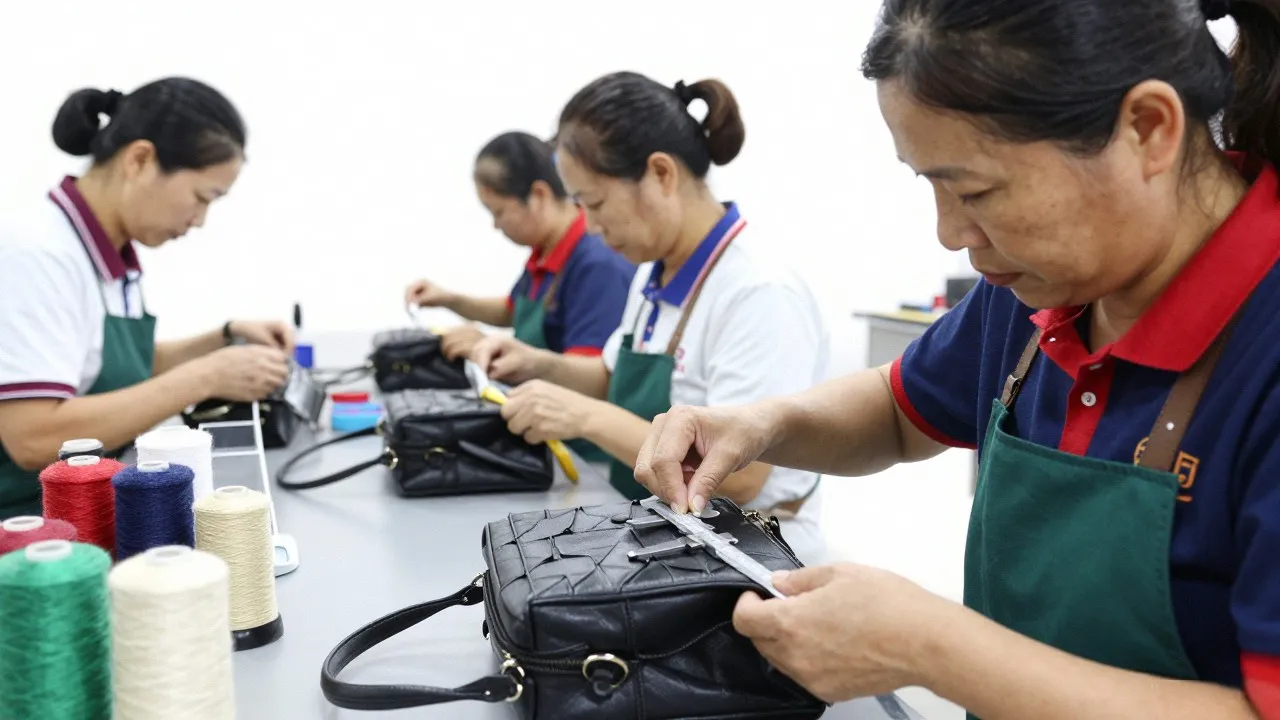
Handbag Factory Quality Control Inspection

Labor expenses cover:

  • Skilled seamstresses for precision sewing and logo stitching
  • QC inspectors to eliminate defects (critical for brand reputation)
  • Cutting technicians for accurate fabric shaping
  • Packing and warehouse staff for order fulfillment

Contrary to popular belief, higher labor costs do not mean overpaying – they mean investing in craftsmanship. Cheap labor often results in loose stitching, uneven prints, and faulty hardware, costing you more in returns and damaged brand trust. Our Tote Bag Quality Control Guide explains how skilled labor directly impacts final product quality.

Overhead & Additional Costs

The remaining 5% to 15% of total costs covers factory overheads: rent, utilities, equipment maintenance, design support, and compliance certifications (OEKO-TEX, GRS, CPSIA). These costs ensure your factory operates legally, sustainably, and with professional production standards – non-negotiable for global retail brands.

Handbag Production Cost Percentage Breakdown (Industry Standard)

Cost Category Percentage Range Key Components Impact on Pricing
Raw Materials 45% – 65% Fabric, Hardware, Linings, Accessories Largest variable cost; material quality drives this ratio
Skilled Labor 25% – 40% Sewing, QC, Cutting, Assembly Directly linked to craftsmanship and product durability
Factory Overhead 5% – 10% Rent, Utilities, Equipment Fixed cost; minimal impact on unit pricing
Logistics & Waste 3% – 5% Shipping, Material Waste, Packaging Reduced with higher order quantities (MOQ 200+)
Total Production Cost 100% All Expenses Combined Final unit price for custom handbag orders

How MOQ 200 Impacts Labor & Material Cost Percentages

One of the most impactful factors on cost ratios is your Minimum Order Quantity (MOQ). At GzDreamway, we offer a low MOQ of 200 units – the perfect balance for startup brands and small businesses. Here’s how this MOQ optimizes your costs:

1. Material Bulk Discounts: 200 units qualify you for wholesale material pricing, lowering the material cost percentage by 5-8% compared to sample orders.

2. Labor Efficiency: Factory workers streamline production for 200 units, reducing labor time per unit and cutting labor costs by 3-5%.

3. Lower Overhead Allocation: Fixed overhead costs are spread across 200 units, reducing the per-unit overhead percentage.

For brands scaling from small batches to mass production, our article Shifting from Small MOQ to Mass Production provides a step-by-step cost optimization strategy.

Handbag Material Exploded View: Fabric, Lining, Zippers

This exploded view shows every material component of a custom handbag – each piece contributes to the 45-65% material cost ratio we outlined earlier. Precision in material selection directly reduces waste and lowers your total production cost.

How to Calculate Your Custom Handbag Budget (Pro Tips)

Using the labor vs. material ratios above, you can create a 100% accurate budget for your custom handbag order. For automated calculations, use our Tote Bag Cost Calculator – the ultimate tool for estimating unit costs based on material, labor, and MOQ.

To avoid hidden fees, partner with a transparent manufacturer like GzDreamway that provides a full cost breakdown before production. Our Handbag Manufacturing Cost Structure Breakdown dives deeper into hidden expenses and how to avoid them.

Choosing the right factory is just as important as understanding costs. Our guide How to Choose the Best Tote Bag Factory helps you vet suppliers for transparency, quality, and fair pricing.

Frequently Asked Questions (FAQ)

1. What is the average material vs labor cost percentage for a custom handbag?

Materials account for 45-65% of total production costs, while skilled labor makes up 25-40%. Overhead and logistics cover the remaining 5-15%.

2. What is your MOQ for custom handbag production?

GzDreamway has a low MOQ of 200 units for all custom handbag and tote bag orders, ideal for startups and small brands.

3. How do material choices affect total handbag costs?

Premium materials (PU leather, recycled fabric) increase the material cost percentage to 60-65%, while basic canvas reduces it to 45-50%.

4. Does higher labor cost mean better quality handbags?

Yes! Higher labor costs fund skilled seamstresses and strict quality control, resulting in durable stitching, perfect prints, and defect-free bags.

5. How can I reduce my custom handbag production costs?

Opt for our MOQ 200 to get bulk material discounts, choose cost-effective materials, and work with a transparent factory to avoid hidden fees.

Final Thoughts: Partner with a Transparent Handbag Manufacturer

Understanding labor vs. material cost percentages is the key to profitable custom handbag production. No longer will you accept vague factory quotes – you’ll have the data to negotiate fair prices, optimize your budget, and create high-quality bags that resonate with your customers.

At GzDreamway, we prioritize transparency for every client. Our MOQ 200, full cost breakdowns, and expert design support make us the top choice for global brands launching custom handbags, tote bags, and diaper bags. Whether you need eco-friendly RPET bags, luxury PU leather handbags, or promotional canvas totes, we deliver cost-effective, premium production tailored to your brand.

Ready to get started? Contact our team today for a free, no-obligation cost estimate and take the first step towards successful handbag manufacturing.

Customer Reviews14 Reviews

Renata Silva2026-06-06
O artigo foi útil, mas ainda estou com dúvidas práticas: sou designer em Lisboa e procuro um OEM small-batch handbag manufacturer Portugal para produzir handcrafted women's handbags Portugal small batch em vegan leather certificado com low MOQ. Os custos de protótipo e o DDP to Lisbon (porto de Lisboa/Leixões) estão a elevar demasiado o orçamento; preciso de um clear prototype cost breakdown material vs labor, realistic MOQ e lead time para comparar propostas. Um pouco frustrante não ver números concretos e alternativas para reduzir DDP sem perder qualidade.
GZDreamway2026-06-06
Renata, obrigada pelo comentário — entendemos a frustração. Para o mercado português/europeu normalmente vemos uma divisão prática: materiais (vegan leather certificado, forros eco, ferragens) ≈45–65% do custo; mão-de-obra qualificada ≈20–35%; resto = QC, amortização de tooling e margem. MOQ realista para OEM small-batch handbag manufacturer Portugal costuma ficar entre 30–150 unidades conforme complexidade; protótipo técnico 7–15 dias úteis; lead time de produção 25–60 dias. Para reduzir protótipo e DDP to Lisbon sugerimos: 1) priorizar components sourced within EU para reduzir taxas e tempo; 2) optar por recycled brass hardware padrão em vez de ferragens full‑custom; 3) usar digital samples + one pre-production run para limitar rondas de correção; 4) consolidar envios DDP ao porto de Lisboa/Leixões e otimizar packaging/labels conforme normas EU; 5) simplificar acabamentos metálicos para cortar horas de montagem. Podemos preparar um prototype cost breakdown material vs labor por SKU, exemplos de DDP to Lisbon com cenários de custo, e oferecer crédito parcial do protótipo quando avançar para produção. Envie-nos o seu tech pack e faremos uma cotação detalhada e sugestões concretas para as suas handcrafted women's handbags Portugal small batch e low MOQ vegan leather handbags Portugal.
Marinette Laforge2026-06-04
Article intéressant mais encore confus pour moi : je suis créatrice basée en Provence et je cherche un OEM small-batch handbag manufacturer France pour produire handcrafted women's handbags France small batch en vegan leather certifié avec ferrures en laiton recyclé. Les coûts de prototype et le DDP to Marseille me paraissent trop élevés et j'ai du mal à trouver un clear prototype cost breakdown material vs labor, realistic MOQ et lead time précis pour comparer les offres. Un peu frustrée car sans chiffres concrets c'est dur d'estimer la rentabilité.
GZDreamway2026-06-04
Merci Marinette — nous comprenons votre frustration et vos besoins pour le marché français. Pour des projets « OEM small-batch handbag manufacturer France » et « low MOQ vegan leather handbags France » les repères pratiques sont : matériaux (cuir végétal certifié, doublure éco, ferrures) ≈45–65% du coût, main-d'œuvre qualifiée ≈20–35%, reste = QC/outillage/marge. MOQ réaliste pour small-batch : souvent 30–150 unités selon complexité ; prototype technique 7–15 jours ouvrés ; lead time production 25–60 jours. Pour réduire prototype cost et DDP to Marseille : 1) privilégier recycled brass hardware standard plutôt que ferrures full-custom, 2) sourcer composants en UE pour réduire transit/taxes, 3) livrer tech pack complet et utiliser digital samples + une pre-production run pour limiter itérations, 4) consolider envoi DDP vers Marseille/Marseille-Fos et optimiser packaging et labels pour la conformité EU, 5) simplifier finitions métalliques pour réduire heures de montage. Nous pouvons vous fournir un prototype cost breakdown material vs labor par SKU, exemples DDP to Marseille et options de crédit prototypal si vous passez en production. Envoyez votre tech pack et nous préparons une cotation détaillée adaptée à vos « handcrafted women's handbags France small batch » et conseils pour réduire coûts sans sacrifier la qualité.
Gabriela Matos2026-06-03
O artigo é útil, mas estou um pouco frustrada: sou designer em São Paulo e procuro um OEM small-batch handbag manufacturer Brazil para produzir low MOQ vegan leather handbags Brazil e handcrafted women's handbags Brazil small batch. Os custos de protótipo e o DDP to São Paulo estão muito altos; preciso de um clear prototype cost breakdown material vs labor, realistic MOQ e lead time para comparar ofertas e reduzir gastos sem perder qualidade. Alguém com experiência no sourcing local/LatAm para reduzir DDP?
GZDreamway2026-06-05
Olá Gabriela — obrigado pelo comentário e entendemos sua frustração com custos de protótipo e DDP to São Paulo. Para o mercado brasileiro recomendamos estes parâmetros práticos: materiais (vegan leather certificado, forros eco, ferragens) ≈45–65% do custo; mão-de-obra qualificada ≈20–35%; restante = QC, amortização de tooling e margem. MOQ realista para OEM small-batch handbag manufacturer Brazil: 30–150 unidades conforme complexidade; protótipo técnico 7–15 dias úteis; lead time de produção 25–60 dias. Medidas para reduzir prototype cost e DDP: 1) priorizar sourcing local/LatAm de componentes para cortar impostos e frete; 2) usar recycled brass hardware padrão em vez de ferragens full‑custom; 3) adotar digital samples + uma pre-production run para limitar rondas de correção; 4) consolidar envios DDP ao porto de Santos ou aeroporto de Guarulhos e otimizar embalagem/labels para reduzir taxas e inspeções. Podemos preparar um prototype cost breakdown material vs labor por SKU, exemplos de DDP to São Paulo e oferecer crédito parcial do custo do protótipo ao avançar para produção. Envie seu tech pack e lhe devolvemos uma cotação detalhada e alternativas (grades de vegan leather, hardwares padronizados, BOM otimizada) para que você compare propostas de low MOQ vegan leather handbags Brazil e handcrafted women's handbags Brazil small batch sem surpresas. Obrigado, equipe GZDreamway.

Hello Gabriela — thanks for your comment; we understand your frustration with prototype and DDP costs to São Paulo. For the Brazilian market we advise these practical benchmarks: materials (certified vegan leather, eco linings, hardware) ≈45–65% of cost; skilled labor ≈20–35%; remainder covers QC, tooling amortization and margin. Realistic MOQs for an OEM small-batch handbag manufacturer Brazil are typically 30–150 pcs depending on complexity; technical prototypes 7–15 working days; production lead times 25–60 days. Ways to reduce prototype cost and DDP: 1) source components locally or within LATAM to cut duties and freight, 2) use standardized recycled brass hardware instead of fully custom fittings, 3) employ digital samples plus a single pre-production run to limit revision rounds, 4) consolidate DDP shipments to Santos port or Guarulhos airport and optimize packaging/labels to lower fees. We can produce a detailed prototype cost breakdown material vs labor per SKU, provide DDP to São Paulo examples and offer partial prototype credit when you move to production. Send your tech pack and we’ll return a detailed quote with alternative vegan leather grades, standardized hardware sets and BOM optimization so you can compare offers for low MOQ vegan leather handbags Brazil and handcrafted women's handbags Brazil small batch without surprises. Thank you, GZDreamway team.
Catalina Serrano2026-06-01
El artículo es útil, pero estoy un poco frustrada: busco un OEM small-batch handbag manufacturer Spain para producir handcrafted women's handbags Spain small batch con low MOQ vegan leather handbags Spain y ferrajes de latón reciclado. Los costes de prototype y DDP to Barcelona me parecen muy altos y echo en falta un claro prototype cost breakdown material vs labor, ejemplos reales de MOQ y lead time para poder comparar ofertas. ¿Podrían compartir cifras orientativas y consejos para reducir prototipo/DDP sin perder calidad?
GZDreamway2026-06-03
Gracias, Catalina. Entendemos tu frustración y gracias por aportar términos como OEM small-batch handbag manufacturer Spain y low MOQ vegan leather handbags Spain — nos ayudan a contextualizar. Para España y mercado europeo, una regla práctica es: materiales (cuero vegano certificado, forros eco, herrajes) 45–65% del coste, mano de obra cualificada 20–35%, resto QC/tooling/margen. MOQ real para producción small-batch suele variar según complejidad: 30–150 unidades; prototipos técnicos 7–15 días hábiles; lead time producción 25–60 días. Para bajar prototype cost y DDP to Barcelona proponemos medidas concretas: 1) usar recycled brass hardware estandarizado en lugar de piezas totalmente custom, 2) sourced components en la UE o proveedores cercanos para reducir transporte y aranceles, 3) muestras digitales + una preproducción técnica para limitar rondas de corrección, 4) consolidar envíos DDP y optimizar packaging/labels para normativa española, 5) simplificar acabados metálicos para reducir horas de montaje. Podemos preparar un prototype cost breakdown material vs labor por SKU, ejemplos de DDP to Barcelona y opciones de crédito parcial del coste del prototipo si pasas a producción. Envíanos tu tech pack y te entregamos una cotización desglosada con alternativas para mantener calidad en handcrafted women's handbags Spain small batch y bajar costos. 2026-06-03

Thank you, Catalina. We understand your frustration and appreciate the use of terms like OEM small-batch handbag manufacturer Spain and low MOQ vegan leather handbags Spain — they help us focus. For Spain/European projects a practical split is: materials (certified vegan leather, eco linings, hardware) 45–65% of cost, skilled labor 20–35%, remainder QC/tooling/margin. Realistic MOQs for small-batch production typically range 30–150 units depending on complexity; technical prototypes 7–15 working days; production lead times 25–60 days. To reduce prototype cost and DDP to Barcelona we recommend: 1) using standardized recycled brass hardware instead of fully custom parts, 2) sourcing components within the EU or from nearby suppliers to cut transport and duties, 3) digital samples plus one technical pre-production to limit revision rounds, 4) consolidating DDP shipments and optimizing packaging/labeling for Spanish regulations, 5) simplifying metal finishes to lower manual assembly hours. We can provide a prototype cost breakdown material vs labor per SKU, DDP examples to Barcelona, and offer partial prototype credit when you move to production. Send your tech pack and we’ll deliver a detailed quote with tailored options to preserve quality for handcrafted women's handbags Spain small batch while reducing costs.
高橋 翔2026-06-01
記事は参考になりますが正直言ってプロトタイプ費用とDDP to Tokyoが思ったより高くて困っています。日本の小ロット市場での現実的なMOQやprototype cost breakdown material vs labor、具体的な事例(handcrafted women’s handbags Japan small batch、OEM small-batch handbag manufacturer Japan、low MOQ vegan leather handbags Japan)がもっと見たいです。少しフラストレーションがありますが、実現可能なコスト感を教えてください。
GZDreamway2026-06-01
高橋様、ご投稿ありがとうございます。ご不満はよく理解できます。日本向けOEM small-batchの実務目安としては、材料(認証ヴィーガンレザー、エコ裏地、ハードウェア)45〜65%、熟練手作業20〜35%、残りがQC・金型償却・マージンです。MOQは設計複雑度により30〜120個、テクニカルプロトタイプは7〜12営業日、量産リードタイムは25〜50日が一般的です。DDP to Tokyoコストを抑える実務的対策は:1) 標準化したrecycled brass hardwareの採用、2) 部材を国内または近隣アジアで調達して輸送短縮、3) デジタルサンプル+1回のプレ生産で修正回数を削減してprototype costを下げる、4) 梱包・ラベリングの日本規格最適化で返品リスクを低減することです。弊社はSKUごとのprototype cost breakdown material vs laborを提示でき、プロトタイプ費用を一部生産費に相殺するオプションもあります。tech packを共有いただければ、代替ヴィーガンレザーの提案、standard hardwareセット、BOM最適化を含む具体的なコスト削減プランと見積り(例:DDP to Tokyo、DDP to Osaka)を作成いたします。お気軽にtech packをお送りください。

Thank you, Mr. Takahashi — we understand your frustration. For Japan-focused OEM small-batch work our practical benchmarks are: materials (certified vegan leather, eco linings, hardware) 45–65%, skilled hand labor 20–35%, remainder covers QC, tooling amortization and margin. Typical MOQs depend on complexity (about 30–120 pcs), technical prototypes 7–12 working days, and production lead times 25–50 days. Practical steps to reduce DDP to Tokyo: 1) use standardized recycled brass hardware, 2) source components domestically or from nearby Asia to cut transit, 3) use digital samples plus a single pre-production run to reduce prototype revisions and costs, and 4) optimize packaging/labeling for Japanese retail compliance to lower return risk. We can provide a prototype cost breakdown material vs labor per SKU and offer partial prototype credit when moving to production. Share your tech pack and we will prepare a concrete quotation and cost-saving plan (alternative vegan leather grades, standard hardware sets, BOM optimization) including example DDP quotes (DDP to Tokyo/Osaka).
نور البستاني2026-05-31
مقال مفيد، لكن بصراحة متحيرة بسبب ارتفاع تكلفة النموذج الأولي وDDP إلى دبي. أنا مصممة حقائب في الإمارات وأبحث عن مصنع OEM دفعات صغيرة لإنتاج handcrafted women's handbags UAE small batch من جلد نباتي معتمد وبـ low MOQ. أحتاج أرقام واضحة عن prototype cost breakdown material vs labor، ومعلومات عن realistic MOQ وlead time لكي أتمكن من المقارنة. بعض الإحباط لأن الأرقام غير واضحة.
GZDreamway2026-06-02
نور، شكرًا لتعليقك ونفهم الإحباط. لسوق الخليج والإمارات نوصي بنسب تقريبية: المواد (جلد نباتي معتمد، بطانة صديقة للبيئة، قطع ومقابض) 45–65%، العمالة الماهرة 20–35%، والباقي مخصص لمراقبة الجودة، استهلاك الأدوات وهوامش الربح. MOQ عملي لمشروعات OEM small-batch في المنطقة عادة 30–150 قطعة حسب درجة التعقيد. النماذج التقنية تستغرق عادة 7–12 يوم عمل، وlead time للإنتاج يتراوح عادة بين 25–50 يومًا. لتقليل تكلفة النموذج الأولي وDDP إلى دبي ننصح بخطوات عملية: 1) اعتماد recycled brass hardware قياسي بدل القطع المخصصة، 2) توريد المكونات من موردين إقليميين لتقليل زمن وشحنات النقل، 3) استخدام digital samples متبوعة بواحدة pre-production run لتقليل جولات التعديل وخفض prototype cost، 4) تجميع شحنات DDP إلى موانئ مثل Jebel Ali/Dubai وتحسين التعبئة لتخفيض رسوم الاستيراد والمرتجعات. نحن نقدم prototype cost breakdown material vs labor مفصّل لكل SKU، وخيار احتساب جزء من تكلفة النموذج الأولي عند الانتقال للإنتاج لتخفيف العبء الأولي. أرسلي لنا الـ tech pack وسنجهز لك عرضًا مفصلاً ومقترحات لتقليل التكاليف مع الحفاظ على جودة handcrafted women's handbags UAE small batch وبدائل لـ low MOQ vegan leather handbags UAE.
西村 結衣2026-05-31
最近、この記事を読んでOEMのsmall-batchバッグを日本で作りたいと思っていますが、プロトタイプ費用とDDP to Tokyoが高くて困っています。記事は参考になりますが、実際のmaterial vs laborの内訳や現実的なMOQ、handcrafted women’s handbags Japan small batch の具体例がもっと欲しいです。「OEM small-batch handbag manufacturer Japan」や「low MOQ vegan leather handbags Japan」で探しているので、もう少し数字があれば助かります。少しフラストレーションがあります。
GZDreamway2026-05-31
西村さん、ご投稿ありがとうございます。日本の小ロット市場では品質基準(百貨店納入やラベリング規格)と短納期の需要が強く、コスト構成が欧州や米国とやや異なる点をよく理解しています。一般的な目安としては:材料(認証済みヴィーガンレザー、エコ裏地、ハードウェア)45〜65%、熟練工の手作業20〜35%、残りがQC・金型償却・マージンです。日本向けOEM small-batchではMOQは設計複雑度により30〜120個、テクニカルプロトタイプは7〜12営業日、量産リードタイムは25〜50日程度が現実的です。DDP to Tokyoのコストを抑えるための実務的対策:1) 標準化したリサイクル真鍮ハードウェア採用、2) 国内あるいは近隣アジアのサプライヤーからの部材調達で輸送短縮、3) デジタルサンプルと1回限りのプレ生産で修正回数を削減、4) 梱包・ラベリングの日本規格最適化で返品リスクを下げる、5) DDP出荷の統合と港選定(Tokyo/Narita)によるコスト平準化。当社は「OEM small-batch handbag manufacturer Japan」や「low MOQ vegan leather handbags Japan」を前提に、SKUごとのprototype cost breakdown material vs laborを提出できます。また、プロトタイプ費用を一部生産費に相殺するオプションや、百貨店納入向けの品質管理チェックリスト、DDP見積り(例:DDP to Tokyo、DDP to Osaka)を提示可能です。テックパックを共有いただければ、具体的なコスト削減案(代替ヴィーガンレザー、標準ハードウェアセット、BOM最適化)を含む見積りを作成します。ご希望なら技術打合せを設定しましょう。 2026-05-31

Thank you, Ms. Nishimura — we appreciate your comment. For the Japanese small-batch market we see strong demand for department-store quality, short lead times and specific labeling requirements, which affects cost structure compared to EU/US. As a rule of thumb: materials (certified vegan leather, eco linings, hardware) 45–65%, skilled hand labor 20–35%, remainder covers QC, tooling amortization and margin. For Japan-focused OEM small-batch work typical MOQs depend on complexity (about 30–120 pcs), technical prototypes in 7–12 working days and production lead times of 25–50 days. Practical steps to lower DDP to Tokyo: 1) use standardized recycled-brass hardware, 2) source components domestically or from nearby Asia to reduce transit, 3) use digital samples + one-run pre-production to cut revision rounds, 4) optimize packaging/labeling for Japanese retail compliance to reduce return risk, 5) consolidate DDP shipments and choose optimal ports (Tokyo/Narita). We can provide a prototype cost breakdown material vs labor per SKU tailored to search phrases like "OEM small-batch handbag manufacturer Japan" and "low MOQ vegan leather handbags Japan", supply DDP examples (DDP to Tokyo/Osaka), and offer partial prototype credit when moving to production. Share your tech pack and we’ll prepare a quoted plan with concrete savings (alternative vegan leather grades, standard hardware sets, BOM optimization) and can arrange a technical call to discuss next steps.
Lukas Meinhardt2026-05-30
Guter Artikel, danke — aber ich stehe vor dem Problem, einen OEM small-batch Hersteller in Deutschland/UE zu finden, der mit zertifiziertem veganen Leder und recycelten Messingbeschlägen arbeitet, ohne dass die Prototypenkosten und DDP nach Berlin explodieren. Im Text fehlen mir konkrete Zahlen zum Prototype cost breakdown material vs labor, zum realistischen MOQ für low-run production und zu lead time für handgefertigte Taschen. Etwas frustrierend, weil ich lieber klare long-tail Informationen wie „OEM small-batch handbag manufacturer Germany“ oder „low MOQ vegan leather handbags Europe“ hätte, um Angebote zu vergleichen.
GZDreamway2026-05-30
Danke für Ihren Kommentar, Lukas — wir verstehen die Frustration. Für den deutschen/mitteleuropäischen Markt liegt unsere Erfahrungsregel typischerweise so: Materialien (zertifiziertes veganes Leder, ökologische Futterstoffe, Beschläge) machen etwa 45–65% der Gesamtkosten aus; qualifizierte Handarbeit liegt meist zwischen 20–35%; der Rest deckt Qualitätskontrolle, Werkzeugabschreibung und Marge. Für OEM small-batch in Europa bieten wir flexible MOQs (je nach Komplexität oft 30–150 Stück), technische Prototypen in 7–15 Arbeitstagen und Produktionsleadtimes von 30–60 Tagen. Um Prototypenkosten und DDP nach Deutschland (z. B. DDP to Berlin/Frankfurt) zu reduzieren, empfehlen wir konkrete Maßnahmen: 1) standardisierte oder recycled brass hardware statt komplett maßgeschneiderter Teile, 2) konsolidierte DDP-Sendungen und Incoterms-Optimierung, 3) digitale Muster + one-run pre-production, 4) Vereinfachung von Fittings/Finishes zur Reduzierung manueller Montagezeit. Wir können ein detailliertes prototype cost breakdown material vs labor pro SKU liefern, inklusive Optionen „low MOQ vegan leather handbags Europe“, DDP-Preisbeispiele nach Berlin/München, und ein Angebot mit teilweise gutgeschriebener Prototypenpauschale, wenn Sie in die Produktion gehen. Wenn Sie möchten, vereinbaren wir gern einen technischen Call zur Durchsicht Ihres tech pack (tech pack review for handbag production) und schlagen konkrete Einsparungen vor — z. B. alternative vegane Lederqualitäten mit ähnlicher Haptik, standardisierte Hardwaresets und optimierte BOMs, die sowohl die supply chain für European eco handbags als auch Retail-Compliance in Deutschland berücksichtigen. Wir nehmen Ihr Anliegen ernst und helfen bei der Kalkulation, damit Sie realistische Angebote für OEM small-batch handbag manufacturer Germany vergleichen können.

Thank you for your comment, Lukas — we understand the frustration. For the German/Central European market our rule of thumb is: materials (certified vegan leather, eco linings, hardware) typically account for 45–65% of total cost; skilled hand labor usually ranges 20–35%; the remainder covers quality control, tooling amortization and margin. For OEM small-batch work in Europe we offer flexible MOQs (depending on complexity often 30–150 pieces), technical prototypes in 7–15 working days and production lead times of 30–60 days. To reduce prototype costs and DDP to Germany (e.g. DDP to Berlin/Frankfurt) we recommend: 1) using standardized or recycled brass hardware instead of fully bespoke parts, 2) consolidating DDP shipments and optimizing incoterms, 3) using digital samples plus a one-run pre-production, 4) simplifying fittings/finishes to cut manual assembly hours. We can provide a detailed prototype cost breakdown material vs labor per SKU, including options for low MOQ vegan leather handbags Europe, DDP pricing examples to Berlin/Munich, and a quotation with a partial prototype credit when you move to production. If you’d like, we’ll schedule a technical call to review your tech pack (tech pack review for handbag production) and propose concrete savings — e.g. alternative vegan leather grades with similar hand-feel, standardized hardware sets and optimized BOMs that address the supply chain for European eco handbags and German retail compliance. We take your concerns seriously and can help you calculate realistic offers to compare OEM small-batch handbag manufacturers in Germany.
Pau Navarro2026-05-29
Estoy buscando un fabricante OEM small-batch en España para bolsos con cuero vegano certificado y ferrajes de latón reciclado, pero los costes de prototipo y DDP a Barcelona me parecen demasiado altos y no veo ejemplos claros de desglose material vs mano de obra en el artículo. ¿Cuál es el MOQ real, tiempos de prototipo y cómo puedo reducir gastos sin perder calidad? Un poco frustrante tener que adivinar cifras.
GZDreamway2026-05-29
Gracias por tu comentario, Pau. Entendemos la frustración; para el mercado español el desglose típico suele ser que los materiales (cuero vegano certificado, forros ecológicos y ferrajes) representan alrededor del 45–65% del coste total y la mano de obra cualificada ocupa entre el 20–35%, el resto cubre control de calidad, amortización de utillaje y margen. Para proyectos OEM small-batch en España ofrecemos MOQs flexibles (habitualmente 50–150 según complejidad), prototipos técnicos en 7–15 días hábiles y lead time de producción entre 30–60 días. Para reducir el coste de prototipo y el envío DDP a Barcelona/Madrid recomendamos: 1) optar por ferrajes estándar o latón reciclado en lugar de piezas totalmente personalizadas, 2) consolidar envíos DDP para bajar el coste por unidad, 3) usar muestras digitales y una preproducción técnica para limitar rondas de modificación, 4) simplificar acabados y reducir piezas metálicas para disminuir horas de montaje. Podemos preparar un desglose detallado material vs mano de obra por SKU (incluyendo impacto de ferrajes de latón reciclado y opciones de cuero vegano certificado) y ofrecer un crédito parcial del coste del prototipo si se avanza a producción. Si quieres, coordinamos una llamada técnica para revisar tu tech pack y proponer alternativas específicas para optimizar costes sin sacrificar calidad. 2026-05-29

Thank you for your comment, Pau. We understand the frustration; for the Spanish market a typical split is that materials (certified vegan leather, eco linings and hardware) account for about 45–65% of total cost and skilled labor represents 20–35%, with the remainder covering quality control, tooling amortization and margin. For OEM small-batch projects in Spain we offer flexible MOQs (usually 50–150 depending on complexity), technical prototypes in 7–15 working days and production lead times of 30–60 days. To lower prototype and DDP costs to Barcelona/Madrid we recommend: 1) choosing standard hardware or recycled brass instead of fully custom pieces, 2) consolidating DDP shipments to reduce per-unit freight, 3) using digital samples and a technical pre-production run to limit revision rounds, 4) simplifying finishes and reducing metal components to cut assembly hours. We can provide a detailed material vs labor breakdown per SKU (including impact of recycled brass hardware and certified vegan leather options) and offer a partial prototype credit when you move to production. If you’d like, we can schedule a technical call to review your tech pack and propose targeted cost-optimisation options.
Ángela Serrat2026-05-28
Me interesa mucho el artículo, pero sigo un poco preocupada: estoy buscando un fabricante OEM en España para small-batch con cuero vegano certificado y ferrajes de latón reciclado, y los costes de prototipo y envío DDP a Madrid suben demasiado. ¿Podrían aclarar el desglose material vs mano de obra para bolsos hechos a mano, el MOQ mínimo y tiempos de prototipo? Un poco frustrante no ver cifras claras para optimizar costes de producción.
GZDreamway2026-05-28
Gracias por tu comentario, Ángela. Entendemos la frustración: para el mercado español y europeo, una regla práctica es que los materiales (cuero vegano certificado, forros ecológicos y ferrajes) suelen representar entre el 45–65% del coste total, mientras que la mano de obra cualificada ocupa normalmente el 20–35%; el resto cubre control de calidad, amortización de utillaje y margen. Para proyectos OEM small-batch en España ofrecemos MOQ flexibles (habitualmente 50–200 según complejidad), prototipos técnicos en 7–15 días hábiles y lead time de producción entre 30–60 días. Para reducir el coste del prototipo y DDP a Madrid/Barcelona recomendamos: 1) usar ferrajes estándar o latón reciclado en lugar de piezas totalmente personalizadas, 2) consolidar envíos DDP para bajar coste por unidad, 3) emplear muestras digitales y preproducción para limitar rondas de modificación, y 4) simplificar acabados para reducir horas de montaje. Podemos preparar un desglose detallado material vs mano de obra por referencia, ofrecer alternativas de coste (opciones de cuero vegano certificado, ferretería en latón reciclado) y aplicar un crédito parcial al coste del prototipo si avanzas a producción. Si quieres, coordinamos una llamada técnica para revisar tu tech pack y ofrecer una cotización personalizada con opciones de optimización. 2026-05-28

Thank you for your comment, Ángela. We understand the frustration: for the Spanish/European market a practical rule of thumb is that materials (certified vegan leather, eco linings and hardware) typically account for 45–65% of total cost, while skilled labor usually represents 20–35%; the remainder covers quality control, tooling amortization and margin. For OEM small-batch projects in Spain we offer flexible MOQs (usually 50–200 depending on complexity), technical prototypes in 7–15 working days and production lead times of 30–60 days. To lower prototype and DDP costs to Madrid/Barcelona we recommend: 1) using standard hardware or recycled brass instead of fully custom pieces, 2) consolidating DDP shipments to reduce per-unit freight, 3) using digital samples and pre-production checks to limit revision rounds, and 4) simplifying finishes to cut assembly hours. We can provide a detailed material vs labor breakdown per SKU, propose cost-saving alternatives (certified vegan leather options, recycled brass hardware) and offer a partial prototype credit when you move to production. If you’d like, we can schedule a technical call to review your tech pack and prepare a tailored quotation with optimization options.
Antonio Gallego2026-05-26
Interesante artículo. Soy un diseñador en España buscando un fabricante OEM small-batch para bolsos con cuero vegano certificado y ferrajes personalizados en latón reciclado. Me inquieta el coste real: ¿qué porcentaje suele ocupar la mano de obra frente a los materiales en bolsos artesanales para el mercado europeo? También me preocupan el coste de prototipo y el envío DDP a España, a veces los ferrajes personalizados suben mucho el presupuesto. ¿Ofrecéis desglose de coste y opciones para reducir prototipo y lead time?
GZDreamway2026-05-26
Gracias por tu comentario, Antonio. Para el mercado europeo, una regla práctica es que los materiales (cuero certificado o alternativas veganas, forros y ferrajes) suponen aproximadamente el 45–65% del coste total, mientras que la mano de obra cualificada suele estar entre 20–35%; el resto cubre control de calidad, amortización de utillaje y margen. Para proyectos OEM small-batch en España ofrecemos MOQs flexibles (normalmente 50–200 según complejidad), prototipos técnicos en 7–15 días hábiles y lead time de producción entre 30–60 días. Sobre tus preocupaciones: podemos reducir el coste de prototipo y DDP proponiendo ferrajes estándar o latón reciclado en lugar de piezas totalmente personalizadas, consolidando envíos DDP a España para bajar flete por unidad, y utilizando muestras digitales y pre-producción para acortar iteraciones. También hacemos un desglose detallado material vs mano de obra por pieza para identificar economías (por ejemplo, optimizar número de piezas metálicas o simplificar acabados reduce horas de montaje). Si te parece, te enviamos una cotización desglosada y alternativas (MOQ bajo, opciones de cuero vegano certificado, ferrajes de latón reciclado) y podemos ofrecer un descuento parcial en el coste de prototipo si avanzamos a producción. Quedamos a tu disposición para una llamada técnica y revisar tu tech pack. 2026-05-26

Thank you for your comment, Antonio. For the European market a practical rule of thumb is that materials (certified leather or vegan alternatives, linings and hardware) account for about 45–65% of total cost, while skilled labor typically ranges 20–35%; the remainder covers quality control, tooling amortization and margin. For OEM small-batch projects targeting Spain we offer flexible MOQs (usually 50–200 depending on complexity), technical prototypes in 7–15 working days and production lead times of 30–60 days. To address your concerns: we can lower prototype and DDP costs by recommending standard hardware or recycled brass instead of fully custom pieces, consolidating DDP shipments to Spain to reduce per-unit freight, and using digital samples and pre-production checks to shorten iterations. We also provide a detailed material vs labor cost breakdown per bag to spot savings (e.g., reducing metal components or simplifying finishes lowers assembly hours). If you wish, we can send a detailed quotation with alternatives (low MOQ, certified vegan leather options, recycled brass hardware) and offer a partial prototype credit when you proceed to production. We’re available for a technical call to review your tech pack.
ربا النجار2026-05-25
أنا مصممة حقائب في الخليج وأبحث عن مصنع حقائب OEM لدفعات صغيرة يمكنه العمل بجلد نباتي معتمد وفِرَش نحاسية معاد تدويرها، لكن تكلفة النموذج الأولي وشحن DDP إلى السعودية ترفع التكلفة كثيراً. هل يمكنكم توضيح نسبة التكلفة مواد مقابل عمالة لتصنيع حقائب يدوية فاخرة، وما هو الـMOQ ووقت التنفيذ المتوقع؟ أحتاج أيضاً اقتراحات لتقليل تكاليف النموذج الأولي ووقت التسليم.
GZDreamway2026-05-27
شكرًا لتعليقك يا ربا. لسوق الخليج والسعودية نميل إلى تقسيم تقريبي واضح: المواد (جلد نباتي معتمد، بطانة صديقة للبيئة، فِرَش ومقابض) تمثل عادةً حوالي 45–65% من التكلفة، بينما تشكّل العمالة الماهرة نحو 20–35%؛ الباقي يغطي مراقبة الجودة، استهلاك الأدوات وهوامش الربح. للمشروعات OEM دفعات صغيرة نقدم MOQs مرنة عادة بين 30–200 قطعة حسب تعقيد التصميم، ونماذج أولية تقنية في 7–15 يوم عمل، ووقت إنتاج يتراوح بين 30–60 يومًا. لتقليل تكلفة النموذج الأولي وDDP نقترح: استخدام فِرَش معيارية أو نحاس معاد تدويره بدلاً من قطع مخصصة بالكامل، تجميع الشحنات لتقليل تكلفة الشحن لكل وحدة، استخدام عينات رقمية وفحص قبل الإنتاج لتقليل جولات التعديل، وتبسيط التشطيبات لتقليل ساعات التجميع اليدوي. نُقدم تفصيلاً موجهاً للتكاليف (مواد مقابل عمالة) لكل موديل لمساعدتك على تحديد عناصر التوفير، كما نمنح خصمًا جزئياً على تكلفة النموذج الأولي عند الالتزام بالإنتاج. إذا رغبتِ، نرتب مكالمة تقنية لمراجعة الـtech pack واقتراح بدائل تناسب سوق البيع بالتجزئة في الخليج.

Thank you for your comment, Ruba. For the Gulf/Saudi market we use a clear approximate split: materials (certified vegan leather, eco linings, hardware) typically account for about 45–65% of cost, while skilled labor is around 20–35%; the remainder covers quality control, tooling amortization and margin. For OEM small-batch projects we offer flexible MOQs usually between 30–200 pieces depending on design complexity, technical prototypes in 7–15 working days, and production lead times of 30–60 days. To lower prototype and DDP costs we recommend: using standard hardware or recycled brass instead of fully custom pieces, consolidating shipments to reduce per-unit freight, employing digital samples and pre-production checks to cut revision rounds, and simplifying finishes to reduce manual assembly hours. We provide an itemized material vs labor cost breakdown per model to identify savings, and we offer a partial prototype credit when you proceed to production. If you’d like, we can schedule a technical call to review your tech pack and suggest alternatives tailored to the Gulf retail market.
Miguel Rocha2026-05-24
Como comprador em Portugal, gostei do artigo, mas ainda não entendi bem a divisão de custos: qual é o percentual típico de mão de obra vs material para bolsas de couro feitas à mão para o mercado europeu? Estou a procurar um fabricante OEM para produção small-batch com couro sustentável, ferragens personalizadas e MOQ baixo — e os custos de protótipo e lead time também me preocupam. Ah, e frete DDP para Portugal costuma encarecer bastante.
GZDreamway2026-05-24
Obrigado pelo seu comentário, Miguel. Entendemos a confusão — para bolsas de couro artesanais destinadas ao mercado europeu, uma regra prática é: materiais (couro, forros, ferragens) representar entre 45–65% do custo total; mão de obra qualificada normalmente entre 20–35%; o restante cobre overhead, controle de qualidade e margem. Designs com ferragens personalizadas, estampas ou acabamentos especiais tendem a aumentar a percentagem de material. Para OEM em small-batch e protótipos oferecemos MOQ flexíveis (dependendo do design) a partir de 50–200 peças, protótipo em 10–15 dias úteis e lead time de produção entre 30–60 dias. Trabalhamos com sourcing de couro sustentável certificado e oferecemos opções DDP para Portugal/EU para simplificar custos de importação. Podemos enviar uma cotação detalhada com breakdown por item e ajustar materiais ou processo para reduzir custo unitário; se desejar, marcamos uma chamada técnica para analisar o seu modelo e preparar um orçamento sob medida. 2026-05-24

Thank you for your comment, Miguel. We understand the confusion — for handcrafted leather handbags aimed at the European market, a practical rule of thumb is: materials (leather, linings, hardware) typically account for 45–65% of total cost; skilled labor usually ranges 20–35%; the remainder covers overhead, quality control and margin. Designs with custom hardware, stamping or special finishes tend to increase the material share. For OEM small-batch work and prototypes we offer flexible MOQs (depending on design) typically from 50–200 pieces, prototypes in 10–15 working days and production lead times of 30–60 days. We source certified sustainable leather and provide DDP options to Portugal/EU to simplify import costs. We can send a detailed quotation with an itemized cost breakdown and adjust materials or processes to lower unit cost; if you like, we can schedule a technical call to review your model and prepare a tailored quote.
Sébastien Leclerc2026-05-23
Bonjour, article utile pour un fabricant en France. J'essaie de saisir la répartition réelle des coûts pour des sacs en cuir faits main destinés au marché européen : quel pourcentage typique pour la main-d'œuvre vs les matériaux, surtout si l'on parle de petites séries OEM avec cuir durable certifié, ferrures personnalisées et MOQ bas ? Les frais de prototypage et le lead time m'inquiètent aussi, et les devis DDP vers la France semblent parfois trop élevés — un peu frustrant quand on veut rester rentable tout en respectant des normes éco. Merci pour vos éclaircissements !
GZDreamway2026-05-25
Bonjour Sébastien, merci pour votre question détaillée. Pour le marché européen, notre expérience montre que les matériaux (cuir certifié, doublures écologiques, ferrures) pèsent généralement entre 45 % et 65 % du coût total, tandis que la main-d'œuvre qualifiée se situe souvent entre 20 % et 30 % ; le reste couvre contrôle qualité, outillage et marge. Pour des petites séries OEM et prototypes nous offrons des MOQs flexibles (selon complexité) souvent de 30–200 pièces, prototypes techniques en 7–14 jours ouvrés et lead time de production typique 25–55 jours. Pour limiter le coût unitaire et les frais DDP vers la France/UE, nous recommandons : optimiser le design pour réduire les pièces métalliques personnalisées, privilégier des ferrures standard ou en laiton recyclé, regrouper les commandes pour le fret DDP et ajuster le fini pour diminuer les heures de main-d'œuvre. Nous pouvons vous envoyer un devis détaillé avec breakdown matériau/main-d'œuvre, estimation du coût de prototypage et options de MOQ adaptées à votre modèle, et proposer des alternatives pour réduire le prix sans compromettre la durabilité. Si vous voulez, programmons un appel technique pour examiner votre modèle et préparer une proposition sur mesure. Cordialement, l'équipe GZDreamway

Hello Sébastien, thank you for your detailed question. From our experience on the European market, materials (certified leather, eco linings, hardware) typically account for 45%–65% of total cost, while skilled labor usually ranges 20%–30%; the remainder covers quality control, tooling and margin. For small-batch OEM and prototyping we offer flexible MOQs (depending on complexity) often from 30–200 pieces, technical prototypes in 7–14 working days and typical production lead times of 25–55 days. To reduce unit cost and DDP fees to France/EU we recommend: optimize design to cut custom metal parts, favor standard or recycled brass hardware, consolidate orders for DDP shipping, and adjust finishes to lower labor hours. We can send a detailed quotation with material/labor breakdown, prototype cost estimates and MOQ options tailored to your model, and propose cost-saving alternatives that maintain sustainability. If you’d like, let’s schedule a technical call to review your model and prepare a bespoke proposal. Regards, the GZDreamway team
Shopping Cart
Leave a Message
×
Message submitted successfully.