
This article breaks down the real production cost of custom handbags, focusing on labor vs. material cost percentages. We reveal industry-standard cost ratios, key expense components, and how factors like MOQ (200 units) impact pricing. Whether you’re a startup brand or established retailer, this guide helps you calculate accurate budgets, avoid overpaying factories, and partner with reliable handbag manufacturers for cost-effective, high-quality production.
Unlocking the Truth: Handbag Production Costs – Labor vs. Material Ratios
For brand owners, retailers, and entrepreneurs entering the custom handbag industry, the #1 question is always: How much does it actually cost to make a handbag? Most factories only share a final unit price, leaving you in the dark about what percentage goes to materials, labor, and overheads. This transparency gap leads to budget miscalculations, low-profit margins, and unexpected production costs.
At GzDreamway, a leading custom handbag and tote bag manufacturer in China with a MOQ of 200 units, we’ve produced over 10 million custom bags for global brands. We’re pulling back the curtain on the industry’s most guarded secret: the exact labor and material cost percentages that define every handbag’s production price. This data is based on 15+ years of B2B manufacturing, covering canvas totes, PU leather handbags, diaper bags, and luxury custom bags.
.webp)
This high-tech visual represents the core cost structure of handbag manufacturing: materials dominate the largest share, followed by skilled labor, with overhead and logistics making up the remainder. Understanding this ratio is the first step to negotiating fair prices with your factory partner.
Material Costs: The Largest Portion of Handbag Production
Materials are the single biggest expense in handbag manufacturing, accounting for 45% to 65% of the total unit cost. This category includes all physical components that form your handbag, and every choice you make directly impacts this percentage.
Key material components include:
- Main fabric: Canvas, PU leather, polyester, RPET recycled material, or genuine leather
- Hardware: Zippers, metal buckles, buttons, and custom logo tags
- Linings: Waterproof fabric, cotton, or mesh
- Accessories: Thread, glue, edge paint, and insulation padding
- Packaging: Poly bags, hang tags, and custom boxes
For example, a premium PU leather handbag will have a 60% material cost ratio, while a basic canvas tote sits at 45% – the quality of raw materials directly shifts this percentage. If you’re comparing materials, our guide to Canvas vs. Polyester vs. PU breaks down cost and durability differences for every material type.
Labor Costs: Skilled Craftsmanship vs. Mass Production
Labor costs make up 25% to 40% of total handbag production costs, a critical figure that separates low-quality fast fashion from premium, durable bags. Unlike automated industries, handbag production relies heavily on skilled workers for cutting, sewing, logo embroidery, quality control, and assembly.
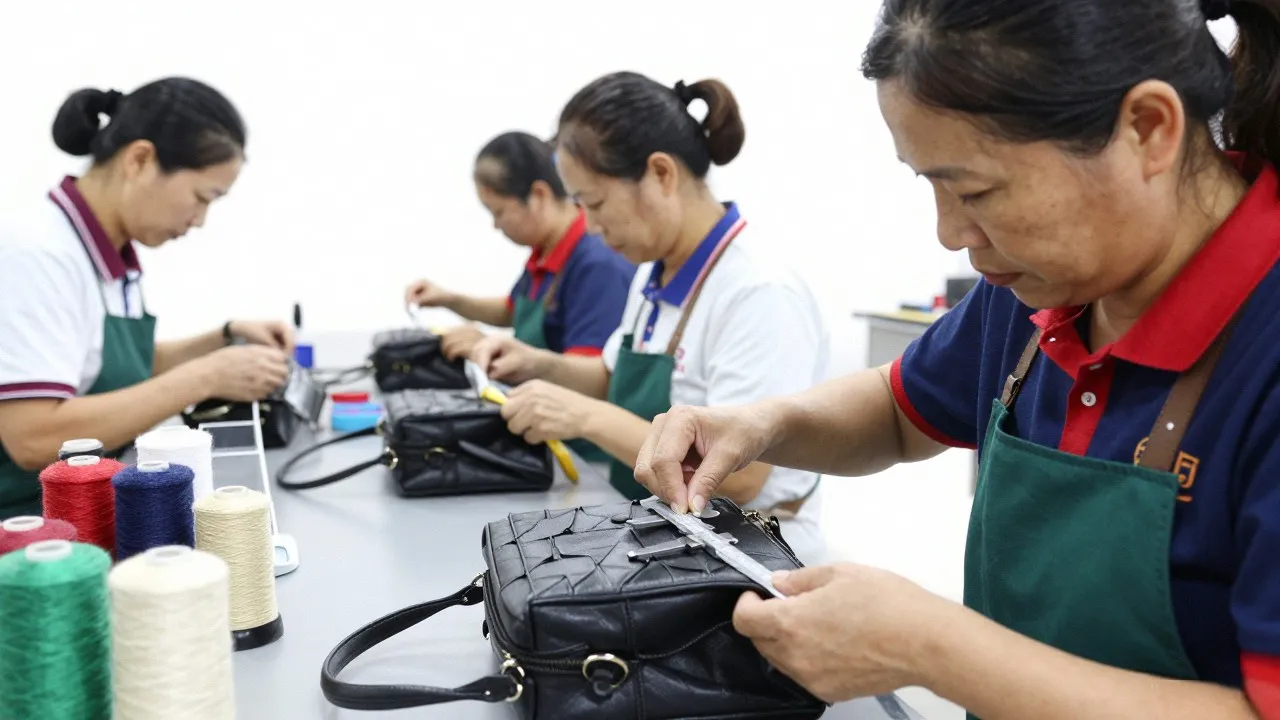
Labor expenses cover:
- Skilled seamstresses for precision sewing and logo stitching
- QC inspectors to eliminate defects (critical for brand reputation)
- Cutting technicians for accurate fabric shaping
- Packing and warehouse staff for order fulfillment
Contrary to popular belief, higher labor costs do not mean overpaying – they mean investing in craftsmanship. Cheap labor often results in loose stitching, uneven prints, and faulty hardware, costing you more in returns and damaged brand trust. Our Tote Bag Quality Control Guide explains how skilled labor directly impacts final product quality.
Overhead & Additional Costs
The remaining 5% to 15% of total costs covers factory overheads: rent, utilities, equipment maintenance, design support, and compliance certifications (OEKO-TEX, GRS, CPSIA). These costs ensure your factory operates legally, sustainably, and with professional production standards – non-negotiable for global retail brands.
Handbag Production Cost Percentage Breakdown (Industry Standard)
| Cost Category | Percentage Range | Key Components | Impact on Pricing |
|---|---|---|---|
| Raw Materials | 45% – 65% | Fabric, Hardware, Linings, Accessories | Largest variable cost; material quality drives this ratio |
| Skilled Labor | 25% – 40% | Sewing, QC, Cutting, Assembly | Directly linked to craftsmanship and product durability |
| Factory Overhead | 5% – 10% | Rent, Utilities, Equipment | Fixed cost; minimal impact on unit pricing |
| Logistics & Waste | 3% – 5% | Shipping, Material Waste, Packaging | Reduced with higher order quantities (MOQ 200+) |
| Total Production Cost | 100% | All Expenses Combined | Final unit price for custom handbag orders |
How MOQ 200 Impacts Labor & Material Cost Percentages
One of the most impactful factors on cost ratios is your Minimum Order Quantity (MOQ). At GzDreamway, we offer a low MOQ of 200 units – the perfect balance for startup brands and small businesses. Here’s how this MOQ optimizes your costs:
1. Material Bulk Discounts: 200 units qualify you for wholesale material pricing, lowering the material cost percentage by 5-8% compared to sample orders.
2. Labor Efficiency: Factory workers streamline production for 200 units, reducing labor time per unit and cutting labor costs by 3-5%.
3. Lower Overhead Allocation: Fixed overhead costs are spread across 200 units, reducing the per-unit overhead percentage.
For brands scaling from small batches to mass production, our article Shifting from Small MOQ to Mass Production provides a step-by-step cost optimization strategy.
.webp)
This exploded view shows every material component of a custom handbag – each piece contributes to the 45-65% material cost ratio we outlined earlier. Precision in material selection directly reduces waste and lowers your total production cost.
How to Calculate Your Custom Handbag Budget (Pro Tips)
Using the labor vs. material ratios above, you can create a 100% accurate budget for your custom handbag order. For automated calculations, use our Tote Bag Cost Calculator – the ultimate tool for estimating unit costs based on material, labor, and MOQ.
To avoid hidden fees, partner with a transparent manufacturer like GzDreamway that provides a full cost breakdown before production. Our Handbag Manufacturing Cost Structure Breakdown dives deeper into hidden expenses and how to avoid them.
Choosing the right factory is just as important as understanding costs. Our guide How to Choose the Best Tote Bag Factory helps you vet suppliers for transparency, quality, and fair pricing.
GzDreamway Official Homepage
Leading custom handbag & tote bag manufacturer with MOQ 200
Contact Our Factory
Get a free cost breakdown for your custom handbag project
MOQ 200 Guide
Learn how low MOQ reduces your production costs & risk
Frequently Asked Questions (FAQ)
1. What is the average material vs labor cost percentage for a custom handbag?
Materials account for 45-65% of total production costs, while skilled labor makes up 25-40%. Overhead and logistics cover the remaining 5-15%.
2. What is your MOQ for custom handbag production?
GzDreamway has a low MOQ of 200 units for all custom handbag and tote bag orders, ideal for startups and small brands.
3. How do material choices affect total handbag costs?
Premium materials (PU leather, recycled fabric) increase the material cost percentage to 60-65%, while basic canvas reduces it to 45-50%.
4. Does higher labor cost mean better quality handbags?
Yes! Higher labor costs fund skilled seamstresses and strict quality control, resulting in durable stitching, perfect prints, and defect-free bags.
5. How can I reduce my custom handbag production costs?
Opt for our MOQ 200 to get bulk material discounts, choose cost-effective materials, and work with a transparent factory to avoid hidden fees.
Final Thoughts: Partner with a Transparent Handbag Manufacturer
Understanding labor vs. material cost percentages is the key to profitable custom handbag production. No longer will you accept vague factory quotes – you’ll have the data to negotiate fair prices, optimize your budget, and create high-quality bags that resonate with your customers.
At GzDreamway, we prioritize transparency for every client. Our MOQ 200, full cost breakdowns, and expert design support make us the top choice for global brands launching custom handbags, tote bags, and diaper bags. Whether you need eco-friendly RPET bags, luxury PU leather handbags, or promotional canvas totes, we deliver cost-effective, premium production tailored to your brand.
Ready to get started? Contact our team today for a free, no-obligation cost estimate and take the first step towards successful handbag manufacturing.
Premium bag & silk manufacturing — under one factory roof.
Tucked inside Shiling Town — Guangzhou’s centuries-old leather district — Dreamway is a focused manufacturing partner for brands that refuse to compromise. We build rugged, retail-ready tote bags, backpacks, handbags with a 200-piece MOQ, and craft 100% Mulberry silk pillowcases, scrunchies & sleep accessories starting from just 50 pieces. Our small team of 30+ artisans is senior, hands-on, and accountable — the same people who quote your sample will personally inspect your shipment.
Every order is verified against our published manufacturing quality standards — AQL 2.5 inspection, hardware pull-tests, seam-strength audits, and silk-fibre authenticity checks. From concept tech-pack to mass production, we run the entire supply chain in-house, so timelines stay honest and revisions stay painless.
Buying Guides & Manufacturing Insights
Sourcing smarter starts with knowing what to compare. These long-form guides break down the decisions our clients wrestle with most — from third-party inspections like the SGS vs Intertek vs Bureau Veritas showdown, to ranking China’s top 10 tote bag manufacturers, to the head-to-head of canvas vs polyester vs PU for bag bodies.
Designing your logo? Our custom tote bag logo size guide shows real placement and stitch-density examples. Curious how a handbag actually comes together? Walk through the leather handbag manufacturing process step by step, and pair it with the canvas tote durability factors that decide whether a bag survives five years of daily use.
For material decisions beyond canvas, compare PU vs polyester for bags and explore our roundup of the world’s top canvas bag manufacturers. If backpacks are your lane, our backpack manufacturing process and backpack lead-time guide give you realistic production windows. Choosing between social-compliance audits? Read BSCI vs SEDEX vs WRAP. For smaller leather goods, dive into the leather wallet manufacturer playbook; for sustainability claims, the recycled PU leather explainer and our backpack QC checklist separate marketing from reality. Finally, stay ahead of EU regulation with our PPWR FAQ for bag manufacturers.
Explore by Topic
Browse our deep-dive knowledge hubs — every cluster is curated by category and updated with new field reports.
By Category
Materials & Compliance
Real Client Cases
Numbers tell part of the story. These production cases show how Dreamway’s small team delivers at scale.
Featured Product Lines
A snapshot of what we manufacture most often — all OEM/ODM-ready with custom hardware, lining, and packaging.
Who We Help
From indie founders to global enterprise — Dreamway is built for brands that need a factory, not a freelancer.
Brand Builders
Beauty & Fashion
Lifestyle & Retail

Skip the inbox. Chat with Victoria — right now.
Point your camera at the QR and you’re connected to a real human in Guangzhou. Send a photo of your reference, get a quote within minutes, and lock in your 200-piece MOQ slot before this month’s capacity fills.
Specialized factories. Unified standards.
Leather & Bag Capital
Our bags come from Guangzhou’s Shiling leather district — home to 30+ senior artisans under one roof, working in 8,000 m² of integrated cutting, sewing, hardware-assembly, and QC space.
Mulberry Silk Heritage
Our 22mm Mulberry silk pillowcases and sleep sets come from vetted partner mills in Suzhou and Hangzhou — at the heart of China’s 5,000-year sericulture heritage, today running OEKO-TEX Standard 100 certified production lines.
Get your sample in 7 working days —
hand-built by Guangzhou’s 30+ artisans.
Send a sketch, a screenshot, or a competitor’s bag you want to beat. We’ll hand-build a custom sample and ship it to your door — produced by the same craftspeople who will run your mass-production order.
business days · in your timezone
on request · signed in 1 day
if first one misses the brief