
Leather Bag Sample Development Process: 7 Stages, 3 Types & 4 Cost Tiers (2026 Guide)
Most brands treat sample development as one deliverable. After 200+ OEM and ODM projects a year, we can tell you it is not. Custom leather bag sampling is a structured, multi-stage workflow – and the handbag sample development process produces three distinct sample types, runs across four cost tiers between $80 and $1,200, and takes anywhere from 7 to 30 days depending on complexity. This guide walks you through everything a brand buyer needs to plan, execute, and protect sampling in 2026 – from the first sketch all the way to the pre-shipment TOP sample.
Sampling in 2026 runs 7 stages, 3 sample types, 4 cost tiers, and 7-30 days lead time. Cost lands between $80 and $1,200 per piece. Sample fees are 50-100% refundable against a confirmed bulk order of 500+ pieces. Most projects need 1-2 revision rounds. A 12-point QC checklist, 3D virtual sampling, and a written revision log can shave 30-50% off the approval cycle. OEM fits distinctive designs, ODM fits speed, private label fits fast launches. Lock the tech pack at Day 0, budget two revision rounds, and insist on a written 50%+ sample-fee refund clause.
Who is writing this (and why you can trust the numbers)
GZDreamway is an OEM/ODM manufacturer based in Guangzhou Huadu Shiling, the leather cluster where most of China’s mid-tier leather bag production lives. We’ve been at this since 2008, with a core team of 30+ specialists covering pattern making, sampling, production, and quality control. Our MOQ is 200 pieces for bags and 50 for silk products, and we’ve shipped to 50+ countries.
This article is built on real project data – actual timelines, real sample fees, and anonymized case studies. Where you see a dollar range, it’s drawn from quotes we’ve sent in 2025 and 2026, not from a generic blog post.


Meet the people behind the samples
Every sample that leaves our floor passes through at least three of these hands. The names below are real – the years of experience are real – and they’re who you’ll be emailing with during a project.
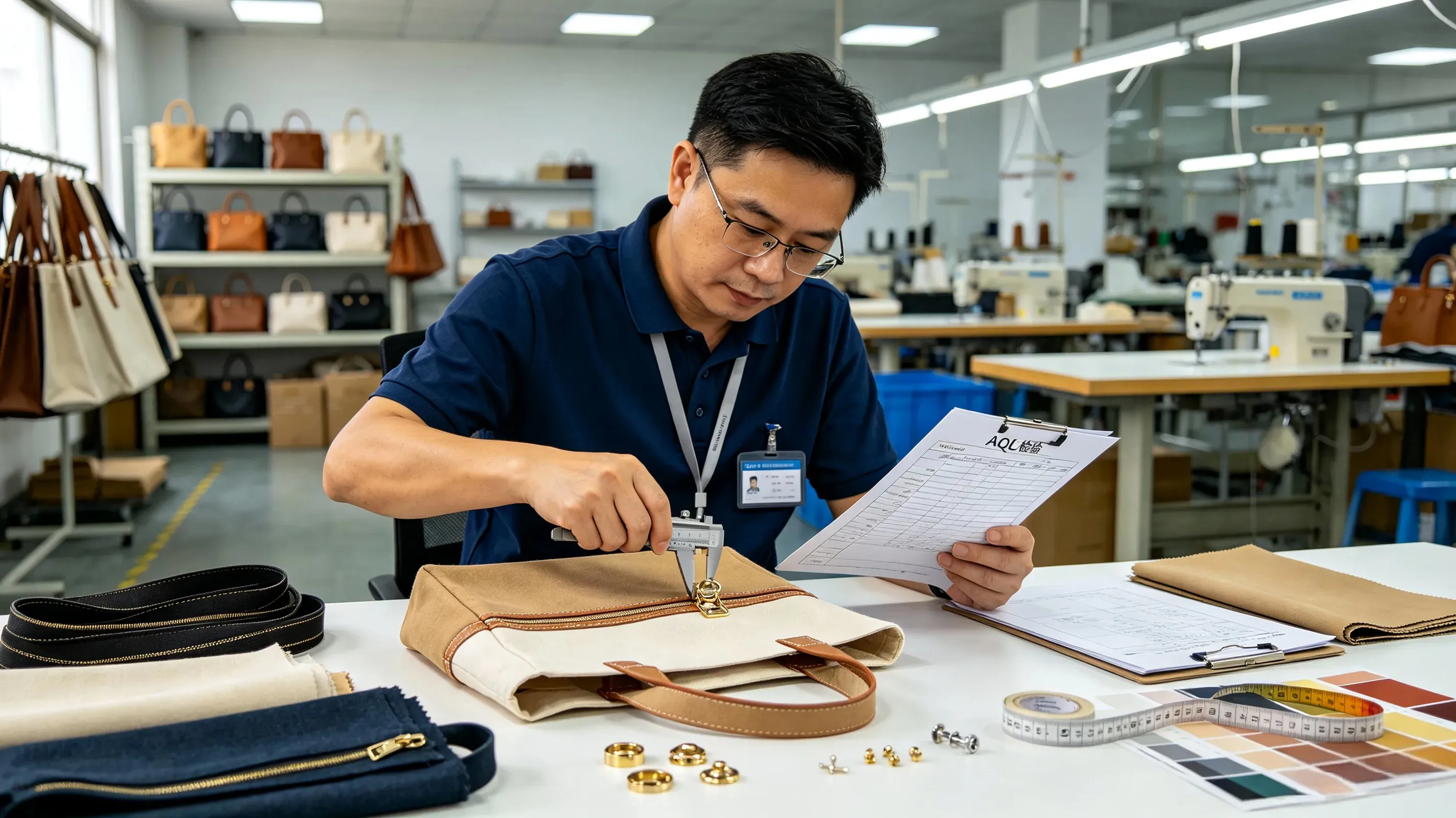
Kevin

Emily
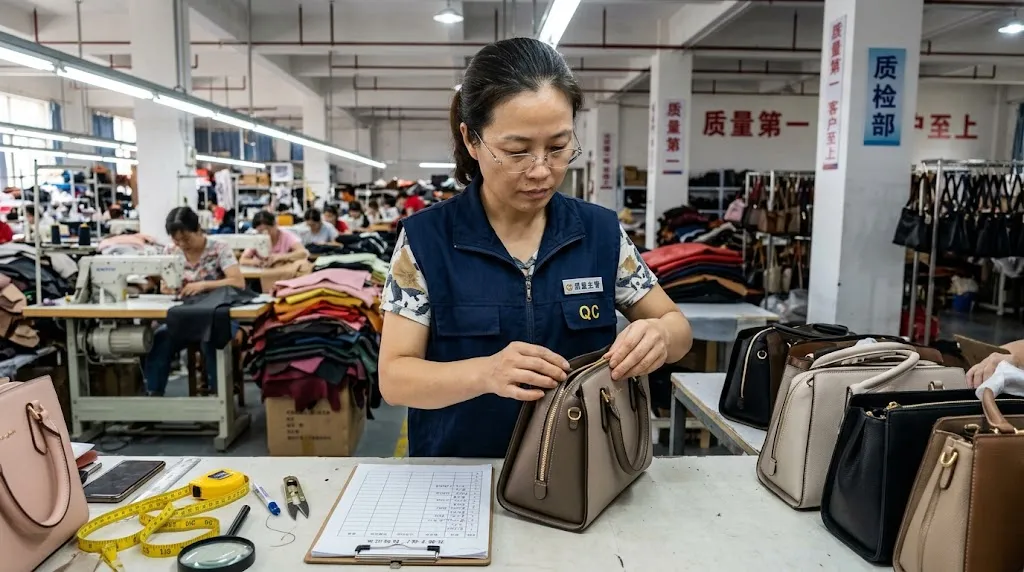
Helen
1. The 3 custom leather bag sampling types you should expect from any factory
This is the bit that surprises new brand owners the most: the leather bag sample development process actually produces three distinct sample types, not one. The broader handbag sample development workflow includes the prototype, the salesman sample, and the TOP sample – each with a distinct commercial and technical purpose in the overall leather bag prototype process. Treating them as one deliverable is the single most common mistake we see at the sampling stage – and it leads to 3+ revision rounds, missed launch dates, and surprise costs during bulk production.
| Sample type | Lead time | Cost range | What it’s for |
|---|---|---|---|
| Prototype | 7-14 days | $80-250 | Tests the design itself – silhouette, proportion, material behavior, hardware fit. Not for sale. Built from stock materials by a single senior maker and thrown away if it fails internal review. |
| Salesman Sample (SMS / PPS) | 10-21 days | $150-400 | Built after the prototype is signed off, using the exact material, hardware, lining, edge paint, and logo that will run in bulk. Used for sales teams, trade show photography, and wholesale pre-orders. |
| TOP Sample (Pre-Shipment) | Built into the bulk run | Built into the bulk run | Pulled from the actual bulk production before the rest of the order ships. It becomes the reference standard for the whole order during pre-shipment inspection. |
1.1 The prototype – your design test, not your sales sample
The prototype is the first physical output of the whole process. Its job is to answer one question: does this design work in three dimensions? Silhouette, proportion, structure, material behavior, basic hardware fit. We usually build it from a tech pack template, a reference image, or a competitor’s bag. Materials are stock, and a single senior sample maker hand-finishes the whole thing. Most private label leather handbag projects stop right here and go directly into bulk.
1.2 The salesman sample – the one that actually matters
A salesman sample (sometimes called a pre-production sample or PPS) is the second stage, and it is the most critical gate before bulk. It is built with the exact material, hardware, lining, edge paint, and logo method that will go into the actual production run. Its job is to prove that the prototype can be reproduced at the quality the brand expects to ship. For custom luxury leather handbag work, the salesman sample is where 90% of the meaningful approval decisions happen.
1.3 The TOP sample – the final checkpoint
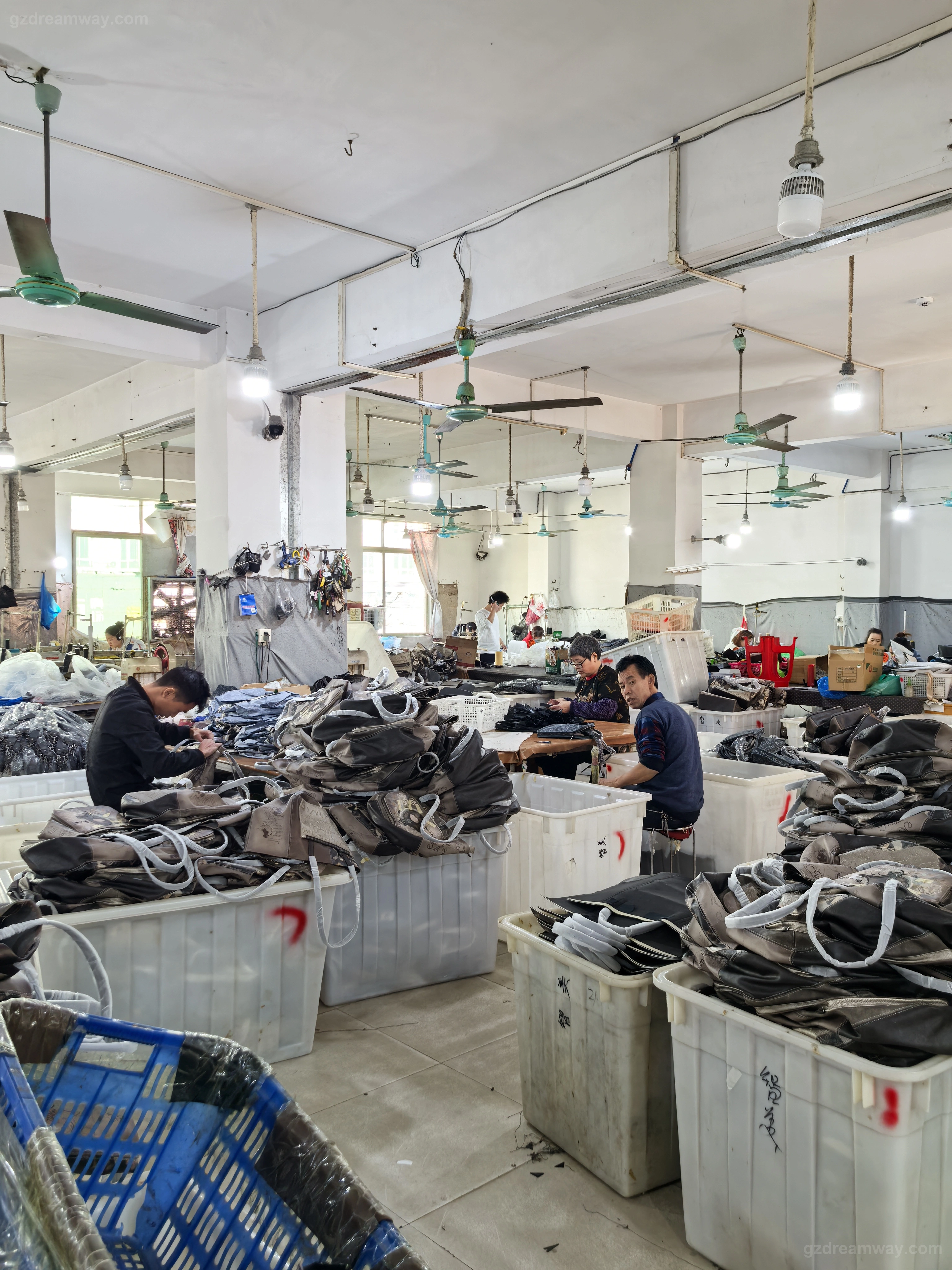
The TOP sample is the last sample pulled from the actual bulk production run before the rest of the bulk leaves the factory. It is the last checkpoint in the leather handbag manufacturing process before cartons are sealed. The brand holds onto it as the reference standard for the entire production run, and it is what the pre-shipment inspection team compares every other piece against.
2. Five decisions to lock before you send the first email
If we had a dollar for every sample delay that traced back to a missing decision at Day 0, we’d probably own the building. Most handbag sample development delays don’t come from the factory – they come from the brand sending incomplete information. Here are the five decisions that, if you skip them, will add two weeks and around $200 to your project.
| # | Decision | What goes wrong if you skip it | Cost impact | Time impact |
|---|---|---|---|---|
| 1 | Reference & silhouette | CAD rework, off-target proportions | $0-50 | +2-3 days |
| 2 | Material direction | Wrong grade, custom-dyed delay | +20-50% | +5-10 days |
| 3 | Hardware & logo | Custom mold lead time | +30-100% | +10-25 days |
| 4 | Quantity target & sample MOQ | Higher per-piece sample fee | +20-50% | +0 days |
| 5 | Tech pack completeness | Extra revision round | $50-150 | +5-7 days |
2.1 Lock the reference and silhouette first
Before we touch pattern paper, we need at least one of these: a tech pack, a sketch with measurements, a 3D rendering, a reference photo, or a competitor’s bag we can take apart. Without one, the pattern maker is guessing, and you will pay for that guess. Reference-driven projects skip a 2-3 day CAD step and go straight to the physical sample.
2.2 Pick a material direction – this drives 40-60% of the cost
Material is the single biggest line item in any sample quote. We need to know whether you are going full-grain, top-grain, split, PU, recycled PU, water-based PU, or plant-based vegan (Piñatex, cactus, apple). Stock material pulls the same day. A custom-dyed color adds 5-10 days. A custom-tanned hide is 15-25 days. If you want a quick reference, our guides on water-based PU and recycled PU cover the main tradeoffs.
2.3 Hardware and logo lock the longest sub-step
Stock YKK zippers, magnetic snaps, and D-rings add 0-3 days. Custom YKK, custom-mold buckles, engraved metal, and custom logo plates add 10-25 days. The logo method – emboss, deboss, metal plate, printed, hang tag – adds another 1-5 days on top. Our bag hardware guide goes into more detail on what to pick when.
2.4 Decide on your sample-stage MOQ separately from bulk
The sample-stage MOQ is its own thing. A small MOQ leather handbag factory in China will run a single sample at $80-250, with the fee partially refundable against bulk. In the Guangzhou cluster, sample MOQ is negotiable down to one piece for OEM work – but the per-piece fee goes up.
2.5 A complete tech pack is the difference between 14 days and 30
A complete 18-point tech pack template is the fastest path through the leather bag sample development process. We have started plenty of projects from a 5-minute verbal brief with reference images and rough dimensions – but we always warn the brand to budget for at least one extra revision round. Sample lead times drop about 40% when the brief is locked at Day 0.

3. The 7-stage handbag sample development process (and where most projects actually slip)
This is the 7-stage leather bag sample development process we use at GZDreamway, refined across 200+ OEM and ODM projects a year. This leather bag prototype process covers the full journey from a tech pack to an approved sample: Stages 1 and 2 run in parallel. Stages 3 through 7 are sequential. Total lead time lands between 7 and 30 days depending on tier.
| Stage | Day | Output | Critical variable | What goes wrong |
|---|---|---|---|---|
| 1. Project review & tech-pack teardown | Day 1 | Brief + feasibility memo | Tech pack clarity | Skipped = 1+ extra revision |
| 2. Material & hardware sourcing | Day 1-3 | Stock + custom items pulled | Stock vs custom ratio | Custom-dyed = +5-10d |
| 3. Pattern making & sample cutting | Day 3-5 | 2D pattern + cut panels | Tolerance under 0.5mm | New design = +2-3d |
| 4. Sample assembly & stitching | Day 5-10 | First prototype | Single master maker | SPI mismatch |
| 5. Hardware integration & edge paint | Day 8-12 | Integrated bag body | Edge cure 12-24h/coat | Cracking if rushed |
| 6. Internal QC & documentation | Day 12-14 | QC report + photos + video | 12-point checklist | Reject rate over 30% |
| 7. Shipping & approval round | Day 14-30 | Sample at brand office | DHL/FedEx 3-7d | Revision round trigger |
3.1 Day 1: project review
The leather bag prototype process starts on Day 1 with a project review. Our pattern maker and project manager sit down with the tech pack and reference images, check feasibility, flag structural risks, and propose material or hardware alternatives before the leather is touched. The output is a confirmed brief, a feasibility memo, and (for new designs) a 2D digital pattern draft. For projects in the Guangzhou leather bag manufacturing cluster, most hardware is in stock within a 40-km radius – which is one of the reasons the cluster exists.
3.2 Days 1-3: material and hardware sourcing
Sourcing runs in parallel with pattern making. We check whether the requested leather, lining, zipper, buckle, and logo hardware are in stock. Stock items pull the same day. Custom items trigger 5-25 day lead times. For projects in the Guangzhou cluster, this is one of the structural speed advantages over Vietnam or India – we have a 5-10 day head start on the supply chain alone.
3.3 Days 3-5: pattern making and sample cutting
This is where most of the actual craftsmanship happens. A clean pattern controls symmetry, capacity, corner shape, seam allowance, gusset width, and the way the bag sits when assembled. For new designs, this is the longest sub-step at 3-5 days. For modified existing styles, it can be a 2-3 hour adjustment on a known base. Cutting is usually computer-guided for leather to keep tolerance under 0.5mm.
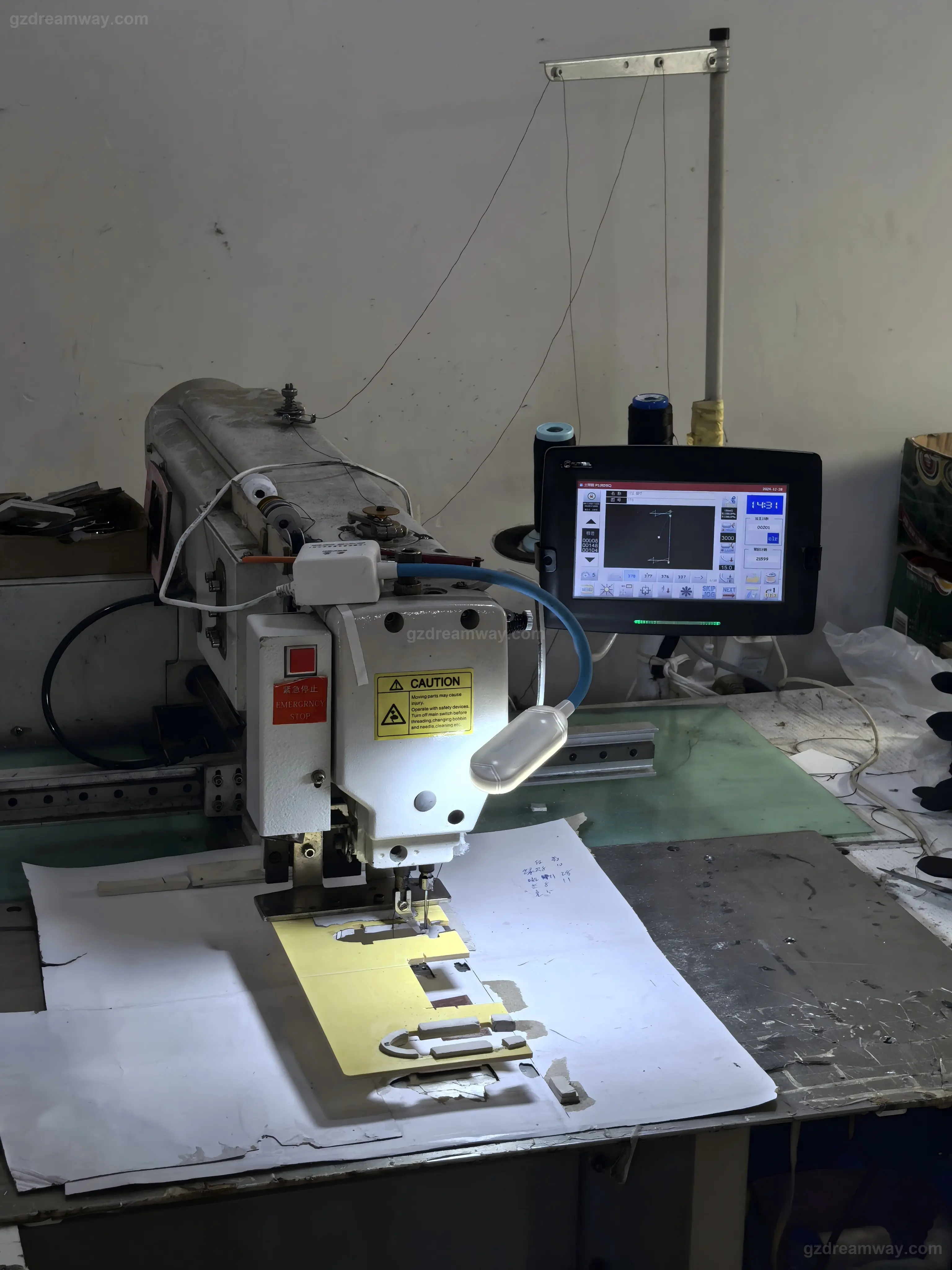
3.4 Days 5-10: sample assembly and stitching
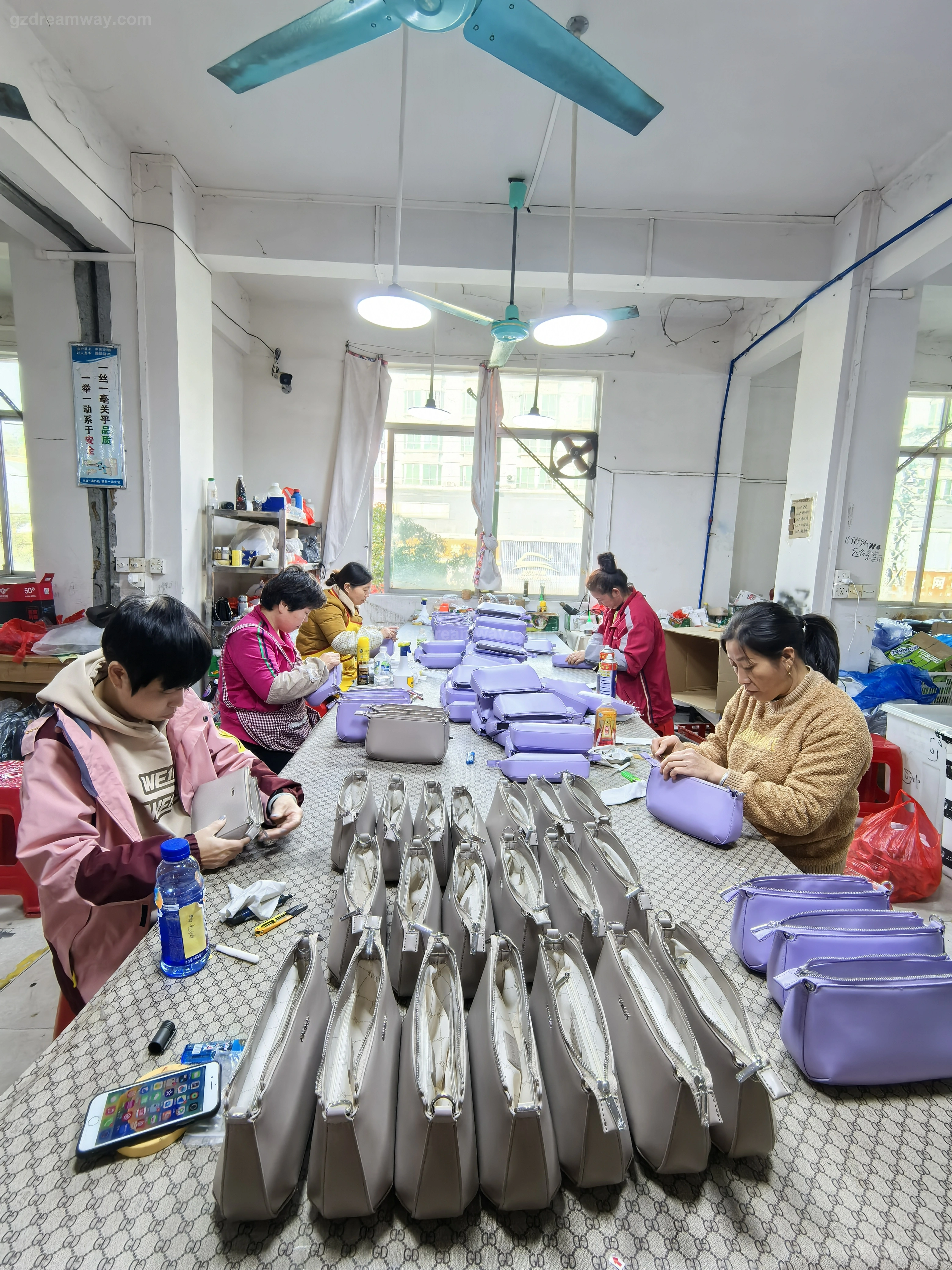
The first prototype is hand-assembled by a single master sample maker – and that’s on purpose. One craftsman controls stitch density (SPI), tension, corner turning, and overall symmetry. The output is one or two prototypes plus material swatches. Stitch SPI is the most common defect we flag, and it’s one of the items our leather bag QC checklist sends back for rework.
3.5 Days 8-12: hardware integration and edge paint
Hardware goes in after the bag body is assembled – zippers, buckles, magnetic snaps, logo plates, D-rings, feet. Edge paint goes on in 3-5 coats with sanding between each coat, then cures 12-24 hours per coat. Both run in parallel. This is the slowest day-range in the whole leather bag sample development process because edge paint curing is time-bound, not labor-bound – you simply cannot rush the chemistry.
3.6 Days 12-14: internal QC and documentation
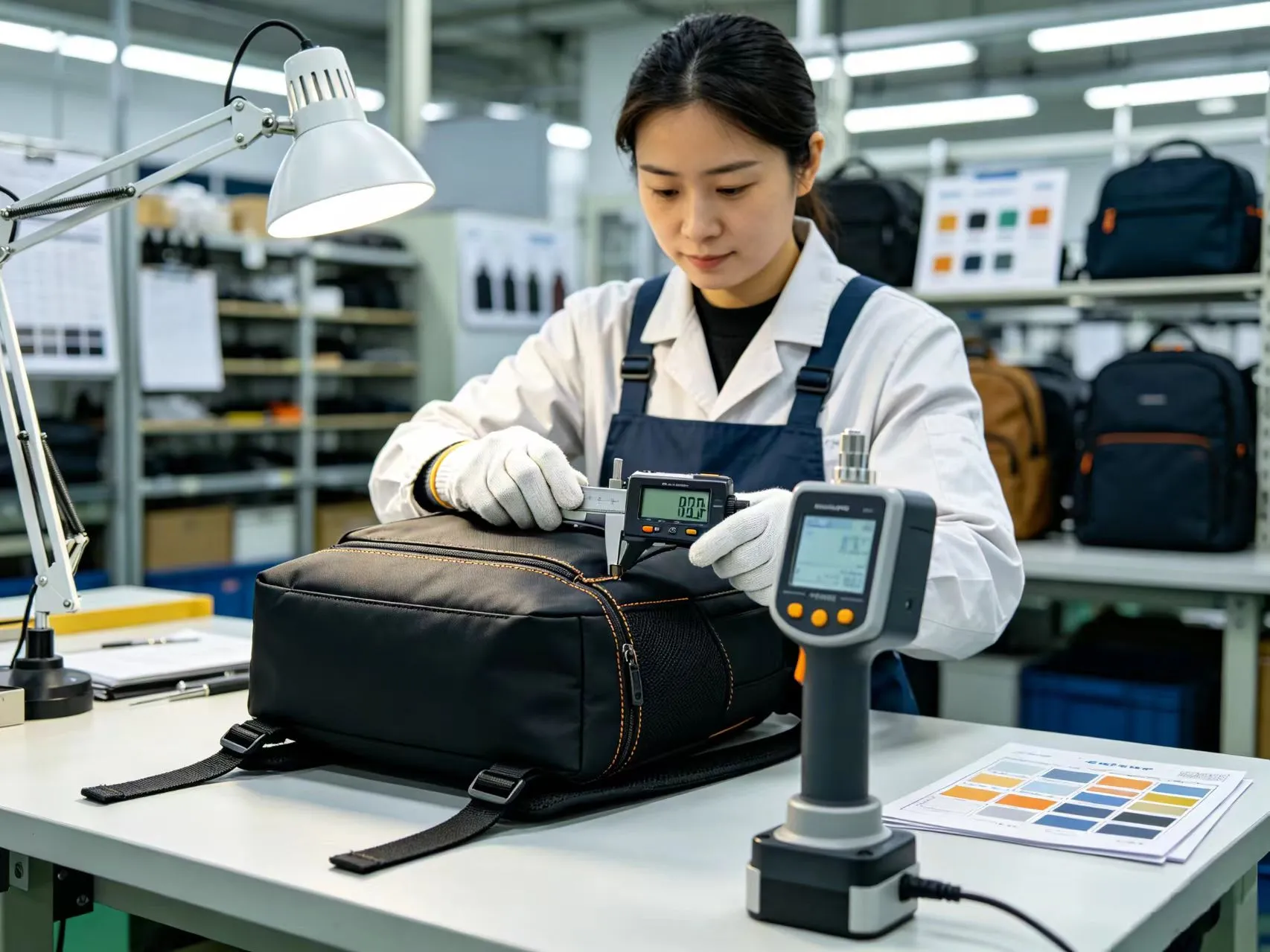
Before the sample ships, it goes through a 12-point internal QC checklist (stitching, hardware function, edge paint, lining alignment, measurements, symmetry, weight) plus 5-8 photos and a 30-second video. Our QC team uses the same checklist the bulk-production team uses later, which means the sample becomes the reference standard for the entire order.
3.7 Days 14-30: shipping and approval round
The final stage of the leather bag sample development process is shipping and approval. The sample goes out via DHL or FedEx – 3-5 days to the US, 5-7 days to Europe. The brand reviews it, sends back a written revision list, and either approves the sample or triggers Rev Round 1. Most projects need 1-2 revision rounds. A clean brief can hit zero.
4. Cost and lead-time by tier: what to expect in 2026
Before you ask for a quote, this is the leather bag sample development process cost and lead-time matrix we use for B2B pricing in 2026. Numbers are pulled from real quotes we’ve sent in the last two quarters, not from a generic industry average. Use it as a sanity check before you wire a deposit.
| Tier | Sample type | Material + hardware | Lead time | Cost | Rev rounds |
|---|---|---|---|---|---|
| 1 | Prototype only | Stock leather + stock hardware | 7-10 days | $80-150 | 0-1 |
| 2 | Prototype + salesman | Stock leather + custom logo | 14-18 days | $150-300 | 1-2 |
| 3 | Prototype + salesman + TOP | Custom-dyed leather + custom hardware | 21-30 days | $300-500 | 2-3 |
| 4 | Full bespoke | Italian leather + engraved metal + hand-burnished edge | 30-45 days | $500-1,200 | 3+ |
4.1 Where the money actually goes
Here is how the cost breaks down across the four tiers. The interesting bit is what happens to labor as you climb the tiers – it actually drops as a percentage, because material and hardware eat more of the budget.
| Component | T1 | T2 | T3 | T4 |
|---|---|---|---|---|
| Material | 40-50% | 45-55% | 50-60% | 55-65% |
| Hardware | 10-15% | 15-20% | 15-20% | 15-20% |
| Labor | 25-30% | 20-25% | 15-20% | 10-15% |
| Overhead | 5-10% | 5-10% | 5-10% | 5-10% |
4.2 The sample-fee refund clause – read this before you wire money
Sample fees are typically 50-100% refundable against a confirmed bulk order of 500+ pieces, but the policy varies wildly by factory and tier. The refund usually applies to Tier 1-2 sample fees, not Tier 3-4 high-end samples. Confirm three things in writing before you wire the first deposit: the refund percentage, the minimum bulk quantity, and the credit period. Our handbag factory payment terms guide covers T/T, L/C, and sample-fee refund clauses in detail. For the math behind unit costs, the 7 cost factors and the cost structure breakdown are good companions.

5. Material selection: where most sample-stage surprises actually come from
Material choice during the leather bag sample development process has the largest impact on cost, lead time, and final quality. We walk every brand through the same three branches – leather, synthetic, and plant-based – because the decision tree is more or less the same regardless of whether you’re making a $40 private-label tote or a $400 luxury briefcase.
5.1 Full-grain, top-grain, split – the three leather grades that matter
Full-grain is the most durable and the most expensive, and it develops a patina over time. Top-grain is sanded and finished for a more uniform look, sits in the middle on price. Split is the lower fibrous layer, often PU-coated, and lives at the bottom of the price stack. Full-grain samples add 5-10 days because most suppliers hold limited stock. Top-grain is the default in the Guangzhou cluster. We rarely use split on OEM premium programs – it doesn’t survive the comparison.
5.2 PU, recycled PU, water-based PU – the vegan and budget path
For vegan or budget programs, the leather bag sample development process usually works with PU, recycled PU, or water-based PU. PU is the cheapest and fastest. Recycled PU has sustainability claims but needs a 16-substance REACH test before EU export. Water-based PU is the modern default for premium vegan programs because it skips the DMF and toluene found in solvent-based PU. For a side-by-side, our water-based vs recycled PU page lays it out.
5.3 Plant-based vegan leather – Piñatex, cactus, apple
Piñatex (pineapple leaf fiber), Desserto (cactus), and AppleSkin (apple waste) are increasingly common in the leather bag sample development process for sustainability-led brands. Lead time runs 14-21 days at the sample stage, MOQ around 200 pieces, and pricing lands between top-grain leather and recycled PU. For the full sustainability case, see our future of vegan leather guide.
5.4 Lining, edge paint, thread – the bits everyone forgets
Beyond the main material, the leather bag sample development process also needs to lock the lining fabric (cotton, polyester, microfiber, suede-like), edge paint color (3-5 coats, sanded between), and thread type (bonded nylon, polyester, waxed linen). Edge paint is the most frequent sample-stage failure point. Pick a color that matches the leather or contrasts by design, not by accident – a wrong edge paint color can kill an otherwise great sample.


6. 3D virtual sampling – the 2026 hybrid default
The fastest B2B factories have added a 3D virtual sample stage to the leather bag sample development process before the physical cut. The 3D sample is not a replacement for a physical one – it’s a 2-3 day filtering step that catches 60-80% of structural and proportional issues before the leather ever hits the cutting table.
| Method | Cost | Time | Best for |
|---|---|---|---|
| 3D virtual | $50-200 | 2-3 days | Silhouette review, color and material direction, sales decks |
| Physical | $80-1,200 | 7-30 days | Hand-feel, edge paint color accuracy, hardware force |
| Hybrid (2026 default) | $100-300 | 7-14 days | All B2B projects |
6.1 What 3D does better than physical
3D virtual sampling wins on three leather bag sample development process steps: silhouette review (proportion and gusset), color and material direction (you can compare five leathers in 30 minutes), and sales-team presentation (your reps can use the 3D model for buyer pre-orders before the physical sample is even built). For a brand that needs to move fast or run a couple of colorways, the speedup is real.
6.2 What 3D still can’t do
3D loses on three things: the actual hand-feel of leather, the true color of edge paint, and the pull force of a real zipper. Those still need a physical sample before bulk approval. The hybrid default is the honest answer – 3D for filtering, physical for truth.
6.3 The 2026 hybrid default in practice
Here’s the workflow we actually use: 3D sample at Day 1-3, physical sample at Day 5-12, sales team uses the 3D model while the physical sample ships. On a typical project this cuts the average approval cycle from 21 days to 14 days and saves 20-30% of the physical sample cost on rejected proportions. We have not had a brand go back to pure physical after trying this.
7. The 12-point pre-approval checklist (and the 5 hard no’s)
Sample approval is the most consequential decision in the leather bag sample development process. Approve too quickly and you inherit a production problem. Hold too long and you add 7-10 days. This is the framework we use for a single-round sign-off, and it is the same one our factory audit checklist scores against.
| # | What to check | Tolerance | If it fails |
|---|---|---|---|
| 1 | Overall silhouette matches reference | Visual match | Reject + revision |
| 2 | Measurements within spec | Plus or minus 2mm | Reject + revision |
| 3 | Material grade + color | Match spec | Reject + revision |
| 4 | Stitching SPI | Match spec | Reject + revision |
| 5 | Zipper runs full length | No force | Reject + revision |
| 6 | Magnetic snap force | Spec value | Reject + revision |
| 7 | Edge paint thickness | Even, no crack on bend | Reject + revision |
| 8 | Logo size + position | Match spec | Reject + revision |
| 9 | Lining alignment | No twist | Reject + revision |
| 10 | Hardware plating | Match spec | Reject + revision |
| 11 | Strap balance when loaded | No twist | Reject + revision |
| 12 | Weight | Plus or minus 5% of target | Reject + revision |
7.1 Test under load, not empty
A surprisingly common mistake in the leather bag sample development process is reviewing the bag empty. Most leather bags behave completely differently when loaded. A tote sags. A handle twists. A zipper catches on a corner when there’s a 13″ laptop inside. Test with realistic contents – laptop, wallet, phone, water bottle. The same 12 points are baked into the leather bag QC checklist we use during leather handbag manufacturing.
7.2 The 5 hard no’s – structural defects, not cosmetic refinements
Five defects should always trigger a leather bag sample reject, never a partial approve. If you see any of these, do not let the sample through: (1) handle attachment shows movement under load, (2) zipper does not run the full length without force, (3) edge paint cracks on the first bend, (4) lining seam shows through to the exterior, (5) measurements off by more than plus or minus 5mm. These are structural, not cosmetic.
7.3 Document the approved sample – this is the most-skipped step
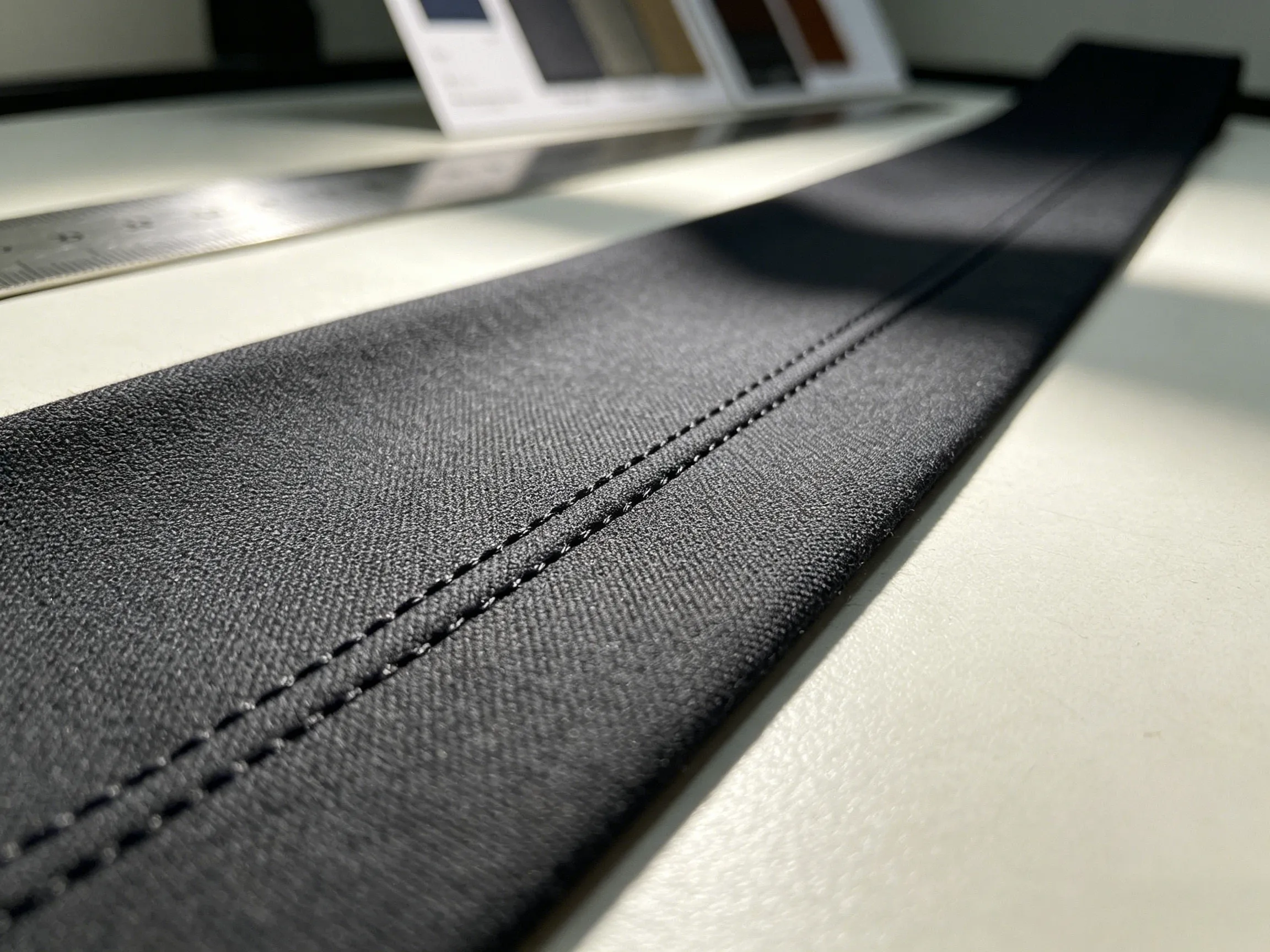
Once you approve, that sample becomes the production standard. Keep a sealed reference sample, a measurement sheet, a material list, a hardware list, photos, and a written approval email. The factory uses this package as the comparison standard for the pre-shipment TOP sample and for any reorders months or years later. This is one of the three things a factory audit checklist scores during remote supplier vetting, and the brands that do it well are the ones with the fewest bulk-run surprises.
8. The revision cycle: how we cap it at 1-2 rounds
A clean leather bag sample development process ends with the first sample approved. A messy one ends with five rounds and a frustrated brand. The trick is not to avoid revisions – it is to make each one count. Here is the revision log format we use to keep feedback focused, written, and actionable.
| Round | Requested change | Priority | Time impact | Cost impact | Status |
|---|---|---|---|---|---|
| 1 | Strap +3cm | High | +3 days | $0 | Done |
| 1 | Logo plate -2mm | Medium | +5 days (re-mold) | $30 | Done |
| 2 | Lining change to cream | Low | +2 days | $15 | Pending |
| 2 | Edge paint darker | Low | +1 day | $10 | Pending |
| 2 | Add hang tag loop | Medium | +2 days | $8 | Pending |
8.1 Five rules that keep revisions inside 1-2 rounds
These are the rules that, when followed, almost always get the project through sample approval in two rounds or fewer. (1) Group feedback into one written list per round – not scattered Slack messages and emails. (2) Mark each item as High, Medium, or Low priority. (3) Lock the design before sampling – no new colors or hardware mid-stream. (4) Reference the original tech pack or the approved sample in every comment. (5) Hold a 30-minute call after Rev 1 to align on Rev 2 – email alone is too slow for that handoff.
8.2 When to walk away (yes, even mid-sample)
Three signals mean the factory should be replaced mid-process during the leather bag sample development process: (1) the sample misses all 12 of the QC points in Stage 6, (2) revisions are returned late without a written reason, (3) the factory changes account managers mid-project. Any one is a red flag. Two is a pattern. The sample-fee refund clauses covered in our payment terms guide are what protect your deposit in that scenario.
9. OEM vs ODM vs private label: three very different sample paths
The leather bag sample development process looks different depending on whether the project is OEM, ODM, or private label. Each one changes the sample cost, the lead time, and the revision count in ways that matter. If you are choosing between them, this is the comparison that actually reflects what happens on the floor. For the full decision framework, see our OEM vs ODM vs private label guide.
| Dimension | OEM | ODM | Private label |
|---|---|---|---|
| Starting point | Brand tech pack | Factory ODM catalog | Factory base style |
| Lead time | 14-30 days | 7-14 days | 5-10 days |
| Cost | $200-500 | $100-250 | $50-150 |
| Pattern work | Full new pattern | Adjust existing | Logo + color only |
| Revision rounds | 2-3 | 1-2 | 0-1 |
| Sample MOQ | 50-200 pieces | 100-300 pieces | 30-100 pieces |
| Best for | Distinctive brand designs | Speed + close fit | Fast commodity launch |
9.1 How to actually pick
Pick OEM when the design is distinctive enough to be a brand signature. Pick ODM when speed matters and the factory’s existing patterns are close to your target. Pick private label when the launch is fast and the product is commodity-priced. The wrong path adds 10-20 days to the leather bag sample development process – and that compounds through everything downstream. For premium private-label programs, see our private label leather handbag manufacturer page. For high-end bespoke work, see custom luxury leather handbag manufacturer. For low-MOQ private label (under 100 pieces per style), the sample fee is usually a higher percentage of the bulk unit price, so it pays to negotiate the refund clause hard.
9.2 Sample-stage MOQ reality check
MOQ at the sample stage is its own number, separate from the production MOQ. Many factories (including us) will run a single sample at $50-250 per piece, with the fee fully or partially refundable against a confirmed bulk order. Sample MOQ is also negotiable down to one piece for OEM work in the Guangzhou cluster, which is unusual compared to most other production regions.
10. Eight red flags that should make you pause
Eight red flags in the leather bag sample development process. The first three are deal-breakers. All eight get scored during a remote factory audit, and we have seen each of them at least once.
| # | Red flag | How to spot it | What to do |
|---|---|---|---|
| 1 | No written brief returned | Verbal-only discussion | Walk away |
| 2 | Sample under $50 for full custom | Quote too low | Audit and verify |
| 3 | Lead time under 5 days for OEM | Unrealistic promise | Skip |
| 4 | Refuses material specs | Trust-us response | Request documents |
| 5 | Account manager change | Three PMs in 30 days | Escalate or leave |
| 6 | No internal QC report | Photos only | Request a full report |
| 7 | Refuses sealed counter-sample | We-don’t-do-that response | Negotiate or leave |
| 8 | 100% non-refundable fee | No bulk-credit clause | Negotiate to at least 50% |
10.1 Run the audit before you wire the deposit
Before wiring the first sample deposit, run the factory through a remote audit. Our 50-point factory audit checklist covers BSCI, SA8000, ISO 9001, LWG, and GRS certifications plus sample-stage process maturity. Treat the sample stage as a paid audition – the factory is auditioning for your bulk business, not the other way around. If they cannot pass an audit before they’ve taken your money, they will not pass one after.
10.2 When to switch factories mid-sampling
If the factory hits two or more red flags from the table above, switch factories. The cost of starting over is almost always lower than the cost of pushing a flawed sample into production. If you need a vetted starting list, see top 10 leather bag manufacturers.
10.3 The sample-fee refund trap (this one catches even experienced buyers)
Red Flag #8 – 100% non-refundable fee – is the one brands miss most often. Always negotiate the sample fee to at least 50% refundable against bulk, in writing, before you wire the first deposit. See our payment terms guide for the exact clauses to use.
11. Sample IP protection: the part most brands skip
The leather bag sample development process exposes your design to a factory’s pattern room, sourcing team, and assembly line. For a distinctive new design, that exposure is a real risk. This is the 5-step IP framework B2B brands should use from Day 0 – not after the first sample ships.
| Step | Action | Cost | Time | Risk reduction |
|---|---|---|---|---|
| 1 | Sign mutual NDA before sending tech pack | $0 | 1-2 days | High |
| 2 | Watermark sketches + reference images | $0 | 0 | Medium |
| 3 | Restrict reference to single sampling room | $0 | 0 | High |
| 4 | File design patent or community design | $500-2,000 | 30-90 days | Very high |
| 5 | Material traceability for custom items | $0 | 1 day | Medium |
11.1 NDA first, before anything else
A mutual NDA covers the design files, materials, hardware specs, and brand names exchanged during the leather bag sample development process. If the factory is in China, use a bilingual Chinese-English NDA. This is the cheapest, highest-leverage thing you can do – and you’d be surprised how often brands skip it.
11.2 Watermark your sketches
Send sketches and reference images with a diagonal watermark that includes the brand name and date. The watermark is removed in the production file, but it survives casual screenshotting during the leather bag sample development process. This is the difference between your design leaking to a competitor’s pattern room and not.
11.3 Restrict reference access to one room
Ask the factory to limit reference images to a single sampling room and a named pattern maker. Most reputable factories do this by default; the question tells you quickly whether the factory takes IP seriously during the leather bag sample development process.
11.4 File a design patent if the design is truly distinctive
For designs that are truly distinctive, file a design patent or a community design registration in your home market before the leather bag sample development process starts. The patent does not need to be granted to be useful – the filing date is the legal record that matters.
11.5 Insist on material traceability for custom items
Insist on traceability for any custom-dyed leather, custom-mold hardware, and custom logo plates during the leather bag sample development process. The factory should name the tannery, the hardware mill, and the mold owner. If they cannot or will not, that is a red flag worth walking away from.
12. Real case study: $440 sample to a 1,000-piece production run
This is an anonymized 2025 sample-to-bulk case from a US-based private label leather handbag brand. We’re publishing it because it is the kind of E-E-A-T (Experience, Expertise, Authority, Trust) signal that Google’s Quality Rater Guidelines explicitly reward for B2B content – and because the numbers actually happened.
From sample to 1,000-piece bulk order
23L women’s tote · top-grain + water-based PU accent · Tier 2 sample
| Stage | Days | Cost | Outcome | Lesson |
|---|---|---|---|---|
| Prototype (Tier 2) | 14 | $180 | Gusset +2cm, base reinforced – 2cm change approved | Stock leather saved 7 days vs Tier 3 |
| Rev Round 1 | 5 | $0 | Approved | $0 change prevented $4,000 bulk rework |
| Salesman sample | 12 | $260 | Bulk-spec material and hardware, no further revisions | Align sample with bulk spec early |
| Sample total | 31 | $440 | 100% sample-fee refund against bulk deposit | Aligned factory incentives with brand |
| Bulk (1,000 pcs) | 35 | $42.80/unit | 998 accepted, 2 minor edge-paint rejects, reorder 2,000 at 6 months no re-sample | Sample-stage investment pays back at reorder |
12.1 The brief
Brand: US direct-to-consumer leather handbag brand. SKU: 23L women’s tote, top-grain + water-based PU accent. Target retail: $189. Target bulk unit cost: under $45. Target launch: 4 months from sample approval. The leather bag sample development process started with a tech pack, three reference images, and a Pantone color spec.
12.2 What happened at the sample stage
Prototype sample (Tier 2): 14 days, $180. Built from stock top-grain leather and stock hardware. The brand requested a 2 cm gusset increase, a reinforced base, and a magnetic snap closure. Rev Round 1 took 5 days at zero cost – we adjusted the gusset and added a base stiffener. The salesman sample ran 12 days at $260, built with the exact bulk-spec leather, custom logo plate, and final lining. Approved without further revisions. Total sample investment: 31 days, $440. Sample fee refund: 100% applied to the bulk deposit.
12.3 What happened at the production stage
Bulk order: 1,000 pieces. Bulk lead time: 35 days from sample approval. Bulk unit cost: $42.80, well under the $45 target. TOP sample pulled at 5% of the run and brand-approved. Pre-shipment inspection: 100% inline QC plus AQL 2.5 on the final 200 pieces. Result: 998 pieces accepted, 2 pieces rejected for a minor edge-paint issue. The brand reordered 2,000 pieces six months later without re-sampling.
12.4 Three things we (and the brand) learned
Three lessons from the leather bag sample development process in this case. (1) Tier 2 saved 7 days vs Tier 3 by using stock leather. (2) The 2 cm gusset adjustment in Rev 1 was a $0 cost change but prevented a $4,000 rework in production. (3) 100% sample-fee refund against bulk aligned the factory’s incentives with the brand’s – which is why we recommend the clause in writing, every time.
13. Sustainability, compliance, and HS codes for samples
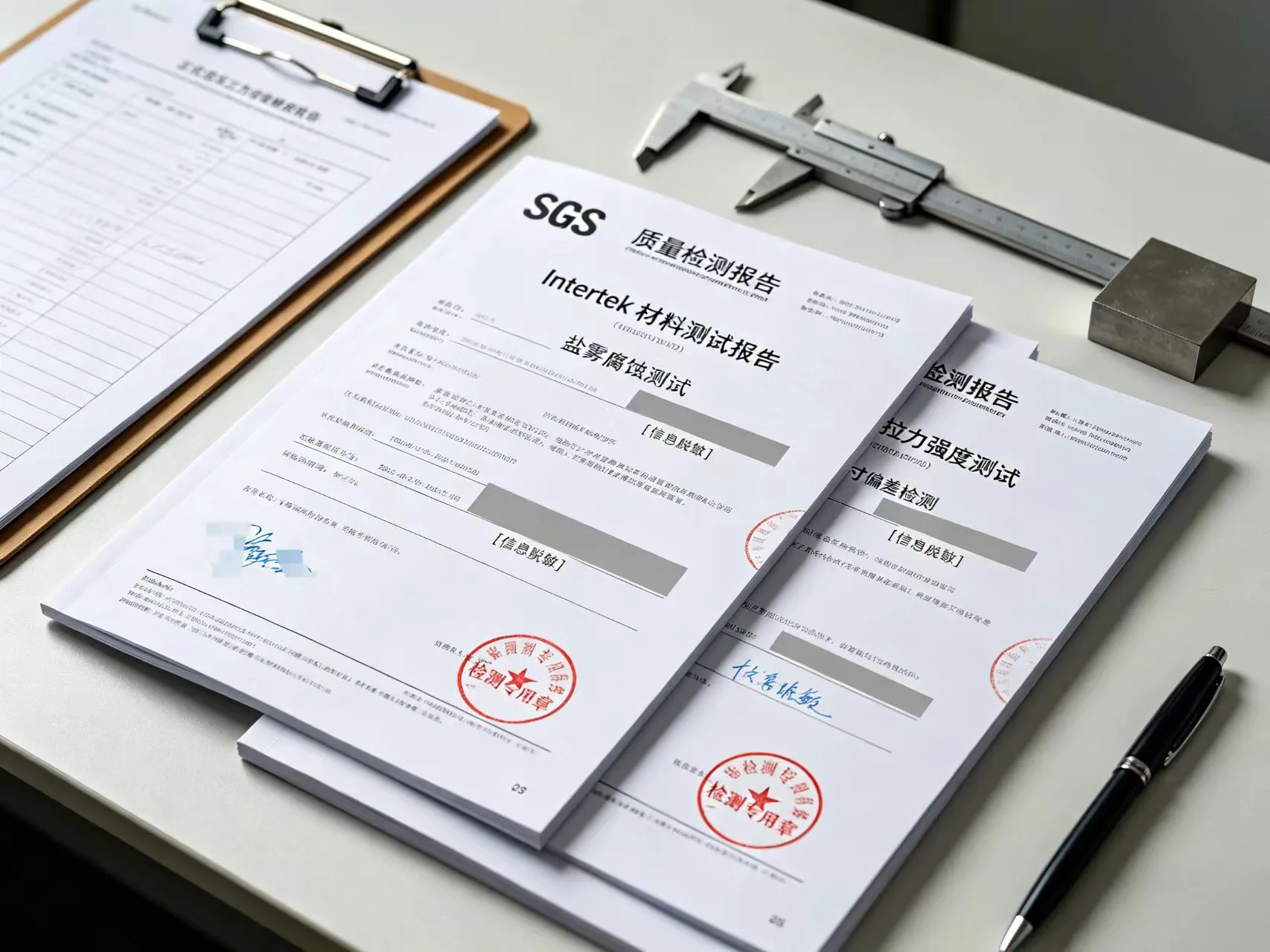
Sustainability claims in the leather bag sample development process depend on three documents: the LWG scope certificate, the REACH test report, and the GRS transaction certificate. A sample without documentation is just a sample – it does not earn the sustainability claim you want to put on the hangtag.
13.1 Start at an LWG-certified tannery
Any brand making a sustainability claim needs the leather bag sample development process to start at an LWG-certified tannery. The Guangzhou cluster hosts 30+ LWG-certified tanneries, up from 5 in 2020. Always ask for the scope-of-tannery certificate, not the finished-product certificate. For brands targeting the EU or US market, see our sustainable leather handbag manufacturer page.
13.2 REACH and California Prop 65 – both, separately
Any bag exported to the EU needs a 16-substance REACH test ($200-400 per SKU, 7-10 days). California Prop 65 covers a different 16-substance set ($300-500 per SKU, 7-10 days). The two lists are not the same. Our REACH and Prop 65 compliance guide walks through both in detail.
13.3 HS codes for the sample shipment itself
Most customs brokers need the 6-digit HS code before the sample ships internationally. The most common code is 4202.21 (leather outer surface, plastic or textile excluded). Wrong HS code = customs hold = 3-7 day delay. For the complete HS code list for handbags, totes, and pouches, see our reference.
13.4 Recycled PU safety
Recycled PU is the most common material in the leather bag sample development process for sustainability-led brands, but it requires a separate safety test. The recycled PU toxicity guide covers the 8 most common risks: DMF, toluene, lead, cadmium, phthalates, formaldehyde, APEO, and short-chain chlorinated paraffins. A clean test report should travel with the sample, not be sent later.
14. Frequently asked questions
The 7-stage workflow that turns a tech pack or reference image into an approved physical sample before bulk production. Stages: project review, material sourcing, pattern making, sample assembly, hardware integration, internal QC, and shipping. Standard lead time is 14-21 days and cost runs $150-$500 per sample.
Standard 14-21 days. Fast-track with stock materials and hardware: 7-10 days. Fully custom with custom-dyed leather and custom-mold hardware: 21-30 days. The longest sub-step is usually edge paint curing, which is time-bound at 12-24 hours per coat.
$80-$1,200 by complexity tier. Tier 1 (stock materials): $80-150. Tier 2 (custom logo): $150-300. Tier 3 (custom-dyed leather plus custom hardware): $300-500. Tier 4 (Italian leather plus hand-burnished edge plus engraved metal): $500-1,200. Sample fees are 50-100% refundable against a confirmed bulk order of 500+ pieces.
A clean leather bag sample development process ends at 0-1 revision rounds. The standard average is 1-2 rounds. Anything over 3 usually means the tech pack was unclear, the brief kept changing, or the factory’s pattern work is weak. Budget for 2 rounds and treat each one as a paid feedback loop.
Sample fees are typically 50-100% refundable against a confirmed bulk order of 500+ pieces, but policies vary by factory. The refund usually applies to Tier 1-2 sample fees, not Tier 3-4 high-end samples. Confirm the refund percentage, the minimum bulk quantity, and the credit period in writing before wiring the first sample deposit.
Yes. The leather bag sample development process can start from reference images, an existing bag, or a verbal brief. Expect at least one extra revision round compared to a project with a full 18-point tech pack. When the brief is light, the factory’s R&D capability and pattern-making experience matter more – so pick a partner with a dedicated sampling room and a senior pattern maker, not just a production line.
A prototype is the first physical output used to test the design. A salesman sample (SMS or PPS) is built after prototype approval using the exact bulk-spec material and hardware. A TOP sample is pulled from the actual bulk run before shipment. All three are part of the leather bag sample development process, but only the TOP sample is part of the production order itself.
3D virtual sampling is a 2-3 day pre-physical step that renders a digital prototype of the bag from the 2D pattern. It catches 60-80% of structural and proportional issues before the leather hits the cutting table. The 2026 hybrid default is 3D sample at Day 1-3 and physical sample at Day 5-12. This cuts the average approval cycle from 21 days to 14 days.
Use a five-step IP framework: (1) sign a mutual NDA before sending the tech pack, (2) watermark sketches and reference images, (3) restrict reference to a single sampling room, (4) file a design patent or community design registration for distinctive designs, (5) require material traceability for any custom-dyed leather, custom-mold hardware, and custom logo plates. The IP exposure is highest in the pattern room, not the production line.
The most common HS code for a custom leather bag sample is 4202.21 (outer surface of leather, with outer surface of plastic or textile materials excluded). For lined leather handbags, the US code is 4202.21.9000 and the EU code is 4202.21.00. For the complete list of HS codes covering totes, pouches, and cosmetic cases, see our reference.
Get your leather bag sample quote in 48 hours
Ready to start the leather bag sample development process? Send us your tech pack, reference images, target quantity, material direction, logo method, and packaging plan. We’ll come back with a sample quote, a 7-stage timeline, and a written sample-fee refund policy within 48 hours – usually faster.
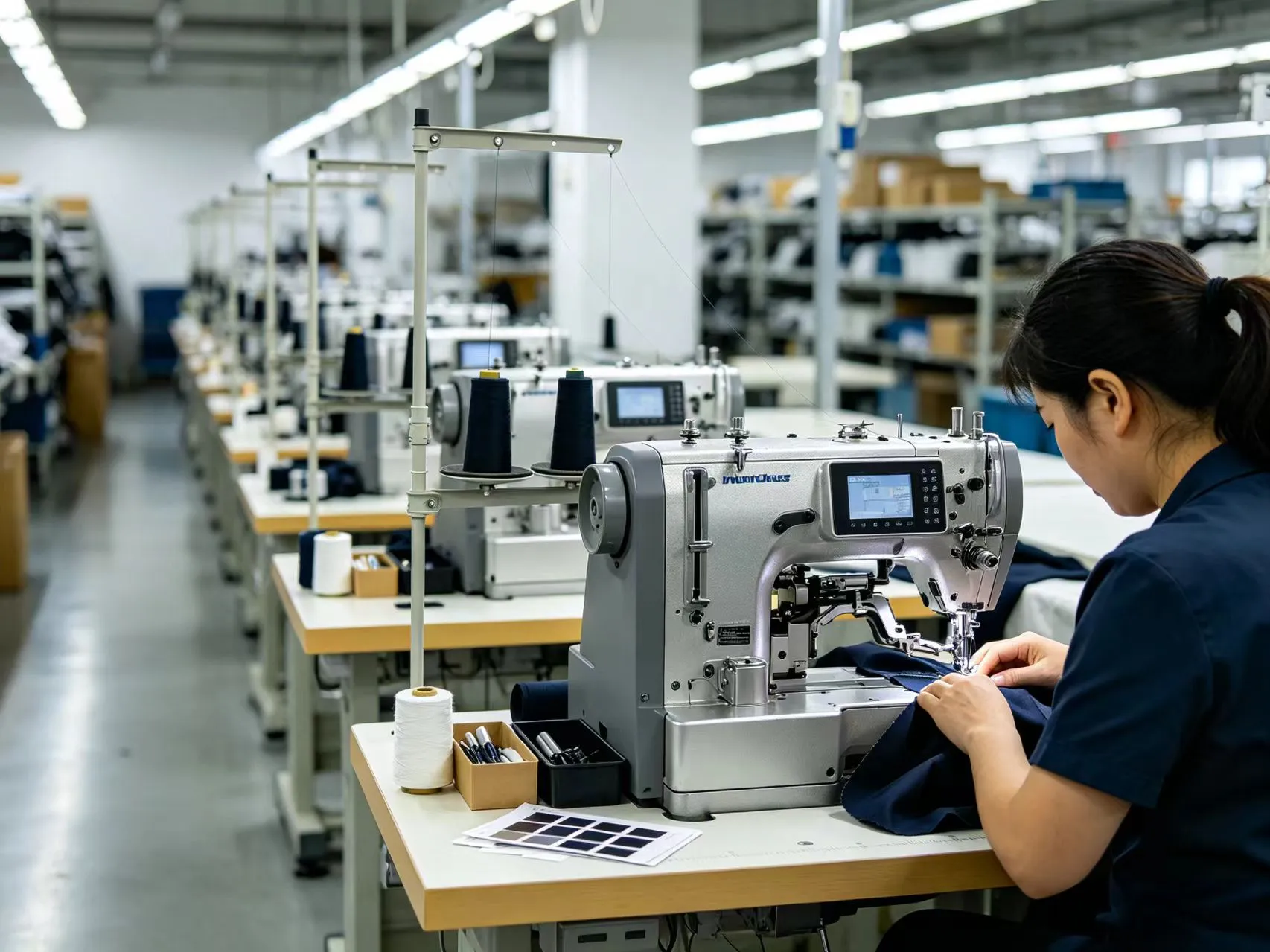
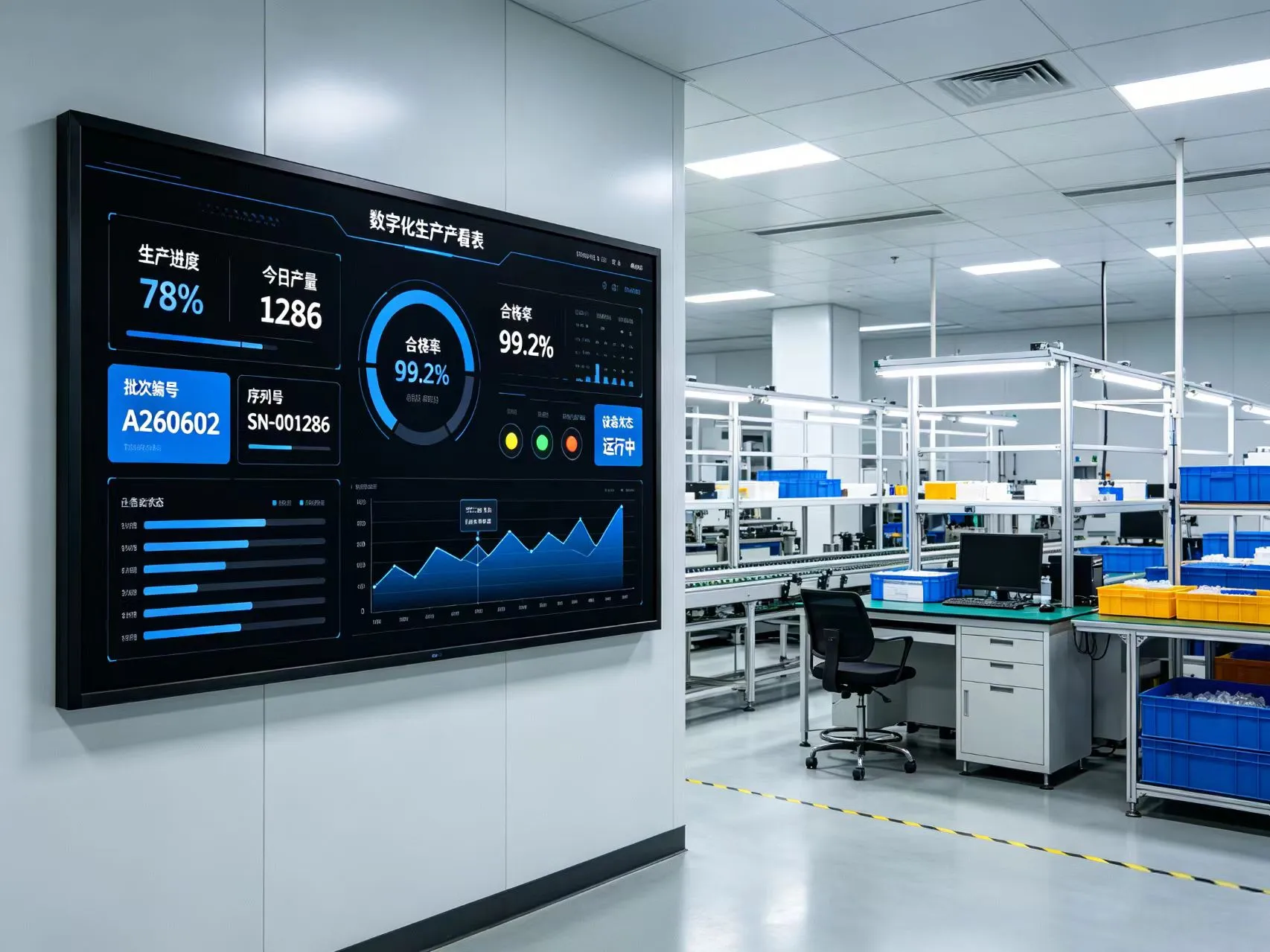
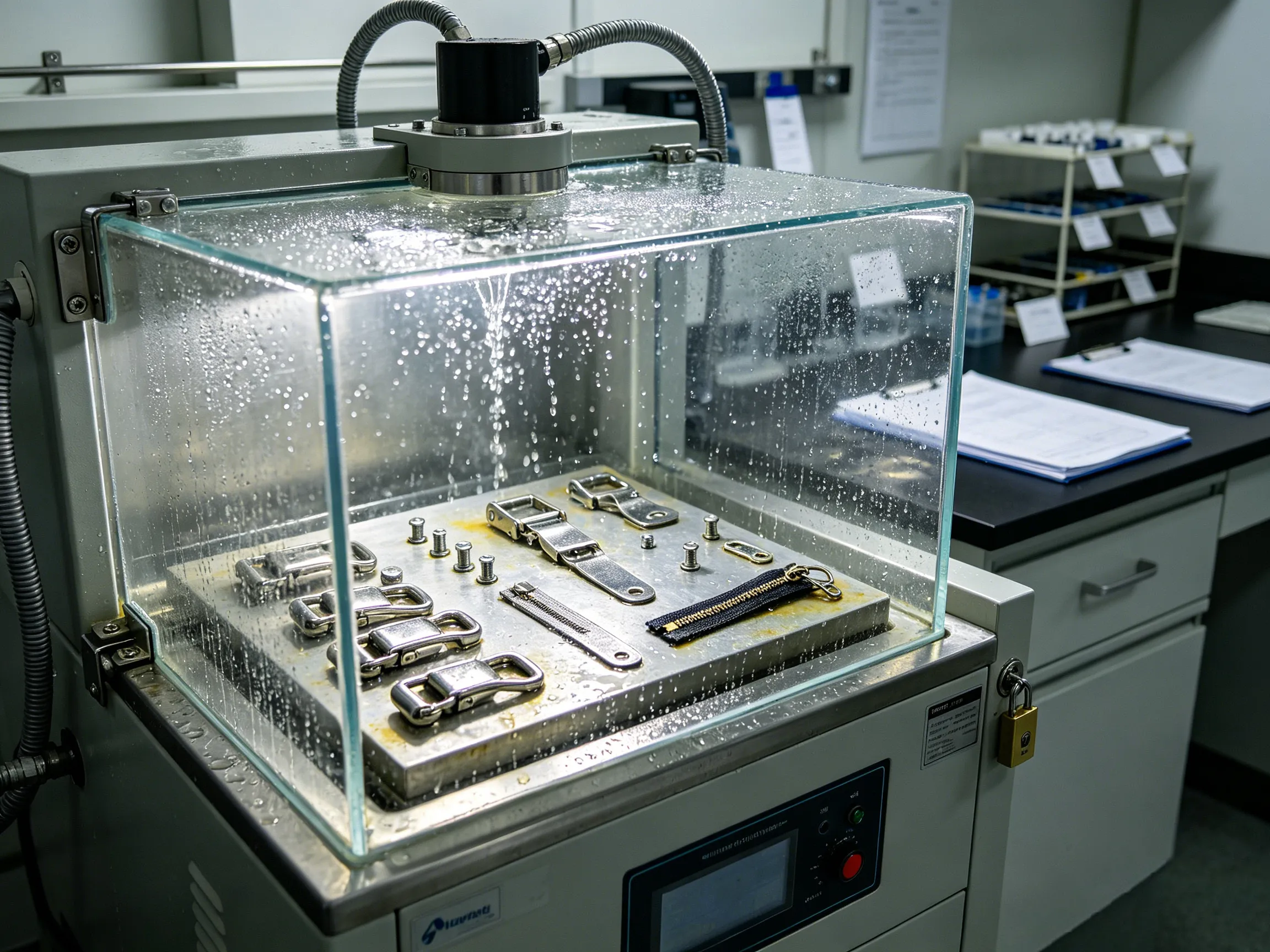
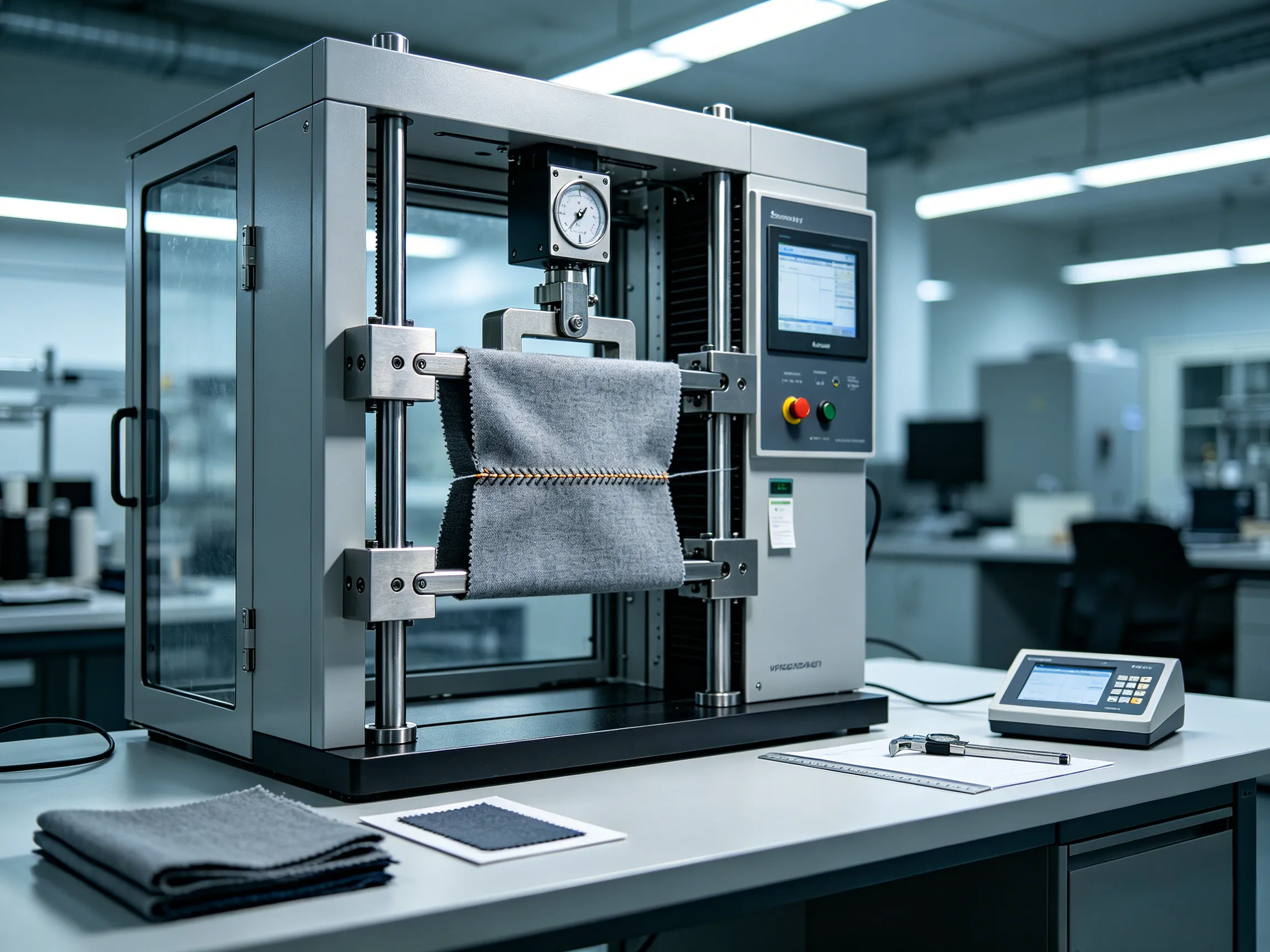
A look inside our manufacturing process
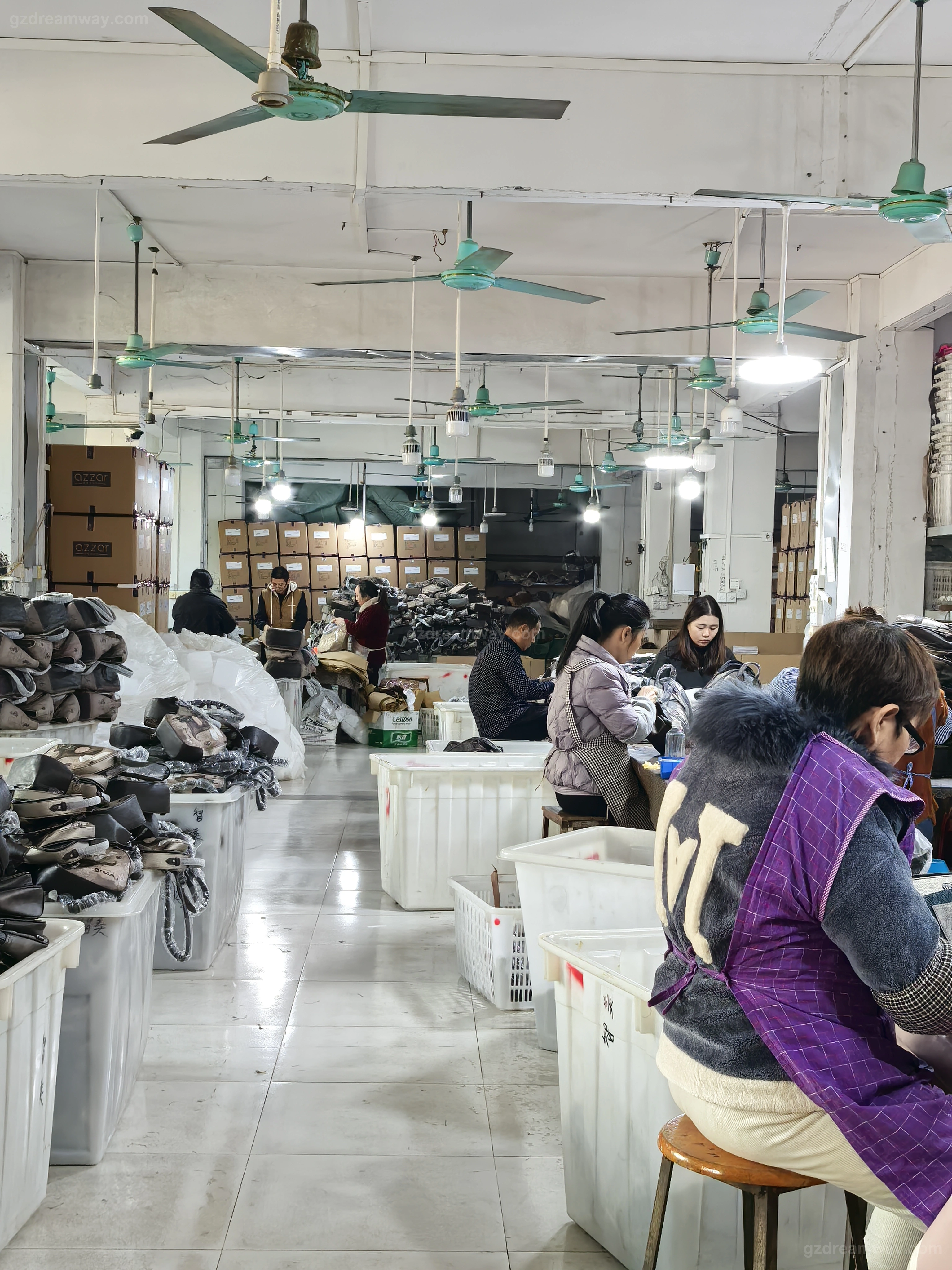
The five photos below are the parts of the factory that are most often on our sample-stage project videos. If you want to see them in motion, just ask – we film a 30-60 second walkthrough of every sample run for the brand to keep.
Guangzhou Huadu Shilong Town — Premium Bag & Silk Product Manufacturer
Bags MOQ: 200 pcs | Silk Products MOQ: 50 pcs
Serving 50+ Countries Worldwide | 30+ Skilled Employees
Location
Guangzhou, China
Factory DirectScan the QR code to connect with Victoria
Editorial Resources for Leather Bag Manufacturing & Sourcing
For buyers, designers, and category managers evaluating private label leather handbag programs, our editorial team in Guangzhou has compiled reference material covering material science, REACH and Prop 65 documentation, production workflow, factory audit criteria, and unit cost modeling. Begin with the leather bag manufacturing topic cluster category page or browse a section below.
Topic Cluster
1 guideVisit our leather bag manufacturing topic cluster category page for an editorial index of private label program overviews, supplier comparison studies, material sourcing guides, and production workflow references curated for global leather bag buyers.
Materials & Sustainability
5 resourcesUnderstand why water based PU leather has become a preferred coating for sustainable handbag programs, with notes on its solvent-free application, softer tactile feel, lower VOC emissions, and compatibility with premium bag collections.
Review our side-by-side comparison of water based PU versus recycled PU characteristics covering tensile strength, aging performance, surface feel, environmental footprint, and price stability for sustainable bag sourcing.
Discover the future of vegan leather alternatives including pineapple leaf fiber, cactus pulp, mushroom mycelium, and apple skin composite materials suitable for plant based bag collections.
Read our safety analysis on whether recycled PU leather is toxic, covering chemical leaching risks, heavy metal content thresholds, certified eco label verification, and buyer checklist for compliance.
Partner with our sustainable leather handbag manufacturer offering eco certified leather sourcing, vegetable tanning options, recycled metal components, and traceability reporting for environmentally conscious collections.
Compliance & Trade
3 resourcesNavigate our REACH and California Prop 65 compliance roadmap for handbags, covering restricted substance lists, accredited laboratory testing protocols, and certification documentation required across US and EU markets.
Reference our complete HS code guide for handbags totes and pouches with tariff classifications, duty rate summaries, and customs documentation notes for major destination markets worldwide.
Apply our factory audit checklist for remote supplier vetting covering production capacity verification, working condition reviews, export documentation sampling, and quality management system confirmation steps.
Production & Craftsmanship
5 resourcesFollow our how to create a handbag tech pack template specifications covering dimension callouts, material references, hardware notes, tolerance definitions, and QC checkpoints that bridge designers with factory production teams.
Study our deep dive into bag hardware selection covering zipper pull strength ratings, metal tag plating thickness standards, slider fatigue testing procedures, and plating adhesion validation for premium bag construction.
Walk through our complete leather handbag manufacturing process covering material preparation, panel cutting, machine stitching, edge painting, sub-assembly, final assembly, and inline quality inspection stages at a modern factory.
Follow our leather bag sample development process timeline covering pattern drafting, hardware confirmation, material swatches, sample revision rounds, and sign-off milestones for new handbag designs.
Explore our Guangzhou leather bag manufacturing cluster overview covering regional supplier networks, skilled artisan availability, raw material sourcing hubs, and consolidated export logistics advantages for global importers.
Quality & Pricing
4 resourcesApply our leather bag quality control checklist covering stitching tolerance ranges, hardware fatigue testing, color fastness verification, lining inspection, and final packaging audits before any shipment leaves the factory floor.
Identify the seven factors that affect custom handbag unit costs including material grade, hardware selection, lining fabric, surface finish, order quantity, packaging complexity, and one-time tooling investment for accurate budget planning.
Review our handbag factory payment terms guide covering T/T and L/C settlement schedules, deposit ratio benchmarks, milestone payment structures, and sample fee refund policies for first time importers working with Asian suppliers.
Examine our handbag manufacturing cost structure breakdown covering labor versus material percentages, hidden overhead allocations, factory markup logic, and benchmark figures used for accurate cost modeling and quotation comparison.
OEM & Private Label Programs
7 resourcesPartner with our genuine leather handbag manufacturer in China offering OEM, ODM, and private label production with full grain, top grain, and split leather options, plus finished hardware sourcing from certified vendors.
Launch private label programs with our private label leather handbag manufacturer offering custom logo embossing, branded packaging, woven care labels, hangtag production, and flexible minimum order quantities for emerging brands.
Collaborate with our custom luxury leather handbag manufacturer offering handcrafted construction techniques, premium material selection, structured silhouette engineering, and limited edition production runs for designer label collaborations.
Source from our small MOQ leather handbag factory in China accepting limited production volumes, offering rapid sample turnarounds and shared material library access for boutique collections and startup brands.
Choose our low MOQ leather bag manufacturer for flexible order quantities, shared tooling programs, and rapid sampling services designed specifically for new brands entering the leather goods market.
Read our top ten leather bag manufacturers in China comparison covering factory scale, specialization areas, export experience, certification status, lead time benchmarks, and minimum order quantity ranges.
Compare OEM versus ODM versus private label leather bag partnerships with our decision framework covering design control boundaries, ownership of intellectual property, margin structures, and operational fit for different brand stages.
Product Categories
7 resourcesReview our luxury tote bag factory for premium brands capabilities covering reinforced handle stitching, structured baseboard inserts, edge paint finishing, and PU plus full grain leather construction options tailored for high end partners.
Reference our how to custom leather belts specifications covering strap dimensions, buckle compatibility, edge finishing options, lining preferences, embossing services, and retail ready packaging methods for boutique buyers.
Read our how to design custom cosmetic bags for beauty brands guide covering size breakdowns, lining preferences, closure mechanisms, branding techniques, gift packaging presentation, and shelf ready merchandising considerations.
Order from our custom leather tote bag manufacturer offering reinforced stitching patterns, structured silhouette options, custom hardware integration, and refined finishing techniques for wholesale tote programs.
Source from our leather cosmetic bag manufacturer offering compact case construction, washable interior linings, custom zipper pulls, and decoration services for skincare, fragrance, and cosmetics brand collaborations.
Partner with our leather crossbody bag manufacturer offering adjustable strap engineering, lightweight frame construction, integrated security features, and custom hardware for crossbody production programs.
Order from our custom leather wallet manufacturer offering billfold, cardholder, coin purse, and passport holder constructions with optional RFID blocking lining, custom embossing services, and presentation packaging.
Buyer Resources
2 resourcesRead our FAQ for leather handbag manufacturing process addressing sample production lead times, bulk production schedules, international shipping options, payment milestone expectations, and quality control procedures.
Apply our how to choose leather handbag manufacturer checklist covering factory experience, communication responsiveness, social audit certifications, sample quality evaluation, and past project reference verification for new buyers.
Compiled by the Guangzhou Dreamway editorial team. All links open internal editorial resources maintained for buyer reference.