
How Much Does It Actually Cost to Make a Handbag? Labor vs. Material Percentages

This article breaks down the real production cost of custom handbags, focusing on labor vs. material cost percentages. We reveal industry-standard cost ratios, key expense components, and how factors like MOQ (200 units) impact pricing. Whether you’re a startup brand or established retailer, this guide helps you calculate accurate budgets, avoid overpaying factories, and partner with reliable handbag manufacturers for cost-effective, high-quality production.

Unlocking the Truth: Handbag Production Costs – Labor vs. Material Ratios

For brand owners, retailers, and entrepreneurs entering the custom handbag industry, the #1 question is always: How much does it actually cost to make a handbag? Most factories only share a final unit price, leaving you in the dark about what percentage goes to materials, labor, and overheads. This transparency gap leads to budget miscalculations, low-profit margins, and unexpected production costs.

At GzDreamway, a leading custom handbag and tote bag manufacturer in China with a MOQ of 200 units, we’ve produced over 10 million custom bags for global brands. We’re pulling back the curtain on the industry’s most guarded secret: the exact labor and material cost percentages that define every handbag’s production price. This data is based on 15+ years of B2B manufacturing, covering canvas totes, PU leather handbags, diaper bags, and luxury custom bags.

Handbag Cost Breakdown: Labor, Material & Overhead Pie Chart

This high-tech visual represents the core cost structure of handbag manufacturing: materials dominate the largest share, followed by skilled labor, with overhead and logistics making up the remainder. Understanding this ratio is the first step to negotiating fair prices with your factory partner.

Material Costs: The Largest Portion of Handbag Production

Materials are the single biggest expense in handbag manufacturing, accounting for 45% to 65% of the total unit cost. This category includes all physical components that form your handbag, and every choice you make directly impacts this percentage.

Key material components include:

  • Main fabric: Canvas, PU leather, polyester, RPET recycled material, or genuine leather
  • Hardware: Zippers, metal buckles, buttons, and custom logo tags
  • Linings: Waterproof fabric, cotton, or mesh
  • Accessories: Thread, glue, edge paint, and insulation padding
  • Packaging: Poly bags, hang tags, and custom boxes

For example, a premium PU leather handbag will have a 60% material cost ratio, while a basic canvas tote sits at 45% – the quality of raw materials directly shifts this percentage. If you’re comparing materials, our guide to Canvas vs. Polyester vs. PU breaks down cost and durability differences for every material type.

Labor Costs: Skilled Craftsmanship vs. Mass Production

Labor costs make up 25% to 40% of total handbag production costs, a critical figure that separates low-quality fast fashion from premium, durable bags. Unlike automated industries, handbag production relies heavily on skilled workers for cutting, sewing, logo embroidery, quality control, and assembly.
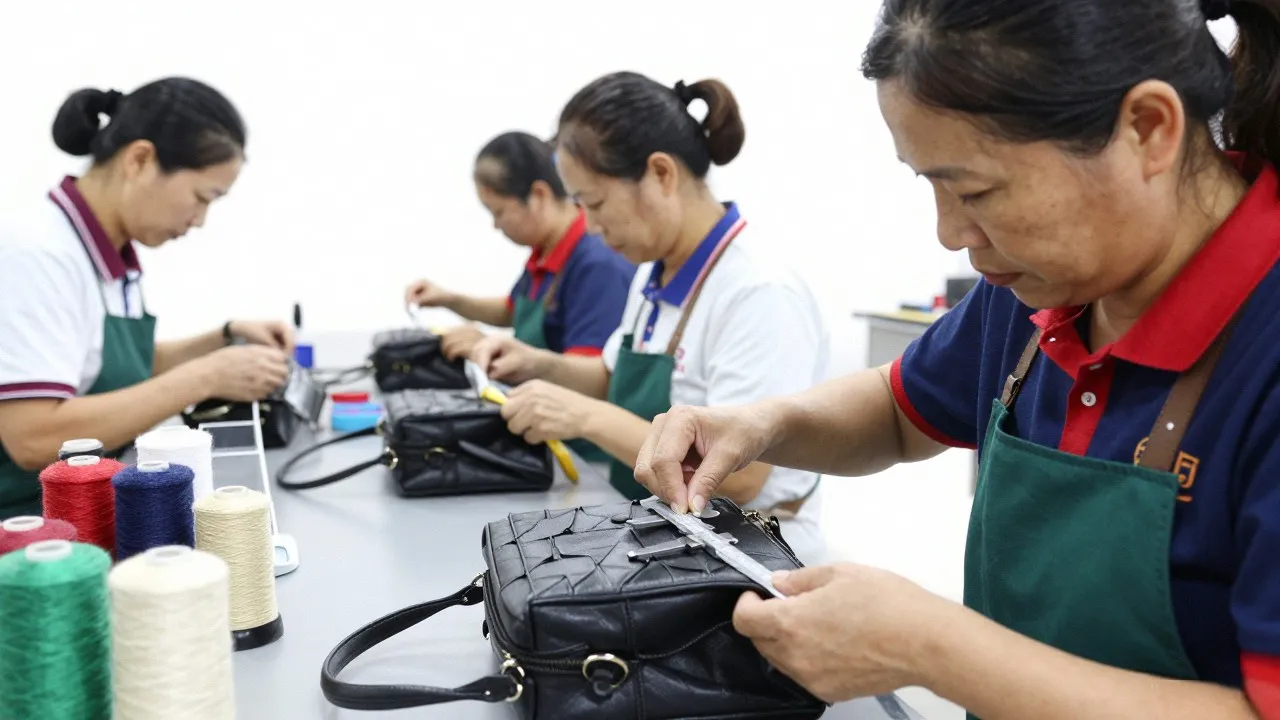
Handbag Factory Quality Control Inspection

Labor expenses cover:

  • Skilled seamstresses for precision sewing and logo stitching
  • QC inspectors to eliminate defects (critical for brand reputation)
  • Cutting technicians for accurate fabric shaping
  • Packing and warehouse staff for order fulfillment

Contrary to popular belief, higher labor costs do not mean overpaying – they mean investing in craftsmanship. Cheap labor often results in loose stitching, uneven prints, and faulty hardware, costing you more in returns and damaged brand trust. Our Tote Bag Quality Control Guide explains how skilled labor directly impacts final product quality.

Overhead & Additional Costs

The remaining 5% to 15% of total costs covers factory overheads: rent, utilities, equipment maintenance, design support, and compliance certifications (OEKO-TEX, GRS, CPSIA). These costs ensure your factory operates legally, sustainably, and with professional production standards – non-negotiable for global retail brands.

Handbag Production Cost Percentage Breakdown (Industry Standard)

Cost Category Percentage Range Key Components Impact on Pricing
Raw Materials 45% – 65% Fabric, Hardware, Linings, Accessories Largest variable cost; material quality drives this ratio
Skilled Labor 25% – 40% Sewing, QC, Cutting, Assembly Directly linked to craftsmanship and product durability
Factory Overhead 5% – 10% Rent, Utilities, Equipment Fixed cost; minimal impact on unit pricing
Logistics & Waste 3% – 5% Shipping, Material Waste, Packaging Reduced with higher order quantities (MOQ 200+)
Total Production Cost 100% All Expenses Combined Final unit price for custom handbag orders

How MOQ 200 Impacts Labor & Material Cost Percentages

One of the most impactful factors on cost ratios is your Minimum Order Quantity (MOQ). At GzDreamway, we offer a low MOQ of 200 units – the perfect balance for startup brands and small businesses. Here’s how this MOQ optimizes your costs:

1. Material Bulk Discounts: 200 units qualify you for wholesale material pricing, lowering the material cost percentage by 5-8% compared to sample orders.

2. Labor Efficiency: Factory workers streamline production for 200 units, reducing labor time per unit and cutting labor costs by 3-5%.

3. Lower Overhead Allocation: Fixed overhead costs are spread across 200 units, reducing the per-unit overhead percentage.

For brands scaling from small batches to mass production, our article Shifting from Small MOQ to Mass Production provides a step-by-step cost optimization strategy.

Handbag Material Exploded View: Fabric, Lining, Zippers

This exploded view shows every material component of a custom handbag – each piece contributes to the 45-65% material cost ratio we outlined earlier. Precision in material selection directly reduces waste and lowers your total production cost.

How to Calculate Your Custom Handbag Budget (Pro Tips)

Using the labor vs. material ratios above, you can create a 100% accurate budget for your custom handbag order. For automated calculations, use our Tote Bag Cost Calculator – the ultimate tool for estimating unit costs based on material, labor, and MOQ.

To avoid hidden fees, partner with a transparent manufacturer like GzDreamway that provides a full cost breakdown before production. Our Handbag Manufacturing Cost Structure Breakdown dives deeper into hidden expenses and how to avoid them.

Choosing the right factory is just as important as understanding costs. Our guide How to Choose the Best Tote Bag Factory helps you vet suppliers for transparency, quality, and fair pricing.

Frequently Asked Questions (FAQ)

1. What is the average material vs labor cost percentage for a custom handbag?

Materials account for 45-65% of total production costs, while skilled labor makes up 25-40%. Overhead and logistics cover the remaining 5-15%.

2. What is your MOQ for custom handbag production?

GzDreamway has a low MOQ of 200 units for all custom handbag and tote bag orders, ideal for startups and small brands.

3. How do material choices affect total handbag costs?

Premium materials (PU leather, recycled fabric) increase the material cost percentage to 60-65%, while basic canvas reduces it to 45-50%.

4. Does higher labor cost mean better quality handbags?

Yes! Higher labor costs fund skilled seamstresses and strict quality control, resulting in durable stitching, perfect prints, and defect-free bags.

5. How can I reduce my custom handbag production costs?

Opt for our MOQ 200 to get bulk material discounts, choose cost-effective materials, and work with a transparent factory to avoid hidden fees.

Final Thoughts: Partner with a Transparent Handbag Manufacturer

Understanding labor vs. material cost percentages is the key to profitable custom handbag production. No longer will you accept vague factory quotes – you’ll have the data to negotiate fair prices, optimize your budget, and create high-quality bags that resonate with your customers.

At GzDreamway, we prioritize transparency for every client. Our MOQ 200, full cost breakdowns, and expert design support make us the top choice for global brands launching custom handbags, tote bags, and diaper bags. Whether you need eco-friendly RPET bags, luxury PU leather handbags, or promotional canvas totes, we deliver cost-effective, premium production tailored to your brand.

Ready to get started? Contact our team today for a free, no-obligation cost estimate and take the first step towards successful handbag manufacturing.

Customer Reviews32 Reviews

Sylvaine Leconte2026-06-24
Le article est intéressant mais un peu frustrant : je crée des sacs à Marseille et je cherche un "OEM small-batch handbag manufacturer France" pour produire des "low MOQ vegan leather handbags France" et des "handcrafted women's handbags France small batch". Les prototype costs et le DDP to Marseille/Le Havre me paraissent trop élevés et flous. Pouvez-vous fournir un prototype cost breakdown material vs labor, un realistic MOQ, lead time et des exemples chiffrés LCL vs FCL vs air ? Des conseils sur sourcing within EU (Portugal/Spain), recycled brass hardware et consolidated DDP shipments seraient très utiles — je suis un peu agacée par le manque de chiffres concrets.
GZDreamway2026-06-24
Merci Sylvaine — nous comprenons votre frustration, surtout pour des projets basés en Provence où les frais portuaires (Marseille‑Fos / Le Havre) et la logistique peuvent vite gonfler le landed cost. Résumé pratique et actions immédiates pour recherches telles que "OEM small-batch handbag manufacturer France", "low MOQ vegan leather handbags France" et "handcrafted women's handbags France small batch" : matériaux (certified vegan leather, eco linings, recycled brass hardware) ≈45–65% du coût ; main-d'œuvre qualifiée ≈20–35% ; reste = QC, amortissement tooling et marge. Realistic MOQ pour small‑batch : typiquement 30–150 pcs selon complexité ; technical prototype : 7–15 jours ouvrés ; production lead time : 25–60 jours. LCL vs FCL vs air — règles pratiques : LCL/groupage = plus flexible et souvent moins cher pour envois <~200–500 kg ; FCL rentable quand on approche le remplissage d’une conteneur (coût unitaire plus bas) ; air = 4–10x plus cher par unité, utile seulement pour urgences. Mesures concrètes pour réduire prototype/DDP : 1) sourcing within EU (Portugal/Spain) pour diminuer transit, risques douaniers et délais ; 2) adopter standardized recycled brass hardware kits plutôt que ferrures full‑custom pour baisser MOQ et lead time ; 3) digital samples + one pre‑production run pour limiter itérations physiques et réduire prototype costs ; 4) BOM optimization (moins de petites pièces, finis simples) pour couper heures d’assemblage ; 5) consolidated DDP shipments et packaging optimisé pour réduire coûts volumétriques et frais portuaires. Si le surcoût du prototype est bloquant, nous proposons un prototype cost breakdown material vs labor par SKU et l’option d’un partial prototype credit à la confirmation de production. Envoyez-nous votre tech pack, quantités cibles et options de ferrures ; nous préparons une simulation chiffrée (DDP to Marseille/Le Havre — LCL vs FCL vs air) et des recommandations pratiques sous 48–72 heures afin que vous puissiez comparer offres de façon fiable. 2026-06-24

Thank you Sylvaine — we fully understand your frustration, especially for Provence‑based projects where port fees (Marseille‑Fos / Le Havre) and logistics can quickly inflate landed cost. Practical summary and immediate actions for searches like "OEM small-batch handbag manufacturer France", "low MOQ vegan leather handbags France" and "handcrafted women's handbags France small batch": materials (certified vegan leather, eco linings, recycled brass hardware) ≈45–65% of cost; skilled labor ≈20–35%; remainder = QC, tooling amortization and margin. Realistic MOQ for small‑batch runs: typically 30–150 pcs depending on complexity; technical prototypes: 7–15 working days; production lead times: 25–60 days. LCL vs FCL vs air — practical rules: LCL/groupage = more flexible and usually cheaper for shipments <~200–500 kg; FCL is economical when you approach a full container (lower unit freight); air freight is 4–10x more expensive per unit and only advisable for urgent needs. Concrete cost reduction steps: 1) source within the EU (Portugal/Spain) to cut transit, customs risk and lead time; 2) adopt standardized recycled brass hardware kits instead of full‑custom fittings to lower MOQs and lead time; 3) use digital samples + one pre‑production run to limit physical iterations and reduce prototype costs; 4) optimize the BOM (fewer tiny parts, simpler finishes) to reduce assembly hours; 5) consolidate DDP shipments and optimize packaging to lower volumetric charges and port fees. If prototype expense is a blocker, we can prepare a SKU‑level prototype cost breakdown (material vs labor) and offer a partial prototype credit on confirmed production. Send your tech pack, target quantities and preferred hardware options and we’ll return a number‑driven simulation (DDP to Marseille/Le Havre — LCL vs FCL vs air examples) and practical recommendations within 48–72 hours.
Nikola Herzog2026-06-23
Der Artikel ist hilfreich, aber ehrlich gesagt etwas frustrierend: ich suche einen OEM small-batch handbag manufacturer Germany für low MOQ vegan leather handbags Germany und handcrafted women's handbags Germany small batch. Die prototype costs und DDP to Hamburg/Bremerhaven sprengen gerade mein Budget. Ich brauche ein klares prototype cost breakdown material vs labor, realistic MOQ (z. B. 30–150), production lead time sowie konkrete Beispiele LCL vs FCL vs air und Tipps zu sourcing within EU (Portugal/Italy) und standardized recycled brass hardware. Ein bisschen genervt von den unpräzisen Zahlen, danke.
GZDreamway2026-06-23
Danke Nikola — wir verstehen die Verärgerung, besonders bei Projekten in Deutschland, wo Hafenwahl und lokale Gebühren schnell die landed cost erhöhen. Kurz und praxisorientiert: für „OEM small-batch handbag manufacturer Germany“ und „low MOQ vegan leather handbags Germany / handcrafted women's handbags Germany small batch“ sehen wir typischerweise: Materialien (certified vegan leather, eco linings, recycled brass hardware) ≈45–65% der Kosten; qualifizierte Handarbeit ≈20–35%; Rest = QC, Tooling‑Amortisation und Marge. Realistic MOQ für kleine Serien: meist 30–150 Stück je nach Komplexität; technical prototype: 7–15 Arbeitstage; production lead time: 25–60 Tage. Zu LCL vs FCL vs air: LCL/groupage ist meist flexibler und günstiger für Sendungen <~200–500 kg; FCL rentiert ab FCL‑Volumen (niedrigere Stückkosten); Air ist 4–10x teurer pro Einheit, aber für Eilverkehre sinnvoll. Praktische Einsparungen: 1) sourcing within EU (Portugal/Italy) um Transitzeiten und Einfuhrrisiken zu senken; 2) standardized recycled brass hardware kits statt Full‑custom Ferragen zur Reduzierung von MOQ‑Zwang und Lead‑time; 3) digitale Muster + eine Pre‑Production Run, um prototype costs zu minimieren; 4) BOM‑Optimierung (weniger Kleinteile, einfachere Finishes) zur Reduktion von Arbeitsstunden; 5) consolidated DDP shipments und optimiertes Packaging zur Verringerung volumetrischer Gebühren. Wir erstellen gern ein detailliertes prototype cost breakdown material vs labor pro SKU und liefern konkrete DDP‑Szenarien für DDP to Hamburg/Bremerhaven (numeric LCL vs FCL vs air Beispiele) sowie einen Vorschlag für partial prototype credit bei Produktionsbestätigung. Bitte senden Sie Ihr tech pack, gewünschte Mengen und gewünschte Hardware‑Optionen — wir antworten mit einer durchgerechneten Simulation und konkreten Handlungsempfehlungen innerhalb von 48–72 Std. 2026-06-23

Thank you Nikola — we fully understand your frustration, especially for Germany‑based small‑batch projects where port choice and local fees can quickly inflate landed cost. Practical summary for searches like “OEM small-batch handbag manufacturer Germany”, “low MOQ vegan leather handbags Germany” and “handcrafted women's handbags Germany small batch”: materials (certified vegan leather, eco linings, recycled brass hardware) typically account for ~45–65% of cost; skilled hand labor ≈20–35%; remainder covers QC, tooling amortization and margin. Realistic MOQs for small runs are usually 30–150 pcs depending on complexity; technical prototypes 7–15 working days; production lead times 25–60 days. On LCL vs FCL vs air: LCL/groupage is usually more cost‑effective and flexible for shipments under ~200–500 kg; FCL becomes economical when you fill a container (lower unit freight); air freight is 4–10x more expensive per unit but useful for urgent restocks. Cost reduction steps we recommend: 1) source within the EU (Portugal/Italy) to cut transit and duty risks; 2) use standardized recycled brass hardware kits instead of fully custom fittings to lower MOQ pressure and lead‑time risk; 3) employ digital samples plus a single pre‑production run to reduce prototype rounds; 4) optimize the BOM (fewer small parts, simpler finishes) to cut assembly hours; 5) consolidate DDP shipments and optimize packaging to reduce volumetric charges. We can prepare a SKU‑level prototype cost breakdown (material vs labor) and provide numeric DDP scenarios to Hamburg/Bremerhaven (LCL vs FCL vs air) plus an option for partial prototype credit on confirmed production. Send your tech pack, target quantities and preferred hardware options and we’ll return a detailed, number‑driven simulation and practical recommendations within 48–72 hours.
علي الحبيشي2026-06-22
قرأت المقال اليوم وأفادني ولكن صراحة مزعوج لأن التكاليف غير واضحة بالنسبة للي هنا في السعودية. أعمل من الرياض وأبحث عن "OEM small-batch handbag manufacturer Saudi" لإنتاج "low MOQ vegan leather handbags Saudi" و"handcrafted women's handbags Saudi small batch". prototype costs وDDP to Jeddah يضغطون الميزانية؛ أحتاج prototype cost breakdown material vs labor، realistic MOQ، production lead time، ومقارنة LCL vs FCL vs air مع أمثلة واقعية. هل تنصحون sourcing within GCC/Turkey أو standardized recycled brass hardware وconsolidated DDP shipments؟ قليلاً محبط من غموض الأسعار، شكراً.
GZDreamway2026-06-22
شكراً لتعليقك يا علي — نفهم تمامًا الإحباط، وخاصة في السوق السعودي حيث رسوم الموانئ واللوائح قد ترفع landed cost بسرعة. لمشروعات تستهدف "OEM small-batch handbag manufacturer Saudi" أو "low MOQ vegan leather handbags Saudi" و"handcrafted women's handbags Saudi small batch" نشارك معك معايير عملية: المواد (certified vegan leather, eco linings, recycled brass hardware) تشكل عادةً حوالي 45–65% من التكلفة؛ العمالة الماهرة ≈20–35%؛ الباقي يغطي QC، استهلاك tooling وهامشنا. realistic MOQ للـsmall‑batch: عادةً 30–150 قطعة حسب التعقيد؛ technical prototype: 7–15 يوم عمل؛ production lead time: 25–50 يوم. بالنسبة للشحن وDDP to Jeddah: - LCL/groupage مناسب لشحنات صغيرة (أقل من ~200–500 كجم) من ناحية التكلفة والمرونة. - FCL يبرر نفسه عندما تملأ حاوية كاملة (تكلفة وحدة أقل). - Air سريع لكنه يزيد التكلفة 4–10x في العادة. خطوات عملية لتخفض التكاليف: 1) sourcing within GCC/Turkey لتقليل زمن الشحن والرسوم الجمركية، 2) اعتماد standardized recycled brass hardware kits لتقليل lead time وتكلفة القطع، 3) استخدام digital samples + one pre‑production run لتقليل جولات البروتوتايب، 4) BOM optimization (تقليل عدد القطع الصغيرة، تبسيط finishes) لخفض ساعات التجميع، 5) consolidated DDP shipments وoptimal packaging لتقليل الرسوم الطردية والvolumetric charges. لحل مشكلة الأرقام الضبابية نُعدّ prototype cost breakdown material vs labor لكل SKU ونوفّر سيناريوهات DDP to Jeddah (أمثلة رقمية LCL vs FCL vs air) مع landed‑cost محايد؛ كما نُقدّم partial prototype credit عند تأكيد الإنتاج لتخفيف العبء الأولي. أرسل لنا tech pack والكميات المستهدفة وسنرد بتحليل بالأرقام وتوصيات عملية مخصصة للسوق السعودي. 2026-06-22

Thank you, Ali — we fully understand your frustration, especially in the Saudi market where port fees and regulations can drive landed costs quickly. For projects targeting "OEM small-batch handbag manufacturer Saudi", "low MOQ vegan leather handbags Saudi" or "handcrafted women's handbags Saudi small batch" here are practical benchmarks: materials (certified vegan leather, eco linings, recycled brass hardware) typically account for ~45–65% of cost; skilled labor ≈20–35%; remainder covers QC, tooling amortization and margin. Realistic MOQs for small‑batch runs are usually 30–150 pcs depending on complexity; technical prototypes 7–15 working days; production lead times 25–50 days. On shipping and DDP to Jeddah: - LCL/groupage is cost‑effective and flexible for smaller consignments (<~200–500 kg). - FCL becomes advantageous when you fill a container (lower unit freight). - Air is fast but can multiply unit freight by 4–10x. Practical cost‑reduction steps: 1) source within the GCC/Turkey to cut transit time and duties, 2) adopt standardized recycled brass hardware kits to lower unit cost and lead‑time risk, 3) use digital samples plus one pre‑production run to limit prototype rounds, 4) optimize the BOM (fewer tiny parts, simpler finishes) to reduce assembly hours, 5) consolidate DDP shipments and optimize packaging to reduce volumetric charges. To remove guesswork we prepare SKU‑level prototype cost breakdowns (material vs labor) and run DDP scenarios to Jeddah (numeric LCL vs FCL vs air examples) and can offer a partial prototype credit on confirmed production to ease upfront costs. Please send your tech pack and target quantities and we will return a detailed simulation with concrete numbers and practical recommendations tailored to the Saudi market.
Isabel Duarte2026-06-21
El artículo me ayudó pero sigo algo mosqueada: soy diseñadora en Valencia buscando un OEM small-batch handbag manufacturer Spain para producir low MOQ vegan leather handbags Spain y handcrafted women's handbags Spain small batch. Me preocupan especialmente los prototype costs y el DDP to Barcelona: ¿pueden facilitar un prototype cost breakdown material vs labor, realistic MOQ, lead time y ejemplos LCL vs FCL vs air para comparar? También me interesa sourcing within EU y opciones de recycled brass hardware y consolidated DDP shipments para ahorrar. Gracias.
GZDreamway2026-06-21
Gracias Isabel — entendemos la molestia cuando los presupuestos se vuelven opacos. Para proyectos en España (búsquedas tipo “OEM small-batch handbag manufacturer Spain”, “low MOQ vegan leather handbags Spain” o “handcrafted women's handbags Spain small batch”) ofrecemos datos prácticos y acciones concretas: materiales (certified vegan leather, forros eco, recycled brass hardware) suelen representar ~45–65% del coste total; mano de obra cualificada ≈20–35%; el resto cubre QC, amortización de tooling y margen. Realistic MOQ para small‑batch: normalmente 30–150 unidades según complejidad; technical prototype: 7–15 días hábiles; production lead time: 25–60 días. Sobre LCL vs FCL vs air: para cargas pequeñas (<~200–500 kg o varios bultos) LCL/groupage suele ser más económico y flexible; FCL se vuelve ventajoso cuando llenas un contenedor (coste por unidad más bajo); air freight es rápido pero el coste por unidad puede multiplicarse por 4–10x. Medidas concretas para reducir costes y claridad: 1) sourcing within EU (Portugal/Italy) para acortar tránsito y reducir aranceles; 2) usar recycled brass hardware estandarizado en kits para bajar precio unitario y lead time; 3) digital samples + una pre‑production run para limitar rondas físicas y bajar prototype costs; 4) BOM optimization (menor número de piezas pequeñas, finishes sencillos) para recortar horas de ensamblaje; 5) consolidated DDP shipments y optimización de packaging para minimizar tarifas volumétricas. Para resolver la falta de cifras le preparamos un prototype cost breakdown material vs labor por SKU y escenarios DDP to Barcelona (ejemplos numéricos LCL vs FCL vs air) y podemos aplicar un partial prototype credit al confirmar la producción. Envíenos su tech pack y cantidades objetivo y le devolvemos una simulación con números reales y recomendaciones prácticas para ahorrar sin sacrificar calidad. 2026-06-21

Thank you Isabel — we understand the frustration when quotes are unclear. For Spain-focused projects (searches like “OEM small-batch handbag manufacturer Spain”, “low MOQ vegan leather handbags Spain” or “handcrafted women's handbags Spain small batch”) we provide practical benchmarks and concrete steps: materials (certified vegan leather, eco linings, recycled brass hardware) typically account for ~45–65% of total cost; skilled labor ≈20–35%; remainder covers QC, tooling amortization and margin. Realistic MOQs for small‑batch runs: generally 30–150 units depending on complexity; technical prototypes: 7–15 working days; production lead times: 25–60 days. On LCL vs FCL vs air: LCL/groupage is usually cheaper and more flexible for small volumes (<~200–500 kg); FCL becomes cost‑effective when you fill a container (lower unit freight); air freight is fast but can multiply unit cost 4–10x. Concrete cost‑saving measures: 1) source within the EU (Portugal/Italy) to cut transit and duties; 2) adopt standardized recycled brass hardware kits to lower unit cost and lead time; 3) use digital samples plus one pre‑production run to reduce prototype rounds; 4) optimize the BOM (fewer tiny parts, simpler finishes) to cut assembly hours; 5) consolidate DDP shipments and optimize packaging to reduce volumetric charges. To remove guesswork we will prepare a SKU‑level prototype cost breakdown (material vs labor) and DDP scenarios to Barcelona with numeric examples (LCL/FCL/air) and can offer a partial prototype credit when you confirm production. Please send your tech pack and target quantities and we’ll return a detailed simulation and practical recommendations to reduce costs while keeping quality.
Irene Valdés2026-06-20
Soy diseñadora en Barcelona y busco un OEM small-batch handbag manufacturer Spain para producir low MOQ vegan leather handbags Spain y handcrafted women's handbags Spain small batch. Me preocupa que los prototype costs y el DDP to Barcelona estén disparando el presupuesto; necesito un clear prototype cost breakdown material vs labor, realistic MOQ, lead time y ejemplos LCL vs FCL vs air para comparar. Estoy un poco frustrada por la falta de cifras concretas y por cotizaciones variables; también valoro opciones como sourcing within EU, recycled brass hardware y consolidated DDP shipments para ahorrar.
GZDreamway2026-06-20
Gracias Irene — entendemos la frustración, especialmente en el mercado español donde los costes de puerto y logística pueden añadir sorpresas al landed cost. Para búsquedas como "OEM small-batch handbag manufacturer Spain", "low MOQ vegan leather handbags Spain" y "handcrafted women's handbags Spain small batch" ofrecemos benchmarks prácticos: materiales (vegan leather certificado, forros eco, recycled brass hardware) ≈45–65% del coste total; mano de obra cualificada ≈20–35%; resto = QC, amortización de tooling y margen. Realistic MOQ para small‑batch: típicamente 30–150 uds según complejidad; technical prototype: 7–15 días hábiles; producción: 25–60 días. Sobre DDP to Barcelona y comparación LCL vs FCL vs air: para volúmenes bajos (peso/volumen <~200–500 kg) LCL/groupage suele ser más económico; FCL se vuelve ventajoso cuando el volumen justifica un contenedor completo (reduce coste por unidad); air freight es rápido pero coste por unidad muy superior — recomendamos simulaciones con su peso/volumen exacto para decidir. Medidas prácticas para reducir costes: 1) sourcing within EU (Portugal/Italy) para bajar transit times y aranceles; 2) usar standardized recycled brass hardware y kits de ferrajes para reducir costes y lead time; 3) priorizar digital samples + una pre‑production run para limitar rondas físicas y bajar prototype costs; 4) optimizar el BOM (menos piezas pequeñas, finishes simples) para reducir horas de ensamblaje; 5) consolidated DDP shipments y optimización del packaging para minimizar tarifas portuarias y volumétricas. Para resolver la incertidumbre numérica ofrecemos: un prototype cost breakdown material vs labor por SKU, escenarios DDP to Barcelona con ejemplos de landed‑cost (LCL/FCL/air) y la opción de aplicar un partial prototype credit al confirmar la producción. Envíenos su tech pack, cantidades objetivo y medidas aproximadas para preparar una simulación chifrada y una propuesta concreta que reduzca su inversión inicial sin sacrificar calidad.
Théophile Garnier2026-06-19
Je suis créatrice basée à Marseille et je cherche un OEM small-batch handbag manufacturer France pour produire low MOQ vegan leather handbags France et handcrafted women's handbags France small batch. Les coûts de prototype et le DDP to Marseille/Le Havre montent beaucoup ; j'aurais besoin d'un prototype cost breakdown material vs labor, d'un realistic MOQ et d'exemples chiffrés LCL vs FCL vs air pour comparer. Un peu agacé par le manque de chiffres concrets, merci.
GZDreamway2026-06-18
Merci Théophile — nous comprenons bien la frustration, surtout pour des projets basés en Provence. Pour vos recherches « OEM small-batch handbag manufacturer France », « low MOQ vegan leather handbags France » et « handcrafted women's handbags France small batch », voici des repères pratiques et actions concrètes : matériaux (cuir végétal certifié, doublures éco, recycled brass hardware) ≈45–65% du coût total ; main-d'œuvre qualifiée ≈20–35% ; le reste couvre QC, amortissement tooling et marge. Realistic MOQ pour small‑batch : typiquement 30–150 pcs selon complexité. Technical prototype : 7–15 jours ouvrés ; production lead time : 25–60 jours selon saison et approvisionnement. Pour réduire prototype costs et DDP to Marseille/Le Havre nous recommandons : 1) sourcing within EU (Portugal/Spain) pour diminuer transit et droits ; 2) adopter recycled brass hardware standardisé plutôt que ferrures full‑custom ; 3) privilégier digital samples + one pre‑production run pour limiter itérations physiques ; 4) consolider DDP shipments et comparer LCL vs FCL vs air avec landed‑cost examples (nous fournissons simulations concrètes pour Marseille-Fos/Le Havre) ; 5) optimiser le BOM (moins de petites pièces, finishes simples) pour réduire heures d’assemblage. Si le surcoût du prototype pèse trop, nous proposons un prototype cost breakdown material vs labor par SKU et pouvons appliquer un partial prototype credit à la confirmation de production pour lisser l’investissement initial. Envoyez-nous votre tech pack et quantités cibles ; nous vous rendons un devis chiffré et des scénarios DDP (LCL/FCL/air) adaptés au marché français. 2026-06-18

Thank you Théophile — we fully understand your frustration, especially for Provence-based projects. For searches like “OEM small-batch handbag manufacturer France”, “low MOQ vegan leather handbags France” and “handcrafted women's handbags France small batch”, practical benchmarks and actions are: materials (certified vegan leather, eco linings, recycled brass hardware) ≈45–65% of total cost; skilled labor ≈20–35%; remainder covers QC, tooling amortization and margin. Realistic MOQs for small‑batch: typically 30–150 pcs depending on complexity. Technical prototypes: 7–15 working days; production lead times: 25–60 days depending on season and supply. To reduce prototype costs and DDP to Marseille/Le Havre we recommend: 1) sourcing within the EU (Portugal/Spain) to cut transit and duties; 2) adopting standardized recycled brass hardware instead of fully custom fittings; 3) using digital samples plus one pre‑production run to limit physical iterations; 4) consolidating DDP shipments and comparing LCL vs FCL vs air with concrete landed‑cost examples (we provide simulations for Marseille‑Fos/Le Havre); 5) optimizing the BOM (fewer small components, simpler finishes) to reduce assembly hours. If prototype expense is a barrier, we prepare SKU‑level prototype cost breakdowns (material vs labor) and can apply a partial prototype credit on confirmed production to smooth upfront costs. Send your tech pack and target quantities and we’ll return a detailed quote and DDP scenarios (LCL/FCL/air) tailored to the French market.
Margarida Fonseca2026-06-18
Li o artigo com atenção mas confesso que estou um pouco irritada: sou designer em Lisboa à procura de um OEM small-batch handbag manufacturer Portugal para produzir low MOQ vegan leather handbags Portugal e handcrafted women's handbags Portugal small batch. Os custos de prototype e o DDP to Lisbon/Leixões estão a pressionar muito o orçamento — preciso urgentemente de um clear prototype cost breakdown material vs labor, realistic MOQ, lead time e comparações LCL vs FCL vs air. Também queria dicas sobre sourcing within EU e uso de recycled brass hardware.
GZDreamway2026-06-18
Obrigado pelo seu comentário, Margarida — percebemos bem a frustração causada por orçamentos vagos. Para projetos como OEM small-batch handbag manufacturer Portugal e low MOQ vegan leather handbags Portugal, aqui vão referências práticas: materiais (vegan leather certificado, forros eco, recycled brass hardware) tipicamente 45–65% do custo; mão-de-obra qualificada 20–35%; restante = QC, tooling amortization e margem. Realistic MOQ para small‑batch costuma variar entre 30–150 pcs conforme complexidade; technical prototype 7–15 dias úteis; production lead time 25–60 dias. Para reduzir prototype costs e DDP to Lisbon/Leixões recomendamos medidas concretas: 1) sourcing within EU (Portugal/Spain) para cortar transit time e taxas; 2) adotar standardized recycled brass hardware e kits de ferragens para diminuir custo e lead time; 3) usar digital samples + uma pre‑production run para limitar rondas físicas de protótipo; 4) consolidar DDP shipments e comparar LCL vs FCL vs air com landed‑costs reais por cenário; 5) otimizar o BOM (menos pequenas peças, finishes simples) para reduzir horas de montagem. Entendemos o desconforto por números incertos — oferecemos um prototype cost breakdown material vs labor por SKU e simulações DDP to Lisbon/Leixões (ex.: LCL vs FCL vs air) com exemplos de landed cost; também podemos aplicar partial prototype credit quando confirmar produção. Por favor envie o seu tech pack e quantidades alvo para receber uma cotação detalhada e sugestões práticas de sourcing e hardware para handcrafted women's handbags Portugal small batch. 2026-06-18

Thank you for your comment, Margarida — we fully understand the frustration caused by vague quotes. For projects like an OEM small-batch handbag manufacturer Portugal and low MOQ vegan leather handbags Portugal, practical benchmarks are: materials (certified vegan leather, eco linings, recycled brass hardware) typically 45–65% of cost; skilled labor 20–35%; remainder covers QC, tooling amortization and margin. Realistic MOQs for small‑batch runs usually range 30–150 pcs depending on complexity; technical prototypes 7–15 working days; production lead times 25–60 days. To reduce prototype costs and DDP to Lisbon/Leixões we recommend: 1) sourcing within the EU (Portugal/Spain) to cut transit time and duties; 2) adopting standardized recycled brass hardware and hardware kits to lower cost and lead‑time risk; 3) using digital samples plus a single pre‑production run to limit physical prototype rounds; 4) consolidating DDP shipments and comparing LCL vs FCL vs air with real landed‑cost scenarios; 5) optimizing the BOM (fewer small components, simpler finishes) to reduce assembly hours. We know uncertain numbers are stressful — we provide SKU‑level prototype cost breakdowns (material vs labor) and DDP simulations to Lisbon/Leixões (LCL vs FCL vs air) with concrete landed‑cost examples; we can also offer a partial prototype credit once you confirm production. Please send your tech pack and target quantities and we will deliver a detailed quote and practical sourcing/hardware recommendations for handcrafted women's handbags Portugal small batch.
Inês Santos2026-06-17
Li o artigo com interesse, mas estou meio frustrada: sou designer em Lisboa e procuro um OEM small-batch handbag manufacturer Portugal para produzir low MOQ vegan leather handbags Portugal e handcrafted women's handbags Portugal small batch. Os custos de prototype e o DDP to Lisbon/Leixões estão a esmagar o orçamento — preciso de um clear prototype cost breakdown material vs labor, realistic MOQ, lead time e um exemplo LCL vs FCL vs air para comparar. Um pouco desanimada com a falta de números concretos.
GZDreamway2026-06-17
Obrigada pelo comentário, Inês — entendemos perfeitamente a frustração no mercado português. Para projetos como OEM small-batch handbag manufacturer Portugal e low MOQ vegan leather handbags Portugal, dados práticos: materiais (vegan leather certificado, forros eco, recycled brass hardware) normalmente 45–65% do custo; mão-de-obra qualificada 20–35%; resto = QC, amortização de tooling e margem. Realistic MOQ para small‑batch costuma ser 30–150 pcs dependendo da complexidade; technical prototype 7–15 dias úteis; production lead time 25–60 dias. Para reduzir prototype costs e DDP to Lisbon/Leixões recomendamos ações concretas: 1) sourcing within EU (Portugal/Spain) para cortar transit time e taxas; 2) usar standardized recycled brass hardware para reduzir custos e lead time; 3) adotar digital samples + uma pre‑production run para minimizar rondas de protótipo; 4) consolidar DDP shipments e comparar LCL vs FCL vs air com landed‑costs reais; 5) BOM optimization (menos peças pequenas, simplificar finishes) para diminuir horas de montagem. Sabemos que orçamentos vagos alimentam a ansiedade — por isso preparamos prototype cost breakdown material vs labor por SKU e simulações DDP to Lisbon (ex.: LCL vs FCL vs air) com números práticos; também oferecemos partial prototype credit ao confirmar a produção para aliviar o investimento inicial. Envie-nos o seu tech pack e quantidades alvo e responderemos com um orçamento detalhado e sugestões de sourcing/local suppliers que funcionam bem para handcrafted women's handbags Portugal small batch. 2026-06-17

Thank you for your comment, Inês — we fully understand the frustration in the Portuguese market. For projects like an OEM small-batch handbag manufacturer Portugal and low MOQ vegan leather handbags Portugal, practical benchmarks are: materials (certified vegan leather, eco linings, recycled brass hardware) typically 45–65% of cost; skilled labor 20–35%; remainder covers QC, tooling amortization and margin. Realistic MOQs for small‑batch runs are usually 30–150 pcs depending on complexity; technical prototypes 7–15 working days; production lead times 25–60 days. To reduce prototype costs and DDP to Lisbon/Leixões we recommend: 1) sourcing within the EU (Portugal/Spain) to cut transit time and duties; 2) using standardized recycled brass hardware to lower cost and lead time risk; 3) employing digital samples plus one pre‑production run to limit prototype rounds; 4) consolidating DDP shipments and comparing LCL vs FCL vs air with real landed‑cost scenarios; 5) optimizing the BOM (fewer small components, simpler finishes) to reduce assembly hours. We know vague quotes cause stress — that’s why we prepare SKU‑level prototype cost breakdowns (material vs labor) and DDP simulations to Lisbon (LCL vs FCL vs air) with concrete numbers; we can also apply a partial prototype credit when you confirm production to ease upfront costs. Please send your tech pack and target quantities and we will provide a detailed quote and practical sourcing suggestions that work for handcrafted women's handbags Portugal small batch.
هند يونس2026-06-16
قرأت المقال وفادني، لكن بصراحة التكاليف التفصيلية غير واضحة وتسبّب لي ضغطًا على الميزانية. أعمل من دبي وأبحث عن "OEM small-batch handbag manufacturer UAE" لإنتاج "low MOQ vegan leather handbags UAE" و"handcrafted women's handbags UAE small batch" لكن prototype costs وDDP to Jebel Ali مرتفعة. أحتاج prototype cost breakdown material vs labor، realistic MOQ، lead time، ونصائح عملية مثل sourcing within GCC/Turkey وstandardized recycled brass hardware وconsolidated DDP shipments — بعض التقديرات وعدد من الأمثلة الحقيقية سيساعدوني. قليلاً محبطة من غموض الأسعار.
GZDreamway2026-06-16
شكراً تعليقك يا هند — نفهم الإحباط تماماً، خاصة عند العمل في سوق الإمارات حيث رسوم الموانئ والـVAT والاختبارات التنظيمية قد تضيف مفاجآت على landed cost. مبدئياً نشارك معك أرقام وخطوات عملية تناسب مصمّمات تبحثن عن "OEM small-batch handbag manufacturer UAE" و"low MOQ vegan leather handbags UAE": المواد (certified vegan leather, eco linings, recycled brass hardware) عادةً تشكل ~45–65% من التكلفة الكلية، والعمالة الماهرة ~20–35%، والباقي يذهب لـQC، استهلاك الأدوات والهامش. realistic MOQ لمشروعات small-batch غالباً 30–150 قطعة حسب التعقيد؛ technical prototype 7–15 يوم عمل؛ production lead time 25–50 يوم. لتقليل prototype وDDP to Jebel Ali ننصح بخمس إجراءات عملية: 1) sourcing within GCC أو تركيا لتقليل زمن الشحن والرسوم الجمركية، 2) اعتماد standardized recycled brass hardware وتقليل القطع المخصّصة لتخفيض تكلفة المواد وlead time، 3) استخدام digital samples وone pre‑production run لخفض جولات البروتوتايب، 4) consolidate DDP shipments (groupage/LCL أو FCL حسب حجمك) مع مقارنة landed‑cost عملي لكل سيناريو، 5) BOM optimization (تقليل عدد الأكسسوارات الصغيرة وتبسيط finishes) لتقليل ساعات التجميع والتكاليف. لفك الإحباط الناتج عن "أرقام ضبابية": نحن نعدّ prototype cost breakdown material vs labor لكل SKU ونقدّم أمثلة مقارنة LCL vs FCL vs air إلى Jebel Ali مع landed‑cost مفصّل، ويمكننا أيضاً احتساب partial prototype credit عند تأكيد الطلب لتخفيف العبء الأولي. أرسلي لنا tech pack وكمية الاستهداف وسنرد خلال 48–72 ساعة بعرض مُفصّل يتضمن أرقاماً محددة وخيارات لتخفيض DDP وprototype مع اقتراحات عملية للسوق الإماراتي (DDP to Jebel Ali, sourcing within GCC/Turkey, recycled brass hardware sets). نرحب بمكالمة تقنية لمراجعة المواصفات وتحديد أسرع مسار لتخفيض التكاليف دون فقدان الجودة. 2026-06-16

Thank you, Hind — we fully understand your frustration, especially in the UAE market where port fees, VAT and regulatory checks can add surprise costs to your landed price. Here are practical benchmarks and steps tailored to designers searching for "OEM small-batch handbag manufacturer UAE", "low MOQ vegan leather handbags UAE" and "handcrafted women's handbags UAE small batch": materials (certified vegan leather, eco linings, recycled brass hardware) typically account for ~45–65% of total cost; skilled labor ~20–35%; remainder covers QC, tooling amortization and margin. Realistic MOQs for small‑batch runs are usually 30–150 pcs depending on complexity; technical prototypes take 7–15 working days; production lead times are around 25–50 days. To reduce prototype and DDP to Jebel Ali we recommend five practical measures: 1) source within the GCC or Turkey to cut transit time and duties, 2) adopt standardized recycled brass hardware and reduce bespoke parts to lower material cost and lead‑time risk, 3) use digital samples plus one pre‑production run to reduce prototype rounds, 4) consolidate DDP shipments (compare groupage/LCL vs FCL vs air with concrete landed‑costs) and 5) optimize the BOM (fewer small components, simpler finishes) to cut assembly hours and costs. To resolve the "vague numbers" problem: we prepare SKU‑level prototype cost breakdowns (material vs labor) and run DDP scenarios to Jebel Ali with detailed landed‑cost comparisons; we can also offer a partial prototype credit on confirmed production to ease upfront expenses. Please send your tech pack and target quantities — we’ll provide a detailed quote within 48–72 hours with specific numbers and options to lower prototype and DDP costs for the UAE (DDP to Jebel Ali, sourcing within GCC/Turkey, recycled brass hardware sets). We can schedule a technical call to review specs and map the fastest path to reduce costs without compromising quality.
木島 美咲2026-06-15
この記事は参考になりましたが、正直プロトタイプ費用やDDP to Tokyo/Naritaが想定以上で困ってます。私は東京でOEM small-batch handbag manufacturer Japanを探しており、low MOQ vegan leather handbags Japanやhandcrafted women's handbags Japan small batchを少量で作りたいです。prototype cost breakdown material vs labor、realistic MOQ、production lead time、LCL vs FCL vs airのDDP比較がもっと欲しいです。見積りが曖昧で予算が圧迫されていて少しイライラしています。
GZDreamway2026-06-15
木島様、ご投稿ありがとうございます。ご不満はよく分かります。日本市場向け(検索例:「OEM small-batch handbag manufacturer Japan」「low MOQ vegan leather handbags Japan」「handcrafted women's handbags Japan small batch」)の実務的目安を以下に示します。材料(認証ヴィーガンレザー、エコ裏地、ハードウェア)→約45–65%、熟練手作業→約20–35%、残りはQC・工具償却・マージンです。realistic MOQ はデザイン複雑度で変動しますが概ね30–120pcs、technical prototypeは7–12営業日、production lead timeは25–50日が目安です。DDP to Tokyo/Naritaの負担を下げる実務策:1) 部材は国内または近隣アジア(韓国・台湾)でsourcingして輸送短縮と税関リスク低減、2) standardized recycled brass hardware を採用して材料コストと納期のばらつきを抑制、3) デジタルサンプル+一回のpre‑production runでprototype costを圧縮、4) DDP出荷をconsolidateしLCL vs FCL vs airのlanded‑costを具体試算して比較、5) BOM最適化(小物点数削減・メタル仕上げ簡素化)と包装最適化で組立工数と運賃を削減します。小さな不満(高い見積りや追加費用)に対しては、当社でSKU別のprototype cost breakdown material vs labor とDDPシナリオ(例:DDP to Tokyo/Narita、LCL/FCL/airの比較)を作成し、量産確定時にプロトタイプ費用の一部をクレジットする提案も可能です。tech packと想定ロット数をお送りいただければ、具体的な数字(サンプル見積り、MOQs別単価、納期短縮案)を提示し、standardized recycled brass hardwareのカタログとconsolidated DDPプランで実務的にコスト削減する方法を一緒に設計します。ご希望であれば技術打合せを設定しましょう。2026-06-15

Dear Ms. Kijima — thank you for your comment. We understand your frustration. Practical benchmarks for Japan-focused searches like “OEM small-batch handbag manufacturer Japan”, “low MOQ vegan leather handbags Japan” and “handcrafted women's handbags Japan small batch” are: materials (certified vegan leather, eco linings, hardware) ≈45–65% of cost; skilled hand labor ≈20–35%; remainder covers QC, tooling amortization and margin. Realistic MOQs depend on complexity (roughly 30–120 pcs), technical prototypes typically take 7–12 working days, and production lead times are around 25–50 days. To reduce prototype and DDP costs to Tokyo/Narita: 1) source components locally or from nearby Asia (Korea/Taiwan) to cut transit and customs risk, 2) adopt standardized recycled brass hardware to lower material cost and lead‑time variability, 3) use digital samples plus a single pre‑production run to reduce prototype rounds, 4) consolidate DDP shipments and run concrete LCL vs FCL vs air landed‑cost comparisons, 5) optimize the BOM (fewer small parts, simpler metal finishes) and packaging to save assembly hours and freight. To address the unclear estimates, we can prepare a SKU‑level prototype cost breakdown material vs labor and DDP scenarios (DDP to Tokyo/Narita, LCL/FCL/air examples), and offer partial prototype credit on confirmed production. Please send your tech pack and target quantities and we’ll deliver concrete numbers (sample quotes, MOQ‑based unit costs, lead‑time reduction options), a standardized recycled brass hardware catalog, and a consolidated DDP plan to help lower your landed costs. We can also schedule a technical call to go through details.
Clotilde Martin2026-06-14
Article intéressant mais un peu frustrant : je cherche un OEM small-batch handbag manufacturer France pour produire low MOQ vegan leather handbags France et handcrafted women's handbags France small batch. Les coûts de prototype et le DDP vers Marseille/Le Havre me semblent prohibitifs — j'aurais besoin d'un prototype cost breakdown material vs labor, d'un realistic MOQ et d'exemples chiffrés (LCL vs FCL vs air) pour comparer. Des conseils concrets sur sourcing within EU (Portugal/Spain), recycled brass hardware et consolidated DDP shipments seraient très utiles, merci !
GZDreamway2026-06-14
Merci Clotilde — nous comprenons la frustration, surtout pour des créateurs basés en Provence cherchant « OEM small-batch handbag manufacturer France » ou « low MOQ vegan leather handbags France ». En pratique : matériaux (cuir végétal certifié, doublures éco, ferrures) ≈45–65% du coût ; main-d'œuvre qualifiée ≈20–35% ; reste = QC, amortissement et marge. Realistic MOQ pour small-batch : généralement 30–150 pcs selon complexité. Technical prototype : 7–15 jours ouvrés ; production lead time : 25–60 jours selon saison et approvisionnement. Pour réduire prototype cost et DDP to Marseille/Le Havre nous recommandons : 1) sourcer composants within EU (Portugal/Spain) pour diminuer transit et droits ; 2) adopter standardized recycled brass hardware plutôt que pièces fully custom ; 3) privilégier digital samples + one pre-production run pour limiter itérations ; 4) consolider DDP shipments et comparer scenarios LCL vs FCL vs air avec examples chiffrés pour le port de Marseille ; 5) optimiser BOM et packaging (moins de petites pièces, simplifier finitions métalliques) pour réduire heures de montage et coût volumétrique. Nous pouvons préparer un prototype cost breakdown material vs labor par SKU avec scénarios DDP chiffrés et proposer partial prototype credit si vous confirmez la production. Envoyez votre tech pack et quantités cibles — nous établirons un devis détaillé et un plan d'optimisation adapté aux artisans et ateliers français. 2026-06-14

Thank you Clotilde — we understand the frustration, especially for designers in Provence looking for an \"OEM small-batch handbag manufacturer France\" or \"low MOQ vegan leather handbags France.\" Practically: materials (certified vegan leather, eco linings, hardware) ≈45–65% of cost; skilled labor ≈20–35%; remainder covers QC, tooling amortization and margin. Realistic MOQs for small-batch: typically 30–150 pcs depending on complexity. Technical prototypes: 7–15 working days; production lead times: 25–60 days depending on season and supply. To reduce prototype and DDP costs to Marseille/Le Havre we recommend: 1) sourcing components within the EU (Portugal/Spain) to cut transit and duties; 2) adopting standardized recycled brass hardware instead of fully custom parts; 3) using digital samples plus a single pre-production run to limit revision rounds; 4) consolidating DDP shipments and comparing LCL vs FCL vs air scenarios with landed-cost examples for Marseille port; 5) optimizing the BOM and packaging (fewer small parts, simpler metal finishes) to lower assembly hours and volumetric freight. We can produce a prototype cost breakdown material vs labor per SKU with DDP scenarios and offer partial prototype credit on confirmed production. Send your tech pack and target quantities and we will prepare a detailed quote and an optimization plan tailored to French ateliers and small-batch production.
Diego Solis2026-06-11
He leído el artículo pero sigo algo frustrado: busco un OEM small-batch handbag manufacturer Spain para producir low MOQ vegan leather handbags Spain y handcrafted women's handbags Spain small batch. Los costes de prototype y el DDP to Barcelona me están comiendo el presupuesto; necesito un prototype cost breakdown material vs labor, realistic MOQ y lead time concretos. ¿Alguna guía práctica sobre sourcing within EU, recycled brass hardware o consolidated DDP shipments con ejemplos numéricos? Un poco molesto por la falta de cifras claras para comparar ofertas.
GZDreamway2026-06-13
Gracias Diego — entendemos tu frustración y la presión del mercado español. Datos prácticos rápidos para búsquedas como “OEM small-batch handbag manufacturer Spain” y “low MOQ vegan leather handbags Spain”: materiales (cuero vegano certificado, forros eco, herrajes) ≈45–65% del coste; mano de obra cualificada ≈20–35%; resto = QC, amortización y margen. Realistic MOQ para small-batch: típicamente 30–150 unidades según complejidad; technical prototype: 7–15 días hábiles; production lead time: 25–60 días. Para bajar prototype y DDP to Barcelona proponemos medidas concretas: 1) sourcing within EU (España/Portugal/Italia) para reducir transit time y aranceles; 2) adoptar standardized recycled brass hardware para reducir coste y variabilidad de lead time; 3) usar digital samples + one pre-production run para limitar rondas físicas y bajar prototype cost; 4) consolidate DDP shipments y comparar LCL vs FCL vs air para optimizar landed cost al puerto de Barcelona; 5) optimizar BOM (menos piezas pequeñas, simplificar finishes) y packaging para recortar horas de montaje y peso volumétrico. Podemos preparar un prototype cost breakdown material vs labor por SKU y escenarios de DDP to Barcelona con ejemplos de landed-cost, además de ofrecer partial prototype credit al confirmar producción. Envíanos tu tech pack y cantidades objetivo y te devolvemos cifras reales y un plan de ahorro sin sacrificar calidad — también podemos coordinar una llamada técnica para revisar opciones de sourcing y hardware estandarizado.
若林 真紀2026-06-11
この記事を読んで参考になりましたが、正直言って具体的な数字が少なくて少しイライラしています。東京でOEM small-batch handbag manufacturer Japan を探していて、low MOQ vegan leather handbags Japan や handcrafted women's handbags Japan small batch を作りたいのですが、prototype cost breakdown material vs labor、realistic MOQ、lead time、そして DDP to Tokyo/Narita の実際のコスト感が知りたいです。プロトタイプとDDP費が予算を圧迫していて、現実的な節約方法(国内/近隣アジアでのsourcing、standardized recycled brass hardware、consolidate DDP shipmentsなど)や具体例があれば教えてください。
GZDreamway2026-06-11
若林様、ご投稿ありがとうございます。ご不満はよく理解できます。日本市場向け(検索語句例:「OEM small-batch handbag manufacturer Japan」「low MOQ vegan leather handbags Japan」「handcrafted women's handbags Japan small batch」)の実務的な目安を以下に示します。材料(認証ヴィーガンレザー、エコ裏地、ハードウェア)45–65%、熟練手作業20–35%、残りはQC・金型償却・マージンです。realistic MOQ はデザインの複雑度で変わりますが概ね30–120pcs、technical prototype は7–12営業日、production lead time は25–50日が目安です。DDP to Tokyo/Narita を抑える具体策:1) 部材を国内や韓国・台湾など近隣アジアでsourcingして輸送短縮と税関リスク低減、2) standardized recycled brass hardware を採用して材料コストと納期のばらつきを減らす、3) デジタルサンプル+1回のpre-production runでprototype cost を下げる、4) DDP出荷をconsolidateしてLCL/FCL/airの比較で最適化、5) BOM最適化(小物点数削減、金属仕上げの簡素化)とパッケージ最適化で組立時間と運賃を削減。少し不満に感じられる点については、当社ではSKUごとのprototype cost breakdown material vs labor を作成し、DDPシナリオ(LCL vs FCL vs air)でTokyo/Narita向けのlanded-cost試算を提示できます。また、量産受注時にプロトタイプ費の一部をクレジットするオプションもご用意しています。tech pack と目標数量をお送りいただければ、具体的な数字と実行可能なコスト削減プランを提示し、短納期・小ロットのhandcrafted women's handbags Japan small batch に合わせた提案をいたします。ご希望なら技術ミーティングを設定しましょう。2026-06-11

Dear Ms. Wakabayashi — thank you for your comment. We fully understand your frustration. Here are practical benchmarks for Japan-focused searches like "OEM small-batch handbag manufacturer Japan", "low MOQ vegan leather handbags Japan" and "handcrafted women's handbags Japan small batch": materials (certified vegan leather, eco linings, hardware) ≈45–65% of cost; skilled hand labor ≈20–35%; remainder covers QC, tooling amortization and margin. Realistic MOQs depend on complexity (roughly 30–120 pcs), technical prototypes typically take 7–12 working days, and production lead times are around 25–50 days. Practical steps to reduce DDP to Tokyo/Narita: 1) source components domestically or from nearby Asia (Korea/Taiwan) to cut transit and customs risk, 2) adopt standardized recycled brass hardware to lower material cost and lead-time variability, 3) use digital samples plus a single pre-production run to reduce prototype costs, 4) consolidate DDP shipments and compare LCL/FCL/air scenarios to optimize landed cost, 5) optimize the BOM (reduce small parts, simplify metal finishes) and packaging to save assembly hours and freight. To address your specific concern, we can produce a prototype cost breakdown material vs labor per SKU and run DDP scenarios with landed-cost examples to Tokyo/Narita. We also offer partial prototype credit when you confirm production. Please send your tech pack and target quantities and we’ll provide concrete numbers and a tailored cost-saving plan for small-batch, low-MOQ handcrafted handbags. We can schedule a technical call if you prefer.
Marina Cuevas2026-06-10
El artículo ayuda, pero me quedé algo decepcionada y con dudas: busco un OEM small-batch handbag manufacturer Spain para producir low MOQ vegan leather handbags Spain y handcrafted women's handbags Spain small batch. Los costes de prototype y DDP to Barcelona están por las nubes y necesito un prototype cost breakdown material vs labor, realistic MOQ y lead time; también consejos reales como sourcing within EU, uso de recycled brass hardware y consolidated DDP shipments. Un poco molesta por la falta de cifras concretas.
GZDreamway2026-06-12
Gracias Marina — sentimos la frustración, es totalmente comprensible. Para el mercado español/europeo ofrecemos cifras prácticas: materiales (cuero vegano certificado, forros eco, herrajes) ≈45–65% del coste; mano de obra cualificada ≈20–35%; resto = QC, amortización y margen. Realistic MOQ para small-batch suele estar en 30–150 unidades según complejidad; prototype técnico 7–15 días hábiles; production lead time 25–60 días. Para bajar prototype y DDP to Barcelona proponemos acciones concretas: 1) sourcing within EU (España/Portugal/Italia) para reducir transit time y aranceles; 2) adoptar standardized recycled brass hardware para bajar costes y lead times; 3) digital samples + one pre-production run para limitar rondas de revisión; 4) consolidate DDP shipments y comparar LCL vs FCL vs air para optimizar landed cost; 5) BOM optimization (menos piezas pequeñas, simplificar finishes) y packaging optimizado para reducir peso/volumen. Podemos preparar un prototype cost breakdown material vs labor por SKU y escenarios DDP to Barcelona con ejemplos de coste landed, y ofrecemos opción de partial prototype credit al confirmar producción. Envíanos tu tech pack y cantidades objetivo y te devolvemos un presupuesto detallado y un plan para reducir prototipo/DDP sin sacrificar calidad; si prefieres, coordinamos una llamada técnica para revisar medidas concretas.
Harper Quinn2026-06-08
I'm a handbag designer in New York looking for an OEM small-batch handbag manufacturer USA to produce low MOQ vegan leather handbags USA and handcrafted women's handbags USA small batch. The article helped but lacks a clear prototype cost breakdown material vs labor, realistic MOQ and lead time for DDP to New York/Jersey Port — prototype and DDP costs are eating my budget. Any concrete numbers or tips (sourcing US/LatAm, standardized recycled brass hardware, consolidated DDP) would help. A bit frustrated by vague figures.
GZDreamway2026-06-10
Thanks Harper — we hear your frustration and the cost pressures in the US market. For searches like OEM small-batch handbag manufacturer USA and low MOQ vegan leather handbags USA, a practical split is: materials (certified vegan leather, eco linings, hardware) ≈45–65% of total cost; skilled labor ≈20–35%; remainder covers QC, tooling amortization and margin. Realistic MOQs for small-batch USA projects are commonly 30–150 pcs depending on complexity. Technical prototypes typically take 7–15 working days; production lead times generally 25–60 days. To reduce prototype and DDP to New York/Jersey Port we recommend: 1) source components in the US or LATAM to cut transit time and duties; 2) choose standardized recycled brass hardware instead of fully bespoke fittings; 3) use digital samples + one pre-production run to limit revision rounds; 4) consolidate DDP shipments and optimize packaging dimensions/weight; 5) simplify metal finishes and reduce small parts to cut assembly hours. We can prepare a detailed prototype cost breakdown material vs labor per SKU and run DDP scenarios (LCL vs FCL vs air) with landed-cost examples to New York/Jersey Port. We also offer partial prototype credit when you confirm production to ease upfront costs. Send your tech pack and target quantities and we’ll provide a concrete quote and tailored cost-saving options for your handcrafted women's handbags USA small batch and low MOQ vegan leather handbags USA.
Shopping Cart
Leave a Message
×
Message submitted successfully.