
Custom Wallet Suppliers: How to Vet the Right One for Your Brand

A custom wallet supplier builds wallets to your specification — your design, your leather, your hardware, your logo. This article is a procurement framework: six evaluation dimensions, three supplier profiles, twelve buyer questions answered with real numbers.
Whether you are launching a private-label brand, sourcing an OEM run, or just working out what a genuine custom wallet manufacturer actually does, this guide covers the full evaluation spectrum. We benchmarked 18 live supplier pages to find the six criteria that matter, then built a scorecard you can use immediately.
Dreamway is a wallet factory in Shiling Town, Guangzhou — China’s leather goods capital. We have served brands in 50+ countries since 2008, producing slim bifolds to AirTag passport wallets. Jump to the supplier scorecard.
Key Facts at a Glance
- Focus keyword
- Custom wallet suppliers
- Factory location
- Shiling Town, Huadu District, Guangzhou, China — China’s leather goods capital
- MOQ range
- 50 pcs private label / 100 pcs ODM / 300 pcs OEM per style
- Sample lead time
- 7–10 days standard styles; up to 14 days complex designs
- Production lead time
- 30–60 days after golden sample approval
- Certifications
- BSCI, SEDEX, SMETA-CVS, ISO 9001
- Payment terms
- 30% T/T deposit, 70% against B/L copy; L/C at sight accepted

What Makes a Custom Wallet Supplier Worth Choosing
The six criteria that separate real suppliers from listings
Real suppliers earn your business on six dimensions. Listings just fill out a form. Put each question in writing and time the reply.
1. Factory or trading company? Can they name the factory address and count the production lines? \1
2. Is the MOQ broken down? \1
3. What is the sample policy? You want a stated fee, a lead time in days, and the number of included rounds. “Free samples” is the most common red flag in this industry.
4. Will they show the audit report? Ask for the full report behind the BSCI or SEDEX badge, auditor and issue date included. A certificate photo proves nothing.
5. How fast is the first quotation? A detailed quote within 48 hours of a complete brief is a strong signal. Slow replies before the order predict slow replies after.
6. Can they name the tannery? “Good leather” is not a specification. Ask which tannery supplies the hide and whether it holds LWG certification.
Where most buyers lose money
Three cost patterns cause most of the damage we see. The mistakes section below breaks down all six with the contract language that prevents each.
| Mistake | What actually happens | Prevention |
|---|---|---|
| Quoting FOB price only | A $4.20 unit quote becomes $4.90 once tooling, audit fees and packaging are added. Landed cost runs 20–35% above the headline price. | Request a fully loaded breakdown: FOB + freight + duty + port handling + inspection + inland transport. |
| Unconfirmed tooling ownership | You pay a $500 deposit and later learn the tooling belongs to the factory, so you cannot transfer it to a second supplier. | Put a tooling ownership clause in the purchase order assigning the tooling to you on full payment. |
| Approving after one sample | Bulk arrives with crooked stitching, wrong hardware finish, and a leather shade visibly off the approved sample. First-sample pass rates sit below 30%. | Require three rounds: development sample, revision, then a signed golden sample before any bulk run. |
| Criterion | Weak | Acceptable | Strong signal |
|---|---|---|---|
| Factory type | Trading company | Factory + partner plant | Owned factory, address verifiable |
| MOQ policy | One flat number, no breakdown | Per style, quoted in writing | MOQ varies by material and hardware |
| Samples | “Free samples” | Paid, refundable on bulk | Cost stated, timeline in days |
| Certification | “We can get it” | Certificate shown, no report | Audit report copy on request |
| Quoting speed | > 5 days | 2–3 days | < 48 hours with breakdown |
| Material sourcing | “Good leather” | Type named, origin unknown | Tannery named, LWG status stated |
China Wallet Manufacturer vs Other Sourcing Origins
China factory direct manufacturing
Shiling Town in Guangzhou’s Huadu District is recognised as China’s leather goods capital. Within a 5-kilometre radius sit pattern-cutting workshops, hardware suppliers, edge-coating lines and full assembly. That density is why brands sourcing here report shorter development cycles and lower tooling costs than buyers working from any other origin.
Three advantages matter most for brands working with wallet manufacturers in this cluster:
— MOQ flexibility starting at 50 pcs on private-label orders using existing tooling. You do not need to commit to 1,000 units to reach a viable unit price.
— Style iteration speed: a revised prototype can be ready in 5–7 days because all components are sourced locally.
— Lowest cost range in the $2.35–$18 FOB bracket for leather and non-leather wallets, depending on material grade and order volume.
Dreamway FactoryShiling Town, Huadu District
Guangzhou, Guangdong 510850
China

USA, Vietnam and India compared
Each alternative origin has a legitimate use case. The United States suits brands needing a “Made in USA” label or 1–25 units for market testing, though retail runs $25–$129 and it does not scale. Vietnam (300–1,000 pcs, $5–$20, 45–80 days) is a tariff diversification play. India (200–500 pcs, $4–$16) is strong on vegan leather at volume.
| Origin | Typical MOQ | Unit cost (FOB) | Sample time | Lead time | Best for |
|---|---|---|---|---|---|
| China (Guangzhou) | 50–300 pcs | $2.35–$18 | 7–14 days | 30–60 days | Most startups and brands |
| India | 200–500 pcs | $4–$16 | 10–18 days | 45–75 days | Vegan leather, high volume |
| Vietnam | 300–1,000 pcs | $5–$20 | 12–20 days | 45–80 days | Tariff diversification |
| USA | 1–25 pcs | $25–$129 retail | — | 4–8 weeks | Small batch, Made-in-USA story |
Note: US retail benchmarks are publicly listed prices (bullsheathleather.com $129.95, leatherology.com $125). The $2.35 FOB low is verified bulk pricing from discountmugs.com. Reference benchmarks only, not Dreamway pricing.
When a non-China source actually makes sense
Three situations justify a non-China source: you need a verifiable “Made in USA” or “Made in Europe” label; your EU channel makes REACH documentation simpler through an EU supplier; or your India supplier already works, since switching purely for cost rarely pays off. Otherwise a wallet manufacturer in China gives better unit economics and faster time to market.
Supplier Model Comparison: OEM, ODM and Private Label
OEM wallet manufacturer
An OEM wallet manufacturer builds to your specification. You supply a tech pack or a physical reference sample, the factory flags anything that will not manufacture cleanly, and production follows the approved golden sample without design compromise. Everything downstream is bound by that one document — pattern, stitch density, hardware pull, edge paint, lining. If the factory changes it without asking, you have a contractual problem, not a preference problem.
Choose OEM when your brand identity is established and your designs are proprietary. Expect 300 pcs per style, $300–$800 in tooling, and 75–90 days from inquiry to first bulk shipment. The tooling sits with you once paid in full, which is what makes switching suppliers possible later.
ODM wallet manufacturer
An ODM wallet manufacturer provides a base design you customise. You select from existing patterns, change colours and hardware finishes, and add your logo. The factory keeps rights to the base structure; logo and brand assets transfer to you. Because the structure already exists, most of the engineering risk is gone before you start.
Choose ODM when you are scaling and want a shorter runway with less tooling spend. Expect 100 pcs MOQ, $0–$300 tooling, and 45–60 days. The trade-off is that you are differentiating on finish and branding rather than on shape.
Private label wallet manufacturer
A private label wallet manufacturer sells existing factory designs under your brand name, with customisation limited to a hang tag and logo stamp. No pattern development, no tooling negotiation, no revision rounds. What you are buying is production capacity and lead time.
Choose private label as a first-time buyer testing a new market and wanting the fastest route to shelf. MOQ starts at 50 pcs, no tooling cost, 30–45 days. You own your brand assets; the factory owns the product designs, and another buyer can order the same base.
What you actually own under each model
| Factor | OEM | ODM | Private label |
|---|---|---|---|
| Who supplies the design | You | Factory | Factory |
| Development work | Factory executes your spec | Factory designs base model | None |
| Minimum MOQ | 300 pcs | 100 pcs | 50 pcs |
| Tooling cost | $300–$800 | $0–$300 | $0 |
| Time to first bulk order | 75–90 days | 45–60 days | 30–45 days |
| Design ownership | You (all assets) | Shared (you own brand assets) | You (brand assets only) |
| Custom colour/hardware | Full freedom | Limited to factory options | Logo stamp only |
| Best for | Established brands | Scaling brands | First-time buyers |
Not sure which model fits? See our private label wallet manufacturer page for the full workflow, or OEM wallet manufacturing for OEM projects.
Material, Style and Price Bands
Leather grades that custom wallet suppliers actually source
Material drives 40–60% of your final unit price, and it is the decision most likely to separate a profitable product from a margin crisis. Four leather grades cover most wallet work.
Full-grain cowhide keeps the grain surface intact, marks and texture included, and develops a patina customers read as quality — which is why premium brands pay for it. Top-grain is the same hide sanded for a uniform look at less money. Nappa sheepskin is the softest option, favoured for slim cardholders, but a smaller hide yield means more cutting waste. Split leather comes from the lower layers, usually PU-coated, for promotional or high-volume lines. Confirm hide availability before quoting.
Non-leather options: PU, vegan and recycled
Recycled PU is the lowest entry point at $2.35–$5 per unit FOB, suited to promotional runs and high-volume retail where longevity is not the selling point. Watch the minimum colour MOQ, since factories need set yardage per colourway. Poor fit for premium positioning.
Microfiber, often sold as vegan leather, has one real advantage over hide: much tighter batch-to-batch colour and texture consistency. For brands where every unit must arrive looking identical, that matters. FOB runs $3–$7. LWG-certified microfiber exists for brands with sustainability commitments and is worth requesting by name.
| Material | FOB price band | MOQ driver | Durability note |
|---|---|---|---|
| Full-grain cowhide | $7–$14 | Tannery minimum | Highest; develops patina |
| Top-grain cowhide | $5–$9 | Tannery minimum | Good; sanded surface |
| Nappa sheepskin | $5–$10 | Small hide yield | Soft handle |
| Split leather | $3–$6 | None | Lower cost, coated |
| Recycled PU | $2.35–$5 | Colour MOQ | Lowest cost, vegan option |
| Microfiber / vegan | $3–$7 | None | Consistent colour |
The wallet styles available for bulk ordering

| Style | Private label MOQ | OEM MOQ | Common use |
|---|---|---|---|
| Bifold | 50 pcs | 300 pcs | Classic mens |
| Slim bifold | 50 pcs | 300 pcs | Front pocket |
| Trifold | 50 pcs | 300 pcs | More capacity |
| Long wallet | 50 pcs | 300 pcs | With coin pocket |
| Card holder | 50 pcs | 200 pcs | Minimalist |
| Zip-around | 100 pcs | 300 pcs | Security |
| Passport wallet | 100 pcs | 300 pcs | Travel retail |
| AirTag wallet | 100 pcs | 300 pcs | Tech accessory |
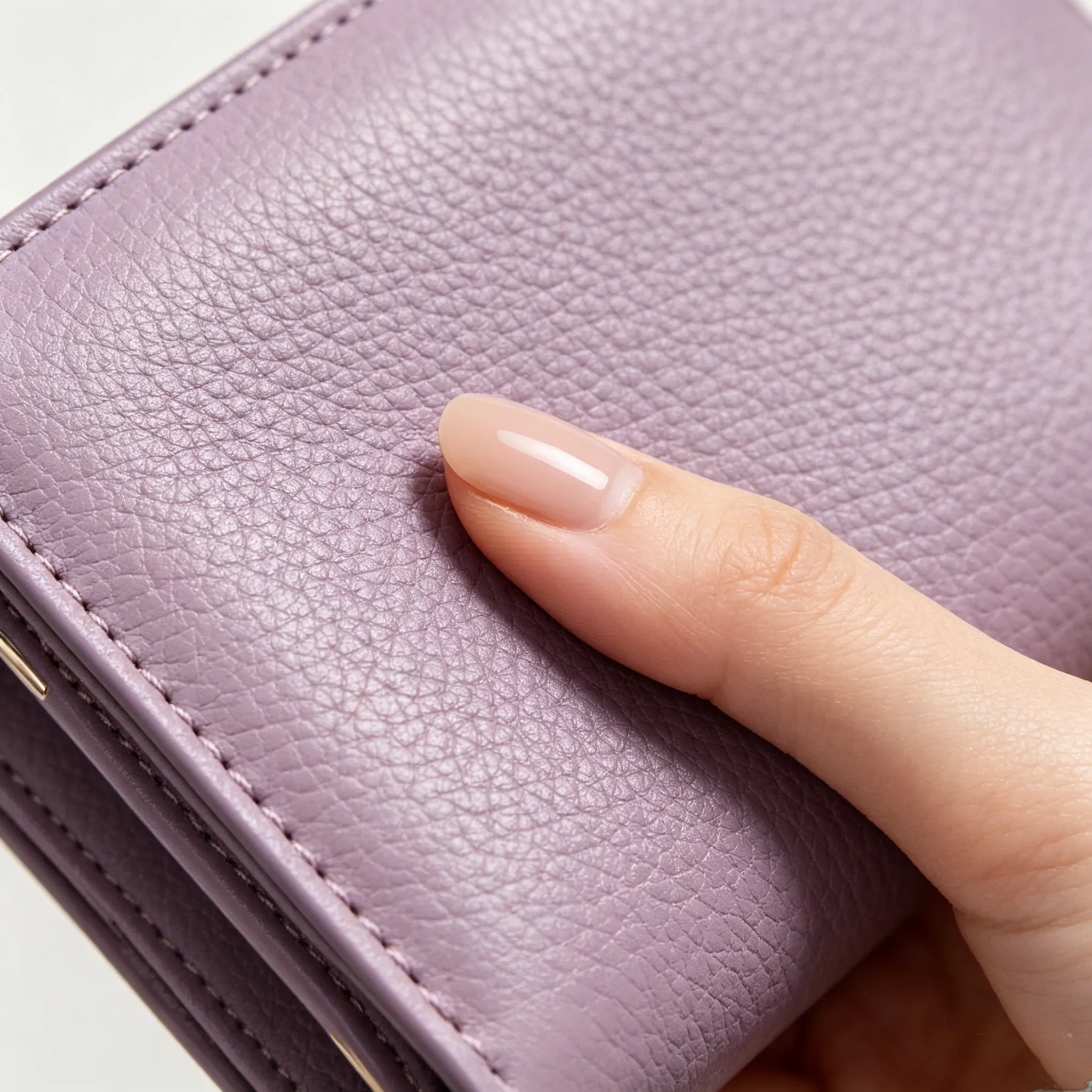
For deeper leather capability detail, see our leather wallet manufacturer page.
MOQ, Samples, Pricing and Lead Time
Low MOQ wallet supplier options
50 pcs works under three conditions: private-label terms on an existing design with no new tooling, a single colourway (each extra colour triggers a setup charge), and a stock material. New moulds, custom hardware or non-stock leather push your effective minimum to 100–300 pcs, whatever the website says.
What a wallet supplier with samples should deliver
Most buyers with quality problems did not have a sample problem — they had a sample process problem. Three rounds prevent most of it.
Round one, the development sample, is a structural check, not a quality approval: are the card slots the right depth, does the cash compartment take a full-size note, does the snap have the right tension? Do not grade stitching yet. Round two folds in your written feedback, documented by both parties. Round three, the golden sample, comes off the production line under bulk-run conditions and is signed off by both parties. No bulk run starts until it is locked.
Fees run $80–$200 by material, refundable against the first bulk order of 300+. Lead time is 7–14 days, stretching to 21 with custom hardware or non-stock leather. Any “48-hour sample” claim suggests the sample is not built properly.
Tiered pricing and where volume discounts stop
Discounts follow a predictable curve. The steepest drop is between 300 and 1,000 units, typically 8–12% off the 50–299 baseline. Above 1,000 units savings flatten unless you consolidate materials across several styles.
| Order quantity | Unit price | Sample rounds | Production | Total to port |
|---|---|---|---|---|
| 50–299 pcs | Baseline (highest) | 3 | 35–45 days | 50–60 days |
| 300–999 pcs | −8 to −12% | 3 | 30–45 days | 45–55 days |
| 1,000–4,999 pcs | −15 to −20% | 2 | 30–40 days | 42–52 days |
| 5,000+ pcs | Bespoke quote | 2 | 25–35 days | 37–47 days |
Payment terms: 30% T/T deposit on order confirmation, 70% balance against a Bill of Lading copy before shipment. L/C at sight is accepted above $10,000.
Lead time and the sample-to-shipment timeline
Total time = sample development (7–21 days) + mass production (30–60 days after golden sample approval) + shipping (18–28 days sea, 5–7 days air). New tooling adds 10–14 days to development, and for custom hardware such as non-standard zippers or proprietary snaps, confirm the supplier’s lead time before locking the schedule. The fastest route is a private-label order on an existing style: 30–45 days production plus shipping.
Ready to discuss your order? Talk to a low MOQ wallet supplier at Dreamway for a detailed quotation within 48 hours.
Certifications, Audits and Compliance
BSCI, SEDEX and SMETA — what each one proves
BSCI and SEDEX/SMETA are social compliance audits covering working hours, wages, child labour and safety — required by most EU, UK and US retail buyers. ISO 9001 certifies the factory’s quality management system, not the product. LWG applies to tanneries, so naming the tannery and its rating is real sourcing information. REACH and CPSIA are material test reports to request per leather grade.
How to verify a supplier’s audit report
Anyone can display a badge. Four checks separate a real audit from a wall certificate.
First, the issue date: BSCI and SEDEX audits stay valid two years, and an older one describes a factory that may no longer exist. Second, the audit firm — SGS, Bureau Veritas, Intertek and TÜV are worth trusting. Third, the scope: the report must name your address and the lines audited. Fourth, ask for the re-audit, because what matters is whether initial non-conformities were closed out.
Certification comparison — what each standard covers
| Certification | Covers | Issued by | What buyers should request |
|---|---|---|---|
| BSCI | Social compliance | amfori / third-party auditor | Full audit report copy |
| SEDEX / SMETA | 4 pillars: labour, HS, environment, ethics | SEDEX | SMETA report + expiry date |
| ISO 9001 | Quality management system | Certification body | Certificate + scope document |
| LWG | Leather traceability | Leather Working Group | Tannery LWG rating |
| REACH / CPSIA | Chemical safety / children’s products | EU ECHA / US test lab | Test report per material |
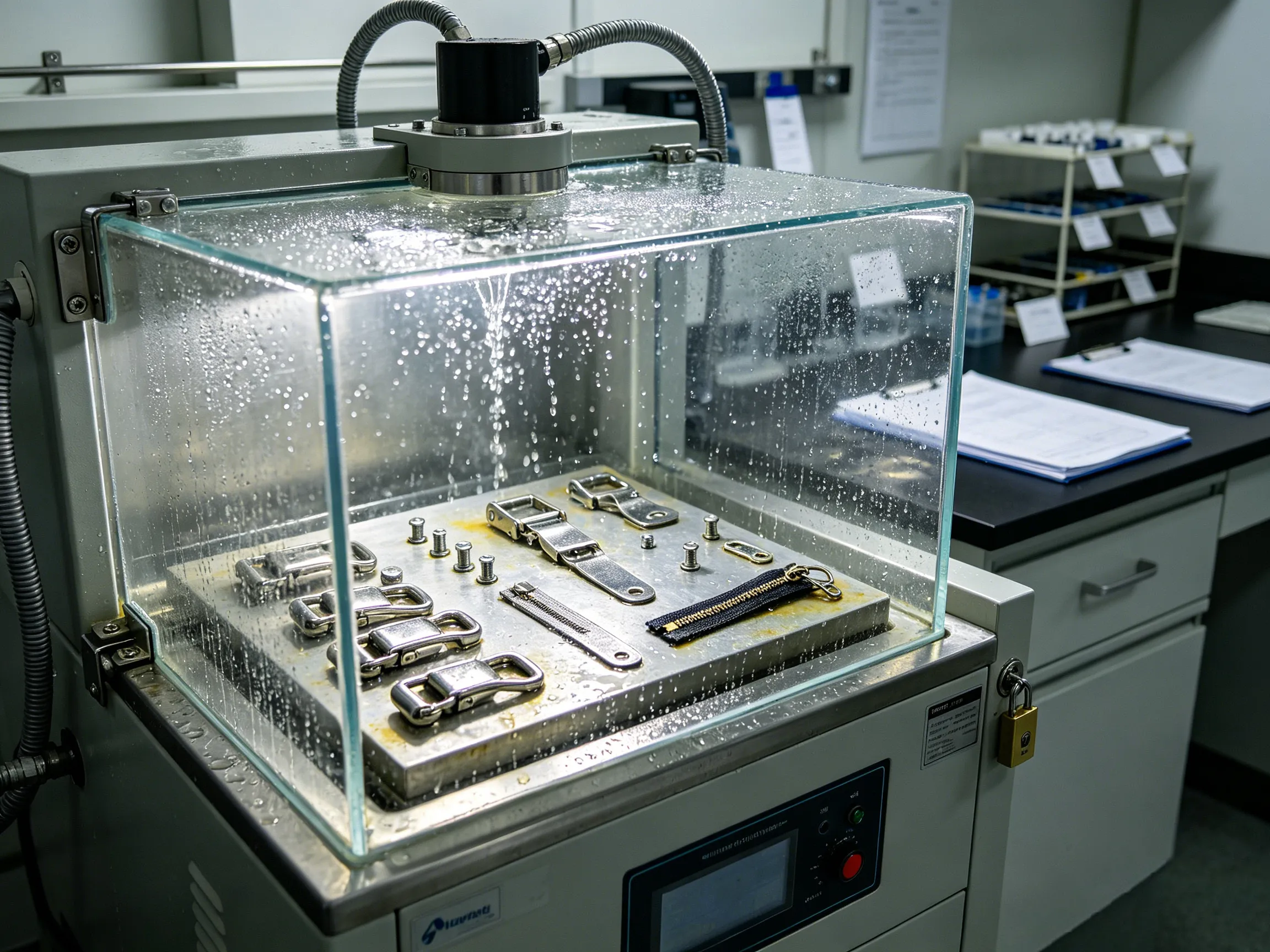
For a pre-production checklist, see our manufacturing quality standards page.
Authority references: amfori (BSCI) · ECHA (EU Chemicals Agency) · Dreamway on LinkedIn
Seven Steps from Inquiry to Delivery
Every successful wallet order follows the same seven-step path. Skipping steps causes quality failures and missed deadlines.
| Step | Phase | Cumulative days | Payment milestone |
|---|---|---|---|
| 1 | Inquiry & Tech Pack Review | Day 0–2 | — |
| 2 | Material & Colour Approval | Day 3–7 | — |
| 3 | First Prototype | Day 7–12 | — |
| 4 | Golden Sample | Day 12–20 | 30% deposit (T/T) |
| 5 | Pre-Production Sample | Day 20–25 | — |
| 6 | Mass Production + Inline QC | Day 25–60 | — |
| 7 | Packing, Inspection & Shipment | Day 60–67 | 70% against B/L copy |
Six Mistakes That Cost Buyers Money
Mistake #1 — FOB price only, ignoring landed cost
The pattern: Buyers approve a $4.20 FOB price. The invoice arrives at $5.18, with tooling, testing and packaging line items nobody mentioned. Real landed cost adds freight, insurance, EU duty of 8–12%, port handling and agent fees.
How to avoid: Get a fully loaded breakdown before signing, and calculate your DDP estimate before comparing suppliers.
Mistake #2 — Paying a tooling deposit before confirming ownership
The pattern: You pay a $500 tooling deposit. Six months later you want to switch factories, and the original supplier claims the tooling is theirs. The most common tooling dispute in OEM sourcing.
How to avoid: Every tooling PO must state: “Tooling ownership transfers to the buyer upon full payment.” In writing, before you pay.
Mistake #3 — Approving a golden sample from one round
The pattern: The sample looks acceptable, you approve, and the bulk run arrives with stitching density half of what the sample showed. First-sample pass rates on complex wallets sit below 30% without a revision round.
How to avoid: Require three rounds: development, revision, signed golden sample. Never skip the revision on a first-time OEM project.
Mistake #4 — Finalising packaging after production starts
The pattern: Production is underway and you remember you need branded boxes. The factory quotes 14 extra days plus mould tooling. Custom packaging adds 7–14 days and is priced separately from the unit cost.
How to avoid: Specify the full packaging spec — inner box, hang tag, tissue, polybag, carton — in the initial inquiry.
Mistake #5 — Skipping third-party pre-shipment inspection
The pattern: The factory says everything is fine, and 15% of the delivered wallets have the wrong edge colour. The factory’s answer: “You approved the golden sample.” A third-party pre-shipment inspection by SGS or Bureau Veritas costs $200–$400 and catches batch-level defects before your customer does.
How to avoid: Put a PSI clause in the purchase order for any run above 500 units or a unit value above $8.
Mistake #6 — Running production without a backup supplier
The pattern: Your wallet sells well, you want to reorder, and the factory raises prices 18% and extends lead time to 90 days because your volume now matters to them more than to you. No leverage means no alternative.
How to avoid: Qualify a second supplier in parallel. A 5% premium on a backup beats a 20% hike with no options.
From Dreamway’s experience since 2008: every mistake above has been raised by a real buyer in a real inquiry. We surface each trap in writing — quoted terms, named tanneries, signed golden samples — before the deposit clears.
Twelve Questions Custom Wallet Suppliers Get Asked Most
These are the twelve questions that come up most often and carry the highest financial impact in custom wallet sourcing. Answers reflect current industry practice as of our latest quotation cycle.
What is the typical MOQ for custom wallet suppliers?
50 pcs private label, 100 pcs ODM, 300 pcs per style for OEM. Material and hardware drive MOQ more than style does, so a non-stock full-grain colour can demand more units than the style count alone. Ask for the breakdown in writing, not a headline number.
How do I verify a custom wallet supplier is a real factory?
Request a live factory video walkthrough, the full latest audit report, the production line count and customer references. Verify the address independently and order a third-party inspection. A supplier unwilling on any one of these is telling you something.
What is the difference between OEM, ODM and private label wallets?
OEM: you supply the full spec and own all design rights. 300 pcs MOQ, $300–$800 tooling. ODM: the factory supplies a base design you modify in colours, hardware and logo. 100 pcs MOQ, $0–$300 tooling. Private label: existing designs sold under your brand, no development. From 50 pcs, no tooling. The table above breaks down who owns what.
Can I order custom wallets with low MOQ?
Yes — 50 pcs under private-label terms, provided you use an existing style, single colour, and no new tooling. A new mould, custom hardware or non-stock leather grade pushes your effective minimum to 100–300 pcs. Get written MOQ confirmation before paying a deposit.
How much does it cost to manufacture custom wallets in China?
FOB runs from $2.35 per unit (recycled PU) to $14 (full-grain cowhide), by material, hardware and volume. Leather grade is the largest cost variable — split to full-grain adds $4–$8. The material table above has the full breakdown. All prices FOB Guangzhou unless stated.
Do wallet suppliers with samples charge for samples?
$80–$200 depending on material and complexity, refundable against the first bulk order of 300+ units. Lead time is 7–14 days for standard styles, up to 21 with custom hardware. “Free samples” is a red flag — factories recover material and labour costs.
How long does it take to produce and ship custom wallets?
Sample 7–14 days. Mass production 30–60 days after golden sample approval. Sea freight 18–28 days; air freight 5–7 days at 4–6× the cost. Fastest route end to end: 30–45 days production on a private-label existing style, plus 18–28 days sea freight.
What certifications should a custom wallet factory have?
At minimum: BSCI for social compliance, SEDEX/SMETA for ethical sourcing, and ISO 9001 for quality management. LWG-rated tanneries give leather traceability. REACH covers EU entry, CPSIA covers US entry.
Can I get RFID blocking wallets made to order?
Yes. RFID lining adds $1.50–$3.00 per unit. Two frequencies: 13.56 MHz covers contactless credit cards, mobile payment and transit cards; 125 kHz covers key fobs and older HID access cards. State your frequency at inquiry, and ask for a test report — blocking materials vary in performance.
What is the difference between a wallet factory and a trading company?
Four differences. A factory builds and owns tooling in-house, controls production changes directly, offers 30/70 T/T terms, and owns quality defect responsibility. A trading company outsources tooling with a markup, relays every instruction through a middleman, and points elsewhere when something goes wrong.
Do you ship custom wallets DDP or FOB?
Both. FOB suits established buyers with their own freight forwarder — you control routing and pay shipping separately. DDP suits first-time importers — we deliver to your door at a higher total. EXW and CIF on request.
Can I combine different wallet styles in one order?
Yes, with one rule: styles in the same material combine under a single MOQ. Different materials count separately because they need different line setups. A bifold, card holder and passport wallet in the same full-grain hide share one MOQ; a microfiber zip-around is counted on its own.
For the full manufacturing workflow, see our custom wallet manufacturer page.
Who We Are: Dreamway as a Custom Wallet Supplier
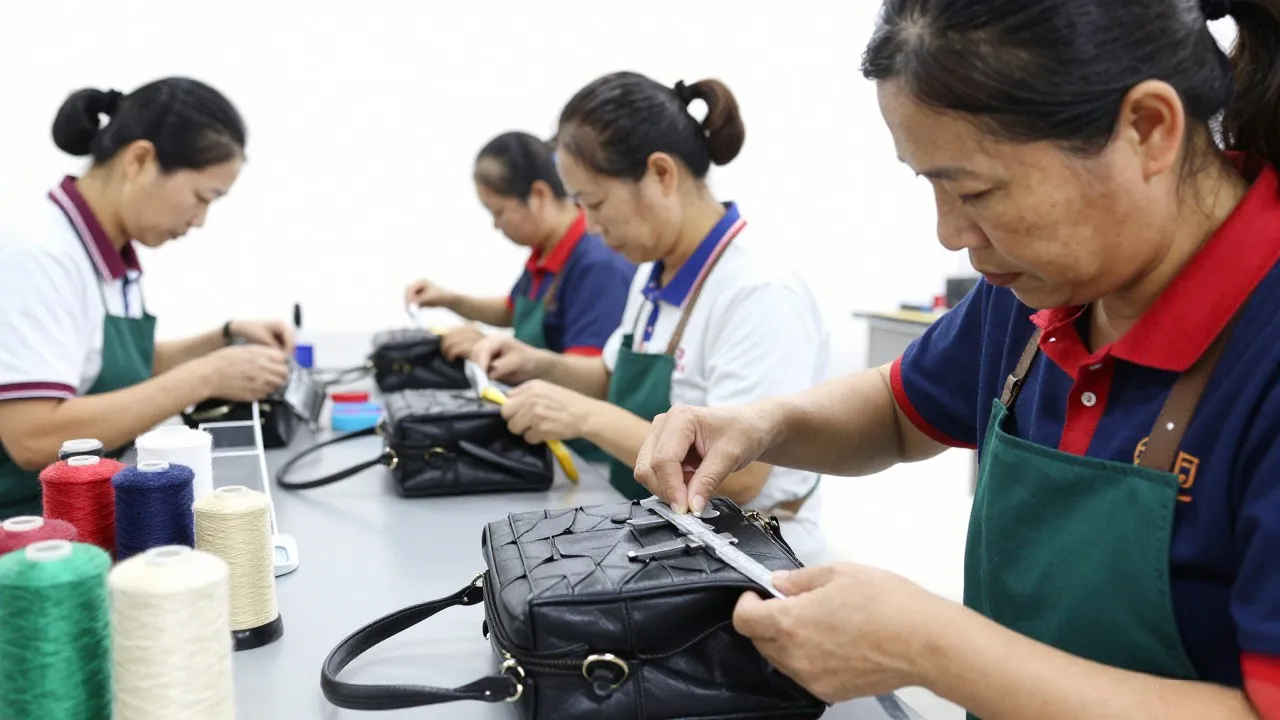
Dreamway is a handbag and wallet factory in Shiling Town, Huadu District, Guangzhou — China’s acknowledged leather goods capital. Operating since 2008, we have served brands in 50+ countries with a 30+ core team covering pattern development, sampling, mass production and pre-shipment inspection.
Meet the core team
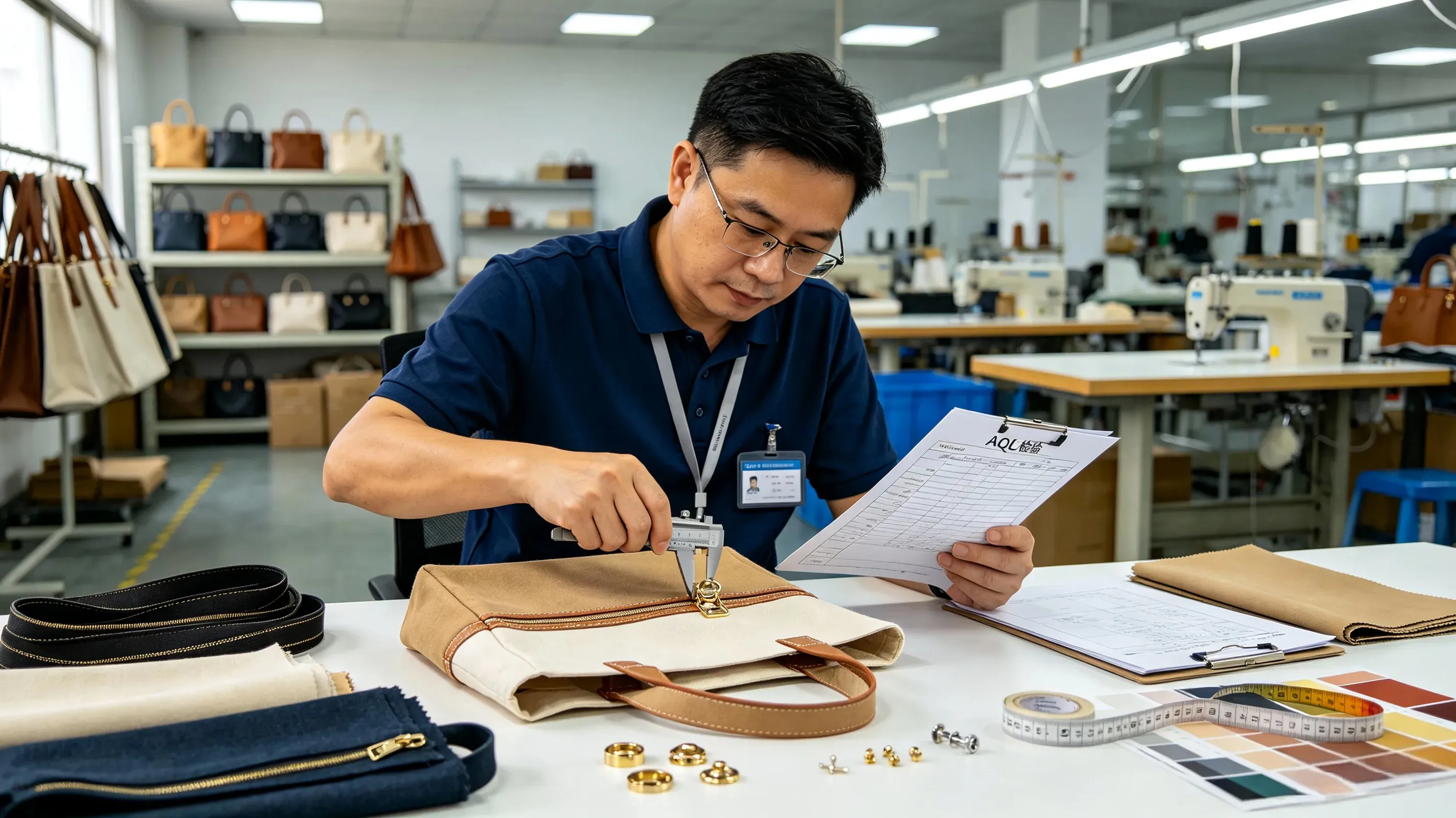

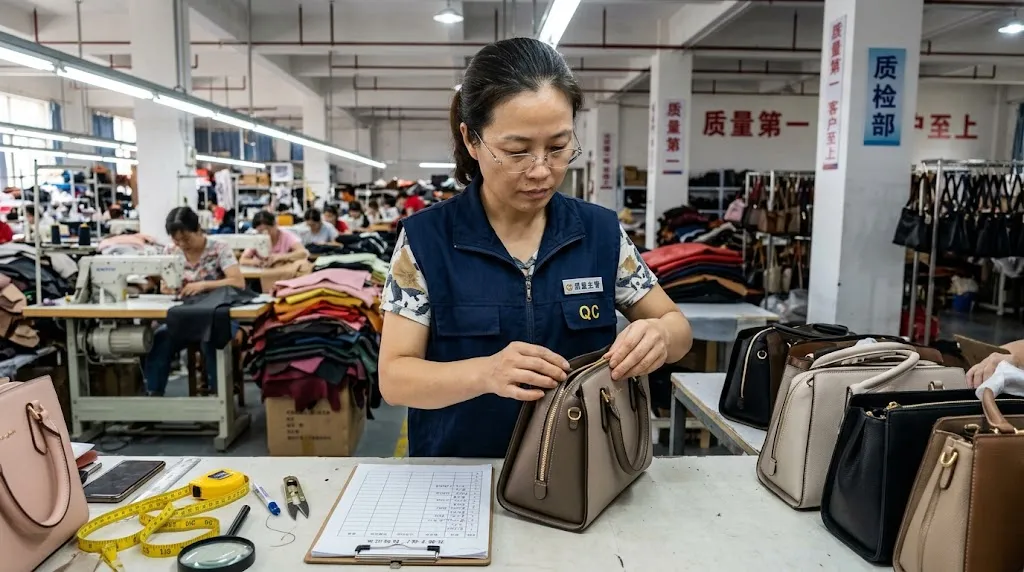
Dreamway at a glance
| Item | Detail |
|---|---|
| Factory type | Owned factory, Shiling Town, Guangzhou |
| Founded | Since 2008 |
| Core team size | 30+ professionals |
| Countries served | 50+ globally |
| Wallet MOQ range | 50–5,000+ pcs per style |
| Certifications | BSCI, SEDEX, SMETA-CVS, ISO 9001 |
| Payment terms | 30% T/T deposit, 70% against B/L copy; L/C at sight |
| Primary markets | North America, EU, Middle East, Australia |
Last reviewed: October 2026. For current lead times and quotations, contact us. For full manufacturing capability, see about our factory.
Start Your Wallet Project
Six evaluation dimensions, four sourcing origins, three manufacturing models, price bands, MOQ realities, the seven-step process, six costly mistakes and twelve FAQs — the next step is specific to your project.
Whether at napkin-sketch or comparing tech packs, Dreamway answers complete inquiries within 48 hours with a written quotation covering unit price, tooling, sample fee and timeline.

Ready to talk about your wallet project?
Request a detailed quotation within 48 hours. No commitment required.