
Custom Embroidered Cotton Tote Bags — Wholesale, Bulk & OEM from a Real China Factory
Quick Answer
We’re a Guangzhou factory running embroidery in-house on 6oz–12oz organic cotton canvas. Standard MOQ sits at 200 pieces. Every bag carries OEKO-TEX + BSCI + GRS certification. Production runs 10–15 working days. We’ve shipped to 50+ countries through Shenzhen port. Drop us your artwork — you’ll have a quote in your inbox within 12 hours.
What Makes Custom Embroidered Cotton Tote Bags Worth the Premium
Here’s the thing about embroidered totes — once you hand someone a bag with proper embroidery, they don’t throw it away. Screen-printed bags end up in the bin after a few washes. Embroidered ones stick around for years. That’s the difference we’re talking about.
The raised thread creates something you can feel under your fingers. Walk into any boutique or trade show and the bags people keep using? Almost always embroidered. There’s a reason for that.

Cotton Canvas: The Ideal Fabric for Embroidery
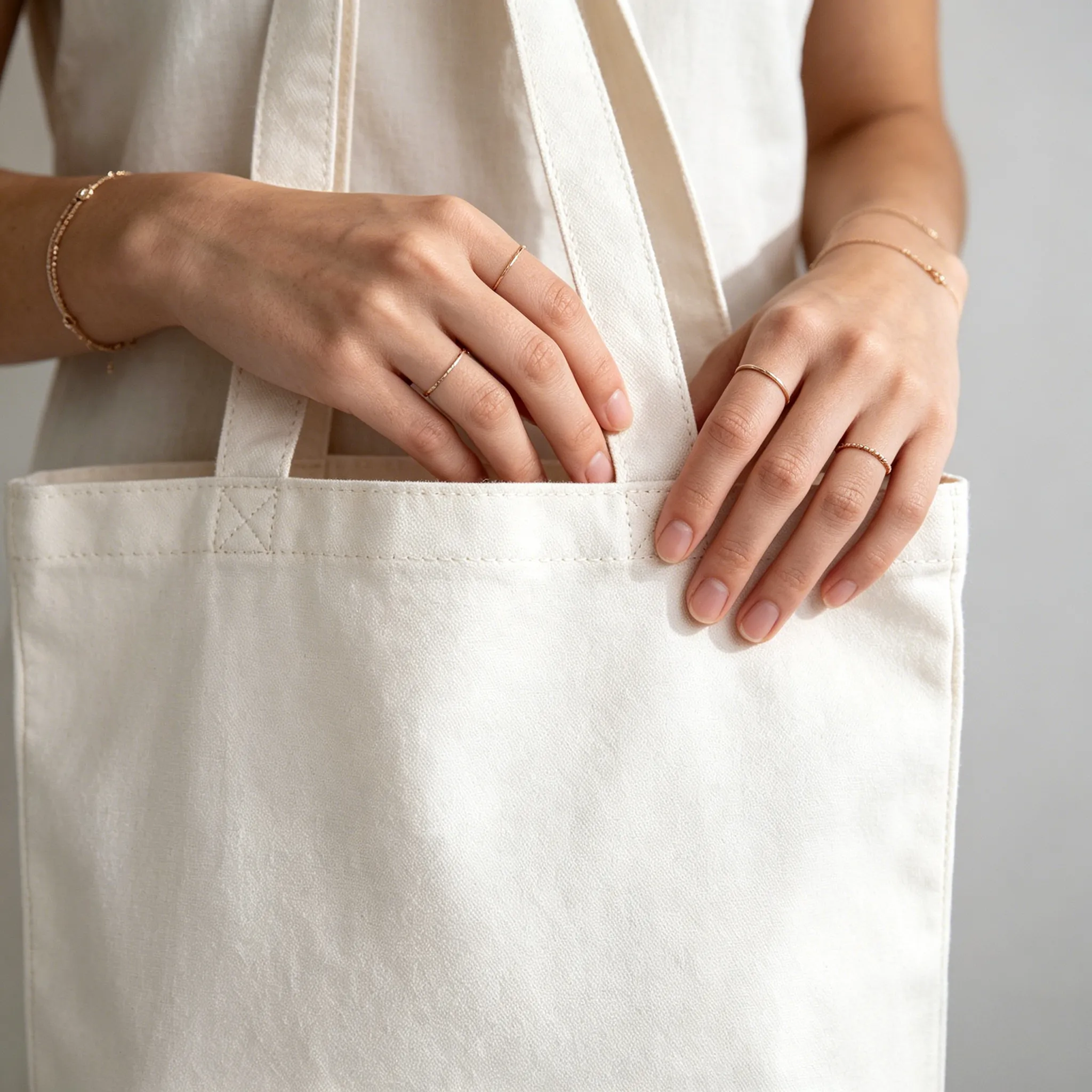
Cotton fibers grip embroidery thread like they were made for it. The stitches lay flat. No puckering. No pulling. After fifty washes, the embroidery still looks fresh — because cotton moves with the thread instead of fighting it.
Weight matters more than most buyers realize. A 6oz bag feels like a promo item. An 8oz bag feels like something worth keeping. Push to 10oz or 12oz and you’ve crossed into heirloom territory.
Choosing Your Cotton Weight
| Weight | GSM | Best Fit | Handle Type | Price Tier |
|---|---|---|---|---|
| 6oz Lightweight | ~200 GSM | Trade show giveaways, light events | Self-fabric / narrow webbing | $ |
| 8oz Standard | ~270 GSM | Retail, corporate gifts, daily carry | Cotton webbing / rope | $$ |
| 10oz Heavy | ~340 GSM | Boutiques, premium retail | Heavy webbing / leather | $$$ |
| 12oz Extra-Heavy | ~400 GSM | Luxury brands, heavy-load carry | Leather / reinforced webbing | $$$$ |
For material certifications, we stock GOTS and OEKO-TEX certified organic cotton, GRS certified recycled cotton, and standard conventional cotton. Color-wise, you’ve got natural ecru, bleach white, reactive dyed, and pigment dyed. Each finish gives embroidery a different personality — natural ecru makes thread colors pop, while pigment-dyed creates that lived-in, vintage feel. Learn more about our material options and weight specifications.
Why Embroidery Outperforms Print on Cotton Tote Bags
Touch an embroidered logo. Now touch a printed one. The difference is immediate — one has dimension, the other is flat. That tactile quality signals craftsmanship before anyone even reads your brand name.
Durability tells the real story though. Screen-printed logos crack after 20–30 washes. Embroidery holds up past 100 washes without losing definition. When someone uses your bag for two years instead of two months, your brand impression compounds.
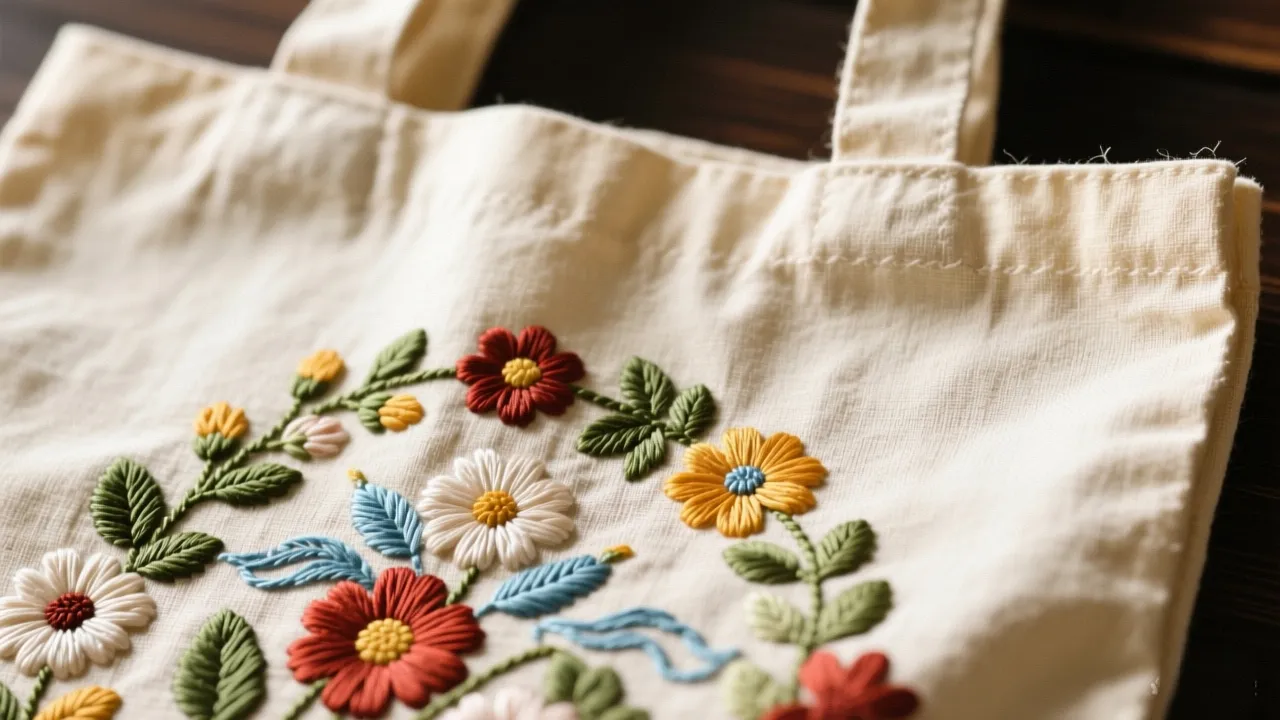
Here’s where the cost argument flips. Embroidery costs more per unit at low quantities. But when someone actually keeps that bag and uses it weekly, your effective cost-per-impression drops below what you’d pay for a printed bag that ended up in landfill. Boutique owners and corporate gifting managers figured this out years ago.
Why a China Embroidery Factory Beats a Middleman
Guangzhou and Foshan sit at the center of China’s embroidery industry. Decades of specialized skill, concentrated in one region. When you work with us directly, the 20–40% markup that trading companies typically add disappears.
But price isn’t even the biggest advantage. Communication is. You can email our QC team at 9am Guangzhou time and get photos of your actual bags by lunch. Try doing that through a middleman.
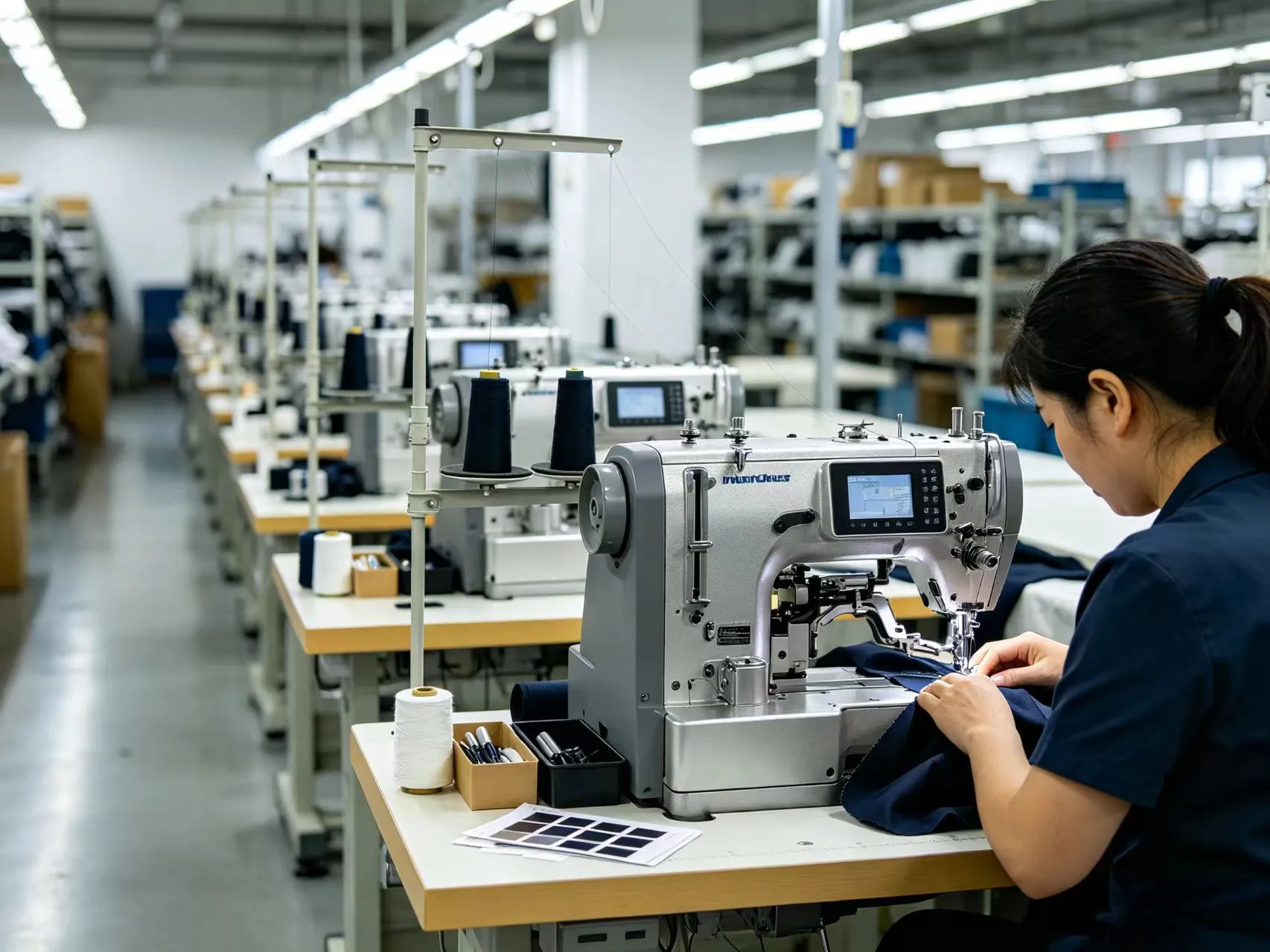
We’re 1.5 hours from Shenzhen Port. That’s not a marketing line — it directly affects your shipping costs and delivery speed. Combined with direct factory pricing, the math works out significantly better than going through intermediaries.
Embroidery Techniques That Work on Cotton Tote Bags
Not all embroidery is created equal. The technique you choose affects cost, appearance, and durability. Here’s what we run most often and why.
Satin / Flat Stitch — The Industry Standard
Satin stitch handles about 80% of the logos we embroider. It works beautifully for 1–3 color designs where you want bold, readable text and clean shapes. The fill is smooth, slightly raised, and catches light nicely. Compare satin stitch with other embroidery types in our detailed guide.
Best results come with logos between 0.5 and 2 inches tall. Go smaller and the stitches get crowded. Go bigger and the stitch density becomes inconsistent across the design.
Tackle Twill & Applied Embroidery
Some designs have too many colors or too much detail for direct embroidery. Tackle twill solves this — we embroider each color section separately on a backing material, then heat-press the assembled pieces onto the bag.
Costs a bit more, but opens up design possibilities that direct embroidery can’t touch. University crests, sports logos with 6+ colors, anything with fine detail. We’ve done tackle twill for college bookstores where the school seal simply couldn’t be simplified.

3D Puff & Decorative Stitching
Streetwear brands love 3D puff. We add a foam underlayer beneath the stitches, and suddenly your logo has real height — almost sculptural. It photographs well, catches eyes on shelves, and gives a distinctly urban feel.
Decorative stitching is the catch-all term for anything beyond standard flat embroidery. Variegated threads, specialty stitch patterns, mixed directions within one design. If you can describe it, we can probably sample it.
Thread Color Matching & Pantone Service
Color matching is where many factories fail. We stock DMC, Madeira, and Isacord — the three thread libraries that cover virtually every Pantone reference. For orders of 200 pieces or more, we match colors at no charge.
The catch? You’ve got to approve a physical strike-off on your actual cotton before production starts. Screens lie. Thread on fabric tells the truth. We’ve saved countless clients from “that looks different than my screen” disappointment by insisting on this step.
Design Guidelines for Custom Embroidered Cotton Tote Bags
Bad artwork costs money. These guidelines exist because we’ve seen every mistake — and fixed thousands of them. Follow them, and your embroidery will look better than 90% of what’s out there.
Logo Size & Stitch Count
Sweet spot for embroidery logos: 2–4 inches wide, 0.5–2 inches tall. Within this range, stitch counts stay manageable and costs stay predictable.
Stitch density (SPI — stitches per inch) typically runs 6.0 to 9.0. Higher density means more thread, more time, higher cost — but also more texture and durability. Coarse embroidery at 100% coverage looks lush but feels stiff. Fine embroidery at 40% coverage is subtle but may not hold up to heavy use.
Common Mistake: Putting tiny text or fine lines under 0.1 inch in your design. At production scale, these elements fill in and disappear. We’ve seen phone numbers vanish entirely. Bump them up or drop them.
Color Limits & Multi-Color Design
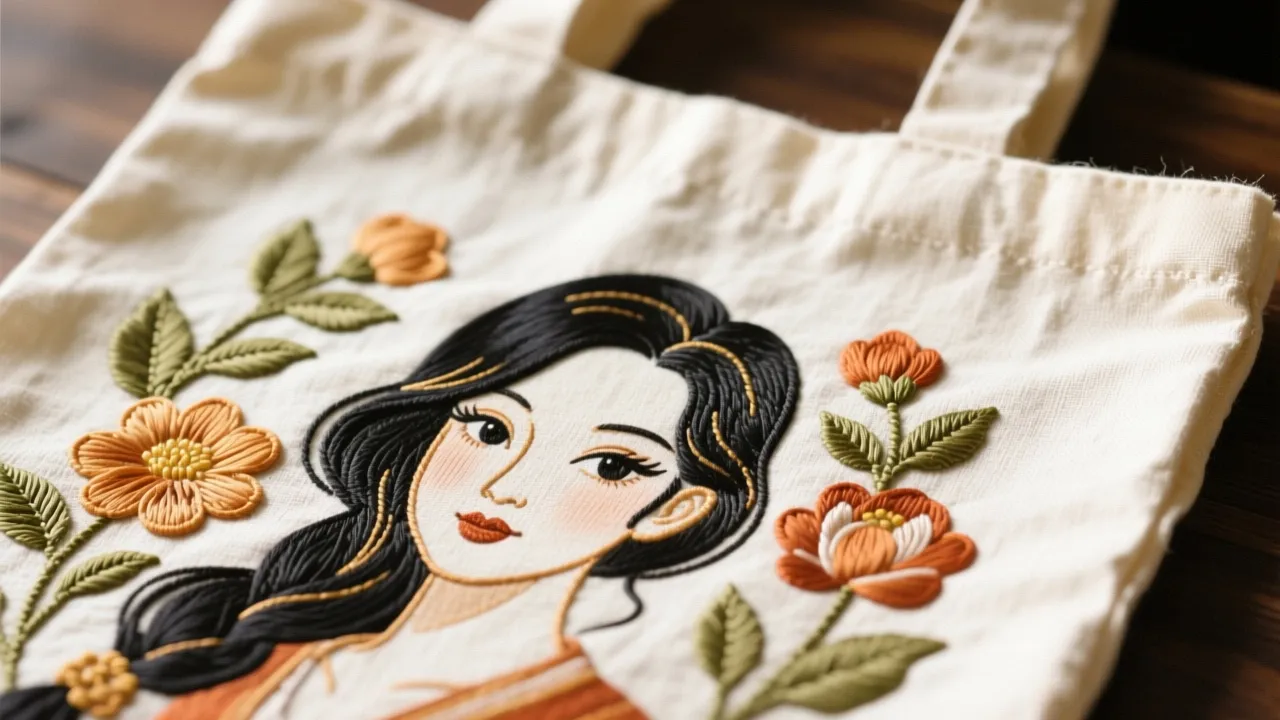
Most machines handle up to 15 colors. Sounds like plenty, right? In practice, designs with more than 5–6 colors get expensive fast. Each color means another thread change, another potential alignment issue, more setup time.
Multi-color designs need at least 0.05 inch between different colored sections. Anything closer and the threads bleed into each other — or we have to manually trim between operations, which adds labor cost.
Gradients and photos don’t work in embroidery. Period. When clients insist, we work with them to simplify. One recent project: client wanted a 4-color sunset gradient on their logo. We showed them how 2 colors captured 90% of the visual impact. Per-unit cost dropped 35%. They were thrilled.
Embroidery Placement on the Bag
Front panel is the default — and for good reason. Maximum visibility. But consider the alternatives:
- Back panel: Cleaner front aesthetic, branding visible when carried
- Side gusset: Subtle, sophisticated — common on boutique bags
- Handle: Repeating pattern or single word — handle embroidery is tricky but distinctive
Handle embroidery requires specific width tolerances. Standard handles run 3/4″, 1″, or 1.5″. Inner-handle embroidery needs careful engineering — too tight and the bag becomes uncomfortable to carry.
Bag Catalog — Styles, Weights & Customization
Every element on our bags can be customized. Sometimes that flexibility makes decisions harder. Here’s a practical guide to the choices that matter most.
Cotton Weight Guide: 6oz / 8oz / 10oz / 12oz
This table appears earlier, but it bears repeating — weight determines everything else. Heavier fabric holds shape better, supports denser embroidery, and feels more substantial. Lighter fabric costs less and works for high-volume promotional use.
| Weight | GSM | Best Fit | Handle | Price Tier |
|---|---|---|---|---|
| 6oz Lightweight | ~200 GSM | Trade show giveaways, light events | Self-fabric / narrow webbing | $ |
| 8oz Standard | ~270 GSM | Retail, corporate gifts, daily carry | Cotton webbing / rope | $$ |
| 10oz Heavy | ~340 GSM | Boutiques, premium retail | Heavy webbing / leather | $$$ |
| 12oz Extra-Heavy | ~400 GSM | Luxury brands, heavy-load carry | Leather / reinforced webbing | $$$$ |
Handle, Gusset & Bottom Insert Options
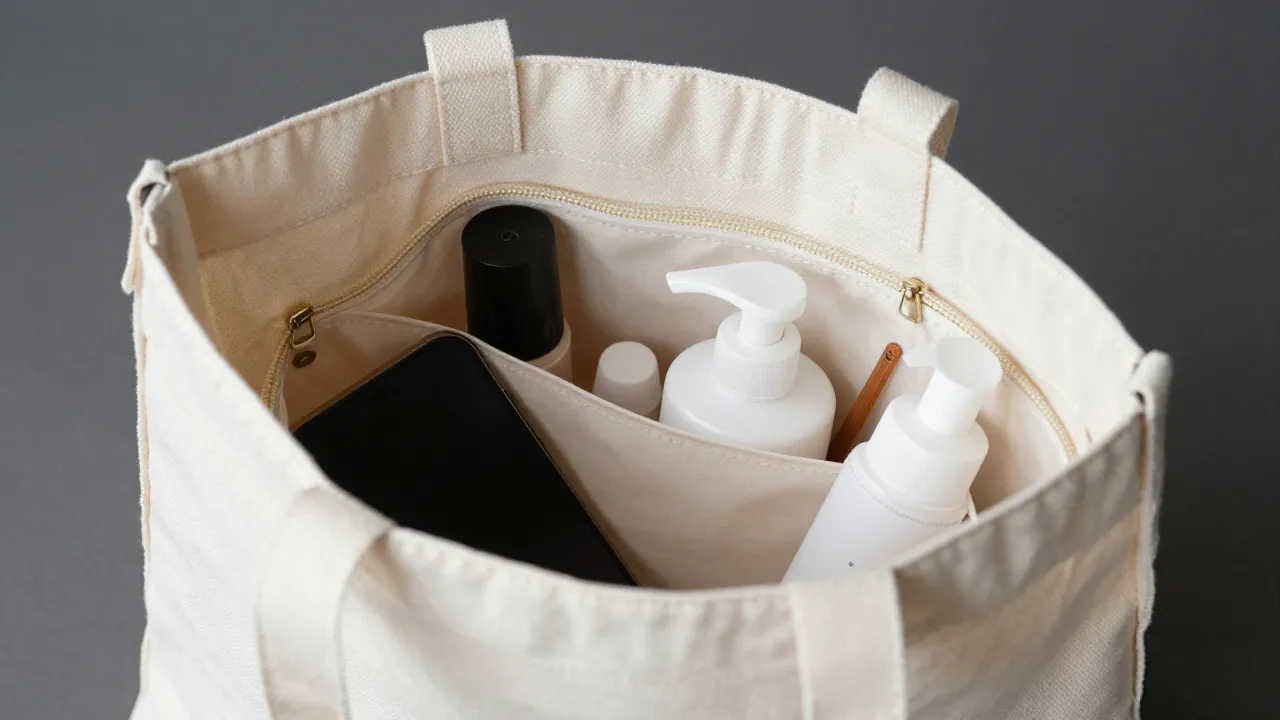
Handle length determines carrying style. Short handles (8–10″) are grab-and-go. Shoulder straps (22–26″) distribute weight across the body. Some clients order both — short for hand-carry presentation, shoulder-length for utility.
Handle width affects both comfort and embroidery options. Narrow handles (3/4″) look sleek but limit what can be embroidered. Wide handles (1.5″) carry heavier loads comfortably and accept larger embroidered text.
Bag construction affects how the bag holds contents:
- Side gusset: Bag stands fuller, but lies flat when empty. Good for grocery-style carry.
- Bottom insert: Rigid base plate keeps shape under heavy contents. Adds cost, worth it for premium positioning.
- Box bottom: Self-standing structure — ideal for retail shelf display and gift packaging.
Custom Hardware & Trims
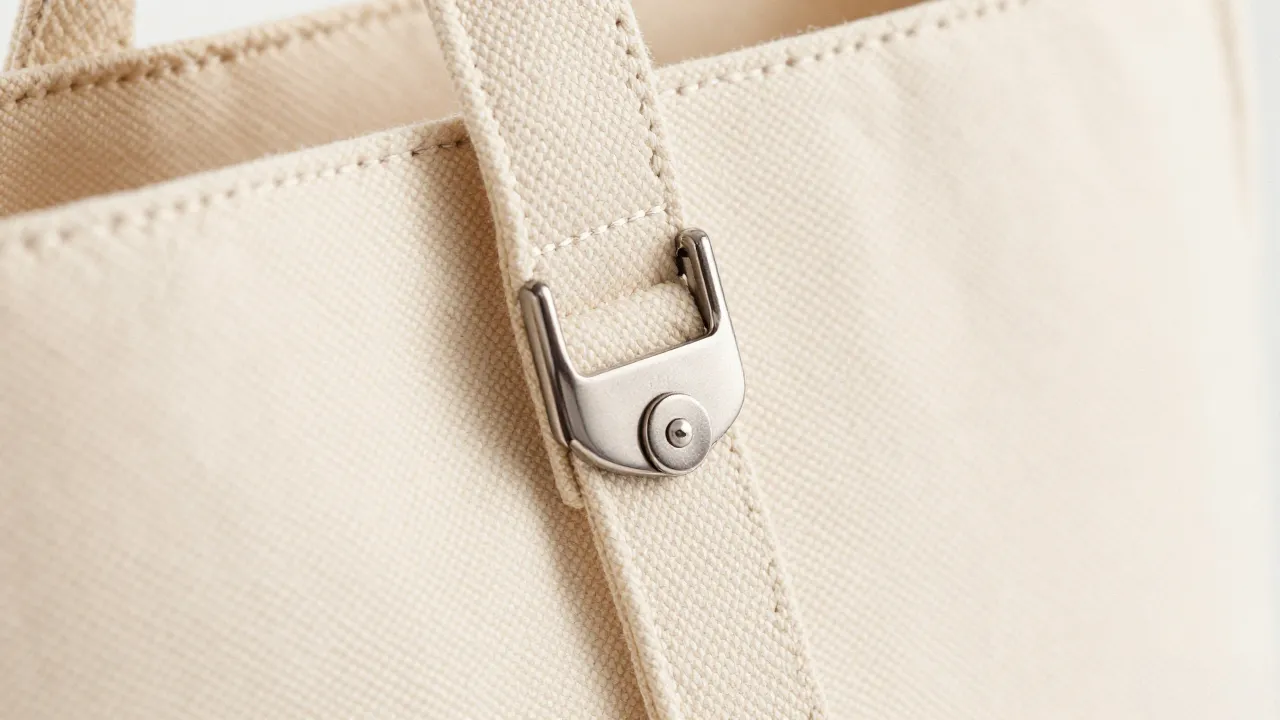
Hardware isn’t just functional — it’s part of the design language. Options include:
- Zippers: Metal or plastic, in antique brass, nickel, gunmetal, or custom plating
- Closures: Magnetic snaps, button studs, or drawstring
- D-rings and buckles: For adjustable straps or attachment points
- Metal feet: Bottom studs that protect against wear when set down
For OEM projects, custom metal logo plates and branded zipper pulls pull everything together. Small details, big impression.
MOQ Flexibility: From 200 to 100,000 Pieces
Our standard embroidery MOQ is 200 pieces per design. That number isn’t arbitrary — it covers the digitization setup cost ($30–$80 per design) while keeping per-piece pricing competitive.
What if you only need 150 pieces? We can do that, but the setup fee gets amortized across fewer units, adding $0.30–$0.60 per piece. For orders below 100 pieces with full-color artwork, our DTG printing option kicks in — 50 piece minimum, no setup fee. DTG isn’t embroidery, but it handles small batches economically.
Multi-color designs (5+ colors) sometimes require higher minimums due to thread change complexity. Mixed orders — same design in different colors, or different styles in one production run — are possible with adjusted MOQ structures. Talk to us about your specific situation.
Packaging Options: Bulk, Polybag or Gift Box
Packaging affects both unboxing experience and landed cost. Here’s how the options compare:
- Bulk cartons (20–50 pieces): Cheapest option. Trade show distribution, wholesale fulfillment.
- Individual OPP bags: Clean, retail-ready. Minimal cost increase.
- Kraft paper sleeves: Eco-friendly presentation for sustainable brands. Slight cost premium.
- Rigid gift boxes: Premium unboxing. Significant cost add, but justified for luxury positioning.
Wholesale Pricing Guide for Custom Embroidered Cotton Tote Bags
Pricing transparency matters. The table below shows realistic ranges based on recent orders. Actual quotes depend on your specific specs — but these numbers set expectations.
Price Tiers by Quantity & Weight
| Quantity | 6oz + 1–3 Colors | 8oz + 1–3 Colors | 10oz + 1–3 Colors |
|---|---|---|---|
| 200–499 pcs | $3.50–$5.00 | $4.00–$5.50 | $5.00–$7.00 |
| 500–999 pcs | $2.80–$3.80 | $3.30–$4.30 | $4.30–$5.80 |
| 1,000–4,999 pcs | $2.30–$3.00 | $2.80–$3.80 | $3.80–$4.80 |
| 5,000+ pcs | $1.80–$2.50 | $2.30–$3.00 | $3.30–$4.30 |
FOB Shenzhen/Yantian. Standard packaging included. International shipping not included. Final quotes provided within 12 hours of detailed inquiry.
Small-Batch Premium (100–199 pcs)
Orders of 100–199 pieces carry a per-unit premium of $0.30–$0.60. That premium covers the digitization setup ($30–$80 per design) spread across fewer units.
If you truly need fewer than 100 pieces with embroidery, our team will usually suggest alternatives — DTG printing for full-color designs, or simplifying the design to fit within our standard MOQ structure. We’re not trying to push you into ordering more; we’re trying to find the most cost-effective path to your actual goal.
What Drives the Price Up
Several factors push pricing higher:
- Thread colors: Each color beyond 3 adds $0.05–$0.15 per piece
- Stitch density: Every additional 1,000 stitches adds $0.02–$0.05 per piece
- Fabric weight upgrade: Moving from 6oz to 8oz adds $0.30–$0.50 per piece
- Custom hardware: Premium handles and metal components add $0.10–$0.30 per piece
- Digitization fee: $30–$80 per design (waived on orders of 200+ pieces)
Sample Cost vs Bulk Order
Samples run $25–$80 per piece depending on complexity. That includes full embroidery production on your actual cotton, not a mockup or approximation.
Sample fees get refunded in full against bulk orders of 200 pieces or more. Sample turnaround: 5–7 days after artwork confirmation. We photograph and video the sample process so you see exactly what you’re approving.
Certifications & Compliance
Certifications aren’t just paperwork. They’re market access. Without the right credentials, your bags can’t enter major retail channels or pass customs inspection in regulated markets.
OEKO-TEX Standard 100 — Mandatory for EU/US
OEKO-TEX Standard 100 covers everything — fabric, dyes, threads, metal hardware, plastic components. Every shipment includes current test reports dated within the last 12 months.
Amazon, Shopify, Target, H&M, most European retailers — they all require OEKO-TEX documentation before accepting shipments. We’ve maintained continuous certification for years. No lapses, no gaps.

BSCI & SEDEX Social Audits
BSCI (Amfori) audits happen annually. They verify working hours, wage standards, workplace safety, and worker rights. Our most recent audit achieved full compliance.
SEDEX (SMETA 4-Pillar) audits go broader — covering labor, health & safety, environment, and business ethics. These reports are available under NDA for brand partners who need documentation for their own ESG reporting.
Together, these certifications represent baseline requirements for entering major European and North American retail supply chains. Without them, you’re locked out of 80% of serious wholesale opportunities.
GRS for Recycled Cotton Embroidery
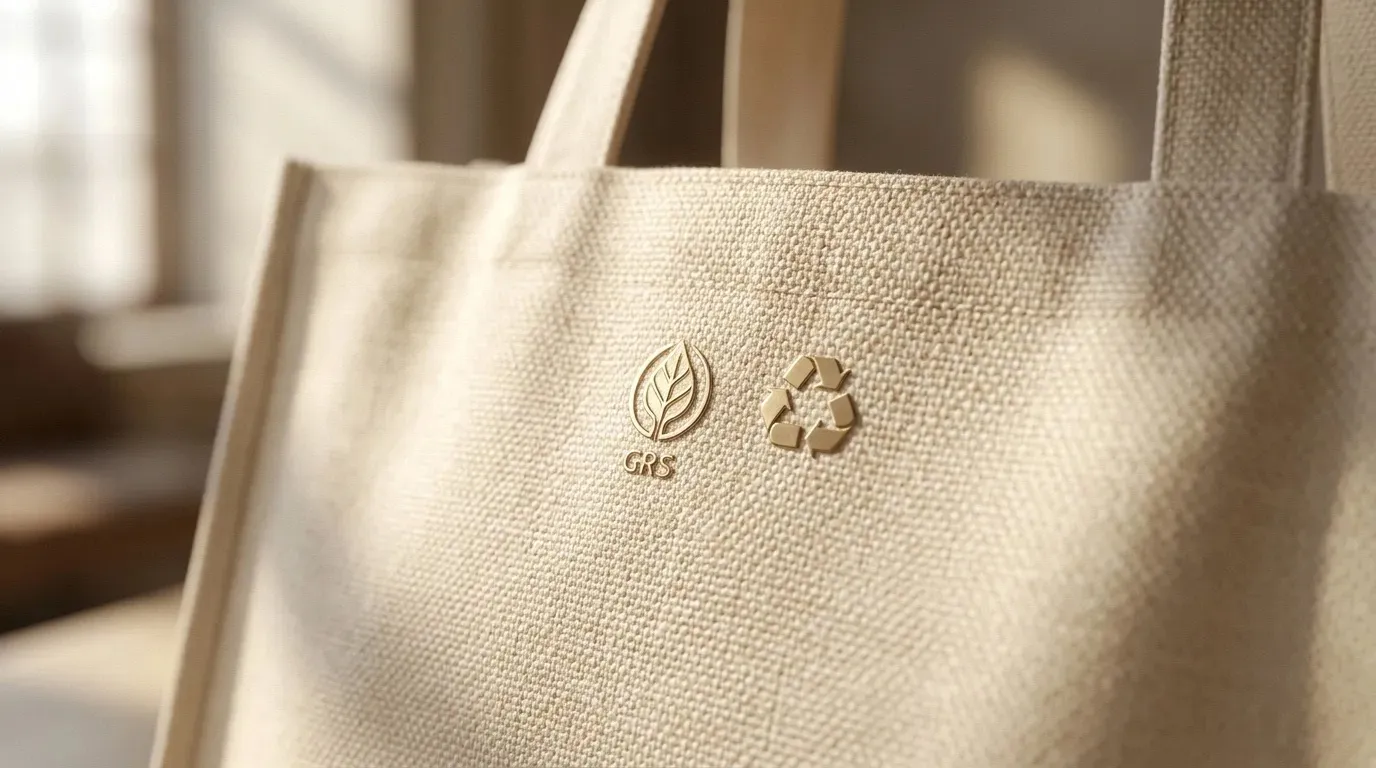
The Global Recycled Standard certifies our recycled cotton line with full chain-of-custody transaction certificates. That means we can document recycled content from source material through to finished product.
For brands making sustainability claims, GRS certification provides the documented evidence needed to support those claims. Recycled cotton embroidery carries a 15–25% premium over conventional organic cotton — sourcing recycled material costs more, and certification adds overhead. But for eco-positioned brands, that premium is worth it.
REACH, Prop 65 & FDA
European compliance starts with REACH — Registration, Evaluation, Authorization, and Restriction of Chemicals. Our products meet REACH standards for all component materials.
California’s Prop 65 requires warning labels for products containing certain chemicals above threshold levels. We provide Prop 65 compliance documentation and required warnings where applicable.
For food and beverage brands, FDA food contact certification is available for bags intended to contact food directly. Discuss specific requirements with our team based on your target market.
Production Workflow — 5 Steps from Artwork to Door
Here’s how an order moves from your email to your warehouse. Understanding each step helps you plan timelines and prepare what we need from you.
Step 1: Artwork Digitization
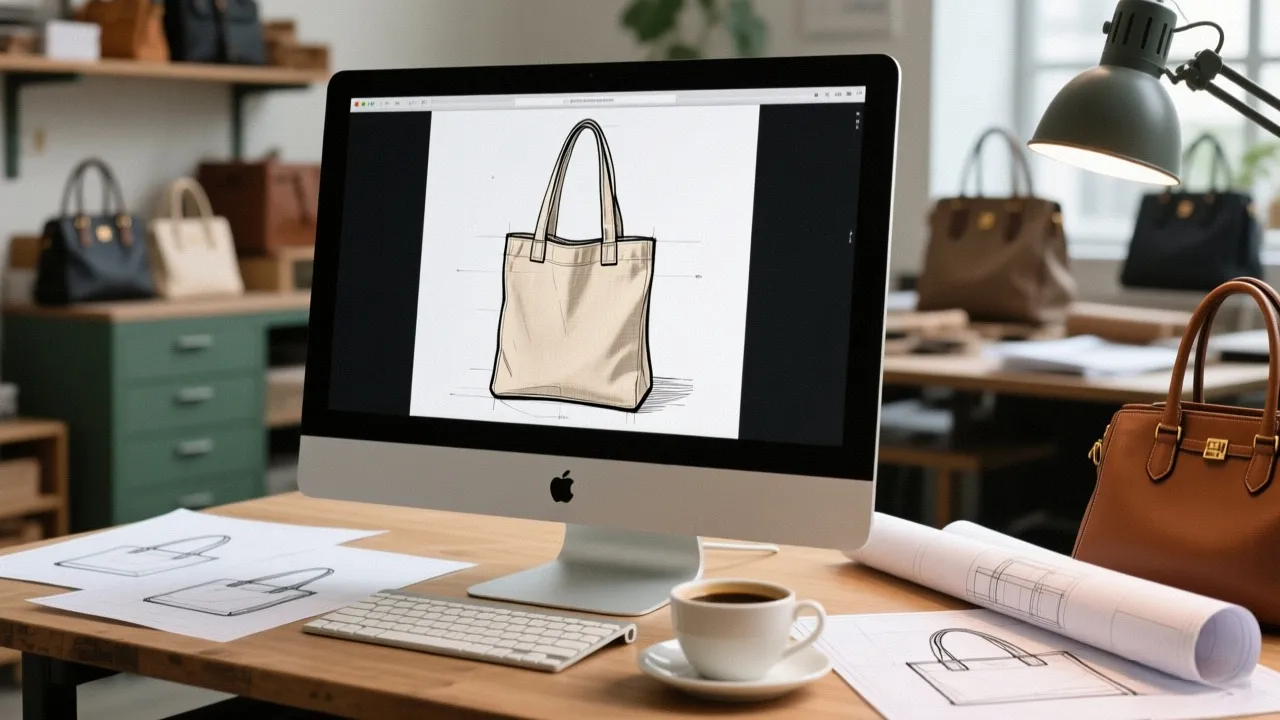
We accept AI, PDF, and EPS files. Vector artwork is strongly preferred — it scales cleanly during digitization. Raster images (JPG, PNG) can work for simple designs but require manual tracing, which adds cost. See our artwork requirements guide.
Our digitizing team converts your design into stitch patterns optimized for your specific fabric weight and embroidery technique. Turnaround: 3–5 days. Digitization fee: $30–$80 per design. That fee gets waived on orders of 200+ pieces.
Step 2: Pre-Production Sample
We produce physical samples on your actual cotton material using actual embroidery thread. No approximations, no “close enough.” The sample you approve is representative of bulk production.
Sample production: 5–7 days after artwork approval. Mass production doesn’t start until we have your written email approval. This safeguard prevents costly mistakes. We’ve seen clients change their minds about thread colors after seeing the sample — that’s exactly why this step exists.
Step 3: Mass Production & Inline QC
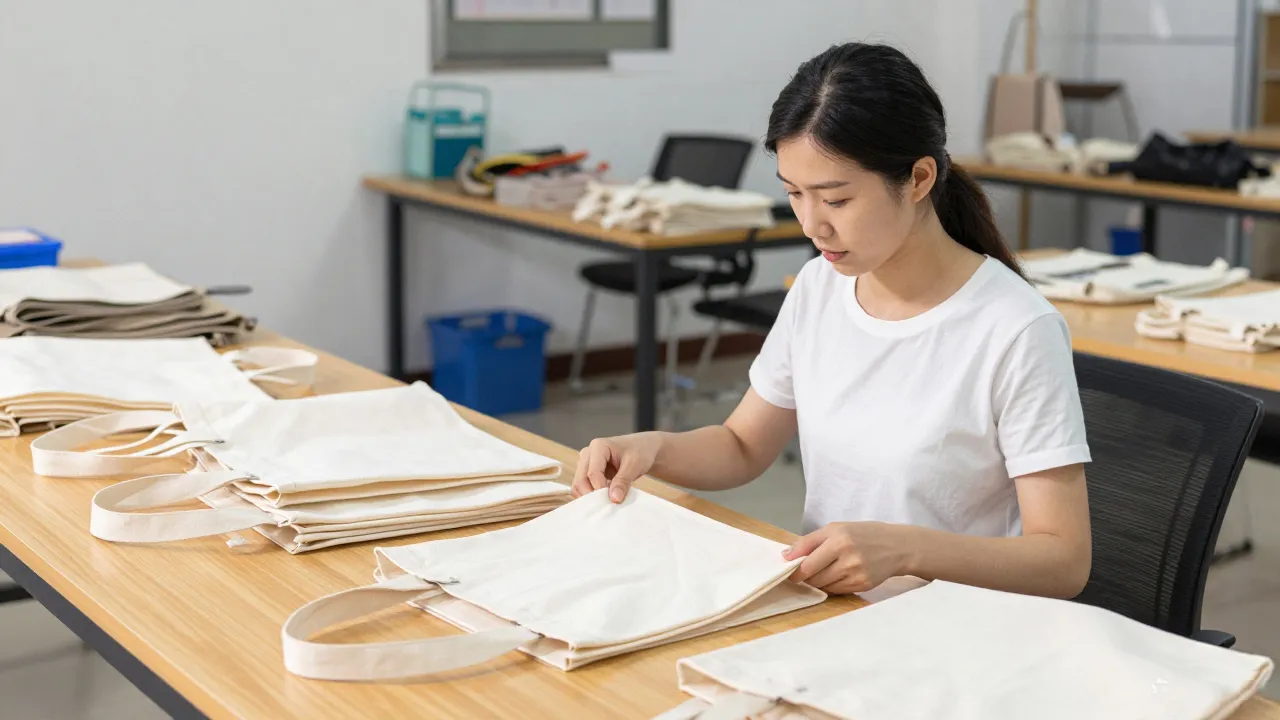
Production follows a strict sequence: fabric cutting → sewing → embroidery → quality inspection → packaging. Quality checkpoints happen every 200 units following AQL 2.5 standards.
We send photos and videos throughout production. You see cutting tables, sewing lines, embroidery machines, QC stations. If something concerns you, we catch it early — not after 5,000 bags are finished.
Step 4: Final Inspection
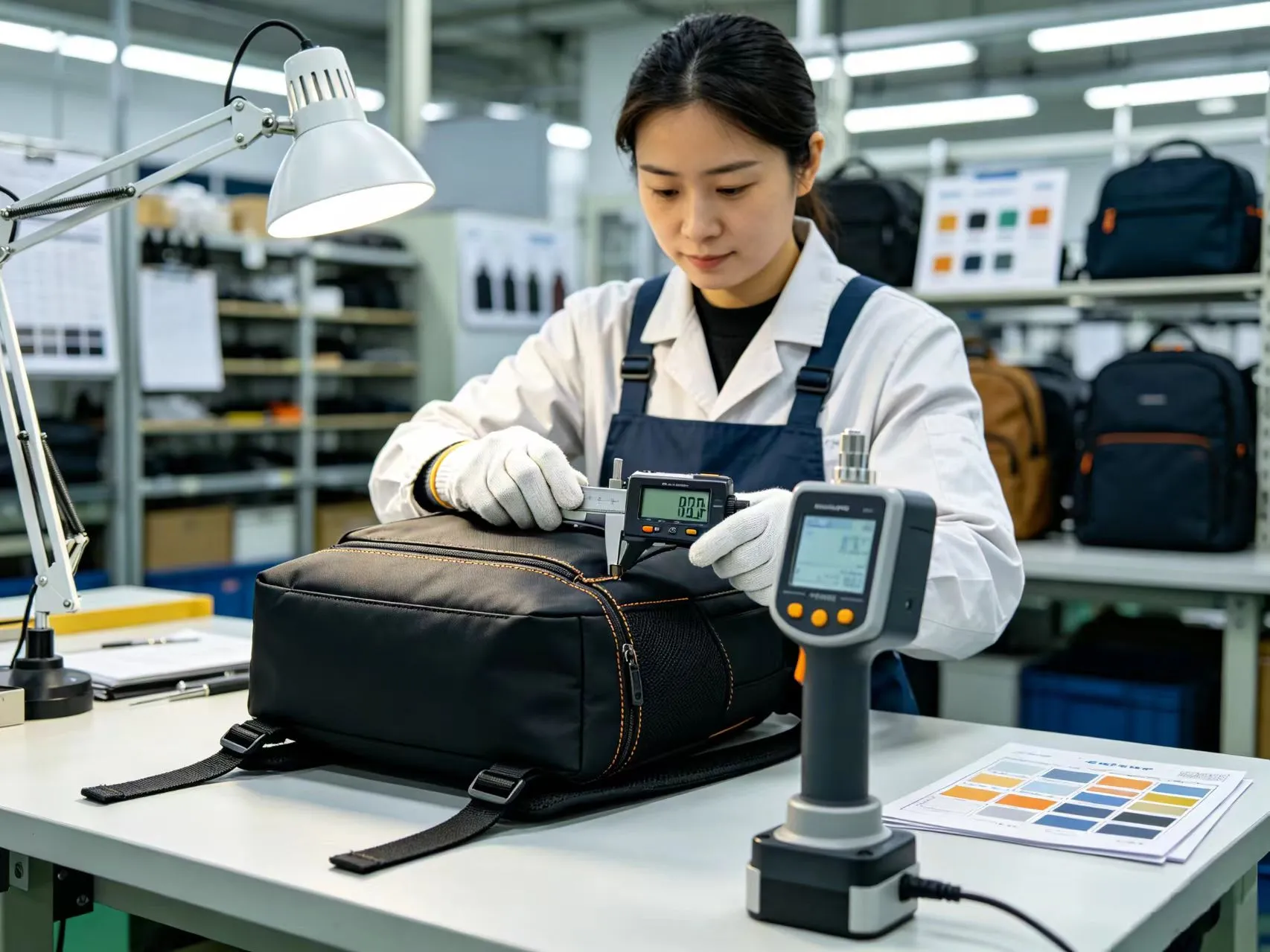
Final inspection provides comprehensive verification before shipping. Standard inspection follows AQL 2.5. If you want tighter inspection, we offer AQL 1.5 for an additional $0.05–$0.10 per piece.
Remote inspection works via Zoom or WeChat video call. You watch as our team checks finished bags against your spec sheet. If you prefer in-person verification, you can send your own inspector or authorize a third-party company (SGS, Intertek, Bureau Veritas) to handle it.
Step 5: Shipping from Shenzhen
We ship from Shenzhen or Yantian ports. Sea freight transit times:
- United States: 14–21 days
- European Union: 20–30 days
- Australia: 15–20 days
- Air freight: 5–7 days to most destinations, DDP door-to-door available
Export documentation includes commercial invoice, packing list, Bill of Lading, and Certificate of Origin. We handle all export procedures to ensure smooth customs clearance on your end.
Industries That Order Custom Embroidered Cotton Tote Bags
Embroidered totes serve surprisingly diverse markets. Here’s who orders from us and why.
Corporate Branding & Employee Gifts
Corporate clients — banks, tech companies, hotel groups — typically order 500–5,000 pieces per campaign. Use cases include employee gifts, conference swag, client appreciation, and event merchandise. Learn about our corporate branding options.
Timing matters for corporate programs. Q4 holiday gifting means ordering by September. Annual sales conferences mean working backwards from the event date. We’ve helped procurement teams plan production calendars that align with their internal deadlines.

Retail & Boutique Brands
Boutique brands typically start with 200–500 pieces per style. Our recycled cotton line has become a core SKU for eco-conscious brands building sustainability into their product story.
Boutique clients care about unboxing experience. Custom tissue paper, branded hang tags, retail-ready presentation — these details matter when customers are paying premium prices and sharing their purchases on social media.
Events, Conferences & Non-Profits
Event organizers need bags that attendees actually use. Embroidered totes hit the sweet spot — low per-unit cost, high visibility, keeps the event brand visible long after the conference ends.
Universities and non-profits often order bags combining institutional logo with event year. These become collectibles — sold at fundraising events or distributed as commemorative pieces. The embroidery ensures these bags stay in use for years, not weeks.

Food, Beverage & Hospitality
Restaurants and cafes use embroidered totes for branded merchandise programs and takeout packaging. Hotel spas order them as gift set components and retail items at the front desk.
For wine and beverage brands, we produce specialized totes designed for bottle carrying with appropriate structure and protection features.

Buyer FAQs — Custom Embroidered Cotton Tote Bags
Straight answers to the questions buyers ask most. Click any question to expand.
What is the minimum order quantity for custom embroidered cotton tote bags?
Standard embroidery MOQ is 200 pieces per design. That threshold lets us absorb digitization and setup costs into competitive per-piece pricing. Orders below 200 pieces carry a per-unit premium of $0.30–$0.60. For smaller runs with full-color artwork, our DTG option starts at 50 pieces with no setup fee. Compare all available printing methods.
What is the best cotton weight for embroidery?
8oz organic cotton canvas works best for most embroidery projects. It supports dense stitch coverage without warping and holds shape through repeated washing. For premium or heavy-load bags, step up to 10oz–12oz. For lightweight promotional use, 6oz keeps costs down.
How much does embroidery cost per bag?
For 8oz cotton with a 3″ × 1.5″ logo in 1–3 colors: expect $4.00–$5.50 per piece at 200–499 pieces, $3.30–$4.30 at 500–999 pieces, and $2.80–$3.80 at 1,000+ pieces. Each additional color above 3 adds $0.05–$0.15 per piece. Higher fabric weights and custom hardware increase costs proportionally.
Can you match a Pantone color on embroidery thread?
Yes. We match to the nearest Pantone reference in DMC and Madeira thread libraries at no charge. On orders of 200 pieces or more, we send a physical strike-off sample on your actual cotton before bulk production to verify color accuracy.
What is the production lead time?
Sample: 5–7 days after artwork approval. Bulk: 10–15 working days after sample sign-off. Rush orders (7 days) available with a 15–20% upcharge. Sea freight to US: 14–21 days; EU: 20–30 days; AU: 15–20 days.
Do you ship to the USA, EU and Australia?
Yes — to 50+ countries. FOB Shenzhen is standard; CIF and DDP door-to-door are available. We handle all export documentation including commercial invoice, packing list, Bill of Lading, and Certificate of Origin.
Are your cotton tote bags OEKO-TEX or GRS certified?
Every shipment carries an OEKO-TEX Standard 100 certificate. Our recycled cotton line is GRS certified with full chain-of-custody transaction certificates. BSCI, SEDEX, and ISO 9001 are renewed annually and reports are shared under NDA.
What is the difference between embroidery and screen printing on cotton?
Embroidery creates raised thread texture that feels premium and never fades. Screen printing lays ink on the surface — cheaper per unit but cracks or peels over time. Embroidery works best on simple, bold logos; screen print handles gradients and photos. For detailed comparison, see our printing methods guide.
Do you offer private label / OEM cotton tote bags with embroidery?
Full OEM and ODM available. We ship blank bags with your woven labels, care labels, hang tags, and retail-ready packaging. Tech-packs for fully custom bag shapes are welcome, with OEM MOQ starting at 500 pieces. Learn more about our private label process.
Can I get a sample before placing a bulk order?
Absolutely. Pre-production samples cost $25–$80 per piece and are refundable in full against any bulk order of 200 pieces or more. We photograph and video the sample process so you see exactly what you’re approving before committing to mass production.
How to Order — 3 Simple Steps
Three steps. That’s it. From artwork to delivery, the process is straightforward.
Send Your Artwork
Email your AI/PDF/EPS file, target quantity (200+ pieces), cotton weight preference, and color requirements to info@gzdreamway.com. We reply with a free digital mockup and itemized quote within 12 hours.
Approve the Sample
We produce a physical sample on your actual cotton within 5–7 days. Review stitch quality, color accuracy, and dimensions. Confirm approval by email to proceed.
Watch Your Order Ship
Mass production runs 10–15 days after sample approval. We send photo updates at every stage and a final QC report before cargo leaves Shenzhen or Yantian port.
Ready to Order Custom Embroidered Cotton Tote Bags?
Meet Our Production Team
Our core team of 30+ professionals has served brands across 50+ countries since 2008. Each member brings specialized expertise to make sure your order gets the attention it deserves.
Kevin
Pattern Development Engineer
15 years experience in bag pattern making across leather, canvas, nylon, and technical fabrics.

Emily
Senior Project Manager
12 years in OEM bag manufacturing, managing 15–25 active projects simultaneously without missing deadlines.
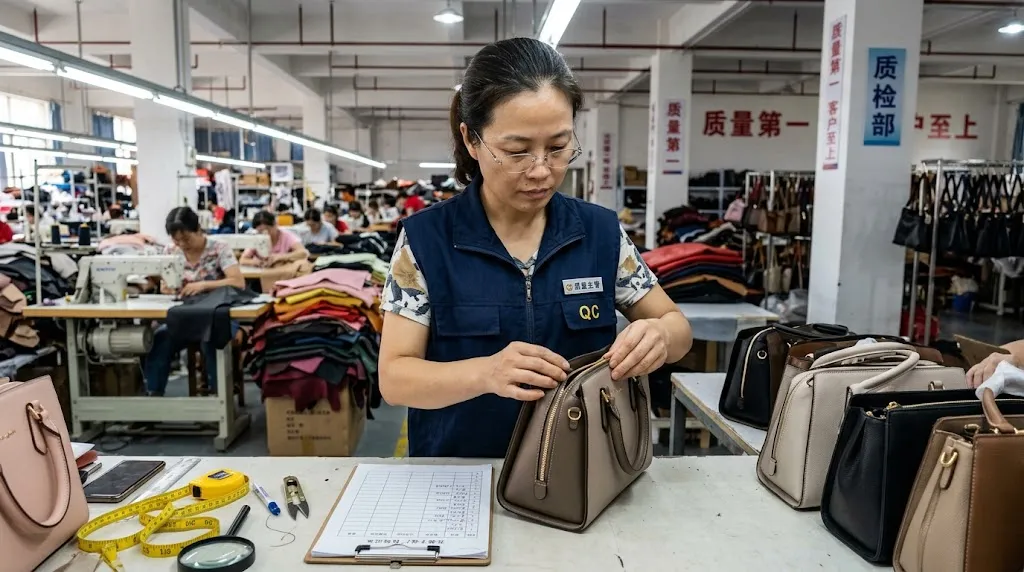
Helen
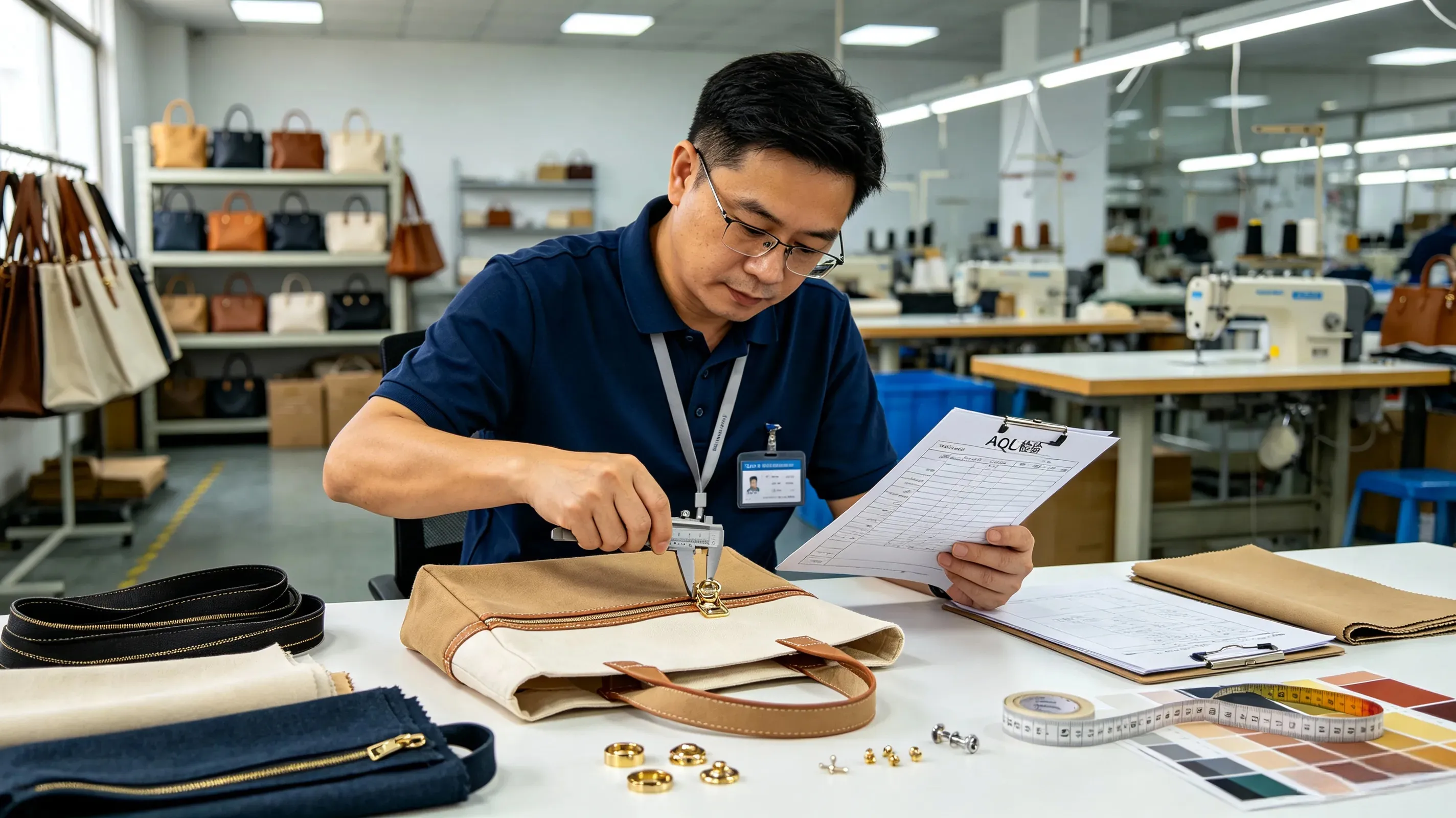
Senior QC Supervisor
13 years of hands-on handbag quality control experience — from stitching and hardware to material consistency. Catches issues before they reach your customer.
About GZDreamway
Located in Huadu District, Guangzhou — China’s leather goods manufacturing heartland — GZDreamway has produced premium bags and silk products since 2008. Our 30+ member core team serves clients across 50+ countries worldwide.

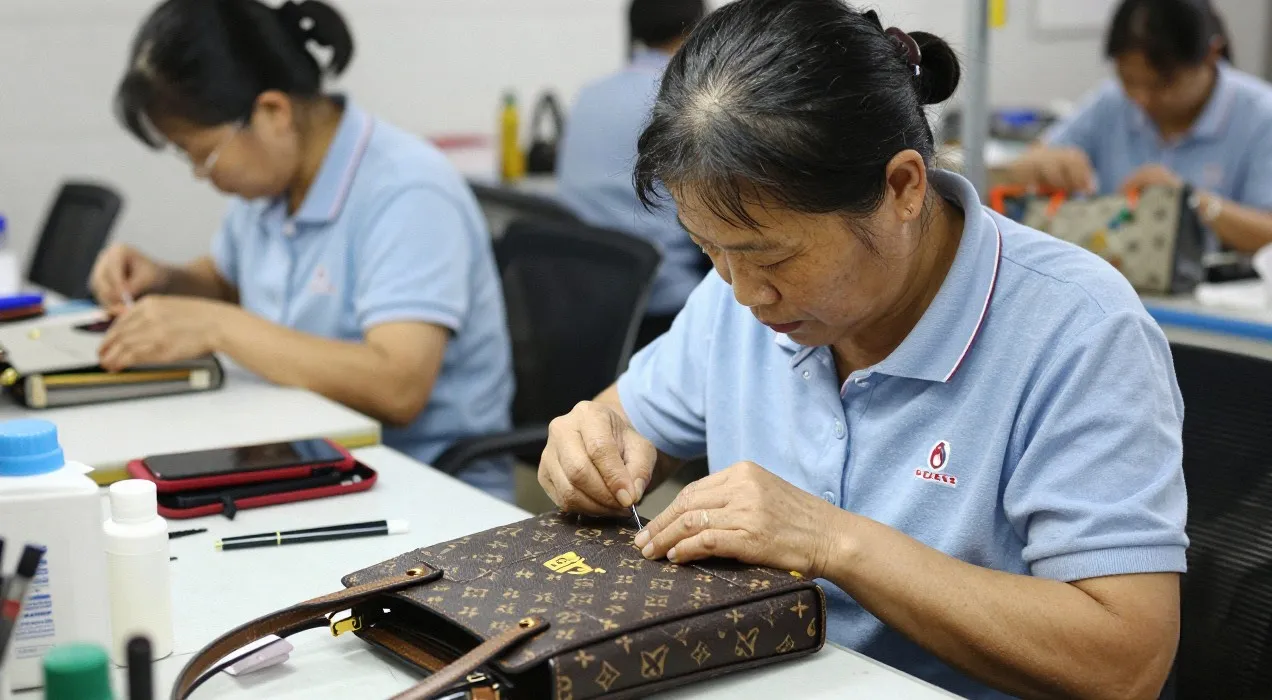
Certifications & Compliance
Every product meets international quality and sustainability standards. We hold OEKO-TEX, BSCI, GRS, ISO 9001, and SEDEX certifications, renewed annually.



What Buyers Say About Working With Us
“Communication was fast and the samples matched what we approved. Production ran smoothly — no surprises on quality or timing.”
“We’ve worked with three factories before settling on this one. The embroidery quality is consistent across reorders, which matters most for our brand.”
“Setup was painless. Artwork digitization was done in 4 days, samples in 6. Bulk production finished ahead of schedule. Will order again.”
Sustainability & ESG — How We Reduce Real Impact
Sustainability isn’t a marketing add-on for us. It’s the operating system. Every production decision — from cotton sourcing to packaging — gets filtered through an ESG lens before we move forward. Here’s what that looks like in practice.
Material Choices
We’ve moved 65% of our cotton volume to GOTS organic or GRS recycled sources since 2022. Standard conventional cotton still fills some orders, but the default quote now includes organic options unless clients explicitly ask otherwise.
Production Waste
Fabric scraps get bundled and sold to downcyclers who turn them into insulation and padding. Thread cones get returned to suppliers for reuse. Reject bags (those that fail QC) get donated to school programs or sold at cost to charity partners.
Packaging Reduction
We eliminate plastic polybags from default packaging in 2023. Now it’s either kraft paper sleeves, recycled cardboard cartons, or reusable woven PP bags — depending on what the client specifies. See our sustainable packaging options.
Carbon Reporting
For brands that need Scope 3 reporting, we provide carbon footprint data per 1,000 bags produced. The numbers include fabric sourcing, dyeing, manufacturing, and freight to Shenzhen port.

EU PPWR & Digital Product Passport Compliance
European packaging regulations keep tightening. By 2030, every textile product sold in the EU will likely require a Digital Product Passport. We’re getting ahead of that curve now.
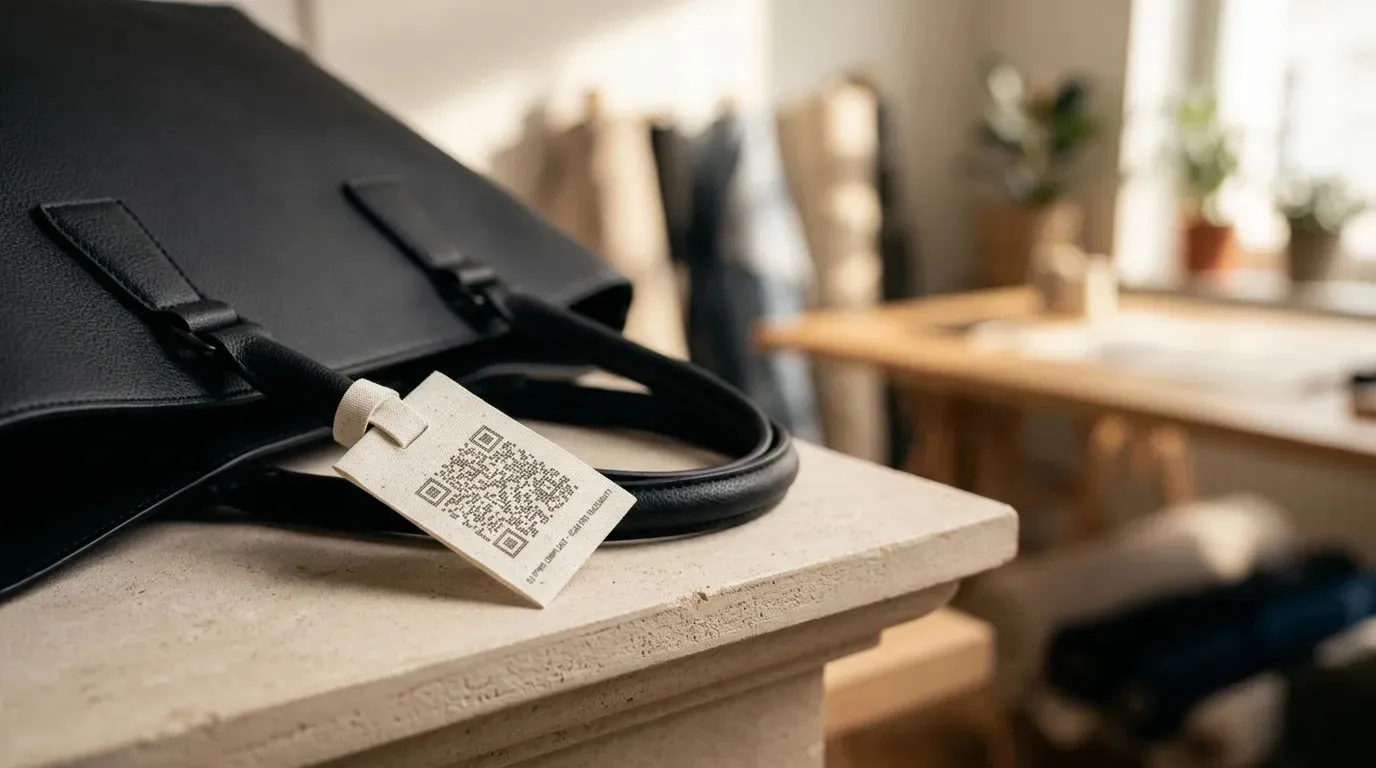
Each bag can carry a QR code linking to its full provenance — cotton origin, dye batch, factory location, certifications, carbon footprint. Brands using our OEM service get this included at no extra cost. It’s not a regulatory requirement yet, but it will be — and we’ve already done the integration work.
What This Means for Your Brand
When your customers ask “where does this bag come from?” you have an answer. When ESG-conscious retailers audit your supply chain, you have documentation. When regulations change, your product line is already compliant.
This is the quiet work most factories skip. We don’t skip it because our European and North American clients have learned to ask the right questions.
Customer Case Studies — Real Orders, Real Outcomes
Theory is one thing. Here’s what actually happens when brands place real orders with us.
Case 1 — USA Boutique Brand, 500 Pieces
A Brooklyn-based boutique brand approached us for a custom tote line in spring 2024. Their needs: 500 pieces, 10oz natural cotton canvas, single-color logo in sage green thread, leather handle accents.
What we delivered: 502 pieces (1 free sample retained, 1 retained for QC records), 11-day sample turnaround, 14-day bulk production. Sage green matched within 1% delta against their Pantone reference. The boutique’s first reorder came 90 days later — 800 pieces, new color added.
The owner’s note on the reorder email: “Your embroidery quality stayed consistent. That matters more than anything else.”
Case 2 — German Eco-Brand, 5,000 Pieces
A German sustainability-focused brand needed 5,000 totes in GRS-certified recycled cotton for their fall 2024 retail launch. Strict requirements: chain-of-custody documentation, OEKO-TEX, low-impact dyes, recyclable packaging only.
What we delivered: 5,040 pieces (overage built in), 18-day bulk production, full GRS transaction certificates for every batch, kraft paper sleeve packaging, carbon footprint report per the brand’s Spec.
The German brand’s compliance team flew to our factory for the final inspection. They left with 5,000 approved bags and a rebooking order for 8,000 pieces the following quarter.
University Alumni Association, 1,200 Pieces
A US university’s alumni association needed embroidered tote bags for homecoming weekend — combining the institutional crest with a “Class of 1994” anniversary mark. Multi-color, fine detail, deadline-driven.
The challenge: tackle twill embroidery with 6 colors in the crest. Most factories quote 4-week lead times for this complexity. We delivered pre-production samples in 8 days, bulk production in 16 days — leaving 6 days of buffer before the event.
The alumni director’s testimonial summary: 1,200 bags arrived on time, zero defects reported, embroidery detail was sharper than the previous vendor’s 4-color work. The association has been reordering every homecoming since.
What These Cases Share
Three patterns show up across our successful partnerships:
- Communication density: Average of 4.2 emails per week during production. Clients see what we’re doing, we catch their concerns early.
- Sample-first discipline: Every client we onboard signs off on a physical sample. No “trust us, bulk will match.” No exceptions.
- Documentation depth: Every order ships with certs, test reports, and production photos. Brands use these for their own ESG, marketing, and retailer onboarding.
Disclaimer
Prices mentioned in this article are indicative and may vary based on material costs, exchange rates, and order specifications. Final quotes are provided upon detailed inquiry. While we strive for accuracy, specifications may differ slightly from descriptions due to manufacturing tolerances. Contact our sales team for current pricing and availability.
Product images are representative samples. Actual colors may vary due to monitor settings and material lot differences. Custom embroidery samples are recommended for color-critical orders.
Customer testimonials reflect individual experiences and do not guarantee identical results. Names partially anonymized for privacy.
Guangzhou Huadu Shilong Town — Premium Bag & Silk Product Manufacturer
Bags MOQ: 200 pcs | Silk Products MOQ: 50 pcs
Serving 50+ Countries Worldwide | 30+ Skilled Employees
Location
Guangzhou, China
Factory DirectScan the QR code to connect with Victoria

Inside the Atelier of a Custom Cotton Tote Bag Manufacturer
A reference shelf assembled for brand managers, procurement leads and creative directors evaluating natural-fibre carriers. Each resource below informs specification sheets, sustainability claims and decoration decisions, complementing the technical detail carried on the parent guide.
Cotton Tote Bag Category Hub
The curated custom cotton tote bag manufacturer category page gathers every reference, specification guide and decoration option under one editorial roof. Buyers pivot between woven structures, print techniques and order volumes without leaving the hub, while procurement officers value the consolidated sourcing narrative that arrives pre-qualified by trusted industry specialists.
browse the custom cotton tote bag category hubGrading Tote Fabrics by GSM Weight
Luxury labels demand measurable consistency, anchored in grade and weight verification protocols that hold every fabric sample to internationally recognised tolerances. The reference breaks down laboratory procedures for tensile strength, abrasion cycles and yarn count, then converts each measurement into the perceived quality, drape and longevity that discerning brand teams rely upon.
examine fabric grades with gsm testing protocolsRecycled & Organic Cotton Programmes
Forward-looking brands anchor their circular pledges in reclaimed and certified organic cotton fibre programmes that recycle post-consumer textiles under audited labour standards. The dossier covers GOTS-certified yarn sourcing, low-impact reactive dyeing and complete chain-of-custody documentation that sustainability officers hand straight to ESG auditors and procurement committees without further negotiation, simplifying disclosure.
shop recycled organic cotton tote collectionsCotton versus Blended Canvas
Material choice quietly shapes perceived value, and the comparative brief walks through cotton versus blended canvas trade-offs across thread count, weight per square metre, colourfastness ratings and post-wash shrinkage. Pure cotton delivers breathability and biodegradable composition; poly-cotton blends add abrasion resistance, faster drying cycles and tighter registration for aggressive ink systems.
compare cotton versus blended canvas materialsCanvas Dust Bag Manufacturing
Premium accessories houses safeguard merchandise in bespoke cotton canvas dust bag production that doubles as signature packaging. Heavyweight 12 oz to 18 oz natural cotton with drawstring closures, gusseted bases, leather tipping and embroidered crests transforms unboxing into a heritage moment while shielding leather goods, footwear and jewellery from humidity, dust and abrasion during transit.
browse canvas dust bag manufacturing optionsCanvas Wine Bag Production
Hospitality groups, vineyards and corporate gifting platforms depend on reinforced canvas wine carrier production for elegant single-bottle through six-bottle presentations. Padded dividers, cotton webbing handles, reinforced stress points and optional foil-stamped crests insulate bottles against temperature swings, creating a tactile canvas for screen-printed insignias, woven edge labels or wax-sealed hangtags.
discover canvas wine bag production capabilitiesChina-Based Manufacturing Partner
International brands increasingly route natural-fibre programmes through vertically integrated China-based cotton tote manufacturing, converting raw cotton into cut, sewn and decorated carriers under one roof. Trade-assurance agreements, ISO-certified quality systems and multilingual account managers compress lead times while preserving the premium finish consumers recognise on first touch, cycle after cycle.
partner with china based cotton tote manufacturersWholesale Cotton Tote Programmes
Volume procurement turns order books into predictable profit, and the wholesale catalogue spans natural ecru, optical white and signature dyed colourways across multiple weight categories. Flexible minimum order quantities and tiered wholesale cotton tote programmes adapt to seasonal swings, bonded warehousing compresses replenishment cycles, and full compliance documentation arrives alongside every carton.
order wholesale cotton tote bags in bulkLogo-Imprinted Wholesale Totes
Every carried bag becomes a moving billboard, which is why logo-imprinted wholesale cotton tote decoration programmes consolidate artwork preparation, colour separation and bulk decoration into a single workflow. Heat-transfer, plastisol, water-based ink and woven-label applications are calibrated to each artwork’s complexity, while registered strike-offs and Pantone references remove guesswork from large commitments.
request logo imprinted wholesale tote programmesCustom Printed Tote Production
Full-coverage artwork demands printing technology that renders photographic detail and exacting Pantone references on irregular natural fibres. The custom printed cotton tote bag manufacturer profile walks through press selection by edition size, with digital direct-to-garment presses sitting alongside traditional rotary lines and bar-coded travellers following every panel through cutting, sewing and quality audit.
source custom printed tote production servicesCustom Embroidered Cotton Totes
Embroidery communicates premium positioning through dimensional thread work that catches light and creates tactile relief against the matte cotton ground. The custom embroidered cotton tote digitising and production service pairs brand teams with digitising specialists who calibrate stitch direction, density and underlay structure, while Coats, Madeira and Isacord thread palettes protect colour fidelity across repeat orders.
explore custom embroidered cotton tote options