
Canvas Wine Bag Manufacturer: A Complete OEM & Private Label Sourcing Guide
From Fabric & GSM to Handles, Printing, QC and Lead Time
1. What Is a Canvas Wine Bag?
A canvas wine bag is a reusable, fabric-wrapped carrier specifically designed to hold, protect, gift-present and brand-promote one or more bottles of wine. In a B2B context, the term covers a wide family of constructions — single bottle wine bags, double bottle wine bags, multi-bottle carriers (often called six bottle carriers), drawstring wine bags, window wine bags, luxury wine gift bags and foldable wine carriers used by wineries, retailers, hotels and corporate gifting programs.
Compared with single-use paper or plastic alternatives, a well-made canvas wine carrier is a tactile, reusable packaging product that becomes part of the gift experience itself. For brand owners, that means the bag is not a disposable wrapper — it is a mobile advertisement, a keepsake and a tangible reminder of the producer long after the bottle is empty.

Common product names you will see in B2B catalogs
- Wine Bag — the generic, catch-all term used in retail catalogs and Amazon-style listings.
- Wine Bottle Bag — emphasizes single-bottle geometry; the most common OEM request.
- Wine Gift Bag — usually implies premium construction, ribbon, tag and retail-ready boxing.
- Reusable Wine Bag — emphasizes sustainability messaging; almost always means cotton canvas, organic cotton or rPET.
- Canvas Wine Carrier — multi-bottle configuration, often 2, 4 or 6 bottle layouts with internal dividers.
2. Why Canvas Wine Bags Are Popular
Canvas wine bags have become the default packaging choice for wineries, gift brands and corporate gifting programs for three overlapping reasons: gifting rituals are getting more considered, sustainability is now a procurement requirement, and brands want packaging that travels — into airports, hotels, weddings and LinkedIn photos. A canvas wine bag checks all three boxes without the cost of a rigid box or a velvet drawer.
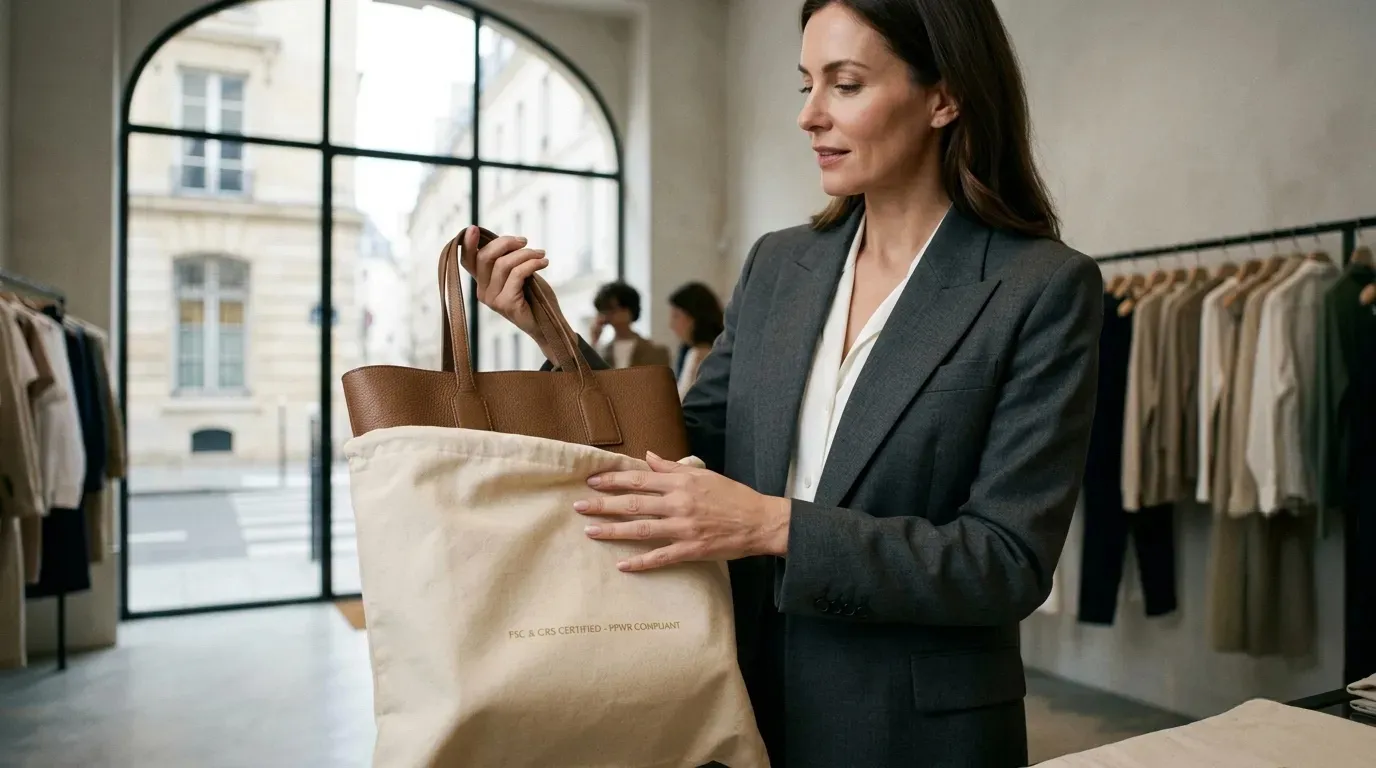
Why buyers choose canvas over paper, plastic or rigid boxes
- Gifting — soft, tactile, photographable; elevates a mid-priced bottle into a presentable gift.
- Eco-Friendly — reusable, washable, recyclable; meets the messaging of natural and organic wine brands. Eco friendly wine bag is now one of the most-searched terms in the category, particularly for EU and Australian retail.
- Reusable — survives dozens of trips to the supermarket, the beach or the office; one bag replaces 30+ single-use alternatives.
- Brand promotion — a walking canvas for logos, embroidery, woven labels and leather patches.
- Luxury Packaging — heavyweight 12oz–16oz canvas with rope or leather handles reads as premium without the tooling cost of a rigid box.
- Corporate Gifts — bulk-order friendly, easy to embroider with a logo, ships flat.
- Winery — replaces the traditional single-use printed paper bag at the cellar door.
- Retail — shelf-ready, often packed in a polybag with a belly band, hang tag or printed insert card.
It is this overlap — gift + eco + branding — that has made the canvas wine bag the fastest-growing fabric packaging category for both boutique wineries and large retail chains over the past five years. Across the trade, the same SKU is bought by a wine gift bag manufacturer, a wine carrier manufacturer, a reusable wine bag supplier and a wine tote manufacturer — and they all want the same thing: a reliable, scalable, customizable canvas program from a factory that understands retail, gifting and DTC at the same time.
From a wine packaging bag perspective, the canvas carrier occupies a specific niche: more premium than a paper wrap, less expensive than a rigid gift box, more sustainable than a polybag, and far more brand-able than any single-use alternative. That combination — premium + sustainable + brand-able + economical — is why the category continues to outgrow paper and rigid box alternatives year over year, and why a growing number of winery packaging supplier relationships now default to canvas as the primary format.
3. Types of Canvas Wine Bags
Most OEM wine bag programs are built around one of the eight constructions below. Each has its own tooling, MOQ profile and use case. We recommend sampling two or three structures before committing to a production run.
3.1 Single Bottle Wine Bag
The single wine bottle bag is the workhorse of the category — a flat, single-panel construction that hugs one 750ml bottle. It is the easiest construction to OEM, has the lowest MOQ tolerance, and is the default for corporate gifting, weddings and tasting-room purchases. Production is straightforward: two body panels, a circular or flat bottom, and a top hem.
3.2 Double Bottle Wine Bag
A double bottle wine bag carries two bottles side by side, usually with a central divider to stop the bottles from clinking. It is the standard upgrade for gifting two vintages of the same wine, or pairing a red with a white. The geometry is similar to a single bag but wider; expect slightly higher fabric consumption and a moderate MOQ uplift.
3.3 Six Bottle Carrier
A six bottle carrier is the classic canvas wine tote — rigid bottom board, internal dividers, reinforced handles and a fold-flat construction for shipping. It is the most complex structure in this list and typically requires a 12oz or 16oz canvas to prevent the bag from collapsing under load. Most six-bag OEM programs start at 500 pieces. As a canvas bottle carrier, this is the SKU most often chosen by retail chains and wholesale distributors moving larger-format cases.
3.4 Drawstring Wine Bag
Drawstring wine bags are pouch-style carriers with cotton cords at the neck. They are popular as a low-cost reusable gift wrap for in-bottle promotions, loyalty programs and welcome-bag inserts. No rigid bottom is required, which keeps tooling and unit cost low.
3.5 Window Wine Bag
A window wine bag uses a transparent TPU or PE panel so the label is visible without opening the bag. This is a popular SKU for wine retailers who want the customer to be able to identify the wine on a shelf without removing the packaging. TPU windows add a small per-unit cost but lift shelf conversion — the same logic that drives wine bottle gift bag programs at cellar-door and gift-with-purchase activations.
3.6 Luxury Wine Gift Bag
A luxury wine gift bag upgrades a standard bag with heavyweight canvas, leather handles or PU handles, satin ribbon closure, a branded hang tag and a gift box. It is the SKU most often chosen for corporate gifting, end-of-year client presents and high-end retail.
3.7 Foldable Wine Carrier
A foldable wine carrier is engineered to ship flat and pop into shape at the point of use. It is favored by mail-order wine clubs and subscription programs where shipping volume matters as much as presentation. Expect slightly more sewing and a reinforced base plate.
3.8 Promotional Wine Bag
A promotional wine bag is engineered around one goal: brand exposure. Construction is usually a lighter 8oz or 10oz canvas, but the printing or embroidery is the focus — large logos, multi-color screen printing, all-over DTF or foil printing. Lowest MOQ of the eight, but also the lowest margin per piece. Bulk wholesale wine bags for trade shows, distributor programs and welcome-bag inserts all fall into this category.
4. Canvas Materials for Wine Bags
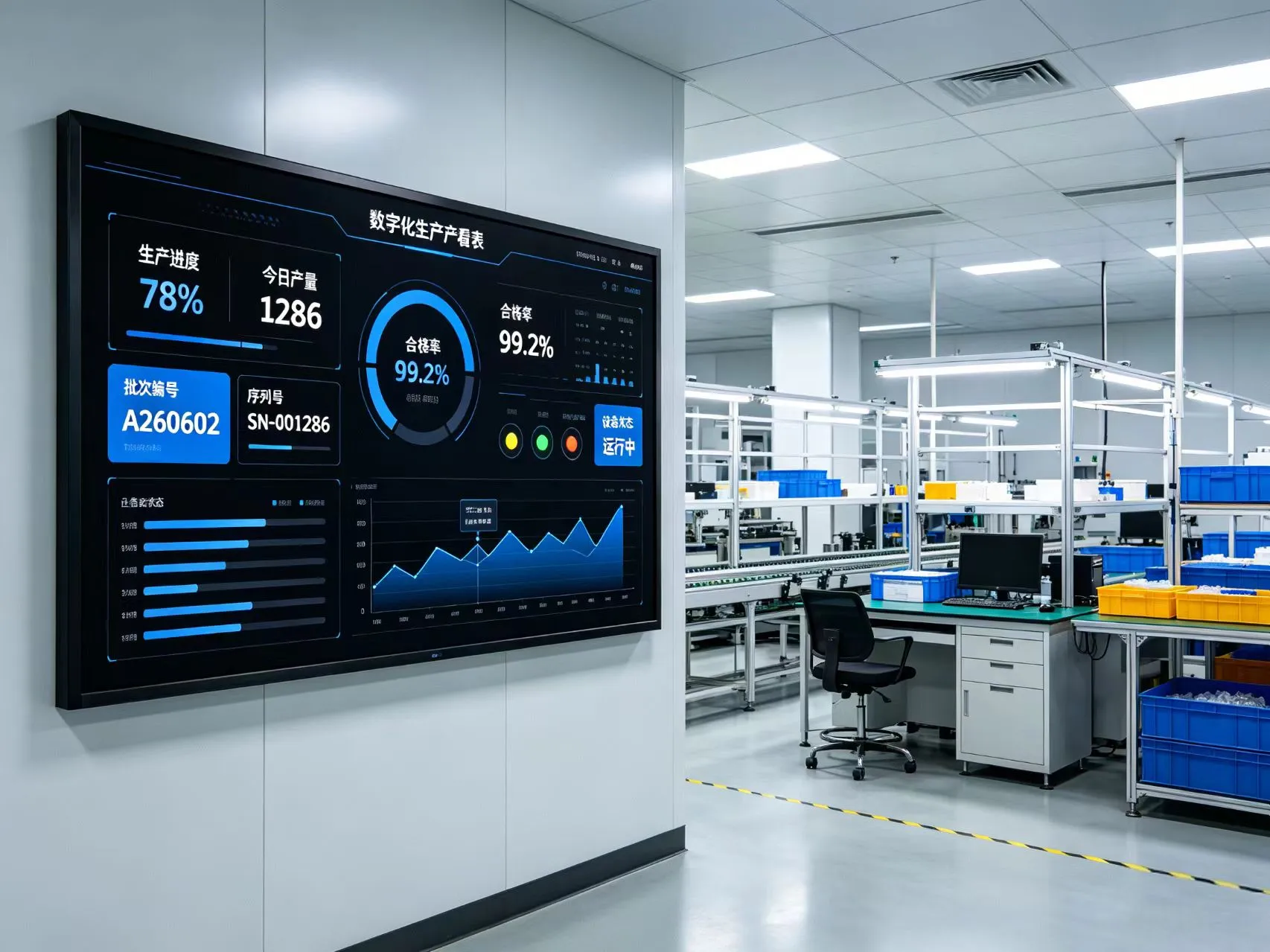
The choice of canvas material defines everything that follows: handle strength, weight tolerance, print method, sustainability claim and unit cost. Below are the five fabrics we recommend for OEM wine bag programs.
Cotton Canvas
The default. Soft hand-feel, strong tensile rating, accepts screen printing, DTF and embroidery. Cotton canvas — and the related cotton bottle bag construction — is also the most familiar to consumers: when a buyer imagines a reusable wine bag, this is the fabric they picture.
Organic Cotton
Same construction as conventional cotton canvas, but grown without synthetic pesticides and certified to GOTS or OCS. Add roughly 10–20% to the unit cost, but unlock the “organic” claim for natural-wine brands and EU retail programs.
RPET (Recycled Polyester Canvas)
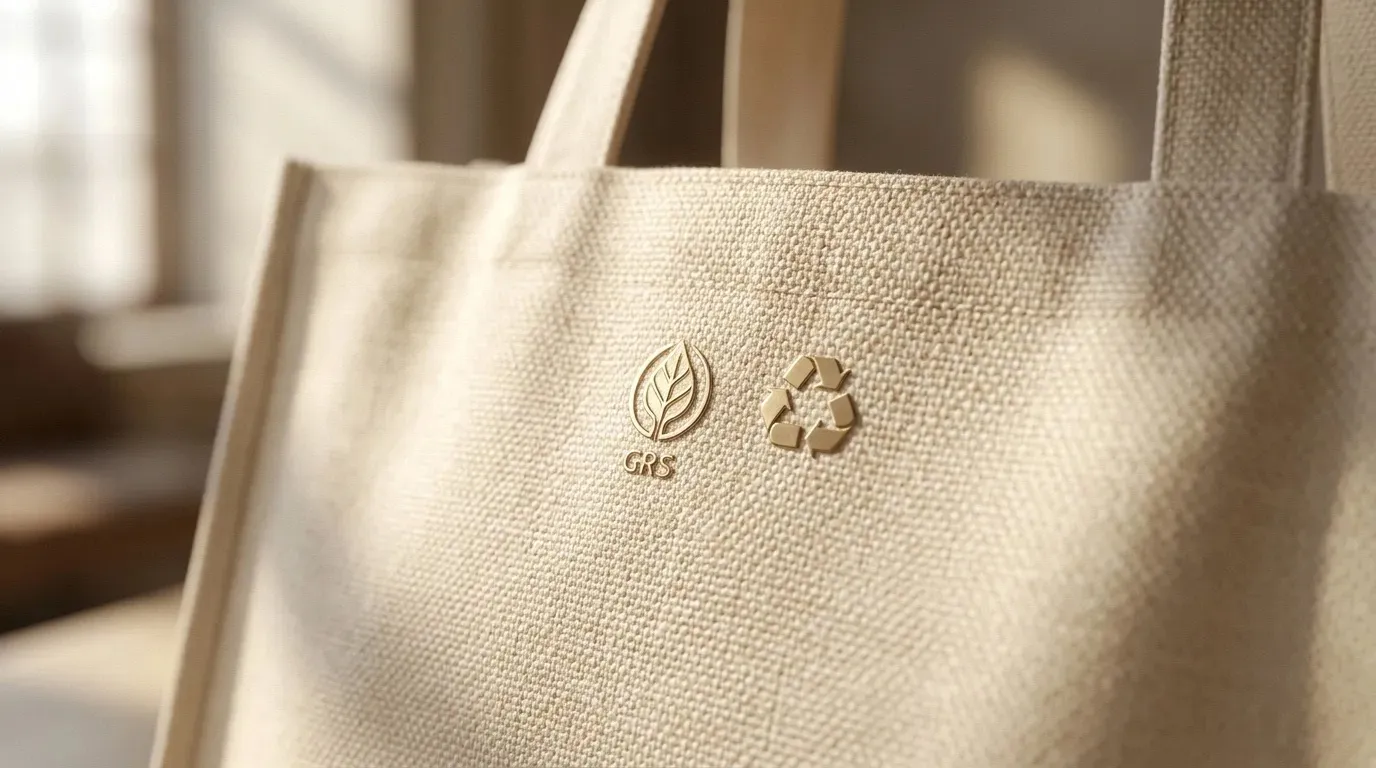
RPET canvas is woven from recycled plastic bottles, certified to GRS. It is the right fabric when the wine brand wants a sustainability story built on plastic recovery rather than agricultural switching.
Heavy Canvas
Heavy canvas (12oz+ / 400gsm+) is used for luxury wine gift bags and six-bottle carriers where the bag needs to stand on its own and survive repeated load cycles. Slightly stiffer hand-feel, considerably stronger handle pull strength.
Blended Canvas
Cotton-poly or cotton-linen blends reduce cost, improve wrinkle recovery and slightly change the printing profile. Less common for premium wine programs, but a useful option for promotional wine bags and large corporate orders.
| Material | Durability | Eco Profile | Cost | Printing Compatibility |
|---|---|---|---|---|
| Cotton Canvas | High | Natural, biodegradable | $$ | Screen, DTF, Embroidery, Heat Transfer |
| Organic Cotton | High | GOTS / OCS certified | $$$ | Screen, DTF, Embroidery |
| RPET Canvas | High | GRS recycled content | $$ | Screen, DTF, Heat Transfer, Sublimation |
| Heavy Canvas (12oz+) | Very High | Natural, biodegradable | $$$ | Screen, Embroidery, Leather Patch |
| Blended Canvas | Medium-High | Partial natural | $ | Screen, DTF |
Material selection is usually driven by the wine brand’s sustainability narrative: organic or natural-wine producers default to organic cotton; hospitality and hotel programs often choose rPET for the recycled-plastic story; luxury houses and corporate gifting programs choose heavy cotton canvas because it photographs better.
5. Fabric Weight (GSM & oz)
Fabric weight — measured in GSM (grams per square meter) or oz per square yard — is the single biggest lever in a wine bag’s hand-feel, durability and price. Below is the framework we use with our OEM clients.
| Weight | Best For | Typical Use | Handle Strength |
|---|---|---|---|
| 8oz / ~270 GSM | Promotional, lightweight | Trade-show wine bags, giveaways | Standard |
| 10oz / ~340 GSM | Gift, mid-range retail | Single-bottle gift bags, retail programs | Standard + Reinforced |
| 12oz / ~410 GSM | Retail, premium gifting | Multi-bottle carriers, retail flagship SKUs | Reinforced |
| 16oz / ~540 GSM | Luxury, heavy-duty | Luxury wine gift bags, six-bottle carriers | Heavy-Duty Reinforced |
Quick rule: 8oz is for promotional only, 10oz is the everyday default, 12oz is where retail starts to look premium, and 16oz is for luxury programs where the bag itself is part of the gift. Most OEM wine bag programs we run ship at 10oz or 12oz.
6. Handle Options
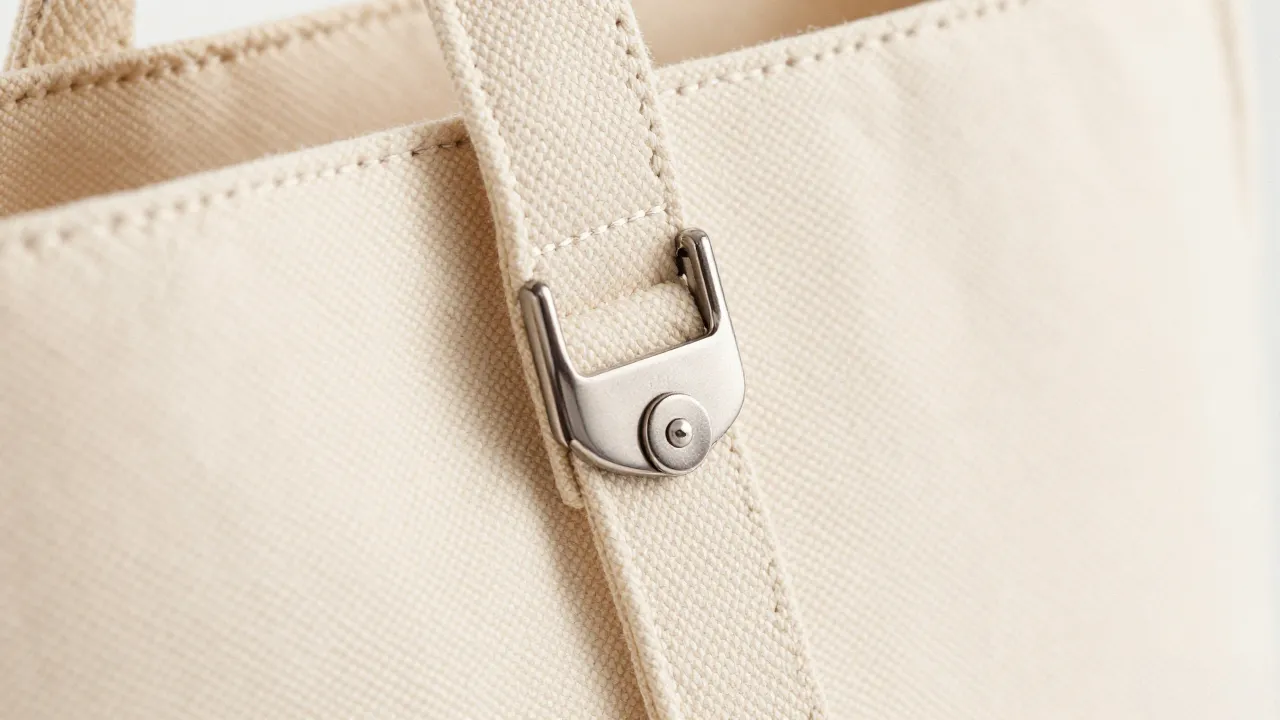
The handle is the single component most likely to fail on a wine bag in the field. A two-bottle carrier with a broken handle is a refund waiting to happen, so handle selection should always be reviewed alongside the bag’s intended load.
Cotton Rope Handle
The casual default. Soft to the touch, available in natural, black, navy and most Pantone-matched colors. Best for 8oz–12oz bags under single-bottle load.
Canvas Handle
Cut from the same canvas as the body. Visual continuity, lower unit cost, slightly rougher on the hand. Reinforced with bartack stitching at the attachment points.
Leather Handle
Real or PU leather handles upgrade the perceived value of a wine gift bag immediately. Expect to add $0.80–$2.00 per bag and accept a longer sample lead time.
PU Handle
PU (polyurethane) handles give the leather look without the leather cost or the animal-material audit trail. The most popular upgrade for mid-range luxury wine programs.
Webbing Handle
Woven polyester or cotton webbing handles are the strongest option per dollar. Standard for six-bottle carriers, retail bags, and any program where the bag will be loaded with two or more bottles.
Reinforced Handle
A reinforcement pattern — usually a bartack box, a triangular patch or a stitched X — at the point where the handle meets the body. Always required for two-bottle and six-bottle programs. Cheap to add, expensive to omit.
7. Logo Printing Options
Logo application is where a generic canvas wine bag becomes your brand’s canvas wine bag. The seven methods below cover the full range from single-color trade-show logos to full-color all-over prints.
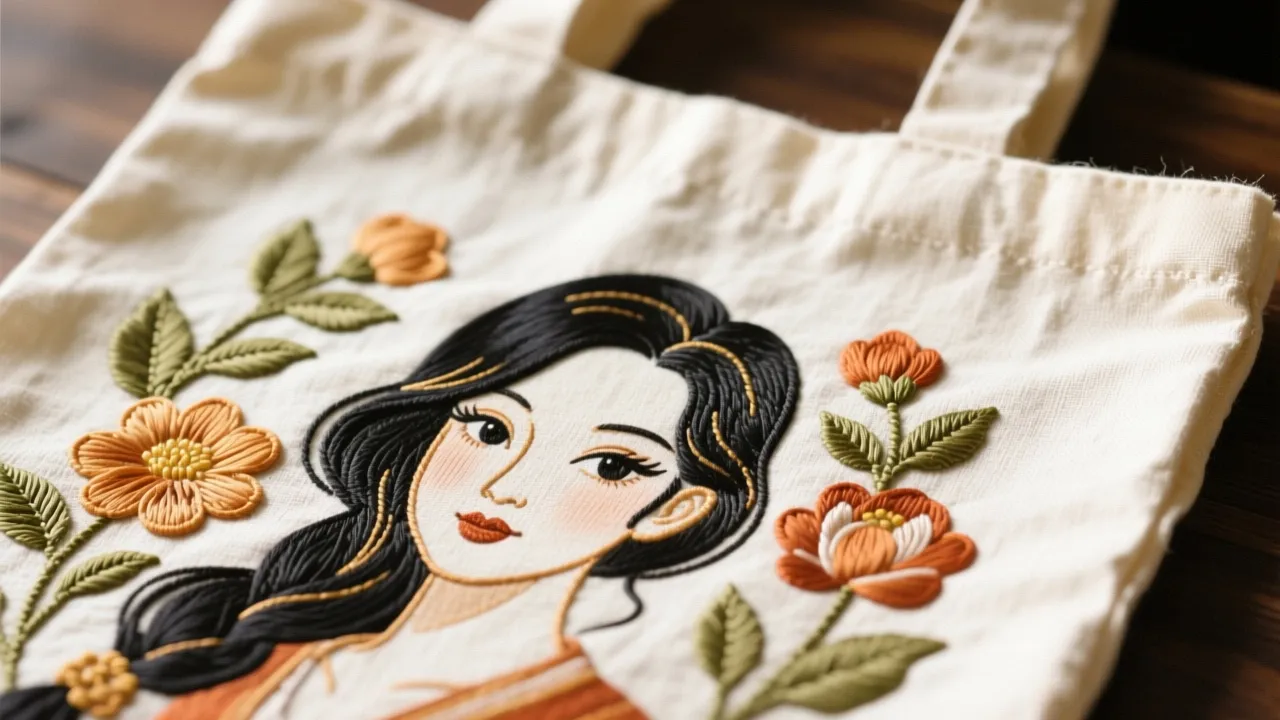
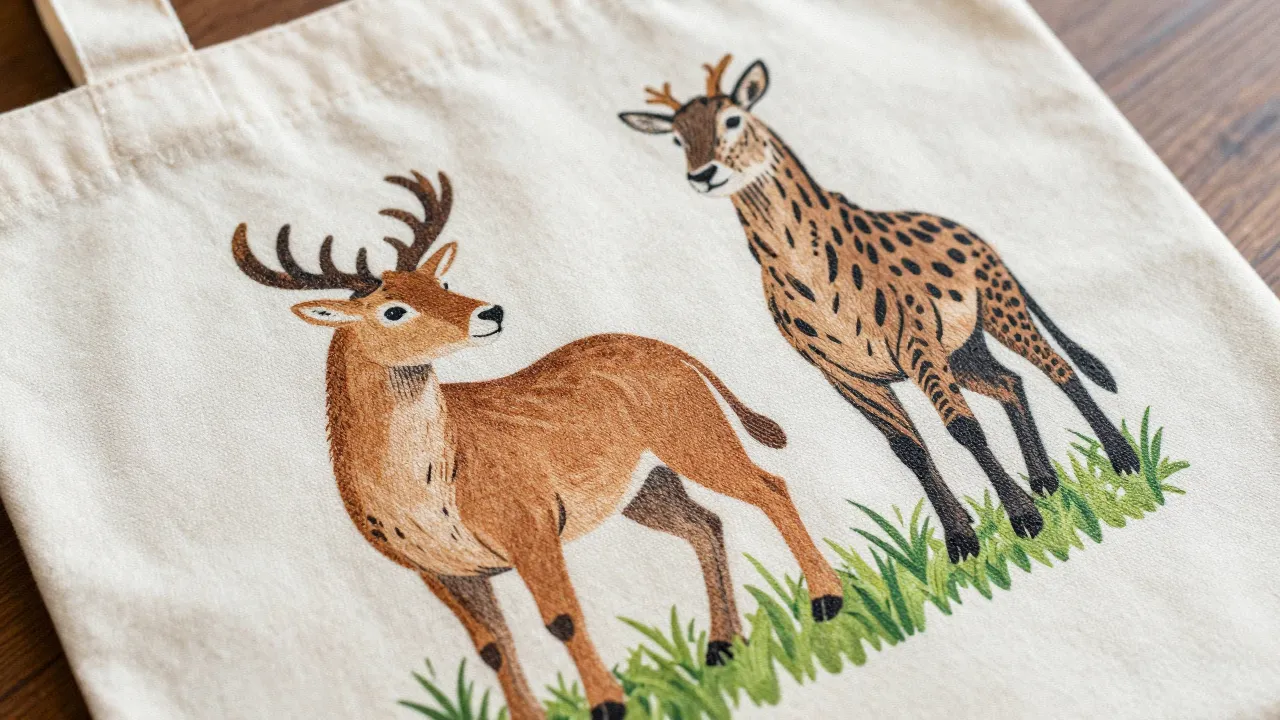
Screen Printing
The classic, the most economical at scale, and the standard for one- to four-color logos. Best on cotton canvas. Each color is a separate screen, so the cost-per-bag decreases as quantity rises.
Embroidery
The premium default. Embroidery adds a dimensional, textured logo that reads as luxury. Slightly higher setup cost, slightly higher per-piece cost, but the most durable of the seven options.
DTF (Direct-to-Film)
DTF is the modern workhorse for multi-color and photographic logos on canvas. It handles gradients, fine text and small details that screen printing cannot. Compatible with cotton, organic cotton, rPET and blended canvas.
Heat Transfer
Heat transfer is similar to DTF in capability but with a different production flow. Best for medium-volume runs where full-color photography is required.
Leather Patch
A genuine or PU leather patch, embossed or debossed with the logo, sewn onto the bag. The signature look of craft breweries, craft wineries and heritage spirits brands.
Woven Label
A small woven label, sewn into the seam of the bag or onto the handle. Standard for premium and heritage wine brands. Can be ordered in custom colors, sizes and folds.
Foil Printing
Foil printing — gold, silver, copper, holographic — applied by heat-press. The right choice for luxury wine gift bags, anniversary editions and limited releases.
8. OEM & Private Label Manufacturing
Canvas wine bags sit in the “easy OEM” category of fabric packaging: short tooling chain, low setup cost, fast sample turnaround. The terminology below is what you will see in any serious manufacturer’s quotation.
OEM (Original Equipment Manufacturer)
You supply the design and the brand. The factory manufactures against your tech pack. Full control of fabric, color, dimensions, printing and packaging.
ODM (Original Design Manufacturer)
The factory supplies an existing mold or pattern, and you customize the fabric, color and logo on top of it. Faster, cheaper, lower MOQ. Best for buyers who want to test a category before investing in a fully bespoke program.
Private Label
Private label wine bags are produced in bulk and sold under your brand as a finished retail SKU. The factory handles sourcing, production, QC and packaging; you handle marketing and distribution.
Retail Packaging
Folding board, belly band, insert card, OPP bag with hang hole, EAN barcode, retail-ready carton marking — all part of a retail-ready wine bag program. Confirm these details before sampling, not after.
Gift Box
A rigid gift box — magnetic closure, lift-off lid, drawer style — paired with a luxury wine gift bag is the highest-margin presentation format we ship. Lead time is longer and MOQ is higher, but the per-piece margin justifies the program for most premium buyers.
Barcode, Hang Tag, Care Label
Every retail wine bag program needs at minimum a barcode (EAN-13 or UPC), a hang tag (paper or cotton) and a care label sewn into an inner seam. These are inexpensive to add at production but expensive to retrofit later.
9. MOQ Guide
MOQ (minimum order quantity) is one of the most common reasons a wine bag project fails before it starts. Below is the framework we use to set realistic MOQ expectations with our OEM clients.
| Order Quantity | Best For | Typical Setup | Notes |
|---|---|---|---|
| 200 pcs | Promotional, sampling, boutique | ODM-friendly, stock fabric, screen print | Lowest entry point; usually screen print only |
| 300 pcs | Retail test runs, gifting pilots | Custom fabric color, screen or DTF | Where most first-time OEM orders land |
| 500 pcs | Standard OEM programs | Embroidery + screen print options open up | Sweet spot for cost-per-piece |
| 1000 pcs | Multi-bottle carriers, full-color | Full heat transfer, foil printing available | Best price-per-piece, full print options |
How MOQ changes with print method
- Screen Printing — most flexible; 200 pcs is realistic.
- Embroidery — setup is per design; 300 pcs is realistic, lower per-piece cost at 500+.
- DTF / Heat Transfer — film setup is the gate; 300–500 pcs is typical.
- Foil Printing — foil roll setup; 500 pcs is typical.
Our standard MOQ for canvas wine bags is 200 pieces per design — one of the lowest in the category — and drops further on repeat orders of stock fabric constructions.
10. Production Process
The production process below is the same nine-step chain we run for every canvas wine bag program, from a 200-piece promotional order to a 20,000-piece holiday gifting run.
- Design — file review, vectorization, color matching to Pantone, layout on a tech pack.
- Sampling — pre-production sample, revised sample, golden sample sign-off.
- Fabric — sourcing, incoming inspection, lot reservation, color approval.
- Cutting — pattern plot, fabric spreading, CNC or laser cutting.
- Printing — screen print, DTF or heat transfer application and cure.
- Sewing — body assembly, handle attachment, bartack reinforcement.
- QC — in-line inspection, final inspection, AQL sampling.
- Packing — polybag, hang tag, gift box, carton packing.
- Shipment — carton marking, container loading, booking, export documents.
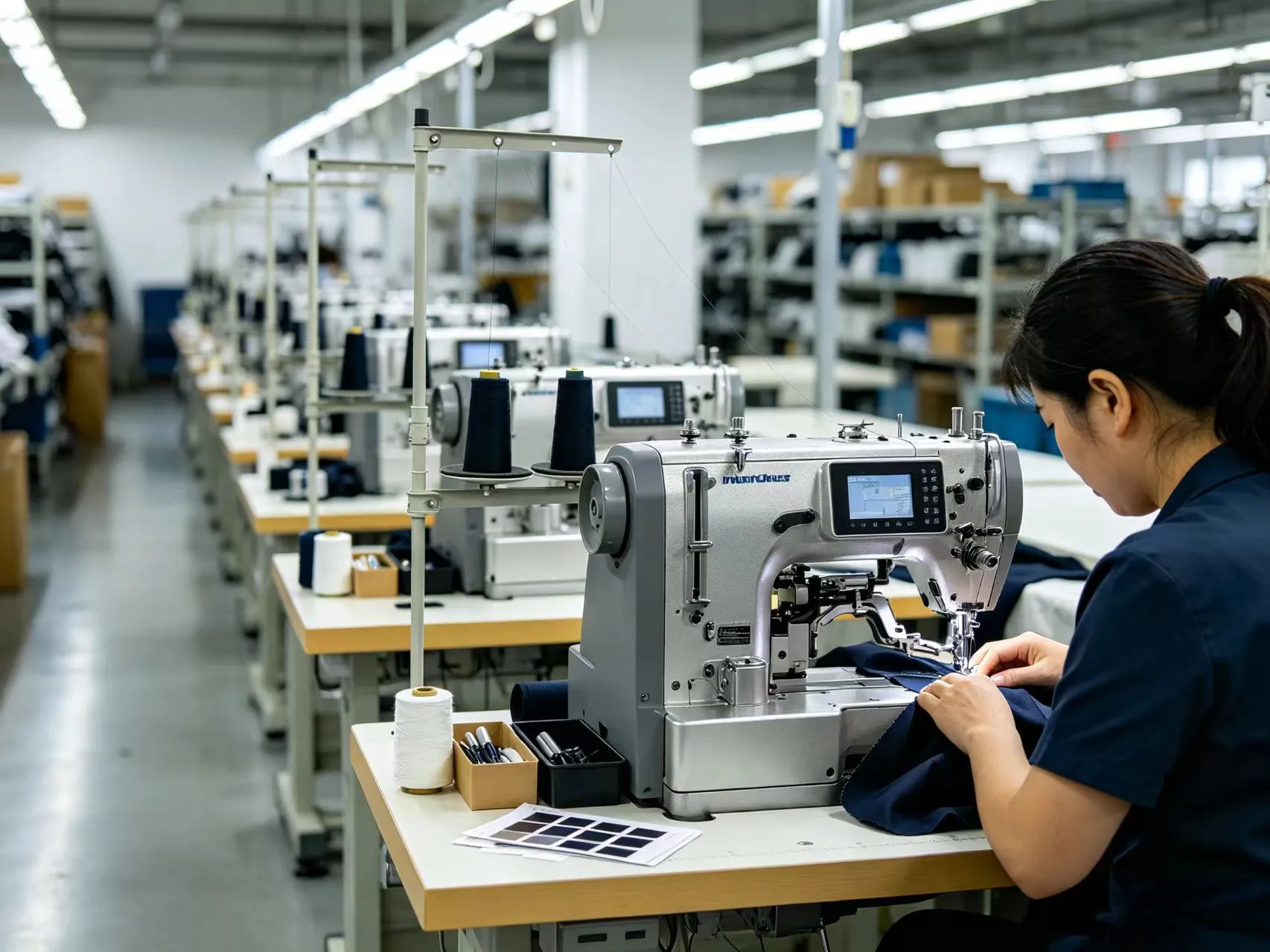
11. Quality Control
QC is the difference between a wine bag that survives a customer’s first trip and one that survives a cellar-door season. Eight checkpoints, every production run.
| QC Checkpoint | What We Measure | Acceptance |
|---|---|---|
| Dimensions | Length × width × gusset | ± 5 mm of tech pack |
| Color | Fabric and print color vs. approved lab dip / Pantone | Visual match under D65 light |
| Logo | Position, scale, color count, registration | Per approved golden sample |
| Handle Strength | Static load test on sewn handle assembly | ≥ 15 kg for single, ≥ 25 kg for six-bottle |
| Stitching | Stitches per inch, thread tension, skipped stitches | 5–6 SPI, no visible defects |
| Needle Detection | Metal-needle scan on every finished unit | Zero metal contamination |
| Packaging | Polybag, hang tag, insert card, carton | Per packaging spec |
| AQL | Final random inspection | AQL 2.5 / 4.0 standard |
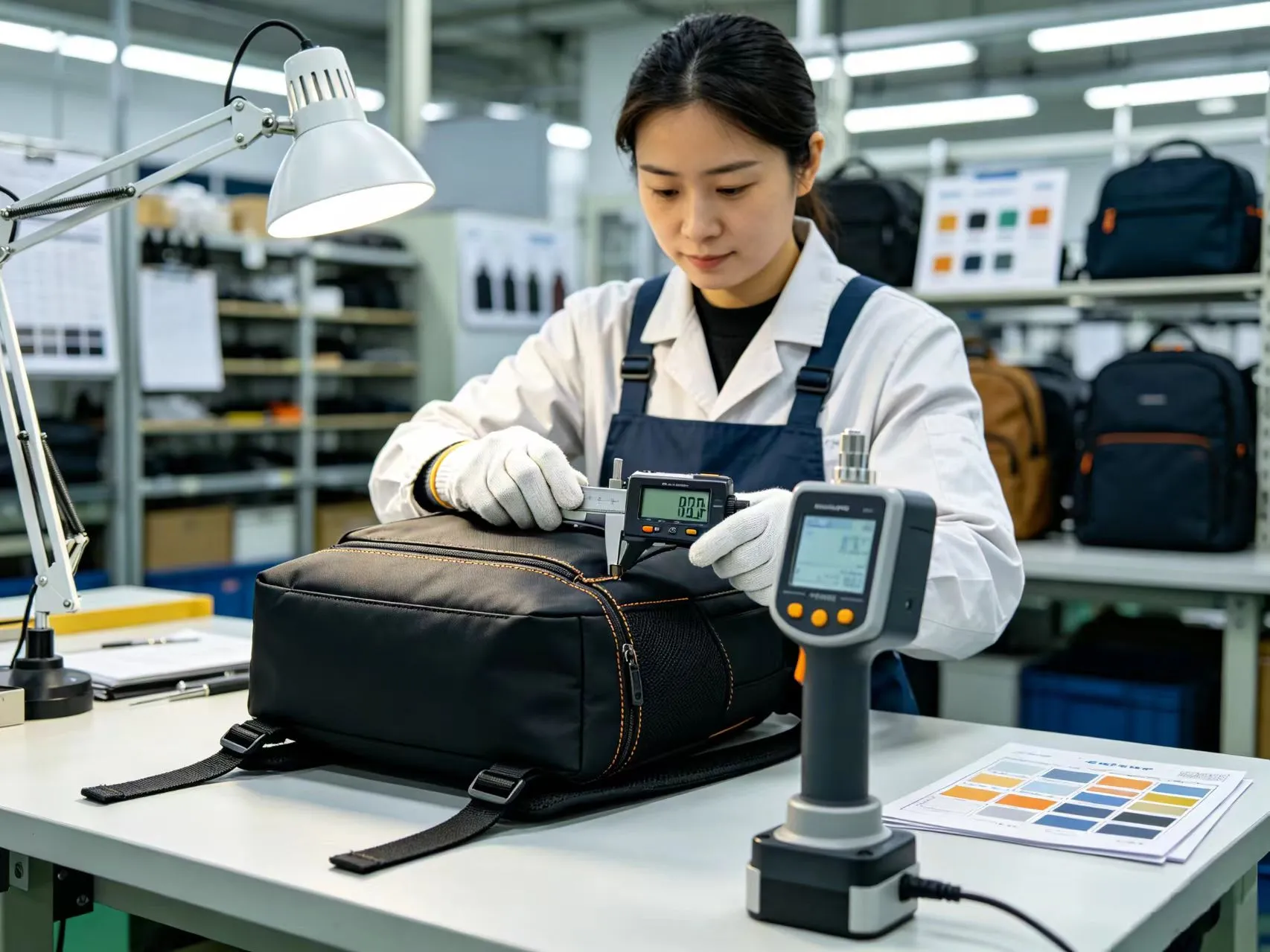
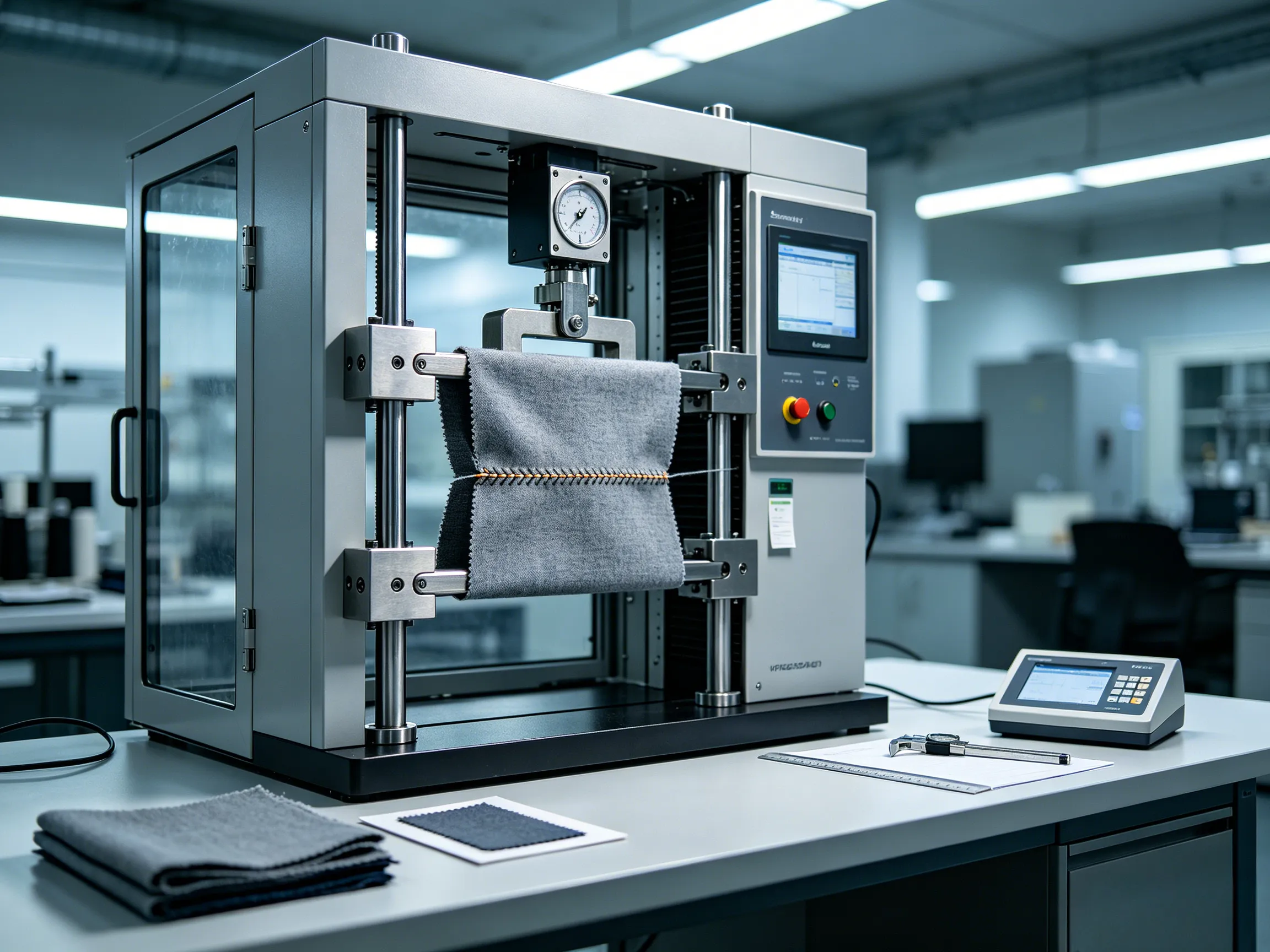
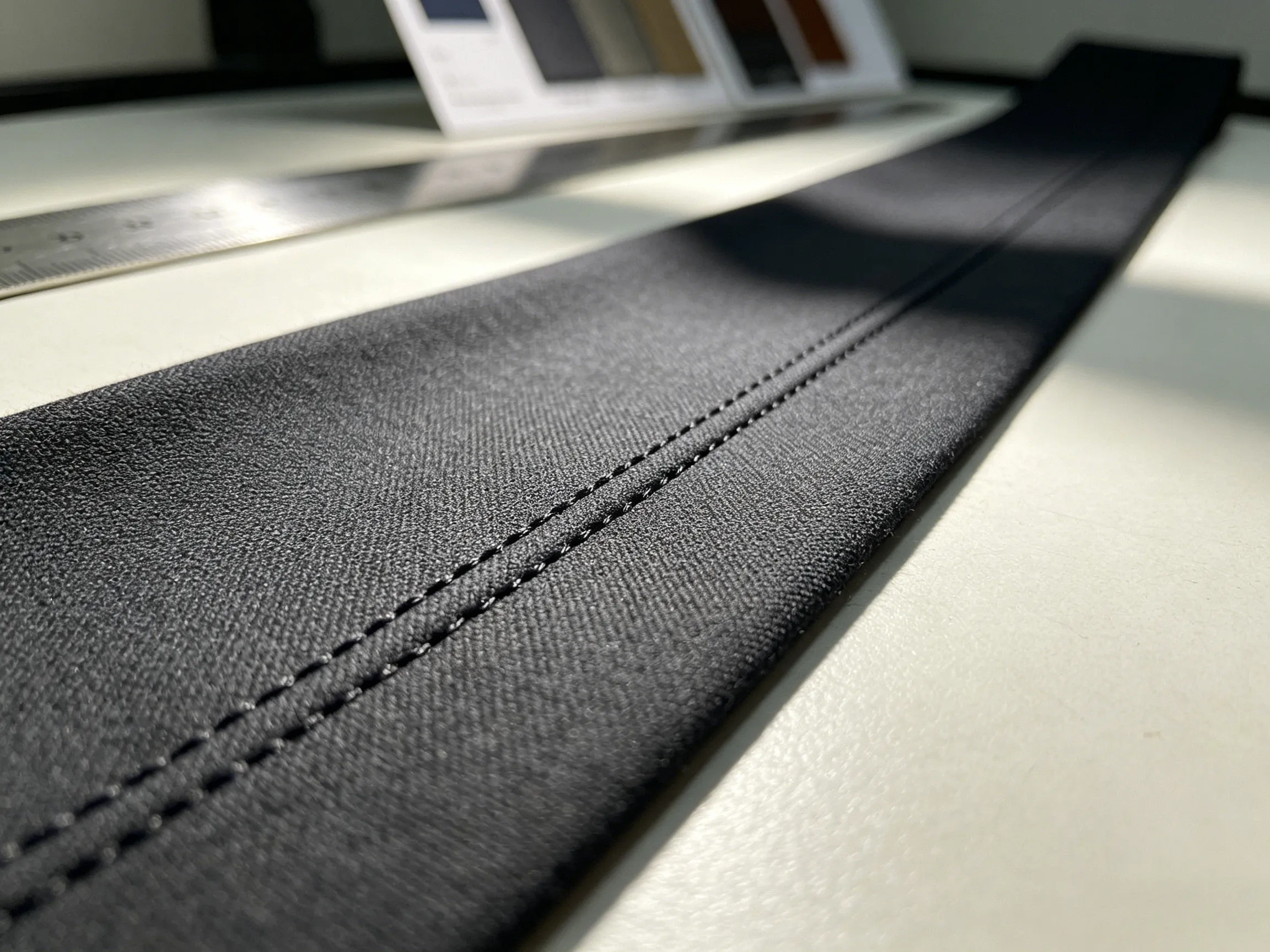
Third-party inspection is welcome at any stage. We regularly host SGS, Intertek and Bureau Veritas on the line for buyers who want an independent report.
12. Eco-Friendly Options
Sustainability claims only count if they are certified. Below are the four certifications we most often run for OEM wine bag programs.

Organic Cotton
GOTS-certified organic cotton canvas for wine brands whose sustainability story starts in the field.
GRS (Global Recycled Standard)
GRS certification covers rPET canvas, recycled cotton and any blended recycled content. Includes chain-of-custody auditing from recycler to finished bag.
OEKO-TEX Standard 100
OEKO-TEX certification is the baseline for “tested for harmful substances.” It applies to every component — fabric, thread, lining, print ink — not just the canvas.
Water-Based Ink
Water-based and soy-based inks replace plastisol for screen-printed wine bag logos. Slightly softer hand-feel, considerably better environmental profile.
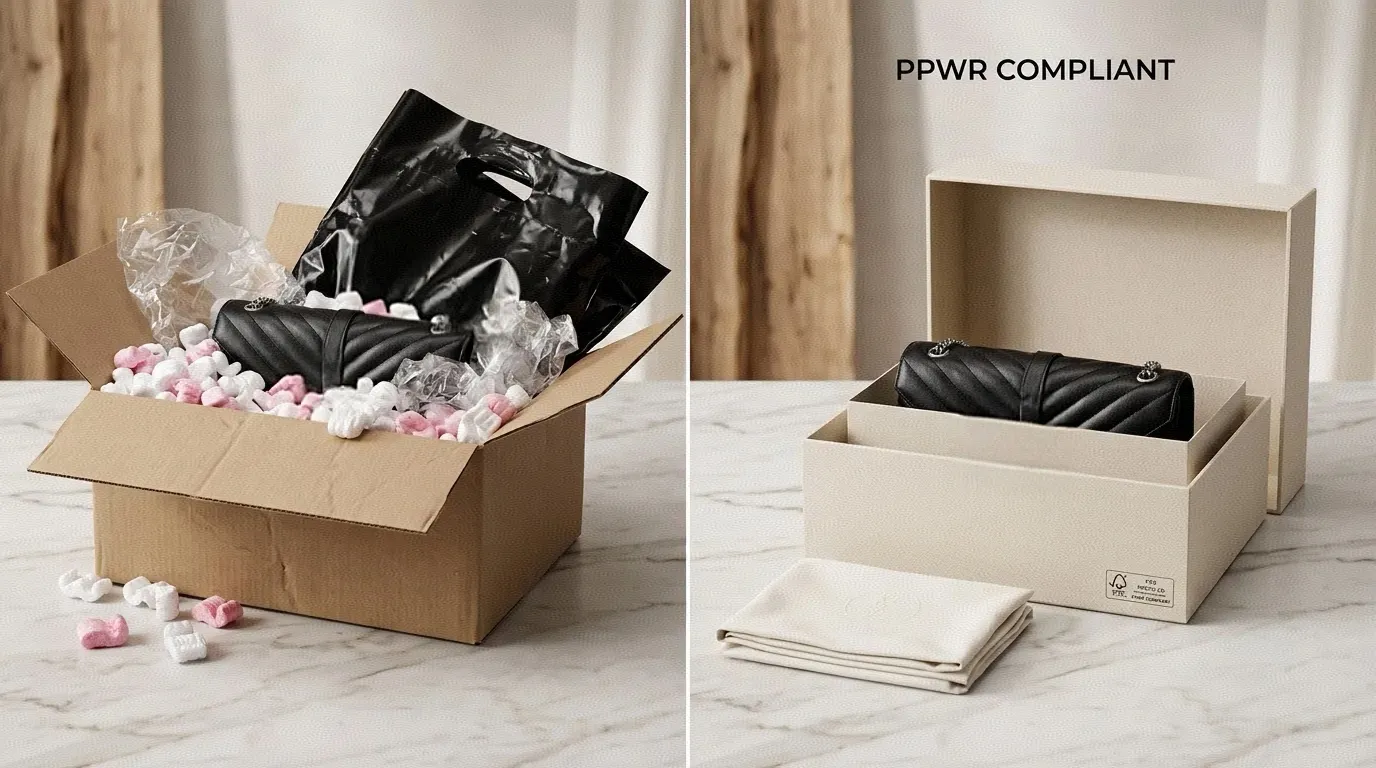
Recycled Packaging
Recycled outer cartons, FSC-certified hang tags and unbleached inner tissue extend the sustainability story beyond the bag itself.
13. Typical Applications
The canvas wine bag is unusual among fabric packaging products because the same SKU serves such a wide range of buyers. The breakdown below is based on our actual OEM order book.
- Winery — cellar-door replacements, wine-club shipments, vintage launches.
- Wine Retailers — shelf-ready single, double and six-bottle carriers.
- Hotels — in-room welcome amenity, VIP guest gifting, minibar replacement.
- Restaurants — corkage program, BYO branded bags, takeaway for unfinished bottles.
- Gift Brands — luxury wine gift bags paired with a rigid box.
- Promotional Gifts — trade-show giveaways, corporate event SWAG, brand activations.
- Holiday Packaging — Christmas, Valentine’s Day, Mother’s Day and Father’s Day programs.
- Christmas Gifts — the largest single peak season for wine bag production.
- Corporate Events — client gifting, employee recognition, sales-incentive programs.
- Wedding Gifts — favors, bridal-party gifts, vineyard and winery weddings.
14. Cost Breakdown
Wine bag unit cost is driven by five line items. Understanding the split helps you optimize a quote without compromising the spec.
| Cost Driver | Typical Share | What Moves It |
|---|---|---|
| Fabric | 35–45% | GSM, organic / rPET premium, color match fee |
| Printing | 15–25% | Color count, method (screen vs. DTF vs. embroidery), coverage area |
| Handle | 10–15% | Material (cotton rope, webbing, leather, PU), reinforcement pattern |
| Packaging | 5–10% | Polybag, hang tag, insert card, gift box, retail carton |
| Shipping | 10–20% | Carton size, total volume, Incoterm, route |
| MOQ | Variable | Higher quantity lowers setup-per-piece; lower quantity raises it |
.webp)
15. Lead Time
Standard lead time for a canvas wine bag program, from approved tech pack to ex-factory:
- Sample — 7–10 days for a pre-production sample; 3–5 days for revisions.
- Production — 25–35 days for 500–2,000 pieces; 35–45 days for 5,000+.
- Inspection — 1–2 days inline; 2–3 days for third-party final inspection.
- Shipping — 5–10 days to most Asia ports; 25–35 days to EU / US west coast.
For Q4 holiday gifting programs, we strongly recommend starting the sampling conversation by July. For Q1 wedding and corporate gifting programs, sampling in October–November is the typical window.
16. How to Choose a Reliable Canvas Wine Bag Manufacturer
Not all canvas bag factories are set up to handle wine programs — multi-bottle load testing, glass-safe packaging, retail-ready barcoding and OEKO-TEX auditing are all skillsets that take years to build. Use the checklist below to qualify a manufacturer before sending a tech pack.
- Experience — minimum 5 years manufacturing fabric bags; verifiable wine, retail or hospitality client list.
- QC — in-house QC team, AQL 2.5 capability, third-party inspection welcome.
- OEM capability — in-house pattern making, sampling team, fabric sourcing.
- MOQ — flexible MOQ on stock fabric constructions, standard MOQ on fully bespoke.
- Certification — ISO 9001, BSCI, OEKO-TEX, GOTS, GRS as relevant to your program.
- Lead Time — published sample and production lead times, with written confirmation on every PO.
- Communication — single point of contact, English-speaking account manager, sample photos and videos before shipment.
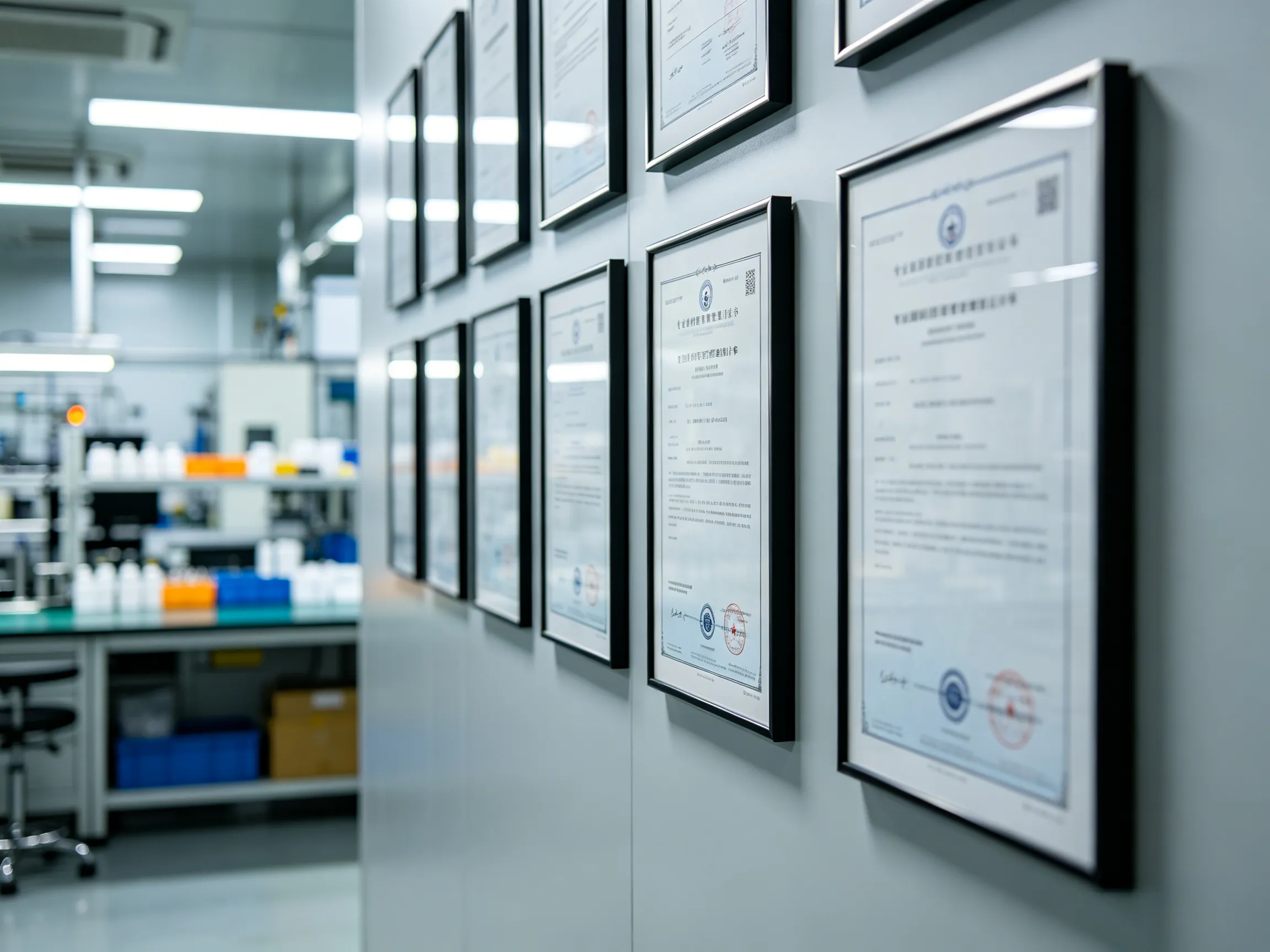
Our own credentials: as an experienced custom canvas bag supplier, Dreamway serves clients across more than 50 export markets with an in-house QC team, BSCI and ISO 9001 audits, and a flexible MOQ starting at 200 pieces for bag programs.
17. Meet Our Team
Behind every OEM wine bag program is a small, accountable team — not a ticket queue. Below are the two people you will work with most often when you place a canvas wine bag order with our factory.

Emily — Senior Project Manager
12 years in OEM bag manufacturing · manages 15–25 active projects simultaneously
Emily is the lead contact for winery, gift-brand and retail accounts. She coordinates sampling, fabric sourcing, production scheduling and final inspection end-to-end.
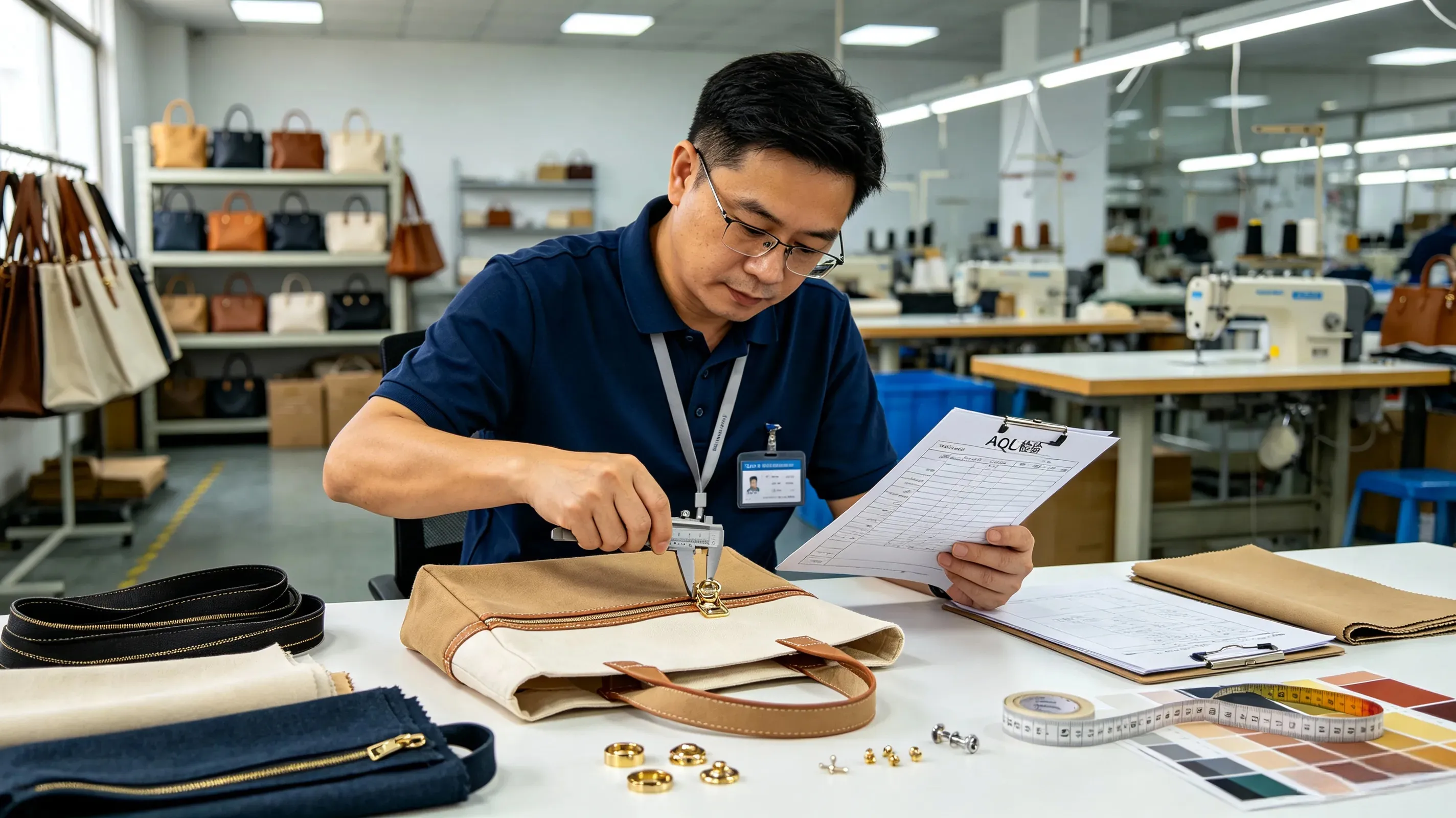
Kevin — QC & Sampling Engineer
Pattern Development Engineer · 15 years experience in bag pattern making
Kevin specializes in leather, canvas, nylon, and technical fabrics. He runs handle pull tests, printing color matching, needle detection and AQL inspections on every wine bag program.
18. FAQ — Canvas Wine Bags
1. What is the MOQ for a custom canvas wine bag?
Our MOQ starts at 200 pieces per design for stock fabric constructions with screen printing. Embroidery and DTF raise the practical MOQ to 300–500 pieces. Multi-bottle carriers and luxury gift bags typically start at 500 pieces.
2. Can I customize the handle?
Yes. We offer cotton rope, canvas, webbing, PU and genuine leather handles in custom colors and lengths. Reinforcement patterns — bartack, triangle patch, stitched X — can be specified per bag structure.
3. Can I print on the inside of the bag?
Yes. Inside printing is supported with screen print, DTF and water-based ink. It is a common request for limited-edition wine programs and gift-with-purchase promotions.
4. Can I use organic cotton?
Yes. We supply GOTS-certified organic cotton canvas in standard weights (8oz–16oz). Expect a 10–20% premium over conventional cotton canvas.
5. Can I mix colors within one order?
Yes, color mixing is supported within the same fabric construction. There is usually a small per-color setup fee for screen printing and a one-time film fee for DTF.
6. Do you provide gift boxes?
Yes. We offer magnetic closure, lift-off lid and drawer-style rigid gift boxes in custom colors and gold-foil stamping. Gift boxes are sourced separately and paired with the wine bag program at packing.
7. Can you produce six-bottle bags?
Yes. Six-bottle carriers are a standard SKU in our catalog. Expect 12oz or 16oz canvas, webbing handles, internal dividers and reinforced base board.
8. Can I customize the size?
Yes. All dimensions — body height, body width, gusset depth, handle drop — are fully customizable against your bottle geometry.
9. Which GSM is best for a wine bag?
10oz (~340 GSM) is the everyday default for single and double wine bags. 12oz (~410 GSM) is recommended for retail flagship SKUs and multi-bottle carriers. 16oz (~540 GSM) is reserved for luxury programs and six-bottle carriers.
10. Can I add woven labels?
Yes. Custom woven labels — including main labels, care labels and flag labels — can be sewn into the bag at production. MOQ for custom woven labels is typically 1,000 pieces.
11. Do you provide OEM service?
Yes. OEM is our default service model — you supply the design and the brand, we manufacture against your tech pack. ODM and private label are also available.
12. What certifications are available?
ISO 9001, BSCI, OEKO-TEX Standard 100, GOTS (organic cotton), GRS (recycled content), and SGS / Intertek third-party inspection reports are all available. Certification availability depends on the fabric and construction chosen.
13. How long does production take?
25–35 days for a standard 500–2,000 piece program, 35–45 days for 5,000+ pieces, plus shipping. Sampling adds 7–10 days before production starts.
14. Do you offer eco-friendly materials?
Yes. Organic cotton (GOTS), rPET canvas (GRS), recycled cotton, OEKO-TEX certified fabrics, and water-based inks are all standard options.
15. Can I order samples before placing a bulk order?
Yes. Pre-production samples are USD 30–80 per piece depending on construction, and are refunded against a confirmed bulk order. Sample lead time is 7–10 days.
19. Case Study — Christmas Promotion for a Boutique Winery
Client
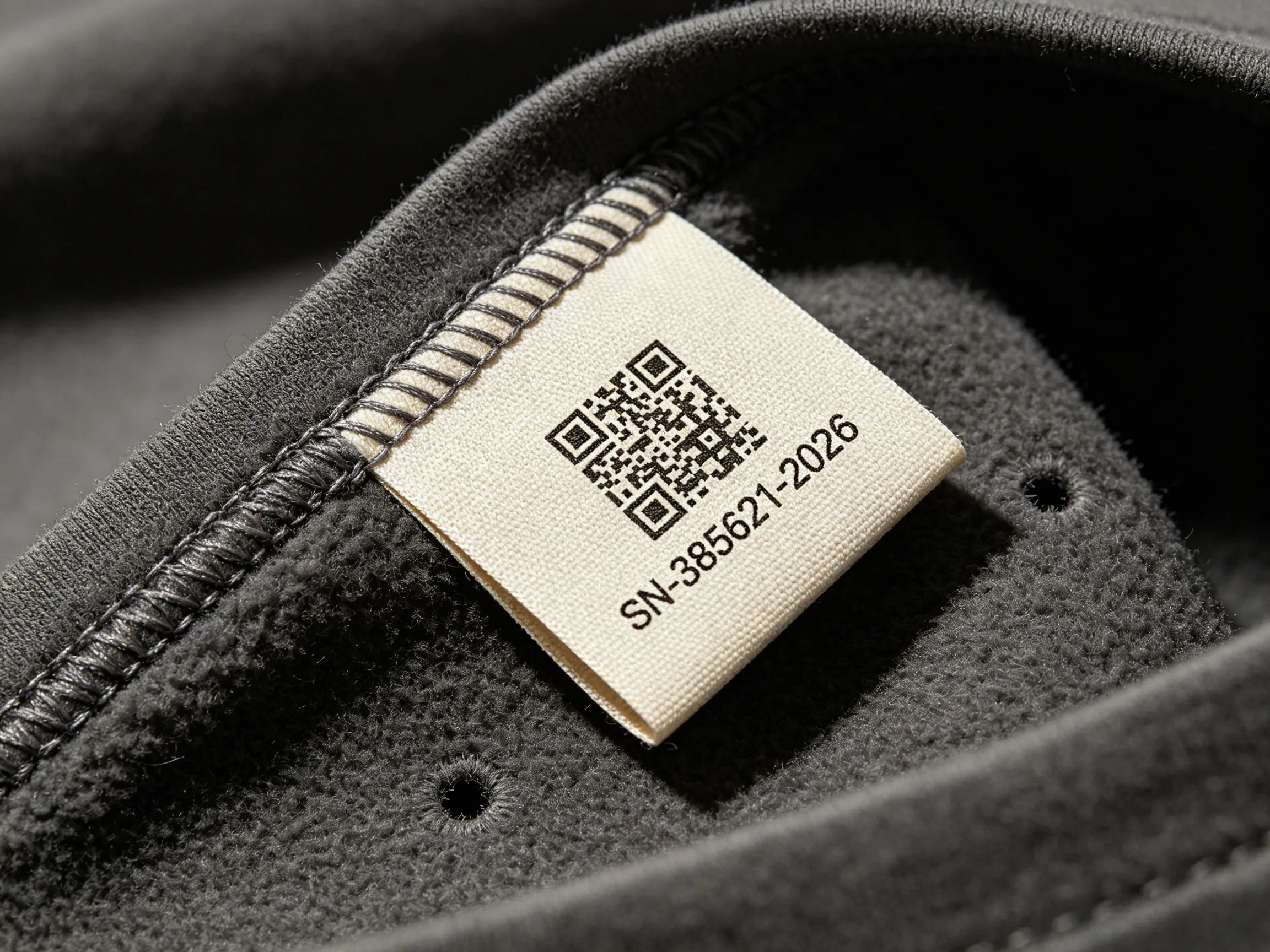
A boutique winery in Napa Valley with a strong cellar-door following and a growing DTC (direct-to-consumer) subscription business. Existing packaging was a single-use printed paper bag — costly, environmentally awkward and offering zero re-use value to the customer.
Brief
Replace the paper bag with a reusable canvas carrier for the December holiday promotion. Required: heavy canvas, branded embroidery, gift-ready ribbon closure, retail-ready folding carton, five-bottle capacity for the gift-set SKU, and a 5,000-piece Christmas deadline.
Solution
12oz natural cotton canvas, 35 × 12 × 30 cm body, internal divider, webbing handle with leather wrap, embroidered crest on the front panel, gold-foil hang tag, single-color belly band, 25-unit master carton.
Result
- Brand exposure — winery logo carried into homes, offices and travel for 12+ months on average per bag.
- Gift experience — DTC unboxing satisfaction rating rose measurably; the canvas carrier became part of the perceived value of the wine itself.
- Repurchase rate — DTC subscription renewal improved versus the prior paper-bag season, attributed in part to the upgraded presentation.
Source Your Canvas Wine Bag Program
OEM, ODM, Private Label — from a 200-piece boutique run to a 50,000-piece holiday program.
Start Your Project at DreamwayDREAMWAY
Custom Bag & Silk Manufacturer · Shiling, Guangzhou
Company
Products
Guides & Insights
Ready to Bring Your Bag Idea to Life? Let’s Talk Today.
From your first sketch to bulk delivery, our team replies within 12 hours with expert advice and a free quote. No pressure — just honest manufacturing guidance.
Prefer a call? +86-020-87682749 · Mon–Sat, 9:00–18:00 (GMT+8)