
Heavy Duty Canvas Bag Manufacturer for Large OEM Shopping Bags
Source heavy duty canvas shopping bags in 12–24 oz cotton canvas. Get OEM sizes, reinforced handles, custom printing, bulk MOQ, and export support from Dreamway.
Dreamway is a cotton canvas bag manufacturer specializing in heavy duty canvas shopping bags for B2B buyers worldwide. We offer OEM/ODM services including custom sizes, gusset widths, handle types, and logo printing. With in-house production and direct material sourcing, we support bulk orders and export worldwide from our facility in Guangzhou, China.
Key Specifications at a Glance
Fully customized sizes, colors, and constructions may require higher MOQs.
About This Guide
- Last updated: August 2026 (reviewed quarterly)
- Author: Dreamway Production Team (Guangzhou workshop)
- Reviewer: Kevin — Pattern Development Engineer (15 years in bag pattern making)
- Reviewer role: Technical accuracy of canvas specs, sizing, and reinforcement methodology
- Factory location: Huadu District, Guangzhou, Guangdong, China
- Data source: Dreamway production specifications, PPS records, and bulk order archives (2008–present)
- What this guide is not: No specific load ratings, pass-rate figures, or universal tolerance claims are published in this article — those are reported per order based on the buyer’s tech pack.
Why Choose a Heavy Duty Canvas Bag Manufacturer?
Not all canvas bags serve the same purpose. Heavy duty canvas bags are defined by fabric weight, reinforcement techniques, hardware specifications, and consistent quality control — characteristics that determine how a bag performs under repeated load and daily handling.
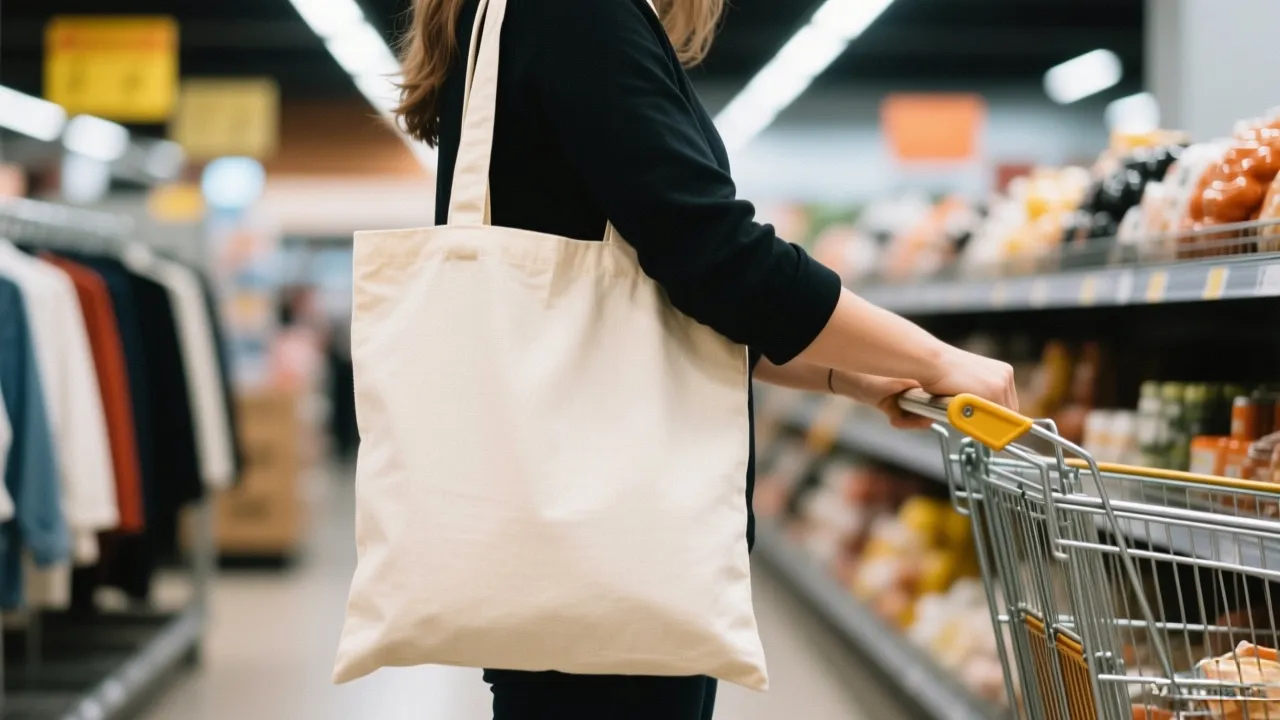
B2B buyers sourcing large canvas shopping bags typically need them for retail, grocery, promotional, industrial, event, or reusable packaging applications. Each application places different demands on canvas weight, gusset depth, handle construction, and load-bearing capacity. Working with a manufacturer that controls these variables in-house — rather than reselling other factories’ production — gives buyers more direct visibility into specifications, lead times, and pricing.
The right manufacturing partner affects more than unit price. It determines whether samples need multiple revisions, whether production holds to documented tolerances, and whether quality issues are caught before shipment or after. Choosing a factory with in-house pattern engineering, on-site QC, and direct material sourcing can help reduce sourcing costs compared to sourcing through trading intermediaries.
Key Insight: The manufacturer you choose determines not only the quality of your bags but also cost efficiency, production timeline, and your ability to scale. Direct material sourcing and in-house quality control are two of the most reliable indicators of consistent batch quality.
Buyers comparing factory experience, material options, and OEM capabilities can use our canvas bag supplier comparison guide as a starting point before requesting samples.
Heavy Duty Canvas Bag Specifications
For B2B buyers who are still evaluating supplier capabilities, our overview of how to compare canvas bag manufacturers explains what to compare before requesting quotations.
Understanding canvas specifications requires familiarity with several technical parameters. These metrics determine whether a bag will hold up under repeated use or fail prematurely. Below is a reference of the parameters we control at our factory.
About Dreamway — Your Trusted Canvas Bag Manufacturer
Dreamway is a Guangzhou-based canvas bag manufacturer founded in 2008. Our facility is located in Huadu Shiling, the heart of China’s bag-making industry. With a small team of experienced pattern engineers, sewing technicians, and quality control specialists, we have served buyers in 50+ countries across North America, Europe, Oceania, and Asia.

Material & Construction Specifications
← Scroll horizontally to view full table →
| Specification | Options | Notes |
|---|---|---|
| Canvas Weight | 12 / 14 / 16 / 18 / 20 / 22 / 24 oz | 12–14 oz: promotional & light retail; 16–18 oz: regular heavy-use shopping; 20–24 oz: industrial & extra-heavy-duty |
| Material Composition | 100% cotton, cotton-poly blend, organic cotton | Recycled cotton options available on request |
| Weave Type | Plain weave, duck weave, twill weave | Duck weave recommended for heavy duty applications |
| Bag Width | 30–60 cm (custom) | Tolerance: ±5 mm |
| Bag Height | 35–55 cm (custom) | Tolerance: ±5 mm |
| Gusset Depth | 8–25 cm (custom) | Wide-bottom gussets for grocery and bulk applications |
| Handle Length | 50–70 cm (custom) | Long handles for shoulder carry |
| Handle Material | Cotton webbing, cotton rope, canvas wrap, leather | Reinforced stitching at attachment points |
| Reinforcement Method | Double-stitching + bar-tack + X-box | Stress points: handles, bottom corners, zipper ends |
| Closure Options | Open top, zipper, snap button, drawstring, magnetic button | YKK, SBS zippers for premium lines |
Large Canvas Shopping Bags for B2B Applications
B2B buyers looking for large canvas shopping bags, large cotton canvas bags, oversized canvas shopping bags, or wholesale canvas shopping bags will find that product success depends on matching canvas weight, gusset, handle, and printing options to the actual end use. The table below maps our most requested B2B applications to recommended specifications.
← Scroll horizontally to view full table →
| Application | Recommended Size (W × H × G) | Recommended Canvas | Handle Type | Bottom Gusset | Logo Printing | Best-Fit Buyer |
|---|---|---|---|---|---|---|
| Retail Shopping Bags | 40 × 45 × 12 cm | 14–16 oz cotton canvas | Cotton webbing 60 cm | Square / flat bottom | 1-2 color screen print | Department stores, fashion brands |
| Grocery & Market Bags | 45 × 50 × 18 cm | 16–18 oz cotton canvas | Reinforced cotton webbing 65 cm | Wide gusset | 1-3 color screen print | Grocery chains, organic markets |
| Promotional Shopping Bags | 38 × 42 × 10 cm | 12–14 oz cotton canvas | Cotton webbing 55 cm | Optional | Multi-color print / DTG | Trade shows, brand campaigns |
| Industrial Carryall Bags | 50 × 40 × 25 cm | 20–24 oz duck canvas | Canvas wrap 65 cm + D-ring | Wide gusset + PE base | 1 color print or embroidery | Hardware brands, tool suppliers |
| Event & Corporate Bags | 42 × 48 × 14 cm | 14–16 oz cotton canvas | Long cotton webbing 70 cm | Square bottom | Heat transfer / embroidery | Agencies, conferences, hotels |
| Reusable Packaging Bags | Custom | 16–20 oz cotton canvas | Canvas wrap with rivets | Wide gusset + cardboard insert | 1-2 color print or label | E-commerce, retail subscriptions |
For a deeper look at how gusset, handle, and reinforcement choices affect the end product, see our canvas tote bag materials and cost guide.
Large Canvas Shopping Bag Size Options
The four sizes below are the configurations our B2B buyers request most often. Inches are listed alongside centimeters so US importers can scan dimensions quickly. Note that “large” is determined not just by width and height, but by the combination of gusset, handle drop, and effective volumetric capacity — two bags with the same W × H can behave very differently in real use.
← Scroll horizontally to view full table →
| Use Case | Size (W × H × G, cm) | Size (W × H × G, inches) | Handle Drop | Typical Capacity |
|---|---|---|---|---|
| Retail Shopping Bag | 40 × 45 × 12 cm | 15.7 × 17.7 × 4.7 in | ≈ 28 cm / 11 in | ≈ 21 L |
| Grocery Bag | 45 × 50 × 18 cm | 17.7 × 19.7 × 7.1 in | ≈ 30 cm / 11.8 in | ≈ 40 L |
| Extra-Large Shopping Bag | 50 × 55 × 20 cm | 19.7 × 21.7 × 7.9 in | ≈ 32 cm / 12.6 in | ≈ 55 L |
| Industrial Carryall | 50 × 40 × 25 cm | 19.7 × 15.7 × 9.8 in | ≈ 30 cm / 11.8 in | ≈ 50 L |
What “large” actually means in heavy duty canvas bags
A bag labelled large is rarely defined by height alone. Buyers comparing options should check:
- Gusset depth — the single biggest driver of volumetric capacity. A 12 cm gusset behaves like a folder; an 18–25 cm gusset behaves like a tote.
- Handle drop — combined with gusset, this decides whether the bag is shoulder carry, hand carry, or arm carry.
- Effective capacity — gusset × width × usable height, minus the seam allowance.
Which canvas weight fits which load
Our heavy duty cotton canvas is offered in three weight bands. Matching weight to expected payload is the most common mistake first-time buyers make — going under-weight looks fine in the showroom but fails within a few cycles of real use.
- 12–14 oz cotton canvas — best for retail giveaways, light promotional use, and short-cycle event bags. Not recommended for grocery loads above a few kilograms.
- 16–18 oz cotton canvas — the workhorse weight for grocery, food retail, and most reusable packaging programs. Good handle feel, holds shape under load.
- 20–24 oz duck canvas — specified for industrial carryall, tool supplier programs, and any use where the bag will be loaded with dense items or carried for hours at a time.
Quick Spec Summary (Printable Version)
The four-row summary below is the same configuration data as the table above, distilled for one-page printing or paste-into-spreadsheet workflows. Buyers who want a written copy can use the browser’s print function (Ctrl/Cmd + P) and select “Save as PDF” — the print stylesheet removes the table scrollbar and image captions so the summary fits cleanly on a single page.
- Retail Shopping Bag — 40 × 45 × 12 cm (≈ 15.7 × 17.7 × 4.7 in) · handle drop ≈ 28 cm · capacity ≈ 21 L · 14–16 oz cotton canvas (≈ 475–542 GSM)
- Grocery Bag — 45 × 50 × 18 cm (≈ 17.7 × 19.7 × 7.1 in) · handle drop ≈ 30 cm · capacity ≈ 40 L · 16–18 oz cotton canvas (≈ 542–610 GSM)
- Extra-Large Shopping Bag — 50 × 55 × 20 cm (≈ 19.7 × 21.7 × 7.9 in) · handle drop ≈ 32 cm · capacity ≈ 55 L · 16–20 oz cotton canvas (≈ 542–678 GSM)
- Industrial Carryall — 50 × 40 × 25 cm (≈ 19.7 × 15.7 × 9.8 in) · handle drop ≈ 30 cm · capacity ≈ 50 L · 20–24 oz duck canvas (≈ 678–814 GSM)
OEM Customization Options for Canvas Shopping Bags
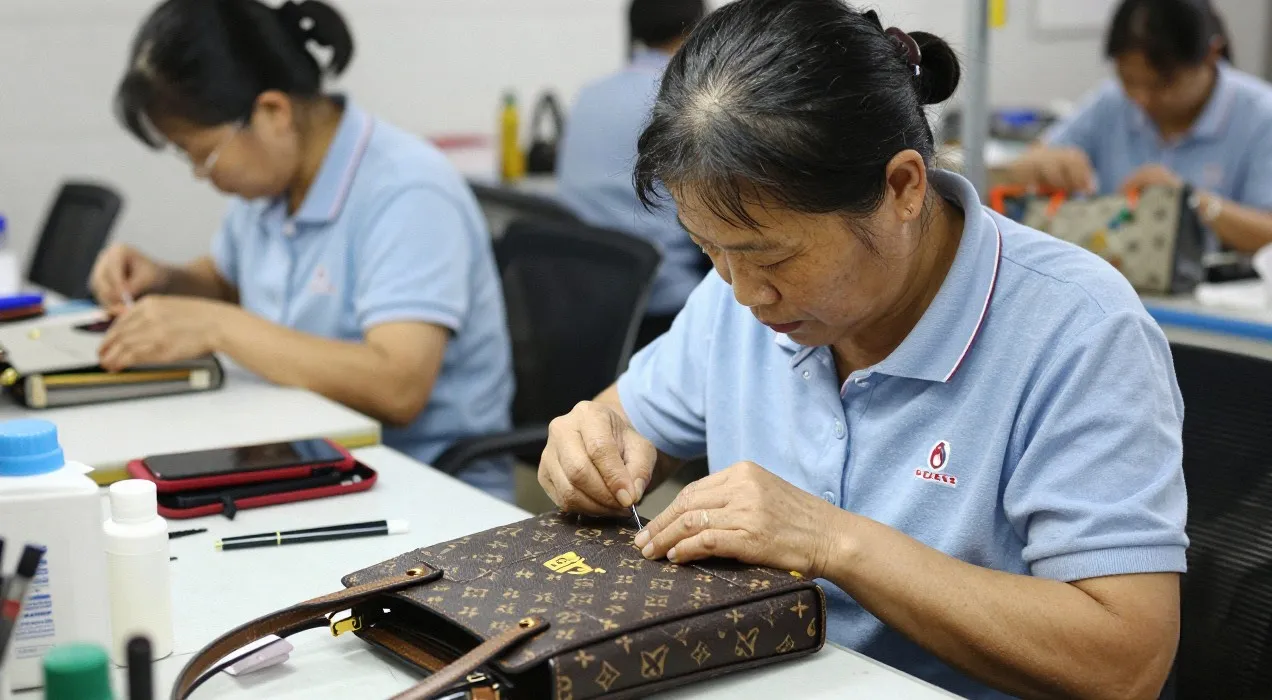
Heavy duty canvas bags offer extensive branding and customization possibilities, making them ideal for corporate programs, retail lines, and promotional campaigns. Dreamway provides full OEM/ODM services covering every detail — from canvas weight and weave to logo application and packaging.
Logo Application Methods
- Screen printing (1-3 colors): Cost-effective for large runs, excellent color matching, max coverage 40×50 cm
- Heat transfer: Photographic quality, suitable for complex designs, minimum order 200 pcs; most cost-effective for runs of 300+ pcs
- Embroidery: Premium look and feel, max stitch density 8,000 stitches per design area, additional die-set fee applies
- Digital printing: Unlimited colors, photo quality, higher per-unit cost
Custom Dimensions and Capacity
Standard sizes range from compact 20×25 cm totes to oversized 50×40×20 cm utility bags with capacities up to 60 liters. Custom dimensions require dedicated tooling and may affect minimum order quantities. We also support custom gusset widths for buyers who need wider bottoms for grocery or industrial carry.
Handle and Strap Options
- Cotton rope handles (classic, comfortable)
- Webbing strap (adjustable, durable)
- Leather handle (available for certain product lines)
- Detachable shoulder strap (versatile carrying options)
Bottom and Corner Reinforcement
- Corrugated cardboard insert (economical)
- Plastic base panel (waterproof, washable)
- Canvas corner guards (durable protection)
Color Matching
Custom colors require Pantone C (coated) or Pantone U (uncoated) references. Custom dyeing typically requires minimum quantities of 500+ yards per color and may incur setup fees. Standard color offerings usually have no MOQ surcharges.
Export Support for B2B Canvas Bag Buyers
Exporting bulk canvas bags requires more than production capability — it requires documentation, packing discipline, and shipping expertise. Dreamway supports buyers across 50+ countries with a full export workflow handled in-house.
Export Documentation We Provide
- Commercial Invoice — with buyer / seller details, HS code, country of origin
- Packing List — carton-by-carton breakdown with quantity and weight
- Certificate of Origin (Form E / Form A / CO) — depending on destination country
- Bill of Lading — issued by the shipping line or freight forwarder
- Customs declarations — including fabric composition and value
Shipping Methods & Lead Time
← Scroll horizontally to view full table →
| Shipping Method | Lead Time | Best For | Cost Level |
|---|---|---|---|
| Sea Freight (FCL) | 25–35 days | Orders > 1,000 pcs or 3 CBM | $ (lowest) |
| Sea Freight (LCL) | 30–40 days | Orders 300–1,000 pcs | $$ |
| Air Freight | 5–10 days | Urgent restocks, samples, small bulk | $$$ |
| Express (DHL / FedEx) | 3–5 days | Sample shipments under 20 kg | $$$$ |
| DDP (Delivered Duty Paid) | Production: 20–30 days from PPS approval Ocean transit: depends on destination port (typically 25–35 days for EU/US) Customs + last-mile: 5–10 working days DDP includes production, export docs, international shipping, import clearance, duties, and last-mile delivery. Production and ocean transit run sequentially (not in parallel) under DDP, because import clearance cannot start before goods arrive at the destination port. Total door-to-door timeline is quoted per RFQ based on destination. |
EU / US buyers who prefer all-in pricing | $$ – bundled |
Export Packaging Standards
- Each bag folded and packed in a transparent polybag
- 10–25 bags per export carton (depending on size)
- Carton dimensions optimized for container loading
- 5-ply corrugated cartons for sea freight protection
- Pallet wrapping available on request for FCL shipments
- Custom retail packaging, including gift boxes, branded wraps and reusable fabric packaging, available on request

For a complete shipping comparison, see our guide on sea freight vs. air freight for bulk bags.
OEM Production Checkpoints for Heavy Duty Canvas Bags
For B2B buyers, the production process matters less than knowing which checkpoints verify that an order is being executed correctly. Below are the five inspection milestones we recommend buyers track during an OEM order.
Checkpoint 1: Fabric Confirmation
Before cutting, the canvas batch is verified against the buyer’s tech pack — weight (oz), weave type, composition, color reference, and finish treatment. Buyers receive a swatch and confirmation document for sign-off.
Checkpoint 2: Sample Approval (PPS)
Pre-production samples are submitted for buyer review before mass production begins. This step confirms dimensions, handle length, gusset depth, logo placement, and stitching details. Sample timeline: 7–10 days from artwork confirmation (in-stock fabric); 10–14 days for 22–24 oz duck canvas.
Checkpoint 3: Pre-Bulk Sign-Off
Once the PPS is approved, the production batch is scheduled. Buyers receive an estimated timeline and are notified when cutting begins. Production timeline: 20–30 days from PPS approval and deposit receipt. For custom-dye or non-stock fabric, add 5–10 days for material procurement. Shipping: Sea freight (FCL) 25–35 days; air freight 5–10 days. Shipping is separate from production lead time and runs in parallel once goods are ready.
Checkpoint 4: Inline Quality Control
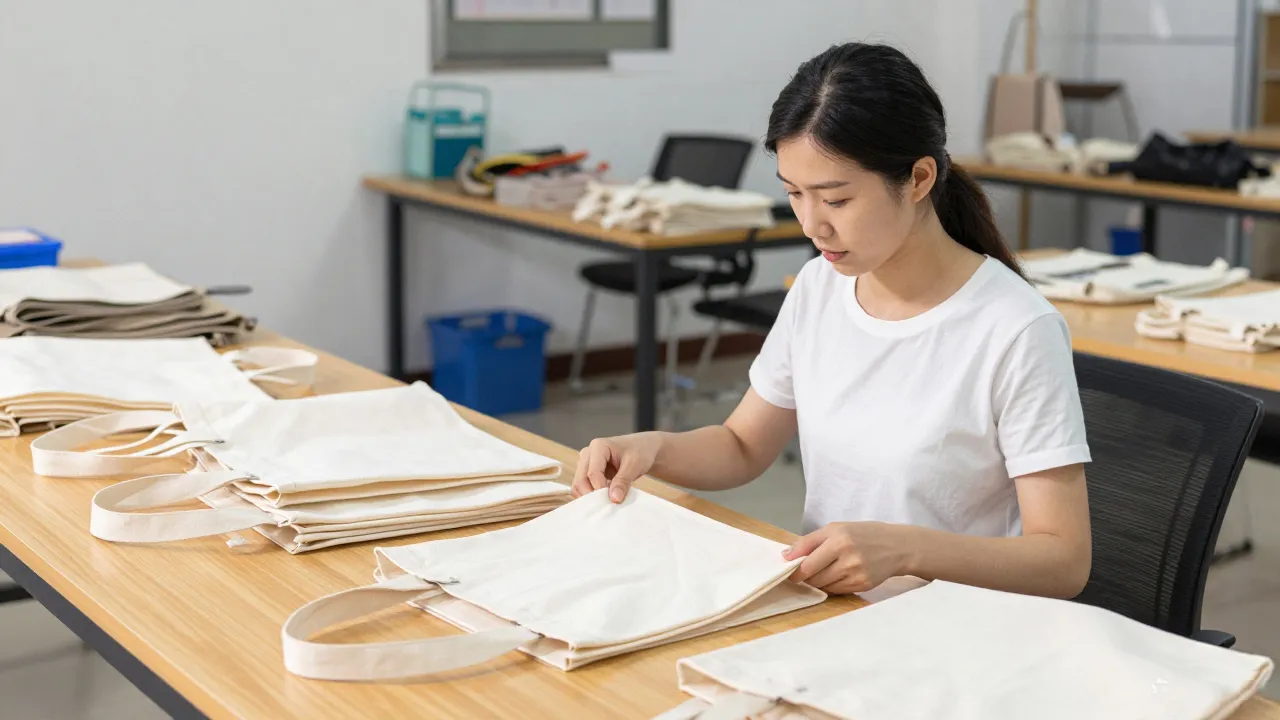
During assembly, QC checks stitching density, seam strength, and dimension accuracy at regular intervals. Any defects are caught at the station where they originate rather than at final inspection.
Checkpoint 5: Pre-Shipment Inspection
Before cartons are sealed, finished bags undergo a final AQL-based inspection covering appearance, stitching, hardware, dimensions, and packaging. Third-party inspection (SGS, Intertek, Bureau Veritas) can be arranged upon request.
Recommended Buyer Practice: Buyers are encouraged to request inspection reports, PPS photographs, and loading photos at each checkpoint. Rush options are available on request and may affect pricing.
For a complete step-by-step explanation of fabric inspection, cutting, printing, sewing, quality control, and export packing, read our tote bag manufacturing process guide.
Quality Control and Testing Standards
Quality is verified at multiple stages throughout the production process. Our QC team implements documented inspection protocols at the fabric, in-line, and pre-shipment stages.
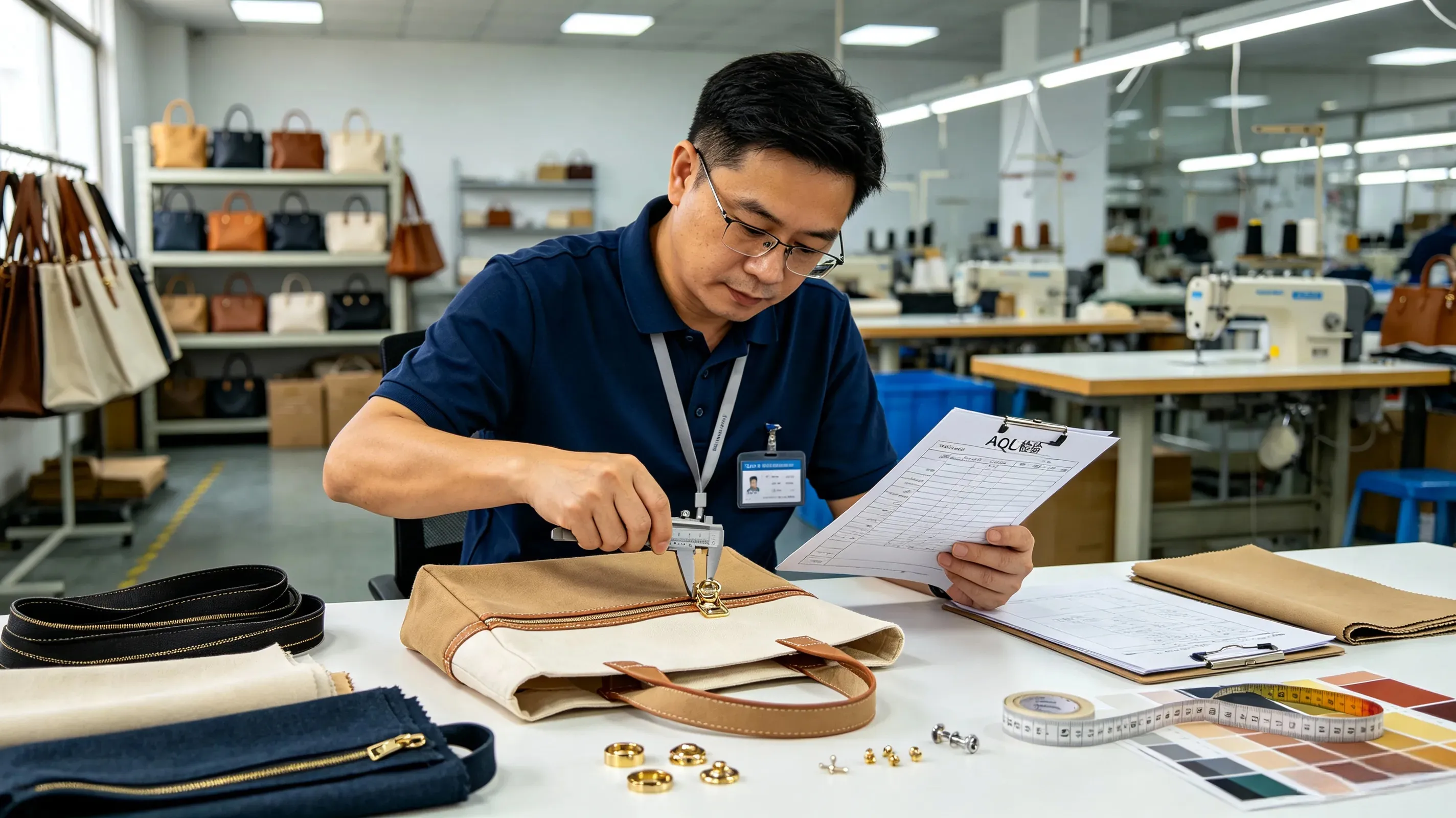
QC + Sampling Engineer
Kevin — Pattern Development Engineer
15 years experience in bag pattern making · leather, canvas, nylon, and technical fabrics
Incoming Material Inspection
Every fabric roll and hardware shipment undergoes verification upon arrival:
- Fabric weight verification (GSM testing)
- Color consistency check against approved standards
- Hardware strength spot-check sampling
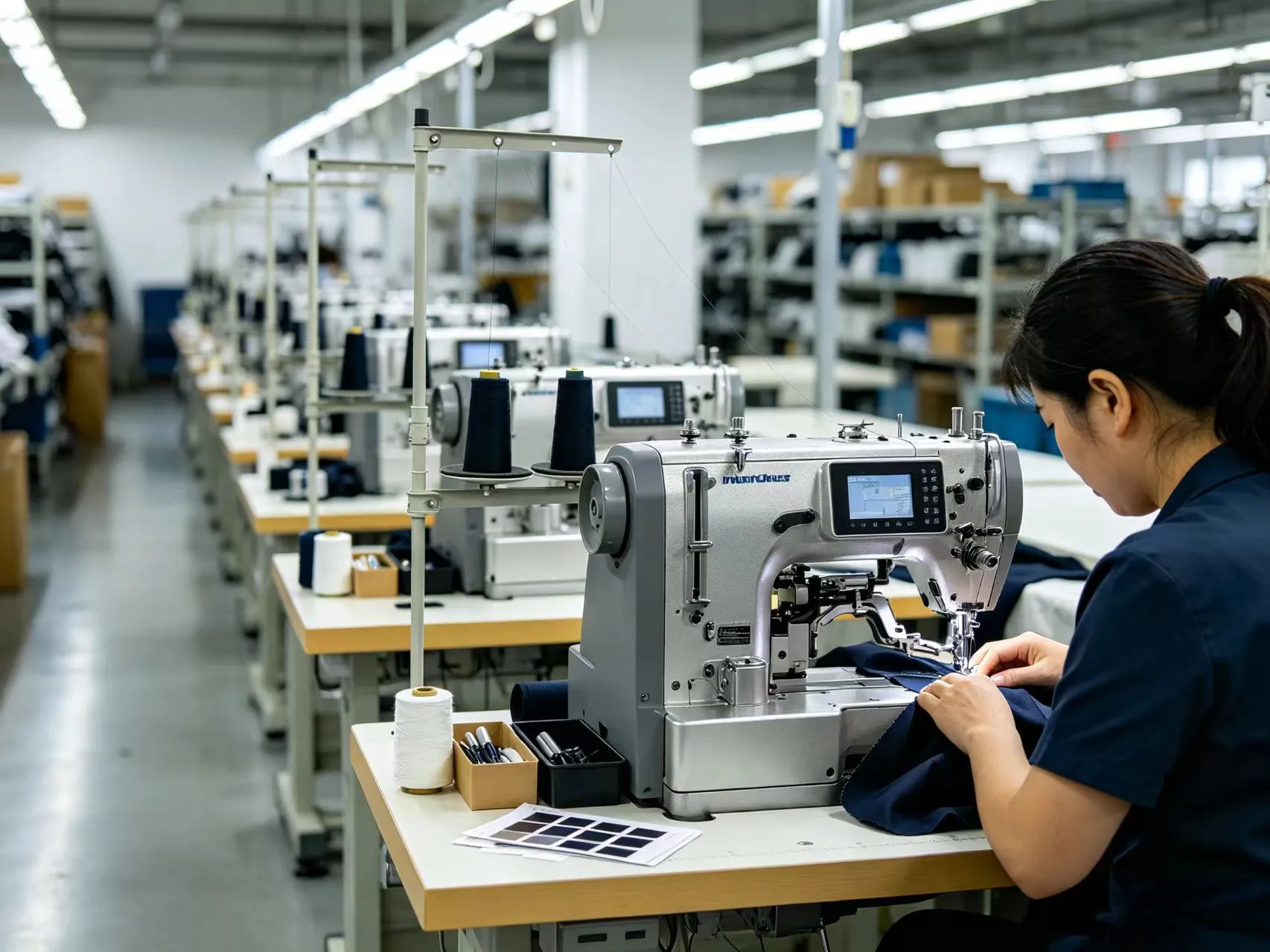
In-Line Inspections
- Stitching density monitoring (target: 5-6 stitches/cm)
- Seam strength spot-tests during assembly
- Dimension verification at each assembly stage
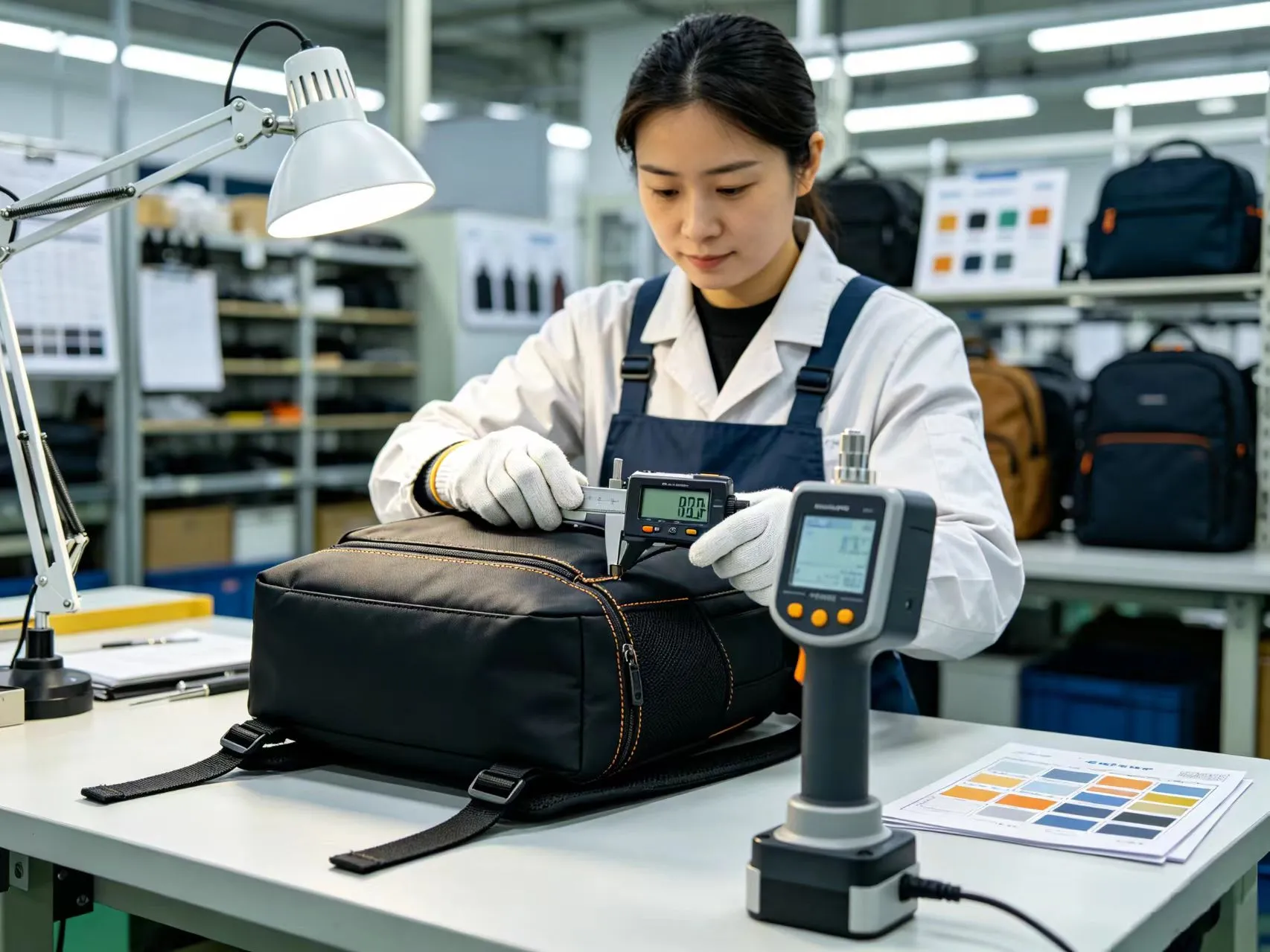
Five Verifiable Test Items
Below are the five test items our QC team runs by default, or arranges through a third-party lab (SGS, Intertek, Bureau Veritas) on request. None of the figures below cite specific pass rates or load thresholds — those are reported per order rather than published as universal claims.
← Scroll horizontally to view full table →
| Test Item | What It Verifies | Typical Method | Optional Third-Party Lab | Applies To | Validity Window |
|---|---|---|---|---|---|
| Handle pull test | Handle attachment and webbing resistance under load | Static load applied perpendicular to the bag body until slip or break | SGS / Intertek | Material + specific order batch | Re-tested each production batch |
| Seam strength | Side seam, bottom seam, and handle-join stitch integrity | Tensile testing on seam swatches, often referenced against ASTM D5034 or equivalent | SGS / Bureau Veritas | Material + order batch | Re-tested each production batch |
| Dimensional tolerance | Width, height, gusset, handle drop against tech pack | Calibrated measurement, sample size per AQL 2.5 | In-house + optional SGS verification | Specific order batch | Pre-shipment inspection record |
| Color fastness | Resistance of dyed canvas and printed area to wash and rub | Wash test + crockmeter rub test, often referenced against ISO 105 / AATCC 8 | Intertek / Bureau Veritas | Material (pre-bulk) + finished product | Pre-bulk fabric approval + final batch verification |
| Print wash / rub test | Printed logo and graphic resistance to machine wash and surface rub | Wash cycles + crockmeter, per print method (screen, DTG, heat transfer) | Intertek / SGS | Specific order batch | Pre-bulk + pre-shipment sample retention |
Factory Evidence and Third-Party Reports
Documentation buyers can request at any production checkpoint:
- Key Control Point (KCP) reports — issued at the inline stage, signed by the shift QC lead.
- Professional quality inspection reports — multi-page reports summarizing each inspection lot, with photo annexes.
- Corrective and preventive action (CAPA) case files — opened for any non-conformance that does not pass AQL on first inspection.
- ISO / BSCI certification wall — posted in the workshop; copies supplied to buyers on request.
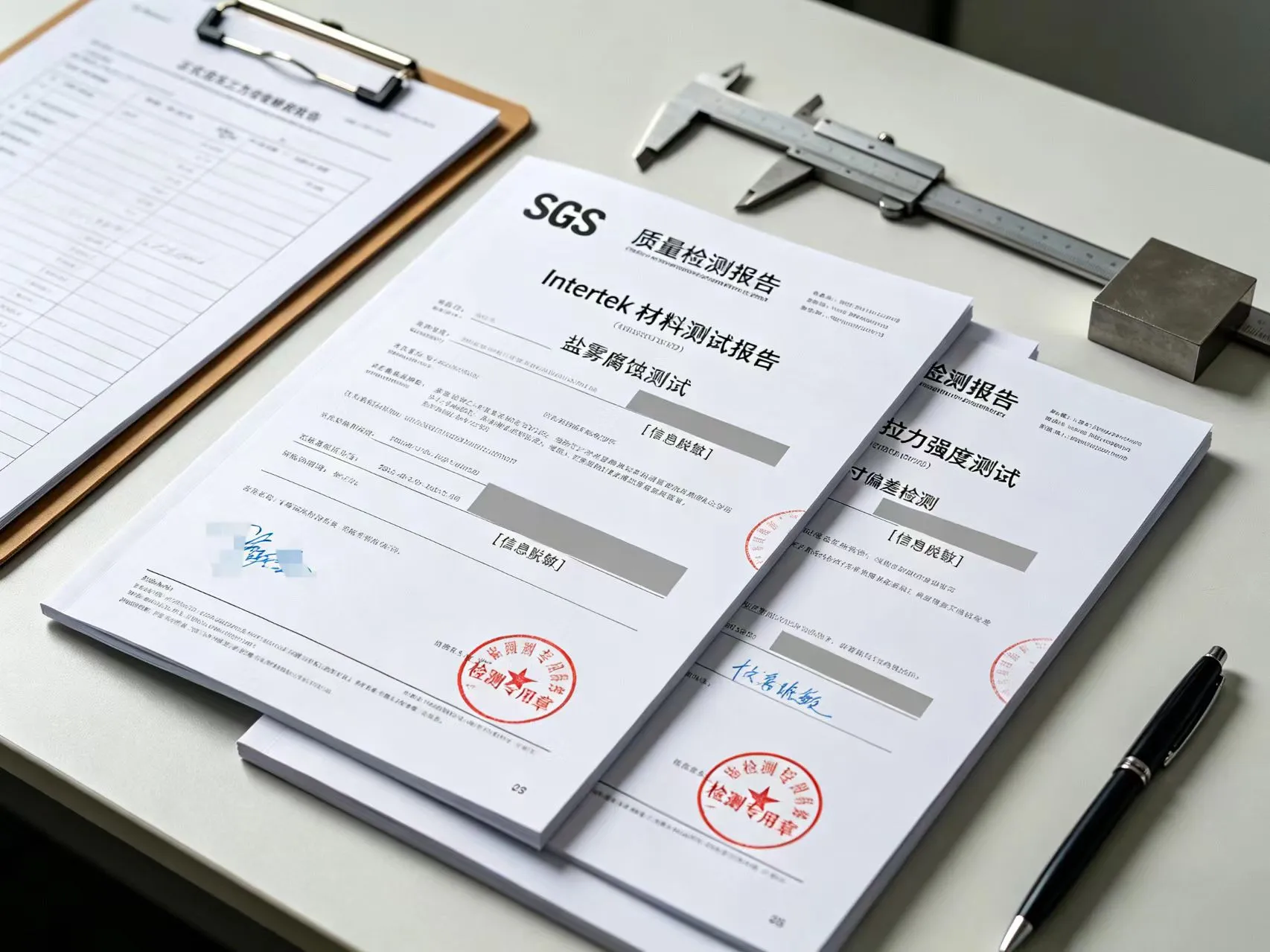

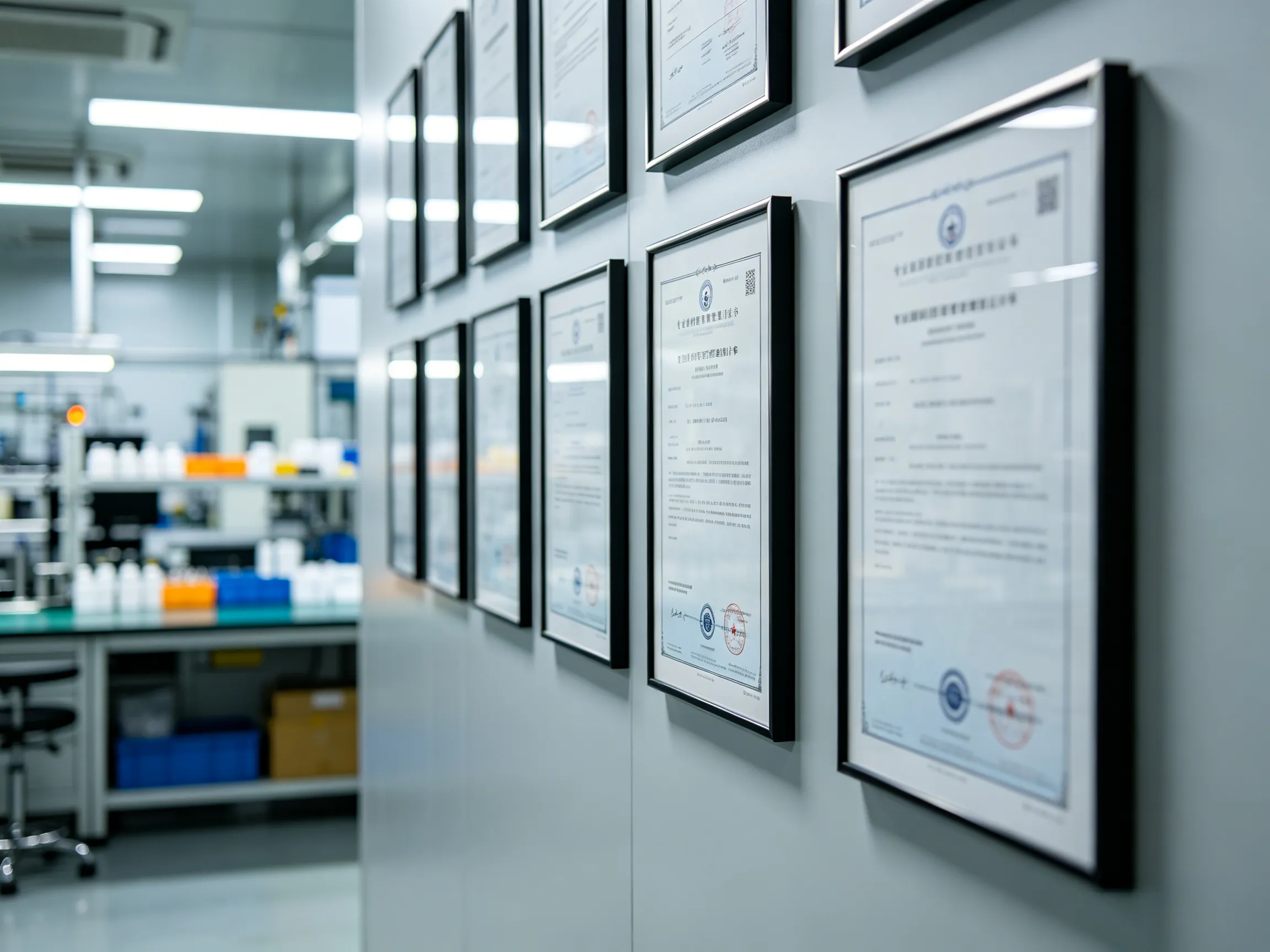
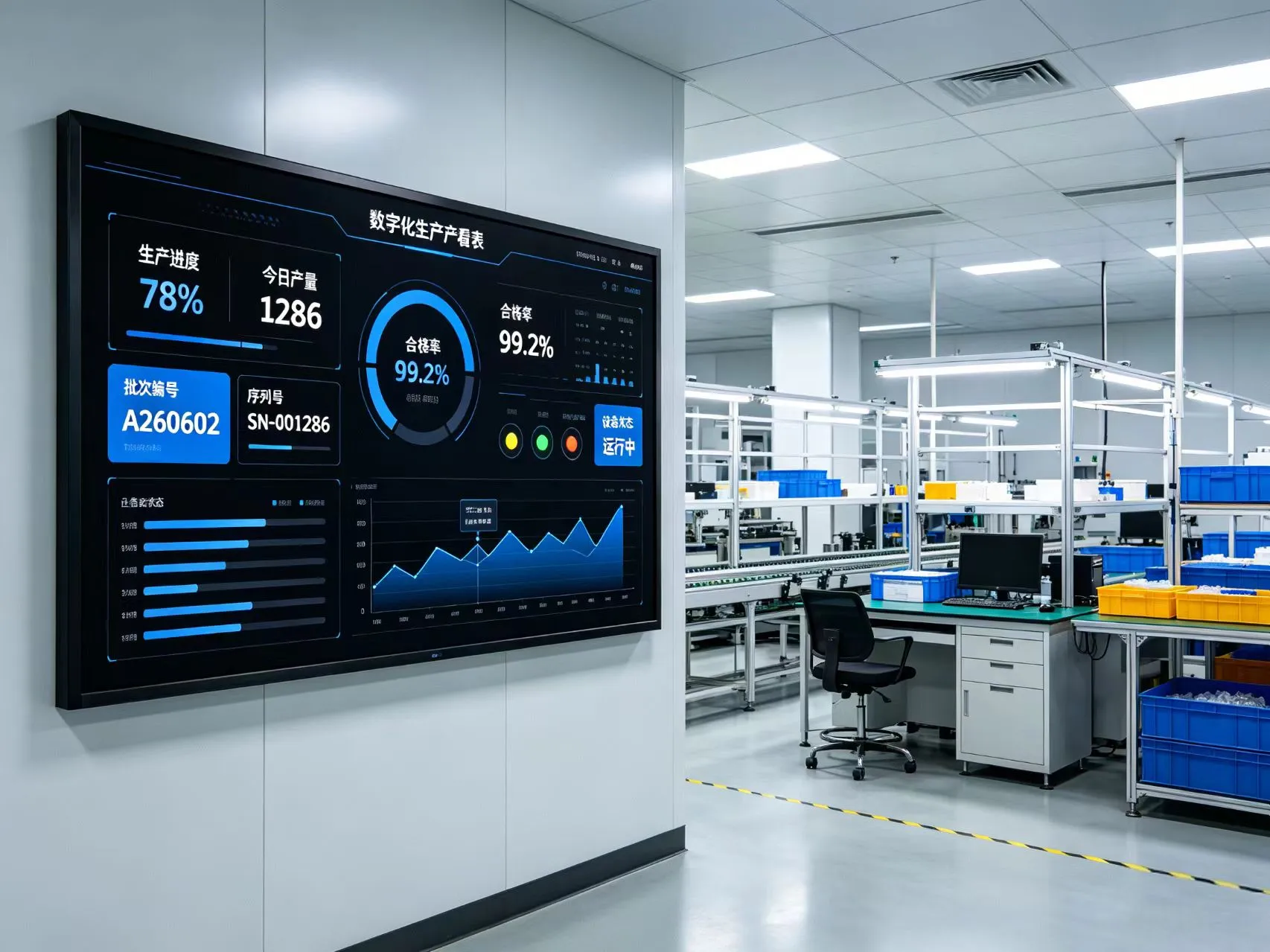
Photo Documentation From Our Guangzhou Workshop
The four photos below are recent documentation of our Guangzhou workshop. They replace what would otherwise be a single video walkthrough — buyers who want a live walkthrough can request one through their project manager.


Certification & Compliance
We categorize our compliance offerings into four distinct areas. Factory credentials verify our facility; material tests apply to input fabrics; third-party testing is arranged per order; market-specific compliance addresses regional requirements.
1. Factory Certifications
← Scroll horizontally to view full table →
| Certification | Issued By | Validity |
|---|---|---|
| ISO 9001 (QMS) | Accredited certification body | 3 years with annual surveillance |
| BSCI / SEDEX | amfori BSCI / SEDEX | 12 months from audit date |
2. Material Testing
← Scroll horizontally to view full table →
| Certification | Issued By | Scope |
|---|---|---|
| OEKO-TEX Standard 100 | OETI / Hohenstein | Fabric, dye, and print chemistry per order |
| Color Fastness & Wash Test | In-house + third-party lab | Per production batch |
| GRS (Global Recycled Standard) | Textile Exchange | Recycled-material product lines |
3. Third-Party Testing (Arranged Per Order)
← Scroll horizontally to view full table →
| Test Provider | Typical Tests | Fee |
|---|---|---|
| SGS | Handle pull, seam strength, tensile testing | Quoted per order |
| Intertek | Color fastness, print wash/rub tests | Quoted per order |
| Bureau Veritas | Comprehensive product testing | Quoted per order |
4. Market-Specific Compliance
← Scroll horizontally to view full table →
| Market / Regulation | Framework | Applies To |
|---|---|---|
| EU — REACH | EU regulatory framework; tested by SGS / Intertek | Chemical substance restrictions for EU market |
| US — California Prop 65 | California EPA framework; tested by accredited US labs | Finished products for US distribution |
| EU — PPWR / Digital Product Passport | EU Packaging and Packaging Waste Regulation | Traceability, recyclability claims, labeling |
Certificate numbers and specific test reports are shared during the quoting process. Contact us with your destination market and compliance requirements.
Disclaimer
Product specifications, load-bearing capacities, and test results mentioned in this article are based on standard testing conditions and may vary depending on specific configurations, usage environment, and maintenance practices. Buyers are advised to request actual samples and conduct their own quality verification before bulk orders. Our factory provides pre-production samples and third-party testing services upon request.
Why B2B Buyers Choose Dreamway
Buyers searching for a reliable heavy duty canvas bag manufacturer want three things: consistent quality, transparent timelines, and a partner who can scale with their business. Below is what sets Dreamway apart from typical China-based trading companies and OEM workshops.

What Sets Us Apart
- Direct factory pricing — You work with the workshop, not a trading company. Pricing is typically lower than sourcing through intermediaries.
- In-house pattern engineering — Our pattern team’s experience helps minimize sampling iterations and keeps your tech pack interpreted correctly.
- Dedicated project manager — Emily handles every project, providing updates in English via email or WhatsApp.
- Standard orders — MOQ 200 pcs. Direct factory pricing, in-house pattern engineering, and a dedicated project manager for every inquiry.
- Complementary product lines — Beyond canvas bags, we also support complementary bag product lines, so you can consolidate sourcing with one supplier.
- 50+ countries served — We understand HS codes, country-of-origin requirements, and regional compliance documentation.
- Sample-to-shipment timeline — 7-10 days for samples, 20-30 days for bulk, with visibility at every step.
- Translates buyer tech packs into measurable pattern specs
- Approves fabric weight, weave, and reinforcement geometry per order
- Sign-off authority on pre-production samples (PPS)
· Quality Inspection Checklist for Canvas Bags
· AQL Inspection Guide for Bag Buyers
· GSM and Oz Conversion Chart for Canvas
- Builds production calendars and milestone checkpoints per project
- Coordinates material confirmation, PPS, inline QC, and pre-shipment inspection
- Owns shipping documentation for FOB / CIF / DDP terms
· FOB vs CIF vs DDP: Shipping Terms Explained
· Tote Bag MOQ Guide
· How to Choose a Reliable Tote Bag Manufacturer

How to Start a Project with Us
Send us your tech pack, reference images, or even a sketch. We’ll respond within 12 hours with a feasibility review, sample timeline, and quotation. Pilot quantities of 50–100 pcs are available on request for selected projects; standard MOQ is 200 pcs.
Representative OEM Configurations for Heavy Duty Canvas Bags
The three configurations below represent common heavy duty canvas shopping bag specifications in our wholesale pipeline. Numeric ranges are typical bands; specific values are confirmed per order.

Case A — Large Retail Shopping Bag
Case B — Heavy-Duty Grocery Bag
Case C — Extra-Large Industrial Carryall
Loaded and In-Use Photos
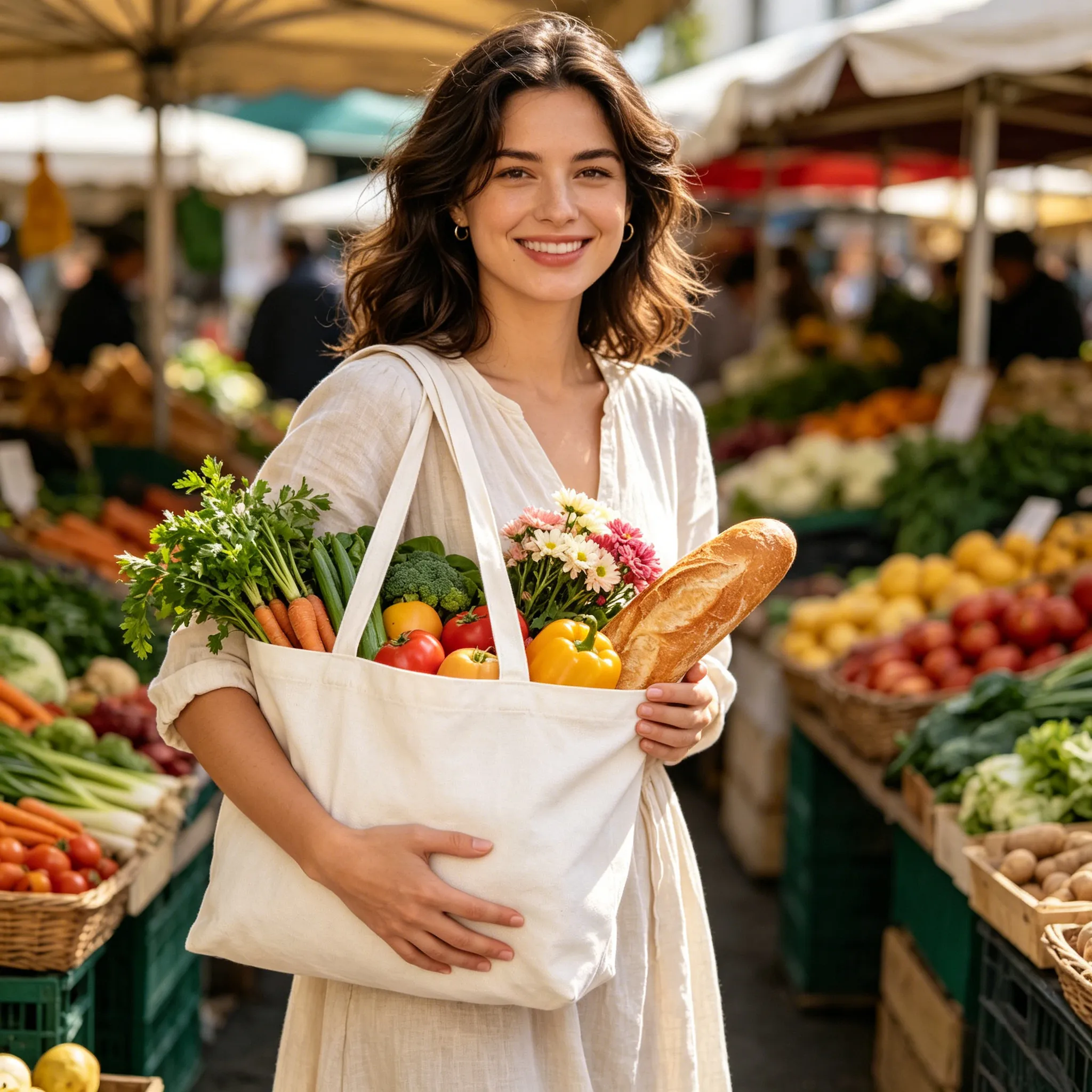
The photos below show how the configurations above actually carry weight — clothing, books, grocery, and tool loads. Buyers looking for oversized canvas shopping bags usually start by judging a bag from an empty shot, then asking how it performs loaded. The shots below answer that second question directly.

Close-Up Documentation
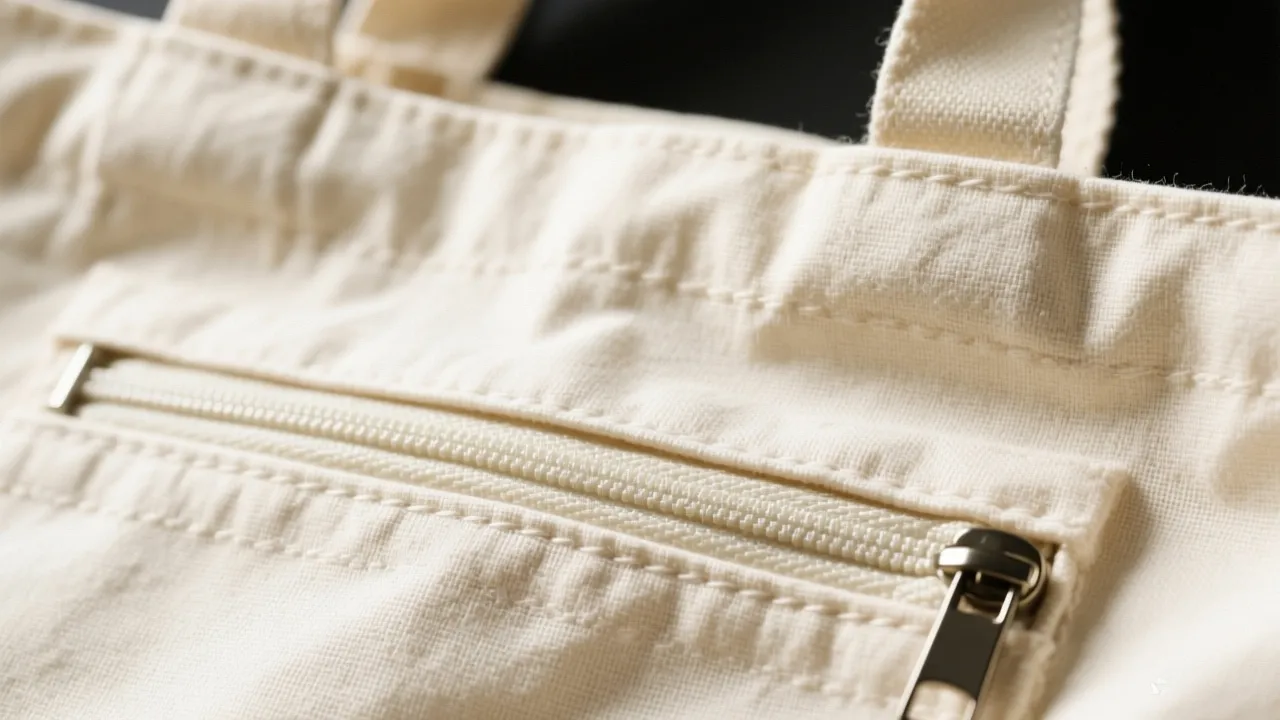
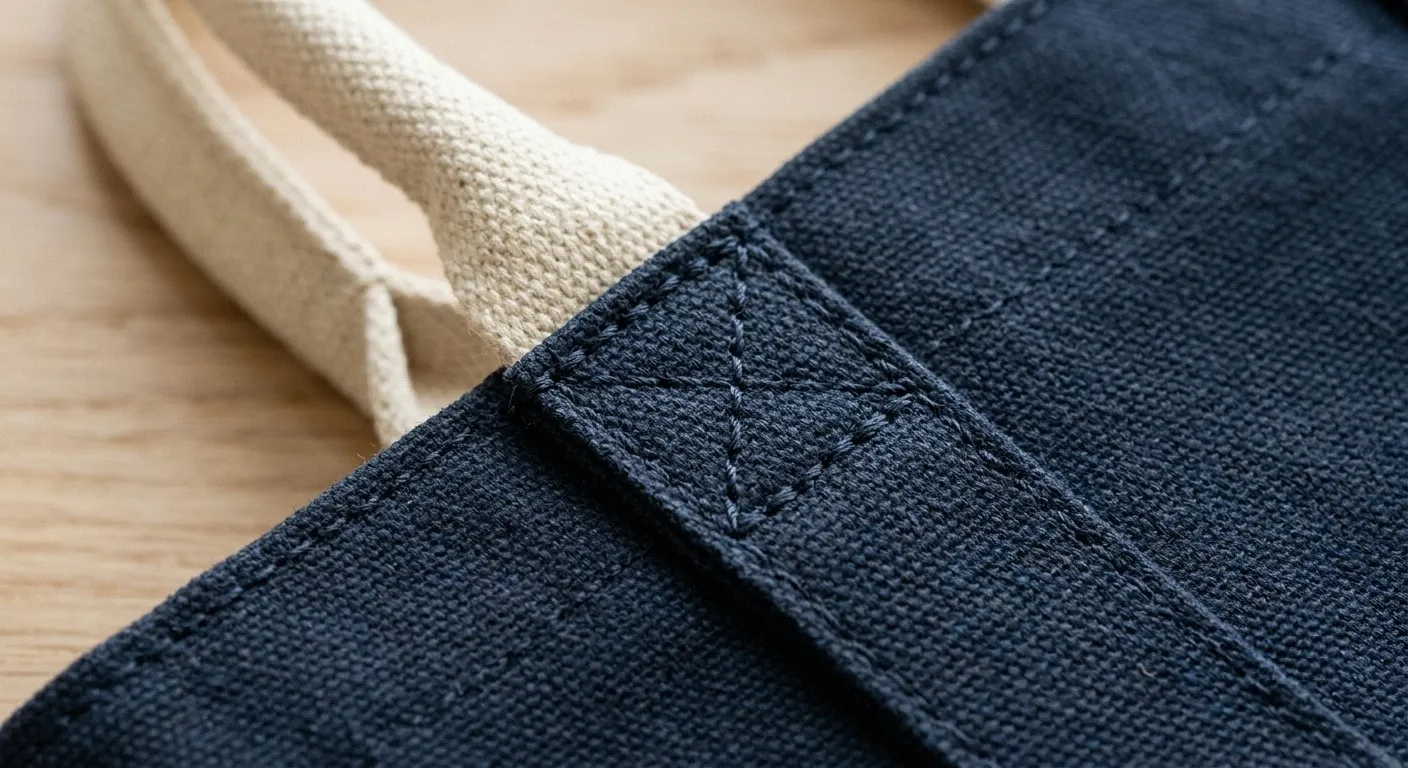
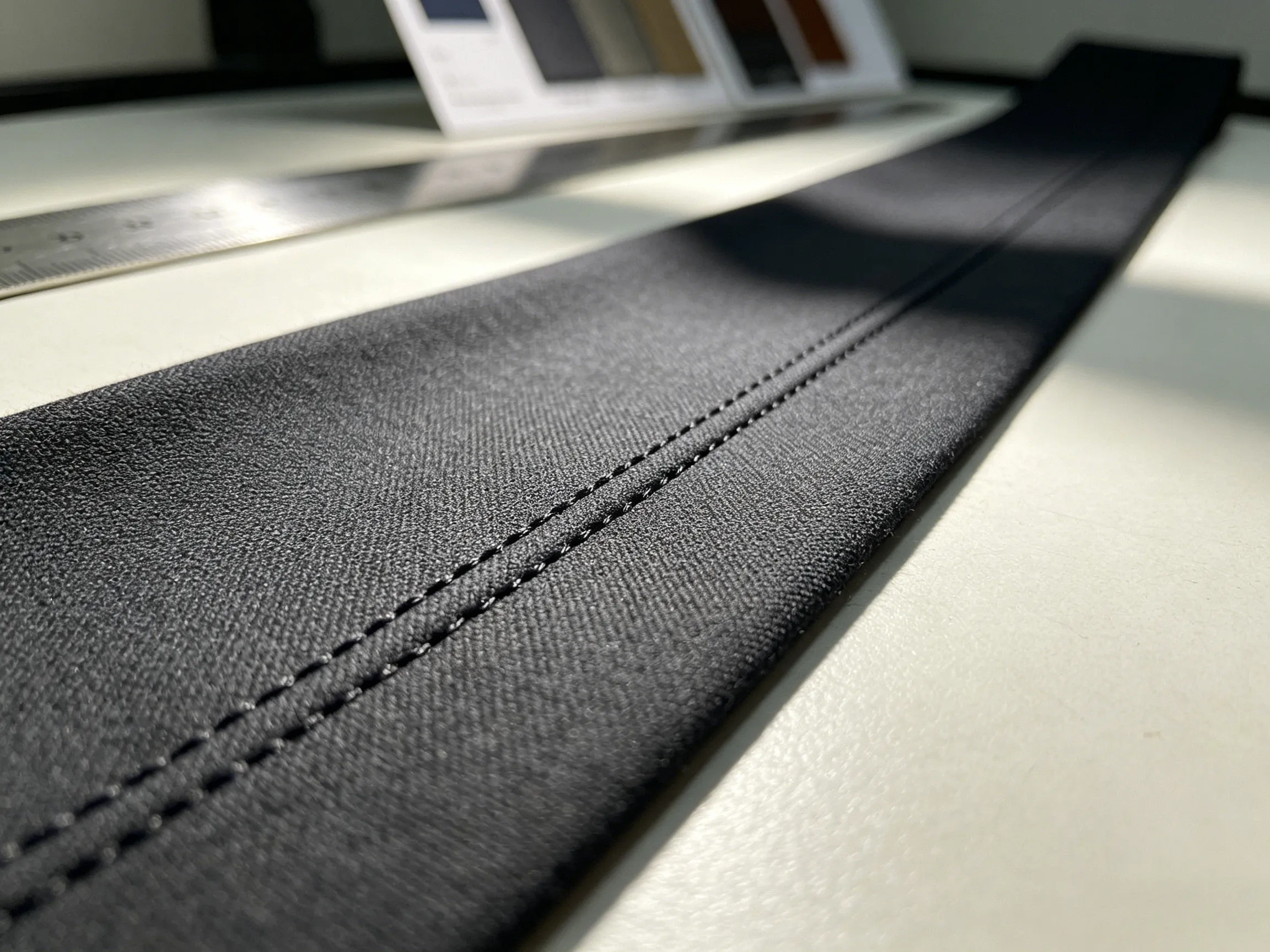
Three details buyers ask about most — handle attachment, bottom construction, and interior finishing. We document these at close range so the QA conversation is grounded in real stitching, not sketches.

Three B2B Project Profiles
Below are three anonymized project profiles showing how buyers from different B2B segments actually work with our factory. Client names are omitted by request. Each profile lists the client type, the original requirement, the production solution, and the observed result. None of the figures below cite specific load ratings, cost savings, or pass-rate numbers — those numbers vary too much by use case to publish without per-order data.
Project Profile A — European Boutique Retailer
- Client type: European boutique fashion and accessory brand; sells through flagship stores plus a curated e-commerce channel.
- Requirement: A 40 × 45 × 12 cm heavy duty canvas shopping bag in two seasonal colors, with a one-color screen print logo, paper insert card, and consistent interior finishing. Annual reorder cadence with strict color matching window.
- Solution: Two physical Pantone color dip trials before bulk, custom weaving of a small batch of cotton webbing handles, pre-production samples signed off by the buyer’s design lead, and dedicated production calendar slots each year for the recurring order.
- Result: Program has run across multiple seasons; the buyer continues to issue repeat orders with the same specification window. The relationship started with a 300-piece trial order and has scaled to multiple full-container cycles since.
Project Profile B — North American Grocery and Food Retailer
- Client type: North American grocery and prepared-food retailer replacing single-use plastic with reusable checkout bags.
- Requirement: A 45 × 50 × 18 cm grocery-format bag on 16–18 oz cotton canvas, food-safe ink, machine-washable finishing, and a high-frequency reuse cycle. Multiple regional store rollouts across two years.
- Solution: Approved ink supplier substitution for food-contact areas, doubled stitch count at handle join and bottom gusset, prototype wash-cycle test coordinated with the buyer’s third-party lab, and serialized carton labeling for region-specific distribution.
- Result: Bag entered the buyer’s in-store rotation across the first regional rollout. The buyer requested a revised handle drop specification mid-program, which we absorbed into the running production calendar without restarting the cycle.
Project Profile C — Oceania Hardware and Tool Brand
- Client type: Oceania hardware and trade-tool brand; sells through trade dealers and warehouse-format retail.
- Requirement: A 50 × 40 × 25 cm industrial carryall on 20–24 oz duck canvas, with reinforced handle base, optional D-ring, and an embroidery logo. Use environment includes sharp-edged tool loads.
- Solution: Switched to a wide-base handle wrap with box-X stitching at the handle join, added a 1 mm PE base insert as an optional component, and ran the buyer’s logo as a digitized embroidery file with thread-color book matched at sample stage.
- Result: The buyer adopted the bag as a trade-show giveaway and a dealer-facing premium line item. Subsequent orders included a smaller-format companion bag developed in parallel.
MOQ, Pricing, and Lead Time: What to Expect
Transparent pricing structures help buyers budget accurately and avoid surprises. Our factory maintains competitive pricing through direct material sourcing and efficient production workflows.
Minimum Order Quantities
- Standard configurations: 200 pcs minimum
- Custom logo orders: 200 pcs minimum
- Custom colors / special fabric / complex hardware: MOQ confirmed upon specification review
- Fully custom construction: MOQ confirmed upon specification review
MOQ 200 pcs applies to all configurations on this page unless otherwise confirmed. Pilot quantities of 50–100 pcs are available on request for selected projects and printing methods.
Price Influencing Factors
- Fabric weight (heavier = higher cost)
- Order quantity (economies of scale apply)
- Printing complexity (colors, coverage, method)
- Hardware grade and quantity
- Packaging requirements
.webp)
← Scroll horizontally to view full table →
| Quantity Tier | Estimated Price Range | Notes |
|---|---|---|
| 100-299 pcs | Contact for quote | Sample run pricing |
| 300-999 pcs | Contact for quote | Standard production |
| 1,000-2,999 pcs | Contact for quote | Volume tier 1 |
| 3,000+ pcs | Contact for quote | Best unit pricing |
Note: Exact pricing depends on canvas weight, dimensions, printing method, and hardware. Please contact us for a detailed quotation based on your specific requirements.
Wholesale Order Planning — How to Inquire by Quantity
Different order sizes need different conversations. The four tiers below describe how our team scopes a request, what we confirm up front, and what we propose in return. Buyers looking for wholesale heavy duty canvas bags usually fall into one of these four bands.
← Scroll horizontally to view full table →
| Quantity Tier | Inquiry Scope | Configuration Profile | What Our Team Will Ask | Typical Buyer Use Case |
|---|---|---|---|---|
| 100–299 pcs | Standard configuration / pilot order | In-stock colors, in-stock canvas weights, optional 1-color logo | Target size, canvas weight, logo file format, delivery city | Pilot run before scaling to bulk |
| 300–999 pcs | Custom logo and selected colors | 1–3 Pantone colors, custom logo, sampling recommended | Pantone references, artwork file, expected annual reorder cadence | Brand launch, retail rollout, seasonal campaign |
| 1,000–2,999 pcs | Volume production | Custom logo, multiple sizes/colors in one production batch | Per-size breakdown, packaging, target delivery date, Incoterm | Multi-region distribution, full retail program |
| 3,000+ pcs | Custom material, color and packaging discussion | Custom canvas weight, custom dye lot, branded packaging | Material specs, color lab-dip, retail packaging design, full container planning | Wholesale program, multi-year supply, retail subscription |
Carton Packing Example
The figures below describe a representative packing layout for a 45 × 50 × 18 cm grocery-format bag. Specific carton weights, CBM, and container loading will be confirmed during quoting — these are reference ranges, not per-order guarantees.
← Scroll horizontally to view full table →
| Field | Reference Value |
|---|---|
| Pieces per carton | 20 pcs / carton (folded flat, polybag-wrapped) |
| Carton dimensions | ≈ 50 × 45 × 35 cm (length × width × height) |
| Gross weight per carton | ≈ 12–14 kg |
| Net weight per carton | ≈ 11–13 kg |
| CBM per carton | ≈ 0.08 m³ |
| Estimated container loading (40′ HQ) | ≈ 26,000–28,000 pcs |
| Estimated container loading (20′ GP) | ≈ 12,000–14,000 pcs |
Shipping Terms — FOB, CIF, DDP
Each Incoterm changes which side of the shipment our team handles. We recommend confirming the term before quoting so the price includes everything that term covers.
- FOB Guangzhou / FOB Shenzhen / FOB Hong Kong — Buyer arranges ocean freight and insurance from the named port. Our team delivers the goods cleared for export and loaded on the vessel. Best when the buyer has a forwarder or wants to combine with other cargo.
- CIF Named Destination Port — We arrange ocean freight and basic insurance to the buyer’s destination port. Best when the buyer wants a single quoted number without managing a forwarder. Requires destination port name and country.
- DDP Named Destination (country, postal code) — We arrange freight, customs clearance, duties, and last-mile delivery to the buyer’s warehouse. Best for buyers without an in-country import setup. Requires full destination address and HS code preferences.
Information our team needs to quote each term: destination country, destination city, postal code, preferred port of arrival (for FOB / CIF), and any import license or tax-registration requirements for DDP. Lead times above are independent of the chosen Incoterm.
What Happens After You Submit an RFQ
Buyers who send a request through our contact form or to sales@gzdreamway.com receive the four-step response below. Our team targets an initial reply within 12 hours during business days.
- Step 1 — Feasibility review: We confirm that the requested configuration fits our production line and flag items that need clarification (e.g. handle drop, gusset, ink set).
- Step 2 — Material confirmation: We send a fabric swatch, Pantone reference, and a digital mock-up so the buyer can confirm weight, color, and artwork before sampling.
- Step 3 — Sample timeline: We propose a sample lead time (typically 7–10 days for standard weights, 10–14 days for heavy duck canvas) and arrange pre-production samples on buyer request.
- Step 4 — Quotation and delivery schedule: We issue a formal quotation including unit price, tooling fee (if any), sample cost, production lead time, and shipping options (FOB / CIF / DDP) based on the buyer’s preferred term.
Lead Time Overview
← Scroll horizontally to view full table →
| Stage | Standard Timeline | Rush Option |
|---|---|---|
| Sample development from artwork confirmation |
7–10 days (in-stock fabric); 10–14 days (22–24 oz duck canvas) |
5–7 days (+30%) |
| Production from PPS approval + deposit |
20–30 days (in-stock fabric); add 5–10 days for custom-dye / non-stock fabric |
14 days (+30%) |
| Shipping (sea freight) separate from production |
25–35 days (FCL) | 5–10 days (air freight) |
How to Communicate Your Requirements
Senior Project Manager
Emily — Senior Project Manager
12 years in OEM bag manufacturing · manages 15–25 active projects simultaneously
Tech Pack Essentials
A complete technical package should include:
- Dimension specifications (length × width × height, tolerance ±2 mm)
- Material callout (fabric weight, composition, treatment)
- Pantone color references (C or U format)
- Artwork files (AI, CDR, or high-resolution PDF, minimum 300 dpi)
- Hardware specifications and brand preferences
- Packaging requirements and labeling instructions
.webp)
Emily’s Pro Tip
Sending reference sample images is more efficient than text descriptions. Including dimension references (ruler, coin, or hand for scale) helps reduce sampling iterations and get you to production-ready samples faster.
Five Questions to Ask Before Signing
- What is your minimum order quantity per color/size? — Ensures your order meets production minimums
- Can you provide OEKO-TEX or REACH certificates? — Verifies compliance capability
- What is your sample approval process? — Understands quality checkpoints
- What is your defective rate tolerance? — Sets quality expectations
- Do you have experience with [your specific bag type]? — Confirms manufacturing expertise
Canvas vs. Other Common Bag Materials
Buyers evaluating heavy duty canvas bags often compare them against polyester (e.g., 600D) and full-grain leather. The right material depends on your application, end-market, and price point.
.webp)
← Scroll horizontally to view full table →
| Feature | Heavy Duty Canvas | Polyester (600D) | Full-Grain Leather |
|---|---|---|---|
| Typical Use | Retail, grocery, promotional, industrial | Sports, lightweight carry, promotional | Premium fashion, executive gifts |
| Water Resistance | Moderate (with treatment) | High | Moderate (with treatment) |
| Material Origin | Cotton or cotton blend | Synthetic (PET) | Animal hide |
| Cost Tier | Mid-range | Low to mid | High |
| Custom Branding | Screen print, DTG, embroidery, heat transfer | Screen print, heat transfer | Embossing, embroidery |
| Typical Weight | Medium | Light | Heavy |
| Appearance | Natural, woven texture | Smooth, technical | Grain, patina |
Heavy duty canvas is a common choice for B2B buyers who need a balance of durability, customization options, and mid-range pricing. Material selection ultimately depends on the end use, target market, and required certifications.
Frequently Asked Questions
Below are the most common questions B2B buyers ask before placing a canvas bag order with Dreamway. If your question isn’t covered, email us or use the contact form at the bottom of this page.
- Standard configurations and custom logo orders: MOQ 200 pcs minimum
- Custom colors, special fabric, complex hardware, or fully custom construction: MOQ confirmed upon specification review
- Pilot quantities of 50–100 pcs are available on request for selected projects and printing methods
Production: 20–30 days from PPS approval and deposit receipt. For custom-dye or non-stock fabric, add 5–10 days for material procurement.
Shipping: Sea freight (FCL) 25–35 days; air freight 5–10 days. Shipping runs separately from production lead time. Rush options available on request — may affect pricing.
Key Takeaways for B2B Buyers
Sourcing heavy duty canvas bags requires attention to technical specifications, clear communication, and partnership with manufacturers who verify quality at multiple stages. Below is a summary of the decisions that matter most.
Essential Points to Remember
- Specify canvas weight by application — Match oz to the end use: 12-14 oz for promotional, 16-18 oz for heavy-use shopping, 20-24 oz for industrial.
- Define reinforcement methods — Specify double-stitching, bar-tacking, and stress-point reinforcement for load-critical applications.
- Clarify load-bearing requirements — State your maximum expected load; load testing can be arranged according to project requirements.
- Always request pre-production samples — Physical samples reveal issues that specifications cannot capture.
- Verify certifications — OEKO-TEX and REACH compliance are commonly requested for European and eco-conscious markets.
- Use complete tech packs — Dimension specs, material callouts, Pantone references, and artwork files minimize sampling iterations.
- Partner with factories that have in-house QC — Internal quality control and testing equipment support consistent batch quality.
- Plan shipping method early — Sea vs. air vs. DDP affects both timeline and landed cost. Confirm terms before placing the PO.
Heavy duty canvas bags form part of your brand’s physical presence. Specifying correctly and partnering with a quality-focused manufacturer supports customer satisfaction over the long term.
Ready to compare canvas bag suppliers before finalizing your project? Read our buyer checklist for canvas bag sourcing.
RFQ Fields We Need From You
The seven fields below are the minimum we need to give you a usable quote. Sending them up front avoids a back-and-forth email cycle and gets your sample on the production line faster.
- Bag dimensions — width × height × gusset (cm or inches), handle drop
- Canvas weight — target oz band (12–14 / 16–18 / 20–24) or specific GSM
- Quantity — pilot order size, expected reorder cadence, full-container plan
- Logo method — screen print / DTG / heat transfer / embroidery / woven label
- Destination country — for Incoterm (FOB / CIF / DDP) and shipping cost
- Target delivery date — including any program launch or retail window
- Required certification — OEKO-TEX / REACH / Prop 65 / GRS / BSCI / SEDEX / ISO 9001
Related Research Guides
For buyers comparing canvas bag specifications and sourcing options, we recommend reviewing our detailed guides below:
- GSM and Oz Conversion Chart for Canvas — understand the weight-to-GSM relationship for informed sourcing decisions
- How to Choose a Reliable Tote Bag Manufacturer — our 12-point checklist covers what to verify before signing a PO
- Quality Inspection Checklist for Canvas Bags — the checkpoints we run before every shipment
- FOB vs CIF vs DDP: Shipping Terms Explained — choose the right Incoterm for your order
- Tote Bag MOQ Guide — how minimum order quantities affect unit pricing
- AQL Inspection Guide for Bag Buyers — working with SGS, Intertek, and Bureau Veritas
Request a Quote for Large OEM Canvas Shopping Bags
Tell us the seven fields below and our team will reply within 12 hours with a feasibility review, sample timeline, and quotation.
View Large Bag Specifications · See All RFQ Fields
Dreamway — Heavy Duty Canvas Bag Manufacturer
30+ small team | 50+ countries served | Since 2008 | www.gzdreamway.com
Premium Heavy-Duty Canvas Solutions for Discerning Brands
Discover artisan-crafted canvas bags that blend timeless elegance with uncompromising durability. Our curated selection features hand-finished details, reinforced stress points, and premium cotton canvas that ages gracefully with every use. Partnering with reputable heavy-duty canvas bag suppliers ensures your brand delivers exceptional quality across every production run.
DREAMWAY
Custom Bag & Silk Manufacturer · Shiling, Guangzhou
Company
Products
Guides & Insights
Ready to Bring Your Bag Idea to Life? Let’s Talk Today.
From your first sketch to bulk delivery, our team replies within 12 hours with expert advice and a free quote. No pressure — just honest manufacturing guidance.

Prefer a call? +86-020-87682749 · Mon–Sat, 9:00–18:00 (GMT+8)