

Leather Thickness & Weight Chart: mm, oz/ft² & g/m² Conversion
This leather weight and thickness chart converts millimetres, leather oz per square foot and g/m2 into one table, because a leather ounce measures thickness rather than mass. One oz/ft² equals 0.4 mm, or 1/64 inch, and a g/m2 figure needs one more input, leather density g/cm3, usually between 0.9 and 1.0. Every figure comes from the 800+ orders shipped between 2024 and 2026.
Leather weight vs thickness difference: what the ounce really means
Leather weight vs thickness difference is mostly a naming problem, and one leather ounce means 1/64 inch of hide thickness. That ounce is a thickness, not a mass, so leather oz per square foot and millimetres describe the same property.
Leather thickness variation is normal, and a single hide can vary by 0.1 mm from the shoulder to the belly. Buyers and factories therefore write gauges as ranges such as 2/2.5 oz or 3/4 oz, never one fixed number.
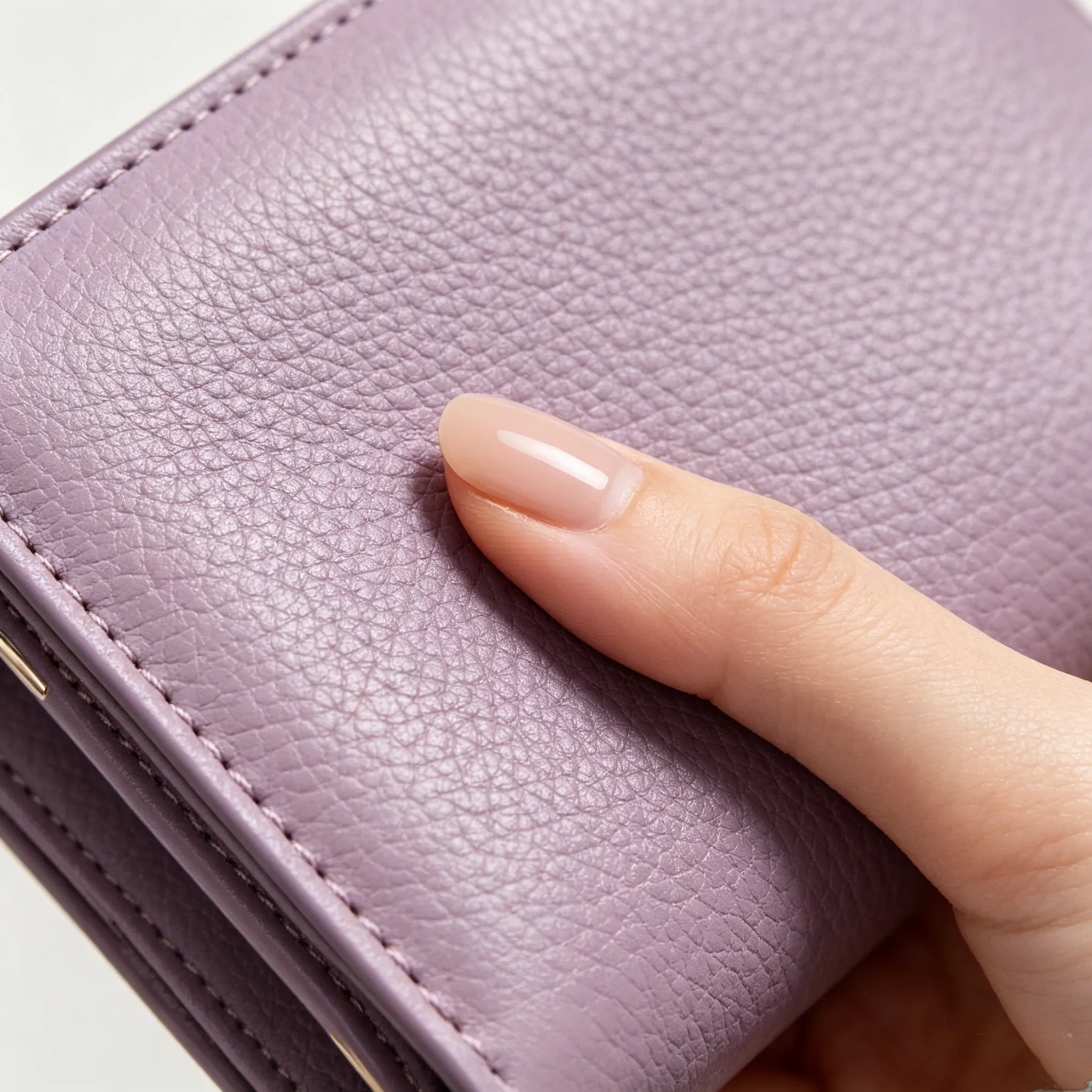
Leather thickness in mm and oz
Leather thickness in mm and oz is written on the same tech pack, and 1 inch equals 25.4 mm, so one conversion must be agreed before the first sample. That makes 1/64 inch equal to 0.397 mm. Panels are specified in mm and hides are bought by oz/ft², so a chart carries both.
Leather thickness variation across one hide
Oz to mm leather conversion: the formula
Oz to mm leather conversion uses one fixed factor: mm = oz/ft² × 0.396875, or multiply by 0.4 for a quick estimate. The reverse works too, because 1 mm equals about 2.52 oz/ft², and the leather weight vs thickness difference disappears once the unit is defined.
Leather oz per square foot is never the same as oz per square yard, where 1 oz/yd² equals about 33.9 g/m2. Fabric and leather never share one table, and the fabric side is covered in the canvas fabric weight guide.
The leather thickness conversion chart: mm, oz/ft² and g/m²
This leather thickness conversion chart lists the standard gauges in millimetres, inches, leather oz per square foot and g/m2, so one number can be quoted in any market. Each row gives the same hide at 2 densities, and the leather thickness in mm and oz stays on one line.
| Millimetres | Inches (1/64 in) | Leather oz per square foot | g/m2 at 0.90 g/cm3 | g/m2 at 1.00 g/cm3 |
|---|---|---|---|---|
| 0.4 | 1/64 | 1.0 | 360 | 400 |
| 0.8 | 1/32 | 2.0 | 720 | 800 |
| 1.0 | 5/128 | 2.5 | 900 | 1,000 |
| 1.2 | 3/64 | 3.0 | 1,080 | 1,200 |
| 1.6 | 1/16 | 4.0 | 1,440 | 1,600 |
| 2.0 | 5/64 | 5.0 | 1,800 | 2,000 |
| 2.4 | 3/32 | 6.0 | 2,160 | 2,400 |
| 3.2 | 1/8 | 8.0 | 2,880 | 3,200 |
| 4.0 | 5/32 | 10.0 | 3,600 | 4,000 |
Leather g/m2 conversion multiplies mm by density in g/cm3 and by 1,000, so each gauge gives a range of 2 figures. At 1.2 mm, density decides whether the result is 1,080 or 1,200 g/m2. Quote the leather density g/cm3 with any g/m2 figure, because the leather thickness to gsm answer moves with the finish.
Leather weight and thickness chart: leather oz per square foot and leather g/m2 conversion
Leather weight and thickness chart answers 2 questions from the same 4 columns of mm, inch, oz/ft² and g/m2. The first gives the hide thickness, and the last gives the weight of the same area in grams. The leather weight vs thickness difference is the gap between those columns.
Leather thickness to gsm and leather density g/cm3
2 oz vs 4 oz leather for bags differs in stiffness, abrasion resistance and weight per panel, and the 2 oz gauge (about 0.8 mm) drapes while the 4 oz gauge (about 1.6 mm) holds shape. Every leather thickness chart row keeps both figures, and the leather density g/cm3 column sets the g/m2 answer.
| Leather oz per square foot | Thickness in mm | Typical bag part |
|---|---|---|
| 0.5–0.6 | 0.2–0.25 | Lining leather, pocket lining |
| 1.0–1.5 | 0.4–0.6 | Pig suede, soft pouch |
| 2–2.5 | 0.8–1.0 | Soft panel, gusset |
| 3–4 | 1.2–1.6 | Structured panel, handle |
| 4–5 | 1.6–2.0 | Bottom, strap, reinforcement |
| 6–8 | 2.4–3.2 | Belt, rigid base |
2 oz vs 4 oz leather for bags, and 1.2 mm vs 1.6 mm leather
1.2 mm vs 1.6 mm leather makes the same choice at a finer scale, and full grain leather thickness for structured handbags falls between 1.2 and 1.6 mm. The thicker option adds about 33% more leather weight per square foot. Buyers can review the custom leather tote bag manufacturer range for gauges used on finished bags.
Full grain leather thickness and the parts it covers
How to measure leather thickness on site
How to measure leather thickness takes a dial caliper with a 0–25 mm range and 3 readings per panel, and every reading should fall within 0.2 mm of the spec.
How to measure leather thickness on site starts with a leather caliper measurement on the flesh side, about 20 mm inside the edge, and avoids scars, wrinkles and the neck area. Take 5 points across the panel. A leather thickness variation of 0.3 mm or less across those 5 points is our acceptance limit.
Leather caliper measurement and leather thickness tolerance
| Measurement point | Tool | Where to read | Leather thickness tolerance |
|---|---|---|---|
| Body panel centre | Caliper, 0–25 mm | Mid panel, 20 mm from edge | ±0.2 mm |
| Bump (tight) side | Dial caliper | Flesh side, near edge | −0.1 mm vs centre |
| Edge after paint | Dial caliper | 10 mm from painted edge | −0.1 mm |
| Strap at rivet | Dial caliper | Between rivet holes | ±0.2 mm |
| Five-point range check | Dial caliper | 5 points across the hide | ≤ 0.3 mm |
| Spec as written | Thickness in mm | Usual tolerance | Typical use |
|---|---|---|---|
| 2/2.5 oz | 0.8–1.0 | ±0.1 mm | Lining and soft panels |
| 3/4 oz | 1.2–1.6 | ±0.2 mm | Body panels |
| 4/5 oz | 1.6–2.0 | ±0.2 mm | Straps and bottom |
| 1.2 mm nominal | 1.2 | ±0.2 mm | Panel spec |
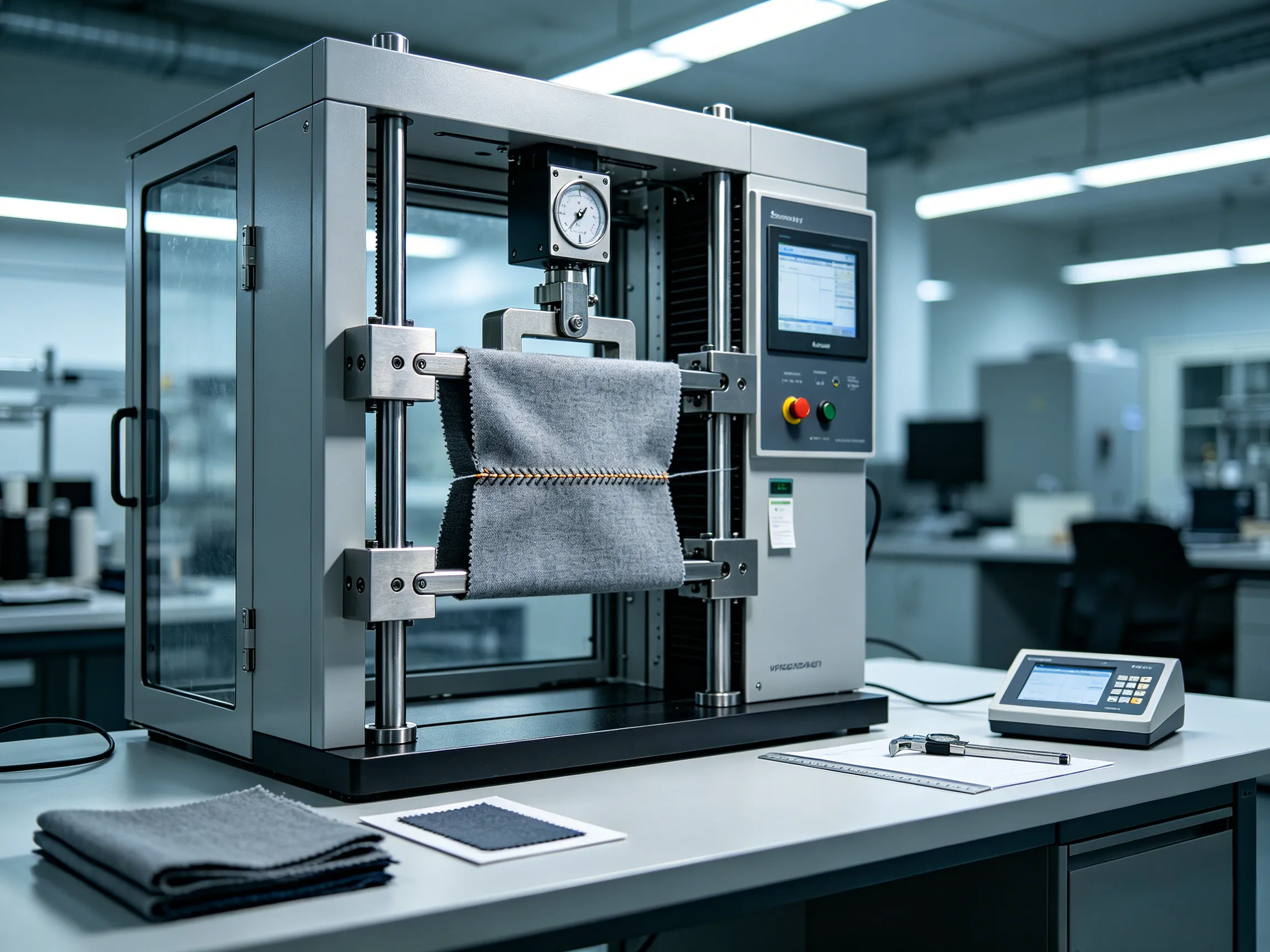
Leather density g/cm3 closes the loop between thickness and weight, and one 10 × 10 cm sample is enough to find it. Weigh the sample, measure its thickness with the caliper, and divide the mass by the volume. A result between 0.9 and 1.0 confirms the g/m2 figures above.
Leather thickness tolerance goes into the handbag tech pack template as its own field, so a ±0.2 mm gauge is a written number rather than a verbal one. Sampling costs $120 per style, the pattern master $60, and a custom sample $50 refundable against a 500-piece order.
Leather thickness for handbag panels
Leather thickness for handbag panels usually sits between 1.2 mm and 1.6 mm, because a body panel has to hold shape without adding weight.
Leather thickness for handbag panels puts a structured tote or satchel at 1.2 to 1.6 mm for front and back panels. A soft hobo can work at 0.8 to 1.2 mm, while a load-carrying base panel moves up to 1.6 to 2.0 mm. Heavier panels add cost through weight and thread.

| Bag part | Thickness in mm | Leather oz per square foot | Why |
|---|---|---|---|
| Structured body panel | 1.2–1.6 | 3–4 | Holds shape, no interfacing |
| Soft slouch panel | 0.8–1.2 | 2–3 | Drapes, no structure |
| Bottom panel | 1.6–2.0 | 4–5 | Takes the load and abrasion |
| Gusset | 1.2–1.6 | 3–4 | Resists collapse when full |
| Top handle | 1.2–1.6 | 3–4 | Handles repeated flex |
| Shoulder strap | 1.4–1.8 | 3.5–4.5 | Carries shoulder load |
Leather thickness chart rows map each of the 6 standard parts to a gauge, and the leather handbag manufacturing process guide shows how cutting and edge finishing follow. Shape choices per gauge are covered in handbag design trends 2026.
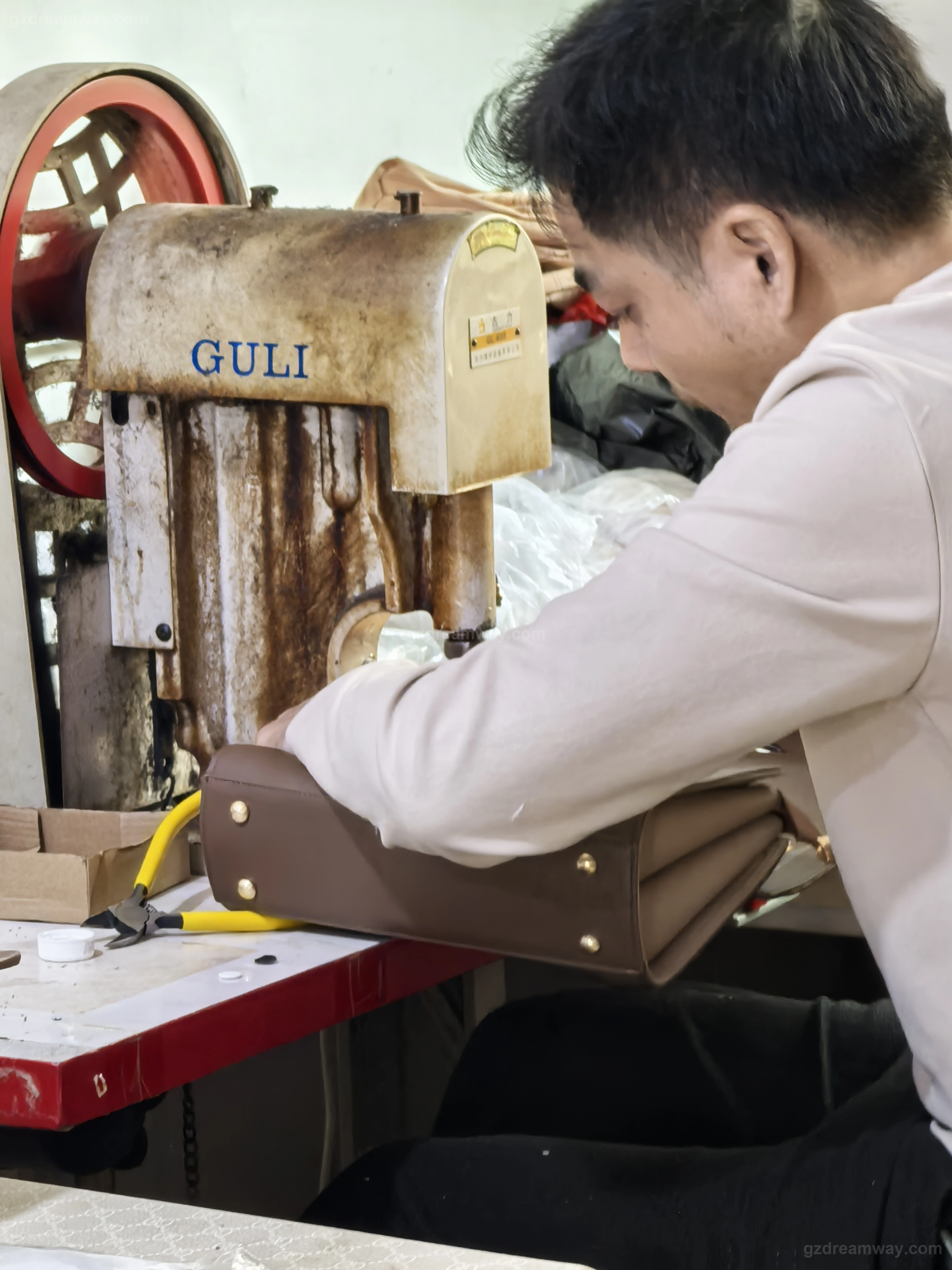
Leather lining thickness and interior parts
Leather lining thickness is specified lighter than the body panel, and 0.6 to 0.8 mm is the normal range for a lined handbag.
Leather lining thickness for pig suede runs 0.4 to 0.6 mm, and an interior pocket leather runs 0.8 to 1.0 mm. Each 0.2 mm added to a lining takes space from the inner volume, so the gauge affects usable capacity as well as weight.
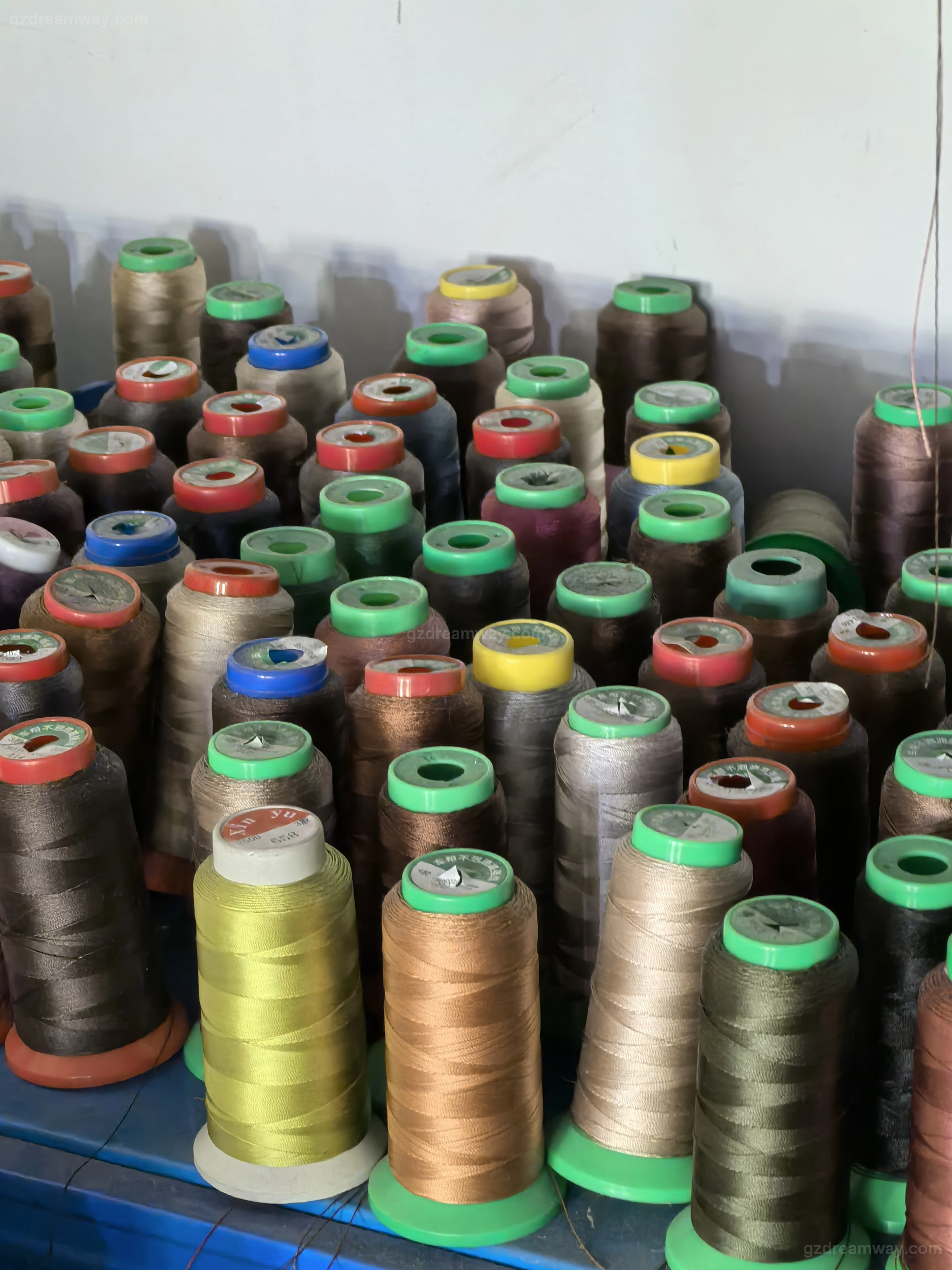
Leather strap thickness and handle load
Leather strap thickness is the gauge buyers most often under-specify, and 3.5 to 4.5 oz is the usual band for a load-carrying strap.
Leather strap thickness puts shoulder straps at 1.4 to 1.8 mm, top handles at 1.2 to 1.6 mm, and reinforced attachment zones at 1.6 to 2.0 mm. Stitching and rivets carry the tension, so gauge and seam spec are checked together. Custom leather belts follow the same logic.
Leather square footage per bag
Leather square footage per bag for a mid-size tote is about 16 square feet of net panel area, or 17 to 18 with waste. Leather consumption per bag depends on panel count more than on bag size.
Leather square footage per bag and leather consumption per bag
| Bag type | Panel set | Net area (sq ft) | Waste | Leather consumption per bag |
|---|---|---|---|---|
| Mini crossbody | 6 panels | 5.5 | 10% | 6–7 sq ft |
| Mid tote | 8 panels | 16 | 10% | 17–18 sq ft |
| Large tote | 10 panels | 24 | 12% | 26–28 sq ft |
| Backpack | 12 panels | 26 | 12% | 28–30 sq ft |
| Wallet | 4 panels | 2.2 | 8% | 2–3 sq ft |
Leather square footage per bag carries 8 to 12% waste from grain avoidance and asymmetric panels. One square metre equals 10.764 square feet, so a buyer quoting per square metre can convert the table. How area enters price is explained in factors that affect custom handbag unit costs.

PU leather thickness: what transfers and what does not
PU leather thickness comparison and what transfers
PU leather thickness comparison needs care, because a 1.2 mm PU panel and a 1.2 mm cowhide panel do not behave the same way under load.
PU leather thickness comparison starts at a labelled 0.6 to 1.4 mm, but no common density applies across suppliers. A g/m2 figure for PU can differ by 15 to 25% from a leather figure at the same mm. Tear strength depends more on the base fabric than on the gauge.
PU leather thickness comparison also covers bend recovery and edge coating, so a 0.8 mm PU panel needs its own seam allowance and stitch pitch. The coating structure itself is described in the water-based PU leather guide.
Leather thickness chart and your cost sheet
Leather thickness chart gauge changes reach your cost sheet through the 16 to 28 square feet a bag needs, so purchased area is the line that moves.
A leather thickness conversion chart prices every gauge per square foot, so 16 to 28 square feet per bag is what moves on the material cost line once waste is added. Gauges above 1.6 mm need heavier thread and a coarser needle. Compare these with the handbag manufacturing cost structure breakdown.
Leather thickness suppliers and sizing services
The 5 companies below are listed with their publicly stated business scope only, and each entry states a leather thickness service or product line. This table is not a ranking, comparison or endorsement, and no company listed has endorsed or been audited by GZ Dreamway.
Buyers should verify each company’s scope and capability against its own website before contracting, since scopes were last checked on November 27, 2026 and change without notice.
| Company name | Publicly stated business scope | Location |
|---|---|---|
| Bestway (Dongguan) | Genuine leather, PU and canvas bags | Dongguan, Guangdong |
| Guangzhou Huadu Leathergoods | Leather handbags and wallets | Huadu District, Guangzhou |
| SLBAG | Private-label ladies’ handbags | Shiling Town, Guangzhou |
| J.D. Handbag Factory | OEM and ODM from a tech pack | Dongguan, Guangdong |
| GZ Dreamway (publisher of this guide) | Genuine leather handbags and totes | Shiling, Guangzhou |
Frequently asked questions
Does leather thickness affect bag cost?
Leather thickness affects bag cost mainly through the area you buy, and a leather thickness chart prices every gauge per square foot, so a 1.6 mm panel costs more than a 0.8 mm panel of the same size. Thicker hides add weight and call for heavier thread. Compare the purchased square footage with the gauge on the tech pack.
What thickness leather for a tote bag?
For a structured tote bag, 1.2 mm to 1.6 mm full grain leather thickness holds shape, while 0.8 mm to 1.2 mm suits a soft shopper. Base panels and handles can move up to 1.6 to 2.0 mm for load, and the 2 oz vs 4 oz leather for bags choice decides it. Write each part gauge separately.
Is thicker leather more durable?
Thicker leather resists abrasion better at the same temper, and a leather thickness variation from 1.2 to 3.2 mm is a wear difference, not a quality ranking. Thickness does not decide durability alone, because tanning and finish also change wear resistance. Match the gauge to each part.
How do you convert leather thickness in inches?
Leather thickness in inches moves in 1/64 inch steps, so leather oz per square foot of 1 equals 0.0156 inch and 4 oz equals 0.0625 inch. Multiply ounces by 0.0156 for inches, or by 0.396875 for millimetres. Use the same oz to mm leather conversion both ways.
Can leather thickness be converted to GSM without the density?
No, leather thickness conversion to gsm needs leather density g/cm3, and a density range of 0.9 to 1.0 changes the leather thickness to gsm answer by about 11%. Multiply mm by density and by 1,000 to get g/m2. Ask the supplier for the density before quoting g/m2.

GZ Dreamway has shipped 800+ leather and PU bag orders between 2024 and 2026, and each leather thickness chart quote comes with the gauge on the tech pack. The minimum order is 200 pieces per style, so send your gauge list, panel set and target oz/ft² to Victoria@gzdreamway.com, or read our Genuine Leather Handbag Factory in China page.