
How to Create a Backpack Tech Pack for Manufacturing: Complete Guide with Free Template
Creating a professional backpack tech pack is the single most important step in turning your design vision into a manufacturable product. This comprehensive guide walks you through every component of a world-class tech pack—complete with a free downloadable template designed specifically for OEM backpack production.
Free Download
Get our exclusive Backpack Tech Pack Template (PDF) — includes dimension sheet, BOM checklist, and QC requirements.
Download Free Template.webp)
Introduction: Why a Backpack Tech Pack Is Critical for OEM Production
Every year, countless backpack brands lose money, miss market windows, and strain supplier relationships—not because their designs were flawed, but because of preventable communication breakdowns during manufacturing.
The most common failure points include:
- Factory interpretation of vague design descriptions
- Unspecified material grades causing cost overruns
- Dimension discrepancies discovered only at quality inspection
- Multiple sample iterations that delay production timelines
A Tech Pack (short for Technical Package) is the definitive communication bridge between designers and manufacturers. It transforms abstract creative concepts into precise, actionable production specifications that factories can execute consistently.
What is a Tech Pack?
A Tech Pack is a comprehensive technical document that contains all product specifications, including:
- Product drawings and technical sketches
- Precise measurements with tolerances
- Material specifications and suppliers
- Construction and stitching details
- Color references with Pantone codes
- Hardware specifications
- Packaging requirements
Whether you’re developing a lightweight daypack, a rugged hiking backpack, or an executive laptop bag, a professional tech pack is your insurance against production errors and your roadmap to getting exactly what you envisioned.
Why Backpack Brands Need a Professional Tech Pack
1. Reduce Sampling Errors
When factories receive detailed tech packs, first-round samples match your vision with dramatically higher accuracy. Ambiguous specifications lead to guesswork; clear specifications lead to precision.
2. Control Manufacturing Costs
Surprises during production are expensive. When materials aren’t specified, factories may choose cost-saving alternatives that compromise quality. A detailed tech pack locks in your quality standards and prevents costly change orders.
3. Improve Factory Communication
Language barriers and time zone differences make communication challenging. A well-structured tech pack speaks universally—technical drawings and specifications transcend language barriers.
4. Speed Up Production Timelines
Every revision cycle adds weeks to your timeline. Brands with comprehensive tech packs typically achieve final sample approval in 2-3 rounds, while those with incomplete documentation often require 5+ iterations.
Industry Insight
“A detailed tech pack helps both the brand and factory confirm expectations before sampling, reducing unnecessary communication cycles by up to 60%.” — Emily, Senior Project Manager at Dreamway, 12 years in OEM bag manufacturing
Complete Structure of a Backpack Tech Pack
A professional backpack tech pack contains ten essential sections. Each component serves a critical function in the manufacturing process:
Product Overview
Product name, SKU, target market, and key features
Design Sketches
Technical drawings from multiple angles
Dimension Sheet
All measurements with tolerances
Material Specification
Fabric, lining, and component materials
Bill of Materials (BOM)
Complete component listing with suppliers
Construction Details
Stitching, seams, and assembly instructions
Color Reference
Pantone codes and color specifications
Hardware Details
Zippers, buckles, and metal components
Label & Packaging
Tags, labels, and packaging requirements
Quality Requirements
QC standards and inspection criteria
.webp)
Section 1: Backpack Design Sketches and Technical Drawings
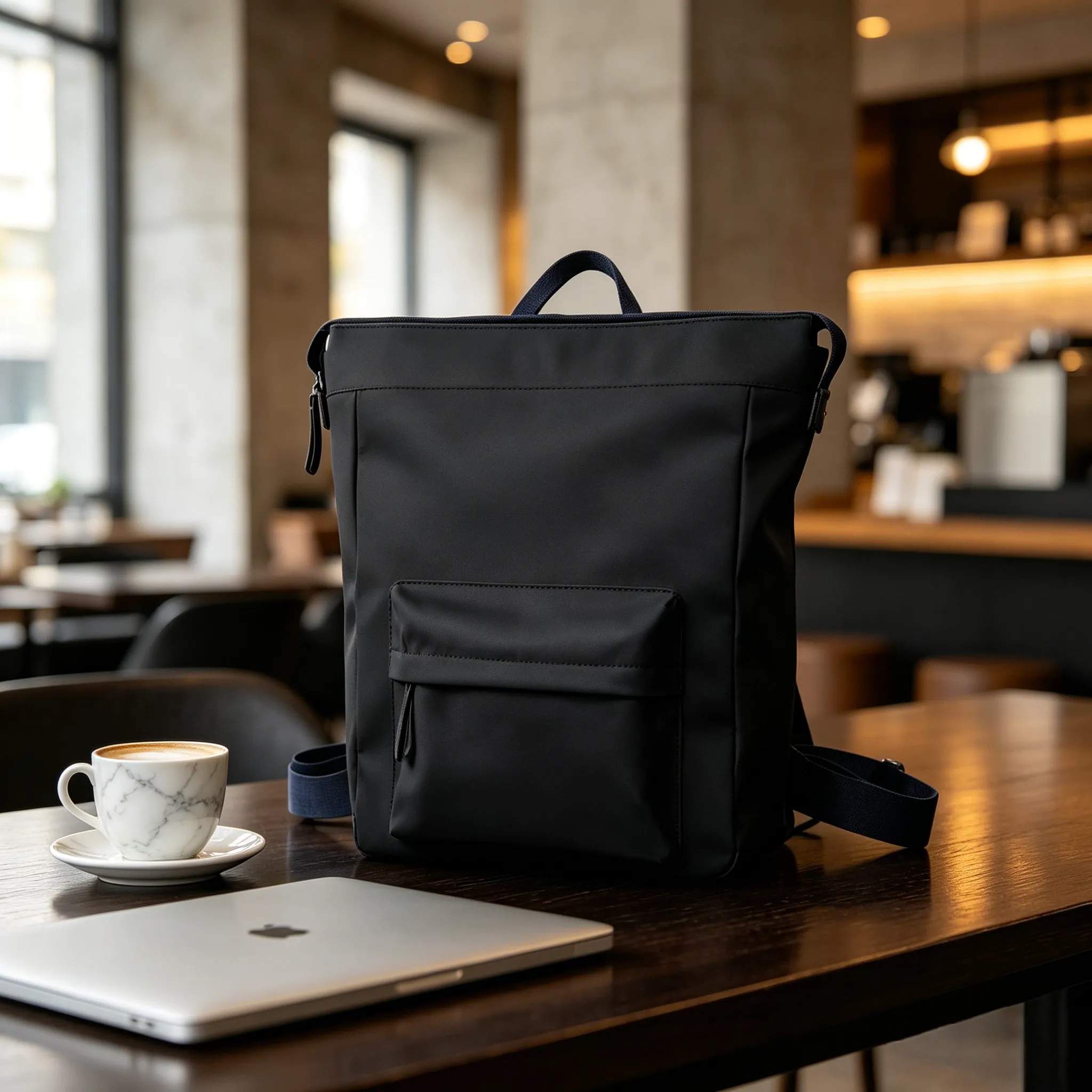
Technical drawings are the universal language of manufacturing. Unlike artistic renderings or product photography, professional technical drawings communicate exact specifications that factories can execute.
Required Technical Views
Your tech pack should include these essential views:
- Front View — Primary exterior design and features
- Back View — Strap system, back panel, and suspension details
- Side View — Profile showing depth and proportion
- Top View — Opening, handle, and top pocket details
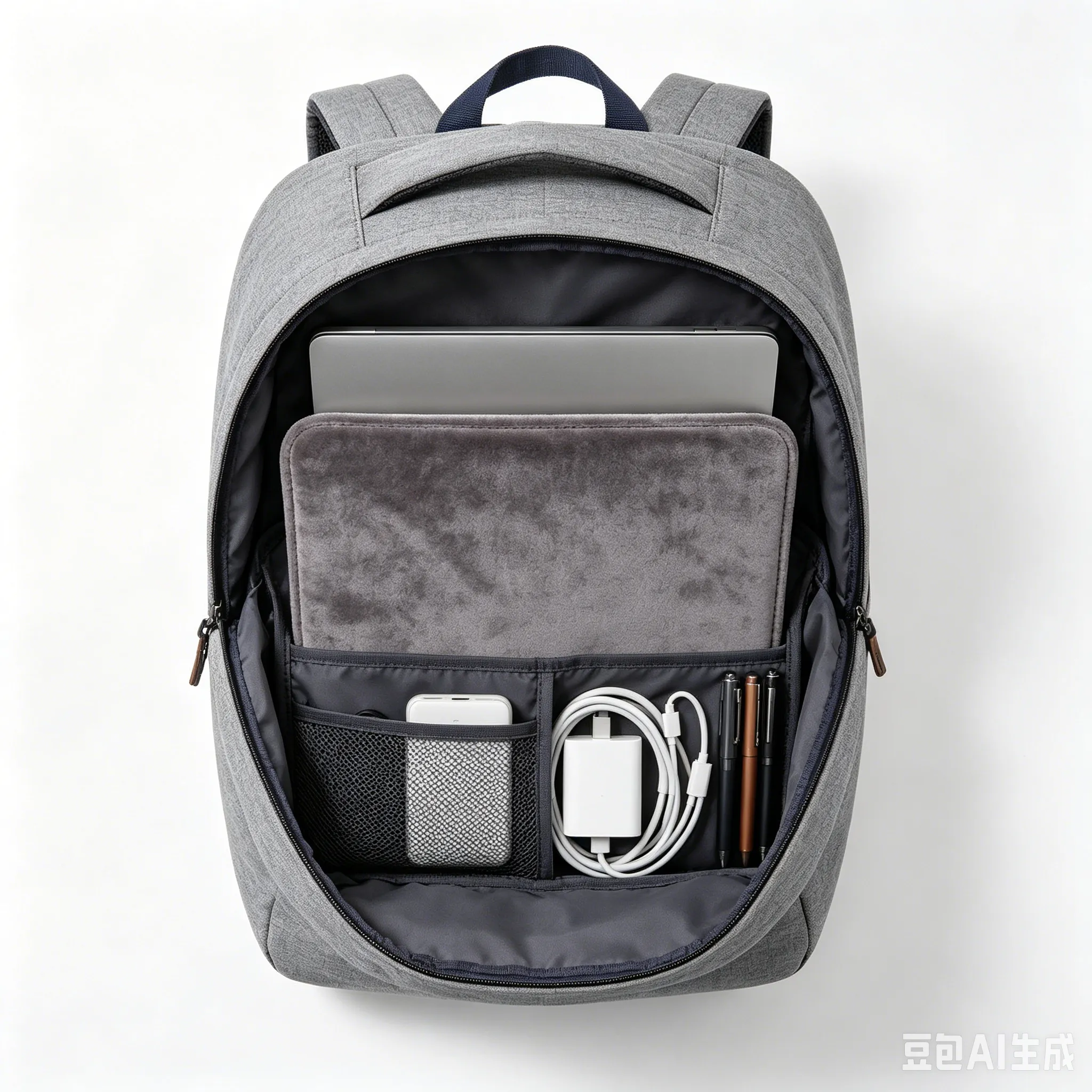
- Inside Structure — Compartment layout and organizational features
- Exploded View — All components separated for assembly reference
❌ Insufficient
Product images or inspirational mood board photos
✓ Professional
CAD technical drawings with callouts, dimensions, and construction notes
Section 2: Backpack Measurement Specification Sheet
Accurate measurements are the backbone of a functional tech pack. Every dimension must be specified with appropriate tolerances to account for material properties and manufacturing variation.
Essential Measurements to Include
| Measurement Point | Specification | Tolerance | Notes |
|---|---|---|---|
| Main Body Height | 45 cm / 17.7″ | ±0.5 cm | Excluding straps |
| Main Body Width | 30 cm / 11.8″ | ±0.5 cm | At widest point |
| Depth | 15 cm / 5.9″ | ±0.5 cm | When laid flat |
| Shoulder Strap Length | 60-90 cm | ±2 cm | Adjustable range |
| Top Handle Drop | 8 cm | ±0.3 cm | Fixed measurement |
| Front Pocket Height | 20 cm | ±0.3 cm | Zipped pocket |
| Laptop Compartment | 38 x 27 x 2.5 cm | ±0.3 cm | Fits 15″ laptop |
| Total Volume | 25-30 liters | ±1 liter | Industry standard |
Pro Tip
Always specify measurements in both metric and imperial units. Include a reference sample or “golden sample” measurement that serves as the standard for quality comparison.
Section 3: Material Specification
Material specifications directly impact product quality, cost, and performance. Vague material descriptions lead to factory substitutions that may not meet your quality standards.
Primary Fabric Types for Backpacks
Polyester
Durable, water-resistant, cost-effective. Common weights: 300D-900D denier.
Nylon
Stronger than polyester, excellent abrasion resistance. Common weights: 210D-1000D.
Canvas
Natural texture, excellent for custom printing and branding applications.
RPET (Recycled)
Eco-friendly option meeting sustainability commitments and PPWR compliance.
Internal Components
- Lining — Polyester (210T typical), nylon, or recycled options
- Foam Padding — EVA foam, PE foam, or closed-cell foam for comfort
- Mesh Pockets — Breathable polyester mesh for organization
Section 4: Bill of Materials (BOM) for Backpacks
The Bill of Materials is your comprehensive inventory of every component that goes into your backpack. A complete BOM eliminates ambiguity and ensures accurate costing.
| Component | Material | Specification | Quantity | Supplier/Reference |
|---|---|---|---|---|
| Main Body Shell | 600D Polyester | 1500mm water pressure | 1.2 m² | YSS Standard |
| Bottom Panel | 1680D Ballistic Nylon | Reinforced abrasion | 0.35 m² | YSS Standard |
| Lining | 210T Polyester | Water-resistant coating | 1.8 m² | Standard |
| Foam Back Panel | 10mm EVA | High-density | 0.25 m² | EVA-10mm |
| Shoulder Straps | 20mm PP Webbing | 500kg break strength | 2.4 m | PP-20mm |
| Main Zipper | #10 YKK RC | Reversed coil, lockable | 45 cm | YKK-10RC |
| Front Pocket Zipper | #5 YKK AquaGuard | Water-resistant | 25 cm | YKK-5AG |
| Side Pockets | Elastic + Mesh | Stretch fit | 2 | Custom |
.webp)
Section 5: Stitching and Construction Details
Construction details ensure your backpack achieves the durability and appearance you expect. Critical areas require reinforcement specifications.
Key Construction Specifications
- Stitch Type — Single needle, double needle, or chain stitch
- Stitch Density — Stitches per inch (SPI), typically 8-12 SPI for heavy-duty applications
- Seam Allowance — Standard 1.5cm, may vary by component
- Thread Type — Polyester thread for durability, bonded nylon for heavy loads
Critical Reinforcement Points
Shoulder Strap Attachment
Box-X bartack stitches, minimum 30 stitches per bartack, reinforced backing patch
Handle Junction
Triple-reinforced stitching, stress distribution panel required
Bottom Panel
Double-stitched seams, corner reinforcement patches
Zipper Installation
Reinforced zipper tape, pull tab attachment strength: 15kg minimum
❌ Quality Risk
.webp)
Poor stitching, loose threads, adhesive overflow on inferior products
✓ Premium Quality
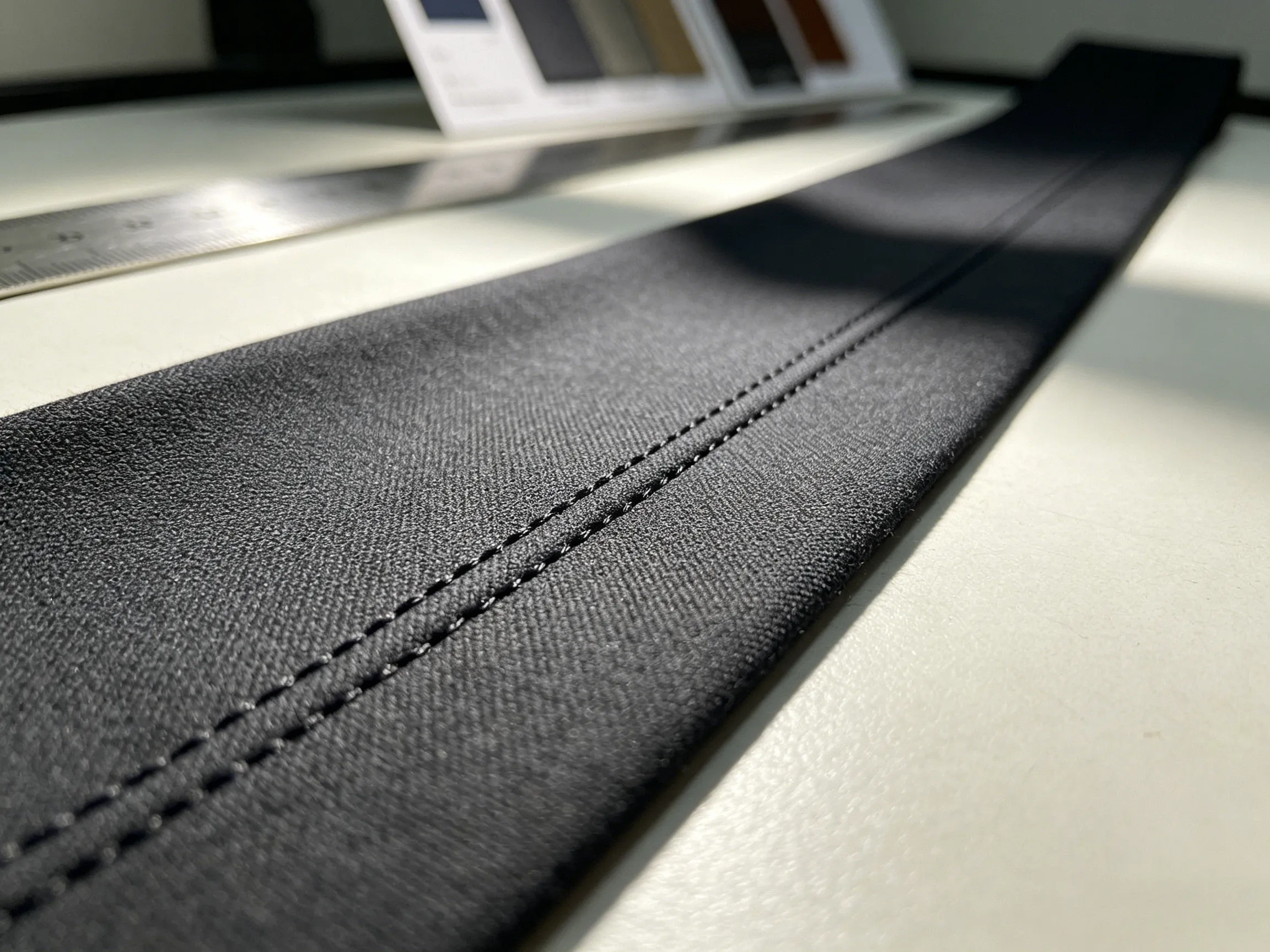
Double-needle stitching, premium metal hardware, perfect edge finishing
Section 6: Color and Branding Requirements
Consistent branding requires precise color communication. Always specify colors using industry-standard Pantone codes rather than descriptive names.
Color Specification Requirements
| Color Name | Pantone Code | Location | Application Method |
|---|---|---|---|
| Classic Black | Pantone Black C | Main body shell | Solution-dyed |
| Navy Blue | Pantone 533 C | Accent panels | Dyeing |
| Charcoal Grey | Pantone Cool Grey 11 C | Lining | Solution-dyed |
| Gold Accent | Pantone 871 C | Logo, hardware | Metal plating / Print |
Logo and Branding Specifications
- Logo Placement — Front panel, centered, 5cm from bottom edge
- Logo Size — 4cm width x 1.5cm height
- Application Method — Embroidery (logo), Screen print (care info), Woven label (brand)
- Label Placement — Inside main compartment, 10cm from top edge, left side
Section 7: Hardware Specification
Hardware components are critical functional elements. Specify every detail to ensure consistent quality and appropriate strength ratings.
Zipper Specifications
| Component | Type | Size | Brand | Pull Style |
|---|---|---|---|---|
| Main Compartment | Reversed Coil | #10 (8mm) | YKK / SBS | Custom logo pull |
| Front Pocket | AquaGuard | #5 (3mm) | YKK / SBS | Standard pull |
| Side Pocket | Open End | #3 (2mm) | YKK / SBS | No pull |
Buckle and Fastener Specifications
- Material — POM (acetal), Nylon, or Metal (per design)
- Strength Rating — 25kg minimum for adjustment buckles
- Finish — Matte black, brushed nickel, antique brass (per Pantone)
Webbing Specifications
| Application | Width | Material | Breaking Strength |
|---|---|---|---|
| Shoulder Straps | 25mm / 1″ | PP Webbing | 500kg |
| Top Handle | 25mm / 1″ | PP Webbing | 300kg |
| Chest Strap | 20mm / 0.8″ | Polyester | 200kg |
Section 8: Packaging and Label Requirements
Professional packaging protects your product during transit and reinforces your brand identity. Specify all packaging details in your tech pack.
Individual Product Packaging
- Hanging Tag — Custom branded, includes barcode and price
- Care Label — Washing instructions, fiber content, country of origin
- Barcode Label — UPC/EAN code, product size/color variant
- Polybag — 40 micron minimum, silica gel packet included
Carton Packaging
| Carton Size | Units per Carton | Gross Weight | Carton Marking |
|---|---|---|---|
| 50 x 40 x 55 cm | 10 pieces | 12 kg max | Style No., Color, Size, Qty, PO No. |
Packaging Excellence
Premium packaging enhances unboxing experience and customer perception. Consider tissue paper, custom stickers, and premium hang tags for higher-end products.
Free Backpack Tech Pack Template
Backpack Tech Pack Template for OEM Manufacturing
Download our comprehensive template that includes all essential sections for professional backpack production.
Template Contents:
- Product overview section
- Dimension sheet template
- Material specification form
- Complete BOM checklist
- Hardware specification sheet
- Color reference chart
- Packaging requirements form
- QC requirements checklist
Common Mistakes When Creating a Backpack Tech Pack
Mistake 1: Missing Measurement Tolerances
Without specified tolerances, factories and inspectors have no objective standard for acceptance. Always include ± tolerances for critical dimensions.
Mistake 2: Only Providing Product Images
Product photos don’t communicate construction details, material specifications, or dimension requirements. They supplement technical drawings—they cannot replace them.
Mistake 3: Not Specifying Materials
Vague material descriptions like “durable fabric” or “quality leather” lead to factory discretion. Specify exact materials, weights, and supplier references.
Mistake 4: Ignoring Production Limitations
Some designs are technically impractical for manufacturing. Consult with factories about feasibility before finalizing your tech pack.
Mistake 5: Changing Design After Sampling
Design changes after sample approval trigger new sample cycles, extended timelines, and additional costs. Lock specifications before sampling begins.
How Factories Review a Backpack Tech Pack Before Sampling
Understanding the factory review process helps you prepare better tech packs and set realistic expectations.
Factory Review Process
Engineering Review
Technical team assesses design feasibility, identifies construction challenges, and reviews measurement specifications.
Material Confirmation
Sourcing team verifies material availability, requests samples, and confirms pricing for specified components.
Cost Evaluation
Commercial team calculates total product cost based on materials, labor, hardware, and packaging specifications.
Sample Development
Production team creates prototype based on approved tech pack, following all specified construction details.
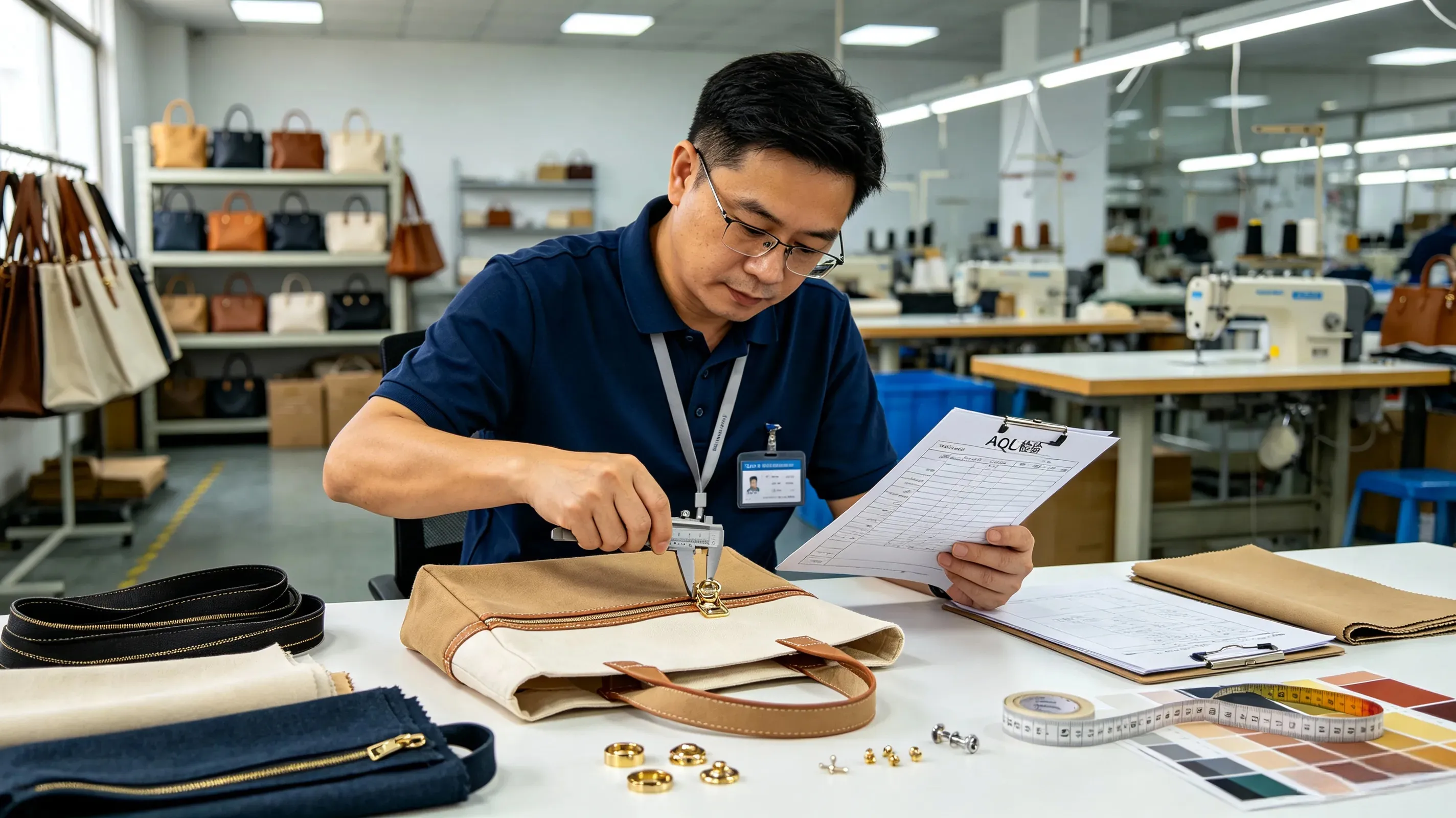
Sample Review
Quality team inspects sample against tech pack specifications, documents any deviations, and prepares feedback report.
From Tech Pack to Finished Backpack: Production Workflow
The journey from a complete tech pack to finished product follows a systematic quality-controlled process:
Tech Pack Submission
Material Confirmation
Sample Making
Sample Approval
Mass Production
QC Inspection
Expert Insights: How Better Tech Packs Improve Production Efficiency

Emily
Senior Project Manager
12 years in OEM bag manufacturingQ: What information do factories need before providing a quotation?
“A complete tech pack is ideal, but at minimum we need: product drawings showing all views, target pricing (FOB), order quantity (MOQ 200+), material preference, and target delivery date. The more complete the information, the more accurate the quote.”
Q: What causes the most delays during product development?
“Incomplete specifications are the #1 cause of delays. When we receive a tech pack with missing information—unclear material specs, missing tolerance ranges, or undefined logo positions—we have to send multiple clarification requests. Each round of questions adds days to the timeline.”
Kevin
Pattern Development Engineer
15 years in bag pattern makingQ: Which tech pack details most affect production quality?
“Three areas are critical: stitch specifications (type, density, and reinforcement points), material thickness (which affects how pieces fit together), and structural reinforcement locations. Vague specifications in any of these areas will show up as quality problems in the finished product.”
Q: What advice do you have for brands new to OEM manufacturing?
“Start with a sample order even if you have a larger order planned. The sample phase is where you catch specification issues—it’s much cheaper to fix problems on 5 pieces than on 5,000. Also, maintain your tech packs as living documents; update them whenever you approve a change.”
Backpack Tech Pack Checklist Before Sending to Factory
Frequently Asked Questions
What is a backpack tech pack?
A backpack tech pack is a comprehensive technical document containing all product specifications needed for manufacturing, including design drawings, measurements, materials, construction details, and quality requirements.
How do I create a tech pack for a backpack?
Start with our free template and include: product overview, technical drawings (front, back, side, inside views), dimension sheet with tolerances, material specifications, complete BOM, construction details, color references with Pantone codes, hardware specifications, and packaging requirements.
What should a backpack tech pack include?
A complete backpack tech pack should include 10 sections: Product Overview, Design Sketches, Dimension Sheet, Material Specification, Bill of Materials (BOM), Construction Details, Color Reference, Hardware Details, Label & Packaging, and Quality Requirements.
Do factories need a tech pack?
Yes, professional factories require detailed tech packs to provide accurate quotations, assess production feasibility, and ensure products meet brand specifications. Without a tech pack, factories must make assumptions that often lead to quality issues and cost overruns.
Can a factory create a tech pack?
Some factories offer tech pack creation services, but it’s typically better for brands to create their own tech packs to ensure their vision is accurately documented. Factories can provide technical input on feasibility and manufacturing constraints, but the creative vision should come from the brand.
How much does a backpack tech pack cost?
Tech pack costs vary widely: DIY using templates is free, professional design services range from $200-2000 depending on complexity, and some factories include basic tech pack creation in their sampling fees. The investment is minimal compared to the cost of production errors.
What drawings are needed for a backpack tech pack?
Essential drawings include: front view, back view, side view, top view, inside structure view, and exploded view showing all components. Technical CAD drawings are preferred over artistic renderings or product photos.
What measurements should be included in a backpack tech pack?
Include: main body dimensions (height, width, depth), strap lengths, pocket dimensions, compartment sizes (especially laptop compartment), handle drop, total volume, and all measurements with specified tolerances (±0.3-0.5cm typical).
What is BOM in backpack manufacturing?
BOM (Bill of Materials) lists every component needed for production: shell fabric, lining, foam padding, hardware (zippers, buckles, webbing), labels, tags, and packaging materials. Each item includes material type, specification, quantity, and supplier reference.
How can I reduce backpack sampling time?
Provide complete, detailed tech packs from the start. Common causes of extended sampling: missing specifications requiring clarification, unclear construction details, material substitution negotiations, and multiple design changes. A comprehensive first submission dramatically reduces iteration cycles.
What is the typical MOQ for custom backpack production?
Most factories set MOQ (Minimum Order Quantity) at 200-500 pieces per color/style. At Dreamway, our MOQ for tote bags is 200 pieces and silk products start at 50 pieces. Larger orders typically offer better unit pricing.
How do I specify backpack material quality?
Specify: material type (polyester, nylon, canvas, etc.), denier weight (300D, 600D, 900D), water resistance rating, supplier reference or sample, and any certifications required (REACH, CA Prop 65, etc.).
What quality standards should I include in my tech pack?
Include: AQL inspection standard (typically 2.5 for finished goods), specific test requirements (zipper strength, seam integrity, strap load testing), color matching tolerances, and reference to any relevant certifications or compliance requirements.
How do I specify logo requirements in a tech pack?
Document: exact logo file (vector format preferred), placement location with measurements from edges, size in both dimensions, application method (embroidery, screen print, heat transfer, woven label), and color specifications with Pantone codes.
What’s the difference between OEM and ODM backpack production?
OEM (Original Equipment Manufacturing): You provide the design and tech pack; factory manufactures to your specifications. ODM (Original Design Manufacturing): Factory provides existing designs that you customize with branding. OEM offers more design control; ODM typically has lower development costs.
How do I find a reliable backpack factory in China?
Research factories through: trade directories (Alibaba, Made-in-China), industry trade shows, professional networks, and B2B sourcing platforms. Verify factory credentials, request sample production, and conduct facility audits before committing to large orders.
What is a “golden sample” in backpack manufacturing?
A golden sample (or reference sample) is an approved production sample that serves as the quality benchmark. All subsequent production should match the golden sample. Include physical samples with your tech pack to eliminate ambiguity about quality expectations.
How do I specify zipper quality in my tech pack?
Specify: zipper type (YKK, SBS, or other), size (#3, #5, #10 indicating tape width), style (reversed coil, metal, plastic), puller design (standard or custom), and functional requirements (water-resistant, lockable, etc.).
What packaging information should I include?
Document: individual packaging (polybag, tissue, hang tag), care labels content and placement, barcode specifications, inner packing requirements, carton dimensions and weight, and any special handling instructions.
How do I specify color matching requirements?
Always reference Pantone codes for primary colors. Include physical color references when possible, specify acceptable delta-E tolerances for color matching (typically ΔE < 2 for visible colors), and note if colors should match across different material types.
What are typical backpack production lead times?
Standard lead times: sample development 2-4 weeks, bulk production 4-8 weeks after sample approval. Rush orders typically add 20-30% to costs. Longer timelines may apply for specialized materials, custom hardware, or large order quantities.
Disclaimer
This backpack tech pack guide is provided for general OEM manufacturing reference purposes. Actual production requirements may vary depending on specific product design, material availability, factory capabilities, and destination market regulations. Specifications should be verified with your manufacturing partner before finalizing orders.
Dreamway Manufacturing is a professional bag and silk products factory located in Huadu District, Guangzhou, China, serving clients across 50+ countries with a dedicated team of 30+ professionals.
- Private Label Backpack Manufacturers | OEM/ODM China Factory
- Custom Travel Bag Manufacturer | OEM/ODM Factory for Travel Bags
- How to Create a Backpack Tech Pack for Manufacturing
- Backpack MOQ Explained: Minimum Order Quantity, Mixed Styles & Cost Strategy
- Custom Backpack Cost Breakdown: Materials, Labor, MOQ & Packaging
- How Long Does It Take to Manufacture a Backpack? Timeline Guide
- How to Create a Backpack Tech Pack for Manufacturing (Free Template)
- The Complete Backpack Quality Inspection Checklist for Buyers
- Inside a Backpack Factory: Complete Backpack Manufacturing Process Step by Step
- Backpack Materials Guide: Polyester, Nylon, Canvas, RPET, Foam & Hardware Explained
- OEM Backpack Manufacturer: Private Label, ODM & Custom Branding Guide
- Backpack Factory China: OEM Manufacturing, MOQ, Production Capacity & Export Guide
DREAMWAY
Custom Bag & Silk Manufacturer · Shiling, Guangzhou
Company
Products
Guides & Insights
Ready to Bring Your Bag Idea to Life? Let’s Talk Today.
From your first sketch to bulk delivery, our team replies within 12 hours with expert advice and a free quote. No pressure — just honest manufacturing guidance.

Prefer a call? +86-020-87682749 · Mon–Sat, 9:00–18:00 (GMT+8)
Your Premium Nylon Backpack Manufacturing Hub
Explore our comprehensive collection of resources, from material selection to final delivery, connecting you with expert insights from China’s leading backpack manufacturer.
Core Manufacturing Expertise Essential guides for sourcing nylon backpacks
Discover our extensive catalog of wholesale nylon backpacks, featuring premium materials, competitive pricing, and flexible order quantities tailored for global brands and retailers.
Explore wholesale nylon backpack collectionLearn how to personalize every detail of your backpack—from logo placement and color matching to hardware selection—creating products that truly represent your brand identity.
Complete backpack customization guidePartner with our OEM specialists to bring your designs to life. We handle everything from prototype development to mass production with rigorous quality standards.
OEM backpack manufacturing solutionsOur state-of-the-art manufacturing facilities in China combine traditional craftsmanship with modern production technology to deliver exceptional quality at scale.
China-based backpack factory operationsUnderstanding fabric properties is crucial for product performance. Dive deep into nylon grades, denier ratings, coatings, and treatments that affect durability and aesthetics.
Comprehensive backpack materials guideFrom initial design consultation to final packaging, trace every step of our streamlined manufacturing process designed to minimize lead times without compromising quality.
Inside the backpack manufacturing workflowQuality assurance transforms good products into exceptional ones. Explore our multi-point inspection protocols, stress testing procedures, and compliance verification methods.
Professional quality control checklistMinimum order quantities can make or break a sourcing strategy. Find the right balance between inventory investment and per-unit economics for your business model.
Understanding MOQ requirements explainedTransparent pricing demystifies the cost structure behind custom backpacks. Learn how material costs, labor, tooling, and shipping factor into your final quote.
Detailed custom backpack cost analysisLaunch your own backpack line with professional private label services. We provide complete brand packaging, labeling, and custom documentation support.
Private label backpack manufacturing servicesStart small and scale confidently with our low minimum order commitments. Perfect for startups, market testing, and boutique brands seeking quality manufacturing.
Low MOQ backpack manufacturer optionsNavigate the competitive landscape with confidence. Our curated ranking of top-tier manufacturers helps you identify partners who align with your quality standards.
Top rated backpack manufacturers directoryRelated Product Categories Expand your sourcing portfolio
Complement your backpack line with premium custom travel bags. Our travel bag collection shares the same quality standards and manufacturing expertise.
Custom travel bag manufacturing servicesChoosing the right material impacts cost, durability, and market appeal. Our comprehensive comparison helps you make informed material decisions.
Canvas versus polyester versus PU comparisonA well-prepared tech pack bridges design intent with manufacturing reality. Master the art of creating detailed specifications that manufacturers can execute precisely.
Professional backpack tech pack creationTimeline management separates successful launches from costly delays. Understand typical production phases and learn strategies to optimize your lead time.
Backpack manufacturing lead time factorsExpand your product range with canvas tote bags. This guide covers material costs, printing techniques, and production considerations for complementary items.
Canvas tote bag materials and printing costs