
EU PPWR Compliance Checklist for Bag Importers
Your Essential Guide to Navigating Packaging Regulations for Sustainable Bag Imports

Compliance Disclaimer
This checklist is provided for general informational purposes only and should not be interpreted as legal advice. Actual compliance obligations may vary depending on product category, destination market, and future legislative developments. Businesses should consult official EU legislation and qualified compliance professionals before making regulatory decisions.
More and more European buyers are discovering a troubling truth:
The real challenge isn’t finding a factory.
It’s verifying whether that factory is truly PPWR-ready.
As the EU’s Packaging and Packaging Waste Regulation (PPWR) reshapes the landscape for bag importers, the stakes have never been higher. What was once a straightforward sourcing decision—Price, MOQ, Lead Time—now demands a comprehensive understanding of Packaging composition, Material sourcing, Labeling requirements, and Traceability systems.
This is precisely why we’ve created this comprehensive checklist: a practical, ready-to-use tool that enables you to evaluate supplier readiness from the very first inquiry.

Why Every Bag Importer Needs a PPWR Checklist
The landscape of bag importing has fundamentally shifted. While pricing, minimum order quantities, and production timelines remain important, the new frontier of compliance has become equally critical.
Traditional Focus
- Competitive pricing
- Minimum order quantities
- Lead times
- Basic quality standards
PPWR Era Requirements
- Packaging composition
- Material compliance
- Labeling accuracy
- Full traceability
- Documentation integrity
With regulations like the EU’s Packaging and Packaging Waste Regulation (PPWR) setting new standards, importers must adapt their supplier evaluation criteria. This checklist covers the complete spectrum of PPWR compliance, from initial supplier evaluation through to final shipment.
Whether you’re working with an OEM supplier, evaluating a new manufacturing partner, or establishing compliance protocols with existing vendors, this checklist provides the framework you need to ensure nothing falls through the cracks.
How to Use This Checklist
This checklist is designed to be your companion throughout the entire procurement lifecycle. Here’s when each section becomes relevant:
RFQ Stage
Use Section 1 (Supplier Qualification) and Section 2 (Material Compliance) to screen potential partners.
Sampling Phase
Leverage Section 4 (Labeling) and Section 5 (Documentation) to establish requirements.
Production
Apply Section 6 (Production) and Section 7 (Quality Control) for oversight.
Inspection
Reference Section 7 (QC) and Section 8 (Traceability) for verification.
Shipment
Complete final checks with Section 9 (Logistics & Export).
Section 1 — Supplier Qualification Checklist
Before engaging with any supplier, verify their foundational capabilities. A qualified supplier should demonstrate both manufacturing excellence and regulatory awareness.

Emily
“Before every quotation and sampling project, I personally confirm customer requirements, compliance expectations, packaging specifications, and production feasibility. This ensures we’re aligned from day one.”
- 12+ years in OEM bag manufacturing
- Manages 15–25 active projects simultaneously
- Direct liaison for compliance documentation
Factory Information
- ✔ Factory name and legal registration
- ✔ Factory address (physical location)
- ✔ Export experience (countries served)
- ✔ Production capacity verification
Certifications & Compliance
- ✔ ISO 9001 (Quality Management)
- ✔ ISO 14001 (Environmental)
- ✔ BSCI (Social Compliance)
- ✔ Sedex/SMETA
- ✔ WRAP (if applicable)
- ✔ GRS (Global Recycled Standard)
Manufacturing Capabilities
- ✔ OEM experience documented
- ✔ ODM capabilities
- ✔ Dedicated QC team
- ✔ Sample room availability
- ✔ Production line capacity
Digital Infrastructure
- ✔ ERP system in place
- ✔ MES (Manufacturing Execution System)
- ✔ Traceability software
- ✔ Digital documentation system
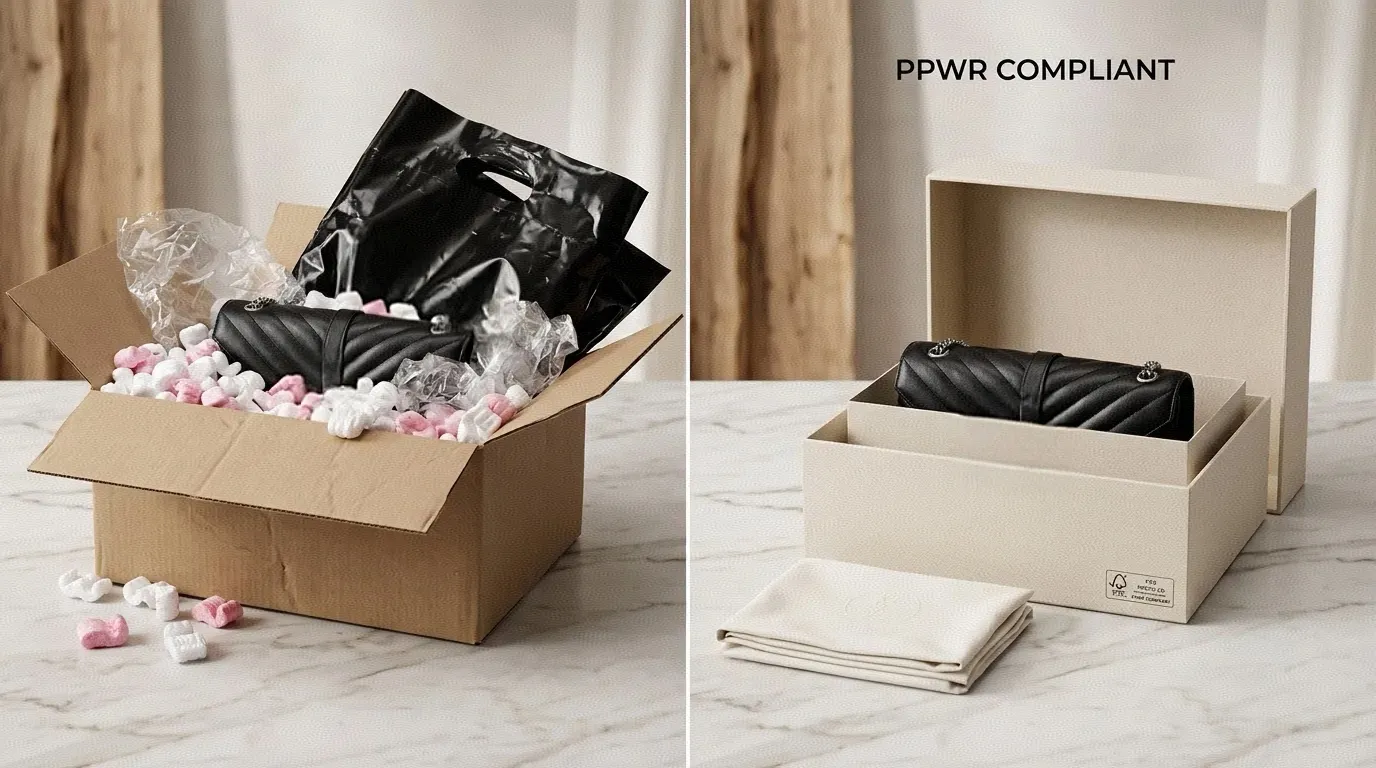
Section 2 — Material Compliance Checklist
Material selection is at the heart of PPWR compliance. Verify that every component meets regulatory requirements and sustainability standards.

Material Types & Verification
- Cotton — Organic certification, sustainable sourcing records
- rPET (Recycled Polyester) — GRS certification, recycled content percentage
- Leather — Origin documentation, REACH compliance
- Silk — Grade verification, fiber origin
- Nylon/Polyester — Recycled content (if applicable)
- Packaging Material — Composition breakdown
Documentation Requirements
- Supplier material declarations
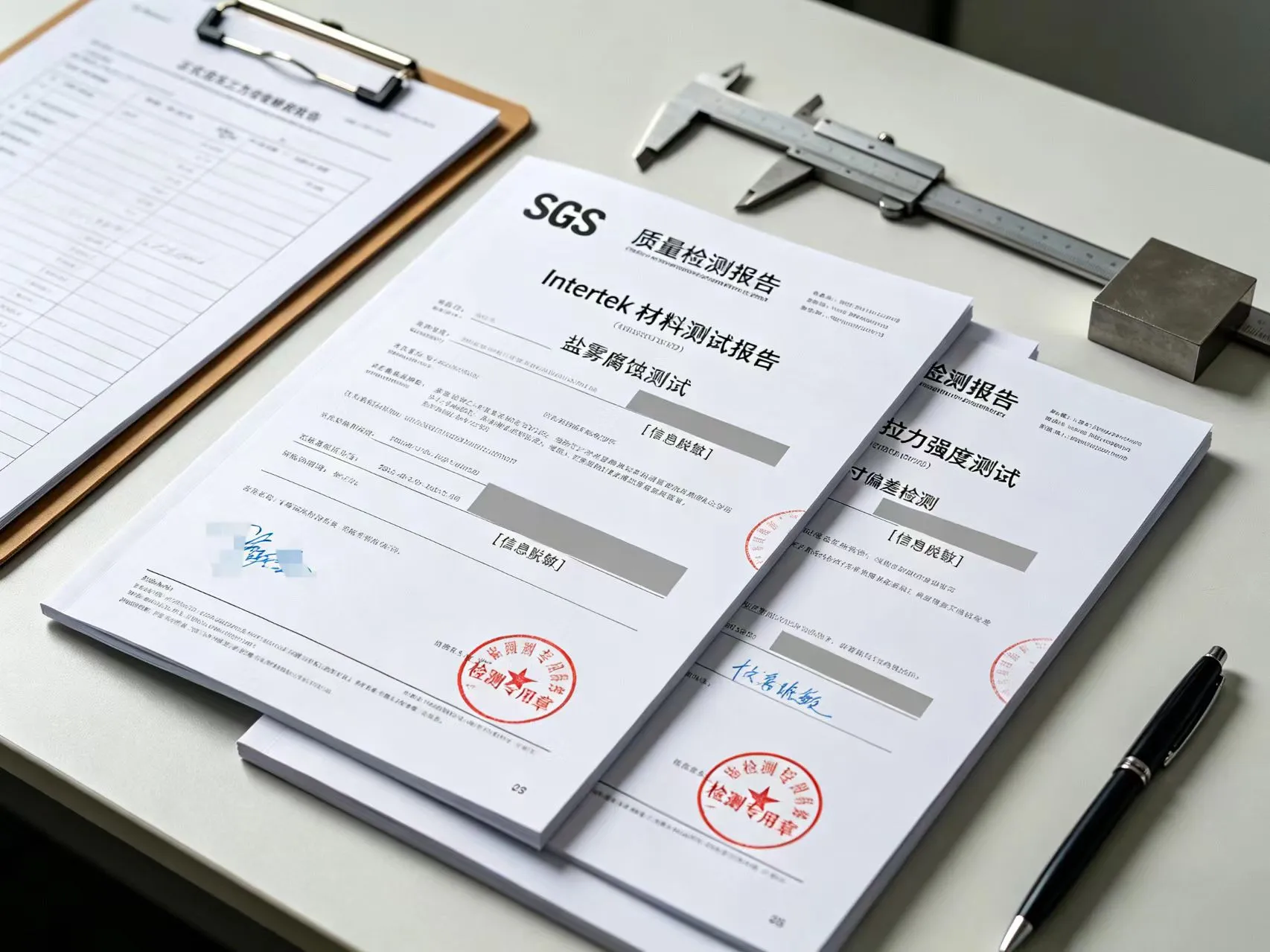
- Test reports (SGS/Intertek)
- Restricted substances list (RSL) compliance
- REACH compliance certificates
- Chemical safety data sheets
- Material traceability records
Key Consideration
PPWR requires documented proof of material composition and origin. Ensure suppliers can provide third-party test reports for all primary materials, not just finished products.
Section 3 — Packaging Checklist
Packaging is where PPWR compliance becomes most tangible. Every gram matters, and documentation is essential.
.webp)
Packaging Components
- Carton boxes — Dimensions, material composition, recyclability
- Polybags — Material type, thickness, recyclable designation
- Dust bags — Material, printing inks
- Wrapping materials — Paper vs. plastic verification
- Tissue paper — Material source
- Stickers/labels — Adhesive composition
Compliance Verification
- Packaging weight documented
- Recyclability certification
- Recycled content percentage
- Carton strength (bursting factor)
- Drop test results
- Plastic-free alternatives available
- Minimum recycled content (% if required)
- Reusability certification
Marking & Approval
- Shipping marks on cartons
- Country of origin marking
- Weight indicators (gross/net)
- Packaging artwork approval
- Customer packaging specifications on file
- Pre-production packaging sample approval
⚠️ Critical Alert
As of January 2025, PPWR requirements are being phased in. Certain single-use plastic packaging items face bans. Verify current requirements for your specific product categories.
Section 4 — Labeling Checklist
Labels are your product’s passport. Incomplete or incorrect labeling can result in customs delays, shipment rejections, and compliance penalties.

Required Labels
- Product label — Brand, model, size
- Material composition label — Fabric breakdown
- Care labels — Washing/care instructions
- Country of origin — Made in China
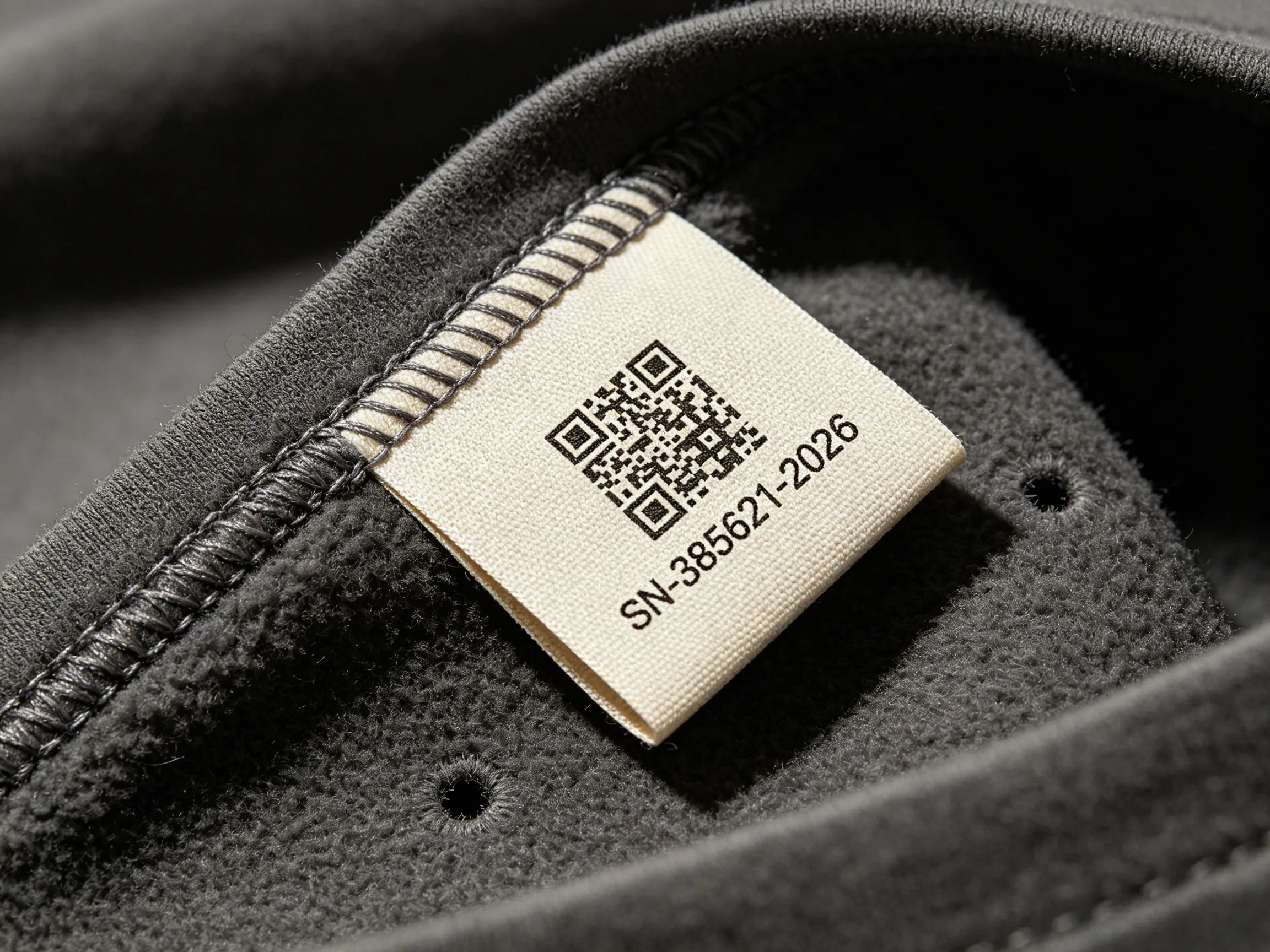
- QR Code — Digital Product Passport link
- Barcode — UPC/EAN verified
Traceability Labels
- Batch number
- Production date
- Serial number (if applicable)
- Factory code/identifier
- Size/color variants clearly marked
- Carton labels matching inner labels
Compliance Checks
- Language requirements met (destination market)
- Symbol usage verified
- Font size compliance
- Durability testing (wash/wear resistance)
- Artwork approval documentation
- Label placement confirmation
Digital Product Passport (DPP)
PPWR mandates digital product passports. Ensure your supplier can generate QR codes linking to compliance documentation, material declarations, and traceability records. This is becoming essential for EU market access.
Section 5 — Documentation Checklist
Comprehensive documentation is the backbone of PPWR compliance. Every transaction, every material, every decision must be traceable through paper trails.
| Document | Purpose | Required From |
|---|---|---|
| Purchase Order (PO) | Legal confirmation of order terms | Buyer |
| Proforma Invoice (PI) | Quote confirmation, customs valuation | Supplier |
| Packing List | Carton count, dimensions, weights | Supplier |
| Commercial Invoice | Customs declaration, payment basis | Supplier |
| Inspection Report | Quality verification documentation | QC/SGS |
| Test Reports | Material safety, REACH compliance | Third-party lab |
| Material Declaration | Composition verification, traceability | Supplier |
| AQL Report | Quality acceptance criteria | Factory QC |
| Shipping Documents | Bill of Lading, origin certificates | Forwarder |
| Certificate Copies | ISO, BSCI, GRS documentation | Supplier |
Documentation Verification
- All documents match (PO, PI, PL, Invoice)
- Quantities consistent across documents
- HS codes verified
- Signatures and stamps present
- Digital copies archived
- Document version control
Common Missing Documents
Based on our experience, these documents are most often overlooked but critical for compliance:
| Material Declaration | Required for traceability |
| AQL Report | Quality verification |
| Packaging Specification | Shipment accuracy |
| Inspection Report | Buyer acceptance |
Section 6 — Production Checklist
A well-managed production process is essential for maintaining compliance throughout manufacturing. Use this section to verify production readiness and ongoing oversight.
Golden Sample
- Pre-production sample approval
- Reference sample retention
- Color/print approval signed
Material Approval
- Swatch approval (fabric, trims, hardware)
- Material testing before cutting
- Print/artwork approval
Production Schedule
- Production timeline confirmed
- Key milestones defined
- Inspection points scheduled
Line Inspection
- Mid-production inspection scheduled
- Operator training records
- Quality standards posted
Production Oversight
- MES tracking enabled
- ERP production orders created
- Quality checkpoints defined
- Production records maintained
- Operator certification verified
- Equipment calibration current
Section 7 — Quality Control Checklist
Quality control isn’t just about the final product—it’s about building compliance into every step of the manufacturing process.

Kevin
“With 15 years of experience in bag pattern making across leather, canvas, nylon, and technical fabrics, I ensure every pattern meets exact specifications before production begins. This prevents costly errors and ensures consistency.”
- 15 years in bag pattern making
- Expert in leather, canvas, nylon, technical fabrics
- Precision pattern development

QC Stages
- Incoming QC — Material inspection upon arrival
- Inline QC — During production monitoring
- Pre-shipment QC — Final product inspection
- Packing QC — Labeling and packaging check
Inspection Criteria
- AQL 2.5 standard applied
- Measurement verification (dimensions)
- Appearance inspection (color, print, finish)
- Function testing (zippers, buckles, straps)
- Barcode/QR code scan verification
- Carton integrity check

Section 8 — Traceability Checklist
Traceability is no longer optional—it’s a PPWR requirement. Every product must have a clear digital identity linking it back to its origin.
Traceability Data Points
- Batch/lot number assignment
- Supplier identification code
- QR code generation
- Serial number assignment
- Inspection records linked
- Material lot tracking
- Production date recording
- Operator identification
System Requirements
- MES integration operational
- ERP inventory sync active
- Digital records archived
- QR code database maintained
- Recall procedure documented
- Data retention policy defined
Why Traceability Matters
When a compliance issue arises—whether a material safety concern or a product defect—traceability enables you to identify affected batches, notify customers promptly, and implement corrective actions. This protects both your business and your end consumers.
Section 9 — Logistics & Export Checklist
The final leg of compliance—getting your products from factory to market requires as much attention as the manufacturing process itself.
Shipping Terms & Documentation
- FOB — Freight on Board terms clear
- DDP — Delivered Duty Paid (if applicable)
- Shipping method — Sea/Air verified
- Port of loading — Confirmed
- Port of discharge — Confirmed
- Transit time — Acceptable
Packaging & Loading
- Container loading photos taken
- Carton count verified
- Seal number recorded
- Palletization complete (if applicable)
- ISPM 15 compliance verified
- Shipping marks visible
Final Verification
- Bill of Lading received
- Certificate of Origin issued
- Packing list matches shipment
- Insurance documentation
- Customs declaration prepared
- Tracking number shared
Common PPWR Compliance Mistakes
Learning from others’ errors can save significant time, money, and frustration. Here are the most frequently encountered compliance pitfalls.
| Mistake | Risk Level | Prevention |
|---|---|---|
| Missing supplier records | High | Request complete documentation package before ordering |
| Incorrect label information | High | Double-check all labels against specifications |
| Lacking traceability system | High | Require MES/ERP integration from suppliers |
| Unsupported environmental claims | Medium | Only use certified claims with documentation |
| Missing inspection reports | High | Schedule inspections with certified third parties |
| Incomplete material declarations | Medium | Request declarations for all components |
| Packaging weight not documented | Medium | Include packaging specs in Tech Packs |
| Artwork approval skipped | Low | Never skip pre-production artwork review |
Printable PPWR Compliance Checklist
Use this consolidated checklist for your day-to-day supplier evaluations. Print it, save it, share it with your team.
☐ Supplier Qualification
- Factory certifications (ISO, BSCI)
- Export experience verified
- QC team documented
- MES/ERP systems operational
- Traceability capability confirmed
☐ Materials
- Material declarations obtained
- Test reports verified
- RSL compliance confirmed
- Recycled content documented
- Supplier records archived
☐ Packaging
- Packaging specs defined
- Recyclability verified
- Weight documented
- Approval samples received
- Plastic alternatives available
☐ Labels
- Product labels approved
- QR codes functional
- Barcodes verified
- Language requirements met
- Artwork signed off
☐ Documents
- PO/PI match confirmed
- Inspection reports obtained
- Test reports on file
- Material declarations ready
- AQL report included
☐ Production
- Golden sample approved
- Production schedule confirmed
- Line inspection scheduled
- Quality records maintained
- MES tracking active
☐ QC
- Incoming QC completed
- Inline QC passed
- Final QC approved
- AQL standards met
- Measurements verified
☐ Shipment
- Loading photos taken
- Seal number recorded
- Shipping docs complete
- CO issued
- Tracking shared
Supplier Self-Assessment Scorecard
Evaluate your suppliers with this 100-point scoring system. Use it to identify gaps and prioritize improvements.
| Category | Max Score | Supplier Score | Notes |
|---|---|---|---|
| Supplier Qualifications | 20 | Certifications, experience, capabilities | |
| Material Compliance | 20 | Documentation, testing, sourcing | |
| Production Management | 15 | Systems, scheduling, oversight | |
| Quality Control | 20 | QC processes, testing, standards | |
| Packaging & Labeling | 15 | PPWR compliance, accuracy | |
| Documentation | 10 | Completeness, accuracy, retention | |
| Total | 100 |
80–100: Ready
Supplier demonstrates full PPWR compliance capability. Proceed with confidence.
60–79: Needs Improvement
Supplier shows potential but has gaps. Request corrective action plan.
40–59: High Risk
Significant compliance issues. Consider alternative suppliers.
Below 40: Not Recommended
Critical gaps in compliance capability. Do not proceed.
Buyer Readiness Score
Just as suppliers need to be evaluated, buyers should assess their own compliance readiness. This self-assessment helps identify areas for improvement in your procurement processes.
Documentation Readiness
- Tech Packs include packaging specifications
- Compliance requirements clearly communicated
- Document retention policy established
Process Readiness
- Inspection protocols defined
- Label approval workflow established
- Traceability verification process in place
Knowledge Readiness
- Team trained on PPWR requirements
- Legal counsel consulted for specific questions
- Updated on regulatory changes
Frequently Asked Questions
Does PPWR apply to bags?
Yes. PPWR applies to all packaging placed on the EU market, including shopping bags, garment bags, dust bags, and any packaging accompanying bags. If your product includes packaging components, PPWR compliance is required.
How should suppliers prepare for PPWR?
Suppliers should audit their packaging materials, establish traceability systems, obtain necessary certifications (ISO, GRS), and prepare comprehensive documentation packages including material declarations and test reports.
What documents should buyers request from suppliers?
Essential documents include: material declarations, test reports (REACH, safety), inspection reports, AQL reports, packaging specifications, traceability records, and copies of relevant certifications.
Is a QR code required on all bags?
Digital Product Passports (DPP) via QR codes are becoming mandatory under PPWR for certain product categories. Even where not yet mandatory, implementing QR code traceability is strongly recommended for market competitiveness.
What packaging information must be declared?
Required information includes: material composition (by weight), recycled content percentage, recyclability certification, packaging dimensions, and country of origin. Additional requirements may apply based on product category.
Should factories provide material declarations?
Absolutely. Material declarations are fundamental to PPWR compliance. They provide the documented proof of material composition required for regulatory compliance and traceability.
How should importers evaluate suppliers for PPWR compliance?
Use our Supplier Self-Assessment Scorecard, request documentation packages, conduct factory audits, verify certifications, and test traceability systems before placing orders.
What inspection reports matter most?
Most critical are: pre-shipment inspection reports (with AQL results), material test reports (REACH, safety), and any product-specific testing (tensile strength, colorfastness, etc.).
Should buyers request AQL reports?
Yes. AQL (Acceptable Quality Level) reports demonstrate that inspection sampling was conducted according to international standards and provide quantitative quality metrics.
How should traceability be verified?
Request sample traceability reports from suppliers showing how batch numbers, material lots, production dates, and operator records link together. Verify QR code functionality and database accessibility.
Can third-party inspections help?
Third-party inspections (SGS, Bureau Veritas, Intertek) provide independent verification of quality and compliance, which is valuable for both buyer confidence and supplier credibility.
How often should suppliers update compliance documents?
Documents should be updated annually at minimum, or immediately when: regulations change, material sources change, product specifications change, or certifications expire.
What packaging records should be archived?
Retain: packaging specifications, material declarations, recyclability certifications, weight documentation, artwork approvals, and supplier correspondence for minimum 5 years.
What happens if documentation is incomplete?
Incomplete documentation can result in customs delays, shipment rejections, compliance penalties, and liability issues. Always verify completeness before shipment.
How can OEM suppliers reduce compliance risk?
Establish robust documentation systems, invest in traceability technology, maintain certifications, conduct regular internal audits, and stay informed about regulatory updates.
About Dreamway Manufacturing

Based in Guangzhou’s Huadu District, Shiling Town—known as China’s bag manufacturing capital—Dreamway is a specialized factory producing handbags, backpacks, and silk products. With over 30 dedicated team members and partnerships spanning 50+ countries, we combine artisan craftsmanship with modern manufacturing systems.


Our integrated quality management approach includes MES (Manufacturing Execution System) for real-time production monitoring, comprehensive inspection protocols at every stage, and full traceability from raw materials to finished products.
Ready to Discuss Your PPWR Compliance Needs?
Our team is experienced in helping international brands achieve compliance. Contact us to discuss your requirements.
Visit Our Website
Scan with WhatsApp to chat with Victoria