
Compliance Disclaimer
This article is provided for general information only and should not be considered legal or regulatory advice. Packaging regulations may vary depending on product type, destination market, and future legislative updates. Businesses should consult official EU legislation and qualified compliance professionals before making regulatory decisions.
European brands are increasingly scrutinizing every component that accompanies a product shipment — not just the bag itself, but the entire packaging ecosystem: retail packaging, shipping cartons, hang tags, tissue paper, polybags, QR labels, and care instructions.
While many factories still focus exclusively on the product bag, a growing number of buyers now treat packaging as a critical part of supplier evaluation. Why? Because non-compliant packaging can result in customs delays, retailer rejections, environmental penalties, and damaged brand reputation.

The truth is simple: packaging has become a major source of procurement risk. In this guide, we walk you through a proven four-step workflow that helps buyers source packaging-compliant products from OEM manufacturers — with confidence.
Why Packaging Compliance Has Become a Purchasing Decision
The Evolution: From Transport Tool to Regulatory Object
In the past, packaging was simply a means to protect products during transit. Today, it has evolved into a regulatory object subject to strict European Union requirements — most notably the Packaging and Packaging Waste Regulation (PPWR).
This shift carries significant implications for every stakeholder in the supply chain:
Retailers
Responsible for ensuring suppliers meet sustainable packaging standards; face penalties for non-compliance.
Importers
Must verify packaging materials, documentation, and traceability — or risk customs detention.
Brands
Accountable for Extended Producer Responsibility (EPR); need verifiable proof of packaging compliance.
Factories
Required to provide material declarations, test reports, and traceability records for every packaging component.

The narrative structure of sustainable closed-loop packaging has become central to demonstrating corporate social responsibility and commitment to the Circular Economy. Brands that fail to adapt risk not only regulatory penalties but also damage to their reputation among environmentally conscious consumers.
Key Takeaway: Packaging compliance is no longer optional — it’s a prerequisite for doing business with European retailers and brands.
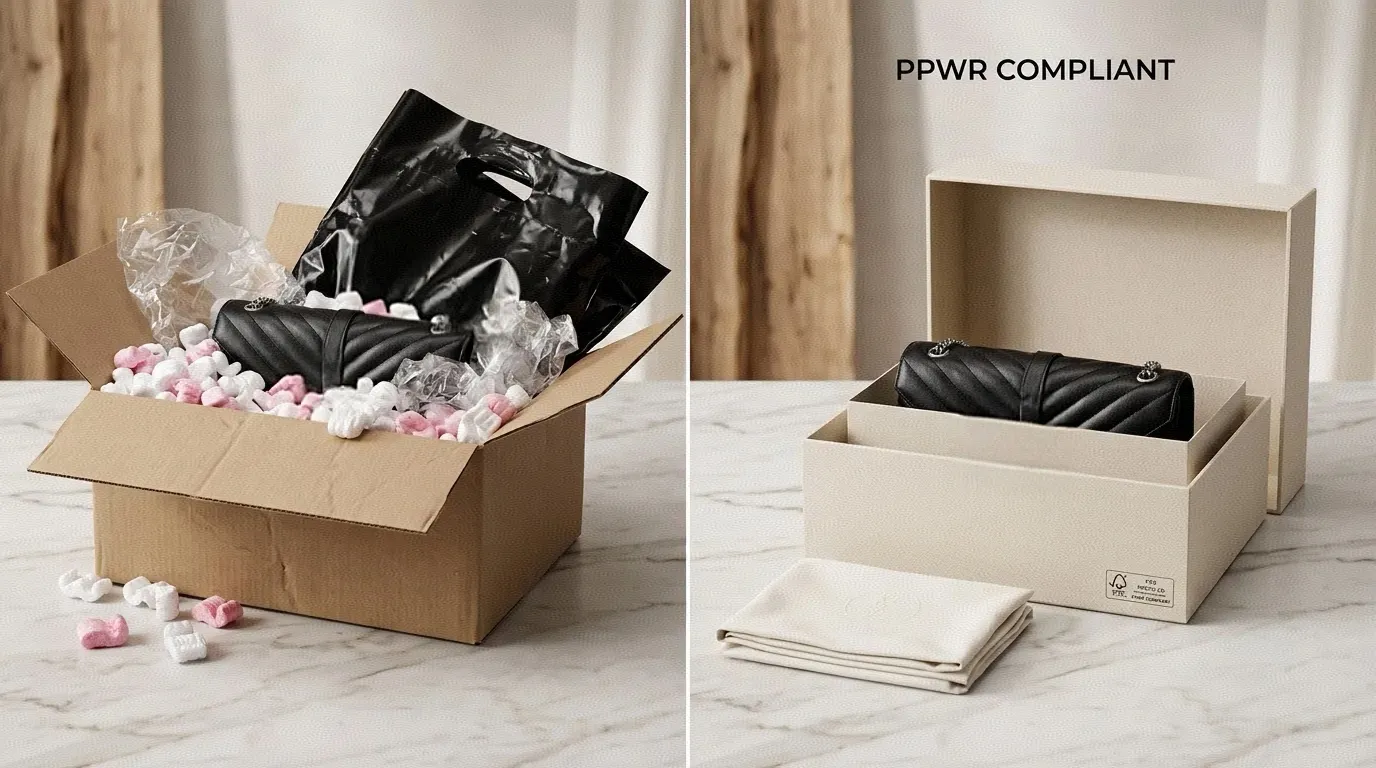
What Parts of a Bag Order Are Covered?
When we talk about “packaging” in an OEM context, we refer to all components that accompany the product bag — from the innermost dust bag to the outermost shipping carton. Here’s a comprehensive breakdown:
| Packaging Component | Usually Covered by Supplier | Notes |
|---|---|---|
| Carton (Shipping Box) | ✔ | Must meet compression and drop test standards |
| Polybag | ✔ | Material type and thickness specified |
| Hang Tag | ✔ | Includes brand info, materials, care symbols |
| Paper Insert | ✔ | Brand story, warranty card, thank-you card |
| Tissue Paper | ✔ | Printed or plain, logo placement required |
| Shipping Label | ✔ | Address, barcode, country of origin |
| QR Label | Possible | May require digital passport integration |
| Dust Bag / Product Bag | Product itself | Considered part of the product, not packaging |
| Care Label | ✔ | Fiber content, country of origin, care symbols |
.webp)
The Four-Step Packaging Compliance Workflow
This section presents our proven four-step workflow designed to help buyers navigate packaging compliance from initial evaluation through final shipment. Each step addresses a specific phase of the procurement cycle.
Evaluate Packaging Materials Before Sampling
Confirm Supplier Documentation
Verify Packaging During Production
Maintain Complete Packaging Traceability
Step 1: Evaluate Packaging Materials Before Sampling
Packaging evaluation should begin before any samples are produced. This proactive approach prevents costly redesigns, production delays, and compliance issues later in the supply chain.
Key Materials to Evaluate
Cartons
- Board grade (BC flute, EB flute, etc.)
- Compression strength (ECT rating)
- Water resistance requirements
- Recyclability certification
Polybags
- Material type (LDPE, HDPE, biodegradable)
- Thickness (microns/gauges)
- Print method and color count
- Recyclability/mono-material preference
Tapes & Adhesives
- Water-activated tape vs. pressure-sensitive
- Width and length specifications
- Branding requirements
Labels & Tags
- Material (paper, fabric, synthetic)
- Print method (offset, flexo, digital)
- Barcode format requirements
- QR code integration needs
Protective Materials
- EPE foam inserts
- Kraft paper wrapping
- Tissue paper specifications
- Dust bags material requirements
.webp)
When evaluating materials, consider the EU PPWR requirements that favor:
- Recyclable packaging — Materials that can be collected, sorted, and recycled through existing infrastructure
- Paper-based packaging — Preferred over plastic for many applications
- Mono-material solutions — Single-material packaging that’s easier to recycle
- Minimum plastic content — Reducing plastic use where alternatives exist
- Recycled content thresholds — Incorporating post-consumer recycled materials

Expert Insight: Emily, our Senior Project Manager with 12 years in OEM bag manufacturing, works with overseas buyers during the quotation and sampling stage to review packaging specifications, preferred materials, shipping requirements, and retail presentation before sampling begins. This early involvement prevents costly changes later.

Step 2: Confirm Supplier Documentation
A compliant supplier should be prepared to provide comprehensive documentation for all packaging materials. While not every document may be required for every order, the following documentation packages may include:
Material Documentation
- □ Material Specification Sheets
- □ Chemical Safety Data Sheets (MSDS)
- □ REACH compliance declarations
- □ Recycled content certifications
Test & Certification
- □ Third-party test reports (SGS, Intertek)
- □ Compression strength tests
- □ Drop test results
- □ Color fastness certifications
Compliance Evidence
- □ Supplier declarations of conformity
- □ FSC/PEFC chain of custody
- □ recyclability assessments
- □ EPR producer responsibility evidence
Traceability Records
- □ Lot/batch number system
- □ Production order records
- □ Packing list archives
- □ Supplier audit reports
Important Note: We use language like “may include” and “normally includes” because documentation requirements vary by product type, destination market, and specific buyer requirements. Always verify exact requirements with your compliance team.
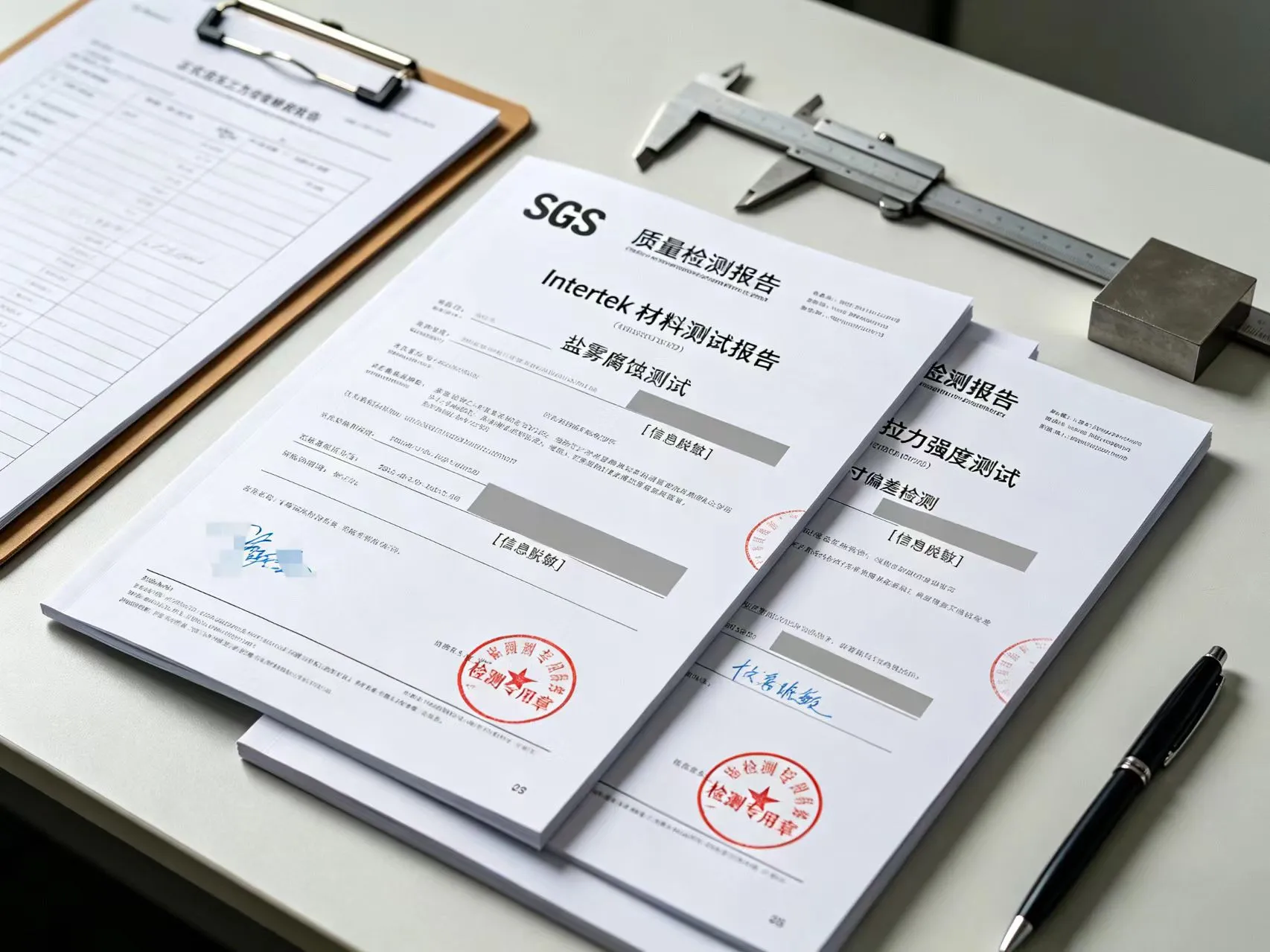
Best Practice: Request a Packaging Document Checklist from your supplier before production begins. This ensures both parties understand documentation expectations and avoids last-minute compliance surprises.
Step 3: Verify Packaging During Production
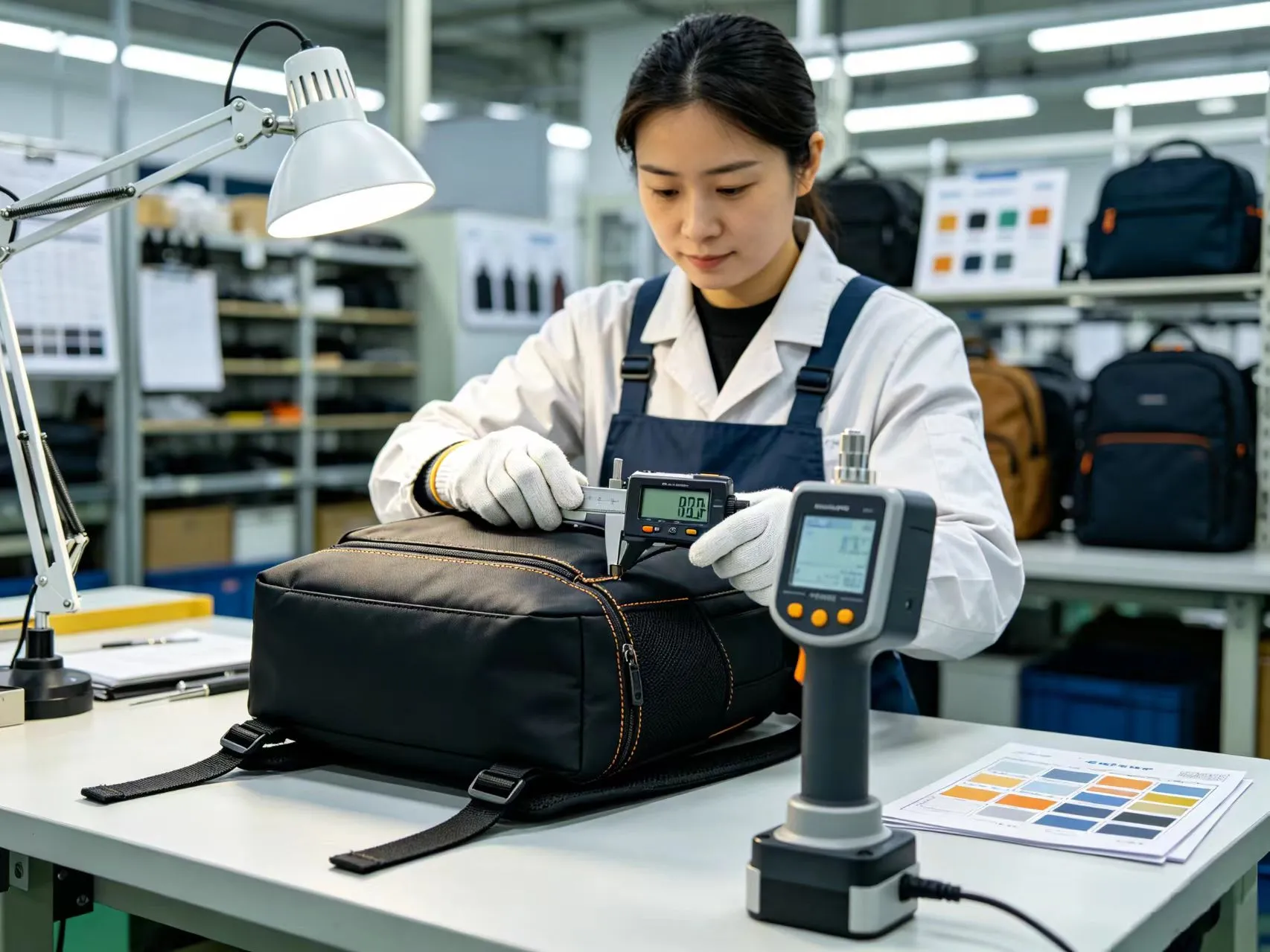
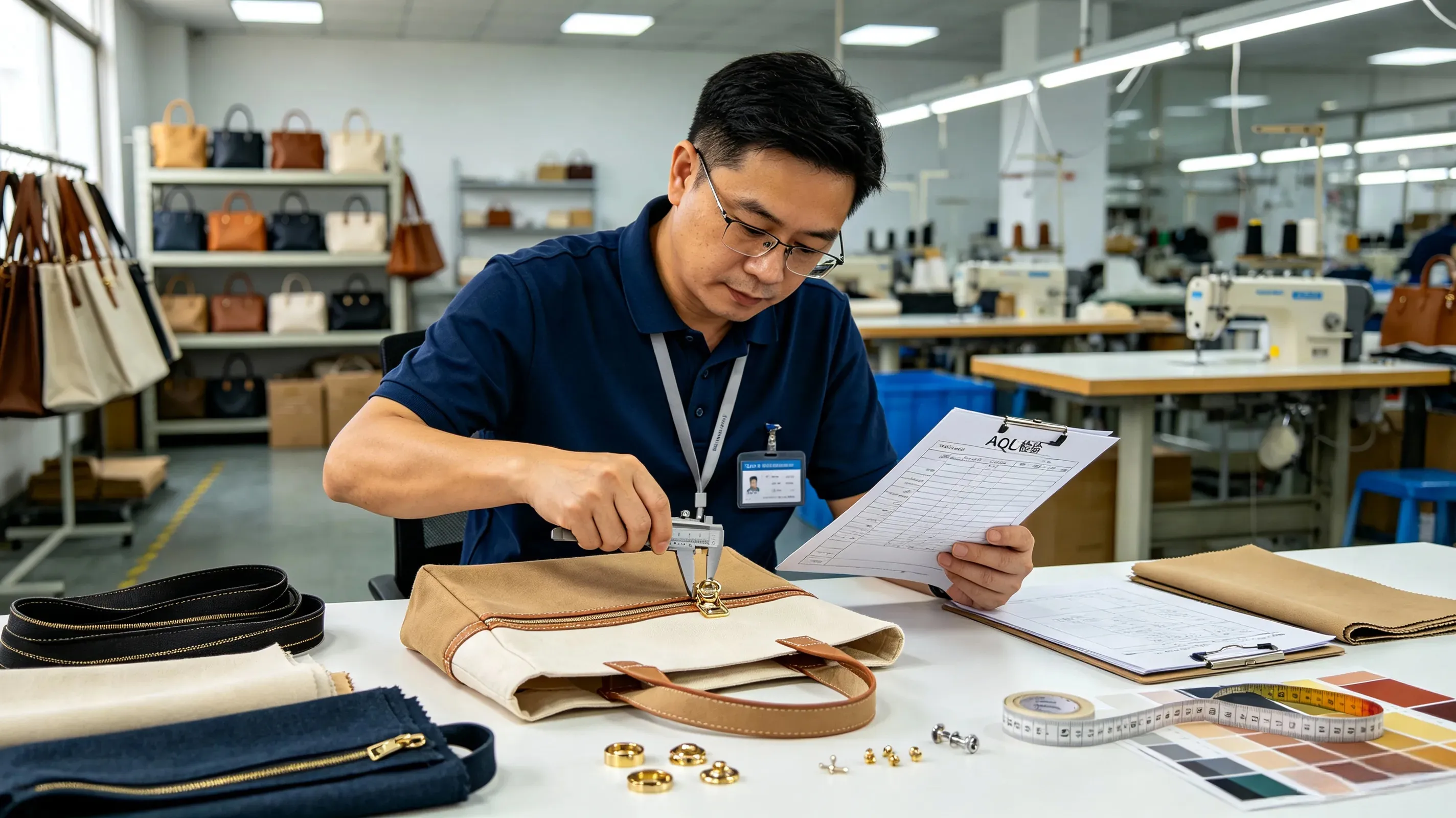
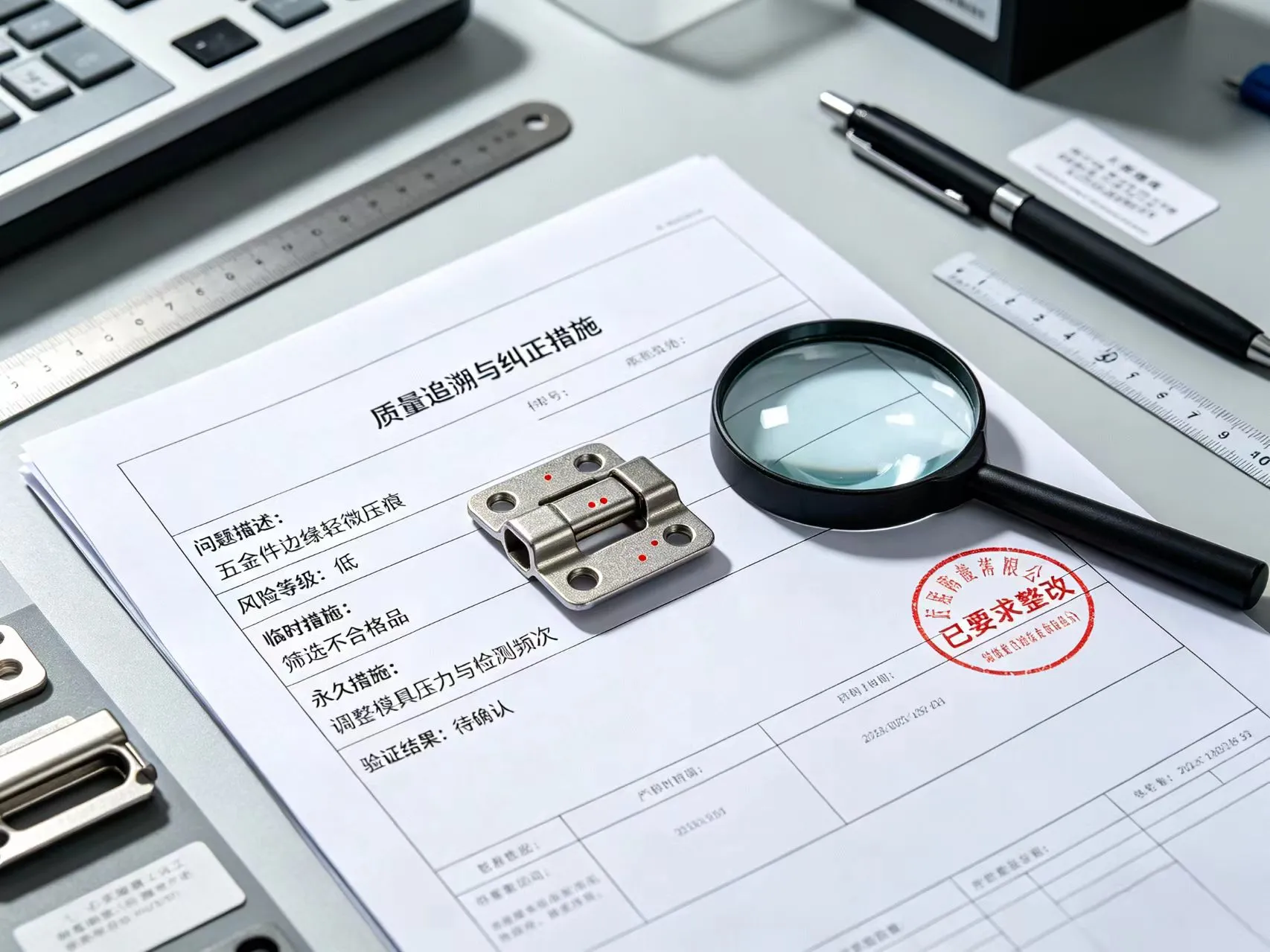
Packaging errors rarely occur on the last day of production. More often, they originate during the procurement of materials, the printing process, or the assembly stage. This is why ongoing verification throughout production is essential.
The Four-Stage Inspection Protocol
Incoming Inspection
Verify all packaging materials against approved specifications before they enter the production floor. Check materials, quantities, and certifications.
Inline Inspection
Monitor packaging assembly processes. Verify print quality, assembly accuracy, and component integration during production.
Packing Inspection
Check finished goods packaging before carton closure. Verify correct carton type, proper insertion of all components, and correct labeling.
Final Inspection
Comprehensive pre-shipment verification including packaging integrity, barcode scannability, and documentation completeness.
Expert Insight: Kevin, our Pattern Development Engineer with 15 years of experience in bag pattern making across leather, canvas, nylon, and technical fabrics, ensures that packaging specifications align with product design requirements. His expertise bridges the gap between product engineering and packaging functionality.

Step 4: Maintain Complete Packaging Traceability
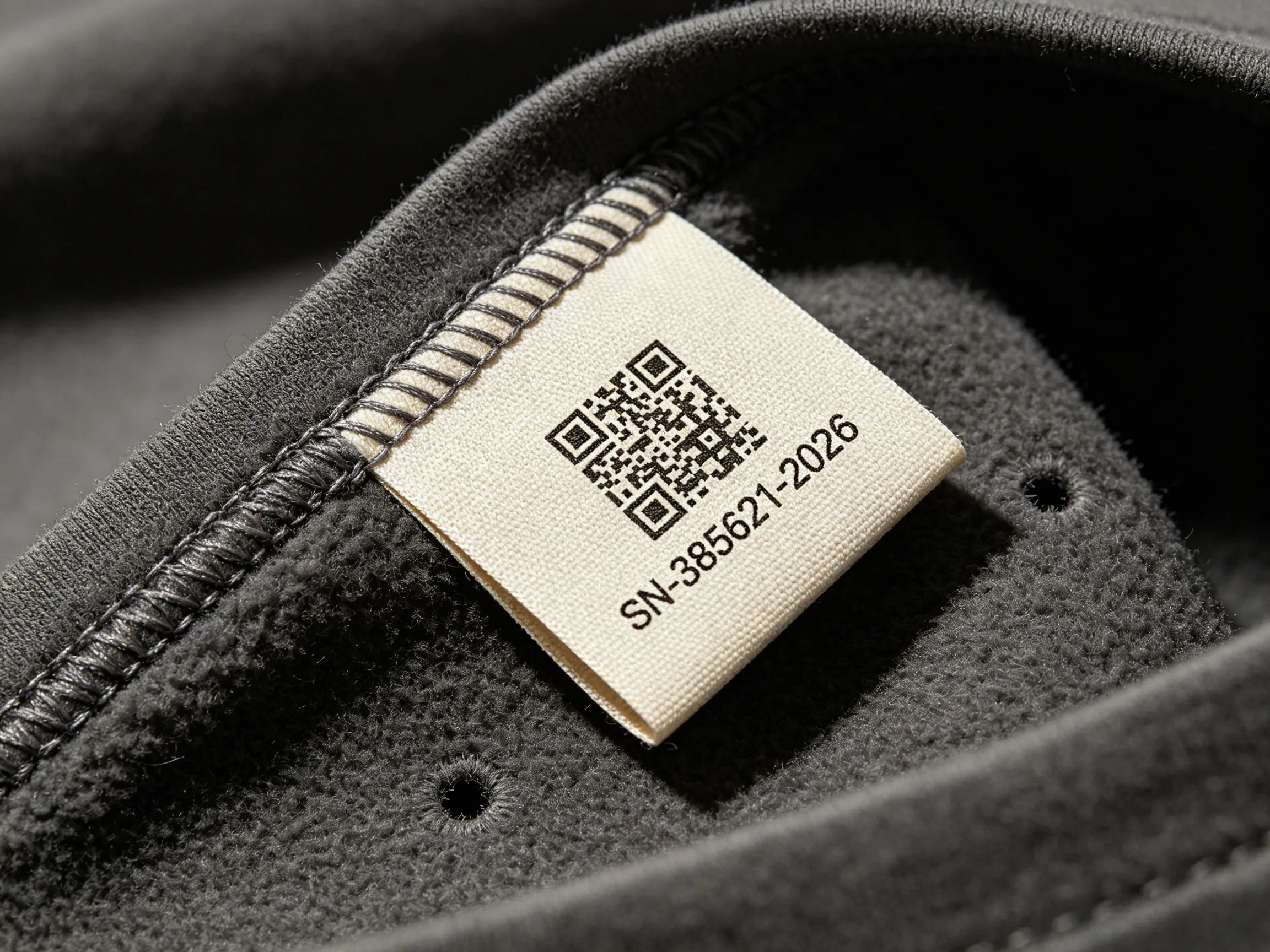
In an era of increasing regulatory scrutiny, traceability is no longer optional. The EU’s Digital Product Passport (DPP) initiative and PPWR requirements demand that products carry verifiable information about their materials, origins, and supply chain journey.
Building Your Digital Traceability System
MES (Manufacturing Execution System)
Real-time production data including work orders, production output, and quality metrics linked to specific batches.
ERP Integration
Enterprise resource planning linking purchase orders, invoices, and shipment records.
Lot Number System
Unique identifiers for each production batch enabling material-level traceability.
Carton Serialization
Individual carton marking with production date, line, and shift information.
Barcode/RFID Tracking
Machine-readable identifiers enabling automated tracking throughout the supply chain.
Digital Product Passport
QR codes linking to comprehensive product journey data as required by emerging regulations.

End-to-End Traceability Flow
Common Packaging Risks in OEM Manufacturing
Understanding common packaging risks helps buyers implement preventive measures early. Here’s a comprehensive risk matrix:
| Risk Category | Potential Result | Prevention Strategy |
|---|---|---|
| Wrong Carton Specification | Shipping delays, product damage | Pre-production sample approval, dimension verification |
| Incorrect Barcode/QR Code | Warehouse rejection, retail fines | Barcode verification at multiple checkpoints |
| Mixed or Missing Labels | Retail compliance issues, returns | Label counting and placement verification |
| Weak Carton Construction | Product damage in transit | Compression and drop testing requirements |
| Incorrect Artwork/Branding | Costly reprints, launch delays | Multi-stage artwork approval process |
| Non-Compliant Materials | Customs holds, regulatory penalties | Material verification and certification checks |
| Insufficient Documentation | Failed audits, order cancellation | Document checklist completion before shipment |
| Traceability Gaps | Inability to investigate complaints | Lot number and barcode system implementation |
.webp)
Case Study: A European retailer once rejected an entire container of premium bags because the hang tags showed incorrect fiber content percentages. The cost of reprinting and reshipping exceeded the original order value. This scenario underscores why artwork approval and label verification must be built into your quality control process.
How Packaging Compliance Fits Into PPWR
Packaging compliance is just one component of the broader EU Packaging and Packaging Waste Regulation (PPWR) framework. To fully understand your obligations, consider how packaging fits within the complete regulatory picture.
PPWR Key Requirements Relevant to OEM Packaging
Design for Recyclability
Packaging must be designed to be recyclable by 2030, with measurable recycling rates achieved by 2035.
Minimum Recycled Content
Plastic packaging must incorporate specific percentages of recycled material (contact-optimized targets).
Restriction of Single-Use Plastics
Certain single-use plastic packaging items face restrictions or bans in specific applications.
Marking Requirements
Digital Product Passport (DPP) requirements linking physical products to online compliance data.
Extended Producer Responsibility
Brands and importers bear financial responsibility for packaging end-of-life management.
Packaging Compliance Checklist for Buyers
Use this comprehensive checklist to ensure your packaging meets all compliance requirements before production begins. Download and share with your supplier to establish clear expectations.
Pre-Production Checklist
- □ Packaging drawing approved by all stakeholders
- □ Material specifications confirmed and documented
- □ Barcode/QR code format approved
- □ Artwork proof signed off (all colors, positions)
- □ Carton specification confirmed (dimensions, board grade, ECT)
- □ Supplier declaration obtained
- □ QC checkpoints defined and documented
- □ Shipping marks and labels approved
- □ Recyclability requirements specified
- □ Recycled content percentage agreed
During Production Checklist
- □ Incoming material inspection completed
- □ Print quality verified on first articles
- □ Assembly accuracy checked
- □ Label placement confirmed
- □ Barcode scannability tested
Pre-Shipment Checklist
- □ Final packaging inspection completed
- □ Carton integrity verified
- □ All documentation collected and organized
- □ Traceability records generated
- □ Packing list accuracy confirmed
Frequently Asked Questions
Does PPWR apply to OEM packaging?
Yes. The EU Packaging and Packaging Waste Regulation applies to all packaging placed on the EU market, including OEM products manufactured overseas. Brands and importers are responsible for ensuring their OEM suppliers meet PPWR requirements.
Are polybags prohibited under PPWR?
Not all polybags are prohibited, but restrictions apply to certain single-use plastic items. Mono-material polybags that are recyclable and meet minimum recycled content requirements may still be used. Always verify current restrictions for your specific product category.
What documents should packaging suppliers provide?
Packaging suppliers may normally include material specifications, declarations of conformity, test reports (from third-party labs like SGS or Intertek), recycled content certifications, and traceability records. The exact documentation package varies by product type and destination market requirements.
Should importers verify packaging materials?
Yes. Importers bear regulatory responsibility for packaging compliance in the EU. We recommend verifying material declarations, requesting test reports, and conducting supplier audits to ensure compliance before products enter the market.
Can suppliers help prepare packaging documentation?
Yes. Experienced OEM suppliers like Dreamway have established processes for preparing packaging compliance documentation. We recommend discussing documentation requirements early in the quotation phase to ensure all necessary records are prepared.
How should packaging be inspected?
Packaging inspection should follow a four-stage protocol: incoming inspection (materials upon arrival), inline inspection (during assembly), packing inspection (before carton closure), and final inspection (pre-shipment verification). Each stage has specific checkpoints tailored to your requirements.
What is packaging traceability?
Packaging traceability refers to the ability to track packaging materials and components from raw material sourcing through production, distribution, and end use. This includes lot numbers, production orders, supplier records, and digital links via QR codes or barcodes.
Does packaging affect customs clearance?
Yes. Non-compliant labeling, missing country of origin markings, or prohibited materials can result in customs holds, fines, or shipment rejection. Proper documentation and material declarations facilitate smooth customs clearance.
How can buyers reduce packaging risks?
Risk reduction starts with clear specifications, early involvement of compliance teams, pre-production approvals, and documented quality checkpoints throughout production. Working with experienced suppliers who understand EU requirements significantly reduces risk.
Should packaging specifications be included in Tech Packs?
Absolutely. Tech Packs should include complete packaging specifications including material requirements, dimensions, artwork files, labeling requirements, and compliance certifications. This ensures all stakeholders have access to the same information.
What is the minimum order quantity for custom packaging?
MOQs for custom packaging vary by component type. Standard polybags may have lower MOQs (typically 1,000-5,000 pieces), while custom printed cartons often require 500-2,000 pieces. Work with your supplier to find cost-effective solutions for your order volume.
How long does it take to set up compliant packaging?
Timeline varies based on complexity. Simple label changes may take 1-2 weeks, while new carton designs with material certification may require 4-8 weeks. Build adequate lead time into your product development schedule.
About Dreamway: Your OEM Packaging Partner
Dreamway is a professional bag and silk product manufacturer based in Shiling Town, Huadu District, Guangzhou, China. With over 30 team members and a proven track record serving clients across 50+ countries, we understand the complexities of international packaging compliance.
Products
Bags (MOQ: 200 pcs), Silk Products (MOQ: 50 pcs)
Experience
Serving 50+ countries worldwide
Team
Small team of 30+ skilled professionals
Our team includes experienced professionals like Emily (Senior Project Manager, 12 years in OEM manufacturing) and Kevin (Pattern Development Engineer, 15 years in bag pattern making) who work closely with buyers to ensure packaging specifications meet both aesthetic and regulatory requirements.

Ready to Discuss Your Packaging Requirements?
Visit our website at www.gzdreamway.com to learn more about our capabilities and start a conversation about your next project.
Disclaimer: This article is for informational purposes only and does not constitute legal or regulatory advice. Packaging regulations evolve continuously. Always consult official EU legislation and qualified compliance professionals for specific regulatory decisions. Information accurate as of publication date.

Scan with WhatsApp to chat with Victoria