
Your complete roadmap to manufacturing a winning diaper bag in 2026. This guide covers material selection — vegan leather, RPET, waterproof linings — plus CPSIA and ASTM safety compliance, the functional features parents actually pay for, low MOQ production to minimize risk, and why dad‑friendly neutral designs are taking over the market. You’ll learn how to build a tech pack that eliminates sampling errors and how to vet a factory that understands baby products. Start here, source smarter, and launch with confidence.
Parents don’t buy diaper bags casually. They watch reviews, read ingredient labels, and ask detailed questions in online forums. When they finally choose a bag, they’re buying a promise — that outings will be easier, everything will stay organized, and the bag won’t fall apart after three months. For brand owners, delivering that promise starts with choosing the right custom diaper bag manufacturer.
At Dreamway, we’ve helped baby brands move from concept to full production. This guide shares what we’ve learned — practical, no‑fluff advice on materials, safety, features, costs, and timelines. Let’s build something parents love.
.webp)
1. Why 2026 Is the Year to Launch Your Diaper Bag Brand
The baby bag market is shifting. Today’s parents — Millennials and Gen Z — expect gender‑neutral aesthetics, certified sustainable materials, and multi‑functionality. They value safety certifications as much as style. They read hang tags. A bag with clear CPSIA compliance and a visible eco‑story wins their trust faster than a legacy brand name. This shift creates room for new brands. Large incumbents move slowly. A nimble brand working with a responsive custom diaper bag factory can bring fresh designs to market in months. For strategies on launching with minimal inventory risk, read our guide on small MOQ diaper bag production.
2. Material Selection: The Foundation of Your Diaper Bag
The material determines your bag’s look, durability, cleanability, and sustainability story. Here’s how the top 2026 options compare:
| Material | Best For | Key Advantage | Watch Out For |
|---|---|---|---|
| Vegan Leather (PU) | Premium fashion bags | Luxurious look, wipe‑clean surface | Low‑grade PU can peel; choose water‑based |
| RPET (Recycled Polyester) | Eco‑conscious brands | GRS‑certifiable, lightweight, durable | Can feel less premium without coating |
| Waterproof Nylon | Spill‑proof interiors | Ultra‑resistant to leaks and stains | Shiny finish may not suit all styles |
| Organic Cotton Canvas | Natural aesthetic | Breathable, GOTS‑certifiable | Heavier, not waterproof unless treated |
For spill‑prone interiors, always specify a waterproof lining. Compare options in our guide to waterproof vs. water‑resistant linings. For material sustainability credentials, see our guide to GRS, OEKO‑TEX & FSC certifications.
.webp)
.webp)
.webp)
3. Safety Compliance: CPSIA and ASTM F963
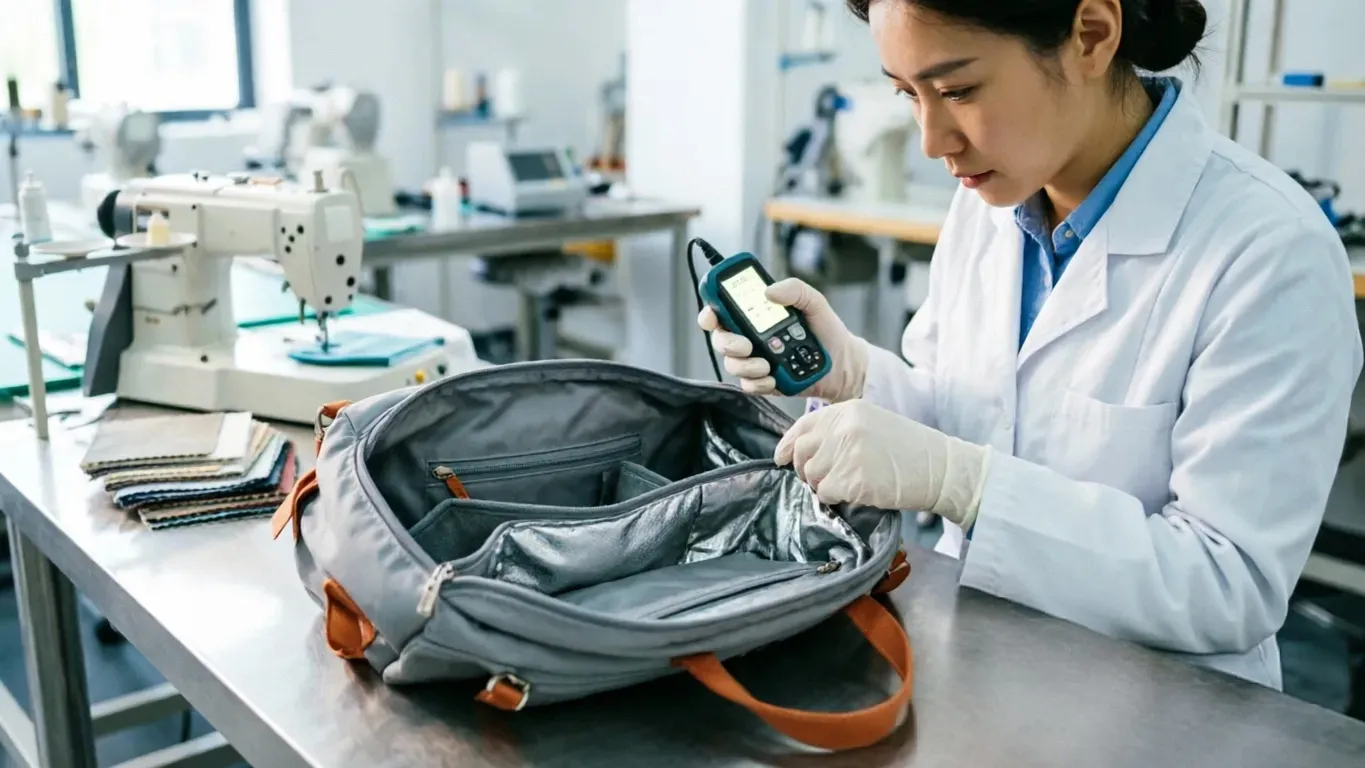
Safety failures destroy baby brands. In the U.S., diaper bags must comply with CPSIA limits: lead ≤100 ppm in substrates, ≤90 ppm in surface coatings, and phthalates ≤0.1% for each of 8 restricted types. If your bag includes a changing pad or detachable toy loop, ASTM F963 physical testing also applies — covering small parts, sharp edges, and flammability. Every bag must carry a permanent tracking label with manufacturer name, production date, and batch number.
A reliable diaper bag OEM partner pre‑tests materials through CPSC‑accepted labs like SGS or Bureau Veritas and provides complete Children’s Product Certificates (CPCs). For the full compliance deep‑dive, read our dedicated guide: Safety First: A Compliance Guide to CPSIA and ASTM Standards for Diaper Bags.
4. Functional Features That Drive Purchase Decisions
You can’t compete on “just another backpack.” The bags that sell solve real parenting pain points. Here are the features driving 2026 purchases:
- Insulated bottle pockets. Must maintain temperature for 2–3 hours. See our full guide to functional features.
- Wide‑opening main compartment. A U‑shaped zipper lets parents see everything at once.
- Integrated stroller straps. Loops or clips that attach securely to a stroller frame.
- Breathable back panel. Padded, ventilated mesh on backpack straps and back panels.
- External wipe dispenser. A dedicated slot for pulling wipes without opening the bag.
5. Dad‑Friendly and Gender‑Neutral: The New Mainstream
The “mom bag” stereotype is disappearing. Fathers are hands‑on parents, and they want gear that looks like their gear. Gender‑neutral diaper bags with matte black hardware, structured silhouettes, and earth‑tone palettes are outselling traditional designs. This is a major white‑space opportunity. Read our full analysis: The Rise of Dad‑Friendly Diaper Bags.
.webp)
.webp)
.webp)
6. Sustainable Production: RPET, Organic Cotton, and Certifications
Sustainability is a top‑3 purchase driver for millennial parents. Using GRS‑certified RPET polyester or GOTS‑certified organic cotton gives your brand an authentic story backed by third‑party verification. You need transaction certificates, not just claims. Our factory provides full chain‑of‑custody documentation. Learn more in sustainable diaper bags using RPET and organic materials.
7. Building Your Diaper Bag Tech Pack
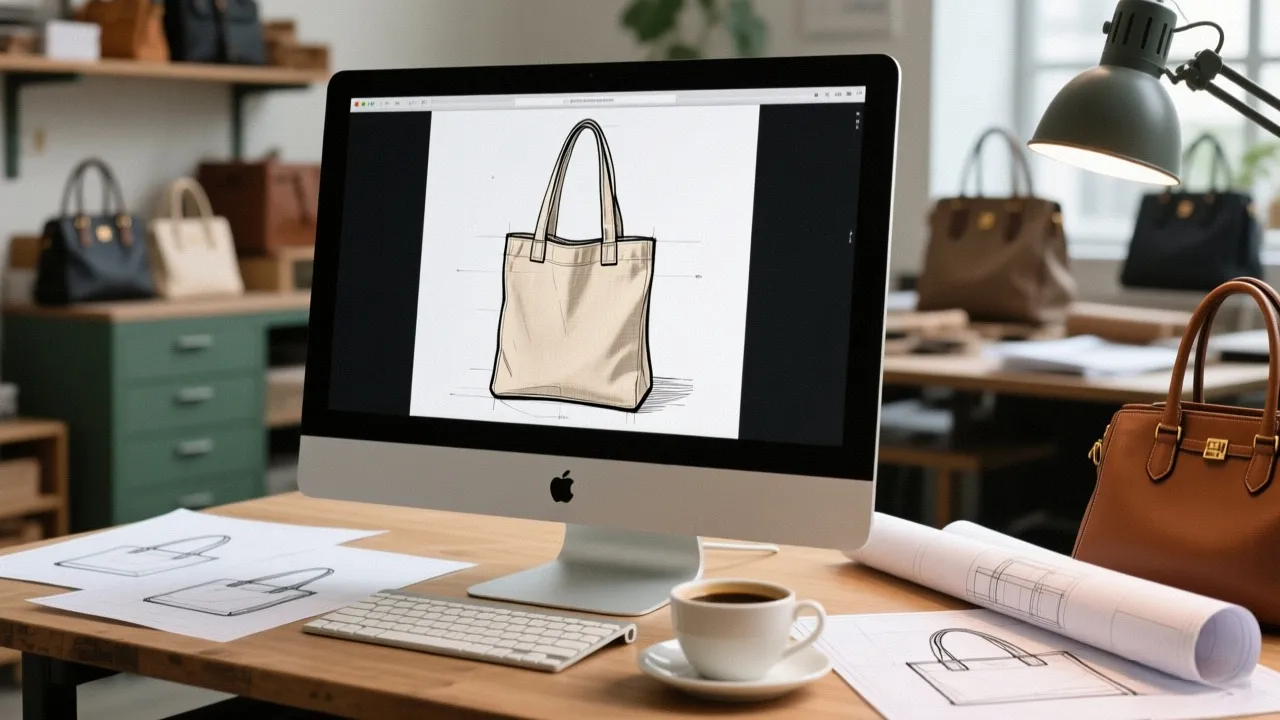
A tech pack is your manufacturing blueprint. For a diaper bag, it must map every zone: insulated pocket dimensions, changing pad sleeve placement, stroller strap attachment points, and interior divider heights. A clear tech pack reduces sampling rounds and ensures accurate quotes. Use our step‑by‑step guide: How to Develop a Diaper Bag Tech Pack.
8. How to Vet a Diaper Bag Manufacturer
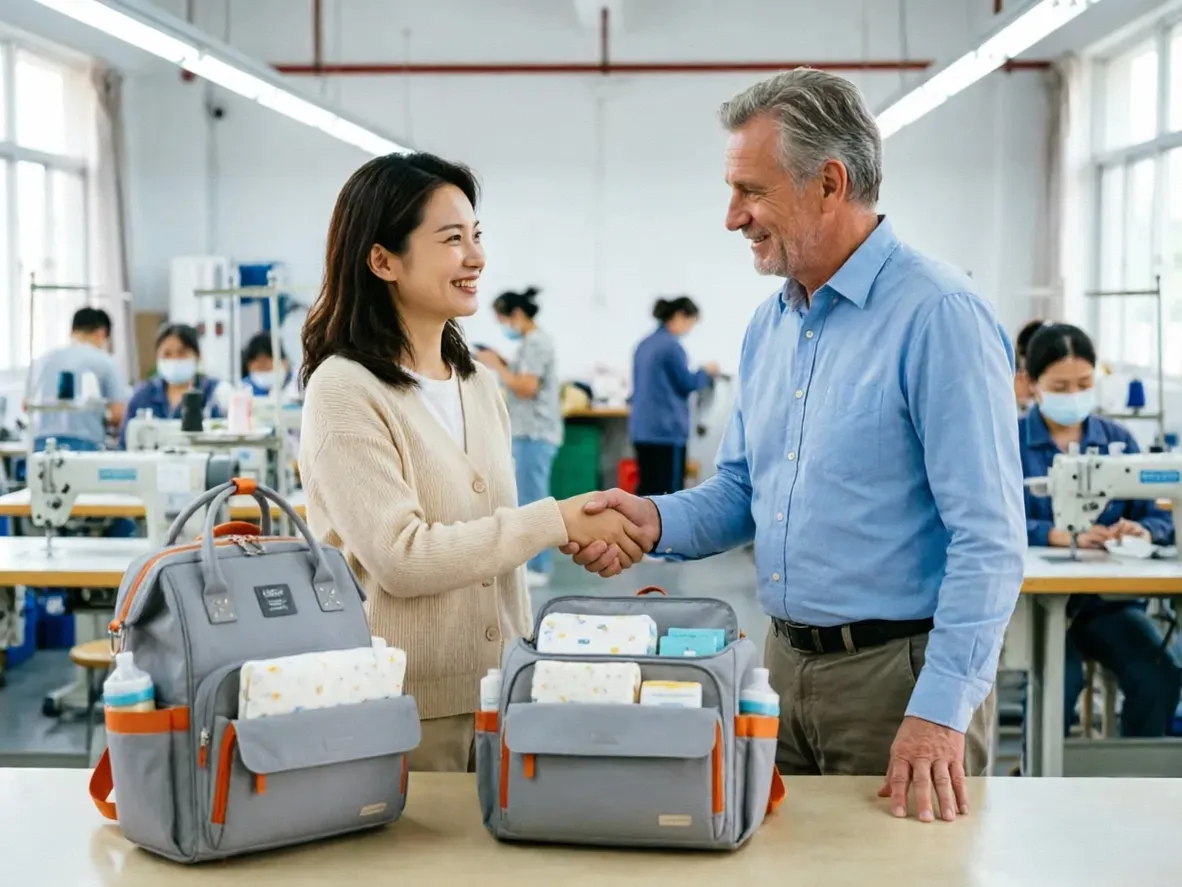
Not all bag factories understand baby products. Ask these questions before placing an order:
- Do you hold CPSIA‑compliant test reports for diaper bags?
- Can you provide GRS or OEKO‑TEX certificates for your materials?
- What is your typical defect rate for stitched baby products?
- Can you handle insulated lining and waterproof zippers in‑house?
For the complete vetting framework, use our 10 Critical Questions for Sourcing Diaper Bag Manufacturers. For broader factory evaluation, our factory audit checklist applies to any bag category.
Frequently Asked Questions About Custom Diaper Bag Manufacturing
What safety certifications does a diaper bag need?
In the United States, diaper bags should comply with CPSIA requirements for lead, phthalates, and tracking labels. Many retailers also request ASTM F963 testing, especially if the bag includes a changing pad or detachable toy components.
What is the minimum order quantity for custom diaper bags?
Many factories require 1,000–2,000 units, but some specialized manufacturers offer low MOQ production starting at 200–300 units. Using stock materials and standard components helps keep MOQs low while you test the market.
Which materials are best for a high‑end diaper bag?
Water‑based vegan leather (PU) offers a premium look with easy wipe‑clean convenience. For eco‑focused brands, GRS‑certified RPET polyester paired with a waterproof nylon lining provides both sustainability and spill protection.
How long does diaper bag production take?
Typical production lead time is 30–45 days after sample approval, depending on order volume and material availability. Custom hardware or special print techniques may extend this to 60 days. Always factor in an additional 15–25 days for sea freight shipping.
Ready to Produce Your Diaper Bag? Let’s Talk.
Dreamway manufactures CPSIA‑compliant custom diaper bags for baby brands worldwide. We offer low MOQ options, vegan leather and RPET materials, full design support, and complete compliance documentation. Share your concept — we’ll return a sample plan, a timeline, and a transparent quote within 48 hours.
Explore luxury vegan leather diaper bags or read our guide to the 7 factors that affect bag unit costs to budget accurately.
Get Your Diaper Bag Quote →Or visit our homepage for all manufacturing services.
- Top Diaper Bag Manufacturers in the USA and China
- A Buyer’s Checklist for Sourcing Diaper Bag Manufacturers: 10 Critical Questions
- Sustainable Diaper Bags: Utilizing RPET and Organic Materials for Eco-Brands
- How to Develop a Diaper Bag Tech Pack: Mapping Out Internal Pockets & Zones
- Waterproof vs. Water-Resistant: Choosing the Best Spill-Proof Linings for Baby Bags
- Luxury Vegan Leather Diaper Bags: Combining Aesthetics with Heavy-Duty Durability
- The Rise of Dad-Friendly Diaper Bags: Manufacturing Trends for Gender-Neutral Gear
- Must-Have Functional Features for Modern Diaper Bags: Insulated Pockets & More
- Small MOQ Diaper Bag Production: How to Launch Your Baby Brand with Low Risk
- Safety First: A Compliance Guide to CPSIA and ASTM Standards for Diaper Bags
- The Ultimate Guide to Custom Diaper Bag Manufacturing in 2026
Customer Reviews97 Reviews