
PU vs. Polyester for Bags: Which Material Is Better for Your Brand?
A B2B Sourcing Guide for OEM & Private-Label Bag Programs
Walk into any bag sourcing meeting — whether you are launching a fashion label in Paris, a corporate gifting line in Berlin, or a retail tote program in Los Angeles — and the same conversation will surface within ten minutes. Two materials dominate: PU and polyester. They are everywhere in the OEM world, they can look almost identical on a finished product photo, and they are usually quoted within 15–25 % of each other on a typical tech pack. Yet the brands that choose well understand something the others do not: PU and polyester are not interchangeable — they are tools designed for different jobs.
This is exactly the question our team at Dreamway hears every week from buyers comparing a PU tote bag against a polyester tote bag, a PU backpack against a polyester backpack, or a PU cosmetic bag against a polyester cosmetic bag. Some buyers arrive with a clear positioning and only need a quick confirmation. Others arrive with a Pinterest moodboard and a budget, and need an experienced manufacturer to walk them through the trade-offs of PU vs. polyester durability, PU vs. polyester waterproof performance, PU vs. polyester cost, PU vs. polyester eco-friendly credentials, and how each material behaves under silkscreen, heat transfer, UV, embossing, debossing, and foil decoration.
This guide is written for both groups. There is no universally “best” bag material — only the best material for a specific brand, price point, retail channel, and customer expectation. Our goal over the next several thousand words is to give you a clear, evidence-based framework to decide which one is right for you, and to show you how a thoughtful bag material supplier or custom bag factory should support that decision. Where a claim may vary by formulation or supplier, we flag it clearly so you can verify before you place a PO.
Quick Comparison: PU vs. Polyester at a Glance
Before we go deep, here is the side-by-side view most of our B2B clients request first. This matrix lets a product manager and a pattern engineer make a fast decision before discussing tech-pack details.
| Feature | PU (Polyurethane Leather) | Polyester (PET Fabric) |
|---|---|---|
| Appearance | Smooth, leather-like grain; can mimic full-grain, nappa, or nubuck textures; matte or semi-gloss surface. | Woven textile look; can be matte, satin, or high-gloss via PU/PVC coating; visible weave on most uncoated grades. |
| Cost (USD / yard, FOB) | Higher — solvent PU ≈ $3.2–4.8; water-based PU ≈ $4.2–6.5; recycled PU ≈ $5.0–7.5. | Lower — 210D ≈ $0.9–1.4; 600D ≈ $1.6–2.3; rPET (GRS) adds ~15–25 %. |
| Durability | Good surface abrasion; sensitive to hydrolysis in hot & humid climates; typical service life 2–4 years. | Excellent tensile strength, abrasion and UV resistance; typical service life 4–7 years for coated grades. |
| Waterproof | Inherently water-resistant; full waterproofing requires seam taping or backing film. | Uncoated polyester is water-absorbent; PU/PVC coated polyester is fully waterproof (common for outdoor/gym bags). |
| Printing & Branding | Excellent for embossing, debossing, foil, and high-end silk-screen; limited sublimation compatibility. | Excellent for sublimation, heat transfer, silkscreen, UV, and digital print; embossing limited to coated surfaces. |
| Eco-Friendliness | Solvent-based PU has higher VOC; water-based PU and recycled PU significantly lower impact. | Standard PET is fossil-based; rPET (GRS-certified) reduces carbon footprint by 30–50 % per kg. |
| Weight (typical tote) | Medium-to-heavy (450–650 g/m² for premium PU); feels substantial. | Light-to-medium (90–300 g/m² for common bag grades); very packable. |
| MOQ Suitability | Better suited to mid-to-high MOQ (PU color matching has a setup cost). | Highly flexible — small MOQ possible with stocked 210D/300D/600D and standard colors. |
| Luxury Positioning | Strong — handles, trims, and structured totes look premium out-of-the-box. | Strong with the right finish — coated, brushed, or jacquard polyester can look ultra-premium. |
| Repair & End-of-Life | Harder to recycle; downcycling into bonded leather is the most common route. | Easier to recycle, especially rPET; mechanical recycling back into fiber is industrial-scale. |
This is the comparison most buyers screenshot and forward to their product teams. It is also the comparison Google and generative engines most often quote when summarizing the topic. If you remember nothing else, remember this table — then read on to understand why each row looks the way it does.
.webp)
What Is PU Material?
PU — short for polyurethane — is a family of coated fabrics and films used as a leather alternative. In the bag industry, “PU” almost always refers to a base textile (usually polyester, nylon, or cotton scrim) coated with one or more layers of polyurethane resin. The result is a material that looks and feels like leather, can be cut and sewn on standard bag-making machines, and can be produced at a fraction of the cost of genuine leather.
PU is not one material. It is a category. Treating all PU as the same is one of the most common sourcing mistakes, and it explains why some buyers have great experiences while others feel “PU always peels.” The four families below cover more than 95 % of what you will encounter from any PU bag manufacturer.
PU Leather (Solvent-Based)
The classic workhorse. Solvent-based PU uses DMF or MEK-based resins dissolved in organic solvents, then coated onto a base fabric and dried in ovens. The result is a flexible, soft, leather-like surface with excellent embossability. The trade-off is higher VOC emissions during production and a moderate environmental footprint. For most fashion and mid-market commercial bags, this remains the default — and with proper factory ventilation and modern recovery systems, the impact is manageable.
Water-Based PU
Water-based PU replaces the organic solvents with water as the carrier. The surface feel is very similar to solvent-based PU, and modern water-based PU has closed most of the historical gap on abrasion resistance and hydrolysis performance. For brands selling into the EU, California, or any market with strict indoor-air or product-chemical standards, water-based PU is increasingly the default. It is also the version most likely to carry OEKO-TEX Standard 100 or REACH compliance documentation.
Recycled PU
Recycled PU reuses pre-consumer or post-industrial PU scrap — typically trim waste from PU production or end-of-life PU goods — back into new coated fabric. The environmental story is strong: it diverts waste from landfill and reduces virgin resin use by 30–60 % depending on the formulation. The honest caveat is that performance varies more than with virgin PU, which is why we recommend third-party testing for any new recycled-PU source.
Microfiber PU (Synthetic Leather Composite)
Microfiber PU is a higher-end sub-category where the base fabric is an ultra-fine microfiber non-woven (often nylon or polyester microfibers), impregnated with PU resin. It has a closer hand-feel to genuine leather and dramatically better hydrolysis resistance — important in tropical and humid climates. Most premium “vegan leather” handbags, luxury-tier private-label programs, and high-end automotive interiors now use microfiber PU.
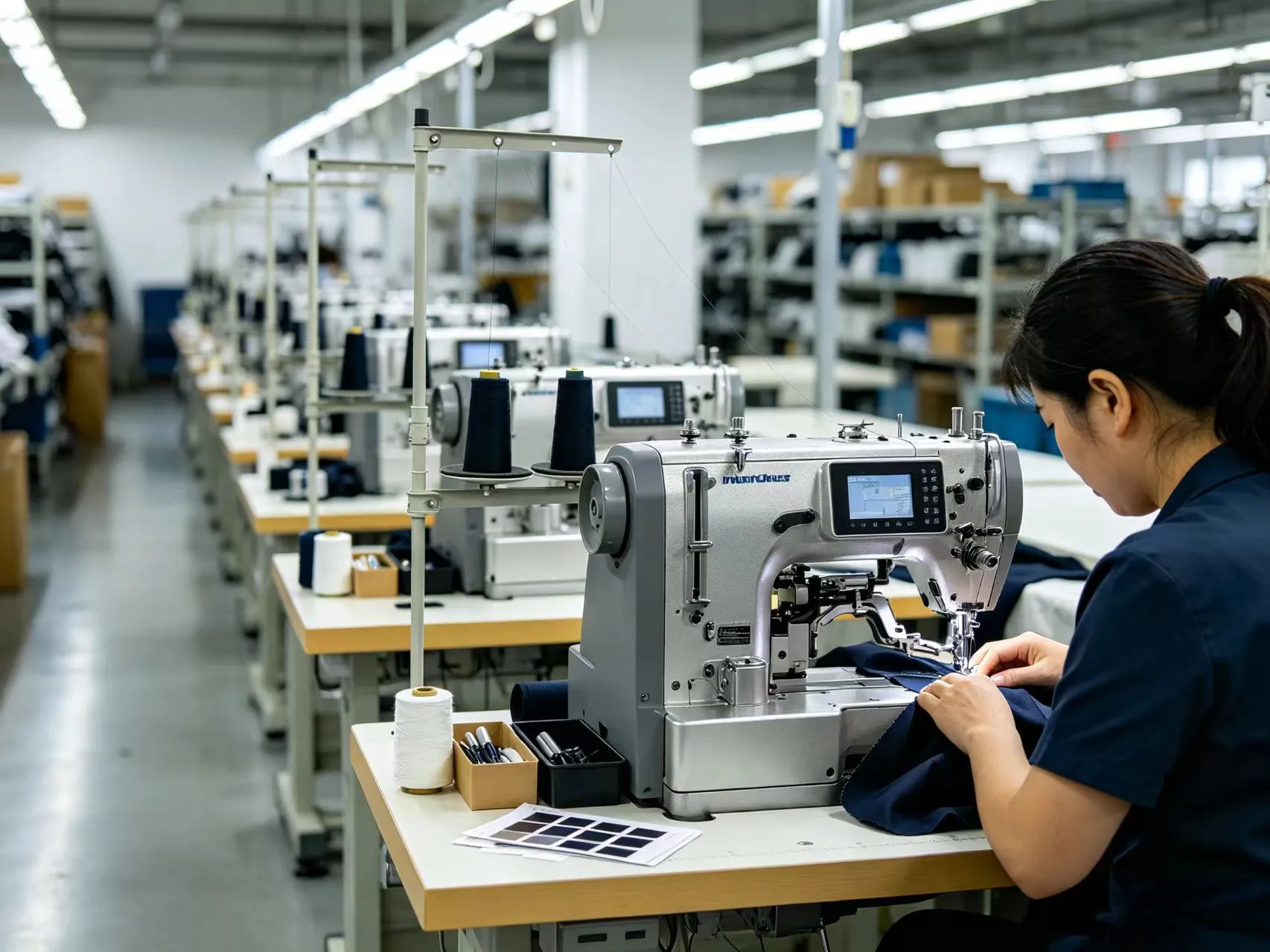
To see how these families look side-by-side, we keep a material library on our sampling room floor. Every client who visits our Guangzhou facility is invited to handle swatches labeled only with code numbers — a small exercise that almost always changes which PU a buyer ends up specifying.
What Is Polyester?
Polyester — chemically polyethylene terephthalate (PET) — is a woven or knitted textile made from extruded polyester fibers. In the bag industry, polyester is the most common substrate by volume, and for good reason: it is strong, dimensionally stable, color-fast, easy to print on, and competitively priced. When buyers say “we want a fabric bag,” they almost always end up specifying polyester — even if they do not realize it at first.
As with PU, the word “polyester” hides enormous variety. The most important variable to understand is the fiber denier — basically the thickness of each yarn.
210D Polyester
Lightweight, smooth, and very packable. 210D is the go-to for polyester tote bags, lightweight polyester cosmetic bags, promotional giveaways, and the inner linings of larger bags. It dyes beautifully, accepts sublimation printing with excellent vibrancy, and is the most affordable option. The trade-off is lower abrasion resistance than heavier deniers and a thinner hand-feel.
300D Polyester
The all-rounder. 300D balances hand-feel, durability, and price. It is widely used for mid-range polyester backpacks, school bags, laptop sleeves, and corporate gifting totes. With a PU coating on the back side, 300D becomes fully waterproof without losing flexibility.
600D Polyester
Heavy-duty workhorse fabric. 600D is the industry default for outdoor bags, gym bags, duffel bags, tool bags, and the bottom panels of backpacks. It has very high tensile strength, excellent abrasion performance, and accepts a wide range of coatings (PU, PVC, TPU) for waterproofing. It is heavier and stiffer than 210D or 300D, which is exactly why outdoor and sports brands prefer it.
rPET Polyester (Recycled PET)
rPET is made from post-consumer plastic bottles or post-industrial PET waste, re-extruded into fiber and woven. GRS-certified rPET reduces carbon footprint by 30–50 % versus virgin polyester and uses about 60 % less energy. It performs identically to virgin polyester in almost every measurable bag property, which is why so many EU brands now specify rPET as default. The price premium has narrowed to roughly 15–25 %, and in some categories — especially polyester tote bags — it is already cost-parity.
For a deeper comparison of canvas, polyester and PU as a fabric stack, see our related guide: Canvas vs. Polyester vs. PU: Material Comparison.
PU vs. Polyester: Cost Comparison
Cost is rarely the only factor, but it is almost always the first. Buyers want to understand the per-unit landed cost of a finished bag, which is a function of five components: raw material, processing, labor, shipping, and long-term maintenance. Below we walk through each.
Raw Material Cost
Polyester wins on raw material cost across every common bag denier. A typical 600D polyester runs at roughly 40–55 % of the per-yard cost of a comparable solvent-based PU. The gap narrows when comparing 210D polyester against water-based or recycled PU, but polyester still wins.
Processing Cost
Processing is where the gap closes a little. PU often requires additional steps: backing fabric lamination, edge-coating, and more careful stitch-and-turn operations. Polyester cuts and sews faster and tolerates a wider range of stitch types. For a 500-unit production run, the labor savings on polyester are usually 8–15 %.
Labor Cost
Both materials use the same workforce — cutters, sewing operators, QC. The labor cost difference comes from cycle time. PU tote bags typically take 5–10 % longer to assemble because of the edge-finishing and the need to protect the surface during sewing. Polyester bag cycle times are slightly faster.
Shipping & Logistics Cost
Polyester is lighter, which means a 40 % improvement in volumetric weight for some categories. For air-freighted samples or small LCL shipments, this can be a real saving. For full container FOB shipments, the difference is small but consistent.
Long-Term Maintenance Cost
This is the variable most bag material comparison articles miss. A polyester bag has a longer usable life in most real-world conditions, which lowers the warranty-replacement cost per unit sold. PU bags in tropical climates have a meaningful hydrolysis failure rate that buyers should price in.
Which Procurement Models Benefit Most?
- OEM buyers with tight material specifications usually find polyester the more controllable cost — fewer variables, fewer lamination steps.
- ODM buyers who want to customize textures and finishes usually lean toward PU — water-based or microfiber variants in particular.
- Private Label buyers optimizing for retail margin can go either way; the deciding factor is usually the brand positioning rather than unit cost.
.webp)
Durability Comparison: PU vs. Polyester
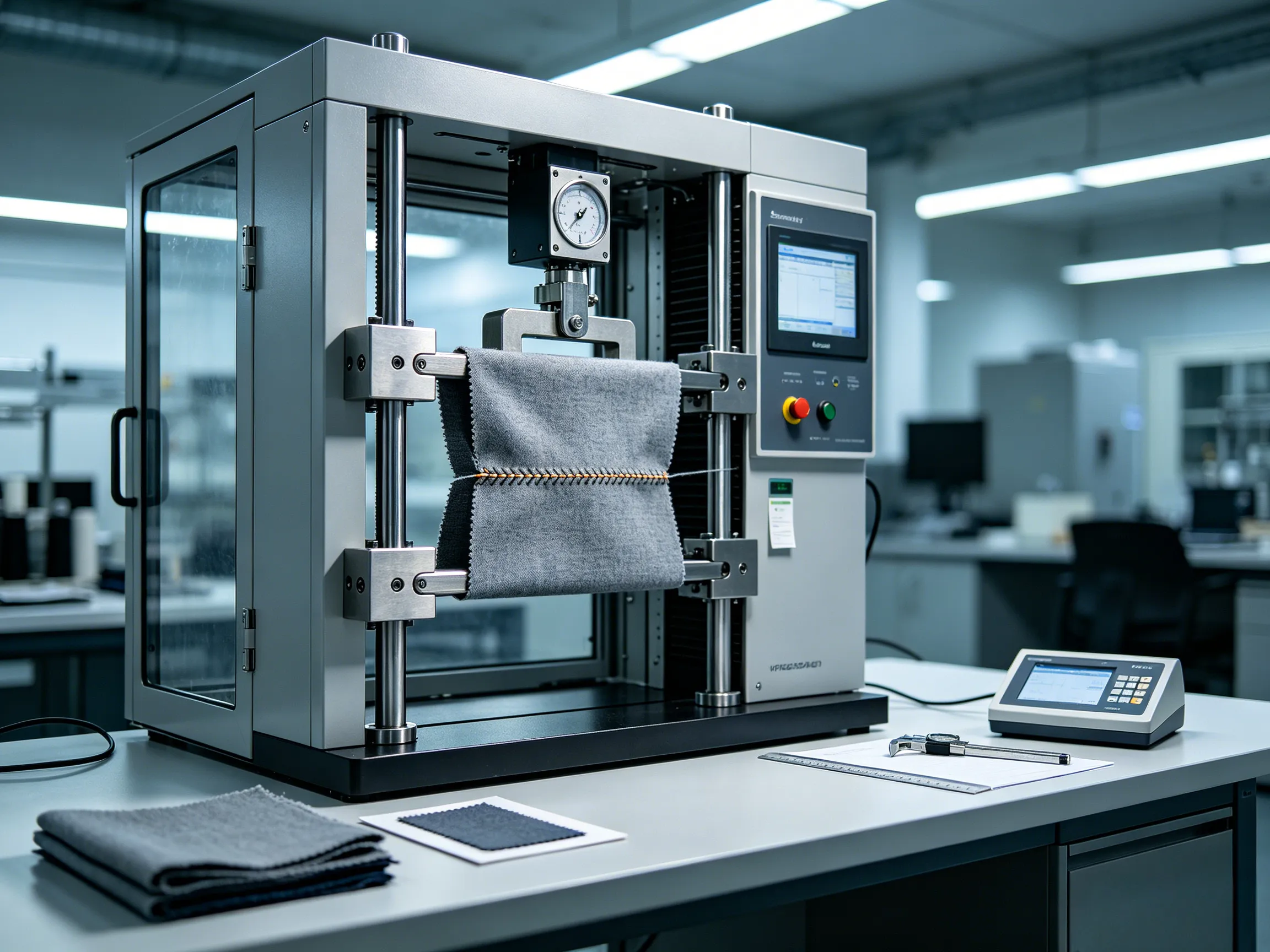
Durability is not one property — it is a bundle of at least six. Each one matters in a different use case. We will look at them in the order our QC engineer uses during incoming-material inspection.
Abrasion Resistance
Polyester wins decisively on abrasion. A 600D polyester typically achieves 50,000+ cycles on a Martindale test before visible surface wear. PU leather reaches 20,000–40,000 cycles depending on the top-coat. For tote bags, cosmetic bags, and accessories in contact with denim or rough surfaces, this difference is visible within six months of daily use.
Scratch Resistance
Scratches on PU show as light-colored lines. Scratches on polyester show as pulled fibers. The aesthetic outcome differs — PU scratches look “damaged,” polyester scuffs look “worn-in.” For luxury positioning, this matters: many premium brands actively choose PU for this reason.
Flex & Fold Resistance
PU has a finite flex life. Every PU will eventually show micro-cracking if flexed enough times in the same place — straps, fold points, and gusset creases are the typical failure points. Polyester does not have this failure mode at all. For a bag that will be folded, stuffed into a carry-on, or carried daily for years, polyester is structurally more durable.
UV Resistance
Both materials degrade under UV, but at different rates. Polyester, especially with a UV-stabilized finish, retains color and tensile strength for years outdoors. Standard PU top-coats chalk and crack under sustained UV within 12–24 months. For outdoor or beach brands, this is decisive.
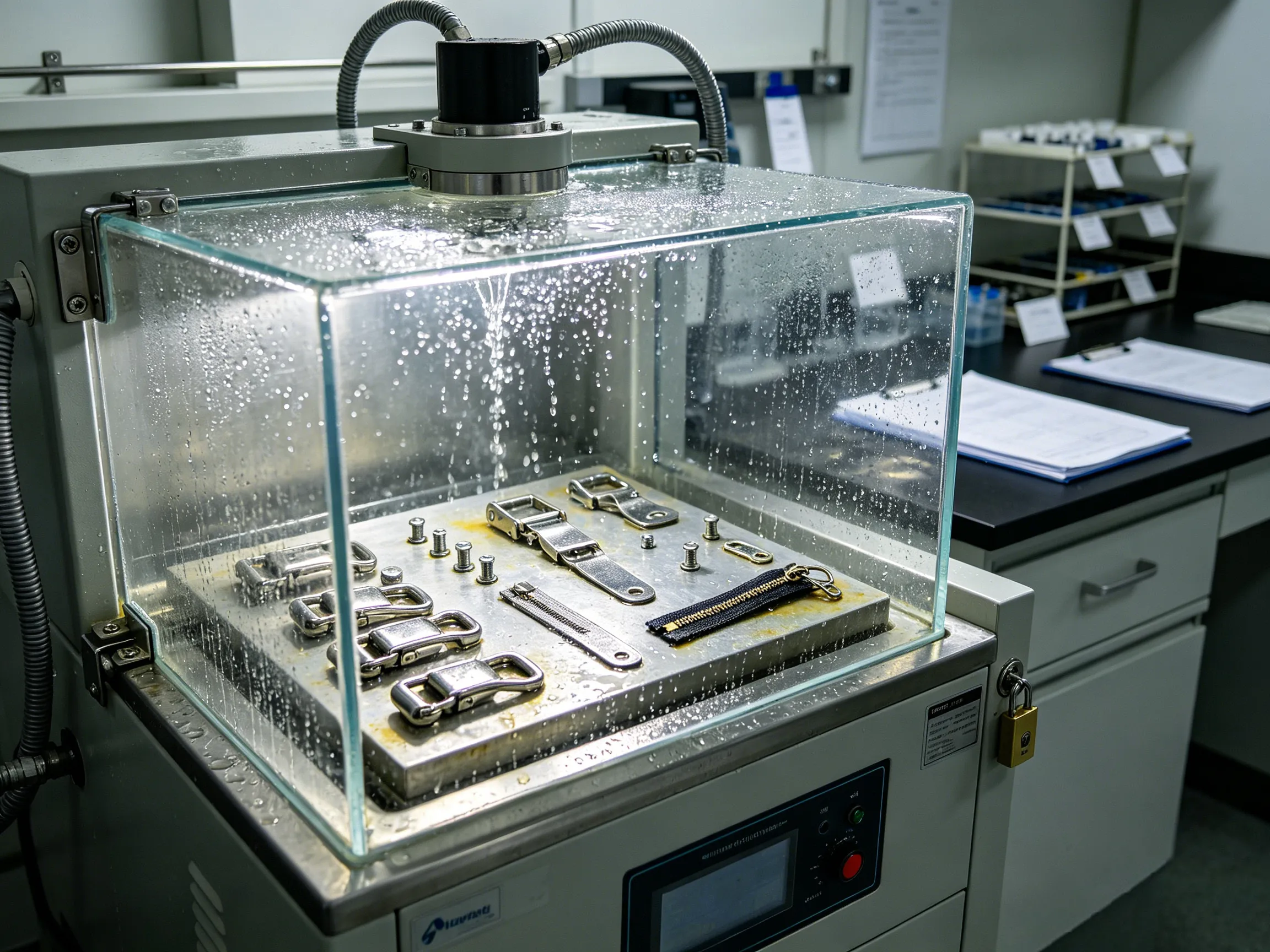
Moisture & Humidity Resistance
Polyester absorbs less than 1 % water by weight. PU absorbs essentially zero water on the surface, but the back-fabric — usually polyester or cotton — can wick moisture into the lamination layer, and prolonged exposure leads to hydrolysis: a chemical breakdown of the PU resin into a sticky, chalky surface. This is the single most common field failure for PU bags shipped to tropical climates.
Service Life
For a typical mid-range retail bag used daily, expect 2–4 years for solvent-based PU, 3–5 years for water-based or microfiber PU, and 4–7 years for 600D polyester with PU coating. None of these numbers are guarantees — they depend on formulation, use pattern, climate, and care.
Water Resistance and Outdoor Performance
Water resistance is one of the most over-claimed properties in the bag industry. The label “waterproof” can mean anything from “splashes bead off” to “submersible to 1 meter for 30 minutes.” The technical question is more precise: how does each base material perform in rain, snow, sports, gym, hiking, and travel?
Rain & Wet Weather
PU leather is naturally water-resistant at the surface — a brief shower rolls off without soaking. Polyester, by contrast, absorbs water quickly unless coated. This is why PU-coated polyester is the dominant outdoor fabric: it combines polyester’s strength with PU’s surface water-resistance.
Snow & Sub-Zero Conditions
Below freezing, standard PU stiffens and becomes prone to cracking. Polyester remains flexible. For winter sports bags, technical packs, or cold-chain accessories, polyester is the safer base.
Gym Bags
Gym bags live in damp locker rooms and sweat-soaked environments. PU-coated 600D polyester is the gold standard — easy to wipe clean, fully waterproof inside, and odor-resistant. PU leather gym bags are a marketing mistake unless the bag will not actually see sweat.
Backpacks & Hiking
For hiking and outdoor backpacks, polyester (or nylon) with PU or TPU backing is the universal choice. Modern ripstop polyester with a 1500–3000 mm hydrostatic head rating is the technical floor for any serious outdoor program.
Travel & Duffel
Travel and duffel bags prioritize abrasion and water resistance — they get thrown into overhead bins, taxi trunks, and rainy hotel courtyards. 600D polyester with PU coating is the workhorse; microfiber PU is the premium alternative.

Printing and Branding Performance
How a material accepts decoration is often the deciding factor between PU and polyester. The right choice depends on which decoration method defines your brand.
Silkscreen Printing
Both materials accept silkscreen well. PU produces a slightly raised, more “wet” ink deposit that looks premium on leather-grain textures. Polyester produces a flatter, more even result that photographs consistently across a production run.
Heat Transfer & Sublimation
Polyester is the clear winner here. Sublimation dyes the polyester fibers directly, creating a print that will not peel, crack, or fade. PU leather rejects sublimation ink — it requires solvent-based or PU-compatible inks that sit on the surface. For full-coverage photographic prints or all-over patterns, polyester is the only practical choice.
UV Printing
UV-curable inkjet printing works on both. On PU, UV ink sits crisply on the surface and produces a slight gloss. On coated polyester, UV ink bonds deeply into the PU coating and produces a more durable result.
Embossing & Debossing
This is PU’s home turf. The polyurethane surface takes a deep, permanent impression from engraved plates or rollers — the technique behind almost every luxury “leather-look” logo. Debossing on polyester is possible but limited to coated or laminated surfaces, and the impression depth is shallow.
Foil Stamping
Hot-foil stamping on PU produces the crisp, mirror-bright metallic logos you see on premium handbags. On polyester, foil works best with a PU or acrylic coating underneath; on raw polyester it tends to lift at the edges.
Logo Quality
For a luxury fashion brand, a deep PU emboss or foil-stamped logo is the signature element. For a streetwear, sport, or lifestyle brand, a sublimated or heat-transferred polyester logo offers more graphic freedom and better long-term wear. The right choice is a brand decision, not a material decision.


Sustainability and Environmental Impact
The honest answer to “which is more sustainable, PU or polyester?” is: it depends on the specific material, the specific supplier, and the specific certification chain. Below we outline the framework we use internally to evaluate sustainability claims on both sides.
rPET (Recycled Polyester)
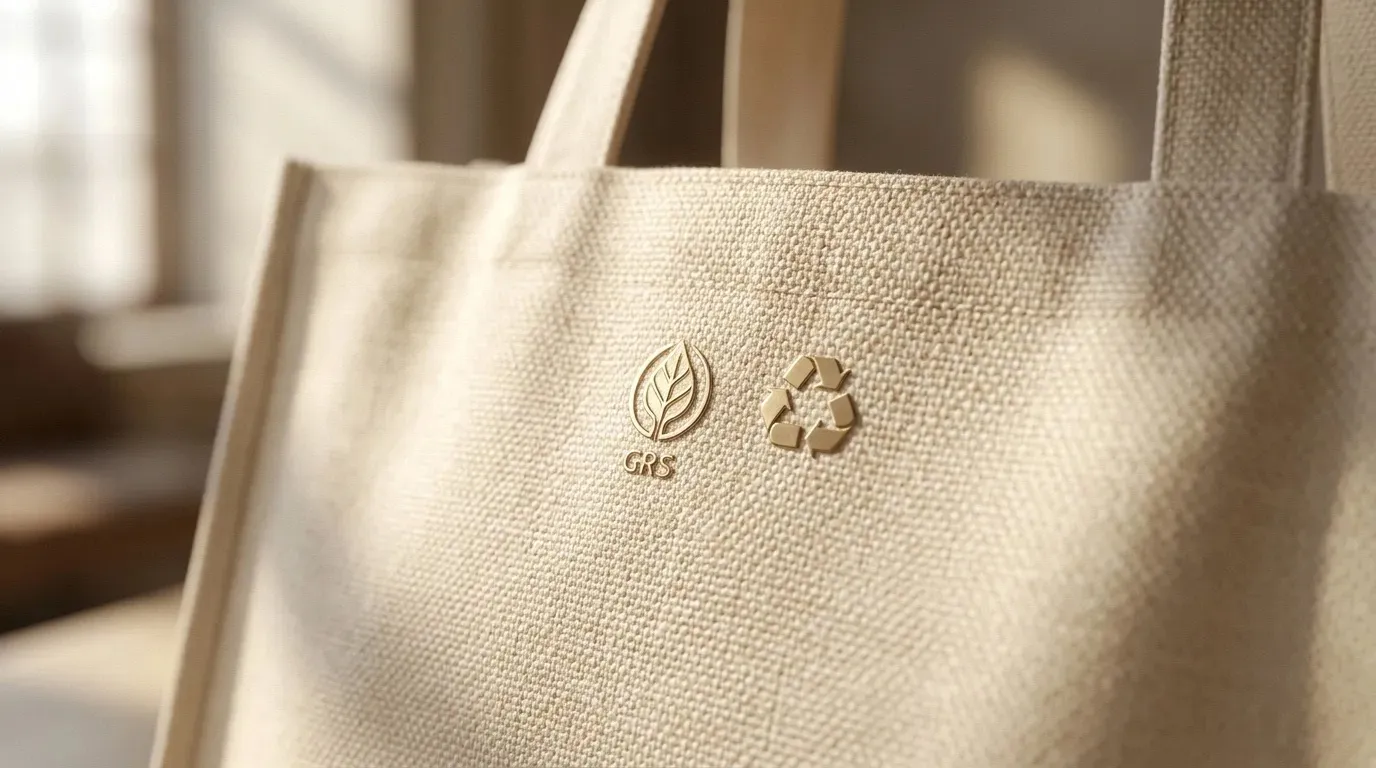
rPET made from post-consumer bottles is the most measurable sustainability improvement available in the bag industry today. GRS-certified rPET diverts plastic from landfill, reduces energy use by roughly 60 %, and cuts CO₂ emissions by 30–50 % per kilogram versus virgin PET. The fiber performs identically — this is the rare sustainability upgrade with no trade-off.
Water-Based PU
Water-based PU eliminates the DMF and MEK solvents used in classic solvent-based PU production. VOC emissions drop by 70–90 %, and worker-safety conditions improve dramatically. For brands selling into the EU, this is increasingly the floor, not the ceiling.
GRS (Global Recycled Standard)
GRS is the most rigorous chain-of-custody certification for recycled materials. A GRS-certified rPET bag carries verified recycled content from bottle to finished product. We maintain GRS certification for our rPET program and can issue transaction certificates (TCs) on every shipment.
OEKO-TEX Standard 100
OEKO-TEX certifies that every component of a finished textile — including dyes, finishing chemicals, and trims — has been tested for harmful substances. Both PU and polyester can carry OEKO-TEX; the certification is material-agnostic.
REACH Compliance
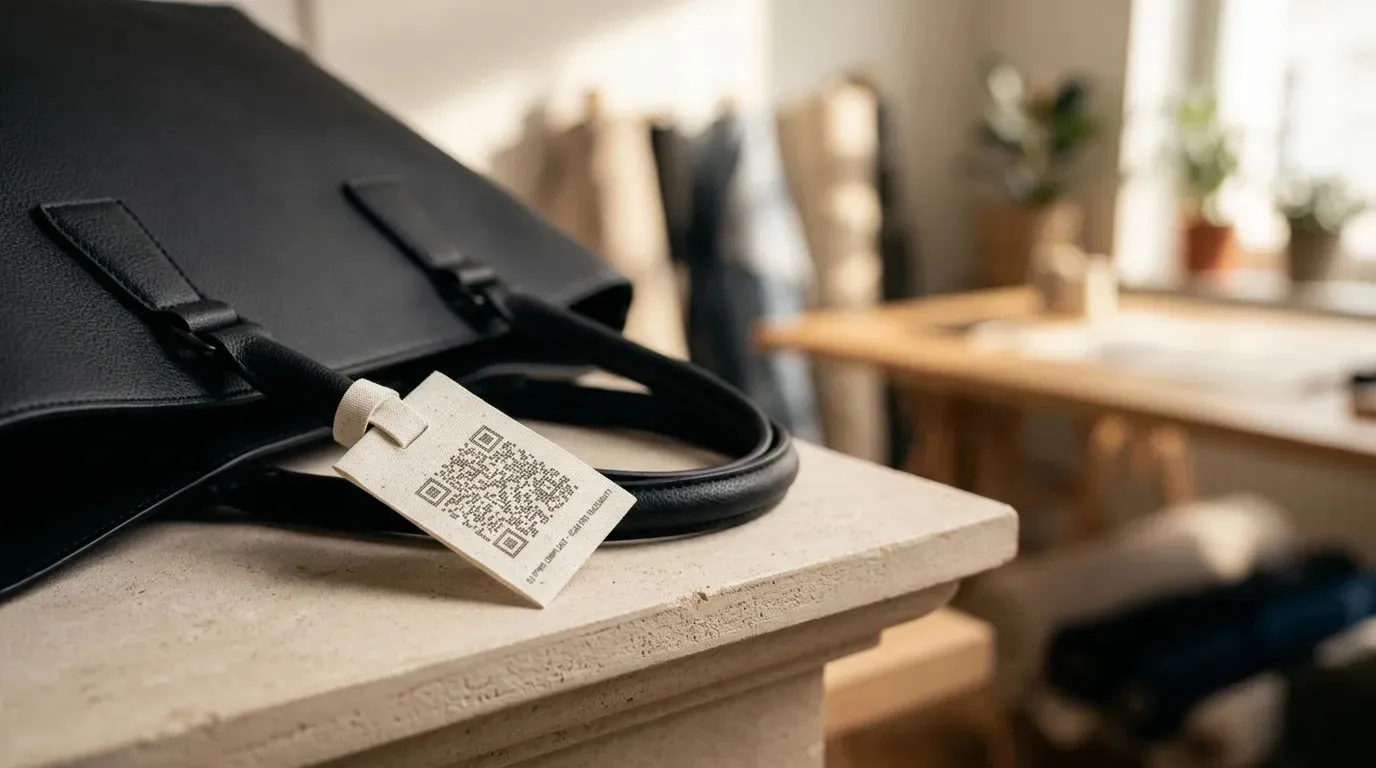
REACH is the EU’s chemical-safety regulation. REACH-compliant PU and polyester materials are tested for SVHCs (Substances of Very High Concern) and restricted substances. For any bag sold into the EU, REACH documentation is non-negotiable. For deeper guidance, see REACH vs. California Prop 65.
PFAS-Free Finishes
PFAS (per- and polyfluoroalkyl substances) are a class of “forever chemicals” historically used in water-repellent finishes. They are being banned or restricted across the EU and several US states. PFAS-free DWR (durable water repellent) finishes are now widely available on both PU and polyester. Always request the PFAS-free declaration in writing. For full background, see PFAS Regulations Explained.
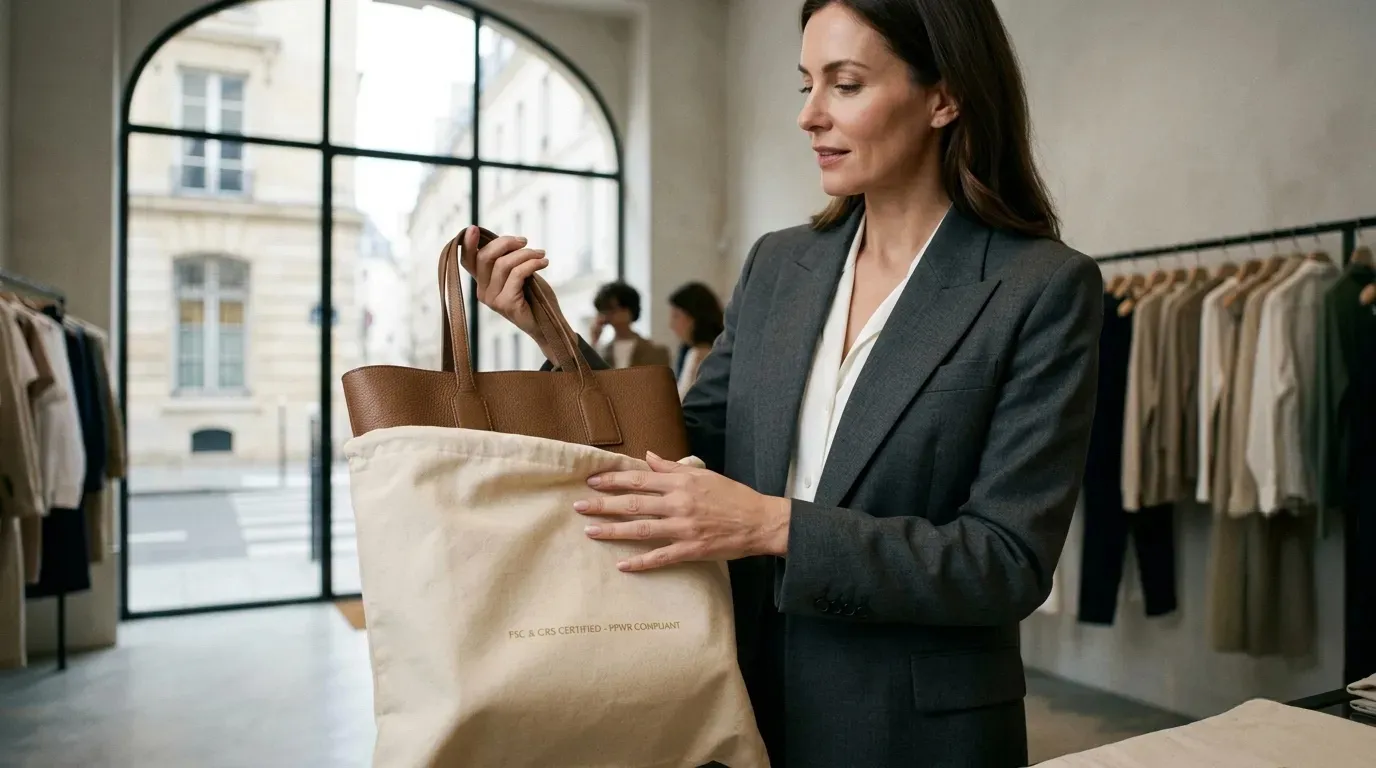
PPWR (EU Packaging and Packaging Waste Regulation)
PPWR is reshaping how packaging is designed, reused, and recycled in the EU from 2026 onward. For PU and polyester bags, the implication is direct: reduce material use, eliminate unnecessary plastic laminations where possible, and design for recyclability. Brands selling into the EU should align their packaging strategy with PPWR requirements well before the regulation’s enforcement dates. For material-level strategies, see Water-Based PU vs. Recycled PU.

Which Material Works Best for Different Bag Types?
Below is the decision matrix our product team uses when a client brief says only “we want a bag.” Every category has a default recommendation and an alternative for buyers who want to position differently.
| Bag Type | Recommended Material | Why | Alternative |
|---|---|---|---|
| Tote | Polyester (210D–600D) or PU-coated canvas | Lightweight, printable, cost-efficient for retail and gifting programs. | Microfiber PU for premium positioning. |
| Backpack | 600D polyester with PU coating | Abrasion and water resistance at the right weight; broad color range. | Nylon or PU leather for fashion programs. |
| Cosmetic Bag | Polyester (210D–300D) with PU or TPU backing | Wipe-clean interior, light weight, easy to print, low MOQ friendly. | PU leather for luxury beauty brand alignment. |
| Laptop Bag | 600D polyester + foam padding, or microfiber PU | Structure, padding retention, and a premium look at retail. | Recycled PU for sustainability-led programs. |
| Travel / Duffel | 600D polyester with PU or TPU coating | Maximum abrasion and water resistance for checked-bag handling. | Coated canvas with leather trim for heritage positioning. |
| Fashion Handbag | Microfiber PU or PU-coated split leather | Leather-like depth, embossability, premium shelf presence. | Coated polyester for printed or graphic-led fashion. |
| Luxury Bag | Microfiber PU, water-based PU, or coated canvas with leather trim | Tactile depth, embossing fidelity, finish quality. | Genuine leather where budget allows; recycled PU for sustainability positioning. |
| Gym Bag | 600D polyester with heavy PU or TPU coating | Sweat resistance, wipe-clean interior, durability under heavy load. | Waterproof TPU-laminated polyester for premium gym brands. |
| Promotional / Giveaway | 210D polyester (non-woven or woven) | Lowest cost, fastest sampling, sublimation-friendly for full-color logos. | Recycled PET for sustainability-led promotions. |
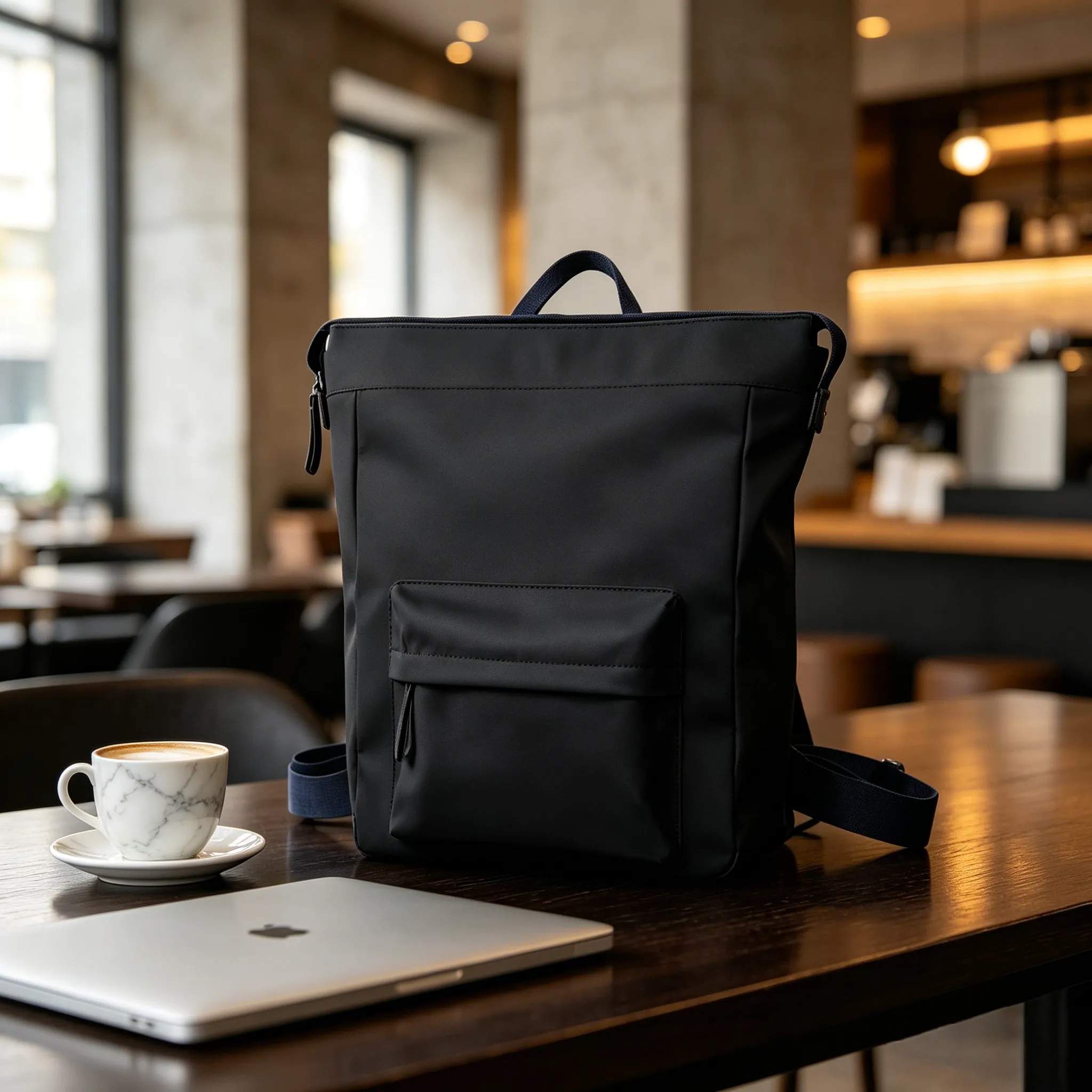
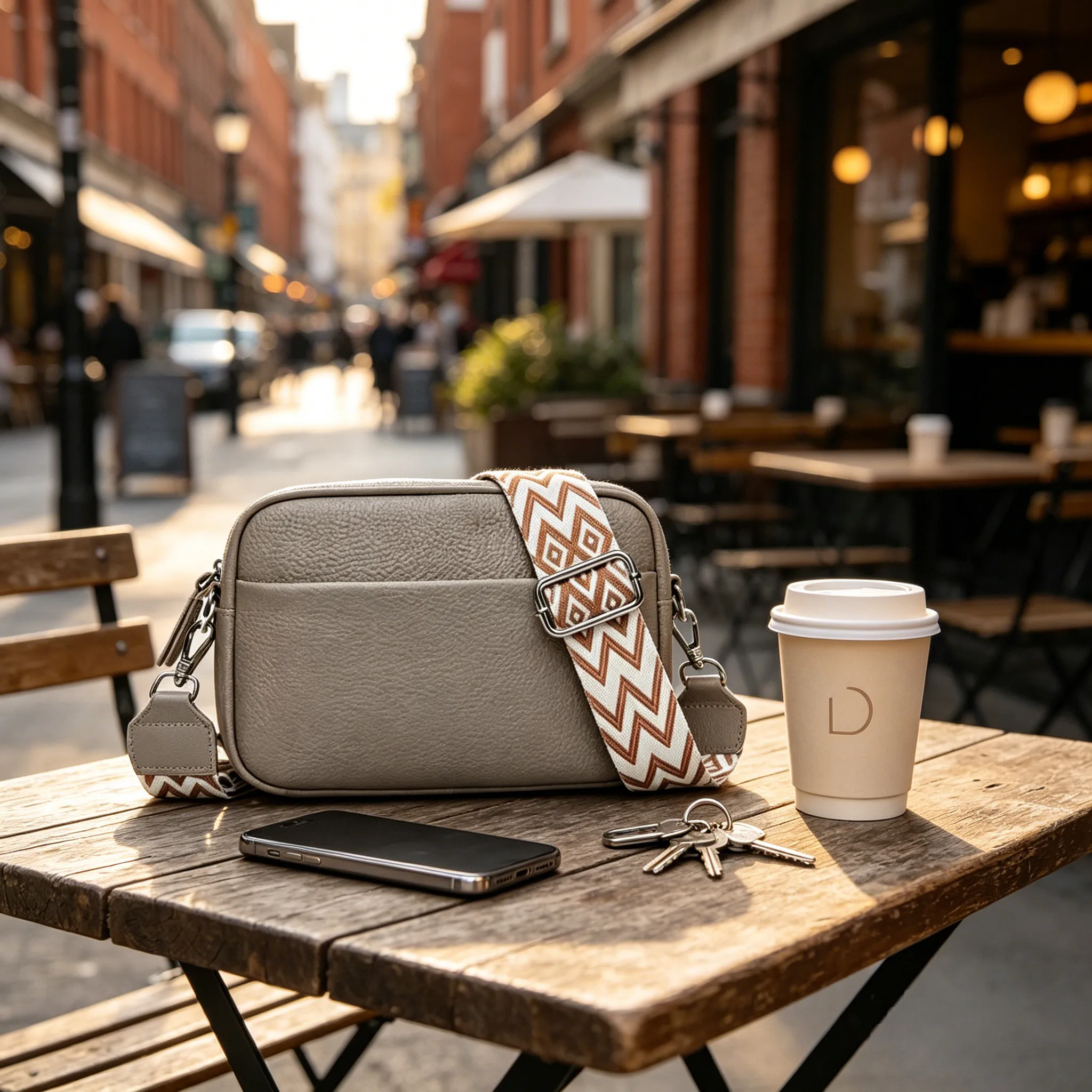
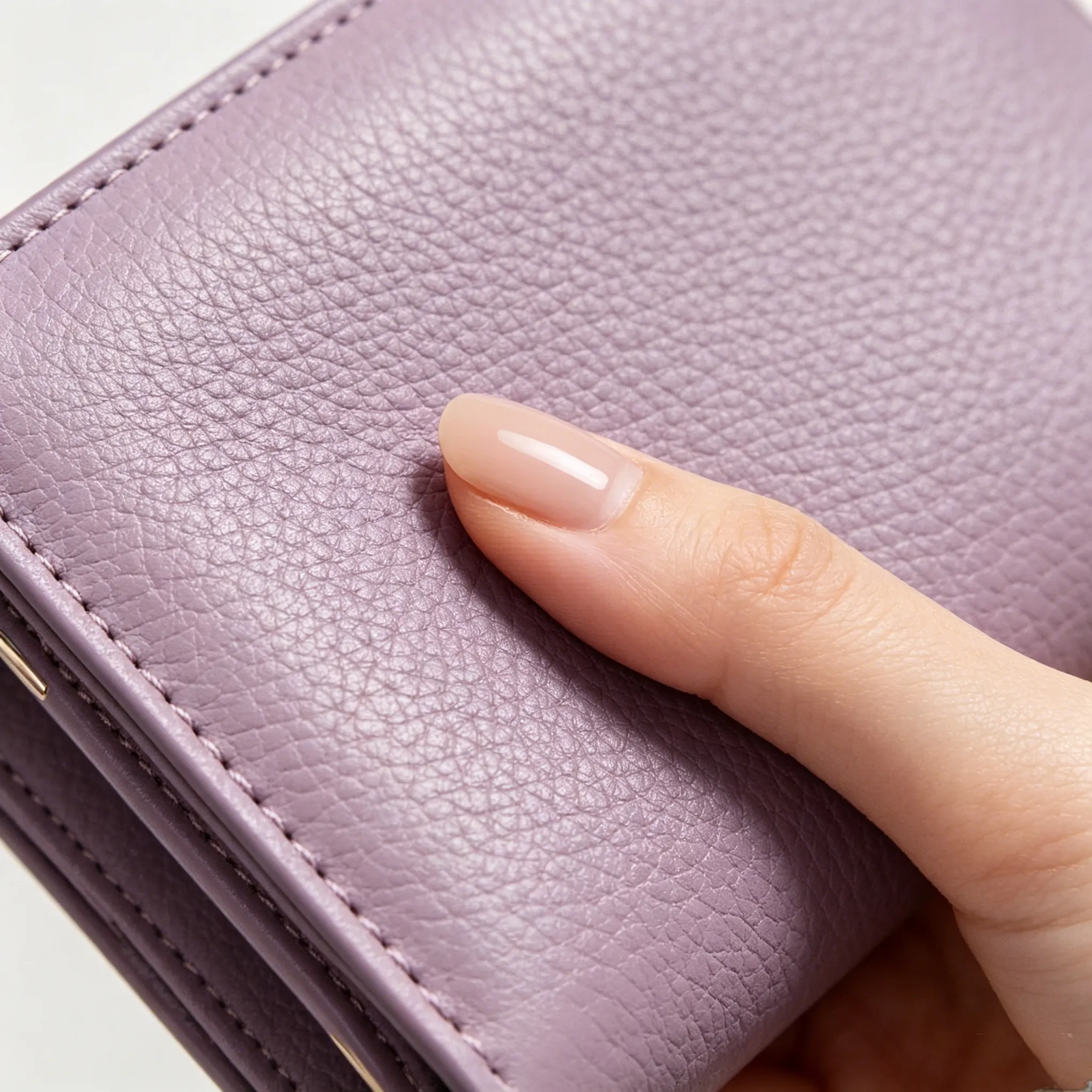
For the visual reference, here are the bag categories we produce most often, drawn from real client programs:

Which Material Is Better for Different Industries?
Material choice also follows the conventions of the industry you sell into. Buyers in beauty, travel, outdoor, retail, corporate gifting, schools, sports, and healthcare all have different expectations. The right call often has less to do with the material itself and more to do with what your customer’s customer is used to.
Fashion
This is the category most buyers ask about first. Fashion brands oscillate between microfiber PU for premium lines and coated polyester for printed or graphic-led collections. Embossing, foil, and edge-painting are the techniques fashion buyers ask about most. The deciding factor is usually the finishing technique, not the base material.
Beauty & Cosmetics
Beauty brands overwhelmingly favor PU-coated polyester for polyester cosmetic bags, and microfiber PU for premium skincare-adjacent lines. The bag must photograph well under beauty lighting (soft, high-key, low-contrast) and be wipe-clean. PU leather here is a marketing trap unless the bag is for a prestige price point.
Travel
Travel buyers prioritize durability, water resistance, and easy cleaning. 600D polyester with PU or TPU coating is the default. Microfiber PU is the premium alternative. The deciding factor is almost always the hydrostatic-head rating of the coating.
Outdoor
Outdoor programs — hiking, climbing, ski, cycling — use polyester or nylon with PU/TPU backing. Hydrostatic-head rating must meet technical spec (typically 1500–5000 mm). Color retention under UV is the second non-negotiable. PU leather has no place in technical outdoor bags.
Retail
Retail is the broadest category. The right material depends on price point and target customer. Mass-market favors polyester; mid-market uses a mix; premium and luxury skew toward PU.
Corporate Gifts
Corporate gifting favors polyester because of the cost predictability and the sublimation-friendly surface for full-color logos. Recycled PET is the default ask from European corporate buyers.
Schools
School bags prioritize abrasion resistance, color fastness, and price. 600D polyester is the standard. PU-coated back-to-school prints are common in the US and EU markets.
Sports
Sports bags — gym, yoga, cycling — favor PU-coated polyester. Lightweight, sweat-resistant, easy to clean. PU leather is generally wrong here, despite occasional premium positioning requests.
Healthcare
Healthcare bags — patient totes, nurse kits, medical accessories — favor OEKO-TEX-certified polyester with anti-microbial finishes. PU is uncommon in this category.
How to Choose Between PU and Polyester
The decision tree below is the one our senior project manager walks each new client through during the first sampling meeting. Five questions, in order, will get you to the right material for roughly 90 % of programs.
- What is your budget per unit? Below ~$5 FOB → polyester almost always wins. Above ~$15 FOB → PU becomes competitive, especially for premium positioning.
- Are you targeting a luxury or premium positioning? Yes → microfiber PU or water-based PU. No → polyester or recycled PET.
- Will the bag live outdoors, in a gym, or in wet environments? Yes → PU-coated 600D polyester or TPU-laminated polyester. No → either material works.
- Is sustainability a top-3 customer priority? Yes → GRS-certified rPET polyester or recycled PU with documented chain of custody.
- What is your MOQ? Below 200 → polyester (210D/300D stock colors). 200–500 → either, with PU color-matching setup. 500+ → both fully flexible.
Once you have answers to those five questions, you should be able to point to a specific material SKU with confidence. Three rounds of samples usually resolve any remaining uncertainty.
If you want a side-by-side comparison of canvas, polyester, and PU as a fabric stack, see our guide: Canvas vs. Polyester vs. PU: Material Comparison. For help distinguishing OEM, ODM and Private Label structures, see OEM vs ODM vs Private Label.
Common Mistakes Buyers Make
After 50+ countries of bag sourcing, we see the same five mistakes come up over and over. Each one is avoidable with the right preparation.
- Choosing material based on price alone. The cheapest quote usually hides a cheaper formulation. Always ask for the material spec sheet and a sample swatch before signing.
- Ignoring GSM. Grams per square meter tells you the actual weight of the fabric. A 210D polyester at 80 GSM is very different from a 210D polyester at 150 GSM. The higher GSM is dramatically more durable.
- Treating all PU as the same. Solvent-based PU, water-based PU, recycled PU, and microfiber PU are four different materials with four different price and performance profiles. Specify which one you want.
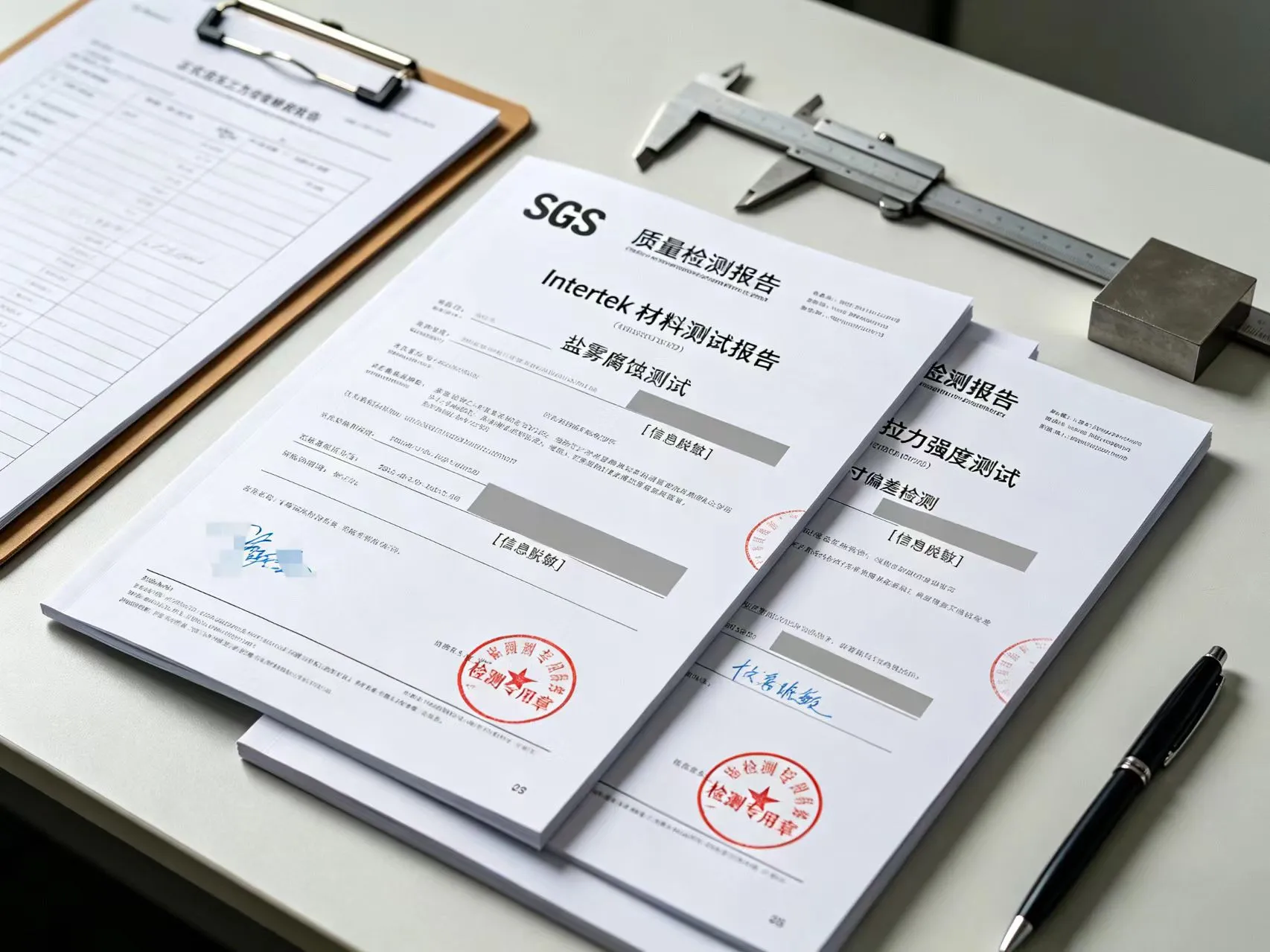
- Skipping factory testing. A reputable custom bag factory should be able to show you abrasion, color fastness, hydrolysis, tensile, and stitching-compatibility test results for the specific lot they are quoting. If they cannot, that is a red flag.
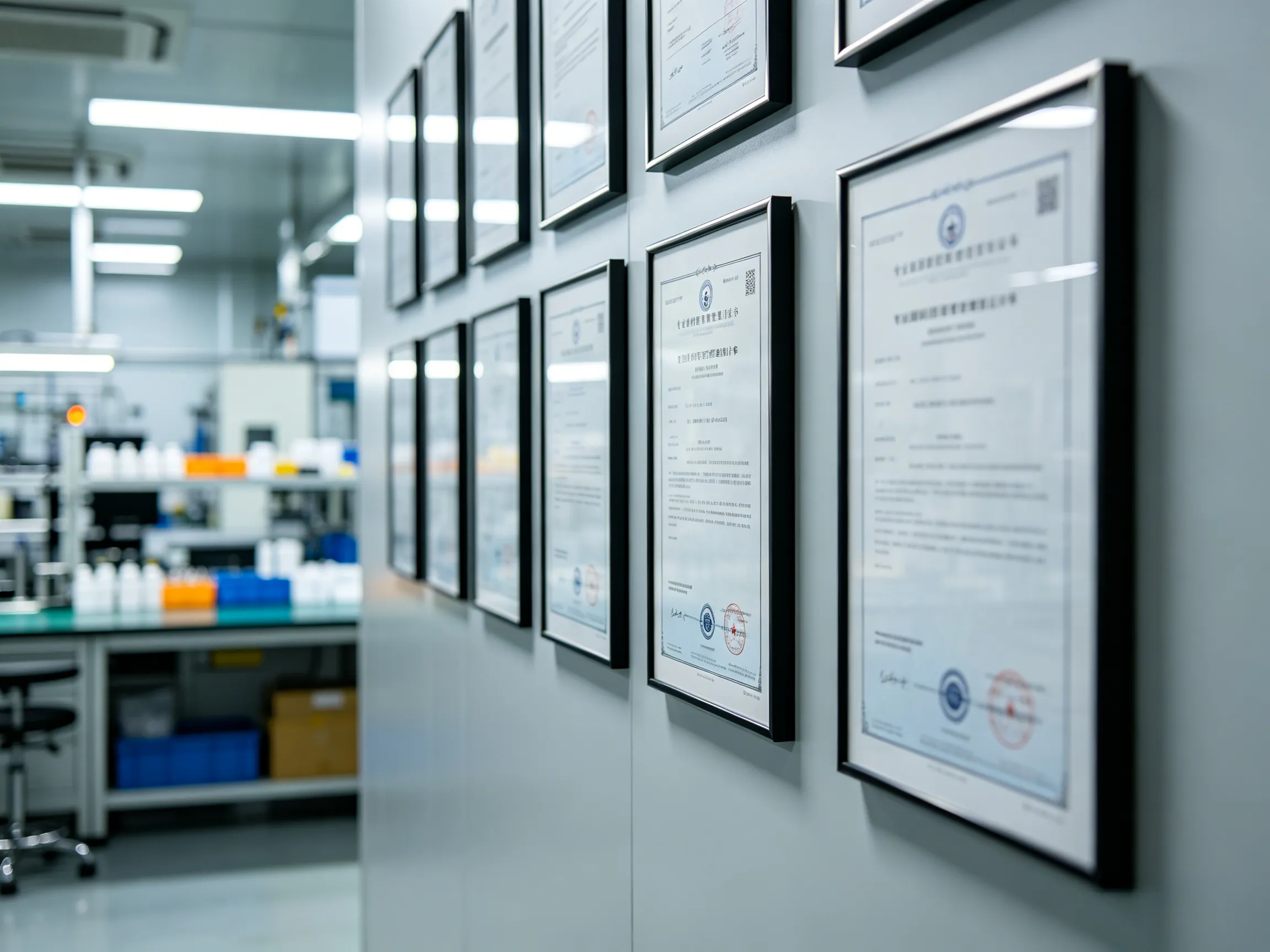
- Not verifying REACH and OEKO-TEX documentation. For any EU shipment, REACH is mandatory. For baby and child products, OEKO-TEX Standard 100 is effectively mandatory. Ask for the certificate numbers and check them.
For help reading a QC inspection report, see How to Read a Factory QC Inspection Report.
How Our Engineering Team Helps Brands Choose the Right Material
Material selection is not a paper exercise. It is a hands-on, sample-driven conversation that benefits from real people comparing real swatches under real light. At Dreamway we put two senior team members in front of every new program — one commercial, one quality.

Emily
Senior Project Manager · 12 years in OEM bag manufacturing · manages 15–25 active projects simultaneously
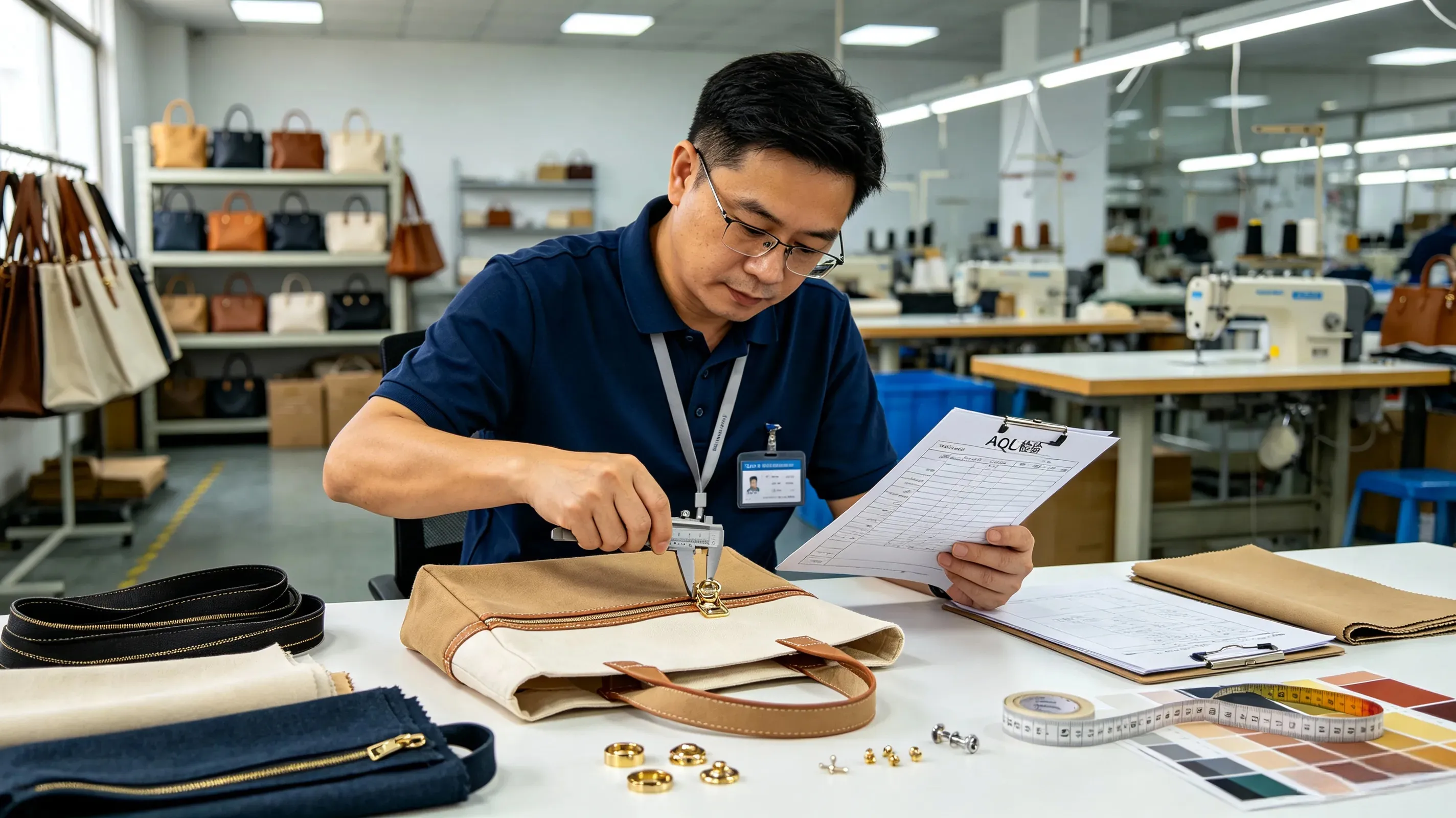
Kevin
Pattern Development Engineer · 15 years in bag pattern making · leather, canvas, nylon, and technical fabrics
Meet Our Senior Project Manager
Emily leads the commercial side of every new program. She translates brand positioning, target retail price, and MOQ into a material spec that holds up under production. She is the one who will tell you when the budget will not stretch to microfiber PU — and what to specify instead to keep the brand language intact. She also negotiates the balance between MOQ and per-unit cost: most buyers can save 8–18 % on unit cost by accepting a 20–30 % higher MOQ on stock materials.
Meet Our Quality Control & Pattern Engineer
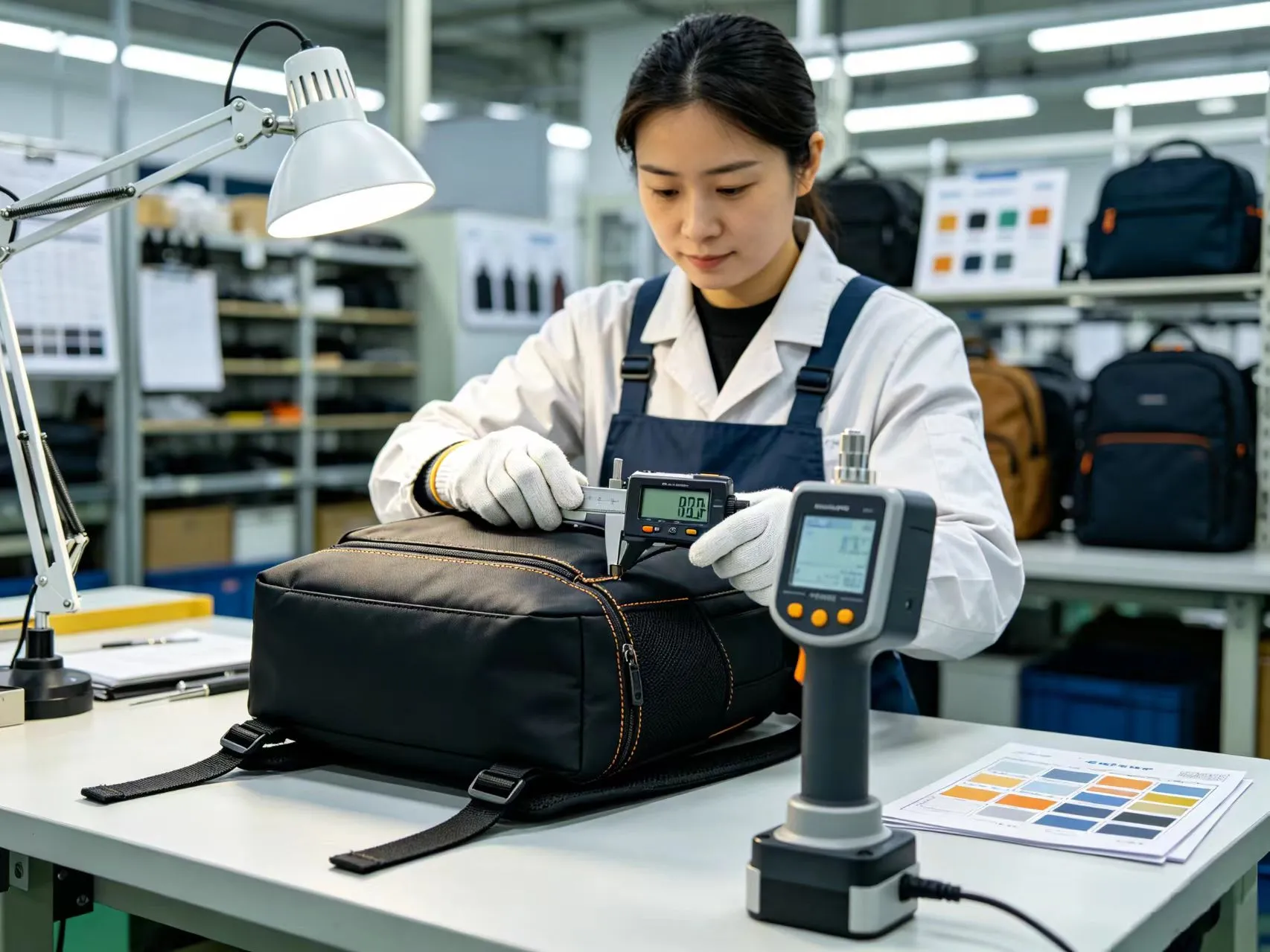
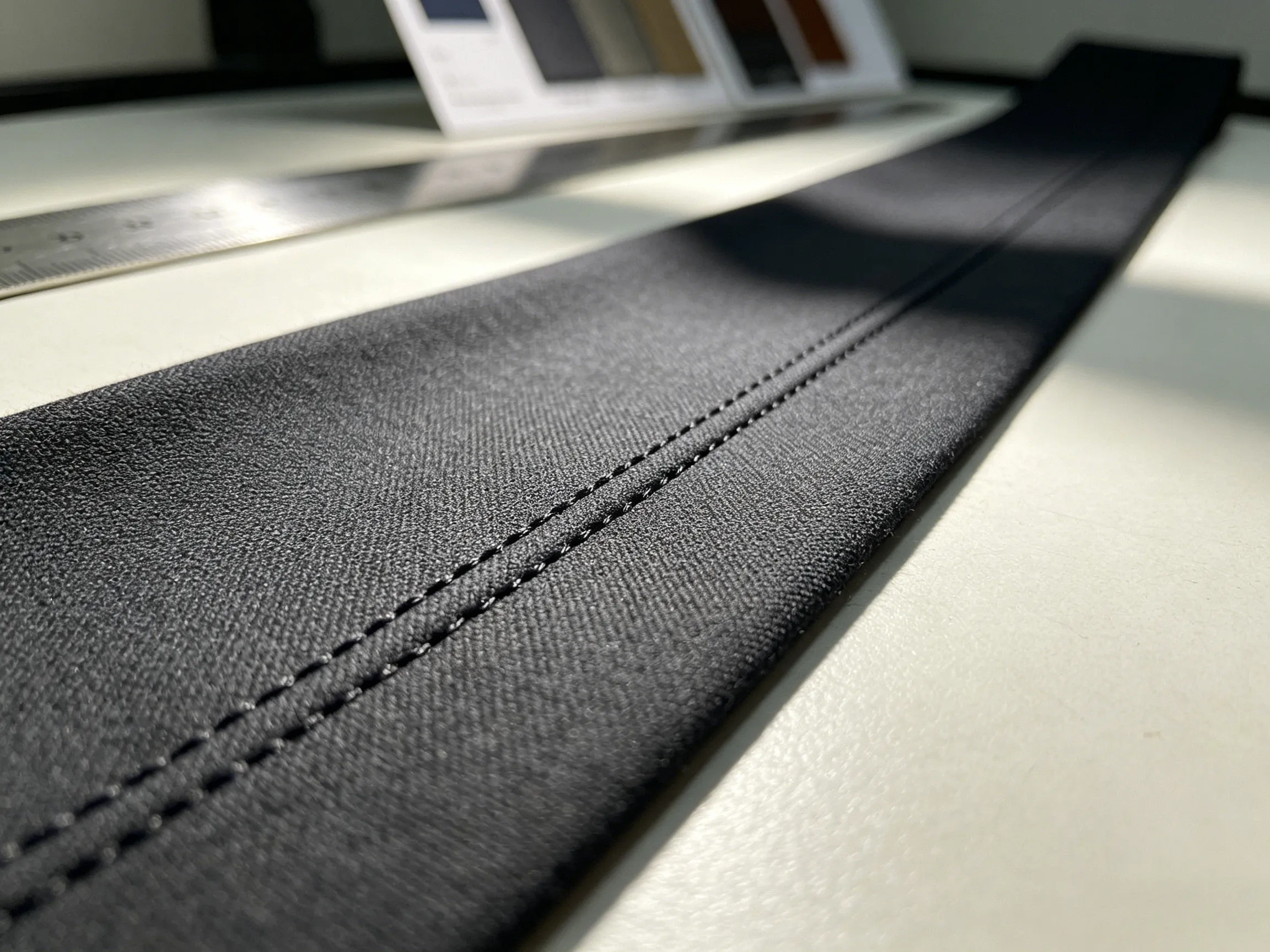
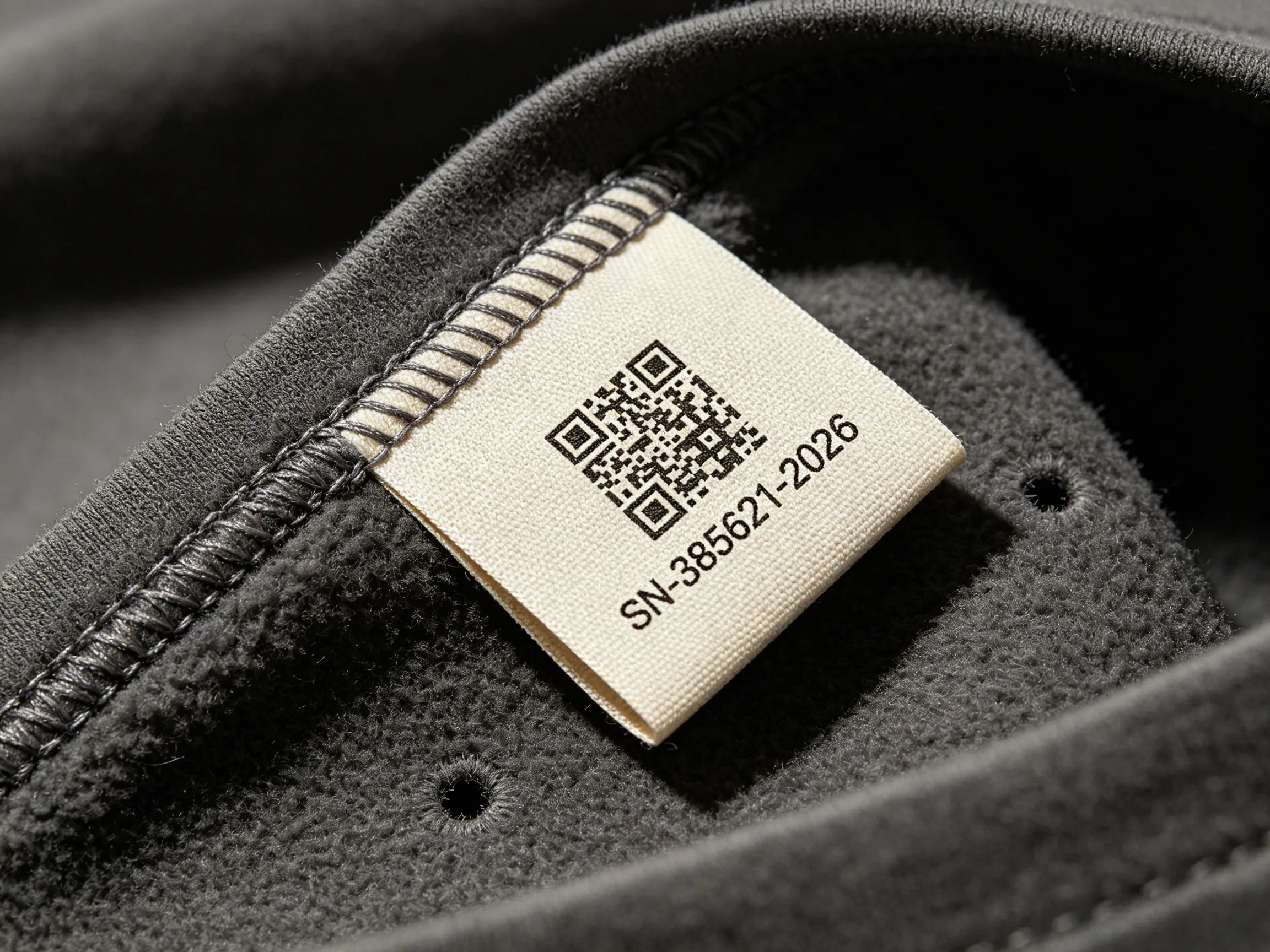
Kevin runs incoming-material inspection and oversees the test protocols behind every production run. The five core tests he runs before any material is approved are:
- Abrasion — Martindale test to verify the surface will withstand the use case.
- Color Fastness — to washing, rubbing, light, and perspiration, per ISO 105 standards.
- Hydrolysis — accelerated-aging test for PU materials, simulating tropical-climate storage.
- Tensile Strength — verifies the fabric can carry the rated load without seam slippage.
- Stitching Compatibility — confirms the material can be sewn at production speed without needle-heating damage.
This pairing — one commercial, one technical — turns a material comparison from a spreadsheet into a reliable production decision. For buyers who want a deeper introduction to bag-making standards, see Tote Bag Quality Standards Explained.


Frequently Asked Questions
Which is more durable, PU or polyester?
For most real-world bag use, 600D polyester with PU coating is more durable than standard solvent-based PU leather. PU leather has higher scratch-and-stain resistance but a shorter flex life, and is vulnerable to hydrolysis in humid climates. Water-based and microfiber PU close the gap.
Does PU crack or peel over time?
Standard solvent-based PU can develop micro-cracks at flex points (strap bases, fold lines, gusset creases) after 18–36 months of regular use. Hydrolysis causes the surface to become sticky and chalky. Water-based PU and microfiber PU resist both failure modes better.
Is polyester waterproof?
Uncoated polyester absorbs water and is not waterproof. PU-coated, PVC-coated, or TPU-laminated polyester is fully waterproof and is the standard fabric for outdoor, gym, and travel bags. Always check the hydrostatic-head rating (measured in mm) for any “waterproof” claim.
Is PU eco-friendly?
Solvent-based PU has a meaningful environmental footprint due to VOC emissions and fossil-derived resins. Water-based PU and recycled PU are substantially better, and can meet OEKO-TEX, REACH, and many brand sustainability targets. For a full framework, see Water-Based PU vs. Recycled PU.
Is water-based PU actually better?
For most EU and US buyers today, yes — water-based PU eliminates the DMF and MEK solvents used in classic PU production, dramatically reducing VOC emissions and improving worker safety. The performance gap with solvent-based PU has narrowed to the point where most buyers cannot tell them apart on a finished bag.
How much more expensive is rPET than virgin polyester?
For most common bag deniers, GRS-certified rPET carries a 15–25 % premium over virgin polyester in 2026. The premium has narrowed over the past three years and is expected to keep shrinking as rPET supply scales.
Which material is better for luxury bags?
For tactile depth, embossability, and a leather-like hand-feel, microfiber PU is dominant in vegan luxury and high-end private-label programs. For graphic-led or printed luxury collections, coated or laminated polyester is more flexible.
Which material is better for outdoor bags?
Polyester or nylon with a PU or TPU coating — no question. PU leather has no place in technical outdoor programs. Look for a hydrostatic-head rating of 1500 mm minimum, and 3000+ mm for serious rain protection.
Which material is better for gym bags?
600D polyester with PU or TPU coating. The bag needs to be wipe-clean, sweat-resistant, and odor-resistant — and it needs to be light enough to carry to and from the gym. PU leather gym bags are a marketing mistake unless they are purely decorative.
Which material is better for cosmetic bags?
For mass and mid-market: PU-coated polyester — wipe-clean, lightweight, printable. For prestige and luxury beauty: microfiber PU or water-based PU. Avoid uncoated polyester, which absorbs moisture and stains.
Can PU and polyester be combined in one bag?
Yes — almost every PU leather bag already contains polyester as the backing fabric. Common hybrid constructions include a PU-leather front panel with a polyester body, microfiber PU trim on a 600D polyester shell, or PU-coated polyester used as a contrast material.
How do I choose a reliable bag material supplier?
Ask for five things: (1) the material spec sheet with GSM, denier, coating weight, and composition; (2) a third-party test report (SGS, Intertek, or Bureau Veritas) issued within the last 12 months; (3) OEKO-TEX, GRS, or REACH certificates relevant to your market; (4) a physical swatch you can handle; and (5) at least two reference customers in your category. If a supplier hesitates on any of these, look elsewhere.
What MOQ should I expect for PU vs. polyester?
Polyester can be sourced at MOQ as low as 100 units for stock colors and 300 for custom-dyed fabric. PU typically requires 300–500 units for stock colors and 800+ for custom color-matching, because PU production has a higher setup cost per SKU.
Does PU leather contain animal products?
No. PU is a fully synthetic material made from polyurethane resin coated on a fabric backing. It contains no animal-derived components and is the standard “vegan leather” option. “Bonded leather,” which mixes PU resin with shredded leather fibers, is the exception and is not vegan.
How does PPWR affect PU and polyester bags?
The EU Packaging and Packaging Waste Regulation (PPWR) restricts excessive packaging, mandates recycled content thresholds, and pushes design-for-recyclability. For bags specifically, the implication is to minimize multi-layer laminations that cannot be separated for recycling, to use mono-material constructions where possible, and to avoid unnecessary plastic hangtags and over-wrap.
What certifications should I require for the EU market?
At minimum: REACH compliance (mandatory for any product sold in the EU), OEKO-TEX Standard 100 (strongly recommended for skin-contact products), and GRS if you are claiming recycled content. For waterproof claims, PFAS-free declarations are increasingly required.
Which is faster to sample and produce?
Polyester. Stock polyester colors can be sampled in 5–7 days and produced in 25–35 days for a 1,000-unit order. PU requires an additional 5–10 days for color matching and material preparation. For tight launch windows, polyester wins.
Can PU and polyester bags be repaired?
Polyester is easier to repair — a torn seam, a broken strap mount, or a worn panel can usually be re-stitched or patched. PU leather damage (peeling, hydrolysis, cracking) is much harder to repair cosmetically and is typically replaced under warranty.
Disclaimer
Need a Sample Kit?
Spec it. Feel it. Decide with confidence.
Request Material Swatches- Recycled PU vs PVC: Which Material Is Better for Sustainable Bags?
- Is Recycled PU Leather Toxic? Safety, Chemical Risks & Buyer Guide
- Recycled PU Leather: Is It Sustainable? Bag Brand Guide
- Recycled PU vs PU Leather: Which Is Better for Bags?
- What Is Recycled PU Leather? Complete Guide for Bag Brands
- PU vs. Polyester for Bags: Which Material Is Better for Your Brand?
- Silk vs. Bamboo vs. Tencel: Why Luxury Wellness Brands Still Choose Real Mulberry Silk for Bedding
- How to Spot Fake Silk: A Factory Guide to Testing Real Mulberry Silk for B2B Buyers
- The Ultimate Guide to Sourcing Mulberry Silk: 16mm vs 19mm vs 22mm Compared
- Canvas vs. Polyester vs. PU: Material Comparison
- Guide to Sustainability: GRS, OEKO-TEX & FSC
- Canvas Fabric Weight Guide: GSM and Oz Explained
- The Future of Vegan Leather: Pineapple, Cactus, and Apple Fiber
- Water-Based PU vs Recycled PU: Which Is Better for Bags?
- Why Water Based PU Leather is so popular?
- Comparing Cotton vs. Blended Canvas for Tote Bags
- Eco-Friendly and Sustainable Canvas Tote Bags
- Canvas Tote Bag Material & Weight Guide: oz/GSM Chart for Every Bag Type
- Sustainable Custom Tote Bags with Logo: Certifications, Materials & Greenwashing Red Flags
- Canvas Tote Bag Factory: What Affects the Durability?
- Cotton Tote Bag Factory: Grades, GSM Options & Fabric Testing
- Luxury Tote Bag Factory for Premium Brands (PU/Leather Options)
- Recycled Tote Bag Factory: RPET, Organic Cotton & Eco-Friendly Materials
- Top Custom PU Handbag Factories & Pro Tips for Choosing Quality
DREAMWAY
Custom Bag & Silk Manufacturer · Shiling, Guangzhou
Company
Products
Guides & Insights
Ready to Bring Your Bag Idea to Life? Let’s Talk Today.
From your first sketch to bulk delivery, our team replies within 12 hours with expert advice and a free quote. No pressure — just honest manufacturing guidance.

Prefer a call? +86-020-87682749 · Mon–Sat, 9:00–18:00 (GMT+8)