SGS vs Intertek vs Bureau Veritas Inspection Comparison

SGS vs Intertek vs Bureau Veritas: Inspection Comparison 2026

Independent inspection buyer’s guide

SGS vs Intertek vs Bureau Veritas Inspection Comparison

A practical, evidence-minded comparison of three global testing, inspection, and certification groups—covering services, standards, reports, costs, lead times, geographic strengths, and custom bag quality control.

Updated July 18, 2026 32-minute read Reviewed by Dreamway Quality Team
Executive summary

Quick Answer

Direct answer

SGS, Intertek, and Bureau Veritas are all internationally established third-party testing, inspection, and certification companies. For a normal pre-shipment inspection, each can apply an agreed AQL sampling plan, verify workmanship, quantity, function, dimensions, labeling, packaging, and issue a photo-based report. There is no universal winner: the best provider is the one that matches your buyer protocol, product category, factory location, schedule, and budget.

Choose SGS when broad name recognition, a large testing network, cross-category technical capability, or a customer-nominated global provider matters most. Choose Intertek when the program is strongly focused on consumer goods, textiles, retail supply chains, product assurance, or responsive local coordination. Choose Bureau Veritas when European market familiarity, sustainability and social-compliance programs, luxury or retail context, or an existing BV buyer program is the deciding factor.

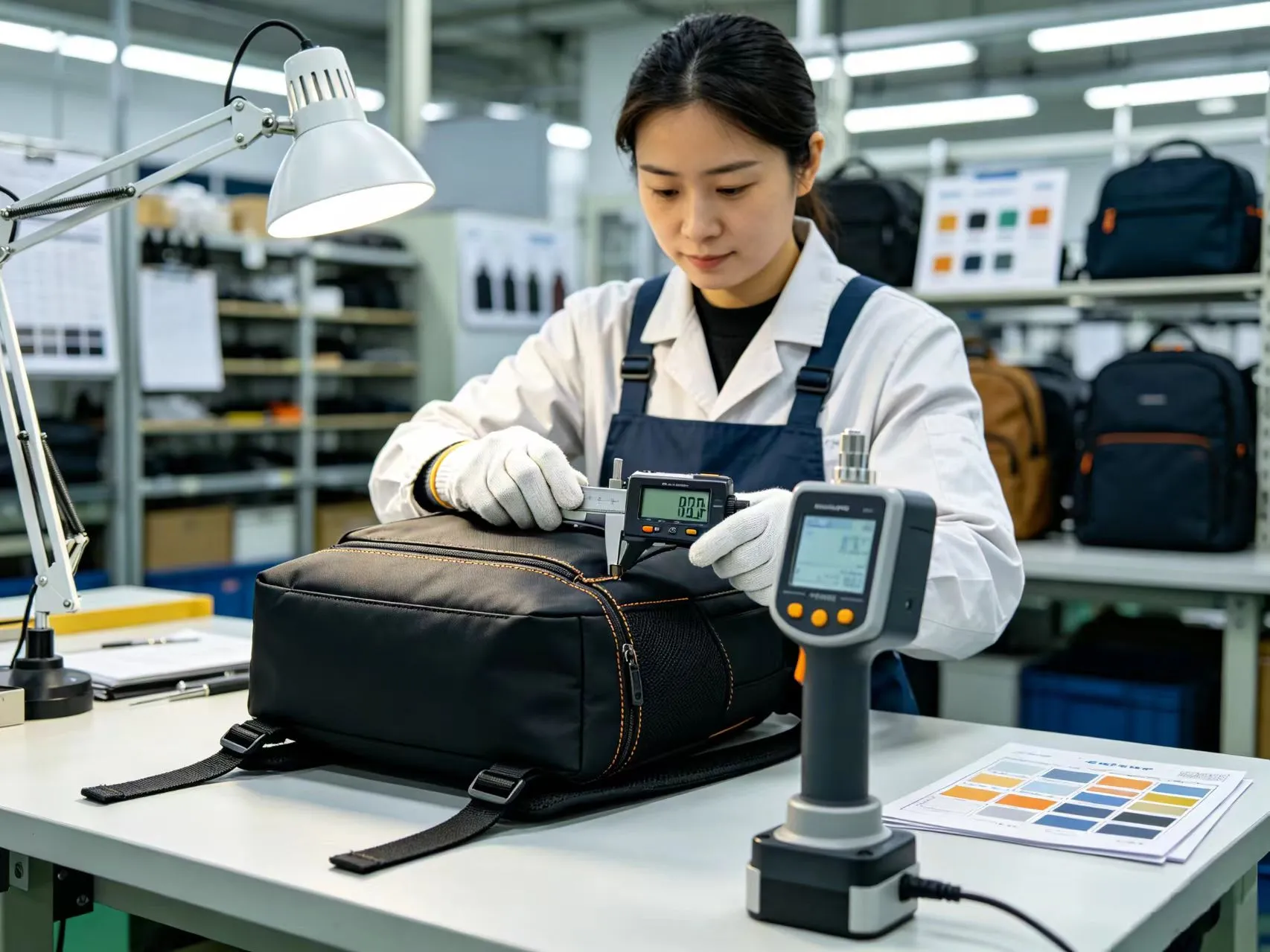
For custom bags, none should be selected by logo alone. Ask who the assigned local inspector will be, whether that person routinely evaluates textiles or leather, stitching density and seam strength, print and embroidery, zippers and hardware, load tests, odor, packaging, barcodes, and shipping marks. A detailed, approved checklist and sealed reference sample usually influence the outcome more than small differences between corporate brands. Obtain comparable written quotations and confirm report timing before booking.

SituationBest starting choiceWhy
Global brand supplier programSGSVery broad recognition and technical network
Consumer goods or retail sourcingIntertek / SGSDeep consumer-product and retail program experience
European buyer or compliance programBureau VeritasStrong European heritage and market familiarity
Cost-sensitive SMECompare local quotesCity, scope, and travel affect price more than the global logo
Textiles, promotional bags, or leather goodsAll threeChoose the strongest local softlines team and checklist
Lab testing plus on-site inspectionSGS / Intertek / BVAll can coordinate testing; local lab capability varies
Buyer names a required providerBuyer-nominated companyProgram acceptance takes priority over general preference
Master comparison matrix

SGS vs Intertek vs Bureau Veritas at a Glance

Use this matrix for initial shortlisting—not as a substitute for a current proposal. “Strong” describes common market capability, not a guarantee that every office offers the same capacity. Corporate figures are rounded because headcount and network size change through acquisitions, divestments, and reporting periods.

ComparisonSGSIntertekBureau Veritas
Founded1878Roots dating to 18851828
HeadquartersGeneva, SwitzerlandLondon, United KingdomNeuilly-sur-Seine, France
Company profileGlobal TIC groupGlobal total quality assurance groupGlobal testing, inspection, and certification group
Approximate countries served115+100+140+
Approximate workforce99,000+45,000+80,000+
Office / laboratory networkVery extensiveExtensiveVery extensive
Core product inspectionsStrongStrongStrong
Product testingVery strongVery strongVery strong
Factory auditsAvailableAvailableAvailable
Social complianceBroad programsBroad programsNotable strength
Management certificationBroad capabilityBroad capabilityHeritage strength
Softlines / textile expertiseStrongNotable strengthStrong
Bags and leather goodsStrong local teamsStrong local teamsStrong; luxury context in some markets
Consumer goodsVery strongNotable strengthVery strong
Promotional productsAvailableAvailableAvailable
Electrical / electronicsVery strongVery strongVery strong
Food and agricultureVery strongStrongVery strong
Chemical testingVery strongVery strongVery strong
Pre-production inspectionYesYesYes
During-production inspectionYesYesYes
Pre-shipment inspectionYesYesYes
Container loading checkYesYesYes
Supplier assessmentYesYesYes
Customized buyer protocolYes, by agreementYes, by agreementYes, by agreement
AQL samplingISO 2859-1 / ANSI equivalentsISO 2859-1 / ANSI equivalentsISO 2859-1 / ANSI equivalents
Same-day report potentialOften availableOften availableOften available
Typical full report timingSame day to 24 hours*Same day to 24 hours*Same day to 24 hours*
Online booking / portalProgram dependentProgram dependentProgram dependent
Digital reports and photosYesYesYes
Global name recognitionExceptionalVery highVery high
European recognitionVery highVery highExceptional
US market recognitionVery highVery highHigh
Asia sourcing footprintVery broadVery broadVery broad
China inspection networkBroadBroadBroad
Amazon seller suitabilityCommon optionCommon optionCapable option
Retail compliance programsStrongVery strongVery strong
Luxury goods contextStrongStrongNotable in Europe
Sustainability servicesExtensiveExtensiveExtensive
Typical inspection pricingQuote basedQuote basedQuote based
Travel chargeDepends on factory locationDepends on factory locationDepends on factory location
Lab testing pricePer method / samplePer method / samplePer method / sample
Booking lead timeUsually 2–5 working days*Usually 2–5 working days*Usually 2–5 working days*
Rush inspectionSubject to capacitySubject to capacitySubject to capacity
Report consistencyHigh under defined protocolHigh under defined protocolHigh under defined protocol
Customer supportVaries by office / accountVaries by office / accountVaries by office / account
Best forRecognition and broad technical scopeConsumer goods and retail assuranceEuropean, certification, ESG context
Main selection riskPaying for scope you do not needAssuming all offices have equal capacityAssuming European strength means fastest locally
What to verifyAssigned team, scope, priceAssigned team, timing, protocolAssigned team, market acceptance, timing
Bag program recommendationExcellent with softlines inspectorExcellent with softlines inspectorExcellent with leather/textile inspector
Overall recommendationTop-tier shortlistTop-tier shortlistTop-tier shortlist

*Indicative operating ranges only. Actual availability and report delivery depend on country, city, scope, account agreement, season, and laboratory requirements. Confirm current facts and corporate figures in official company disclosures.

Foundations

What Is Third-Party Product Inspection?

Third-party inspection is an independent check of goods, production, packaging, or loading performed by an organization that is neither the buyer nor the factory. Its purpose is to convert an agreed purchase specification into observable evidence before money, ownership, or shipment risk moves to the next stage.

A product inspector does not “make quality” during a one-day visit. Quality comes from design control, material approval, capable production, and factory quality assurance. The inspector independently samples finished or in-process units, follows a checklist, conducts permitted field tests, classifies defects, records photographs, and reports whether the observed sample meets the buyer’s acceptance criteria. The buyer then makes the pass, hold, rework, or ship decision.

Importers commonly use a China inspection service or another origin-country quality inspection when they are working with a new supplier, launching a new product, changing materials, fulfilling a retailer order, producing a high-value shipment, or recovering from a previous failure. Inspection is also useful when the buyer cannot visit the factory, the order has many customized details, or the shipping deadline leaves little room for correction after arrival.

Reduce uncertainty

Verify that sampled goods exist in the stated quantity and broadly match the purchase order, approved sample, artwork, dimensions, colors, functions, labels, and packing instructions.

Create evidence

Receive time-stamped observations, defect photos, test results, carton information, and a traceable report before authorizing the balance payment or shipment.

Act earlier

Find systemic workmanship, material, labeling, or packaging issues while rework may still be possible at origin rather than after customs clearance or retail delivery.

When should an importer inspect?

The right inspection stage follows the risk. Before production, verify that the factory understands the specification and has the correct materials, approved components, tooling, artwork, and production plan. During production, inspect when the first repeatable output is available but enough time remains to correct the process. Before shipment, inspect finished and mostly packed goods against the release criteria. During loading, verify the selected cartons, container condition, count, stowage, and seal. High-risk projects may use all four controls; a stable repeat order may need only a targeted PSI.

Match inspection frequency to evidence rather than habit. New suppliers, new constructions, unfamiliar materials, complex decorations, seasonal deadlines, large order values, previous failures, and regulated claims justify more control. A supplier with strong incoming inspection, in-line records, final QC, low defect history, and reliable corrective action may justify a reduced buyer program. Review the decision after every shipment instead of assuming one risk rating forever.

Inspection timing should preserve commercial leverage and correction time. If the factory visit occurs only after final payment or after the container is booked with no scheduling margin, the report may document a problem without providing a realistic remedy. Purchase agreements should define readiness, access, inspection fees, release authority, rework, re-inspection, delay responsibility, and what happens when goods are unavailable on the confirmed date.

Important limitation:

A passed sample does not prove that every unit in the lot is defect-free. Random inspection manages sampling risk; it cannot eliminate it. Safety, chemical, and regulatory compliance may require accredited laboratory testing, document review, or certification in addition to visual inspection.

Company profiles

Company Overview

All three organizations operate globally and provide far more than factory inspection. Their service portfolios include laboratory testing, audits, assurance, certification, sustainability programs, industrial services, and sector-specific compliance support.

SGS

Founded in 1878 and headquartered in Geneva, SGS grew from agricultural trade inspection into one of the world’s best-known testing, inspection, and certification groups. Its scale and brand recognition make it a frequent shortlist choice for multinational sourcing and technically diverse product portfolios.

  • Broad laboratory and inspection footprint
  • Strong recognition across regions and industries
  • Deep capability in consumer, industrial, food, minerals, and connectivity fields
Best starting point: broad recognition and technical breadth

Intertek

Intertek traces its roots to 19th-century testing and certification pioneers and is headquartered in London. It describes its model as total quality assurance. In sourcing, it is particularly visible in consumer products, textiles, footwear, toys, hardlines, electrical goods, and retailer programs.

  • Strong consumer goods and softlines heritage
  • Testing, inspection, auditing, and assurance integration
  • Substantial presence in major manufacturing countries
Best starting point: consumer goods and retail supply chains

Bureau Veritas

Founded in Antwerp in 1828 and now headquartered near Paris, Bureau Veritas has a long heritage in classification, inspection, and certification. It has strong European recognition and broad capabilities spanning consumer products, buildings, infrastructure, marine, industry, commodities, and sustainability.

  • Strong European brand and certification heritage
  • Broad social, sustainability, and supply-chain services
  • Relevant context for retail, luxury, and European programs
Best starting point: Europe, certification, and ESG context

Corporate history should not decide a factory-level booking by itself. Ask each provider which office will manage the job, how many suitable inspectors are available near the factory, what product categories they inspect weekly, which tests can be done on site, and who reviews the report. In practice, the local delivery team and written protocol are the bridge between a global brand promise and a useful inspection result.

Service portfolio

Inspection Services Comparison

The three groups cover the normal product-quality lifecycle. Service names vary slightly, so define the production stage, deliverables, sample size, tests, and decision rules instead of relying only on a package title.

ServiceSGSIntertekBureau VeritasBest use
Pre-production inspection (PPI)AvailableAvailableAvailableVerify raw materials, components, setup, and readiness
During-production inspection (DPI / DUPRO)AvailableAvailableAvailableFind systemic issues while correction is possible
Pre-shipment inspection (PSI)Core serviceCore serviceCore serviceCheck finished and packed goods before release
100% inspection / sortingBy projectBy projectBy projectScreen every unit for defined, observable defects
Container loading check (CLC)AvailableAvailableAvailableVerify quantity, container condition, loading, and seal
Factory capability auditAvailableAvailableAvailableAssess systems, capacity, processes, and controls
Social compliance auditAvailableAvailableAvailableReview labor, safety, and ethical requirements
Environmental / ESG assessmentAvailableAvailableAvailableEvaluate specified sustainability criteria
Supplier assessmentAvailableAvailableAvailableRisk-screen a new or strategic supplier
Laboratory testingExtensive networkExtensive networkExtensive networkSafety, chemical, performance, and regulatory tests
Product certificationMarket dependentMarket dependentMarket dependentDemonstrate conformity under a defined scheme
Corrective action follow-upBy agreementBy agreementBy agreementVerify rework or corrective action after failure

A standard PSI is usually the most efficient choice for an established product and supplier. A PPI is useful when material authenticity, color, component, or print setup is risky. A DPI is stronger when the order is large, delivery cannot slip, or the first production batch could reveal systemic errors. A loading check answers a different question: whether the accepted cartons were counted and loaded into a suitable container. It does not replace product inspection.

From booking to decision

Inspection Process Comparison

At a high level, SGS, Intertek, and Bureau Veritas follow the same logic. Meaningful differences appear in booking interfaces, local scheduling, inspector assignment, internal report review, account communication, and the format of customer-specific programs.

Book inspectionProvide factory, date, order, product, and contact details.
Prepare checklistAgree specifications, AQL, tests, defect rules, and samples.
On-site verificationConfirm production status, available quantity, and packing state.
Random samplingSelect cartons and units across the available lot.
Inspection & testingCheck workmanship, measurements, function, labeling, and packing.
Classify defectsRecord critical, major, and minor nonconformities consistently.
Issue reportProvide findings, photos, counts, results, and remarks.
Shipment decisionBuyer accepts, holds, reworks, re-inspects, or rejects.

SGS may be attractive where the buyer already uses its global portal, lab network, or nominated protocols. Intertek may fit a consumer-goods program that combines testing, inspection, supplier assurance, and retailer requirements. Bureau Veritas may integrate well with European buyer systems, certification, sustainability, or social-compliance programs. These are positioning tendencies—not promises about a specific booking.

Send the same request-for-quotation package to every shortlisted provider. Include the purchase order, product specifications, factory address, desired inspection date, number of SKUs, total units, packaging status, approved sample availability, tests, AQL, and report deadline. A vague request produces quotes that look comparable but often include different assumptions.

Practical points for a China inspection service

China has mature inspection coverage, but manufacturing is distributed across large coastal and inland regions. Give the exact factory address in Chinese and English, the on-site contact, local phone number, working hours, and any access or photography restrictions. Confirm whether the quoted inspector is based locally or must travel from another city. Travel time, high-speed rail, hotels, tolls, and remote industrial zones can alter both availability and price.

Plan around national holidays, major trade fairs, and seasonal peaks. Capacity may tighten before Lunar New Year, around National Day, and during concentrated retail shipping windows. Factories also compress production before closures, which raises the risk that the booked date arrives before the order is ready. Ask the supplier for daily production and packing updates, but let the inspection company independently verify readiness on arrival.

Prevent substitution and sample staging by requiring random carton selection across warehouse areas, recording carton ranges and production status, and reconciling product, SKU, PO, and packaging identifiers. The inspector needs reasonable access to goods and a suitable area for measurement and testing. If the factory refuses access, restricts sampling, lacks electricity or test loads, or presents only selected units, the report should clearly record the limitation rather than silently treating the missing check as passed.

Communication should be structured across time zones. Send final revisions before the provider’s cutoff, identify which document controls if files conflict, and nominate one buyer contact for urgent technical decisions. Do not ask the inspector to negotiate commercial acceptance directly with the factory. The inspector reports evidence; the buyer owns concessions, waivers, and shipment release.

Sampling and acceptance

Inspection Standards Comparison

All three can work with recognized sampling systems and buyer-defined criteria. The standard does not decide what “good” looks like; it determines how samples are selected and how defect counts are interpreted against agreed limits.

AQL

Acceptance Quality Limit

A statistical acceptance parameter used with a sampling plan. Common consumer-product starting points are critical 0, major 2.5, and minor 4.0, but the buyer must set levels according to risk.

ISO

ISO 2859-1

A widely used lot-by-lot sampling standard for inspection by attributes. Lot size, inspection level, and AQL lead to a sample size and acceptance/rejection numbers.

ANSI

ANSI/ASQ Z1.4

A commonly referenced US standard with sampling concepts broadly aligned to ISO 2859-1. The booking should identify the exact edition or buyer protocol.

DEF

Defect classification

Critical defects create an unacceptable safety or regulatory risk; major defects can cause failure or rejection; minor defects reduce appearance or quality without making normal use impossible.

A normal general inspection level II balances time and sampling coverage. Level I may reduce sample size for lower-risk or stable production, while level III increases it. Special levels S-1 through S-4 can support destructive or time-consuming tests when a smaller test sample is justified. Tightened or reduced inspection may be used in formal ongoing programs, but changing levels casually to obtain a pass undermines the system.

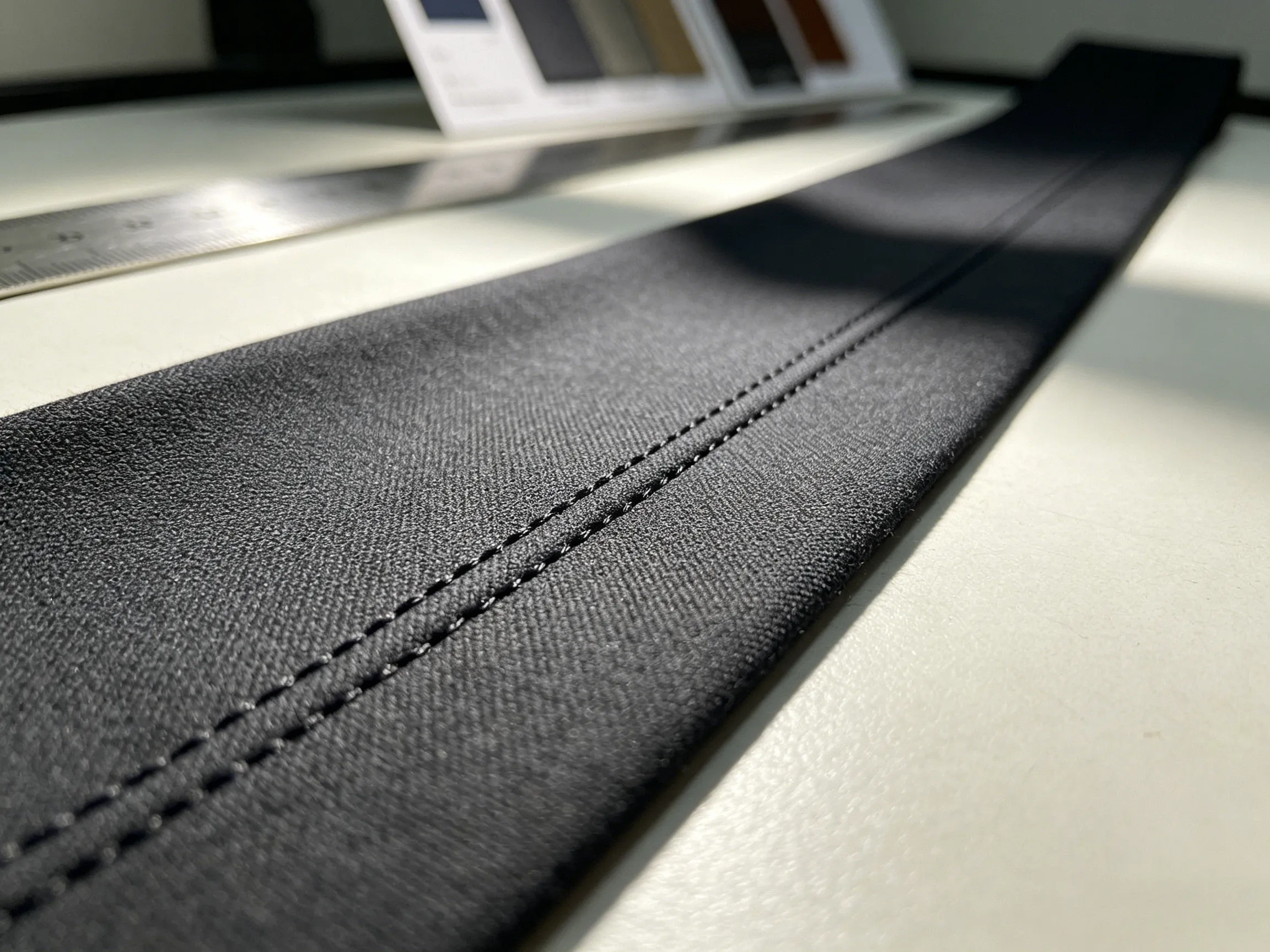
The most important control is a written defect list with photographs or objective thresholds. For example, “poor stitching” is subjective; “open seam longer than 5 mm, skipped stitches over three consecutive stitch holes, or seam slippage visible under the agreed load” is inspectable. SGS, Intertek, and BV can all execute clear criteria more consistently than ambiguous expectations.

AQL is not a quality target.

An AQL of 2.5 does not instruct the factory to produce 2.5% defective goods, and it does not mean exactly 2.5% of the lot is defective. It is a parameter within a statistical acceptance plan. Product safety requirements can also override normal AQL acceptance.

What inspectors check

Inspection Scope Comparison

For conventional consumer-product inspection, the available scope is similar. Differences come from the approved protocol, inspector competence, tools, time allocation, and whether specialized tests require a laboratory.

Inspection itemSGSIntertekBVTypical evidence
Available and packed quantityYesYesYesCounts, production status, carton records
Appearance and workmanshipYesYesYesRandom sample review and defect photos
DimensionsYesYesYesMeasurement table with tolerances
WeightYesYesYesUnit and/or carton weight readings
FunctionYesYesYesOperation tests against instructions
Logo and artworkYesYesYesComparison with approved file/sample
PrintingYesYesYesPlacement, color, adhesion, clarity
Stitching and seamsYesYesYesConstruction, SPI, skipped/open seams
Material identityVisual / documentsVisual / documentsVisual / documentsLab test needed for conclusive composition
ColorYesYesYesApproved sample or controlled light source
OdorSensory screenSensory screenSensory screenObservation; lab analysis if required
Hardware and metal partsYesYesYesFinish, attachment, operation, corrosion signs
Zippers / fastenersYesYesYesCycle, alignment, puller, stop, closure check
PackagingYesYesYesPolybag, protection, assortment, presentation
Carton specificationYesYesYesDimensions, ply/condition, gross/net weight
Barcode scanYesYesYesReadable value and grade if specified/tool available
Labels and legal markingsYesYesYesContent and placement against approved artwork
Shipping marksYesYesYesPO, SKU, destination, carton number
Drop testOn requestOn requestOn requestDefined height, sequence, and post-test condition
Pull / tension testOn requestOn requestOn requestForce, duration, attachment result
Bag load testOn requestOn requestOn requestSpecified load, duration, seam/handle result
Safety / chemical complianceLab / document scopeLab / document scopeLab / document scopeAccredited test report or certification evidence

Confirm whether tools such as a barcode scanner, Pantone book, light box, GSM cutter, force gauge, metal detector, moisture meter, or specific test load are included. Inspectors normally carry basic equipment, but custom or calibrated equipment may require advance preparation. If your product has a critical function, provide the method, sample size, expected result, and test apparatus rather than writing only “function test.”

Budget planning

Cost Comparison

SGS, Intertek, and Bureau Veritas generally price inspections by inspector-day, with additional charges where relevant. Published universal rate cards are uncommon because country, city, travel, scope, volume commitments, and account terms differ.

Cost itemSGSIntertekBureau VeritasBudget note
Standard inspectionQuote basedQuote basedQuote basedOften priced per inspector-day
Broad Asia planning rangeApproximately USD 250–600 per inspector-day in major sourcing areasMarket planning only, not a provider quote
TravelMay applyMay applyMay applyRemote factories, tolls, hotels, and transport
Weekend / holiday / rushMay applyMay applyMay applyConfirm before approving a date
Laboratory testingPer method/samplePer method/samplePer method/sampleStandards and number of samples drive price
Sample pickup / shippingMay applyMay applyMay applyInclude courier and customs where relevant
Factory auditScope basedScope basedScope basedUsually more preparation and time than PSI
Social auditProgram basedProgram basedProgram basedScheme, auditor qualification, and report ownership matter
CertificationScheme basedScheme basedScheme basedApplication, testing, audit, license, surveillance
Re-inspectionUsually new feeUsually new feeUsually new feeNegotiate responsibility with supplier in advance

A low quote may cover one inspector-day while a competing quote assumes two days because there are many SKUs or extensive tests. Normalize the comparison: inspector-days, travel, report language, included tests, sampling level, number of references, weekend fees, cancellation terms, tax, and report delivery time. Ask whether a production delay discovered on arrival creates a full charge and how late rescheduling is handled.

Inspection cost should also be compared with risk. A USD 350 inspection on a USD 40,000 shipment costs less than 1% of cargo value, before considering chargebacks, airfreight replacement, returns, lost season, or reputation. However, inspection should be targeted. Repeating a broad generic checklist while omitting the product’s critical failure mode wastes money even when the day rate is competitive.

How to compare quotations fairly

Create a bid sheet with one row for every requirement and ask providers to mark it included, excluded, optional, or not available. Record the assumed inspector-days; sample size; general and special inspection levels; critical, major, and minor AQL; number of SKUs; measurement quantity; functional tests; destructive tests; equipment; travel; tax; report language; report due time; and cancellation conditions. Clarify whether one day means a fixed number of working hours and what happens if the factory delays access or goods must be moved from multiple floors or warehouses.

Separate the base inspection from optional risk controls. A bag program might price a standard PSI, additional SKU sampling, four-hour load tests, carton drop tests, material sample sealing, laboratory sample collection, and a follow-up visit separately. This makes procurement choices visible and prevents a low base price from hiding essential exclusions. For repeat programs, ask about volume tiers only after the protocol is stable; otherwise discounts can be offset by repeated scope changes.

Define who bears avoidable fees. A sensible quality agreement addresses factory-not-ready visits, waiting time, access denial, buyer cancellation, supplier-caused failure, and re-inspection. The commercial rule should not pressure the inspection company to change a finding. If the supplier is responsible for a re-inspection fee, the buyer should still control booking, criteria, report receipt, and release.

Pricing disclaimer:

Fees vary by country, city, product complexity, number of SKUs, service scope, travel, season, taxes, and negotiated account terms. The figures above are broad procurement planning ranges, not official prices from SGS, Intertek, or Bureau Veritas. Request a current written quotation from the relevant office.

Evidence and usability

Report Comparison

A useful report lets a buyer make a shipment decision without reconstructing what happened by email. All three providers can produce professional, photo-rich reports. Detail depends on protocol, purchased scope, product complexity, and the quality of pre-inspection information.

Report elementWhat good looks likeBuyer action
Order and factory identityPO, SKU, supplier, site, date, inspector, production statusConfirm the inspected lot is the intended order
Executive resultClear pass/fail/hold conclusion or finding summary under the agreed ruleApply buyer—not factory—release authority
Sampling and AQLLot size, sample size, level, AQL, accept/reject numbersVerify that the approved plan was used
Defect listCritical, major, minor counts linked to clear photosAssess safety, saleability, function, and trend
Specification checksResults for size, weight, color, artwork, construction, labelsReview every failed or not-checked item
On-site testsMethod, sample size, expected result, observed result, photosSeparate evidence from subjective comments
PackagingUnit pack, assortment, cartons, marks, dimensions, weightsProtect logistics and retailer compliance
Photographic recordOverview plus legible close-ups with scale and contextIdentify systemic versus isolated concerns
Pending limitationsMissing sample, unavailable goods, unperformed test clearly notedDo not treat “not checked” as “passed”
RecommendationsObjective next-step options without replacing buyer authorityRequest correction evidence or re-inspection

It is not reliable to claim that one company always provides “the most detailed report.” A global key-account template may be highly customized, while a one-off basic booking may use a standard format. Before selection, request a redacted sample report for a comparable product and ask how the provider handles defect photographs, measurement tables, failed tests, pending items, and report revisions.

Do not judge quality by page count. A 70-page report with repetitive photos can be less actionable than a 25-page report that ties every requirement to a result. The best report is complete, internally consistent, easy to navigate, and explicit about what was not verified.

Scheduling

Lead Time Comparison

For routine inspections near major manufacturing hubs, all three may schedule within a few working days and issue a preliminary or full report rapidly. Capacity becomes less predictable during peak seasons, holidays, remote travel, complex programs, and urgent re-inspections.

BookingTarget: 2–5 working days ahead
InspectionOften 1 inspector-day
ReportOften same day to 24 hours
Lab / certificateSeveral days to weeks by scope
Timing pointSGSIntertekBureau Veritas
Routine booking target2–5 working days*2–5 working days*2–5 working days*
Urgent next-day requestCapacity dependentCapacity dependentCapacity dependent
Preliminary resultMay be available after visitMay be available after visitMay be available after visit
Full routine reportOften same day / 24 hours*Often same day / 24 hours*Often same day / 24 hours*
Laboratory resultMethod dependentMethod dependentMethod dependent
Certificate issuanceScheme dependentScheme dependentScheme dependent

No provider is consistently fastest in every city. Ask for confirmed—not requested—attendance, a named coordinator, report cutoff time and time zone, and escalation contact. Book against realistic production status: for PSI, many programs expect 100% produced and at least 80% packed. Sending an inspector before sufficient goods are ready can create an inconclusive visit and an additional fee.

Where they operate

Global Coverage Comparison

SGS, Intertek, and Bureau Veritas all serve major sourcing regions. A country appearing in a corporate network does not guarantee that a suitable inspector is based near every manufacturing city, so confirm travel distance and category expertise.

RegionSGSIntertekBureau VeritasPlanning note
ChinaBroad networkBroad networkBroad networkConfirm city, softlines team, and holiday capacity
VietnamEstablishedEstablishedEstablishedFactories outside hubs may add travel
IndiaEstablishedEstablishedEstablishedLarge geography makes location important
BangladeshAvailableStrong softlines contextAvailableApparel peak seasons affect capacity
TurkeyEstablishedEstablishedEstablishedUseful nearshore source for Europe
EuropeVery broadVery broadVery broad / heritage marketRegulatory and certification scope varies
United StatesVery broadVery broadBroadTesting and assurance needs may lead selection
MexicoEstablishedEstablishedEstablishedNearshoring demand can affect scheduling
Other emerging originsCheck local officeCheck local officeCheck local officeAsk about resident versus traveling inspector
Buyer preferences

Which Inspection Company Do Global Brands Use?

Global brands and retailers commonly use major TIC companies, but selection is rarely determined by industry alone. A buyer may nominate different laboratories, audit firms, and inspection providers by country, product, risk level, or approved-vendor list.

EU
European retailersBV, SGS, and Intertek are all commonly considered
CE
Consumer electronicsSGS and Intertek are highly visible options
TX
Textiles & apparelIntertek, SGS, and BV all run softlines programs
LX
Luxury goodsBV has strong European context; all are capable
EC
E-commerce sellersSGS and Intertek are common; compare local service

Avoid statements such as “Amazon requires SGS” or “European brands must use Bureau Veritas” unless a current written buyer program says so. Marketplaces generally require products to meet applicable rules and may accept evidence only from specified accredited or approved laboratories for particular programs. That is different from requiring one inspection corporation for every shipment.

Suppliers should ask the buyer four questions: Is a provider formally nominated? Is the laboratory required to hold a particular accreditation or marketplace approval? Does the buyer own a custom protocol? Can another qualified provider be approved? Written answers prevent paying for a report that the receiving program will not accept.

Dreamway specialist section

Which Inspection Company Is Best for Bag Manufacturers?

All three can deliver professional bag quality inspection. The decisive question is whether the assigned team understands the product’s materials, construction, decoration, hardware, performance, packaging, and destination-market requirements.

ProductRecommended approachCritical inspection focus
Canvas tote bagsAny provider with softlines experienceFabric weight, shade, shrink/odor, stitching, handle load, print
Cotton bagsSoftlines team plus composition testing if claimedFiber claim, GSM, colorfastness, seam strength, dimensions
Leather bagsLeather-goods specialist; BV/SGS/Intertek local capabilityMaterial identification, grain/shade, scratches, edge paint, hardware
Cosmetic bagsConsumer softgoods inspectorLining, zipper, print, cleanliness, odor, capacity, wipeability
BackpacksExperienced luggage/backpack inspectorStraps, bartacks, load, zippers, compartments, buckles, symmetry
Diaper bagsSoftlines team with safety awarenessSmall parts, straps, changing mat, coating, labeling, load, function
Promotional bagsFast consumer-goods PSI with artwork protocolLogo, Pantone color, event deadline, quantity, assortment, packing
Silk pouches/productsFine-textile specialistFiber evidence, snagging, shade, seam puckering, staining, hand feel
Insulated bagsSoftlines plus functional test planFoil/lining, leakage, insulation method, seams, food-contact claims
Recycled-material bagsInspection plus chain-of-custody document reviewClaim evidence, certificate scope, transaction data, labeling

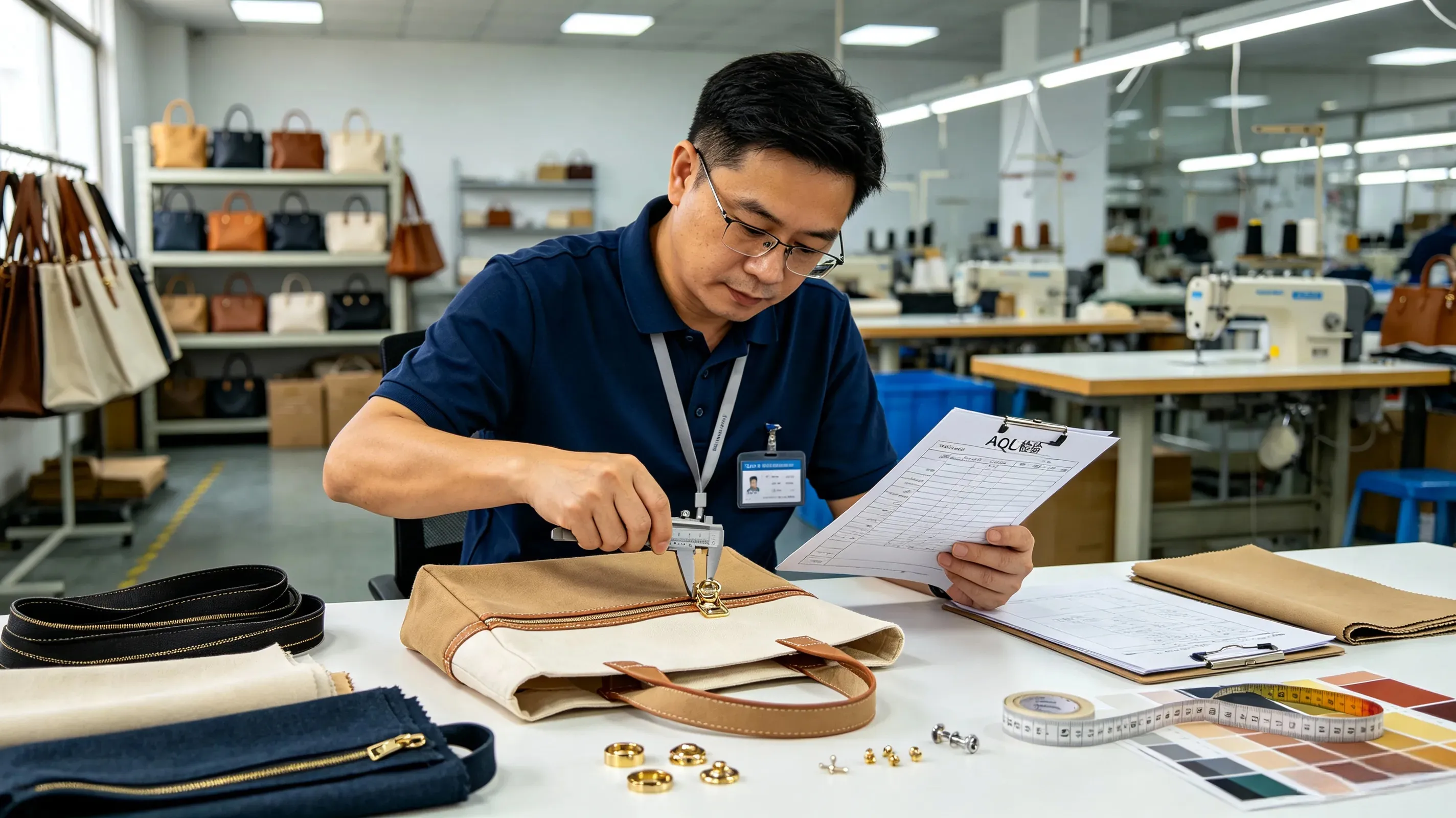
For a custom bag factory inspection, provide a golden sample or sealed approval sample, bill of materials, measurement chart with tolerances, Pantone references, artwork with placement dimensions, stitch and construction requirements, hardware finish, performance tests, packaging specification, barcode data, carton marks, and defect classification guide. If a claim such as organic cotton, recycled polyester, genuine leather, azo-free dye, or food contact matters, combine visual inspection with valid documents and appropriate laboratory testing.

Ask the inspection company to confirm relevant experience in writing. A technically excellent electrical inspector is not automatically qualified to assess leather grading or seam construction. Conversely, a softlines specialist may need a laboratory colleague for restricted substances or performance standards. The best program uses the right competence for each task.

Selection framework

How to Choose the Right Inspection Company

Begin with non-negotiable acceptance, then compare local execution. The following decision tree is a practical shortlist—not an exclusive rule.

What is the primary decision driver?
Maximum global recognition or broad technical networkStart with SGS

Then verify the local product team, protocol, capacity, and total quote.

Consumer goods, textiles, retail, or responsive assurance programStart with Intertek

Then compare report examples and local scheduling with alternatives.

European buyer, certification, luxury, or ESG program contextStart with Bureau Veritas

Then confirm buyer approval and relevant local inspector experience.

Use an eight-factor scorecard

FactorSuggested weightQuestion to ask
Buyer / market acceptance20%Will the customer, retailer, or scheme accept this provider and report?
Product competence20%How many comparable products has the local team inspected recently?
Local coverage15%Is a qualified inspector resident near the factory?
Scope and protocol15%Are tests, sampling, defect rules, photos, and deliverables explicit?
Report quality10%Can we review a redacted report for this category?
Schedule10%Is attendance confirmed, and when is the full report due?
Total cost5%What is included, excluded, and charged if production is not ready?
Communication5%Who owns coordination, escalation, and technical clarification?

Score each proposal from 1 to 5, multiply by the weight, and document assumptions. Price is intentionally not the largest factor: an inexpensive inspection by an unsuitable or distant inspector can create more risk than it saves. For repeat orders, review performance using on-time attendance, report delivery, correction rate, disputed findings, customer service, and post-arrival defect correlation.

Field reference

30 Common Inspection Defects Found in Bags

Defect severity depends on product purpose, location, visibility, safety impact, buyer standard, and agreed samples. The examples below should be converted into product-specific definitions and photo standards.

Loose thread endsUntrimmed or long threads affecting presentation.
Skipped stitchesMissing stitch formation, reducing appearance or seam integrity.
Open seamJoined panels separate or seam allowance is not secured.
Uneven stitchingWavy line, inconsistent margin, or variable stitches per inch.
Weak handle attachmentInsufficient bartack, reinforcement, or seam strength.
Broken zipperSlider, teeth, stop, tape, or puller prevents normal use.
Misaligned zipperClosure is twisted, asymmetric, wavy, or difficult to operate.
Wrong logoIncorrect artwork, text, orientation, size, or branding version.
Poor print adhesionInk cracks, peels, rubs off, or fails the agreed tape/rub check.
Embroidery defectsMissing fill, loose thread, puckering, or incorrect density.
Color variationShade differs from approval or varies across panels/units.
Fabric flawHole, slub, snag, broken yarn, stain, or weaving defect.
Leather scratchesUnapproved marks, scuffs, veins, dents, or surface damage.
Poor edge paintCracking, overflow, roughness, bubbles, or uneven layers.
Hardware scratchesVisible abrasion, plating damage, discoloration, or fingerprints.
Metal rustCorrosion spots or oxidation on rings, rivets, snaps, or buckles.
Loose hardwareRivet, eyelet, magnet, buckle, or stud is insecure.
Strong odorAbnormal chemical, mildew, adhesive, smoke, or storage odor.
Adhesive markVisible glue, whitening, overflow, or bonded-area staining.
Oil or dirt stainContamination on shell, lining, print, hardware, or packing.
Dimension deviationLength, height, depth, strap, or pocket exceeds tolerance.
Weight deviationUnit or pack weight differs materially from specification.
Asymmetric constructionPanels, handles, pockets, or logo are visibly off-center.
Lining not securedLoose, twisted, caught, exposed, or incorrectly attached lining.
Missing labelBrand, care, composition, origin, warning, or tracking label absent.
Incorrect barcodeWrong encoded value, poor contrast, damage, or unreadable symbol.
Wrong assortmentColor, size, style, or quantity mix does not match the pack plan.
Packaging damageTorn bag, poor protection, deformation, moisture, or presentation issue.
Weak export cartonCrush, burst, puncture, moisture, poor sealing, or wrong specification.
Incorrect shipping marksPO, SKU, destination, quantity, carton number, or symbols are wrong.

A defect library becomes more powerful over time. Link each recurring problem to its process cause, corrective action, prevention owner, and inspection evidence. If loose hardware appears repeatedly, for example, do not only increase sample checks: validate attachment specifications, tooling, operator training, in-line pull tests, and maintenance.

Practical tool

Inspection Checklist for Custom Bags

Adapt this checklist to the product, approved sample, destination rules, and buyer protocol. Checkboxes are saved only for the current page session; use the print button to create a working copy.

Custom Bag Pre-Shipment Checklist

1. Documents & production

2. Raw materials

3. Construction & stitching

4. Logo & decoration

5. Hardware & function

6. Measurements & tests

7. Labels & traceability

8. Packaging & shipping

For every test, define sample quantity, equipment, conditioning, force or load, duration, sequence, and acceptance result. “Do a load test” is incomplete. “Load each of three sampled tote bags with 12 kg distributed weight, suspend for four hours, then check handle attachments and seams for breakage or visible slippage” is executable—provided it reflects the product’s actual requirement.

Illustrative applications

Real Inspection Scenarios

These fictionalized planning scenarios demonstrate selection logic. They do not identify actual customers, endorsements, or mandatory provider relationships.

Case 01

European promotional tote order

Need
120,000 printed recycled-cotton totes for multiple EU destinations, with claim evidence and strict artwork control.
Shortlist logic
Start with BV for European/ESG context, while requesting matching SGS and Intertek proposals.
Scope
PPI for material documents and print setup, DPI for shade/artwork, PSI for AQL, load, barcode, packing.
Decision
Award to the approved local softlines team with strongest protocol and confirmed schedule—not automatically the lowest fee.
Case 02

US retail cosmetic bags

Need
Eight SKUs with printed lining, zipper function, retailer tickets, assortment, and delivery-window exposure.
Shortlist logic
Intertek and SGS are natural starting points for consumer-retail assurance; BV remains a capable alternative.
Scope
DPI at first 20% output, PSI using SKU-stratified samples, barcode scan, rub test, and carton assortment.
Decision
Select based on comparable report sample, local inspector availability, and retailer acceptance.
Case 03

Premium leather handbag launch

Need
Low-volume, high-value bags with natural leather grading, edge paint, plated hardware, symmetry, and presentation risk.
Shortlist logic
Request named leather-goods specialists from BV, SGS, and Intertek; European luxury context may favor BV initially.
Scope
Detailed workmanship protocol, tighter appearance criteria, 100% factory screening plus independent sample inspection.
Decision
Choose proven leather competence and approved defect photos; add lab tests for composition or restricted substances.
Buyer questions

Frequently Asked Questions

Short answers to common questions about SGS vs Intertek vs Bureau Veritas, China inspection services, AQL, pricing, reports, and supplier responsibility.

1. What is SGS inspection?

SGS inspection is an independent verification of products, production, loading, assets, or processes against an agreed scope. For consumer goods, this often means random sampling, workmanship review, measurements, on-site tests, labeling and packaging checks, photographs, and a report before shipment.

2. What is Intertek inspection?

Intertek inspection is part of its broader quality assurance services. In product sourcing, it may include pre-production, during-production, pre-shipment, loading, factory evaluation, and customized retailer programs, often supported by laboratory testing and supply-chain assurance.

3. What is Bureau Veritas inspection?

Bureau Veritas inspection independently checks goods, production, suppliers, or shipments under an agreed protocol. BV also provides testing, certification, audit, marine, industrial, building, sustainability, and other services across a large international network.

4. SGS vs Intertek: which is better?

Neither is universally better. SGS is often shortlisted for maximum global recognition and technical breadth; Intertek is particularly visible in consumer goods, textiles, and retail assurance. Compare the relevant local team, buyer approval, scope, schedule, report, and total price.

5. SGS vs Bureau Veritas: what is the main difference?

Both are large global TIC companies. SGS is widely recognized for broad inspection and laboratory capability; Bureau Veritas has especially strong European, certification, marine, infrastructure, and sustainability heritage. For a routine product PSI, local execution may matter more than these corporate differences.

6. Intertek vs Bureau Veritas: which should a retailer choose?

Intertek is a natural shortlist option for consumer-product and retail assurance programs. Bureau Veritas is equally relevant where European market context, certification, social compliance, or sustainability is prominent. Retailer acceptance and a compatible program protocol should decide.

7. Which inspection company is cheapest?

No provider is consistently cheapest across countries and projects. Rates depend on inspector-days, factory location, travel, product complexity, testing, season, and account volume. Request written like-for-like quotations and compare included scope, not only the day rate.

8. Which inspection company is fastest?

Speed changes by city, date, category, and local capacity. All three may arrange routine inspections within several working days and deliver reports within roughly 24 hours. Ask for confirmed attendance and delivery time rather than relying on a global ranking.

9. Which company has better inspection reports?

All can provide strong reports. Quality depends on the purchased protocol, input documents, inspector, technical reviewer, and customer template. Request a redacted report for a similar product and compare traceability, photos, tests, defect logic, and clarity around limitations.

10. Which inspection company do Amazon sellers use?

Sellers commonly consider SGS, Intertek, Bureau Veritas, and other qualified providers. Marketplace testing programs may specify approved laboratories for certain products, but this is different from requiring one company for every pre-shipment inspection. Check the current marketplace requirement.

11. Which inspection company is best for bags?

All three can inspect bags. Select a local inspector experienced with textiles or leather, stitching, print, embroidery, zippers, hardware, loading, labels, barcodes, packaging, and your bag category. The approved checklist and sample are critical.

12. Can inspection companies issue certificates?

Yes, these groups offer many certification services, but an inspection report is not automatically a product certificate. Certification follows a defined scheme and may require application review, laboratory testing, factory audit, surveillance, and authorization by an appropriately accredited entity.

13. What is a pre-shipment inspection?

A PSI checks finished goods before shipment, commonly when production is complete and most units are packed. The inspector samples units, verifies quantity and specifications, performs agreed tests, classifies defects, checks packaging, and issues a report for the buyer’s release decision.

14. What is AQL inspection?

AQL inspection uses a recognized statistical sampling plan to determine sample size and acceptance/rejection numbers. The buyer chooses inspection level, AQL values, and defect definitions. AQL controls sampling decisions; it does not guarantee every item or establish regulatory compliance.

15. How much does product inspection cost?

Routine inspections are usually quoted per inspector-day plus travel and extras. A broad planning range in major Asian sourcing locations is around USD 250–600 per inspector-day, but actual quotes may fall outside it. Product tests, audits, and laboratory work are separate.

16. How long does an inspection take?

A straightforward order may take one inspector-day. Multiple SKUs, large samples, complex measurements, time-consuming tests, remote carton locations, or 100% sorting require more time. The provider should calculate inspector-days from the final protocol and order data.

17. Can buyers attend inspections?

Often yes, subject to factory permission, safety, confidentiality, and provider policy. Attendance can clarify requirements but should not compromise independent sampling or pressure the inspector to change findings. Agree roles and communication before the visit.

18. Can factories choose the inspection company?

The commercial parties can agree who proposes, selects, and pays. To preserve confidence, the buyer should approve the provider and scope and receive the report directly. If a customer or program nominates a provider, the factory should follow that written requirement.

19. What happens if inspection fails?

The buyer typically holds shipment, reviews defect severity and systemic risk, requests sorting or rework, obtains corrective-action evidence, and decides whether re-inspection is needed. A factory should not ship merely because it disputes the result; resolution authority belongs in the purchase agreement.

20. What is container loading inspection?

A container loading check verifies container condition, product/carton identity, count, loading process, stowage observations, seal number, and sometimes weather or handling conditions. It helps confirm that accepted goods were loaded but does not replace a prior workmanship inspection.

21. Which company has offices in China?

SGS, Intertek, and Bureau Veritas all have established operations in China. Coverage, services, laboratory capabilities, and inspector availability differ by city and business line. Contact the relevant consumer-products or inspection office with the exact factory address.

22. Can an inspection guarantee product quality?

No. Inspection reduces uncertainty based on observed samples and agreed tests. It cannot guarantee every unit, detect all hidden defects, or replace factory quality systems, engineering validation, regulatory review, and accredited laboratory testing.

23. When should I book a China pre-shipment inspection?

Reserve capacity several working days ahead, then confirm the visit when production timing is reliable. The visit should occur before final payment or release and when the required production/packing threshold is met, leaving enough time for correction and re-inspection.

24. Who should pay for re-inspection?

The purchase agreement should decide. Many buyers require the supplier to cover re-inspection after a supplier-caused failure, while buyers pay for the initial inspection. Put this rule, including cancellation and not-ready charges, in the quality agreement before production.

25. Is lab testing included in product inspection?

Usually not unless explicitly quoted. Inspectors perform defined on-site checks with available equipment; chemical, safety, composition, durability, or regulatory tests often require controlled laboratory methods, dedicated samples, extra cost, and longer lead time.

26. What documents should I send before inspection?

Send the purchase order, product specification, bill of materials, approved sample information, measurements and tolerances, artwork, color standards, label and packaging files, barcode data, test methods, AQL, defect definitions, and any customer protocol.

27. Should I use the same inspection company for every country?

A global agreement can improve consistency, pricing, data, and escalation. However, verify competence and capacity in each origin. Some buyers use one lead provider plus approved alternatives for specialist categories, remote regions, conflicts, or peak-season overflow.

28. How do I verify an inspection report is genuine?

Receive it through the provider’s official portal or authorized email, verify report and booking references with the issuing office, and avoid relying only on a supplier-forwarded PDF. Check factory, date, PO, product, photos, and contact details for internal consistency.

Terms explained

Inspection Glossary

Inspection
Examination of a product, process, site, or shipment against specified requirements.
Sampling
Selecting a subset of a lot to infer information without checking every unit.
Critical defect
A defect likely to create an unsafe condition, legal noncompliance, or other unacceptable critical risk.
Major defect
A defect likely to cause product failure, materially reduce usability, or lead a customer to reject the item.
Minor defect
A departure from specification that has limited effect on normal use but reduces appearance or quality.
AQL
Acceptance Quality Limit, a parameter used with statistical acceptance-sampling plans.
PSI
Pre-shipment inspection of finished goods before release or dispatch.
DPI / DUPRO
During-production inspection performed while manufacturing is underway.
PPI
Pre-production inspection of materials, components, setup, and production readiness.
CLC / CLI
Container loading check or inspection performed during loading and sealing.
Inspection report
Documented scope, sample, findings, tests, photographs, defects, limitations, and conclusion.
QC
Quality control: operational checks used to verify outputs meet defined requirements.
QA
Quality assurance: planned systems and processes intended to provide confidence in quality.
Factory audit
Structured assessment of factory systems, capability, capacity, processes, and controls.
Supplier assessment
Evaluation of supplier risks, competence, systems, and suitability for a sourcing relationship.
Lab test
Test under a defined method and controlled conditions, often by an accredited laboratory.
Social audit
Assessment of workplace practices against labor, health, safety, ethical, or buyer requirements.
TIC
Testing, inspection, and certification—the broad industry category for these services.
Final recommendation

Key Takeaways

  1. SGS, Intertek, and Bureau Veritas are all credible global third-party testing, inspection, and certification groups.
  2. Their core consumer-product inspection methods are similar when they use the same scope, AQL plan, tests, and defect definitions.
  3. SGS is a strong first choice for broad global recognition, technical breadth, and cross-category programs.
  4. Intertek is a strong first choice for consumer goods, textiles, retail assurance, and integrated quality programs.
  5. Bureau Veritas is a strong first choice for European market context, certification heritage, luxury, social, and sustainability programs.
  6. No provider is always cheapest or fastest; compare current local quotes, confirmed capacity, travel, and deliverables.
  7. Buyer nomination and program acceptance override generic company rankings.
  8. For custom bags, insist on textile or leather experience plus clear checks for seams, hardware, artwork, performance, and packaging.
  9. AQL is a sampling decision tool, not a guarantee and not permission to manufacture defects.
  10. Visual inspection cannot prove chemical composition, safety, or regulatory compliance; use suitable laboratory testing and documents.
  11. A precise checklist, golden sample, objective tolerances, and defect photo library often matter more than the corporate logo.
  12. Independent inspection works best as one control within supplier qualification, production QA, testing, corrective action, and commercial agreements.
DQ
Prepared by the Dreamway Quality Team

Dreamway develops and sources custom bags and softgoods. This independent educational comparison is intended to help procurement teams ask better questions; Dreamway is not presenting itself as an agent of SGS, Intertek, or Bureau Veritas.

Editorial note: Company history and broad network information are based on publicly described corporate profiles and should be checked against the latest official annual reports. Service availability, accreditation, approvals, corporate figures, prices, and lead times change. Company names and marks belong to their respective owners. Last editorial review: July 18, 2026.

Preparing a custom bag inspection?

Start with approved samples, objective tolerances, test methods, packaging files, and a product-specific defect list.

Review the checklist
Email copied to clipboard!
Shopping Cart
Leave a Message
×
Message submitted successfully.