
What Is Recycled PU Leather? Complete Guide for Bag Brands
A B2B Sourcing Guide for OEM & Private-Label Bag Programs

Introduction: Why “Recycled PU” Is Suddenly on Every Buyer’s Tech Pack
Two questions are landing in our inbox every week from bag buyers across Europe, North America, and Australia. “Can we make a leather-look handbag without virgin PU?” and “If we move to recycled PU, will it still pass our lab tests?” The interest is no longer niche. It is structural — driven by ESG reporting, by EU regulation, and by a generation of consumers who actually read the materials label.
Recycled PU leather — sometimes called recycled polyurethane leather, GRS PU, or simply recycled PU — sits at the intersection of three forces that matter to any modern bag brand:
- ESG & sustainability commitments. Recycled PU lets brands publish verifiable recycled-content numbers instead of vague “eco-friendly” language.
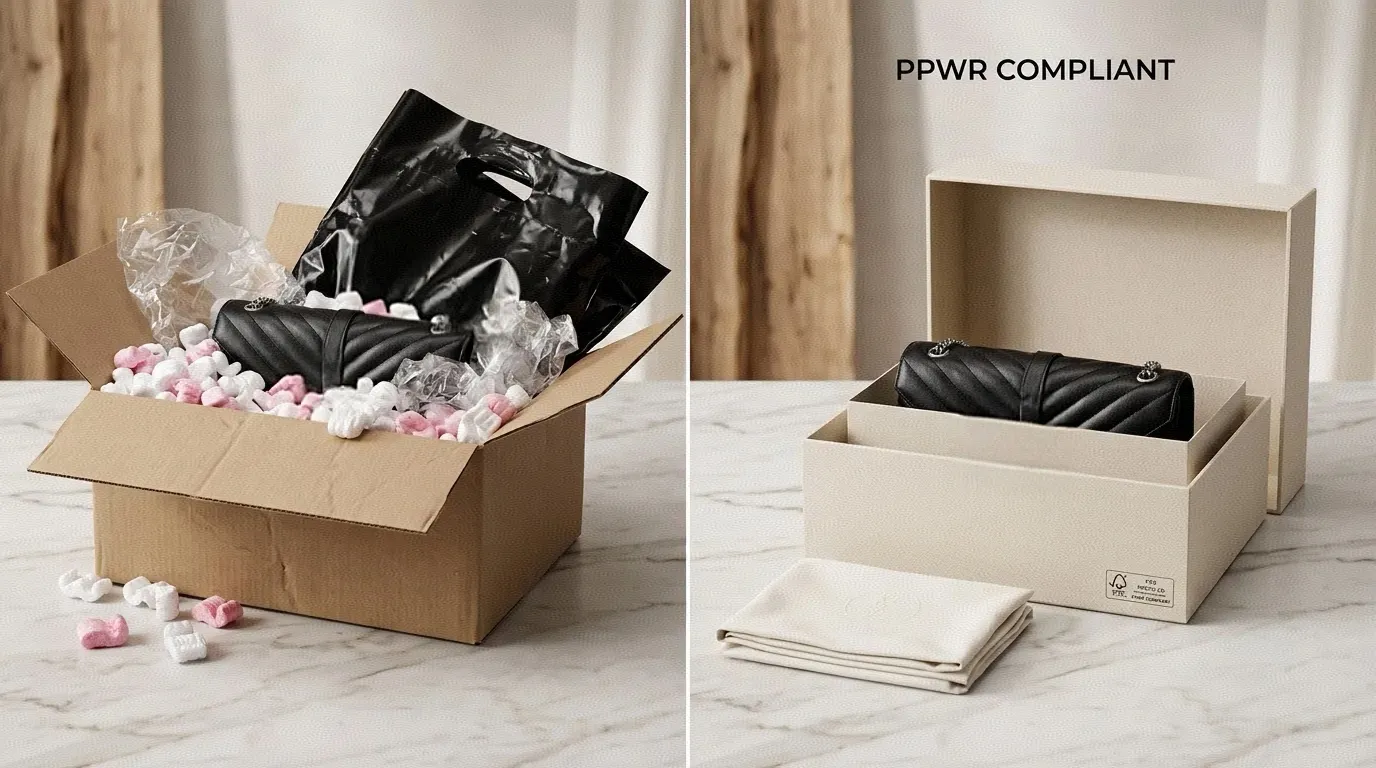
- EU regulation. The PPWR (Packaging and Packaging Waste Regulation), the ESPR, and the emerging Digital Product Passport (DPP) are pushing buyers away from virgin fossil-based synthetics.
- Procurement reality. Virgin PU prices have become less predictable. Recycled feedstocks — when sourced well — offer a more stable cost curve.
This guide is written for the people who actually have to make the decision: brand founders, sourcing managers, product developers, and private-label buyers evaluating a move from virgin PU, from PVC, or from genuine leather to recycled PU. It is also for the technical readers — QC engineers, compliance officers, and material specialists — who will be the ones signing off on lab reports.
Over the next several thousand words we will cover what recycled PU actually is, how it is made, where it makes sense, where it does not, how it compares to PU / PVC / water-based PU / genuine leather / canvas / RPET, how durable it really is, which certifications matter, how to source it responsibly from a Chinese OEM bag factory, what to check before placing an order, and how one European brand structured its switch from virgin PU to recycled PU. Two of our senior team members — Kevin, our Pattern Development Engineer, and Emily, our Senior Project Manager — share their first-hand experience at the end.
Where claims vary by supplier, formulation, or destination market, we flag it. Because in this category, the difference between a great recycled PU bag and a disappointed buyer usually comes down to verification, not marketing.
What Is Recycled PU Leather?
Recycled PU leather is a coated fabric in which part of the polyurethane resin — the layer that gives the material its leather-like appearance, surface, and hand-feel — has been replaced or supplemented with polyurethane recovered from post-industrial or post-consumer waste streams. The recovered PU is reprocessed (mechanically or chemically) and re-blended with virgin PU, a textile backing (such as polyester, cotton, or RPET), and a surface finish.
In simple terms, it is still a PU-coated fabric — the category has not changed — but a measurable share of the polymer input is now second-life material rather than freshly synthesized polymer.
Definition, in one sentence
Recycled PU leather = coated fabric whose PU layer contains a verified proportion of recovered polyurethane, applied to a textile backing and finished to imitate the appearance of leather.
Where the recycled content actually comes from
The “recycled” in recycled PU can originate from several streams:
- Post-industrial PU scrap. Off-cuts, trimmings, and rejected rolls from PU coating lines — the most common and most consistent source.
- Pre-consumer reclaimed PU. End-of-roll material from other manufacturers, deadstock from previous programs.
- Post-consumer PU. Recovered from end-of-life products such as automotive interiors, footwear, furniture, or synthetic leather garments. More complex to collect, more variable in quality.
How recycled PU differs from “regular” PU
The base chemistry is similar — both are polyurethane-based coatings on a fabric backing. The difference is the feedstock: in virgin PU, 100% of the polymer is freshly synthesized from fossil-derived polyols and isocyanates; in recycled PU, a defined percentage of that polymer is recovered and reprocessed. The mechanical performance, the hand-feel, and the surface decoration behavior depend heavily on the recycled content percentage, the recycling method (mechanical vs. chemical), and the skill of the compounder.
Recycled PU vs. bonded leather — please don’t confuse them
Bonded leather (sometimes called “reconstituted leather” or “leather fibre board”) is made from shredded genuine leather fibres glued back together with a binder and coated with PU. Recycled PU is the opposite idea: it is a PU material with recycled PU content, not leather at all. The two are very different in composition, in performance, and in how they should be marketed. Bonded leather is an animal-derived product with limited durability; recycled PU is a vegan, synthetic material.
| Attribute | Typical Range / Value | Notes for Bag Buyers |
|---|---|---|
| Material family | PU-coated fabric (synthetic) | Same family as standard PU, not leather. |
| Recycled content | 20%–80% (post-industrial or post-consumer) | Ask for the exact % and the certification scope (GRS). |
| Backing fabric | Polyester / cotton / RPET / nylon | RPET backing further improves the eco profile. |
| Thickness | 0.6 mm – 1.6 mm | 0.8–1.2 mm is the sweet spot for handbags and backpacks. |
| Surface finish | Embossed, smooth, matte, glossy, nubuck | Embossing is the standard way to imitate grain leather. |
| Hand-feel | Soft to medium firm, depending on formulation | Modern recycled PU no longer feels “plasticky”. |
| Vegan | Yes (no animal-derived material) | Verify no casein or other animal binders are used. |
| Lead time | ~25–40 days after lab-dip approval | Slightly longer than virgin PU for first-time sourcing. |
How Is Recycled PU Leather Made?
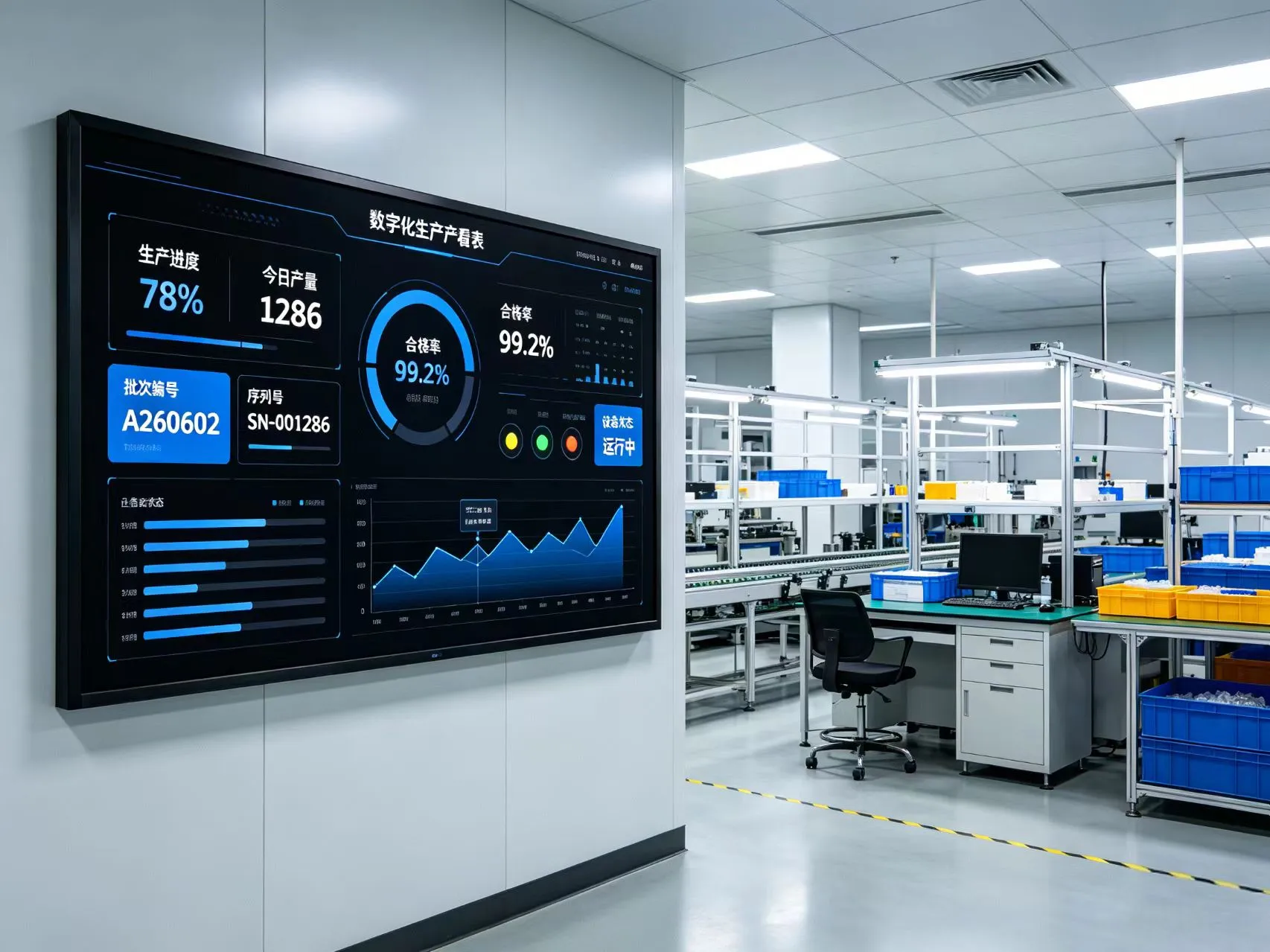
The manufacturing journey from waste PU to a finished recycled PU roll has six main stages. Understanding the flow helps you ask the right questions when a supplier presents a sample.
- Waste PU Collection. Post-industrial PU scrap from coating lines, trimming stations, and rejected production is collected. Post-consumer PU from end-of-life products may also be added for higher recycled content claims.
- Sorting. Material is sorted by colour, by polymer type, and by contamination level. This is one of the most important — and most underestimated — steps. Poor sorting = poor final surface.
- Grinding. Sorted PU is shredded into small flakes or chips, which become the feedstock for the next stage.
- Reprocessing. Two dominant routes exist. Mechanical recycling re-melts or re-compounds the PU chips into a resin suitable for coating. Chemical recycling breaks the polymer back down to its constituent polyols, which can then be re-polymerized. Chemical recycling is more capital-intensive but produces higher-quality output.
- Coating. The recycled-content PU resin is coated onto a textile backing (polyester, RPET, cotton, or nylon) using direct coating, transfer coating, or lamination. This is where thickness, surface energy, and bonding strength are decided.
- Embossing & Finishing. The coated surface passes through an embossing roller that imprints the desired leather grain (lychee, nappa, Saffiano, milled, etc.). Top coats, dull/matte lacquers, and colour adjustments are applied last.
Mechanical vs. chemical recycling — what to ask your supplier
For most handbag and backpack applications, mechanical recycling is the mainstream choice — it is faster, cheaper, and adequate for fashion-grade products. Chemical recycling delivers a more virgin-like polymer and is preferred for higher-end applications, footwear, automotive interiors, and products that must pass the strictest hydrolysis tests. When a buyer asks “is your recycled PU the same quality as virgin PU?” — the honest answer is: it depends on the recycling route and on how the recycled resin is blended.
What Are the Advantages of Recycled PU Leather?
Recycled PU is not a compromise — it is a deliberate choice with real commercial benefits, when specified correctly.
Sustainability & circularity
The most obvious advantage. Every kilogram of recycled PU resin reused is a kilogram of virgin fossil-derived polymer avoided, and a kilogram of PU waste diverted from landfill or incineration. For brands publishing ESG reports, Scope 3 reductions, or recycled-content KPIs, recycled PU is one of the easier wins in the bag category.

Lower carbon footprint
Most peer-reviewed and supplier-disclosed LCA studies show that recycled PU emits 30%–60% less CO₂e than virgin PU, depending on the feedstock, transport distance, and recycling method. The exact number should always come from a third-party-verified LCA, not a sales pitch.
Vegan & animal-free
Recycled PU is, by definition, an animal-free material. It suits brands with explicit vegan or cruelty-free positioning, including those targeting PETA-friendly certification, Leaping Bunny, or similar marks.
Consistent appearance & finish
Because the recycled resin is re-compounded under controlled conditions, the surface energy, colour uptake, and embossing behaviour are more uniform than what is sometimes seen with very low-cost virgin PU. This is one of the under-appreciated reasons recycled PU is gaining ground in mid- and upper-tier bag programs.
Cost stability
Virgin PU pricing is tied closely to MDI/TDI polyol markets — both notoriously cyclical. Recycled feedstocks, especially post-industrial streams, tend to follow a more predictable cost curve. For programs running 12–24 months, this stability can matter more than the per-metre price.
Easier branding & storytelling
“Made with 50% recycled PU” is a concrete, defensible claim. “Eco-friendly leather alternative” is not. Buyers who have moved to recycled PU consistently report an easier time with retail buyers, sustainability audits, and consumer communication.
Limitations of Recycled PU Leather — An Honest Assessment
No material is perfect, and a guide that pretends otherwise is not useful to a sourcing manager. Here is where recycled PU genuinely underperforms, and where you should plan accordingly.
Heat resistance
All PU-based materials — virgin or recycled — soften at sustained temperatures above ~80°C. Recycled PU behaves similarly. In real life this matters for hot-car interiors, near-radiator storage, and direct sunlight on dark colours. For most fashion bag use cases, this is not a deal-breaker, but it should be communicated honestly in product care guides.
Breathability
PU coatings are not breathable in the way genuine leather or woven canvas is. Recycled PU inherits this characteristic. For backpacks and laptop bags that sit against the body for hours, this is something to factor into the design (mesh back panels, padded straps, ventilation).
Long-term aging & hydrolysis
Hydrolysis — the slow chemical breakdown of PU in humid conditions — is the single most discussed durability issue in the synthetic leather industry. Recycled PU can be more or less hydrolysis-resistant than virgin PU, depending on the formulation. In hot + humid conditions (tropical retail, coastal regions, sealed ocean-freight containers), poorly formulated recycled PU can degrade faster. This is one of the reasons lab testing — not just sample inspection — is essential.
“Premium” hand-feel
Modern recycled PU has come a long way. That said, the very top end of the leather market — full-grain box calf, buttery nappa, vegetable-tanned heritage leather — remains unmatched in depth, patina, and aging behaviour by any PU, recycled or not. Brands in the genuine-luxury tier should weigh whether recycled PU serves their positioning.
Recycled PU Leather vs Other Materials
This is the table we wish every brand had on hand during their first material review. It compares recycled PU against the six materials it is most often benchmarked against. All values are typical ranges for fashion-grade applications; actual results vary by supplier, formulation, and testing method.
| Material | Cost | Appearance | Durability | Water Resistance | Eco Score | MOQ | Customization |
|---|---|---|---|---|---|---|---|
| Recycled PU | Medium | High (leather-like) | Good (formulation-dependent) | High | ★★★★☆ | 200–500 m | Emboss, print, colour-match |
| Virgin PU | Medium | High (leather-like) | Good | High | ★★☆☆☆ | 200–500 m | Emboss, print, colour-match |
| PVC | Low | Medium (plastic look) | Good (but stiff) | Very high | ★☆☆☆☆ | 300–500 m | Print, emboss |
| Water-based PU | High | High (leather-like) | Good | High | ★★★★☆ | 300–800 m | Emboss, print, colour-match |
| Genuine Leather | High | Very high (natural grain) | Excellent (with care) | Medium | ★★★☆☆ (depends on tannery) | 200–500 sq ft | Emboss, dye, stitch |
| Canvas (cotton) | Low–Medium | Casual (woven look) | Good (woven) | Low (unless coated) | ★★★☆☆ (organic cotton) | 300–500 m | Print, embroidery |
| RPET | Medium | Casual (woven look) | Good | Medium (woven) | ★★★★☆ | 500–1,000 m | Print, embroidery |
How to read this table
- Cost reflects typical 2024–2026 market ranges for fashion-grade quality, not commodity pricing.
- Eco Score is a directional indicator only. It is influenced by feedstock, processing, transport, end-of-life options, and certifications — and varies wildly by supplier.
- MOQ is shown in metres for coated fabrics and square feet for leather, reflecting the different ways these materials are sold.
Common Applications of Recycled PU Leather
Recycled PU is now specified across virtually every category of fashion and lifestyle bag. The most common applications in our factory program are:
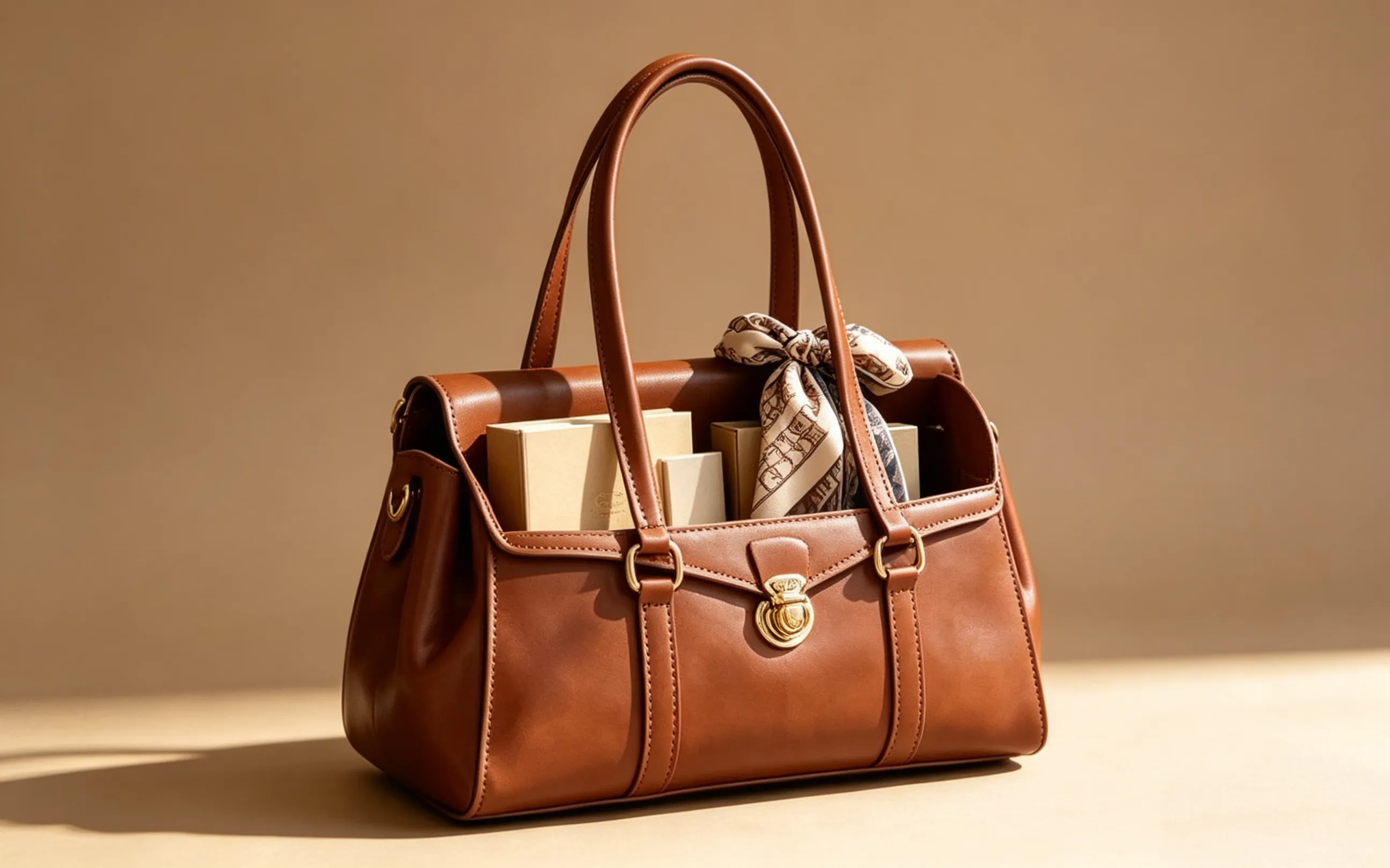
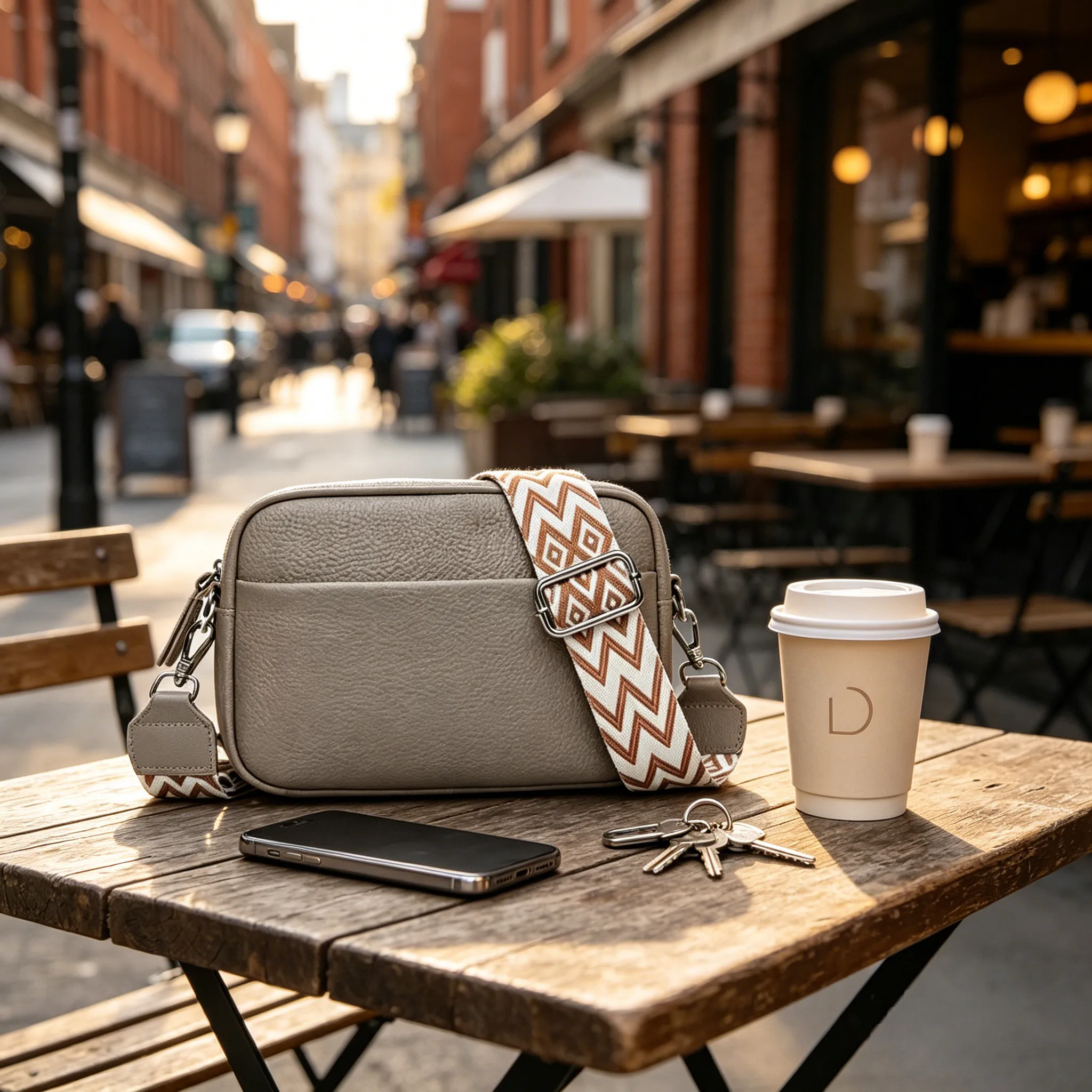
- Handbags. The flagship application — totes, shoulder bags, crossbodies, shoppers. Recycled PU at 0.8–1.2 mm with a soft nappa or lychee emboss is the standard construction.
- Backpacks. Daily-carry, commuter, and travel backpacks. Higher hydrolysis resistance is critical here because backpacks spend time on floors, in rain, and in humid lockers.
- Cosmetic bags & pouches. A strong fit — small surface area, high visual impact, and a category where sustainability storytelling travels well.
- Laptop bags & briefcases. Usually specified at 1.0–1.4 mm with reinforced backing for structure.
- Travel bags & weekenders. Larger panels demand careful emboss alignment and colour matching across panels.
- Fashion accessories. Belts, watch straps, small leather goods — particularly effective when paired with the same recycled PU as a hero handbag.
- Corporate gifts & merchandise. A recycled PU laptop sleeve or conference tote is now standard at many sustainability-positioned brands.
- Retail packaging. Recycled PU dust bags, pouch packaging, and gifting wraps are an emerging premium retail touch.
How Durable Is Recycled PU Leather?
Durability is the question every QC engineer will ask first — and rightly. Here is how recycled PU performs across the six tests that matter most for fashion bags.
Abrasion resistance (Martindale / Taber)
Well-formulated recycled PU typically achieves 20,000–50,000 Martindale cycles before visible surface breakdown. For fashion handbags, 20,000 cycles is usually sufficient; for backpacks and travel bags, aim higher.
Hydrolysis resistance
Tested at 70°C / 95% RH. Recycled PU varies widely — from 3 weeks (low-grade) to 8+ weeks (premium formulation). For tropical retail or ocean-freight programs, ask specifically for hydrolysis-tested material and request the test method.
Scratch resistance
Modern top-coat systems give recycled PU a robust scratch profile. For an objective read, request a pencil hardness test (ASTM D3363) — typical results fall in the 2H–4H range.
Peel strength (bonding to backing)
Recycled PU should match virgin PU on peel strength — usually ≥ 40 N/cm in a 180° peel test on a properly prepared backing. Lower numbers indicate under-cured resin or insufficient adhesive.
Flex test (Bally / De Mattia)
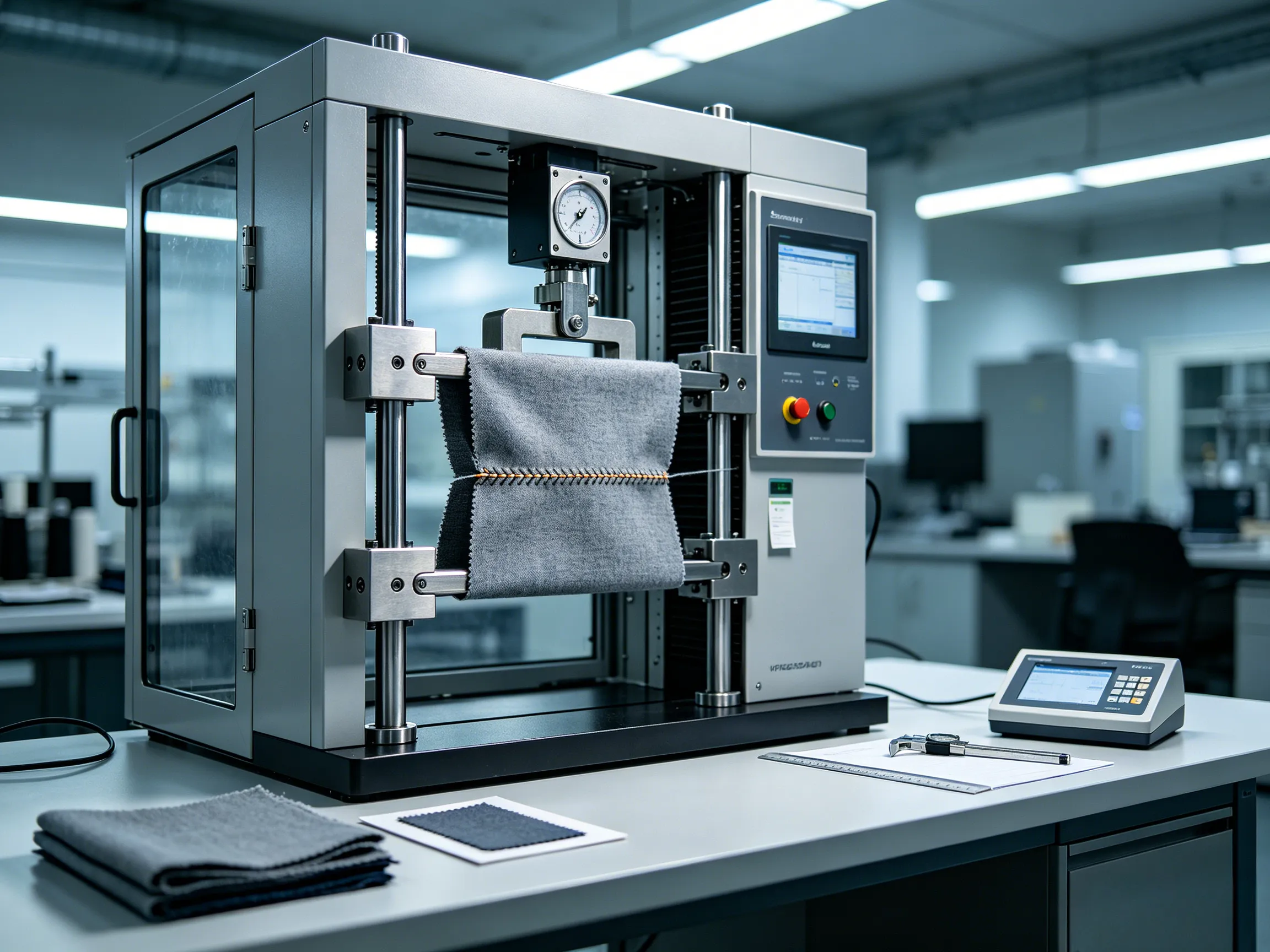
A flexed-to-failure test simulates years of opening, closing, and twisting. Quality recycled PU typically passes 50,000–100,000 flex cycles before surface cracking begins. This is the single most informative test for flap bags and bags with frequent fold lines.
Maintenance in the field
Recycled PU is low-maintenance but not no-maintenance. Wipe with a damp microfibre cloth, avoid alcohol-based cleaners, store away from direct heat and sunlight, and use a soft insert to retain shape during storage. A short care card included with the product reduces returns and improves customer satisfaction.
Is Recycled PU Leather Sustainable?
Short answer: it can be — and in most modern factory programs it is. Long answer: sustainability claims must always be supported by documentation, not by marketing language. Below is a more honest breakdown.
Circularity & feedstock
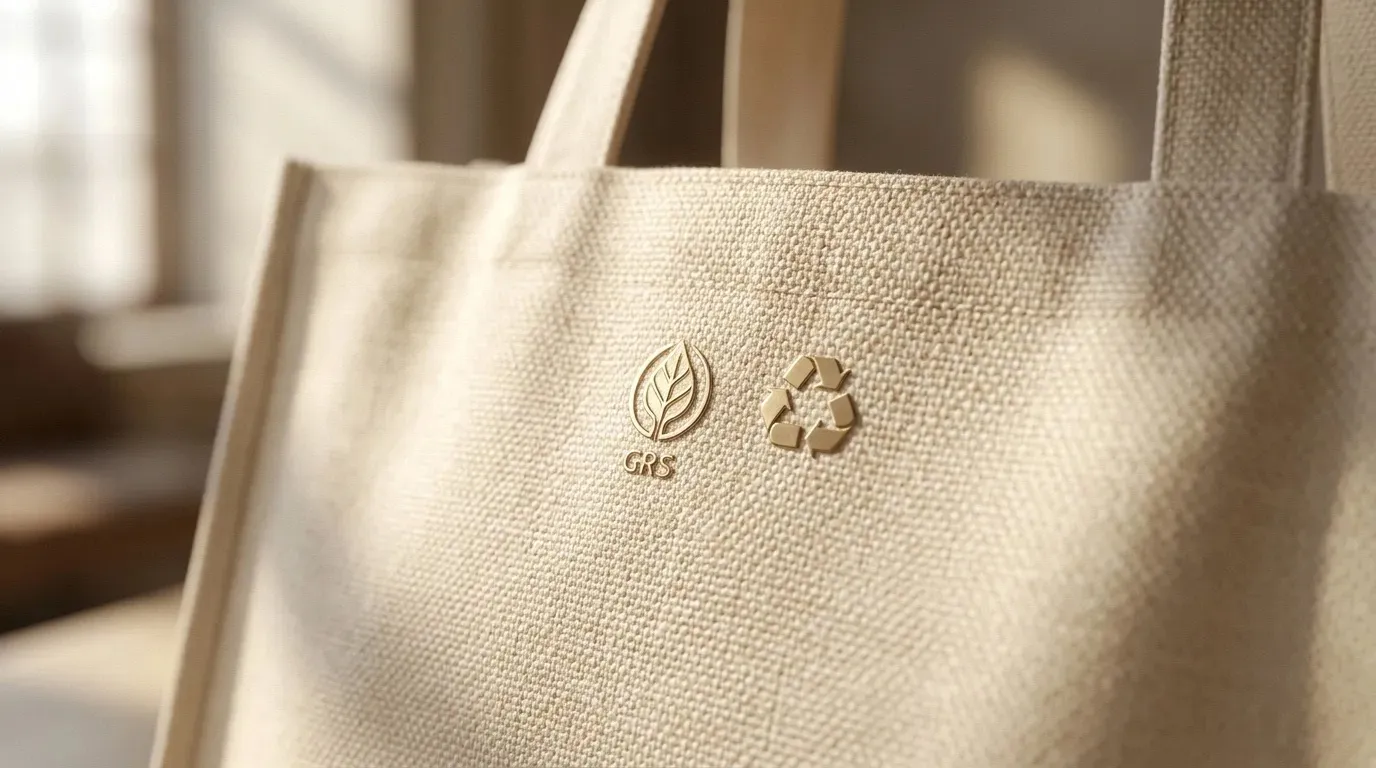
The single largest sustainability benefit of recycled PU is feedstock circularity — diverting PU waste from landfill or incineration, and reducing demand for virgin fossil-derived polymer. The benefit scales with the verified recycled content percentage.
Carbon footprint
Published and supplier-disclosed LCAs typically report a 30%–60% reduction in CO₂e vs. virgin PU. Always request the underlying LCA or EPD rather than a single percentage on a slide deck.
Recycled content percentage
This is the number that should appear on your tech pack, your sales copy, and your ESG reporting. Common commercial ranges are 20%–80%. Anything above 50% is generally considered “high recycled content” by retailers.
ESG reporting & brand statements
For brands reporting under CSRD, CDP, or similar frameworks, recycled PU is a defensible Scope 3 reduction. The numbers must be third-party-verified (typically GRS) to count toward most published commitments.
Disclaimer
Is Recycled PU Leather Safe?
For fashion bags sold in Europe and North America, “safe” has a specific meaning: compliance with REACH, California Prop 65, and (for some categories) PFAS restrictions. Here is how recycled PU performs.
REACH (EU)
REACH restricts a long list of substances of very high concern (SVHCs). Quality recycled PU should be REACH-compliant — meaning none of the restricted phthalates, heavy metals, or azo dyes are present above thresholds. Request the latest REACH test report (SVHC < 0.1% w/w) with every production batch.
California Proposition 65
Prop 65 limits exposure to chemicals known to cause cancer or reproductive harm. For bags sold into California, a Prop 65 compliance statement — backed by lab testing — is increasingly a buyer requirement. Recycled PU does not exempt you from this.
DMF & other restricted solvents
Dimethyl fumarate (DMF) was the centre of a famous 2007–2008 European recall wave and remains a watch-list substance. Quality recycled PU is DMF-free. Confirm with a lab report.
VOC emissions
Volatile organic compounds affect indoor air quality. For products that sit near the body (backpacks, handbags, laptop sleeves), a low-VOC certification is worth pursuing — both for consumer comfort and for compliance with programs such as GREENGUARD or similar indoor-air standards.
PFAS
Per- and polyfluoroalkyl substances are under increasing regulatory pressure (especially in the EU and several US states). Some recycled PU finishes historically used PFAS-based water/stain repellents. Confirm your supplier has phased these out and can issue a PFAS declaration.
Common Certifications for Recycled PU Leather
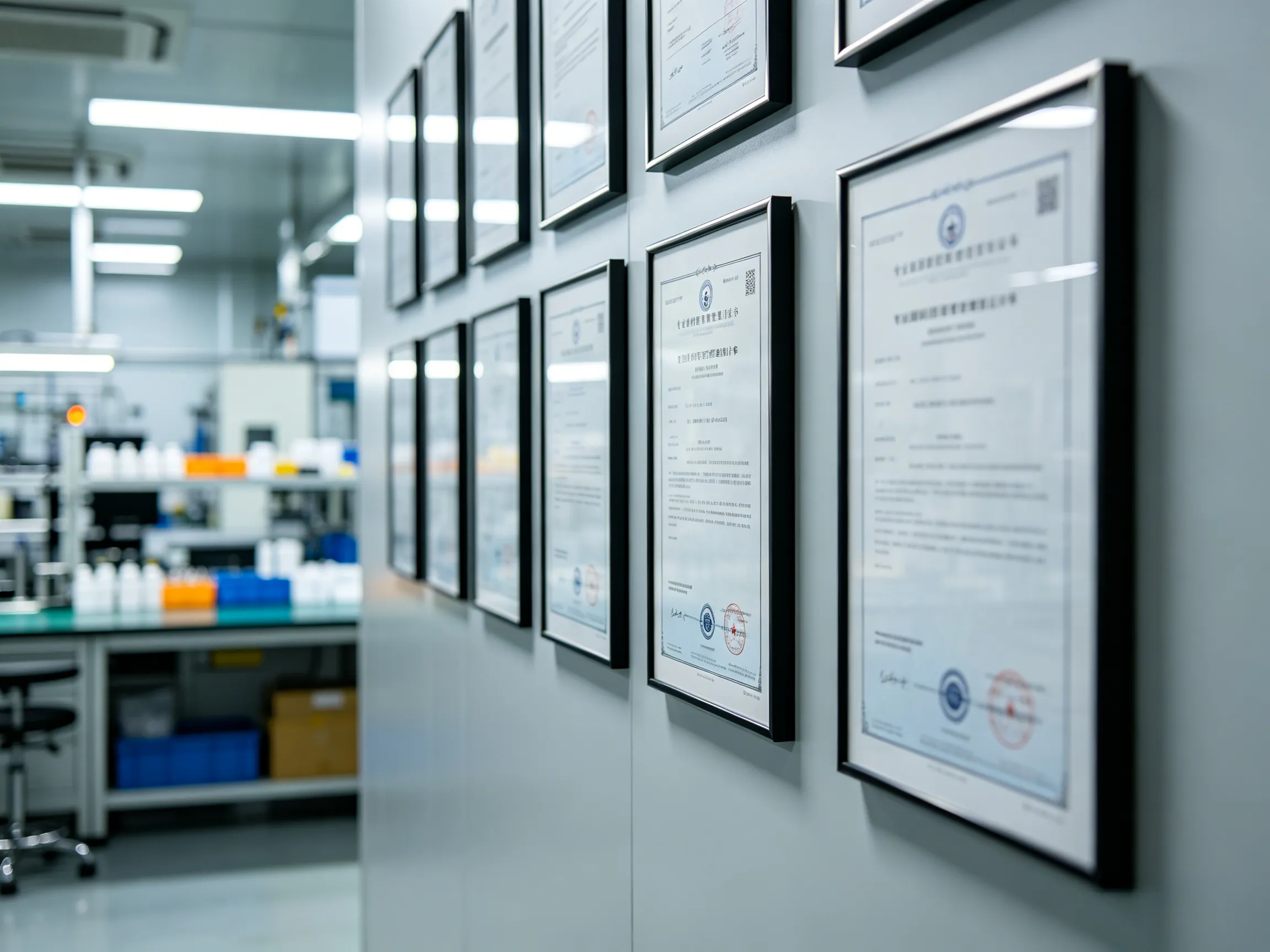
Certifications are the difference between a sustainability claim and a sustainability proof. Below are the certifications we encounter most often in recycled PU sourcing for bag programs.
| Certification | Scope | What It Actually Proves |
|---|---|---|
| GRS (Global Recycled Standard) | Recycled content, chain of custody, social & environmental practices | Verifies the % of recycled material and tracks it from feedstock to finished product. |
| OEKO-TEX Standard 100 | Harmful substances in textiles | Confirms the material has been tested for substances harmful to health. |
| REACH (EU) | Chemical substances | SVHCs below 0.1% w/w; restricts phthalates, heavy metals, azo dyes. |
| RoHS | Hazardous substances in electrical/electronic equipment | Relevant for bags with electronic components (USB ports, lighting). |
| ISO 9001 | Quality management system | Confirms the factory operates a documented quality system. |
| BSCI / Sedex | Social compliance audit | Confirms fair labour conditions at the manufacturing site. |
| GOTS | Organic textile fibre (cotton, linen, etc.) | Applies to natural-fibre backing fabrics, not to PU itself. |
How to Source Recycled PU Leather Bags from a Chinese OEM Factory
Sourcing recycled PU bags is not dramatically different from sourcing virgin PU bags — but there are eight details that consistently make the difference between a clean program and a painful one.
1. Minimum Order Quantity (MOQ)
For custom recycled PU bags, a workable MOQ starts at 200–500 pieces per style per colourway. Some factories ask for higher; some will accept lower if you share material with an existing program. Material MOQ at the supplier level is typically 200–500 metres per colour.
2. Sampling & counter-samples
Always commission three sequential rounds: an initial material sample (A4 swatch), a prototype sample (full bag in recycled PU), and a pre-production sample (made from the actual production batch of material). Skipping any of these is where most surprises happen.
3. Colour matching
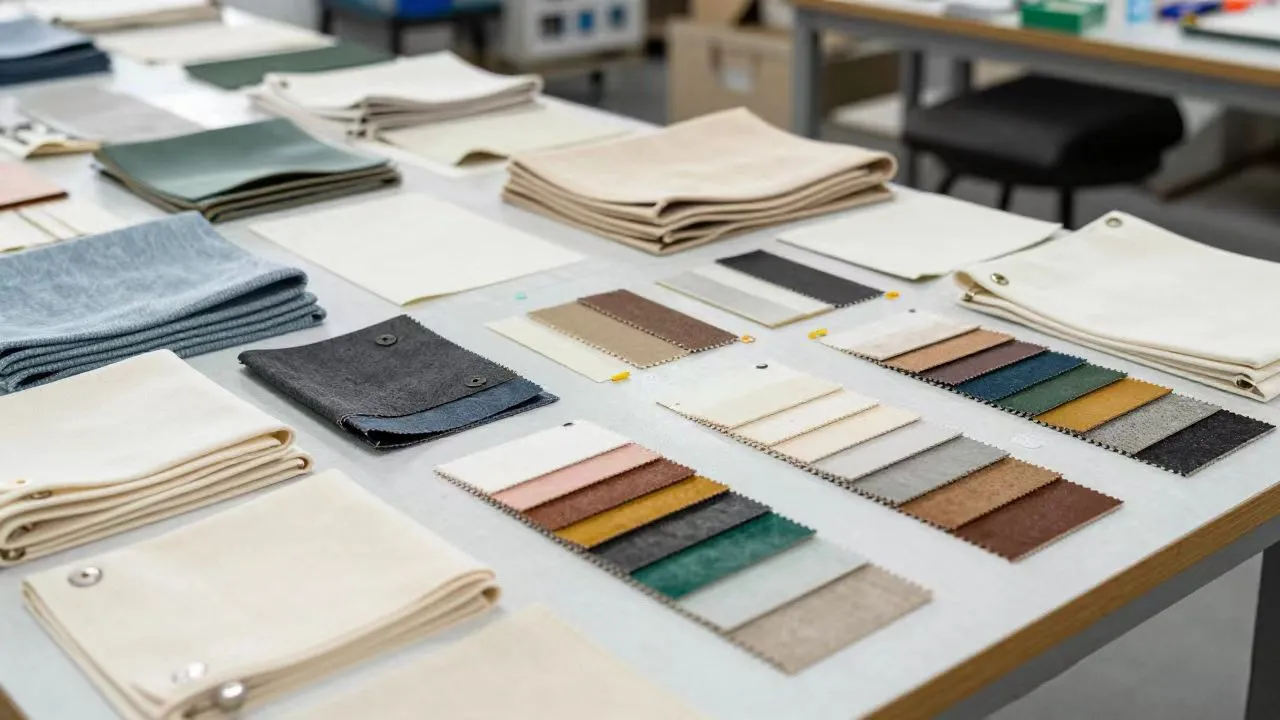
Recycled PU can be colour-matched to a Pantone reference, a physical sample, or a previous production. The first lab dip is rarely perfect — plan two to three rounds of colour approval, especially for brand-specific colours (signature reds, brand blues, custom neutrals).
4. Thickness & backing fabric
Specify thickness in millimetres (e.g., 0.9 mm ± 0.05 mm). Specify backing composition (e.g., 100% polyester 75D × 75D, or RPET 150D for an upgraded sustainability story). Don’t assume — write it down.
5. Printing & embossing
Most recycled PU accepts the same decoration methods as virgin PU: silkscreen, hot stamping, foil, UV print, heat transfer, embossing, debossing, and laser engraving. Embossed logos on recycled PU nappa look remarkably like genuine leather at retail distance.
6. Quality control
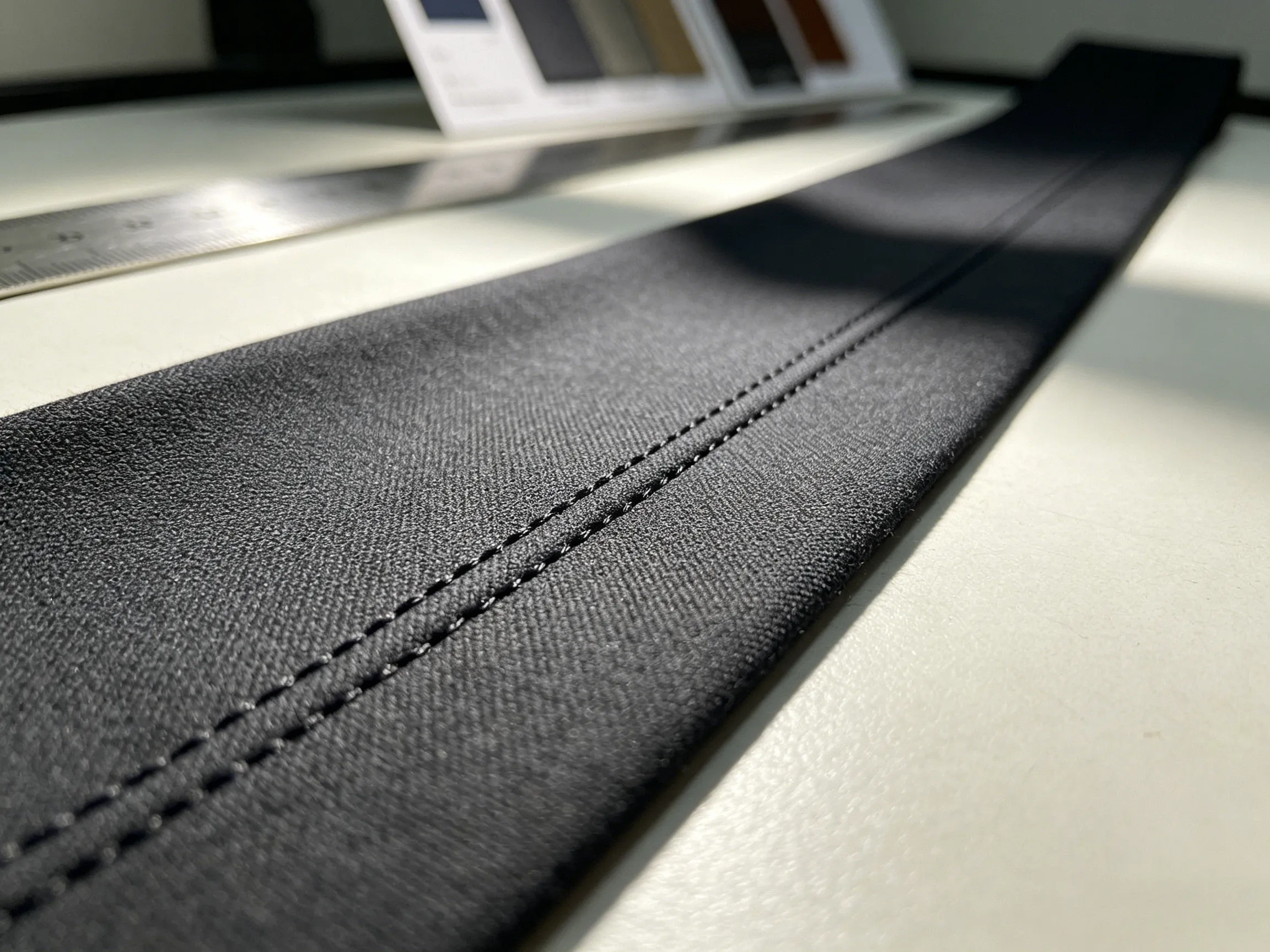
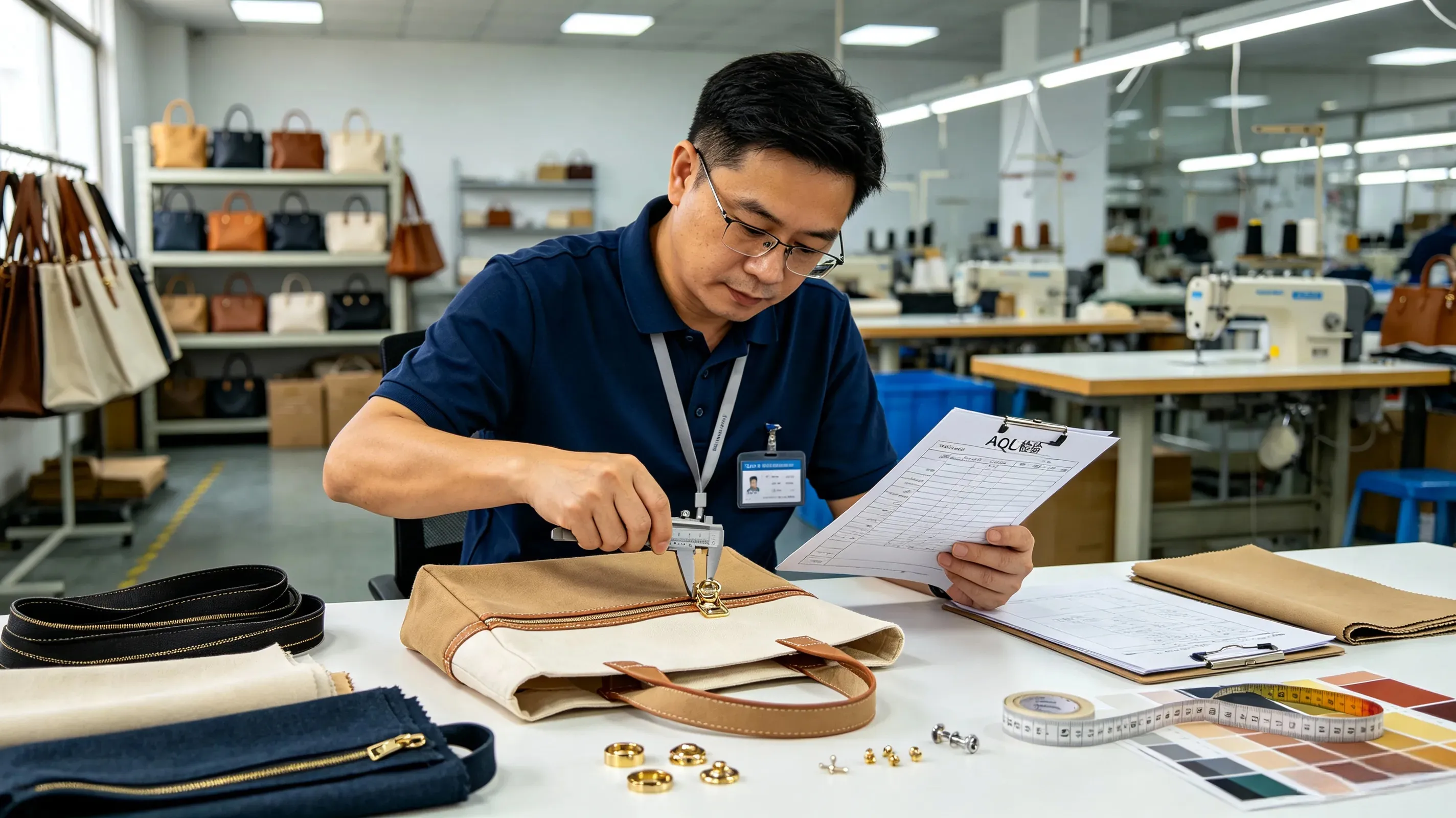
Build a four-stage QC plan: Incoming material inspection (against approved swatch and lab report), in-line inspection during cutting and sewing, final inspection against an AQL standard (typically 2.5 for general inspection, 1.5 for premium programs), and a pre-shipment audit. Recycled PU does not change the QC methodology — but it does raise the importance of the material-level inspection.
Quality Checklist Before Ordering Recycled PU Bags
Before you sign the PO, run through this checklist. It is the same list we use internally before approving any new recycled PU program.
- ✔ Surface. No orange peel, no flow lines, no pinholes, no colour drift across the roll.
- ✔ Odor. No strong solvent smell. A faint polymer odour is normal; anything sharp or chemical is a red flag.
- ✔ Thickness. Measured with a calibrated thickness gauge at multiple points; tolerance within ± 0.05 mm of the spec.
- ✔ Peel strength. ≥ 40 N/cm in a 180° peel test on the actual backing fabric.
- ✔ Abrasion. Martindale result matches the application (≥ 20,000 cycles for handbags, higher for backpacks).
- ✔ Colour consistency. Spectrophotometer reading (ΔE) within agreed tolerance against the approved lab dip.
- ✔ Hydrolysis test. Request a 4-week / 70°C / 95% RH result as the minimum baseline for any program with humid conditions.
- ✔ Colour fastness. To light (≥ 4 on the blue wool scale), to rubbing (dry ≥ 4, wet ≥ 3), to water (if relevant).
- ✔ Documentation. GRS transaction certificate (if claiming recycled content), REACH test report, OEKO-TEX certificate, factory social-compliance audit.
- ✔ Traceability. Batch numbers, production date, and material lot references stored against the PO for at least 24 months.
Case Example: How One European Brand Switched from Virgin PU to Recycled PU
The names below are anonymized. The brief, the decisions, and the trade-offs are real — distilled from a program we ran in 2024.
The brand
A mid-market European handbag label with strong retail presence in Germany, France, and the Nordics. Annual volume around 80,000 bags. Their collection was built on virgin PU at a 1.0 mm construction with a nappa emboss.
The brief
Reposition the brand’s hero line as a “sustainable leather alternative” by 2026. Keep the look, the hand-feel, and the retail price band. Publish a credible recycled-content percentage. Achieve it without extending lead times beyond their existing 12-week production window.
The journey
- Material evaluation. Side-by-side lab comparison of three recycled PU candidates against their existing virgin PU. Differences in Martindale abrasion (within ±10%), peel strength (essentially identical), and hydrolysis (recycled PU slightly behind, but acceptable after formulation adjustment).
- Colour matching. Five signature colours re-matched in the new material. Two passed on the first lab dip; three required a second round. No third rounds were needed.
- Prototype validation. A pilot run of 200 units in the hero style. Retail staff and a focus group of 30 customers gave the new material an identical or higher rating vs. the previous virgin PU on hand-feel and appearance.
- Production launch. Switched 60% of the line to recycled PU in season one; 100% from season two onwards. Retail swing tags updated to read “Made with 65% recycled PU”.
- Market feedback. 18 months in: no measurable increase in returns, no retail complaints, and the brand’s annual sustainability survey showed a 22-point uplift in consumer perception on material sourcing.
The trade-offs they accepted
- Material cost increased by ~7%, partially absorbed by factory efficiency.
- First-batch lead time extended by 10 days for material sourcing.
- Marketing had to be reworked to avoid over-promising (verified 65% recycled content, not “100% recycled”).

Expert Insights from the Dreamway Team
Behind every recycled PU program are the people who actually evaluate the material, approve the samples, and manage the production. Here is what they want you to know.

Emily · Senior Project Manager
12 years in OEM bag manufacturing · manages 15–25 active projects simultaneously
Kevin · Pattern Development Engineer
15 years experience in bag pattern making · leather, canvas, nylon, and technical fabrics
What European and American buyers ask us most about recycled PU
From Emily: The three questions that come up in almost every recycled PU conversation are: “What is the verified recycled content percentage?”, “Do you have a current GRS transaction certificate?”, and “Will it pass our destination-market lab testing?” The first two are non-negotiable — we cannot move forward without documented answers. The third one is where the conversation gets interesting, because “pass our lab testing” depends entirely on which lab, which test method, and which thresholds. The brands that get the best results are the ones who share their actual test protocol up front, not the ones who ask “will this pass REACH?” in the abstract.
The second most common question is about price. Recycled PU is not cheaper than virgin PU at the material level — and it should not be, because the feedstock recovery process costs money. What we see is that buyers who frame the conversation around total program cost (including ESG value, brand storytelling, and consumer response) make better decisions than buyers who only look at per-metre price.
How to verify the quality of recycled PU before you commit
From Kevin: Five tests will tell you almost everything you need to know before committing to a recycled PU program:
- Abrasion (Martindale). Ask for the result against the actual thickness you intend to order, not against a generic 1.0 mm spec.
- Peel strength. ≥ 40 N/cm on your specified backing. Less than that, and the bag will delaminate in the field.
- Colour (spectrophotometer). ΔE ≤ 1.0 against your approved lab dip, measured under D65 light. Anything looser and the colour shift will be visible across a production run.
- Smell. This sounds unscientific, but a sharp solvent odour is a reliable predictor of poor formulation. The best recycled PU smells like fabric, not chemistry.
- Hydrolysis. For any program involving humid retail, ocean freight, or tropical destinations, request a 4-week hydrolysis test result at minimum.
If those five numbers check out on the mill certificate and on a re-test of your own counter-sample, you can move forward with confidence.
Frequently Asked Questions About Recycled PU Leather
What is recycled PU leather?
Recycled PU leather is a coated fabric whose polyurethane layer contains a verified percentage of recovered polyurethane, applied to a textile backing and finished to look like leather. The recycled content can come from post-industrial PU scrap, pre-consumer reclaimed material, or post-consumer end-of-life products.
Is recycled PU vegan?
Yes. Recycled PU does not contain animal-derived material. Brands targeting vegan or cruelty-free positioning should still verify that no animal-based binders (such as casein) are used in the formulation, and that the backing fabric is also animal-free.
Can recycled PU be recycled again?
In theory, yes — but in practice it is challenging. PU is a thermoset polymer that does not re-melt cleanly like a thermoplastic. Chemical recycling is the most promising route for closed-loop recovery, but the infrastructure for post-consumer PU recycling is still developing.
How long does recycled PU last?
A well-formulated, well-maintained recycled PU bag typically lasts 3–5 years under normal daily use, and significantly longer for occasional-use items. Hydrolysis resistance, abrasion cycles, and care behaviour all influence the actual lifespan.
Is recycled PU waterproof?
Recycled PU is highly water-resistant — meaning it resists splashes, light rain, and short exposure. It is not fully waterproof in the sense of being submersible, because seams, zippers, and construction details introduce water ingress points. For a “waterproof” claim, look at the full bag construction, not just the material.
Is recycled PU better than PVC?
From a sustainability and consumer-perception standpoint, yes — recycled PU has a substantially better eco profile than PVC, and avoids the plasticiser and chlorine concerns associated with PVC. From a pure water-resistance and cost standpoint, PVC still has its place in some applications.
Is recycled PU better than genuine leather?
It depends on what “better” means. Recycled PU is better for vegan positioning, for ESG reporting, for cost stability, and for consistency. Genuine leather still wins on long-term patina, on the very top tier of luxury hand-feel, and on certain types of repairability. The honest answer is to choose based on the brand promise.
Can recycled PU be used for luxury handbags?
Yes — modern recycled PU at 1.0–1.4 mm with a fine nappa or Saffiano emboss and a soft top coat is widely used in mid- and upper-tier handbag programs. For the absolute top tier of the luxury market (where the hand-feel of full-grain leather is the entire product), recycled PU is not yet a substitute.
What certifications should I request?
At minimum: GRS for recycled content verification, REACH for chemical compliance (SVHCs), and OEKO-TEX Standard 100 for harmful-substance testing. Depending on the destination market, add Prop 65 (California), RoHS (if electronic components), and a current BSCI or Sedex audit on the manufacturing facility.
Can recycled PU be customized?
Yes. Recycled PU supports the same customization options as virgin PU — custom colour matching, custom embossing patterns, custom logos (embossed, debossed, foil-stamped, printed, or laser-engraved), and a wide range of surface finishes (matte, glossy, nubuck, pull-up).
Spec Your Next Recycled PU Bag With Confidence
Tell us your material spec, your target recycled content, and your destination market — we’ll come back with samples, lab data, and a workable MOQ within 48 hours.
Start a Conversation- Recycled PU vs PVC: Which Material Is Better for Sustainable Bags?
- Is Recycled PU Leather Toxic? Safety, Chemical Risks & Buyer Guide
- Recycled PU Leather: Is It Sustainable? Bag Brand Guide
- Recycled PU vs PU Leather: Which Is Better for Bags?
- What Is Recycled PU Leather? Complete Guide for Bag Brands
- PU vs. Polyester for Bags: Which Material Is Better for Your Brand?
- Silk vs. Bamboo vs. Tencel: Why Luxury Wellness Brands Still Choose Real Mulberry Silk for Bedding
- How to Spot Fake Silk: A Factory Guide to Testing Real Mulberry Silk for B2B Buyers
- The Ultimate Guide to Sourcing Mulberry Silk: 16mm vs 19mm vs 22mm Compared
- Canvas vs. Polyester vs. PU: Material Comparison
- Guide to Sustainability: GRS, OEKO-TEX & FSC
- Canvas Fabric Weight Guide: GSM and Oz Explained
- The Future of Vegan Leather: Pineapple, Cactus, and Apple Fiber
- Water-Based PU vs Recycled PU: Which Is Better for Bags?
- Why Water Based PU Leather is so popular?
- Comparing Cotton vs. Blended Canvas for Tote Bags
- Eco-Friendly and Sustainable Canvas Tote Bags
- Canvas Tote Bag Material & Weight Guide: oz/GSM Chart for Every Bag Type
- Sustainable Custom Tote Bags with Logo: Certifications, Materials & Greenwashing Red Flags
- Canvas Tote Bag Factory: What Affects the Durability?
- Cotton Tote Bag Factory: Grades, GSM Options & Fabric Testing
- Luxury Tote Bag Factory for Premium Brands (PU/Leather Options)
- Recycled Tote Bag Factory: RPET, Organic Cotton & Eco-Friendly Materials
- Top Custom PU Handbag Factories & Pro Tips for Choosing Quality
DREAMWAY
Custom Bag & Silk Manufacturer · Shiling, Guangzhou
Company
Products
Guides & Insights
Ready to Bring Your Bag Idea to Life? Let’s Talk Today.
From your first sketch to bulk delivery, our team replies within 12 hours with expert advice and a free quote. No pressure — just honest manufacturing guidance.

Prefer a call? +86-020-87682749 · Mon–Sat, 9:00–18:00 (GMT+8)
Customer Reviews23 Reviews