
7-Stage Leather Bag Quality Control Checklist: A Factory-Side Walkthrough
A handbag can pass on Friday and come back in October — we learned that in 2014. Every order now runs the same 7-stage chain, leather at the door to sealed container. This is that chain on our Huadu floor.
Quick Answer: What Leather Bag Quality Control Checklist Covers
Leather quality control for OEM handbags runs as a 7-stage leather bag quality control checklist — from incoming hide to sealed container. Skip one, and a "passed" order becomes a return spike three months later. This leather bag quality control checklist reflects our 2026 Huadu floor practice, starting at 200 units.
That buyer-signed assessment checklist covers the same seven gates — each with a tool, a standard and a record.
- What it covers: incoming material, cutting, stitching, edge paint, inline, final, pre-shipment AQL
- Why a chain: upstream prevention stops defects before value is added
- AQL in plain English: AQL 2.5 is a sampling limit, not a defect allowance
- When the chain fails: incoming or inline defects only show up three months in
Still picking a factory? Our top leather bag manufacturers guide walks through how QC depth varies by supplier.
Why a 7-Stage Leather Quality Control Chain Beats a Single Final Check
Most factories only run a final pass
Walk a tier-2 line at 5pm Friday: stroll, pick bad units, write "QC passed".
The number that changed how we run the floor
Eight years ago we pulled a year of return tickets. 70% were visible upstream.
Last year's rerun: under 9% — checks now at stages 1, 3, 5 and 7.
A real OEM case, not a stock photo
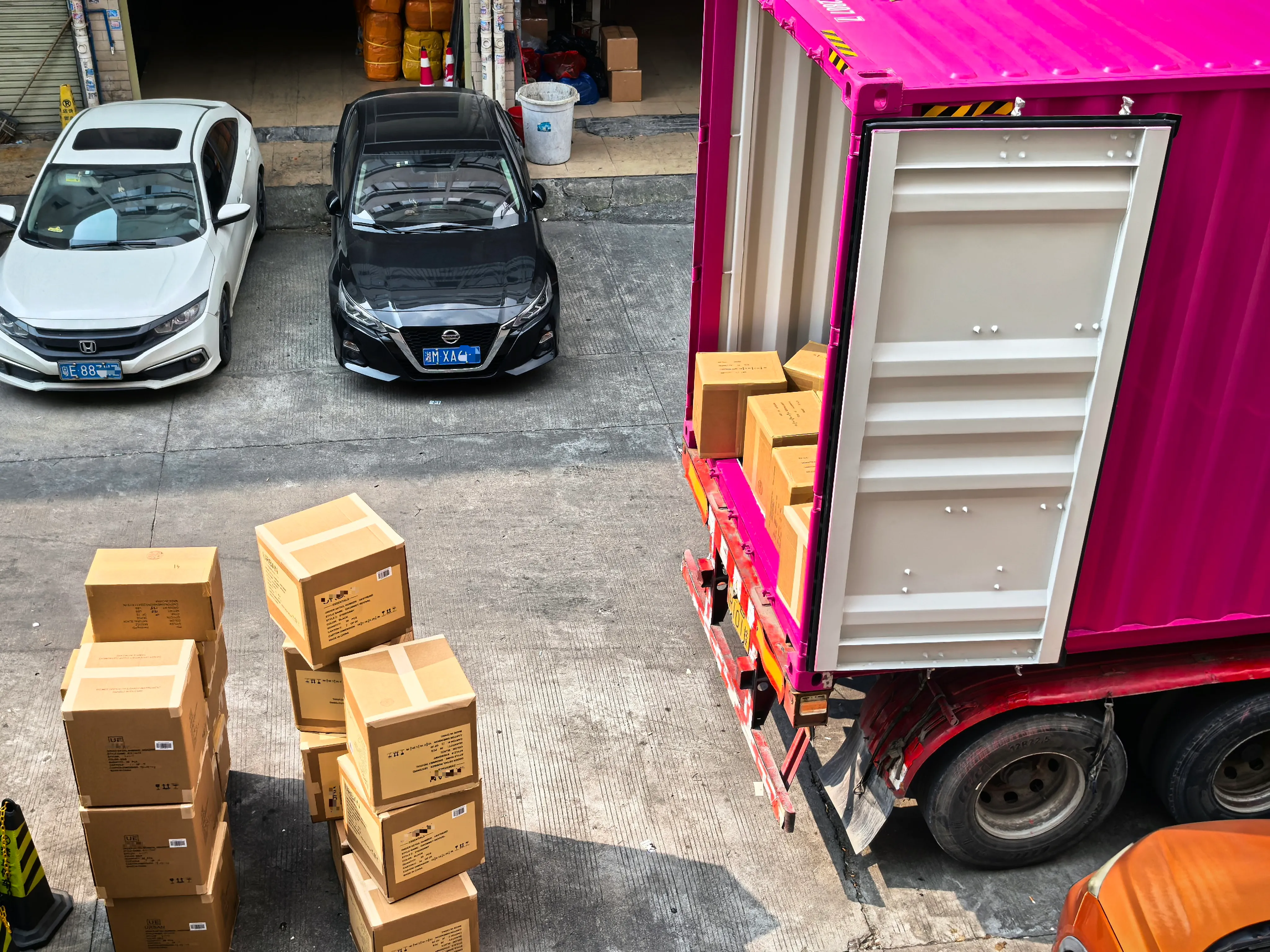
A US brand came to us in 2022 after 800 units passed a single final check — then 18% came back with rusted D-rings. We quarantined and re-shipped.
Upstream instead of end-of-line
Failed leather goes back before cutting; rusted hardware holds the line. No “preparation week”.
Quality control in the leather industry is decided on the floor, not in a policy document. Our floor rule: AQL 2.5 by default (tighten to 1.5 for premium and BSR lots), FAI on every new order, and a written CAPA on every Critical.
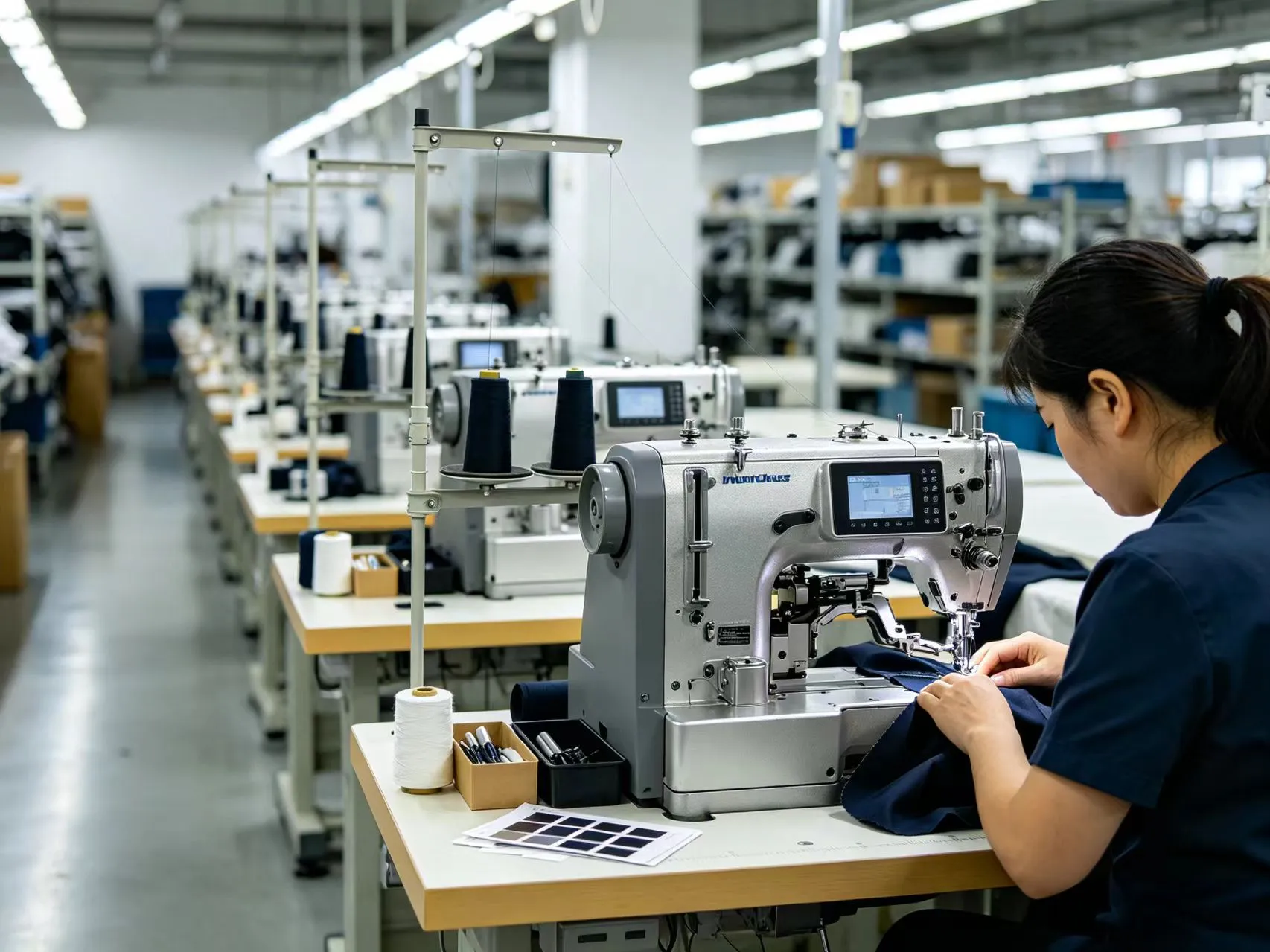
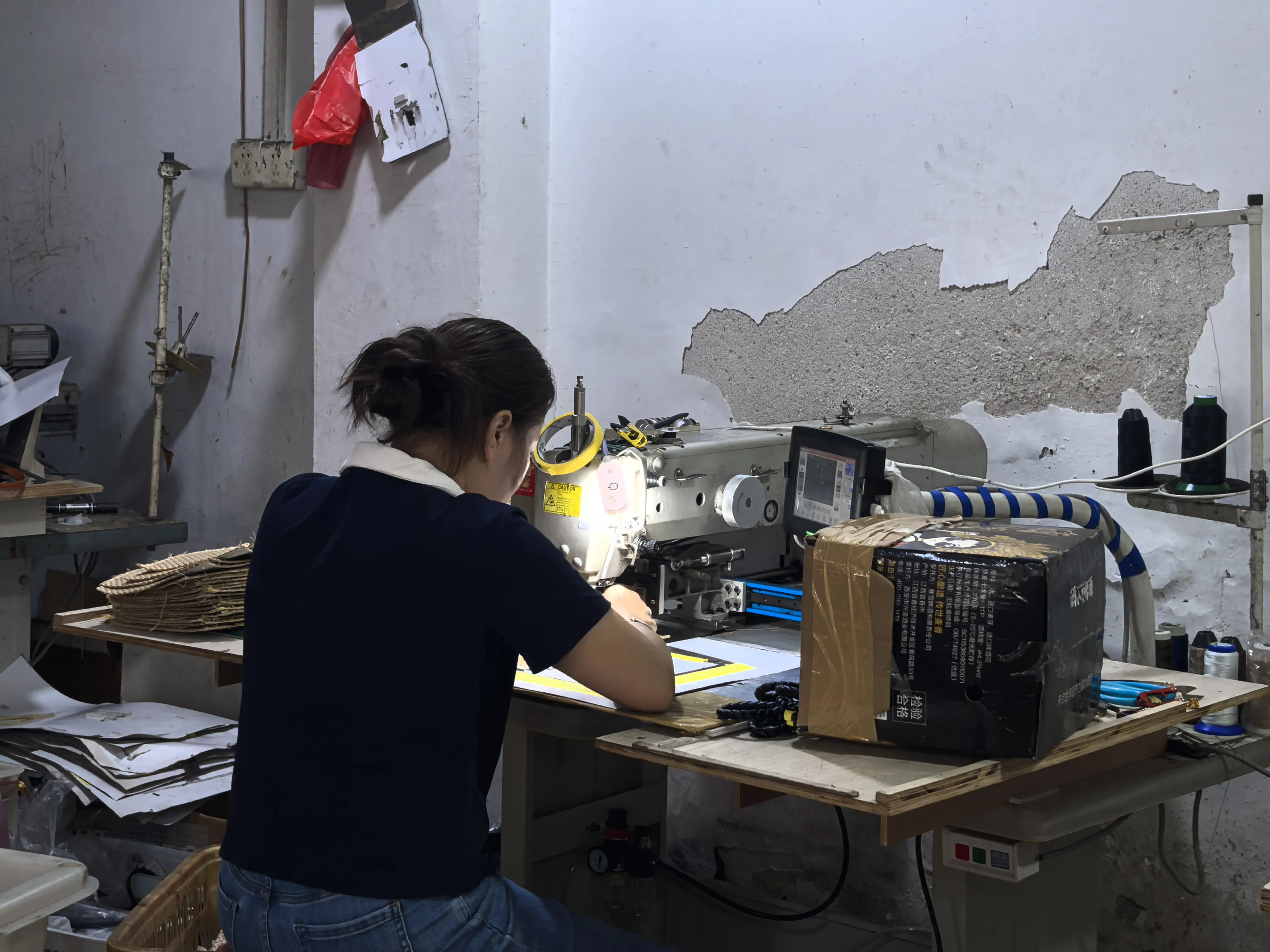
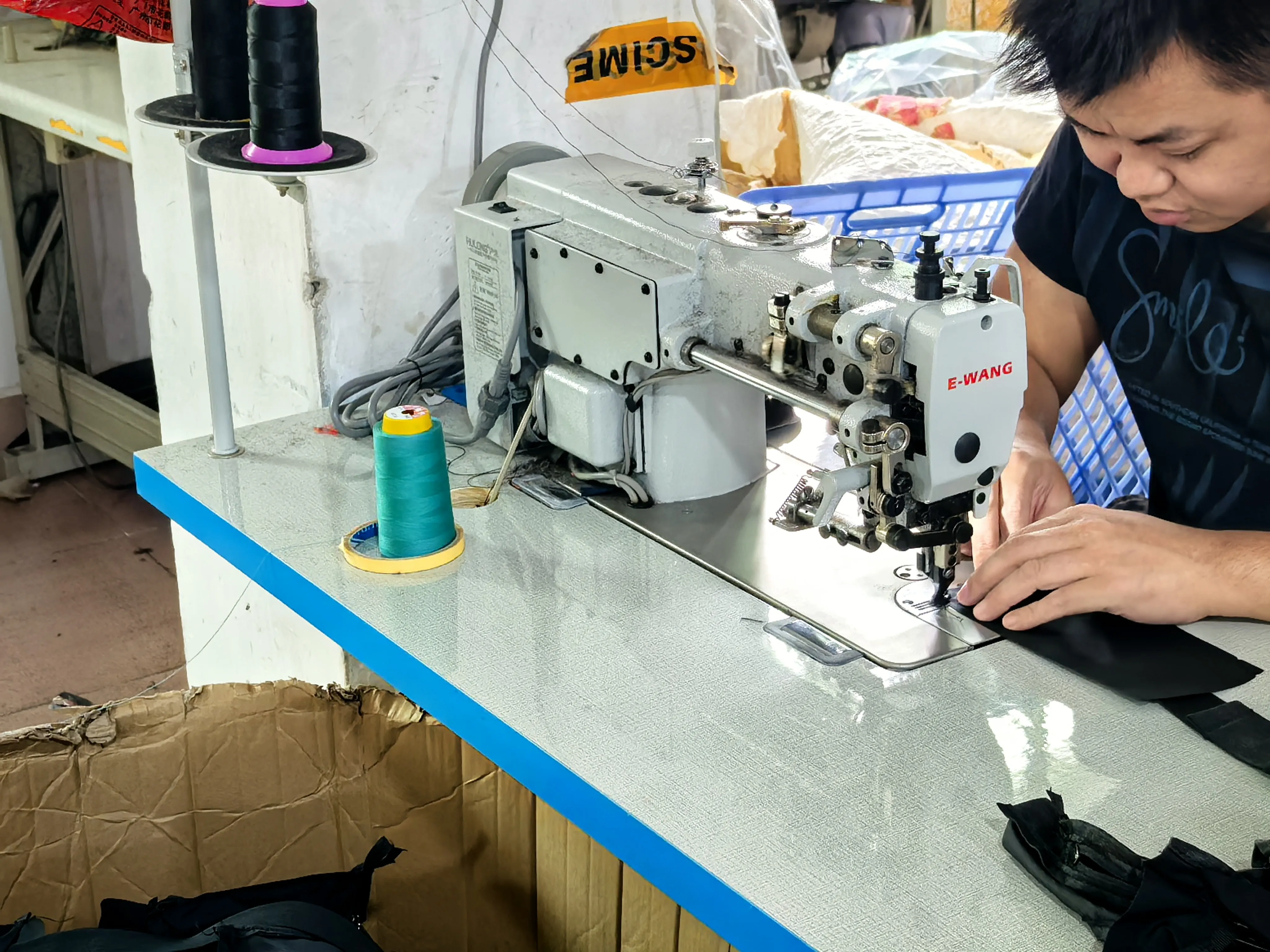
Factory Audits and Bag Manufacturing Quality Compliance: What a Buyer Should Verify
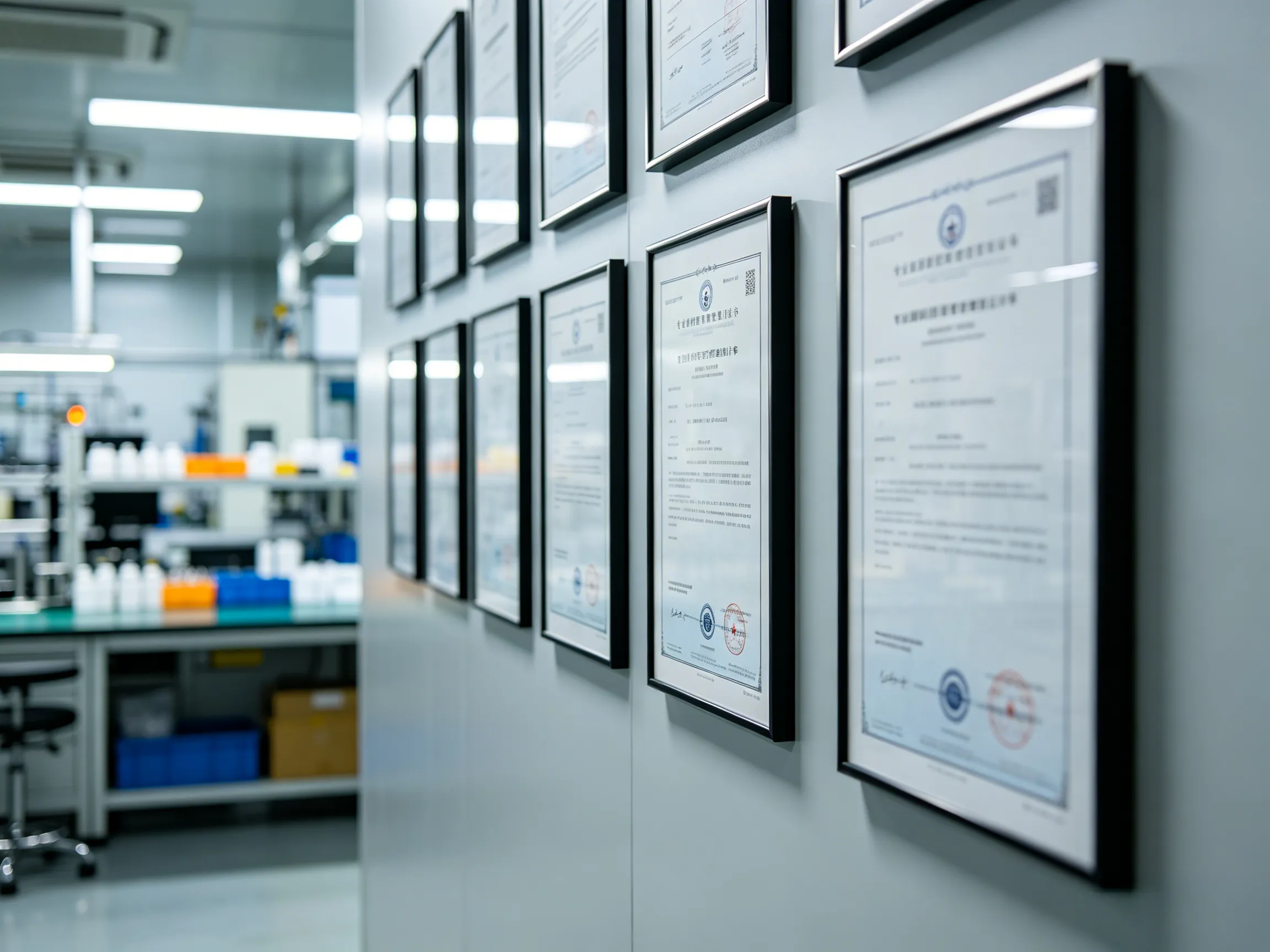
Bag manufacturing quality compliance starts before the first cut. A bag manufacturer with an in-house QC team still needs external validation — certificates, audit cadence, and open access for inspectors.
Handbag factory audit checklist for buyers — bag manufacturer with an in-house QC team
A bag manufacturer with an in-house QC team answers one question first: who audited this factory last, and can you read the report? It should show the org chart, the SOPs and three months of inline records on demand.
That checklist should end with three questions: who audited, what did they find, and were the findings closed.
ISO 9001 certified handbag and luggage manufacturer
In bulk production, ISO 9001 certified handbag and luggage manufacturer status means the system runs on documents, not memory. Every lot carries an incoming record, an inline record and a signed PSI report. Annual surveillance keeps test methods, rejection rules and CAPA timelines written, not verbal.
BSCI certified handbag manufacturer in China and Sedex-audited bag factory quality compliance
On our Huadu bench, BSCI certified handbag manufacturer in China status comes with a yearly pass.
Sedex-audited bag factory quality compliance adds the SMETA trail that EU and UK buyers need for ESG files.
Third-party inspection accepted bag factory in China
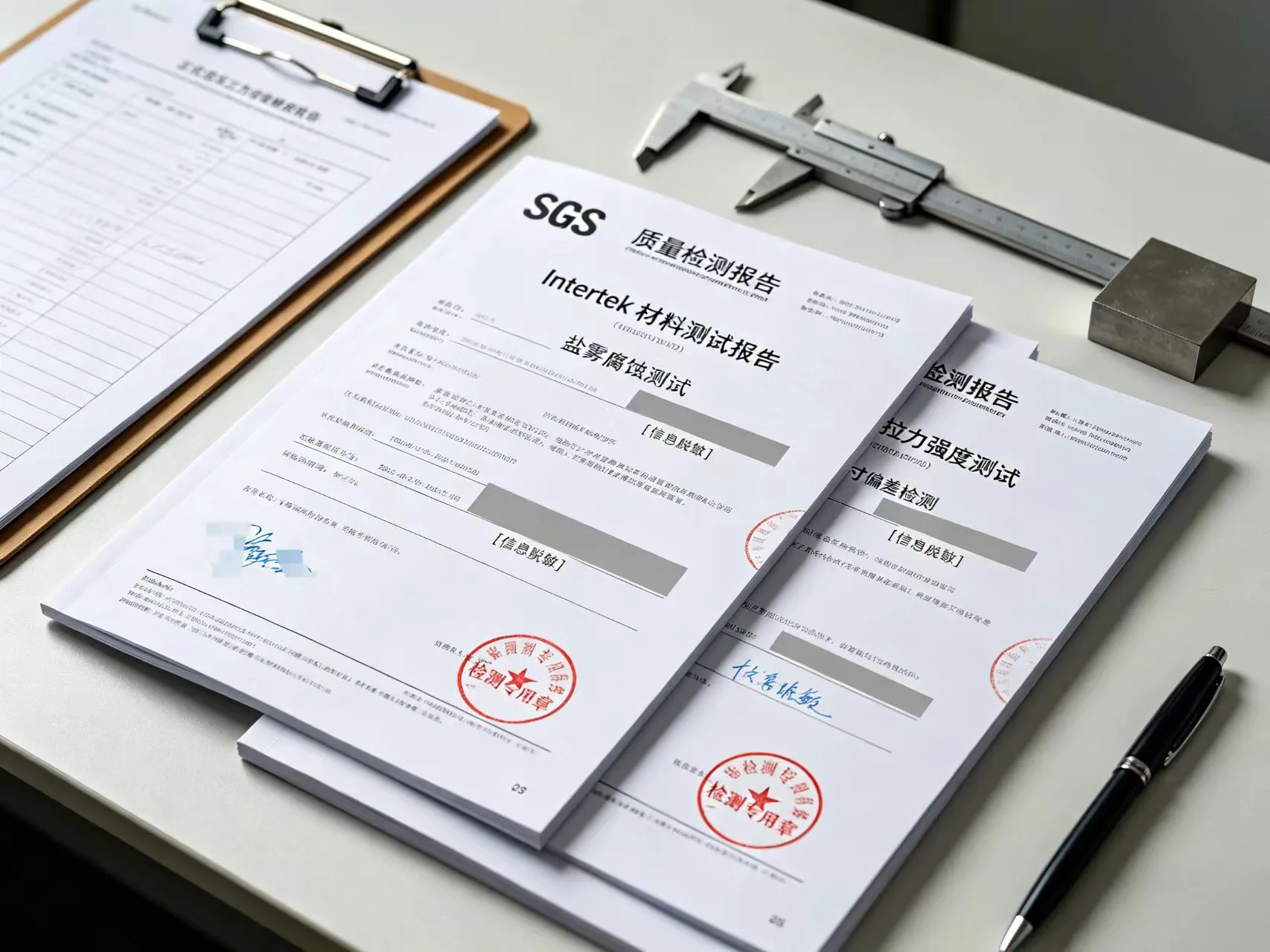
SGS, Intertek and Bureau Veritas are accepted at any stage: incoming, inline or PSI, with no “preparation week” — the PSI report is the last gate, not the only one.
Social compliance and quality audit for bag suppliers
A social compliance and quality audit for bag suppliers closes the loop in one visit. Ask for the certificate, the audit date and the open findings.
| Standard | What it proves | Audit cadence | Certificate held |
|---|---|---|---|
| ISO 9001 certified handbag and luggage manufacturer | Documented QMS from incoming to PSI | Annual surveillance | Yes |
| BSCI certified handbag manufacturer in China | Labour, hours, safety in China plant | Annual | Yes |
| Sedex-audited bag factory quality compliance | SMETA trace; pre-production sample approval process in a handbag factory verified at audit | 2-year cycle | Yes |
| Third-party PSI (SGS / Intertek / BV) | Accepted at incoming, inline or PSI | Per order | Reports on file |
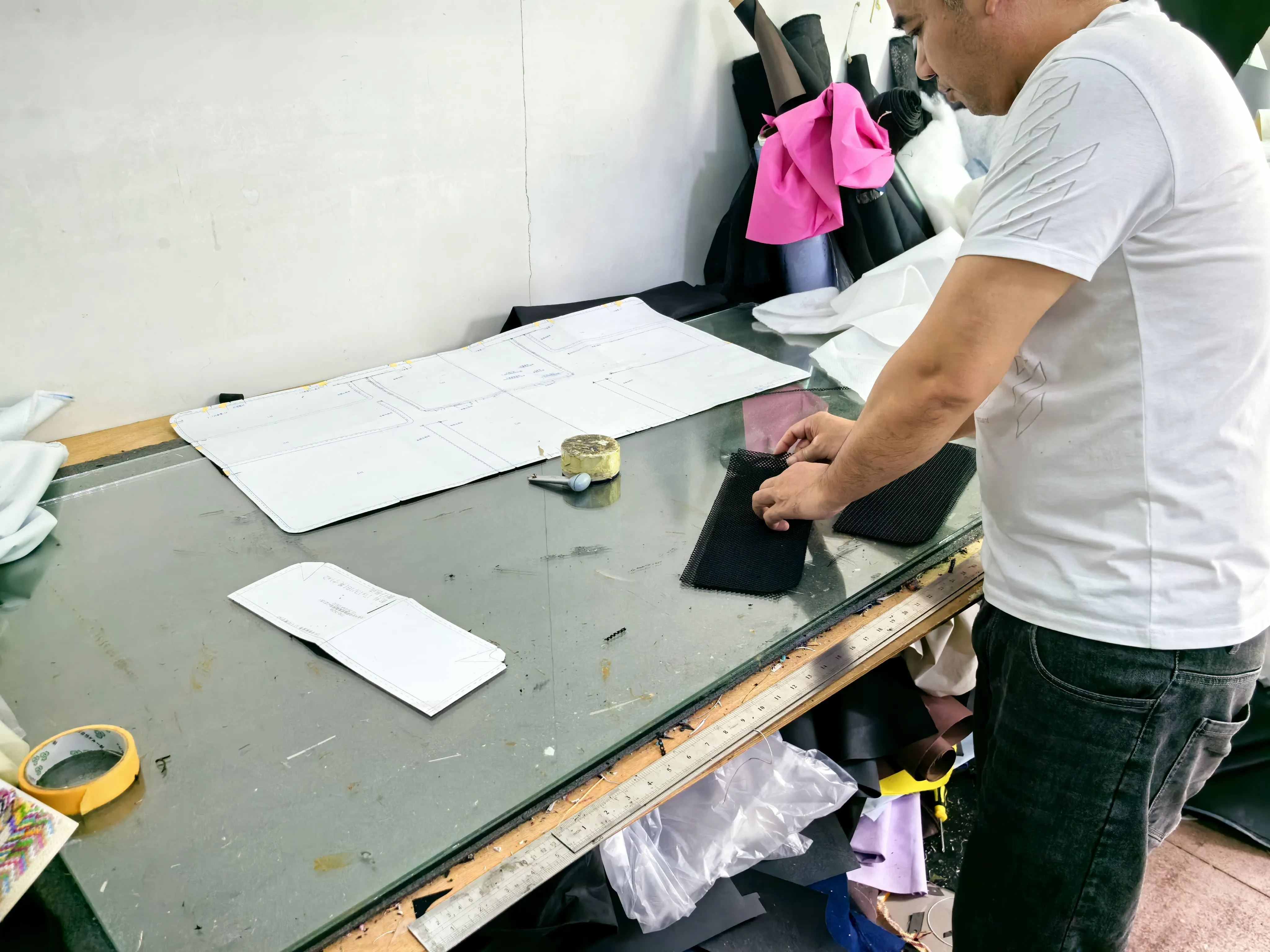
Sample Approval and the Custom Handbag Quality Assurance Process
Custom handbag quality assurance process lives or dies before bulk: one golden sample, one frozen tech pack.

Pre-production sample approval process in a handbag factory
The pre-production sample approval process in a handbag factory runs proto → fit sample → pre-production sample, each signed. No signature, no cutting.
Golden sample standard in bag manufacturing
On the bench, golden sample standard in bag manufacturing means one sealed reference: bulk colour, stitching and hardware are judged against it under D65 light.
Incoming raw material quality control in a bag factory
Per lot, incoming raw material quality control in a bag factory re-tests the exact lots reserved for bulk against the sample approval — leather, hardware, lining, thread.
In-line quality inspection in handbag production
The first 50 units are checked against the golden sample before full speed.
100% inspection custom handbag manufacturer
At incoming, 100% inspection custom handbag manufacturer coverage means every finished unit passes the five-point final check in Stage 6 — sampling never replaces it, AQL only confirms it.
Stage 1 — Incoming Material Inspection and Leather Grading — Quality Control in the Leather Industry
Trouble starts when leather rolls off the truck. A consistent incoming material inspection is the foundation of leather bag quality control.
Raw material leather grading and inspection process
In bulk production, raw material leather grading and inspection process starts at the door: every hide lot is graded for usable yield, surface defects and thickness spread before anything touches the line:
- Leather lots: crocking, light fastness, tear strength, thread tensile off the cone
- Hardware: D-rings, zippers, magnetic snaps — salt spray, every batch
- Lining: cotton or RPET, GSM and color drift
- Compliance: REACH limits, OEKO-TEX 100 where the buyer asks
Colorfastness and rub test in leather bag manufacturing
A crock test decides whether black dye bleeds onto a tan lining — colorfastness and rub test in leather bag manufacturing in one pull.
Leather thickness and splitting tolerance control
Per lot, leather thickness and splitting tolerance control is verified with a caliper and splitting gauge at every setup change. Tensile, salt spray, Martindale, REACH and OEKO-TEX panels run in parallel:
What we do when something fails
The batch is rejected on the spot with a dated CAPA. A repeat defect opens a new mill qualification. See our SGS vs material certification guide.
Stage 2 — Cutting, Skiving, Symmetry and Shape Retention
Handbag symmetry and shape retention quality control is decided at the cut table. A millimetre off here becomes a twisted bag after edge paint.

Handbag symmetry and shape retention quality control
Symmetry is decided at the cut table; a millimetre off becomes a twisted bag after edge paint. Every panel stays inside tech-pack dimension with grain running the same way — handbag symmetry and shape retention quality control in one setup check.
Operator check: grain diagram per style, caliper at each setup, first panel against the golden sample.
Stage 3 — Stitching and Seam
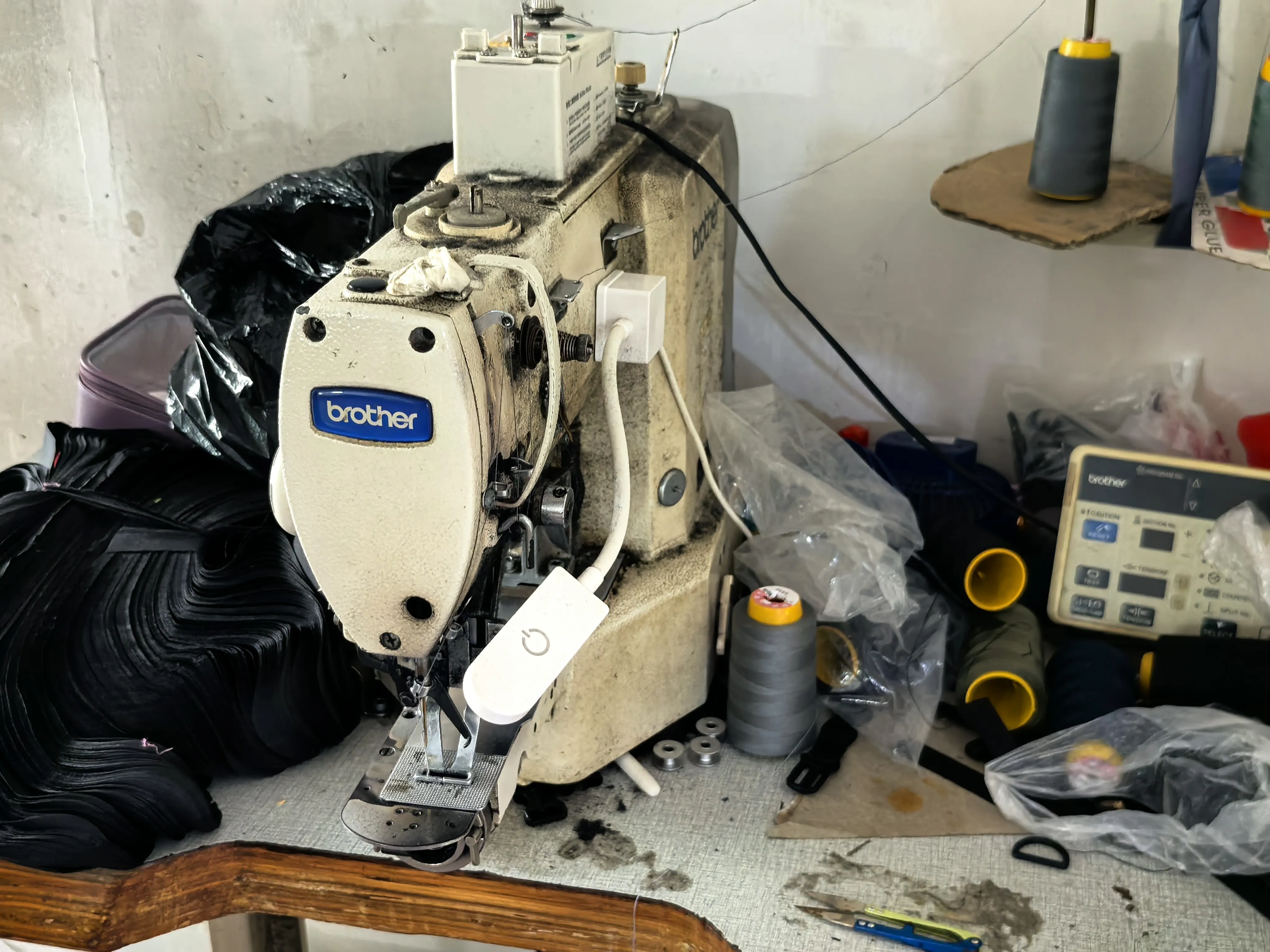
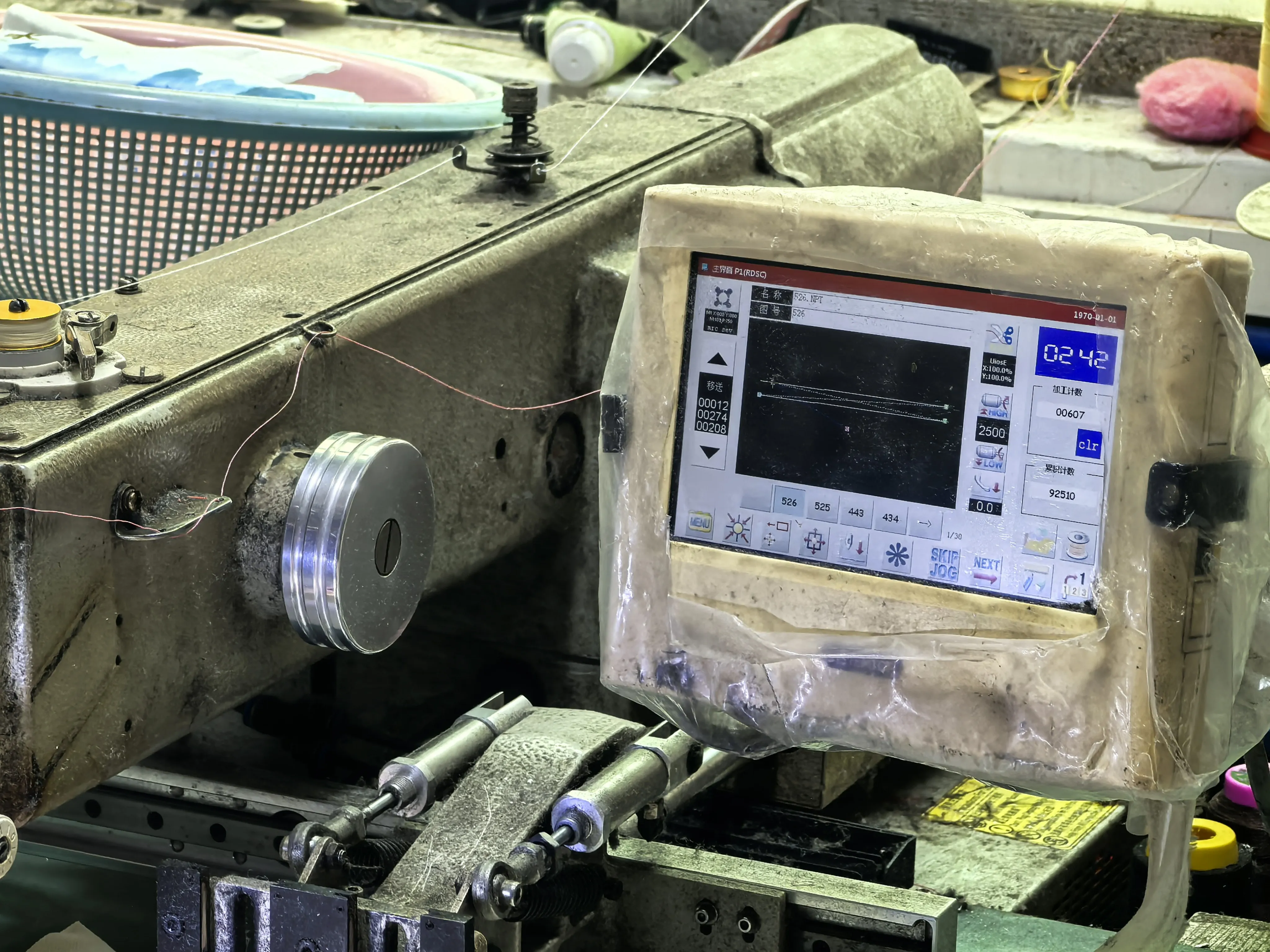
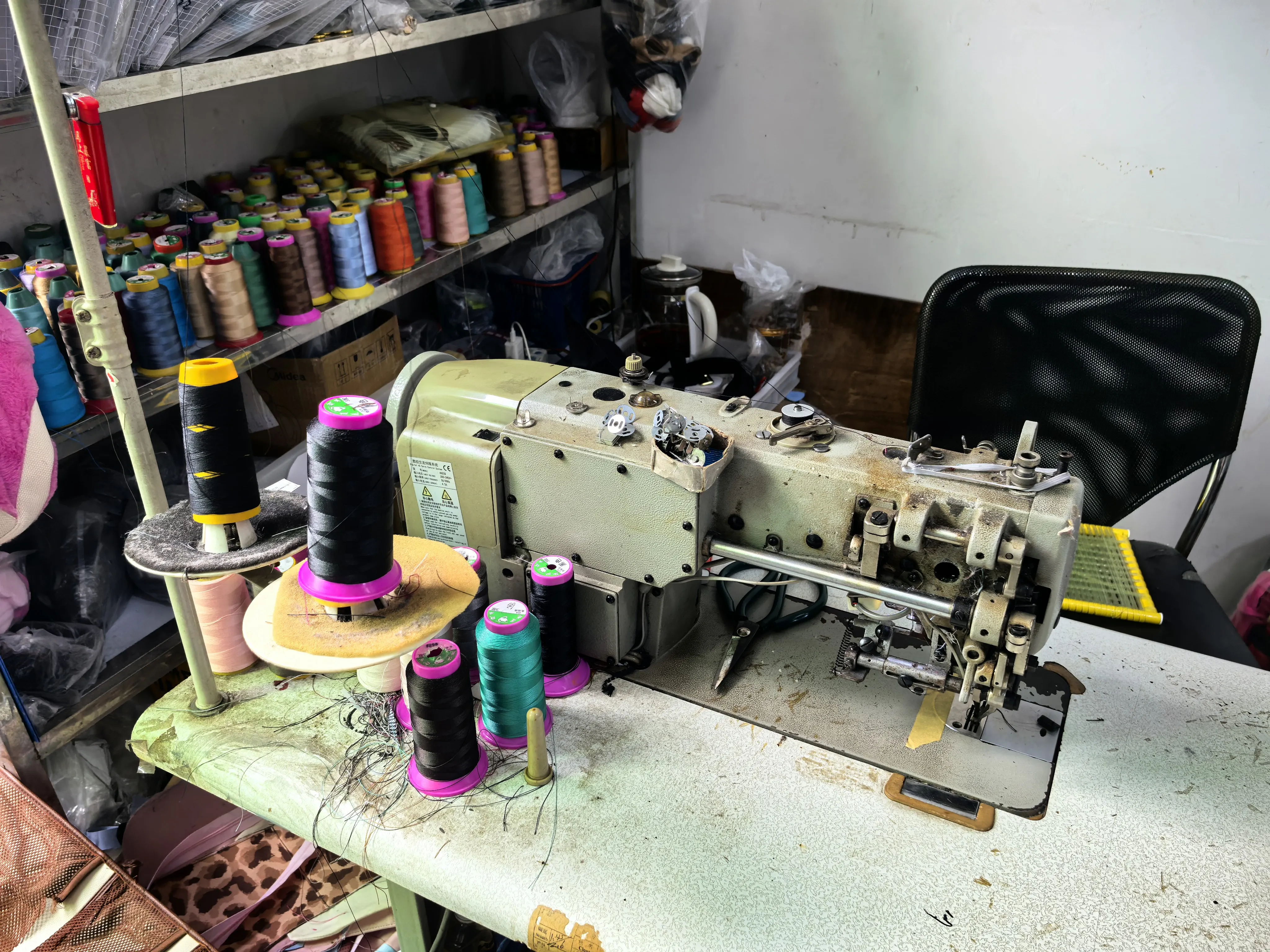
On the leather handbag inspection front, the eye of an experienced seamstress is non-negotiable — even after 7,000 pieces, she still walks every seam under the bench lamp.
Leather handbag stitching and edge paint quality control
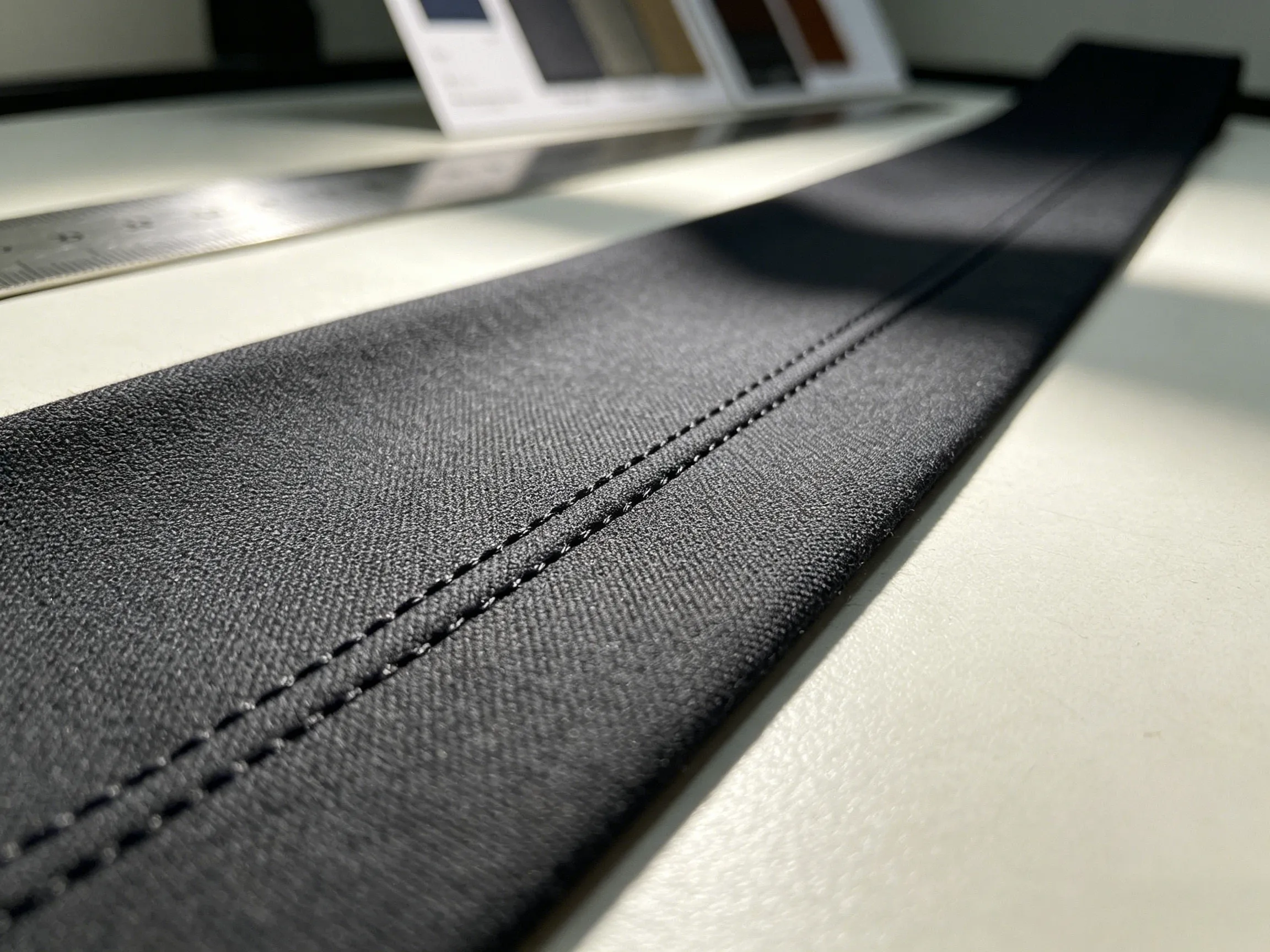
SPI to spec, zero skip stitches, no bobbin thread on the face, even top-bottom tension — leather handbag stitching and edge paint quality control at panel level.
Seam slippage and tear strength test on canvas bags
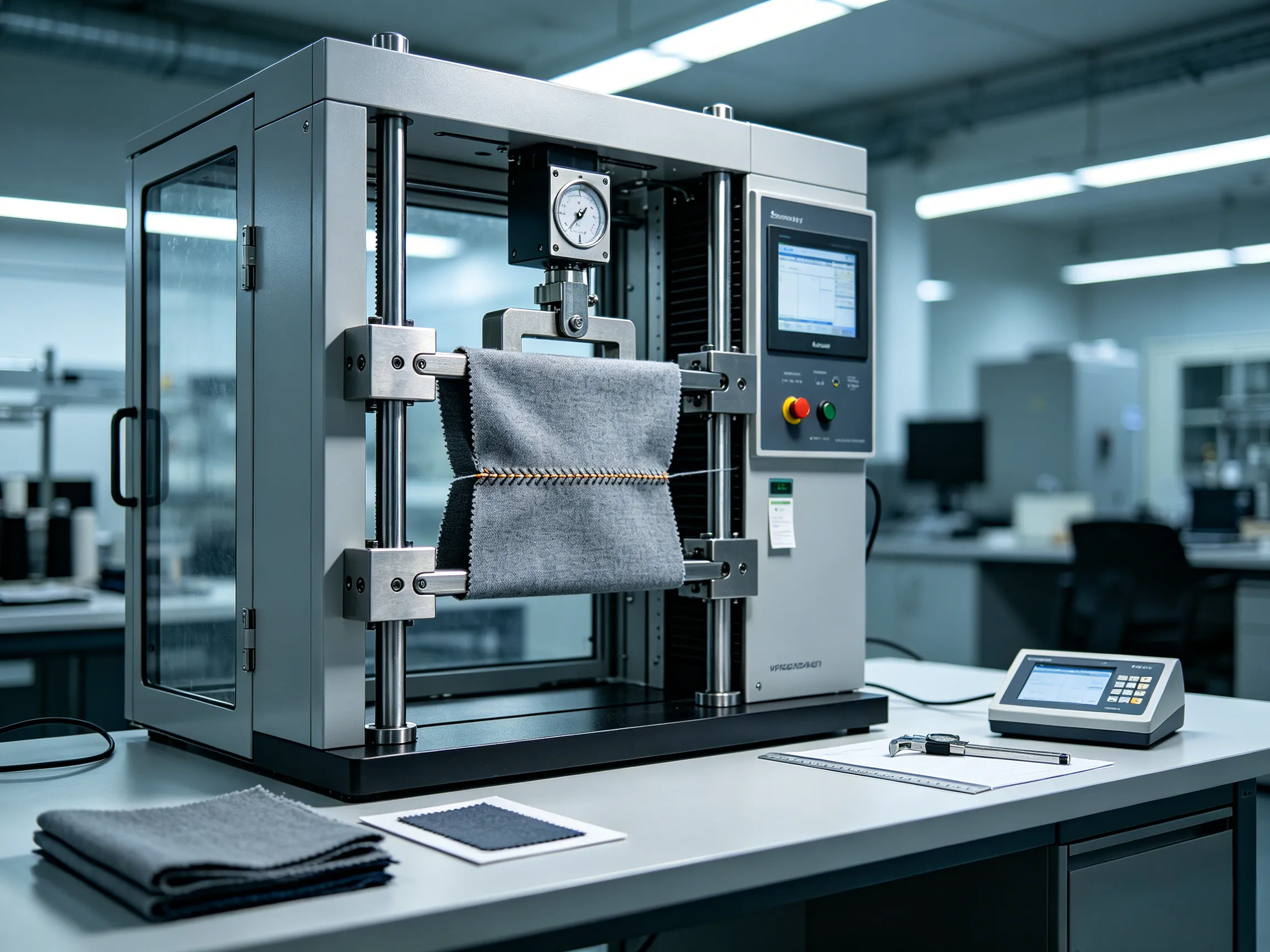
A seam slippage and tear strength test on canvas bags runs per ASTM D1683 on the pull tester — not by feel. A skip stitch becomes a tear-start point under load, which is why the test gates every canvas panel before edge paint.
Defect classification in handbag manufacturing
In bulk production, defect classification in handbag manufacturing decides the disposition: open and re-sew, recalibrate tension, or quarantine the batch. A skip stitch is re-opened and re-sewn; a failed seam batch is quarantined before the supplier call.
Stage 4 — Edge Paint and Finishing
Edge paint cracking and peeling test in a handbag factory decides whether the bag still looks premium after a rainy commute. Luxury leather goods QC standards and tolerances are the bar every edge is judged against.

Edge paint cracking and peeling test in a handbag factory
Cross-cut tape plus accelerated ageing on every batch: thickness in spec, correct coat count, colour match under D65. The edge gives up first when humidity swings — the edge paint cracking and peeling test in a handbag factory catches it at the corner and the fold.
Luxury leather goods QC standards and tolerances
On the bench, luxury leather goods QC standards and tolerances require re-sand, re-coat, re-bake and logging for a failed edge; repeat failure triggers a CAPA. For the upstream process behind edge survival, see our leather handbag manufacturing process walkthrough.
Stage 5 — In-Line Inspection and Physical Load Testing
Inline checks happen while the bag is still on the bench, before the lid closes. Catch a hardware failure now, save a return ticket three months later.
Hardware plating salt spray test in a handbag factory
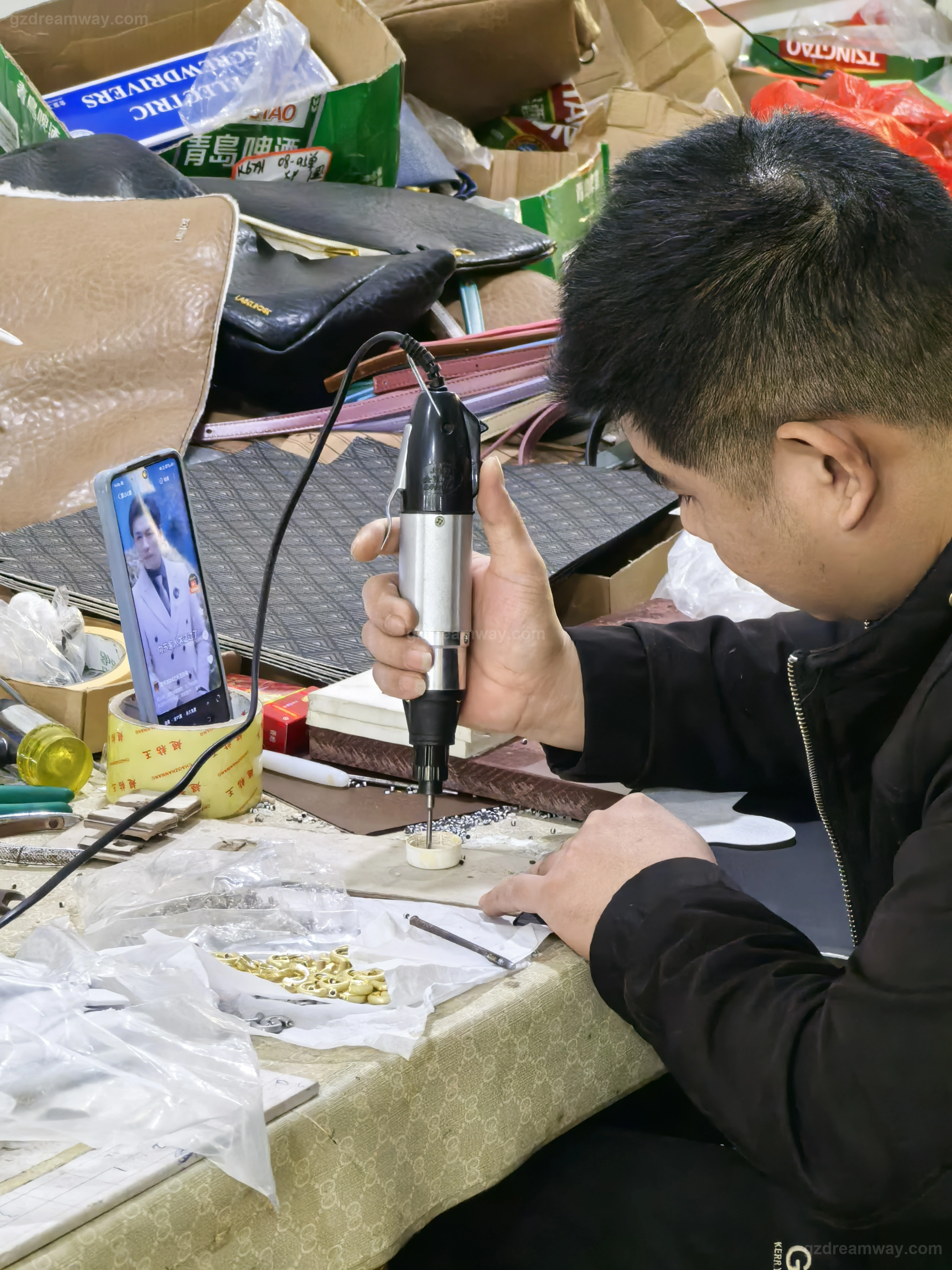
On the bench, hardware plating salt spray test in a handbag factory runs per ASTM B117 on D-rings, zippers and snaps before they are sewn in. A zipper that skips at cycle 200 never reaches the bench.
Handbag strap and handle pull test standards
Per lot, handbag strap and handle pull test standards pull handles to rated kilograms and hold — stress at the root, not the surface.
Zipper fatigue and strength testing in a bag manufacturer
At incoming, zipper fatigue and strength testing in a bag manufacturer cycles each zipper to its rated open-close count on the cycle tester. Snaps get closure-strength checks on the same bench.
Metal detection and needle control in a bag factory
In bulk production, metal detection and needle control in a bag factory closes Stage 5: every panel passes the detector and the broken-needle log is reconciled. For zipper and metal tag selection, see our hardware guide.
Stage 6 — Final Inspection and the Luxury Handbag Quality Assessment Checklist
Final inspection is a two-inspector sign-off on every unit.
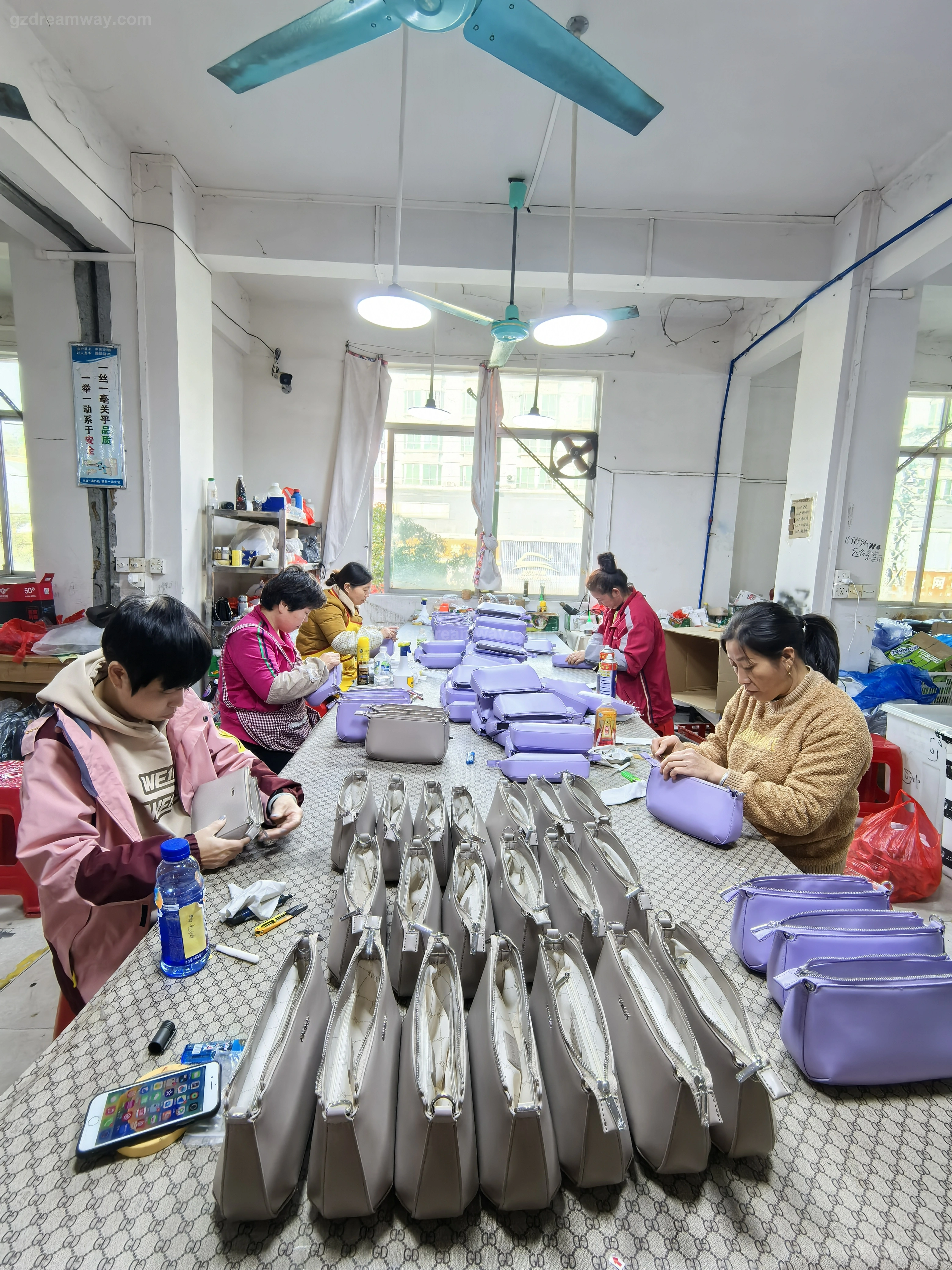
Two-inspector sign-off on every unit
Two QC staff work independently; disagreement goes up.
What the luxury handbag quality assessment checklist covers
The luxury handbag quality assessment checklist covers five points: no stains or drift, every closure functional, labels correct, packaging to spec, accessories inside. Repair or replace on failure; Criticals never ship.
Stage 7 — Pre-Shipment Inspection and AQL Sampling: AQL 2.5 Quality Control in a Handbag Factory
Stage 7 is the last statistical gate: pull the sample, classify defects, decide seal or hold.
Pre-shipment inspection checklist for handbags
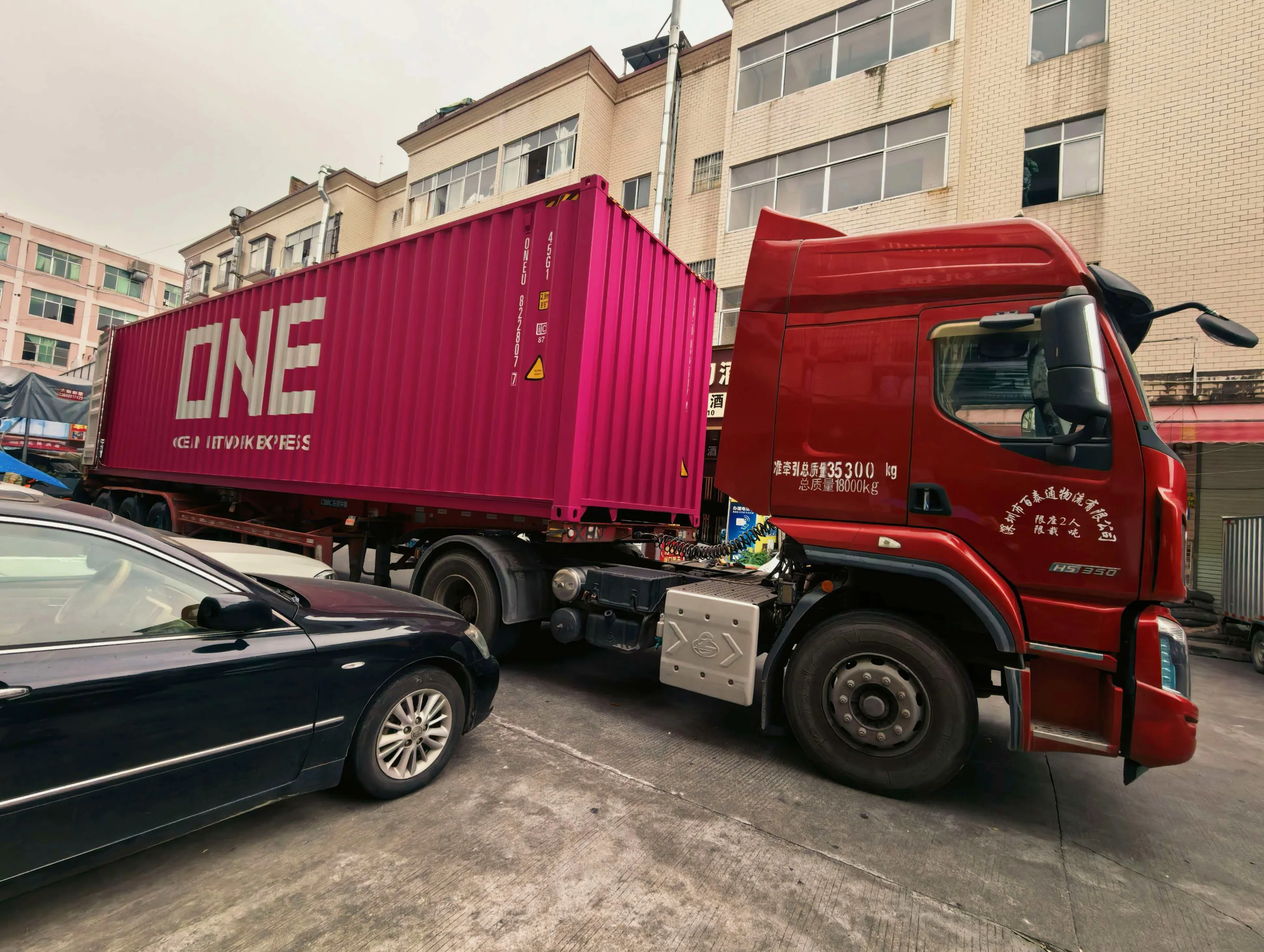
The sample is pulled under ISO 2859-1 G-II normal, measurements logged, defect photos filed — the pre-shipment inspection checklist for handbags closes at the container door. Our full PSI checklist covers the SOP. For the difference between the two, see our AQL vs 100% comparison.
AQL 2.5 inspection standards for leather bags
On our Huadu floor, AQL 2.5 inspection standards for leather bags set Major at 2.5 and Minor at 4.0; find your lot size for the sample, then read Ac / Re.
AQL 1.5 for luxury handbag quality control in a factory
Premium and BSR lots tighten Major to 1.5. Criticals stay outside AQL: reject on sight with CAPA.
Our default sampling level
Our default from 200 units up, G-I for BSR and luxury lots. For sourcing-model differences see our OEM vs ODM vs private label guide.
| Level | Definition | Acceptance | Example |
|---|---|---|---|
| Critical | Functional or safety issue that stops the bag from being used | 0% — full rejection | Broken needle in lining, sharp edge |
| Major | Visible defect that affects how the bag looks or works | AQL 2.5 | Skip stitch, dead zipper, colour drift |
| Minor | Cosmetic issue, easy to miss at arm's length | AQL 4.0 | Loose thread end, slight glue mark |
| Lot size | Sample (G-II) | AQL 1.5 Ac/Re | AQL 2.5 Ac/Re | AQL 4.0 Ac/Re |
|---|---|---|---|---|
| 501–1,200 | 80 | 3/4 | 5/6 | 7/8 |
| 1,201–3,200 | 125 | 5/6 | 7/8 | 10/11 |
| 3,201–10,000 | 200 | 7/8 | 10/11 | 14/15 |
| Stage | Test method | Standard | Coverage |
|---|---|---|---|
| Stage 1 incoming | Tensile, salt spray, Martindale, REACH | ASTM D2208 / B117, ISO 12947 | Per lot; incoming raw material quality control in a bag factory |
| Stage 2 cutting | Handbag symmetry and shape retention check; raw material leather grading and inspection process on file | Tech-pack dimension | 100% first panel + setup |
| Stage 3 stitching | Seam tensile, SPI visual; colorfastness and rub test in leather bag manufacturing on trims | ASTM D1683 | 100% critical seams |
| Stage 4 edge | Cross-cut adhesion; leather thickness and splitting tolerance control at setup | Cross-cut tape + ageing | Per batch |
| Stage 5 inline | Zipper fatigue and strength testing in a bag manufacturer; cycle-test each zipper | Detector + broken-needle log | Metal detection and needle control in a bag factory; 100% panels |
| Stage 6 final | Five-point appearance + function | Golden sample standard in bag manufacturing | 100% inspection custom handbag manufacturer: every unit, dual inspectors |
| Stage 7 PSI | AQL sampling G-II / G-I; social compliance and quality audit for bag suppliers on file | ISO 2859-1 | Sample, Critical 0% |
What happens if the buyer re-rejects
Re-inspection under G-I, rework or concession, and a CAPA on any Critical re-rejection.
AQL 2.5 Inspection for Handbags — In Plain English
The mix-up we hear every week
❌ Wrong: "AQL 2.5 means we can have up to 2.5% defects in the order."
✓ Right: "AQL 2.5 is the upper bound of acceptable defects in the sample, under the chosen sampling plan."
What the standard actually says
Pre-shipment inspection at AQL 2.5 is a sampling limit, not an allowance (ISO 2859-1 / ANSI/ASQ Z1.4).
Critical / Major / Minor classification
Our default is AQL 2.5 for Major and 4.0 for Minor. Buyers can ask for tighter (AQL 1.5 for premium and BSR lots) or looser (AQL 4.0 for promotional).
Critical defects are not part of the AQL conversation. They are rejected on first sight, and a CAPA is opened before the unit goes back into the line.
How to read an AQL table
Find lot size, then read Ac / Re.
For a side-by-side look at the three most common levels, see our AQL 1.5 vs AQL 2.5 vs AQL 4.0 guide.
"We were skeptical about a 7-stage chain adding cost and friction. It actually did neither. Returns dropped, our CSAT went up, and the CAPA folder is now the first thing our QC lead reads on Monday."
Chemical Compliance and Environmental Standards
Chemical compliance decides whether a leather bag can legally be sold in the EU and California. Every lot is tested before cutting — never after packing.
REACH compliant handbag manufacturer in China
SVHC, azo dyes, DMF and chromium VI are screened per lot under EU 1907/2006. Leather, glue and edge paint carry annually renewed lab reports.
California Proposition 65 compliant bag factory
At incoming, california Proposition 65 compliant bag factory control covers lead, phthalates and BPA in hardware, PVC trims and coatings. Warning-label risk is flagged at sample approval, never at the port.
Heavy metal and phthalate free bag manufacturer
At incoming, heavy metal and phthalate free bag manufacturer status is verified by total-lead, soluble heavy metal and phthalate panels on hardware and printed linings. Failed lots die at incoming.
GRS certified recycled bag quality control process
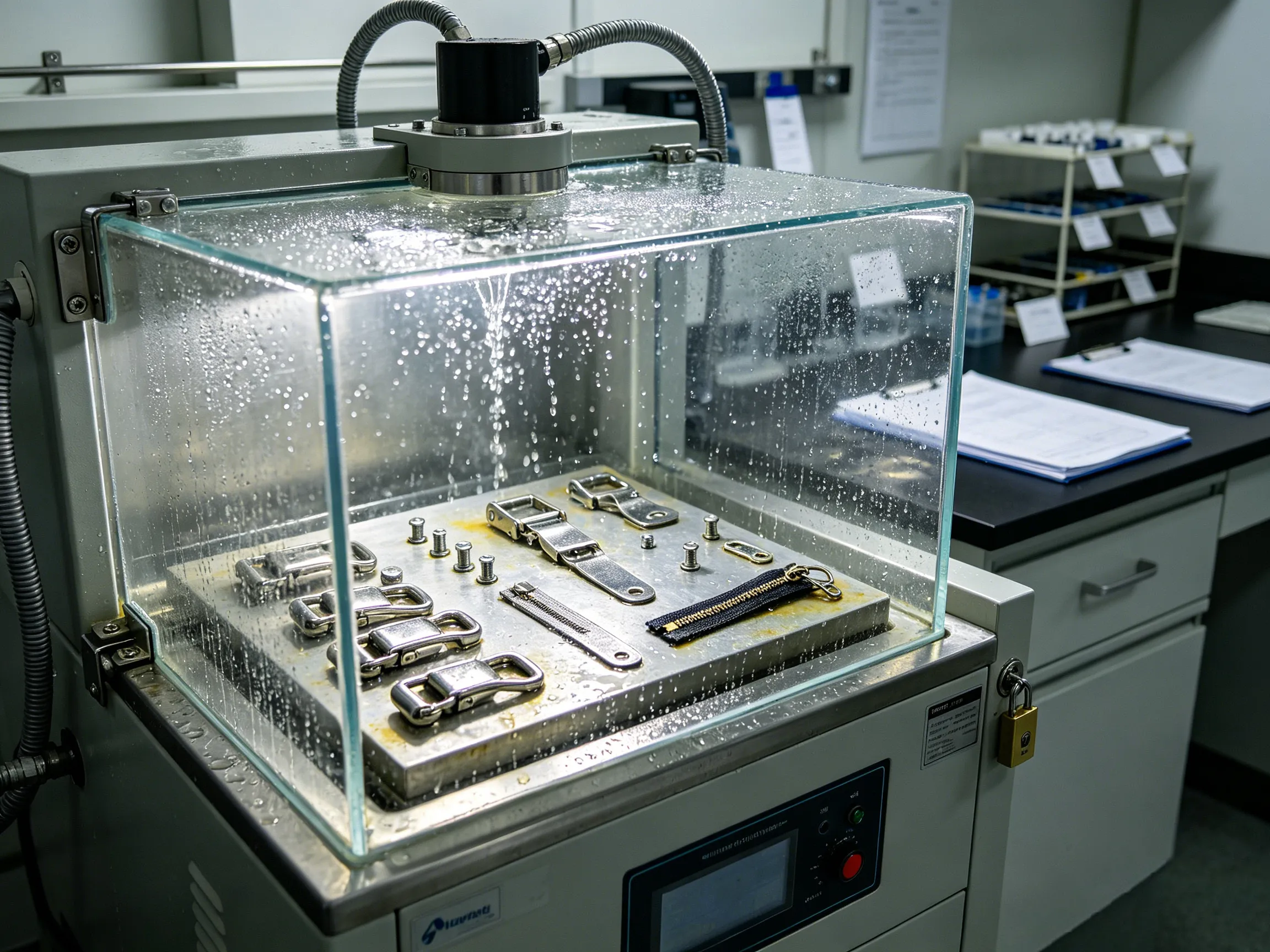
rPET and recycled cotton are tracked from transaction certificate to finished tote under the GRS certified recycled bag quality control process. Scope certificate, TCs and mass balance stay on file.
Vegan leather hydrolysis resistance test in a handbag factory
In bulk production, vegan leather hydrolysis resistance test in a handbag factory runs jungle-test ageing on PU and microfibre — 85% humidity, 70°C, then fold and adhesion checks. Peeling vegan leather never reaches bulk.
| Regulation | Limit | Test | Reporting |
|---|---|---|---|
| EU REACH SVHC | < 0.1% w/w | GC-MS / ICP-OES per lot | Lab report + REACH declaration |
| California Proposition 65 compliant bag factory | Lead / phthalates / BPA | CPSIA + CA 65 panel | Warning assessment at sample |
| Heavy metal and phthalate free bag manufacturer | EN 71-3 migration limits | Migration + total content | Incoming batch record |
| GRS certified recycled bag quality control process | Chain of custody | TC + mass balance | Scope cert + TC per shipment |
| Vegan leather hydrolysis resistance test in a handbag factory | 85% humidity, 70C jungle ageing | Fold + adhesion after ageing | Per PU/microfibre lot |
Quality Control in Manufacturing Luggage: Luggage and Travel Bag Tests
Quality control in manufacturing luggage runs drop, pull, waterproof and trolley tests on every style.
Luggage drop test and handle tensile testing standards
Per lot, luggage drop test and handle tensile testing standards follow ISTA-style corner, edge and face drops plus a handle pull to rated kilograms.
Travel bag zipper and seam strength quality control
In bulk production, travel bag zipper and seam strength quality control cycles every zipper to its rated count and pulls seams per ASTM D1683.
Waterproof luggage testing standards in an OEM factory
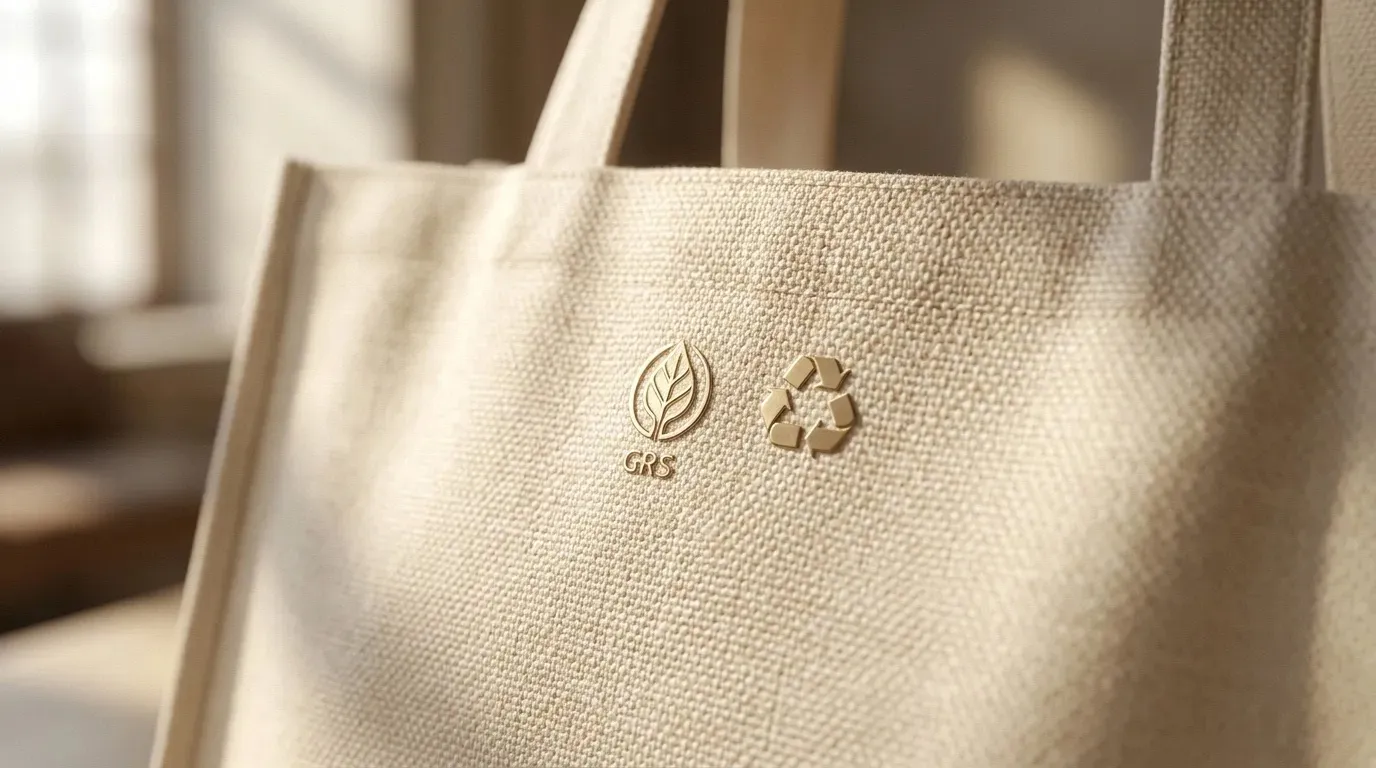
Per lot, waterproof luggage testing standards in an OEM factory run spray, immersion and seam-tape checks: coated canvas and TPU seams must bead, not wick.
Custom suitcase wheel and trolley durability test
Per lot, custom suitcase wheel and trolley durability test rolls loaded cases over obstacle drums for kilometres, then checks axle play and telescopic lock.
| Test | Standard | Pass criterion | Cycle |
|---|---|---|---|
| Luggage drop test and handle tensile testing standards | ISTA corner / edge / face | No crack, no burst seam | Per style + after design change |
| Handle tensile | Rated kg pull, 30 s hold | No slip, no root tear | Per lot |
| Travel bag zipper and seam strength quality control | Cycle tester to rated count | No skip, no split | Per lot |
| Waterproof luggage testing standards in an OEM factory | Spray + seam immersion | Bead, no wicking | Per coated lot |
| Custom suitcase wheel and trolley durability test | Loaded obstacle-drum roll | No axle play, lock holds | Per style |
8 Documents Buyers Should Demand Before Signing a QC Report
Eight points before you sign — any "no" means slow down. A leather bag qc checklist for your sourcing team:
- 1 FAI: First Article Inspection data for this specific order. For the upstream step that decides whether your sample ever matches the bulk, see our leather bag sample development process.
- 2 Inline photo log: process shots at each critical control point, time-stamped.
- 3 Inline QC report: mid-production check, signed by the line lead.
- 4 100% Final Inspection: every unit, not just a sample. Sign-off form on file.
- 5 AQL plan: ISO 2859-1, with the level and the Ac number documented.
- 6 Defect log: count and class (Critical / Major / Minor), with photos.
- 7 CAPA on Critical: written root cause and corrective action.
- 8 PSK sign-off: pre-shipment sample approved against the original. Our PSK sample approval checklist walks through the steps.
For a deeper read on what each line of a factory report means, see our guide on how to read a QC report.
The People Behind the 7 Stages (E-E-A-T)
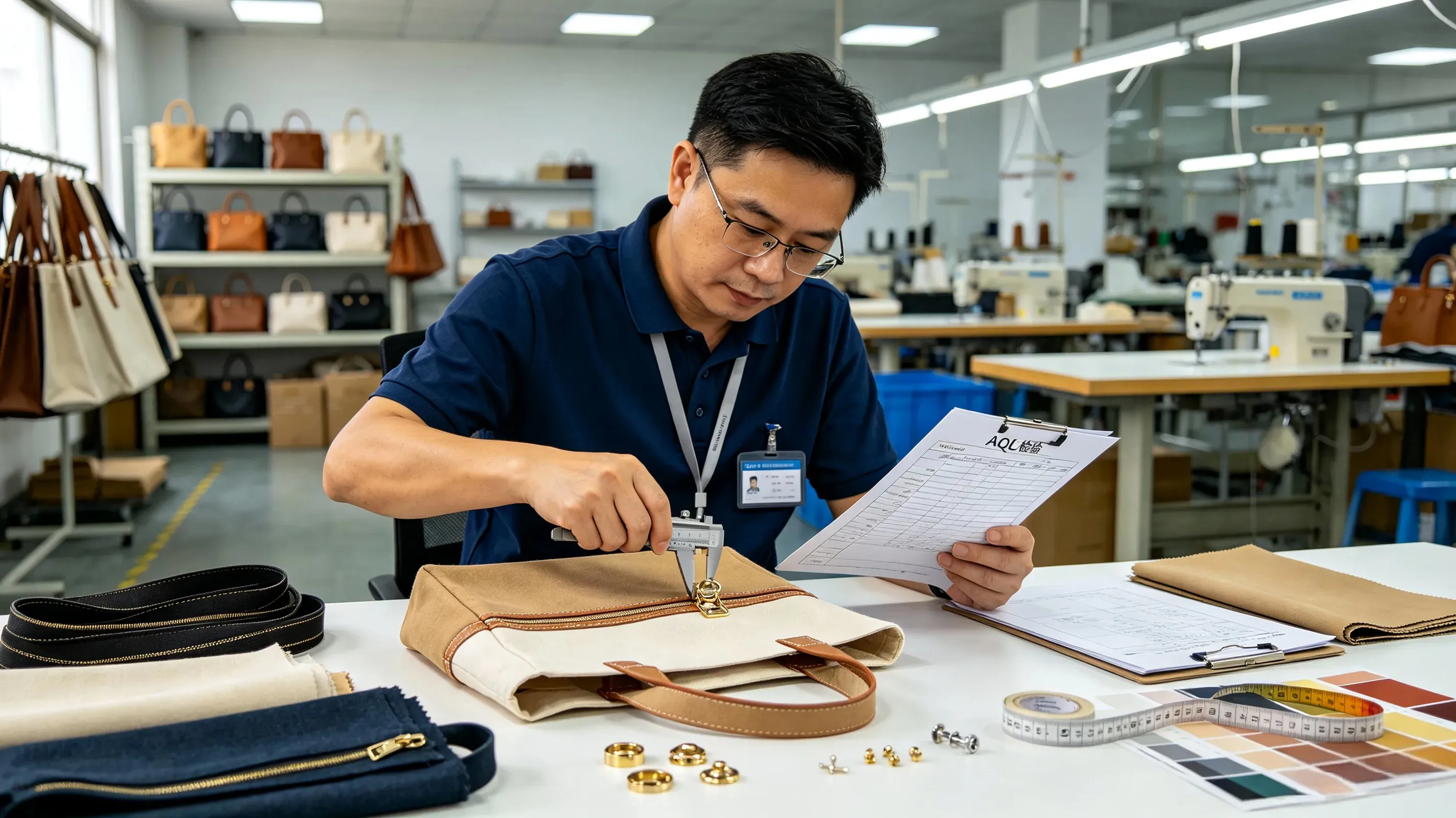
Kevin
Fifteen years on the pattern table — Kevin's patterns hold our cutting to spec. Notes on our Dreamway LinkedIn.

Emily
Twelve years running OEM projects — Emily keeps timelines honest, buyers updated and lines fed.
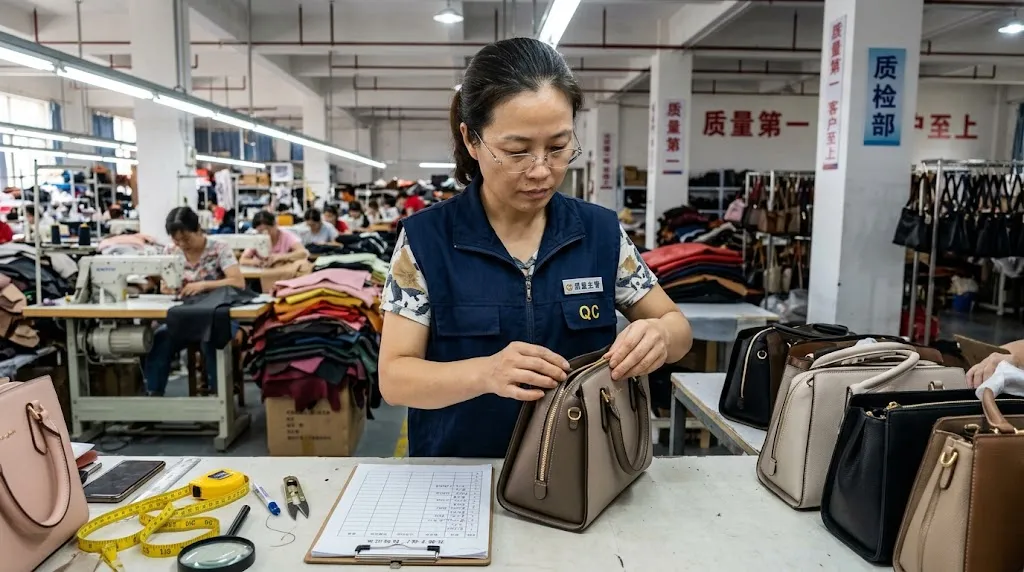
Helen
Thirteen years in leather-bag QC — Helen's team writes the SOPs and signs every PSI report.
When the Chain Fails: A Hardware Salt Spray Case Study
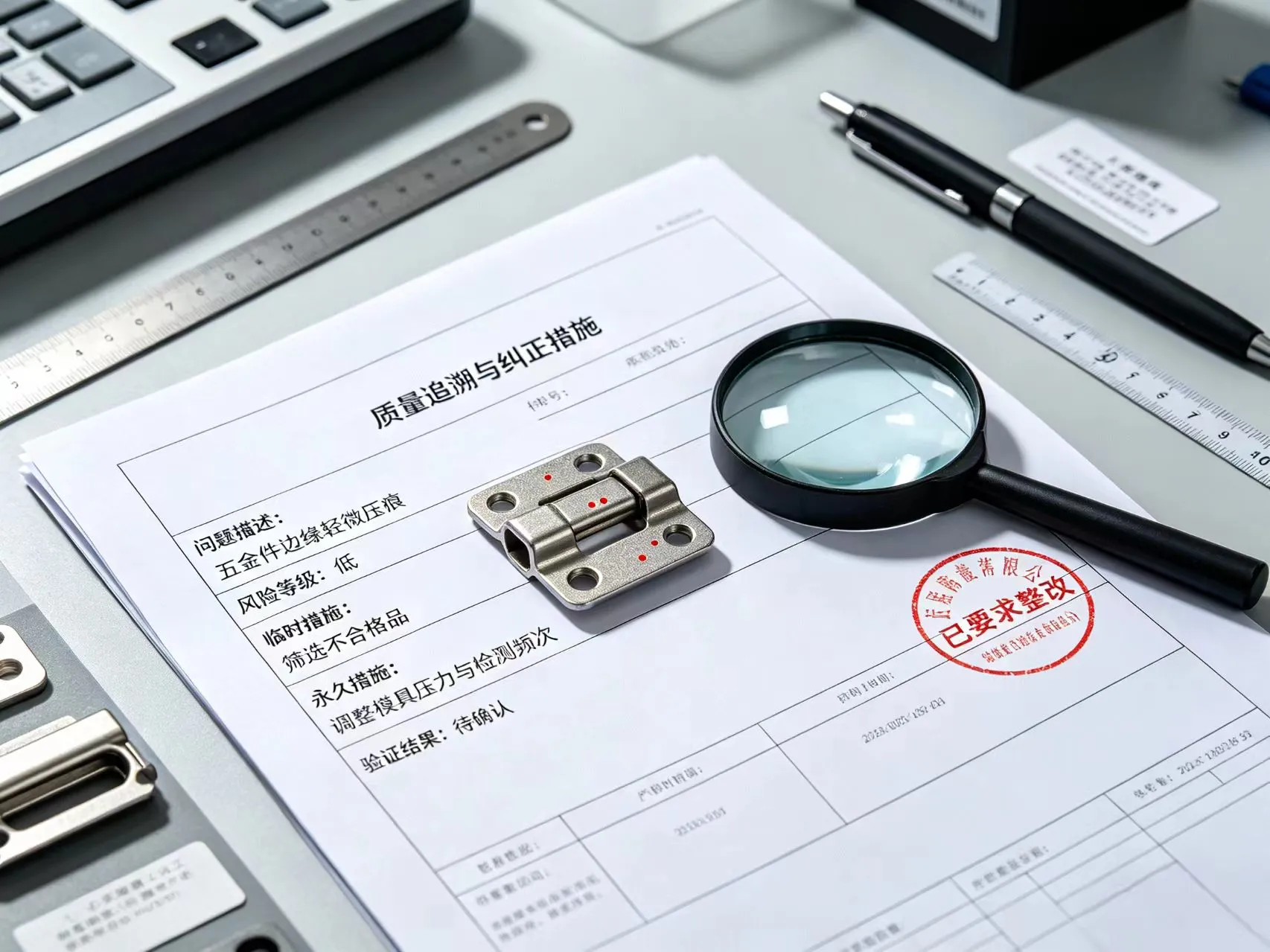
A leather bag quality control case worth telling — every part of the 7-stage chain had to fire in the same afternoon. Here is what that afternoon looked like on our floor.
What happened
A supplier changed plating formula without notice. Faint rust at hour 20 told the truth weeks early.
The chain reaction
The line held within the hour. Since then every batch gets 100% incoming salt spray.
The corrective action
The CAPA lists failed lot, root cause and new rule.
What buyers can learn
Push for a written CAPA on every Critical finding.
"Salt spray caught a hardware issue on our 2022 autumn line before it ever hit a customer. We saved a full container, and possibly the season. That one check earns its keep."
How This Compares to Standard Leather Bag Inspection
A chain of seven stages upgrades leather handbag quality control beyond a single leather bag inspection — and a working leather bag quality control checklist is what binds the seven stages together.
vs single-point inspection
A 7-stage chain pulls it at incoming — cheaper and invisible past 500 units.
vs tier-2 factory QC
Tier-2 lines often run 3 stages. Premium, BSR and low-return lines ask for seven.
vs third-party-only
Third-party-only means one check by an inspector who never saw the line. Factory chain plus third-party PSI closes the loop.
What this means for OEM brands
A new factory needs a 30-day learning loop.
| Inspection model | Stages | Upstream defects caught | Field return rate | Best fit |
|---|---|---|---|---|
| Single-point final | 1 | ~10% | 12–18% | Promotional, low-cost SKUs |
| Tier-2 (3-stage) | 3 | ~40% | 6–9% | Mid-market handbags |
| Third-party only | 1 | ~20% | 8–12% | One-off audit orders |
| 7-stage chain (us) | 7 | ~85% | 1.5–3% | Premium OEM, BSR, luxury |
Our line data, last 24 months.
Frequently Asked Questions About Leather Bag Quality Control
Short answers buyers can quote. Every answer matches the stage or table above.
What is leather bag quality control?
Leather bag quality control is the set of checks a factory runs at every step from incoming hide to sealed container. Incoming material, cutting, stitching, edge paint, inline, final and AQL sampling each have a tool, a standard and a record.
What are the 7 stages of leather bag QC?
Incoming material inspection, cutting and skiving, stitching and seam, edge paint and finishing, inline inspection, final inspection, and pre-shipment AQL sampling. Each stage removes one failure mode before value is added.
What does AQL 2.5 mean for handbags?
AQL 2.5 quality control in a handbag factory is a sampling limit, not a defect allowance. Under the chosen G-II plan the lot passes only if Major defects in the sample stay at or below the Ac number; Critical defects are rejected on first sight.
When should a buyer choose AQL 1.5 over AQL 2.5?
AQL 1.5 for luxury handbag quality control in a factory applies to premium and BSR lots where fewer Majors are tolerated in the same sample. Promotional lots may use AQL 4.0 for Minor defects.
What is the difference between inline inspection and final inspection?
In-line quality inspection in handbag production happens while the bag is still on the bench — zipper cycles, pull tests, metal detection. Final inspection checks every finished unit against the golden sample before the carton is taped.
What should buyers check before signing a QC report?
Eight documents: FAI report, inline photo log, inline QC report, 100% final inspection record, AQL sampling plan with Ac number, defect log with classification, CAPA on any Critical, and signed pre-shipment sample.
Does GZ Dreamway accept third-party inspections?
Yes — a third-party inspection accepted bag factory in China. SGS, Intertek and Bureau Veritas can enter at incoming, inline or PSI without a preparation week.
How long does the 7-stage chain take for a 500-bag order?
For a 500-unit order, incoming takes one to two days, inline runs alongside the 21- to 35-day production window, final takes two to three days and AQL sampling adds one day. The chain sits inside the normal production calendar.
What certifications should a bag factory hold?
A handbag factory audit checklist for buyers should confirm ISO 9001 for the quality system, BSCI for labour, Sedex SMETA for social compliance, and open access for third-party inspection.
How do I test a leather bag for chemical compliance?
A REACH compliant handbag manufacturer in China screens SVHC, azo dyes, DMF and chromium VI per lot under EU 1907/2006, and verifies heavy metal and phthalate limits on hardware and printed linings.
Run Your Next Order Through the Same 7 Stages
Bring this leather bag quality control checklist to your next supplier meeting. Huadu team, MOQ 200 leather / 50 silk, 50+ countries since 2008.
Browse related guides
See the OEM, ODM, and private label paths in our Custom Luxury Program.
Open GuidePhone: 86-020-87682749 · Email: Victoria@gzdreamway.com · Info: info@gzdreamway.com
External standards referenced in this guide
- ISO 2859-1 — Sampling by attributes
- ANSI/ASQ Z1.4 — North American equivalent
- OEKO-TEX Standard 100 — Harmful substance certification
- REACH — EU chemical regulation