
How to Create a Backpack Tech Pack for Manufacturing
What Is a Backpack Tech Pack?
A backpack tech pack is a comprehensive manufacturing document that communicates every technical requirement of your product to the factory. Think of it as a complete product blueprint that eliminates the need for lengthy verbal explanations or endless email exchanges.
Essential Components Every Tech Pack Must Include:
- Basic Information: Product name, style number, target customer, product category
- Design Information: Front view, back view, side view, interior structure drawings
- Manufacturing Information: Materials specifications, sewing requirements, hardware details, packaging requirements
.webp)
Without a proper tech pack, brands frequently encounter incorrect samples, production delays, and unexpected costs that can derail entire product launches. A comprehensive backpack manufacturing document ensures every stakeholder—from designers to production managers—operates from the same precise specifications.
Why Brands Need a Tech Pack When Working With Backpack Factories
Reduce Communication Errors
Imagine telling your factory to “make the straps stronger.” Without specific measurements, materials, and reinforcement requirements, they have no clear direction. A tech pack eliminates guesswork by providing exact specifications that leave no room for interpretation.
Improve Sample Accuracy
Each sample revision cycle costs time and money. With detailed specifications upfront, factories can produce samples that closely match your vision on the first attempt—reducing revisions and accelerating your time to market.
.webp)
Control Production Cost
When material choices, construction methods, and hardware specifications are defined upfront, factories can provide accurate quotations. This transparency prevents costly surprises during production and enables better budget planning.
Essential Sections of a Professional Backpack Tech Pack
| Section | Purpose | Key Elements |
|---|---|---|
| Technical Drawing | Visual reference for all stakeholders | Multi-view sketches, dimension callouts, annotations |
| Measurements | Size control and consistency | External dimensions, functional measurements, tolerances |
| Material Specification | Material selection and sourcing | Fabric types, weights, colors, certifications |
| Construction Details | Production method documentation | Stitching requirements, seam types, reinforcement |
| Hardware Specification | Accessories and components | Zippers, buckles, pulls, metal hardware |
| Packaging Requirement | Shipping preparation | Packing method, labeling, cartons |
Backpack Technical Drawing: The Foundation of a Tech Pack
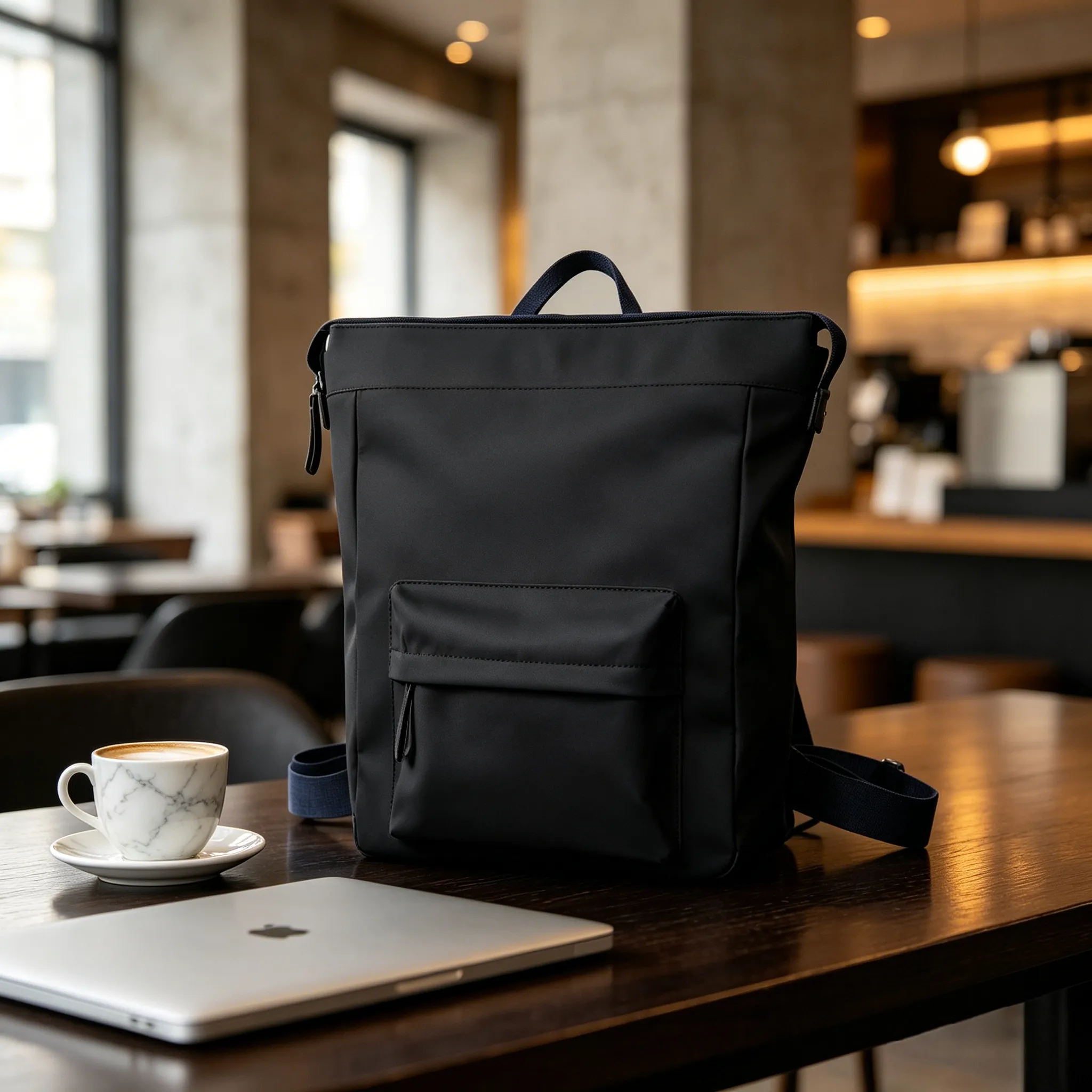
Technical drawings serve as the universal language between designers and manufacturers. For backpacks, comprehensive drawings must include multiple perspectives to capture every design detail.
Required Views for Backpack Technical Drawings
- Front view – Main body, pockets, and closures
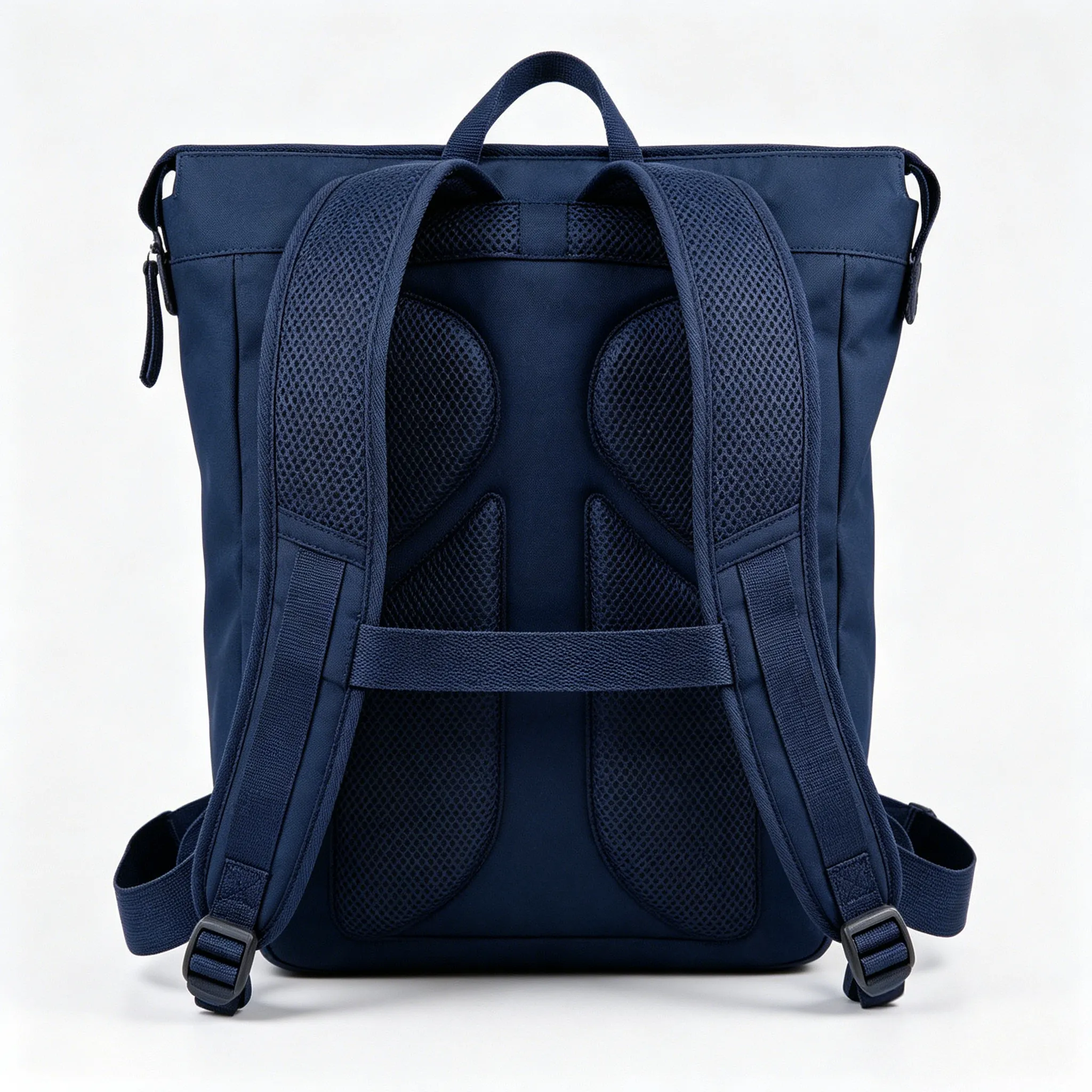
- Back view – Strap attachments, panel seams
- Side view – Depth perspective, contour details
- Bottom view – Base construction, reinforcement
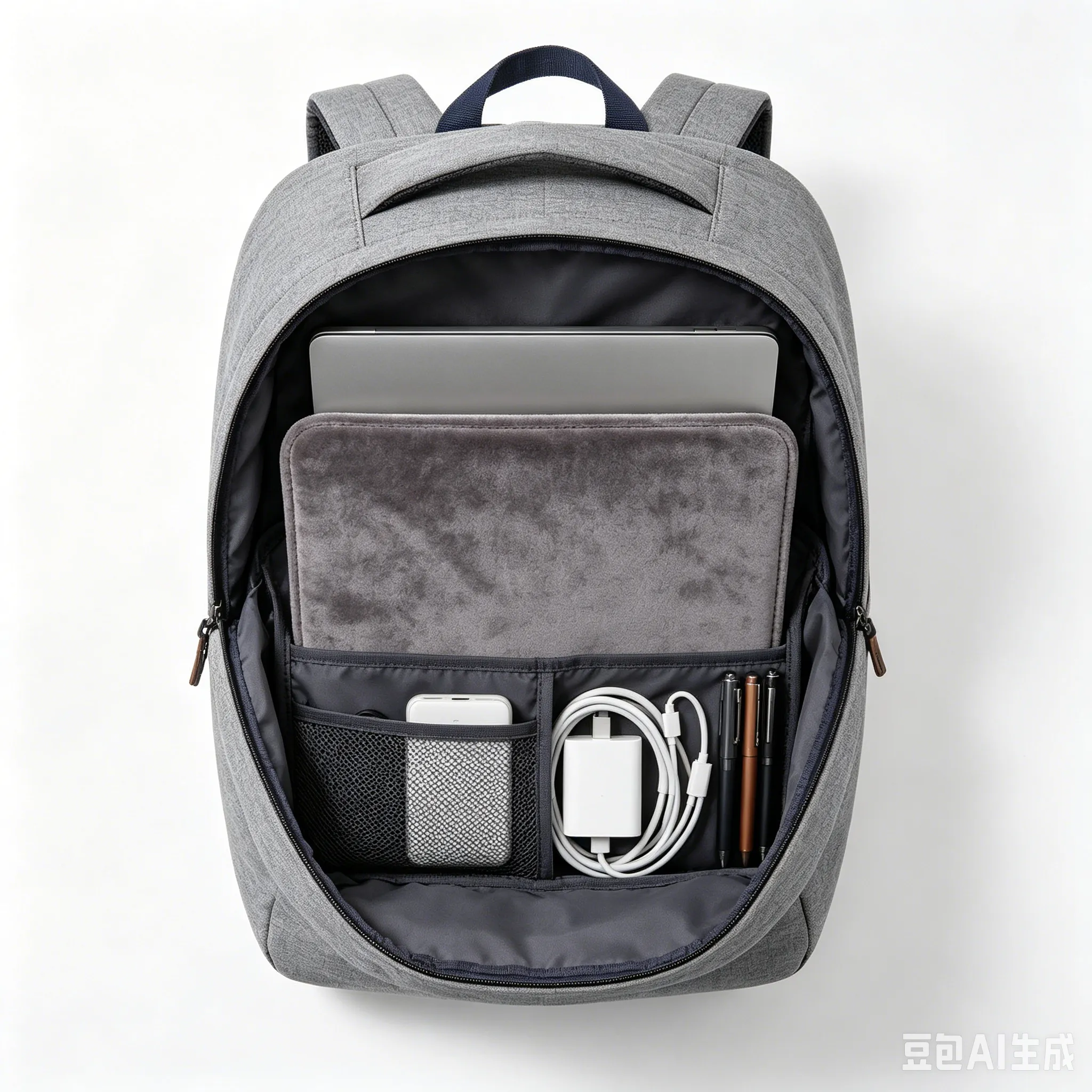
- Inside structure – Compartment layout, pocket placement
What Factories Need to See in Your Drawings
Beyond basic views, your technical drawings should clearly indicate:
- Pocket positions and dimensions
- Zipper directions and types
- Handle placement and attachment method
- Strap structure and width
- Reinforcement areas
- Logo and branding placement
Backpack Measurement Specification Sheet
Precise measurements are the cornerstone of production quality. Inconsistent sizing leads to returns, customer dissatisfaction, and damaged brand reputation.
External Dimensions
| Measurement Point | Specification | Tolerance |
|---|---|---|
| Overall Height | 450mm | ±3mm |
| Overall Width | 320mm | ±3mm |
| Depth | 180mm | ±3mm |
Functional Measurements
| Component | Measurement | Notes |
|---|---|---|
| Shoulder Strap Length | 600-900mm adjustable | Include adjustment range |
| Laptop Compartment | 15″ compatible (380×265×25mm) | Measure interior |
| Main Pocket Volume | 25-30 liters | Specify usable capacity |
| Front Pocket | 200×150mm | Clear opening dimensions |
Choosing Materials in a Backpack Tech Pack
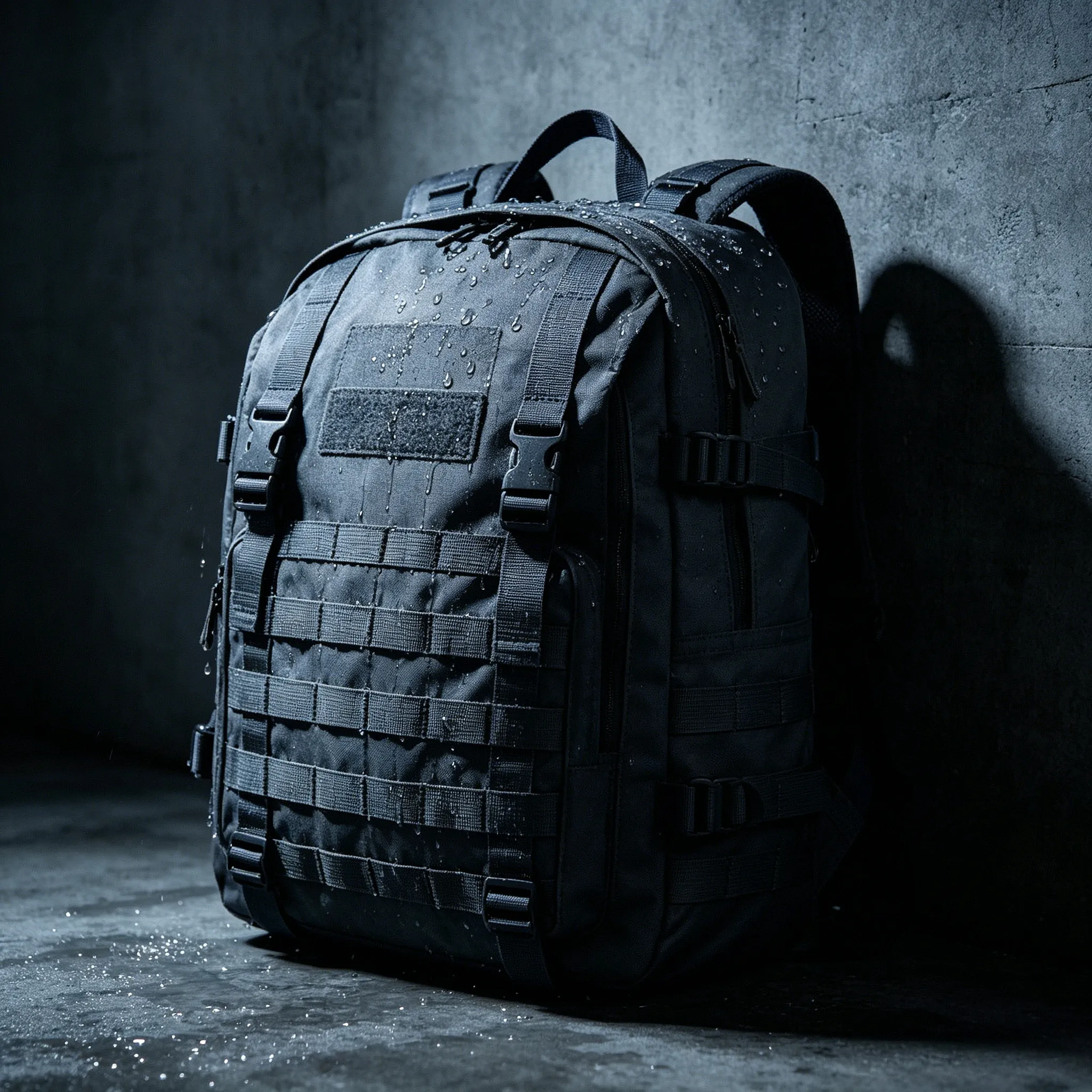
Material selection directly impacts product performance, cost, and market positioning. Your tech pack should specify materials with sufficient detail for factory sourcing.
| Material Type | Common Options | Considerations |
|---|---|---|
| Main Fabric | Polyester 600D, Nylon 420D, Canvas, RPET | Weight (GSM), water resistance, durability |
| Lining | Polyester 190T, Mesh, Recycled polyester | Breathability, moisture resistance |
| Padding | EVA foam, PE board, Mesh foam | Comfort, protection, weight |
| Hardware | YKK zippers, Duraflex buckles, Nylon webbing | Strength, corrosion resistance, aesthetics |
Construction Details: Explaining How the Backpack Should Be Made
Construction details transform your design from concept to manufacturable product. This section requires technical expertise and attention to production realities.
Stitching Requirements
| Area | Stitch Type | Stitch Density | Purpose |
|---|---|---|---|
| Main Seams | Double stitched | 5-6 stitches per 25mm | Strength and durability |
| Reinforcement Points | Triple stitched | 6-7 stitches per 25mm | Heavy load areas |
| Binding | Overlocked | 12-14 stitches per 25mm | Edge finishing |
| Zipper Installation | Straight stitch | 3-4 stitches per 25mm | Secure attachment |
Load Bearing Areas
Critical areas requiring reinforced construction include:
- Shoulder straps – Triple stitching, bartacks at attachment points
- Handle attachment – Metal rivets or reinforced stitching
- Bottom panel – Double-layer construction, corner reinforcement
- Strap-to-body connection – Stress distribution panels
Backpack Hardware Specification Guide
Hardware components significantly impact both functionality and perceived quality. Specify each component with brand, model, and technical requirements.
Zippers
| Position | Type | Size | Puller Style |
|---|---|---|---|
| Main Compartment | YKK #5 reverse coil | 500mm | Custom branded puller |
| Front Pocket | YKK #3 reverse coil | 250mm | Standard puller |
| Side Pocket | YKK #3 nylon coil | 200mm | No puller (stretch pocket) |
Buckles and Closures
- Material: POM plastic or aluminum (specify for outdoor use)
- Strength rating: Minimum 25kg for main straps
- Size: 38mm for chest strap, 25mm for compression straps
Labels and Branding
| Label Type | Placement | Specification |
|---|---|---|
| Woven Label | Inside main compartment | Brand logo, size, material content |
| Rubber Patch | Front panel or strap | Embossed or debossed finish |
| Embroidery | Designated area | Thread count, color specifications |
How to Prepare a Backpack Tech Pack for OEM Factory Quotation
Factory quotations depend heavily on the completeness of your tech pack. Ambiguous specifications lead to inaccurate pricing and unexpected costs.
Information Factories Need for Accurate Quotations:
- Exact product dimensions and volume
- Material specifications with preferred suppliers
- Hardware requirements with brand preferences
- Order quantity and production schedule
- Customization level (OEM/ODM)
- Quality standards and inspection requirements
- Packaging and shipping specifications
.webp)
Without complete specifications, factories may provide estimates that exclude critical components—leading to significant cost overruns during production. Invest time in comprehensive documentation to avoid financial surprises.
Common Mistakes When Creating a Backpack Tech Pack
Avoid These Critical Errors
Missing Measurements
Providing only approximate dimensions leads to samples that don’t fit intended uses. Always specify exact measurements with tolerance ranges for each component.
Choosing Materials Without Specifications
Adequate: “600D Polyester with PVC backing, 250gsm, water resistance ≥1500mm hydrostatic head, EN ISO 811 certification”
No Hardware Details
Leaving hardware specifications vague allows factories to substitute inferior components. Specify brand names, model numbers, and minimum performance requirements.
Overlooking Packaging Requirements
Packaging affects shipping costs, retail presentation, and customer unboxing experience. Include:
- Individual packaging method (polybag, tissue, dust bag)
- Carton dimensions and weight
- Barcode and labeling requirements
- Retail-ready options
Backpack Tech Pack Example: From Design Concept to Factory Sample
Dreamway Factory Case Study: Outdoor Laptop Backpack
“Outdoor laptop backpack, 15-16 inch, water-resistant, under $25 FOB”
Material selection, measurement specs, construction details
First proto sample, fitting assessment
Dimensional check, function test, material verification
Bulk manufacturing, inspection, shipment

Expert Insights From Backpack Manufacturing Team

Emily
Senior Project Manager | 12 Years in OEM Bag Manufacturing
Q: What information helps brands create a factory-ready backpack tech pack?
“The most successful projects start with clear specifications. Brands should provide exact dimensions, target price per unit, intended market positioning, expected order quantity, and quality standards. Even small details like preferred hardware brands or specificPantone colors eliminate costly back-and-forth.”
Kevin
Pattern Development Engineer | 15 Years in Bag Pattern Making
Q: Which tech pack details affect final backpack quality the most?
“Stitching specifications and reinforcement details are critical. I always recommend brands specify stitch density, reinforce load-bearing areas, and define seam construction methods. Material consistency documentation prevents quality variations between production runs. Dimension tolerances must be realistic for the construction method.”
Free Backpack Tech Pack Checklist Before Sending to Factory
Backpack Tech Pack FAQ
What is included in a backpack tech pack?
A complete backpack tech pack includes technical drawings, measurement specifications, material requirements, construction details, hardware specifications, packaging instructions, and quality standards. It serves as the comprehensive blueprint for manufacturing.
Do I need a tech pack to manufacture backpacks?
While it’s technically possible to communicate verbally, a tech pack dramatically reduces errors, revisions, and production delays. Professional manufacturers require detailed specifications for accurate quotations and quality production.
Can a factory create a tech pack for me?
Many OEM factories like Dreamway offer tech pack development services. However, providing your own tech pack ensures your exact vision is communicated. Factory-developed specs may prioritize manufacturing efficiency over specific design intentions.
What software is used to create backpack tech packs?
Common tools include Adobe Illustrator for technical drawings, Excel or Google Sheets for measurement tables, and specialized PLM (Product Lifecycle Management) software for larger operations. The key is clarity and completeness, not the tool used.
How detailed should a backpack tech pack be?
Aim for sufficient detail that any qualified factory can produce your product without additional questions. Include every specification that affects quality, fit, or appearance. When in doubt, add more detail—it costs nothing in documentation but prevents expensive mistakes.
What information does a backpack factory need?
Factories need complete technical specifications: dimensions, materials, hardware, construction methods, quality standards, quantity, timeline, and packaging requirements. Supporting files like design references and color samples accelerate accurate quotation.
- Private Label Backpack Manufacturers | OEM/ODM China Factory
- Custom Travel Bag Manufacturer | OEM/ODM Factory for Travel Bags
- How to Create a Backpack Tech Pack for Manufacturing
- Backpack MOQ Explained: Minimum Order Quantity, Mixed Styles & Cost Strategy
- Custom Backpack Cost Breakdown: Materials, Labor, MOQ & Packaging
- How Long Does It Take to Manufacture a Backpack? Timeline Guide
- How to Create a Backpack Tech Pack for Manufacturing (Free Template)
- The Complete Backpack Quality Inspection Checklist for Buyers
- Inside a Backpack Factory: Complete Backpack Manufacturing Process Step by Step
- Backpack Materials Guide: Polyester, Nylon, Canvas, RPET, Foam & Hardware Explained
- OEM Backpack Manufacturer: Private Label, ODM & Custom Branding Guide
- Backpack Factory China: OEM Manufacturing, MOQ, Production Capacity & Export Guide
- Low MOQ Backpack Manufacturer
- How to Customize Backpack: Ingenious Interior Partition Design
- How to Customize Backpack: Adding Advanced Functions
- How to Customize Backpack for Travel
- How to Customize Backpack for Outdoor Adventures
- How to Customize Backpack
DREAMWAY
Custom Bag & Silk Manufacturer · Shiling, Guangzhou
Company
Products
Guides & Insights
Ready to Bring Your Bag Idea to Life? Let’s Talk Today.
From your first sketch to bulk delivery, our team replies within 12 hours with expert advice and a free quote. No pressure — just honest manufacturing guidance.

Prefer a call? +86-020-87682749 · Mon–Sat, 9:00–18:00 (GMT+8)
Backpack Manufacturing Guides
How to Customize a Backpack
Customizing a backpack begins with fabric weight (typically 400D–1200D nylon or polyester), hardware selection (YKK zippers, Duraflex buckles), and compartment layout (6–8 functional zones). From adjustable sternum straps and custom zipper pulls to embossed logos and reinforced grab handles, each of the 8–12 detail points shapes both user experience and brand identity across every carrying occasion.
how to customize a backpack — fabric, hardware, and compartment guideHow to Customize a Backpack for Outdoor Adventures
Hiking, climbing, and expedition packs require 1.5–3 kg load-rated construction. Reinforced 1000D+ Cordura bottom panels, YKK AquaGuard weatherproof zippers (5,000 mm hydrostatic head), hydration sleeves (2–3 L), and load-bearing hip belts (15–30 kg capacity) transform a standard pack into gear capable of traversing mountains, forests, and unpredictable terrain with confidence.
how to customize a backpack for outdoor adventures — rugged construction guideHow to Customize a Backpack for Travel
Frequent flyers prioritize 30–45 L carry-on capacity and TSA-compliant organization. Built-in 17-inch TSA-approved laptop sleeves, concealed anti-theft RFID-blocking pockets, luggage pass-through straps, and quick-access top compartments make travel smoother, safer, and considerably more convenient across long international journeys of 8–24 hours.
how to customize a backpack for travel — TSA, anti-theft, and packingAdvanced Backpack Customization Upgrades
Modern packs benefit from 5–8 modular add-ons that extend capability: detachable camera cubes, integrated 10–20 W solar panels, roll-top expanders (5–10 L), MOLLE (Modular Lightweight Load-carrying Equipment) webbing, and ergonomic airflow back panels. These innovations take a backpack’s utility well beyond traditional daily commuting and casual outings.
how to customize a backpack — advanced features and modular add-onsBackpack Interior Partition Design
Thoughtful internal organization uses 4–6 adjustable partitions to prevent gear chaos on every trip. Padded 15–17 inch laptop sleeves, removable dividers (3–5), dedicated shoe compartments, mesh organizer panels (3–5 pockets), and reinforced water-bottle holders transform ordinary carrying space into meticulously planned, accessible storage zones for daily commuters.
backpack interior partition design and layout ideasLow MOQ Backpack Manufacturer
Emerging brands need flexible production partners to scale gradually. BSCI- and Sedex-audited suppliers offering 50–200-unit MOQ (minimum order quantity) help startups, crowdfunding creators, and niche retailers launch within 30–60 days without massive capital commitments while maintaining consistent ISO 9001 quality, custom branding, and reliable delivery schedules.
low MOQ backpack manufacturer — 50 to 200 unit minimumsBackpack Factory in China
Chinese OEM (Original Equipment Manufacturer) factories combine 50,000–200,000-unit monthly capacity with competitive pricing, exporting 3+ million units annually to 90+ countries. Understanding production capacity, MOQ tiers (typically 100–500 units), 7–15 day sample development, AQL-based QC, and export documentation streamlines sourcing decisions for international wholesale buyers.
backpack factory in China — capacity, MOQ, and export guideOEM Backpack Manufacturer and Private Label Services
From logo embroidery and woven labels to fully bespoke ODM (Original Design Manufacturer) projects, manufacturers support brand development across 5–7 customization areas. Custom hardware colorways, exclusive pattern prints, and proprietary silhouette development distinguish premium private-label collections in crowded retail markets within 30–60 day production timelines.
OEM and ODM backpack manufacturer — private label solutionsBackpack Manufacturing Process
Production flows through 7–9 sequential stages: pattern cutting, fabric printing, panel stitching, strap assembly, hardware attachment, final QC, and packaging. Each stage requires precision, trained operators, and consistent ISO 9001 oversight to deliver durable, market-ready finished products within the standard 30–60 day bulk-production schedule.
backpack manufacturing process — 7 production stages explainedBackpack Materials and Hardware Guide
Polyester (600D–1200D, 200–400 GSM) offers affordability; nylon (420D–1000D Cordura) delivers strength-to-weight balance; canvas (10–16 oz) provides heritage appeal; RPET (recycled polyethylene terephthalate, 300D–600D) supports sustainability goals. YKK zippers (size 5–10), Duraflex buckles, and foam density (3–6 mm) each influence durability, comfort, price positioning, and end-user satisfaction.
backpack materials and hardware guide — denier, GSM, and zipper specsBackpack Tech Pack Guide (with Free Template)
A complete tech pack includes 9–12 sections: flat sketches, 12–25 measurements, material callouts (denier, GSM), Pantone color specifications, hardware lists, and construction notes. The free downloadable 12–25 page template streamlines designer–factory communication, cutting sample revision cycles from 4 rounds down to 1–2 rounds during sampling and bulk production.
backpack tech pack guide with free downloadable templateBackpack Quality Control Checklist
Inspection follows AQL (Acceptable Quality Level) 2.5 / 4.0 sampling per ISO 2859-1, covering stitch density (8–12 SPI), seam strength, zipper cycling (500+ cycles), colorfastness (AATCC 61), strap load testing (15–30 kg), and hardware integrity. This 6-stage check helps buyers identify defects before shipment leaves the factory floor.
backpack quality control checklist — AQL sampling and defect standardsBackpack Manufacturing Lead Time
Sampling typically requires 7–15 days, bulk production 30–60 days, plus 2–5 day QC and 21–35 day ocean freight to most major markets. The total 60–115 day timeline supports seasonal launches, holiday sales (Q4), and trade show debuts while avoiding costly expedited shipping premiums of 30–50%.
backpack manufacturing lead time — sampling, production, and shippingCustom Backpack Cost Breakdown
Total production cost breaks into raw materials (55–70%), labor (15–25%), hardware (8–15%), packaging (2–5%), logo application (1–3%), and factory overhead (5–10%). Transparent itemized quotations help buyers benchmark against industry averages of $8–$25 per unit FOB China, budget accurately, and forecast expenses for new private-label collections.
custom backpack cost breakdown — material, labor, and overheadBackpack MOQ Strategy Guide
MOQ (minimum order quantity) typically ranges from 100–500 units per style-color, balancing factory setup costs ($500–$2,000) against buyer flexibility. Mixed-style orders (3–5 SKUs), color grouping (5–8 Pantones), and progressive replenishment strategies help smaller brands access competitive pricing while managing inventory exposure across multiple retail channels and seasonal cycles.
backpack MOQ strategy — minimum order quantity planningBackpack Tech Pack Specifications for Production
Detailed tech packs specify 8–10 stitch types (SPI 8–12), 5–7 seam allowances (10–15 mm), bar-tack placements at 6–10 stress points, panel dimensions (within ±2 mm tolerance), and thread specifications (Tex 30–90). Comprehensive documentation reduces revision cycles by ~60% and accelerates sample approval from 4 rounds down to 1–2 rounds.
backpack tech pack specifications — stitch, seam, and tolerance standardsCustom Travel Bag Manufacturer
Specialized factories produce 4 core product categories—rolling luggage, weekenders, duffels, and convertible backpacks—in 6–8 sizes (20–30 inch) with reinforced handles, smooth-glide wheels, and expandable compartments (5–10 L). OEM and ODM services adapt proven travel silhouettes to match each brand’s positioning within 45–75 day production cycles.
custom travel bag manufacturer — OEM factory and capabilitiesPrivate Label Backpack Manufacturers
Building a backpack brand requires 5–7 partnership service areas: market intelligence, material sourcing, packaging guidance, and scalable 30–90 day end-to-end production. Manufacturing partners who have supported 50+ private-label brand launches transform founder concepts into commercially viable, retail-ready collections with 100–500 unit MOQs.
private label backpack manufacturers — partnership and brand launchWholesale Nylon Backpacks
Built from 420D–1000D Cordura-grade nylon with reinforced 600D–1200D base panels, our wholesale nylon backpacks deliver lightweight strength (~0.8–1.6 kg empty) with daily and outdoor durability. Ballistic weave and ripstop options, paired with YKK reverse-coil zippers, support 50–500 unit MOQ per style-color, full OEM logo application, and 30–60 day bulk production. As a direct-factory nylon backpack supplier serving 30+ private-label brands across 12+ countries, we offer customization, AATCC 61 grade 4+ colorfastness testing, and competitive FOB pricing from $7–$22 per unit.
wholesale nylon backpacks — direct factory supplier and customizationCustom Outdoor Brand Bag Manufacturer
Outdoor brands building hiking, climbing, and expedition collections need a manufacturing partner who understands load-rated performance. As a custom outdoor brand bag manufacturer, we deliver 1000D+ Cordura body fabric, 15–30 kg load-tested hip belts, YKK AquaGuard zippers (5,000 mm hydrostatic head), and BSCI-audited production across 30–60 day timelines. From 100-unit startup runs to 50,000-unit seasonal collections, our OEM and ODM services help outdoor brands launch technical, retail-ready packs backed by ISO 9001 quality, 90+ country export experience, and 50+ private-label launches completed.
custom outdoor brand bag manufacturer — partnership and OEM servicesCustom Travel Brand Bag Manufacturer
Travel brands serving frequent flyers, business commuters, and weekend explorers need a manufacturer fluent in carry-on compliance and modern convenience features. As a custom travel brand bag manufacturer, we produce 20–45 L carry-on backpacks, rolling luggage, weekenders, and convertible duffels with 17-inch TSA-approved laptop sleeves, RFID-blocking pockets, and reinforced wheel housings. Our OEM services support 100–500 unit MOQs, 6 Pantone color matching, and 30–60 day production cycles, helping 40+ travel brands launch polished, retail-ready collections with reliable factory-direct communication and BSCI-audited quality control.
custom travel brand bag manufacturer — partnership and OEM services