
Manufacturing Intelligence · Dreamway
Tote Bag Manufacturing Process: 8 Steps Inside a Professional Factory (Fabric Cutting to Final Packing)
A practical, factory-level guide to how custom tote bags are manufactured, inspected, packed, and prepared for export—from the first fabric roll to the finished carton.
For a buyer, a tote bag is a simple object. For a professional manufacturer, it is a chain of controlled decisions: material selection, pattern accuracy, logo placement, stitch strength, inspection, packaging, and shipment planning. Understanding the tote bag manufacturing process helps brands turn a creative idea into a repeatable product while reducing quality, cost, and delivery risks.
This guide is written for importers, retailers, corporate-gifting teams, designers, and brand owners planning a bulk order. It explains the tote bag manufacturing process in plain language, with particular attention to the checkpoints that matter before a bulk order is released.
Quick Overview: How Tote Bags Are Manufactured
The exact workflow changes with the bag design, material, decoration, and compliance requirements. A typical tote bag factory process follows this sequence:
In practice, some operations overlap. For example, accessories may be inspected while fabric panels are being cut, and printing may happen before or after certain seams depending on access and artwork requirements. The important point is that each operation has a defined specification and an accountable checkpoint in the tote bag manufacturing process.
Step 1 — Material Selection in Tote Bag Manufacturing
Materials determine the hand feel, visual character, durability, print performance, and cost of a custom tote bag. The right material is not necessarily the heaviest or most expensive one; it is the one that fits the intended use and the buyer’s target price.
| Material | Typical strengths | Buyer considerations |
|---|---|---|
| Canvas | Structured, durable, premium-feeling | Confirm GSM, weave, shrinkage, and print compatibility. |
| Cotton | Soft, versatile, suitable for everyday totes | Lower-weight fabric can need reinforcement at handles and seams. |
| Recycled Cotton | Useful for sustainability-led collections | Shade variation and fiber texture should be approved in advance. |
| RPET | Recycled polyester option with consistent performance | Ask for the required recycled-content documentation when needed. |
| Polyester | Stable, lightweight, and adaptable to many applications | Printing, coating, and heat resistance must match the artwork. |
| PU | Smooth, leather-like appearance | Check coating, hydrolysis expectations, odor, and edge treatment. |
For canvas tote bag manufacturing, fabric weight is only one part of the specification. Construction, handle length, seam allowance, thread selection, and reinforcement often have a greater effect on the user’s perception of quality than a small change in GSM.
Step 2 — Fabric Inspection in Tote Bag Manufacturing
Fabric inspection prevents a problem from being multiplied across hundreds or thousands of bags. Before cutting, the team checks the received roll against the approved standard and records issues that may affect yield or appearance.
- Fabric GSM: verifies weight against the approved specification.
- Usable width: confirms the cutting plan will achieve the expected yield.
- Color consistency: compares rolls and lots under suitable lighting.
- Shrinkage: evaluates dimensional change after the required test or wash condition.
- Surface defects: identifies slubs, holes, stains, weaving faults, and coating marks.
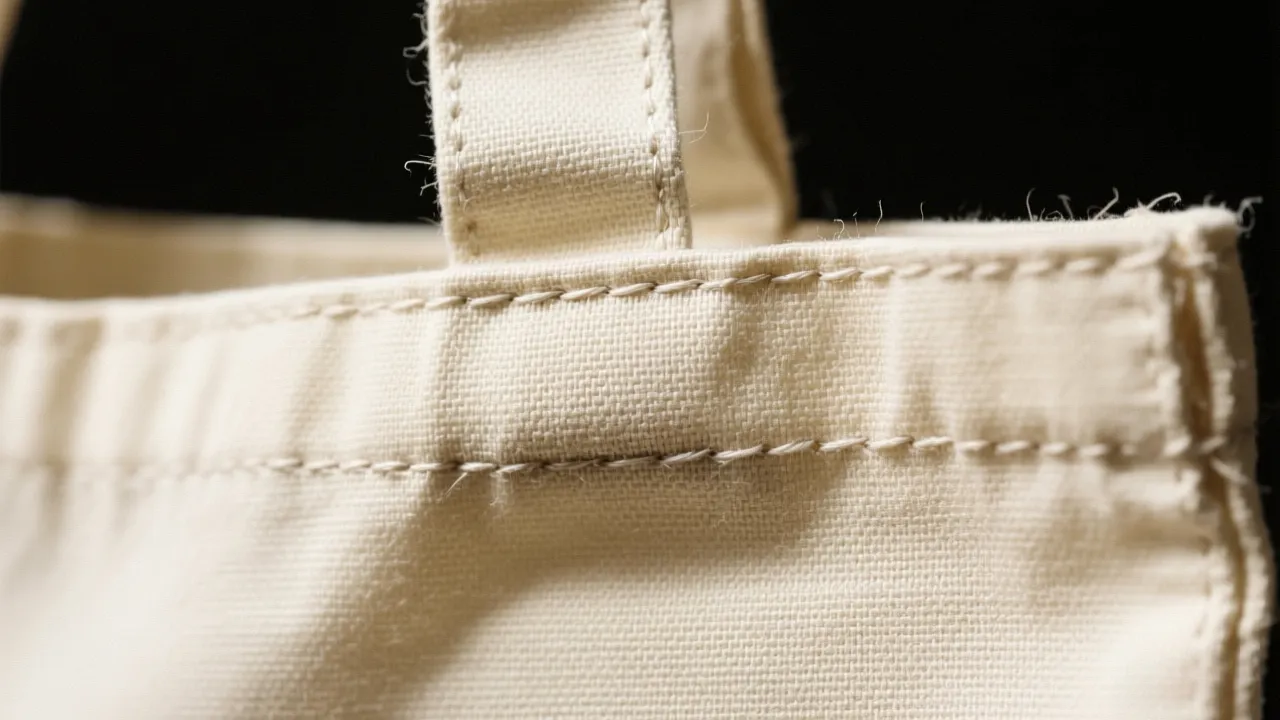
How Our QC Engineer Inspects Fabric Before Production
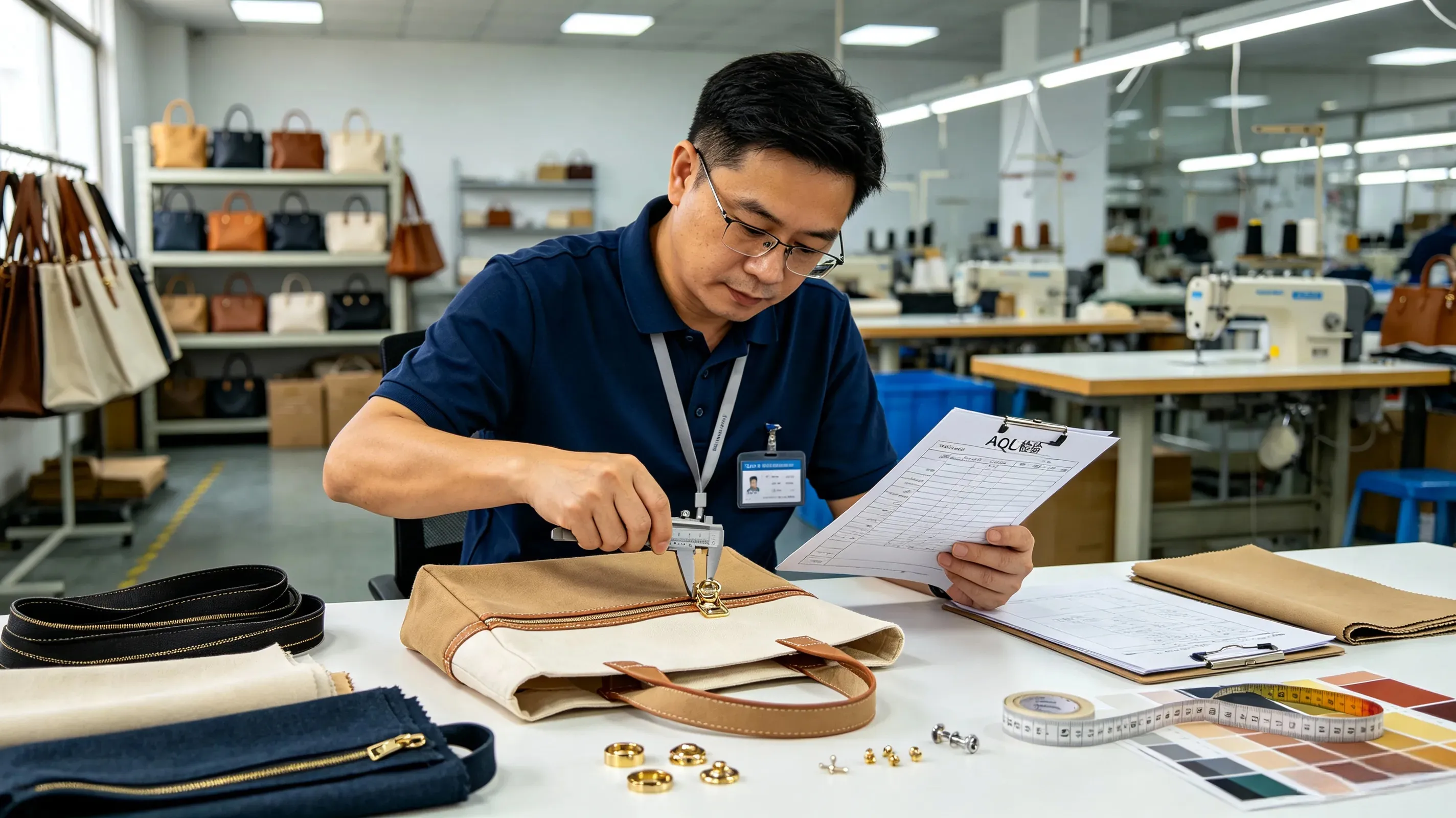
Kevin · QC & Sampling Engineer
Pattern Development Engineer with 15 years of experience across leather, canvas, nylon, and technical fabrics. Kevin focuses on fabric inspection, color matching, defect checking, and the practical relationship between material behavior and pattern accuracy.
For a new project, the most useful buyer documents are the approved fabric swatch, color reference, GSM or thickness requirement, and any test protocol. These references give the factory a shared definition of “acceptable” before production pressure begins.
Step 3 — Precision Cutting in Tote Bag Manufacturing
Once the material is approved, the factory converts the digital or paper pattern into accurately cut panels. This is the core of the precision cutting in tote bag manufacturing and one of the most important stages in bag production process control.
- Manual cutting: flexible for small runs, prototypes, and unusual materials.
- Automatic cutting: improves repeatability and efficiency for stable, larger-volume programs.
- Laser cutting: can be considered for selected technical fabrics and edge requirements, subject to material testing.
A small error in a body panel can create uneven side seams, a misaligned opening, distorted logo placement, or a handle that does not meet the approved position. Cutting plans therefore consider grain direction, pattern nesting, shade grouping, and the direction of visible fabric texture.
Step 4 — Printing Methods for Custom Tote Bags
Decoration should be selected with the artwork, fabric, order quantity, durability expectation, and budget in mind. The tote bag printing process is not a single universal method.
| Method | Best suited to | Key trade-off |
|---|---|---|
| Screen printing | Strong, simple artwork and repeat production | Excellent for solid colors; setup is less efficient for complex low-volume artwork. |
| Digital printing | Detailed artwork, gradients, and shorter runs | Color and saturation depend on fabric surface and pretreatment. |
| DTG | Selected cotton applications and detailed graphics | Requires testing for hand feel, wash performance, and fabric compatibility. |
| Heat transfer | Names, small quantities, and controlled graphics | Temperature and pressure must be managed to prevent distortion. |
| Embroidery | Premium logos, uniforms, and textured branding | Very fine details may need simplification; backing and stitch density matter. |
| Foil | Luxury accents and metallic visual effects | Needs a suitable surface and careful testing for adhesion and abrasion. |
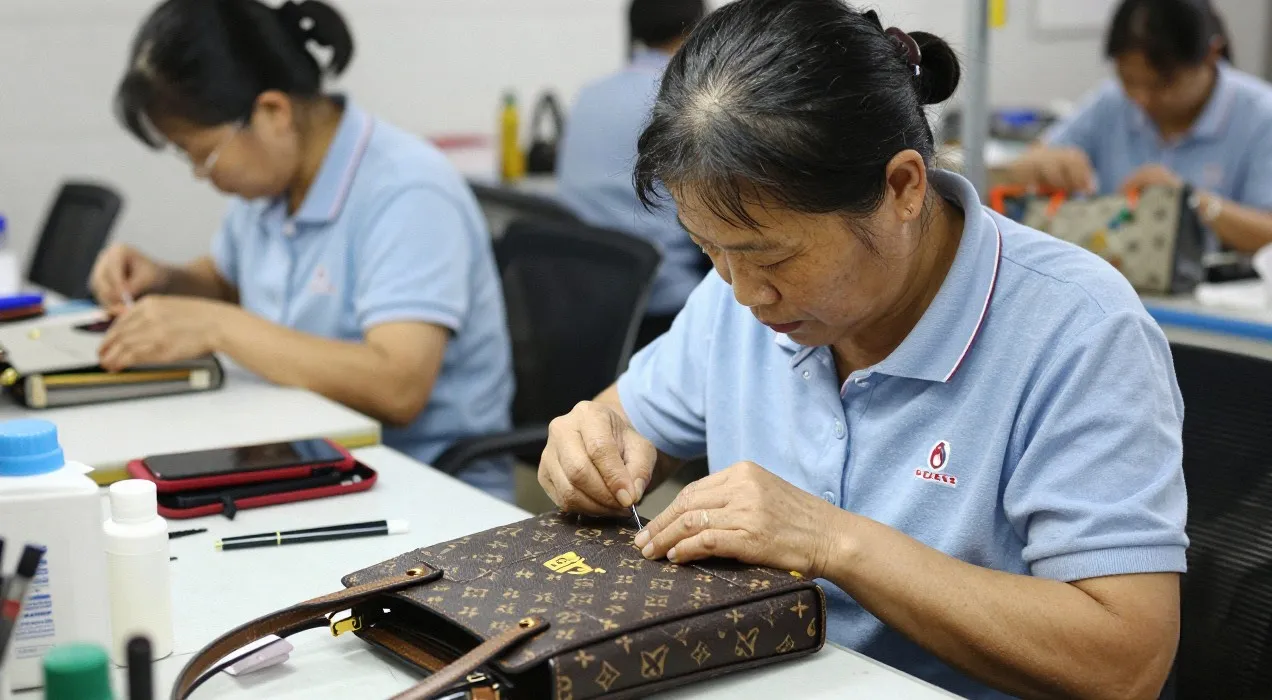
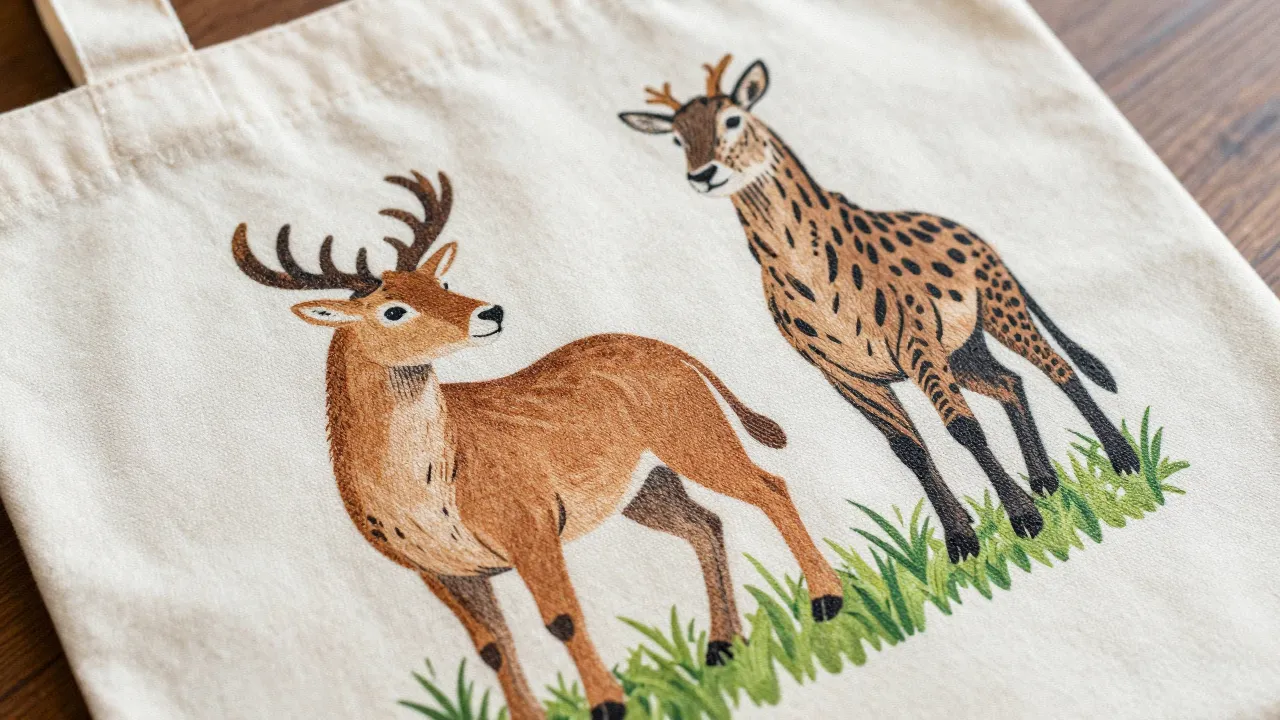
Before bulk production, approve a physical decorated sample. A digital proof cannot fully show ink absorption, embroidery height, foil reflectivity, or the way a logo sits on a seam or fold.
Step 5 — Sewing and Assembly in Tote Bag Manufacturing
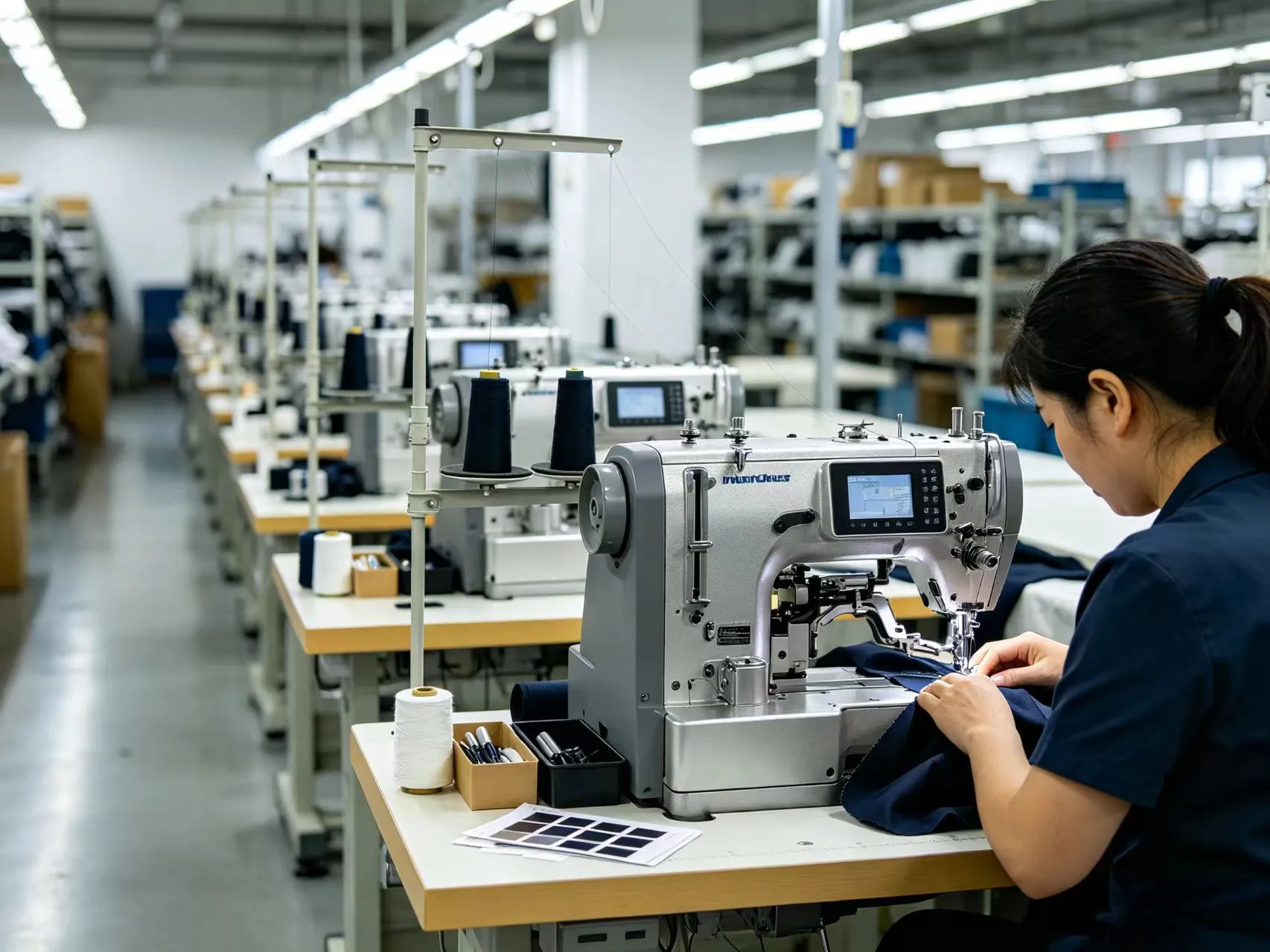
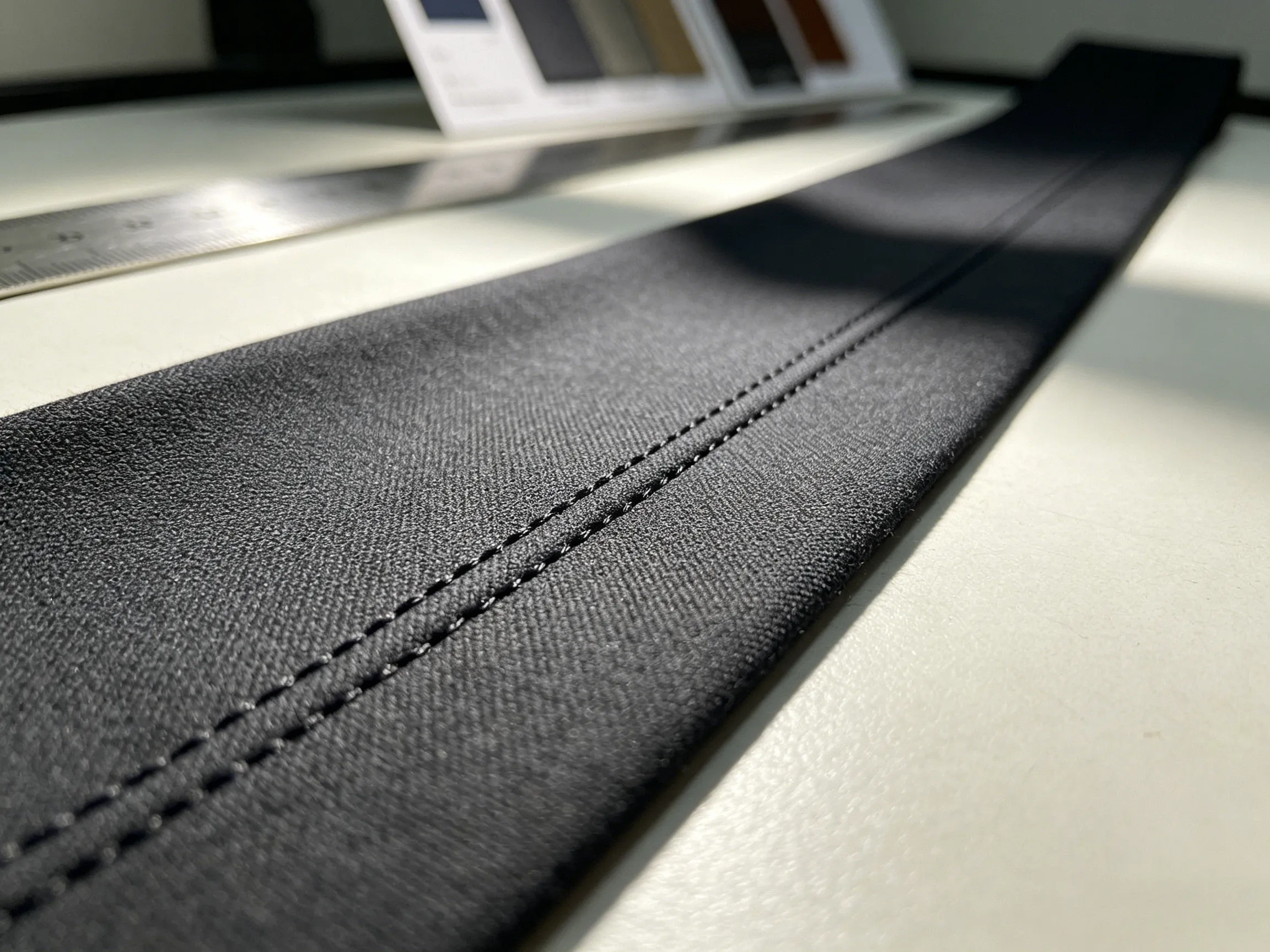
Sewing turns flat components into a functional bag. A professional tote bag sewing process normally includes side seams, the top opening, bottom construction, handle attachment, and any pocket, lining, closure, or label operations.
- Prepare components: pair panels, handles, labels, reinforcements, and accessories according to the approved bill of materials.
- Join the body: sew side seams and bottom seams with the specified seam allowance and alignment.
- Finish exposed edges: use turning, binding, folding, or another approved finish.
- Attach handles: set handle length and position, then apply the required reinforcement.
- Press and shape: remove unwanted wrinkles and confirm the bag holds its intended form.
Common Stitch Types Used by Professional Tote Bag Factories
| Stitch | Typical role | What to inspect |
|---|---|---|
| Lock stitch | General seams and clean construction | Even tension, no skipped stitches, secure back-tacking. |
| Double stitch | Higher-stress seams and visible reinforcement | Parallel lines, consistent spacing, no puckering. |
| Box-X stitch | Handle anchors and load-bearing points | Complete box shape, dense but not damaged fabric. |
| Binding or overlock | Edge protection and neat internal finishing | Full coverage, clean corners, no loose thread tails. |
Step 6 — Quality Control in Tote Bag Manufacturing
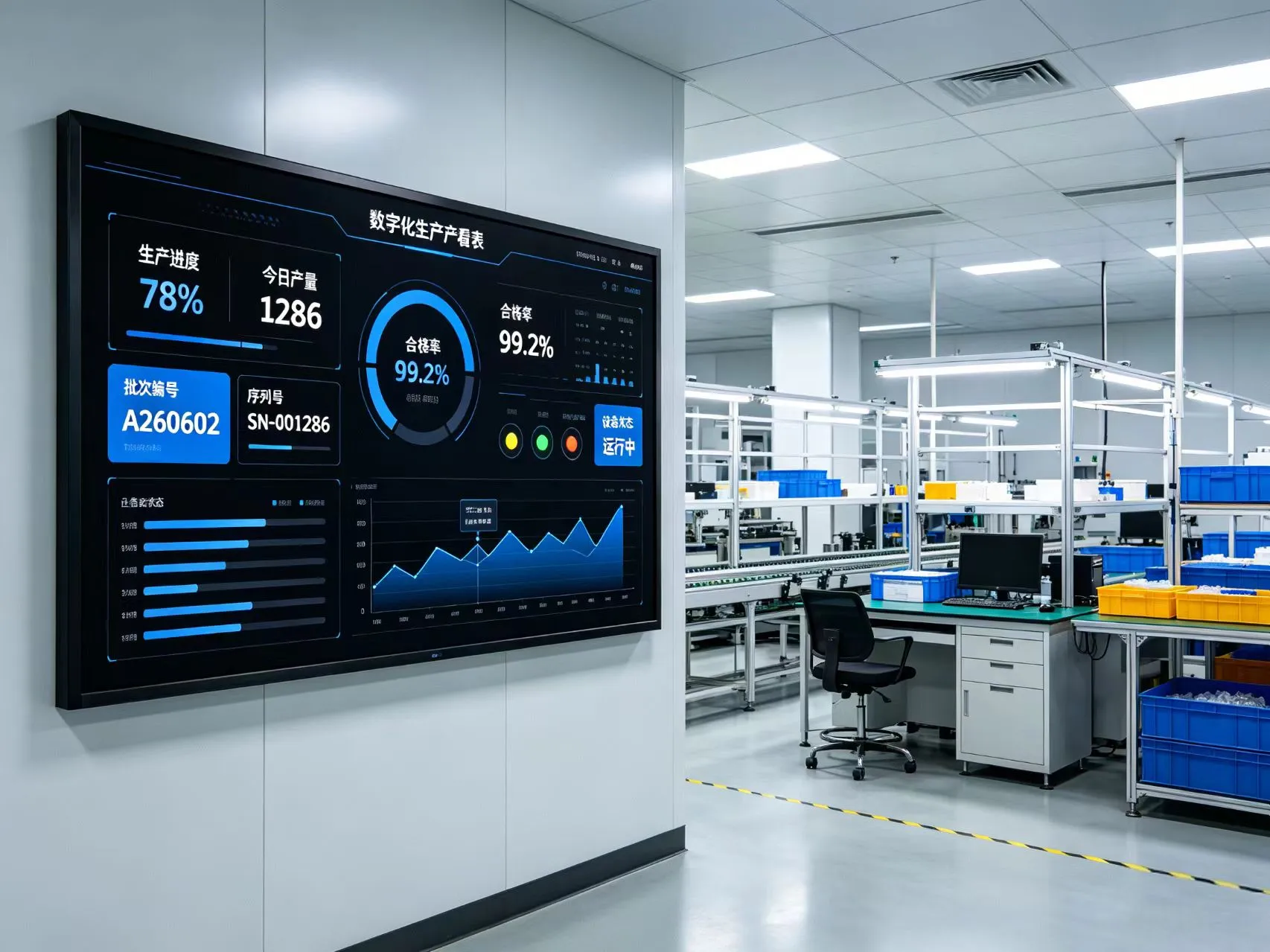
Tote bag quality control works best as a system rather than a single inspection at the end. Inline QC identifies problems close to their source; final QC confirms that finished goods meet the approved standard before packing.
| Checkpoint | Typical checks | Why it matters |
|---|---|---|
| Material receiving | GSM, width, shade, defects, quantity | Stops incorrect inputs from entering the line. |
| Cutting | Panel dimensions, orientation, notches | Prevents alignment and assembly problems. |
| Printing | Position, color, adhesion, artwork version | Protects brand consistency. |
| Inline sewing | Seams, stitch density, handle attachment, measurements | Allows immediate correction and reduces rework. |
| Final inspection | Appearance, dimensions, function, packing, sampling level | Provides the final release decision. |
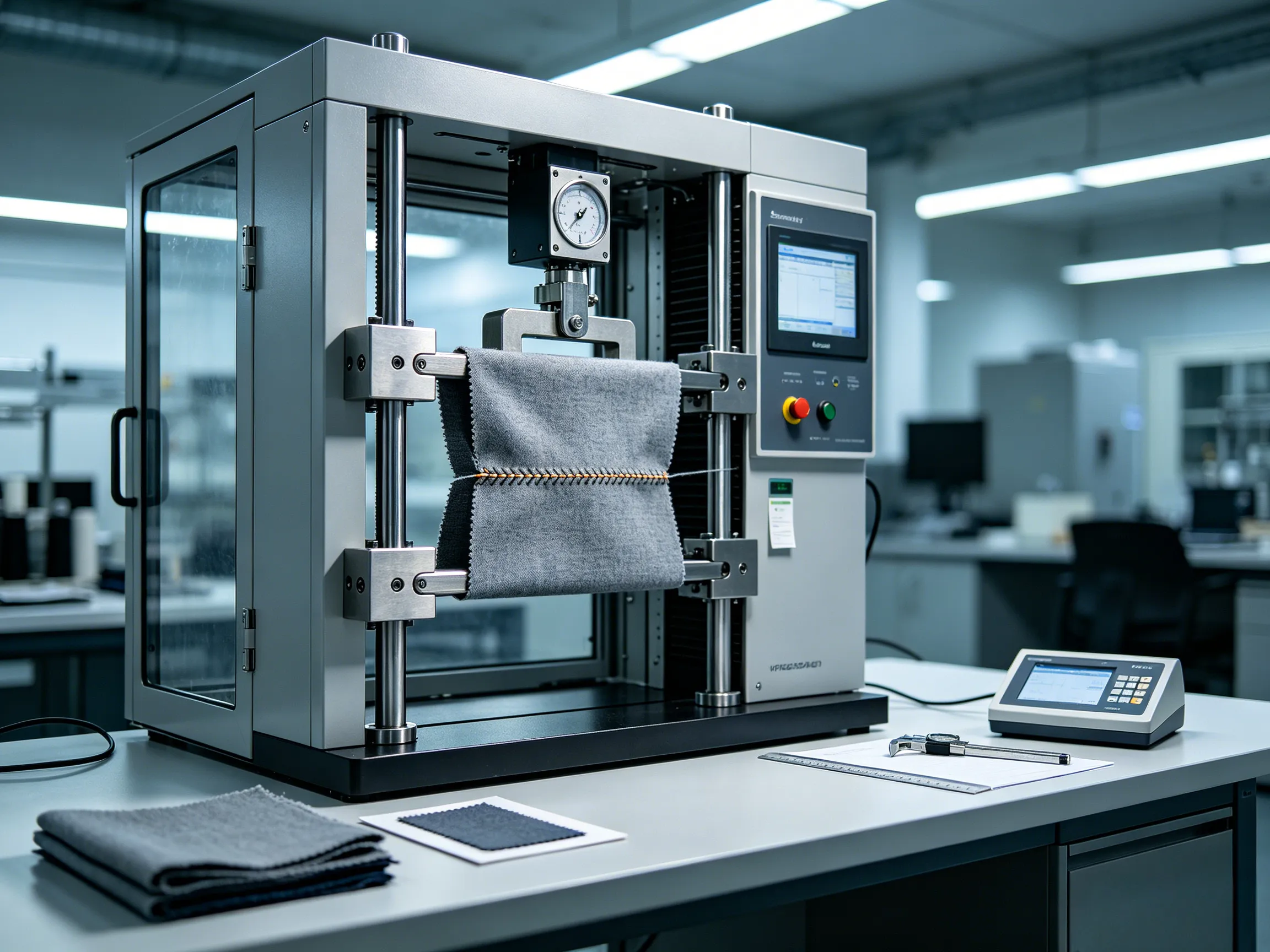
Depending on the order and customer agreement, a final inspection may use an AQL sampling plan. AQL is a statistical sampling framework, not a promise that every unit is identical. The applicable inspection level, critical defects, major defects, minor defects, tolerances, and testing method should be agreed before production.
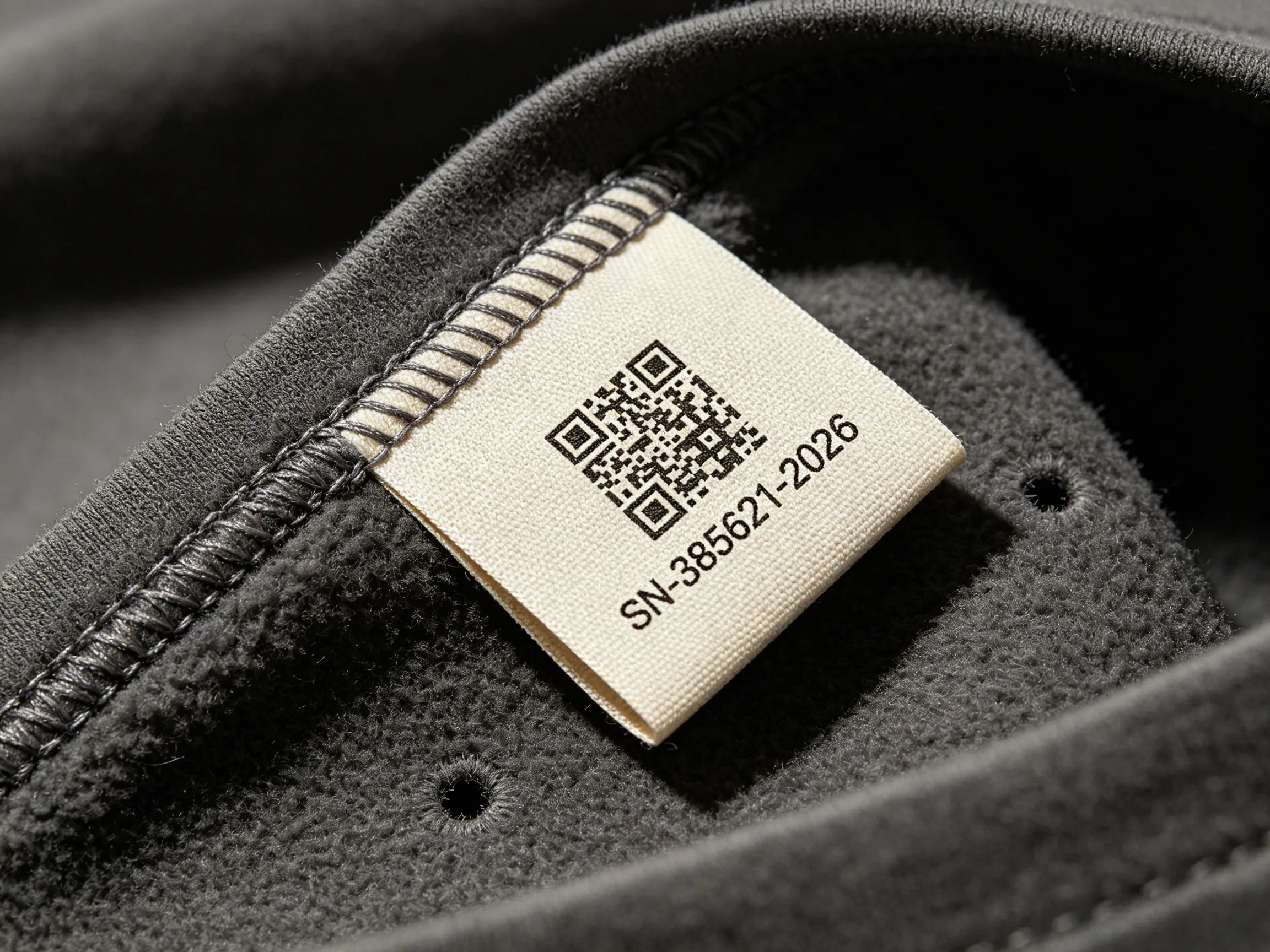
How Our Quality Engineer Performs Final Inspection
Kevin · Quality Control & Sampling
Kevin coordinates fabric inspection, inline QC, final inspection, AQL-related checks, and sample verification. His role is to compare the finished product with the approved reference—not to redefine the reference after production.
A buyer can make this process more effective by supplying a clear measurement chart, approved artwork, defect photos, packaging instructions, and a written tolerance. If a third-party inspection is required, schedule it early enough to allow corrective action before the shipping deadline.
Step 7 — Packing and Export Preparation in Tote Bag Manufacturing
The tote bag packing process protects the product and communicates essential logistics information. Packing should be specified as part of the product, not treated as an afterthought.
- Poly bag or alternative protective pack: confirm size, warning text, recyclability requirements, and whether individual packing is needed.
- Carton: define carton dimensions, material strength, quantity per carton, and gross/net weight limits.
- Barcode and labels: approve barcode format, SKU, color, size, quantity, and destination information.
- Shipping marks: confirm marks, carton numbering, handling symbols, and consignee details.
- Pallet or container loading: plan weight distribution, carton protection, moisture control, and loading sequence.
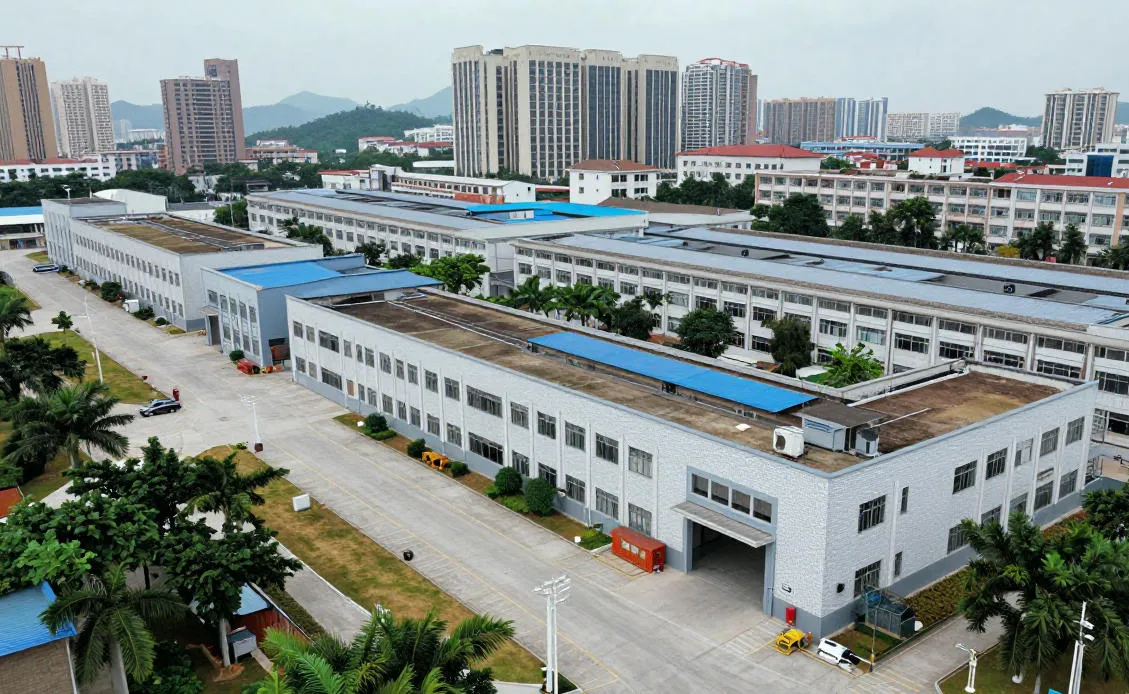
Typical Tote Bag Production Timeline
Production lead time depends on quantity, material availability, artwork complexity, sample revisions, seasonal capacity, and inspection requirements. The following is a planning framework rather than a guaranteed schedule.
| Stage | Planning focus | What can delay it |
|---|---|---|
| Sampling | Confirm design, measurements, construction, and decoration | Multiple revisions or incomplete specifications. |
| Material purchase | Reserve approved fabric, trims, thread, and packaging | Custom colors, special materials, or supplier capacity. |
| Printing / decoration | Match approved artwork and sample appearance | Color adjustments, setup, or artwork changes. |
| Sewing | Build the planned quantity with inline control | Complex construction, rework, or component shortages. |
| Inspection | Complete internal or third-party release checks | Failed inspection or late inspection booking. |
| Packing and shipping | Cartonize, label, load, and hand over to logistics | Packaging changes, booking availability, or documentation. |
Ask for a milestone schedule rather than one broad promise. It is easier to manage “sample approval,” “material arrival,” “first inline update,” “final inspection,” and “ready-to-ship” than a single date with no visible checkpoints.
Common Production Problems and How Tote Bag Manufacturers Prevent Them
| Potential problem | Likely cause | Prevention |
|---|---|---|
| Logo shift | Unclear placement or unstable handling | Use a placement template and approve a decorated PPS sample. |
| Wrong fabric | Similar materials or poor lot identification | Keep an approved swatch and verify receiving records. |
| Broken stitching | Incorrect tension, needle, thread, or reinforcement | Check machine settings, stitch density, and stress points. |
| Wrong size | Pattern version error or seam allowance variation | Control revisions and measure first pieces from each batch. |
| Color difference | Different dye lots or inconsistent lighting | Approve shade standards and group production by lot. |
| Needle damage | Unsuitable needle, speed, or material handling | Test needle choice and inspect for holes, runs, and skipped stitches. |
OEM vs ODM Tote Bag Manufacturing Workflow
OEM tote bag manufacturing usually starts with the buyer’s own design, specification, artwork, and branding. The factory’s responsibility is to translate those inputs into a manufacturable product and execute them consistently.
ODM starts from a factory design, existing construction, or adaptable product platform. The buyer may customize material, color, logo, dimensions, or packaging. It can shorten development time, but the buyer should still verify ownership, exclusivity, and any design limitations.
Private label generally means selling a product under the buyer’s brand. It may use an OEM design, an ODM base, or a fully customized construction. In all three models, the commercial essentials remain the same: clear specifications, approved samples, documented changes, and measurable acceptance criteria.
How Buyers Can Monitor Tote Bag Manufacturing Production
Responsible monitoring does not require a buyer to stand beside every sewing machine. It requires timely evidence at the right moments.
- Sample approval: confirm the design, fabric, decoration, dimensions, and construction.
- Pre-production sample: approve the version made with intended bulk materials and methods.
- Inline inspection: request production updates, photos, measurements, and any corrective-action records.
- Final inspection: verify finished goods against the agreed inspection standard before shipment.
- Third-party inspection: coordinate an independent inspection when the order value, destination, or internal policy justifies it.

Emily · Senior Project Manager
Emily has 12 years of experience in OEM bag manufacturing and manages 15–25 active projects simultaneously. She helps overseas buyers coordinate PPS approval, production timelines, progress updates, and inspection arrangements.
The strongest communication is specific: “Please confirm the first inline check by Friday and include handle length, logo position, and carton packing photos.” This creates a useful record for both buyer and factory.
Questions to Ask a Tote Bag Manufacturer Before Production
- How do you inspect fabric before cutting?
- Can I approve a PPS sample made with bulk materials?
- How do you control color consistency between fabric lots?
- What documents or photos are included in production updates?
- What AQL standard, inspection level, and defect definitions will apply?
- How are logo position, dimensions, and stitch quality measured?
- What is the estimated production lead time after sample approval?
- How will individual bags, cartons, barcodes, and shipping marks be packed?
- What happens if an inspection identifies a major quality issue?
- What is the factory’s MOQ for handbags or tote bags?
Disclaimer
Frequently Asked Questions
How are tote bags manufactured?
Tote bags are typically manufactured by inspecting fabric, cutting panels, applying decoration, sewing the body and handles, completing inline and final inspections, then packing the approved goods for shipment.
How long does tote bag production take?
Lead time varies with quantity, material availability, sampling, decoration, construction complexity, inspection, and shipping. A milestone schedule is more reliable than a single generic number.
What affects production quality most?
Clear specifications, approved materials, pattern accuracy, decoration testing, reinforcement at stress points, operator skill, and continuous quality control all affect the finished result.
What inspection methods are used?
Factories may use material receiving checks, first-piece checks, inline inspections, final random inspection, measurement checks, functional tests, and AQL sampling when agreed with the buyer.
Can buyers inspect production?
Yes. Buyers may arrange factory visits, remote production updates, independent third-party inspection, or a combination depending on the project and supplier agreement.
Which printing method lasts longest?
Durability depends on the method, fabric, artwork, pretreatment, curing, and use conditions. A physical wash or abrasion test on the actual fabric is more meaningful than choosing a method by name alone.
How are tote bags packed?
Common options include individual protective bags, cartons, barcodes, shipping marks, pallets, and container loading. The correct method depends on the product, destination, retail requirements, and sustainability policy.
What is the typical MOQ for custom tote bags?
MOQ is factory- and product-specific. Dreamway generally lists a handbag MOQ of 200 units, while the final MOQ may change with material, artwork, colors, construction, and packaging.
Which production stage affects cost most?
Material choice, quantity, construction complexity, decoration, custom hardware, packaging, and development requirements can all affect cost. A complete quotation should be based on the same approved specification.
What certifications should a factory have?
The right certifications depend on the buyer’s market and product claims. Ask for current, verifiable documents relevant to the material, social compliance, quality management, recycled content, or testing requirements in your supply chain.
What is the difference between custom bag production and stock bags?
Custom bag production changes the design, materials, dimensions, branding, or packaging to meet a buyer’s specification. Stock bags use an existing product and usually offer fewer customization choices.
How can I reduce tote bag production risk?
Use a detailed tech pack, approve a physical PPS, define tolerances and defect standards, confirm the timeline, request production evidence, and schedule final inspection before shipment.
Build a Better Tote Bag Manufacturing Plan
Dreamway is a small team in Shiling Town, Huadu District, Guangzhou, serving buyers in more than 50 countries. We specialize in custom handbags and silk products, with a typical handbag MOQ of 200 units and silk-product MOQ of 50 units.
Visit Dreamway Official WebsiteThis guide is provided for general sourcing education. Confirm project-specific materials, testing, tolerances, compliance, packaging, and delivery terms with your supplier before ordering.
DREAMWAY
Custom Bag & Silk Manufacturer · Shiling, Guangzhou
Company
Products
Guides & Insights
Ready to Bring Your Bag Idea to Life? Let’s Talk Today.
From your first sketch to bulk delivery, our team replies within 12 hours with expert advice and a free quote. No pressure — just honest manufacturing guidance.

Prefer a call? +86-020-87682749 · Mon–Sat, 9:00–18:00 (GMT+8)