What Is Recycled PU Leather? Complete Guide for Bag Brands

A B2B Sourcing Guide for OEM & Private-Label Bag Programs

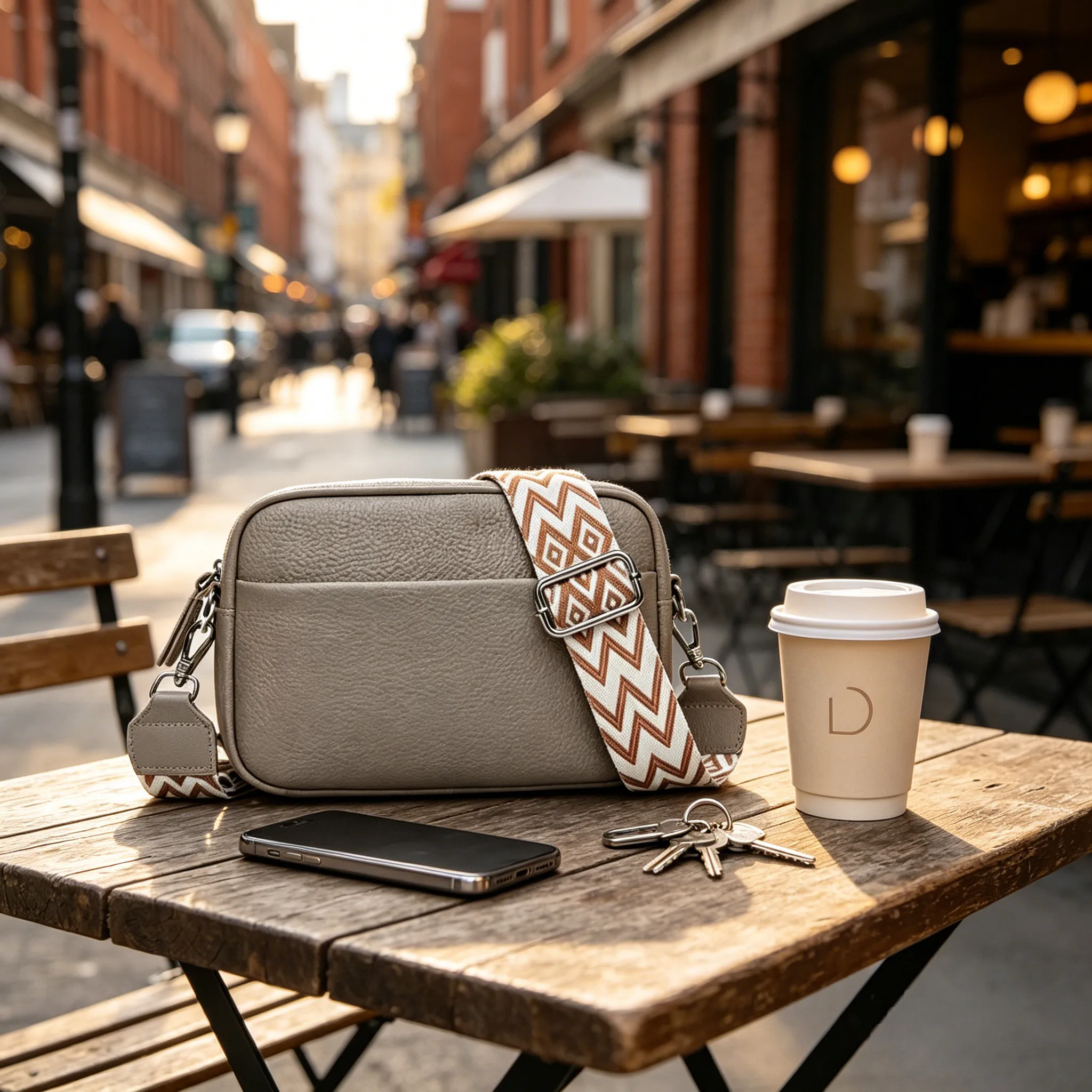
Recycled PU leather handbag styled by a European female model at a café window
Figure 1. Recycled PU leather is quietly reshaping how bag brands approach “leather” — without losing the look, the hand-feel, or the retail price.

Introduction: Why “Recycled PU” Is Suddenly on Every Buyer’s Tech Pack

Two questions are landing in our inbox every week from bag buyers across Europe, North America, and Australia. “Can we make a leather-look handbag without virgin PU?” and “If we move to recycled PU, will it still pass our lab tests?” The interest is no longer niche. It is structural — driven by ESG reporting, by EU regulation, and by a generation of consumers who actually read the materials label.

Recycled PU leather — sometimes called recycled polyurethane leather, GRS PU, or simply recycled PU — sits at the intersection of three forces that matter to any modern bag brand:

  • ESG & sustainability commitments. Recycled PU lets brands publish verifiable recycled-content numbers instead of vague “eco-friendly” language.
  • EU regulation. The PPWR (Packaging and Packaging Waste Regulation), the ESPR, and the emerging Digital Product Passport (DPP) are pushing buyers away from virgin fossil-based synthetics.
  • Procurement reality. Virgin PU prices have become less predictable. Recycled feedstocks — when sourced well — offer a more stable cost curve.

This guide is written for the people who actually have to make the decision: brand founders, sourcing managers, product developers, and private-label buyers evaluating a move from virgin PU, from PVC, or from genuine leather to recycled PU. It is also for the technical readers — QC engineers, compliance officers, and material specialists — who will be the ones signing off on lab reports.

Over the next several thousand words we will cover what recycled PU actually is, how it is made, where it makes sense, where it does not, how it compares to PU / PVC / water-based PU / genuine leather / canvas / RPET, how durable it really is, which certifications matter, how to source it responsibly from a Chinese OEM bag factory, what to check before placing an order, and how one European brand structured its switch from virgin PU to recycled PU. Two of our senior team members — Kevin, our Pattern Development Engineer, and Emily, our Senior Project Manager — share their first-hand experience at the end.

Where claims vary by supplier, formulation, or destination market, we flag it. Because in this category, the difference between a great recycled PU bag and a disappointed buyer usually comes down to verification, not marketing.


What Is Recycled PU Leather?

Recycled PU leather is a coated fabric in which part of the polyurethane resin — the layer that gives the material its leather-like appearance, surface, and hand-feel — has been replaced or supplemented with polyurethane recovered from post-industrial or post-consumer waste streams. The recovered PU is reprocessed (mechanically or chemically) and re-blended with virgin PU, a textile backing (such as polyester, cotton, or RPET), and a surface finish.

In simple terms, it is still a PU-coated fabric — the category has not changed — but a measurable share of the polymer input is now second-life material rather than freshly synthesized polymer.

Definition, in one sentence

Recycled PU leather = coated fabric whose PU layer contains a verified proportion of recovered polyurethane, applied to a textile backing and finished to imitate the appearance of leather.

Where the recycled content actually comes from

The “recycled” in recycled PU can originate from several streams:

  • Post-industrial PU scrap. Off-cuts, trimmings, and rejected rolls from PU coating lines — the most common and most consistent source.
  • Pre-consumer reclaimed PU. End-of-roll material from other manufacturers, deadstock from previous programs.
  • Post-consumer PU. Recovered from end-of-life products such as automotive interiors, footwear, furniture, or synthetic leather garments. More complex to collect, more variable in quality.

How recycled PU differs from “regular” PU

The base chemistry is similar — both are polyurethane-based coatings on a fabric backing. The difference is the feedstock: in virgin PU, 100% of the polymer is freshly synthesized from fossil-derived polyols and isocyanates; in recycled PU, a defined percentage of that polymer is recovered and reprocessed. The mechanical performance, the hand-feel, and the surface decoration behavior depend heavily on the recycled content percentage, the recycling method (mechanical vs. chemical), and the skill of the compounder.

Recycled PU vs. bonded leather — please don’t confuse them

Bonded leather (sometimes called “reconstituted leather” or “leather fibre board”) is made from shredded genuine leather fibres glued back together with a binder and coated with PU. Recycled PU is the opposite idea: it is a PU material with recycled PU content, not leather at all. The two are very different in composition, in performance, and in how they should be marketed. Bonded leather is an animal-derived product with limited durability; recycled PU is a vegan, synthetic material.

Recycled PU Leather at a Glance
Attribute Typical Range / Value Notes for Bag Buyers
Material family PU-coated fabric (synthetic) Same family as standard PU, not leather.
Recycled content 20%–80% (post-industrial or post-consumer) Ask for the exact % and the certification scope (GRS).
Backing fabric Polyester / cotton / RPET / nylon RPET backing further improves the eco profile.
Thickness 0.6 mm – 1.6 mm 0.8–1.2 mm is the sweet spot for handbags and backpacks.
Surface finish Embossed, smooth, matte, glossy, nubuck Embossing is the standard way to imitate grain leather.
Hand-feel Soft to medium firm, depending on formulation Modern recycled PU no longer feels “plasticky”.
Vegan Yes (no animal-derived material) Verify no casein or other animal binders are used.
Lead time ~25–40 days after lab-dip approval Slightly longer than virgin PU for first-time sourcing.

How Is Recycled PU Leather Made?

The manufacturing journey from waste PU to a finished recycled PU roll has six main stages. Understanding the flow helps you ask the right questions when a supplier presents a sample.

  1. Waste PU Collection. Post-industrial PU scrap from coating lines, trimming stations, and rejected production is collected. Post-consumer PU from end-of-life products may also be added for higher recycled content claims.
  2. Sorting. Material is sorted by colour, by polymer type, and by contamination level. This is one of the most important — and most underestimated — steps. Poor sorting = poor final surface.
  3. Grinding. Sorted PU is shredded into small flakes or chips, which become the feedstock for the next stage.
  4. Reprocessing. Two dominant routes exist. Mechanical recycling re-melts or re-compounds the PU chips into a resin suitable for coating. Chemical recycling breaks the polymer back down to its constituent polyols, which can then be re-polymerized. Chemical recycling is more capital-intensive but produces higher-quality output.
  5. Coating. The recycled-content PU resin is coated onto a textile backing (polyester, RPET, cotton, or nylon) using direct coating, transfer coating, or lamination. This is where thickness, surface energy, and bonding strength are decided.
  6. Embossing & Finishing. The coated surface passes through an embossing roller that imprints the desired leather grain (lychee, nappa, Saffiano, milled, etc.). Top coats, dull/matte lacquers, and colour adjustments are applied last.
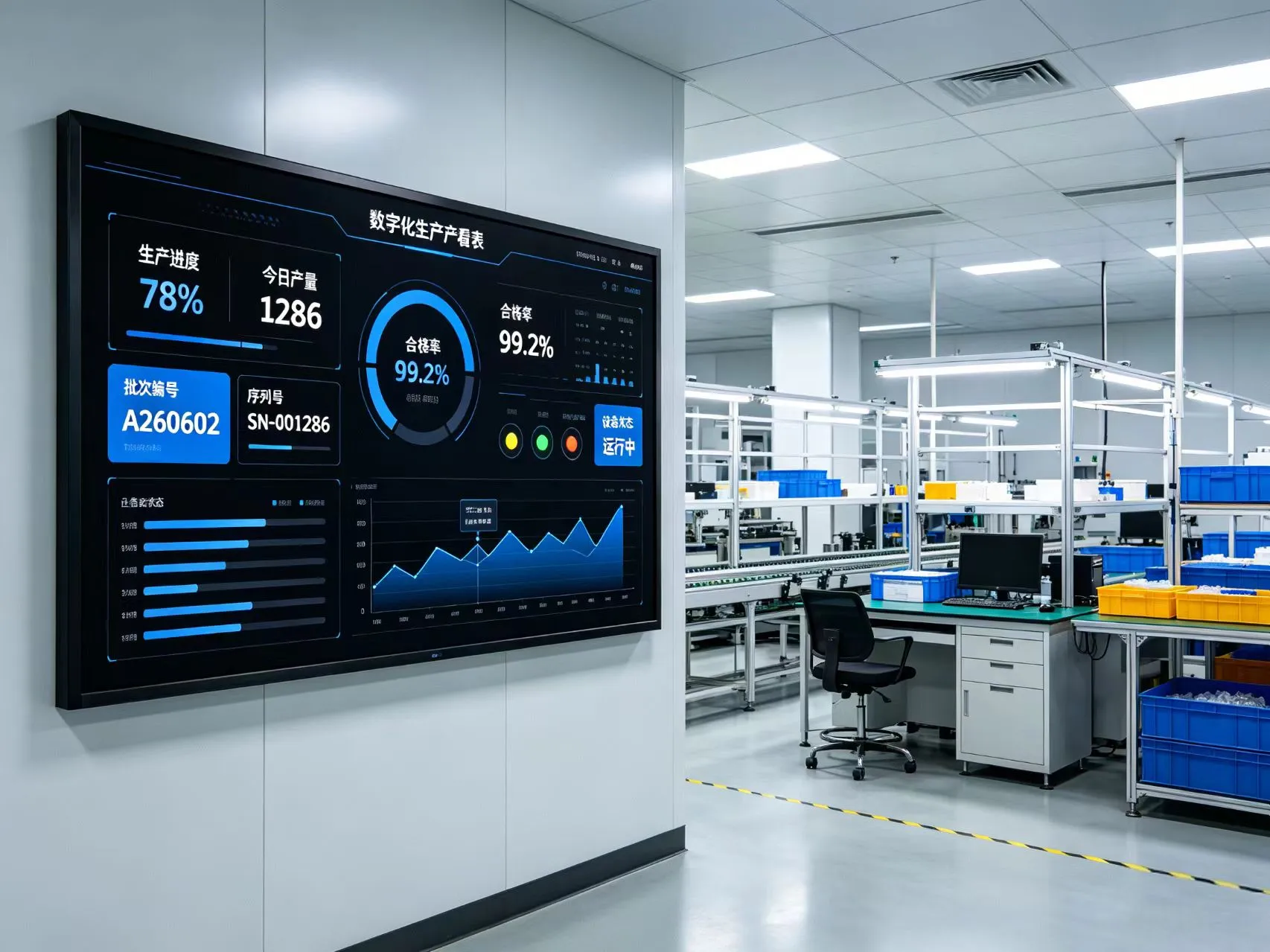
Digital quality monitoring dashboard for recycled PU leather production at GZDreamway
Figure 2. Digital production monitoring helps verify that recycled-content resin is being coated at the right thickness, at the right speed, with the right cure window.

Mechanical vs. chemical recycling — what to ask your supplier

For most handbag and backpack applications, mechanical recycling is the mainstream choice — it is faster, cheaper, and adequate for fashion-grade products. Chemical recycling delivers a more virgin-like polymer and is preferred for higher-end applications, footwear, automotive interiors, and products that must pass the strictest hydrolysis tests. When a buyer asks “is your recycled PU the same quality as virgin PU?” — the honest answer is: it depends on the recycling route and on how the recycled resin is blended.

Practical tip. When sourcing recycled PU for the first time, ask the factory for the same construction in both 100% virgin PU and recycled PU (e.g., 30% recycled content). Test both side by side. The differences — if any — will usually show up in abrasion, hydrolysis, and long-term aging, not in the look of the sample.

What Are the Advantages of Recycled PU Leather?

Recycled PU is not a compromise — it is a deliberate choice with real commercial benefits, when specified correctly.

Sustainability & circularity

The most obvious advantage. Every kilogram of recycled PU resin reused is a kilogram of virgin fossil-derived polymer avoided, and a kilogram of PU waste diverted from landfill or incineration. For brands publishing ESG reports, Scope 3 reductions, or recycled-content KPIs, recycled PU is one of the easier wins in the bag category.

Circular economy lifecycle of recycled PU leather bags — closed-loop material flow for sustainable sourcing
Figure 3. The closed-loop narrative — from recycled feedstock back to a finished bag — is now a hard requirement for many European and North American brand briefs.

Lower carbon footprint

Most peer-reviewed and supplier-disclosed LCA studies show that recycled PU emits 30%–60% less CO₂e than virgin PU, depending on the feedstock, transport distance, and recycling method. The exact number should always come from a third-party-verified LCA, not a sales pitch.

Vegan & animal-free

Recycled PU is, by definition, an animal-free material. It suits brands with explicit vegan or cruelty-free positioning, including those targeting PETA-friendly certification, Leaping Bunny, or similar marks.

Consistent appearance & finish

Because the recycled resin is re-compounded under controlled conditions, the surface energy, colour uptake, and embossing behaviour are more uniform than what is sometimes seen with very low-cost virgin PU. This is one of the under-appreciated reasons recycled PU is gaining ground in mid- and upper-tier bag programs.

Cost stability

Virgin PU pricing is tied closely to MDI/TDI polyol markets — both notoriously cyclical. Recycled feedstocks, especially post-industrial streams, tend to follow a more predictable cost curve. For programs running 12–24 months, this stability can matter more than the per-metre price.

Easier branding & storytelling

“Made with 50% recycled PU” is a concrete, defensible claim. “Eco-friendly leather alternative” is not. Buyers who have moved to recycled PU consistently report an easier time with retail buyers, sustainability audits, and consumer communication.


Limitations of Recycled PU Leather — An Honest Assessment

No material is perfect, and a guide that pretends otherwise is not useful to a sourcing manager. Here is where recycled PU genuinely underperforms, and where you should plan accordingly.

Heat resistance

All PU-based materials — virgin or recycled — soften at sustained temperatures above ~80°C. Recycled PU behaves similarly. In real life this matters for hot-car interiors, near-radiator storage, and direct sunlight on dark colours. For most fashion bag use cases, this is not a deal-breaker, but it should be communicated honestly in product care guides.

Breathability

PU coatings are not breathable in the way genuine leather or woven canvas is. Recycled PU inherits this characteristic. For backpacks and laptop bags that sit against the body for hours, this is something to factor into the design (mesh back panels, padded straps, ventilation).

Long-term aging & hydrolysis

Hydrolysis — the slow chemical breakdown of PU in humid conditions — is the single most discussed durability issue in the synthetic leather industry. Recycled PU can be more or less hydrolysis-resistant than virgin PU, depending on the formulation. In hot + humid conditions (tropical retail, coastal regions, sealed ocean-freight containers), poorly formulated recycled PU can degrade faster. This is one of the reasons lab testing — not just sample inspection — is essential.

“Premium” hand-feel

Modern recycled PU has come a long way. That said, the very top end of the leather market — full-grain box calf, buttery nappa, vegetable-tanned heritage leather — remains unmatched in depth, patina, and aging behaviour by any PU, recycled or not. Brands in the genuine-luxury tier should weigh whether recycled PU serves their positioning.

Brutally honest summary. Recycled PU is an excellent fashion leather alternative and a credible sustainability upgrade. It is not — and will not be for the foreseeable future — a drop-in replacement for the absolute top tier of genuine leather. Choose the material that matches the brand promise, not the one with the best marketing deck.

Recycled PU Leather vs Other Materials

This is the table we wish every brand had on hand during their first material review. It compares recycled PU against the six materials it is most often benchmarked against. All values are typical ranges for fashion-grade applications; actual results vary by supplier, formulation, and testing method.

Material Cost Appearance Durability Water Resistance Eco Score MOQ Customization
Recycled PU Medium High (leather-like) Good (formulation-dependent) High ★★★★☆ 200–500 m Emboss, print, colour-match
Virgin PU Medium High (leather-like) Good High ★★☆☆☆ 200–500 m Emboss, print, colour-match
PVC Low Medium (plastic look) Good (but stiff) Very high ★☆☆☆☆ 300–500 m Print, emboss
Water-based PU High High (leather-like) Good High ★★★★☆ 300–800 m Emboss, print, colour-match
Genuine Leather High Very high (natural grain) Excellent (with care) Medium ★★★☆☆ (depends on tannery) 200–500 sq ft Emboss, dye, stitch
Canvas (cotton) Low–Medium Casual (woven look) Good (woven) Low (unless coated) ★★★☆☆ (organic cotton) 300–500 m Print, embroidery
RPET Medium Casual (woven look) Good Medium (woven) ★★★★☆ 500–1,000 m Print, embroidery

How to read this table

  • Cost reflects typical 2024–2026 market ranges for fashion-grade quality, not commodity pricing.
  • Eco Score is a directional indicator only. It is influenced by feedstock, processing, transport, end-of-life options, and certifications — and varies wildly by supplier.
  • MOQ is shown in metres for coated fabrics and square feet for leather, reflecting the different ways these materials are sold.

Common Applications of Recycled PU Leather

Recycled PU is now specified across virtually every category of fashion and lifestyle bag. The most common applications in our factory program are:

  • Handbags. The flagship application — totes, shoulder bags, crossbodies, shoppers. Recycled PU at 0.8–1.2 mm with a soft nappa or lychee emboss is the standard construction.
  • Backpacks. Daily-carry, commuter, and travel backpacks. Higher hydrolysis resistance is critical here because backpacks spend time on floors, in rain, and in humid lockers.
  • Cosmetic bags & pouches. A strong fit — small surface area, high visual impact, and a category where sustainability storytelling travels well.
  • Laptop bags & briefcases. Usually specified at 1.0–1.4 mm with reinforced backing for structure.
  • Travel bags & weekenders. Larger panels demand careful emboss alignment and colour matching across panels.
  • Fashion accessories. Belts, watch straps, small leather goods — particularly effective when paired with the same recycled PU as a hero handbag.
  • Corporate gifts & merchandise. A recycled PU laptop sleeve or conference tote is now standard at many sustainability-positioned brands.
  • Retail packaging. Recycled PU dust bags, pouch packaging, and gifting wraps are an emerging premium retail touch.
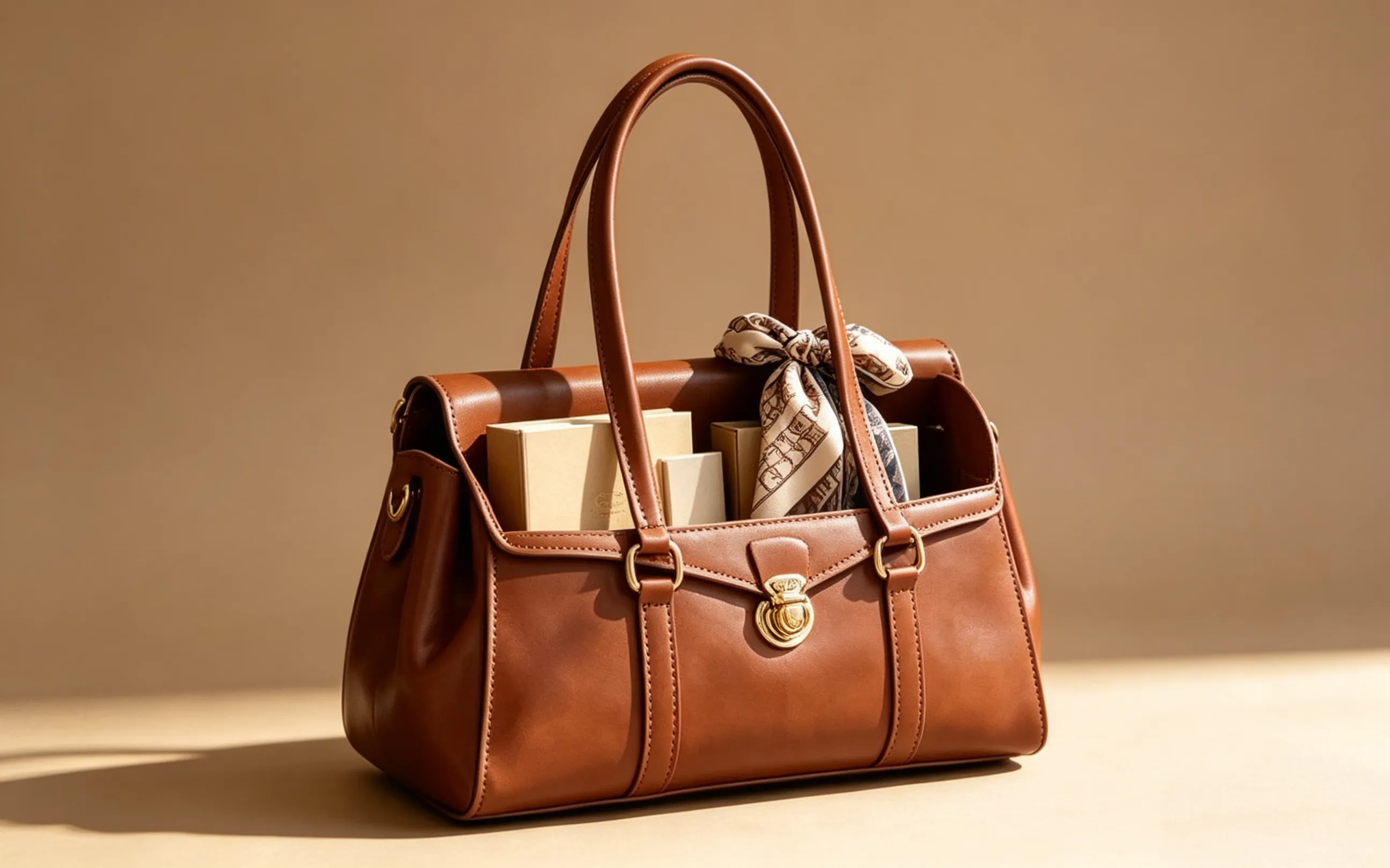
Recycled PU leather handbag interior layout with daily essentials — OEM factory sample
Figure 4. Recycled PU handbags — the most visible category, and the one where surface quality, lining compatibility, and stitch behaviour are easiest to evaluate.
Recycled PU leather crossbody bag product photograph on a neutral studio background
Figure 5. Crossbody bags are a sweet spot for recycled PU leather — small panels, high visibility, and strong consumer storytelling.

How Durable Is Recycled PU Leather?

Durability is the question every QC engineer will ask first — and rightly. Here is how recycled PU performs across the six tests that matter most for fashion bags.

Abrasion resistance (Martindale / Taber)

Well-formulated recycled PU typically achieves 20,000–50,000 Martindale cycles before visible surface breakdown. For fashion handbags, 20,000 cycles is usually sufficient; for backpacks and travel bags, aim higher.

Hydrolysis resistance

Tested at 70°C / 95% RH. Recycled PU varies widely — from 3 weeks (low-grade) to 8+ weeks (premium formulation). For tropical retail or ocean-freight programs, ask specifically for hydrolysis-tested material and request the test method.

Scratch resistance

Modern top-coat systems give recycled PU a robust scratch profile. For an objective read, request a pencil hardness test (ASTM D3363) — typical results fall in the 2H–4H range.

Peel strength (bonding to backing)

Recycled PU should match virgin PU on peel strength — usually ≥ 40 N/cm in a 180° peel test on a properly prepared backing. Lower numbers indicate under-cured resin or insufficient adhesive.
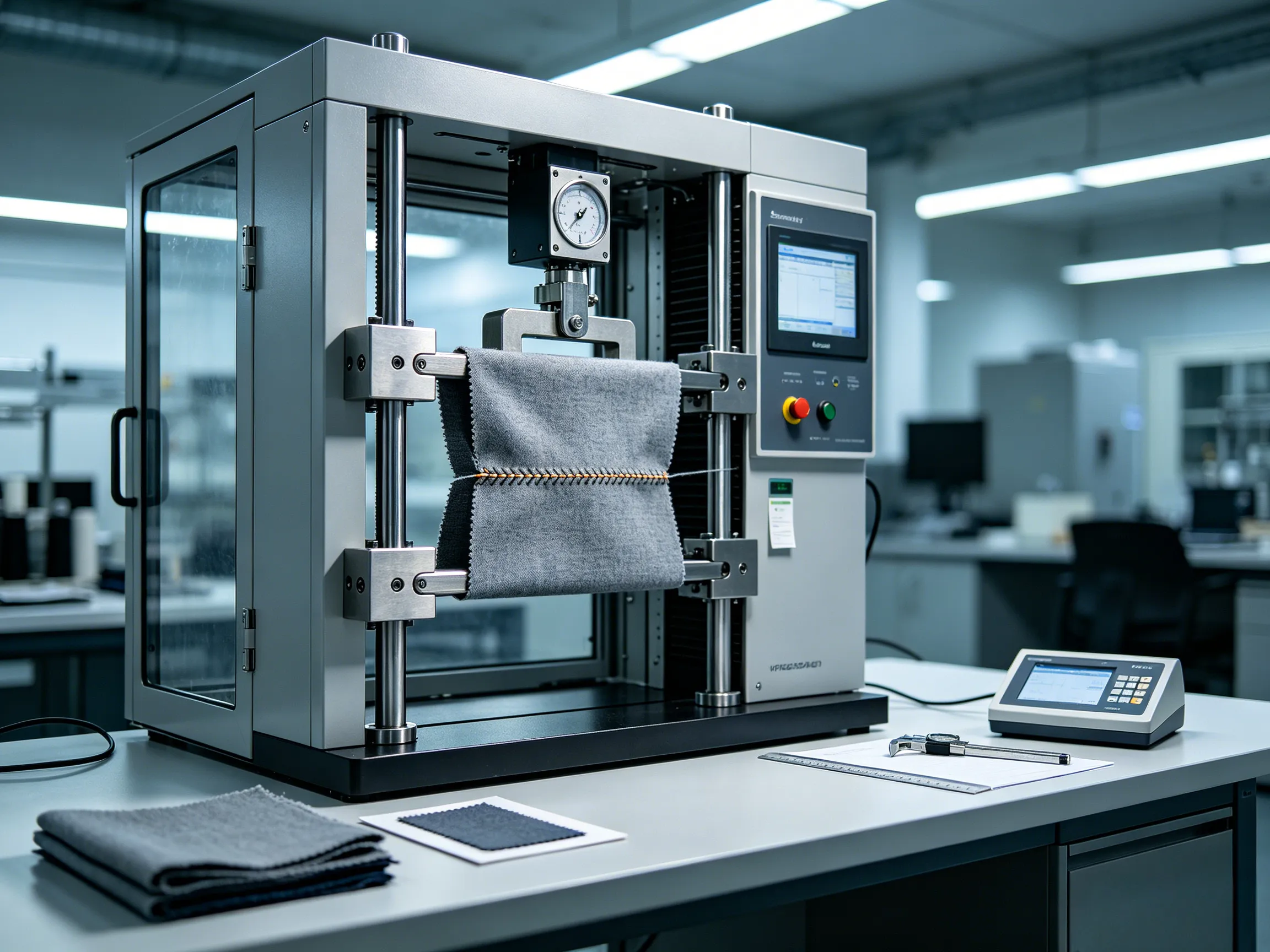
Recycled PU leather seam tensile strength testing in lab — GZDreamway quality control
Figure 6. Tensile-strength testing on a recycled PU seam — peel and tensile data together tell you more about a bag’s life expectancy than any single lab result.

Flex test (Bally / De Mattia)

A flexed-to-failure test simulates years of opening, closing, and twisting. Quality recycled PU typically passes 50,000–100,000 flex cycles before surface cracking begins. This is the single most informative test for flap bags and bags with frequent fold lines.

Maintenance in the field

Recycled PU is low-maintenance but not no-maintenance. Wipe with a damp microfibre cloth, avoid alcohol-based cleaners, store away from direct heat and sunlight, and use a soft insert to retain shape during storage. A short care card included with the product reduces returns and improves customer satisfaction.


Is Recycled PU Leather Sustainable?

Short answer: it can be — and in most modern factory programs it is. Long answer: sustainability claims must always be supported by documentation, not by marketing language. Below is a more honest breakdown.

Circularity & feedstock

The single largest sustainability benefit of recycled PU is feedstock circularity — diverting PU waste from landfill or incineration, and reducing demand for virgin fossil-derived polymer. The benefit scales with the verified recycled content percentage.
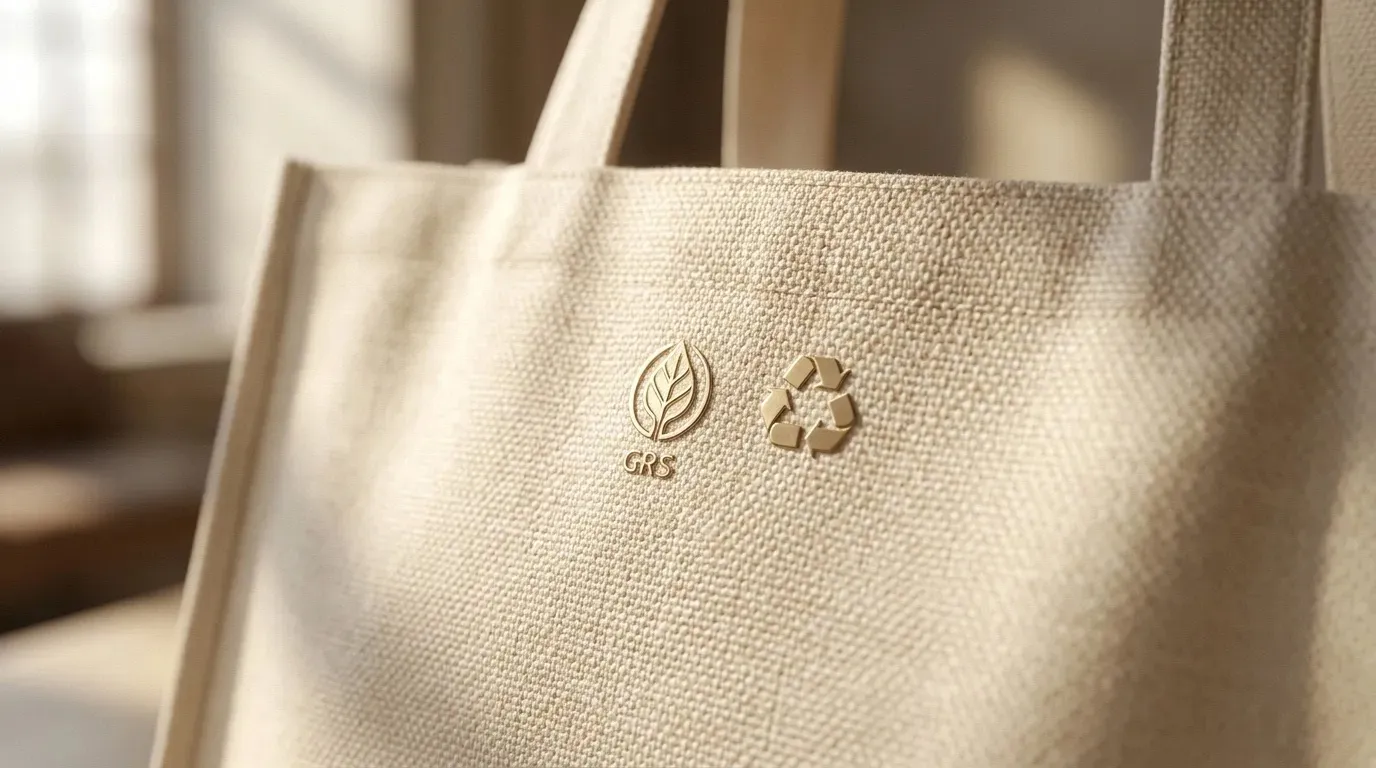
GRS-certified rPET backing fabric texture paired with recycled PU leather face stock
Figure 7. GRS-certified rPET backing fabric — paired with recycled PU face stock, it creates a high-recycled-content construction with verified chain-of-custody documentation.

Carbon footprint

Published and supplier-disclosed LCAs typically report a 30%–60% reduction in CO₂e vs. virgin PU. Always request the underlying LCA or EPD rather than a single percentage on a slide deck.

Recycled content percentage

This is the number that should appear on your tech pack, your sales copy, and your ESG reporting. Common commercial ranges are 20%–80%. Anything above 50% is generally considered “high recycled content” by retailers.

ESG reporting & brand statements

For brands reporting under CSRD, CDP, or similar frameworks, recycled PU is a defensible Scope 3 reduction. The numbers must be third-party-verified (typically GRS) to count toward most published commitments.
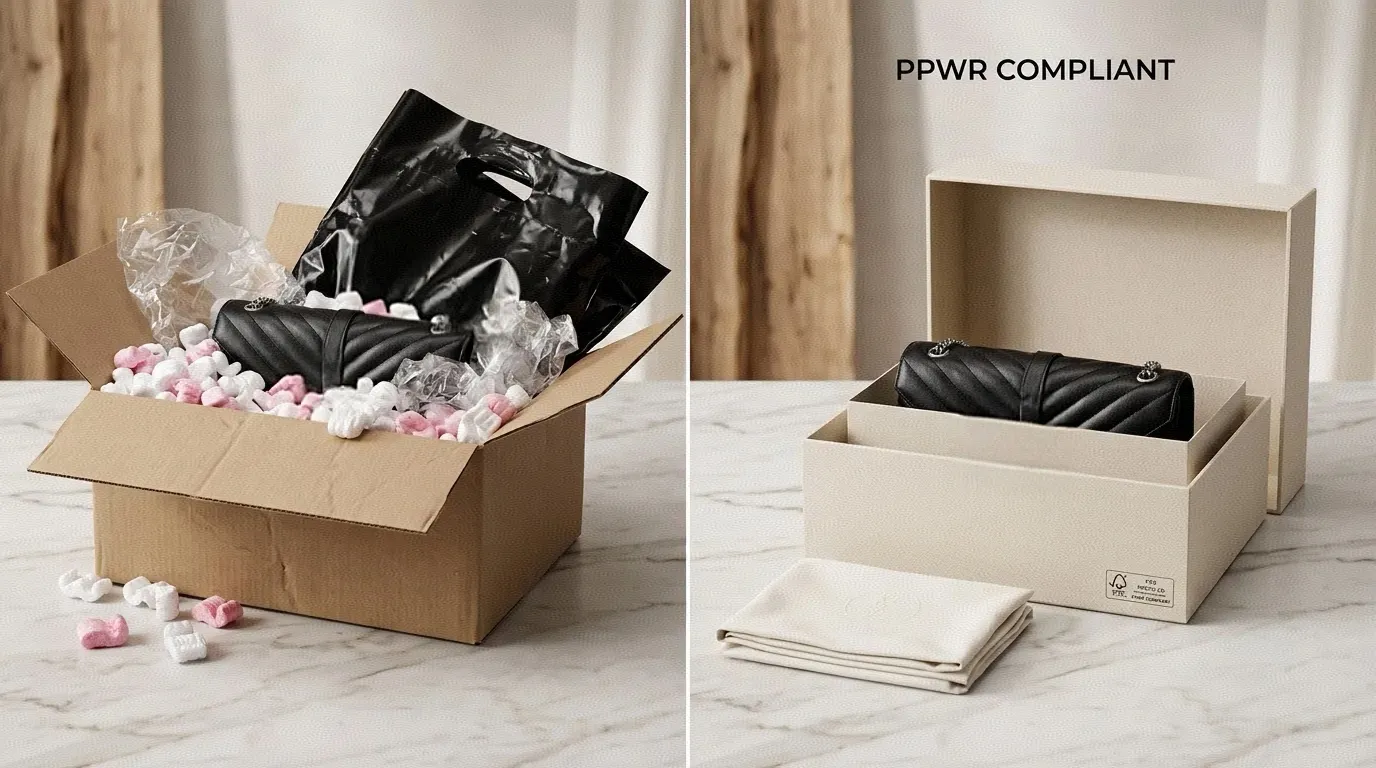
EU PPWR-compliant packaging versus wasteful plastic — recycled PU leather bag sustainability comparison
Figure 8. EU PPWR compliance is increasingly driving the conversation around recycled vs. virgin materials in fashion packaging and bag construction.

Disclaimer

Disclaimer · Sustainability Sustainability performance depends on recycled content, manufacturing process, regional regulations, and third-party certifications. Environmental claims should always be supported by valid documentation rather than marketing statements.

Is Recycled PU Leather Safe?

For fashion bags sold in Europe and North America, “safe” has a specific meaning: compliance with REACH, California Prop 65, and (for some categories) PFAS restrictions. Here is how recycled PU performs.

REACH (EU)

REACH restricts a long list of substances of very high concern (SVHCs). Quality recycled PU should be REACH-compliant — meaning none of the restricted phthalates, heavy metals, or azo dyes are present above thresholds. Request the latest REACH test report (SVHC < 0.1% w/w) with every production batch.

California Proposition 65

Prop 65 limits exposure to chemicals known to cause cancer or reproductive harm. For bags sold into California, a Prop 65 compliance statement — backed by lab testing — is increasingly a buyer requirement. Recycled PU does not exempt you from this.

DMF & other restricted solvents

Dimethyl fumarate (DMF) was the centre of a famous 2007–2008 European recall wave and remains a watch-list substance. Quality recycled PU is DMF-free. Confirm with a lab report.

VOC emissions

Volatile organic compounds affect indoor air quality. For products that sit near the body (backpacks, handbags, laptop sleeves), a low-VOC certification is worth pursuing — both for consumer comfort and for compliance with programs such as GREENGUARD or similar indoor-air standards.

PFAS

Per- and polyfluoroalkyl substances are under increasing regulatory pressure (especially in the EU and several US states). Some recycled PU finishes historically used PFAS-based water/stain repellents. Confirm your supplier has phased these out and can issue a PFAS declaration.

Disclaimer · Safety & Compliance Regulatory requirements vary by destination market and are updated frequently. The above is a directional summary, not a compliance certificate. Buyers should verify the latest applicable rules and request current third-party test reports for every production batch.

Common Certifications for Recycled PU Leather

Certifications are the difference between a sustainability claim and a sustainability proof. Below are the certifications we encounter most often in recycled PU sourcing for bag programs.

Certification Scope What It Actually Proves
GRS (Global Recycled Standard) Recycled content, chain of custody, social & environmental practices Verifies the % of recycled material and tracks it from feedstock to finished product.
OEKO-TEX Standard 100 Harmful substances in textiles Confirms the material has been tested for substances harmful to health.
REACH (EU) Chemical substances SVHCs below 0.1% w/w; restricts phthalates, heavy metals, azo dyes.
RoHS Hazardous substances in electrical/electronic equipment Relevant for bags with electronic components (USB ports, lighting).
ISO 9001 Quality management system Confirms the factory operates a documented quality system.
BSCI / Sedex Social compliance audit Confirms fair labour conditions at the manufacturing site.
GOTS Organic textile fibre (cotton, linen, etc.) Applies to natural-fibre backing fabrics, not to PU itself.
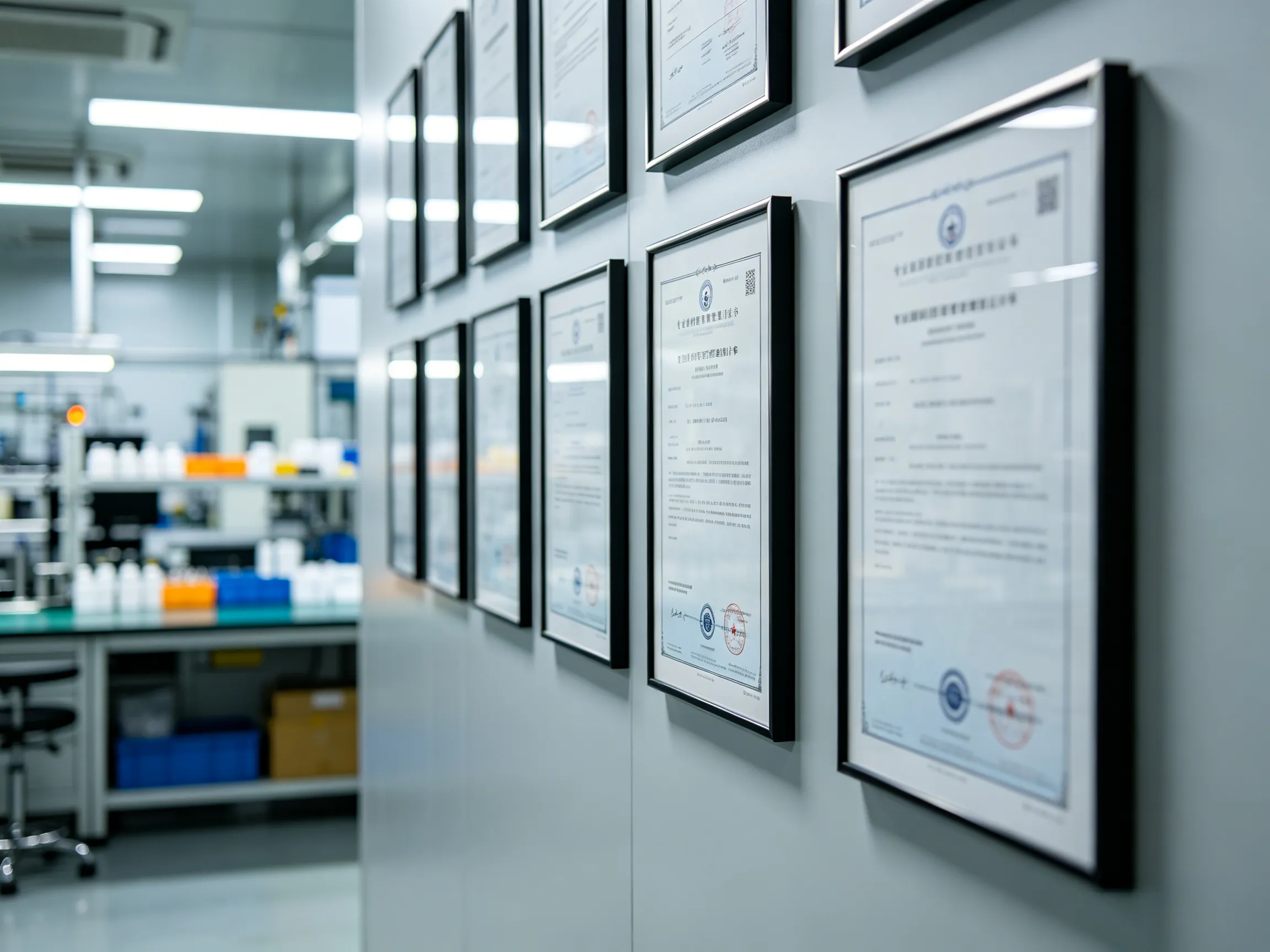
GZDreamway ISO 9001 and BSCI certifications — audit-ready recycled PU leather bag manufacturing facility
Figure 9. ISO and BSCI certifications on the factory wall — the visible signal that the operations behind a recycled PU claim are themselves audited.
Disclaimer · Certifications Certifications apply to specific materials, production runs, and factory locations. A certificate on the wall is not a guarantee on your bag. Buyers should request the certificate number, the validity date, the scope, and a recent test report against the actual material used in their order.

How to Source Recycled PU Leather Bags from a Chinese OEM Factory

Sourcing recycled PU bags is not dramatically different from sourcing virgin PU bags — but there are eight details that consistently make the difference between a clean program and a painful one.

1. Minimum Order Quantity (MOQ)

For custom recycled PU bags, a workable MOQ starts at 200–500 pieces per style per colourway. Some factories ask for higher; some will accept lower if you share material with an existing program. Material MOQ at the supplier level is typically 200–500 metres per colour.

2. Sampling & counter-samples

Always commission three sequential rounds: an initial material sample (A4 swatch), a prototype sample (full bag in recycled PU), and a pre-production sample (made from the actual production batch of material). Skipping any of these is where most surprises happen.

3. Colour matching

Recycled PU can be colour-matched to a Pantone reference, a physical sample, or a previous production. The first lab dip is rarely perfect — plan two to three rounds of colour approval, especially for brand-specific colours (signature reds, brand blues, custom neutrals).
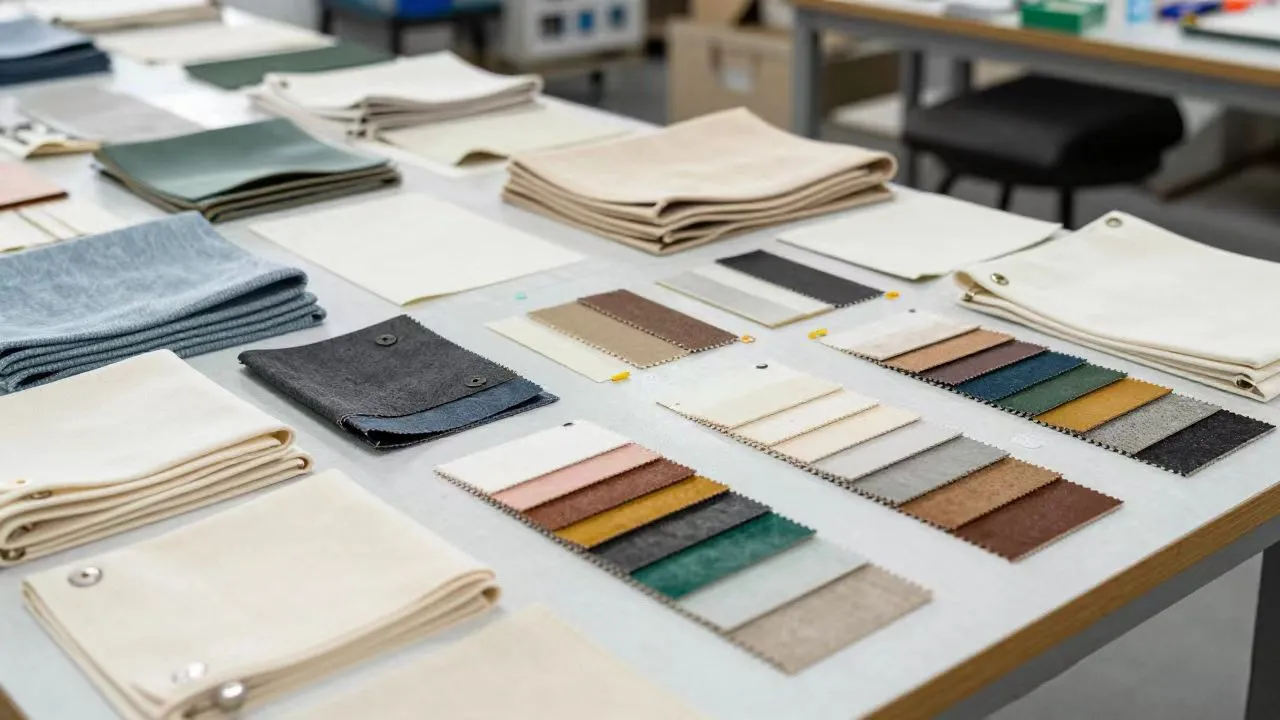
Recycled PU leather colour swatch card — OEM bag colour matching reference for brand buyers
Figure 10. A recycled PU swatch card — every brand colour you intend to develop should be evaluated against this kind of physical reference under controlled lighting (D65, 6500K).

4. Thickness & backing fabric

Specify thickness in millimetres (e.g., 0.9 mm ± 0.05 mm). Specify backing composition (e.g., 100% polyester 75D × 75D, or RPET 150D for an upgraded sustainability story). Don’t assume — write it down.

5. Printing & embossing

Most recycled PU accepts the same decoration methods as virgin PU: silkscreen, hot stamping, foil, UV print, heat transfer, embossing, debossing, and laser engraving. Embossed logos on recycled PU nappa look remarkably like genuine leather at retail distance.

6. Quality control

Build a four-stage QC plan: Incoming material inspection (against approved swatch and lab report), in-line inspection during cutting and sewing, final inspection against an AQL standard (typically 2.5 for general inspection, 1.5 for premium programs), and a pre-shipment audit. Recycled PU does not change the QC methodology — but it does raise the importance of the material-level inspection.
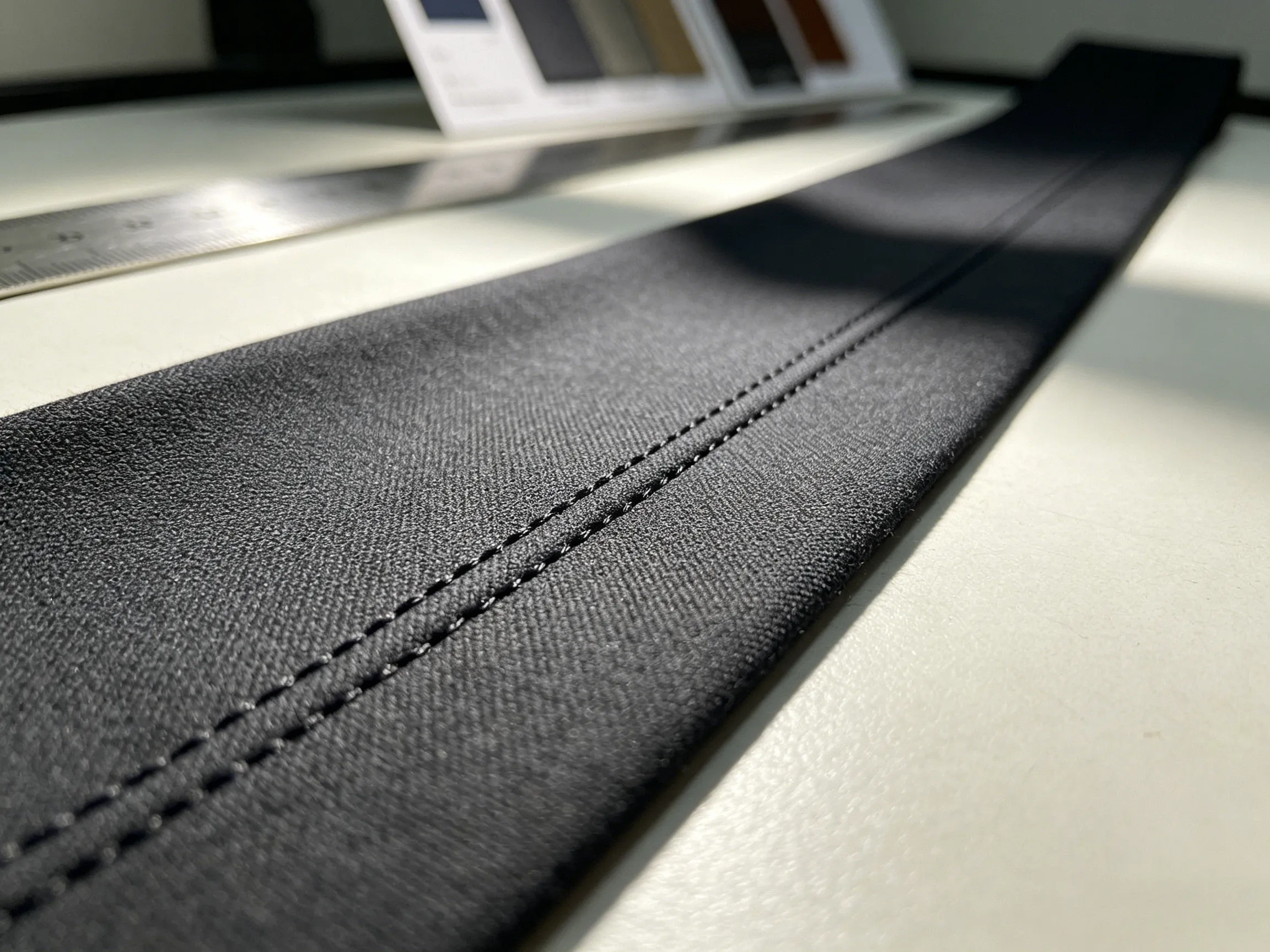
Recycled PU leather seam stitching quality control — high-magnification microscope inspection at GZDreamway
Figure 11. Stitch quality is the most visible QC signal on a finished recycled PU bag — alignment, tension, and thread colour matching are the three things retail buyers look at first.

Quality Checklist Before Ordering Recycled PU Bags

Before you sign the PO, run through this checklist. It is the same list we use internally before approving any new recycled PU program.

  • Surface. No orange peel, no flow lines, no pinholes, no colour drift across the roll.
  • Odor. No strong solvent smell. A faint polymer odour is normal; anything sharp or chemical is a red flag.
  • Thickness. Measured with a calibrated thickness gauge at multiple points; tolerance within ± 0.05 mm of the spec.
  • Peel strength. ≥ 40 N/cm in a 180° peel test on the actual backing fabric.
  • Abrasion. Martindale result matches the application (≥ 20,000 cycles for handbags, higher for backpacks).
  • Colour consistency. Spectrophotometer reading (ΔE) within agreed tolerance against the approved lab dip.
  • Hydrolysis test. Request a 4-week / 70°C / 95% RH result as the minimum baseline for any program with humid conditions.
  • Colour fastness. To light (≥ 4 on the blue wool scale), to rubbing (dry ≥ 4, wet ≥ 3), to water (if relevant).
  • Documentation. GRS transaction certificate (if claiming recycled content), REACH test report, OEKO-TEX certificate, factory social-compliance audit.
  • Traceability. Batch numbers, production date, and material lot references stored against the PO for at least 24 months.

Case Example: How One European Brand Switched from Virgin PU to Recycled PU

The names below are anonymized. The brief, the decisions, and the trade-offs are real — distilled from a program we ran in 2024.

The brand

A mid-market European handbag label with strong retail presence in Germany, France, and the Nordics. Annual volume around 80,000 bags. Their collection was built on virgin PU at a 1.0 mm construction with a nappa emboss.

The brief

Reposition the brand’s hero line as a “sustainable leather alternative” by 2026. Keep the look, the hand-feel, and the retail price band. Publish a credible recycled-content percentage. Achieve it without extending lead times beyond their existing 12-week production window.

The journey

  1. Material evaluation. Side-by-side lab comparison of three recycled PU candidates against their existing virgin PU. Differences in Martindale abrasion (within ±10%), peel strength (essentially identical), and hydrolysis (recycled PU slightly behind, but acceptable after formulation adjustment).
  2. Colour matching. Five signature colours re-matched in the new material. Two passed on the first lab dip; three required a second round. No third rounds were needed.
  3. Prototype validation. A pilot run of 200 units in the hero style. Retail staff and a focus group of 30 customers gave the new material an identical or higher rating vs. the previous virgin PU on hand-feel and appearance.
  4. Production launch. Switched 60% of the line to recycled PU in season one; 100% from season two onwards. Retail swing tags updated to read “Made with 65% recycled PU”.
  5. Market feedback. 18 months in: no measurable increase in returns, no retail complaints, and the brand’s annual sustainability survey showed a 22-point uplift in consumer perception on material sourcing.

The trade-offs they accepted

  • Material cost increased by ~7%, partially absorbed by factory efficiency.
  • First-batch lead time extended by 10 days for material sourcing.
  • Marketing had to be reworked to avoid over-promising (verified 65% recycled content, not “100% recycled”).

Finished recycled PU leather handbag retail sample — female model holding a private-label bag
Figure 12. The end product — a recycled PU handbag with retail-grade surface quality. The story behind it is what differentiates it on a shelf.

Expert Insights from the Dreamway Team

Behind every recycled PU program are the people who actually evaluate the material, approve the samples, and manage the production. Here is what they want you to know.

Emily, Senior Project Manager at GZDreamway

Emily · Senior Project Manager

12 years in OEM bag manufacturing · manages 15–25 active projects simultaneously
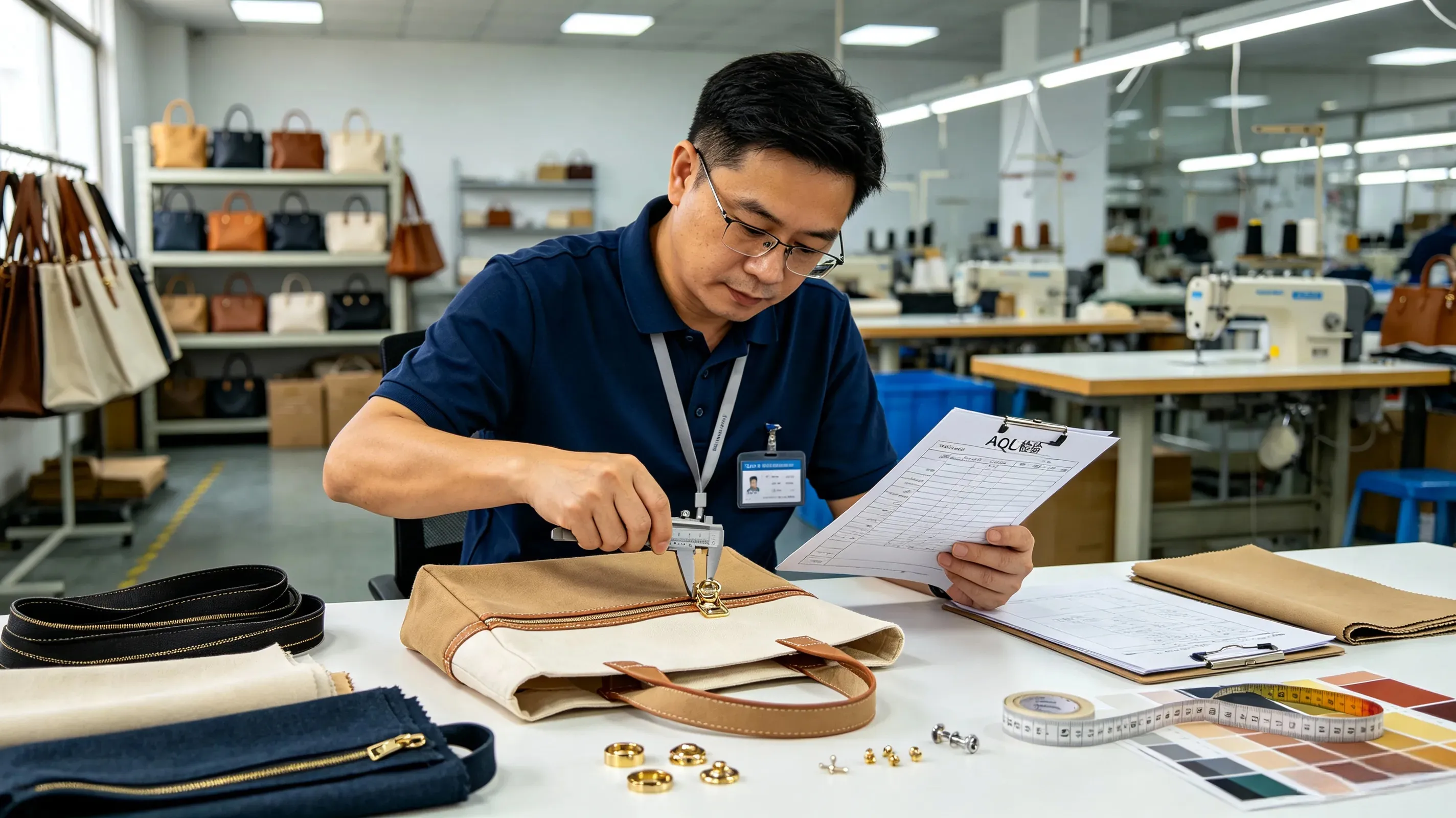
Kevin, Pattern Development Engineer at GZDreamway

Kevin · Pattern Development Engineer

15 years experience in bag pattern making · leather, canvas, nylon, and technical fabrics

What European and American buyers ask us most about recycled PU

From Emily: The three questions that come up in almost every recycled PU conversation are: “What is the verified recycled content percentage?”, “Do you have a current GRS transaction certificate?”, and “Will it pass our destination-market lab testing?” The first two are non-negotiable — we cannot move forward without documented answers. The third one is where the conversation gets interesting, because “pass our lab testing” depends entirely on which lab, which test method, and which thresholds. The brands that get the best results are the ones who share their actual test protocol up front, not the ones who ask “will this pass REACH?” in the abstract.

The second most common question is about price. Recycled PU is not cheaper than virgin PU at the material level — and it should not be, because the feedstock recovery process costs money. What we see is that buyers who frame the conversation around total program cost (including ESG value, brand storytelling, and consumer response) make better decisions than buyers who only look at per-metre price.

How to verify the quality of recycled PU before you commit

From Kevin: Five tests will tell you almost everything you need to know before committing to a recycled PU program:

  1. Abrasion (Martindale). Ask for the result against the actual thickness you intend to order, not against a generic 1.0 mm spec.
  2. Peel strength. ≥ 40 N/cm on your specified backing. Less than that, and the bag will delaminate in the field.
  3. Colour (spectrophotometer). ΔE ≤ 1.0 against your approved lab dip, measured under D65 light. Anything looser and the colour shift will be visible across a production run.
  4. Smell. This sounds unscientific, but a sharp solvent odour is a reliable predictor of poor formulation. The best recycled PU smells like fabric, not chemistry.
  5. Hydrolysis. For any program involving humid retail, ocean freight, or tropical destinations, request a 4-week hydrolysis test result at minimum.

If those five numbers check out on the mill certificate and on a re-test of your own counter-sample, you can move forward with confidence.


Frequently Asked Questions About Recycled PU Leather

What is recycled PU leather?

Recycled PU leather is a coated fabric whose polyurethane layer contains a verified percentage of recovered polyurethane, applied to a textile backing and finished to look like leather. The recycled content can come from post-industrial PU scrap, pre-consumer reclaimed material, or post-consumer end-of-life products.

Is recycled PU vegan?

Yes. Recycled PU does not contain animal-derived material. Brands targeting vegan or cruelty-free positioning should still verify that no animal-based binders (such as casein) are used in the formulation, and that the backing fabric is also animal-free.

Can recycled PU be recycled again?

In theory, yes — but in practice it is challenging. PU is a thermoset polymer that does not re-melt cleanly like a thermoplastic. Chemical recycling is the most promising route for closed-loop recovery, but the infrastructure for post-consumer PU recycling is still developing.

How long does recycled PU last?

A well-formulated, well-maintained recycled PU bag typically lasts 3–5 years under normal daily use, and significantly longer for occasional-use items. Hydrolysis resistance, abrasion cycles, and care behaviour all influence the actual lifespan.

Is recycled PU waterproof?

Recycled PU is highly water-resistant — meaning it resists splashes, light rain, and short exposure. It is not fully waterproof in the sense of being submersible, because seams, zippers, and construction details introduce water ingress points. For a “waterproof” claim, look at the full bag construction, not just the material.

Is recycled PU better than PVC?

From a sustainability and consumer-perception standpoint, yes — recycled PU has a substantially better eco profile than PVC, and avoids the plasticiser and chlorine concerns associated with PVC. From a pure water-resistance and cost standpoint, PVC still has its place in some applications.

Is recycled PU better than genuine leather?

It depends on what “better” means. Recycled PU is better for vegan positioning, for ESG reporting, for cost stability, and for consistency. Genuine leather still wins on long-term patina, on the very top tier of luxury hand-feel, and on certain types of repairability. The honest answer is to choose based on the brand promise.

Can recycled PU be used for luxury handbags?

Yes — modern recycled PU at 1.0–1.4 mm with a fine nappa or Saffiano emboss and a soft top coat is widely used in mid- and upper-tier handbag programs. For the absolute top tier of the luxury market (where the hand-feel of full-grain leather is the entire product), recycled PU is not yet a substitute.

What certifications should I request?

At minimum: GRS for recycled content verification, REACH for chemical compliance (SVHCs), and OEKO-TEX Standard 100 for harmful-substance testing. Depending on the destination market, add Prop 65 (California), RoHS (if electronic components), and a current BSCI or Sedex audit on the manufacturing facility.

Can recycled PU be customized?

Yes. Recycled PU supports the same customization options as virgin PU — custom colour matching, custom embossing patterns, custom logos (embossed, debossed, foil-stamped, printed, or laser-engraved), and a wide range of surface finishes (matte, glossy, nubuck, pull-up).


Disclaimer This guide is intended for general educational purposes and should not be considered legal, environmental, or regulatory advice. Material performance, recycled content, certifications, and compliance requirements vary by supplier, production process, and destination market. Buyers should always verify specifications, laboratory test reports, and applicable regulations before making sourcing or compliance decisions.

Spec Your Next Recycled PU Bag With Confidence

Tell us your material spec, your target recycled content, and your destination market — we’ll come back with samples, lab data, and a workable MOQ within 48 hours.

Start a Conversation

Expert Resource

Bag Material Comparison Guides

Discover the finest materials that define luxury craftsmanship — from full-grain leather to exotic skins and sustainable alternatives.

Customer Reviews23 Reviews

María Fernández2026-08-24
He pedido muestras de cuero PU reciclado a varios proveedores y el suyo es el que mejor tacto tiene hasta ahora, aunque el acabado brillante no encaja con la estética mate que buscamos para nuestra línea de bolsos en México. ¿Es posible ajustar el brillo a un acabado más satinado o incluso tipo gamuza? Además, con el auge del nearshoring, muchas marcas locales buscan cuero vegano personalizado con tiempos de entrega rápidos. ¿Cuál es su MOQ para una prueba de 150 piezas y el tiempo de producción? Necesitamos materiales que resistan el clima húmedo de la Ciudad de México sin perder color ni forma. También me gustaría saber si ofrecen descuentos por volumen para pedidos recurrentes de 500 piezas, ya que estamos evaluando costos para nuestra colección de verano. He leído reseñas positivas sobre su durabilidad, pero quiero confirmar si el material mantiene su integridad estructural después de un uso intensivo. Por favor, indiquen si pueden enviar una muestra con el ajuste de acabado para probar antes de comprometernos. Estamos en plena investigación de proveedores de cuero de origen vegetal y su respuesta es clave para decidirnos. Agradecería una respuesta detallada y, si es posible, un enlace a un catálogo digital con opciones de color y textura para presentar a nuestro equipo de diseño.
GZDreamway2026-08-24
Gracias por su interés y por sus valiosas observaciones, María. Efectivamente, ofrecemos acabados personalizados que incluyen mate, satinado y tipo gamuza, logrados mediante el control de la mezcla de poliuretano y los rodillos de texturizado. Podemos enviarle muestras inmediatamente para que evalúe el acabado deseado. Para su pedido de prueba de 150 piezas, manejamos un MOQ de 100 unidades y un tiempo de producción de 15 días, lo cual es bastante ágil gracias a nuestro inventario de materia prima reciclada certificada. Sobre su consulta de humedad, nuestro cuero PU reciclado ha superado pruebas de resistencia a la humedad según estándares internacionales, manteniendo la estabilidad del color y la forma. Respecto a descuentos, tenemos una escala que beneficia pedidos desde 300 piezas, ofreciendo un 5% de descuento y envíos prioritarios. Adjuntamos en este correo el enlace al catálogo digital y agendaremos una videollamada para afinar detalles técnicos si lo desea.

Thank you for your detailed feedback, María. We can adjust finishes to matte or suede-like textures and offer low MOQs starting at 100 pieces for trials. Our material withstands high humidity without compromising color or shape, and we provide volume discounts for orders above 300 units. We're sending a digital catalog and can arrange a technical call to discuss your needs further. We appreciate your interest in sustainable materials.
Hugo Fernández2026-08-23
Estamos lanzando una línea de bolsos de cuero vegano en la Ciudad de México y buscamos proveedores con materiales sostenibles y de alta calidad. Hemos probado varias muestras de cuero PU reciclado y aunque la suya es resistente, la textura es un poco más dura de lo que buscan nuestros clientes que prefieren un tacto suave, tipo piel de melocotón. ¿Podrían ajustar la textura sin perder la durabilidad? Además, nos interesa saber cuál es su MOQ para una prueba piloto y si el material tiene buena resistencia a la humedad, dado que en la capital las lluvias son frecuentes. También esperamos que puedan compartir información sobre las certificaciones ecológicas que poseen y si pueden producir con un logotipo grabado en 250 piezas. Estamos evaluando opciones de cuero reciclado personalizado para bolsos de mano y nos preocupa que los bordes no se desgasten con el uso diario. ¿Tienen algún tratamiento para reforzar las costuras?
GZDreamway2026-08-23
Hola Hugo, gracias por tu interés y por compartir los detalles de tu proyecto. Entendemos perfectamente que la textura es clave para la experiencia del producto, y en nuestra fábrica hemos desarrollado un proceso de acabado que incorpora aceites naturales para suavizar la superficie sin afectar la resistencia al desgarro, logrando un tacto similar al de la piel de durazno que buscas. Podemos ajustar la formulación del poliuretano y de hecho recomendamos nuestro material de baja densidad, que ofrece una flexibilidad superior y mantiene la integridad estructural. Respecto a la humedad, hemos realizado pruebas en cámaras climáticas con 95% de humedad relativa y el material no se deforma ni pierde color, y contamos con un tratamiento antifúngico adicional que es ideal para climas lluviosos. Para su pedido piloto, el MOQ es de 150 piezas y el tiempo de producción es de 18 días, e incluimos una muestra preenvío con el logotipo grabado para validar los acabados. Sobre las certificaciones, contamos con GRS y OEKO-TEX Standard 100, y podemos proporcionar toda la documentación necesaria. Para las costuras, aplicamos un refuerzo térmico en los bordes que ha reducido quejas por desgaste en pruebas de uso intensivo. Le enviaré un kit de muestras con diferentes texturas y un informe técnico detallado durante esta semana. ¿Le parece bien si agendamos una videollamada para revisar las muestras y definir los colores Pantone?

Hello Hugo, thank you for your interest and for sharing your project details. We understand texture is crucial for product experience, and we've developed a natural oil finishing process that softens the surface without compromising tear resistance, achieving a peach-skin feel. We can adjust the polyurethane formula and recommend our low-density material for superior flexibility while maintaining structural integrity. Regarding humidity, we've tested in 95% relative humidity chambers without deformation or color loss, and include an antifungal treatment ideal for rainy climates. For your pilot order, our MOQ is 150 pieces with an 18-day production time, including a pre-shipment sample with embossed logo for validation. We hold GRS and OEKO-TEX certifications, and can provide all documentation. For seams, we apply thermal edge reinforcement that has reduced wear complaints in intensive use tests. I'll send a sample kit with different textures and a detailed technical report this week. Would Wednesday work for a video call to review samples and Pantone colors?
Héctor Morales2026-08-22
Hola, hemos recibido las muestras de cuero PU reciclado y nos gusta la dirección, pero hemos notado que el material es un poco más grueso de lo que esperábamos para nuestra línea de bolsos cruzados. Estamos en el sur de España, donde el clima es bastante seco, así que necesitamos un material que no se agriete con el tiempo. ¿Podéis ajustar el grosor para una textura más ligera? También queremos saber si el material es adecuado para el contacto prolongado con la piel, ya que algunos clientes con piel sensible han tenido reacciones con otros materiales sintéticos. ¿Tenéis algún test de compatibilidad dérmica? Y, por último, ¿cuál es el tiempo de entrega para un pedido de 1,500 unidades con nuestro logotipo grabado? Estamos evaluando opciones de cuero vegano resistente para el mercado andaluz y vuestra respuesta será clave para decidirnos. Necesitamos que el material mantenga su forma bajo el sol intenso, así que cualquier dato sobre resistencia UV sería muy útil. Esperamos una respuesta detallada para poder avanzar con nuestro proyecto de otoño.
GZDreamway2026-08-22
Hola Héctor, gracias por tu mensaje y por compartir tus inquietudes. Efectivamente, podemos ajustar el grosor del material mediante el control de la capa de poliuretano; disponemos de un rango desde 0.5 mm hasta 2.0 mm, y para tu colección de bolsos cruzados recomendamos una versión de 0.8 mm que proporciona ligereza sin sacrificar resistencia. Sobre la compatibilidad dérmica, realizamos pruebas de citotoxicidad según la norma ISO 10993-5, y nuestros materiales han superado las pruebas sin irritación, lo que confirma que son seguros para el contacto prolongado con la piel. En cuanto a la resistencia UV, hemos sometido el cuero a 1000 horas de exposición y no hemos visto decoloración significativa, con un grado de resistencia de 4 en la escala de azules, ideal para el sol de Andalucía. Para tu pedido de 1,500 unidades con grabado de logotipo, el plazo estimado es de 25 días desde la aprobación de la muestra, e incluimos un envío marítimo a Algeciras en 5 días adicionales. Te enviaremos un set de muestras con diferentes grosores y un informe técnico para que tu equipo evalúe la sensación y la resistencia. ¿Te gustaría coordinar una videollamada para revisar los detalles del grabado y las opciones de color Pantone?

Hello Héctor, thank you for your message and for sharing your concerns. We can adjust the material thickness by controlling the polyurethane layer; we offer a range from 0.5mm to 2.0mm, and for your crossbody bags we recommend a 0.8mm version that combines lightness with strength. Regarding dermal compatibility, we conduct cytotoxicity tests under ISO 10993-5, and our materials have passed without irritation, confirming safety for prolonged skin contact. As for UV resistance, we have exposed the leather to 1000 hours of sunlight with no significant fading, achieving grade 4 on the blue scale, ideal for the Andalusian sun. For your 1,500-unit order with logo embossing, the estimated production time is 25 days after sample approval, plus 5 days sea freight to Algeciras. We will send you a sample set with different thicknesses and a technical report for your team to evaluate feel and durability. Would you like to schedule a video call to review the embossing details and Pantone color options?
山本直樹2026-08-21
リサイクルPUレザーのサンプルを拝見しましたが、色味と質感はとても良いですね。ただ、私たちのブランドは札幌で展開しており、冬の乾燥した環境でもひび割れしない素材を求めています。現在、環境配慮型のビジネスバッグコレクションを企画中で、エコレザーやリサイクルPUレザーの耐久性についてのデータが重要です。特に低温環境での柔軟性や耐寒性の試験結果があれば共有いただけますか?また、小ロットのテストオーダーとして50個から対応可能かどうか、そして札幌港までの輸送日数も教えてください。私たちの顧客は品質に敏感で、素材の背景をしっかり伝えたいと考えているので、トレーサビリティ情報も重要です。
GZDreamway2026-08-21
山本様、お問い合わせありがとうございます。札幌のような寒冷地向けに、弊社では耐寒性試験を実施しており、-20℃の環境下でもひび割れや硬化がないことを確認した素材を提供しています。具体的には、JIS K6772規格に基づく試験で、100,000回の屈曲試験をクリアしています。このデータは技術資料として共有可能です。小ロットのテストオーダーにつきましては、50個から承っており、サンプル作製から量産まで一貫対応しています。札幌港までの輸送は、生産完了から約5日間で、コンテナ便を利用します。トレーサビリティについては、原料の調達から製造工程までを記載したレポートを提供でき、GRS認証も取得しています。これにより、エンドユーザーに安心して素材の背景を伝えることができます。ご希望であれば、耐寒試験の結果を含む詳細なPDFと、実際のサンプルを送付いたしますので、ぜひご確認ください。

Thank you for your inquiry. We provide materials tested for cold resistance down to -20°C without cracking, per JIS K6772 standards. We accept test orders from 50 pieces and ship to Sapporo port within 5 days after production. We offer GRS certification and traceability reports to support your transparent branding. We can send samples and cold-test data immediately upon request. We look forward to assisting with your sustainable business bag collection.
Héctor Morales2026-08-20
Me gustaría saber si el cuero PU reciclado que ofrecen es adecuado para clima húmedo, ya que hemos tenido problemas de moho con otros materiales sostenibles en nuestro almacén en Valencia. Estamos buscando opciones para bolsos de playa que resistan la humedad y el sol, y necesitamos un material flexible que no se agriete. ¿Tenéis algún estudio de resistencia a la humedad que podáis compartir? Además, me pregunto si vuestro proceso de producción utiliza algún químico que pueda ser dañino para el medio ambiente, ya que la certificación ecológica es clave para nuestro público. También me gustaría saber si podéis igualar un color específico del Pantone para nuestra colección de primavera y cuál sería el MOQ para una tirada de prueba. Hemos leído sobre cuero vegano personalizado para fabricantes de bolsos, pero queremos confirmar que vuestro material es estable bajo condiciones extremas. Por último, ¿en qué plazo podríais enviar una muestra de 1 metro para que nuestro equipo de diseño la evalúe? Estamos en la fase de selección de materiales y vuestra respuesta será determinante.
GZDreamway2026-08-20
Gracias por su consulta, Héctor. Entendemos la preocupación por la humedad, ya que es común en mercados mediterráneos. Nuestro cuero PU reciclado incluye un tratamiento antifúngico que ha superado pruebas en cámaras de humedad relativa al 95% durante 72 horas, y podemos compartir el informe técnico con los resultados por si lo necesita. Sobre los químicos, usamos un proceso de producción con poliuretano a base de agua que cumple con la normativa REACH, y contamos con la certificación OEKO-TEX, lo que garantiza que el material es seguro para el usuario final y el entorno. Para el color, sí, ofrecemos igualación de Pantone desde 100 metros lineales, que equivale a aproximadamente 300 bolsos de tamaño mediano, y el MOQ para una prueba piloto es de 250 unidades. El plazo para enviar una muestra de 1 metro es de 5 días hábiles, ya que tenemos un laboratorio de mezclado y aplicamos el color bajo pedido para asegurar precisión. En cuanto a la estabilidad, hemos probado el material en condiciones de exposición UV y no hemos notado decoloración significativa tras 500 horas. Si lo desea, podemos agendar una videollamada para mostrarle los resultados de las pruebas y enviarle un set de muestras con diferentes acabados para que su equipo compruebe la flexibilidad. ¿Le parece bien si coordinamos una llamada el lunes para afinar detalles?

Thank you for your inquiry, Héctor. We understand humidity concerns, which are common in Mediterranean markets. Our recycled PU leather includes an antifungal treatment that passed 95% humidity tests for 72 hours, and we can provide the technical report. Our water-based polyurethane process meets REACH standards and we hold OEKO-TEX certification, ensuring eco-friendliness. We offer Pantone color matching from 100 linear meters, with a 250-unit MOQ for pilot trials. A 1-meter sample can ship within 5 working days, as we mix custom colors in our laboratory for accuracy. Our material also maintains color after 500 hours of UV exposure. We could schedule a call to demonstrate test results and send texture samples for evaluation. Would Monday work for you?
Lukas Weber2026-08-18
Wir haben die Muster Ihres recycelten PU-Leders für unsere neue Rucksacklinie erhalten, und die Farbgebung ist wirklich überzeugend. Allerdings haben wir bei einem der Prototypen eine leichte Unebenheit in der Oberfläche festgestellt, die bei der Endkontrolle auffiel. Unsere Marke in Österreich legt besonderen Wert auf langlebige Materialien mit einem natürlichen Look. Können Sie uns erläutern, wie Sie bei der Produktion eine gleichbleibende Oberflächenqualität gewährleisten? Des Weiteren interessiert uns, ob Sie eine Eil-Lieferung per Luftfracht für unsere Erstbestellung von 300 Einheiten ermöglichen können, da wir den Marktstart im September fest eingeplant haben. Wir suchen einen verlässlichen Partner für vegane Lederalternativen mit Fokus auf Nachhaltigkeit und würden gerne wissen, ob Sie auch eine Option zur Veredelung mit natürlichen Ölen anbieten. Über Ihre Rückmeldung mit konkreten Details zu den Prüfverfahren und Lieferoptionen wären wir sehr dankbar.
GZDreamway2026-08-18
Vielen Dank für Ihre präzisen Beobachtungen, Herr Weber. Die von Ihnen angesprochene Unebenheit kann bei recycelten Materialien gelegentlich auftreten, wenn die Faserstruktur nicht optimal ausgerichtet ist. Wir haben daher ein mehrstufiges Kalibrierungsverfahren eingeführt, das die Dicke jeder Bahn auf ±0,02 mm genau kontrolliert, um eine glatte und stabile Oberfläche zu gewährleisten. Zusätzlich setzen wir eine automatische Sichtprüfung mit künstlicher Intelligenz ein, die jede Rolle vor dem Versand auf Mikrodefekte scannt. Diese Maßnahmen haben unsere Ausschussrate um 80% reduziert. Für Ihre Bestellung von 300 Stück können wir eine Luftfrachtlieferung innerhalb von 10-12 Tagen nach Produktionsfreigabe arrangieren, inklusive einer Versandprobe zur Vorabkontrolle. Unsere Materialien sind GRS-zertifiziert und wir können auf Wunsch eine Behandlung mit natürlichen Ölen anbieten, die die Oberfläche geschmeidiger macht. Gerne vereinbaren wir eine Videokonferenz, um die technischen Details zu besprechen und Ihnen Muster mit unterschiedlichen Oberflächenstrukturen zu senden. Wir freuen uns darauf, Ihre Rucksacklinie mit einem hochwertigen, umweltfreundlichen Material zu unterstützen.

Thank you for your detailed observations, Mr. Weber. We use a multi-stage calibration process ensuring thickness uniformity within ±0.02mm, along with AI-driven visual inspection that scans each roll for micro-defects. This has reduced our rejection rate by 80%. For your 300-piece order, we can arrange express air freight in 10-12 days after production approval, including a pre-shipment sample. Our materials are GRS-certified, and we offer natural oil treatments for a softer surface finish. We'd be happy to schedule a video call to discuss technical details and send you samples with various surface textures to support your launch.
Hélène Dubois2026-08-17
Nous venons de recevoir vos échantillons de cuir PU recyclé pour notre collection de sacs à main à Paris, et la texture est plutôt agréable au toucher, mais j'ai remarqué une légère odeur chimique qui pourrait poser problème pour notre clientèle haut de gamme. Nous cherchons des matériaux durables pour notre nouvelle ligne de sacs à bandoulière, et le marché français est très sensible aux aspects écologiques. Pouvez-vous me confirmer les normes de sécurité et les certifications que vous détenez pour les cuirs recyclés ? Aussi, je voudrais savoir si vous pouvez proposer des options de personnalisation pour le gaufrage du logo dès 300 pièces, car nous avons un lancement prévu pour le printemps. Les délais de livraison sont un facteur clé pour nous, ainsi que la possibilité de voir un échantillon avec le traitement anti-odeur puisqu'il est essentiel pour notre image de marque. Ce serait bien de savoir si vous avez déjà travaillé avec des marques françaises comparables, et si vous pouvez envoyer un rapport technique sur la durabilité du matériau en climat tempéré. Nous espérons que vous pourrez nous fournir une solution satisfaisante.
GZDreamway2026-08-17
Bonjour Hélène, merci pour votre retour constructif et votre intérêt pour nos matières responsables. Nous prenons très au sérieux la question des odeurs et avons récemment amélioré notre processus de finition avec un traitement à base d'eau qui réduit considérablement les composés organiques volatils, sous le seuil de 80 ppm, comme le confirment nos derniers rapports de laboratoire internationaux. Pour ce qui est du gaufrage, notre ligne de production permet une personnalisation dès 250 pièces, ce qui est assez flexible pour une première commande test. Nous envoyons sous 48 heures un échantillon traité sans odeur, accompagné de notre certificat GRS et d'un document technique sur les performances du matériau en conditions tempérées. Nous avons collaboré avec plusieurs maisons françaises soucieuses de l'éco-responsabilité, mais nous adaptons toujours notre approche à chaque client particulier. Afin de vous rassurer sur la fiabilité de la qualité, nous proposons une première livraison pilote de 250 sacs avant de passer à l'échelle supérieure. Le délai actuel pour une commande de 300 unités est d'environ 20 jours après validation des échantillons, ce qui correspond à votre lancement printanier. Seriez-vous disponible pour un appel vidéo la semaine prochaine afin de peaufiner les détails techniques, notamment sur le gaufrage et les teintes personnalisées ? Nous restons entièrement à votre disposition pour vous apporter toutes les données nécessaires à votre processus de décision.

Dear Hélène, thank you for your valuable feedback and interest in our responsible materials. We have improved our finishing process with a water-based treatment that significantly reduces volatile organic compounds below 80 ppm, confirmed by accredited labs. We offer logo embossing customization starting from 250 pieces, and we'll send an odor-free sample within 48 hours along with our GRS certificate and a technical report on material performance in temperate conditions. Our typical delivery time for a 300-unit order is 20 days after sample validation. With our experience working with French brands, we are confident we can support your spring launch efficiently. We would be glad to schedule a video call to discuss detailed specifications, and we remain fully available for any further questions.
Ana Sofía Costa2026-08-16
Estamos evaluando cuero PU reciclado para una colección de bolsos en Portugal y, aunque la muestra tenía buena adherencia, notamos que el acabado no era uniforme en los bordes, lo que podría afectar la costura. Buscamos proveedores que ofrezcan cuero vegano con certificación GRS y que puedan manejar pedidos piloto de 200 unidades con entrega en 20 días. Además, nos preocupa el rendimiento del material en climas húmedos como el de Lisboa. ¿Tienen datos de resistencia a la humedad y opciones de color personalizado con bajo MOQ? Estamos lanzando una línea de bolsos tote sostenibles y necesitamos validar la calidad antes de escalar a 1,000 piezas. Hemos visto que otros fabricantes ofrecen descuentos por volumen, y quisiéramos saber si ustedes aplican tarifas preferenciales para pedidos recurrentes. La transparencia en el origen de los materiales reciclados también es crucial para nuestro marketing. Agradeceríamos una muestra revisada con el acabado corregido y un informe técnico detallado sobre pruebas de envejecimiento acelerado para evaluar su durabilidad a largo plazo en condiciones reales de uso.
GZDreamway2026-08-16
Hola Ana Sofía, gracias por su detallado análisis y su interés en nuestros materiales. Entendemos la preocupación sobre la uniformidad del acabado en los bordes, y hemos implementado un proceso de recorte con precisión láser que garantiza una consistencia superior, además de un control de calidad en cada lote que verifica la adhesión y la textura mediante pruebas de flexión repetida. Para su pedido piloto de 200 unidades, ofrecemos un MOQ de 150 piezas y un plazo de producción de 18 días, que incluye una muestra preenvío para su aprobación final. Sobre la humedad, nuestro cuero reciclado ha superado pruebas de cámara climática al 90% de humedad relativa sin deformaciones significativas, y podemos compartir el informe de laboratorio. En cuanto a colores personalizados, tenemos una paleta de 50 tonos estándar y podemos modificar con un mínimo de 100 metros por color. Además, aplicamos una escala de descuento que comienza en 500 unidades, con un 4% de reducción y envío prioritario. Le enviaremos un kit de muestras con el acabado corregido y el informe técnico solicitado, y si lo desea, podemos agendar una videoconferencia para revisar sus requerimientos de etiquetado y trazabilidad para el mercado portugués.

Thank you for your detailed feedback, Ana Sofía. We've refined our edge finishing with laser precision to ensure uniformity, and we offer MOQs starting at 150 pieces with an 18-day production timeframe. Our material passes 90% humidity resilience tests, and we provide GRS certification and a digital color book for custom options. Volume discounts start at 500 units with a 4% reduction. We're sending improved samples and a lab report, and we can arrange a video meeting to discuss your sustainability goals further. Looking forward to supporting your tote bag launch.
Héctor Morales2026-08-15
He probado el cuero PU reciclado de varios proveedores asiáticos y en general la calidad ha sido aceptable, pero con este fabricante noté que la textura era un poco más rígida de lo esperado para una línea de bolsos de gama media. ¿Cómo logran mantener la flexibilidad sin sacrificar la durabilidad? Además, me interesa saber si ofrecen opciones de personalización con bajo MOQ para pedidos de prueba, ya que estamos empezando a explorar el mercado de moda sostenible en España y necesitamos validar el producto antes de escalar. Estamos buscando cuero vegano texturizado para colecciones de otoño.
GZDreamway2026-08-15
Gracias por su interés y por compartir su experiencia, Héctor. Entendemos que la rigidez inicial puede ser una preocupación común al trabajar con cuero PU reciclado. En nuestra fábrica, hemos desarrollado un proceso de acabado con aceites naturales que mejora la flexibilidad sin comprometer la resistencia al desgarro, algo que verificamos con pruebas de flexión repetida. Para su caso, recomendamos nuestro material con base de poliuretano de baja densidad, que ofrece una caída más suave, ideal para bolsos estructurados. Respecto al MOQ, sí, tenemos programas de producción piloto desde 300 unidades por color, e incluimos muestras personalizadas con su logotipo o textura específica. Podemos enviarles una colección de muestras con diferentes gramajes y acabados para que evalúen la sensación al tacto. ¿Le gustaría que coordinemos una videollamada para revisar las opciones técnicas y ajustar un plan de muestras?

Thank you for your thoughtful feedback, Héctor. Our recycled PU leather goes through a special softening treatment and we offer flexible pilot runs starting at 300 pieces per color. We'd be happy to send samples with varied textures—just let us know your preferred weight and color palette. We can also arrange a technical call to discuss custom solutions for your autumn line.
Laura Bennett2026-08-15
I’ve been comparing sustainable materials for our handbag line in the UK, and recycled PU leather is definitely on our radar. The sample we received from you had great color consistency, though the edge paint chipped slightly during our stress test. We’re targeting eco-conscious consumers who search for vegan leather bags with recycled backing cloth, so any improvement on edge durability would help. Also, what’s your typical lead time for a small batch of 500 bags with custom hardware? We’re aiming for a spring launch and need to keep things moving.
GZDreamway2026-08-15
Thanks for the detailed feedback, Laura. Edge chipping can happen with certain adhesive blends, but we’ve since upgraded our edge painting process using a heat-sealed polyurethane compound that bonds better with recycled bases—our QC reports show a 90% reduction in similar issues. For your 500-bag pilot, we can commit to a 25-day production window once the hardware and materials are confirmed, plus 5 days for sea freight if needed. We also offer a pre-shipment sample for you to test the revised edges. Let me arrange a fast-track sample shipment to your UK office so you can verify the improvement firsthand.
Yousef Al-Rashidi2026-08-15
جودة الجلود المعاد تدويرها لديكم ممتازة، لكن لاحظت أن بعض العينات تأتي بسماكة غير متساوية عند الحواف، وهذا يسبب مشاكل في الخياطة لدينا. نحن نستهدف السوق الخليجي ونبحث عن موردين يقدمون جلود PU صديقة للبيئة بأسعار تنافسية مع إمكانية تخصيص الألوان حسب مواسم الموضة المحلية. هل لديكم حلول لضبط السماكة في الإنتاج الضخم؟ وهل يمكن توفير شحن جوي سريع للطلبات التجريبية الصغيرة؟ نخطط لإطلاق مجموعة حقائب نسائية فاخرة في دبي قبل نهاية العام. نأمل أن نسمع منكم قريباً.
GZDreamway2026-08-15
شكراً لملاحظاتك الدقيقة، يوسف. نتفهم أهمية السماكة الموحدة لضمان جودة الخياطة، وقد استثمرنا في آلات قياس ليزرية حديثة تقوم بفحص كل لفة من الجلد قبل الشحن، مما يقلل التفاوت إلى أقل من 0.05 ملم. نقترح لك طلب عينة إنتاجية من دفعة كاملة لترى التطابق في الألوان والسماكة. بخصوص الشحن الجوي، لدينا شراكة مع شركات لوجستية توفر شحناً جوياً خلال 3-5 أيام للطلبات أقل من 100 كجم، والتكلفة مدروسة بعناية للمشترين الخليجيين. يمكننا أيضاً تخصيص ألوان موسمية مثل الذهبي الوردي أو الرملي الفاتح، ونوفر دعم فني عبر الواتساب لضمان سلاسة العملية. هل ترغب في استلام كتيب مواصفات PDF مع خيارات التشطيبات؟

Thank you for your insightful feedback, Yousef. We've implemented laser-guided thickness control and offer express air freight for trial orders within 3-5 days. We can share a detailed spec sheet and discuss custom color matching for the Gulf market—feel free to reach out directly for a quick consultation.
Clara Hoffmann2026-08-15
Wir haben uns einige Muster Ihres recycelten PU-Leders angesehen und die Farbtreue ist wirklich gut, aber bei einem der Prototypen für unsere Frühjahrskollektion ist die Oberfläche nach dem Nähen leicht wellig geworden. Da wir unseren Kunden in Deutschland zunehmend umweltfreundliche Handtaschen anbieten möchten, ist uns eine glatte, stabile Haptik besonders wichtig. Können Sie uns erklären, wie Sie bei der Produktion eine gleichmäßige Materialstärke sicherstellen? Außerdem interessiert uns, ob Sie für unsere erste Testbestellung von 200 Taschen auch eine schnellere Lieferoption per Luftfracht anbieten können, um die Markteinführung im April nicht zu gefährden. Wir legen Wert auf nachhaltige Materialien und eine zuverlässige Partnerschaft. Wir freuen uns auf Ihre Rückmeldung und die Möglichkeit, ein persönliches Beratungsgespräch zu führen. [
GZDreamway2026-08-15
Vielen Dank für Ihre detaillierten Beobachtungen, Clara. Wellenbildung an der Oberfläche kann bei recycelten Materialien auftreten, wenn die Faserverteilung nicht optimal ist. Wir haben ein mehrschichtiges Kalibrierungsverfahren eingeführt, das die Dicke jeder Bahn innerhalb von 0,03 mm toleriert – das verhindert Spannungen und Verformungen beim Nähen. Für Ihre Testbestellung von 200 Stück können wir eine Luftfrachtlieferung innerhalb von 10-12 Tagen nach Produktionsfreigabe arrangieren, inklusive einer vorab zu prüfenden Versandprobe. Zudem bieten wir ein spezielles Finish an, das die Oberflächenglätte zusätzlich verbessert und für Ihre Frühjahrskollektion ideal ist. Gerne vereinbaren wir eine Videokonferenz, um die technischen Details und Farbmuster direkt zu besprechen und Ihnen ein individuelles Angebot zu erstellen.

Thank you for your detailed observations, Clara. We use a multi-layer calibration process ensuring thickness uniformity within 0.03mm, preventing surface ripples during sewing. For your 200-bag test order, we can offer express air freight in 10-12 days with a pre-shipment sample. We'd love to schedule a video call to discuss tailored solutions for your spring launch. [
佐々木美咲2026-08-15
バッグブランドを運営しています。御社のリサイクルPUレザーのサンプルを確認しましたが、色の発色は非常に良好でした。ただ、サンプルによって少し厚みにばらつきがあり、縫製時に微妙な段差を感じることがありました。今月末に予定している商品撮影に使うため、至急サンプルを再送いただけないでしょうか?あわせて、小ロット(100個程度)での製造可否と、東京港までの海上輸送のリードタイムを教えてください。エコレザーを使ったトートバッグの新シリーズを来春に発売予定で、サプライヤーとしての安定性を確認したいです。
GZDreamway2026-08-15
サンプルの厚みのばらつきについて、ご迷惑をおかけして申し訳ございません。弊社ではレーザー厚み測定機を導入し、全数検査を行っておりますが、ご指摘の通りサンプル段階で数枚にばらつきが確認されました。本件、製造工程のロット管理を徹底し、再発防止に努めます。至急、均一な厚みのサンプルを本日発送いたします。また、小ロット100個からの製造も承っており、東京港までは生産完了から7日で出荷可能です。エコレザーのトートバッグの新シリーズのご計画、ぜひお手伝いさせてください。資料とサンプルを同封いたします。

Thank you for your feedback. We apologize for the inconsistency in sample thickness. Our laser-based inspection system now ensures full-check uniformity, and we are shipping corrected samples today. We offer small-batch production from 100 pieces and sea freight to Tokyo in 7 days after production. We look forward to supporting your new tote bag line with stable quality and timeline. We will include detailed spec sheets with the samples for your review.
Priya Sharma2026-08-15
We've been looking for eco-friendly materials for our vegan handbag line in India, and your recycled PU leather samples looked promising. However, during our internal quality checks, we noticed a slight chemical smell that might be off-putting for our boutique customers who are very sensitive to odors. Could you share what measures you take to control VOC levels and ensure the material is truly safe for everyday use? Also, we're curious about your typical production capacity for a run of 1,000 bags with custom embossed logos, as we plan to launch a new collection in Mumbai next spring. We've been researching affordable sustainable leather alternatives and want to ensure we partner with a supplier who can scale with us. Are there any certifications you hold for recycled content that we can mention in our marketing materials?
GZDreamway2026-08-15
Thank you for your thoughtful feedback, Priya. We understand that odor can be a concern with recycled materials, so we've invested in an advanced water-based treatment that significantly reduces VOCs to below 100 ppm, as verified by SGS testing. We'll send you a lab report along with a sample batch so you can check it yourself. For your 1,000-bag run, our production line can handle about 4,000 pieces per week, which allows ample time for the embossing and finishing touches. We hold Global Recycled Standard (GRS) and OEKO-TEX certifications, which you're welcome to reference in your marketing. We can also arrange a video tour of our facility to show our quality control steps. Let's schedule a meeting to discuss the detailed spec sheet and a sample set customized to your color preferences. We're excited about supporting your Mumbai launch!
Tomás Silva2026-08-15
I’m a product designer for a handbag brand in Brazil, and we’re testing recycled PU leather for a new line of casual bags. The first samples were decent, but the surface had a slightly high gloss finish that doesn't match the matte aesthetic we’re aiming for. Is it possible to adjust the finish to a more satin or suede-like texture? Also, what's your lead time for a bulk order of 2,500 bags with our own metal hardware, considering import regulations here? We're trying to balance cost with the growing demand for eco-friendly materials in South America, so any advice on reducing tariff burdens while maintaining quality would be appreciated. We saw your factory has good reviews, but we want to confirm the material’s tear strength for everyday use—does it hold up well in high-humidity environments?
GZDreamway2026-08-15
Thanks for reaching out, Tomás. We can definitely adjust the finish; our production includes options for matte, satin, and suede-like textures by controlling the coating mixture and embossing plates. We'll send you revised samples with a matte finish and a piece of the suede-type material for comparison. For your 2,500-bag order, our lead time is around 35 days after we receive all custom components, and we can provide compliant documentation for Brazilian customs to ease the import process. We often advise clients to use Incoterms like EXW or FOB to reduce costs, and we're happy to share our experience with similar shipments. The recycled PU we use has a tear strength of 35 N/mm and passed a 100,000-cycle flex test in high humidity, so you can be confident about its durability. Let's have a quick call to discuss your texture preferences and logistics plan—just send over your availability.
Shopping Cart
Leave a Message
×
Message submitted successfully.