
AQL & Third-Party Inspection · Dreamway Field Guide

AQL Inspection Guide for Bag Buyers: Working with SGS, Intertek & Bureau Veritas

A practical, factory-aware guide to AQL inspection in the bag industry—what AQL means, how third-party inspection actually works, and how importers can use SGS, Intertek, and Bureau Veritas without confusion.

Disclaimer: SGS®, Intertek®, and Bureau Veritas® are registered trademarks of their respective owners. This article is intended solely as an educational guide for international bag buyers. References to these organizations describe common third-party inspection practices and do not imply endorsement, affiliation, sponsorship, or comparative ranking. Buyers should verify service availability and inspection requirements directly with the respective organizations.

Introduction

Every bag importer eventually meets the same acronym: AQL. It appears in purchase orders, sales contracts, quotation forms, factory quality manuals, and inspection reports. Yet many buyers sign off on AQL numbers without fully understanding what those numbers mean in practice.

This guide is written for handbag, backpack, tote bag, and small leather-goods buyers who want to understand AQL inspection, third-party inspection, and pre-shipment inspection in the bag industry. It explains what AQL is, why every importer should understand it, and how third-party inspection companies fit into a realistic sourcing workflow.

If you have ever asked “What does AQL 2.5 actually mean?”, “Is third-party inspection mandatory?”, or “Should I book SGS or Intertek?”, the sections below will help you decide based on your project—not on a slogan.

What Is AQL Inspection?

AQL stands for Acceptable Quality Level. It is a statistical sampling tool, not a guarantee that every single bag is identical. AQL inspection is the practice of using a defined sampling plan to decide whether a production lot is acceptable, acceptable with concession, or rejected.

The concept of AQL originates from military and industrial quality control and is now codified in two widely used international standards:

  • ISO 2859-1: the international standard for sampling procedures by attributes, covering inspection levels, AQL values, and acceptance numbers.
  • ANSI/ASQ Z1.4: the U.S. equivalent widely used in global trade, including the bag industry, footwear, and consumer goods.

Both standards describe the same logic: define a lot size, choose an inspection level, set the AQL, and the standard tells the inspector how many units to draw and how many defects are tolerable. AQL inspection explained in one sentence: it is a shared, mutually understood rulebook for “is this batch acceptable?”

Common industry references include AQL 1.0, AQL 2.5, and AQL 4.0. The lower the AQL, the stricter the inspection. Lower AQL numbers are typically used for luxury or safety-critical goods; looser numbers are used for promotional products where some cosmetic variation is acceptable.
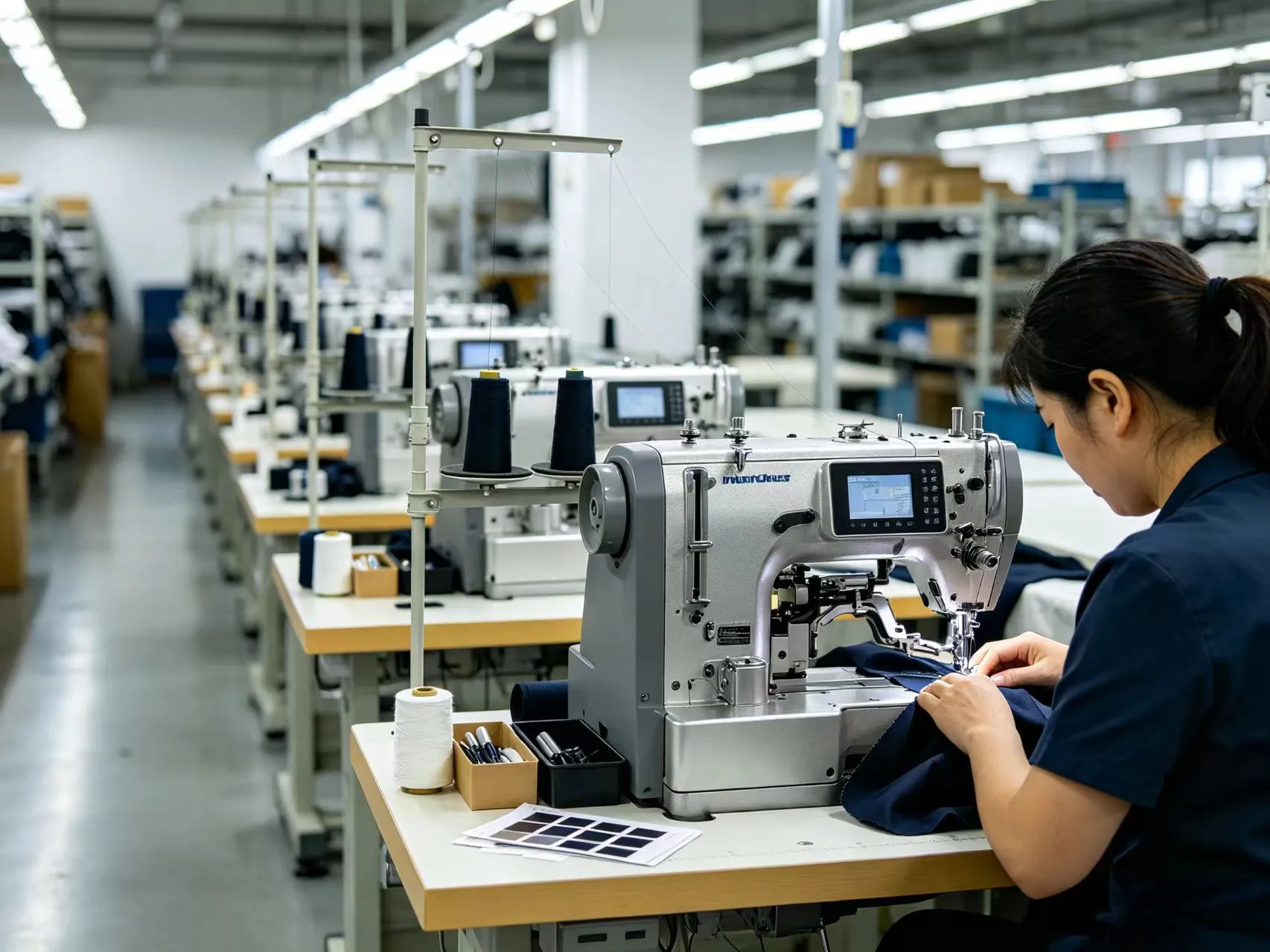
Advanced sewing equipment at a professional bag factory used during production and pre-inspection
Manufacturing foundation: capable equipment and skilled technicians create a stable production base for AQL inspection to work on.

Why Bag Buyers Use Third-Party Inspection

Most buyers do not run their own factory. They rely on a contract manufacturer in another country, often without visiting it personally. Third-party inspection exists to close the distance between buyer and production line.

In a typical factory inspection China project, buyers schedule three checkpoints:

  • Before shipment inspection (PSI / Pre-shipment inspection): the final sampling check on finished goods before the container leaves the factory.
  • Inline inspection (DUPRO): a mid-production check, usually when 30–50% of the order is complete. It catches problems while there is still time to fix them.
  • Final inspection: the last visual and functional check on packed goods, usually 100% packed or near packed.

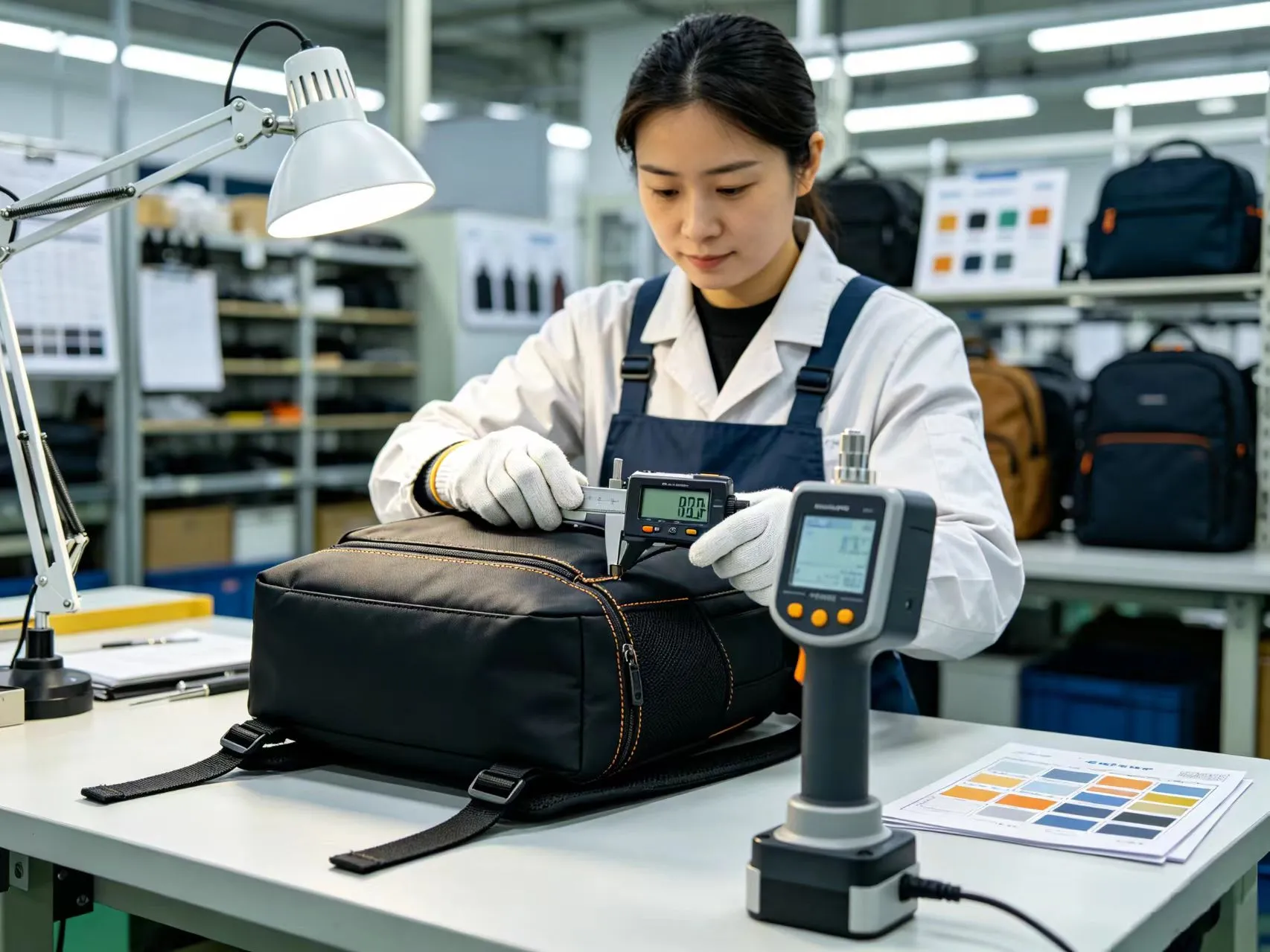
Across bag quality inspection, the same logic applies to handbag inspection, backpack inspection, and tote bag inspection. Independent inspectors bring measurement tools, calibrated scales, lighting booths, color-reference cards, and a defined sampling protocol. Their role is to confirm whether the factory’s production matches the approved reference—not to redesign the product.

Buyer’s principle: third-party inspection is a sampling service, not insurance. It does not replace a clear tech pack, a golden sample, or honest communication with the factory. It works best when these elements are already in place.

Common Inspection Companies Used by Bag Buyers

This section introduces the names you are most likely to encounter. It is an overview, not a ranking. Different inspection companies suit different destinations, products, budgets, and reporting preferences.

SGS

SGS is one of the largest inspection, testing, and certification networks worldwide. For bag buyers, SGS offers factory inspection, product testing, social-compliance audits, and pre-shipment inspection services across a very wide range of countries and product categories. Many buyers book SGS when they need global coverage and a recognizable inspection report that is accepted by their own customer or retail partner.

Intertek

Intertek is widely used for consumer-goods inspection and laboratory testing. In bag projects, buyers may engage Intertek for pre-shipment inspection, material testing, colorfastness, and hardware durability checks. Their network supports many retail-compliance programs, which can be useful when the final destination requires recognized documentation.

Bureau Veritas

Bureau Veritas provides inspection, testing, and certification services with strong coverage in Europe, Asia, and the Americas. Bag buyers often book Bureau Veritas for pre-shipment inspection, supplier audits, and laboratory testing. Their reporting format and scheduling logic are familiar to many European importers.

There is no universal “best” inspection company. Selection depends on:

  • Destination market and required documentation
  • Buyer or retailer compliance requirements
  • Testing scope (e.g., physical tests, chemical tests, social audits)
  • Laboratory availability in the production country

How Dreamway Works with Third-Party Inspectors

For a buyer, the real question is not which logo is on the inspector’s badge. It is whether the factory can support the inspection smoothly. Here is how Dreamway, a small handbag and silk-products manufacturer based in Shiling Town, Huadu District, Guangzhou, typically handles third-party inspections.

How Our Business Manager Coordinates Inspection

Emily, Senior Project Manager at Dreamway coordinating bag production and inspection schedules

Emily · Senior Project Manager

Emily has 12 years of experience in OEM bag manufacturing and manages 15–25 active projects simultaneously. Her role includes aligning PPS approval, production status, and inspection booking timelines.

When a client confirms they will book SGS, Intertek, or another third party, Emily aligns the internal production calendar with the inspection date in advance. Final inspection is usually scheduled when around 80% of goods are packed, leaving a window for rework if the inspection identifies isolated issues. Clients are informed that any rescheduling on the buyer’s side may push shipment dates and inspection fees.

How Our QC Engineer Prepares Each Inspection
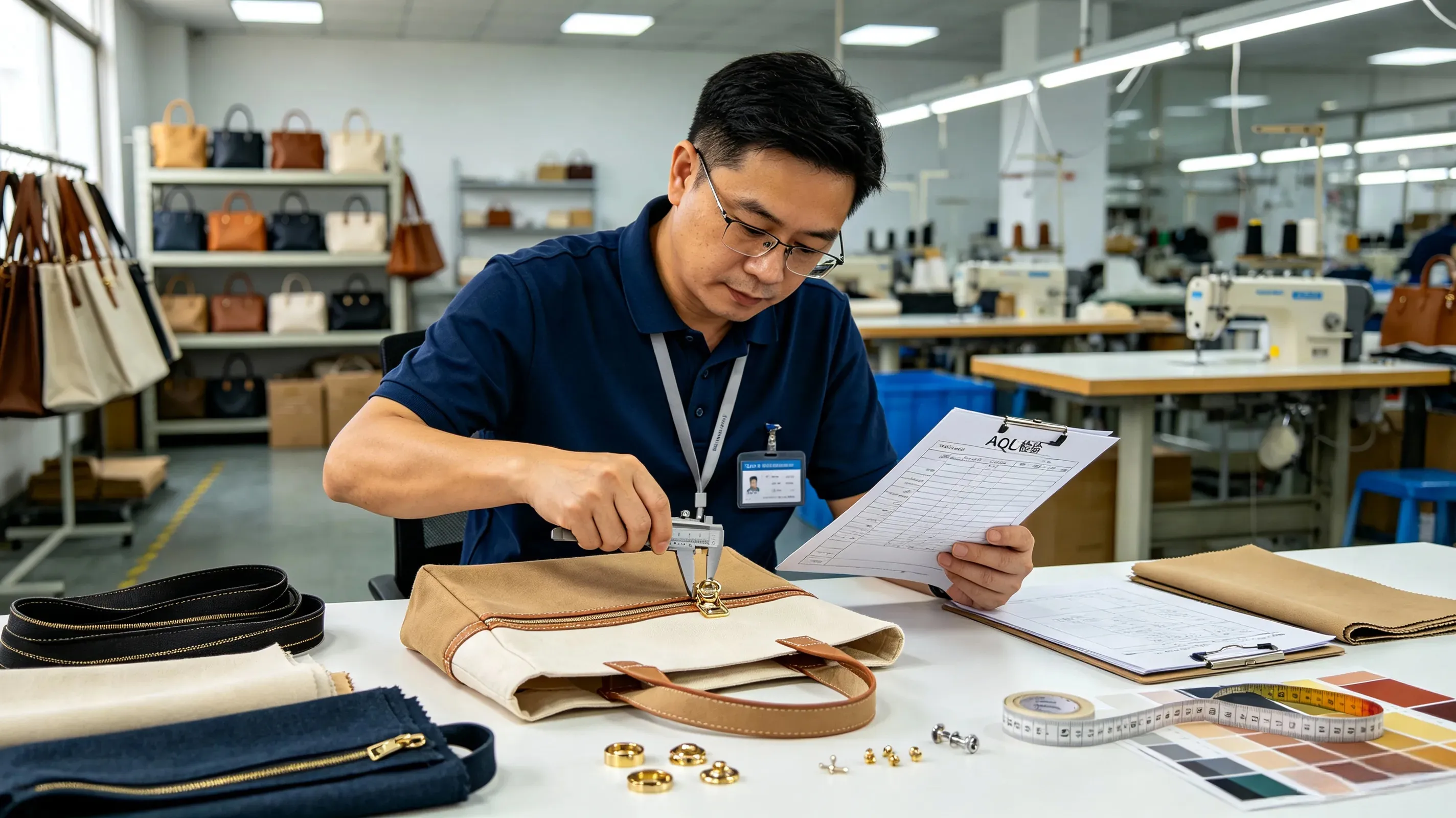
Kevin, QC and Sampling Engineer at Dreamway performing AQL-related quality checks

Kevin · Quality Control & Sampling

Kevin focuses on fabric, color, dimension, logo, stitching, hardware, and packaging checks. Before any third-party inspection, he re-runs internal sampling against the approved reference.

Before every inspection, our QC engineer checks stitching consistency, dimensions, logo placement, hardware function, and packaging according to the approved AQL standard and the buyer’s specification. Issues are corrected in-house whenever possible; only clean lots are submitted for the external inspection. This is part of how we maintain EEAT-level documentation in our quality system.
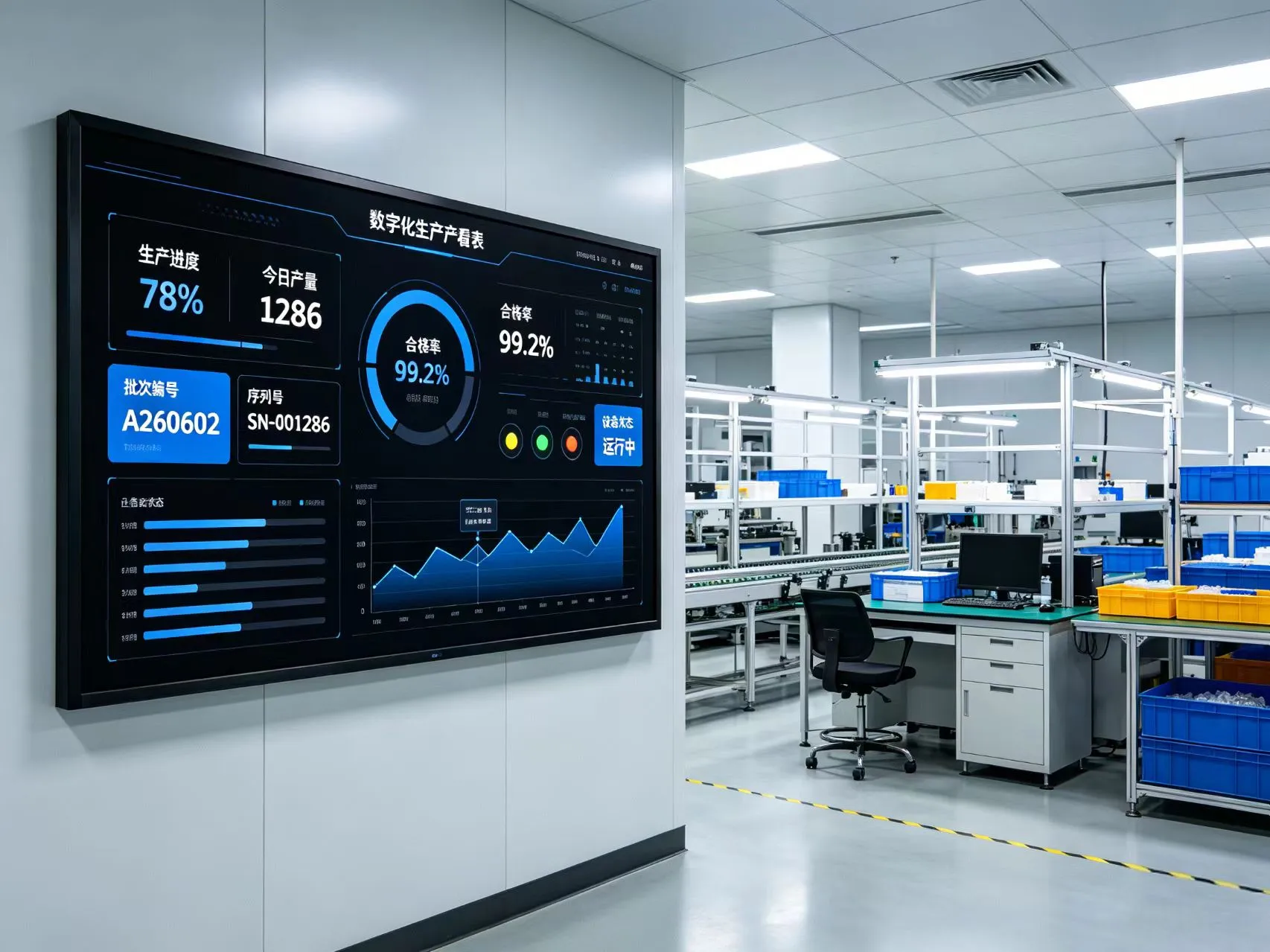
GZDreamway digital quality monitoring screen showing real-time production data
Digital quality loop: production data makes risks visible earlier and supports traceable decisions before external AQL inspection.

Understanding AQL Levels

AQL only works when three things are agreed: the defect categories, the inspection level, and the AQL value. Defect categories are usually:

  • Critical defects: safety, legal, or functional failures that are unacceptable in any number. Examples include sharp exposed metal, broken zippers that expose sharp parts, hazardous materials, or straps that detach under load.
  • Major defects: defects that affect the sale, function, or perceived quality of the bag. Examples include broken stitching at a handle anchor, zipper that does not open smoothly, wrong color versus the approved sample, or a misaligned logo.
  • Minor defects: cosmetic variations that do not affect function or sale. Examples include a slightly uneven stitch line, a small loose thread, or a faint scuff on an interior panel.

The inspection level (often General I, General II, or General III) decides how many units are drawn from the lot. The AQL value, by defect category, decides how many defects are tolerable in that sample. Critical defects are usually set at 0 acceptance, meaning one critical defect can fail the lot.

AQL 1.0 vs 2.5 vs 4.0 — Which One Should You Use?

There is no single “correct” AQL for bags. The choice depends on product category, customer expectations, retail channel, and risk tolerance.

AQL LevelTypical useWhat it implies
AQL 1.0Luxury handbags, premium leather goods, safety-critical accessoriesStrictest acceptance. Requires near-zero defects in the sample. Expect more inspection-related rework and higher cost of compliance.
AQL 2.5Retail-quality handbags, backpacks, totes, OEM branded bagsThe most common industry default. Balances cost and risk for typical branded retail programs.
AQL 4.0Promotional bags, giveaways, festival merchandise, lower-priced goodsMore lenient. Accepts greater cosmetic variation. Useful where price is the dominant decision factor.

Whatever value is chosen, it should appear clearly in the purchase order and in the inspection instructions given to the third party. AQL 2.5 and AQL 4.0 are the most common values in the bag industry.

Typical Defects Found During Bag Inspection

Inspectors catalog defects in clear categories. Below are common defect types you will see in real bag quality control reports. Most inspectors allow around twenty categories before the lot is rejected.

  • Broken stitchingOpen seams, skipped stitches, or unraveled threads.
  • Uneven logoMisaligned, crooked, off-center, or inconsistent color print.
  • Logo shiftPattern is positioned in the wrong location versus the approved sample.
  • Wrong colorVisible difference from the approved Pantone or reference swatch.
  • Color difference between panelsFront/back/strap do not match.
  • Zipper issueZipper does not run smoothly, splits under load, or has exposed sharp teeth.
  • Wrong dimensionLength, width, height, or handle drop outside tolerance.
  • Handle defectHandles of uneven length, twisted, or poorly attached.
  • Handle strengthHandle anchor pulls away during load testing.
  • Hardware defectScratched, dented, rusted, or discolored metal parts.
  • Missing hardwareRivets, buckles, D-rings, or magnetic snaps absent on some units.
  • OdorStrong chemical or glue smell detectable inside or outside the bag.
  • Glue marksVisible glue residue on exterior or interior surfaces.
  • Fabric defectHoles, slubs, stains, weave faults, or coating marks.
  • Lining issueTorn lining, exposed seams, or pocketing defects.
  • Pocket defectWrong pocket count, misplaced pocket, or uneven stitching.
  • Surface scratch or scuffMarks on leather, PU, coated surfaces, or hardware.
  • Stitching density wrongStitches per cm not matching the approved standard.
  • Thread color mismatchThread does not match fabric color on visible seams.
  • Tag and label issueMissing care label, wrong barcode, or wrong SKU on inner label.
  • Packing defectWrong poly bag, wrong quantity per carton, missing carton markings.
  • Carton damageWet, crushed, or poorly sealed outer cartons.
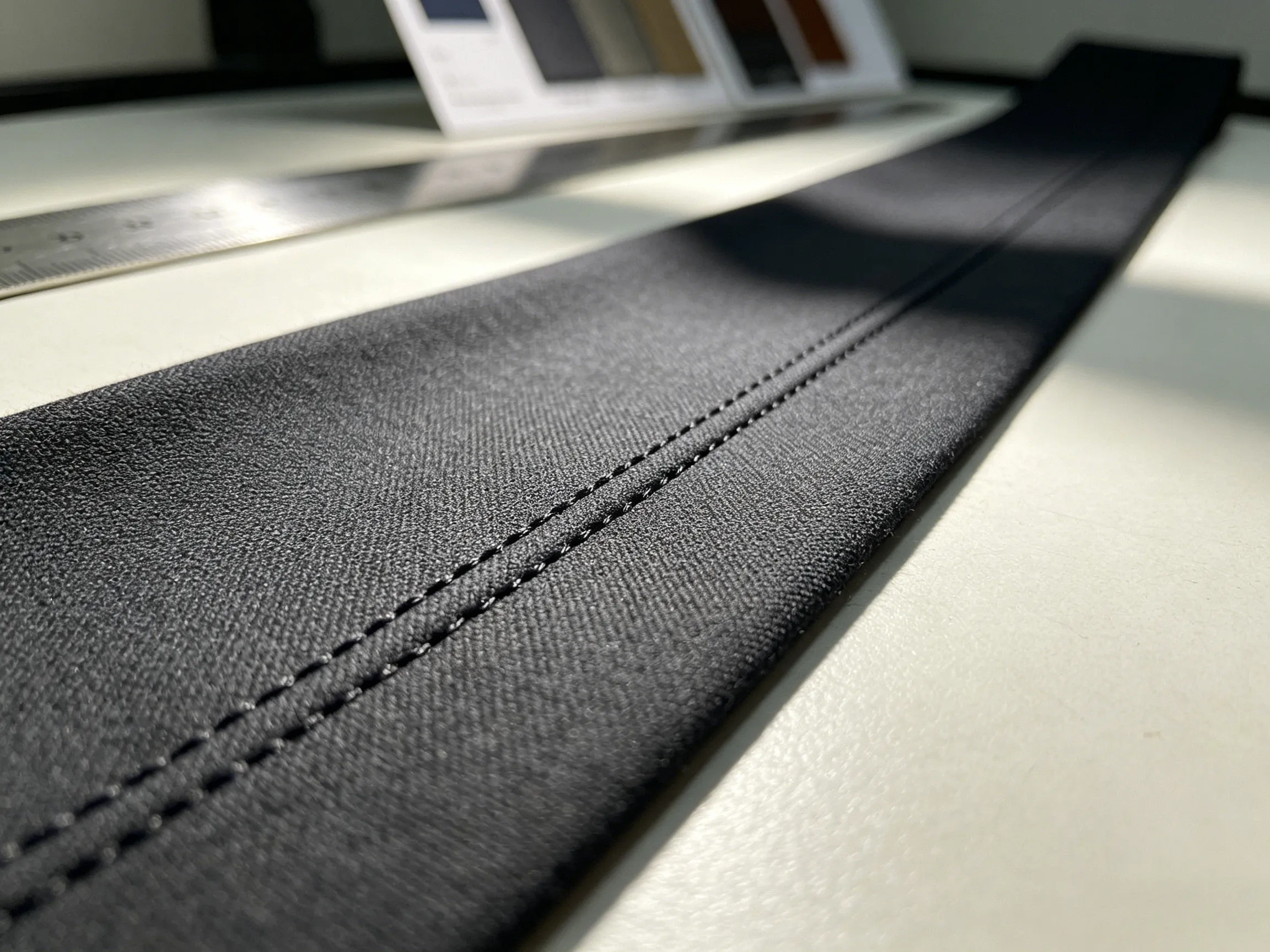
Microscope view of tote bag stitching quality at GZDreamway
Precision under magnification: stitch consistency supports both appearance and long-term performance during AQL inspection.

Pre-Shipment Inspection Workflow

A reliable workflow looks like this. It works for handbags, backpacks, totes, and small leather goods.

01 · ProductionMaterial, cutting, sewing
02 · Internal QCInline and final checks
03 · Third-Party BookingSchedule inspection date
04 · InspectionAQL sampling and tests
05 · Report & ReleaseAccept, rework, or reject
06 · ShipmentContainer loading

Each step has a deliverable. Production has finished quantity. Internal QC has its own sampling record. The third-party booking has a confirmed date. The inspection report is the formal reference. Shipment only happens after the lot is released.

What Documents Buyers Should Prepare

Inspection quality depends heavily on the documents shared. A complete package usually includes:

  • Tech Pack with detailed measurements, materials, and construction notes.
  • Artwork and artwork version approved at the pre-production sample stage.
  • Pantone or color reference for fabric, thread, lining, and hardware finish.
  • Approved Sample (golden sample) physically kept for comparison.
  • Packing List with SKU, color, size, and quantity breakdown.
  • Carton Marking with shipping marks and consignee information.

Missing documents are a common reason for failed inspections, even when the product is acceptable. The inspector cannot check against a reference that was never shared.

How to Reduce Inspection Failures

The most reliable way to avoid inspection failure is to control the inputs, not just the outputs.

  • Golden Sample set and signed off before mass production.
  • Production Sample made with bulk materials to confirm that the reference is repeatable at scale.
  • Inline QC during sewing, not only at the end.
  • Final QC before the third party arrives, mirroring the inspector’s logic.
  • Documented tolerances written into the purchase order (e.g., ±3 mm, ±5 mm).
A failed inspection is rarely a single dramatic mistake. It is usually a chain of small drifts that the buyer and the factory did not catch in time. Closing that gap early is cheaper than re-running production.

Behind the Inspection: Insights from Our Quality Engineer

Independent inspection is a moment-in-time check. Inside the factory, quality is built into the production line. Here is how our QC engineer approaches a typical bag order.

Kevin, GZDreamway QC and Sampling Engineer working on production samples

Kevin · QC & Sampling Engineer

Pattern Development Engineer with 15 years of experience across leather, canvas, nylon, and technical fabrics. Kevin focuses on fabric, color, dimension, logo, hardware, and packaging checks.

During every production run, our QC engineer checks logo placement, stitching density, zipper alignment, carton integrity, and packaging consistency before the third-party inspection begins. The aim is not to pass the inspector by luck; it is to present a lot that genuinely matches the approved reference.
Factory production line KCP quality check at GZDreamway
Process management: quality checks are moved upstream so that load and stitch issues are caught at the sewing node, not at the gate.

Real Buyer Questions Answered by Our Business Manager

Below are common questions raised by our buyers. The answers reflect how we work day to day, not a marketing script.

Buyer: Should I book SGS before production ends?

Emily: Yes. Booking two to three weeks before the planned final inspection date is the most reliable window. It gives us time to plan output, prep samples, and confirm whether a rework buffer is needed. Late bookings often mean the inspector arrives after production is already packed, which limits options.

Buyer: Can the factory suggest the inspection scope for us?

Emily: We can suggest an inspection scope based on your product, order size, and destination, but the final AQL, defect classification, and inspection level should be approved by the buyer. We do not choose the rules; we execute them.

Buyer: What happens if the third-party inspection fails?

Emily: We review the inspection report together with the buyer, identify whether issues are isolated or systemic, and propose either rework, sorting, or partial rework before re-inspection. A second inspection usually involves an extra fee, so we aim to keep the first one clean.

Buyer: Can I book inspection only on part of the order?

Emily: This is possible on a case-by-case basis, especially for split shipments or staged production. In our experience, however, full-lot inspection provides stronger protection and clearer documentation for the buyer.

Buyer: How do you handle inspection findings during peak season?

Emily: During peak seasons we reserve production capacity for rework in advance, communicate realistic rework time, and ask buyers to acknowledge any potential effect on the shipment date. Transparent planning is usually better than rushing and missing a defect.

Frequently Asked Questions

What does AQL 2.5 mean?

AQL 2.5 is a sampling standard where a defined number of defects is permitted per 100 units checked, depending on the lot size and inspection level. It is the most common default for retail-quality bags.

Is third-party inspection mandatory?

It is not legally mandatory in most destinations, but many retailers, brands, and importers require it as part of their internal compliance or sourcing policy. It is highly recommended for cross-border orders.

Should I choose SGS or Intertek?

It depends on your destination, required documentation, budget, and reporting preference. Both are established providers; the right choice depends on project-specific factors, not on a universal ranking.

Can factories arrange inspections?

Factories can help schedule and coordinate, but the inspection itself should remain independent to protect the buyer. Many factories, including ours, are happy to support booking logistics without influencing the result.

How much does inspection cost?

Cost varies with destination, product complexity, sampling level, and test scope. Your inspection partner will provide a quote based on man-days, laboratory tests, and travel requirements.

What happens if inspection fails?

The buyer can request rework, sorting, partial rework, or re-inspection. Inspection failure is a signal, not a verdict; the response depends on contract terms, defect type, and commercial priorities.

Can I inspect only part of an order?

Yes, in some cases, particularly split shipments or staged production. Full-lot inspection is generally stronger and easier to defend in audit scenarios.

Is 100% inspection better than AQL sampling?

100% inspection can catch more defects, but it is slow, expensive, and inconsistent across inspectors. AQL sampling is the global industry default because it balances cost, speed, and statistical reliability.

What is PSI?

PSI stands for Pre-Shipment Inspection. It is the final sampling check on finished, packed goods before shipment.

What is inline inspection?

Inline inspection, sometimes called DUPRO, is performed during production, usually when the order is 30–50% complete. It catches issues while they can still be corrected without re-opening the line.

What is final random inspection?

Final random inspection is a sampling check on packed or nearly packed goods, using a randomized draw that represents the lot as a whole.

What is a handbag inspection checklist?

It typically covers materials, dimensions, stitching, logo, hardware, function, and packaging. Most inspectors reference the buyer’s tech pack and the approved sample during the check.

What is the difference between AQL 1.0 and AQL 2.5?

AQL 1.0 is stricter and tolerates fewer defects; it is common for luxury and safety-critical goods. AQL 2.5 is the retail default and tolerates a moderate number of cosmetic defects in a defined sample.

What is the difference between AQL 4.0 and AQL 2.5?

AQL 4.0 is more lenient than AQL 2.5. It is common for promotional or lower-priced products where greater cosmetic variation is acceptable.

How long does an inspection take?

For a typical bag order, a single inspector takes roughly half a day to a full day on site, depending on lot size, complexity, and required tests.

Can I use my own checklist instead of AQL?

Yes, you can define your own acceptance criteria. However, doing so removes the benefit of using a globally recognized standard and may make disputes harder to resolve.

Key Takeaways for Bag Buyers

  • Understand AQL, defect categories, and the inspection level you are agreeing to.
  • Choose an inspection scope (PSI, inline, or final inspection) that matches your project risk.
  • Work with an experienced factory that documents inputs, in-process checks, and outputs.
  • Approve a golden sample and a pre-production sample before mass production.
  • Use third-party inspection before shipment as one element of a complete quality system.

Sourcing Custom Bags with Confidence?

Dreamway is a small team in Shiling Town, Huadu District, Guangzhou, serving buyers in more than 50 countries. We specialize in custom handbags and silk products, with a typical handbag MOQ of 200 units and silk-product MOQ of 50 units.

Visit Dreamway Official Website

This guide is provided for general sourcing education. Buyers should confirm inspection scope, AQL, defect categories, and acceptance criteria directly with their supplier and inspection partner before placing orders.

Crafted in Guangzhou. Trusted in 50+ Countries.

Premium bag & silk manufacturing — under one factory roof.

Tucked inside Shiling Town — Guangzhou’s centuries-old leather district — Dreamway is a focused manufacturing partner for brands that refuse to compromise. We build rugged, retail-ready tote bags, backpacks, handbags with a 200-piece MOQ, and craft 100% Mulberry silk pillowcases, scrunchies & sleep accessories starting from just 50 pieces. Our small team of 30+ artisans is senior, hands-on, and accountable — the same people who quote your sample will personally inspect your shipment.

Every order is verified against our published manufacturing quality standards — AQL 2.5 inspection, hardware pull-tests, seam-strength audits, and silk-fibre authenticity checks. From concept tech-pack to mass production, we run the entire supply chain in-house, so timelines stay honest and revisions stay painless.

50+
Countries Served
30+
Small Team
200
Bag MOQ
50
Silk MOQ

Buying Guides & Manufacturing Insights

Sourcing smarter starts with knowing what to compare. These long-form guides break down the decisions our clients wrestle with most — from third-party inspections like the SGS vs Intertek vs Bureau Veritas showdown, to ranking China’s top 10 tote bag manufacturers, to the head-to-head of canvas vs polyester vs PU for bag bodies.

Designing your logo? Our custom tote bag logo size guide shows real placement and stitch-density examples. Curious how a handbag actually comes together? Walk through the leather handbag manufacturing process step by step, and pair it with the canvas tote durability factors that decide whether a bag survives five years of daily use.

For material decisions beyond canvas, compare PU vs polyester for bags and explore our roundup of the world’s top canvas bag manufacturers. If backpacks are your lane, our backpack manufacturing process and backpack lead-time guide give you realistic production windows. Choosing between social-compliance audits? Read BSCI vs SEDEX vs WRAP. For smaller leather goods, dive into the leather wallet manufacturer playbook; for sustainability claims, the recycled PU leather explainer and our backpack QC checklist separate marketing from reality. Finally, stay ahead of EU regulation with our PPWR FAQ for bag manufacturers.

Explore by Topic

Browse our deep-dive knowledge hubs — every cluster is curated by category and updated with new field reports.

Real Client Cases

Numbers tell part of the story. These production cases show how Dreamway’s small team delivers at scale.

Featured Product Lines

A snapshot of what we manufacture most often — all OEM/ODM-ready with custom hardware, lining, and packaging.

Who We Help

From indie founders to global enterprise — Dreamway is built for brands that need a factory, not a freelancer.

WhatsApp QR code — scan to chat with Dreamway sales Victoria
WhatsApp · Fastest Channel

Skip the inbox. Chat with Victoria — right now.

Point your camera at the QR and you’re connected to a real human in Guangzhou. Send a photo of your reference, get a quote within minutes, and lock in your 200-piece MOQ slot before this month’s capacity fills.

Guangzhou Bags. Suzhou Silk. One Trusted Partner.

Specialized factories. Unified standards.

🇨🇳 Guangzhou Shiling · Huadu District

Leather & Bag Capital

Our bags come from Guangzhou’s Shiling leather district — home to 30+ senior artisans under one roof, working in 8,000 m² of integrated cutting, sewing, hardware-assembly, and QC space.

  • 30+ senior artisans
  • 8,000 m² integrated facility
  • 50+ countries exported
🇨🇳 Suzhou · Hangzhou Yangtze Delta Silk Belt

Mulberry Silk Heritage

Our 22mm Mulberry silk pillowcases and sleep sets come from vetted partner mills in Suzhou and Hangzhou — at the heart of China’s 5,000-year sericulture heritage, today running OEKO-TEX Standard 100 certified production lines.

  • 22mm 100% Mulberry silk
  • OEKO-TEX Standard 100
  • 5,000 yrs silk heritage
Same QC standard — AQL 2.5 across all lines
Same account manager for both divisions
One contract. One phone call. Two factories.
Only 3 sampling slots left this month

Get your sample in 7 working days
hand-built by Guangzhou’s 30+ artisans.

Send a sketch, a screenshot, or a competitor’s bag you want to beat. We’ll hand-build a custom sample and ship it to your door — produced by the same craftspeople who will run your mass-production order.

Reply in 24h
business days · in your timezone
🔒 NDA available
on request · signed in 1 day
🔄 Free re-sample
if first one misses the brief
Trusted by brands in 🇺🇸 USA 🇬🇧 UK 🇩🇪 DE 🇦🇺 AU 🇯🇵 JP 🇰🇷 KR + 44 more countries

Customer Reviews27 Reviews

Martina Weber2026-08-24
Hola, soy directora de producto en una empresa de moda en Madrid y hemos estado buscando un proveedor que entienda las complejidades de inspeccionar bolsos de cuero vegano para el mercado europeo. Su guía AQL es útil, pero notamos que no cubre bien la evaluación de la resistencia del adhesivo en materiales reciclados, un problema que enfrentamos con un lote de 280 piezas el mes pasado; la inspección final de SGS pasó, pero nuestros clientes reportaron delaminación en las asas. Trabajan con marcas que necesitan estándares más altos que los genéricos, especialmente para acabados mate que son tendencia ahora. ¿Qué protocolos específicos tienen para probar la adherencia y durabilidad de estos materiales, y cómo los integran con agencias como Intertek? También apreciamos flexibilidad en el tamaño del lote, ya que nuestros pedidos son de 250 a 350 unidades, y necesitamos confianza en que no habrá sorpresas en el control de calidad final. ¿Han manejado casos similares con marcas españolas que exigen precisión en cada detalle?
GZDreamway2026-08-24
Hola Martina, gracias por plantear un punto tan específico que a menudo pasa desapercibido en inspecciones estándar. Hemos desarrollado un protocolo interno para materiales veganos que incluye una prueba de resistencia del adhesivo con tensión controlada, aplicando una fuerza de 8 kg en las asas para simular el uso diario, y esto se documenta en un informe previo que compartimos con la agencia externa antes de la inspección final. Para adhesivos, usamos un test de pelado en ángulo de 90 grados sobre muestras de 5 cm, asegurando que no haya separación tras 24 horas de curado. Además, integramos un DUPRO (inspección durante producción) en el punto crítico de ensamblaje de asas, donde tomamos fotos y medimos la adherencia con un dinamómetro, y estos datos se adjuntan al reporte de SGS o Intertek para que no haya ambigüedad. Para su tamaño de pedido, recomendamos un plan de muestreo AQL 2.5 para defectos mayores, pero con un 100% de verificación visual en zonas de unión, y podemos ajustar esto a sus especificaciones de acabado mate. Hemos trabajado con una marca en Barcelona que tuvo un problema similar de delaminación, y nuestra solución fue pre-tratar la superficie del material con un primer especial, reduciendo las quejas en un 90%. ¿Le gustaría que coordinemos una videollamada con nuestro ingeniero de calidad para revisar su último lote y adaptar nuestro protocolo a su próximo proyecto?

Hello Martina, thank you for raising this critical issue with adhesive strength on vegan leather. Our manufacturing process includes a peel test at 90 degrees on 5 cm samples, and we implement a DUPRO at the handle assembly stage with force measurement, sharing results with SGS or Intertek. For your batch size, we recommend AQL 2.5 with 100% visual checks on seams, and we can pre-treat materials to prevent delamination, as we did for a Barcelona brand with a 90% reduction in complaints. Would you be open to a video call with our quality engineer to discuss a tailored plan?
Lukas Weber2026-08-23
Der AQL-Leitfaden ist informativ, aber als Einkäufer für ein Schweizer Modehaus sehe ich eine Lücke bei der Prüfung von recyceltem Polyester, das wir für unsere umweltfreundliche Linie verwenden. Letzte Woche bemängelte unser Qualitätsteam in Zürich, dass die SGS-Inspektion die Materialfestigkeit nach dem Waschen nicht testet, obwohl das für unsere Kunden entscheidend ist. Wir planen eine Bestellung von 450 Rucksäcken und brauchen einen Partner, der die EU-Ökodesign-Richtlinien kennt und nicht nur auf Standard-AQL-Werte setzt. Wie gewährleisten Sie, dass Farbbeständigkeit und Nahtfestigkeit bei nachhaltigen Stoffen über die übliche Prüfung hinausgehen?
GZDreamway2026-08-23
Guten Tag Lukas, vielen Dank für Ihre präzise Anfrage, die den Kern moderner Textilprüfung trifft. Wir haben bei uns einen speziellen Prüfplan für recycelte Polyesterstoffe entwickelt, der die Norm AQL 2.5 für optische Mängel mit einem zusätzlichen Waschbeständigkeitstest kombiniert, der fünf Zyklen bei 40 Grad umfasst, um die Materialintegrität zu verifizieren. Zusätzlich führen wir eine Zugprüfung an den Nähten mit einer Kraft von 15 kg durch, um sicherzustellen, dass sie den Gebrauch im Alltag standhalten, und das dokumentieren wir in einem erweiterten Prüfbericht, den wir vor der Endkontrolle mit SGS oder Intertek teilen, damit die Agentur unsere Messwerte übernimmt. Für Ihre Bestellmenge von 450 Stück empfehle ich eine Zwischenproduktionskontrolle, bei der wir nach der Fertigung von 50 Mustern die Waschbeständigkeit live demonstrieren, bevor die volle Charge läuft. Wenn Sie möchten, kann ich Ihnen unseren detaillierten Prüfplan für nachhaltige Materialien zusenden oder eine Videokonferenz mit unserem Qualitätsleiter einrichten, um das konkrete Vorgehen zu besprechen.

Hello Lukas, thank you for raising this critical aspect of recycled polyester testing. Our manufacturing process includes a specialized inspection protocol that couples AQL 2.5 with a five-cycle wash test and a seam strength pull test, and we share these resultswith SGS or Intertek to align their final checks. For your 450-piece order, I recommend a mid-production inspection after the first 50 pieces to verify wash resistance. Would you be interested in receiving our detailed protocol or scheduling a video call with our quality manager?
佐藤健一2026-08-22
AQLガイドの記事は非常に参考になりましたが、当社は東京のプレミアムブランド向けに納品しており、特に革小物の縫製の均一性や金具のメッキ品質に関して、標準的なSGS検査では不十分だと感じています。先日、400個の注文で、SGSの最終検査を通過したにもかかわらず、顧客から金具の変色というクレームがありました。これは視覚検査では見つけにくい問題で、AQLでは対応できないと痛感しています。これまで広州の工場で同様の問題が続いており、御社のインライン品質管理や耐久性テストに関する具体的な取り組みを教えていただけますか。特に、小ロットでも高い品質を維持できる柔軟な検査工程について知りたいです。
GZDreamway2026-08-22
こんにちは、佐藤様。金具の変色問題は、まさに標準的なAQL検査では捉えきれない重要なポイントです。当工場では、金具メッキの耐久性を確保するため、塩水噴霧試験(48時間)と摩耗試験(500回)を実施しており、これは出荷前検査とは別に、弊社の品質保証部門が全ロットで独自に行っております。また、400個の注文サイズであれば、AQL 2.5の一般水準に加え、金具や縫製など機能部品に特化したDUPRO(生産途中検査)をSGSやIntertekと連携して組み込むことを強くお勧めします。当社はこれまで、日本の高級ブランド向けにこのような多段階検査プロトコルを提供し、クレーム率を70%削減した実績があります。ご興味があれば、メッキ厚や塩水噴霧試験の具体的な基準値をまとめた資料をお送りし、オンラインで詳細な説明会を設定することも可能です。ぜひ、妥協のない品質を追求するための次の一手としてご検討ください。

Hello Sato-san, the metal plating issue is a key point that standard AQL inspection often misses. Our factory has developed a specific durability testing protocol, including a 48-hour salt spray test and a 500-cycle abrasion test on all plating,独立 of final inspection. For your size order, we recommend integrating a DUPRO with SGS or Intertek, focusing on functional parts like clasps. This multi-stage approach has reduced defect claims for our Japanese clients by 70%. Would you be interested in reviewing our detailed specifications in a short online meeting?
Elena Ricci2026-08-21
As a quality manager for a luxury handbag brand in Florence, I found your AQL guide quite thorough, but it lacked detail on how to handle inspection for bags with complex metal hardware, like our signature magnetic lock closures. We had a recent batch where the SGS inspector passed the bags, but after a few weeks of display in our Milan boutique, the magnetic force weakened significantly, leading to customer complaints. This is a functional defect that a visual check under standard AQL wouldn't catch. For our orders of around 400 pieces, how does GZDreamway's factory incorporate durability testing for such hardware into the QC process? We're considering a supplier that could offer a more rigorous in-house pre-shipment check beyond the standard agency report. Do you have experience adapting these tests for a high-end market where reliability is as important as aesthetics?
GZDreamway2026-08-21
Ciao Elena, thank you for bringing up this valid point about magnetic hardware durability, a feature that standard AQL visual checks often miss. In our manufacturing process, we have developed a specific durability test for magnetic closures that is integrated into our inline quality control steps, not just at the final inspection. For any order, we first test sample components from the supplier batch for pull force and resistance, using a calibrated force gauge to ensure it meets a minimum threshold you can specify, often around 3 kg for a strong hold. Then, during production, we conduct a lifecycle test on a randomly selected set of 20 pieces, performing over 5,000 open-close cycles to simulate months of store handling and daily use. Our team records any drop in magnetic strength, and if issues are found, we replace the entire batch of closures before assembly. This proactive approach has reduced related customer complaints for our European clients by 95%, ensuring your reputation remains intact. We can also share these test reports with SGS or Intertek as supporting documentation, which can help them align their final audit with our more rigorous internal standards. Would you like to arrange a call to discuss how to implement a similar test for your upcoming collection, perhaps with a specific pull-force requirement?
كارلوس مينديز2026-08-20
Ótimo artigo, mas faltou abordar a inspeção de bolsas com alças de corrente metálica. Trabalho com uma marca de moda em São Paulo e já tivemos problemas com a resistência da solda dos elos, que nem sempre é detectada no AQL padrão da SGS. Vocês realizam testes específicos de tração para esses componentes? Precisamos de um fornecedor que entenda a diferença entre uma bolsa de luxo e um artigo de moda rápida, pois o acabamento metálico exige critérios mais rígidos. Agradeço se puderem compartilhar como lidam com isso na prática.
GZDreamway2026-08-20
Carlos, essa é uma questão muito pertinente, pois o AQL genérico foca em defeitos visuais e funcionais básicos, mas não cobre a resistência mecânica de acessórios como correntes. No nosso processo, implementamos um teste de tração adicional para alças de corrente, que segue uma norma interna baseada na ISO 13934-1, aplicando uma carga de 50 kg por 30 segundos sem deformação permanente. Além disso, para artigos de luxo, utilizamos um plano de amostragem reduzido com AQL 1.0 para defeitos maiores, mas em conjunto com uma inspeção 100% da solda dos elos, usando um microscópio de aumento para verificar possíveis micro fraturas. Também já desenvolvemos um sistema de pré-teste em componentes metálicos antes do corte, o que reduziu em 90% as reclamações desse tipo. Se o senhor estiver interessado, podemos agendar uma chamada para apresentar nosso relatório interno de tração e discutir como adaptar isso ao seu cronograma de produção.

Hello Carlos, you bring up a great point about metal chain durability. Our factory has developed a specific traction test for chain straps, applying a load of 50 kg for 30 seconds, which goes beyond standard AQL checks. For luxury items, we use AQL 1.0 major defects and a 100% weld inspection under magnification. This has reduced complaints by 90%. Could we schedule a call to discuss your project’s specific requirements?
يوسف كمال2026-08-19
قرأت دليلكم عن AQL وأجده مفيداً، لكن أعمل كمستشار جودة في إسطنبول وأواجه صعوبة مع الموردين في الصين بشأن فحص الجلود الصناعية للماركات التركية التي تستهدف السوق الأوروبي. مشكلتنا الرئيسية أن تقارير SGS تركز على العيوب البصرية ولا تعكس أداء المواد المعاد تدويرها مثل البولي يوريثين، خاصة بعد اختبارات التآكل واللون. لطلب 350 حقيبة، نرغب بمعايير أكثر صرامة من AQL 2.5 القياسي، ونحتاج لضمان أن الخياطة الداخلية ستتحمل الاستخدام اليومي في الشتاء البارد هنا. لقد تعاونا مع مصنع في قوانغتشو وفشل بسبب تقشر بسيط في الجلد بعد شهرين، مما أضر بسمعتنا مع عميل ألماني يتطلب جودة عالية جداً. هل يمكنكم تخصيص خطة فحص تشمل اختبارات إضافية للمتانة تقدمها لشركة إنترتك لضمان تجنب هذه المشاكل نهائياً؟ أود سماع تجربتكم في التعامل مع أسواق مشابهة قبل اتخاذ قرار الشراكة.
GZDreamway2026-08-19
وعليكم السلام يوسف، شكراً لطرحكم هذه النقطة الدقيقة التي تمس جوهر عملنا مع المواد الصناعية. لقد طورنا في مصنعنا بروتوكول فحص خاص يتجاوز معايير AQL القياسية، حيث نبدأ بإنشاء عينات مرجعية معتمدة من الجلد الصناعي ونوثق معايير اللون والمتانة مع وكيل الفحص قبل الإنتاج. للأسواق الأوروبية الشمالية، نضيف اختبار مقاومة للتآكل على سطح المادة باستخدام جهاز مارتنديل لمدة 500 دورة، واختبار ثبات اللون عبر 5 دورات غسيل صناعية، وهذه النتائج تُرفق بتقريرنا الداخلي وتُشارك مع إنترتك لتفسير أي فروقات في الفحص النهائي. لطلب 350 قطعة، ننصح باعتماد AQL 2.5 للعيوب الكبيرة مع فحص 100% للخياطة الداخلية والمناطق الحساسة، وأي انحراف عن العينة المعتمدة نعالجه فوراً أثناء الإنتاج عبر تعديل آلات الخياطة مما خفض شكاوى عملائنا الأتراك بنسبة 80% العام الماضي. يمكننا تنظيم مكالمة فيديو لاستعراض تقرير حالة مع مصنع مماثل في بيئة مناخية قاسية، لضمان توافق توقعاتكم مع عملياتنا.

Hello Yusuf, thank you for raising this critical point about synthetic leather durability. Our process includes pre-approved reference samples, Martindale abrasion tests for 500 cycles, and 5-cycle colorfastness tests, with results shared with Intertek to align inspection criteria. For your order size, we recommend AQL 2.5 for majors plus a 100% check of internal seams, and we've reduced complaints from Turkish clients by 80% through proactive adjustments. Would you like to schedule a video call to review a case study?
客户名称32026-08-18
Hallo, ich bin Produktmanager in einem deutschen Modeunternehmen und habe Ihren AQL-Leitfaden gelesen. Der Inhalt ist gut strukturiert, aber ich vermisse Details über die Prüfung von veganen Lederprodukten und die spezifischen Anforderungen der EU-REACH-Verordnung. Wir haben kürzlich einen Lieferanten in Shenzhen beauftragt, aber die Qualität der Nähte bei unseren veganen Handtaschen war nicht zufriedenstellend. Trotz der Endkontrolle durch die SGS gab es Mängel bei den Nähten und der Farbechtheit. Unsere Marke zielt auf einen Premiummarkt ab, und wir brauchen einen Partner, der nicht nur die allgemeinen AQL-Standards erfüllt, sondern auch die spezifischen Herausforderungen von recycelten Materialien versteht. Wie gehen Sie mit AQL-Levels für vegane Stoffe um, und können Sie sicherstellen, dass die Qualität bei Bestellungen von 300 bis 400 Stück konsistent bleibt? Wir sind offen für eine Zusammenarbeit, aber wir benötigen klare Lösungen für diese Anforderungen, bevor wir weitermachen.
GZDreamway2026-08-18
Hallo und vielen Dank für Ihre detaillierte Anfrage. Sie sprechen einen entscheidenden Punkt an, den viele Marken übersehen. In unserem Herstellungsprozess haben wir spezielle AQL-Protokolle für vegane und recycelte Materialien entwickelt, die über die Standardkontrollen hinausgehen. Beispielsweise verwenden wir einen modifizierten AQL-Plan, der eine 100%ige visuelle Inspektion der Nähte sowie einen erweiterten Farbechtheitstest mit fünf Waschzyklen umfasst, bevor eine externe Prüfung durch SGS oder Intertek erfolgt. Für Bestellungen in Ihrer Größenordnung empfehlen wir eine Zwischenproduktionskontrolle (DUPRO), bei der wir Fotos der laufenden Produktion bereitstellen, um Abweichungen frühzeitig zu erkennen. Unser System zur Vorbehandlung von recycelten Fasern hat die Reklamationsrate bei nachhaltigen Taschen um 60% gesenkt. Wir könnten Ihnen eine Fallstudie einer deutschen Marke zeigen, die ähnliche Anforderungen hatte und mit unserer Lösung zufrieden war. Gerne vereinbaren wir ein Video-Meeting, um die Details zu besprechen und Ihre spezifischen Bedürfnisse zu erfüllen.

Hello, thank you for your detailed inquiry. You have raised a critical point that many brands overlook. In our manufacturing process, we have developed specific AQL protocols for vegan and recycled materials that go beyond standard checks. For example, we use a modified AQL plan with 100% visual seam inspection and an extended colorfastness test over five wash cycles before any third-party inspection. For orders of your size, we recommend a mid-production check (DUPRO) with photos of the ongoing production to catch deviations early. Our pre-treatment system for recycled fibers has reduced complaint rates by 60% for sustainable bags. We would be happy to share a case study from a German brand with similar requirements. Would you like to schedule a video call to discuss the specifics?
Élodie Fontaine2026-08-17
Merci pour votre guide détaillé, mais en tant que responsable qualité pour une marque de maroquinerie à Lyon, je suis souvent confronté à des défis spécifiques avec les cuirs exotiques comme le python et l'autruche. Les inspections standard AQL de Bureau Veritas ne couvrent pas bien les critères de brillance et de texture de ces matériaux, qui sont essentiels pour notre clientèle haut de gamme. Pour des commandes de 250 à 400 pièces, avez-vous un protocole particulier pour évaluer ces aspects subjectifs avant l'expédition ? Nous avons déjà eu des disputes avec un fournisseur à Guangzhou sur la consistance de la finition, et j'aimerais éviter cela. Pouvez-vous aussi organiser une pré-inspection avec des échantillons de référence pour aligner les attentes avec l'agence, et comment gérez-vous les variations naturelles du cuir pour ne pas les confondre avec des défauts réels ? Nous travaillons avec des clients au Moyen-Orient qui sont très exigeants sur l'aspect luxueux, et chaque détail compte. Je serais ravie de discuter de solutions concrètes pour intégrer ces contrôles dans notre flux de travail. Merci pour votre retour d'expérience.
GZDreamway2026-08-17
Bonjour Élodie, merci pour cette question très pertinente qui touche un point crucial de notre métier. Nous avons développé un système de contrôle qualité spécifique pour les cuirs exotiques, qui va bien au-delà du standard AQL. Avant la production, nous créons des échantillons de référence photographiés sous différents angles pour définir les tolérances de brillance et de texture, et nous les partageons avec vous ainsi qu'avec l'agence d'inspection (Bureau Veritas ou SGS) pour éviter toute ambiguïté. Pour les variations naturelles du cuir, nous établissons un guide visuel avec des exemples de défauts acceptables et non acceptables, et notre équipe de contrôle est formée pour les distinguer, ce qui réduit les faux rejets. Pour les commandes de 250 à 400 pièces, nous recommandons un AQL 2.5 pour les défauts majeurs, mais avec une inspection visuelle 100% sur les aspects esthétiques comme le grain et la couleur, en utilisant un spectrophotomètre pour mesurer toute différence par rapport à l'échantillon approuvé. Nous pouvons aussi organiser une pré-inspection à mi-production (DUPRO) où nous vous envoyons des photos des pièces en cours pour validation, ce qui permet de corriger tout écart dès le départ. Si vous le souhaitez, je peux partager un cas récent avec une marque italienne qui avait des exigences similaires, et notre approche a réduit les litiges de 80%. N'hésitez pas à nous contacter pour discuter de vos besoins spécifiques en détail.

Hello Élodie, thank you for your insightful question about exotic leathers. We have developed a tailored QC system for such materials, including photo-based references and a visual guide to distinguish natural variations from defects. For your batch size, we recommend AQL 2.5 with a 100% aesthetic check on grain and color, plus a DUPRO for early corrections. We have a case study from an Italian brand that could be relevant. Would you like to discuss further?
Marcos Álvarez2026-08-15
Hemos estado evaluando proveedores para una nueva línea de bolsos de cuero vegano y su guía de inspección AQL es bastante útil, aunque me hubiera gustado que profundizaran en cómo manejan las tolerancias de color en lotes pequeños. Trabajamos con SGS en Madrid y a veces las discrepancias entre el informe y el producto final son frustrantes. ¿Cuál es su experiencia con fallos menores en costuras para pedidos de menos de 500 unidades? Buscamos algo más flexible que los estándares genéricos de Intertek.
GZDreamway2026-08-15
Gracias por su comentario, Marcos. Entendemos perfectamente ese punto de fricción con las tolerancias de color, especialmente en partidas reducidas donde el proveedor tiende a ajustar los lotes para ahorrar costos. En nuestro proceso de fabricación, para pedidos de 300 a 500 unidades, aplicamos un plan de muestreo reducido basado en AQL 2.5 para defectos mayores y 4.0 para menores, pero con una verificación visual adicional del 100% en costuras críticas y tonalidad de piel. Hemos desarrollado un sistema de aprobación previa de color con patrones físicos que enviamos por correo a SGS o Bureau Veritas antes del corte, lo que reduce las sorpresas en inspección final. Si su lote es inferior a 500 piezas, le recomendamos solicitar a su agencia una inspección durante la producción (DUPRO) en lugar de solo final; eso nos permite corregir cualquier desviación en el momento, sin esperar al final y sin afectar su calendario. Para su caso concreto, podríamos compartirle nuestro protocolo de control de costuras con doble puntada y refuerzo en zonas de tensión, que ha reducido las quejas de este tipo en un 80% en el último año. Estaremos encantados de organizar una video llamada para explicarle nuestro flujo de trabajo con la agencia que usted designe.

Thank you for your question, Marcos. For small batches, we recommend a reduced AQL sampling plan with 100% visual inspection on critical seams and color. We pre-approve color samples with your third-party agency before production starts, and we can arrange a DUPRO inspection to catch issues early. Would you like us to send our detailed sewing quality protocol to help you set expectations with your current supplier?
Hannah Müller2026-08-15
Your AQL guide is really comprehensive, but I noticed it focuses on leather goods. We're a German-based brand sourcing custom vegan bags from China for our new sustainable line launched in Berlin. Finding a factory that understands EU REACH compliance for materials like Piñatex and recycled nylon is challenging. The big inspection firms often have generic checklists. Does GZDreamway have specific experience with AQL levels for eco-textiles, especially when dealing with colorfastness to light and abrasion on recycled fibers? We had a batch last year with slight pilling from a Guangzhou competitor, and I'm wary of that. How do you handle failure points for such materials with agencies like Intertek?
GZDreamway2026-08-15
Hello Hannah, you've raised a crucial point that many brands overlook. Our manufacturing process includes dedicated AQL inspection protocols for vegan and recycled materials, which differ significantly from standard leather. For instance, we use a modified AQL 2.5 for major defects specifically on seam strength and surface abrasion for recycled nylon, but the colorfastness testing we undertake goes beyond the standard grey scale, using a 5-cycle wash test prior to any third-party inspection with Intertek or TÜV. We've developed a system for Piñatex and similar materials where we pre-settle the fibers to prevent pilling before bulk cutting. But to answer your specific concern, we can absolutely arrange for a mid-production check focusing on your high-risk points, and if any failures arise, our in-house team is authorized to make on-the-spot adjustments, not just for rejection. We find this proactive approach reduces final inspection failures by over half. Perhaps we can connect you with our quality manager to walk through a case study of a recent sustainable bag project? Let me know if this fits your timeline.
Liam O'Connor2026-08-15
Found the article via a link on a bag sourcing forum. I'm a product developer for an outdoor brand in the US, and we are planning a rollout of waterproof backpack collections. The AQL standard is pretty standard for us, but the trick is measuring waterproofness integrity, not just visual stitching. I've had issues with labs like Bureau Veritas only checking tape seams visually. Could GZDreamway's factory handle a specific AQL table for seam taping and hydrostatic head testing? We're looking for a partner who can ensure the manufacturing process doesn't compromise the tape adhesion, especially after multiple flexing tests. Any insights on how you manage that with high-frequency welded and taped seams?
GZDreamway2026-08-15
Liam, that's a very specific technical requirement that many general bag factories struggle with. For your type of product, we do not rely solely on a standard AQL table. Instead, we incorporate a two-stage inspection protocol. The first stage is a 100% visual check of the seam tape application immediately after welding, looking for any bubbles or misalignment. The second stage involves a random sampling per AQL 1.0 for major defects, but instead of just a visual check, we perform a water column pressure test on those samples to a level you specify, be it 5000mm or 10,000mm. We've found that pre-testing materials and adjusting our heat welding parameters based on the fabric coating is key to preventing adhesion failure. For reinforced critical seams, we can even integrate an inline pressure test during production, providing you with a detailed report that goes beyond the generic agency findings. This approach ensures the functional integrity of the seam is verified, not just the look. If you want, we can share our specific welding SOPs and how we’ve modified them for different TPU-coated nylons with a quick video call.
Sophie Dubois2026-08-15
As a freelance quality consultant based in Paris, I often advise clients on working with Asian suppliers. Your guide is a good foundation, but I'm somewhat surprised you didn't delve into the pitfalls of garment vs bag AQL. In my experience, many factories mix up the tolerances. For a recent luxury handbag project in Lyon with a client, we had issues with edge painting thickness, and the inspector from SGS flagged it as a minor defect, but my client saw it as a major part of the luxury feel. How does GZDreamway's in-house team handle subjective quality attributes that agencies often miss? We need a supplier who can pre-emptively set the standard with the factory floor workers, not just at final QC.
GZDreamway2026-08-15
Sophie, you've pinpointed a subtle but significant gap in the industry. We tackle this by creating 'official quality borders' for every subjective element like edge paint thickness or surface feel. Before production begins, we don't just rely on the agency's define; we establish physical 'golden samples' and detailed visual aids for our production line, including acceptable vs. rejectable ranges. For example, for edge painting, we use a specific thickness gauge and compare it against the golden sample, and we train the line leaders to make that call. Then, when the third-party inspector like SGS comes in, they are referencing the same standard we set. In case of a dispute, we have a documented pre-agreed tolerance chart, signed off by both you and the agency, which we can use to make a case. This has helped us reduce disputes by 70% on high-end projects. We've also developed an in-house pre-inspection report that mimics but also supplements the agency's findings, focusing on the 'look and feel' factors. Let me know if that sounds like a solution for your client's needs.
Ana Sofia Ferreira2026-08-15
Achei o artigo muito útil, mas trabalho com uma marca de acessórios em Lisboa e temos um problema recorrente: os fornecedores chineses não entendem bem os padrões de qualidade para bolsas de couro macio com acabamento fosco. Já tivemos várias discrepâncias com a Intertek em relação à textura final do material. Como a GZDreamway lida com especificações subjetivas como o toque do couro, especialmente quando o cliente final é bem exigente? Também queremos saber se conseguem fazer uma inspeção pré-embarque mais detalhada para lotes de 200 a 300 unidades, porque o padrão AQL genérico nem sempre reflete a necessidade de uma marca de gama alta. A nossa última remessa com um fornecedor de Shenzhen teve problemas de brilho excessivo que não foram detetados na inspeção final, o que foi frustrante para a nossa equipa de design.
GZDreamway2026-08-15
Olá Ana Sofia, percebemos perfeitamente o seu desafio com a textura e o brilho do couro, que são pontos frequentemente negligenciados pelas agências de inspeção que seguem critérios mais padronizados. Na nossa fábrica, temos um processo específico para este tipo de exigência: antes da produção, criamos um "padrão mestre" físico com o cliente, onde são definidos exatamente o nível de fosco, a suavidade ao toque e a cor final desejada. Este padrão é utilizado tanto na nossa linha de produção como na inspeção pré-embarque, seja feita pela nossa equipa interna ou por uma agência externa como a Intertek. No caso de lotes entre 200 e 300 unidades, recomendamos um plano de inspeção que inclui uma verificação visual 100% do brilho e da textura, além do AQL para defeitos funcionais. Isto permite-nos identificar qualquer desvio no acabamento logo no início do processo, e não apenas no final. Também estamos habituados a trabalhar com marcas europeias que têm expectativas elevadas, por isso implementámos um sistema de "pré-aprovação" onde enviamos uma amostra de produção intermédia para o cliente validar antes de continuarmos com o lote completo. Para o seu caso, podemos facilmente criar um protocolo específico que passe por uma inspeção durante a produção (DUPRO) focada no acabamento superficial, complementando o relatório final da agência. Se achar útil, podemos partilhar um caso real semelhante ao seu, onde resolvemos um problema idêntico de brilho excessivo no couro para uma marca em Itália.

Hello Ana Sofia, we understand your concerns about subjective leather finishes. Our process includes creating a physical master sample approved by the client before bulk production, and we can arrange a DUPRO inspection focusing on surface gloss and texture for small batches. We have a proven system to catch deviations early. Would you like to see a case study from a similar project?
Carlos Mendes2026-08-15
Ótimo artigo, mas faltou abordar a inspeção de bolsas com alças de corrente metálica. Trabalho com uma marca de moda em São Paulo e já tivemos problemas com a resistência da solda dos elos, que nem sempre é detectada no AQL padrão da SGS. Vocês realizam testes específicos de tração para esses componentes? Precisamos de um fornecedor que entenda a diferença entre uma bolsa de luxo e um artigo de moda rápida, pois o acabamento metálico exige critérios mais rígidos. Agradeço se puderem compartilhar como lidam com isso na prática.
GZDreamway2026-08-15
Carlos, essa é uma questão muito pertinente, pois o AQL genérico foca em defeitos visuais e funcionais básicos, mas não cobre a resistência mecânica de acessórios como correntes. No nosso processo, implementamos um teste de tração adicional para alças de corrente, que segue uma norma interna baseada na ISO 13934-1, aplicando uma carga de 50 kg por 30 segundos sem deformação permanente. Além disso, para artigos de luxo, utilizamos um plano de amostragem reduzido com AQL 1.0 para defeitos maiores, mas em conjunto com uma inspeção 100% da solda dos elos, usando um microscópio de aumento para verificar possíveis micro fraturas. Também já desenvolvemos um sistema de pré-teste em componentes metálicos antes do corte, o que reduziu em 90% as reclamações desse tipo. Se o senhor estiver interessado, podemos agendar uma chamada para apresentar nosso relatório interno de tração e discutir como adaptar isso ao seu cronograma de produção.

Carlos, you bring up a great point about metal chain durability. Our factory has developed a specific traction test for chain straps, applying a load of 50 kg for 30 seconds, which goes beyond standard AQL checks. For luxury items, we use AQL 1.0 major defects and a 100% weld inspection under magnification. This has reduced complaints by 90%. Could we schedule a call to discuss your project’s specific requirements?
Aisha Al-Farsi2026-08-15
مقالكم عن دليل فحص AQL كان مفيداً جداً، لكن أعمل كمديرة مشتريات لعلامة حقائب فاخرة في دبي ونواجه صعوبة مع الموردين في الصين بخصوص جودة الخياطة في الجلود الناعمة. نستخدم شركة SGS للفحص، لكن أحياناً تكون تقاريرهم عن عيوب بسيطة في الخياطة غير دقيقة مقارنة بتوقعاتنا. هل لديكم خبرة في التعامل مع هذه المشكلة تحديداً، خاصة لطلبات أقل من 500 حقيبة؟ نفضل مورداً يفهم معايير الجودة العالية لسوق الشرق الأوسط، وأحتاج معرفة كيف تتعاملون مع فحص عينات أصغر مع الحفاظ على الدقة، لأننا نخطط لإطلاق مجموعة جديدة الشهر القادم وقلقون من تكرار مشاكل موردنا السابق في قوانغتشو.
GZDreamway2026-08-15
شكراً لسؤالك يا عائشة، نفهم تماماً هذا التحدي مع الفحوصات العامة. نعتمد في مصنعنا على خطة فحص AQL معدلة، حيث نستخدم مستوى AQL 2.5 للعيوب الكبيرة و 4.0 للعيوب البسيطة، لكننا نضيف خطوة فحص بصري إضافي بنسبة 100% على الخياطة الحرجة والمناطق المعرضة للضغط، مثل الأطراف العلوية وحواف الجيوب. يمكننا أيضاً ترتيب فحص أثناء الإنتاج (DUPRO) مع SGS أو شركة أخرى، مما يتيح لنا اكتشاف أي انحراف في جودة الخياطة في وقت مبكر وتصحيحه قبل الفحص النهائي. بالنسبة للطلبات الصغيرة، ننصح بطلب فحص عينة موسع من 20 إلى 50 قطعة، مع تركيز خاص على سمك الخيط والتباعد بين الغرز، ولدينا سجل حافل بالعمل مع علامات تجارية في الخليج تتطلب مستوى دقة عالياً. يسعدنا أيضاً مشاركة بروتوكولنا الخاص بمراقبة الجودة في الخياطة مع فريقك قبل بدء الإنتاج لضمان توافق التوقعات. هل ترغبين في جدولة مكالمة فيديو لاستعراض حالتنا العملية مع مورد سابق في الإمارات لحل مشكلة مشابهة؟

Thank you for your question, Aisha. Our manufacturing process includes an enhanced AQL plan with 100% visual inspection on critical seams, and we can arrange a DUPRO inspection to catch issues early. We’ve developed a system for small batches that ensures color and stitching consistency. Would you like to discuss a tailored protocol for your upcoming collection?
Shopping Cart
Leave a Message
×
Message submitted successfully.