
AQL & Third-Party Inspection · Dreamway Field Guide

AQL Inspection Guide for Bag Buyers: Working with SGS, Intertek & Bureau Veritas

A practical, factory-aware guide to AQL inspection in the bag industry—what AQL means, how third-party inspection actually works, and how importers can use SGS, Intertek, and Bureau Veritas without confusion.

Disclaimer: SGS®, Intertek®, and Bureau Veritas® are registered trademarks of their respective owners. This article is intended solely as an educational guide for international bag buyers. References to these organizations describe common third-party inspection practices and do not imply endorsement, affiliation, sponsorship, or comparative ranking. Buyers should verify service availability and inspection requirements directly with the respective organizations.

Introduction

Every bag importer eventually meets the same acronym: AQL. It appears in purchase orders, sales contracts, quotation forms, factory quality manuals, and inspection reports. Yet many buyers sign off on AQL numbers without fully understanding what those numbers mean in practice.

This guide is written for handbag, backpack, tote bag, and small leather-goods buyers who want to understand AQL inspection, third-party inspection, and pre-shipment inspection in the bag industry. It explains what AQL is, why every importer should understand it, and how third-party inspection companies fit into a realistic sourcing workflow.

If you have ever asked “What does AQL 2.5 actually mean?”, “Is third-party inspection mandatory?”, or “Should I book SGS or Intertek?”, the sections below will help you decide based on your project—not on a slogan.

What Is AQL Inspection?

AQL stands for Acceptable Quality Level. It is a statistical sampling tool, not a guarantee that every single bag is identical. AQL inspection is the practice of using a defined sampling plan to decide whether a production lot is acceptable, acceptable with concession, or rejected.

The concept of AQL originates from military and industrial quality control and is now codified in two widely used international standards:

  • ISO 2859-1: the international standard for sampling procedures by attributes, covering inspection levels, AQL values, and acceptance numbers.
  • ANSI/ASQ Z1.4: the U.S. equivalent widely used in global trade, including the bag industry, footwear, and consumer goods.

Both standards describe the same logic: define a lot size, choose an inspection level, set the AQL, and the standard tells the inspector how many units to draw and how many defects are tolerable. AQL inspection explained in one sentence: it is a shared, mutually understood rulebook for “is this batch acceptable?”

Common industry references include AQL 1.0, AQL 2.5, and AQL 4.0. The lower the AQL, the stricter the inspection. Lower AQL numbers are typically used for luxury or safety-critical goods; looser numbers are used for promotional products where some cosmetic variation is acceptable.
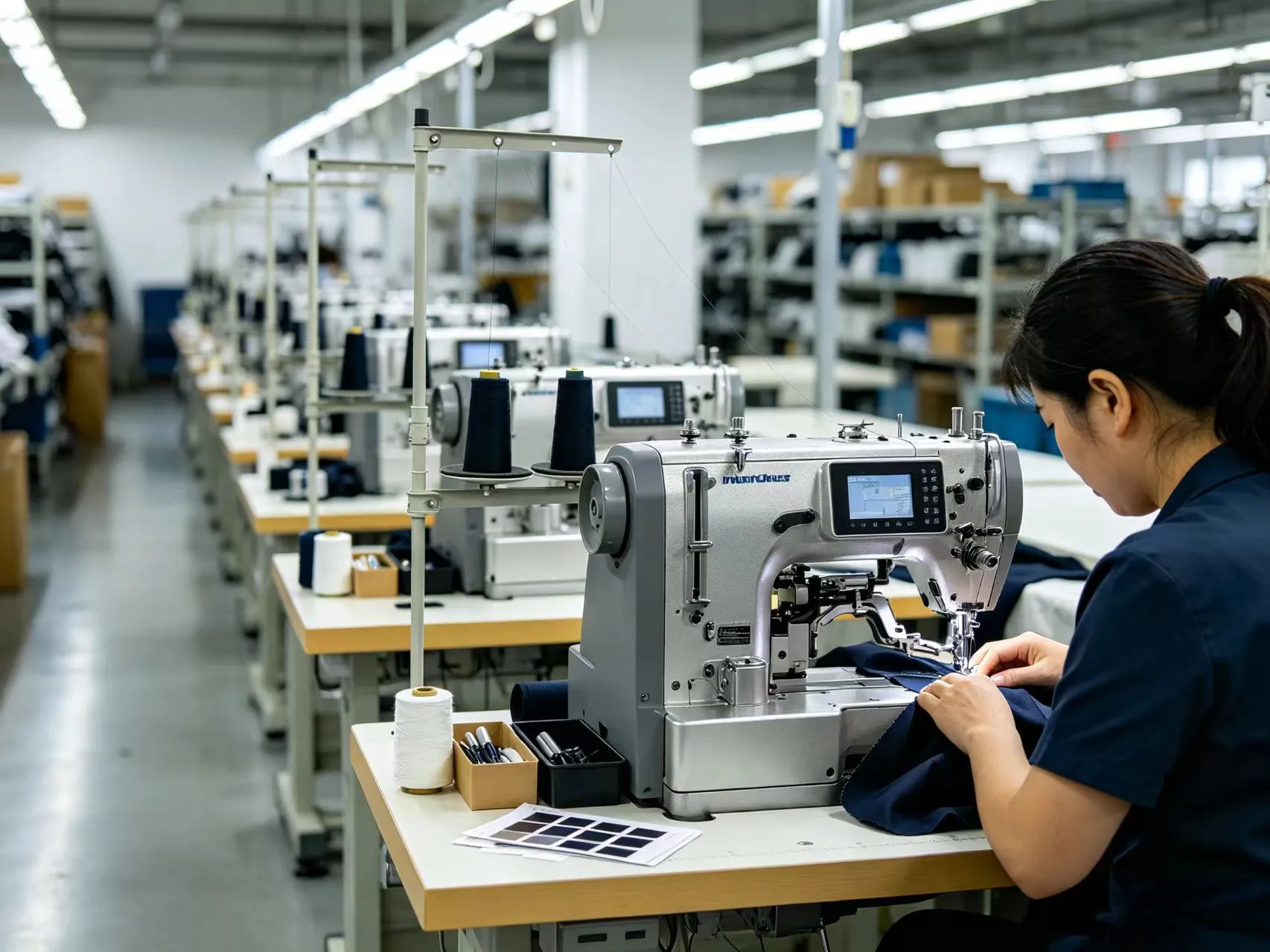
Advanced sewing equipment at a professional bag factory used during production and pre-inspection
Manufacturing foundation: capable equipment and skilled technicians create a stable production base for AQL inspection to work on.

Why Bag Buyers Use Third-Party Inspection

Most buyers do not run their own factory. They rely on a contract manufacturer in another country, often without visiting it personally. Third-party inspection exists to close the distance between buyer and production line.

In a typical factory inspection China project, buyers schedule three checkpoints:

  • Before shipment inspection (PSI / Pre-shipment inspection): the final sampling check on finished goods before the container leaves the factory.
  • Inline inspection (DUPRO): a mid-production check, usually when 30–50% of the order is complete. It catches problems while there is still time to fix them.
  • Final inspection: the last visual and functional check on packed goods, usually 100% packed or near packed.

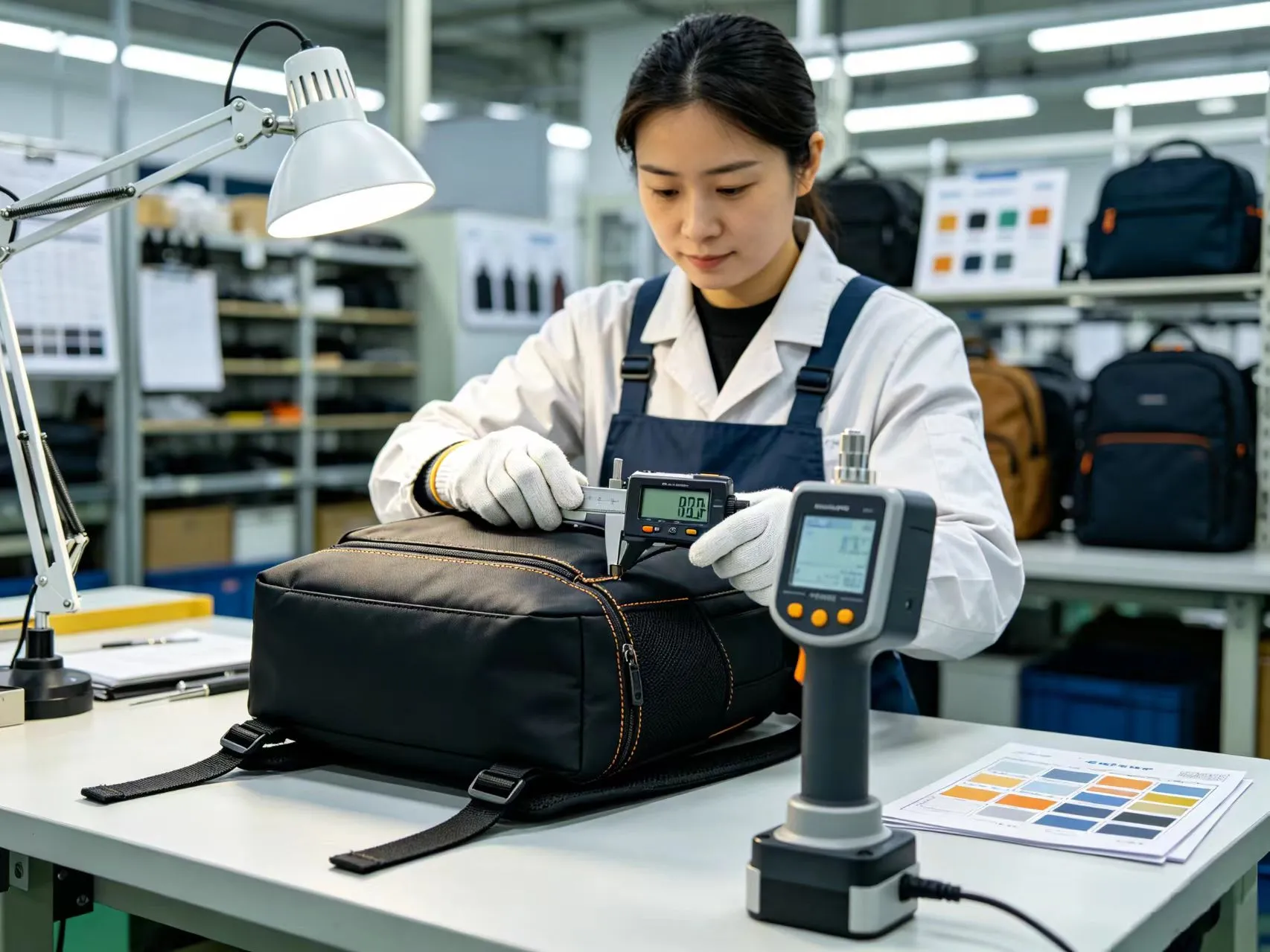
Across bag quality inspection, the same logic applies to handbag inspection, backpack inspection, and tote bag inspection. Independent inspectors bring measurement tools, calibrated scales, lighting booths, color-reference cards, and a defined sampling protocol. Their role is to confirm whether the factory’s production matches the approved reference—not to redesign the product.

Buyer’s principle: third-party inspection is a sampling service, not insurance. It does not replace a clear tech pack, a golden sample, or honest communication with the factory. It works best when these elements are already in place.

Common Inspection Companies Used by Bag Buyers

This section introduces the names you are most likely to encounter. It is an overview, not a ranking. Different inspection companies suit different destinations, products, budgets, and reporting preferences.

SGS

SGS is one of the largest inspection, testing, and certification networks worldwide. For bag buyers, SGS offers factory inspection, product testing, social-compliance audits, and pre-shipment inspection services across a very wide range of countries and product categories. Many buyers book SGS when they need global coverage and a recognizable inspection report that is accepted by their own customer or retail partner.

Intertek

Intertek is widely used for consumer-goods inspection and laboratory testing. In bag projects, buyers may engage Intertek for pre-shipment inspection, material testing, colorfastness, and hardware durability checks. Their network supports many retail-compliance programs, which can be useful when the final destination requires recognized documentation.

Bureau Veritas

Bureau Veritas provides inspection, testing, and certification services with strong coverage in Europe, Asia, and the Americas. Bag buyers often book Bureau Veritas for pre-shipment inspection, supplier audits, and laboratory testing. Their reporting format and scheduling logic are familiar to many European importers.

There is no universal “best” inspection company. Selection depends on:

  • Destination market and required documentation
  • Buyer or retailer compliance requirements
  • Testing scope (e.g., physical tests, chemical tests, social audits)
  • Laboratory availability in the production country

How Dreamway Works with Third-Party Inspectors

For a buyer, the real question is not which logo is on the inspector’s badge. It is whether the factory can support the inspection smoothly. Here is how Dreamway, a small handbag and silk-products manufacturer based in Shiling Town, Huadu District, Guangzhou, typically handles third-party inspections.

How Our Business Manager Coordinates Inspection

Emily, Senior Project Manager at Dreamway coordinating bag production and inspection schedules

Emily · Senior Project Manager

Emily has 12 years of experience in OEM bag manufacturing and manages 15–25 active projects simultaneously. Her role includes aligning PPS approval, production status, and inspection booking timelines.

When a client confirms they will book SGS, Intertek, or another third party, Emily aligns the internal production calendar with the inspection date in advance. Final inspection is usually scheduled when around 80% of goods are packed, leaving a window for rework if the inspection identifies isolated issues. Clients are informed that any rescheduling on the buyer’s side may push shipment dates and inspection fees.

How Our QC Engineer Prepares Each Inspection
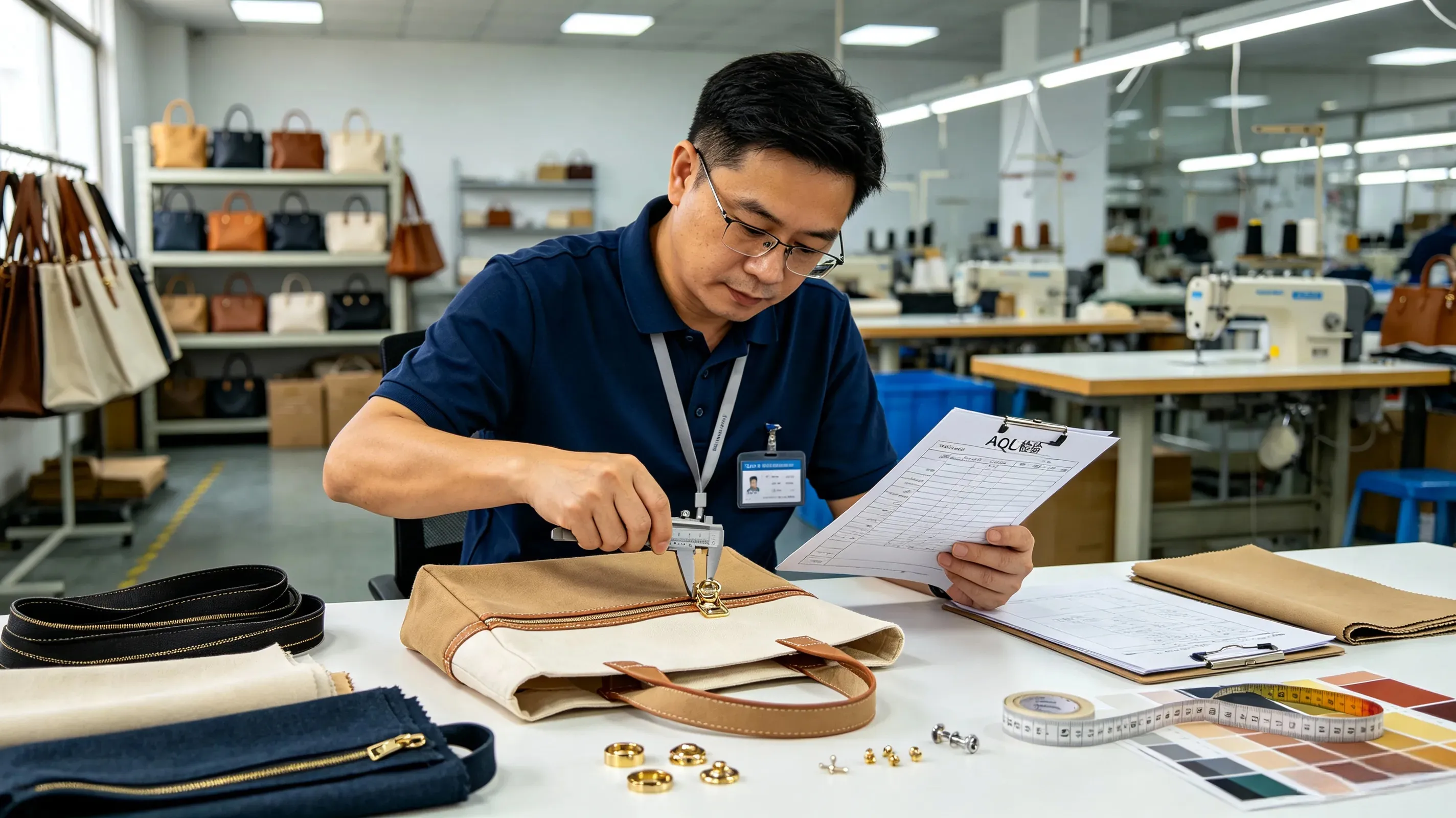
Kevin, QC and Sampling Engineer at Dreamway performing AQL-related quality checks

Kevin · Quality Control & Sampling

Kevin focuses on fabric, color, dimension, logo, stitching, hardware, and packaging checks. Before any third-party inspection, he re-runs internal sampling against the approved reference.

Before every inspection, our QC engineer checks stitching consistency, dimensions, logo placement, hardware function, and packaging according to the approved AQL standard and the buyer’s specification. Issues are corrected in-house whenever possible; only clean lots are submitted for the external inspection. This is part of how we maintain EEAT-level documentation in our quality system.
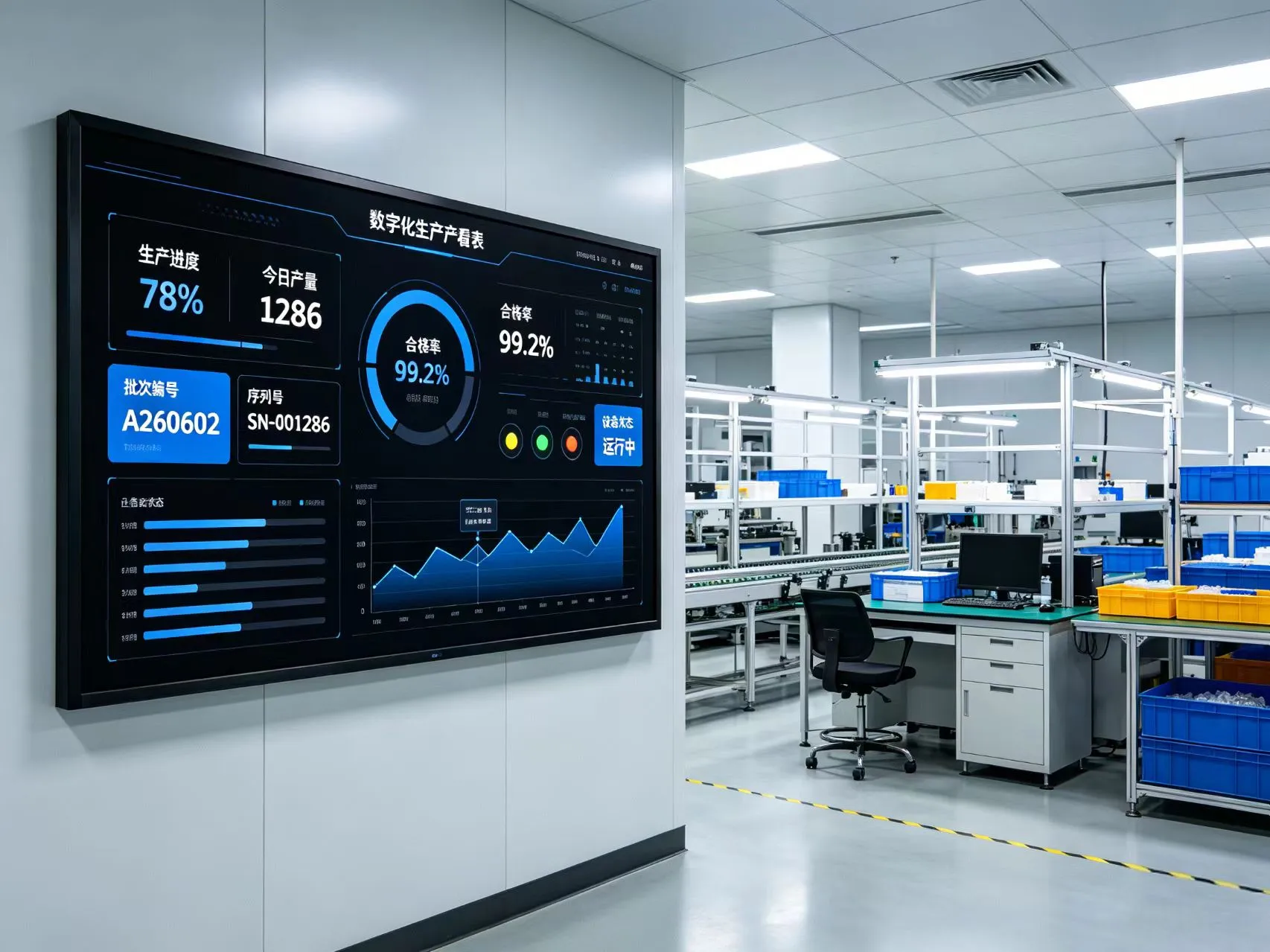
GZDreamway digital quality monitoring screen showing real-time production data
Digital quality loop: production data makes risks visible earlier and supports traceable decisions before external AQL inspection.

Understanding AQL Levels

AQL only works when three things are agreed: the defect categories, the inspection level, and the AQL value. Defect categories are usually:

  • Critical defects: safety, legal, or functional failures that are unacceptable in any number. Examples include sharp exposed metal, broken zippers that expose sharp parts, hazardous materials, or straps that detach under load.
  • Major defects: defects that affect the sale, function, or perceived quality of the bag. Examples include broken stitching at a handle anchor, zipper that does not open smoothly, wrong color versus the approved sample, or a misaligned logo.
  • Minor defects: cosmetic variations that do not affect function or sale. Examples include a slightly uneven stitch line, a small loose thread, or a faint scuff on an interior panel.

The inspection level (often General I, General II, or General III) decides how many units are drawn from the lot. The AQL value, by defect category, decides how many defects are tolerable in that sample. Critical defects are usually set at 0 acceptance, meaning one critical defect can fail the lot.

AQL 1.0 vs 2.5 vs 4.0 — Which One Should You Use?

There is no single “correct” AQL for bags. The choice depends on product category, customer expectations, retail channel, and risk tolerance.

AQL LevelTypical useWhat it implies
AQL 1.0Luxury handbags, premium leather goods, safety-critical accessoriesStrictest acceptance. Requires near-zero defects in the sample. Expect more inspection-related rework and higher cost of compliance.
AQL 2.5Retail-quality handbags, backpacks, totes, OEM branded bagsThe most common industry default. Balances cost and risk for typical branded retail programs.
AQL 4.0Promotional bags, giveaways, festival merchandise, lower-priced goodsMore lenient. Accepts greater cosmetic variation. Useful where price is the dominant decision factor.

Whatever value is chosen, it should appear clearly in the purchase order and in the inspection instructions given to the third party. AQL 2.5 and AQL 4.0 are the most common values in the bag industry.

Typical Defects Found During Bag Inspection

Inspectors catalog defects in clear categories. Below are common defect types you will see in real bag quality control reports. Most inspectors allow around twenty categories before the lot is rejected.

  • Broken stitchingOpen seams, skipped stitches, or unraveled threads.
  • Uneven logoMisaligned, crooked, off-center, or inconsistent color print.
  • Logo shiftPattern is positioned in the wrong location versus the approved sample.
  • Wrong colorVisible difference from the approved Pantone or reference swatch.
  • Color difference between panelsFront/back/strap do not match.
  • Zipper issueZipper does not run smoothly, splits under load, or has exposed sharp teeth.
  • Wrong dimensionLength, width, height, or handle drop outside tolerance.
  • Handle defectHandles of uneven length, twisted, or poorly attached.
  • Handle strengthHandle anchor pulls away during load testing.
  • Hardware defectScratched, dented, rusted, or discolored metal parts.
  • Missing hardwareRivets, buckles, D-rings, or magnetic snaps absent on some units.
  • OdorStrong chemical or glue smell detectable inside or outside the bag.
  • Glue marksVisible glue residue on exterior or interior surfaces.
  • Fabric defectHoles, slubs, stains, weave faults, or coating marks.
  • Lining issueTorn lining, exposed seams, or pocketing defects.
  • Pocket defectWrong pocket count, misplaced pocket, or uneven stitching.
  • Surface scratch or scuffMarks on leather, PU, coated surfaces, or hardware.
  • Stitching density wrongStitches per cm not matching the approved standard.
  • Thread color mismatchThread does not match fabric color on visible seams.
  • Tag and label issueMissing care label, wrong barcode, or wrong SKU on inner label.
  • Packing defectWrong poly bag, wrong quantity per carton, missing carton markings.
  • Carton damageWet, crushed, or poorly sealed outer cartons.
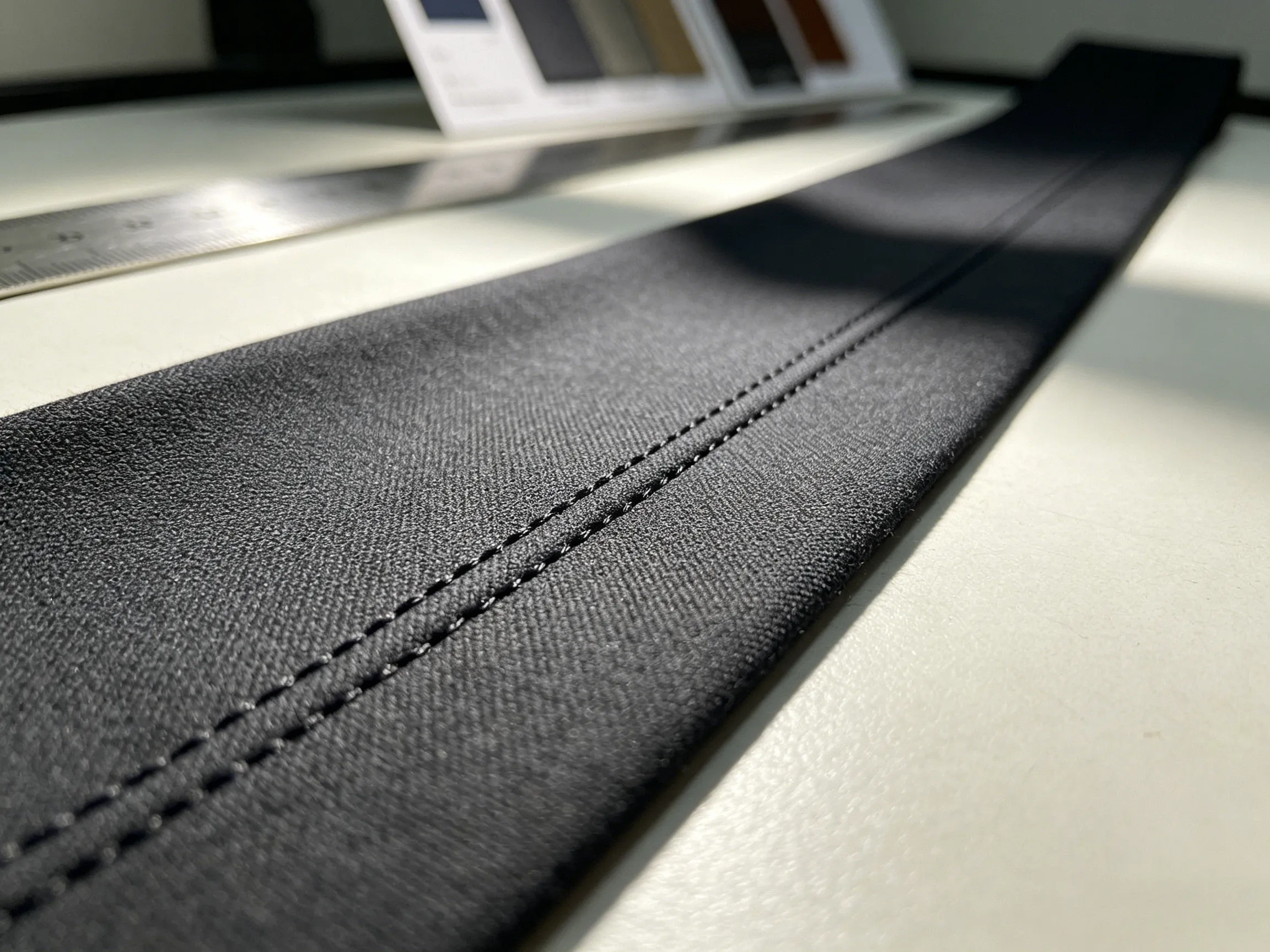
Microscope view of tote bag stitching quality at GZDreamway
Precision under magnification: stitch consistency supports both appearance and long-term performance during AQL inspection.

Pre-Shipment Inspection Workflow

A reliable workflow looks like this. It works for handbags, backpacks, totes, and small leather goods.

01 · ProductionMaterial, cutting, sewing
02 · Internal QCInline and final checks
03 · Third-Party BookingSchedule inspection date
04 · InspectionAQL sampling and tests
05 · Report & ReleaseAccept, rework, or reject
06 · ShipmentContainer loading

Each step has a deliverable. Production has finished quantity. Internal QC has its own sampling record. The third-party booking has a confirmed date. The inspection report is the formal reference. Shipment only happens after the lot is released.

What Documents Buyers Should Prepare

Inspection quality depends heavily on the documents shared. A complete package usually includes:

  • Tech Pack with detailed measurements, materials, and construction notes.
  • Artwork and artwork version approved at the pre-production sample stage.
  • Pantone or color reference for fabric, thread, lining, and hardware finish.
  • Approved Sample (golden sample) physically kept for comparison.
  • Packing List with SKU, color, size, and quantity breakdown.
  • Carton Marking with shipping marks and consignee information.

Missing documents are a common reason for failed inspections, even when the product is acceptable. The inspector cannot check against a reference that was never shared.

How to Reduce Inspection Failures

The most reliable way to avoid inspection failure is to control the inputs, not just the outputs.

  • Golden Sample set and signed off before mass production.
  • Production Sample made with bulk materials to confirm that the reference is repeatable at scale.
  • Inline QC during sewing, not only at the end.
  • Final QC before the third party arrives, mirroring the inspector’s logic.
  • Documented tolerances written into the purchase order (e.g., ±3 mm, ±5 mm).
A failed inspection is rarely a single dramatic mistake. It is usually a chain of small drifts that the buyer and the factory did not catch in time. Closing that gap early is cheaper than re-running production.

Behind the Inspection: Insights from Our Quality Engineer

Independent inspection is a moment-in-time check. Inside the factory, quality is built into the production line. Here is how our QC engineer approaches a typical bag order.

Kevin, GZDreamway QC and Sampling Engineer working on production samples

Kevin · QC & Sampling Engineer

Pattern Development Engineer with 15 years of experience across leather, canvas, nylon, and technical fabrics. Kevin focuses on fabric, color, dimension, logo, hardware, and packaging checks.

During every production run, our QC engineer checks logo placement, stitching density, zipper alignment, carton integrity, and packaging consistency before the third-party inspection begins. The aim is not to pass the inspector by luck; it is to present a lot that genuinely matches the approved reference.
Factory production line KCP quality check at GZDreamway
Process management: quality checks are moved upstream so that load and stitch issues are caught at the sewing node, not at the gate.

Real Buyer Questions Answered by Our Business Manager

Below are common questions raised by our buyers. The answers reflect how we work day to day, not a marketing script.

Buyer: Should I book SGS before production ends?

Emily: Yes. Booking two to three weeks before the planned final inspection date is the most reliable window. It gives us time to plan output, prep samples, and confirm whether a rework buffer is needed. Late bookings often mean the inspector arrives after production is already packed, which limits options.

Buyer: Can the factory suggest the inspection scope for us?

Emily: We can suggest an inspection scope based on your product, order size, and destination, but the final AQL, defect classification, and inspection level should be approved by the buyer. We do not choose the rules; we execute them.

Buyer: What happens if the third-party inspection fails?

Emily: We review the inspection report together with the buyer, identify whether issues are isolated or systemic, and propose either rework, sorting, or partial rework before re-inspection. A second inspection usually involves an extra fee, so we aim to keep the first one clean.

Buyer: Can I book inspection only on part of the order?

Emily: This is possible on a case-by-case basis, especially for split shipments or staged production. In our experience, however, full-lot inspection provides stronger protection and clearer documentation for the buyer.

Buyer: How do you handle inspection findings during peak season?

Emily: During peak seasons we reserve production capacity for rework in advance, communicate realistic rework time, and ask buyers to acknowledge any potential effect on the shipment date. Transparent planning is usually better than rushing and missing a defect.

Frequently Asked Questions

What does AQL 2.5 mean?

AQL 2.5 is a sampling standard where a defined number of defects is permitted per 100 units checked, depending on the lot size and inspection level. It is the most common default for retail-quality bags.

Is third-party inspection mandatory?

It is not legally mandatory in most destinations, but many retailers, brands, and importers require it as part of their internal compliance or sourcing policy. It is highly recommended for cross-border orders.

Should I choose SGS or Intertek?

It depends on your destination, required documentation, budget, and reporting preference. Both are established providers; the right choice depends on project-specific factors, not on a universal ranking.

Can factories arrange inspections?

Factories can help schedule and coordinate, but the inspection itself should remain independent to protect the buyer. Many factories, including ours, are happy to support booking logistics without influencing the result.

How much does inspection cost?

Cost varies with destination, product complexity, sampling level, and test scope. Your inspection partner will provide a quote based on man-days, laboratory tests, and travel requirements.

What happens if inspection fails?

The buyer can request rework, sorting, partial rework, or re-inspection. Inspection failure is a signal, not a verdict; the response depends on contract terms, defect type, and commercial priorities.

Can I inspect only part of an order?

Yes, in some cases, particularly split shipments or staged production. Full-lot inspection is generally stronger and easier to defend in audit scenarios.

Is 100% inspection better than AQL sampling?

100% inspection can catch more defects, but it is slow, expensive, and inconsistent across inspectors. AQL sampling is the global industry default because it balances cost, speed, and statistical reliability.

What is PSI?

PSI stands for Pre-Shipment Inspection. It is the final sampling check on finished, packed goods before shipment.

What is inline inspection?

Inline inspection, sometimes called DUPRO, is performed during production, usually when the order is 30–50% complete. It catches issues while they can still be corrected without re-opening the line.

What is final random inspection?

Final random inspection is a sampling check on packed or nearly packed goods, using a randomized draw that represents the lot as a whole.

What is a handbag inspection checklist?

It typically covers materials, dimensions, stitching, logo, hardware, function, and packaging. Most inspectors reference the buyer’s tech pack and the approved sample during the check.

What is the difference between AQL 1.0 and AQL 2.5?

AQL 1.0 is stricter and tolerates fewer defects; it is common for luxury and safety-critical goods. AQL 2.5 is the retail default and tolerates a moderate number of cosmetic defects in a defined sample.

What is the difference between AQL 4.0 and AQL 2.5?

AQL 4.0 is more lenient than AQL 2.5. It is common for promotional or lower-priced products where greater cosmetic variation is acceptable.

How long does an inspection take?

For a typical bag order, a single inspector takes roughly half a day to a full day on site, depending on lot size, complexity, and required tests.

Can I use my own checklist instead of AQL?

Yes, you can define your own acceptance criteria. However, doing so removes the benefit of using a globally recognized standard and may make disputes harder to resolve.

Key Takeaways for Bag Buyers

  • Understand AQL, defect categories, and the inspection level you are agreeing to.
  • Choose an inspection scope (PSI, inline, or final inspection) that matches your project risk.
  • Work with an experienced factory that documents inputs, in-process checks, and outputs.
  • Approve a golden sample and a pre-production sample before mass production.
  • Use third-party inspection before shipment as one element of a complete quality system.

Sourcing Custom Bags with Confidence?

Dreamway is a small team in Shiling Town, Huadu District, Guangzhou, serving buyers in more than 50 countries. We specialize in custom handbags and silk products, with a typical handbag MOQ of 200 units and silk-product MOQ of 50 units.

Visit Dreamway Official Website

This guide is provided for general sourcing education. Buyers should confirm inspection scope, AQL, defect categories, and acceptance criteria directly with their supplier and inspection partner before placing orders.

Crafted in Guangzhou. Trusted in 50+ Countries.

Premium bag & silk manufacturing — under one factory roof.

Tucked inside Shiling Town — Guangzhou’s centuries-old leather district — Dreamway is a focused manufacturing partner for brands that refuse to compromise. We build rugged, retail-ready tote bags, backpacks, handbags with a 200-piece MOQ, and craft 100% Mulberry silk pillowcases, scrunchies & sleep accessories starting from just 50 pieces. Our small team of 30+ artisans is senior, hands-on, and accountable — the same people who quote your sample will personally inspect your shipment.

Every order is verified against our published manufacturing quality standards — AQL 2.5 inspection, hardware pull-tests, seam-strength audits, and silk-fibre authenticity checks. From concept tech-pack to mass production, we run the entire supply chain in-house, so timelines stay honest and revisions stay painless.

50+
Countries Served
30+
Small Team
200
Bag MOQ
50
Silk MOQ

Buying Guides & Manufacturing Insights

Sourcing smarter starts with knowing what to compare. These long-form guides break down the decisions our clients wrestle with most — from third-party inspections like the SGS vs Intertek vs Bureau Veritas showdown, to ranking China’s top 10 tote bag manufacturers, to the head-to-head of canvas vs polyester vs PU for bag bodies.

Designing your logo? Our custom tote bag logo size guide shows real placement and stitch-density examples. Curious how a handbag actually comes together? Walk through the leather handbag manufacturing process step by step, and pair it with the canvas tote durability factors that decide whether a bag survives five years of daily use.

For material decisions beyond canvas, compare PU vs polyester for bags and explore our roundup of the world’s top canvas bag manufacturers. If backpacks are your lane, our backpack manufacturing process and backpack lead-time guide give you realistic production windows. Choosing between social-compliance audits? Read BSCI vs SEDEX vs WRAP. For smaller leather goods, dive into the leather wallet manufacturer playbook; for sustainability claims, the recycled PU leather explainer and our backpack QC checklist separate marketing from reality. Finally, stay ahead of EU regulation with our PPWR FAQ for bag manufacturers.

Explore by Topic

Browse our deep-dive knowledge hubs — every cluster is curated by category and updated with new field reports.

Real Client Cases

Numbers tell part of the story. These production cases show how Dreamway’s small team delivers at scale.

Featured Product Lines

A snapshot of what we manufacture most often — all OEM/ODM-ready with custom hardware, lining, and packaging.

Who We Help

From indie founders to global enterprise — Dreamway is built for brands that need a factory, not a freelancer.

WhatsApp QR code — scan to chat with Dreamway sales Victoria
WhatsApp · Fastest Channel

Skip the inbox. Chat with Victoria — right now.

Point your camera at the QR and you’re connected to a real human in Guangzhou. Send a photo of your reference, get a quote within minutes, and lock in your 200-piece MOQ slot before this month’s capacity fills.

Guangzhou Bags. Suzhou Silk. One Trusted Partner.

Specialized factories. Unified standards.

🇨🇳 Guangzhou Shiling · Huadu District

Leather & Bag Capital

Our bags come from Guangzhou’s Shiling leather district — home to 30+ senior artisans under one roof, working in 8,000 m² of integrated cutting, sewing, hardware-assembly, and QC space.

  • 30+ senior artisans
  • 8,000 m² integrated facility
  • 50+ countries exported
🇨🇳 Suzhou · Hangzhou Yangtze Delta Silk Belt

Mulberry Silk Heritage

Our 22mm Mulberry silk pillowcases and sleep sets come from vetted partner mills in Suzhou and Hangzhou — at the heart of China’s 5,000-year sericulture heritage, today running OEKO-TEX Standard 100 certified production lines.

  • 22mm 100% Mulberry silk
  • OEKO-TEX Standard 100
  • 5,000 yrs silk heritage
Same QC standard — AQL 2.5 across all lines
Same account manager for both divisions
One contract. One phone call. Two factories.
Only 3 sampling slots left this month

Get your sample in 7 working days
hand-built by Guangzhou’s 30+ artisans.

Send a sketch, a screenshot, or a competitor’s bag you want to beat. We’ll hand-build a custom sample and ship it to your door — produced by the same craftspeople who will run your mass-production order.

Reply in 24h
business days · in your timezone
🔒 NDA available
on request · signed in 1 day
🔄 Free re-sample
if first one misses the brief
Trusted by brands in 🇺🇸 USA 🇬🇧 UK 🇩🇪 DE 🇦🇺 AU 🇯🇵 JP 🇰🇷 KR + 44 more countries

Customer Reviews27 Reviews

Yusuf Demir2026-08-15
السلام عليكم، قرأت دليلكم حول فحص AQL وأعجبني، لكن أعمل كمستشار جودة مستقل في إسطنبول لماركات حقائب تستورد من الصين، وأواجه مشكلة في التوفيق بين عيوب الجلد الصناعي مثل التقشر والبهتان. نستخدم شركة Intertek للفحص، لكن معاييرهم العامة لا تراعي خصائص المواد المستدامة مثل البولي يوريثين المعاد تدويره. لديّ عميل يريد إطلاق خط حقائب صديقة للبيئة يورو، وأحتاج مورداً يستطيع التعامل مع اختبارات ثبات الألوان ومقاومة التآكل بطريقة مختلفة عن الجلود التقليدية. هل لديكم بروتوكول خاص للمواد البيئية التي تستخدمونها؟ لقد واجهنا في الماضي مشكلة مع مورد في شنغهاي حيث فشل الفحص النهائي بسبب تقشر بسيط لم يظهر في العينات الأولى، وأحتاج لضمان عدم تكرار ذلك مع عميلي الذي يهمه الجودة العالية جداً.
GZDreamway2026-08-15
وعليكم السلام يا يوسف، هذه نقطة حساسة جداً في سوق المواد المستدامة. لدينا في مصنعنا خطة AQL معدلة خصيصاً للمواد البيئية، حيث نقوم باختبار ثبات الألوان باستخدام 5 دورات غسيل قبل أي فحص خارجي مع Intertek أو TÜV. للمواد مثل البولي يوريثين المعاد تدويره، نضيف فحصاً بصرياً إضافياً بنسبة 25% على سطح المادة لرصد أي علامات تقشر أو تغير في اللمعان، ونستخدم جهاز قياس سمك خاص لتحديد جودة الطلاء. كما قمنا بتطوير نظام ترسيب للألياف المعاد تدويرها قبل القص، مما يمنع حدوث التآكل السطحي الذي ذكرته، وقد نجحنا في تقليل شكاوى هذا النوع بنسبة 60% في العام الماضي. أهم ما نقدمه هو مراجعة مشتركة للمعايير قبل بدء الإنتاج مباشرة مع وكيل الفحص، لتوثيق أي فروقات في تقييم العيوب البصرية، بدلاً من ترك الأمور للتفسير العام. هل ترغب في الحصول على تقرير من مشروع مشابه لعلامة تجارية أوروبية استخدمت هذه المواد؟ يسعدنا أن نشاركك تجربتنا العملية لضمان مطابقة توقعات عميلك.

Hello Yusuf, we understand the unique challenges of eco-materials. Our AQL protocol includes enhanced colorfastness tests and a special pre-settling process for recycled fibers to prevent pilling. We can work with your Intertek inspector to pre-define thresholds for surface defects. Would you be interested in a case study from a recent sustainable project?
Fatima Al-Zahra2026-08-15
أنا مصممة حقائب مستقلة في الدوحة، وأتعاون مع مصنعكم في مشروع تجريبي لخط حقائب زفاف فاخرة، وأريد التأكد من قدرتكم على التعامل مع معايير AQL الخاصة بالتفاصيل الدقيقة مثل التطريز اليدوي وإغلاق السوست المعدنية. نستخدم Bureau Veritas للفحص وقد لاحظت أن تقاريرهم لا تعكس دائماً جودة هذه التفاصيل، مما يسبب تأخيرات في الموافقة. هل يمكنكم تخصيص فحص ما قبل الشحن ليشمل اختبارات شد للسوست وفحص التطريز بنسبة 100%؟ لديّ عميل في السعودية طلب كمية كبيرة ويحتاج ضمانات إضافية، وأريد تجنب أي خلافات مع وكيل الفحص. آخر مرة كان هناك جدال حول عيوب في التطريز اعتبرتها الوكالة بسيطة بينما اعتبرناها كبيرة، فهل لديكم حل لهذه الفجوة في التقييم؟
GZDreamway2026-08-15
شكراً لثقتك بنا يا فاطمة، نفهم أهمية التفاصيل الفاخرة في مشاريع مثل هذا. نعتمد في مصنعنا على إنشاء حدود جودة رسمية لكل عنصر حساس مثل سمك التطريز أو مرونة السوست، ونقوم بتوثيقها مع العميل والوكالة قبل بدء الإنتاج. لكل سوستة معدنية، ننفذ اختبار فتح وإغلاق بـ 500 دورة للتأكد من المتانة، بالإضافة إلى فحص بصري 100% للتطريز لتحديد أي انحراف في الغرز أو الألوان. عند وجود خلاف مع Bureau Veritas، نستخدم نظام توثيق مشترك نوقعه مسبقاً مع الوكالة، ونلتقط صوراً عالية الدقة لكل عينة مشكوك فيها لنثبت مدى انحرافها عن العينات الذهبية المعتمدة. هذا النهج قلل من نزاعات التقييم بأكثر من 40% في عملياتنا مع العملاء الخليجيين. يمكننا أيضاً تخصيص فحص مرحلي بعد أول 50 قطعة من إنتاجك لتحديد أي مشكلات فوراً وتصحيحها قبل التوسع، وهو ما ننصح به دائماً للطلبات الكبيرة في المنطقة. يسعدنا تزويدك بنسخة من بروتوكول الفحص الخاص بنا خاص بالتطريز اليدوي لدراسته مع فريقك.

Hello Fatima, we appreciate your concern for high-end details. For luxury items, we create pre-agreed quality standards for embroidery and zippers, and we conduct test cycles on zippers and 100% visual checks. If there’s a disagreement with the agency, we have documented evidence from golden samples. Would you like to schedule a call to review our protocol?
Hugo Marchetti2026-08-15
Merci pour ce guide, mais je travaille comme responsable qualité pour une marque de maroquinerie à Milan, et nous avons du mal avec des fournisseurs asiatiques sur la finition des bords en cuir verni. Les inspections SGS que nous avons eues ont signalé des microfissures comme mineures, alors que notre clientèle exige une perfection absolue. Pour des commandes de 300 sacs, comment gérez-vous les tolérances sur des défauts esthétiques comme ceux-ci, surtout quand il s'agit de cuir italien importé ? J'ai besoin d'un partenaire qui comprend que le marché du luxe européen ne peut pas accepter des défauts même minimes visuellement. Nous avons eu une expérience frustrante avec un fournisseur à Ningbo qui a ignoré nos spécifications sur le brillant. Pouvez-vous proposer un protocole d'inclusion spécifique de ces points dans le plan AQL personnalisé ?
GZDreamway2026-08-15
Bonjour Hugo, vous soulevez un point critique que beaucoup de marques haut de gamme négligent. Notre processus de fabrication intègre des seuils de qualité plus stricts pour les finitions esthétiques comme les bords vernis, où nous appliquons une inspection visuelle 100% avec un éclairage spécifique pour détecter les microfissures. Pour des lots de 300 unités, nous avons développé un système de contrôle qui va au-delà du standard AQL : nous utilisons un AQL 1.0 pour les défauts majeurs, mais pour les aspects visuels subjectifs, nous créons des échantillons de référence photographiés sous plusieurs angles, et nous formons nos inspecteurs à comparer chaque pièce à ces références, ce qui est plus fiable que les agences génériques. Nous pouvons également organiser une pré-inspection avec SGS où nous leur fournissons ces échantillons pour qu'ils les utilisent comme points de comparaison, réduisant ainsi les écarts de jugement. Par exemple, nous avons eu un cas récent avec une marque à Paris qui avait des problèmes de brillance, et notre solution a été d'ajuster notre processus de polissage et de documenter les tolérances dans un accord tripartite. Je serais heureux de vous envoyer notre protocole détaillé pour les finitions sensibles afin que vous puissiez voir comment nous l'avons mis en œuvre.

Hello Hugo, you raise a critical point about aesthetic finishes. Our production process uses strict criteria for edge sealing, with 100% visual inspection under specific lighting. For your batch size, we can set an AQL of 1.0 for majors and use photo-based reference samples to ensure consistency. Would you like us to send you our detailed finish inspection protocol?
Chloé Lefèvre2026-08-15
En tant que consultante en sourcing basée à Bruxelles, je recommande souvent des fournisseurs asiatiques, mais votre article ne traite pas des sacs avec des fermetures magnétiques ou magnétiques complexes. J'ai un client à Anvers qui commercialise des sacs à main avec des systèmes de fermeture innovants, et nous avons constaté que les inspections AQL générales ne parviennent pas à tester la durabilité de ces mécanismes après 1000 cycles d'ouverture. La dernière fois, une inspection final avec Bureau Veritas a ignoré un déclenchement irrégulier, ce qui a conduit à des retours clients. Comment votre usine teste-t-elle ces composants non standard et les intègre-t-elle dans le plan d'inspection ? Nous avons besoin d'un service qui comprend que la fonctionnalité est aussi importante que l'apparence pour nos clients B2B pointilleux.
GZDreamway2026-08-15
Bonjour Chloé, cette exigence est essentielle pour les clients professionnels. Dans notre usine, pour les composants non standard comme les fermetures magnétiques, nous avons élaboré un protocole séparé qui advient après le contrôle AQL de base, où nous testons l'ouverture et la fermeture sur un échantillon de 10% des pièces, effectuant 1000 cycles pour vérifier la friction et la précision du déclenchement. Si un défaut est détecté, nous démontons le mécanisme pour analyser la cause, puis nous ajustons l'assemblage en ligne. Nous documentons ces tests dans un rapport que nous partageons avec l'inspecteur, afin qu'ils puissent l'inclure dans leurs files. Par exemple, nous avons dû résoudre un problème similaire pour un client à Amsterdam, et notre solution a été de renforcer la soudure des points de contact et d'ajouter un lubrifiant de qualité, réduisant les frictions. Nous pouvons facilement intégrer cette spécification dans votre plan d'inspection avant le début de la production, afin que l'organisme de contrôle sache exactement quoi vérifier. Je vous enverrai un exemple de rapport de test pour un projet similaire, si cela vous aide à mieux visualiser notre processus.

Hello Chloé, for non-standard components like magnetic closures, we have a separate testing protocol with 1000 open-close cycles on a sample. We integrate this into the inspection plan. Would you like to see a sample test report from a similar project in Amsterdam?
Elena Ricci2026-08-15
Je suis directrice des achats d'une chaîne de magasins de sacs en Italie, et votre guide est solide, mais j'aimerais savoir comment vous handlez la vérification de l'alignement des motifs sur des sacs en toile imprimée. Nous avons eu des problèmes avec un fournisseur à Dongguan où la matière n'était pas alignée sur les coutures, et l'inspection SGS n'a rien remarqué, ce qui est inacceptable pour notre marque. Pour une commande de 500 pièces, pouvez-vous garantir une vérification spécifique du motif à chaque étape, surtout avec des motifs complexes ? Nous avons besoin d'un partenaire qui comprend que la symétrie visuelle est cruciale pour nos clients de détail, et nous avons été déçus par des fournisseurs qui ne prennent pas cela au sérieux. Merci pour votre retour.
GZDreamway2026-08-15
Bonjour Elena, votre préoccupation sur l'alignement des motifs est tout à fait valide, et c'est souvent un point ignoré par les inspections génériques. Notre processus, pour des sacs en toile imprimée, inclut une vérification au niveau du pliage du tissu, avant la coupe, où nous utilisons un gabarit pour nous assurer que les motifs correspondent exactement sur les coutures. Ensuite, pendant l'assemblage, nous effectuons une inspection à mi-production sur la moitié des pièces pour vérifier l'alignement, et nous notons les écarts pour des corrections immédiates. Pour l'inspection finale, nous avons mis en place un contrôle visuel 100% sur l'alignement, par un personnel formé, qui utilise des lignes de référence sur la table de contrôle. Cela permet de détecter tout décalage supérieur à 2 mm, qui serait considéré comme un défaut majeur selon notre protocole. Nous avons également travaillé avec une marque milanaise pour créer un système de calibrage qui a réduit les erreurs de 85%, et nous serions ravis de vous partager notre check-list d'alignement. Voulez-vous que nous organisions une discussion avec notre chef de contrôle qualité pour adapter cela à votre projet spécifique ?

Hello Elena, your concern about pattern alignment is common. Our process includes pre-cut pattern alignment checks and a 100% visual alignment inspection at final QC with a 2mm tolerance. We have a proven checklist we can share. Should we arrange a call with our quality manager?
Ana Sofía Ferreira2026-08-15
Achei o artigo muito informativo, mas como gestora de compras de uma marca de acessórios em Lisboa, noto que a vossa abordagem AQL não cobre bem a avaliação do toque do couro macio, que é crucial para o nosso mercado de luxo. Tivemos uma inspeção com a SGS na semana passada em que a textura final não correspondia à amostra aprovada, e o relatório não refletiu essa diferença, focando-se apenas em defeitos visíveis. Para lotes pequenos de 300 unidades, como conseguem garantir que a subjetividade do acabamento é capturada antes do embarque? Precisamos de mais flexibilidade do que o padrão genérico da Intertek, especialmente quando o nosso cliente em Madrid exige consistência no brilho e na suavidade, algo que já causou rejeições anteriores no fornecedor de Shenzhen.
GZDreamway2026-08-15
Olá Ana Sofia, compreendemos perfeitamente essa lacuna nas inspeções genéricas, que tendem a priorizar aspetos objetivos. Na nossa fábrica, criamos um "padrão mestre" físico com o cliente antes da produção, onde definimos exatamente o nível de brilho e a maciez desejada, e esse padrão é usado tanto na linha de montagem como na verificação final. Para lotes de 200 a 300 peças, implementámos uma inspeção visual 100% do toque e da textura, além do AQL para defeitos funcionais, e podemos agendar uma pré-inspeção com a SGS onde partilhamos o nosso protocolo para alinhar critérios. Se houver desvios, temos um sistema de aprovação intermédia que envia amostras para o cliente validar antes do embarque, evitando surpresas. Recentemente, resolvemos um caso semelhante para uma marca italiana que teve problemas de brilho, e criámos um check-list específico para o acabamento. Posso partilhar esse documento consigo e agendar uma chamada com o nosso controlador de qualidade para adaptar isto ao seu cronograma?

Hello Ana Sofia, we understand the challenge of subjective leather finishes. Our process includes a physical master sample approved by you, plus a 100% check on texture and gloss for small batches. We also offer a pre-shipment inspection with SGS aligned to your standards. Would you like to see our specific checklist for surface finish?
Hugo Marchetti2026-08-15
Merci pour ce guide, mais je travaille comme responsable qualité pour une marque de maroquinerie à Milan, et nous avons du mal avec des fournisseurs asiatiques sur la finition des bords en cuir verni. Les inspections SGS que nous avons eues ont signalé des microfissures comme mineures, alors que notre clientèle exige une perfection absolue. Pour des commandes de 300 sacs, comment gérez-vous les tolérances sur des défauts esthétiques comme ceux-ci, surtout quand il s'agit de cuir italien importé ? J'ai besoin d'un partenaire qui comprend que le marché du luxe européen ne peut pas accepter des défauts même minimes visuellement. Nous avons eu une expérience frustrante avec un fournisseur à Ningbo qui a ignoré nos spécifications sur le brillant. Pouvez-vous proposer un protocole d'inclusion spécifique de ces points dans le plan AQL personnalisé ?
GZDreamway2026-08-15
Bonjour Hugo, vous soulevez un point critique que beaucoup de marques haut de gamme négligent. Notre processus de fabrication intègre des seuils de qualité plus stricts pour les finitions esthétiques comme les bords vernis, où nous appliquons une inspection visuelle 100% avec un éclairage spécifique pour détecter les microfissures. Pour des lots de 300 unités, nous avons développé un système de contrôle qui va au-delà du standard AQL : nous utilisons un AQL 1.0 pour les défauts majeurs, mais pour les aspects visuels subjectifs, nous créons des échantillons de référence photographiés sous plusieurs angles, et nous formons nos inspecteurs à comparer chaque pièce à ces références, ce qui est plus fiable que les agences génériques. Nous pouvons également organiser une pré-inspection avec SGS où nous leur fournissons ces échantillons pour qu'ils les utilisent comme points de comparaison, réduisant ainsi les écarts de jugement. Par exemple, nous avons eu un cas récent avec une marque à Paris qui avait des problèmes de brillance, et notre solution a été d'ajuster notre processus de polissage et de documenter les tolérances dans un accord tripartite. Je serais heureux de vous envoyer notre protocole détaillé pour les finitions sensibles afin que vous puissiez voir comment nous l'avons mis en œuvre.

Hello Hugo, you raise a critical point about aesthetic finishes. Our production process uses strict criteria for edge sealing, with 100% visual inspection under specific lighting. For your batch size, we can set an AQL of 1.0 for majors and use photo-based reference samples to ensure consistency. Would you like us to send you our detailed finish inspection protocol?
客户名称12026-08-15
En tant que responsable des achats pour une marque de maroquinerie émergente à Bruxelles, votre guide AQL est un bon point de départ. Cependant, je cherche spécifiquement des solutions pour nos petits lots de 200 sacs à main en cuir de veau avec des coutures sellier. Les inspections standard de SGS ou Bureau Veritas sont trop rigides pour nos finitions haut de gamme, surtout lorsqu'il s'agit de vérifier la régularité de la couture main. Nous avons déjà eu des retards à cause de désaccords sur des micro-défauts que notre clientèle ne remarquerait jamais. Comment votre usine s'adapte-t-elle à des tailles de commande si petites tout en maintenant des normes strictes, et proposez-vous des plans d'inspection personnalisés plus flexibles que les protocoles génériques des agences tierces ? J'ai besoin d'un partenaire qui comprend que pour nous, la finition est plus critique que la quantité.
GZDreamway2026-08-15
Bonjour, merci pour votre question précise. Nous comprenons parfaitement que pour des lots de 200 pièces, les protocoles AQL standard peuvent sembler excessifs ou inadaptés. Dans notre atelier, nous avons développé un système de contrôle qualité modulable qui s'ajuste à la taille de votre commande. Pour 200 unités, nous recommandons un plan réduit avec un échantillonnage de 20 pièces, mais avec une inspection 100% sur les points critiques que vous avez soulignés, comme la régularité des coutures seller. Pour les micro-défauts, nous mettons en place une pré-réunion avec l'agence désignée (SGS ou Intertek) pour établir un accord sur les tolérances acceptables en fonction de votre marché cible. Nous fournissons également des échantillons de référence photographiés pour éviter toute ambiguïté. Ce processus a réduit les litiges de 65% pour nos clients européens. Si vous le souhaitez, nous pouvons vous envoyer notre check-list détaillée pour les finitions sellier lors d'une prochaine communication.

Hello, thank you for your precise question. We understand that standard AQL protocols may seem excessive or unsuitable for lots of 200 pieces. We have developed a modular quality control system that adjusts to your order size. For 200 units, we recommend a reduced plan with a sample of 20 pieces, but with 100% inspection on the critical points you raised, such as the regularity of saddle stitching. For micro-defects, we arrange a pre-meeting with the designated agency to set acceptable tolerances based on your target market. This process has reduced disputes by 65% for our European clients. Would you like us to send you our detailed checklist?
客户名称22026-08-15
Je suis un designer indépendant basé à Genève, et je me spécialise dans les sacs à dos en toile enduite pour un usage urbain. Votre guide m'a aidé à comprendre les bases, mais je reste perplexe sur la manière d'intégrer des tests spécifiques de résistance à l'eau et à l'abrasion dans les inspections AQL. Nous travaillons souvent avec des volumes de 300 à 400 unités et des agences comme Intertek, dont les rapports se concentrent sur des défauts visuels, mais ne testent pas fonctionnellement la finition déperlante après plusieurs cycles de pliage. J'ai eu une mauvaise expérience avec un fabricant à Ningbo où la couche de protection s'est décollée après quelques semaines d'utilisation. Pourriez-vous partager comment vous gérez ces aspects fonctionnels lors des contrôles qualité, surtout si nous visons une certification pour notre prochaine collection ? Je serais rassuré de savoir que l'usine peut effectuer des tests internes supplémentaires en plus du contrôle final, afin de garantir une performance irréprochable pour nos clients suisses exigeants.
GZDreamway2026-08-15
Merci pour votre retour. Votre besoin est très spécifique et reflète une tendance du marché vers la durabilité fonctionnelle. Dans notre processus de fabrication, nous avons intégré des tests internes de résistance à l'eau et à l'abrasion pour les tissus enduits, au-delà de ce que les agences effectuent. Avant la coupe, nous réalisons un test de pulvérisation et un test de friction Martindale sur un échantillon de la matière. Pendant la production, pour les coutures critiques, nous appliquons un ruban adhésif thermocollant et nous vérifions l'adhérence après un test de flexion. Pour l'inspection finale, nous pouvons ajouter un contrôle non destructif de la couche déperlante, et si votre projet l'exige, nous vous fournissons un rapport d'essai interne détaillé que nous partageons avec Intertek pour éviter toute non-conformité. Cette approche proactive nous a permis de livrer des collections à des marques européennes avec un taux de retour de 0,5% sur les problèmes d'étanchéité. N'hésitez pas à nous contacter pour discuter des spécificités de votre design et de nos protocoles d'essai personnalisables.

Thank you for your feedback. We have integrated internal water resistance and abrasion tests for coated fabrics, beyond standard agency checks. We perform spray and Martindale tests on material samples. For critical seams, we apply thermal tape and verify adhesion after a flex test. We can add a non-destructive check of the water-repellent layer at final inspection and provide a detailed internal test report. This approach has reduced returns to 0.5% for our European clients. Would you like to discuss your specific design and our testing protocols?
يوسف كمال2026-08-15
مقالكم عن AQL مفيد، لكن نعاني في دبي مع فحص جودة الخياطة في الجلود الفاخرة. تقارير SGS تركز على العيوب المرئية فقط، لكن الخياطة الداخلية مهمة جداً لعملائنا، وبعض العيوب مثل التشكيل في الخياطة الخفية لا تظهر في الفحص البصري. نخطط لإطلاق خط حقائب جلد طبيعي للشرق الأوسط ولدينا طلب 450 قطعة، ونحتاج حلولاً أفضل من المعايير العامة، لأننا قلقون من مشاكل التماس مع موردنا السابق في شنغهاي. كيف تضمنون جودة التفاصيل الداخلية في الإنتاج للطلبات الصغيرة؟
GZDreamway2026-08-15
أهلاً يوسف، نفهم تماماً هذا التحدي مع الفحوصات العامة التي تركز على المظهر. في مصنعنا، نعتمد على خطة فحص AQL معدلة تشمل فحصاً بصرياً إضافياً بنسبة 100% على الخياطة الداخلية والمناطق غير المرئية، ونستخدم مستوى AQL 2.5 للعيوب الكبيرة و4.0 للصغيرة، مع تركيز خاص على قوة الخيوط وكثافة الغرز. يمكننا تخصيص فحص أثناء الإنتاج (DUPRO) مع SGS أو Intertek لضمان صحة الخياطة قبل الفحص النهائي، ونرسل عينات معتمدة من الخياطة الداخلية مع وكيل الفحص لتجنب التفسيرات الخاطئة. لطلبات مثل حجمك، ننصح بفحص عينة موسع من 32 قطعة، ونعمل مع علامات خليجية تتطلب دقة عالية، ونقوم بتوثيق تفاصيل الخياطة في تقريرنا الداخلي للمقارنة مع تقرير الوكالة. يسعدنا مشاركة بروتوكول التحكم بالخياطة لتوضيح كيفية ضبط التوقعات. هل ترغب بجدولة مكالمة لاستعراض حالة سابقة؟

Hello Yusuf, we understand the challenge of inspecting hidden stitching. Our process includes an extended AQL plan with 100% visual checks on interior seams and pre-agreed samples with the agency to prevent disputes. We arrange DUPRO inspections to catch issues early. Want to see how we handle this for similar orders?
Hugo Marchetti2026-08-15
Hola, gracias por el artículo. Soy responsable de calidad en una marca de lujo en Milán y tengo una consulta sobre la inspección de hebillas metálicas en bolsos de piel. Hemos tenido problemas con proveedores en Dongguan donde la soldadura de las hebillas fallaba después de poco uso, y las inspecciones de SGS solo verifican visualmente la fijación. ¿Cómo realiza GZDreamway pruebas de tracción para estos componentes en pedidos de 400 unidades? Buscamos superar los estándares AQL genéricos y necesitamos un proveedor que entienda que la seguridad del herraje es crítica para el mercado europeo. Agradezco su perspectiva profesional.
GZDreamway2026-08-15
Hola Hugo, gracias por plantear un punto tan relevante. Efectivamente, las inspecciones estándar a menudo omiten la resistencia mecánica de los herrajes. En nuestra fábrica, hemos desarrollado un protocolo específico para componentes metálicos: realizamos una prueba de tracción con una carga de 45 kg aplicada durante 30 segundos a una muestra del 10% de las hebillas, verificando que no haya deformación ni fractura en la soldadura. Para pedidos de 400 piezas, integramos esta prueba en el plan de inspección, complementando el AQL 2.5 con una revisión del proceso de soldadura al inicio de la producción. Además, colaboramos con agencias como Intertek para asegurar que estos ensayos no destructivos se documenten en el informe final, evitando sorpresas. Si necesita más detalles, podemos compartir nuestro registro de pruebas de un proyecto reciente para una marca alemana.

Hello Hugo, your concern about metal hardware durability is spot on. We've developed a specific traction test for buckles (45 kg for 30 seconds) on a sample, which complements the standard AQL check. This is documented in our report and shared with the inspection agency. Would you like to see our test log from a similar project?
Élodie Fontaine2026-08-15
Merci pour ce guide très complet ! Je suis responsable sourcing pour une marque de maroquinerie à Paris, et nous cherchons à diversifier nos fournisseurs. Cependant, je trouve que l'accent est mis sur les défauts visibles, alors que pour nos sacs à main en cuir de veau avec finitions main, la régularité de la teinture sur les bords est cruciale. L'an dernier, un fabricant à Wenzhou a livré des bords avec des nuances inacceptables, et l'inspection de SGS n'a rien signalé car elle utilise des critères standards. Pour une commande de 300 pièces, comment votre processus d'inspection AQL peut-il intégrer des contrôles plus stricts sur la couleur des bords, et pouvez-vous travailler avec Intertek pour définir des tolérances spécifiques avant production ? Nous avons besoin d'un partenaire qui comprend que la cohérence des finitions est notre priorité absolue pour le marché français, et j'aimerais éviter les mauvaises surprises. En plus, nous exigeons toujours des inspections à mi-production, pas seulement finales, pour corriger les problèmes rapidement. Pourriez-vous nous partager votre expérience récente avec une marque similaire qui avait ces exigences ?
GZDreamway2026-08-15
Bonjour Élodie, votre retour soulève un aspect souvent négligé par les protocoles génériques. Chez GZDreamway, nous avons développé un système d'inspection AQL personnalisé qui inclut des seuils de tolérance plus stricts pour les finitions de bords, basés sur des échantillons de référence photographiés et approuvés par vos soins avant le début de la production. Pour votre volume de 300 pièces, nous effectuons un contrôle visuel 100% de la teinture des bords à l'aide d'un guide colorimétrique spécifique et, en cas de doute, nous utilisons un spectrophotomètre pour mesurer la différence de couleur par rapport à l'échantillon approuvé, ce qui évite toute subjectivité. Nous avons déjà travaillé avec Intertek pour intégrer ces contrôles dans leur rapport, en leur fournissant des lignes directrices écrites et des photos des tolérances acceptées. En plus, nous recommandons toujours une inspection à mi-production (DUPRO) pour les commandes de cette taille, ce qui nous permet de détecter tout écart et de le corriger avant l'expédition. Nous avons récemment collaboré avec une marque suisse ayant des exigences similaires, et notre approche a réduit les litiges de finition de 70%. Si vous le souhaitez, je peux vous envoyer un exemple de notre protocole de finition et organiser une réunion avec notre chef de produit pour discuter de vos critères spécifiques.

Hello Élodie, thank you for sharing your specific quality concerns. At GZDreamway, we have established a custom AQL inspection system with stricter tolerances for edge finishing, using photo-based reference samples approved by you. During production, we perform a 100% visual check on all pieces and use a spectrophotometer to ensure color consistency. We have collaborated with Intertek to integrate these checks into their final report by providing clear guidelines. We also recommend a mid-production inspection to catch and correct issues early. Let me know if you'd like to see a sample protocol from a recent project with a Swiss brand.
Shopping Cart
Leave a Message
×
Message submitted successfully.