
This guide breaks down the science and art behind custom tote bag logo sizing — from recommended pixel and physical dimensions for every bag surface, to material-specific guidelines and cost-saving strategies. Whether you’re ordering 200 pieces or 20,000, getting logo dimensions right the first time protects your brand’s visual identity and maximizes every dollar of your investment.

Professional tote bag manufacturing facility where your custom logo designs come to life.
Imagine your brand logo printed on a tote bag so crisp, so perfectly proportioned, that every person who sees it on the street does a double-take. That moment of brand visibility — that conversion from stranger to curious follower or paying customer — begins with one critical decision: getting your logo dimensions right.
Custom tote bags are among the most powerful branding tools available to businesses in 2026. They walk through grocery store aisles, sit on office desks, and accompany commuters on subway rides. Unlike digital ads that vanish in seconds, a well-designed branded tote bag delivers thousands of impressions over its lifetime — but only if your logo looks exceptional on it.
In this comprehensive guide, you’ll discover the optimal logo dimensions for custom tote bags, expert placement strategies, material-specific sizing recommendations, and the hidden pitfalls that can ruin an otherwise perfect order. We’ve distilled insights from hundreds of tote bag production runs to give you the definitive sizing playbook.
Why Logo Size Is the Most Critical Decision in Your Tote Bag Order
Most buyers focus on color, material, and printing method — and those matter. But logo size is the make-or-break factor that determines whether your brand looks premium or cheap. Get the dimensions wrong, and even the finest embroidery and most luxurious canvas won’t save the finished product.
A logo that is too large overwhelms the bag’s design, creates visual clutter, and can distort during printing — especially on flexible materials like canvas and non-woven fabric. A logo that is too small gets lost in the overall aesthetic, fails to generate brand recognition, and wastes your entire investment in branding.
The sweet spot is a logo that commands attention without dominating the bag’s design — roughly 15% to 20% of the available print surface area. This isn’t a random number; it’s backed by design theory and real-world production data from leading tote bag manufacturers.
Standard Logo Dimensions for Custom Tote Bags: Complete Size Chart
The optimal logo dimensions depend on three key variables: placement location, printing method, and bag material. The following table provides the recommended physical dimensions (in inches and centimeters) for each major placement zone on a standard 15″ × 16″ tote bag.
| Placement Zone | Recommended Width | Recommended Height | Best Print Method | Brand Visibility |
|---|---|---|---|---|
| Center Front | 3–4 in / 7.6–10.2 cm | 1.5–2 in / 3.8–5.1 cm | Screen Print, DTG | ★★★★★ Highest |
| Corner Front | 2–3 in / 5.1–7.6 cm | 1–1.5 in / 2.5–3.8 cm | Screen Print, Embroidery | ★★★★☆ High |
| Bottom Corner | 1.5–2.5 in / 3.8–6.4 cm | 1–1.5 in / 2.5–3.8 cm | Screen Print, Embroidery | ★★★☆☆ Medium |
| Top Header Area | 2.5–3.5 in / 6.4–8.9 cm | 1–1.5 in / 2.5–3.8 cm | Screen Print, Heat Transfer | ★★★★☆ High |
| Back Panel Center | 3–4.5 in / 7.6–11.4 cm | 1.5–2 in / 3.8–5.1 cm | Screen Print, DTG | ★★★★★ Highest |
| Handle / Strap | 1–1.5 in / 2.5–3.8 cm | 0.5–0.75 in / 1.3–1.9 cm | Embroidery, Debossing | ★★★☆☆ Medium |
| Full Panel Coverage | 8–10 in / 20.3–25.4 cm | 4–6 in / 10.2–15.2 cm | Sublimation, DTG | ★★★★★ Highest |
Material-Specific Logo Sizing: What Changes with Canvas, Cotton, and Non-Woven Fabrics
Different tote bag materials behave differently under print and embroidery. Understanding these material characteristics helps you adjust logo dimensions to compensate for texture, stretch, and visual scaling.
Cotton Canvas Tote Bags
Cotton canvas is the most popular material for custom branded tote bags, prized for its durability, printability, and eco-friendly reputation. Canvas has a moderate texture that can slightly reduce the apparent size of fine logo details. When ordering custom canvas tote bags, consider these sizing adjustments:
- Increase minimum font size by 1–2pt compared to your digital design to maintain legibility after printing
- For logos with fine text or small icons, add a 10% buffer to both width and height dimensions
- Avoid logos thinner than 0.5 inches in any dimension — the canvas weave will cause bleeding and loss of detail
- For canvas tote bag materials and printing cost breakdowns, explore our detailed guide
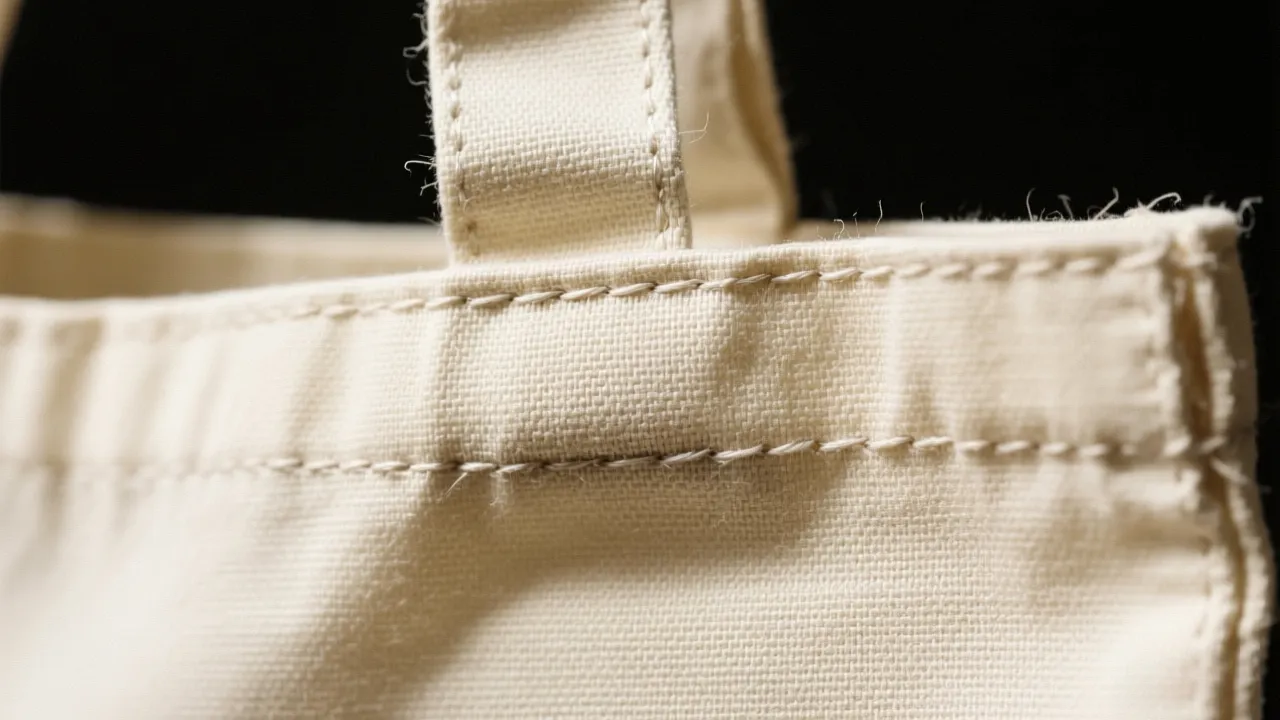
Premium canvas fabric provides an ideal printing surface with natural texture and excellent ink absorption.
Non-Woven Tote Bags
Non-woven polypropylene bags are lightweight, water-resistant, and cost-effective for large-scale promotional campaigns. The non-woven material has a smooth but slightly plastic feel, which produces excellent screen print adhesion. However, logos printed on non-woven fabric can appear 5–8% larger visually than the same dimensions on canvas due to the smoother surface.
Our non-woven tote bag factory guide covers the full cost, strength, and best use cases for this versatile material — essential reading if you’re comparing non-woven against canvas for your next order.
Organic and Recycled Cotton Tote Bags
Sustainability-focused brands increasingly choose organic cotton and recycled PET (RPET) tote bags. These materials often have visible texture variations that differ from standard canvas. Logo sizing on organic materials requires extra attention to detail:
For organic and recycled cotton tote bags, add a 15% safety margin to your minimum logo dimensions. The natural fiber inconsistencies can cause slight registration shifts during printing, and a slightly larger logo tolerates these variations better than a tight, minimum-size design.
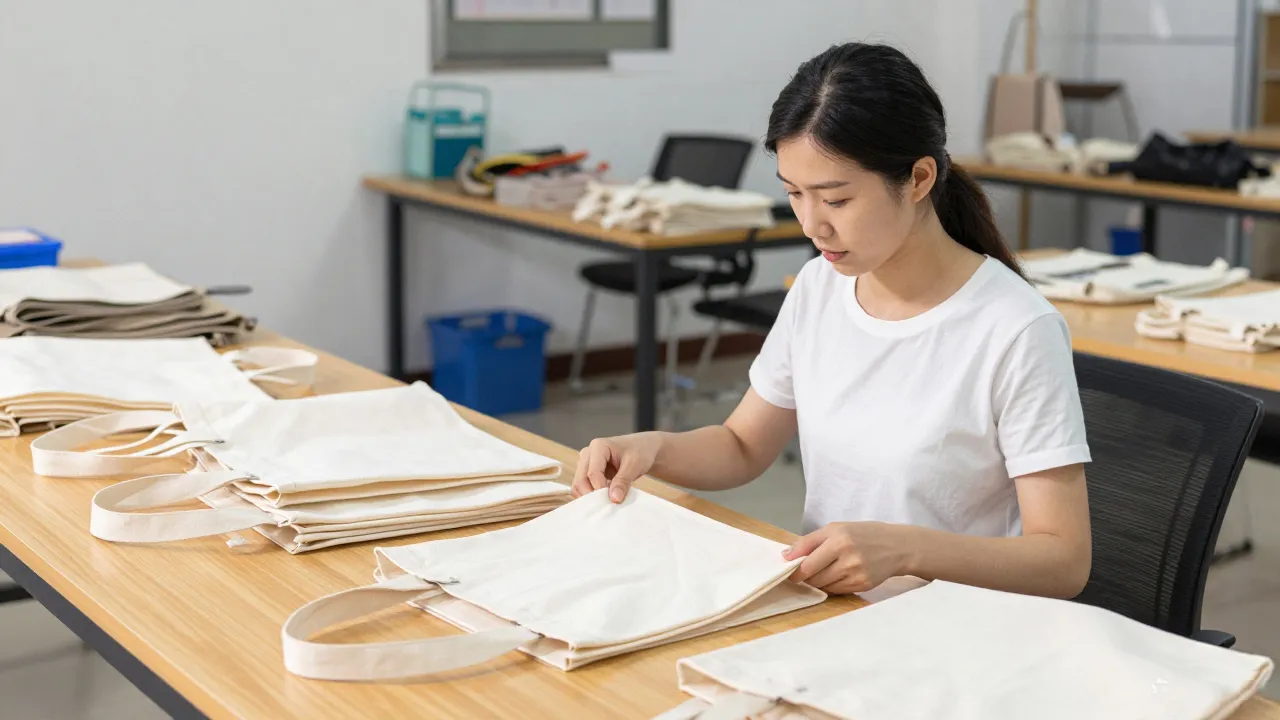
Rigorous quality control ensures every printed logo meets dimensional accuracy standards before shipment.
Logo Placement Strategy: Maximizing Brand Visibility Across Every Surface
Placement is just as important as size. Even a perfectly sized logo in the wrong position will underperform. Based on eye-tracking studies and real-world engagement data, here are the highest-performing logo placements for custom branded tote bags:
1. Center Front — The Power Position
The center front of a tote bag is the single most visible placement for your logo. When a person carries a tote bag, the center front naturally faces outward — whether they’re walking down a street, sitting in a café, or browsing a market. This position generates the maximum number of passive brand impressions per hour of use.
For center front placement, target the zone between 4 and 8 inches from the bottom of the bag, centered horizontally. This aligns with natural eye level when viewing someone carrying the bag. Your logo dimensions should be 3–4 inches wide for text-based logos and up to 4.5 inches for logos with substantial artwork.
2. Back Panel — The Message Companion
Many brands use the back panel for secondary messaging — social media handles, a QR code, a sustainability statement, or an inspiring tagline. The back panel offers more space (up to 6 inches wide) and is visible when the bag is set down on a surface. For back panel logos, consider slightly larger dimensions than front placement to match the surface area advantage.
3. Corner Placement — Subtle Sophistication
For luxury and premium brands, corner placement communicates confidence and restraint. A small, precisely positioned logo in the bottom corner of the front panel signals that the brand doesn’t need to shout — it relies on quality to speak for itself. This approach works particularly well with premium leather and PU tote bag manufacturing.
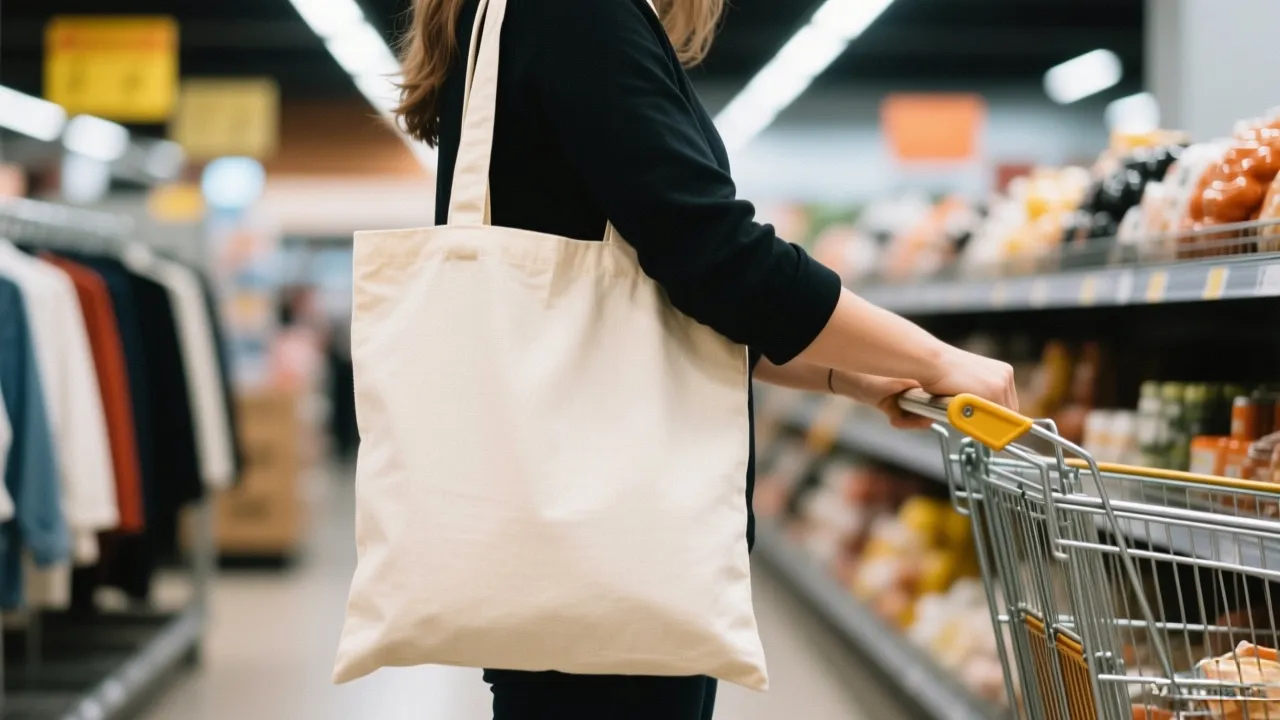
A perfectly sized logo on a canvas tote bag turns everyday shopping trips into brand visibility opportunities.
4. Handle Embroidery — Endurance Branding
Embroidered logos on tote bag handles offer exceptional durability — they outlast screen prints and can survive hundreds of wash cycles. Handle embroidery works best for minimalist logos with bold lines and simple shapes. Keep dimensions to 1–1.5 inches wide; anything larger risks distorting when the handle bears weight.
If you’re exploring embroidery options, our guide to custom embroidered tote bags in 2026 covers thread types, stitching quality, and price factors in detail.
Digital File Requirements: Resolution, DPI, and Format for Flawless Logo Printing
Even with perfect physical dimensions, a low-quality digital file will produce disappointing results. Your logo artwork file is the blueprint that every printer and embroidery digitizer works from. Understanding these technical requirements prevents costly reprints and sampling delays.
For screen printing and heat transfer: Provide your artwork at 300 DPI minimum, in vector format (AI, EPS, or SVG). Vector files scale infinitely without quality loss, which is essential for factories to resize your logo to match the exact physical dimensions of your tote bag.
For digital printing (DTG) and sublimation: Provide raster artwork at 300–600 DPI at the actual print size. A logo that will print at 3 inches wide should be 900–1,800 pixels wide in your source file.
For embroidery: Your logo needs to be digitized by a professional embroidery studio. This process converts your 2D design into a stitch file (.DST or .PES). Not every design that looks great as a print will translate well to embroidery — simple, bold logos with clear outlines work best. Our handbag tech pack creation guide explains how to document logo specifications clearly for your manufacturer.
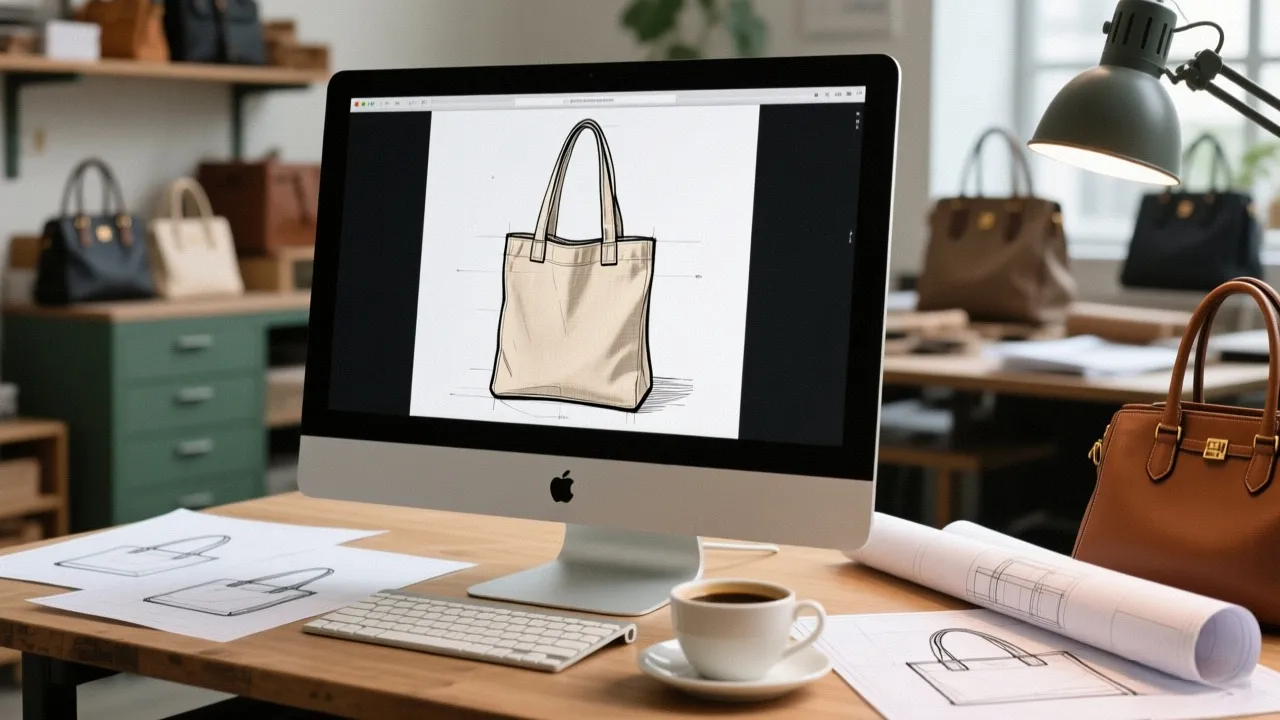
Professional design software allows factory technicians to precisely scale and position logo artwork for production.
How Logo Size Affects Your Total Cost Per Unit
Understanding the relationship between logo dimensions and unit cost helps you make smarter procurement decisions. Here’s the breakdown of how size drives pricing:
In screen printing, each color in your logo requires a separate screen and setup pass. A 3-color logo at 3 inches wide costs significantly less than a 3-color logo at 6 inches wide — because larger prints require bigger screens, more ink, and longer cure times. Keeping logos within the recommended 3–4 inch range is one of the most effective ways to reduce your per-unit cost without sacrificing brand impact.
For a comprehensive tote bag cost breakdown that includes printing, materials, and labor, visit our dedicated pricing guide that uses factory-level data to help you negotiate better rates with your supplier.
Production Considerations: Lead Time and Sampling with Logo Dimension Changes
Before finalizing your logo dimensions, consider how changes affect your production timeline. A design revision mid-production can add 5–10 business days and increase your per-unit cost by 10–25% due to re-setup fees. Getting dimensions right in your tech pack and initial design phase eliminates these costs entirely.
Our custom tote bag production lead time guide explains the full factory timeline — from design approval to final packing — so you can plan your order with confidence and avoid the most common delays that come from artwork and dimension miscommunication.
If you’re transitioning from a small pilot run to full-scale mass production, our article on scaling from small MOQ to mass production covers exactly how to adjust logo specifications, dimensions, and pricing as your order volumes grow.
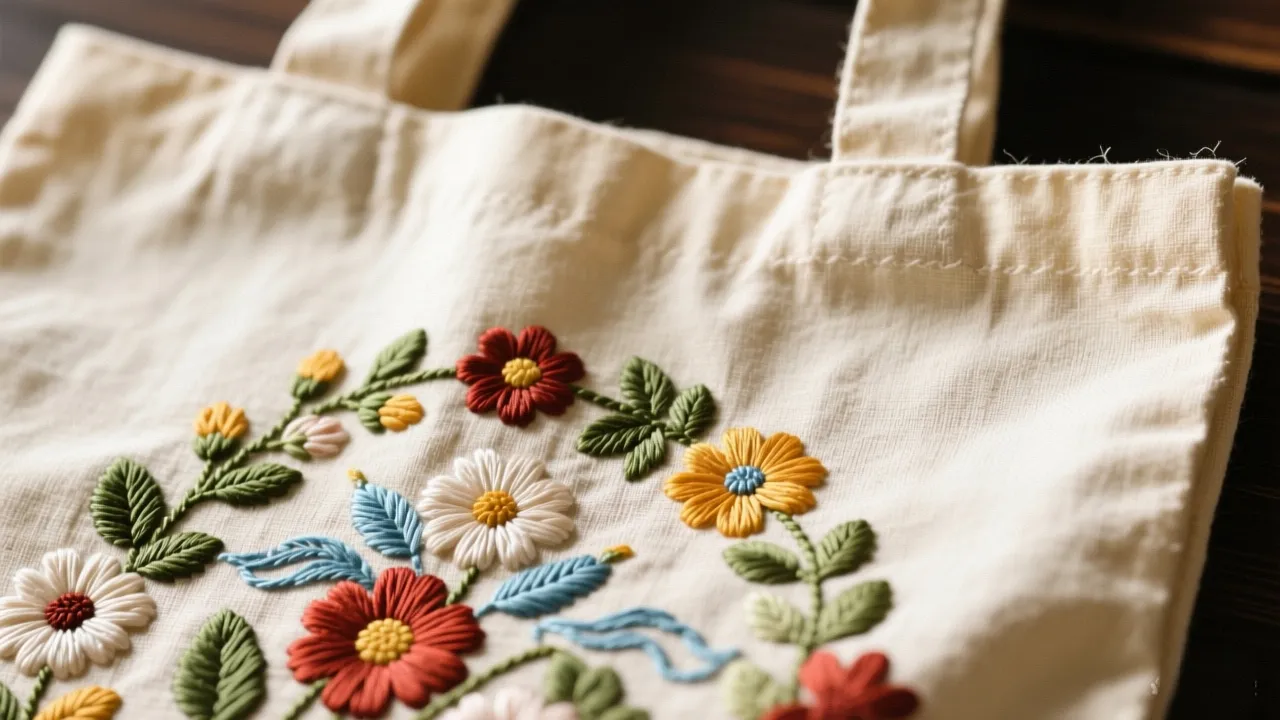
High-quality embroidery transforms your logo into a tactile brand experience that outlasts screen printing.
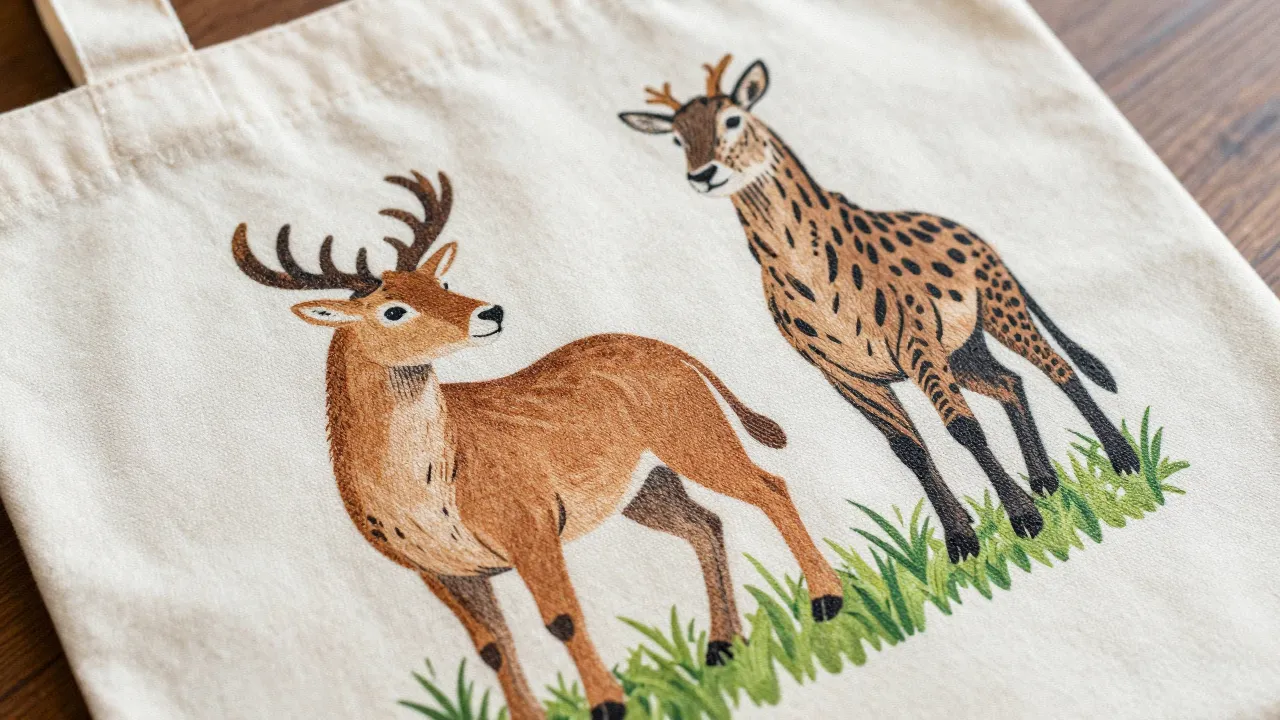
Heat transfer technology delivers photographic-quality prints with vibrant colors and sharp edges.
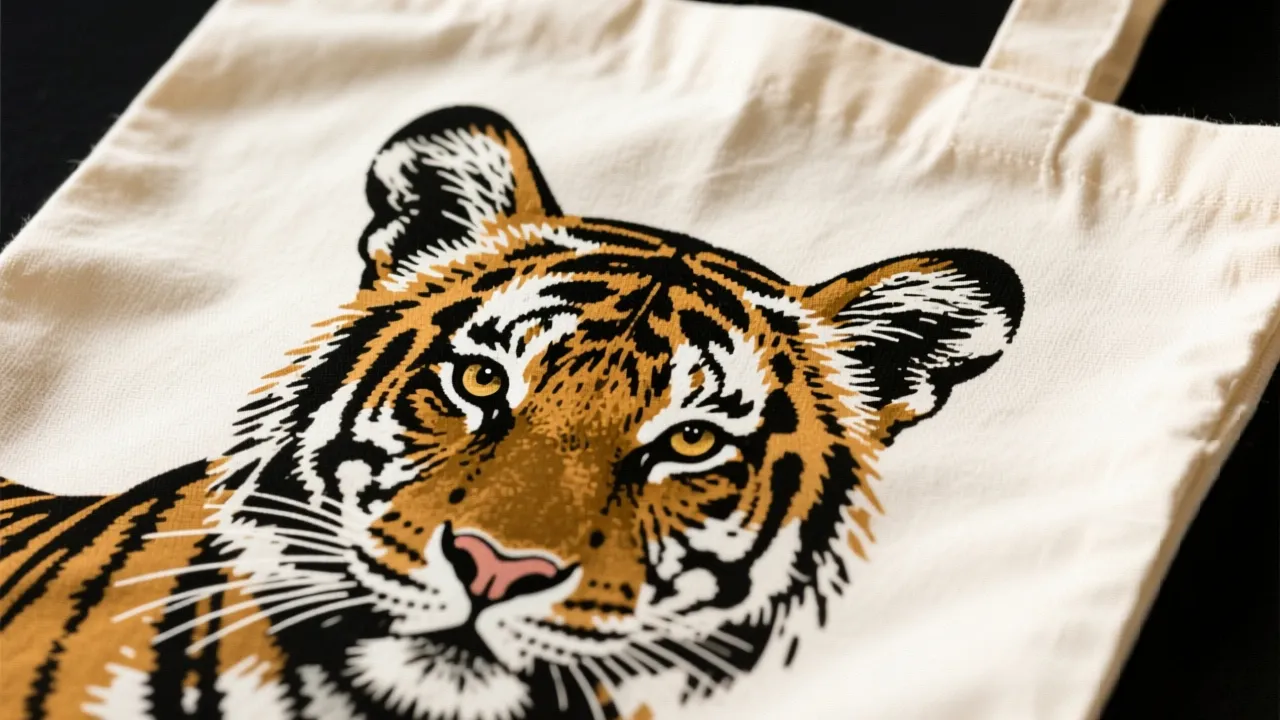
Digital printing captures every nuance of your logo design, from gradients to photographic elements.
Why Your Minimum Order Quantity Should Influence Your Logo Design Strategy
The minimum order quantity (MOQ) for custom logo tote bags typically starts at 200 pieces per design. At this order volume, the setup costs — screen preparation, color matching, machine calibration — are spread across enough units to keep per-bag pricing competitive. Understanding how MOQ intersects with logo design helps you optimize both cost and visual impact.
At 200 pieces, a slightly larger, more prominent logo maximizes your brand visibility per dollar spent. You’re already paying for setup; a well-proportioned, slightly larger logo delivers more value from each unit. For orders of 500+ pieces, you can afford to explore more elaborate multi-placement designs — front logo, back messaging, and handle embroidery — because the per-unit setup cost decreases significantly.
At our factory, the standard MOQ for custom logo tote bags is 200 pieces per design. This threshold covers the production setup efficiently, making each unit cost competitive while still allowing full customization of logo dimensions, placement, and printing method. Contact our sourcing team to discuss how your logo design strategy can be optimized for your specific order volume.
Frequently Asked Questions
Ready to Get Your Custom Tote Bag Logo Dimensions Right?
Stop guessing at logo sizes and risking costly reprints. Our experienced sourcing team has helped over 500 brands perfect their tote bag designs for production — from the first concept sketch to the final packed shipment. With our 200-piece MOQ, you can start small, test the market, and scale with confidence.
Get Your Free Production Quote TodayBrowse Our Full Catalog of Custom Tote Bag Solutions →
Final Thoughts: Your Logo Deserves Perfect Dimensions
Getting the right logo dimensions for your custom tote bags isn’t just a technical decision — it’s a brand statement. Every millimeter matters when you’re investing in promotional merchandise that will represent your business for years. Use the sizing guidelines in this article as your starting point, adapt them to your specific material and printing method, and always confirm dimensions with your manufacturer before production begins.
For deeper dives into every aspect of tote bag manufacturing — from vetting your supplier to understanding sustainability certifications and optimizing your bulk shipping strategy — explore our complete library of guides. Each one is written by industry veterans who understand the real-world challenges of bringing branded merchandise to market.
Your brand’s visibility starts with a single decision. Make it count.
Premium bag & silk manufacturing — under one factory roof.
Tucked inside Shiling Town — Guangzhou’s centuries-old leather district — Dreamway is a focused manufacturing partner for brands that refuse to compromise. We build rugged, retail-ready tote bags, backpacks, handbags with a 200-piece MOQ, and craft 100% Mulberry silk pillowcases, scrunchies & sleep accessories starting from just 50 pieces. Our small team of 30+ artisans is senior, hands-on, and accountable — the same people who quote your sample will personally inspect your shipment.
Every order is verified against our published manufacturing quality standards — AQL 2.5 inspection, hardware pull-tests, seam-strength audits, and silk-fibre authenticity checks. From concept tech-pack to mass production, we run the entire supply chain in-house, so timelines stay honest and revisions stay painless.
Buying Guides & Manufacturing Insights
Sourcing smarter starts with knowing what to compare. These long-form guides break down the decisions our clients wrestle with most — from third-party inspections like the SGS vs Intertek vs Bureau Veritas showdown, to ranking China’s top 10 tote bag manufacturers, to the head-to-head of canvas vs polyester vs PU for bag bodies.
Designing your logo? Our custom tote bag logo size guide shows real placement and stitch-density examples. Curious how a handbag actually comes together? Walk through the leather handbag manufacturing process step by step, and pair it with the canvas tote durability factors that decide whether a bag survives five years of daily use.
For material decisions beyond canvas, compare PU vs polyester for bags and explore our roundup of the world’s top canvas bag manufacturers. If backpacks are your lane, our backpack manufacturing process and backpack lead-time guide give you realistic production windows. Choosing between social-compliance audits? Read BSCI vs SEDEX vs WRAP. For smaller leather goods, dive into the leather wallet manufacturer playbook; for sustainability claims, the recycled PU leather explainer and our backpack QC checklist separate marketing from reality. Finally, stay ahead of EU regulation with our PPWR FAQ for bag manufacturers.
Explore by Topic
Browse our deep-dive knowledge hubs — every cluster is curated by category and updated with new field reports.
By Category
Materials & Compliance
Real Client Cases
Numbers tell part of the story. These production cases show how Dreamway’s small team delivers at scale.
Featured Product Lines
A snapshot of what we manufacture most often — all OEM/ODM-ready with custom hardware, lining, and packaging.
Who We Help
From indie founders to global enterprise — Dreamway is built for brands that need a factory, not a freelancer.
Brand Builders
Beauty & Fashion
Lifestyle & Retail

Skip the inbox. Chat with Victoria — right now.
Point your camera at the QR and you’re connected to a real human in Guangzhou. Send a photo of your reference, get a quote within minutes, and lock in your 200-piece MOQ slot before this month’s capacity fills.
Specialized factories. Unified standards.
Leather & Bag Capital
Our bags come from Guangzhou’s Shiling leather district — home to 30+ senior artisans under one roof, working in 8,000 m² of integrated cutting, sewing, hardware-assembly, and QC space.
Mulberry Silk Heritage
Our 22mm Mulberry silk pillowcases and sleep sets come from vetted partner mills in Suzhou and Hangzhou — at the heart of China’s 5,000-year sericulture heritage, today running OEKO-TEX Standard 100 certified production lines.
Get your sample in 7 working days —
hand-built by Guangzhou’s 30+ artisans.
Send a sketch, a screenshot, or a competitor’s bag you want to beat. We’ll hand-build a custom sample and ship it to your door — produced by the same craftspeople who will run your mass-production order.
business days · in your timezone
on request · signed in 1 day
if first one misses the brief