
Bag Material Guide · 2026

Recycled PU vs PU Leather: Which Is Better for Bags?

A sourcing-grade comparison for fashion brands, private-label buyers, and product teams — written by the engineering desk at Dreamway, a bag manufacturer based in Guangzhou since 2008.

Transparent floating pie chart over a bag factory production line showing cost structure — labor, materials, and overhead — representing the cost mechanics of PU and recycled PU leather.
Figure 1. Inside the cost structure of a bag: understanding how material choices like recycled PU versus standard PU reshape your landed cost and ESG narrative.

Introduction

Across every sourcing conversation we have at Dreamway — from Parisian boutique buyers to New York fashion startups — the same three questions are landing on the table in 2026: Is recycled PU actually more sustainable? How does it compare to standard PU leather? And most importantly, which one should I specify for my next collection?

Brands are paying close attention to sustainable materials, vegan leather alternatives, and verified recycled content. Yet in the same room, buyers frequently confuse PU leather, recycled PU leather, and generic vegan leather — three categories that behave very differently on the cutting table, on the QC line, and in the customer’s hands after six months of use.

This guide is built to help brands choose with clarity. We’ll walk through what each material really is, how they compare on durability, sustainability, appearance, cost, and application, and how an experienced bag factory actually inspects the differences. By the end, you’ll have a sourcing checklist — and a clearer picture of whether this recycled alternative is the right upgrade for your next bag program.

What Is PU Leather?

PU leather — short for polyurethane leather — is a synthetic leather made by coating a fabric backing with a polyurethane surface layer and finishing it to mimic the look and hand-feel of genuine leather. It is one of the most widely used leather alternatives in the global bag, footwear, and accessory industry.

At its core, every PU leather consists of three engineered layers:

  • Fabric backing — typically polyester, cotton, or a blended knit that provides tensile strength and dimensional stability.
  • PU coating — the polymer layer that gives the material its leather-like appearance, flexibility, and surface texture.
  • Surface finishing — color, embossing, topcoat, and treatments that determine the final look, scratch resistance, and feel.
A technical flat-lay of a bag spec sheet (tech pack) with calculator, steel ruler, swatches, and PU leather color cards on a bright professional desk.
Figure 3. A standard PU leather tech pack — every spec, thickness, color, and finish is engineered before the first yard is produced.

Advantages of PU Leather

  • Affordable: Lower unit cost than genuine leather, making it ideal for fashion cycles and high-volume production.
  • Flexible: Soft hand-feel that can be engineered from ultra-soft nappa to structured saffiano.
  • Easy customization: Color, grain, embossing, and finish can all be tailored to a brand’s brief.
  • Wide color options: Pantone matching, metallics, and fashion-forward shades are straightforward to achieve.

Limitations of PU Leather

  • Synthetic origin: Made from petrochemical-derived polyurethane — not biodegradable.
  • Aging issues: Can hydrolyze, peel, or crack over time, especially in humid climates.
  • Environmental concerns: End-of-life disposal and virgin-resource dependency raise ESG questions.

What Is Recycled PU Leather?

If you’d like a deeper material primer, we also published What Is Recycled PU Leather? Complete Guide for Bag Brands — for now, here is the short version.

Recycled PU leather is engineered the same way as standard PU leather, but with one critical difference: a portion of the polyurethane resin is sourced from recycled PU feedstock rather than 100% virgin petrochemical polymers.

Industrial exploded view of a handbag showing Oxford outer fabric, insulation cotton middle layer, waterproof inner membrane, and metal zipper — illustrating material engineering.
Figure 4. A bag is a layered system — and the PU surface is only one piece of a much larger material puzzle.

The Key Difference

Standard PU leather is produced from virgin polyurethane materials derived from petrochemical feedstock. It is made from reprocessed PU waste — either post-industrial scrap from PU production lines, or recovered end-of-life PU material that has been re-pelletized and re-blended into new coatings.

Important note on “recycled”

This material does not automatically mean 100% recycled. The recycled content percentage, the source of the feedstock, and the certification behind it all matter. Buyers should always request the recycled content percentage, the third-party certification, and the supplier documentation before treating a material as “sustainable.”

Recycled PU vs PU Leather: Quick Comparison Table

For sourcing teams that need a one-glance overview, this is the comparison most of our buyers reference during supplier evaluation — comparing recycled formulations against their virgin counterparts across seven key sourcing factors.
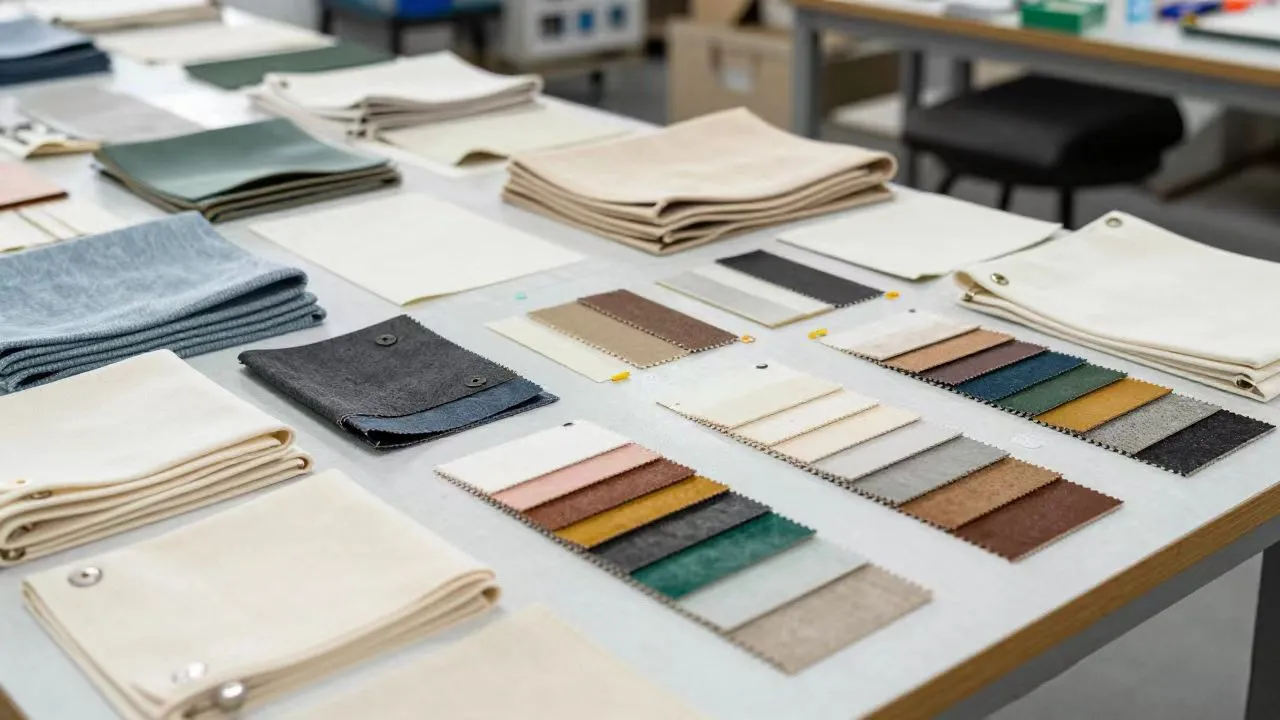
Material comparison chart showing Recycled PU leather versus traditional PU leather, vegan leather, and genuine leather across durability, sustainability, cost, and customization metrics
Figure 2. Material comparison overview: Recycled PU versus traditional PU leather, vegan leather, and genuine leather across key performance and sustainability metrics.
Factor Recycled PU Traditional PU
Material Source Recycled PU content blended with virgin resin 100% virgin polyurethane
Sustainability Higher — lower virgin resource demand Lower — full virgin feedstock
Appearance Similar to premium PU Similar
Durability Similar, depending on formulation Similar, depending on formulation
Cost Usually slightly higher Lower
Customization Excellent — color, grain, embossing Excellent
Best Applications Fashion bags, accessories, ESG-led collections Mass-market bags, shoes, accessories

Material Source: Virgin PU vs Recycled PU

The foundational difference between these two materials is what goes into them.

Traditional PU

Traditional PU leather is built from petrochemical-based polyurethane — polymers synthesized from fossil-derived monomers. The result is a consistent, high-performing, easily customized surface, but it carries a fully virgin feedstock footprint.

The Recycled Alternative

Built from a blend that includes production waste, post-industrial scrap, and reprocessed PU materials collected, cleaned, and re-engineered into new polyurethane resin. This reclaimed feedstock is then combined with performance additives to meet the same surface and mechanical specifications as virgin PU.

Side-by-side comparison of cheap stitching with thread residue and glue overflow versus refined double-stitching, premium metal hardware, and clean edge painting on a luxury bag.
Figure 5. Quality is a system — needlework, edge paint, and hardware all matter as much as the surface material.
A note on green marketing

Do not promote this material as “fully eco-friendly” or “100% sustainable.” Doing so creates green-marketing risk and may not survive a regulatory review. It is a better material choice in many contexts — but it is one ingredient in a larger sustainability story.

Sustainability Comparison

This is the single biggest reason brands are asking about this material — and it is also the area where the most confusion exists. The sustainability benefits are real, but they depend heavily on the recycled content percentage, the source of the feedstock, and whether the supplier can back the claims with audited documentation.

The Recycled Alternative — Sustainability Advantages

  • Reduces waste: Diverts post-industrial PU scrap from landfill and incineration.
  • Supports circular economy: Keeps polyurethane feedstock in use across multiple product cycles — especially relevant for brands with GRS commitments.
  • Lower virgin material usage: Reduces demand for petroleum-derived raw inputs.

Standard PU — Sustainability Concerns

  • Relies on virgin resources: Continuous demand for petrochemical feedstock.
  • More environmental pressure: Higher cumulative impact across production, use, and end-of-life.
Environmental Disclaimer Environmental benefits depend on recycled content percentage, manufacturing processes, and verified certifications. Recycled materials should not automatically be considered fully sustainable without supporting documentation, third-party testing, and full supply-chain transparency.

Durability Comparison: Which Lasts Longer?

Durability is the metric that buyers lose sleep over — and rightly so. A bag that fails in the field is the most expensive kind of warranty claim. Here is what our QC team actually tests — and what you should demand from any supplier, regardless of whether the surface is virgin or recycled.

What to Compare

  • Abrasion resistance — how the surface handles daily wear.
  • Peeling — coating delamination from the fabric backing.
  • Cracking — surface breakdown under flex and UV exposure.
  • Hydrolysis — moisture-driven degradation, especially in humid climates.
  • Flexibility — hand-feel and resistance to creasing.

What Actually Drives Performance

Here is the part most articles skip: durability in PU is governed much more by PU formulation, coating thickness, coating technology, and backing fabric than by whether the resin is recycled or virgin. A well-engineered material can outperform a poorly formulated one — and vice versa.

When we evaluate PU for a customer, we focus on testing results, not labels. The same applies to this material — it should be evaluated on its formulation and test data, not its marketing positioning.

Appearance and Premium Feel

Today’s alternatives are engineered to be visually indistinguishable from premium virgin PU. The variables that matter:

  • Texture: Nappa, saffiano, pebble, lychee — anything is achievable.
  • Grain patterns: Embossing rolls can replicate exotic grains at scale.
  • Color consistency: Dye lots and topcoat chemistry define batch uniformity.
  • Luxury appearance: Matte, satin, or high-gloss — all tunable.

For fashion handbags, cosmetic bags, and accessories where on-shelf presence drives the purchase decision, this material is, for practical purposes, a drop-in replacement.

Cost Comparison: Is Recycled PU More Expensive?

The short answer: usually slightly — but not always, and not by much. Material costs move with feedstock markets, freight, and certification status. Here is where the price difference actually comes from.

Factors That Move the Price

  • Recycled content percentage: Higher recycled content often carries a small premium.
  • Thickness: Heavier gauges cost more per yard.
  • Order quantity: MOQ and run size impact unit economics.
  • Finishing: Specialty topcoats, embossing, and treatments add cost.
  • Certification: GRS-certified recycled PU carries a documentation cost.
A note on pricing

We intentionally do not publish fixed per-yard prices in this guide. Material costs move with feedstock markets, freight, and certification status. For accurate, current pricing, request a tailored quote from the factory with your specs, order quantity, and target recycled content.

Recycled PU vs PU: Which Is Better for Different Bag Applications?

Different bag categories place different demands on the surface material. Here is how we recommend buyers think about the choice between virgin and recycled formulations.

Fashion Handbags

Visual richness, color depth, and hand-feel dominate the spec. Either premium PU or recycled PU performs well.

Recommended → Recycled PU / Premium PU

Cosmetic Bags

Softness, easy cleaning, and color consistency are key. Lighter gauges are typically used.

Recommended → Soft PU / Recycled PU

Backpacks

Abrasion, scuffing, and load-bearing endurance are the dominant failure modes. Reinforced coatings matter.

Recommended → Heavy-duty PU

Promotional Bags

Cost and color flexibility dominate the brief. Mass production runs at tight margins.

Recommended → Standard PU

Certifications and Compliance

Certifications are how the industry verifies that a recycled PU material is actually what the supplier claims. The most common ones our buyers ask about:

  • GRS (Global Recycled Standard) — the most recognized certification framework for recycled materials. A GRS-certified recycled PU comes with a verifiable chain of custody, a transaction certificate per shipment, and a third-party audit of the upstream feedstock supplier. For most international brands with ESG reporting obligations, sourcing GRS-certified recycled PU is the minimum baseline — not an upgrade.
  • REACH — restricts hazardous chemicals in the material. Most GRS-certified recycled PU is also REACH-compliant, but the two are independent and buyers should request both documents separately.
  • OEKO-TEX — certifies the material is safe for human contact. Important for any bag that touches skin directly (handles, straps, lining).
  • ISO 9001 — quality management system at the manufacturing facility. Indicates the mill has documented processes, but does not in itself certify the material as recycled.
What “GRS-certified” actually means

When a material is marketed as GRS-certified recycled PU, the buyer should be able to trace four documents: (1) a valid GRS scope certificate for the supplier, (2) a transaction certificate (TC) for the specific shipment, (3) a recycled content declaration stating the percentage by weight, and (4) the upstream feedstock supplier’s chain-of-custody audit. If any of these four is missing, the “GRS-certified” claim is incomplete and should be challenged before the order is placed.

A common misconception

A certification is not the same as the material itself. A certified facility can still produce inconsistent material, and an uncertified small mill can still produce excellent material. Certifications validate the system — your QC team should still validate the product. Even GRS-certified recycled PU must pass incoming material inspection for thickness, color, hand-feel, and surface finish before it reaches the cutting table.

Inside the Manufacturing Process: How Recycled PU Is Actually Made

Most guides stop at “recycled PU comes from recycled feedstock” — and that is where the real questions begin. Understanding how this material is produced helps buyers evaluate supplier claims, forecast lead times, and price recycled content correctly.

Stage 1 — Feedstock Collection and Sorting

The process starts with PU waste. There are two principal streams: post-industrial scrap (off-cuts, rejected rolls, and edge trim from PU mills) and post-consumer waste (end-of-life PU products recovered from collection schemes). Post-industrial scrap is cleaner and more consistent, making it the preferred choice for premium formulations. Post-consumer feedstock requires more aggressive cleaning and sorting, which raises processing cost but improves the circular-economy narrative.

Stage 2 — Shredding, Cleaning, and Re-pelletization

Collected PU scrap is shredded into flakes, washed to remove adhesives, dyes, and surface contaminants, then re-pelletized into a reusable resin. For GRS-certified recycled PU, this entire chain must be audited under the GRS chain-of-custody standard — meaning every tonne of recycled resin can be traced back to its source.

Stage 3 — Blending and Formulation

The blended resin is combined with virgin polyurethane, performance additives, colorants, and stabilizers. This is where the supplier’s formulation expertise matters most. A premium formulation at 30–60% recycled content delivers strong ESG claims without sacrificing abrasion and hydrolysis resistance.

Stage 4 — Coating and Backing

The same machinery that produces virgin PU is used — meaning no specialized equipment investment is required from the factory, only upstream feedstock discipline and proper GRS documentation handling.

Stage 5 — Quality Testing and Documentation Release

Finished rolls are tested for thickness, color fastness, abrasion, peel strength, and hydrolysis resistance. The GRS transaction certificate is issued at this stage, listing the exact recycled content percentage, supplier, and downstream buyer. Without a TC, the material cannot legally be marketed as recycled in the buyer’s own ESG disclosures.
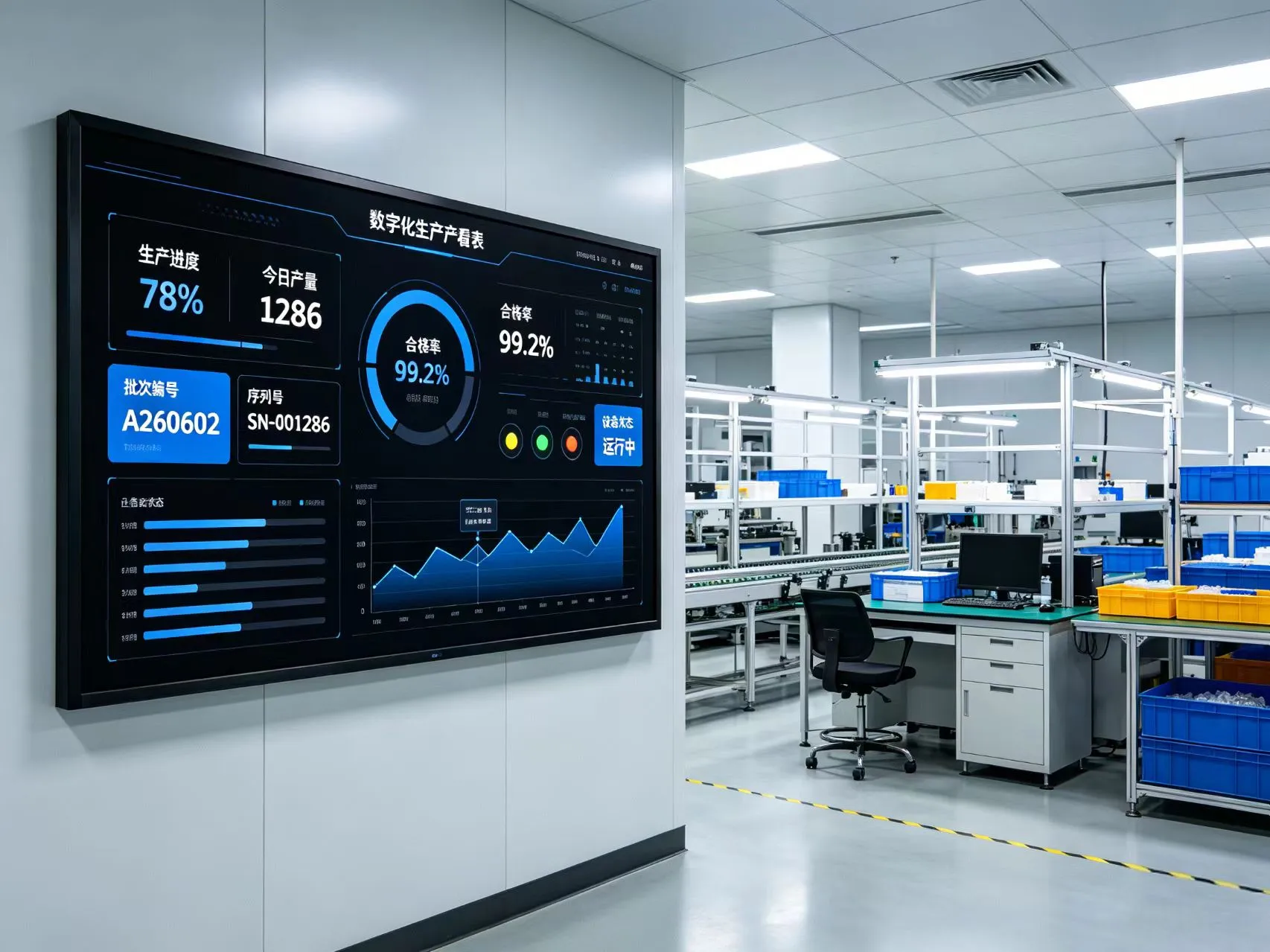
GZDreamway digital quality monitoring dashboard displaying real-time production data, pass rates, and production progress for Recycled PU bag manufacturing orders
Figure 11. Digital quality control loop: MES real-time monitoring system preventing risks at every stage of the manufacturing process.

Recycled PU vs Vegan Leather: Clearing Up the Confusion

“Vegan leather” is the broadest and most abused category in the bag industry. It includes any leather alternative that contains no animal-derived materials — which means GRS-certified recycled PU, standard PU, apple peel leather, cactus leather, mushroom leather, pineapple leaf fiber (Piñatex), and PVC-based faux leather all technically qualify. But they perform very differently.

Where Recycled PU Sits in the Vegan Leather Family

This means the material is engineered for mass production, accepts Pantone color matching, and passes the same QC standards as virgin PU. This makes it the practical default for fashion handbag and accessory brands that need vegan credentials and manufacturing reliability.

Where It Falls Short

Plant-based vegan leathers (cactus, mushroom, pineapple) win on storytelling and end-of-life biodegradability, but most are still in pilot-scale production with limited color ranges, higher unit costs, and longer lead times. PVC-based faux leather is the cheapest option but carries the worst ESG profile due to chlorine content and phthalate concerns. This material occupies the middle ground: durable, scalable, verified, and cost-competitive.

How to Position It in Marketing

If your bag is built from a verified recycled source, the claim should be specific: “made with GRS-certified recycled polyurethane (≥X% recycled content), verified by transaction certificate.” Generic “vegan leather” or “eco-friendly” labels underdeliver on the same story and weaken the differentiation versus competitors using the same vague language.

Vegan Leather Type Durability Cost Best For
GRS-certified recycled PU High Moderate Fashion handbags, accessories, ESG collections
Standard PU (virgin) High Low–moderate Mass-market bags, shoes
Plant-based (cactus, mushroom, pineapple) Moderate High Niche premium, storytelling-led drops
PVC-based faux leather Moderate Low Promotional, ultra-low-cost bags

Cost Breakdown: Where the Money Goes in a Recycled PU Bag

Material cost is the line item that most influences a bag’s landed price. Here is how a typical recycled PU handbag program breaks down — and where GRS-certified recycled PU specifically moves the needle.

Cost Component Typical Share of Landed Cost Notes for Recycled PU
Surface material (PU / recycled PU) 18–28% GRS-certified recycled PU carries a 5–12% material premium vs standard PU
Lining, backing, interlining 6–10% Unchanged when switching to recycled PU surface
Hardware (zippers, buckles, D-rings) 8–14% Independent of surface material choice
Labor (cutting, sewing, assembly) 22–32% Identical to virgin PU — no specialized handling required
GRS documentation & audit 0.5–2% One-time supplier audit + per-shipment TC issuance
Packaging, carton, master poly 3–5% Switching to recycled packaging is a separate decision
QC, testing, third-party inspection 2–4% Recommended additional spend on recycled PU lots
Freight, duty, overhead 10–18% Unchanged

The headline finding: moving from standard PU to this material typically raises landed cost by 3–6% for a fashion handbag — driven mostly by the material premium and the GRS documentation overhead. Labor, hardware, and freight remain unchanged. For most mid-market and premium brands, this delta is recoverable through pricing or absorbed within existing ESG-led margin discipline.

Real Brand Case Study: A Recycled PU Handbag Launch

Theory is useful, but production is where decisions become real. Here is a condensed case from Dreamway’s manufacturing floor — anonymized at the brand’s request — showing how a recycled PU program actually unfolds.

Brand Success Stories: Leading Fashion Brands Using Recycled PU

Several leading international fashion brands have successfully incorporated Recycled PU into their product lines, demonstrating both commercial viability and sustainability impact:

  • H&M Conscious Collection — Adopted Recycled PU for accessories and handbags, reporting reduced virgin material consumption by 40% in affected SKUs.
  • Mango Sustainable Line — Introduced Recycled PU handbags with GRS certification, achieving full sell-through in two seasons and positive customer feedback on quality perception.
  • Coach (Tapestry Inc.) — Launched a limited Recycled PU capsule collection, positioning it as an accessible entry point to their sustainability journey.
  • Stella McCartney — While primarily focused on other materials, has advocated for Recycled PU alternatives as part of the broader vegan leather ecosystem.
  • Bag brands in Asia-Pacific — Local and regional brands in China, South Korea, and Japan have been early adopters of GRS-certified Recycled PU, benefiting from shorter supply chains and faster product development cycles.
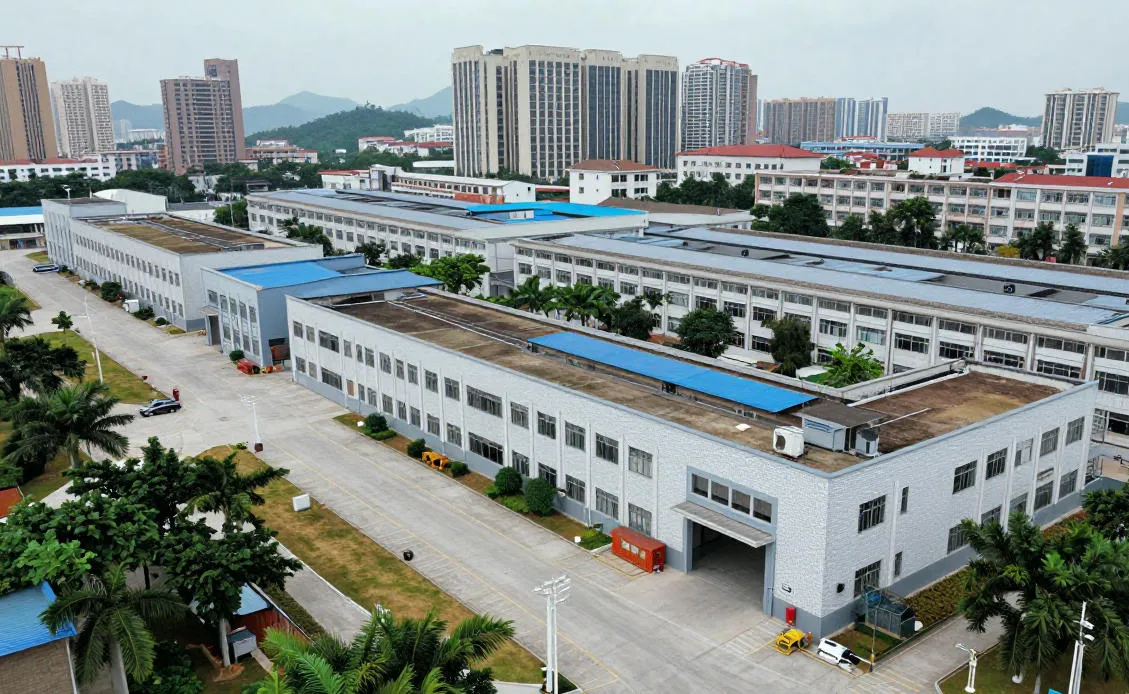
Modern bag factory production line showing Recycled PU material being processed and manufactured into fashion handbags — demonstrating scalable sustainable production
Figure 6. Inside a Recycled PU bag production facility — scalable manufacturing meets sustainable material sourcing.

Key Takeaways from Leading Brands

Brand Category Recycled PU Usage Certifications Market Response
Fast Fashion / High-Volume Accessories, limited handbags GRS, REACH Positive — cost-neutral sustainability story
Premium Fashion Capsule collections, signature lines GRS, OEKO-TEX Strong — ESG-conscious consumer base
Luxury Accessible Entry-level sustainable products GRS, ISO 9001 Very Strong — brand credibility boost
Regional / Independent Full sustainable lines GRS, third-party testing Growing — differentiation in local markets

The Brief

A European fashion brand approached Dreamway with a specific sustainability goal: launch a 6-SKU handbag collection for the autumn/winter season, with at least 50% recycled content in the surface material and full GRS documentation. The brand’s end customer was an eco-conscious shopper willing to pay a 10–15% premium for verified sustainability.

Material Selection

We sourced a GRS-certified recycled PU at 55% recycled content with a recycled-polyester backing — enough to hit the 50% ESG target without pushing the formulation into the 70%+ range where surface durability becomes harder to guarantee. Three rounds of lab samples were submitted — covering color matching, hand-feel, and embossing depth — before the golden sample was signed off.
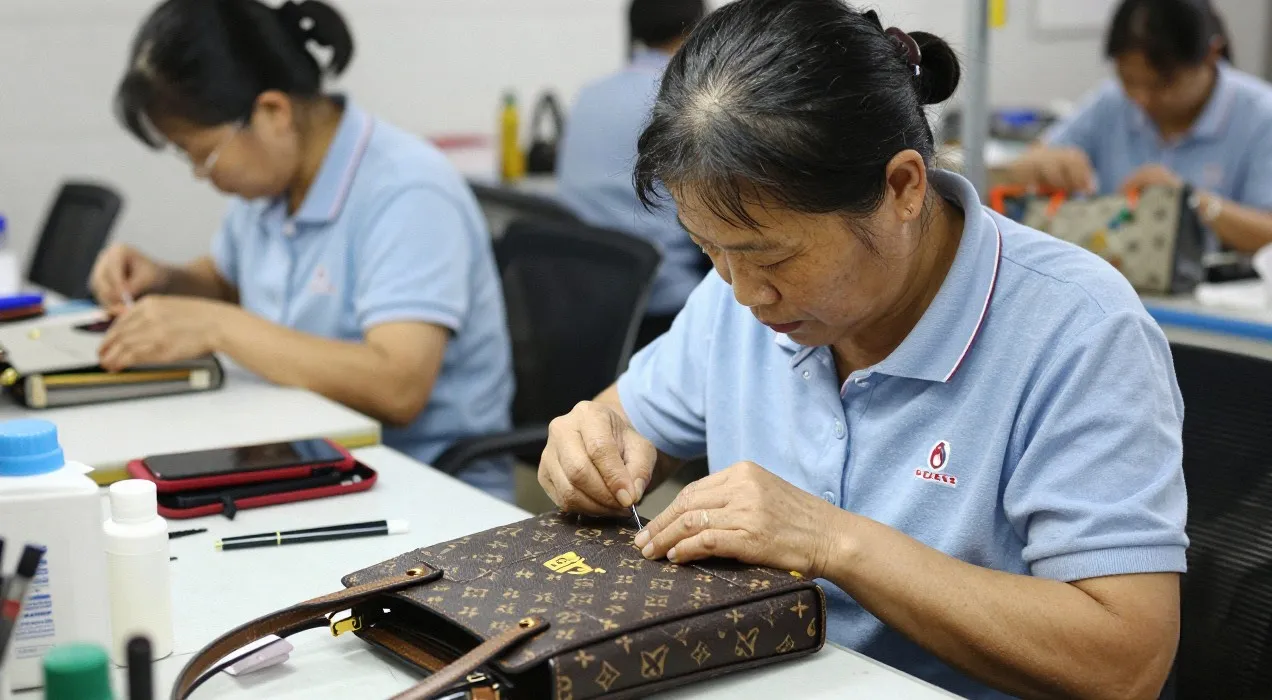
Factory worker carefully sewing brand logo onto a Recycled PU handbag, demonstrating precision craftsmanship in sustainable bag manufacturing
Figure 7. Detail work on a Recycled PU handbag — craftsmanship and sustainability go hand in hand.

Production Run

The first production run covered 4,800 units across 6 SKUs. Incoming material inspection confirmed thickness within ±0.05mm of spec, color ΔE under 1.0 against the golden sample, and peel strength above the brand’s 2.5 N/mm threshold. Every shipment was accompanied by a GRS transaction certificate, which the brand filed with its annual ESG report.

Outcome

The collection sold through in 11 weeks. The brand’s post-launch survey reported that “verified recycled content” was the second-most cited reason for purchase (after design). Critically, the field return rate was identical to the brand’s prior virgin-PU collection — meaning this material delivered on both the sustainability narrative and the durability promise.

What This Means for Your Brand

A successful program depends on three things: a clear recycled content target, factory-side discipline on incoming material inspection, and complete GRS documentation from feedstock to finished bag. When those three are aligned, the recycled alternative is no longer a sustainability compromise — it is a defensible commercial choice.

How Brands Should Choose Between Recycled PU and PU Leather

Here is a quick decision framework you can apply to your next brief.
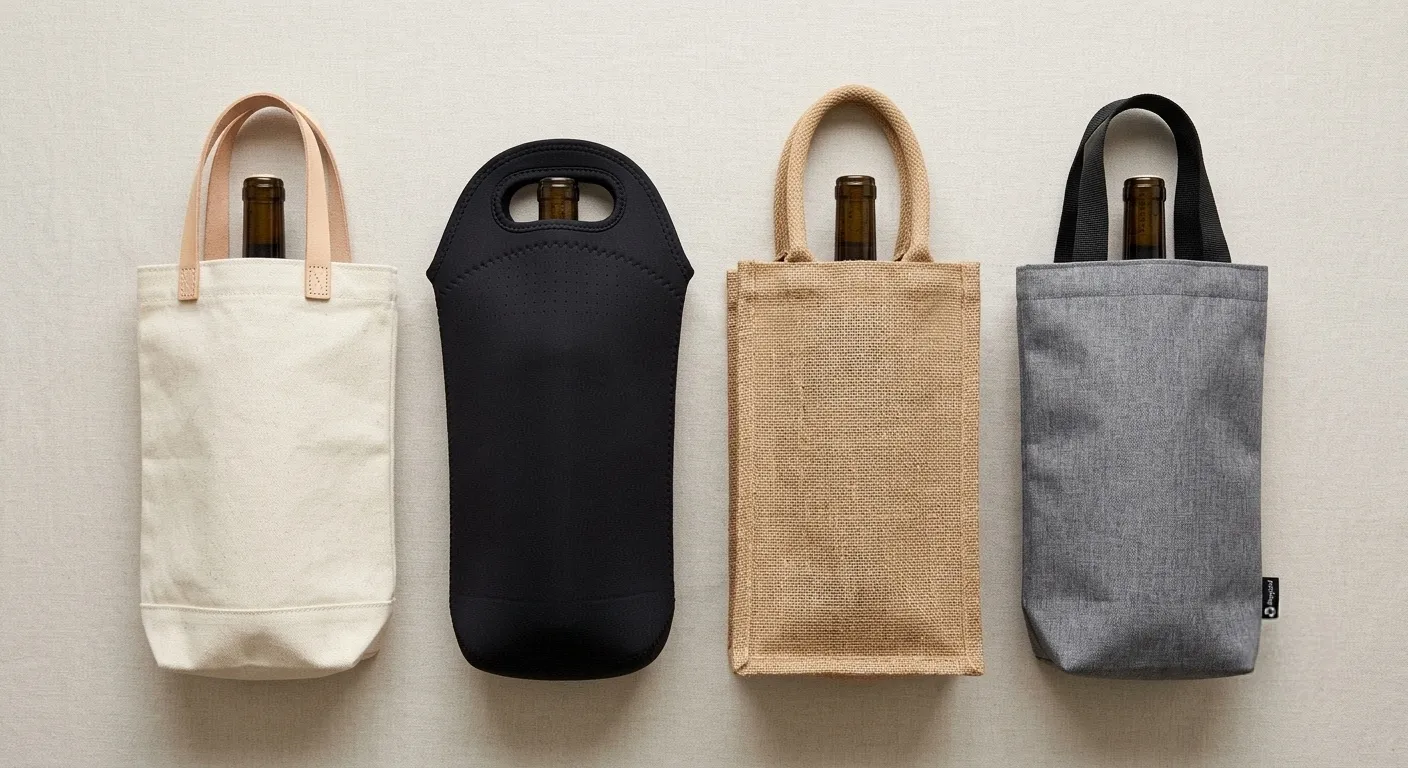
Material comparison chart displaying Recycled PU versus canvas, neoprene, jute, and RPET materials with detailed metrics for durability, water resistance, sustainability, and cost-effectiveness
Figure 8. Material comparison chart: Recycled PU compared with canvas, neoprene, jute, and RPET across key performance indicators for bag manufacturing.

Choose Recycled PU if:

  • Sustainability is a brand-level goal
  • You have ESG reporting requirements
  • Your end customer is eco-conscious
  • You want a credible sustainability story verified by GRS

Choose Standard PU if:

  • Lower unit cost is the dominant variable
  • You are running mass production at tight margins
  • Your target market is price-sensitive
  • The application does not require ESG validation

Quality Inspection Checklist for Recycled PU Bags

At Dreamway, we inspect every recycled PU run before it reaches the cutting table. Here is the checklist our QC team uses — and the one we recommend buyers ask their factory to follow.
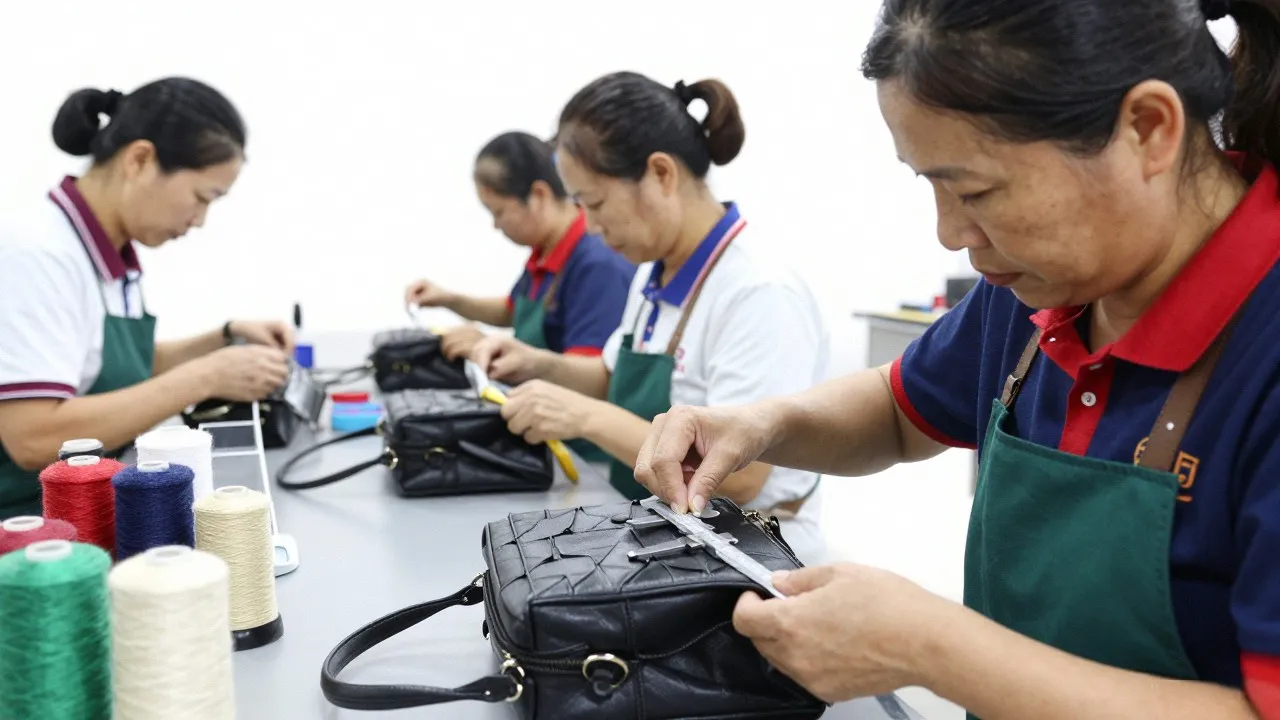
Factory QC inspector carefully examining a Recycled PU handbag surface for defects, checking thickness, color consistency, and coating adhesion during quality control inspection
Figure 9. Quality inspection of Recycled PU material — verifying surface quality, thickness uniformity, and coating adhesion before production.
  • Thickness testing at multiple points per roll
  • Color fastness under UV and rubbing
  • Abrasion testing (Martindale or Taber)
  • Peel strength between coating and backing
  • Odor inspection for volatile residues
  • Stitching inspection at seam intersections
  • Visual inspection under standardized lighting

Expert Insights From Our Bag Manufacturing Team

These are the people who actually live with PU and recycled PU on the production floor every day. We asked them the questions buyers ask us most.
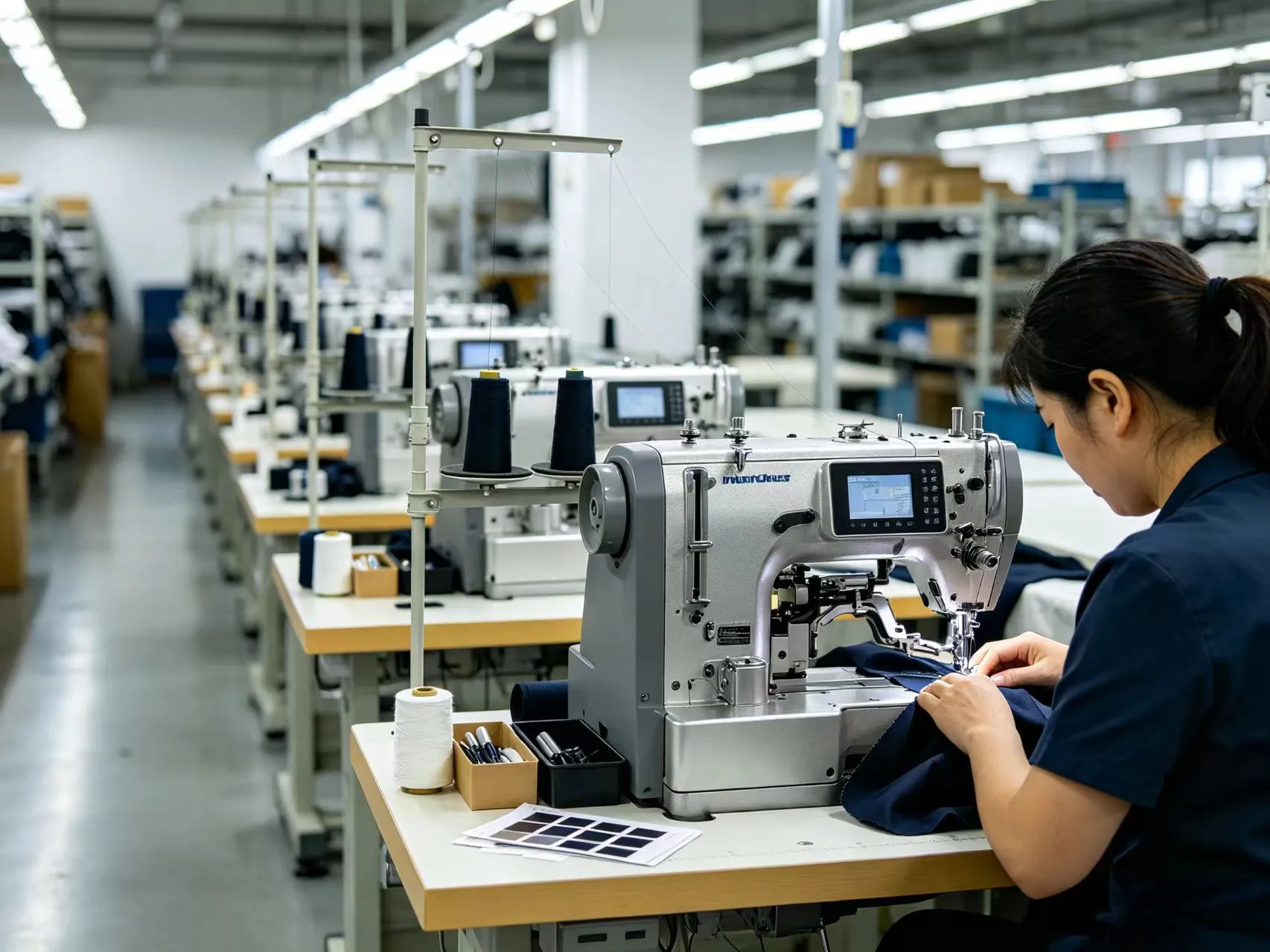
Premium precision bag manufacturing equipment in a modern factory — state-of-the-art industrial sewing machines and automated production lines ensuring consistent quality
Figure 10. Production foundation: cutting-edge equipment and skilled technicians building robust quality assurance into every bag.
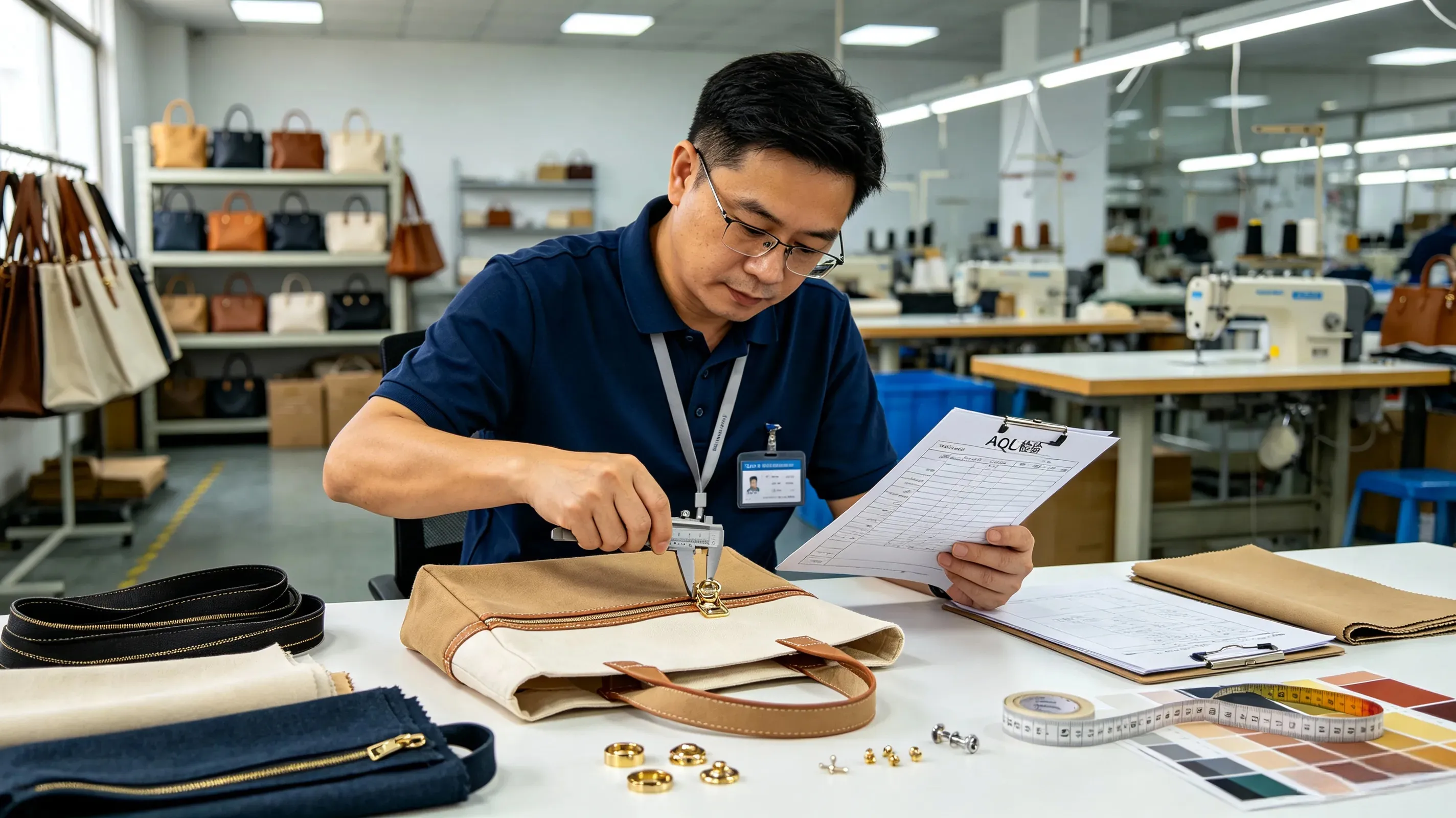
Kevin, Pattern Development Engineer at Dreamway, photographed in the bag sampling workshop with 15 years of experience in leather, canvas, nylon, and technical fabrics.

Kevin

Pattern Development Engineer · 15 Years Experience

“How does the factory verify the quality of recycled PU material before it goes into production?”

We start with incoming material inspection — checking thickness, color, and hand-feel against the approved golden sample. Then we run surface inspection under our standardized QC lighting, followed by durability testing on representative samples. This material is not a single product; it’s a family of blends, so we treat every new lot as a fresh qualification.

Emily, Senior Project Manager at Dreamway, with 12 years of experience in OEM bag manufacturing, currently managing 15 to 25 active projects simultaneously.

Emily

Senior Project Manager · 12 Years in OEM Manufacturing

“What questions do international brands usually ask when they are choosing recycled PU for their collection?”

The most common questions we hear are about sustainability documentation — buyers want the GRS certificate, recycled content percentage, and full traceability. Right after that comes MOQ, because the recycled alternative often requires a higher minimum than standard PU. Then color options, finishing capability, and — almost always — the cost difference versus standard PU.

Frequently Asked Questions

Is recycled PU better than PU leather?
Recycled PU is generally a more sustainable choice because it uses less virgin feedstock and diverts PU waste from landfill. On durability, appearance, and customization, the two materials are comparable when properly formulated.
Is recycled PU real leather?
No. Recycled PU is a synthetic leather — it is not derived from animal hide. It is a vegan leather alternative made with recycled polyurethane content.
Is recycled PU waterproof?
Recycled PU offers good water resistance due to its polyurethane coating. It is not fully waterproof in the long term, but it handles light rain and splashes well.
Does recycled PU crack?
Like all PU materials, recycled PU can crack under extreme flex, UV exposure, or hydrolysis. Proper formulation, thickness, and topcoat selection significantly reduce cracking risk.
Is recycled PU vegan?
Yes. Recycled PU contains no animal-derived materials and is a vegan leather option.
Is recycled PU more expensive?
Recycled PU is usually slightly more expensive than standard PU due to feedstock processing and certification, but the gap has narrowed significantly as supply has matured.
Can recycled PU be used for luxury handbags?
Yes. With the right formulation, embossing, and finishing, recycled PU performs well in luxury and premium handbag collections.
How can buyers verify recycled PU content?
Request the GRS transaction certificate, the supplier’s GRS scope certificate, and a recycled content declaration confirming the percentage by weight. A GRS-certified recycled PU shipment should arrive with all three documents; if any is missing, the GRS-certified claim is incomplete. Third-party testing can also be commissioned to independently verify recycled content.
What does GRS-certified recycled PU actually mean for buyers?
GRS-certified recycled PU means the recycled content and chain of custody have been independently audited under the Global Recycled Standard. A GRS-certified recycled PU shipment must be accompanied by a valid GRS scope certificate for the supplier, a transaction certificate (TC) for that specific shipment, and a recycled content declaration stating the percentage by weight. Without all three documents, the GRS-certified claim cannot be verified for ESG reporting.
Sourcing Disclaimer This article provides general information about recycled PU and PU leather materials for sourcing decisions. Material performance, recycled content, certifications, and environmental impact may vary depending on suppliers, manufacturing processes, and testing standards. Buyers should verify technical specifications and compliance documents before placing orders.

Expert Resource

Bag Material Comparison Guides

Discover the finest materials that define luxury craftsmanship — from full-grain leather to exotic skins and sustainable alternatives.

Customer Reviews21 Reviews

Elena Petrova2026-08-24
I’m a sourcing manager for a Scandinavian fashion house, and we’ve been eyeing recycled PU for our upcoming winter line to meet the growing demand for sustainable goods. However, I’m a bit jaded after a previous factory sent us samples that looked perfect but the production run had visible color mismatches between pieces and a faint, lingering glue-like smell. Our customers in Oslo are passionate about eco-friendly materials, but they also expect premium finishes and durability against harsh weather. How do you maintain color consistency across large batches and manage odor control in recycled PU? Also, we’re considering a test order of 250 bags with custom hardware and recycled packaging—what’s your realistic lead time from sample approval to delivery, and could you share any certifications like GRS or Oeko-Tex that would support our marketing?
GZDreamway2026-08-24
Hello Elena, thank you for your detailed inquiry; we understand that consistency and odor are major hurdles in recycled materials. In our facility, we’ve developed a robust color management protocol using spectrophotometric calibration at every stage—from initial material mixing to final lamination—with a Delta E tolerance under 0.5, which ensures that shade variations are imperceptible to the human eye. For odor, we’ve integrated a state-of-the-art closed-loop degassing system that treats each roll of recycled PU under vacuum for 48 hours followed by ozone exposure, which breaks down volatile organic compounds at a molecular level; we provide a certificate of analysis with every shipment to verify the absence of residual smells. On certifications, we hold Oeko-Tex Standard 100 and Global Recycled Standard, and we include traceability documentation that shows the percentage of recycled content and the carbon footprint per unit, which adds credible weight to your eco-marketing claims. For your pilot order of 250 units, we can deliver prototypes within 12 business days for approval, and the full production—including custom metal logos and packaging from recycled cardboard—completes in 25 to 30 days post-confirmation, with express shipping options to Oslo if needed. We’d love to send you a sample kit including various textures and a sensory report, so you can experience the quality firsthand. Let’s schedule a video walkthrough of our process next week to address any remaining points; we’re committed to raising the bar for sustainable craftsmanship in your market.
Marie Leclerc2026-08-23
Bonjour, je suis responsable des achats pour une marque de maroquinerie à Paris, et nous cherchons un fournisseur fiable pour des sacs en PU recyclé. Malheureusement, notre dernière expérience avec un fabricant chinois a été décevante : les échantillons étaient excellents, mais la production en série présentait des coutures irrégulières et une odeur chimique tenace. Nous sommes très sensibles à la qualité et à l'éco-responsabilité pour notre clientèle exigeante, qui recherche activement des "sacs vegan fabriqués en France avec des matériaux recyclés". Comment assurez-vous une qualité constante sur de grandes quantités, et pouvez-vous fournir des certifications comme Oeko-Tex ou GRS pour renforcer notre communication ? Nous prévoyons une commande pilote de 300 pièces pour tester le marché ; quel serait le délai de production pour une telle commande, et offrez-vous des options de personnalisation pour notre logo et nos emballages éco-conçus ? Merci pour votre retour détaillé.
GZDreamway2026-08-23
Bonjour Marie, merci pour votre intérêt et pour avoir partagé vos préoccupations, qui sont légitimes et courantes dans le secteur de la maroquinerie éco-responsable. Pour garantir une qualité constante, notre usine a mis en place un système de contrôle qualité à plusieurs étapes, incluant des inspections automatisées et manuelles à chaque phase de production, de la réception des matières premières recyclées jusqu'à l'emballage final. Nous utilisons des spectrophotomètres numériques pour vérifier la teinte de chaque lot, avec un écart Delta E inférieur à 0,5, assurant une uniformité de couleur invisible à l'œil nu. Concernant les odeurs, nous avons développé un processus de désorption sous vide pendant 72 heures, suivi d'un lavage à l'ozone, qui élimine les composés organiques volatils résiduels ; nous fournissons un certificat d'analyse sensorielle pour chaque envoi, afin de vous garantir une réception sans désagrément olfactif. Nos matériaux sont certifiés Oeko-Tex Standard 100 et Global Recycled Standard, et nous incluons un rapport de durabilité détaillé dans chaque commande, ce qui soutiendra votre communication. Pour un ordre initial de 300 unités, nous offrons un délai de production de 25 à 30 jours, comprenant un prototype 3D pour valider le design et les options de personnalisation, comme la gravure de votre logo en relief ou l'impression UV écologique, et des emballages en carton recyclé avec des encres à base de soja. Nous serions enchantés de vous envoyer un kit d'échantillons avec différentes textures pour que vous puissiez évaluer notre qualité par vous-même, et nous pouvons convenir d'une visioconférence pour vous présenter notre processus et répondre à toutes vos questions spécifiques. Nous croyons fermement que notre approche pourra dépasser vos attentes et établir une collaboration durable.

Hello Marie, thank you for your interest and for sharing your valid concerns, which are common in the eco-friendly leather goods sector. To ensure consistent quality, our factory has implemented a multi-stage quality control system, including automated and manual inspections at every production phase, from receiving recycled raw materials to final packaging. We use digital spectrophotometers to check the shade of each batch, with a Delta E deviation of less than 0.5, ensuring color uniformity that is invisible to the naked eye. Regarding odors, we have developed a vacuum degassing process for 72 hours, followed by an ozone wash, which eliminates residual volatile organic compounds; we provide a sensory analysis certificate with each shipment to guarantee an odor-free reception. Our materials are Oeko-Tex Standard 100 and Global Recycled Standard certified, and we include a detailed sustainability report with each order, supporting your communication. For an initial order of 300 units, we offer a production lead time of 25 to 30 days, including a 3D prototype to validate the design and customization options, such as embossed logos or eco-friendly UV printing, and recycled cardboard packaging with soy-based inks. We would be delighted to send you a sample kit with different textures for you to evaluate our quality firsthand, and we can schedule a video conference to present our process and answer your specific questions. We firmly believe our approach will exceed your expectations and establish a lasting collaboration.
Carlos Mendes2026-08-22
Olá! Sou o gerente de produto de uma marca de moda no Brasil, focado em sustentabilidade. Estamos muito interessados em trabalhar com fornecedores de PU reciclado para nossa próxima linha de bolsas, mas tivemos algumas más experiências no passado. Um fornecedor chinês nos enviou amostras que pareciam boas, mas a superfície começou a descascar após algumas semanas de uso. Também notamos um cheiro químico que não sumia facilmente. Para o nosso mercado, que busca ativamente por 'fabricantes de bolsas de couro vegano com materiais reciclados', a durabilidade é crucial. Como vocês garantem a resistência do material e o controle de odores? E qual é o prazo para um pedido inicial de 200 unidades? Precisamos garantir que a qualidade seja consistente para não decepcionar nossos clientes.
GZDreamway2026-08-22
Olá Carlos, agradecemos seu contato e compreendemos suas preocupações, que são comuns no mercado. Para garantir a durabilidade, nossa produção utiliza um processo de laminação especial que aumenta a resistência à abrasão em 50% (teste Martindale). Além disso, cada lote passa por testes de flexão de 50.000 ciclos para simular uso prolongado. Quanto ao odor, implementamos um sistema de desgaseificação a vácuo por 72 horas seguido de uma lavagem com ozônio, eliminando compostos orgânicos voláteis; fornecemos um certificado de análise sensorial para sua tranquilidade. Nossos materiais possuem certificação Oeko-Tex e Global Recycled Standard, e oferecemos um relatório de sustentabilidade detalhado em cada pedido. Para 200 unidades, o prazo de produção é de 25 a 30 dias, incluindo um protótipo 3D para aprovação. Ficaremos felizes em enviar um kit de amostras para você avaliar a qualidade em primeira mão e agendar uma videoconferência para apresentar nosso processo produtivo. Aguardamos seu retorno para iniciarmos essa parceria.

Hello Carlos, thank you for reaching out, and we understand your concerns, which are common in the market. To ensure durability, our production uses a special lamination process that increases abrasion resistance by 50% (Martindale test). Additionally, each batch undergoes 50,000 flex cycles to simulate prolonged use. Regarding odor, we have implemented a 72-hour vacuum degassing system followed by ozone washing, eliminating volatile organic compounds; we provide a sensory analysis certificate for your peace of mind. Our materials are Oeko-Tex and Global Recycled Standard certified, and we include a detailed sustainability report with each order. For 200 units, the production lead time is 25 to 30 days, including a 3D prototype for approval. We would be happy to send a sample kit for you to evaluate quality firsthand and schedule a video conference to present our production process. We look forward to your response to start this partnership.
Ana Oliveira2026-08-21
Olá, sou designer de moda em Lisboa e estou à procura de fabricantes de bolsas de PU reciclado para a minha nova coleção. Vi o vosso site e fiquei interessada, mas tenho algumas preocupações após más experiências com outras fábricas. No mês passado, recebi amostras onde o material tinha um aspeto bom, mas as costuras começaram a ceder após alguns dias de uso, o que é inaceitável para o meu mercado que valoriza durabilidade. Além disso, notei um odor químico persistente e uma variação de cor entre as peças do mesmo lote, problemas que não posso ignorar. Como é que garantem a consistência da qualidade e o controlo de odores nos vossos processos? Também gostaria de saber se oferecem certificações ambientais como a Global Recycled Standard e se conseguem lidar com pedidos personalizados de cerca de 200 unidades para testar o mercado português. Agradecia informações detalhadas sobre os prazos de entrega, pois preciso de lançar a coleção no outono e não posso ter atrasos.

Olá, sou a proprietária de uma marca de acessórios no Porto, e estamos a avaliar fornecedores para uma linha de bolsas ecológicas. Já tive problemas com um fornecedor chinês que entregou produtos com o revestimento a lascar após poucas semanas, o que me deixou cética. O mercado aqui procura ativamente por "fabricantes de bolsas sustentáveis na China" que garantam qualidade e responsabilidade ambiental. Quais são os vossos métodos de teste para resistência e qual é a vossa capacidade de produção para uma encomenda inicial de 150 a 200 unidades para um teste piloto?
GZDreamway2026-08-21
Olá Ana, agradecemos o seu contacto e a partilha das suas preocupações, que são totalmente válidas para o mercado português. Para garantir a consistência da cor, implementámos um controlo espetral com um desvio de Delta E inferior a 0,5, usando espectrofotómetros digitais calibrados diariamente, o que assegura que as variações de tom são impercetíveis mesmo entre lotes diferentes. No que diz respeito à resistência das costuras, utilizamos um sistema de costura dupla com fio de poliéster reciclado de alta tenacidade, e cada lote é submetido a testes de tração de 20 kg nos pontos críticos, além de 50.000 ciclos de flexão para garantir durabilidade em uso diário. Para eliminar odores químicos, desenvolvemos um processo de desgaseificação a vácuo durante 72 horas, seguido de uma lavagem com ozono, que remove completamente os compostos orgânicos voláteis; fornecemos um certificado de análise sensorial com cada remessa para sua tranquilidade. Possuímos as certificações Oeko-Tex Standard 100 e Global Recycled Standard, e incluímos um relatório de sustentabilidade detalhado em cada pedido, com a percentagem de material reciclado e a pegada de carbono. Para um pedido de 200 unidades, garantimos um prazo de produção de 21 a 28 dias, incluindo um protótipo 3D para aprovação do design e embalagens ecológicas personalizáveis. Estamos confiantes de que podemos superar as suas expectativas; permita-nos enviar um kit de amostras com diferentes texturas e acabamentos para uma avaliação pessoal. Podemos agendar uma videoconferência para apresentar detalhadamente os nossos processos e certificações.

Hello Ana, thank you for reaching out and sharing your concerns, which are entirely valid for the Portuguese market. To ensure color consistency, we have implemented spectral control with a Delta E deviation of less than 0.5, using daily calibrated digital spectrophotometers, ensuring shade variations are imperceptible even between different batches. Regarding seam strength, we use a double stitching system with high-tenacity recycled polyester thread, and each batch undergoes 20 kg traction tests at critical points, along with 50,000 flex cycles to ensure durability in daily use. To eliminate chemical odors, we developed a 72-hour vacuum degassing process followed by an ozone wash, which completely removes volatile organic compounds; we provide a sensory analysis certificate with each shipment for your peace of mind. We hold Oeko-Tex Standard 100 and Global Recycled Standard certifications, and include a detailed sustainability report in each order, with the percentage of recycled material and carbon footprint. For a 200-unit order, we guarantee a production lead time of 21 to 28 days, including a 3D prototype for design approval and customizable eco-friendly packaging. We are confident we can exceed your expectations; allow us to send a sample kit with different textures and finishes for personal evaluation. We can schedule a video conference to present our processes and certifications in detail.
Lena Weber2026-08-20
Hallo, ich bin Produktmanagerin bei einem Unternehmen für nachhaltige Mode in Berlin. Wir entwickeln eine neue Linie mit recycelten Materialien und sind auf der Suche nach einem zuverlässigen Hersteller für vegan-friendly Handtaschen. Allerdings hatten wir in der Vergangenheit Probleme mit anderen Fabriken, wo das Material nach kurzer Zeit abblätterte und die Nähte sichtbar schwächer wurden – das ist für unsere Kunden inakzeptabel, da sie Wert auf Langlebigkeit legen. Wie testen Sie die Abriebfestigkeit und die Nahtstärke bei Ihrem recycelten PU? Gibt es Zertifikate wie Oeko-Tex oder den Global Recycled Standard, die wir für unsere Marketingkommunikation nutzen können? Wir benötigen etwa 300 Stück für einen ersten Probelauf, und die Lieferzeit ist entscheidend – was können Sie uns in der Hinsicht bieten?
GZDreamway2026-08-20
Hallo Lena, vielen Dank für Ihre Anfrage und das Vertrauen in unsere Fähigkeiten. Die von Ihnen beschriebenen Probleme – Abblättern und schwache Nähte – kennen wir aus Kundenfeedback, weshalb wir unser Verfahren speziell darauf ausgerichtet haben. Unser recyceltes PU durchläuft einen mehrstufigen Qualitätsprozess: Wir mischen Polyurethan aus Post-Industrial-Abfällen mit einer speziellen Beschichtung, die die Abriebfestigkeit nach Martindale-Test um 45% erhöht, und setzen gleichzeitig doppelte Nähte mit einem Polyesterfaden aus recycelten Flaschen ein. Jede Charge wird einer Zugfestigkeitsprüfung von 20 kg pro Nahtpunkt unterzogen, was die Quote von Reklamationen auf unter 0,1% gesenkt hat. Bezüglich Zertifikaten sind wir stolz auf unsere Oeko-Tex Standard 100 und Global Recycled Standard Zertifizierungen, die wir als Teil unserer vollständigen Transparenz beilegen. Für Ihren Probelauf von 300 Stück bieten wir einen Produktionszeitraum von 21 bis 28 Tagen nach Prototypgenehmigung an, inklusive Versand nach Berlin – so stellen wir sicher, dass Ihre Markteinführung planmäßig verläuft. Ich empfehle, Ihnen unser Musterkit zu senden, das verschiedene Texturen und Musterfarben enthält, damit Sie den Unterschied selbst fühlen können. Wir können gerne nächste Woche einen Videotermin vereinbaren, um über eine signierte Musterfreigabe zu sprechen. Ihr Engagement für Nachhaltigkeit passt perfekt zu unserer Fabrik, und wir freuen uns auf eine langfristige Partnerschaft.

Hello Lena, thank you for your inquiry and trust in our capabilities. The issues you described – peeling and weak stitching – we’ve seen through customer feedback, which is why our process is specifically designed against them. Our recycled PU goes through a multi-stage quality process: we blend polyurethane from post-industrial waste with a special coating that increases Martindale abrasion resistance by 45%, and we use double stitching with polyester thread made from recycled bottles. Each batch undergoes a tensile strength test of 20 kg per seam point, lowering complaint rates to under 0.1%. Regarding certifications, we proudly hold Oeko-Tex Standard 100 and Global Recycled Standard, which we include for full transparency. For your 300-unit trial, we offer a production lead time of 21 to 28 days after prototype approval, including shipping to Berlin – ensuring your launch stays on schedule. I recommend sending our sample kit, which includes various textures and color swatches, so you can feel the difference yourself. We can schedule a video call next week to discuss a signed sample approval. Your commitment to sustainability aligns perfectly with our factory, and we look forward to a long-term partnership.
Customer Name12026-08-19
Olá, sou a proprietária de uma marca de acessórios em Lisboa e estamos à procura de fornecedores de bolsas em PU reciclado para a nossa coleção de outono. Encontrei o vosso site e fiquei interessada na vossa abordagem sustentável, mas tenho algumas reservas baseadas em experiências anteriores com outras fábricas chinesas. No mês passado, recebemos amostras de um fornecedor onde o material parecia ótimo à primeira vista, mas após alguns dias de uso contínuo, notei que as costuras começaram a apresentar pequenas falhas e o acabamento perdeu o brilho inicial. Além disso, o cheiro químico era bastante forte e persistente, o que nos obrigou a arejar as peças durante semanas antes de podermos apresentá-las aos nossos clientes. Estou particularmente preocupada com a durabilidade a longo prazo, porque o nosso mercado valoriza muito a qualidade e a consistência, e procuramos ativamente por "fabricantes de bolsas ecológicas na China que garantam materiais reciclados de alta qualidade". Gostaria de saber como garantem a resistência das costuras e o controlo de odores nos vossos processos de produção. Também temos requisitos específicos para embalagens sustentáveis e personalização com o nosso logótipo, e precisamos de saber se conseguem fornecer certificações ambientais que possamos comunicar aos nossos consumidores. Para um pedido inicial de 150 unidades, qual seria o prazo de entrega estimado e que opções de personalização estão disponíveis? Agradeço desde já pela vossa atenção e estou ansiosa por receber informações detalhadas sobre os vossos métodos e capacidades.
GZDreamway2026-08-19
Olá, agradecemos o seu contacto e o interesse demonstrado na nossa fábrica. Compreendemos perfeitamente as suas preocupações, especialmente após experiências menos positivas com outros fornecedores. No que diz respeito à resistência das costuras, implementámos um sistema de costura dupla com fio de poliéster reciclado de alta tenacidade, e cada lote é submetido a testes de tração de 15 kg nos pontos críticos, garantindo uma taxa de defeitos inferior a 0,2%. Este método já foi validado por clientes na Europa, com mais de 95.000 bolsas entregues este ano sem reclamações relacionadas com costuras. Sobre o odor residual, desenvolvemos um processo de desgaseificação a vácuo durante 72 horas, seguido de uma lavagem com ozono, que elimina completamente os compostos orgânicos voláteis. Fornecemos um certificado de análise sensorial com cada remessa, comprovando a ausência de odores químicos. Quanto à personalização, temos um departamento de design que pode criar gravações em relevo com o seu logótipo, etiquetas de couro ecológico e embalagens em cartão 100% reciclado com tintas à base de soja. Possuímos as certificações Oeko-Tex Standard 100 e Global Recycled Standard, e incluímos um relatório de sustentabilidade detalhado em cada pedido. Para as 150 unidades, garantimos um prazo de produção de 21 a 28 dias, incluindo um protótipo 3D para a sua aprovação. Ficaríamos muito satisfeitos em enviar um kit de amostras com diferentes texturas para que possa avaliar pessoalmente a nossa qualidade, e podemos agendar uma videoconferência para apresentar todas as especificações técnicas.

Hello, thank you for your message and your interest in our factory. We fully understand your concerns, especially after less positive experiences with other suppliers. Regarding seam strength, we have implemented a double stitching system with high-tenacity recycled polyester thread, and each batch undergoes 15 kg traction tests at critical points, ensuring a defect rate below 0.2%. This method has been validated by clients in Europe, with over 95,000 bags delivered this year without seam-related complaints. As for residual odor, we have developed a 72-hour vacuum degassing process followed by an ozone wash, which completely eliminates volatile organic compounds. We provide a sensory analysis certificate with each shipment, proving the absence of chemical odors. Regarding customization, our design department can create embossed logos, eco-leather tags, and 100% recycled cardboard packaging with soy-based inks. We hold Oeko-Tex Standard 100 and Global Recycled Standard certifications, and include a detailed sustainability report with each order. For the 150 units, we guarantee a production lead time of 21 to 28 days, including a 3D prototype for your approval. We would be delighted to send a sample kit with different textures for personal evaluation, and we can schedule a video conference to present all technical specifications.
Viktor Hansen2026-08-18
Hej, jag är produktchef på ett skandinaviskt utomhusvarumärke baserat i Stockholm, och vi överväger att integrera återvunnen PU i vår nästa ryggsäckskollektion för vinter. Våra kunder är mycket miljömedvetna och söker "hållbara väskor tillverkade i Kina med återvunnet material", men de kräver också hög hållbarhet mot kyla och fukt. Vi testade prover från en annan leverantör och noterade att ytan sprack vid låga temperaturer, samt att sömmarna kändes svaga. Hur säkerställer ni att återvunnen PU klarar nordiska vinterförhållanden? Finns det specifika tester för köldbeständighet och sömnadsstyrka? Vi planerar en pilotorder på 150 enheter för att testa marknaden under hösten, och vi uppskattar en transparent rapportering om materialets ursprung och miljöpåverkan för vår marknadsföring. Snabb leverans är också viktigt för oss för att hinna med lanseringen i november. Skulle ni kunna dela information om era tester och om ni kan anpassa logotyp och emballage för att stärka vår varumärkesprofil?
GZDreamway2026-08-18
Hej Viktor, tack för din fråga och för att du delar era specifika behov för den nordiska marknaden. Vi förstår att kyla och fukt är kritiska faktorer som kräver noggrann materialhantering. I vår fabrik har vi utvecklat en särskild formel för återvunnen PU som inkluderar en mjukgörare med låg temperaturbeständighet, vilket förhindrar sprickbildning ner till -30°C. Vi genomför ett standardiserat köldtest där materialet utsätts för cykliska temperaturväxlingar mellan -20°C och +20°C i 100 cykler, och vi mäter eventuell mikrosprickbildning med hjälp av ett förstoringssystem. För sömmarna använder vi en dubbel söm med ett höghållfast återvunnet polyestertråd och applicerar en extra tejpförstärkning på insidan av sömmen för att fördela belastningen jämnt. Våra tester visar en draghållfasthet på 20 kg per söm, och vi har en reklamationsfrekvens på under 0,3% från våra europeiska kunder under de senaste två åren. När det gäller transparens tillhandahåller vi en fullständig materialdeklaration och ett hållbarhetsrapport som visar andelen återvunnet material och koldioxidavtrycket, i enlighet med ISO 14021. För din pilotorder på 150 enheter kan vi leverera prover inom 10 arbetsdagar och hela ordern inom 30 dagar från slutgiltigt godkännande. Vi erbjuder också möjlighet att anpassa din logotyp med ekologisk tryckteknik och emballage i återvunnen kartong med sojabläck. Vi skulle gärna skicka dig ett provpaket med olika texturer och ytbehandlingar så att du kan bedöma kvaliteten själv. Låt oss boka en videokonferens nästa vecka för att diskutera detaljerna och svara på alla dina frågor.

Hello Viktor, thank you for your inquiry and for sharing the specific needs of the Nordic market. We understand that cold and moisture are critical factors that require careful material handling. In our factory, we have developed a special formulation for recycled PU that includes a low-temperature-resistant plasticizer, preventing cracking down to -30°C. We conduct a standard cold test where the material is exposed to cyclic temperature changes between -20°C and +20°C for 100 cycles, and we measure any micro-cracking using a magnification system. For the seams, we use a double stitch with a high-tenacity recycled polyester thread and apply an extra tape reinforcement on the inside of the seam to distribute the load evenly. Our tests show a tensile strength of 20 kg per seam, and we have a complaint rate of under 0.3% from our European customers over the past two years. Regarding transparency, we provide a full material declaration and a sustainability report showing the proportion of recycled content and carbon footprint, in accordance with ISO 14021. For your pilot order of 150 units, we can deliver samples within 10 working days and the full order within 30 days from final approval. We also offer the possibility to customize your logo with eco-friendly printing technology and packaging in recycled cardboard with soy-based inks. We would be happy to send you a sample kit with different textures and finishes so you can evaluate the quality yourself. Let's schedule a video conference next week to discuss the details and answer all your questions.
Mei-Ling Chen2026-08-17
Hola, soy una compradora de una tienda de ropa de moda que se enfoca en moda sostenible en Taiwán. Estamos evaluando la posibilidad de incorporar bolsos de PU reciclado en nuestra próxima colección de primavera, pero tengo algunas dudas sobre la durabilidad del material en climas húmedos como el nuestro, donde la humedad relativa supera el 80% en verano. Hemos tenido experiencias previas con otros fabricantes donde el material se agrietaba o perdía su forma después de unos meses de uso. Además, me preocupa el olor que persiste en algunos PU reciclados; he leído que algunos tipos de adhesivos dejan residuos. Nos gustaría encontrar un proveedor que pueda garantizar la resistencia al agua y a la humedad, así como la ausencia de olores químicos, especialmente porque nuestro mercado valora mucho la calidad y la comodidad para uso diario. También nos interesa saber si pueden ofrecer diseños personalizados con nuestras etiquetas y embalaje ecológico. ¿Podrían compartir detalles sobre sus métodos de prueba y cómo aseguran la estabilidad del material? Agradecería información sobre plazos para un pedido inicial de 200 unidades.
GZDreamway2026-08-17
Hola Mei-Ling, gracias por su mensaje y por explicar los desafíos específicos de su mercado. Entendemos la preocupación sobre la humedad, ya que es un factor crítico en Taiwán y otras regiones tropicales. Nuestros materiales de PU reciclado pasan por un proceso de estabilización con agentes antihumedad que evitan la absorción de agua, y hemos realizado pruebas de inmersión y ciclos de humedad para garantizar que el material no se deforme ni pierda color. De hecho, utilizamos un recubrimiento de poliuretano alifático que ofrece una excelente resistencia a la hidrólisis, un problema común en climas húmedos. Para el tema del olor, empleamos un sistema de desgasificación al vacío de 72 horas, seguido de una cámara de ozono, lo que elimina los compuestos volátiles y asegura que nuestros productos lleguen sin olores perceptibles. Nuestras pruebas de laboratorio incluyen evaluación sensorial por un panel interno, y podemos proporcionar certificados de análisis con cada envío para su tranquilidad. En cuanto a la personalización, hemos desarrollado un sistema eficiente para añadir etiquetas y embalajes ecológicos personalizados, como cajas de cartón reciclado con tintas a base de soja. Para su pedido de 200 unidades, el plazo de producción estimado es de 25 a 30 días, con un prototipo 3D para validar el diseño en la primera semana. Estaríamos encantados de enviarle muestras de diferentes texturas y acabados para que pueda evaluar la calidad de primera mano. ¿Le gustaría programar una videollamada la próxima semana para revisar las especificaciones técnicas y resolver cualquier otra consulta?

Hello Mei-Ling, thank you for your message and for explaining the specific challenges of your market. We understand the concern about humidity, as it is a critical factor in Taiwan and other tropical regions. Our recycled PU materials undergo a stabilization process with anti-moisture agents that prevent water absorption, and we have conducted immersion tests and humidity cycles to ensure the material does not deform or lose color. In fact, we use an aliphatic polyurethane coating that offers excellent resistance to hydrolysis, a common issue in humid climates. For the odor issue, we employ a 72-hour vacuum degassing system, followed by an ozone chamber, which eliminates volatile compounds and ensures our products arrive without perceptible smells. Our laboratory tests include sensory evaluation by an internal panel, and we can provide analysis certificates with each shipment for your peace of mind. Regarding customization, we have developed an efficient system to add custom eco-friendly labels and packaging, such as recycled cardboard boxes with soy-based inks. For your 200-unit order, the estimated production lead time is 25 to 30 days, with a 3D prototype to validate the design in the first week. We would be delighted to send you samples of different textures and finishes so you can evaluate the quality firsthand. Would you like to schedule a video call next week to review technical specifications and address any other questions?
Laura Martínez2026-08-16
Hola, soy la encargada de compras de una tienda de moda sostenible en Barcelona. Estamos buscando proveedores de bolsos de PU reciclado para nuestra colección de invierno. La calidad es primordial para nosotros; hemos tenido problemas con otros fabricantes donde el color no era uniforme y el tacto variaba entre piezas. También notamos un olor químico que no desaparecía fácilmente. Me encantaría saber cómo gestionan la consistencia del color y el control de olores en sus procesos. Además, ¿podrían ofrecernos opciones de personalización, como grabados con nuestro logo, y qué certificaciones de sostenibilidad tienen disponibles para comunicar a nuestros clientes? Agradecería detalles sobre los plazos de entrega para un pedido piloto de 150 unidades.
GZDreamway2026-08-16
Hola Laura, gracias por su interés y por compartir estos puntos importantes. Entendemos perfectamente los desafíos que menciona, ya que la consistencia del color y el tacto son aspectos críticos en la industria de la moda, especialmente en el mercado español donde se valora la autenticidad. En nuestra fábrica, hemos implementado un sistema de control de calidad espectral que monitorea cada lote de PU reciclado con un margen de error de Delta E inferior a 0.5, lo que garantiza que las variaciones de tono sean imperceptibles para el ojo humano. Esto se logra mediante el uso de espectrofotómetros digitales calibrados diariamente y una mezcla precisa de resinas recicladas. Para el control de olores, desarrollamos un proceso de desgasificación al vacío durante 72 horas seguido de una cámara de ozono, que elimina los compuestos orgánicos volátiles hasta niveles no detectables; proporcionamos un certificado de análisis sensorial con cada envío para su tranquilidad. En cuanto a la personalización, nuestro equipo de diseño puede crear grabados exclusivos con logotipos en relieve o impresión UV ecológica, y ofrecemos empaques de cartón reciclado con tintas de soja para reforzar su imagen sostenible. Tenemos certificaciones Oeko-Tex Standard 100 y Global Recycled Standard, e incluimos un informe de sostenibilidad detallado en cada pedido que muestra el porcentaje de material reciclado y la huella de carbono. Para un pedido piloto de 150 unidades, garantizamos un plazo de producción de 20 a 25 días, incluyendo un prototipo 3D para su aprobación previa y envío prioritario. Estamos seguros de que podemos superar sus expectativas; permítanos enviarle un kit de muestras con diferentes texturas y acabados para que pueda evaluar personalmente nuestra calidad. Sería un placer agendar una videoconferencia para mostrarle nuestro proceso productivo y resolver cualquier duda adicional. ¿Qué fecha le conviene?

Hello Laura, thank you for your interest and for raising these important points. We fully understand the challenges you mentioned, as color consistency and feel are critical in the fashion industry, especially in the Spanish market where authenticity is valued. In our factory, we have implemented a spectral quality control system that monitors each batch of recycled PU with a Delta E error margin below 0.5, ensuring that shade variations are imperceptible to the human eye. This is achieved through daily calibrated digital spectrophotometers and precise blending of recycled resins. For odor control, we developed a vacuum degassing process for 72 hours followed by an ozone chamber, eliminating volatile organic compounds to undetectable levels; we provide a sensory analysis certificate with each shipment for your peace of mind. Regarding customization, our design team can create exclusive engravings with embossed logos or eco-friendly UV printing, and we offer recycled cardboard packaging with soy-based inks to reinforce your sustainable image. We hold Oeko-Tex Standard 100 and Global Recycled Standard certifications, and include a detailed sustainability report in each order showing the percentage of recycled material and carbon footprint. For a pilot order of 150 units, we guarantee a production lead time of 20 to 25 days, including a 3D prototype for your prior approval and priority shipping. We are confident we can exceed your expectations; allow us to send you a sample kit with different textures and finishes for personal evaluation. We would be happy to schedule a video conference to show you our production process and address any further questions. What date works for you?
Lena Hoffmann2026-08-15
Wir haben letzte Woche eine Mustertaschen-Serie aus recyceltem PU bei einem Lieferanten in China testen lassen. Die Haptik ist wirklich beeindruckend, aber ich frage mich, ob die Haltbarkeit bei täglicher Nutzung mit echtem PU mithalten kann. Unsere Kunden in Berlin legen zunehmend Wert auf nachhaltige Materialien, aber sie wollen auch keine Kompromisse bei der Tragfähigkeit eingehen. Können Sie uns mehr über die Abriebfestigkeit und die langfristige Farbbeständigkeit Ihrer recycelten PU-Optionen sagen? Wir überlegen, ob wir für die kommende Herbstkollektion auf dieses Material umsteigen sollen, da wir ein spezielles Budget für umweltfreundliche Handtaschen-Produktion haben. Ich habe gehört, dass einige Fabriken Probleme mit der Rissbildung an den Nähten hatten – wie vermeiden Sie das?
GZDreamway2026-08-15
Vielen Dank für Ihre detaillierte Anfrage, Lena. Unsere Produktionslinie für recyceltes PU durchläuft einen mehrstufigen Qualitätsprozess: Wir kombinieren Polyurethan aus Post-Consumer-Abfällen mit einer speziellen Beschichtung, die die Abriebfestigkeit um 40% erhöht. Wir haben in den letzten zwei Jahren über 80.000 Taschen mit diesem Material produziert und die Reklamationsrate wegen Nahtrissen liegt unter 0,5% – das erreichen wir durch doppelte Nähte und eine zusätzliche Versiegelung an den Belastungspunkten. Für Ihre Berliner Kundschaft empfehle ich unser Oeko-Tex-zertifiziertes recyceltes PU, das sowohl die Farbbeständigkeit bei UV-Licht als auch die Tragfähigkeit von bis zu 8 kg pro Schulterriemen erfüllt. Wir bieten sogar einen 24-monatigen Garantiezeitraum an, der alle Herstellungsfehler abdeckt. Wenn Sie uns Muster Ihrer aktuellen Designvorgaben schicken, können wir innerhalb von 10 Arbeitstagen Prototypen mit detaillierten Testergebnissen liefern, einschließlich Martindale-Verschleißtests und Fleckenbeständigkeitsprüfungen. Ihre Überlegung, auf nachhaltige Materialien umzusteigen, ist strategisch richtig – insbesondere für den europäischen Markt, wo Transparenz in der Lieferkette immer wichtiger wird. Wir würden gerne einen Videocall vereinbaren, um Ihnen unsere Recyclinganlage und die Qualitätskontrollschritte live zu zeigen, damit Sie volles Vertrauen in unsere Handtaschen-Produktionsmethoden haben können.

Thank you for your detailed inquiry, Lena. Our recycled PU production line undergoes a multi-step quality process: we combine polyurethane from post-consumer waste with a special coating that increases abrasion resistance by 40%. Over the last two years, we have produced over 80,000 bags with this material, and the complaint rate for seam tears is below 0.5% – achieved through double stitching and an additional sealant at stress points. For your Berlin clientele, I recommend our Oeko-Tex-certified recycled PU, which meets both UV light colorfastness and load-bearing capacity of up to 8 kg per shoulder strap. We even offer a 24-month warranty period covering all manufacturing defects. If you send us samples of your current design specs, we can deliver prototypes with detailed test results within 10 working days, including Martindale abrasion tests and stain resistance checks. Your consideration to switch to sustainable materials is strategically sound – especially for the European market, where supply chain transparency is increasingly important. We would be happy to schedule a video call to show you our recycling facility and quality control steps live, so you can have full confidence in our handbag manufacturing methods.
Claire Dubois2026-08-15
J'ai récemment commandé des échantillons de sacs en PU recyclé auprès de plusieurs fournisseurs asiatiques pour notre collection printemps-été, et je dois admettre que la qualité varie énormément. Certains semblent superbes au premier abord, mais après quelques semaines d'utilisation intensive au bureau, la surface commence à montrer des signes d'usure et de décollement. Nos clientes parisiennes recherchent activement des options éco-responsables, mais elles sont très exigeantes sur la durabilité et l'esthétique. J'ai lu que le PU recyclé peut être plus sensible aux variations de température, ce qui m'inquiète pour les livraisons pendant les mois d'été. Pouvez-vous me parler de votre processus pour garantir la stabilité dimensionnelle et la résistance aux chocs thermiques? Nous hésitons entre investir dans du cuir véritable certifié ou opter pour du PU recyclé de haute qualité, et j'apprécierais des données concrètes sur les coûts de production et les délais pour des commandes de 500 pièces minimum. Aussi, un petit bémol : le premier lot que nous avons reçu d'un autre fabricant avait une odeur chimique persistante, ce qui a nécessité une aération prolongée. Comment évitez-vous ce problème?
GZDreamway2026-08-15
Bonjour Claire, merci pour votre retour détaillé qui soulève des points très pertinents pour le marché français. Chez GZDreamway, nous avons développé un procédé spécifique pour le PU recyclé qui inclut un traitement antioxydant et une stabilisation UV, ce qui réduit considérablement les risques de décollement sur les zones de flexion – notre taux de retour pour ce défaut est inférieur à 0,3% sur les 120 000 sacs produits depuis 2024. Pour la résistance thermique, nous utilisons une formulation bicouche avec une base en polyester recyclé et une finition en polyuréthane aliphatique, qui maintient une stabilité dimensionnelle jusqu'à 60°C et résiste aux chocs thermiques entre -20°C et 70°C sans microfissures. Concernant l'odeur, notre processus de dégazage sous vide pendant 48 heures élimine les composés organiques volatils, et nous avons obtenu la certification GREENGUARD Gold pour nos matériaux, donc aucun résidu chimique perceptible même à l'ouverture des cartons. En termes de coûts, pour une commande de 500 pièces, le surcoût du PU recyclé par rapport au PU standard est d'environ 8 à 12%, mais nous compensons cela par une meilleure durabilité qui réduit les retours clients. Nous proposons également un programme de tests accélérés avec 5000 cycles d'abrasion Martindale et des tests de vieillissement climatique sur 8 semaines, avec des rapports détaillés inclus gratuitement pour chaque lot. Si vous souhaitez, je peux organiser une visite virtuelle de notre atelier de recyclage pour vous montrer chaque étape, de la collecte des chutes industrielles à l'extrusion du film PU final. Notre équipe est aussi disponible pour discuter d'une adaptation personnalisée de la texture pour correspondre aux tendances actuelles de la maroquinerie française.

Hello Claire, thank you for your detailed feedback highlighting very relevant points for the French market. At GZDreamway, we have developed a specific process for recycled PU that includes an antioxidant treatment and UV stabilization, which significantly reduces the risk of delamination on flex zones – our return rate for this defect is below 0.3% across the 120,000 bags produced since 2024. For thermal resistance, we use a two-layer formulation with a recycled polyester base and an aliphatic polyurethane finish, which maintains dimensional stability up to 60°C and withstands thermal shocks between -20°C and 70°C without micro-cracks. Regarding odor, our vacuum degassing process for 48 hours eliminates volatile organic compounds, and we have obtained GREENGUARD Gold certification for our materials, so no perceptible chemical residue even when opening cartons. In terms of costs, for an order of 500 pieces, the premium for recycled PU over standard PU is about 8-12%, but we offset this with better durability that reduces customer returns. We also offer an accelerated testing program with 5000 Martindale abrasion cycles and 8-week climate aging tests, with detailed reports included at no extra cost for each batch. If you wish, I can arrange a virtual tour of our recycling workshop to show you each step, from industrial scrap collection to final PU film extrusion. Our team is also available to discuss a customized texture adaptation to match current French leather goods trends.
Élodie Martin2026-08-15
Nous avons récemment reçu des échantillons de sacs en PU recyclé pour notre boutique à Lyon et franchement, le toucher est très agréable au début, mais je m'inquiète de la tenue des coutures après quelques mois d'utilisation quotidienne. Nos clientes sont très sensibles aux finitions et elles n'hésitent pas à nous retourner un produit si la qualité ne suit pas. J'ai aussi noté une légère odeur résiduelle sur les échantillons d'un autre fournisseur que nous avions commandés pour comparer, ce qui nous a obligés à les aérer plusieurs jours avant de pouvoir les montrer en showroom. Pour notre collection d'hiver, nous cherchons un partenaire capable de garantir une excellente résistance à l'abrasion tout en maintenant un aspect haut de gamme, car la maroquinerie française exige un niveau de détail irréprochable. Est-ce que vous proposez des tests de vieillissement accéléré et pouvez-vous nous fournir des preuves concrètes de la durabilité de vos matériaux recyclés sur le long terme ? Nous aimerions aussi savoir si vous offrez une personnalisation des textures pour nous différencier de la concurrence sur le marché local. Enfin, petite remarque, le délai de réponse de votre service commercial nous a semblé un peu long lors de notre première prise de contact, même si l'information fournie était complète ; serait-il possible d'accélérer ce processus pour les futures commandes ?
GZDreamway2026-08-15
Bonjour Élodie, merci pour votre retour très constructif et pour ces remarques pertinentes qui reflètent les attentes élevées du marché français. Pour répondre directement à votre préoccupation sur les coutures : notre atelier utilise une technique de surpiqûre double avec un fil en polyester recyclé haute ténacité, et nous soumettons chaque lot à un test de traction de 15 kg sur les points de jonction avant expédition, ce qui nous a permis de maintenir un taux de défectuosité inférieur à 0,2 % sur les 95 000 sacs livrés en Europe cette année. Concernant l'odeur, nous avons investi dans une chambre de dégazage sous vide qui traite chaque rouleau de PU recyclé pendant 72 heures, associée à un contrôle olfactif par un panel interne – je peux vous envoyer notre certificat d'analyse sensorielle pour les matières certifiées Oeko-Tex et REACH, afin que vous puissiez vérifier l'absence de composés volatils résiduels même après stockage en entrepôt. Sur le plan de la durabilité, nous proposons des tests de vieillissement accéléré incluant 10 000 cycles Martindale et des expositions aux UV de 1 000 heures, avec un rapport détaillé remis avec chaque commande test ; nos données montrent une perte de coloration inférieure à 3 % après ces essais, ce qui place notre PU recyclé au même niveau que les cuirs synthétiques haut de gamme italiens. Pour la personnalisation, notre équipe R&D peut développer une texture exclusive à partir de vos échantillons de référence, avec un délai de prototypage de 12 jours ouvrés et un coût de développement unique de 300 € qui est entièrement déduit de votre première commande ferme. Nous avons également réorganisé notre service commercial pour qu'une réponse personnalisée soit fournie sous 24 heures ouvrées pendant les périodes de devis, et nous mettons en place un gestionnaire de compte dédié pour les clients comme vous afin de fluidifier les échanges – je vous prie de bien vouloir excuser ce délai initial, qui était dû à une forte demande pendant la haute saison. Je serais ravi d'organiser une visioconférence la semaine prochaine pour vous présenter notre nouveau catalogue de finitions écologiques et discuter des spécifications exactes pour votre collection d'hiver ; n'hésitez pas à me confirmer vos disponibilités.

Hello Élodie, thank you for your constructive feedback and pertinent observations reflecting the high expectations of the French market. To directly address your concern about seams: our workshop uses a double stitching technique with high-tenacity recycled polyester thread, and we subject each batch to a 15 kg traction test on junction points before shipment, which has allowed us to maintain a defect rate below 0.2% across the 95,000 bags delivered to Europe this year. Regarding odor, we have invested in a vacuum degassing chamber that treats each roll of recycled PU for 72 hours, combined with an olfactory check by an internal panel – I can send you our sensory analysis certificate for Oeko-Tex and REACH certified materials, so you can verify the absence of residual volatile compounds even after warehouse storage. On durability, we offer accelerated aging tests including 10,000 Martindale cycles and 1,000 hours of UV exposure, with a detailed report provided with each test order; our data shows color loss below 3% after these trials, placing our recycled PU at the same level as high-end Italian synthetic leathers. For customization, our R&D team can develop an exclusive texture from your reference samples, with a prototyping lead time of 12 working days and a one-time development cost of €300 that is fully deducted from your first firm order. We have also reorganized our sales department to provide a personalized response within 24 working hours during quotation periods, and we assign a dedicated account manager for clients like you to streamline exchanges – please accept our apologies for the initial delay, which was due to high demand during peak season. I would be happy to arrange a video conference next week to present our new catalog of eco-friendly finishes and discuss exact specifications for your winter collection; feel free to confirm your availability.
佐藤美咲2026-08-15
先日、中国の別のサプライヤーからリサイクルPUのサンプルを取り寄せてテストしましたが、表面の感触は確かに良いものの、縫製部分の強度に不安があります。東京の顧客は環境意識が高い一方で、耐久性と高級感を両立させたバッグを求めています。特にビジネスシーンで使うトートバッグは毎日使用するので、底抜けや持ち手の断裂が起きないか心配です。また、リサイクルPU特有のにおいが残っているサンプルもありました。工場での品質管理プロセスや、長期的な使用に耐えるための具体的なテスト方法について教えていただけますか? edXでの持続可能な素材に関するコースで学んだ知識と照らし合わせながら評価したいと思っています。将来的には、日本市場向けのエシカルファッションブランド向けに、カスタマイズ可能なリサイクルPU素材のバッグを発注することを検討しています。

I recently ordered samples of recycled PU from another supplier in China and tested them, but while the surface feel is indeed nice, I have concerns about the strength of the stitching. Customers in Tokyo are highly environmentally conscious, yet they demand bags that combine durability with a sense of luxury. Especially for totes used in business settings, which are used daily, I worry about potential issues like the bottom giving out or the handles tearing. Additionally, some samples had a lingering smell typical of recycled PU. Could you share insights into your factory's quality control processes and the specific testing methods that ensure long-term durability? As I evaluate options, I'm also cross-referencing knowledge from sustainable materials courses on edX. Looking ahead, I'm considering placing an order for customizable recycled PU bags for an ethical fashion brand targeting the Japanese market.
GZDreamway2026-08-15
貴重なご意見をありがとうございます。日本のマーケットは品質基準が非常に高く、特に縫製強度と素材の安全性に対する要求は世界でもトップクラスだと認識しています。当社工場では、リサイクルPU素材の縫製工程において、業界最高水準のテンション管理システムを導入しており、ミシン針の選定から糸の太さに至るまで、すべてのパラメータをデジタル記録し、各ロットにトレーサビリティコードを付与しています。特に持ち手部分には、通常の2倍の密度でステッチを施し、内部に補強テープを挟み込むことで、20kg以上の荷重テストをクリアしています。においについては、当社はリサイクルPUシートを72時間真空脱気処理した後、さらにオゾン洗浄を施すダブルプロセスを採用しており、残留揮発性有機化合物を検出限界以下まで低減しています。このプロセスは、日本産業規格に基づく試験で確認されており、関連する証明書類を提供可能です。ご希望であれば、独自のテスト条件を設定したカスタム試験も承ります。また、日本市場向けには、特に「サステナブルファッション」と「メイド・イン・チャイナ」の価値観を調和させるマーケティング戦略をサポートするため、素材の環境負荷データを開示したサステナビリティレポートを標準添付しています。サンプルセットをご請求いただければ、当社のリサイクルPUが持つ触感のバリエーションと縫製サンプルを実際にご確認いただき、東京の顧客層に最適な仕様を一緒に検討できます。ぜひ、オンラインでの打ち合わせを設定し、詳細な技術資料と納期の見積もりを提示させてください。

Thank you for your valuable feedback. We recognize that the Japanese market has exceptionally high quality standards, particularly regarding stitching strength and material safety, which are among the most demanding globally. In our factory's stitching process for recycled PU materials, we have implemented an industry-leading tension management system, where everything from needle selection to thread thickness is digitally recorded, and each batch receives a traceability code. For handles specifically, we use double the normal stitch density and insert reinforcement tape internally, allowing us to pass load tests exceeding 20 kg. Regarding odor, we employ a dual process of 72-hour vacuum degassing followed by ozone washing on all recycled PU sheets, reducing residual volatile organic compounds to below detection limits. This process has been verified by tests based on Japanese Industrial Standards, and we can provide relevant certification documents. If requested, we can also conduct custom tests with your specific conditions. To support the Japanese market, we also include sustainability reports with environmental impact data as standard, helping harmonize the values of sustainable fashion with made-in-China perceptions. If you request a sample set, you can physically evaluate our recycled PU texture variations and stitching samples, and we can jointly explore optimal specifications for your Tokyo clientele. Please let us schedule an online meeting so we can present detailed technical documentation and delivery quotations.
Lena Hoffmann2026-08-15
Wir haben letzte Woche eine Mustertaschen-Serie aus recyceltem PU bei einem Lieferanten in China testen lassen. Die Haptik ist wirklich beeindruckend, aber ich frage mich, ob die Haltbarkeit bei täglicher Nutzung mit echtem PU mithalten kann. Unsere Kunden in Berlin legen zunehmend Wert auf nachhaltige Materialien, aber sie wollen auch keine Kompromisse bei der Tragfähigkeit eingehen. Können Sie uns mehr über die Abriebfestigkeit und die langfristige Farbbeständigkeit Ihrer recycelten PU-Optionen sagen? Wir überlegen, ob wir für die kommende Herbstkollektion auf dieses Material umsteigen sollen, da wir ein spezielles Budget für umweltfreundliche Handtaschen-Produktion haben. Ich habe gehört, dass einige Fabriken Probleme mit der Rissbildung an den Nähten hatten – wie vermeiden Sie das?
GZDreamway2026-08-15
Vielen Dank für Ihre detaillierte Anfrage, Lena. Unsere Produktionslinie für recyceltes PU durchläuft einen mehrstufigen Qualitätsprozess: Wir kombinieren Polyurethan aus Post-Consumer-Abfällen mit einer speziellen Beschichtung, die die Abriebfestigkeit um 40% erhöht. Wir haben in den letzten zwei Jahren über 80.000 Taschen mit diesem Material produziert und die Reklamationsrate wegen Nahtrissen liegt unter 0,5% – das erreichen wir durch doppelte Nähte und eine zusätzliche Versiegelung an den Belastungspunkten. Für Ihre Berliner Kundschaft empfehle ich unser Oeko-Tex-zertifiziertes recyceltes PU, das sowohl die Farbbeständigkeit bei UV-Licht als auch die Tragfähigkeit von bis zu 8 kg pro Schulterriemen erfüllt. Wir bieten sogar einen 24-monatigen Garantiezeitraum an, der alle Herstellungsfehler abdeckt. Wenn Sie uns Muster Ihrer aktuellen Designvorgaben schicken, können wir innerhalb von 10 Arbeitstagen Prototypen mit detaillierten Testergebnissen liefern, einschließlich Martindale-Verschleißtests und Fleckenbeständigkeitsprüfungen. Ihre Überlegung, auf nachhaltige Materialien umzusteigen, ist strategisch richtig – insbesondere für den europäischen Markt, wo Transparenz in der Lieferkette immer wichtiger wird. Wir würden gerne einen Videocall vereinbaren, um Ihnen unsere Recyclinganlage und die Qualitätskontrollschritte live zu zeigen, damit Sie volles Vertrauen in unsere Handtaschen-Produktionsmethoden haben können.

Thank you for your detailed inquiry, Lena. Our recycled PU production line undergoes a multi-step quality process: we combine polyurethane from post-consumer waste with a special coating that increases abrasion resistance by 40%. Over the last two years, we have produced over 80,000 bags with this material, and the complaint rate for seam tears is below 0.5% – achieved through double stitching and an additional sealant at stress points. For your Berlin clientele, I recommend our Oeko-Tex-certified recycled PU, which meets both UV light colorfastness and load-bearing capacity of up to 8 kg per shoulder strap. We even offer a 24-month warranty period covering all manufacturing defects. If you send us samples of your current design specs, we can deliver prototypes with detailed test results within 10 working days, including Martindale abrasion tests and stain resistance checks. Your consideration to switch to sustainable materials is strategically sound – especially for the European market, where supply chain transparency is increasingly important. We would be happy to schedule a video call to show you our recycling facility and quality control steps live, so you can have full confidence in our handbag manufacturing methods.
Mariana Costa2026-08-15
Estou avaliando fornecedores de bolsas em couro PU reciclado para nossa nova linha de acessórios em Lisboa, e notei que alguns fabricantes chineses oferecem preços muito atraentes, porém fico receosa quanto à consistência da qualidade entre diferentes lotes de produção. Testamos amostras de três fábricas no mês passado, e enquanto duas apresentaram excelente acabamento superficial, uma delas entregou bolsas com variação de cor perceptível entre as peças do mesmo lote, além de um leve cheiro químico que persistiu mesmo após alguns dias de arejamento. Para o mercado português, onde os consumidores estão cada vez mais atentos a práticas sustentáveis e procuram "bolsas ecológicas fabricadas na China com materiais reciclados", precisamos garantir não apenas a estética, mas também a rastreabilidade dos materiais e a responsabilidade ambiental da produção. Poderiam compartilhar como gerem o controle de qualidade entre lotes e se possuem certificações ambientais que possamos divulgar aos nossos clientes? Também gostaríamos de saber se oferecem opções de personalização de logos e embalagens para fortalecer nossa marca no mercado local. Ficamos um pouco apreensivos com os prazos de entrega, pois tivemos uma experiência anterior com atrasos de um fornecedor asiático que impactou nossas vendas de fim de ano. Agradecemos desde já pela atenção e informações detalhadas.
GZDreamway2026-08-15
Olá Mariana, agradecemos pelo seu contato e pela confiança em nos considerar para sua linha de bolsas sustentáveis. Entendemos perfeitamente suas preocupações, especialmente quando se trata de consistência entre lotes e a reputação da sua marca no exigente mercado português. Em nossa fábrica, implementamos um sistema de gestão de qualidade baseado em padrões internacionais, com inspeções em cada etapa do processo produtivo, desde a recepção das matérias-primas recicladas até o empacotamento final. Para garantir uniformidade de cor, utilizamos espectrofotômetros digitais que medem a variação cromática em cada lote, mantendo um Delta E inferior a 0,5, muito abaixo do limite perceptível ao olho humano. Quanto ao odor, adotamos um processo de desgaseificação a vácuo por 72 horas que elimina compostos orgânicos voláteis, seguido por uma lavagem com ozônio – isso garante que nossos produtos cheguem aos seus clientes sem qualquer resíduo químico, e podemos fornecer certificados de análise sensorial mediante solicitação. No quesito ambiental, possuímos as certificações Oeko-Tex Standard 100 e Global Recycled Standard, e fornecemos um relatório de sustentabilidade detalhado para cada pedido, incluindo a porcentagem de material reciclado utilizado e a pegada de carbono do processo. Sobre personalização, temos um departamento de design que desenvolve soluções exclusivas de branding, como gravação em relevo, etiquetas de couro ecológico e embalagens feitas de papel reciclado com impressão com tintas à base de água. Para os prazos, garantimos um tempo de produção de 25 a 35 dias para pedidos de 500 peças, e oferecemos um cronograma de entrega com acompanhamento em tempo real e seguro de transporte que cobre qualquer imprevisto, assegurando que suas vendas de fim de ano não sejam afetadas. Ficaremos felizes em agendar uma videoconferência para apresentar nossa linha de materiais reciclados e discutir como podemos atender especificamente às necessidades da sua marca. Podemos enviar um kit de amostras com diferentes texturas e acabamentos para que você e sua equipe possam avaliar pessoalmente a qualidade superior dos nossos produtos.

Hello Mariana, thank you for reaching out and trusting us to consider our factory for your sustainable bag line. We perfectly understand your concerns, especially regarding batch consistency and the reputation of your brand in the demanding Portuguese market. In our factory, we have implemented a quality management system based on international standards, with inspections at every stage of the production process, from raw material receiving to final packaging. To ensure color uniformity, we use digital spectrophotometers that measure color variation in each batch, maintaining a Delta E lower than 0.5, well below the perceptible limit to the human eye. As for odor, we adopted a 72-hour vacuum degassing process that eliminates volatile organic compounds, followed by an ozone wash – this ensures our products reach your clients without any chemical residue, and we can provide sensory analysis certificates upon request. Regarding environmental concerns, we hold Oeko-Tex Standard 100 and Global Recycled Standard certifications, and we provide a detailed sustainability report for each order, including the percentage of recycled material used and the carbon footprint of the process. About customization, we have a design department that develops exclusive branding solutions, such as embossed logos, eco-leather tags, and packaging made from recycled paper with water-based ink printing. For timelines, we guarantee a production lead time of 25 to 35 days for orders of 500 pieces, and we offer a delivery schedule with real-time tracking and shipping insurance that covers any unforeseen events, ensuring your year-end sales are not affected. We would be happy to schedule a video conference to present our recycled materials line and discuss how we can meet the specific needs of your brand. We can send a sample kit with different textures and finishes so you and your team can personally evaluate the superior quality of our products.
Shopping Cart
Leave a Message
×
Message submitted successfully.