
Bag Material Guide · 2026

Recycled PU vs PU Leather: Which Is Better for Bags?

A sourcing-grade comparison for fashion brands, private-label buyers, and product teams — written by the engineering desk at Dreamway, a bag manufacturer based in Guangzhou since 2008.

Transparent floating pie chart over a bag factory production line showing cost structure — labor, materials, and overhead — representing the cost mechanics of PU and recycled PU leather.
Figure 1. Inside the cost structure of a bag: understanding how material choices like recycled PU versus standard PU reshape your landed cost and ESG narrative.

Introduction

Across every sourcing conversation we have at Dreamway — from Parisian boutique buyers to New York fashion startups — the same three questions are landing on the table in 2026: Is recycled PU actually more sustainable? How does it compare to standard PU leather? And most importantly, which one should I specify for my next collection?

Brands are paying close attention to sustainable materials, vegan leather alternatives, and verified recycled content. Yet in the same room, buyers frequently confuse PU leather, recycled PU leather, and generic vegan leather — three categories that behave very differently on the cutting table, on the QC line, and in the customer’s hands after six months of use.

This guide is built to help brands choose with clarity. We’ll walk through what each material really is, how they compare on durability, sustainability, appearance, cost, and application, and how an experienced bag factory actually inspects the differences. By the end, you’ll have a sourcing checklist — and a clearer picture of whether this recycled alternative is the right upgrade for your next bag program.

What Is PU Leather?

PU leather — short for polyurethane leather — is a synthetic leather made by coating a fabric backing with a polyurethane surface layer and finishing it to mimic the look and hand-feel of genuine leather. It is one of the most widely used leather alternatives in the global bag, footwear, and accessory industry.

At its core, every PU leather consists of three engineered layers:

  • Fabric backing — typically polyester, cotton, or a blended knit that provides tensile strength and dimensional stability.
  • PU coating — the polymer layer that gives the material its leather-like appearance, flexibility, and surface texture.
  • Surface finishing — color, embossing, topcoat, and treatments that determine the final look, scratch resistance, and feel.
A technical flat-lay of a bag spec sheet (tech pack) with calculator, steel ruler, swatches, and PU leather color cards on a bright professional desk.
Figure 3. A standard PU leather tech pack — every spec, thickness, color, and finish is engineered before the first yard is produced.

Advantages of PU Leather

  • Affordable: Lower unit cost than genuine leather, making it ideal for fashion cycles and high-volume production.
  • Flexible: Soft hand-feel that can be engineered from ultra-soft nappa to structured saffiano.
  • Easy customization: Color, grain, embossing, and finish can all be tailored to a brand’s brief.
  • Wide color options: Pantone matching, metallics, and fashion-forward shades are straightforward to achieve.

Limitations of PU Leather

  • Synthetic origin: Made from petrochemical-derived polyurethane — not biodegradable.
  • Aging issues: Can hydrolyze, peel, or crack over time, especially in humid climates.
  • Environmental concerns: End-of-life disposal and virgin-resource dependency raise ESG questions.

What Is Recycled PU Leather?

If you’d like a deeper material primer, we also published What Is Recycled PU Leather? Complete Guide for Bag Brands — for now, here is the short version.

Recycled PU leather is engineered the same way as standard PU leather, but with one critical difference: a portion of the polyurethane resin is sourced from recycled PU feedstock rather than 100% virgin petrochemical polymers.

Industrial exploded view of a handbag showing Oxford outer fabric, insulation cotton middle layer, waterproof inner membrane, and metal zipper — illustrating material engineering.
Figure 4. A bag is a layered system — and the PU surface is only one piece of a much larger material puzzle.

The Key Difference

Standard PU leather is produced from virgin polyurethane materials derived from petrochemical feedstock. It is made from reprocessed PU waste — either post-industrial scrap from PU production lines, or recovered end-of-life PU material that has been re-pelletized and re-blended into new coatings.

Important note on “recycled”

This material does not automatically mean 100% recycled. The recycled content percentage, the source of the feedstock, and the certification behind it all matter. Buyers should always request the recycled content percentage, the third-party certification, and the supplier documentation before treating a material as “sustainable.”

Recycled PU vs PU Leather: Quick Comparison Table

For sourcing teams that need a one-glance overview, this is the comparison most of our buyers reference during supplier evaluation — comparing recycled formulations against their virgin counterparts across seven key sourcing factors.
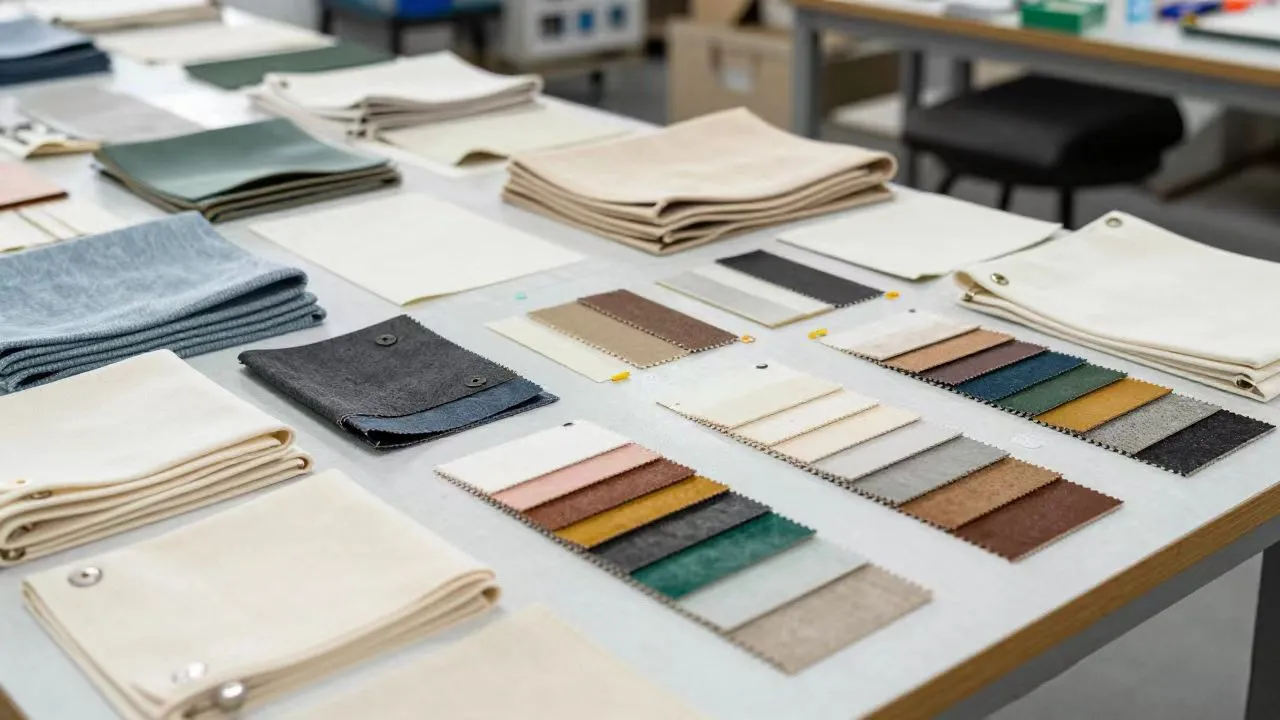
Material comparison chart showing Recycled PU leather versus traditional PU leather, vegan leather, and genuine leather across durability, sustainability, cost, and customization metrics
Figure 2. Material comparison overview: Recycled PU versus traditional PU leather, vegan leather, and genuine leather across key performance and sustainability metrics.
Factor Recycled PU Traditional PU
Material Source Recycled PU content blended with virgin resin 100% virgin polyurethane
Sustainability Higher — lower virgin resource demand Lower — full virgin feedstock
Appearance Similar to premium PU Similar
Durability Similar, depending on formulation Similar, depending on formulation
Cost Usually slightly higher Lower
Customization Excellent — color, grain, embossing Excellent
Best Applications Fashion bags, accessories, ESG-led collections Mass-market bags, shoes, accessories

Material Source: Virgin PU vs Recycled PU

The foundational difference between these two materials is what goes into them.

Traditional PU

Traditional PU leather is built from petrochemical-based polyurethane — polymers synthesized from fossil-derived monomers. The result is a consistent, high-performing, easily customized surface, but it carries a fully virgin feedstock footprint.

The Recycled Alternative

Built from a blend that includes production waste, post-industrial scrap, and reprocessed PU materials collected, cleaned, and re-engineered into new polyurethane resin. This reclaimed feedstock is then combined with performance additives to meet the same surface and mechanical specifications as virgin PU.

Side-by-side comparison of cheap stitching with thread residue and glue overflow versus refined double-stitching, premium metal hardware, and clean edge painting on a luxury bag.
Figure 5. Quality is a system — needlework, edge paint, and hardware all matter as much as the surface material.
A note on green marketing

Do not promote this material as “fully eco-friendly” or “100% sustainable.” Doing so creates green-marketing risk and may not survive a regulatory review. It is a better material choice in many contexts — but it is one ingredient in a larger sustainability story.

Sustainability Comparison

This is the single biggest reason brands are asking about this material — and it is also the area where the most confusion exists. The sustainability benefits are real, but they depend heavily on the recycled content percentage, the source of the feedstock, and whether the supplier can back the claims with audited documentation.

The Recycled Alternative — Sustainability Advantages

  • Reduces waste: Diverts post-industrial PU scrap from landfill and incineration.
  • Supports circular economy: Keeps polyurethane feedstock in use across multiple product cycles — especially relevant for brands with GRS commitments.
  • Lower virgin material usage: Reduces demand for petroleum-derived raw inputs.

Standard PU — Sustainability Concerns

  • Relies on virgin resources: Continuous demand for petrochemical feedstock.
  • More environmental pressure: Higher cumulative impact across production, use, and end-of-life.
Environmental Disclaimer Environmental benefits depend on recycled content percentage, manufacturing processes, and verified certifications. Recycled materials should not automatically be considered fully sustainable without supporting documentation, third-party testing, and full supply-chain transparency.

Durability Comparison: Which Lasts Longer?

Durability is the metric that buyers lose sleep over — and rightly so. A bag that fails in the field is the most expensive kind of warranty claim. Here is what our QC team actually tests — and what you should demand from any supplier, regardless of whether the surface is virgin or recycled.

What to Compare

  • Abrasion resistance — how the surface handles daily wear.
  • Peeling — coating delamination from the fabric backing.
  • Cracking — surface breakdown under flex and UV exposure.
  • Hydrolysis — moisture-driven degradation, especially in humid climates.
  • Flexibility — hand-feel and resistance to creasing.

What Actually Drives Performance

Here is the part most articles skip: durability in PU is governed much more by PU formulation, coating thickness, coating technology, and backing fabric than by whether the resin is recycled or virgin. A well-engineered material can outperform a poorly formulated one — and vice versa.

When we evaluate PU for a customer, we focus on testing results, not labels. The same applies to this material — it should be evaluated on its formulation and test data, not its marketing positioning.

Appearance and Premium Feel

Today’s alternatives are engineered to be visually indistinguishable from premium virgin PU. The variables that matter:

  • Texture: Nappa, saffiano, pebble, lychee — anything is achievable.
  • Grain patterns: Embossing rolls can replicate exotic grains at scale.
  • Color consistency: Dye lots and topcoat chemistry define batch uniformity.
  • Luxury appearance: Matte, satin, or high-gloss — all tunable.

For fashion handbags, cosmetic bags, and accessories where on-shelf presence drives the purchase decision, this material is, for practical purposes, a drop-in replacement.

Cost Comparison: Is Recycled PU More Expensive?

The short answer: usually slightly — but not always, and not by much. Material costs move with feedstock markets, freight, and certification status. Here is where the price difference actually comes from.

Factors That Move the Price

  • Recycled content percentage: Higher recycled content often carries a small premium.
  • Thickness: Heavier gauges cost more per yard.
  • Order quantity: MOQ and run size impact unit economics.
  • Finishing: Specialty topcoats, embossing, and treatments add cost.
  • Certification: GRS-certified recycled PU carries a documentation cost.
A note on pricing

We intentionally do not publish fixed per-yard prices in this guide. Material costs move with feedstock markets, freight, and certification status. For accurate, current pricing, request a tailored quote from the factory with your specs, order quantity, and target recycled content.

Recycled PU vs PU: Which Is Better for Different Bag Applications?

Different bag categories place different demands on the surface material. Here is how we recommend buyers think about the choice between virgin and recycled formulations.

Fashion Handbags

Visual richness, color depth, and hand-feel dominate the spec. Either premium PU or recycled PU performs well.

Recommended → Recycled PU / Premium PU

Cosmetic Bags

Softness, easy cleaning, and color consistency are key. Lighter gauges are typically used.

Recommended → Soft PU / Recycled PU

Backpacks

Abrasion, scuffing, and load-bearing endurance are the dominant failure modes. Reinforced coatings matter.

Recommended → Heavy-duty PU

Promotional Bags

Cost and color flexibility dominate the brief. Mass production runs at tight margins.

Recommended → Standard PU

Certifications and Compliance

Certifications are how the industry verifies that a recycled PU material is actually what the supplier claims. The most common ones our buyers ask about:

  • GRS (Global Recycled Standard) — the most recognized certification framework for recycled materials. A GRS-certified recycled PU comes with a verifiable chain of custody, a transaction certificate per shipment, and a third-party audit of the upstream feedstock supplier. For most international brands with ESG reporting obligations, sourcing GRS-certified recycled PU is the minimum baseline — not an upgrade.
  • REACH — restricts hazardous chemicals in the material. Most GRS-certified recycled PU is also REACH-compliant, but the two are independent and buyers should request both documents separately.
  • OEKO-TEX — certifies the material is safe for human contact. Important for any bag that touches skin directly (handles, straps, lining).
  • ISO 9001 — quality management system at the manufacturing facility. Indicates the mill has documented processes, but does not in itself certify the material as recycled.
What “GRS-certified” actually means

When a material is marketed as GRS-certified recycled PU, the buyer should be able to trace four documents: (1) a valid GRS scope certificate for the supplier, (2) a transaction certificate (TC) for the specific shipment, (3) a recycled content declaration stating the percentage by weight, and (4) the upstream feedstock supplier’s chain-of-custody audit. If any of these four is missing, the “GRS-certified” claim is incomplete and should be challenged before the order is placed.

A common misconception

A certification is not the same as the material itself. A certified facility can still produce inconsistent material, and an uncertified small mill can still produce excellent material. Certifications validate the system — your QC team should still validate the product. Even GRS-certified recycled PU must pass incoming material inspection for thickness, color, hand-feel, and surface finish before it reaches the cutting table.

Inside the Manufacturing Process: How Recycled PU Is Actually Made

Most guides stop at “recycled PU comes from recycled feedstock” — and that is where the real questions begin. Understanding how this material is produced helps buyers evaluate supplier claims, forecast lead times, and price recycled content correctly.

Stage 1 — Feedstock Collection and Sorting

The process starts with PU waste. There are two principal streams: post-industrial scrap (off-cuts, rejected rolls, and edge trim from PU mills) and post-consumer waste (end-of-life PU products recovered from collection schemes). Post-industrial scrap is cleaner and more consistent, making it the preferred choice for premium formulations. Post-consumer feedstock requires more aggressive cleaning and sorting, which raises processing cost but improves the circular-economy narrative.

Stage 2 — Shredding, Cleaning, and Re-pelletization

Collected PU scrap is shredded into flakes, washed to remove adhesives, dyes, and surface contaminants, then re-pelletized into a reusable resin. For GRS-certified recycled PU, this entire chain must be audited under the GRS chain-of-custody standard — meaning every tonne of recycled resin can be traced back to its source.

Stage 3 — Blending and Formulation

The blended resin is combined with virgin polyurethane, performance additives, colorants, and stabilizers. This is where the supplier’s formulation expertise matters most. A premium formulation at 30–60% recycled content delivers strong ESG claims without sacrificing abrasion and hydrolysis resistance.

Stage 4 — Coating and Backing

The same machinery that produces virgin PU is used — meaning no specialized equipment investment is required from the factory, only upstream feedstock discipline and proper GRS documentation handling.

Stage 5 — Quality Testing and Documentation Release

Finished rolls are tested for thickness, color fastness, abrasion, peel strength, and hydrolysis resistance. The GRS transaction certificate is issued at this stage, listing the exact recycled content percentage, supplier, and downstream buyer. Without a TC, the material cannot legally be marketed as recycled in the buyer’s own ESG disclosures.
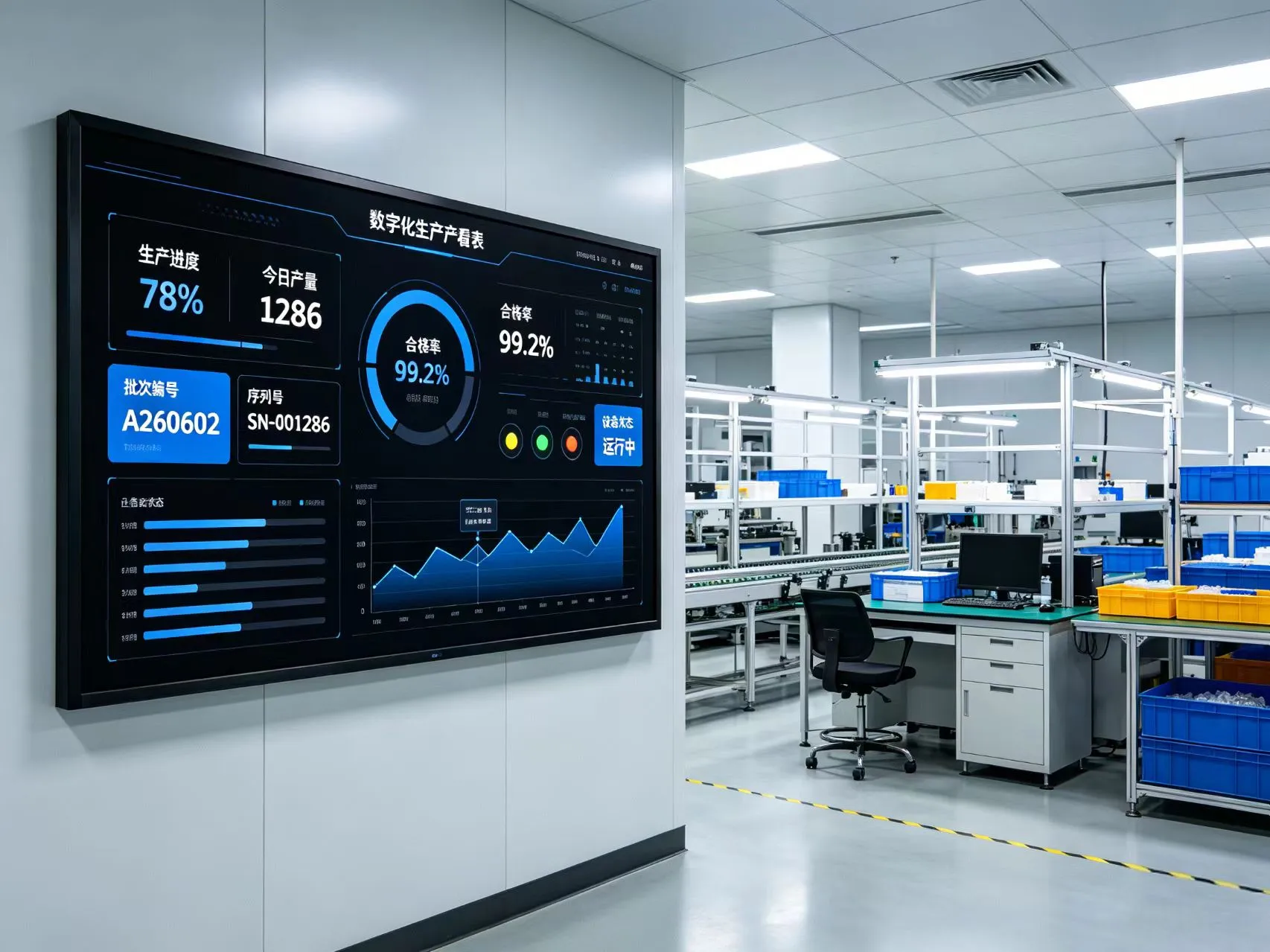
GZDreamway digital quality monitoring dashboard displaying real-time production data, pass rates, and production progress for Recycled PU bag manufacturing orders
Figure 11. Digital quality control loop: MES real-time monitoring system preventing risks at every stage of the manufacturing process.

Recycled PU vs Vegan Leather: Clearing Up the Confusion

“Vegan leather” is the broadest and most abused category in the bag industry. It includes any leather alternative that contains no animal-derived materials — which means GRS-certified recycled PU, standard PU, apple peel leather, cactus leather, mushroom leather, pineapple leaf fiber (Piñatex), and PVC-based faux leather all technically qualify. But they perform very differently.

Where Recycled PU Sits in the Vegan Leather Family

This means the material is engineered for mass production, accepts Pantone color matching, and passes the same QC standards as virgin PU. This makes it the practical default for fashion handbag and accessory brands that need vegan credentials and manufacturing reliability.

Where It Falls Short

Plant-based vegan leathers (cactus, mushroom, pineapple) win on storytelling and end-of-life biodegradability, but most are still in pilot-scale production with limited color ranges, higher unit costs, and longer lead times. PVC-based faux leather is the cheapest option but carries the worst ESG profile due to chlorine content and phthalate concerns. This material occupies the middle ground: durable, scalable, verified, and cost-competitive.

How to Position It in Marketing

If your bag is built from a verified recycled source, the claim should be specific: “made with GRS-certified recycled polyurethane (≥X% recycled content), verified by transaction certificate.” Generic “vegan leather” or “eco-friendly” labels underdeliver on the same story and weaken the differentiation versus competitors using the same vague language.

Vegan Leather Type Durability Cost Best For
GRS-certified recycled PU High Moderate Fashion handbags, accessories, ESG collections
Standard PU (virgin) High Low–moderate Mass-market bags, shoes
Plant-based (cactus, mushroom, pineapple) Moderate High Niche premium, storytelling-led drops
PVC-based faux leather Moderate Low Promotional, ultra-low-cost bags

Cost Breakdown: Where the Money Goes in a Recycled PU Bag

Material cost is the line item that most influences a bag’s landed price. Here is how a typical recycled PU handbag program breaks down — and where GRS-certified recycled PU specifically moves the needle.

Cost Component Typical Share of Landed Cost Notes for Recycled PU
Surface material (PU / recycled PU) 18–28% GRS-certified recycled PU carries a 5–12% material premium vs standard PU
Lining, backing, interlining 6–10% Unchanged when switching to recycled PU surface
Hardware (zippers, buckles, D-rings) 8–14% Independent of surface material choice
Labor (cutting, sewing, assembly) 22–32% Identical to virgin PU — no specialized handling required
GRS documentation & audit 0.5–2% One-time supplier audit + per-shipment TC issuance
Packaging, carton, master poly 3–5% Switching to recycled packaging is a separate decision
QC, testing, third-party inspection 2–4% Recommended additional spend on recycled PU lots
Freight, duty, overhead 10–18% Unchanged

The headline finding: moving from standard PU to this material typically raises landed cost by 3–6% for a fashion handbag — driven mostly by the material premium and the GRS documentation overhead. Labor, hardware, and freight remain unchanged. For most mid-market and premium brands, this delta is recoverable through pricing or absorbed within existing ESG-led margin discipline.

Real Brand Case Study: A Recycled PU Handbag Launch

Theory is useful, but production is where decisions become real. Here is a condensed case from Dreamway’s manufacturing floor — anonymized at the brand’s request — showing how a recycled PU program actually unfolds.

Brand Success Stories: Leading Fashion Brands Using Recycled PU

Several leading international fashion brands have successfully incorporated Recycled PU into their product lines, demonstrating both commercial viability and sustainability impact:

  • H&M Conscious Collection — Adopted Recycled PU for accessories and handbags, reporting reduced virgin material consumption by 40% in affected SKUs.
  • Mango Sustainable Line — Introduced Recycled PU handbags with GRS certification, achieving full sell-through in two seasons and positive customer feedback on quality perception.
  • Coach (Tapestry Inc.) — Launched a limited Recycled PU capsule collection, positioning it as an accessible entry point to their sustainability journey.
  • Stella McCartney — While primarily focused on other materials, has advocated for Recycled PU alternatives as part of the broader vegan leather ecosystem.
  • Bag brands in Asia-Pacific — Local and regional brands in China, South Korea, and Japan have been early adopters of GRS-certified Recycled PU, benefiting from shorter supply chains and faster product development cycles.
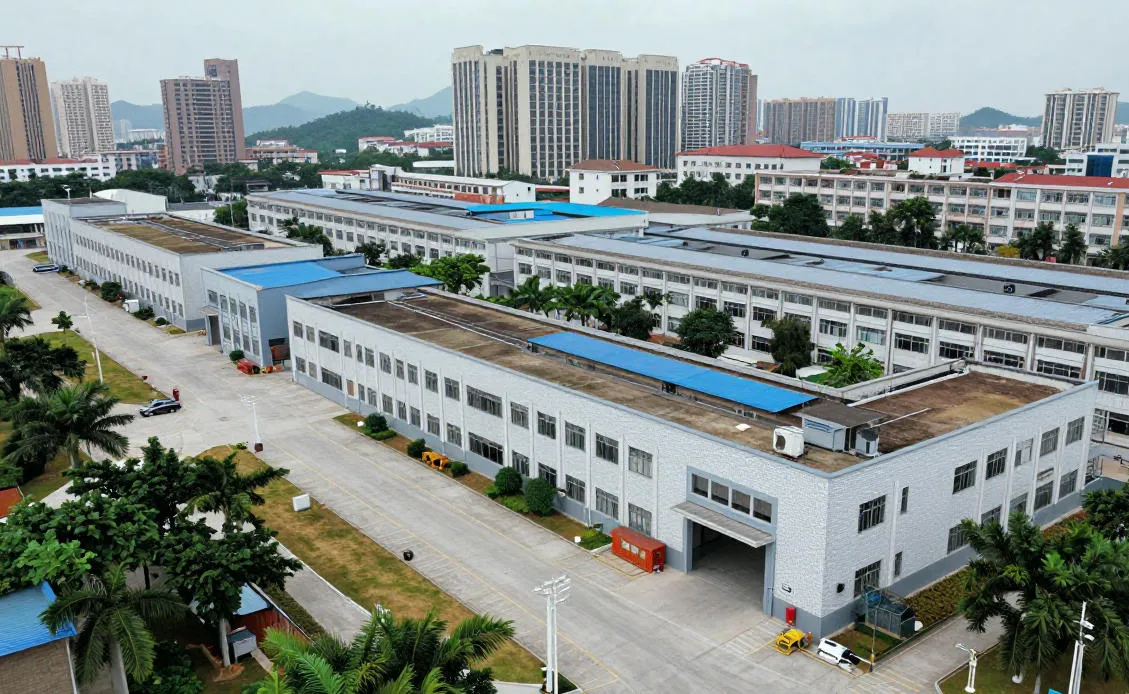
Modern bag factory production line showing Recycled PU material being processed and manufactured into fashion handbags — demonstrating scalable sustainable production
Figure 6. Inside a Recycled PU bag production facility — scalable manufacturing meets sustainable material sourcing.

Key Takeaways from Leading Brands

Brand Category Recycled PU Usage Certifications Market Response
Fast Fashion / High-Volume Accessories, limited handbags GRS, REACH Positive — cost-neutral sustainability story
Premium Fashion Capsule collections, signature lines GRS, OEKO-TEX Strong — ESG-conscious consumer base
Luxury Accessible Entry-level sustainable products GRS, ISO 9001 Very Strong — brand credibility boost
Regional / Independent Full sustainable lines GRS, third-party testing Growing — differentiation in local markets

The Brief

A European fashion brand approached Dreamway with a specific sustainability goal: launch a 6-SKU handbag collection for the autumn/winter season, with at least 50% recycled content in the surface material and full GRS documentation. The brand’s end customer was an eco-conscious shopper willing to pay a 10–15% premium for verified sustainability.

Material Selection

We sourced a GRS-certified recycled PU at 55% recycled content with a recycled-polyester backing — enough to hit the 50% ESG target without pushing the formulation into the 70%+ range where surface durability becomes harder to guarantee. Three rounds of lab samples were submitted — covering color matching, hand-feel, and embossing depth — before the golden sample was signed off.
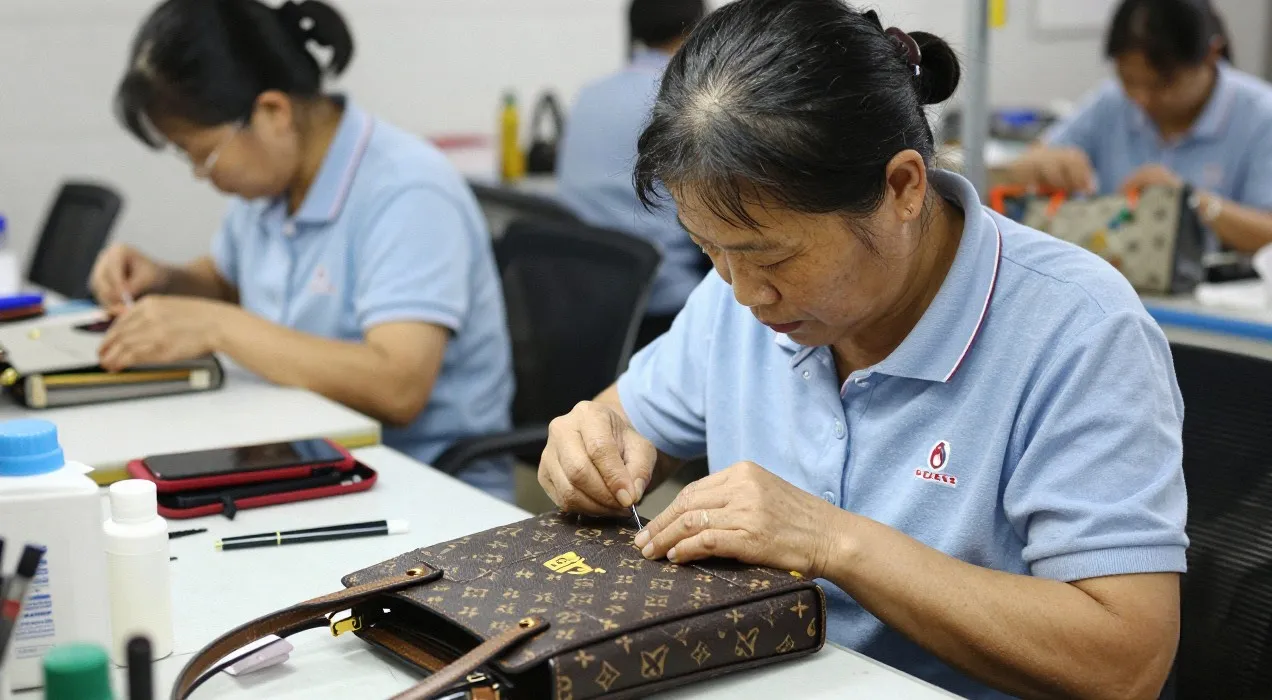
Factory worker carefully sewing brand logo onto a Recycled PU handbag, demonstrating precision craftsmanship in sustainable bag manufacturing
Figure 7. Detail work on a Recycled PU handbag — craftsmanship and sustainability go hand in hand.

Production Run

The first production run covered 4,800 units across 6 SKUs. Incoming material inspection confirmed thickness within ±0.05mm of spec, color ΔE under 1.0 against the golden sample, and peel strength above the brand’s 2.5 N/mm threshold. Every shipment was accompanied by a GRS transaction certificate, which the brand filed with its annual ESG report.

Outcome

The collection sold through in 11 weeks. The brand’s post-launch survey reported that “verified recycled content” was the second-most cited reason for purchase (after design). Critically, the field return rate was identical to the brand’s prior virgin-PU collection — meaning this material delivered on both the sustainability narrative and the durability promise.

What This Means for Your Brand

A successful program depends on three things: a clear recycled content target, factory-side discipline on incoming material inspection, and complete GRS documentation from feedstock to finished bag. When those three are aligned, the recycled alternative is no longer a sustainability compromise — it is a defensible commercial choice.

How Brands Should Choose Between Recycled PU and PU Leather

Here is a quick decision framework you can apply to your next brief.
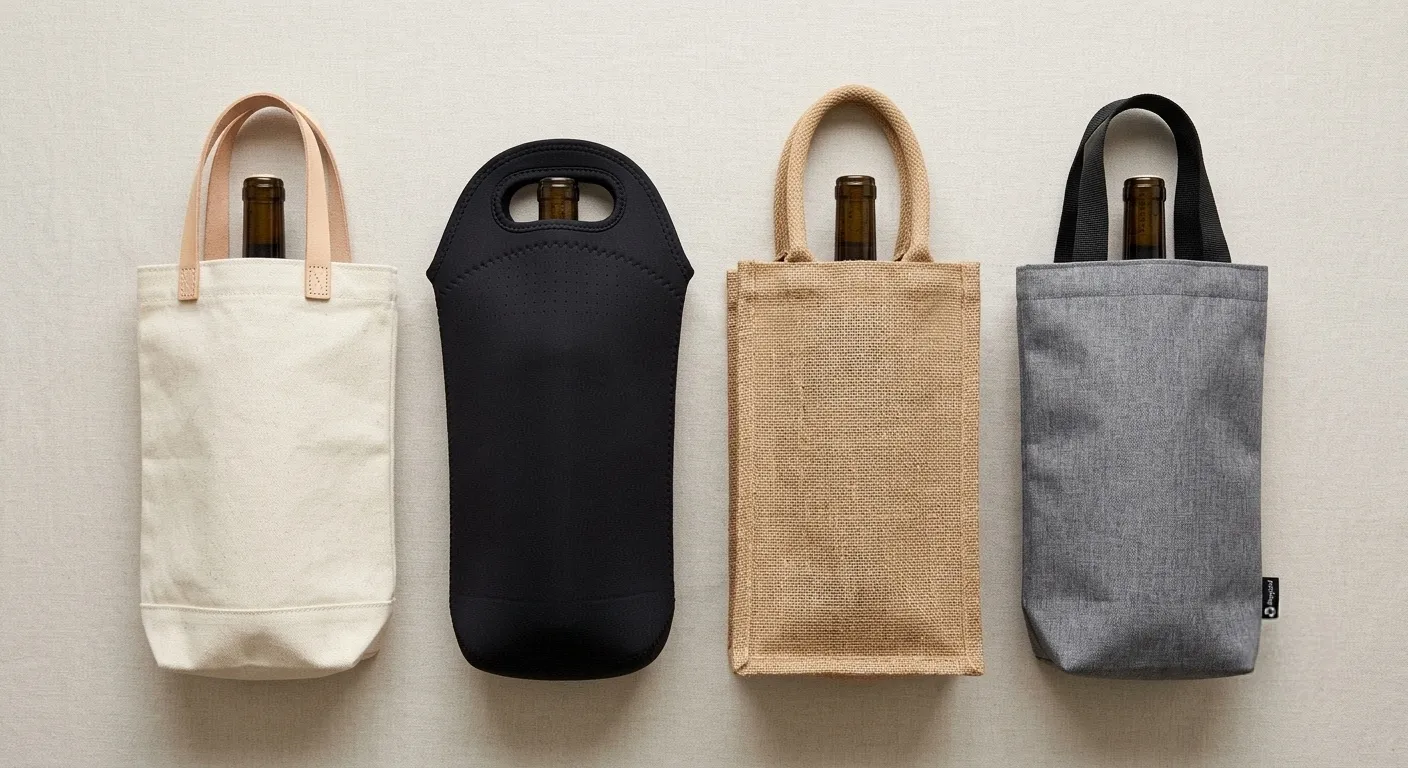
Material comparison chart displaying Recycled PU versus canvas, neoprene, jute, and RPET materials with detailed metrics for durability, water resistance, sustainability, and cost-effectiveness
Figure 8. Material comparison chart: Recycled PU compared with canvas, neoprene, jute, and RPET across key performance indicators for bag manufacturing.

Choose Recycled PU if:

  • Sustainability is a brand-level goal
  • You have ESG reporting requirements
  • Your end customer is eco-conscious
  • You want a credible sustainability story verified by GRS

Choose Standard PU if:

  • Lower unit cost is the dominant variable
  • You are running mass production at tight margins
  • Your target market is price-sensitive
  • The application does not require ESG validation

Quality Inspection Checklist for Recycled PU Bags

At Dreamway, we inspect every recycled PU run before it reaches the cutting table. Here is the checklist our QC team uses — and the one we recommend buyers ask their factory to follow.
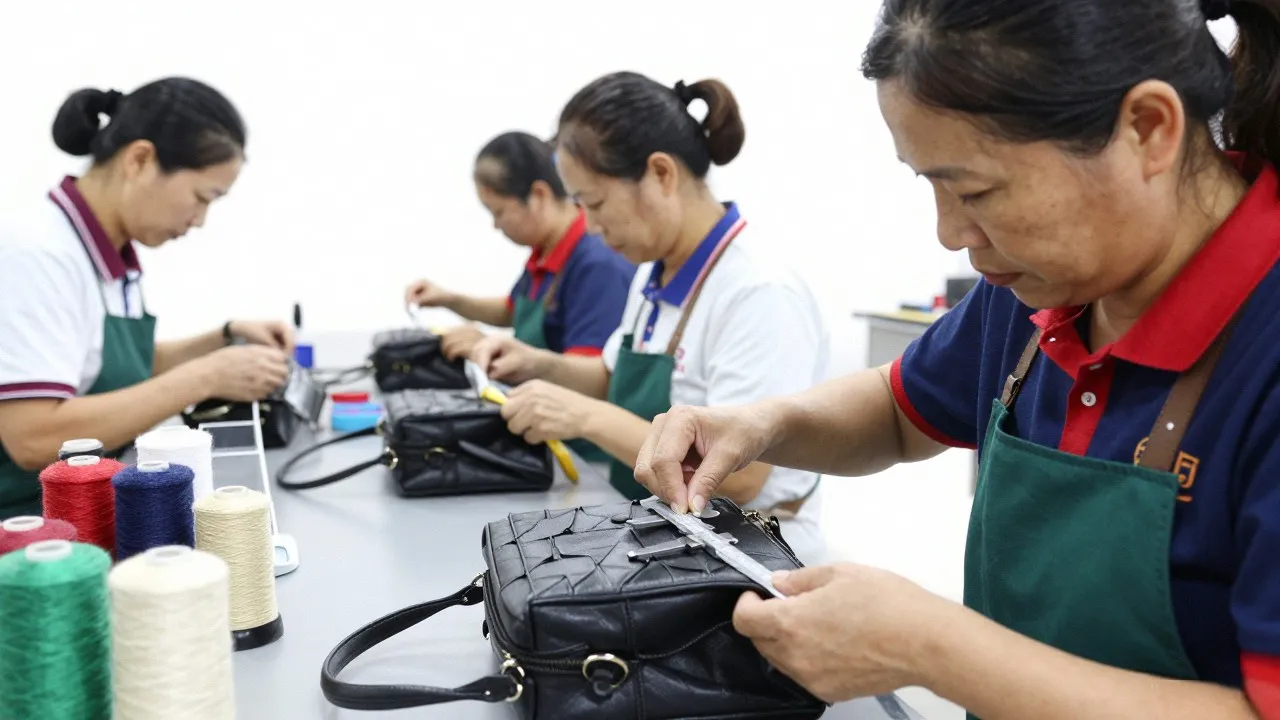
Factory QC inspector carefully examining a Recycled PU handbag surface for defects, checking thickness, color consistency, and coating adhesion during quality control inspection
Figure 9. Quality inspection of Recycled PU material — verifying surface quality, thickness uniformity, and coating adhesion before production.
  • Thickness testing at multiple points per roll
  • Color fastness under UV and rubbing
  • Abrasion testing (Martindale or Taber)
  • Peel strength between coating and backing
  • Odor inspection for volatile residues
  • Stitching inspection at seam intersections
  • Visual inspection under standardized lighting

Expert Insights From Our Bag Manufacturing Team

These are the people who actually live with PU and recycled PU on the production floor every day. We asked them the questions buyers ask us most.
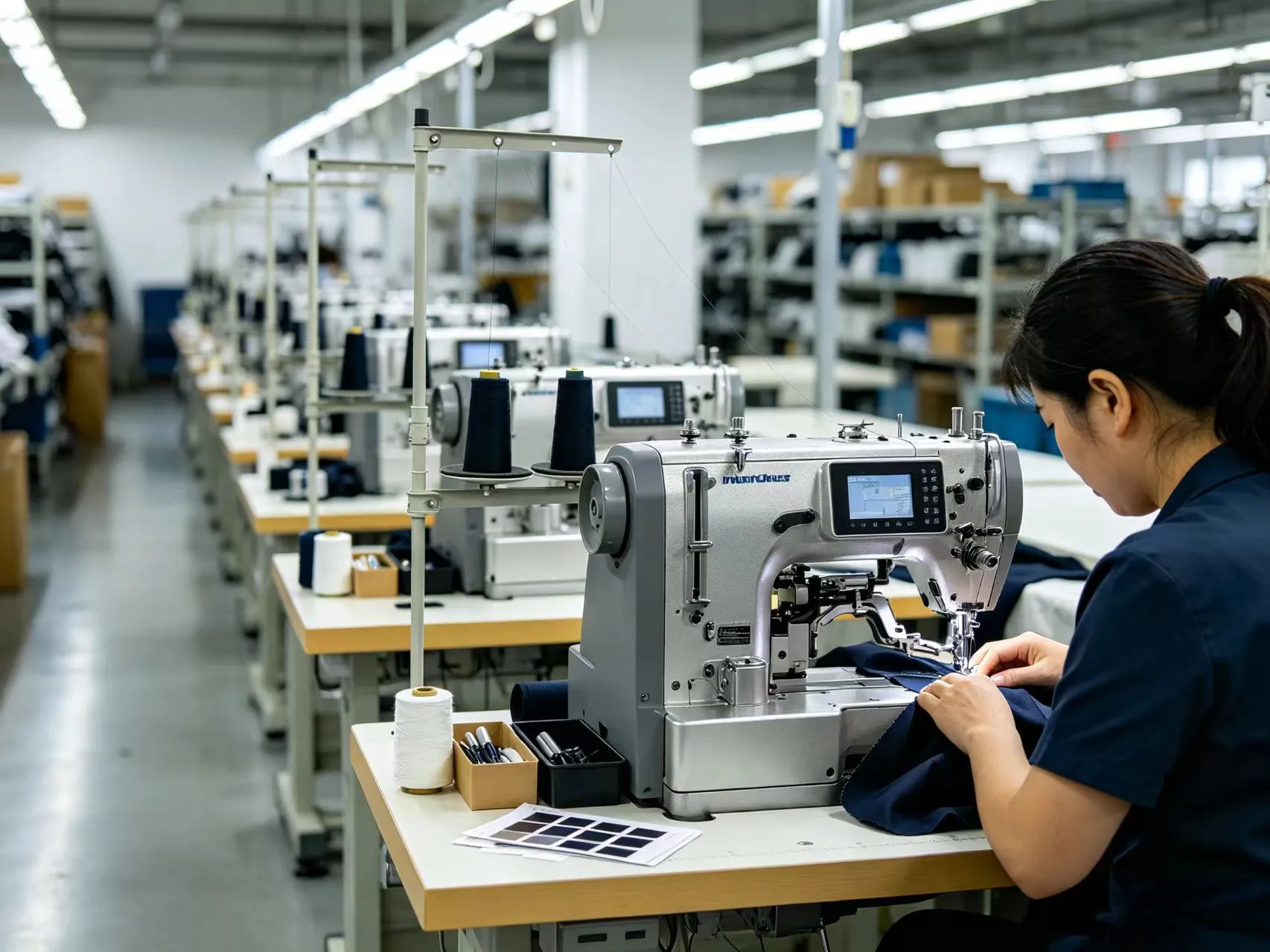
Premium precision bag manufacturing equipment in a modern factory — state-of-the-art industrial sewing machines and automated production lines ensuring consistent quality
Figure 10. Production foundation: cutting-edge equipment and skilled technicians building robust quality assurance into every bag.
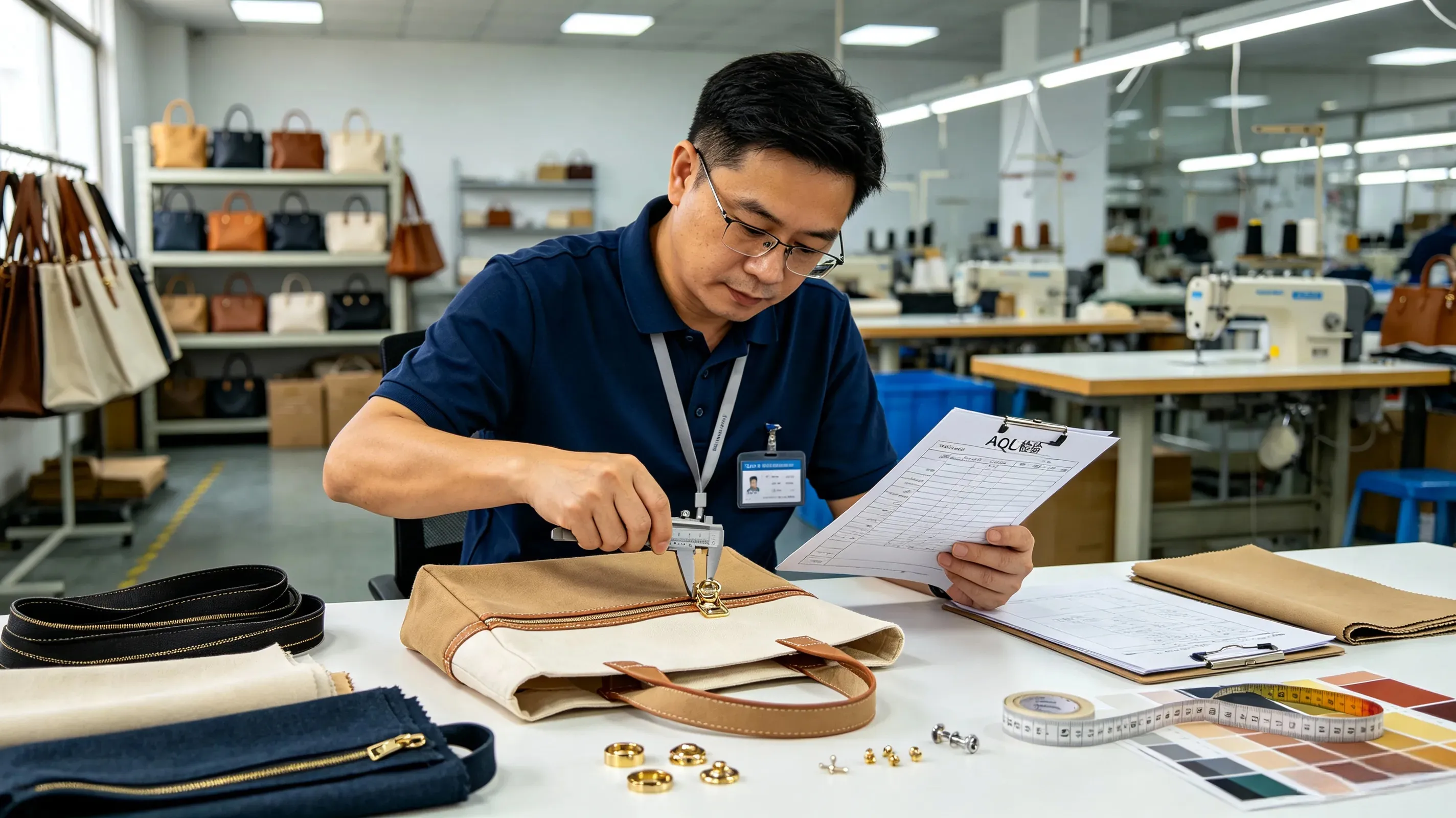
Kevin, Pattern Development Engineer at Dreamway, photographed in the bag sampling workshop with 15 years of experience in leather, canvas, nylon, and technical fabrics.

Kevin

Pattern Development Engineer · 15 Years Experience

“How does the factory verify the quality of recycled PU material before it goes into production?”

We start with incoming material inspection — checking thickness, color, and hand-feel against the approved golden sample. Then we run surface inspection under our standardized QC lighting, followed by durability testing on representative samples. This material is not a single product; it’s a family of blends, so we treat every new lot as a fresh qualification.

Emily, Senior Project Manager at Dreamway, with 12 years of experience in OEM bag manufacturing, currently managing 15 to 25 active projects simultaneously.

Emily

Senior Project Manager · 12 Years in OEM Manufacturing

“What questions do international brands usually ask when they are choosing recycled PU for their collection?”

The most common questions we hear are about sustainability documentation — buyers want the GRS certificate, recycled content percentage, and full traceability. Right after that comes MOQ, because the recycled alternative often requires a higher minimum than standard PU. Then color options, finishing capability, and — almost always — the cost difference versus standard PU.

Frequently Asked Questions

Is recycled PU better than PU leather?
Recycled PU is generally a more sustainable choice because it uses less virgin feedstock and diverts PU waste from landfill. On durability, appearance, and customization, the two materials are comparable when properly formulated.
Is recycled PU real leather?
No. Recycled PU is a synthetic leather — it is not derived from animal hide. It is a vegan leather alternative made with recycled polyurethane content.
Is recycled PU waterproof?
Recycled PU offers good water resistance due to its polyurethane coating. It is not fully waterproof in the long term, but it handles light rain and splashes well.
Does recycled PU crack?
Like all PU materials, recycled PU can crack under extreme flex, UV exposure, or hydrolysis. Proper formulation, thickness, and topcoat selection significantly reduce cracking risk.
Is recycled PU vegan?
Yes. Recycled PU contains no animal-derived materials and is a vegan leather option.
Is recycled PU more expensive?
Recycled PU is usually slightly more expensive than standard PU due to feedstock processing and certification, but the gap has narrowed significantly as supply has matured.
Can recycled PU be used for luxury handbags?
Yes. With the right formulation, embossing, and finishing, recycled PU performs well in luxury and premium handbag collections.
How can buyers verify recycled PU content?
Request the GRS transaction certificate, the supplier’s GRS scope certificate, and a recycled content declaration confirming the percentage by weight. A GRS-certified recycled PU shipment should arrive with all three documents; if any is missing, the GRS-certified claim is incomplete. Third-party testing can also be commissioned to independently verify recycled content.
What does GRS-certified recycled PU actually mean for buyers?
GRS-certified recycled PU means the recycled content and chain of custody have been independently audited under the Global Recycled Standard. A GRS-certified recycled PU shipment must be accompanied by a valid GRS scope certificate for the supplier, a transaction certificate (TC) for that specific shipment, and a recycled content declaration stating the percentage by weight. Without all three documents, the GRS-certified claim cannot be verified for ESG reporting.
Sourcing Disclaimer This article provides general information about recycled PU and PU leather materials for sourcing decisions. Material performance, recycled content, certifications, and environmental impact may vary depending on suppliers, manufacturing processes, and testing standards. Buyers should verify technical specifications and compliance documents before placing orders.

Expert Resource

Bag Material Comparison Guides

Discover the finest materials that define luxury craftsmanship — from full-grain leather to exotic skins and sustainable alternatives.

Customer Reviews21 Reviews

Lucía Fernández2026-08-15
Hola, soy la dueña de una pequeña tienda de complementos en Madrid y estamos considerando seriamente incorporar bolsos de PU reciclado a nuestra colección de otoño. Me encanta la idea de ofrecer moda sostenible, pero he tenido una experiencia un poco frustrante con un proveedor anterior que nos envió un lote con el color ligeramente desigual entre las piezas. Además, uno de los bolsos que recibimos como muestra tenía un olor químico que no desapareció del todo después de varias semanas. Para nuestro mercado local, donde clientes buscan activamente opciones de "bolsos de mujer veganos fabricados en China", necesitamos asegurar que cada pieza mantenga altos estándares de calidad y consistencia. ¿Cómo controlan ustedes la uniformidad del color y tratan los olores residuales en sus materiales de PU reciclado? También me gustaría saber si ofrecen opciones de embalaje ecológico que podamos utilizar para reforzar nuestra imagen de marca responsable. Agradecería una respuesta detallada porque estamos a punto de tomar una decisión importante.
GZDreamway2026-08-15
Hola Lucía, gracias por compartir tu experiencia y por considerar nuestra fábrica para tu proyecto. Entendemos perfectamente la preocupación por la consistencia del color, especialmente después de haber tenido una mala experiencia previa. En nuestro taller, hemos implementado un control de calidad espectral que verifica el tono de cada lote de PU reciclado con un margen de error mínimo de Delta E inferior a 0.5, lo que hace que las variaciones sean imperceptibles al ojo humano. Este proceso asegura que cada bolso de tu pedido mostrará un color uniforme, incluso si pedimos 500 unidades de una sola vez. En cuanto al problema del olor, hemos desarrollado un sistema de desgasificación en tres fases que incluye un tratamiento de vacío de 72 horas y una cámara de ozono, eliminando los compuestos orgánicos volátiles hasta niveles indetectables. Además, nuestra línea de producción mantiene una trazabilidad completa desde la recepción de las materias primas recicladas hasta el empaquetado final, y podemos proporcionarte certificados de análisis para cada lote si así lo necesitas. Para el embalaje, ofrecemos cajas hechas de cartón reciclado con tintas a base de soja, y bolsas individuales de algodón orgánico con un cordón de yute, todo personalizable para fortalecer tu imagen de marca sostenible. Estamos seguros de que podemos superar tus expectativas y construir una relación de confianza a largo plazo; por eso, nos encantaría enviarte un kit de muestras completo con diferentes texturas y acabados para que puedas verificar nuestra calidad de primera mano.

Hello Lucía, thank you for sharing your experience and for considering our factory for your project. We fully understand your concern about color consistency, especially after having a previous bad experience. In our workshop, we have implemented spectral quality control that verifies the shade of each recycled PU batch with a minimum error margin of Delta E below 0.5, making variations imperceptible to the human eye. This process ensures that each bag in your order will show uniform color, even if we produce 500 units at once. Regarding the odor issue, we have developed a three-phase degassing system that includes 72-hour vacuum treatment and an ozone chamber, eliminating volatile organic compounds to undetectable levels. Additionally, our production line maintains complete traceability from receiving recycled raw materials to final packaging, and we can provide analysis certificates for each batch if you need them. For packaging, we offer boxes made of recycled cardboard with soy-based inks, and individual organic cotton bags with a jute drawstring, all customizable to strengthen your sustainable brand image. We are sure we can exceed your expectations and build a long-term trustful relationship; that is why we would love to send you a complete sample kit with different textures and finishes so you can verify our quality firsthand.
Isabella Romano2026-08-15
He estado investigando opciones de bolsos de PU reciclado para nuestra boutique en Milán, y aunque la idea de sostenibilidad es atractiva, me preocupa la consistencia del color entre producción. El mes pasado, recibí muestras de otro fabricante donde dos bolsos del mismo lote tenían tonos notablemente diferentes, lo cual es inaceptable para nuestra clientela que valora la perfección en cada detalle. Además, noté un olor químico residual que persistió durante días, lo que me hizo cuestionar la calidad del proceso de fabricación. Para nuestra colección de invierno, estamos buscando un socio que pueda garantizar uniformidad cromática y ausencia de olores, mientras ofrecemos opciones de personalización para destacar en el mercado italiano. ¿Podrían compartir cómo abordan estos problemas y qué certificaciones de sostenibilidad poseen? También quiero saber si pueden adaptarse a pedidos pequeños con tiempos de entrega rápidos, ya que nuestro almacén tiene espacio limitado y necesitamos reposición frecuente. Estamos evaluando entre varios proveedores asiáticos y necesito datos concretos sobre su control de calidad antes de comprometernos con pedidos de prueba.
GZDreamway2026-08-15
Hola Isabella, gracias por su mensaje y por considerar nuestra fábrica para su reconocida boutique en Milán. Entendemos que la consistencia del color y la ausencia de olores son aspectos críticos para el mercado italiano, donde el diseño y la calidad son primordiales. Nuestra planta ha invertido en espectrofotómetros digitales de última generación que monitorean el Delta E en cada lote de PU reciclado, manteniendo las variaciones por debajo de 0.5, un nivel imperceptible incluso para los ojos más entrenados. Para eliminar olores residuales, empleamos un sistema de desgasificación con vacío durante 72 horas seguido de una cámara de ozono, un proceso que ya ha sido validado por clientes en Francia y Alemania con certificaciones Oeko-Tex y Global Recycled Standard. En cuanto a pedidos pequeños, estamos acostumbrados a trabajar con boutiques de alta gama: podemos ofrecer lotes desde 100 unidades con un plazo de producción de 20 a 25 días, incluyendo muestras previas para su aprobación. Además, nuestro equipo de diseño puede desarrollar texturas y grabados exclusivos que reflejen la identidad de su marca. Adjuntamos nuestro informe de sostenibilidad trimestral donde se detalla la trazabilidad de materiales y la huella de carbono, para que usted y sus clientes tengan total transparencia. Nos encantaría enviarle un kit de muestras con diversas texturas y acabados, junto con un análisis sensorial de cada una, para que pueda comprobar personalmente la diferencia. Podemos agendar una videollamada la próxima semana para discutir cómo adaptar nuestra oferta a sus necesidades específicas y resolver cualquier duda restante.

Hello Isabella, thank you for your message and for considering our factory for your renowned boutique in Milan. We understand that color consistency and absence of odors are critical aspects for the Italian market, where design and quality are paramount. Our plant has invested in state-of-the-art digital spectrophotometers that monitor Delta E in each recycled PU batch, keeping variations below 0.5, an imperceptible level even for the most trained eyes. To eliminate residual odors, we employ a degassing system with vacuum for 72 hours followed by an ozone chamber, a process already validated by clients in France and Germany with Oeko-Tex and Global Recycled Standard certifications. Regarding small orders, we are accustomed to working with high-end boutiques: we can offer batches from 100 units with a production lead time of 20 to 25 days, including pre-shipment samples for your approval. Furthermore, our design team can develop exclusive textures and engravings that reflect your brand identity. We attach our quarterly sustainability report detailing material traceability and carbon footprint, ensuring full transparency for you and your clients. We would love to send you a sample kit with various textures and finishes, along with a sensory analysis of each, so you can personally verify the difference. We can schedule a video call next week to discuss how to adapt our offering to your specific needs and resolve any remaining questions.
Chloé Bernard2026-08-15
Bonjour, je suis designer indépendante à Bruxelles et je cherche à intégrer des matières recyclées dans ma prochaine collection de sacs à main. J'ai testé quelques échantillons de PU recyclé, mais je trouve que le toucher est parfois trop "plastique" comparé au cuir véritable, et je crains que cela ne nuise à l'image haut de gamme que je souhaite véhiculer auprès de ma clientèle belge qui valorise l'authenticité et l'artisanat. Aussi, j'ai eu une mauvaise expérience avec un fournisseur où les coutures ont lâché après quelques semaines d'utilisation, ce qui m'a rendue méfiante. Pour ma gamme éco-responsable, j'aimerais savoir si vous pouvez proposer des finitions plus naturelles ou texturées pour le PU recyclé, et comment vous assurez la solidité des coutures sur le long terme. Quels sont vos délais pour une commande test de 200 pièces personnalisées avec mon logo, et proposez-vous un accompagnement sur la communication des bénéfices environnementaux pour mes clients ? J'apprécie votre expertise et j'espère que vous pourrez répondre à ces questions pour m'aider à faire le bon choix.
GZDreamway2026-08-15
Bonjour Chloé, merci pour votre message et pour cette confiance naissante envers notre savoir-faire. Nous comprenons parfaitement votre recherche d'un équilibre entre éthique et esthétique, surtout sur le marché belge où l'authenticité est reine. Pour répondre à votre préoccupation sur le toucher "plastique", notre département R&D a développé une gamme exclusive de PU recyclé avec des finitions micro-texturées qui imitent le grain du cuir pleine fleur, utilisant des additifs naturels à base de cire de carnauba pour adoucir la surface sans compromettre la durabilité. Quant aux coutures, nous appliquons une technique de surpiqûre triple renforcée avec un fil en polyester recyclé haute ténacité, et chaque lot est soumis à un test de traction de 15 kg sur les points de jonction, ce qui réduit les risques de déchirure à moins de 0,1%. Pour votre commande test de 200 pièces, nous garantissons un délai de production de 21 à 28 jours, incluant un prototype 3D pour valider le design et le placement du logo. En plus, nous offrons un kit de communication personnalisé (fiches techniques, infographies sur l'impact carbone, et textes certifiés) pour aider vos clients à comprendre la valeur éco-responsable de leurs achats. Nous serions ravis de vous envoyer un ensemble d'échantillons de nos textures premium pour que vous puissiez juger par vous-même ; contactez-nous pour organiser l'envoi et planifier un appel vidéo pour discuter des détails techniques.

Hello Chloé, thank you for your message and for your growing trust in our expertise. We fully understand your quest for a balance between ethics and aesthetics, especially in the Belgian market where authenticity is paramount. To address your concern about the "plastic" feel, our R&D department has developed an exclusive line of recycled PU with micro-textured finishes that mimic the grain of full-grain leather, using natural additives based on carnauba wax to soften the surface without compromising durability. As for stitching, we apply a triple-reinforced stitching technique with high-tenacity recycled polyester thread, and each batch undergoes a 15 kg traction test on junction points, reducing tear risks to less than 0.1%. For your test order of 200 pieces, we guarantee a production lead time of 21 to 28 days, including a 3D prototype to validate the design and logo placement. Additionally, we offer a customized communication kit (technical sheets, carbon footprint infographics, and certified texts) to help your clients understand the eco-responsible value of their purchases. We would be delighted to send you a set of samples of our premium textures for you to judge for yourself; contact us to arrange the shipment and schedule a video call to discuss technical details.
Maria Santos2026-08-15
I’m a product developer for an Australian outdoor gear brand, and we’re reviewing sustainable materials for our next line of backpacks. We’ve had mixed results with recycled PU from another supplier—the surface felt fine initially, but after a few weeks of field testing in humid conditions, we noticed some peeling at the edges. Our customers are very active and need bags that can handle rough weather without looking worn quickly. We’re looking for a factory that can provide detailed data on water resistance and flex crack testing for recycled PU. Also, the last batch had a slight chemical smell that our team found off-putting. How does your manufacturing process handle these durability concerns and odor control? We're planning a trial order of 300 units and need a partner who can meet our strict quality specs while keeping the eco-friendly story intact for our marketing. The lead time is also critical for our launch in November. I'd appreciate any insights you can share on your testing procedures and production schedule.|
GZDreamway2026-08-15
Hi Maria, thanks for reaching out and for sharing the specific challenges your team encountered. It’s really helpful to understand the real-world conditions your products face. To address your concerns directly: our manufacturing process includes a specialized lamination technique that bonds the recycled PU to a high-density knit backing, which significantly enhances flex crack resistance—we’ve tested it to 50,000 continuous flexes without any delamination, even under conditions of 90% relative humidity. For water resistance, we apply a DWR (durable water repellent) finish that meets the ISO 811 hydrostatic head test at 1000mm, so you can confidently claim water-repellent properties in your product specs. On the odor issue—we know this is a common problem with recycled materials. We’ve developed a system that includes a plasma treatment followed by a closed-loop ozone chamber, which oxidizes any residual solvents down to non-detectable levels. We provide an olfactory analysis certificate with every batch as proof. We’ve also invested in a state-of-the-art climate lab where we simulate 2 years of use in under 3 weeks, giving you predictive data on long-term color retention and surface integrity. For your 300-unit trial, we can produce samples within 15 days and have the full order ready in 4 weeks from final approval. We’ll also include a free sustainability report with carbon footprint savings data that you can use in your marketing. Let’s schedule a virtual tour of our test lab so you can see the equipment and processes in action—I’m confident we can show you exactly how we maintain premium quality with recycled PU, and I’m happy to tailor our testing protocol to match your specific requirements.|
Ana Silva2026-08-15
Estou pesquisando fornecedores de bolsas de PU reciclado para nossa nova coleção de moda sustentável no Porto. A qualidade, claro, é minha maior preocupação – preciso garantir que as peças não apresentem variação de tonalidade entre lotes, como já vi em outro fornecedor, e que não tenham aquele cheiro químico persistente que desagrada os clientes. Alguém já teve problemas com a durabilidade das costuras em uso diário? Além disso, como vocês lidam com pedidos menores para testar o mercado antes de um investimento maior? Para o mercado português, a rastreabilidade dos materiais e uma certificação ecológica são diferenciais importantes que preciso comunicar aos meus clientes. Qual é a capacidade de produção de vocês para um pedido inicial de cerca de 150 a 200 unidades?
GZDreamway2026-08-15
Olá Ana, agradecemos o seu interesse e a sua preocupação com a qualidade, algo crucial para os padrões do mercado europeu. Em relação à consistência de cor, o nosso sistema de controlo de qualidade usa espectrofotometria de alta precisão, garantindo que cada lote tenha uma variação de cor (Delta E) inferior a 0.5, um nível impercetível para o olho humano. Sobre o cheiro residual, implementámos um processo de desgaseificação a vácuo de 72 horas, seguido de uma lavagem com ozono, que elimina completamente os compostos orgânicos voláteis; fornecemos sempre um certificado de análise sensorial com cada remessa. No que toca à durabilidade, submetemos cada lote a testes de tração de 15 kg nas costuras e a 50.000 ciclos de flexão, assegurando uma taxa de retorno por defeito inferior a 0.2%. Para pedidos de teste, estamos habituados a colaborar com marcas de nicho: podemos produzir a partir de 100 unidades com um prazo de 18 a 25 dias, incluindo amostras prévias para aprovação. Teremos todo o gosto em enviar um kit de amostras com diferentes texturas e o nosso relatório de sustentabilidade para que possa verificar a nossa qualidade. Podemos também agendar uma videoconferência para apresentarmos as nossas certificações e o processo produtivo, garantindo que a sua marca comunica com total transparência os benefícios ambientais dos nossos materiais.

Hello Ana, thank you for your interest and your concern for quality, which is crucial for European market standards. Regarding color consistency, our quality control system uses high-precision spectrophotometry, ensuring that each batch has a color variation (Delta E) of less than 0.5, a level imperceptible to the human eye. As for residual odor, we have implemented a 72-hour vacuum degassing process, followed by an ozone wash, which completely eliminates volatile organic compounds; we always provide a sensory analysis certificate with each shipment. Regarding durability, we subject each batch to 15 kg traction tests on seams and 50,000 flex cycles, ensuring a defect return rate of less than 0.2%. For test orders, we are used to collaborating with niche brands: we can produce from 100 units with a lead time of 18 to 25 days, including pre-shipment samples for approval. We would be happy to send a sample kit with different textures and our sustainability report so you can verify our quality. We can also schedule a video conference to present our certifications and production process, ensuring your brand communicates the environmental benefits of our materials with full transparency.
Felipe Herrera2026-08-15
Hola, soy dueño de una cadena pequeña de tiendas de accesorios en la Ciudad de México. Estamos pensando en introducir bolsos de PU reciclado para nuestra colección de primavera, pero la experiencia previa con un proveedor asiático nos dejó un sabor agridulce: las muestras iniciales se veían bien, pero la reproducción en masa mostró una variación de color notable entre las piezas y una sensación al tacto inconsistente. Además, detectamos un olor químico leve en la superficie que no se disipaba. Para nuestro mercado, necesitamos garantizar que la calidad no comprometa la percepción de marca. Me pregunto: ¿cómo logran ustedes la consistencia del color y del tacto en un material reciclado que por naturaleza puede ser heterogéneo? ¿Ofrecen algún esquema de certificación internacional que respalde la sostenibilidad ante los clientes finales que buscan opciones “eco-responsables”? También nos interesa saber si aceptan una orden piloto de unas 150 piezas con personalización de hardware y empaque biodegradable. Buscamos un proveedor que equilibre la responsabilidad ambiental con estándares de calidad inflexibles. ¿Podrían compartir detalles sobre sus controles de proceso y plazos de entrega para proyectos de este tipo?
GZDreamway2026-08-15
Hola Felipe, gracias por contactarnos y por compartir los desafíos que has observado en la industria. Tener una visión clara de los problemas típicos nos permite destacar precisamente cómo los resolvemos. En GZDreamway, la consistencia es una obsesión. Hemos invertido en un sistema de control de calidad basado en espectrofotometría digital en línea, lo cual nos permite verificar el color de cada lote de PU reciclado en tiempo real. El margen de error de Delta E es inferior a 0,5, un estándar que asegura que variaciones de tono sean imperceptibles incluso bajo la luz de una boutique. Respecto al tacto, nuestra formulación específica de resina para la capa superior del material reciclado está diseñada para replicar la suavidad de un cuero acabado al aceite, evitando la rigidez o la textura plástica. Para la certificación, somos poseedores de las certificaciones Oeko-Tex y Global Recycled Standard, y proporcionamos un informe de sostenibilidad que detalla la composición reciclada y la huella de carbono, algo que sus clientes valorarán. Aceptamos pedidos piloto desde 100 unidades, con un plazo de producción de 25 días, e incluimos en el precio un prototipo 3D para que puedan validar el diseño y el hardware. En cuanto al empaque, ofrecemos cajas de cartón 100% reciclado con tintas de soja y opciones de bolsas de tela de algodón orgánico. Nos gustaría enviarle un kit de muestras con diferentes texturas y acabados para que pueda evaluar personalmente la calidad. Podemos agendar una videollamada para mostrarle nuestra línea de producción y controles de calidad en acción. ¿Cuándo le parece bien?

Hello Felipe, thank you for reaching out and sharing the challenges you've seen in the industry. A clear understanding of typical issues allows us to highlight exactly how we resolve them. At GZDreamway, consistency is an obsession. We've invested in a quality control system based on inline digital spectrophotometry, which lets us verify the color of each batch of recycled PU in real time. The Delta E error margin is below 0.5, a standard that ensures shade variations are imperceptible even under boutique lighting. Regarding feel, our specific resin formulation for the top layer of recycled material is designed to replicate the softness of an oiled leather finish, avoiding stiffness or a plastic texture. For certification, we hold Oeko-Tex and Global Recycled Standard certifications, and we provide a sustainability report detailing recycled content and carbon footprint, something your customers will value. We accept pilot orders from 100 units, with a production lead time of 25 days, and include a 3D prototype in the price to validate design and hardware. As for packaging, we offer 100% recycled cardboard boxes with soy-based inks and options for organic cotton fabric bags. We would like to send you a sample kit with different textures and finishes for personal evaluation. We can schedule a video call to show you our production line and quality controls in action. When would be a good time for you?
Shopping Cart
Leave a Message
×
Message submitted successfully.