
Recycled PU vs PVC: Which Material Is Better for Sustainable Bags?
A sourcing-grade comparison for sustainable bag brands — written by the engineering desk at Dreamway, a bag manufacturer based in Guangzhou, China.

What Are Recycled PU Leather and PVC?
Recycled PU Leather
Recycled PU leather is a polyurethane-based synthetic leather that incorporates recycled content — typically post-industrial PU scrap or recovered polyurethane from end-of-life products — blended into the polyurethane coating layer.
The standard three-layer structure remains:
- Fabric backing — polyester, cotton, or blended knit providing tensile strength.
- Polyurethane coating — the polymer surface delivering the leather-like aesthetic and flexibility.
- Recycled content — reprocessed polyurethane feedstock blended into the coating layer.
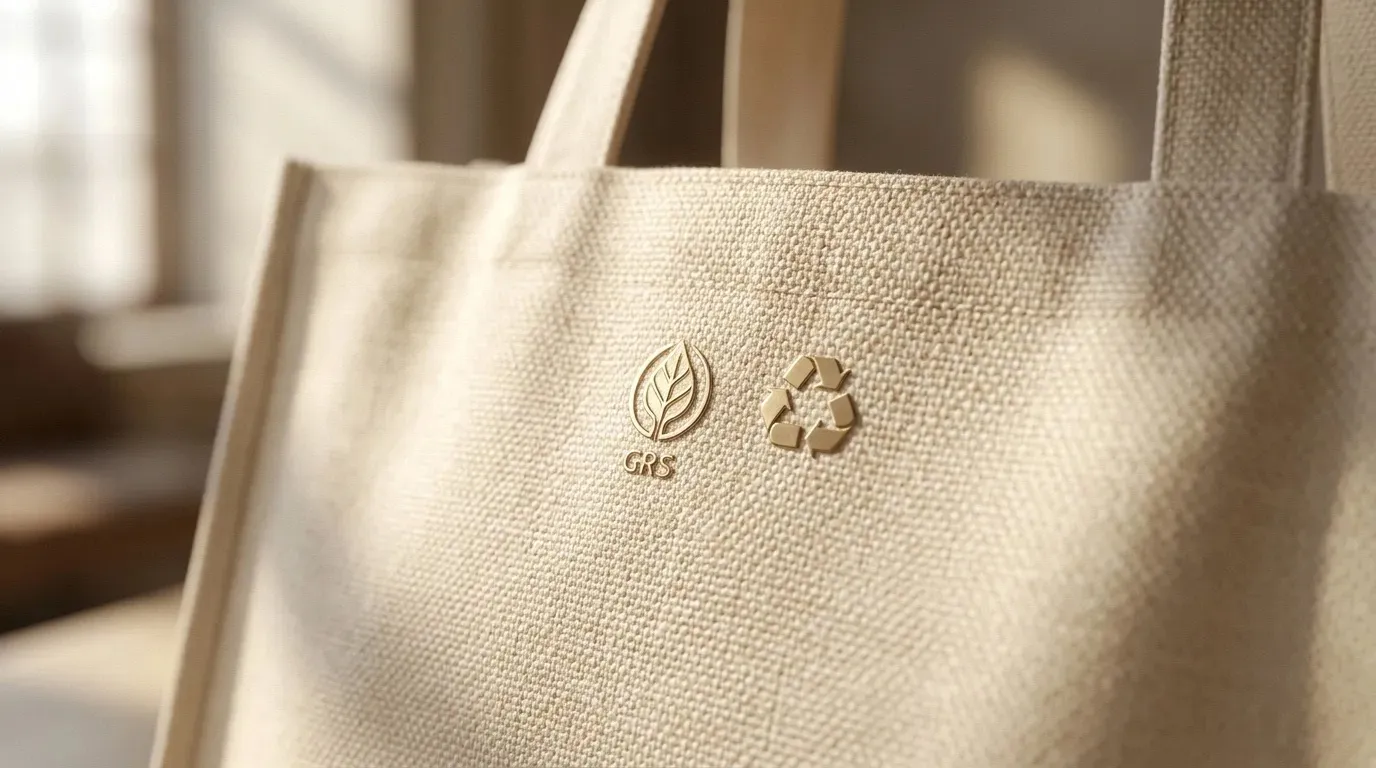
Do not claim “100% recycled.” The recycled percentage in recycled PU varies depending on supplier technology, formulation capabilities, and certification standards. Always verify the exact percentage from your supplier’s GRS transaction certificate.
PVC Leather
PVC leather — also known as polyvinyl chloride synthetic leather — is a plastic-based synthetic material with a PVC resin coating applied to a fabric backing. It has been widely used in the bag and accessories industry for decades due to its cost-effectiveness and water resistance.
PVC leather applications range from mass-market handbags and cosmetic cases to luggage and promotional bags. While it offers durability and waterproof performance, PVC production and disposal require careful management because certain additives and chemical processes may raise environmental and health concerns.
PVC leather is a vegan leather option — but vegan does not automatically mean sustainable. Understanding the distinction matters for brands building genuine sustainability narratives.
| Factor | Recycled PU | PVC |
|---|---|---|
| Base material | Polyurethane (with recycled content) | Polyvinyl chloride |
| Carbon footprint | 20–40% lower than virgin PU | Higher; 60% above recycled PU |
| Waterproof | Water-resistant; not fully waterproof | Fully waterproof |
| Price range | Mid to premium | Budget to mass-market |
| Certifications | GRS, OEKO-TEX, REACH available | REACH compliance required |
Recycled PU vs PVC: Material Composition Comparison
The following table summarizes the key material-level differences between recycled PU and PVC leather.
| Factor | Recycled PU | PVC |
|---|---|---|
| Base material | Polyurethane (with recycled content) | Polyvinyl chloride |
| Flexibility | Higher | Medium |
| Touch feeling | More leather-like | Plastic feeling |
| Breathability | Better | Lower |
| Sustainability potential | Higher (with recycled content + certifications) | Lower |
| Application | Premium bags, sustainable collections | Cost-focused products, waterproof applications |
Recycled PU generally offers a more leather-like hand-feel, better flexibility, and superior breathability — qualities that matter for premium positioning and end-user comfort. PVC wins on cost and waterproof performance but carries a heavier environmental profile.
Is Recycled PU More Sustainable Than PVC?
This is the core question for most sustainable bag brands — and the answer requires nuance.
1. Carbon Footprint
Recycled PU offers significant carbon advantages:
- 20–40% lower carbon footprint than virgin PU materials.
- Up to 60% lower carbon footprint compared to PVC production.
- Estimated 2.1 kg CO₂e/kg for standard recycled PU vs 5.3 kg CO₂e/kg for PVC.
2. Recycled Content Advantage
Recycled PU’s primary sustainability advantage lies in its recycled content:
- Reduces virgin petrochemical feedstock usage.
- Diverts post-industrial PU waste from landfill.
- Supports circular economy principles for synthetic materials.
However, the actual benefit depends critically on:
- The recycled percentage (verify with GRS transaction certificate).
- Whether the supplier holds relevant certifications.
- The manufacturing energy used in production.
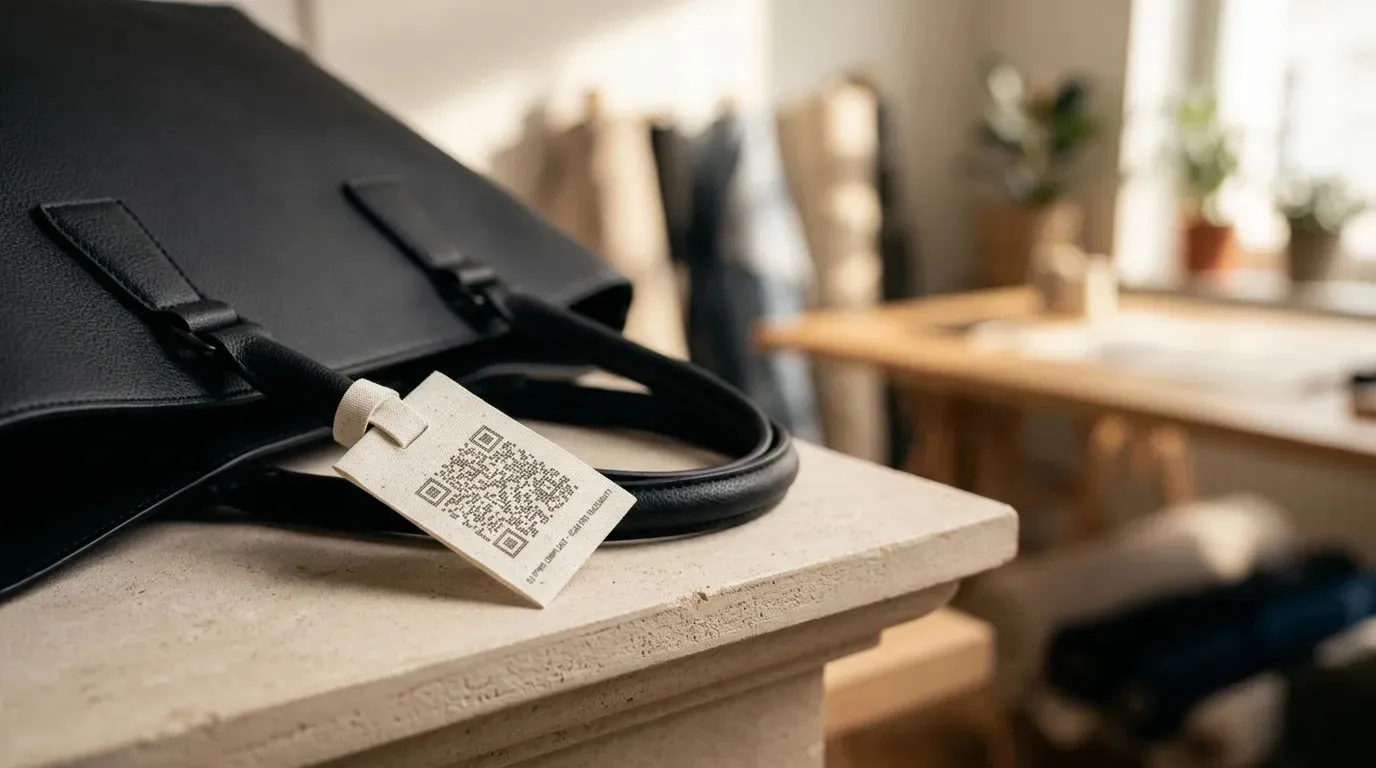
3. End-of-Life Options
Disposal pathways differ significantly:
- Recycled PU — can be processed through specialized recycling streams; limited but improving infrastructure.
- PVC — recyclable but requires specialized facilities; often ends up in landfill due to contamination concerns.
For a comprehensive overview of sustainability certifications that address end-of-life management, see our guide on bag sustainability standards.
4. Microplastic Risk
Both materials shed microplastics during use and washing. However, recycled PU generally produces fewer microplastics due to its tighter polymer structure and lower plasticizer content. For brands concerned about microplastic pollution, this is an important differentiator.
The Verdict
Recycled PU generally offers a higher sustainability ceiling than PVC — but the gap is not absolute. A poorly specified recycled PU with minimal recycled content and no certifications may deliver less environmental benefit than a well-managed PVC supply chain. Material selection should always be driven by specific product requirements, certification verification, and supply chain transparency.
Recycled PU vs PVC: Safety and Chemical Considerations
Safety is a frequent concern for brands sourcing synthetic leathers. Here is what the evidence shows.
Chemical Safety Comparison
| Consideration | Recycled PU | PVC |
|---|---|---|
| VOC emissions | Lower in general | Higher; depends on formulation |
| Restricted substances | Manageable with REACH/OEKO-TEX | Phthalates require attention |
| Heavy metals | Low risk with certified suppliers | Stabilizers may contain cadmium/lead |
| Plasticizers | Lower usage | Higher usage; phthalate concern |
Safety depends on manufacturing process, testing, and compliance — not material type alone. Both recycled PU and PVC can be produced safely when suppliers adhere to REACH compliance, OEKO-TEX standards, and relevant market regulations.
For bags that contact skin directly — such as handbags and accessories worn against the body — buyers should always request:
- REACH compliance documentation.
- OEKO-TEX Standard 100 test report.
- California Prop 65 compliance (for US market).
REACH & California Prop 65 Requirements
For EU-bound products, REACH restricts:
- SVHCs (Substances of Very High Concern) above 0.1% concentration.
- Phthalates including DEHP, DBP, BBP in children’s products.
- Heavy metals including cadmium, lead, mercury.
For US-bound products, California Prop 65 requires warnings for products containing chemicals known to cause cancer, birth defects, or reproductive harm — including certain plasticizers and flame retardants used in synthetic leathers. See our detailed California Prop 65 compliance guide for actionable steps.
Phthalates & Plasticizers: The PVC Consideration
PVC production typically requires 25–35% plasticizers for flexibility, with phthalates being the most common type. Some phthalates (like DEHP) are classified as reproductive toxins under REACH. Certified suppliers should provide:
- Phthalate-free formulations (using DINCH, ATBC, or other alternatives).
- REACH compliance statement confirming no restricted phthalates.
- Third-party test reports verifying plasticizer content.

Recycled PU vs PVC for Handbags and Bags
Here is how the two materials stack up across common bag categories — use this as a quick reference for product development decisions.
| Product | Recommended Material | Notes |
|---|---|---|
| Luxury handbags | Recycled PU / Premium PU | Leather-like aesthetics, premium hand-feel |
| Cosmetic bags | PU (recycled or standard) | Lightweight, color-consistent, easy to clean |
| Promotional bags | PVC or PU (depending on budget) | Cost-driven; PVC for waterproof needs |
| Sustainable brand bags | Recycled PU | Certifiable recycled content, credible narrative |
| Outdoor/bath bags | PVC or coated PU | Waterproof requirement may favor PVC |
Luxury Handbags
Premium aesthetics, leather-like hand-feel, and certifiable sustainability credentials make recycled PU the preferred choice for sustainable luxury collections.
Recommended: Recycled PUCosmetic Bags
Lightweight construction and easy color matching make PU the practical choice — recycled PU adds sustainability positioning.
Recommended: Recycled PUWaterproof Bags
For bags requiring water resistance — beach, pool, bath applications — PVC or coated PU delivers reliable waterproof performance.
Recommended: PVC / Coated PUEco-Led Collections
Sustainable brand positioning demands verifiable credentials — recycled PU with GRS certification is the defensible choice.
Recommended: Recycled PU (GRS)Cost Comparison: Recycled PU vs PVC
Cost is a primary driver in B2B material selection — and the PU vs PVC comparison reflects real price differentials.
Cost Drivers
- Material cost — PVC is generally less expensive per yard; recycled PU carries a premium for recycled content.
- Processing cost — Both materials have similar processing requirements; recycled PU may require additional quality verification steps.
- MOQ impact — Recycled PU often has higher minimum order quantities due to supplier batch sizes.
- Certification cost — GRS, OEKO-TEX, and REACH documentation add cost but are essential for sustainability claims.
- Brand positioning — Premium materials command premium prices; recycled PU enables premium pricing for sustainable brands.
MOQ & Bulk Pricing
Typical pricing tiers for custom recycled PU bags:
| Quantity | Price Range (USD/pc) | Notes |
|---|---|---|
| 200–499 pcs | $8–$15 | Sample/Prototype range; per-unit cost higher |
| 500–999 pcs | $5–$10 | Mid-volume; 15–25% savings vs 200pcs |
| 1,000+ pcs | $3–$7 | Bulk pricing; best economies of scale |
Note: Prices are indicative and vary by design complexity, recycled content percentage, hardware, and finishing. Request a tailored quote for your specifications.
Hidden Costs: Returns & Defect Rates
When evaluating material costs, factor in potential quality risks:
- Material inconsistency — recycled content batches may vary; always request pre-production samples.
- Color matching challenges — recycled materials may show slight color variation between batches.
- Adhesion failures — coating-to-backing adhesion should be tested before bulk orders.
- Returns from end customers — quality issues lead to returns that erode margins significantly.
Review our QC checklist before bulk order to identify and prevent common material defects early.
.webp)
We do not publish fixed per-yard prices because material costs are influenced by thickness, backing fabric, finishing, recycled content percentage, certification requirements, and order quantity. Request a tailored quote with your specifications for accurate pricing.
Which Material Should Sustainable Bag Brands Choose?
The right choice depends on your brand’s positioning, product requirements, and target market. Here is a practical decision framework.
Choose Recycled PU if:
- Your brand has sustainability positioning and an eco-conscious customer base.
- You need premium appearance and leather-like aesthetics.
- Your customers actively seek eco-friendly products and verifiable sustainability credentials.
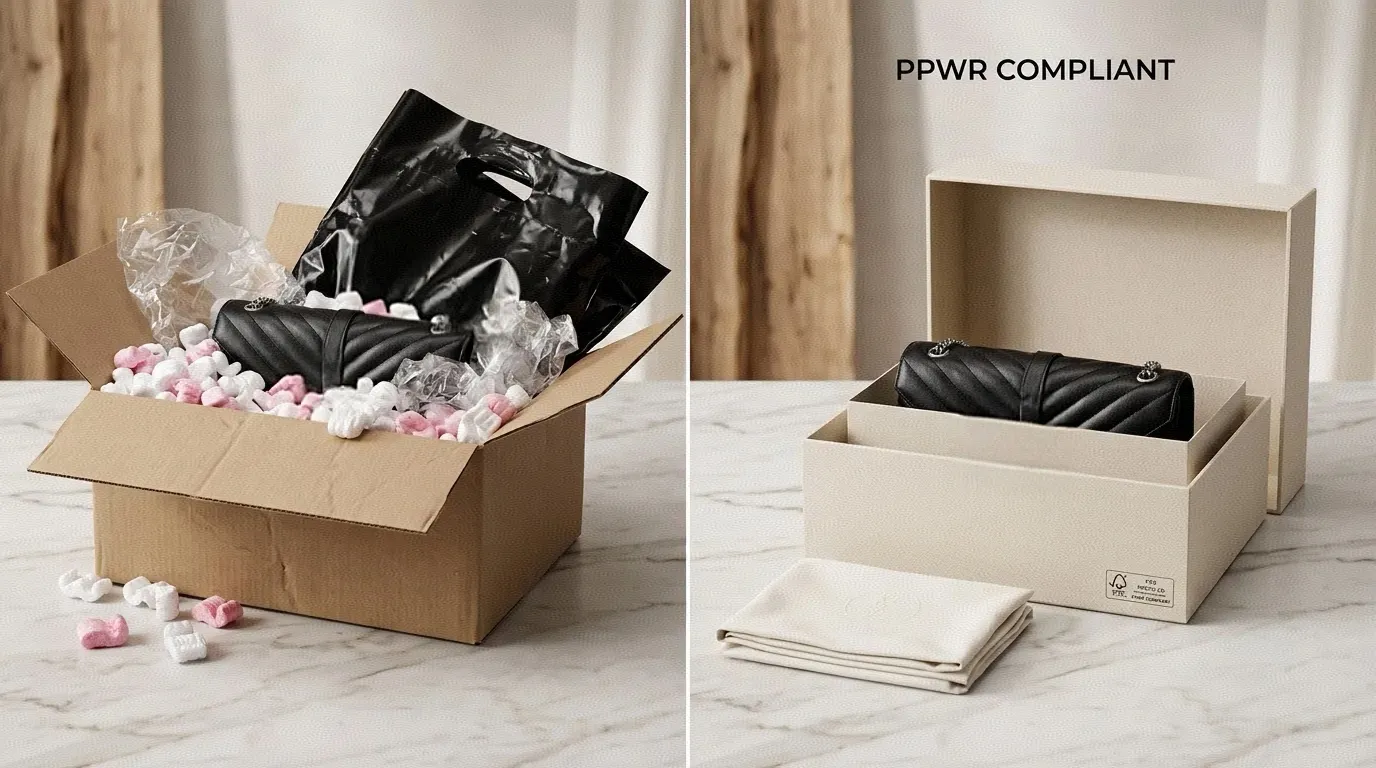
- You are targeting European markets where PPWR and regulatory compliance matter.
- You want to build a defensible, certified sustainability story.
Choose PVC if:
- Your product line focuses on low-cost bags and budget-conscious segments.
- The bag requires waterproof performance (beach, pool, bath applications).
- You are producing high-volume promotional bags with short product lifecycles.
- Your target market does not prioritize sustainability credentials.
- The product design benefits from PVC’s rigid structure and durability.
Hybrid Approach: Dual-Layer Composites
Some manufacturers offer PVC-backed PU or PU-coated PVC composites that attempt to combine benefits. These materials may offer:
- PU aesthetics on the visible side.
- PVC waterproof performance on the reverse.
- Potential cost savings vs pure recycled PU.
However, hybrid materials may face certification complications — GRS certification for recycled content applies only to the PU layer, and end-of-life recycling becomes more complex. Evaluate carefully before committing. For a comprehensive Canvas vs PU material guide and ODM bag design approach, explore our related guides.
Do not create a false narrative that “PVC is inherently bad.” PVC is a legitimate material with specific applications. The issue is not PVC itself — it is how it is specified, produced, and disposed of. Responsible sourcing means evaluating materials against your specific product requirements, not following blanket verdicts.
Certifications to Check Before Buying Recycled PU Materials
Certifications are the primary mechanism for verifying recycled content, chemical safety, and supply chain transparency. Here are the most relevant certifications for recycled PU in 2026.
GRS — Global Recycled Standard
GRS verifies the recycled content percentage and tracks it through the supply chain via chain-of-custody documentation. It is the foundational certification for any brand making recycled content claims. For a detailed comparison of certification standards, see our GRS vs GOTS comparison.
- Confirms minimum recycled percentage.
- Provides traceability from feedstock to final product.
- Required for GRS transaction certificates with each shipment.
OEKO-TEX Standard 100
OEKO-TEX certifies that the material has been tested for harmful substances and is safe for human contact. Essential for handbags and accessories that touch skin daily.
REACH Compliance
REACH restricts hazardous chemicals in materials sold in the European Union. Critical for:
- Restricting SVHCs (Substances of Very High Concern).
- Ensuring compliance with phthalate restrictions.
- Meeting EU market access requirements.
California Prop 65
Required for products sold in California — tests for chemicals known to cause cancer, birth defects, or reproductive harm. Relevant for US market brands.
RCS — Recycled Claim Standard
Unlike GRS, the RCS (Recycled Claim Standard) is a less stringent certification that verifies the presence of recycled content without requiring social or environmental processing standards. Consider RCS if:
- Your brand needs a simpler recycled content claim.
- Full GRS certification is cost-prohibitive for small orders.
- You want a stepping stone toward GRS certification.
ISO 14021 — Self-Declared Recycled Content
ISO 14021 allows manufacturers to self-declare recycled content percentages without third-party certification. This standard:
- Requires internal verification and documentation.
- Does not provide third-party credibility.
- May be insufficient for brands making strong sustainability claims to retailers or consumers.
Certifications cover different aspects. GRS verifies recycled content and traceability. OEKO-TEX verifies chemical safety. REACH verifies regulatory compliance. No single certification covers everything — request the full documentation set relevant to your market and claims.
Expert Insight: How Bag Factories Evaluate PU Materials
These insights come from the Dreamway manufacturing team — the people who work with recycled PU and PVC on the production floor every day.

Emily
Senior Project Manager · 12 Years in OEM Manufacturing“Why do sustainable brands specifically ask for recycled PU over standard PU or PVC?”
The first question is almost always about certification — buyers want the GRS certificate, the exact recycled content percentage, and full chain-of-custody traceability. Right after that comes MOQ, because recycled PU often carries a higher minimum than standard PU or PVC. Then it’s color-matching capability, finishing options, and sample availability. I always advise buyers to treat the sustainability story the same way they treat the bag’s design: it has to be authentic, verifiable, and ready to defend in front of their own customer. PVC still has its place — especially for waterproof applications — but recycled PU is winning the premium positioning battle in 2026.
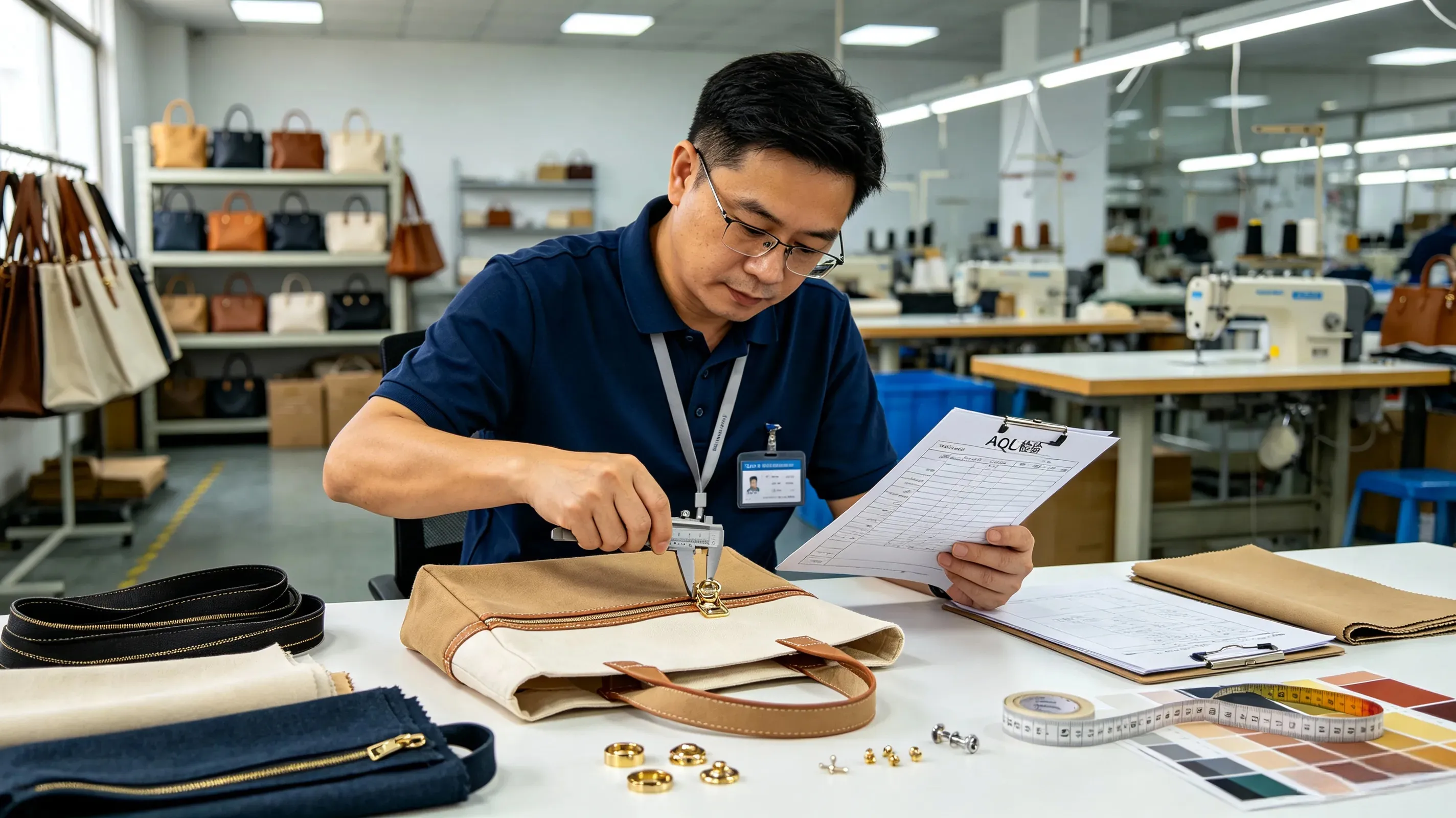
Kevin
Pattern Development Engineer · 15 Years Experience“What documents should buyers request before selecting a recycled PU material?”
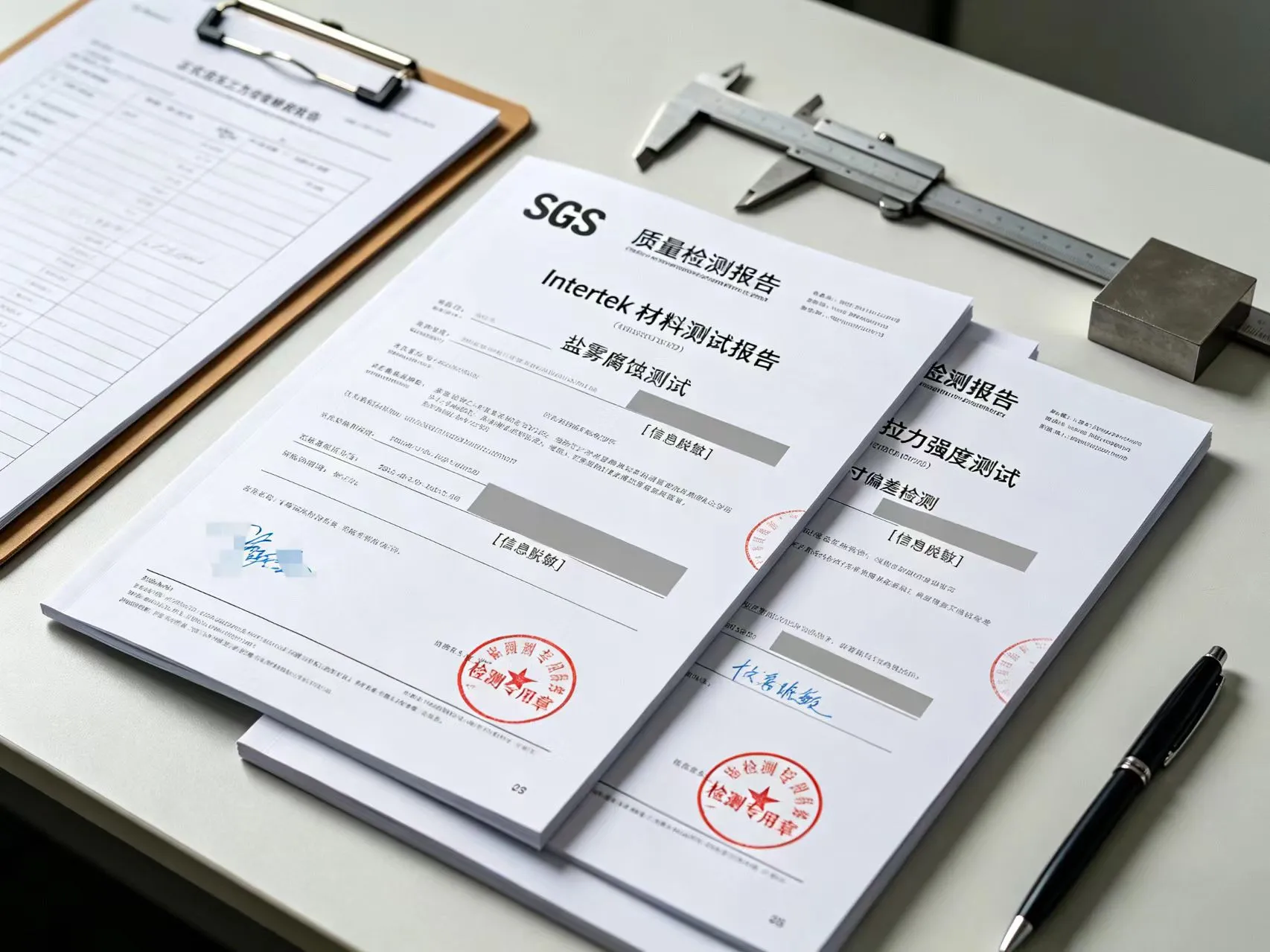
At minimum: the GRS transaction certificate (to verify recycled content percentage), OEKO-TEX Standard 100 report, and REACH compliance statement. For EU-bound products, confirm California Prop 65 if selling in the US. We also recommend requesting a coating adhesion test, color consistency report, abrasion resistance data, and an odor test report — these are the quality parameters that catch problems before they reach production. Every new lot should be treated as a fresh qualification, even from a trusted supplier, because formulation can vary between batches.
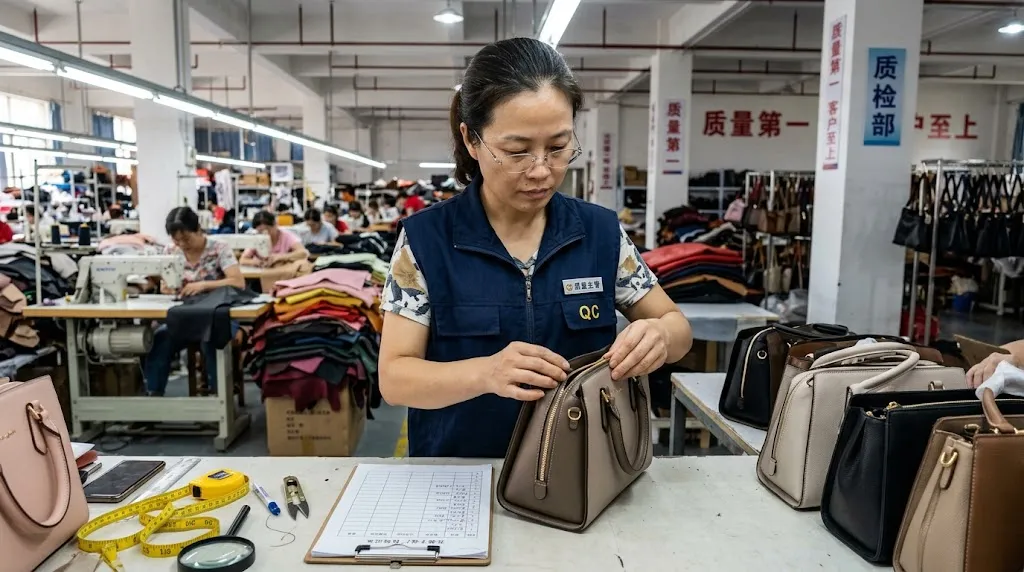
Helen
Senior QC Supervisor · 13 Years in Quality Control“What quality checkpoints do you focus on when inspecting recycled PU materials?”
With 13 years of hands-on experience in handbag factory quality control, I know exactly what to look for — from stitching and hardware to material consistency. The first thing I check is the surface uniformity: recycled PU should have no visible bubbles, delamination, or color patches. Then I verify the thickness consistency across the roll using a micrometer — variations exceeding ±10% signal a manufacturing issue. I also run a tape adhesion test to confirm the coating bonds properly. You can count on me to catch issues before they reach your customer. If there’s one thing I’ve learned, it’s that material inspection is where you prevent problems, not where you discover them.

Frequently Asked Questions About Recycled PU vs PVC
Recycled PU generally offers a higher sustainability ceiling than PVC due to its recycled content potential, lower environmental profile in production, and better suitability for premium brand positioning. However, the actual benefit depends on the recycled percentage, certifications, and specific product requirements. For a complete comparison, see our guide on Recycled PU vs PU Leather.
PVC leather is not inherently eco-friendly or toxic — it is a synthetic material with specific properties and applications. PVC production and disposal require careful management due to certain additives (such as plasticizers) and chemical processes that may raise environmental concerns. Brands using PVC should ensure REACH compliance and appropriate chemical testing before making sustainability claims. See our Sustainable Leather Handbag Manufacturer guide for responsible sourcing practices.
No. Recycled PU and PVC are distinct materials. Recycled PU is polyurethane-based with recycled polyurethane content. PVC is polyvinyl chloride-based. However, always verify with your supplier — some composite materials may use both polymer types in specific constructions.
Recycled PU offers water resistance similar to standard PU — it handles light moisture but is not fully waterproof like PVC. For bags requiring full waterproof performance (beach bags, bath accessories), PVC or a PVC-coated PU may be more appropriate. Check the technical data sheet for the specific recycled PU grade you are considering.
Durability depends more on formulation, thickness, and usage conditions than material type alone. Well-formulated recycled PU performs comparably to PVC in most bag applications. For heavy-duty or outdoor use, request specific abrasion resistance and hydrolysis resistance test data from your supplier. See our guide on Canvas vs Polyester vs PU: Material Comparison.
There is no single “best” material — the right choice depends on your brand’s sustainability goals, target market, price point, and product requirements. Recycled PU is well-suited to premium sustainable collections with certifiable environmental claims. For deeper guidance, see What Is Recycled PU Leather? Complete Guide for Bag Brands and PU vs Polyester for Bags: Which Material Is Better for Your Brand?
GRS certification can verify recycled content, but claiming “100% recycled” is not recommended unless the GRS transaction certificate explicitly confirms this percentage. The recycled percentage varies depending on supplier technology and formulation — typically ranging from 30–50% for post-industrial content. Always request verification from your supplier’s GRS documentation before making any environmental claims.
At Dreamway, the minimum order quantity (MOQ) for handbags is 200 pieces per style/color combination. Recycled PU materials may have slightly higher MOQs depending on supplier batch sizes and certification requirements. For our comprehensive guide on MOQ and its impact on pricing, see Tote Bag MOQ Explained. Contact our team for tailored quotes based on your specifications.
Verified feedback from brands that sourced recycled PU and PVC materials from Dreamway for sustainable bag production.
“Dreamway’s recycled PU samples arrived within 10 days, and the GRS transaction certificate was clean and verifiable. Our retail buyer in Berlin accepted the recycled content claim without a second look. The team was responsive across time zones, which mattered for our EU launch.”
“We trialed recycled PU at 300 pcs first to confirm color consistency across lots. The second batch matched almost perfectly to the original. Minor thickness variance was caught during their QC inspection and communicated to us before shipment — exactly what we needed.”
“The combined GRS + OEKO-TEX documentation package made our PPWR compliance review much smoother. Material samples for color matching were ready quickly, and pricing at our 1,000+ tier landed inside our target margin. We’ll likely repeat orders for our autumn collection.”
“Compared recycled PU samples from three factories. Dreamway’s samples showed the most consistent surface finish and the documentation was the most thorough. Lead time was 25 days for our 500 pcs pilot, on schedule. The finishing on the edges was notably clean.”
Conclusion
For Sustainable Bag Brands
Your decision path: Verify GRS certificate → confirm recycled % → check OEKO-TEX → compare unit cost → request sample. If the recycled content is ≥30% with GRS + OEKO-TEX, recycled PU covers 80% of sustainable brand requirements at a 10–15% unit cost premium over PVC. Full recycled PU material guide →
For Bag Factories and Sourcing Agents
Your evaluation checklist: GRS transaction certificate → post-industrial content % → supplier batch consistency → coating adhesion test → OEKO-TEX report → REACH statement. Request a 3-yard sample roll before confirming bulk orders. Contact Dreamway engineering →
Recycled PU is often preferred by sustainable bag brands because it combines a leather-like appearance with measurable recycled content potential, better breathability, and a higher sustainability ceiling than PVC — provided the recycled percentage and certifications are verified.
However, material selection should always consider:
- Product requirements — aesthetics, durability, waterproof performance, target price point.
- Certification — GRS, OEKO-TEX, REACH, and other relevant standards for your markets.
- Durability testing — verify performance against the specific bag application’s expected use conditions.
- Target market — EU regulations, US Prop 65, and consumer expectations vary by geography.
PVC remains a legitimate choice for waterproof applications, budget-focused products, and high-volume promotional bags. The goal is not to eliminate PVC — it is to use each material where it delivers the most value.
At Dreamway, we work with both materials daily. Our engineering and QC teams can help you evaluate specifications, source certified materials, and ensure your chosen material performs at production quality. Contact our team to discuss your next project. For premium collections, explore our custom luxury bag manufacturing capabilities.
Sources & References

Published by Dreamway — Handbag and Silk Product Manufacturer · Guangzhou, China
Small team of 30+ professionals · Serving 50+ countries worldwide
Handbag MOQ: 200 pcs | Silk Product MOQ: 50 pcs
Phone: 86-20-8768-2749 | Email: info@gzdreamway.com
- Recycled PU vs PVC: Which Material Is Better for Sustainable Bags?
- Is Recycled PU Leather Toxic? Safety, Chemical Risks & Buyer Guide
- Recycled PU Leather: Is It Sustainable? Bag Brand Guide
- Recycled PU vs PU Leather: Which Is Better for Bags?
- What Is Recycled PU Leather? Complete Guide for Bag Brands
- PU vs. Polyester for Bags: Which Material Is Better for Your Brand?
- Silk vs. Bamboo vs. Tencel: Why Luxury Wellness Brands Still Choose Real Mulberry Silk for Bedding
- How to Spot Fake Silk: A Factory Guide to Testing Real Mulberry Silk for B2B Buyers
- The Ultimate Guide to Sourcing Mulberry Silk: 16mm vs 19mm vs 22mm Compared
- Canvas vs. Polyester vs. PU: Material Comparison
- Guide to Sustainability: GRS, OEKO-TEX & FSC
- Canvas Fabric Weight Guide: GSM and Oz Explained
- The Future of Vegan Leather: Pineapple, Cactus, and Apple Fiber
- Water-Based PU vs Recycled PU: Which Is Better for Bags?
- Why Water Based PU Leather is so popular?
- Comparing Cotton vs. Blended Canvas for Tote Bags
- Eco-Friendly and Sustainable Canvas Tote Bags
- Canvas Tote Bag Material & Weight Guide: oz/GSM Chart for Every Bag Type
- Sustainable Custom Tote Bags with Logo: Certifications, Materials & Greenwashing Red Flags
- Canvas Tote Bag Factory: What Affects the Durability?
- Cotton Tote Bag Factory: Grades, GSM Options & Fabric Testing
- Luxury Tote Bag Factory for Premium Brands (PU/Leather Options)
- Recycled Tote Bag Factory: RPET, Organic Cotton & Eco-Friendly Materials
- Top Custom PU Handbag Factories & Pro Tips for Choosing Quality
DREAMWAY
Custom Bag & Silk Manufacturer · Shiling, Guangzhou
Company
Products
Guides & Insights
Ready to Bring Your Bag Idea to Life? Let’s Talk Today.
From your first sketch to bulk delivery, our team replies within 12 hours with expert advice and a free quote. No pressure — just honest manufacturing guidance.

Prefer a call? +86-020-87682749 · Mon–Sat, 9:00–18:00 (GMT+8)