Dreamway Bag Material Guides · HubCanvas vs Polyester vs PU: Which Bag Material Should You Choose?
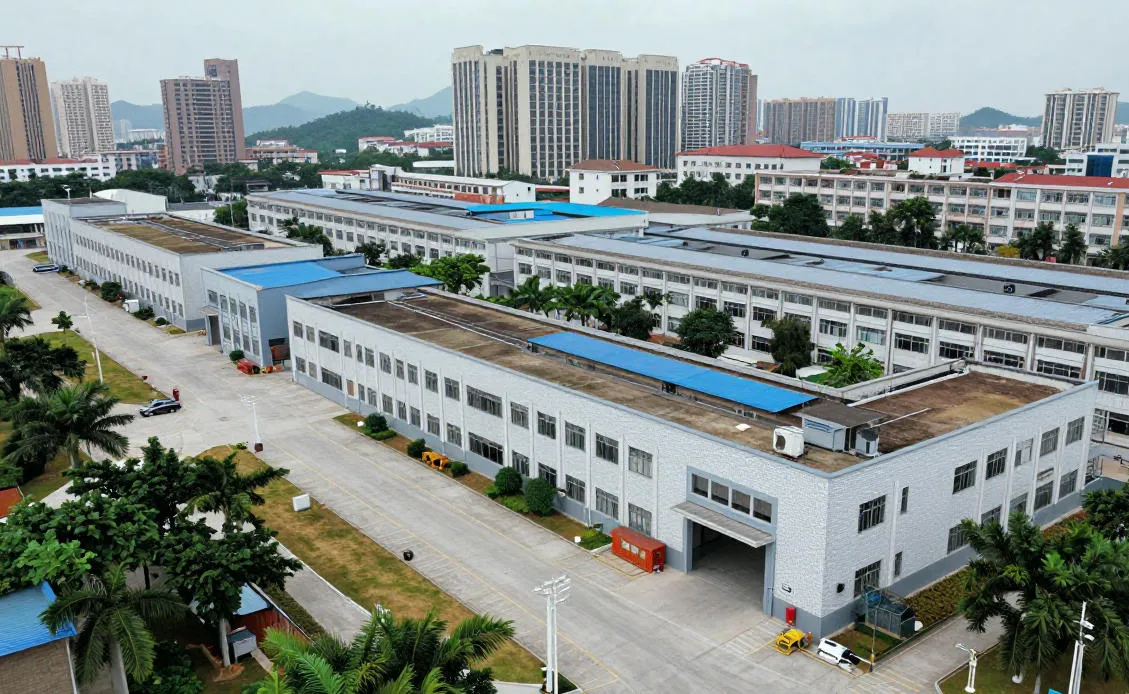
Dreamway handbag and silk factory floor in Guangzhou Huadu Shiling
Inside Dreamway — a Guangzhou-based OEM manufacturer producing handbags and silk products for 50+ countries.

Walk into any sourcing meeting and the same three words will dominate the conversation: canvas, polyester, and PU leather. They are the workhorses of the global bag industry — together they account for the vast majority of every tote, backpack, cosmetic pouch, laptop carrier, gift bag, and corporate giveaway produced each year.

But here is the honest truth that most material guides will not tell you up front: no single fabric is universally "best." There is no winner. There is only a better fit for your product, your target market, and your brand positioning.

This guide is designed to help you answer one question, clearly and confidently:

Which material fits your product, your market, and your customers?

We are Dreamway, a small, dedicated OEM manufacturer based in Guangzhou's Huadu Shiling town — a region known for generations of leather and textile craftsmanship. For more than a decade we have produced handbags and silk products for over 50 countries, working with fashion brands, retail chains, beauty houses, outdoor labels, and corporate gifting teams. Every week our sales managers and pattern engineers field the exact questions this article answers, so what follows is built directly from the conversations we have on the factory floor and across the sample table.

This is the Hub article of our Bag Material Guides series. It gives you the wide-angle view of canvas, polyester, and PU leather. Each comparison then links you to a deeper, single-topic guide where you can drill into printing, GSM, recycled materials, water-based PU, and more.


Quick Comparison Table: Canvas vs Polyester vs PU at a Glance

If you only have thirty seconds, this table is built for you. It is also designed to win Featured Snippets on Google, which is why we keep the format lean, scannable, and comparison-first. On mobile it scrolls horizontally so every column stays readable.

Attribute Canvas (Cotton / Linen) Polyester / rPET PU Leather
Typical cost / unit (MOQ 200)$1.80 – $5.50$0.90 – $3.20$3.50 – $12.00
Durability rating★★★★★ (5–10 yrs)★★★☆☆ (2–5 yrs)★★★☆☆ (2–5 yrs, varies)
Waterproof / water-resistantOnly with treatmentInherently water-resistantWaterproof
Weight feelMedium to heavyLightMedium
Printing compatibilityExcellent (screen, DTF, embroidery)Excellent (sublimation, DTF)Limited (embroidery, hot-press)
Eco-friendliness (baseline)High (organic options)Low (rPET improves)Low (water-based improves)
MOQ flexibility (OEM)200+ units200+ units200+ units (higher for premium)
Luxury feel★★★☆☆ (premium when heavy GSM)★★☆☆☆★★★★★
Outdoor use★★★☆☆ (waxed canvas better)★★★★☆★★★☆☆ (heat-sensitive)
Fashion / retail★★★★☆★★★☆☆★★★★★
Corporate gifting★★★★★★★★☆☆★★★★☆

Keep this table open while you read the rest of the article — the sections below explain why each material sits where it does in this grid.


Understanding the Three Materials

Before we compare materials head-to-head, it helps to know what is actually inside each one. We will keep the technical depth shallow here — each material has its own deep-dive guide linked at the end of its section.

Canvas — the natural-fiber workhorse

Canvas is a plain-woven fabric traditionally made from cotton, though hemp and linen canvases are increasingly common. Its performance is governed primarily by GSM (grams per square meter). Lightweight 150–250 GSM canvas suits promotional and disposable-shopping bags. Mid-weight 250–400 GSM is the sweet spot for retail totes, corporate gifts, and most daily-carry applications. Heavy-duty 400+ GSM canvas powers industrial, military-style, and premium structured bags. A full breakdown lives in our Canvas Fabric Weight Guide.

Polyester — the budget-friendly synthetic

Polyester is a petroleum-based fiber that dominates the budget and high-volume bag segment. It is 20–40% cheaper than canvas to produce, dries quickly, holds printed color well via sublimation, and is inherently water-resistant. Recycled PET (rPET) variants, sourced from post-consumer bottles and certified to GRS standards, have largely replaced virgin polyester in any brand with a credible sustainability claim.

PU Leather — the vegan luxury surface

PU (polyurethane) leather is a coated synthetic that delivers a leather-like aesthetic at a fraction of the price — and without the ethical baggage of animal-derived materials. It is waterproof, easy to wipe clean, and endlessly customizable in grain, color, and hand-feel. Modern water-based PU formulations cut VOC emissions by more than 70% compared to traditional solvent-based PU and are rapidly becoming the default at premium brands.

For a focused read on canvas specifically, see our Canvas Tote Bag Materials, Printing & Cost guide. For PU specifics, our Canvas vs Polyester vs PU comparison breaks down the same three materials from a different angle.


Canvas vs Polyester: Strength, Weight, Cost, Printing, Eco

Of the three pairings, canvas vs polyester is the most frequent sourcing question we receive. They look similar on the sample shelf, but they perform very differently.

White canvas tote bag styled as a fashion commuter accessory
Cotton canvas totes remain a favourite in fashion and lifestyle retail because they age gracefully and accept almost any print technique.

Strength and durability

Canvas is the more durable of the two when properly constructed. With reinforced seams and the right GSM, canvas bags routinely last five to ten years of daily use. Polyester is no slouch — high-denier polyester (600D and above) is genuinely tough — but it tends to pill, fade, and lose structural integrity faster under continuous load. If your customer will use the bag as a daily workhorse for years, canvas wins. If the bag is a one-season promotional item, polyester is perfectly adequate.

Weight

Polyester is significantly lighter than canvas at equivalent thickness. For a tote bag, a polyester version typically weighs 30–45% less than a cotton canvas version of similar dimensions. That weight difference matters when the bags are shipped internationally in container quantities — it directly impacts your freight cost per unit.

Cost

Polyester wins on price, almost always. At MOQ 200, expect polyester totes at $0.90–$3.20 per unit and canvas totes at $1.80–$5.50 per unit. PU sits above both. The gap widens at higher MOQs because polyester mills are highly automated, while canvas still involves more natural-fiber processing steps.

Printing compatibility

Both materials print well, but through different processes. Polyester is the king of sublimation printing — vibrant, edge-to-edge color with no setup cost per unit, ideal for photographic or gradient artwork. Canvas prefers screen printing, DTF, heat transfer, and especially embroidery, where its textured weave adds tactile depth. If your design depends on rich photographic detail, lean polyester. If it depends on premium hand-feel and tactile branding, lean canvas.

Eco profile

Baseline canvas — particularly organic or recycled cotton — is the more sustainable choice. Polyester is petroleum-derived and sheds microplastics, but GRS-certified rPET closes much of that loop. We explore this more deeply in the Sustainability Comparison section below.


Canvas vs PU Leather: Luxury, Fashion, Premium Brands, Corporate Gifts

This is where bag material decisions start to feel like brand decisions. Canvas and PU leather occupy very different positions in the consumer's mind, and choosing between them is really about choosing which story you want your bag to tell.

Stylish Chinese model at a café window with a premium leather handbag beside her
PU leather enables the leather aesthetic without the leather price — a powerful combination for premium-tier accessories.

Luxury positioning

PU leather delivers a luxury aesthetic at a price most consumers can absorb. From smooth nappa-like finishes to structured Saffiano-style grains, modern PU can be visually indistinguishable from genuine leather on the shelf — especially when paired with quality hardware. Canvas, even at high GSM, reads more casual and artisanal. If your customer expects a polished, dressy bag for office or evening use, PU is the safer call.

Fashion and seasonal collections

Fashion brands love PU because it can be re-coloured, re-grained, and re-finished every season without re-tooling the entire factory. Canvas supports capsule collections well too — its natural texture pairs effortlessly with minimal, earthy, or Scandinavian aesthetics — but its color refresh cycle is slower.

Premium brand storytelling

This is where the conversation gets interesting. Some premium brands intentionally avoid PU because consumers have learned to associate it with "synthetic" and "cheap." Others lean into it precisely because it lets them ship the leather look at a more accessible price point while keeping their animal-welfare credentials intact. There is no universal answer — it depends on whether your brand equity sits in heritage and authenticity or in modernity and accessibility.

Corporate gifts

For corporate gifting, canvas is the strongest performer in most categories — it photographs well, takes embroidery cleanly, suits both casual and executive audiences, and aligns with the sustainability narrative that procurement teams increasingly require. PU becomes the right answer when the gift must convey executive weight, such as a luxury laptop sleeve or an embossed portfolio.

From the sales floor — Emily, Senior Project Manager

Emily, Senior Project Manager at Dreamway

EmilySenior Project Manager · 12 years in OEM bag manufacturing

"A lot of our European and North American clients choose PU for high-end gifting projects — even when they could afford canvas. It is rarely about budget. It is about brand fit. When a brand has spent ten years building a leather-led aesthetic, switching to canvas mid-stream breaks the story. My advice is to choose the material that lets your brand's existing promise stay consistent — and only switch when your brand promise itself is changing."

For a deeper look at canvas specifically for premium programs, our Custom Canvas Tote Bags Manufacturer page walks through weights, prints, and budgets for premium retail and gifting.


Polyester vs PU Leather

This pairing deserves less space here because the use cases rarely overlap. Polyester is the default for promotional, lightweight, and outdoor bags. PU is the default for premium, leather-look, and structured pieces. Where they do meet is in the mid-tier fashion market — a printed polyester tote with PU handles, a PU-trimmed polyester backpack — where brands mix materials to balance cost, weight, and aesthetic.

Rather than repeat the full comparison, we point you to our detailed material comparison and to the broader PU vs Polyester deep-dive in our guides series. The headline trade-off is simple: polyester wins on cost and weight, PU wins on luxury feel and waterproofing. Everything else is a matter of execution.


Material Performance Comparison

Below is a more granular performance breakdown. Each subsection gives you the practical answer a sourcing manager needs in a sample review.

Durability

Canvas at 12 oz / 400+ GSM, with double-stitched seams and reinforced stress points, is the most durable option across the three. High-quality PU is a strong second but can delaminate within 12–18 months in hot, humid climates — a phenomenon known as hydrolysis, where ambient moisture slowly breaks down the PU coating. Polyester is the least durable of the three at equivalent use intensity.
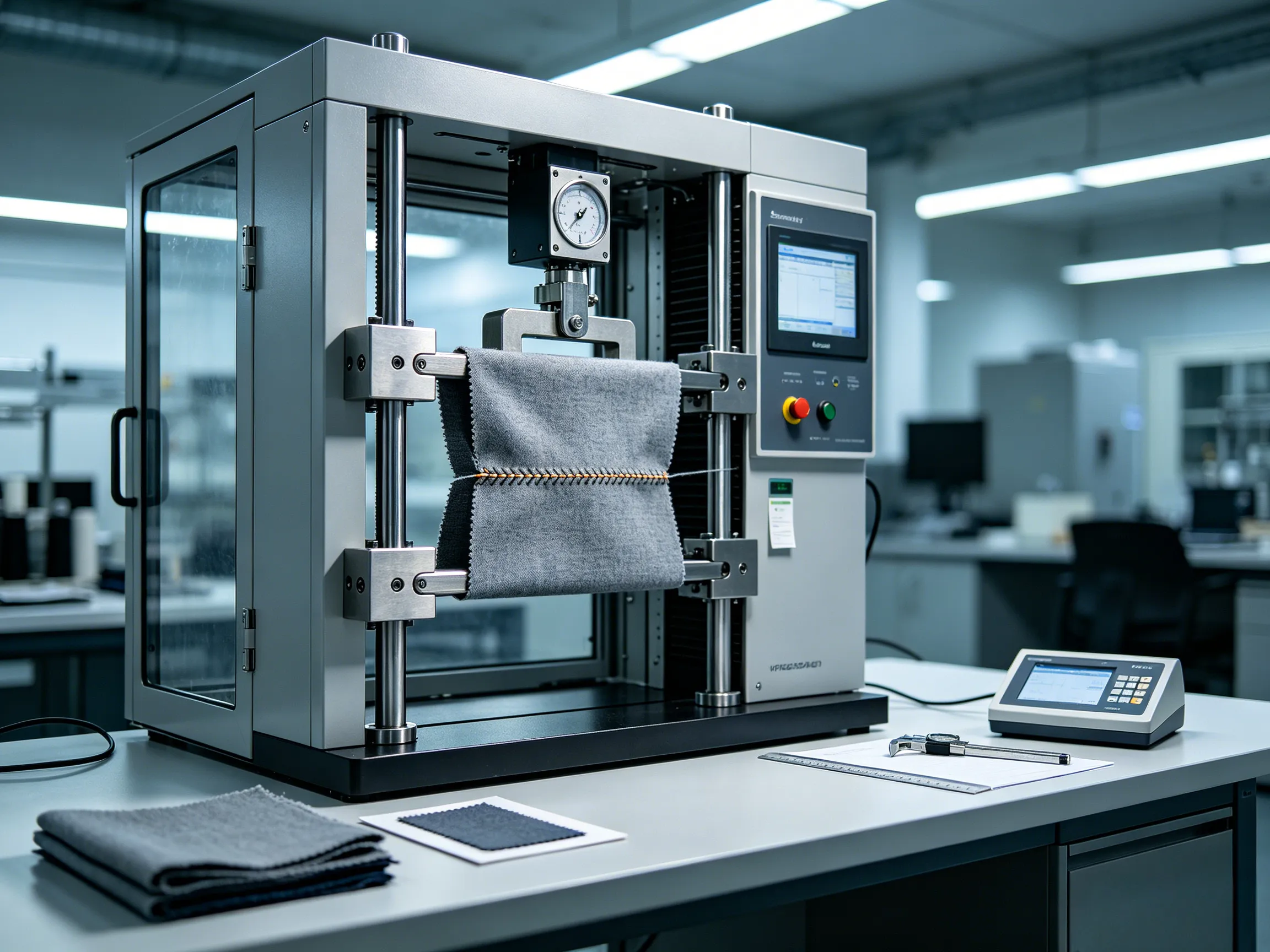
GZDreamway laboratory tensile strength test ensuring canvas bag load capacity
Professional tensile testing ensures every batch exceeds industry load-bearing standards before shipping.

Waterproof performance

PU is genuinely waterproof when the surface is intact. Polyester is inherently water-resistant because the fiber does not absorb water, though seams and zippers remain weak points. Canvas must be treated — typically with a PU or PVC backing, or with a waxed finish — to become water-resistant, and even then it is rarely fully waterproof.

Printing compatibility

This is where your design team should be paying close attention.

  • Screen printing works beautifully on canvas and polyester but is impractical on PU because the ink does not adhere well to the coated surface.
  • DTF (direct-to-film) printing works on canvas and polyester with vibrant results and no setup cost per color.
  • Heat transfer is suitable for canvas and polyester; PU requires lower temperatures and specialized transfer films.
  • Embroidery is at home on canvas and PU; on polyester it works but can pucker lighter weaves.
  • UV / digital direct printing excels on polyester, is acceptable on coated canvas, and is not viable on most PU surfaces.
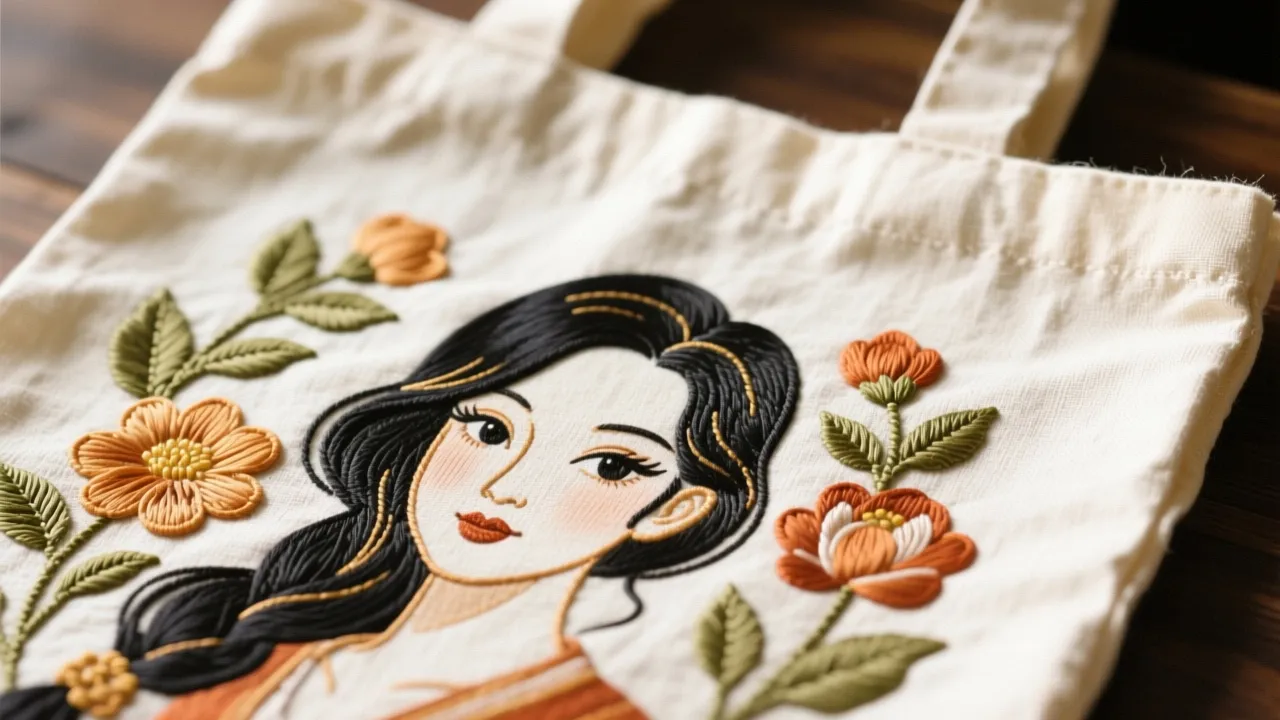
Detail of embroidery on a canvas tote bag
Embroidery on canvas delivers a tactile, premium finish that screen printing cannot match.

DTF (direct-to-film)

Heat transfer detail on a custom canvas bag
DTF and heat-transfer printing deliver vibrant, photo-quality results on canvas without per-color setup fees.

Digital direct printing

Digital direct printing detail on canvas fabric
Digital direct printing is the right answer when a design has gradients, fine type, or low MOQ.

Plastisol (rubber) printing

Plastisol rubber print detail on a canvas tote
Plastisol (rubber) printing delivers opaque, raised color on dark canvas — ideal for bold brand logos.

Cleaning and maintenance

Polyester is the easiest to maintain — machine washable, fast drying, and forgiving of stains. Canvas is also machine washable but takes longer to dry and can shrink if pre-shrunk treatment was skipped. PU is the most convenient in everyday use because a damp cloth handles almost everything, but it should never be machine washed.

Color stability

Polyester holds dyed color the longest because the dye is bonded into the fiber. Canvas, especially natural cotton, will fade gradually with sun exposure — often a desired aesthetic for heritage brands, a flaw for fast-fashion buyers. PU holds color well initially but can yellow or discolor with prolonged UV exposure if not properly stabilized.
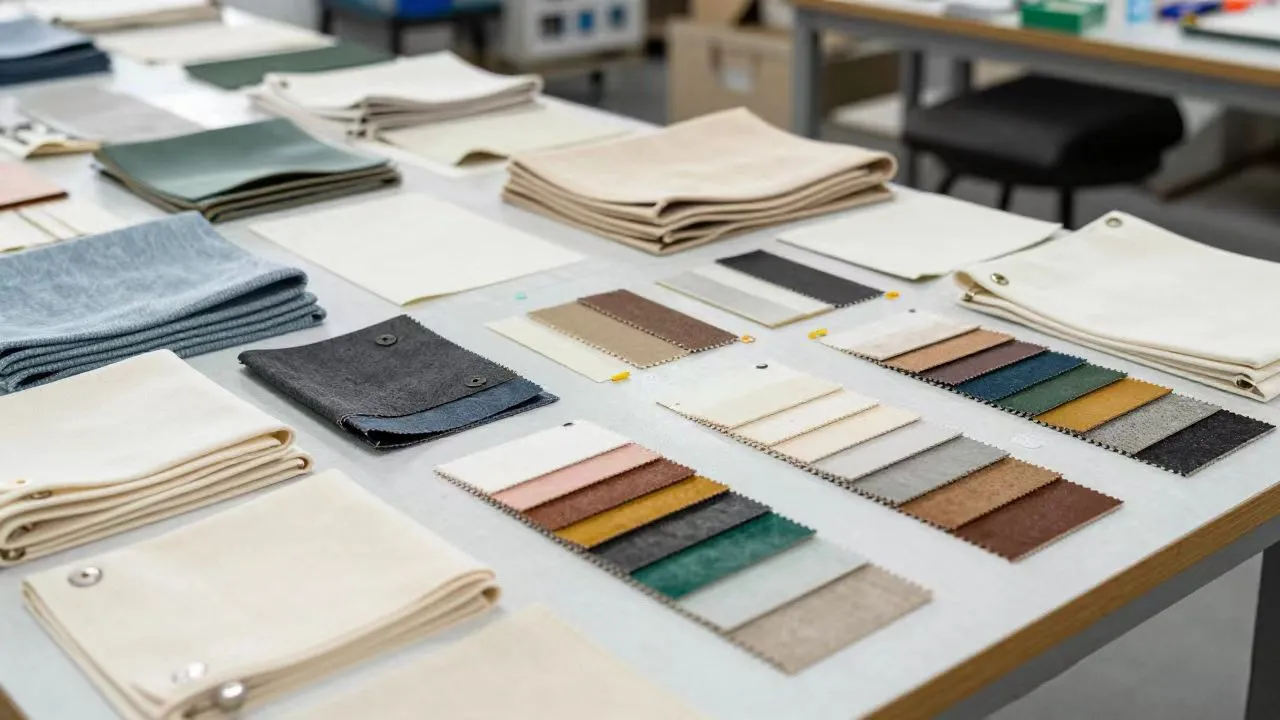
Color swatch card for handbag materials at Dreamway factory
Color matching starts with a controlled swatch card — Pantone references are matched under D65 light.
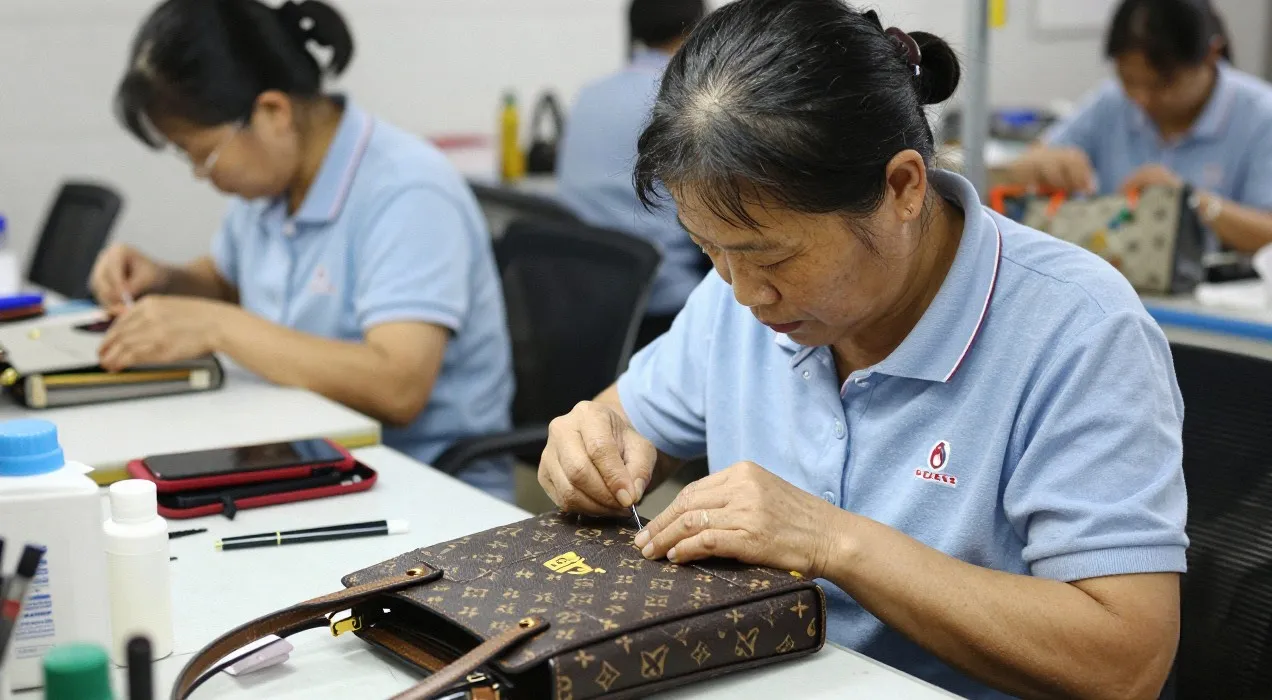
Factory worker sewing a brand logo onto a handbag panel
Skilled artisans hand-stitch brand logos — the small detail that separates a premium bag from a commodity one.

Scratch resistance

PU is the most scratch-prone surface — a sharp key or rough wall can leave a permanent mark. Polyester resists surface scratches well. Canvas is largely immune to scratching because any minor surface disturbance disappears into the weave.

Weight

Per square meter: polyester ≈ 120–200 g, cotton canvas ≈ 200–450 g, PU ≈ 350–600 g depending on backing. This matters most for backpacks, laptop bags, and any product your customer will carry for hours.

Cost

Polyester is the most affordable. Canvas is mid-range with organic and hemp variants pushing to the upper end. PU spans the widest range — from commodity PU at $3.50 per tote to premium water-based PU at $12+ per piece.

MOQ

All three materials are workable at our standard MOQ of 200 units for handbag programs (50 units for our silk pillowcase and accessory lines). For specialty constructions — PU with custom embossing, canvas with reactive dye color matching — MOQ may rise to 500–1,000 units.

Semi-transparent virtual financial chart over a handbag production line showing labour, materials, and overhead split
Transparent cost breakdowns — labour, materials, overhead — help buyers see exactly where each dollar goes.

Which Material Is Best for Different Bag Types?

Every bag category has its own material sweet spot. The table below maps the most common bag types to the material we recommend at Dreamway, with reasoning.

Bag typeRecommended materialWhy
Gym bagsPolyester (600D+)Light, sweat-resistant, easy to wash, low cost at scale
Travel bagsHeavy canvas or PUStructure and abrasion resistance matter for checked baggage
Cosmetic bagsPU or coated canvasWipe-clean surface, leak-proof lining, premium shelf appeal
Tote bagsCanvas (mid-weight)Daily durability, print-friendly, sustainable
Laptop bagsPU or padded canvasPadding, structure, executive aesthetic
Shopping bagsNon-woven PP / canvasReusable, brandable, low cost per impression
Gift bagsCanvas or PUPremium unboxing, longevity as keepsake
Fashion bagsPU (water-based)Leather aesthetic, season-friendly color refresh
Outdoor bagsWaxed canvas or PU-coated polyesterWeather resistance, abrasion tolerance
BackpacksPolyester (600D+) or PULightweight for capacity, PU for premium segments
Adventurous backpack travel scene with a rugged custom backpack
Outdoor and travel backpacks lean toward 600D+ polyester or waxed canvas for weather resilience.

For long-tail searches, our Custom Canvas Tote Bags Manufacturer page covers the most-requested retail format in detail, while Canvas Tote Bag Materials, Printing & Cost maps material cost to construction.


Which Material Fits Your Brand?

Material choice is brand choice. The wrong material will undermine your positioning; the right one quietly reinforces every other marketing decision you have made. Below is how we typically guide our brand clients.

Fashion brands

Default to PU (water-based) for premium-tier handbag collections, especially if your brand carries a leather heritage. Use PU for clutch, crossbody, and structured silhouettes. Reserve canvas for capsule, weekend, and "soft luxury" sub-lines.
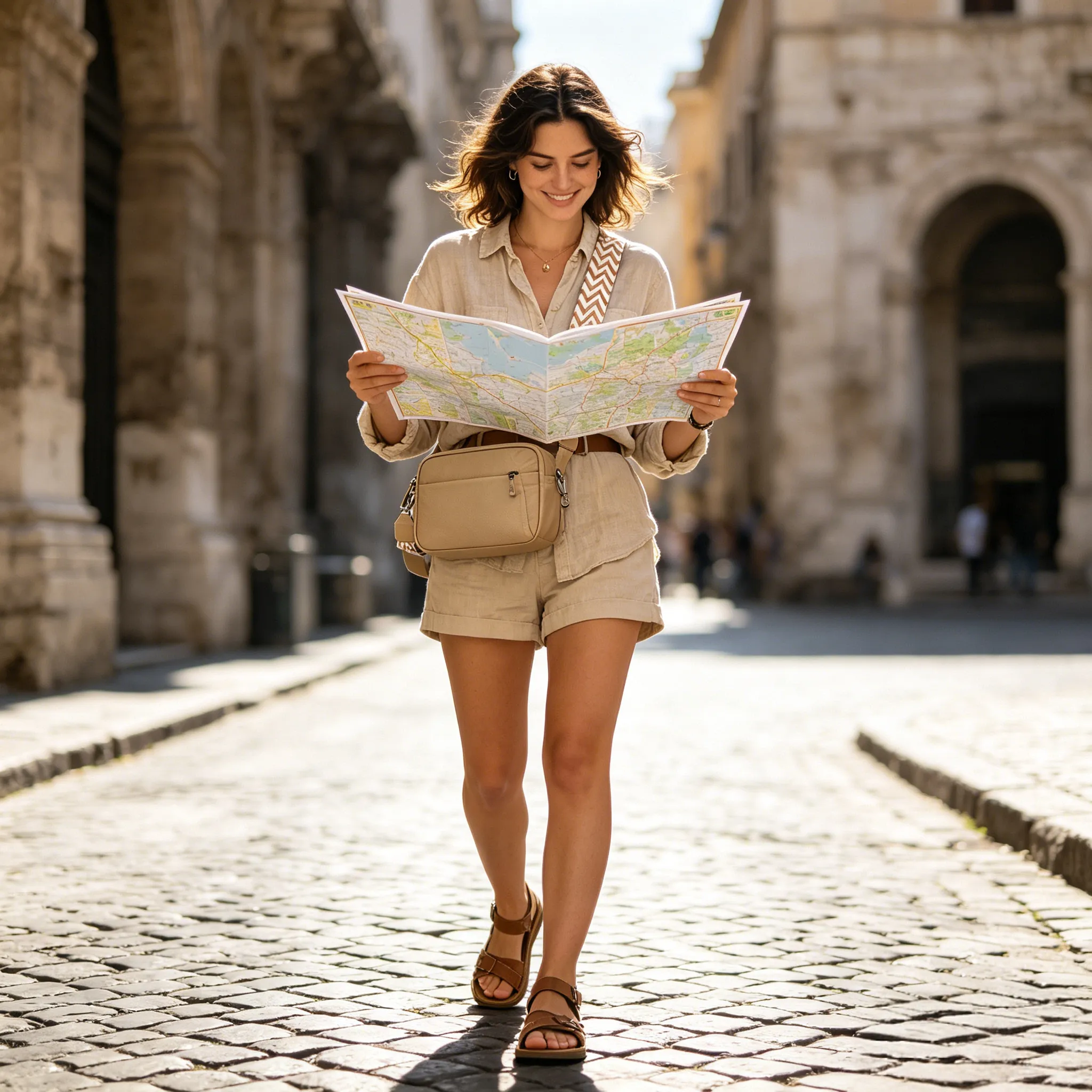
Woman with a crossbody bag sightseeing in a European city
Crossbody silhouettes typically favor PU leather for structure and finish.

Retail brands

Default to canvas for private-label programs — grocery totes, lifestyle merch, in-store exclusives. The economics are unbeatable for a reusable product that needs to survive hundreds of customer trips.

Beauty brands

Default to PU for cosmetic pouches, gift-with-purchase carriers, and elevated beauty boxes. PU gives the unboxing moment a luxury hand-feel that canvas struggles to match at small sizes.
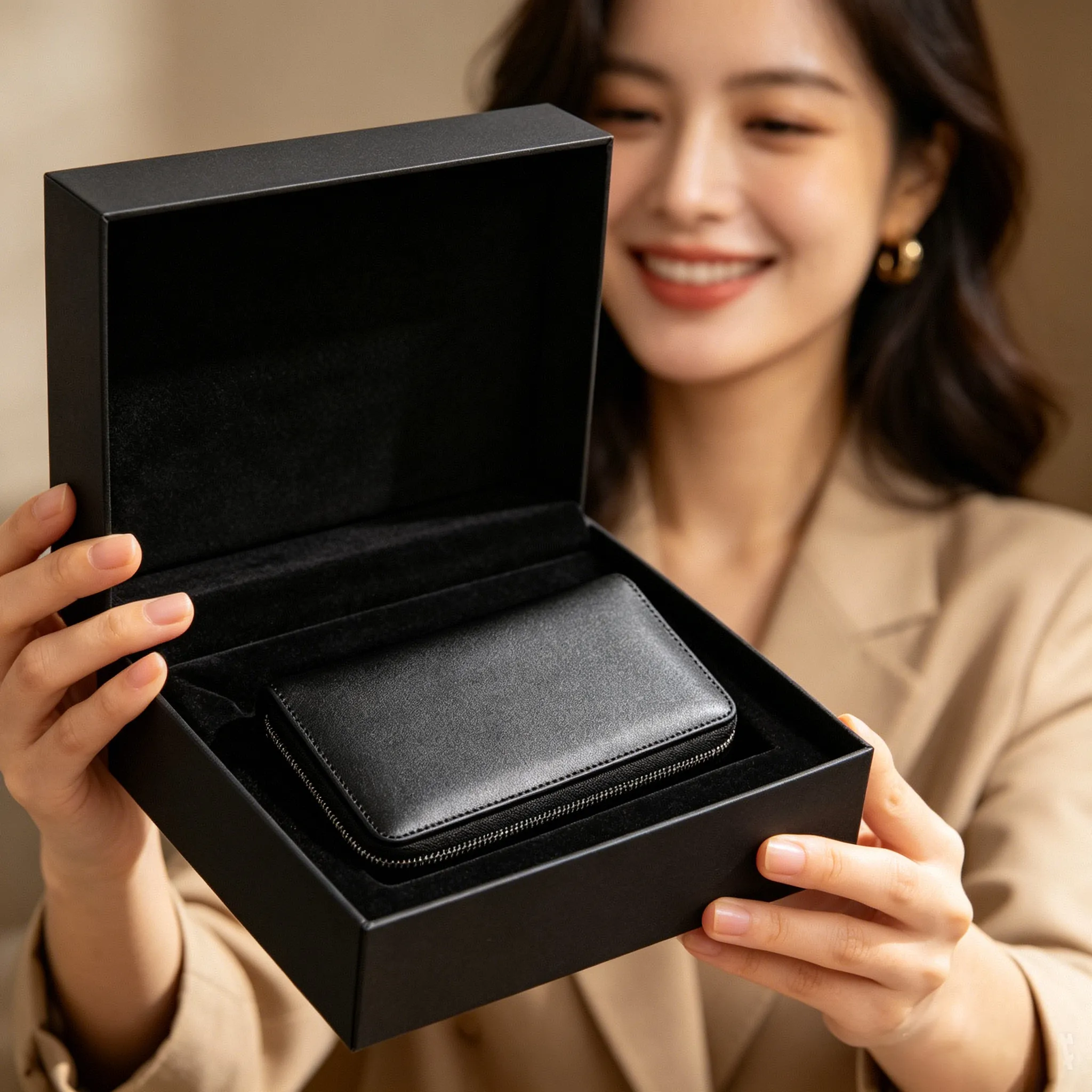
Premium gift unboxing scene for a women's wallet
Beauty and accessory gifting lean toward PU for the elevated unboxing moment.

Corporate gifts

Default to canvas for branded giveaways, conference swag, and employee welcome kits. Canvas signals sustainability, longevity, and substance — exactly the values corporate gifting programs want to communicate.

Outdoor brands

Default to PU-coated polyester or waxed canvas for hiking, cycling, and travel lines. Weight matters here. Durability matters more. Look for 600D+ polyester, bartacked seams, and weather-treated surfaces.
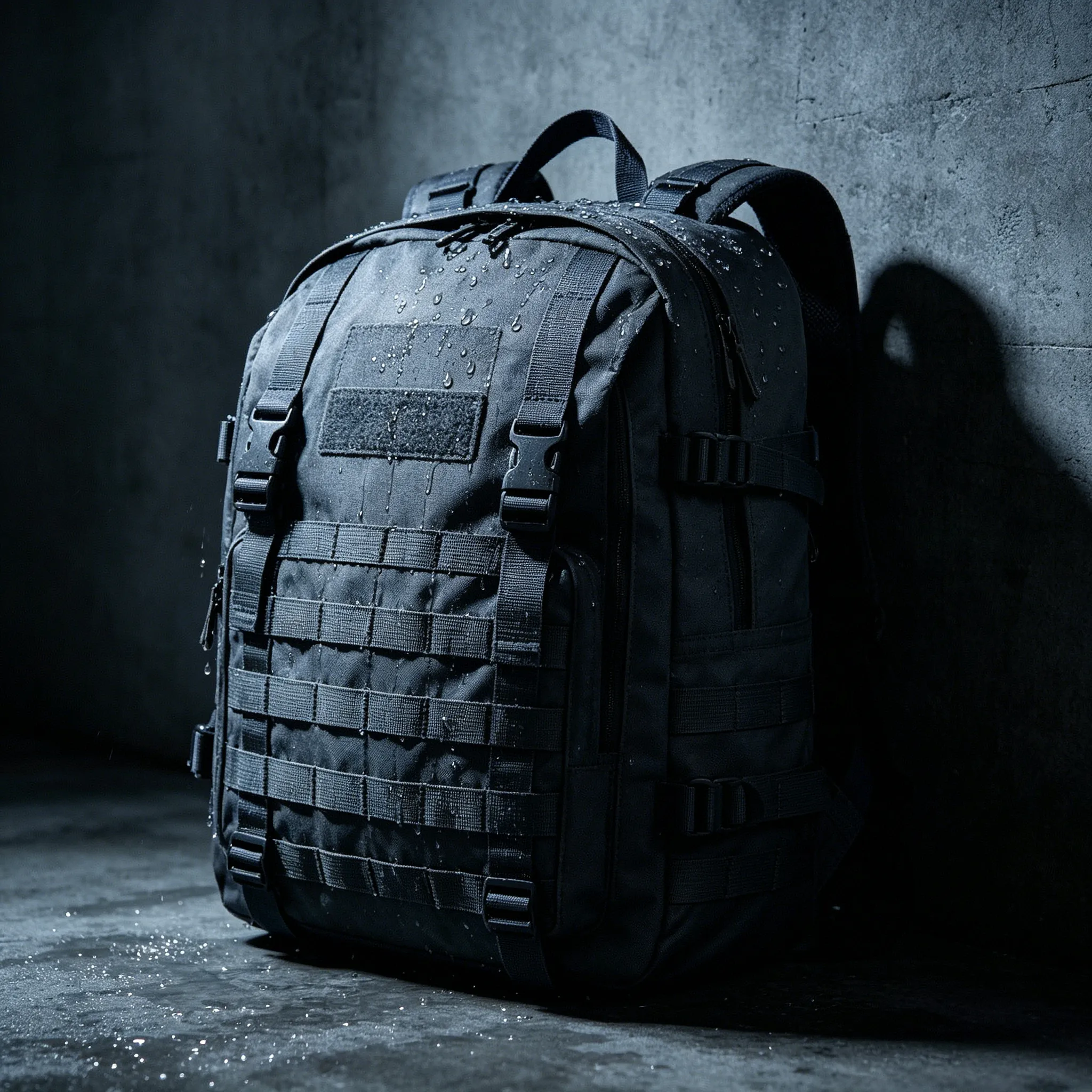
Backpack highlighting water-resistant materials
Outdoor-grade water resistance comes from PU or PVC coatings paired with sealed seams.

Travel brands

Default to PU or heavy canvas for luggage, duffels, and weekenders. PU offers structure and a leather aesthetic; heavy canvas offers heritage and durability. Both work — pick by brand story.

E-commerce brands

Default to canvas for shipping-friendly formats (totes, pouches) and PU for hero SKUs. Canvas folds flat and ships cheaply, which improves your unit economics. PU becomes worth its shipping cost when it is the headline product.

Private label

Default to canvas for the broadest private-label appeal — it photographs well, accepts virtually any print technique, and works across demographics. Add PU to your line only when your retail channel can absorb the higher price point.

For a focused comparison of the two most common retail fibers, see our Cotton vs Blended Canvas for Tote Bags guide.


Sustainability Comparison

Sustainability claims in the bag industry are notoriously slippery. Three honest benchmarks help cut through the noise:

  • Fiber source — recycled vs virgin, plant-based vs petroleum-based.
  • Process chemistry — water-based vs solvent-based coatings.
  • End-of-life — biodegradable, recyclable, or persistent.

Canvas

Cotton canvas, particularly organic or GOTS-certified, scores well on all three benchmarks: the fiber is plant-based and renewable, the processing is largely mechanical, and at end-of-life the bag will biodegrade in months under the right conditions. Hemp canvas is even stronger on sustainability — it requires minimal water and no pesticides.

Recycled polyester (rPET)

Recycled PET — typically sourced from post-consumer bottles and certified to GRS (Global Recycled Standard) — closes the loop on a waste stream that would otherwise persist for centuries. It is not perfect: rPET still sheds microplastics, and recycling rates remain low. But for any brand making a credible "post-consumer recycled" claim, GRS-certified rPET is the baseline.

Recycled and water-based PU

Conventional solvent-based PU is the worst performer on sustainability — high VOC emissions, petroleum-derived, and persistent at end-of-life. Two next-generation options change that picture:

  • Water-based PU cuts VOC emissions by more than 70% and produces a softer, more breathable surface. It is becoming the default at premium brands.
  • Recycled PU (GRS-certified) reprocesses post-industrial PU waste into new coated fabric, reducing virgin plastic input.

The trade-offs between these two next-gen options matter for any brand pursuing a serious sustainability strategy. Our guide on Water-Based PU vs Recycled PU walks through the production, performance, and pricing trade-offs in detail.

Sustainable circular economy lifecycle of an organic cotton dust bag
A circular lifecycle — from organic cotton to finished dust bag — is increasingly table stakes for premium buyers.

Factory Considerations Before Choosing Materials

Choosing a material on paper is one thing. Producing it consistently at scale is another. The items below are the conversations you should be having with your factory before you commit to a material — not after.
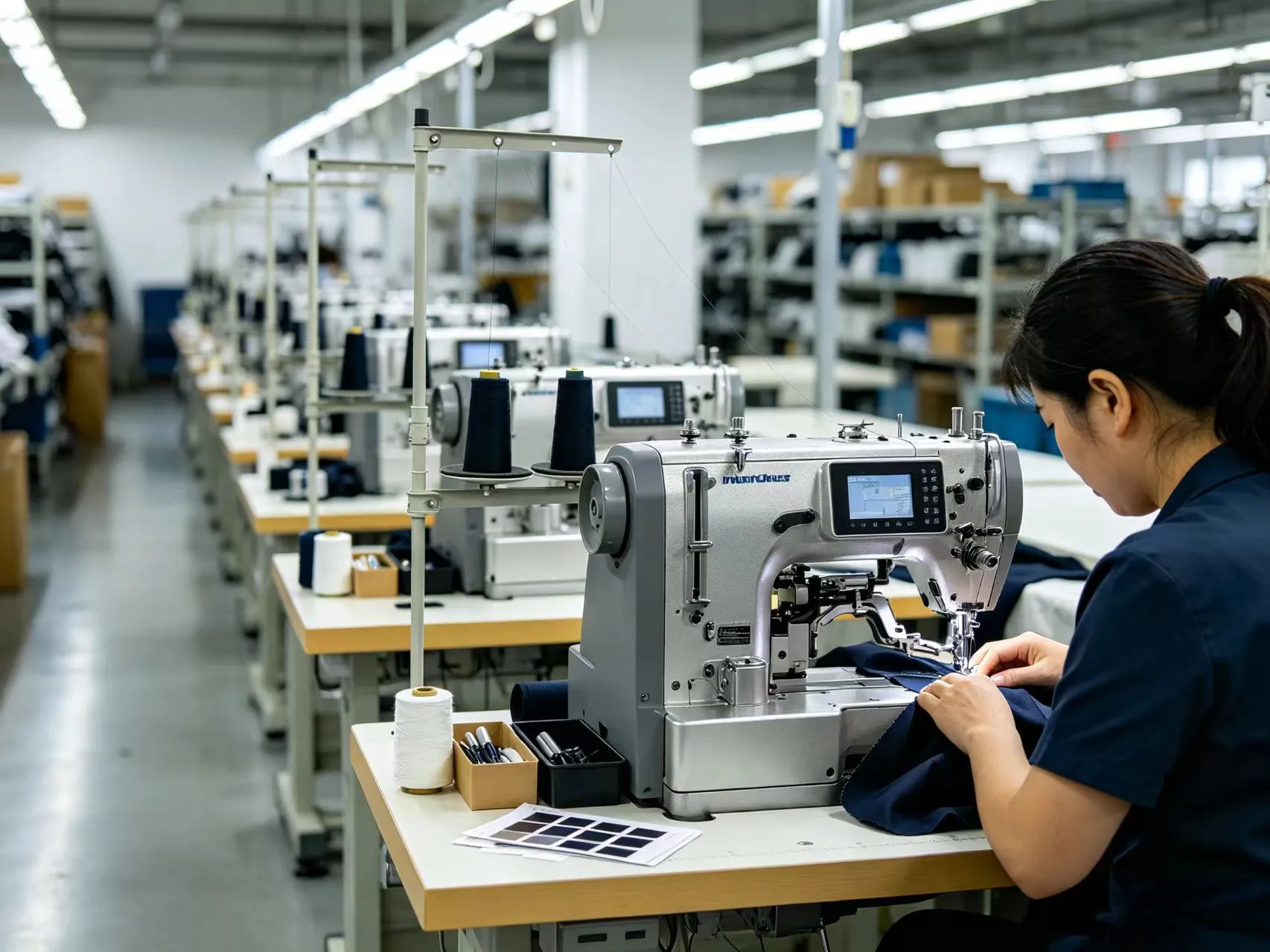
Advanced textile manufacturing equipment and skilled technicians at Dreamway factory
Production foundation: top-tier equipment and craftsmanship build a reliable capacity moat.
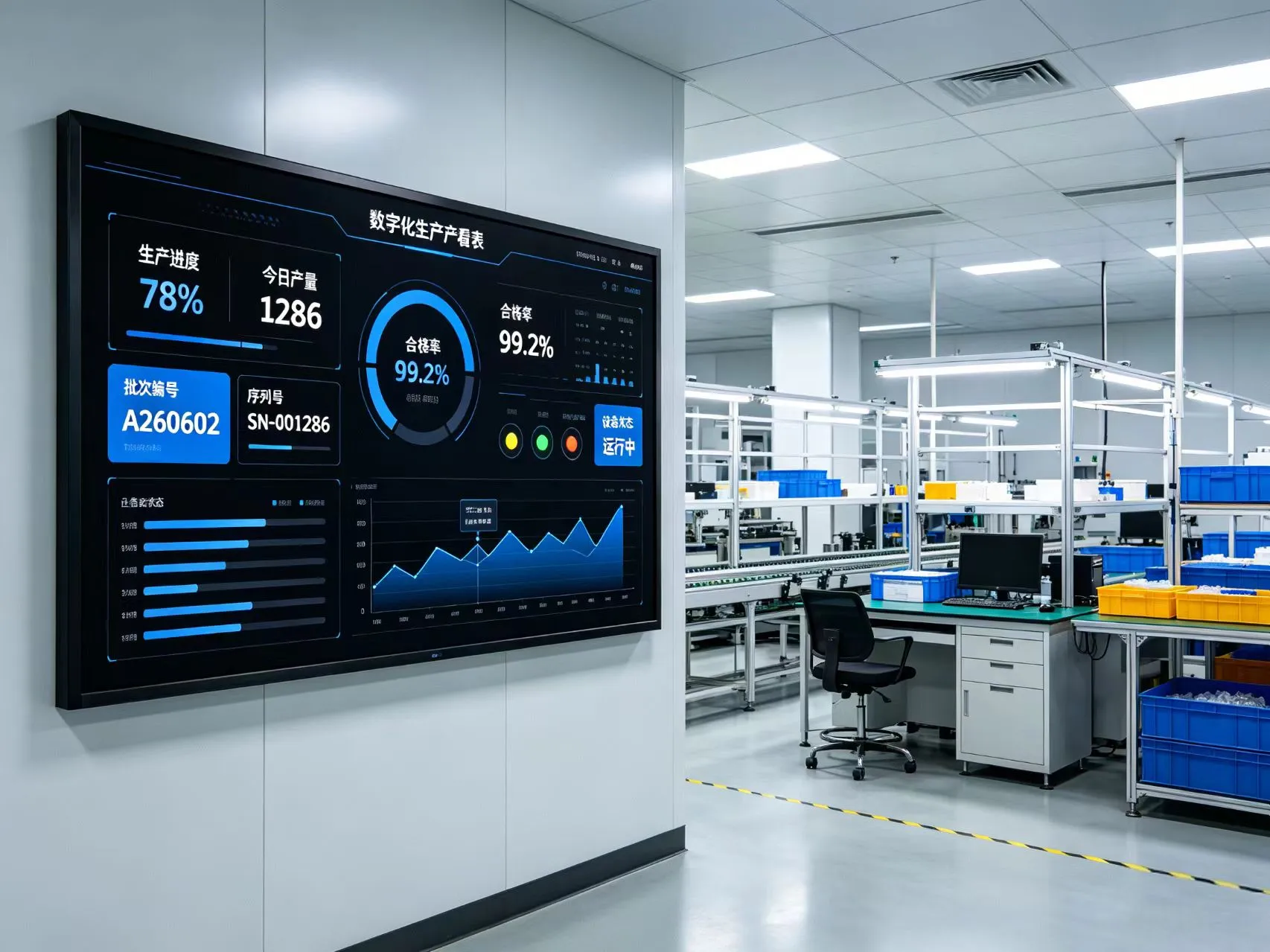
GZDreamway digital quality monitoring dashboard displaying real-time production data
Digital quality loop: MES-powered monitoring prevents risk at every step of production.

MOQ

Our standard handbag MOQ is 200 units; for silk pillowcases and accessories the MOQ drops to 50 units. Materials with longer sourcing lead times — recycled PU in custom colors, organic canvas in non-stock weights — typically require higher MOQs to absorb the mill setup cost.

Factory sales representative shaking hands with a satisfied overseas client
A signed contract and a satisfied handshake — the moment every successful sourcing relationship is built on.

Lead time

Plan for 25–40 days from confirmed PO to ex-factory for canvas and polyester programs. PU programs can stretch to 35–55 days due to longer material sourcing and coating lead times. Rush programs are possible but usually incur a 15–25% expedite fee.

Printing

Confirm printing compatibility with your factory before you finalize artwork. A logo designed for sublimation will look flat on canvas. An embroidery file designed for PU will pucker on lightweight polyester. Our canvas printing guide shows the artwork prep required for each canvas printing technique.

Sampling

Always request a pre-production sample. At Dreamway we produce a counter sample within 7–10 days of artwork approval, then a corrected golden sample within another 5–7 days. Both samples are photographed, dimensionally measured, and signed off before bulk production starts.
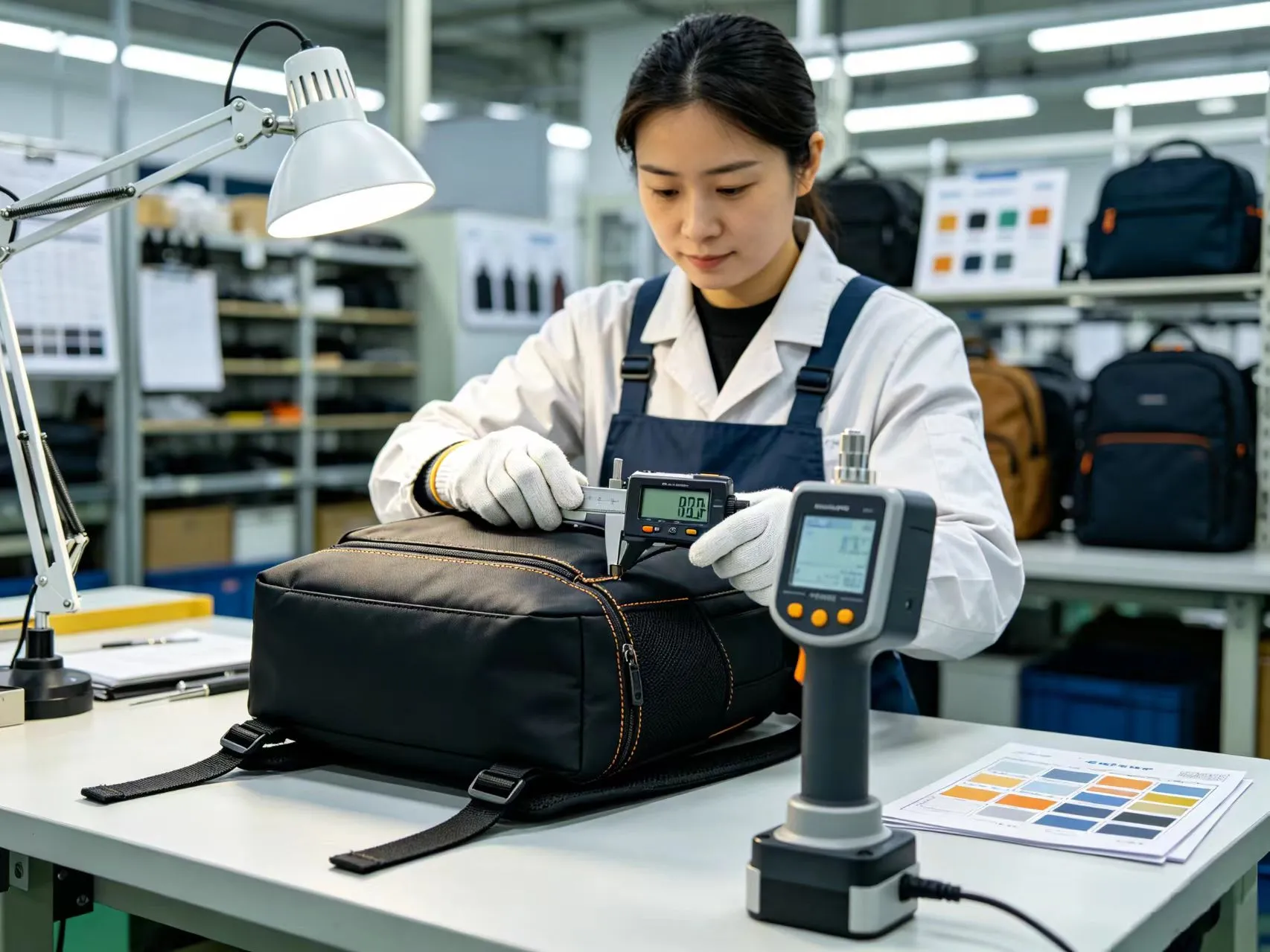
Key control point inspection on the factory production line
Process control: KCP checks at the sewing stage catch issues before assembly is complete.

Color matching

Color matching is the single most common source of disputes in bag production. Always provide a Pantone reference and confirm color under D65 light. For canvas, expect a 5–8% shade variance between lab dip and bulk production due to the natural fiber base. For polyester and PU, expect closer to 2–3% variance.
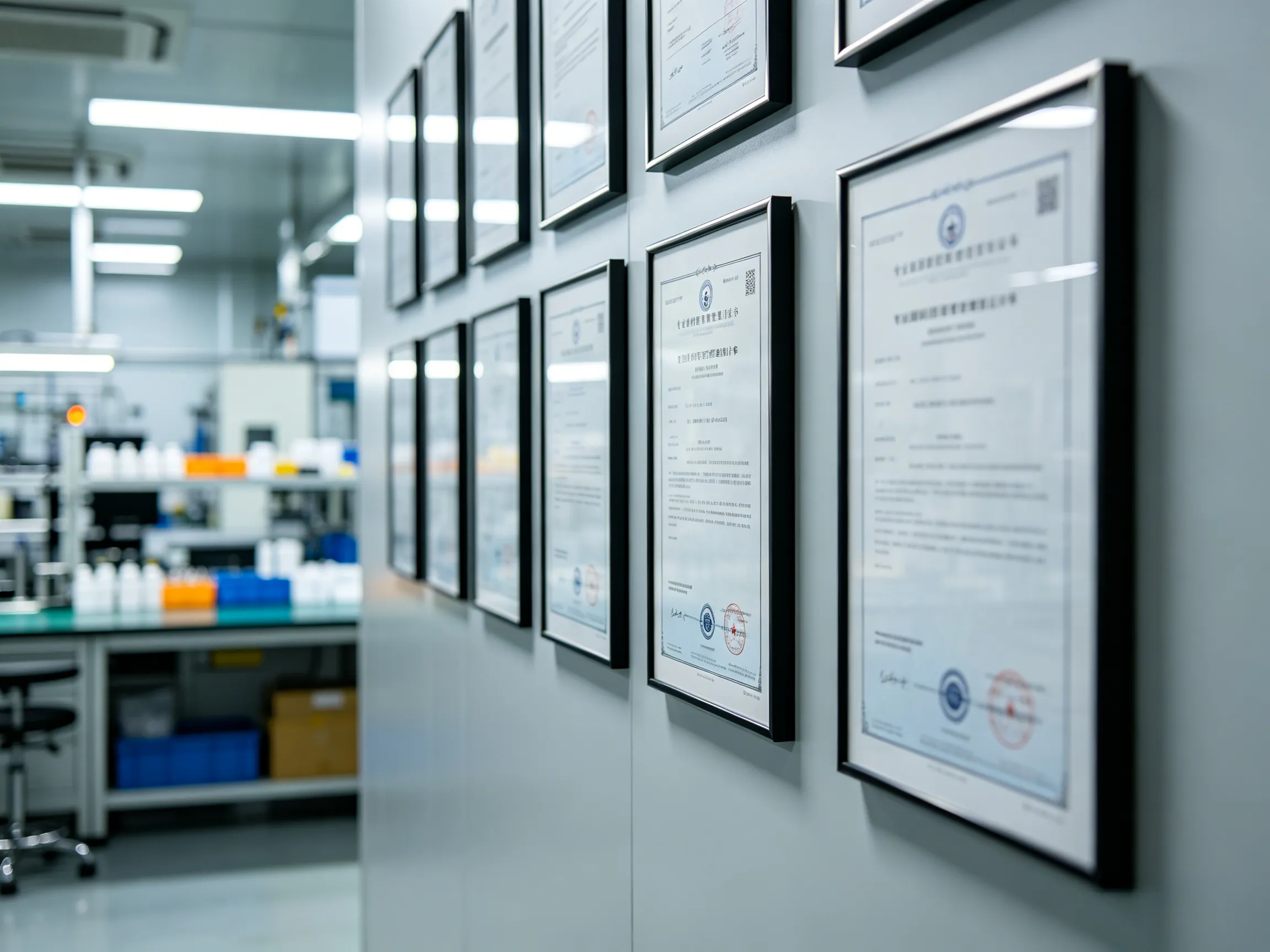
GZDreamway ISO and BSCI certification wall display
International certifications: ISO and BSCI compliance underpin every program we ship.

QC

On-site quality control is non-negotiable for any order above a few hundred units. At Dreamway we run AQL 2.5 inspections on all finished goods, plus inline KCP (Key Control Point) checks at cutting, sewing, assembly, and packing. Every shipment leaves with a unique serial number QR code label — part of our full-chain traceability system.
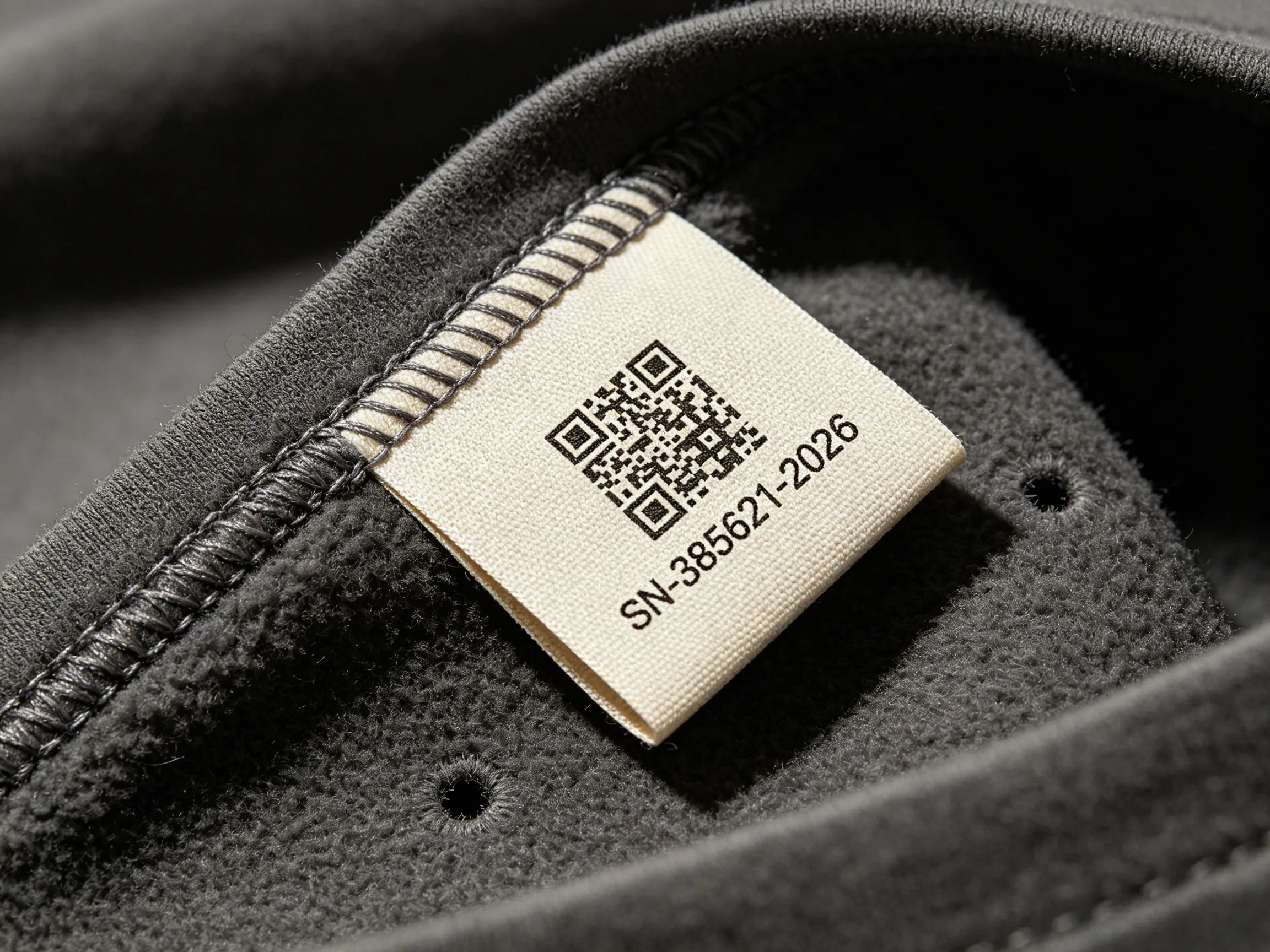
Internal QR-code traceability label sewn into a finished product
Full-chain traceability: every product carries a unique digital identity, ready for EU DPP-style compliance.
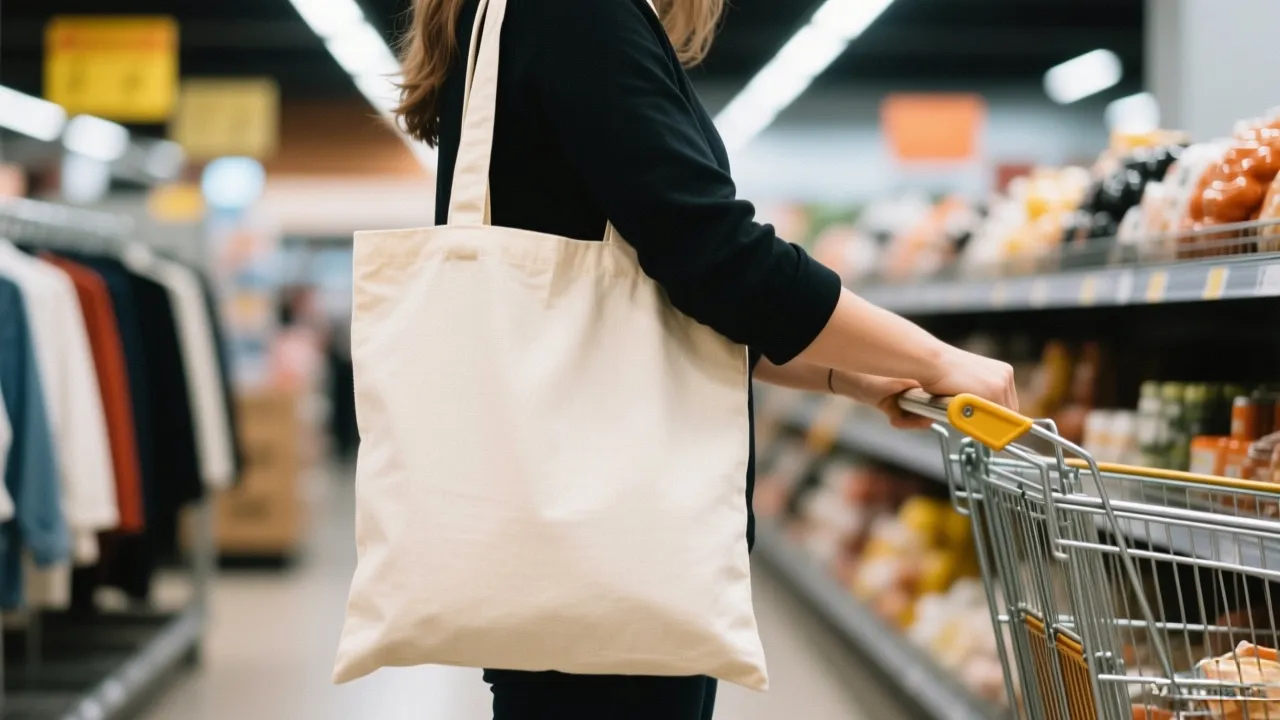
Canvas tote being used during supermarket grocery shopping
Reusable canvas shopping totes — the workhorse of grocery and retail bag programs.

Material availability

Stock materials can be cut within 48 hours. Custom materials — Pantone-dyed canvas, embossed PU, custom-coated rPET — require 15–30 days for mill production before factory cutting begins. Always confirm material availability before locking your production calendar.

From the QC bench — Kevin, Pattern Development Engineer
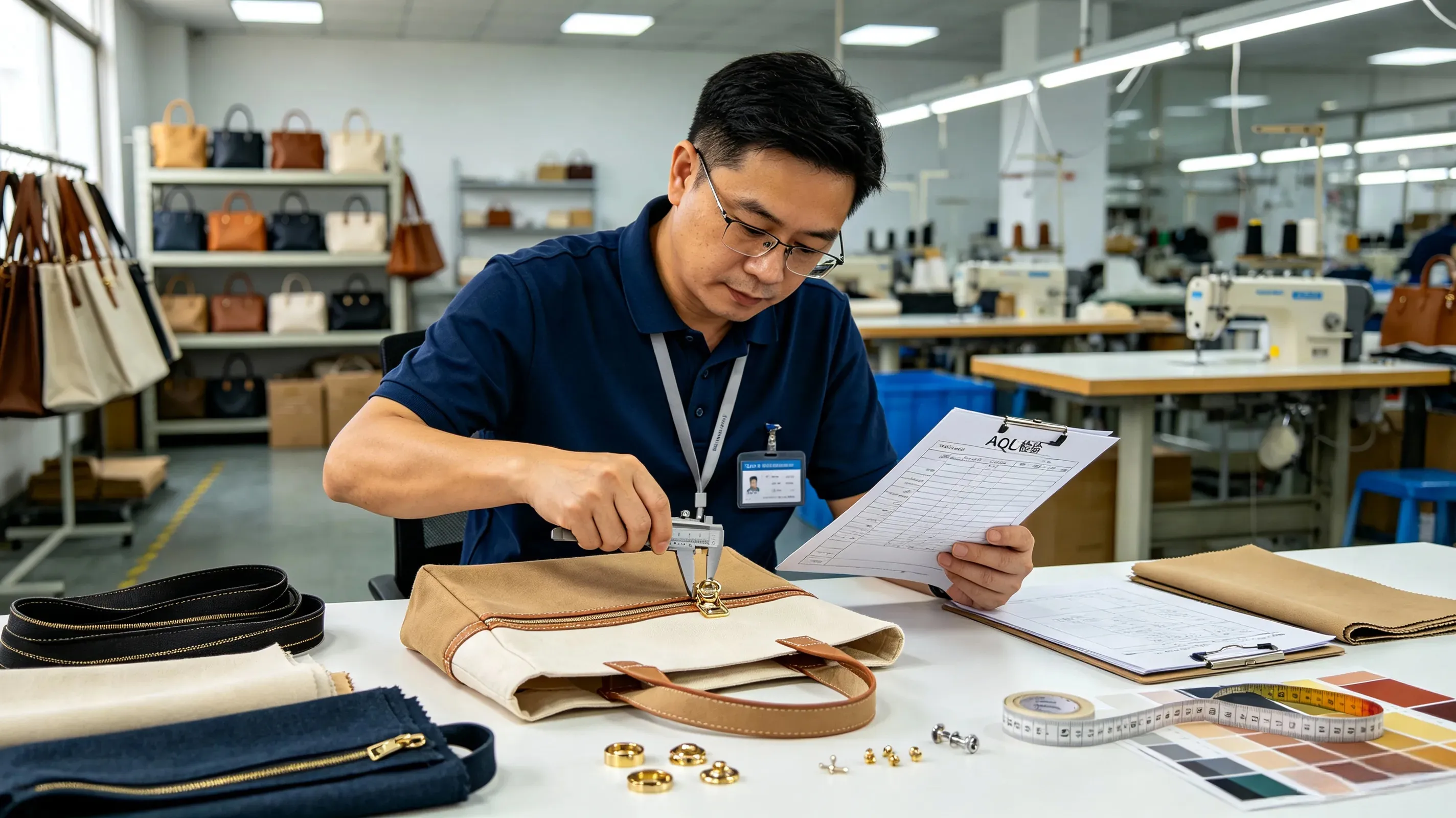
Kevin, Pattern Development Engineer at Dreamway

KevinPattern Development Engineer · 15 years in bag pattern making

"Two rolls of canvas can both be labeled 12 oz and behave completely differently. Fiber staple length, yarn twist density, weave tension, and pre-shrunk treatment all change how the bag performs. At incoming inspection we measure GSM, check yarn count under magnification, and run a wash test on a swatch. If the GSM is off by more than 5%, or the swatch shrinks more than 3%, we reject the lot before a single panel is cut. Material quality is decided at the fabric warehouse — not at the QC table."
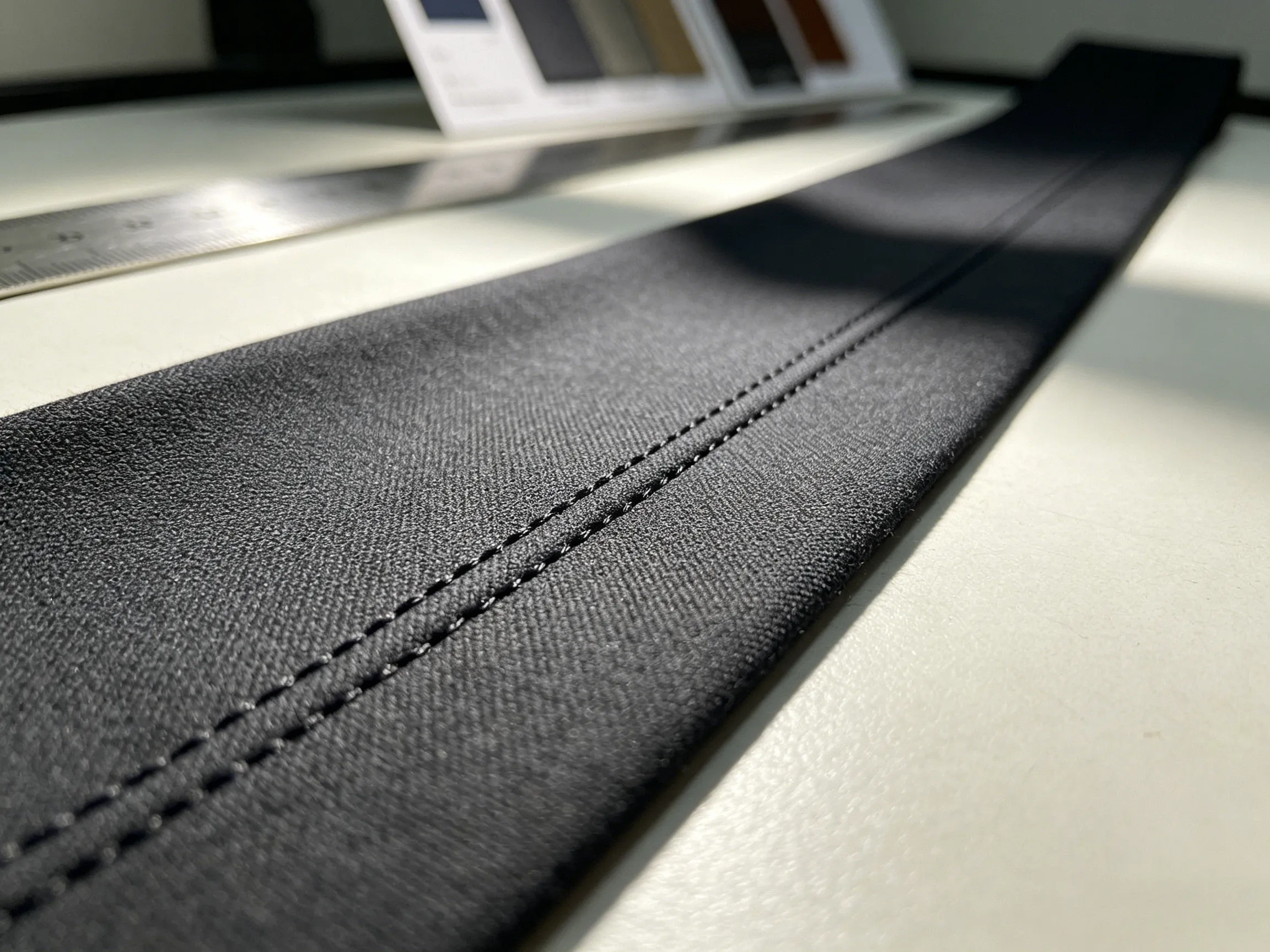
High-magnification detail of GZDreamway factory stitching quality
Microscope-grade precision: every stitch and seam is calibrated to exacting tolerances.
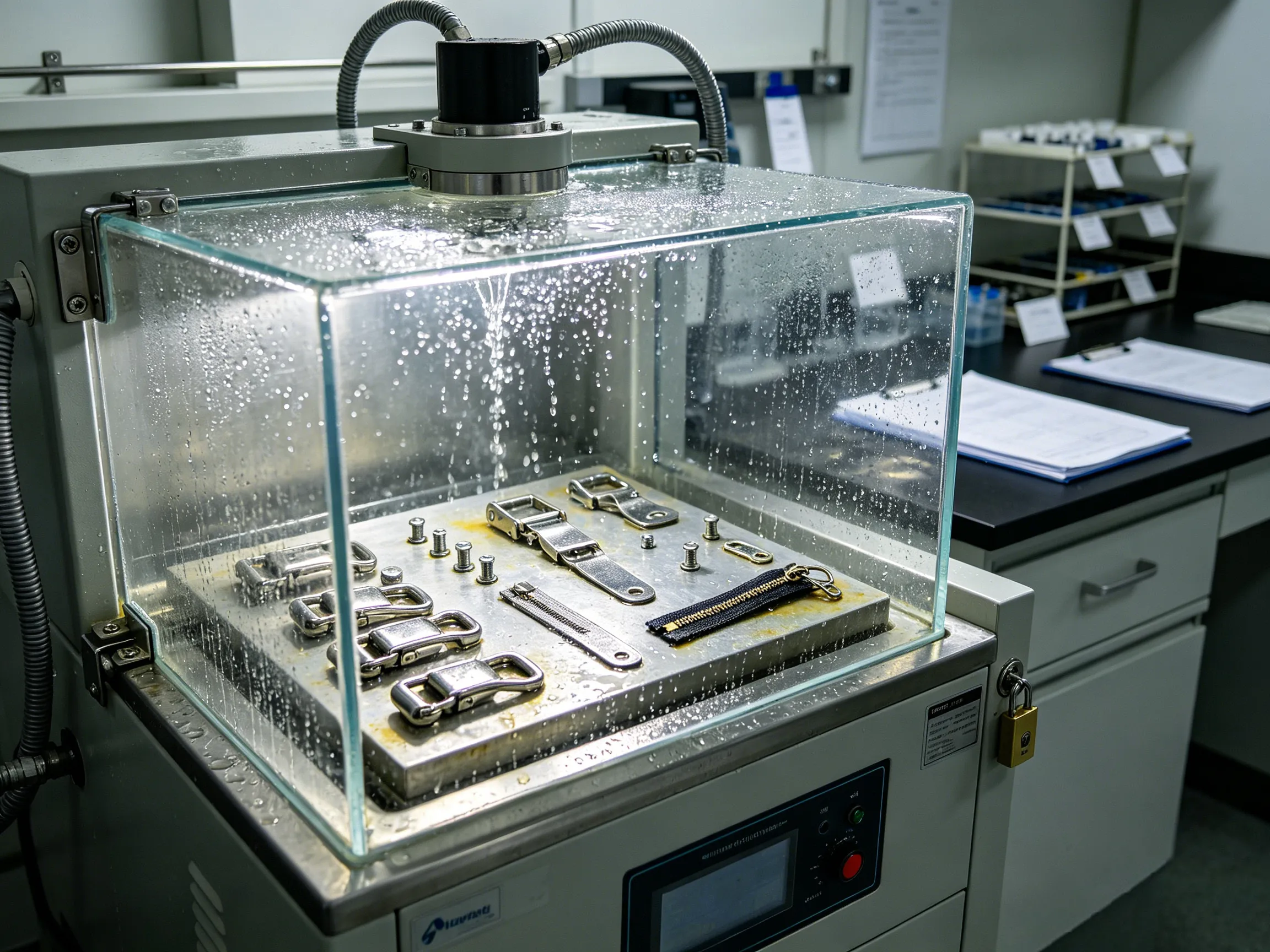
Salt-spray corrosion test on metal hardware in laboratory conditions
Hardware endurance: salt-spray testing validates corrosion resistance under extreme conditions.
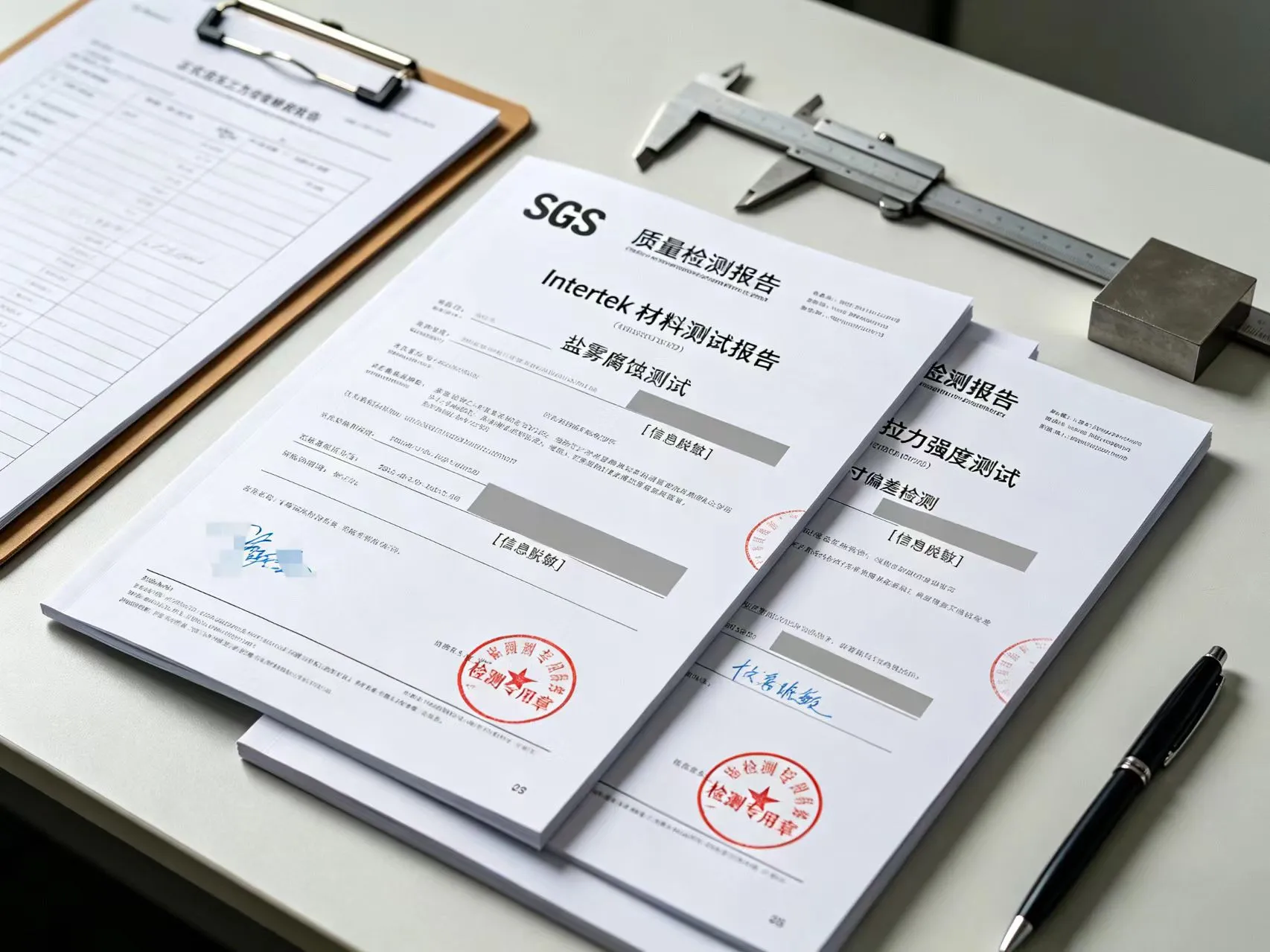
Professional third-party quality inspection report samples
Authoritative backing: third-party inspections welcomed on every shipment.
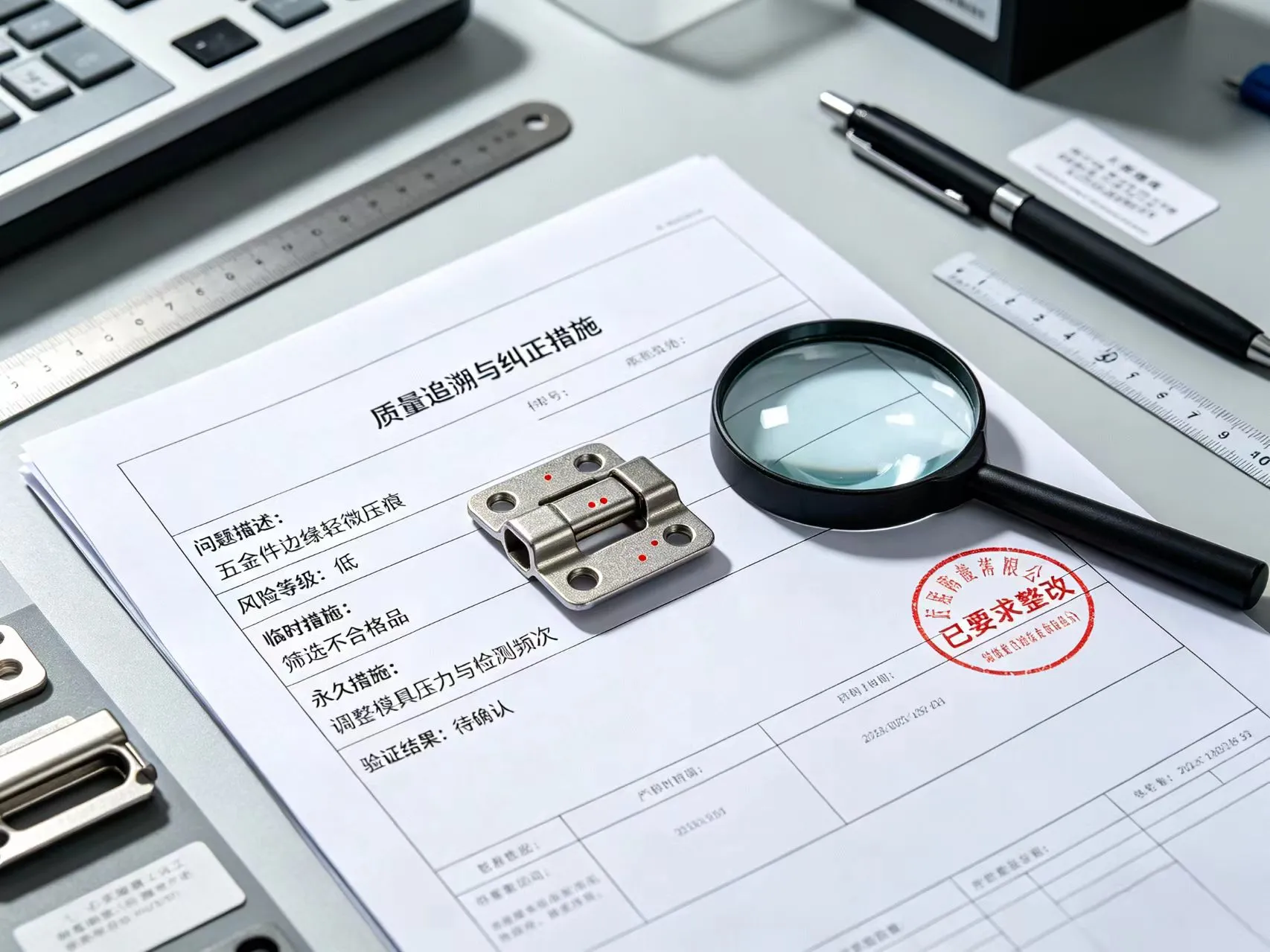
Corrective action report with red stamp and defective hardware sample under a magnifier
Respect for quality: defect analysis drives a closed-loop preventive system.
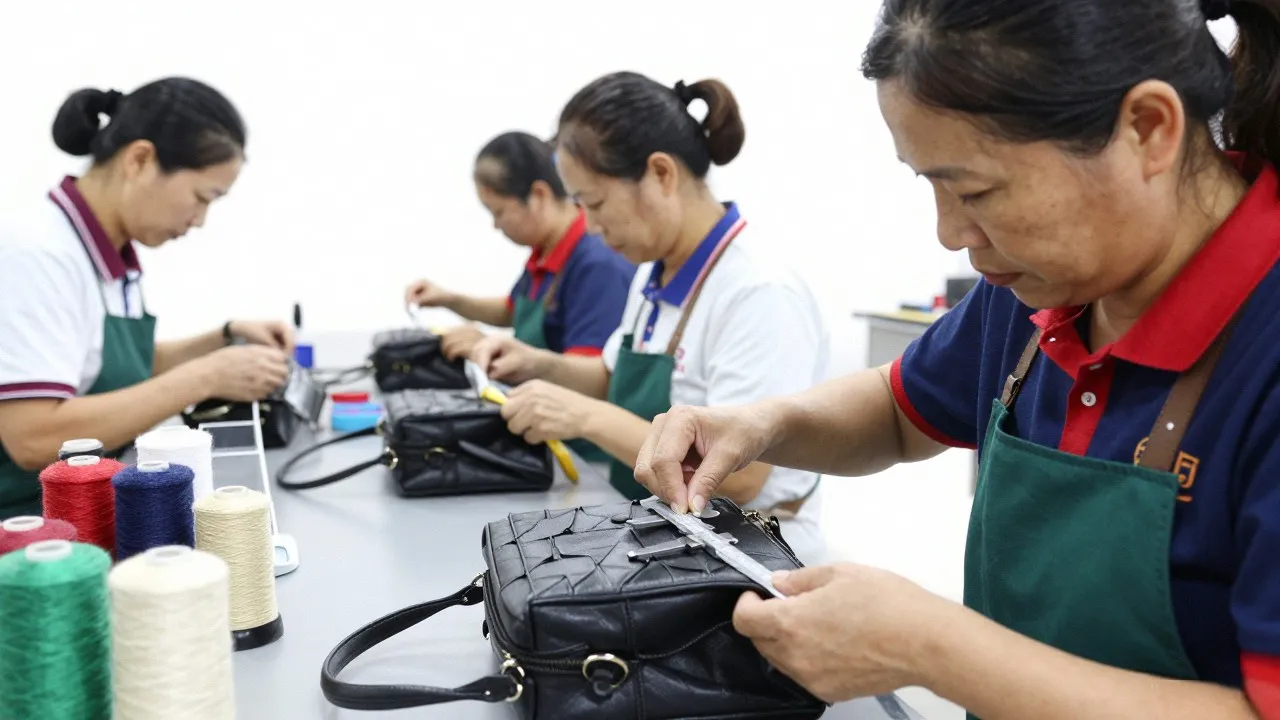
Factory quality inspector checking a finished handbag on the production line
Final QC at the packing table: every bag is inspected before it leaves the factory.

Common Buyer Mistakes (and How to Avoid Them)

After more than a decade of producing bags for global brands, we see the same handful of avoidable mistakes come up again and again. Share this list with anyone on your team who touches material sourcing.

Choosing purely on price

The cheapest quote often hides the most expensive outcome. A $0.40 per unit savings on a 5,000-unit run becomes meaningless if 8% of the bags arrive defective and need replacing. Compare landed cost, not unit cost.

Ignoring GSM

Two canvas bags at the same price can have wildly different structural integrity. Always specify GSM (or oz) and confirm it on the incoming material report. Our canvas weight guide shows the right GSM for each application.

Ignoring environmental regulations

The EU's PPWR (Packaging and Packaging Waste Regulation), REACH, and California's Prop 65 all impose real restrictions on materials, coatings, and chemicals. Selling into those markets without compliance documentation can mean seized inventory at port. Ask your factory for current compliance certificates before you commit.
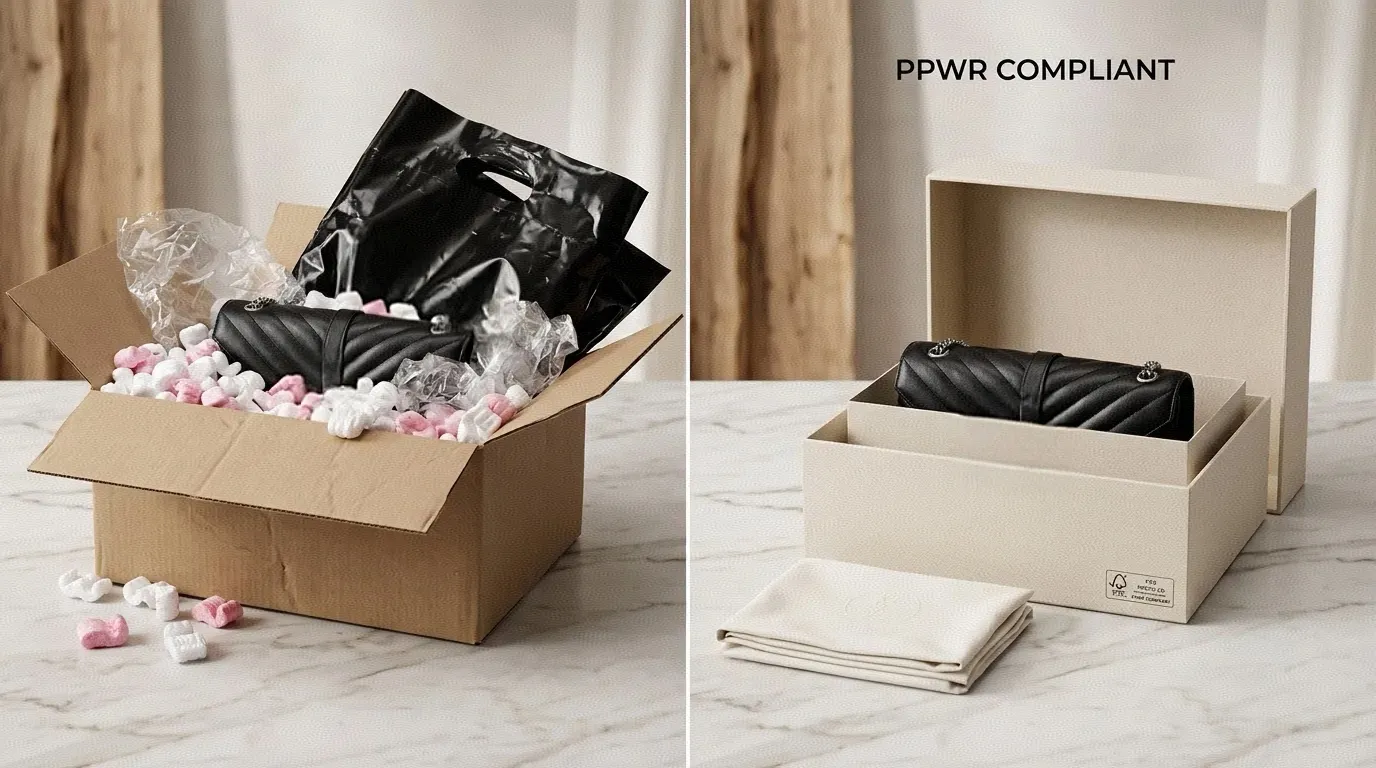
Visual comparison of EU PPWR compliant packaging versus wasteful packaging
PPWR compliance starts with smart material selection and minimalist packaging design.

Ignoring MOQ

Some factories quote materials they cannot actually source at the requested MOQ. The result is a forced minimum order increase after the artwork is already done. Confirm MOQ in writing, with a per-color breakdown where relevant.

Underestimating printing limitations

Your designer may deliver a beautiful six-color gradient file that is sublimation-perfect — but you have specified PU. Clarify printing technique at the material selection stage, not after artwork approval. The comparison guide maps printing techniques to each material.

Assuming PU is genuine leather

Some low-grade PU is sold as "leather" to unsuspecting buyers. Genuine leather has a fibrous back; PU has a fabric or paper back. If the claim matters for your marketing — and increasingly it does, under EU consumer protection rules — verify before you label.

Side-by-side comparison of cheap bag flaws versus refined bag craftsmanship
Side-by-side construction comparison — cheap bags fail at the seam; refined bags succeed at every detail.

Disclaimer Material performance varies depending on coating technology, fabric weight (GSM), manufacturing process, and supplier quality standards. The comparisons in this guide are based on common industry practices and are intended for educational purposes. Buyers should request samples and conduct product testing before mass production.

Frequently Asked Questions

Is canvas stronger than polyester?

Generally yes — a properly constructed 12 oz / 400 GSM canvas bag will outlast a similarly sized polyester bag under daily use. Polyester has improved significantly at 600D and above, but for long-term durability canvas remains the strongest mainstream choice.

Is PU waterproof?

PU leather is fully waterproof on its coated surface, though seams, zippers, and stitch holes remain weak points. Polyester is water-resistant but not waterproof. Canvas is neither, unless treated with a PU/PVC backing or waxed finish.

Which material lasts longer?

Canvas typically lasts 5–10 years with reasonable care. PU lasts 2–5 years on average, with high-quality water-based PU at the upper end and lower-grade PU delaminating within 12–18 months in humid climates. Polyester lasts 2–5 years depending on denier and use intensity.

Which material is eco-friendly?

Organic or recycled cotton canvas is the most environmentally friendly baseline option. GRS-certified rPET polyester is the best synthetic choice. Water-based PU is the most responsible PU option, while conventional solvent-based PU is the least eco-friendly of the three.

Can PU crack?

Yes. Lower-grade PU cracks within 12–24 months, especially in cold or dry conditions. Higher-grade water-based PU and hydrolysis-resistant formulations resist cracking significantly better. Proper storage — away from direct sunlight and extreme temperatures — extends PU lifespan considerably.

Which material is best for tote bags?

Mid-weight canvas (10–12 oz / 280–340 GSM) is the best all-around tote material — durable, printable, sustainable, and cost-effective. Our Custom Canvas Tote Bags Manufacturer page covers weights and pricing in detail.

Which material is best for cosmetic bags?

PU leather (or PU-coated canvas) is the best cosmetic bag material because it is wipe-clean, leak-resistant, and provides the premium shelf appeal that beauty buyers expect. Lined PU keeps spilled product from soaking into the bag body.

Which material is easiest to print?

Polyester is the easiest to print overall — especially via sublimation, which produces vibrant, photographic results with no setup cost per color. Canvas is the easiest natural-fiber material to print, taking screen, DTF, heat transfer, and embroidery cleanly.

Which material feels most premium?

PU leather, especially in smooth nappa or structured Saffiano grain, feels the most premium of the three. Heavy canvas (14+ oz / 400+ GSM) delivers a premium artisanal feel — different from PU, but equally premium in its own aesthetic.

Is recycled PU better?

Recycled PU (GRS-certified) is a meaningful improvement over virgin PU because it diverts post-industrial waste from landfill. However, it is still petroleum-derived and not biodegradable. For maximum sustainability impact, water-based PU is generally considered the better next-generation choice. We compare the two in this guide.

Can canvas be waterproof?

Yes — through PU or PVC backing, or through a waxed-canvas finish. Treated canvas can reach near-waterproof performance, though it loses some breathability in the process. Our canvas materials guide explains the trade-offs between coated and uncoated canvas.

Which material is cheapest?

Polyester is the cheapest per unit, typically 20–40% below canvas at equivalent construction. Canvas is mid-range. PU is the most expensive at the premium tier, though commodity PU can overlap with the upper end of canvas pricing.


Need help matching a material to your next bag program? Our sales team in Guangzhou works with brands in 50+ countries — from first sample to mass production.

Visit Dreamway → Email Our Team →

This is the Hub article of the Dreamway Bag Material Guides series. Continue with our Canvas Fabric Weight Guide, the Canvas vs Polyester vs PU comparison, or our Water-Based PU vs Recycled PU breakdown.

Customer Reviews86 Reviews

سميرة الأزهري2026-06-21
قرأت المقال بحرص وأجهز خط إيكو توت لأسواق الخليج ودبي، لكن لازلت مترددة بين 600D مقاوم للماء وكانفاس عضوي DWR+laminate. المورد السابق أرسل PU جامد وفتحت الخياطة بعد أشهر—مزاجي مضطرب قليلاً بسبب الجودة. أبحث عن handbag factory Dubai أو eco bag manufacturing UAE تستطيع إرسال technical sample kit (تقرير Martindale، OEKO‑TEX/REACH)، وخرائط bartack، مواصفات double stitch وhot‑melt seam tape، وطرق طباعة متينة (sublimation، UV + varnish، reinforced screen printing)، مع MOQ صغير 100–300 للدفعات الصغيرة والتصدير إلى أوروبا؛ هل لديكم نصائح عملية لسوق الخليج والرطوبة الساحلية؟
GZDreamway2026-06-21
شكرًا سميرة على شرحك المفصّل — نفهم انزعاجك من PU الجامد وفتح الخياطة. بالنسبة لسوق الخليج والرطوبة الساحلية ننصح عادةً بـ recycled 600D waterproof للحفاظ على الشكل والجفاف السريع؛ أما DWR+laminated organic canvas فهو خيار بريميوم إيكو لكن يفضل إضافة stiffener panels أو بطانة لامينيت للحفاظ على الاستقرار. لحل مشكلة PU الصلب نستخدم soft microfiber PU مع معالجة anti‑hydrolysis وpass نهائي للتليين، وبروتوكول خياطة صارم: double stitching على الخياطة الرئيسية (stitch pitch 2.5–3.5 mm)، bartacks في نقاط التحميل (10–12 mm، نمط X/T)، hot‑melt seam tape داخلي (10–20 mm) وخيط high‑tenacity (T70–T90). حزمة الـtechnical sample kit التي نرسلها لمصنع حقائب دبي / eco bag manufacturing UAE تتضمن: تقارير Martindale (عادة 25k–40k cycles حسب السوبسترات)، اختبارات شد/احتكاك، اختبارات bartack pull، شهادات OEKO‑TEX/REACH، خريطة مواضع bartack وقائمة QC ما قبل الشحن. للطباعة: dye‑sublimation للألواح النسيجية، UV + varnish لقطع PU، وreinforced screen printing + topcoat للكانفاس. MOQ واقعي للـsmall‑batch غالبًا 100–300 وحدة (التشطيبات المعقدة قد ترفع الحد)؛ زمن إعداد العينات ~2–3 أسابيع بعد تأكيد المواصفات. إذا توافقتِ، أرسلي لنا الحمل المتوقع لكل حقيبة، طريقة الطباعة المفضلة ونطاق السعر المستهدف وسنجهز لكِ sample kit مخصصًا وعرضًا لتجربة pilot run من handbag factory Dubai / small‑batch tote manufacturing Dubai مع بروتوكول QC لضمان عدم تكرار مشاكل الخياطة.

Dear Samira — thank you for the detailed brief. We understand your frustration with stiff PU and seam failures. For Gulf markets and coastal humidity we typically recommend recycled 600D waterproof for superior shape retention and fast drying; DWR + laminated organic canvas is a premium eco option but usually needs internal stiffener panels or a laminated lining for dimensional stability. To prevent stiff PU issues we use soft microfiber PU with anti‑hydrolysis treatment and a final softening pass, combined with a strict sewing protocol: double stitching on main seams (stitch pitch 2.5–3.5 mm), bartacks at load points (10–12 mm, X/T pattern), internal hot‑melt seam tape (10–20 mm) and high‑tenacity thread (T70–T90 equivalent). Our technical sample kit for a handbag factory Dubai / eco bag manufacturing UAE package includes Martindale reports (typical 25k–40k cycles depending on substrate), tensile/abrasion and bartack pull tests, OEKO‑TEX/REACH certificates, a bartack placement map and a pre‑shipment QC checklist. Durable printing guidance: dye‑sublimation for textile panels, UV printing + varnish for PU trims, and reinforced screen printing + topcoat for canvas. Realistic small‑batch MOQ is usually 100–300 units (complex finishes may raise MOQ); sample lead time ~2–3 weeks after spec confirmation. Please send expected bag load, preferred printing method and target price band and we will prepare a tailored technical sample kit and a pilot run proposal from our handbag factory Dubai / small‑batch tote manufacturing Dubai program to validate performance in Gulf coastal conditions.
Leah Thornton2026-06-18
I'm launching a small coastal boutique tote line for Brighton/London and still torn between recycled 600D waterproof polyester and DWR‑laminated organic canvas. My last supplier sent very stiff PU and the seams split after a few months — quite upsetting. Looking for a handbag factory London or small-batch eco tote manufacturing UK that can send a technical sample kit (Martindale report, OEKO‑TEX/REACH), bartack placement map, double stitch specs, hot‑melt seam tape details and durable printing options (dye‑sublimation, UV + varnish, reinforced screen printing). Also need realistic MOQ 100–300 for coastal retail and Amazon beach shop listings.
GZDreamway2026-06-20
Thanks Leah — sorry to hear about the stiff PU and seam failures, that’s frustrating and common without the right specs. For Brighton/London coastal retail we normally recommend recycled 600D waterproof polyester for best shape retention and fast drying; DWR + laminated organic canvas is a premium eco choice but we advise internal stiffener panels or a laminated lining to keep structure. To eliminate stiff‑PU seam splits we use soft microfiber PU with anti‑hydrolysis treatment and a final softening pass, and enforce a sewing protocol: double stitching on main seams (stitch pitch 2.5–3.5 mm), bartacks at load points (10–12 mm, X/T pattern), internal hot‑melt seam tape (10–20 mm) and high‑tenacity thread (T70–T90 equivalent). Our technical sample kit includes Martindale reports (typ. 25k–40k cycles), tensile/abrasion and bartack pull tests, OEKO‑TEX/REACH certificates, a bartack placement map and a pre‑shipment QC checklist. Durable printing guidance: dye‑sublimation for textile panels, UV printing + varnish for PU trims, and reinforced screen printing + topcoat for canvas. Realistic small‑batch MOQ for UK boutique testing and Amazon/wholesale is 100–300 units (complex finishes may raise MOQ); sample lead time ~2–3 weeks after spec confirmation. If you send target bag load, preferred printing method and target retail price band we’ll prepare a tailored technical sample kit and a pilot run with reinforced seams from our handbag factory London / small‑batch eco tote manufacturing UK program to validate in coastal retail conditions.
Lucienne Moreau2026-06-18
Je prépare une micro‑collection de tote bags pour des boutiques à Paris et sur la côte Atlantique, et je suis encore tiraillée entre 600D recyclé waterproof et canvas bio DWR+laminé. Mon dernier fournisseur a livré un PU trop rigide et les coutures se sont ouvertes au bout de quelques mois — assez décevant. Je cherche une usine sacs éco France ou un fabricant tote bags Paris qui puisse envoyer un kit d'échantillons techniques (rapport Martindale, OEKO‑TEX/REACH), plans de renfort couture (bartack, double couture, hot‑melt seam tape), options d'impression durables (sublimation, UV + vernis, sérigraphie renforcée + topcoat) et un MOQ réaliste 100–300 pour un small‑batch retail. Avez‑vous des conseils pratiques pour garantir tenue en zone côtière et éviter la rigidité du PU ?
GZDreamway2026-06-18
Merci Lucienne — très bon brief orienté boutiques Paris / côte Atlantique. Pour garantir tenue et résistance à l'humidité côtière nous recommandons souvent le recycled 600D waterproof pour small‑batch retail (excellente tenue de forme et séchage rapide) ; le canvas bio DWR+laminé est excellent pour une image premium éco mais nécessite panneaux internes ou doublure laminée pour la stabilité dimensionnelle. Pour éviter la rigidité du PU et l'ouverture des coutures, notre solution technique est l'emploi de microfibre PU souple avec traitement anti‑hydrolyse et une étape finale d'assouplissement, combinée à notre protocole de couture : double couture sur les coutures principales (stitch pitch 2.5–3.5 mm), bartacks aux points de charge (10–12 mm, motif X/T), hot‑melt seam tape interne (10–20 mm) et fil haute ténacité (équivalent T70–T90). Dans le kit d'échantillons techniques nous incluons rapports Martindale (range 25k–40k selon substrat), essais traction/abrasion et certificats OEKO‑TEX/REACH, plus une carte de positionnement des bartacks et une check‑list QC pré‑expédition. Pour l'impression durable : dye‑sublimation pour panneaux textiles, UV + vernis pour finitions PU, sérigraphie renforcée + topcoat pour canvas. MOQ réaliste pour small‑batch et test boutique en France : 100–300 unités (finitions complexes peuvent augmenter le MOQ) ; délai d'échantillon ~2–3 semaines après confirmation des spécifications. Si vous m'indiquez charge cible par sac, méthode d'impression et fourchette de prix, nous préparons un kit sur‑mesure depuis notre usine sacs éco France et proposons un pilote avec coutures renforcées pour éliminer la récurrence des ruptures de couture.

Thank you Lucienne — excellent, market‑focused brief for Paris and the Atlantic coast. To ensure shape retention and coastal moisture resistance we typically recommend recycled 600D waterproof polyester for small‑batch retail (strong structure, quick drying); DWR plus laminated organic canvas is a premium eco choice but usually requires internal stiffener panels or a laminated lining for dimensional stability. To prevent stiff‑PU and seam failures our technical fix is soft microfiber PU with anti‑hydrolysis treatment and a final softening stage, combined with our sewing protocol: double stitching on main seams (stitch pitch 2.5–3.5 mm), bartacks at load points (10–12 mm, X/T pattern), internal hot‑melt seam tape (10–20 mm) and high‑tenacity thread (T70–T90 equivalent). The technical sample kit we provide includes Martindale reports (25k–40k cycles depending on substrate), tensile/abrasion tests and OEKO‑TEX/REACH certificates, plus a bartack placement map and a pre‑shipment QC checklist. Durable printing: dye‑sublimation for textile panels, UV + varnish for PU trims, and reinforced screen printing + topcoat for canvas. Realistic small‑batch MOQ for French boutique testing: 100–300 units (complex finishes may raise MOQ); sample lead time ~2–3 weeks after spec confirmation. Send target bag load, preferred printing method and price band and we will prepare a tailored technical sample kit from our eco bag factory in France and offer a reinforced pilot run to eliminate seam failures.
Vitória Campos2026-06-17
Estou a desenvolver ecobags para lojas de praia e e‑commerce no Brasil e ainda estou indecisa entre recycled 600D waterproof e canvas orgânico DWR+laminado. O meu último fornecedor enviou PU muito rígido e as costuras abriram em poucos meses — fiquei chateada com a qualidade. Preciso de uma fábrica de bolsas Brasil que envie um kit de amostras técnicas (relatório Martindale, OEKO‑TEX/REACH), detalhamento de reforços de costura (bartack, double stitch, hot‑melt seam tape), opções de impressão duráveis (sublimação, UV + verniz, serigrafia com topcoat) e confirmação se MOQ 100–300 é viável para small‑batch e exportação; alguém pode aconselhar soluções para clima tropical e vendas em lojas de praia?
GZDreamway2026-06-19
Obrigada Vitória — sentimos muito pela experiência com o PU rígido e pelas costuras que abriram; compreendemos a frustração. Para clima tropical e exposição a salitre recomendamos normalmente recycled 600D waterproof por retenção de forma e secagem rápida; o canvas orgânico DWR+laminado é ótimo para posicionamento premium eco, mas costuma exigir painéis internos ou forro laminado para estabilidade dimensional. Para evitar PU rígido usamos soft microfiber PU com tratamento anti‑hydrolysis e uma etapa final de softening; na costura aplicamos double stitch nas linhas principais (stitch pitch 2.5–3.5 mm), bartacks nos pontos de carga (10–12 mm, padrão X/T), hot‑melt seam tape interno (10–20 mm) e fio high‑tenacity (equivalente T70–T90). O kit técnico que fornecemos inclui relatórios Martindale (tipicamente 25k–40k ciclos conforme substrato), testes de tração/abrasão e certificados OEKO‑TEX/REACH, além de mapa de posicionamento de bartacks e checklist QC pré‑embarque. Para impressão durável recomendamos dye‑sublimation para painéis têxteis, UV + verniz para detalhes PU e serigrafia reforçada + topcoat para canvas. MOQ realista para small‑batch e teste em loja/exportação costuma ser 100–300 unidades (acabamentos muito complexos podem elevar o MOQ); prazo de amostras ~2–3 semanas após confirmação de specs. Como solução prática, oferecemos enviar um sample reforçado com microfibras PU amaciadas e costuras double‑stitch/bartack para que valide em condições reais de loja de praia — se concordar, envie carga alvo por bolsa, método de impressão preferido e faixa de preço e prepararemos o kit técnico e proposta piloto.

Thank you Vitória — we’re sorry about the stiff PU and seam failures; that frustration is understandable. For tropical climates and salt‑air exposure we typically recommend recycled 600D waterproof for shape retention and fast drying; DWR+laminated organic canvas is a premium eco choice but usually needs internal stiffener panels or a laminated lining for dimensional stability. To prevent stiff PU we use soft microfiber PU with anti‑hydrolysis treatment and a final softening pass; our sewing protocol includes double stitching on main seams (stitch pitch 2.5–3.5 mm), bartacks at load points (10–12 mm, X/T pattern), internal hot‑melt seam tape (10–20 mm) and high‑tenacity thread (T70–T90 equivalent). The technical sample kit we provide contains Martindale reports (typically 25k–40k cycles depending on substrate), tensile/abrasion tests and OEKO‑TEX/REACH certificates, plus a bartack placement map and pre‑shipment QC checklist. Durable printing: dye‑sublimation for textile panels, UV + varnish for PU trims and reinforced screen printing + topcoat for canvas. Realistic small‑batch MOQ for boutique testing/export is 100–300 units (very complex finishes may increase MOQ); sample lead time is ~2–3 weeks after specs confirmed. Practically, we can send a reinforced sample (softened PU + double‑stitch/bartack) for field validation — please send target bag load, preferred printing method and price band and we will prepare a tailored technical kit and pilot proposal.
Thomas Grey2026-06-17
I'm launching a small West Coast line for LA surf shops and Etsy and I'm torn between recycled 600D waterproof and DWR+laminated organic canvas. My last supplier sent very stiff PU and the seams split after a few months — quite annoying. I'm looking for small-batch eco tote manufacturing USA that can provide a technical sample kit (Martindale report, OEKO‑TEX/REACH), clear sewing specs (double stitch, bartack placement, hot‑melt seam tape), durable printing options (dye‑sublimation, UV + varnish, reinforced screen printing) and a realistic MOQ 100–300 for Amazon/wholesale LA beach retail. Any practical advice on balancing structure vs. premium eco positioning and preventing PU seam failures?
GZDreamway2026-06-16
Thanks Thomas — great brief focused on LA/West Coast beach retail. For fast drying and reliable shape retention we usually recommend recycled 600D waterproof polyester for small‑batch eco tote manufacturing USA; DWR+laminated organic canvas is excellent for premium eco positioning but we strongly advise internal stiffener panels or a laminated lining to maintain structure in humid/salty conditions. To solve stiff‑PU seam failures we use soft microfiber PU with anti‑hydrolysis treatment and a final softening pass, combined with our sewing protocol: double stitching on main seams (stitch pitch 2.5–3.5 mm), bartacks at load points (10–12 mm, X/T pattern), internal hot‑melt seam tape (10–20 mm) and high‑tenacity thread (T70–T90 equivalent). Lab data we include in the technical sample kit: Martindale 25k–40k cycles depending on substrate, tensile/abrasion and bartack pull tests, plus OEKO‑TEX/REACH certificates. Printing guidance for durability: dye‑sublimation for textile panels, UV printing + varnish for PU trims, and reinforced screen printing + topcoat for canvas panels. Realistic small‑batch MOQ for USA production and export is 100–300 units (complex finishes may raise the MOQ); sample lead time ~2–3 weeks after spec confirmation. We can prepare a West Coast‑tailored technical sample kit with lab reports, a bartack placement map and a pre‑shipment QC checklist, and offer a pilot run with reinforced seams to address your previous failures. Please send target bag load, preferred printing method and target price band and we’ll prepare the samples and QC protocol for review.
Claudio Ramos2026-06-14
Estou a preparar uma micro‑coleção de ecobags para lojas costeiras no Brasil e e‑commerce; ainda estou em dúvida entre 600D reciclado waterproof e canvas orgânico DWR+laminado. Tive problema com fornecedor anterior que enviou PU muito rígido e as costuras abriram depois de poucos meses — isso deixou-me chateado. Procuro uma fábrica de bolsas Brasil que envie um kit de amostras técnicas (relatório Martindale, certificados OEKO‑TEX/REACH), e detalhe de reforços de costura (bartack, double stitch, hot‑melt seam tape), opções de impressão duradoura (sublimação, UV + verniz, serigrafia com topcoat) e MOQ realista 100–300 para small‑batch e exportação. Que recomendações técnicas dão para clima tropical e venda em lojas de praia?
GZDreamway2026-06-16
Obrigado Claudio — bom resumo focado no mercado costeiro brasileiro. Para clima tropical e exposição a humidade salgada, normalmente recomendamos 600D reciclado com acabamento waterproof para máxima estabilidade dimensional e secagem rápida; o canvas orgânico DWR+laminado é excelente para posicionamento premium eco, mas normalmente precisa de painéis internos ou forro laminado para manter a forma em ambiente húmido. Para evitar problemas com PU rígido usamos microfibra‑PU macia com tratamento anti‑hydrolysis e etapa final de amaciamento (isso evita abertura de costuras). Especificações técnicas que aplicamos na nossa fábrica de bolsas Brasil: double stitch nas costuras principais (stitch pitch 2.5–3.5 mm), bartacks nos pontos de carga (10–12 mm, padrão X/T), hot‑melt seam tape interno (10–20 mm), fio high‑tenacity (T70–T90 equivalente) e inserções de reforço na base se necessário. Ensaios e kit de amostras: Martindale 25k–40k ciclos dependendo do substrato, testes de tração/abrasão, certificados OEKO‑TEX/REACH incluídos no kit técnico. Impressão durável: sublimação para painéis têxteis, UV + verniz para acabamentos PU, serigrafia reforçada + topcoat para canvas. MOQ realista para small‑batch e exportação UE: 100–300 unidades (acabamentos complexos podem exigir MOQ maior). Lead time para amostras ~2–3 semanas após confirmação das specs; incluímos protocolo QC pré‑embarque (verificação de tensão de costura, adesão de impressão e teste de bartack). Podemos preparar e enviar um kit técnico personalizado desde nossa fábrica de bolsas Brasil — envie carga alvo por bolsa, método de impressão preferido e faixa de preço e preparamos as amostras e relatórios. 2026-06-16

Thank you Claudio — clear coastal Brazil brief. For tropical humidity and salt‑air exposure we normally recommend recycled 600D with a waterproof finish for best dimensional stability and fast drying; DWR+laminated organic canvas is a strong premium eco choice but generally requires internal stiffener panels or a laminated lining to hold shape in humid conditions. To fix stiff‑PU issues we use soft microfiber PU with anti‑hydrolysis treatment and a final softening stage to prevent seam failures. Technical specs we use in our Brazil bag factory: double stitching on main seams (stitch pitch 2.5–3.5 mm), bartacks at load points (10–12 mm, X/T pattern), internal hot‑melt seam tape (10–20 mm), high‑tenacity thread (T70–T90 equivalent) and reinforcement inserts for base panels where needed. Tests and sample kit: Martindale 25k–40k cycles depending on substrate, tensile/abrasion tests and OEKO‑TEX/REACH certificates included in the technical sample pack. Durable printing: dye‑sublimation for textile panels, UV + varnish for PU trims, reinforced screen printing + topcoat for canvas. Realistic small‑batch MOQ for domestic production and export: 100–300 units (complex finishes may raise MOQ). Sample lead time ~2–3 weeks after spec confirmation; we include a pre‑shipment QC checklist (seam tension, print adhesion, bartack pull). Send target bag load, preferred printing method and price band and we will prepare a tailored technical kit and samples from our Brazil bag factory.
Mateo Rojas2026-06-14
Estoy lanzando una microcolección para boutiques en la Costa Brava y venta online en España. Sigo indeciso entre 600D reciclado waterproof y canvas orgánico DWR+laminado. Mi proveedor anterior me envió PU muy rígido y las costuras se abrieron al poco tiempo, lo que fue muy frustrante. Busco una fábrica de bolsos España que envíe un kit de muestra técnica con informe Martindale y certificados OEKO‑TEX/REACH, y que detalle bartack, double stitch, hot‑melt seam tape y un MOQ realista 100–300 para producción small‑batch y exportación UE. ¿Qué recomendaciones técnicas dais para clima costero y venta retail?
GZDreamway2026-06-13
Gracias Mateo — buen resumen orientado al mercado costero y retail. Para la Costa Brava y la venta en boutiques recomendamos normalmente recycled 600D waterproof para máxima estabilidad dimensional y secado rápido; el canvas orgánico DWR+laminado es ideal si buscas imagen premium eco, pero suele requerir paneles internos o forro laminado para mantener la forma con humedad y salitre. Para solucionar el problema del PU rígido usamos microfibra‑PU suave con tratamiento anti‑hydrolysis y etapa final de softening para evitar que fragmente las costuras. Especificaciones que proponemos desde nuestra fábrica de bolsos España y para producción small‑batch España: double stitch en costuras principales (stitch pitch 2.5–3.5 mm), bartacks en puntos de carga (10–12 mm, patrón X/T), hot‑melt seam tape interno (10–20 mm), hilo high‑tenacity (T70–T90 equivalente) y, si procede, inserciones rígidas en base o paneles internos. Informes y pruebas: Martindale 25k–40k ciclos según sustrato, ensayos de tracción/abrasión, OEKO‑TEX/REACH incluidos en el kit de muestras técnicas. Impresión duradera: dye‑sublimation para paneles textiles, UV + varnish para detalles PU y serigrafía reforzada + topcoat para canvas. MOQ realista para small‑batch y exportación UE: 100–300 unidades (acabados complejos pueden elevarlo). Lead time muestras ~2–3 semanas tras confirmar specs; incluimos protocolo QC pre‑embarque (comprobación de tensiones de costura, adhesión de impresión y revisión de bartack). Si nos indicas carga objetivo por bolsa, método de impresión preferido y rango de precio, preparamos un kit técnico personalizado desde nuestra fábrica de bolsos España y proponemos muestras para prueba en condiciones costeras.

Thank you Mateo — clear, coastal retail focused brief. For Costa Brava boutiques and online sales we typically recommend recycled 600D waterproof polyester for superior dimensional stability and fast drying; DWR+laminated organic canvas is a premium eco option but generally needs internal stiffener panels or a laminated lining to keep shape in salt‑air and humid conditions. To fix stiff PU issues we use soft microfiber PU with anti‑hydrolysis treatment and a final softening stage to prevent seam failures. Technical specs we offer from our bag factory Spain for small‑batch production: double stitching on main seams (stitch pitch 2.5–3.5 mm), bartacks at load points (10–12 mm, X/T pattern), internal hot‑melt seam tape (10–20 mm), high‑tenacity thread (T70–T90 equivalent) and optional reinforcement boards. Lab data and tests included: Martindale 25k–40k cycles depending on substrate, tensile/abrasion tests, OEKO‑TEX/REACH certificates in the technical sample kit. Durable printing: dye‑sublimation for textile panels, UV + varnish for PU trims, reinforced screen printing + topcoat for canvas. Realistic MOQ for small‑batch EU export: 100–300 units (complex finishes may increase MOQ). Sample lead time ~2–3 weeks after spec confirmation; we include a pre‑shipment QC checklist (seam tension, print adhesion, bartack checks). Send target bag load, preferred printing method and price band and we will prepare a tailored technical kit and samples from our bag factory Spain.
椎名 さゆり2026-06-13
東京と大阪のブティック向けに小ロットのエコトートを企画しています。リサイクル600D防水とDWR+ラミネートのオーガニックキャンバスで迷っており、前のサプライヤーが硬いPUで縫い目が数ヶ月でほつれた経験があって少し不満です。バッグ工場東京/バッグ工場大阪向けのサンプルキット(Martindaleレポート、OEKO‑TEX/REACH同梱)、bartack配置、double stitch、hot‑melt seam tapeの具体数値、昇華・UV・シルクスクリーン印刷の耐久性、MOQ 100–300と納期を教えてください。
GZDreamway2026-06-15
ご投稿ありがとうございます、椎名様。ご不満の件は非常に重要で、東京/大阪の通勤・ブティック市場向けに実務的な解決策をご提案します。素材選定:形保持と速乾性重視ならrecycled 600D waterproofを推奨、プレミアムなエコ訴求ならDWR+laminated canvasを採用し内部補強を追加してください。PU問題の対処:soft microfiber PU+anti‑hydrolysis処理+最終ソフトニング工程で硬化を防ぎます。縫製仕様(推奨数値):double stitch(主縫いピッチ2.5–3.5mm)、bartack(長さ10–12mm、X/Tパターンで荷重点に配置)、hot‑melt seam tape(幅10–20mmを内貼り)、糸はhigh‑tenacity(T70–T90相当)、底部は補強ボード挿入。試験とサンプル:Martindale 25k–40kサイクル目安(素材により変動)、引張/摩耗試験、OEKO‑TEX/REACH証明を含むテクニカルサンプルキットを提供します。印刷耐久:テキスタイルはdye‑sublimation、PUトリムはUV+varnish、キャンバスは強化シルクスクリーン+topcoatを推奨。MOQとリードタイム:small‑batch現実的MOQ 100–300(複雑仕上げで増加)、サンプルリードタイムは仕様確定後約2–3週間。品質管理:プレ出荷QC(縫い目テンション、bartack強度、シームテープ接着、印刷付着)を必須とします。もし想定荷重(例5–10kg)、希望印刷方式、目標価格帯を教えていただければ、バッグ工場東京/大阪向けにカスタムのサンプルキットと技術仕様書を準備し、硬いPUで発生した縫製不良の再発を防ぐための試験プランを組みます。

Thank you for your post, Ms. Shiina. We take your seam failure concern seriously and offer practical, market‑focused solutions for Tokyo/Osaka boutique and commuter use. Material guidance: for shape retention and fast drying choose recycled 600D waterproof; for premium eco positioning choose DWR + laminated canvas but add internal stiffeners. Fix for stiff PU: use soft microfiber PU with anti‑hydrolysis treatment and a final softening stage. Recommended sewing specs (technical values): double stitching on main seams (stitch pitch 2.5–3.5 mm), bartacks 10–12 mm (X/T pattern at load points), internal hot‑melt seam tape 10–20 mm, high‑tenacity thread (T70–T90 equivalent), and reinforcement boards in the base. Testing & samples: Martindale ranges 25k–40k cycles depending on substrate, tensile/abrasion tests and OEKO‑TEX/REACH certificates included in the technical sample kit. Durable printing: dye‑sublimation for textile panels, UV + varnish for PU trims, reinforced screen printing + topcoat for canvas. MOQ & lead time: realistic small‑batch MOQ 100–300 (complex finishes may raise this), sample lead time ~2–3 weeks after spec confirmation. QC: pre‑shipment checks on seam tension, bartack pull, seam‑tape adhesion and print adhesion are mandatory. Send target bag load (e.g. 5–10 kg), preferred printing method and target price band and we will prepare a tailored sample kit and test plan from our Tokyo/Osaka bag factory to eliminate the seam issues you experienced.
Henrik Löwe2026-06-13
Ich plane eine kleine Kollektion für Boutiquen in Norddeutschland und schwanke zwischen recyceltem 600D waterproof und DWR‑laminiertem Canvas. Mein vorheriger Lieferant schickte zu steifes PU und die Nähte gaben nach; das nervt. Suche eine zuverlässige Taschenfabrik Deutschland / Eco‑Taschen Herstellung Deutschland, Musterpaket mit Martindale und OEKO‑TEX/REACH, konkrete Angaben zu bartack, double stitch, hot‑melt seam tape und realistische MOQ 100–300 für small‑batch Retail—was empfehlen Sie technisch?
GZDreamway2026-06-13
Danke Henrik — guter, marktbezogener Fragestell. Für Boutiquen in Norddeutschland empfehlen wir typischerweise recycled 600D waterproof für beste Formstabilität und schnelles Trocknen; DWR‑laminiertes Canvas ist premium und ökologisch attraktiv, braucht aber meist Innensteifung (laminiertes Futter oder Verstärkungsplatten), um bei feuchtem Klima die Form zu halten. Zur Lösung von zu hartem PU: wir nutzen weichgearbeitete Mikrofaser‑PU mit Anti‑Hydrolyse‑Behandlung und finaler Soft‑Finish‑Stufe. Nähspezifikationen, die sich in unseren Taschenfabrik Deutschland‑Projekten bewährt haben: double stitch an Hauptnähten (Stichpitch 2,5–3,5 mm), bartacks an allen Lastpunkten (10–12 mm, X/T‑Muster), hot‑melt seam tape innen (10–20 mm) und High‑Tenacity‑Garn (T70–T90 Äquivalent). Technisches Musterpaket: 600D waterproof recyclé, DWR‑laminiertes Canvas, weiches PU‑Mikrofaser, Martindale‑Berichte (typ. 25k–40k Zyklen je nach Substrat), Zug‑/Abrasionstests und OEKO‑TEX/REACH‑Zertifikate sowie eine bartack‑Karte und seam‑tape‑Spezifikation. Druckoptionen: Sublimation für Textilflächen, UV‑Druck + Varnish für PU‑Details, verstärkter Siebdruck + Topcoat für Canvas. MOQ: realistische small‑batch‑Größen 100–300 Einheiten (komplexe Finishings können erhöhen). Lead time Muster ~2–3 Wochen nach Specs; wir legen ein QC‑Protokoll für Pre‑Shipment‑Checks (Nahtspannung, Haftung Druck) bei, und bieten Anpassung der PU‑Weichmacherstufe auf Musterbasis an, um erneute Nahtprobleme zu vermeiden. Wenn Sie Traglastziel, bevorzugte Drucktechnik und Preisspanne nennen, erstellen wir ein technisches Musterpaket aus unserer Taschenfabrik Deutschland für Ihr Projekt in Boutiquen Norddeutschland.
Marie Dupuy2026-06-12
Je lance une micro‑collection de tote bags pour boutiques à Paris et la côte atlantique et je suis partagée entre 600D polyester recyclé waterproof et canvas bio DWR+laminé. Mon précédent fournisseur a envoyé du PU trop rigide et les coutures se sont ouvertes après quelques mois — très décevant. Je cherche une usine sacs éco France ou fabricant tote bags France qui envoie un kit d'échantillons techniques (rapport Martindale, OEKO‑TEX/REACH), plans de renfort couture (bartack, double couture, hot‑melt seam tape), options d'impression durable (sublimation, UV + vernis, sérigraphie renforcée) et un MOQ small‑batch réaliste 100–300. Quels délais et quelles recommandations techniques proposez‑vous pour le marché boutique français ?
GZDreamway2026-06-12
Merci Marie — très bon brief axé marché Paris / côte atlantique. Pour la tenue face à l'humidité côtière nous recommandons généralement 600D polyester recyclé waterproof pour small‑batch retail (bonne tenue, séchage rapide) ; le canvas bio DWR+laminé reste idéal pour une image premium éco mais nécessite panneaux internes ou doublure laminée pour stabilité dimensionnelle. Pour éviter le PU trop rigide : nous préconisons PU microfibre anti‑hydrolyse avec étape finale d'assouplissement. Spécifs couture : double couture sur coutures principales (pitch 2.5–3.5 mm), bartacks 10–12 mm en X/T sur tous points de charge, hot‑melt seam tape interne 10–20 mm et fil haute ténacité (équivalent T70–T90). Kit d'échantillons techniques inclus : 600D waterproof recyclé, canvas bio DWR+laminé, PU microfibre souple, rapport Martindale (valeurs heavy‑duty 25k–40k cycles selon matière), essais traction/abrasion, certificats OEKO‑TEX/REACH, carte de positionnement des bartacks et spécifications seam‑tape. Impression durable : sublimation pour panneaux textiles, UV + vernis pour pièces PU, sérigraphie renforcée + topcoat pour canvas. MOQ small‑batch réaliste pour fabricant tote bags France / usine sacs éco France : 100–300 unités (finitions complexes peuvent augmenter). Lead time échantillons ~2–3 semaines après confirmation des specs ; nous incluons protocole QC pré‑embarque pour contrôler tensions de couture et adhésion d'impression. Envoyez poids cible par sac, méthode d'impression préférée et fourchette de prix et nous préparons le kit technique et devis détaillé depuis notre usine sacs éco France.

Thank you Marie — excellent brief focused on Paris and the Atlantic coast. For coastal moisture resistance we usually recommend recycled 600D waterproof polyester for small‑batch retail (good structure, quick drying); DWR+laminated organic canvas is a premium eco option but typically needs internal stiffener panels or a laminated lining for dimensional stability. To solve stiff PU issues we use anti‑hydrolysis microfiber PU with a final softening stage. Sewing specs: double stitching on main seams (2.5–3.5 mm stitch pitch), bartacks 10–12 mm X/T at all load points, internal hot‑melt seam tape 10–20 mm and high‑tenacity thread (T70–T90 equivalent). Technical sample kit includes: waterproof recycled 600D, DWR+laminated canvas, soft microfiber PU, Martindale report (heavy‑duty 25k–40k cycles depending on substrate), tensile/abrasion tests, OEKO‑TEX/REACH certificates, bartack placement map and seam‑tape specs. Durable printing: dye‑sublimation for textile panels, UV + varnish for PU trims, reinforced screen printing + topcoat for canvas. Realistic small‑batch MOQ for tote bag manufacturers in France: 100–300 units (complex finishes may raise MOQ). Sample lead time ~2–3 weeks after spec confirmation; we include a pre‑shipment QC protocol to check seam tensions and print adhesion. Send target bag load, preferred printing method and price band and we will prepare the technical kit and detailed quote from our eco bag factory in France.
Isolde Fournier2026-06-09
Je prépare une micro‑collection de tote bags pour boutiques sur la côte Atlantique et Paris et j'hésite vraiment entre 600D polyester recyclé waterproof et toile bio DWR+laminée. Mon dernier fournisseur a envoyé du PU trop rigide et les coutures se sont ouvertes après quelques mois — assez agaçant. Je cherche une usine sacs éco France ou un fabricant tote bags France qui envoie un kit d'échantillons techniques (rapport Martindale, OEKO‑TEX/REACH), plans de renfort couture (bartack, double couture, hot‑melt seam tape), options d'impression durable (sublimation, UV + vernis, sérigraphie renforcée) et un MOQ small‑batch réaliste 100–300 pour test retail.
GZDreamway2026-06-11
Merci Isolde — bon brief orienté marché français et côte atlantique. Nous comprenons la frustration liée au PU rigide et aux coutures ouvertes : notre solution standard est d'utiliser du PU microfibre souple traité anti‑hydrolyse avec finition d’assouplissement, associé à double couture (pitch 2.5–3.5 mm), bartacks sur tous les points de charge (10–12 mm, motif X/T), hot‑melt seam tape interne (10–20 mm) et fil haute ténacité (équivalent T70–T90). Pour la tenue face à l'humidité côtière nous recommandons prioritairement 600D polyester recyclé waterproof pour small‑batch retail ; la toile bio DWR+laminée est excellente pour une image premium éco mais nécessite panneaux internes ou doublure laminée pour stabilité. Kit d'échantillons techniques : 600D waterproof recyclé, canvas DWR+laminé, PU microfibre souple, rapport Martindale (valeurs heavy‑duty 25k–40k ciclos selon matière), essais traction/abrasion, certificats OEKO‑TEX/REACH, carte de positionnement bartack et spécifications seam‑tape. Impression : sublimation pour panneaux textiles, UV + vernis pour détails PU, sérigraphie renforcée + topcoat pour canvas. MOQ réaliste pour small‑batch et test boutiques France : 100–300 unités (finitions complexes peuvent augmenter). Délai échantillons ~2–3 semaines après confirmation des specs ; nous incluons protocole QC pré‑embarque pour vérifier tensions de couture et adhésion d'impression. Envoyez-nous charge cible par sac, méthode d'impression préférée et fourchette de prix et nous préparons le kit technique depuis notre usine sacs éco France et un devis détaillé.

Thank you Isolde — excellent brief focused on the French market and Atlantic coast. We understand the frustration with stiff PU and seam failures: our standard fix is soft microfiber PU with anti‑hydrolysis treatment and a soft finishing stage, combined with double stitching (2.5–3.5 mm stitch pitch), bartacks at all load points (10–12 mm, X/T pattern), internal hot‑melt seam tape (10–20 mm) and high‑tenacity thread (T70–T90 equivalent). For coastal moisture resistance we usually recommend recycled 600D waterproof polyester for small‑batch retail; DWR+laminated organic canvas is a great premium eco option but generally needs internal stiffener panels or a laminated lining to stay stable. Technical sample kit includes waterproof recycled 600D, DWR+laminated canvas, soft microfiber PU, Martindale report (heavy‑duty ranges 25k–40k cycles depending on substrate), tensile/abrasion tests, OEKO‑TEX/REACH certificates, bartack placement map and seam‑tape specs. Printing: dye‑sublimation for textile panels, UV + varnish for PU trims, reinforced screen printing + topcoat for canvas. Realistic small‑batch MOQ for France boutique testing: 100–300 units (complex finishes may raise MOQ). Sample lead time ~2–3 weeks after spec confirmation; we include a pre‑shipment QC protocol to check seam tensions and print adhesion. Send target bag load, preferred printing method and price band and we will prepare the technical kit and detailed quote from our eco bag factory in France.
Paloma Salinas2026-06-09
Estoy preparando una microcolección de ecobolsas para tiendas de playa y retail en la costa española y aún dudo entre 600D reciclado waterproof y canvas orgánico DWR+laminado. El último proveedor me envió PU muy rígido y las costuras se abrieron a los pocos meses, así que ando un poco mosqueada. Busco una fábrica de bolsos España que envíe un kit de muestras técnicas con Martindale, OEKO‑TEX/REACH, recomendaciones de refuerzos (bartack, doble costura, hot‑melt seam tape), opciones de impresión duradera (sublimación, UV+barniz, serigrafía con topcoat) y un MOQ realista 100–300 para small‑batch y exportación UE. ¿Qué me aconsejan para el clima costero y venta en tiendas?
GZDreamway2026-06-09
Gracias Paloma — buen brief orientado al mercado costero y retail en España. Para mantener forma frente a lluvia y salitre recomendamos normalmente 600D poliéster reciclado con acabado waterproof como primera opción por su secado rápido y estabilidad dimensional; el canvas orgánico con DWR+laminado funciona muy bien para una imagen premium eco pero suele requerir paneles internos o forro laminado para evitar deformaciones. Para evitar el problema del PU rígido aplicamos PU microfibra suave con tratamiento anti‑hydrolysis y proceso final de suavizado. Especificaciones de costura: double stitch en costuras principales (pitch 2.5–3.5 mm), bartack en todos los puntos de carga (10–12 mm, patrón X o T según uso), hot‑melt seam tape en juntas internas (10–20 mm) y hilo de alta tenacidad (equivalente T70–T90). Impresión duradera: sublimación para paneles textiles, UV + varnish para detalles en PU y serigrafía reforzada + topcoat para canvas. El kit de muestras técnicas que ofrecemos incluye muestras de 600D waterproof reciclado, canvas DWR+laminado, PU microfibra suave, informe Martindale, ensayos de tracción/abrasión, certificados OEKO‑TEX/REACH, mapa de posición de bartacks y especificación de seam‑tape. MOQ práctico para small‑batch y exportación UE: 100–300 unidades (acabados complejos pueden elevarlo); lead time aproximado de muestras 2–3 semanas tras confirmar specs. Incluimos además un protocolo QC pre‑embarque para comprobar tensiones de costura y adhesión de las impresiones y evitamos la repetición de problemas detectados previamente. Envíanos peso objetivo por bolsa, método de impresión preferido y rango de precio y te prepararemos un kit técnico y presupuesto desde nuestra fábrica de bolsos España.

Thank you Paloma — excellent brief focused on the coastal retail market in Spain. For shape retention under rain and salt air we usually recommend recycled 600D waterproof polyester as the first choice for fast drying and dimensional stability; DWR plus laminated organic canvas is a premium eco option but typically needs internal stiffeners or a laminated lining to avoid deformation. To solve stiff PU issues we use soft microfiber PU with anti‑hydrolysis treatment and final softening. Sewing specs: double stitching on main seams (2.5–3.5 mm stitch pitch), bartacks at all load points (10–12 mm, X or T pattern), hot‑melt seam tape on internal joins (10–20 mm) and high‑tenacity thread (T70–T90 equivalent). Durable printing: dye‑sublimation for textile panels, UV printing + varnish for PU trims, and reinforced screen printing + topcoat for canvas. Our technical sample kit includes recycled 600D waterproof, DWR+laminated canvas, soft microfiber PU, Martindale report, tensile/abrasion tests, OEKO‑TEX/REACH certificates, bartack placement map and seam‑tape specs. Realistic MOQ for small‑batch and EU export is 100–300 units (complex finishes may raise MOQ); sample lead time ~2–3 weeks after spec confirmation. We also provide a pre‑shipment QC protocol to check seam strength and print adhesion to prevent recurrence of past issues. Please send expected load per bag, preferred printing method and target price band and we will prepare a tailored technical kit and quote from our bag factory Spain.
Anselm Berger2026-06-08
Ich plane eine kleine Kollektion nachhaltiger Taschen für norddeutsche Boutiquen und bin unschlüssig zwischen recyceltem 600D waterproof Polyester und DWR‑laminiertem Canvas. Wichtig sind mir Formstabilität bei Regen, Martindale‑Ergebnisse, OEKO‑TEX/REACH‑Zertifikate sowie konkrete Vorgaben zu bartack‑Positionierung, double stitch und hot‑melt seam tape. Mein letzter Lieferant lieferte zu hartes PU und die Nähte öffneten sich nach wenigen Monaten — ziemlich ärgerlich. Kennt jemand eine verlässliche Taschenfabrik Deutschland / Eco Tote Herstellung Deutschland, die ein technisches Musterpaket und ein realistisches MOQ 100–300 anbietet?
GZDreamway2026-06-10
Danke Anselm — guter, praxisorientierter Brief für den nördlichen Markt. Kurz und konkret: für feuchte Herbst‑ und Winterbedingungen empfehlen wir meist recyceltes 600D waterproof Polyester als erste Wahl wegen besserer Formstabilität und schneller Trocknung; DWR‑laminiertes Canvas ist eine sehr gute Premium‑Eco‑Option, benötigt aber in der Regel Innensteifung (laminiertes Futter oder Verstärkungsplatten), um dauerhafte Struktur zu sichern. Zur Lösung des harten PU‑Problems verwenden wir weiches Microfaser‑PU mit Anti‑Hydrolyse‑Behandlung und finaler Softening‑Stufe. Nähspezifikationen (für belastbare Nähte): double stitch an Hauptnähten (Stichlänge 2,5–3,5 mm), bartack an allen Belastungspunkten (10–12 mm, X‑ oder T‑Muster je nach Einsatz), hot‑melt seam tape innen (10–20 mm Breite) und hochzugfestes Garn (T70–T90 äquivalent). Unser technisches Musterpaket enthält Materialmuster (600D waterproof, DWR‑laminiertes Canvas, weiches PU), Martindale‑Berichte (typische heavy‑duty Werte 25k–40k Zyklen je nach Material), Zug‑ und Abrasionstests sowie OEKO‑TEX/REACH‑Zertifikate. Lead time für Muster ~2–3 Wochen nach Spezbestätigung; realistisches MOQ für small‑batch Eco Tote Herstellung Deutschland: 100–300 Einheiten (komplexe Finishes können das erhöhen). Zur Behebung Ihres PU‑Problems führen wir auf Musterstufe Weichmacher‑Anpassungen und Zugtests durch und legen eine bartack‑Karte sowie seam‑tape‑Spezifikation und ein QC‑Protokoll bei. Bitte senden Sie erwartete Traglast, bevorzugte Drucktechnik (Sublimation / UV + Varnish / verstärkter Siebdruck + Topcoat) und Zielpreis, dann bereiten wir ein technisches Musterpaket aus unserer Taschenfabrik Deutschland vor und vereinbaren Tests.

Thank you Anselm — excellent, practice‑focused brief for the northern market. In short: for damp autumn/winter conditions we usually recommend recycled 600D waterproof polyester as the first choice for superior shape retention and fast drying; DWR‑laminated canvas is a strong premium eco option but typically requires internal stiffening (laminated lining or reinforcement boards) to maintain long‑term structure. To fix stiff PU issues we use soft microfiber PU with anti‑hydrolysis treatment and a final softening stage. Sewing specs (for durable seams): double stitching on main seams (stitch pitch 2.5–3.5 mm), bartacks at all load points (10–12 mm, X or T pattern as appropriate), hot‑melt seam tape on internal joins (10–20 mm wide) and high‑tenacity thread (equivalent to T70–T90). Our technical sample kit includes material swatches (waterproof 600D, DWR‑laminated canvas, soft PU), Martindale reports (typical heavy‑duty ranges 25k–40k cycles depending on substrate), tensile and abrasion tests and OEKO‑TEX/REACH certificates. Sample lead time ~2–3 weeks after spec confirmation; realistic MOQ for small‑batch eco tote manufacturing Germany is 100–300 units (complex finishes may increase this). To solve your PU issue we adjust softening/plasticizer on samples and run tensile tests; we include a bartack placement map, seam‑tape specification and a QC protocol. Please send expected bag load, preferred printing method (dye‑sublimation / UV + varnish / reinforced screen print + topcoat) and target price band and we will prepare a technical sample kit from our bag factory Germany and arrange tests.
入江 ひかる2026-06-08
東京の通勤用エコトートを小ロットで企画しています。梅雨や通勤の毎日でも型崩れしにくい素材を探しており、リサイクル600D防水とDWR+ラミネートのオーガニックキャンバスで迷っています。以前のサプライヤーはPUが硬くて数ヶ月で縫い目がほつれ、サンプルにもMartindaleレポートや縫製強化の図面が無くて困りました。バッグ工場東京/バッグ工場大阪向けの小ロット(MOQ 100–300)で、PUのソフト化処理、bartack配置、double stitch、hot‑melt seam tape の具体的数値や昇華・UV・シルクスクリーン印刷の耐久性について教えてください。サンプルキット(Martindale、OEKO‑TEX/REACH同梱)を早めに見て比較したいです。
GZDreamway2026-06-08
入江様、ご投稿ありがとうございます。サンプルでのご不満、大変ごもっともです。東京通勤用途と梅雨対策を踏まえた当社の推奨と技術対応を具体的にご案内します。まず素材選定では、形保持と速乾性を最重視するならリサイクル600D防水を第一候補、エコ訴求と高級感優先ならDWR+ラミネートのオーガニックキャンバスを採用し、いずれも内部補強(ラミネート裏地や芯材パネル)を追加する設計が有効です。PU問題への対策としては、当社はPUマイクロファイバーを採用し、anti‑hydrolysis 処理+最終ソフトニング工程で硬化を防ぎます。縫製仕様は標準で double stitch(2.5–3.5mmピッチの主縫い)+ bartack を全荷重ポイントに配置(長さ10–12mm、XまたはT形状を用途に応じ選択)、hot‑melt seam tape は幅10–20mmで内側シームに貼付してシーム剥がれを抑制、ハイテンシティ糸(T70〜T90相当)を推奨します。印刷については昇華が生地パネルで最も耐久性が高く、UV印刷+保護ニスはPUトリムに最適、キャンバスには強化シルクスクリーン+トップコートで剥がれを防ぎます。サンプルキットにはリサイクル600D防水、DWR+ラミネートキャンバス、ソフトPUの見本、Martindale耐摩耗レポート、引張・擦れ試験、OEKO‑TEX/REACH証明、bartack配置図とシームテープ仕様書を同梱します。サンプルリードタイムは仕様確定後約2–3週間、一般的な小ロットMOQは100–300(加工複雑度で変動)です。貴社の想定荷重(例:5–10kg)、希望の印刷方式、目標販売価格レンジをお知らせいただければ、バッグ工場東京/バッグ工場大阪向けにカスタムの技術キットと見積をすぐにご用意します。 2026-06-08

Dear Ms. Irie — thank you for your detailed brief and for highlighting the sample issues. Your frustration is understandable. Based on Tokyo commuter use and rainy season needs, our concrete recommendations are: for maximum shape retention and fast drying choose recycled 600D waterproof polyester; for premium eco positioning choose DWR plus laminated organic canvas but add internal stiffeners or laminated lining for structure. To fix stiff PU we use soft microfiber PU with anti‑hydrolysis treatment and a final softening process. Sewing specs: double stitching (2.5–3.5mm stitch pitch for main seams) plus bartacks at all load points (10–12mm length, X or T pattern as appropriate), hot‑melt seam tape (10–20mm width) applied to internal seams to prevent seam failure, and high‑tenacity thread (equivalent to T70–T90). Printing: dye‑sublimation for textile panels is most durable; UV printing + protective varnish is best for PU trims; reinforced screen printing + topcoat works well on canvas. The technical sample kit we provide includes recycled 600D waterproof, DWR+laminated canvas, soft PU swatches, Martindale abrasion report, tensile/rub tests, OEKO‑TEX/REACH certificates, bartack placement map and seam‑tape specs. Sample lead time ~2–3 weeks after spec confirmation. Typical small‑batch MOQ is 100–300 units (can vary with finish complexity). Please send expected bag load (e.g., 5–10kg), preferred printing method and target retail price band and we’ll prepare a tailored technical kit and quote for bag factories in Tokyo or Osaka promptly.
ماريا حسن2026-06-07
قرأت المقال بعناية وأنا بصدد إطلاق خط حقائب إيكو موجه لسوق الخليج؛ ما زلت محتارة بين 600D بوليستر مقاوم للماء وكانفاس عضوي DWR+laminate للثلث الساحلي. المورد السابق أرسل PU جامد وفتحت الخياطة بعد أشهر، وهذا سبب قلق كبير. أبحث عن مصنع حقائب دبي / تصنيع حقائب الإمارات يرسل عينات تقنية (تقرير Martindale، شهادات OEKO‑TEX/REACH)، توصيات تعزيز الخياطة (bartack، double stitch، hot‑melt seam tape)، خيارات طباعة تدوم (sublimation، UV + varnish) وMOQ صغير 100–300 لدفعات صغيرة والتصدير.
GZDreamway2026-06-06
شكرًا ماريا على الوصف الواضح. نفهم إحباطك مع PU الجامد وفتح الخياطة — هذه مشكلة نحلها عمليًا عبر استخدام PU ميكروفايبر ناعم بمعالجة anti‑hydrolysis وتليين نهائي، مع تنفيذ double stitching وbartacks في كل نقاط الحمل، hot‑melt seam tape على اللحامات الداخلية وإدخالات تقوية (لوحات داخلية) وخيط high‑tenacity. نجهز حزمة عينات تقنية لمصنع حقائب دبي / تصنيع حقائب الإمارات تتضمن: 600D مقاوم للماء، كانفاس عضوي DWR+laminate، PU ميكروفايبر ناعم، تقارير Martindale، اختبارات السحب/الاحتكاك وشهادات OEKO‑TEX/REACH؛ زمن إعداد العينات ~2–3 أسابيع بعد تأكيد المواصفات. للطباعة ننصح بـsublimation للأقمشة، UV + varnish لقطع PU، وسيرغرافي مع topcoat للكانفاس لضمان ثبات الألوان. MOQ عملي للدفعات الصغيرة والتصدير عادة 100–300 وحدة (التشطيبات المعقدة قد ترفع الحد). سنرفق أيضاً خريطة مواضع bartack، مواصفات seam‑tape وبروتوكول QC قبل الشحن لضمان عدم تكرار مشكلة الخياطة المفتوحة. أرسلي رجاءً الوزن المستهدف لكل حقيبة، طريقة الطباعة المفضلة ونطاق السعر المرجو لنعد لك عرضًا تفصيليًا وعينة تقنية مخصصة.

Thank you Maria — clear brief. We understand your frustration with stiff PU and seam failures. Our practical solution is soft microfiber PU with anti‑hydrolysis treatment and final softening, combined with double stitching, bartacks at all load points, hot‑melt seam tape on internal joins, reinforcement inserts (internal boards) and high‑tenacity thread. We can prepare a technical sample kit for a bag factory Dubai / eco bag manufacturing UAE including: waterproof 600D, DWR+laminated organic canvas, soft microfiber PU, Martindale reports, tensile/abrasion tests and OEKO‑TEX/REACH certificates; sample lead time ~2–3 weeks after spec confirmation. For printing we recommend dye‑sublimation for textile panels, UV printing + varnish for PU trims, and reinforced screen printing + topcoat for canvas to ensure durable prints. Realistic small‑batch MOQ for export is typically 100–300 units (complex finishes may raise this). We will also provide bartack placement maps, seam‑tape specifications and a pre‑shipment QC protocol to prevent seam opening. Please send expected load per bag, preferred printing method and target retail price band so we can prepare a detailed quote and ship a tailored technical sample.
Shopping Cart
Leave a Message
×
Message submitted successfully.