
Senior Project Manager overseeing leather handbag production at Dreamway factory
Expert Hands, Premium Craftsmanship: Dreamway’s Project Management Team Ensures Every Leather Handbag Meets Global Quality Standards

Leather Handbag Manufacturing Process: 12-Step Guide for Brands

For fashion brands, startups, and importers seeking to bring premium leather handbags to market, understanding the manufacturing process is essential. From initial concept to final delivery, every stage requires meticulous planning, expert craftsmanship, and rigorous quality control.

This comprehensive guide walks you through each step of professional leather handbag manufacturing, helping you navigate OEM/ODM partnerships, manage production timelines, control costs, and ensure your products meet the highest industry standards.

Whether you’re sourcing your first collection or optimizing an existing supply chain, this pillar page serves as your definitive resource for leather bag production excellence.

“Quality is never an accident; it is always the result of intelligent effort.” — John Ruskin

Overview of the Leather Handbag Manufacturing Process

The journey from concept to customer involves a carefully orchestrated sequence of stages. Each phase builds upon the previous one, creating a foundation for exceptional product quality and operational efficiency.

Product Concept
Design
Tech Pack
Sourcing
Pattern
Sampling
Planning
Cutting
Sewing
Assembly
QC
Packaging
Shipping
Professional handbag tech pack with specifications, materials, and construction details for manufacturing
Precision Planning: A comprehensive Tech Pack is the blueprint for successful leather handbag manufacturing, detailing every material, dimension, and construction requirement.

At Dreamway, our 30+ member team in Guangzhou, China, combines traditional craftsmanship with modern manufacturing technology to deliver premium leather goods. With over 50 countries served and a minimum order quantity of 200 pieces for handbags, we provide the expertise and flexibility brands need to succeed in competitive markets.

Step 1 – Product Concept & Market Research

Every successful leather handbag begins with a clear vision. Before any design or production begins, brands must define their target market, competitive positioning, and functional requirements.

Key Considerations for Product Concept Development

  • Target Customer Analysis: Define age demographics, lifestyle preferences, purchasing power, and style preferences. Understanding whether your customer prioritizes functionality, luxury aesthetics, or budget-friendly options shapes every subsequent decision.
  • Price Positioning: Establish clear pricing tiers that align with your brand positioning—luxury, contemporary, or accessible. This determines material choices, construction complexity, and production volume requirements.
  • Competitor Research: Analyze successful products in your category. Identify gaps in the market, emerging trends, and differentiation opportunities that can set your collection apart.
  • Functional Requirements: Determine essential features such as compartment layout, closure mechanisms, strap configurations, and carrying options. Balance aesthetics with practicality.
  • Collection Planning: Consider seasonal releases, capsule collections, and core-vs.-trend product strategies. Plan production schedules that align with retail calendars and shipping deadlines.
Lifestyle imagery showing leather handbag usage in everyday scenarios
Understanding Real Needs: Successful products emerge from deep insight into how customers live, work, and express their personal style with leather accessories.

Step 2 – Handbag Design & Tech Pack Development

The Tech Pack is the comprehensive blueprint that bridges creative vision and manufacturing reality. A professionally developed Tech Pack eliminates ambiguity, reduces sample iterations, and accelerates time-to-production.

Essential Tech Pack Components

Sketches & Technical Drawings

Include both artistic renderings and technical flat sketches from multiple angles. Detail views should illustrate construction methods, seam placements, and edge finishes. All sketches must be to scale with measurements clearly marked.

Dimensions & Specifications

Precise measurements for every component—including body dimensions, handle drop, strap length, pocket sizes, and hardware placement. Specify tolerances to ensure consistency across production runs.

Construction Details

Document all structural elements: seam types (single, double, welt), edge treatments (burnished, painted, bound), reinforcement locations, and assembly sequence. Clear construction notes prevent manufacturing errors and quality inconsistencies.

Hardware Specification

Complete hardware details including:
• Lock and closure mechanisms
• D-rings, lobster clasps, and snaps
• Zipper specifications (type, size, puller style)
• Metal finish codes (antique brass, nickel, gunmetal, gold)
• Supplier references or approved alternatives

Material List (BOM)

A comprehensive Bill of Materials listing every component:
• Leather types and thickness for each panel
• Lining materials and specifications
• Reinforcement materials (interfacing, cardboard, foam)
• Thread type and color codes
• Label and tag specifications

Exploded view diagram showing handbag components including leather panels, lining, hardware, and construction layers
Deconstructed Excellence: Understanding each layer—from outer leather to interior lining—ensures precise communication between designers and manufacturers.

Colorways & Material Options

Specify all color variations, including leather shades, lining colors, and hardware finishes. Include reference samples or Pantone color codes for accuracy. Document material substitutions that are acceptable.

Logo Placement & Branding

Precise specifications for logo positioning, embossing/debossing locations, metal badge placements, and printing methods. Include artwork files with clear dimension guidelines.

Factory production line quality control checkpoint inspection of handbag stitching and construction
Meticulous Oversight: At every stage, quality checkpoints verify that construction details match specifications precisely.

Step 3 – Leather & Material Sourcing

The quality of materials directly determines the perceived value, durability, and customer satisfaction of your leather handbags. Strategic sourcing balances aesthetic appeal with cost efficiency and supply chain reliability.

Understanding Leather Types

Material Durability Cost Level Typical Applications Characteristics
Full Grain Leather Excellent (10/10) Premium Luxury bags, briefcases Highest quality; natural markings visible; develops patina over time
Top Grain Leather Very Good (8/10) High Designer bags, wallets Sanded surface; consistent appearance; durable finish
Genuine Leather Good (6/10) Mid Mid-range bags, accessories Layered construction; cost-effective; variable quality
Vegetable Tanned Excellent (9/10) High-Premium Artisan bags, heritage styles Natural tanning process; eco-friendly; firm structure
Suede Moderate (5/10) Mid Casual bags, linings Napped finish; soft texture; requires protective treatment
Saffiano Very Good (8/10) Mid-High Work bags, totes Cross-hatch texture; scratch-resistant; easy maintenance

Lining Materials

Interior linings protect the bag structure and enhance user experience. Common options include:

  • Microfiber: Durable, easy to clean, water-resistant properties
  • Cotton Twill: Traditional choice; breathable; accepts custom printing
  • Satin: Luxurious appearance; common in evening bags
  • Canvas: Sturdy; suitable for casual or utility-focused designs
  • Silk: Premium option for luxury collections (available through Dreamway’s silk production capabilities)

Hardware Selection

Hardware quality significantly impacts both aesthetics and durability. Key considerations:

  • Material: Solid brass (premium), zinc alloy (standard), stainless steel (outdoor/travel bags)
  • Finish: Antique brass, nickel, gunmetal, rose gold, matte black, custom plating
  • Certification: Request lead-free and cadmium-free certifications for EU and US markets

Zippers & Threads

Specify zipper brands (YKK, Riri, SBS) and types appropriate for the application. Thread selection should consider color matching, strength requirements, and UV resistance for outdoor products.

Comparison photography showing quality difference between premium and budget leather handbag construction details
Quality Distinction: The difference between premium and economy construction reveals itself in every seam, edge, and hardware attachment.

Step 4 – Pattern Making & Prototype Development

Pattern making transforms 2D designs into 3D reality. This critical stage determines how the bag will look when constructed and how efficiently materials can be utilized.

Digital vs. Traditional Pattern Making

Modern manufacturers combine CAD software (like AutoCAD, Lectra, or Gerber) with traditional hand-pattern techniques. Digital patterns offer precision, easy modification, and efficient marker planning for material optimization.

Pattern Optimization

Experienced pattern makers maximize leather utilization by strategically arranging pieces on hides. This significantly impacts material costs, especially with premium leathers where hide shape and size vary.

Key Pattern Development Steps

  • Initial Pattern Creation: Develop paper or digital patterns based on Tech Pack specifications
  • Test Fit: Assemble prototype using inexpensive materials to verify proportions
  • Modification: Refine patterns based on fit testing and design review
  • Marker Planning: Optimize piece arrangement for material efficiency
  • Grade Scaling: Create patterns for all size variations if applicable
QC and Sampling Engineer examining handbag prototype and quality standards
Expert Evaluation: Skilled engineers review prototypes against specifications, ensuring every detail meets design intent before mass production.

Step 5 – Sample Making & Approval

Sample development validates design feasibility, identifies potential issues, and establishes clear quality benchmarks. Rushing this phase often leads to costly problems during mass production.

Sample Development Stages

First Prototype (Proto)

Initial sample made to verify basic design and proportions. Often constructed using substitute materials to quickly assess form and function. This stage typically requires 1-2 weeks.

Material Confirmation Sample

Sample made with actual production materials for color, texture, and quality verification. Brands should carefully inspect this sample against material specifications and reference approvals.

Fit Review & Function Testing

Comprehensive evaluation including:
• Physical fit tests with representative items
• Weight distribution and balance assessment
• Closure mechanism functionality
• Strap comfort and durability
• Compartment usability

Sample Revision Cycles

Expect 2-4 revision rounds for complex designs. Each revision addresses specific issues identified in previous samples. Clear documentation and visual references accelerate approval.

Pre-Production Sample (PPS)

The final approved sample serves as the production benchmark. All production must match this sample in materials, construction, and appearance. Dreamway maintains PPS archives for quality reference throughout production.

Sample Approval Checklist

Check Item Specification Acceptance Criteria
Dimensions ±3mm tolerance Matches Tech Pack measurements
Leather Quality Full grain, 1.2-1.4mm No visible defects, consistent texture
Color Match Delta E < 2.0 Matches approved color standard
Stitching 8-10 stitches per inch Even tension, no loose threads
Hardware YKK zippers, brass D-rings Smooth operation, correct finish
Logo Placement Centered, 15mm from edge Matches positioning diagram
Functionality All closures operational Test 50 open/close cycles

Step 6 – Production Planning

Effective production planning ensures smooth operations, timely delivery, and consistent quality. This phase coordinates all resources, materials, and timelines.

Production Schedule Development

Create detailed production calendars that account for:

  • Material procurement lead times
  • Production capacity and line availability
  • QC checkpoints and inspection windows
  • Packaging and labeling requirements
  • Shipping deadlines and transit times

Capacity Planning

Match production volumes to factory capabilities. Overbooking leads to quality compromises and delays. Dreamway’s flexible production lines accommodate orders from 200 pieces (handbag MOQ) to 50,000+ units.

Line Balancing

Optimize workstation assignments to maximize efficiency. Each operation should take approximately equal time to prevent bottlenecks. This is especially important for handcrafted elements that have variable processing times.

Modern manufacturing facility with industrial sewing machines and skilled technicians producing leather goods
Manufacturing Foundation: State-of-the-art equipment combined with artisan expertise creates the backbone of consistent, high-quality production.

Step 7 – Leather Cutting

Precision cutting directly impacts material yield, construction quality, and final appearance. This stage requires skilled operators and careful quality control.

Cutting Process Overview

Leather Inspection

Each hide is inspected for:
• Surface defects (scars, brands, insect damage)
• Thickness consistency
• Color uniformity
• Structural integrity

Pattern Layout (Nesting)

Strategic arrangement of pattern pieces to maximize hide utilization. Skilled markers consider hide shape, growth patterns, and defect locations. Computerized nesting improves efficiency by 10-15%.

Cutting Methods

  • Manual Cutting: Hand knives for small runs or complex shapes; preserves leather feel and natural markings
  • Die Cutting: Steel rule dies for high-volume production of standardized pieces
  • CNC Cutting: Automated precision cutting with digital patterns; excellent for complex geometries
  • Laser Cutting: Clean edges for thin leathers and synthetic materials; limited to specific applications

Material Yield Optimization

Industry average yield for leather cutting is 75-85%. Premium materials may require lower yields due to strict defect avoidance. Budget for 10-15% waste in cost calculations.

Step 8 – Sewing & Assembly

Sewing transforms individual pieces into a cohesive bag. This labor-intensive stage requires skilled operators, proper equipment, and meticulous attention to detail.

Sewing Operations

Stitching Techniques

  • Single-Needle Stitching: Standard seaming for interior and concealed applications
  • Double-Needle Stitching: Decorative and structural stitching for visible seams
  • Welt Seam: Protective edge finishing for durability
  • Blind Stitch: Invisible stitching for lining and finishing applications
  • Bar Tacks: Reinforced stitching at stress points

Reinforcement

Strategic reinforcement ensures long-term durability:
• Corner reinforcement with leather or synthetic patches
• Handle attachment with multiple stitch lines
• Bottom panel stiffening and feet installation
• Magnetic closure backing

Pocket & Component Assembly

Interior components require separate construction:
• Zippered pocket assembly
• Slip pocket placement
• Credit card slots (for wallets)
• Phone compartments and pen loops

Lining Installation

Lining requires careful attention to:
• Clean attachment to interior panels
• Secure closure of lining seams
• Proper allowance for leather expansion
• Clean finish at all openings

Handle & Strap Construction

Handle construction varies by style:
• Tubular handles (rolled leather straps)
• Flat handles (cut-and-fold construction)
• Chain straps (attachment and reinforcement)
• Adjustable straps (hardware and stitching)

Hardware Assembly

Hardware attachment requires precision:
• Rivet installation (setting pressure and alignment)
• Snap installation (proper closure tension)
• Zipper installation (straight alignment, proper positioning)
• Lock and clasp mounting (secure and functional)

Edge Finishing

Edge treatments define the bag’s character:
• Edge painting (multiple coats with sanding)
• Burnishing (smoothing leather edges)
• Binding (fabric or leather edge covers)
• Hot stamping (decorative edge treatments)

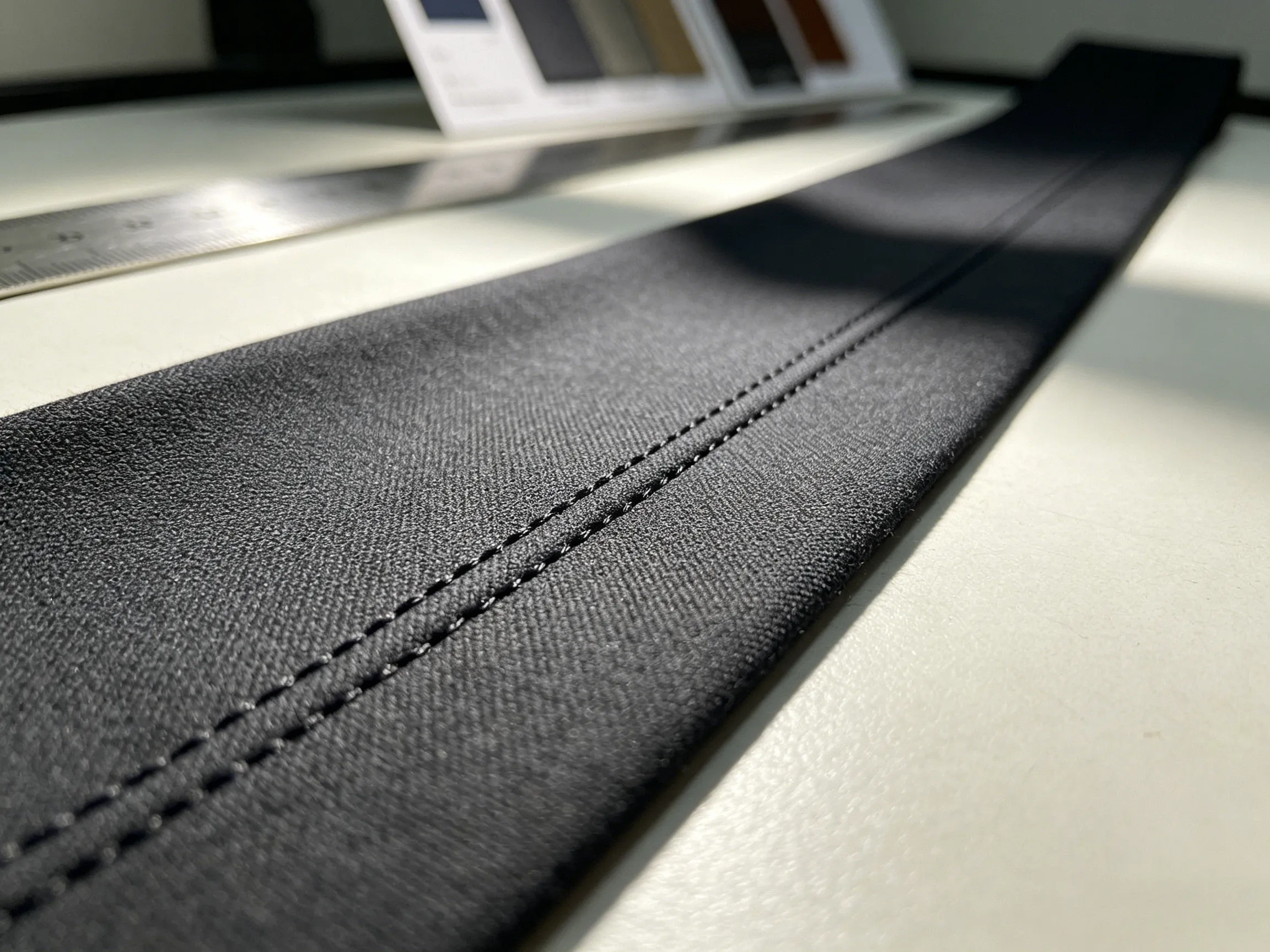
Close-up magnified view of precise leather handbag stitching showing fine seam quality and thread consistency
Microscopic Precision: Every stitch is a commitment to quality—we rigorously calibrate each thread and seam to exacting standards.

Step 9 – Quality Control Throughout Production

Quality control is not a final inspection—it’s a comprehensive system embedded throughout the manufacturing process. Effective QC prevents defects rather than just detecting them.

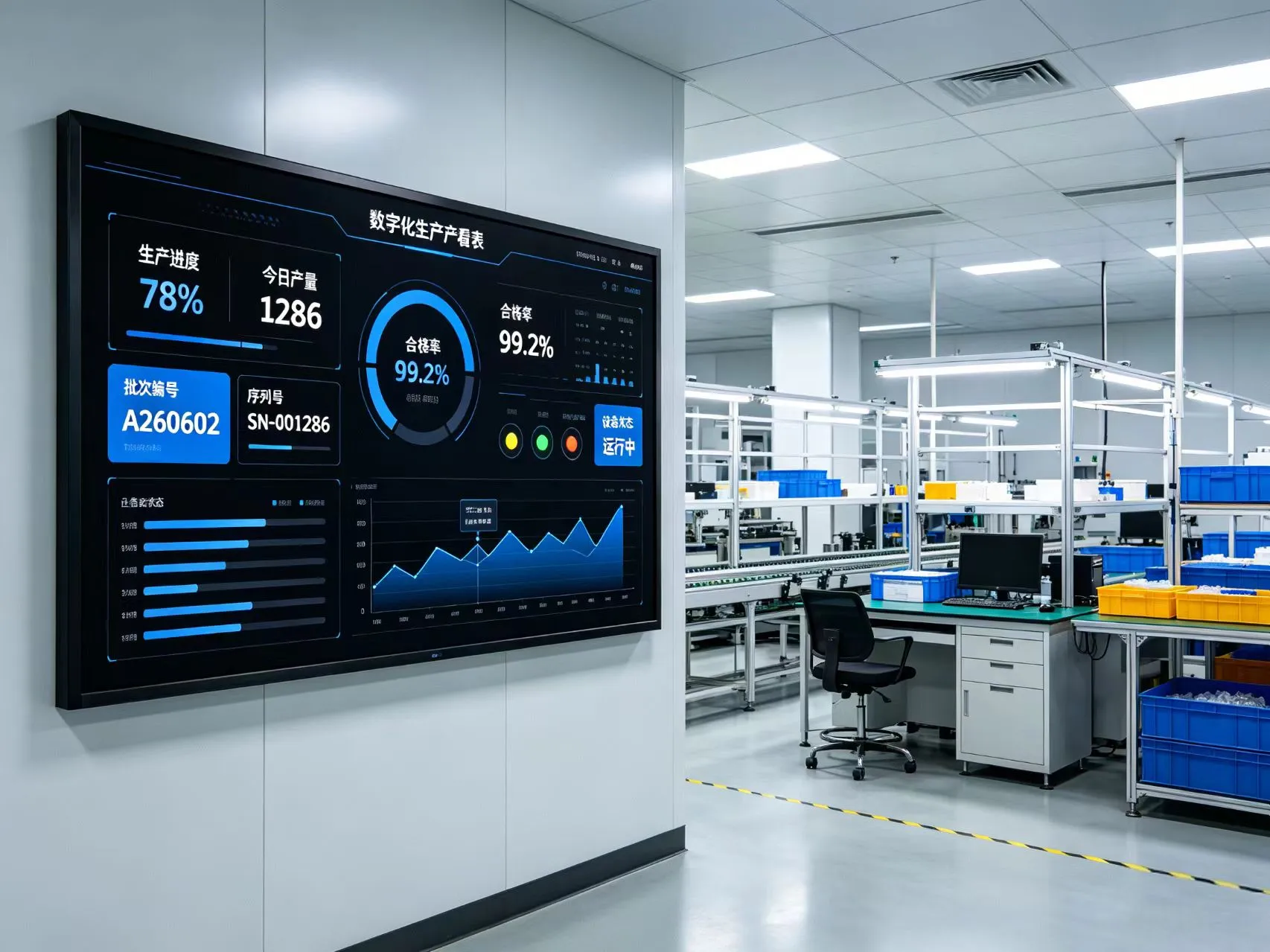
Digital manufacturing dashboard displaying real-time production metrics, quality data, and quality control statistics
Digital Quality Loop: Our MES real-time monitoring system prevents manufacturing risks at every stage, ensuring comprehensive quality assurance.

Quality Control Stages

Incoming Material Inspection

All materials verified upon arrival:
• Leather hides inspected for defects and consistency
• Hardware checked for finish quality and functionality
• Lining materials verified for color and specifications
• Thread and adhesive batch testing

Inline QC (During Production)

Continuous monitoring at each workstation:
• Piece-by-piece inspection at key assembly stages
• Operator self-inspection with standardized checklists
• Inline supervisors conduct random quality audits
• Immediate correction of any deviations

Final Inspection (Pre-Shipment)

Comprehensive evaluation of finished products:
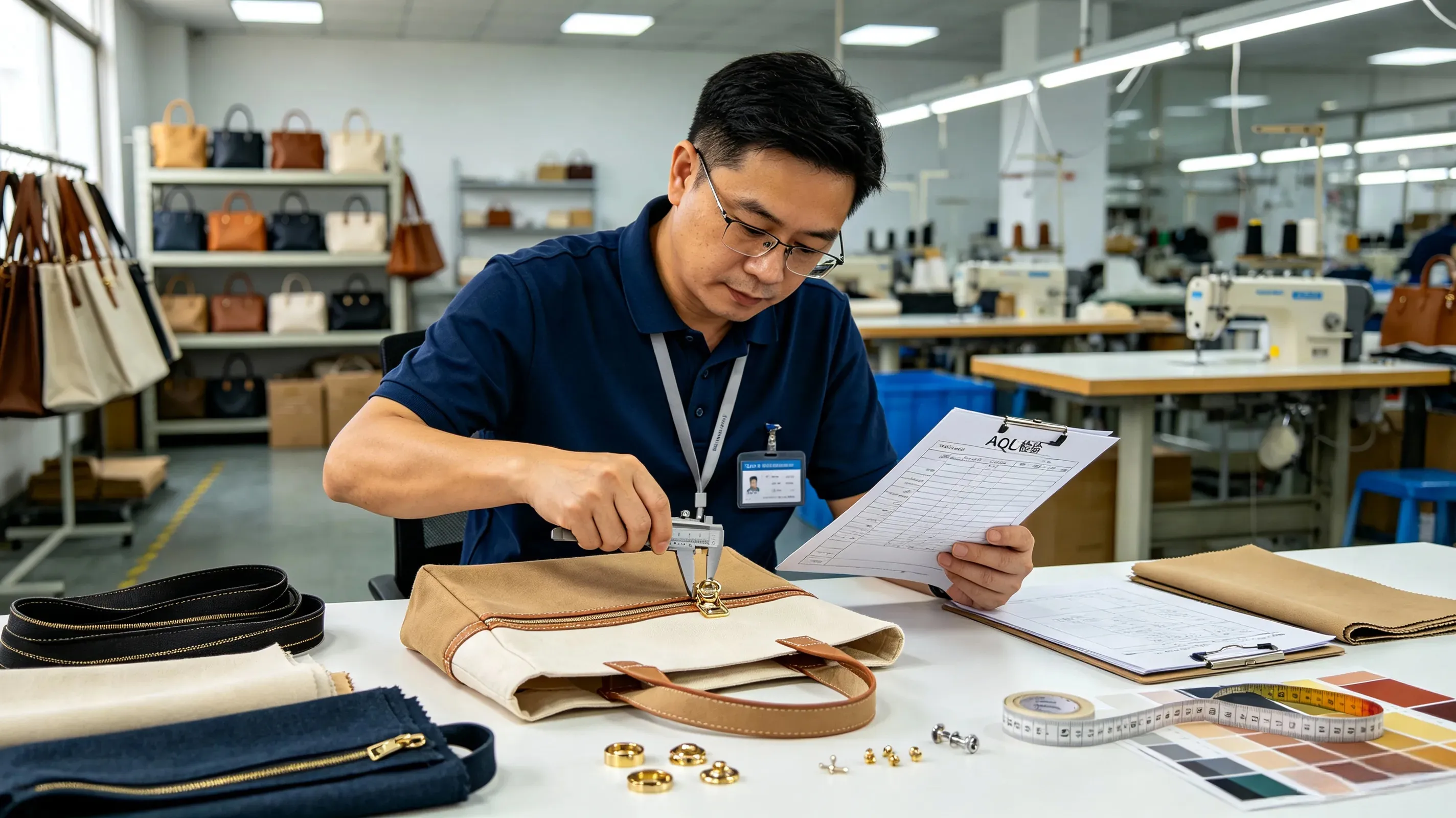
• 100% visual inspection or AQL sampling per agreement
• Functional testing of all closures and moving parts
• Dimension verification against approved samples
• Packaging and labeling verification

Factory display showing ISO and BSCI quality management system certifications
Global Quality Standards: We strictly adhere to ISO and BSCI international manufacturing standards, ensuring consistent quality and ethical production.

AQL Inspection Standards

AQL Level Application Critical Defects Major Defects Minor Defects
1.0 Luxury/premium brands 0 1.0 2.5
2.5 Standard quality 0 2.5 4.0
4.0 Economy/budget products 0 4.0 6.5

Functional Testing

Physical testing ensures durability:
• Weight-bearing tests for handles and straps
• Zipper cycle testing (minimum 5,000 cycles)
• Drop testing for impact resistance
• Colorfastness testing (rubbing, light, water)

Professional laboratory tensile strength testing machine evaluating leather bag handle load capacity
Professional Load Testing: Our specialized equipment ensures every bag exceeds industry weight-bearing standards.

Defect Classification

Quality failure analysis report with corrective action documentation and defect samples
Quality Vigilance: We confront craftsmanship flaws head-on, establishing traceable prevention mechanisms to ensure continuous improvement.

Critical Defects: Safety hazards, complete functionality failure, missing required components
Major Defects: Visible quality issues, improper function, significant color variation
Minor Defects: Small blemishes, slight measurement variations, cosmetic imperfections

Professional third-party quality inspection reports from SGS and Intertek testing organizations
Authoritative Endorsement: We welcome third-party collaborative testing at any time, providing transparent quality verification for every client.

Traceability Systems

Product interior label with serial number QR code for full supply chain traceability
Full Traceability: Every product carries a unique digital identity, ensuring post-sale tracking and quality accountability throughout its lifecycle.

Modern QC incorporates digital traceability:
• QR code labels with batch and production information
• Production line tracking for each unit
• Quality inspection records linked to specific products
• Supplier lot tracking for material provenance

Laboratory equipment testing metal hardware corrosion resistance with salt spray testing chamber
Hardware Corrosion Testing: Under simulated extreme conditions, we verify the durability and luster of all metal components.

Step 10 – Packaging & Shipping

Packaging protects products during transit while creating the first unboxing experience for end customers. Strategic packaging decisions impact both logistics costs and brand perception.

Packaging Options

Dust Bags

Fabric pouches protect bags from dust and light exposure. Options include:
• Non-woven polypropylene (economy)
• Cotton (standard)
• Velvet (premium)
• Custom printed with brand logo

Polybags & Protective Packaging

Individual bag protection:
• Resealable polybags for retail items
• Acid-free tissue for premium items
• Foam inserts for hardware protection
• Corner protectors for rigid boxes

Gift Boxes

For retail and gift occasions:
• Custom branded boxes with magnetic closures
• Rigid construction for premium feel
• Interior foam or velvet lining
• Care instruction cards included

Premium packaging comparison showing mass market polybag, boutique velvet pouch, and ultra-luxury magnetic closure gift box
Packaging Perfection: From economy polybags to ultra-luxury magnetic closure boxes with gold foil stamping, packaging elevates the brand experience.

Shipping Preparation

  • Carton Specifications: Double-wall corrugated boxes, custom dimensions to minimize void fill
  • Palletization: Standard or display pallets for large orders
  • Shipping Marks: Carton marks including size, color, quantity, and destination
  • Documentation: Commercial invoices, packing lists, certificates of origin

Shipping Methods

Method Transit Time Cost Best For
Sea Freight (FCL) 25-35 days Lowest cost per unit Large orders (500+ units)
Sea Freight (LCL) 30-45 days Moderate Medium orders (50-500 units)
Air Freight 7-12 days Higher cost Urgent reorders, samples
Express Courier 5-10 days Premium Small quantities, urgent needs

OEM vs. ODM vs. Private Label Manufacturing

Understanding these manufacturing models helps you choose the right partnership structure for your brand’s needs.

Model Best For Advantages Limitations
OEM (Original Equipment Manufacturer) Brands with proprietary designs seeking manufacturing expertise Full design control, unique products, IP protection Higher development costs, longer lead times
ODM (Original Design Manufacturer) Brands seeking ready-to-customize designs with lower investment Faster time-to-market, lower development costs, proven designs Less differentiation, potential IP sharing with other brands
Private Label Retailers, e-commerce sellers, brands without design capabilities Turnkey solution, brand-exclusive products, efficient scaling Limited customization, shared manufacturing

Dreamway offers flexible OEM, ODM, and Private Label services, adapting our manufacturing approach to match your brand’s strategic requirements and growth objectives.

Typical Lead Time for Leather Handbag Manufacturing

Production timelines vary based on design complexity, material availability, order quantity, and seasonal demand. Understanding these variables helps set realistic expectations.

Sample Development

2-4 weeks
Depending on design complexity
and revision cycles

Material Procurement

1-3 weeks
Standard materials in stock
4-8 weeks for special orders

Production

3-6 weeks
Based on order quantity
and factory scheduling

Quality Control

1-2 weeks
Including inline and
final inspection phases

Shipping

1-6 weeks
Depending on method
and destination

Total Timeline: Typically 8-16 weeks from sample approval to destination port, though complex orders or peak-season bookings may require longer lead times.

Manufacturing cost breakdown visualization showing labor, materials, and overhead expenses for leather bag production
Transparent Economics: Understanding cost components—labor, materials, and management fees—enables informed pricing and profitability decisions.

Cost Factors in Leather Handbag Manufacturing

Understanding the cost drivers helps brands optimize pricing strategies and negotiate effectively with manufacturers.

Primary Cost Components

Leather Material Costs

Leather typically represents 30-50% of total production cost:
• Full grain leather: $15-40 per square foot (premium grades higher)
• Top grain leather: $8-25 per square foot
• Exotic leathers (crocodile, ostrich): significantly higher

Labor Costs

Manufacturing labor varies by region and complexity:
• Labor-intensive operations: handle making, complex assembly
• Craft-intensive products: hand-stitching, custom detailing
• Automated processes reduce per-unit labor

Hardware Costs

Quality hardware impacts both cost and perceived value:
• Economy hardware: $0.50-2.00 per component
• Premium hardware: $3.00-15.00 per component
• Custom hardware molds: $500-2,000 setup cost

Packaging Costs

Per-unit packaging costs vary significantly:
• Polybag only: $0.10-0.30
• Dust bag + polybag: $0.50-1.50
• Gift box + dust bag: $2.00-8.00

Additional Cost Factors

  • MOQ Impact: Smaller orders often have 15-30% price premiums due to setup costs
  • Design Complexity: Complex designs increase labor time and defect rates
  • Customization: Custom hardware, logos, and materials add tooling and procurement costs
  • Compliance Testing: Certifications (REACH, Prop 65, OEKO-TEX) add $500-3,000 per style

Sustainability in Leather Handbag Manufacturing

Sustainable manufacturing is no longer optional—it’s a competitive advantage. Brands increasingly prioritize environmental and social responsibility in their supply chains.

Sustainable Practices

Responsible Material Sourcing

Partner with suppliers who demonstrate:
• Leather Working Group (LWG) certification
• Traceable hide sourcing from verified tanneries
• Water and energy efficiency in processing

Eco-Friendly Materials

Offer sustainable alternatives:
• Water-based PU leather (reduced VOCs)
• Recycled materials and upcycled leather
• Plant-based tanning agents
• Organic cotton and hemp linings

Factory storage of silk fabric rolls with authenticity verification labels
Verified Provenance: Every material batch carries authenticity verification, ensuring supply chain transparency from source to finished product.

Waste Reduction

  • Optimized pattern cutting maximizes material utilization
  • Leather offcuts repurposed for small accessories or promotional items
  • Water recycling systems in tanneries and finishing operations
  • Energy-efficient manufacturing equipment

Sustainable Packaging

• Recycled and recyclable carton materials
• Soy-based inks for printing
• Minimal plastic packaging
• Reusable dust bags

Compliance Standards

Certification Scope Market Relevance
LWG (Leather Working Group) Environmental leather production EU, North America
OEKO-TEX Standard 100 Product safety (no harmful substances) Global, especially EU
GRS (Global Recycled Standard) Recycled content verification Global sustainability brands
REACH Compliance Chemical restrictions (EU) EU market mandatory
Prop 65 (California) Chemical exposure warnings (US) US market mandatory

Common Manufacturing Challenges and How to Avoid Them

Understanding common pitfalls helps brands proactively prevent costly mistakes and production delays.

Design-Related Challenges

Unclear Tech Pack Specifications

Problem: Ambiguous measurements, missing details, or conflicting instructions lead to sample rejections and production errors.

Solution: Invest time in comprehensive Tech Pack development. Include visual references, physical samples, and detailed specifications. Conduct pre-production meetings with manufacturers to align expectations.

Material Inconsistency

Problem: Color variations, texture differences, or quality inconsistencies between material batches.

Solution: Source materials with sufficient lead time for batch ordering. Request material approvals before production. Maintain reserve stock of critical materials.

Production Challenges

Hardware Delays

Problem: Custom hardware with long lead times or quality issues delays production.

Solution: Finalize hardware specifications early. Order samples for approval 8-12 weeks before production. Identify backup suppliers for critical components.

Quality Issues

Problem: Defects discovered during or after production result in costly rework or claims.

Solution: Implement comprehensive QC at every stage. Set clear AQL standards. Conduct inline inspections with immediate corrective action. Request photos or video inspections during production.

Production Bottlenecks

Problem: Capacity constraints cause delays during peak seasons.

Solution: Book production slots 8-12 weeks in advance. Communicate seasonal forecasts to manufacturers. Build buffer time into production schedules.

Communication Challenges

Late Sample Approval

Problem: Extended revision cycles delay mass production start dates.

Solution: Establish clear approval timelines in contracts. Provide detailed feedback with photos. Limit revision rounds to predetermined maximums.

How to Choose the Right Leather Handbag Manufacturer

Selecting the right manufacturing partner is one of the most critical decisions for your brand. Use this comprehensive checklist to evaluate potential partners.

Evaluation Item Why It Matters Key Questions to Ask
Product Development Capability Faster sampling, better designs How quickly can you develop samples? Do you offer CAD/design services?
Material Sourcing Stable quality, competitive pricing Where do you source leather? Do you have supplier relationships?
Quality Control System Lower defect rates, consistent output What’s your AQL standard? How many QC checkpoints?
OEM/ODM Support Flexible cooperation models Do you offer both OEM and ODM? What’s your MOQ flexibility?
Compliance Capability Easier market entry Can you provide REACH, Prop 65 testing? Do you have certifications?
MOQ Flexibility Better inventory control What’s your minimum order quantity? Can you accommodate smaller test orders?
Export Experience Reliable delivery Which countries have you exported to? Do you handle customs documentation?
Communication Smooth collaboration What’s your response time? Do you have dedicated account managers?

Why Choose Dreamway?

As a professional leather handbag manufacturer based in Guangzhou, China, Dreamway offers:

  • 30+ skilled team members with expertise across design, production, and quality control
  • Handbag MOQ: 200 pieces — ideal for brands testing new markets or scaling collections
  • Silk product capability with MOQ of 50 pieces — unique combined expertise
  • 50+ countries served — proven international logistics and compliance experience
  • Comprehensive quality systems meeting ISO and BSCI standards
  • Full-service OEM/ODM/Private Label manufacturing partnerships
Professional leather handbag lifestyle photography showing elegant design and craftsmanship
Where Vision Meets Craft: Every Dreamway handbag represents the convergence of creative design and manufacturing excellence.
Close-up product photography highlighting premium leather texture and refined hardware details
Attention to Detail: Superior materials and precise construction create handbags that stand the test of time.

Ready to Start Your Leather Handbag Project?

Connect with Dreamway to discuss your manufacturing needs. From concept to delivery, we’re committed to bringing your vision to life with exceptional quality and competitive pricing.

Get in Touch
Frequently Asked Questions

How are leather handbags manufactured?

Leather handbag manufacturing involves multiple stages: concept development, design and Tech Pack creation, material sourcing, pattern making, sample development, production planning, cutting, sewing, assembly, quality control, packaging, and shipping. Each stage requires specialized skills and rigorous quality checkpoints to ensure a premium finished product.

What is the first step in handbag production?

The first step is product concept and market research. This involves defining your target customer, price positioning, and competitive analysis. Following this, you develop detailed designs and a comprehensive Tech Pack that serves as the blueprint for manufacturing. Proper planning at this stage prevents costly errors later.

How long does handbag manufacturing take?

Typical lead time ranges from 8-16 weeks from sample approval to delivery. Sample development alone takes 2-4 weeks. Production typically requires 3-6 weeks, followed by quality control and shipping. Complex designs, custom materials, or peak-season orders may require longer timelines.

What leather materials are commonly used for handbags?

Common leathers include full grain (highest quality, most durable), top grain (sanded for consistency), genuine leather (layered, cost-effective), vegetable tanned (natural, firm), suede (soft, napped finish), and Saffiano (cross-hatch texture, scratch-resistant). Each offers different aesthetics, durability, and price points.

Can I provide my own design for manufacturing?

Yes, OEM manufacturing allows you to provide your own designs and specifications. Manufacturers will produce your designs using your brand identity while providing the manufacturing expertise and production capacity. This is ideal for brands with proprietary designs seeking manufacturing partners.

What is a Tech Pack and why do I need one?

A Tech Pack is a comprehensive document that includes sketches, dimensions, materials (BOM), construction details, hardware specifications, colorways, and packaging requirements. It eliminates ambiguity between designers and manufacturers, reduces sample iterations, and accelerates production timelines. Think of it as the blueprint for your product.

How many samples are usually required before production?

Expect 2-4 sample rounds for new designs. This typically includes: first prototype (proto) for basic form, material confirmation sample for quality verification, fit review sample for functionality testing, and pre-production sample (PPS) as the final production benchmark. Complex designs may require additional iterations.

How is quality controlled during leather bag production?

Quality control occurs at multiple stages: incoming material inspection, inline QC during production, and final inspection before shipping. Manufacturers typically use AQL (Acceptable Quality Level) sampling standards, with luxury brands often requiring AQL 1.0 and standard production using AQL 2.5. Functional testing, dimensional verification, and appearance inspection are standard procedures.

What is the difference between OEM and ODM manufacturing?

OEM (Original Equipment Manufacturer) produces your proprietary designs—full design control with higher development investment. ODM (Original Design Manufacturer) offers ready-to-customize existing designs—faster time-to-market with lower development costs but potential shared IP. Choose based on your need for differentiation versus speed-to-market.

Can I order small quantities of leather handbags?

Minimum order quantities vary by manufacturer. Many factories require 300-500 pieces per style for cost-effective production. However, some manufacturers like Dreamway offer lower MOQs starting at 200 pieces for handbags, making them suitable for brands testing markets or launching smaller collections.

Can sustainable materials be used for handbag production?

Yes, sustainable options include LWG-certified leather, water-based PU, recycled materials, plant-based tanning agents, and organic cotton linings. Many manufacturers can source eco-friendly alternatives upon request. Be prepared for 10-30% cost premiums depending on material choices and certification requirements.

What certifications are important for leather handbags?

Key certifications include: LWG (Leather Working Group) for environmental responsibility, OEKO-TEX for chemical safety, GRS for recycled content, REACH compliance for EU chemical restrictions, and California Prop 65 for US market requirements. The specific requirements depend on your target markets and brand positioning.

Can third-party inspections be arranged?

Yes, third-party inspection companies like SGS, Bureau Veritas, and Intertek offer factory and pre-shipment inspections. Many manufacturers welcome independent verification as it builds trust and provides objective quality documentation. Budget approximately $200-400 per inspection day plus travel expenses.

Do you export leather handbags worldwide?

Most established manufacturers export globally with experience handling documentation for major markets including USA, EU, UK, Australia, and Asia. Ensure your manufacturer has experience with your target market’s import regulations, labeling requirements, and compliance standards before placing orders.

What payment terms are typical for handbag manufacturing?

Standard terms typically include 30-50% deposit upon order confirmation, with the balance paid before shipping or against copy documents (B/L). For first orders or larger quantities, some manufacturers require 50-70% deposit. Establishing trust through smaller initial orders can lead to more favorable terms over time.

How do I ensure color consistency across production runs?

Request color standards (physical swatches or Pantone references) and include them in your Tech Pack. Order sufficient materials from the same batch to cover your entire order plus a percentage for future reorders. Maintain reserve stock of critical materials. Specify acceptable color tolerances (typically Delta E < 2.0 for professional quality).

What shipping methods are available from China?

Options include: Sea freight FCL (full container, most cost-effective for 500+ units), Sea freight LCL (shared container, 30-45 days), Air freight (7-12 days, higher cost), and Express courier (5-10 days, premium pricing). Choose based on order volume, budget, and urgency. Many brands use sea freight for production orders and air/express for samples and urgent reorders.

What is FOB pricing vs. EXW pricing?

EXW (Ex Works) means you pay only for the goods at the factory—you arrange and pay for all shipping. FOB (Free on Board) includes delivery to the departure port, making it easier to calculate total landed costs. FOB is more common for international trade as it simplifies logistics planning. Always clarify pricing terms before ordering.

How do I protect my intellectual property when manufacturing in China?

Protect your designs through multiple measures: register trademarks in China (trademark squatting is common), use clear NDAs with manufacturers, limit design exposure during early sample stages, work with reputable manufacturers with established IP policies, and consider filing design patents in key markets. Unfortunately, absolute protection is challenging—building brand loyalty often provides better long-term protection.

What is your minimum order quantity and can it be flexible?

Minimum order quantities typically range from 100-500 pieces per style. Lower quantities usually incur price premiums of 15-30%. Some manufacturers offer mixed-color or mixed-style orders within the same MOQ, allowing you to test multiple variations while meeting minimum production requirements. Always discuss flexibility upfront.

Do manufacturers provide care instructions and product labeling?

Yes, manufacturers typically provide standard care labels and can customize labels per your specifications. Care labels must comply with destination country regulations (fiber content, country of origin, care instructions). Include all labeling requirements in your Tech Pack to ensure compliance and avoid costly rework or shipping delays.

How do I handle quality disputes after delivery?

Establish clear quality standards in your purchase agreement, including AQL acceptance criteria, inspection procedures, and dispute resolution processes. Document all quality issues with photos and measurements. Reputable manufacturers typically offer partial refunds, discounts on future orders, or free replacement production for legitimate quality issues. Building long-term relationships often leads to better responsiveness.

Can manufacturers help with packaging design?

Many manufacturers offer packaging design assistance or can work with your design files. Services may include dieline creation, material sourcing (boxes, dust bags, tissue), printing coordination, and assembly. Packaging costs vary significantly based on complexity and materials—budget $0.50-8.00 per unit depending on your requirements.

What is a pre-production sample and why is it important?

A Pre-Production Sample (PPS) is the final sample approved before mass production begins. It represents the quality benchmark that all production must match. The PPS confirms that materials, construction, appearance, and functionality meet your specifications. Never begin mass production without a signed PPS—this is your only assurance of consistent quality.

How do seasonal variations affect leather bag production?

Leather production has seasonal considerations: summer months may have longer lead times due to factory closures (especially Chinese Golden Week and summer breaks), holiday seasons affect shipping schedules, and material availability can fluctuate. Plan orders 3-4 months ahead during peak seasons. Some leather types may have limited availability during certain periods due to hide supply cycles.

What is the typical lifespan of a quality leather handbag?

A well-made leather handbag from full grain leather should last 10-20+ years with proper care. Construction factors include seam strength, hardware quality, lining durability, and edge finishing. Proper care involves regular cleaning, conditioning, avoiding overfilling, and appropriate storage. Higher initial investment in quality construction typically results in lower cost-per-year of use.

How can I reduce handbag manufacturing costs without sacrificing quality?

Cost reduction strategies include: simplify designs to reduce labor-intensive operations, use standard hardware instead of custom pieces, optimize patterns to maximize material yield, increase order quantities for volume discounts, plan orders during off-peak seasons, and simplify packaging. Avoid cutting corners on core materials or structural elements—these impact perceived quality and durability.

What role does technology play in modern leather bag manufacturing?

Modern manufacturing integrates technology throughout: CAD pattern making improves precision and efficiency, CNC cutting ensures accuracy, MES systems track production in real-time, digital quality documentation enables traceability, and e-commerce integration streamlines ordering. However, skilled craftsmanship remains essential for quality construction—technology enhances rather than replaces artisan expertise.

Start Your Manufacturing Journey Today

Whether you’re launching a new collection or optimizing your supply chain, understanding the leather handbag manufacturing process is your first step toward success.

Contact Dreamway
Crafted in Guangzhou. Trusted in 50+ Countries.

Premium bag & silk manufacturing — under one factory roof.

Tucked inside Shiling Town — Guangzhou’s centuries-old leather district — Dreamway is a focused manufacturing partner for brands that refuse to compromise. We build rugged, retail-ready tote bags, backpacks, handbags with a 200-piece MOQ, and craft 100% Mulberry silk pillowcases, scrunchies & sleep accessories starting from just 50 pieces. Our small team of 30+ artisans is senior, hands-on, and accountable — the same people who quote your sample will personally inspect your shipment.

Every order is verified against our published manufacturing quality standards — AQL 2.5 inspection, hardware pull-tests, seam-strength audits, and silk-fibre authenticity checks. From concept tech-pack to mass production, we run the entire supply chain in-house, so timelines stay honest and revisions stay painless.

50+
Countries Served
30+
Small Team
200
Bag MOQ
50
Silk MOQ

Buying Guides & Manufacturing Insights

Sourcing smarter starts with knowing what to compare. These long-form guides break down the decisions our clients wrestle with most — from third-party inspections like the SGS vs Intertek vs Bureau Veritas showdown, to ranking China’s top 10 tote bag manufacturers, to the head-to-head of canvas vs polyester vs PU for bag bodies.

Designing your logo? Our custom tote bag logo size guide shows real placement and stitch-density examples. Curious how a handbag actually comes together? Walk through the leather handbag manufacturing process step by step, and pair it with the canvas tote durability factors that decide whether a bag survives five years of daily use.

For material decisions beyond canvas, compare PU vs polyester for bags and explore our roundup of the world’s top canvas bag manufacturers. If backpacks are your lane, our backpack manufacturing process and backpack lead-time guide give you realistic production windows. Choosing between social-compliance audits? Read BSCI vs SEDEX vs WRAP. For smaller leather goods, dive into the leather wallet manufacturer playbook; for sustainability claims, the recycled PU leather explainer and our backpack QC checklist separate marketing from reality. Finally, stay ahead of EU regulation with our PPWR FAQ for bag manufacturers.

Explore by Topic

Browse our deep-dive knowledge hubs — every cluster is curated by category and updated with new field reports.

Real Client Cases

Numbers tell part of the story. These production cases show how Dreamway’s small team delivers at scale.

Featured Product Lines

A snapshot of what we manufacture most often — all OEM/ODM-ready with custom hardware, lining, and packaging.

Who We Help

From indie founders to global enterprise — Dreamway is built for brands that need a factory, not a freelancer.

WhatsApp QR code — scan to chat with Dreamway sales Victoria
WhatsApp · Fastest Channel

Skip the inbox. Chat with Victoria — right now.

Point your camera at the QR and you’re connected to a real human in Guangzhou. Send a photo of your reference, get a quote within minutes, and lock in your 200-piece MOQ slot before this month’s capacity fills.

Guangzhou Bags. Suzhou Silk. One Trusted Partner.

Specialized factories. Unified standards.

🇨🇳 Guangzhou Shiling · Huadu District

Leather & Bag Capital

Our bags come from Guangzhou’s Shiling leather district — home to 30+ senior artisans under one roof, working in 8,000 m² of integrated cutting, sewing, hardware-assembly, and QC space.

  • 30+ senior artisans
  • 8,000 m² integrated facility
  • 50+ countries exported
🇨🇳 Suzhou · Hangzhou Yangtze Delta Silk Belt

Mulberry Silk Heritage

Our 22mm Mulberry silk pillowcases and sleep sets come from vetted partner mills in Suzhou and Hangzhou — at the heart of China’s 5,000-year sericulture heritage, today running OEKO-TEX Standard 100 certified production lines.

  • 22mm 100% Mulberry silk
  • OEKO-TEX Standard 100
  • 5,000 yrs silk heritage
Same QC standard — AQL 2.5 across all lines
Same account manager for both divisions
One contract. One phone call. Two factories.
Only 3 sampling slots left this month

Get your sample in 7 working days
hand-built by Guangzhou’s 30+ artisans.

Send a sketch, a screenshot, or a competitor’s bag you want to beat. We’ll hand-build a custom sample and ship it to your door — produced by the same craftspeople who will run your mass-production order.

Reply in 24h
business days · in your timezone
🔒 NDA available
on request · signed in 1 day
🔄 Free re-sample
if first one misses the brief
Trusted by brands in 🇺🇸 USA 🇬🇧 UK 🇩🇪 DE 🇦🇺 AU 🇯🇵 JP 🇰🇷 KR + 44 more countries

Customer Reviews27 Reviews

Klaus Weber2026-08-15
Sehr hilfreicher Artikel, aber ich frage mich, ob Sie Erfahrung mit Logistik nach Deutschland haben? Wir importieren oft nach Hamburg und hatten Probleme mit Zollabfertigung und Lieferzeiten. Wie sieht es mit DDP-Versand aus und können Sie bei der Dokumentation helfen? Zudem wäre ich an nachhaltigen Materialien wie recyceltem Leder interessiert, da dies für unsere Kunden ein Verkaufsargument ist. Wie hoch wären die ungefähren Kosten für eine kleine Kollektion von 50 Taschen?

Very helpful article, but I wonder if you have experience with logistics to Germany? We often import to Hamburg and had issues with customs clearance and delivery times. How about DDP shipping and can you assist with documentation? Also interested in sustainable materials like recycled leather as it's a selling point for our customers. What would be the approximate costs for a small collection of 50 bags?
GZDreamway2026-08-15
Hallo Klaus, vielen Dank für Ihre Anfrage. Unser Logistikteam hat umfangreiche Erfahrung mit Versand nach Deutschland und versendet täglich Sendungen über Hamburg, Rotterdam und Bremerhaven. Wir können Ihnen DDP-Versand anbieten, was bedeutet, dass wir alle Zollformalitäten und Kosten übernehmen, einschließlich Einfuhrumsatzsteuer und Zollabfertigung. Für recyceltes Leder haben wir eine spezielle Linie aus Lederfasern und natürlichen Bindemitteln entwickelt, die umweltfreundlich ist und ein hochwertiges Aussehen und eine gute Haltbarkeit bietet. Bei 50 Taschen schlage ich vor, dass Sie uns Ihre Spezifikationen senden, damit wir ein detailliertes Angebot erstellen können, aber die ungefähren Kosten für Material und Arbeit liegen bei 30-45 Euro pro Tasche. Wir werden den besten Versandweg wählen, sei es per Luftfracht für Eilaufträge (ca. 5-7 Tage Lieferzeit) oder per Seefracht für größere Mengen (20-30 Tage). Sie können unseren Logistikplaner über WhatsApp oder E-Mail direkt kontaktieren, um den Ablauf zu besprechen.

Hello Klaus, thank you for your inquiry. Our logistics team has extensive experience shipping to Germany and sends daily shipments via Hamburg, Rotterdam, or Bremerhaven. We can offer you DDP shipping, which means we handle all customs formalities and costs, including import VAT and duties. For recycled leather, we have a special line developed from leather fibers and natural binders, which is eco-friendly and offers a premium look with good durability. For 50 bags, I suggest you send us your specs for a detailed quote, but approximate costs for material and labor range from 30-45 euros per bag. We will choose the best shipping route, whether air freight for rush orders (approx. 5-7 day delivery) or sea freight for larger volumes (20-30 days). You can contact our logistics planner directly via WhatsApp or email to discuss the process.
Thomas Müller2026-08-15
Der Artikel erklärt den Herstellungsprozess sehr gut, aber für unsere Marke in Zürich ist die CO2-Bilanz der Produktion entscheidend. Wir haben kürzlich bei einem anderen Lieferanten festgestellt, dass die Verpackung nicht recycelbar war, was wir als umweltbewusstes Unternehmen nicht akzeptieren können. Gibt es bei Ihnen Optionen für plastikfreie Verpackungen und kompensieren Sie die Emissionen des Transports? Zudem interessiert uns, ob Sie in der Lage sind, kleine Chargen von 20 Stück mit speziellen Öko-Zertifikaten herzustellen, da wir einen Pop-up-Store in Wien planen. Die Lieferzeit ist flexibel, aber Qualität und Umweltfreundlichkeit sind nicht verhandelbar für unseren gehobenen Kundenstamm.
GZDreamway2026-08-15
Hallo Thomas, das ist ein wichtiges Anliegen – wir verstehen den Druck des Schweizer Marktes für Nachhaltigkeit. Unsere Fabrik ist mit einem zertifizierten Umweltmanagementsystem (ISO 14001) ausgestattet, und wir haben kürzlich auf Verpackungen aus 100% recyceltem Kraftpapier ohne Kunststoffbeschichtung umgestellt, die vollständig kompostierbar sind. Für Emissionen arbeiten wir mit einem Partner für CO2-Kompensation zusammen, und wir bieten einen klimaneutralen Versand für alle EU-Lieferungen an. Bei 20 Stück können wir eine Sonderanfertigung mit Öko-Zertifikaten (wie FSC für Verpackung) realisieren, wobei der Einzelpreis etwas höher liegt (ca. 45-60 Euro pro Tasche), aber die Herstellung dauert nur 20-25 Tage. Wir können Ihnen ein detailliertes Nachhaltigkeitsdokument für Ihre Kunden bereitstellen. Ich empfehle, uns Ihre Spezifikationen zu senden, damit wir eine transparente Offerte mit allen Umweltdaten erstellen können.

Hello Thomas, this is an important concern – we understand the Swiss market's pressure for sustainability. Our factory is equipped with a certified environmental management system (ISO 14001), and we recently switched to 100% recycled kraft paper packaging without plastic coating, which is fully compostable. For emissions, we partner with a CO2 offset provider, and we offer climate-neutral shipping for all EU deliveries. For 20 pieces, we can handle a custom run with eco-certifications (like FSC for packaging), though the unit price is slightly higher (around 45-60 euros per bag), but production takes only 20-25 days. We can provide you with a detailed sustainability document for your customers. I recommend you send us your specs so we can create a transparent quote with all environmental data.
Laura Benítez2026-08-15
Muy buen artículo, aunque me queda la duda de cómo manejan ustedes la producción de modelos complejos como mochilas con múltiples compartimentos. Trabajo en una marca de viaje en Barcelona y buscamos un socio que pueda hacer estructuras internas detalladas y cierres resistentes para uso diario. Hemos tenido problemas con otras fábricas en cuanto a la durabilidad de las cremalleras y las costuras sometidas a tensión. ¿Tienen un proceso específico para estos casos? Además, estamos interesados en opciones de forro personalizado y en saber si ofrecen muestras antes de empezar la producción completa. La logística también nos interesa, ya que necesitamos recibir los productos en un plazo máximo de 40 días. Agradecería una respuesta detallada, y quizás una recomendación sobre qué tipo de piel es mejor para este tipo de artículo. ¡Saludos!
GZDreamway2026-08-15
Hola Laura, gracias por su pregunta tan específica y detallada. Entendemos perfectamente los desafíos que presentan las mochilas con compartimentos complejos, y de hecho tenemos una línea dedicada a artículos de viaje. Nuestro proceso incluye una fase de ingeniería del producto donde creamos patrones y prototipos digitales antes de la producción, lo que nos permite ajustar la estructura interna y garantizar que las cremalleras sean de la más alta resistencia, con una prueba de ciclos de apertura y cierre. Para las costuras en áreas tensas, usamos una técnica de triple pespunte y reforzamos con remaches en los puntos críticos. En cuanto al forro, ofrecemos personalización completa en algodón orgánico, poliéster reciclado, o microfibra, y podemos bordar o estampar tu logo. Enviamos siempre muestras pre-producción para tu aprobación antes del lanzamiento final, y nuestro plazo estándar es de 25 a 35 días, así que estaríamos dentro de tu margen. Para este tipo de mochilas, recomiendo una piel de plena flor ligeramente tratada para resistir la humedad y el desgaste. ¡Podemos agendar una videollamada para discutir los detalles técnicos y enviarte nuestro portafolio de clientes europeos similares!

Hello Laura, thank you for your specific and detailed question. We fully understand the challenges of complex multi-compartment backpacks, and in fact, we have a dedicated line for travel items. Our process includes a product engineering phase where we create digital patterns and prototypes before production, allowing us to adjust the internal structure and ensure hardware is tested for thousands of cycles. For seams under stress, we use a triple-stitch technique and reinforce with rivets at critical points. For lining, we offer complete customization in organic cotton, recycled polyester, or microfiber, with options for embroidery or printing. We always send pre-production samples for your approval before final launch, and our standard timeframe is 25 to 35 days, well within your limit. For this type of backpack, I recommend a slightly treated full-grain leather to resist moisture and wear. We can schedule a video call to discuss technical details and send you our portfolio of similar European clients!
Eleanor Whitfield2026-08-15
As a sustainable fashion consultant based in London, I found this guide incredibly thorough for understanding the entire handbag production journey. My current focus is helping emerging brands source ethically manufactured bags without the typical MOQ nightmares. I've been burned before by factories that promise full traceability but deliver opaque supply chains, which is a major red flag for our UK market that heavily scrutinizes environmental claims. Could you clarify how you handle the verification of your leather sources, especially regarding any third-party audits? Also, I'm curious if you offer a sample-making service that allows for two rounds of revisions before we commit to a small batch of 50 units, as this is critical for our design approval process and branding narrative around circular fashion. I've seen a few of your comments praising low minimums, but I want to ensure the quality is not diluted just because the quantity is small – what's your experience here?
GZDreamway2026-08-15
Hi Eleanor, thank you for your insightful questions, which touch on core industry challenges. For supply chain transparency, we provide full tanner documentation and partner with firms that undergo annual SEDEX audits, and we can share our LWG-certified sourcing reports to give you tangible proof of our ethical claims. To address your sample revision need, we actually have a structured process that includes one round of minor tweaks at no extra cost on our two-piece sample package, with a second round available at a nominal fee covering material waste. For small batches, our dedicated small-order line uses the same production floor with the same craftsmen, but we streamline certain pre-production steps like using digital pattern grading to keep costs down without altering the stitching or edge-painting techniques. We’d love to send you our physical sample kit, including a scrapbook of our leathers and a mock-up of a mini tote to demonstrate that our 50-unit MOQ doesn’t compromise finesse. This helps you experience the touch and finish firsthand, ensuring your brand narrative stays strong from the first drop.
Marco Ricci2026-08-14
Hallo zusammen, ich bin auf der Suche nach einem Hersteller für hochwertige Damentaschen und habe festgestellt, dass viele Fabriken in China Schwierigkeiten mit den europäischen Umweltstandards haben. Meine Marke in Mailand setzt stark auf Nachhaltigkeit, daher ist es für mich wichtig, dass die Produktion umweltfreundlich ist und auch über gültige Zertifikate verfügt. Gibt es hier jemanden, der Erfahrungen mit Herstellern hat, die eine transparente Lieferkette bieten? Und wie sieht es mit der Möglichkeit aus, eigene Modelle zu entwerfen, die dann in Kleinserie gefertigt werden? Ich wäre dankbar für Empfehlungen.
GZDreamway2026-08-15
Guten Tag Marco, Ihre Anforderungen sind sehr nachvollziehbar – der europäische Markt verlangt inzwischen höchste Standards, und genau darauf haben wir uns spezialisiert. Unsere Fabrik besitzt die LWG-Zertifizierung für umweltfreundliche Gerbprozesse und wir arbeiten eng mit zertifizierten Lederlieferanten zusammen, die die gesamte Rückverfolgbarkeit garantieren. Für Design und Modellentwicklung haben wir ein internes Team, das Ihre Skizzen in CAD-Dateien umwandelt und Ihnen innerhalb von 5 Werktagen einen Prototyp liefern kann. Kleinserien sind auch hier möglich – wir beginnen bei 30 Einheiten pro Modell, wobei der Preis pro Stück natürlich etwas höher ist. Wir senden Ihnen gerne unser aktuelles Zertifikat-Portfolio zu, um Ihnen die Transparenz zu bestätigen.

Hello Marco, your requirements are very understandable – the European market demands the highest standards now, and this is exactly our specialization. Our factory holds LWG certification for eco-friendly tanning processes, and we work closely with certified leather suppliers who guarantee full traceability. For design and model development, we have an in-house team that converts your sketches into CAD files and can deliver a prototype within 5 working days. Small series are also possible here – we start at 30 units per model, though the piece price is naturally somewhat higher. We would be happy to send you our current certificate portfolio to confirm the transparency.
Ricardo Gomes2026-08-14
Achei o artigo muito informativo, mas gostaria de saber mais sobre os custos de produção para uma pequena marca em Portugal. Estamos a lançar uma linha de bolsas artesanais e o mOQ é um grande desafio. Já tive experiências em que a fábrica só aceitava pedidos grandes e a qualidade não era consistente. Existe alguma flexibilidade para podermos testar o mercado com uma produção inicial menor? O que nos podem oferecer em termos de handcrafted details? E, para as marcas europeias, fazem alguma adaptação especial no design, como tamanhos ou alças? A comunicação durante o processo é algo que valorizo muito, pois sinto que é onde muitas vezes falha. Agradecia um retorno.
GZDreamway2026-08-15
Olá Ricardo, agradecemos o seu comentário. Compreendemos a dificuldade das pequenas marcas em relação ao MOQ. Por isso, implementámos um programa especial para marcas emergentes, permitindo uma produção inicial de apenas 30 a 50 unidades por modelo, com um custo unitário ligeiramente superior, mas que viabiliza o teste de mercado. A nossa equipa é especializada em detalhes artesanais, como costuras à mão visíveis, acabamentos com cera e bordas pintadas, que conferem um toque premium. Para o mercado europeu, ajustamos as dimensões e a estrutura das alças com base em pesquisas de tendências locais; por exemplo, temos clientes que preferem alças mais curtas para a Europa do Sul. Em relação à comunicação, estabelecemos um ponto de contacto direto com um gestor de conta que fornece atualizações por e-mail ou WhatsApp a cada dois dias. Podemos enviar uma proposta com os detalhes do programa para começar. Estamos à disposição para um vídeo-chamada se preferir, a fim de alinharmos expectativas.

Hello Ricardo, thank you for your comment. We understand the difficulty small brands face regarding MOQ. That's why we have implemented a special program for emerging brands, allowing an initial production of only 30 to 50 units per model, with a slightly higher unit cost, but making market testing viable. Our team is specialized in artisan details, such as visible hand stitching, wax finishes, and painted edges, giving a premium touch. For the European market, we adjust dimensions and strap structure based on local trend research; for example, we have clients who prefer shorter straps for Southern Europe. Regarding communication, we establish direct contact with an account manager who provides updates by email or WhatsApp every two days. We can send a proposal with program details to get started. We are available for a video call if you prefer, to align expectations.
Javier Fernández2026-08-14
Interesante artículo, aunque echo de menos más detalles sobre los acabados en la producción de bolsos de lujo. Trabajo con una boutique en Madrid que busca piezas únicas con bordes pintados a mano y costuras visibles de alta precisión. Nuestra experiencia con proveedores asiáticos ha sido mixta porque a veces el control de calidad no es constante entre lotes. ¿Tienen un proceso que garantice uniformidad en los acabados para pedidos pequeños de 50 unidades? También nos gustaría saber si ofrecen envíos con seguimiento a España y cómo manejan las devoluciones. Esperamos respuestas concretas, ya que valoramos la transparencia y queremos establecer una colaboración estable. ¡Gracias de antemano!
GZDreamway2026-08-15
Hola Javier, gracias por su pregunta tan detallada. Entendemos la importancia de los acabados de lujo – para eso, nuestro taller cuenta con un equipo de artesanos que se especializa en bordes pintados a mano y costuras reforzadas, y hemos establecido un protocolo de inspección en tres etapas: durante el corte, durante el montaje y al final del acabado. Esto asegura que cada pieza cumpla con estándares uniformes incluso en lotes de tan solo 50 unidades, con un margen de tolerancia muy bajo en el color y la alineación de las costuras. Para España, ofrecemos envíos a través de DHL con seguimiento completo y una política de devolución de 14 días si algún defecto no cumple con el acuerdo. También podemos hacer una videollamada para mostrarle nuestro proceso en vivo y así generar confianza. ¿Qué tal si coordinamos una reunión breve para revisar sus necesidades exactas?

Hello Javier, thank you for your detailed question. We understand the importance of luxury finishes – for that, our workshop has a team of artisans specializing in hand-painted edges and reinforced stitching, with a three-stage inspection protocol: during cutting, during assembly, and at final finishing. This ensures each piece meets uniform standards even in batches of just 50 units, with a very low tolerance margin for color and seam alignment. For Spain, we offer DHL door-to-door delivery with full tracking and a 14-day return policy if any defect doesn't meet our agreement. We can also schedule a video call to show you our process live to build trust. How about a short meeting to review your exact needs?
Sophie Dubois2026-08-13
Der Artikel war sehr aufschlussreich, aber ich hätte eine Frage zum Preis-Leistungs-Verhältnis. Wir haben einen Auftrag für 500 Totes Bags und 300 Clutches, und die Angebote, die wir bisher erhalten haben, schwanken stark – von 8 bis 15 Euro pro Tasche. Können Sie mir sagen, wie Ihre Preisstruktur aussieht und was den Preis beeinflusst? Wir sitzen in Paris und legen Wert auf eine langfristige Partnerschaft, aber der Preis muss Wettbewerbsfähig bleiben. Vielleicht können Sie auch erklären, welche Zusatzkosten auf uns zukommen können, wie zum Beispiel für Verpackung oder Fracht. Ich würde mich über eine detaillierte Aufschlüsselung freuen.
GZDreamway2026-08-14
Liebe Sophie, danke für Ihr Vertrauen – ich kann Ihnen eine transparente Preisgestaltung anbieten. Der Endpreis setzt sich aus Materialkosten (rund 40-50%), Arbeitszeit (20-30%) und Gemeinkosten zusammen, wobei die Materialqualität den größten Faktor darstellt. Bei Ihrer Bestellmenge von 800 Stück liegen wir bei einem Einheitspreis von ca. 9-12 Euro pro Tasche, je nach gewähltem Leder und Hardware. Wir haben verhandelbare Staffelpreise und können bei langfristigen Verträgen einen Fixpreis garantieren. Zusatzkosten wie Verpackung (0,5-1,0 Euro) und Fracht nach Frankreich (per DDP geliefert) sind in der Offerte enthalten. Ich würde Sie bitten, uns Ihre genauen Spezifikationen zu senden, damit wir ein unverbindliches Angebot mit kompletter Aufschlüsselung erstellen können.

Dear Sophie, thank you for your trust – I can offer you transparent pricing. The final price is composed of material costs (around 40-50%), labor time (20-30%), and overheads, with material quality being the largest factor. For your order volume of 800 pieces, we are at a cost per unit of approximately 9-12 euros per bag, depending on the leather and hardware chosen. We have negotiable volume discounts and can guarantee a fixed price for long-term contracts. Additional costs such as packaging (0.5-1.0 euros) and shipping to France (delivered DDP) are included in the quote. I would ask you to send us your exact specifications so we can create a non-binding quote with a complete breakdown.
Carla Mendes2026-08-13
Obrigada pelo artigo! Gostaria de saber se a fábrica tem certificações ambientais específicas, pois o meu público em Espanha está muito atento a isso. Já trabalhei com um fornecedor que dizia ser sustentável, mas não tinha provas. Que tipo de documentação podem fornecer? E, sobre os tipos de pele, será que têm opções com curtimento vegetal para uma linha mais exclusiva? Outra questão é a personalização de forros e logótipos. Qual é o processo? Aprecio que seja claro o passo a passo, partilhem a vossa experiência sobre o que correu bem em projetos semelhantes. Obrigada.
GZDreamway2026-08-14
Olá Carla, vamos diretos ao assunto. Detemos as certificações LWG (Leather Working Group) e também a ISO 14001 para gestão ambiental. Podemos fornecer esses certificados juntamente com os relatórios de rastreabilidade do couro, garantindo que a origem é de curtumes com práticas responsáveis. Para o curtimento vegetal, temos uma parceria com um curtume especializado que utiliza extratos de plantas, oferecendo um produto exclusivo e de alta qualidade. Sobre personalização, o nosso processo inclui uma fase de design em que podemos criar o forro estampado com o seu logótipo e aplicar o logo em serigrafia ou gravação a quente. Trabalhamos com prazos de produção de 25 dias após a aprovação da amostra. Num projeto recente, para uma marca espanhola, personalizámos uma linha de topo com forros de algodão orgânico e o feedback foi extraordinário. Posso enviar um estudo de caso para teres uma visão mais detalhada. Fico a aguardar o seu contacto.

Hello Carla, let's get straight to the point. We hold LWG (Leather Working Group) certifications and also ISO 14001 for environmental management. We can provide these certificates together with leather traceability reports, guaranteeing the origin is from tanneries with responsible practices. For vegetable tanning, we have a partnership with a specialized tannery that uses plant extracts, offering an exclusive and high-quality product. Regarding customization, our process includes a design phase where we can create printed lining with your logo and apply the logo via silk screen or hot stamping. We work with production times of 25 days after sample approval. In a recent project for a Spanish brand, we customized a top-tier line with organic cotton linings and the feedback was extraordinary. I can send a case study for a more detailed view. Awaiting your contact.
Lukas Weber2026-08-13
Ich bin auf der Suche nach einer neuen Produktionsstätte für unsere Lederwaren in Wien und dieser Artikel ist sehr hilfreich. Allerdings haben wir ein Problem mit der Flexibilität: Unsere Kunden bestellen oft in letzter Minute und betonen den Bedarf an personalisierungsoptionen, wie zum Beispiel individuelle Initialen-Prägungen. Können Sie kleine Änderungen am Design nach der Produktionsfreigabe umsetzen, ohne den Zeitplan zu sprengen? Zudem interessiert mich, ob Sie eine Garantie auf die Nähte bieten – wir hatten schon Reklamationen wegen aufgegangener Nähte bei anderen Lieferanten. Und wie hoch sind die Versandkosten nach Österreich für eine Lieferung von 200 Handtaschen? Über pünktliche Lieferung hinaus ist uns auch die Qualität der Verpackung wichtig. Danke für die Rückmeldung!
GZDreamway2026-08-14
Hallo Lukas, das sind berechtigte Fragen zur Flexibilität. Wir haben einen speziellen Prozess für Eilaufträge: Bei personalisierten Prägungen können wir innerhalb von 48 Stunden nach der endgültigen Freigabe eine Probe erstellen, und kleine Designänderungen sind während der Sammelphase möglich – wir kommunizieren kontinuierlich per E-Mail oder Telefon, sodass keine bösen Überraschungen entstehen. Unsere Nähte sind mit einer dreifachen Steppung verstärkt und wir bieten eine zweijährige Garantie auf Nähfehler – im unwahrscheinlichen Fall übernehmen wir die Reparaturkosten oder einen Ersatz. Für 200 Taschen betragen die Versandkosten nach Österreich via Luftfracht rund 0,80 Euro pro Stück; für größere Mengen sinkt der Preis deutlich. Zusätzlich verwenden wir eine stabile Verpackung aus recyceltem Karton, die Transportschäden minimiert. Gern sende ich Ihnen ein Angebot mit den genauen Bedingungen zu.

Hello Lukas, these are fair questions about flexibility. We have a specialized process for rush orders: for personalized stamping, we can create a sample within 48 hours after final approval, and small design changes are possible during the sampling phase – we communicate continuously via email or phone, so no unpleasant surprises arise. Our seams are reinforced with triple stitching, and we offer a two-year warranty on stitching defects – in the unlikely event, we cover repair costs or replacement. For 200 bags, shipping costs to Austria via air freight are around 0.80 euros per piece; for larger volumes, the price decreases significantly. Additionally, we use stable packaging made of recycled cardboard that minimizes transport damage. I'd be happy to send you a quote with exact terms.
Anna Müller2026-08-12
Ich habe mir den Artikel durchgelesen und bin grundsätzlich interessiert. Allerdings hört man immer wieder, dass Fabriken in Asien nicht pünktlich liefern – ich hatte selbst schon so einen Fall mit einer Party-Taschen-Produktion für unsere Boutique in Zürich. Deshalb möchte ich wissen, wie Sie mit Verzögerungen umgehen und ob Sie in Ihrem Vertrag einen verlässlichen Liefertermin garantieren. Zudem würde ich gerne wissen, ob Sie eine Abnahmegarantie für die Qualität der gelieferten Ware bieten. Mir ist schnell klar, dass perfekte Qualität wichtig ist, aber was passiert, wenn wir einen Fehler entdecken? Vielen Dank für Ihre Auskunft.
GZDreamway2026-08-13
Hallo Anna, verständliche Frage – ein solches Erlebnis kann tatsächlich Vertrauen kosten. Wir begegnen dem mit vertraglich festgelegten Lieferterminen, die mit einer Konventionalstrafe abgesichert sind (5% des Auftragswerts pro Woche). Zusätzlich lassen wir jede Produktionsphase von unserer Qualitätskontrolle verifizieren und senden Ihnen vor Versand Fotos der fertigen Ware zur Freigabe. Falls bei der Ankunft dennoch Fehler auftreten, garantieren wir eine kostenlose Nachproduktion innerhalb von 15 Tagen oder eine vollständige Rückerstattung. Für Ihre Fall-Party-Taschen bieten wir eine spezielle Verpackung an, die das Risiko von Transportschäden minimiert. Wenn Sie möchten, kann ich Ihnen ein Referenzschreiben unserer Schweizer Kunden zusenden.

Hello Anna, this is a fair question – an experience like that can indeed cost trust. We counter this with contractually fixed delivery dates backed by a penalty clause (5% of order value per week). Additionally, we have each production phase verified by our quality control and send you photos of the finished goods for approval before shipment. Should errors still occur upon arrival, we guarantee free re-production within 15 days or a full refund. For your party bags, we offer special packaging that minimizes the risk of transport damage. If you'd like, I can send you a reference letter from our Swiss clients.
Marta Silveira2026-08-12
Li o artigo e fiquei curiosa sobre a forma como lidam com as tendências sazonais. Para a minha loja em Milão, preciso de um fornecedor que consiga produzir coleções cápsula rapidamente, pois o mercado muda rápido. Alguém na vossa equipa faz um acompanhamento das tendências de moda para sugerir modelos? E no que toca a mochilas para uso urbano, que garantias de resistência à água podem dar? Tivemos problemas com costuras que se desfaziam após algumas utilizações. Que conselhos dariam a uma marca que se quer estrear no setor de luxo acessível, sem perder autenticidade? Apreciaria um parecer sincero sobre os desafios que possam surgir e como os ultrapassam.
GZDreamway2026-08-13
Olá Marta, essa é uma questão muito pertinente. Temos uma equipa de pesquisa de tendências que trabalha com dados de feiras de couro, como a Lineapelle, e também com análises de redes sociais para sugerir modelos. Produzimos coleções cápsula num prazo de 4 a 6 semanas, com design próprio ou a partir de sketches do cliente. Para as mochilas, utilizamos um revestimento interno e tratamentos de impermeabilização no tecido, com costuras seladas, que garantem alta resistência à água. A durabilidade das costuras é testada com um sistema de tripla costura nas áreas de maior tensão. Para uma marca de luxo acessível, o conselho é focar-se em matérias-primas que dêem perceção de valor, como o couro com textura natural e ferragens banhadas a ouro envelhecido. O maior desafio é conseguir manter o equilíbrio entre preço e exclusividade. Oferecemos uma consultoria gratuita para startups onde revisamos os pontos críticos do processo. Posso agendar uma reunião connosco para analisarmos o seu projeto em específico?

Hi Marta, that is a very relevant question. We have a trend research team that works with data from leather fairs, such as Lineapelle, and also with social media analysis to suggest styles. We produce capsule collections in 4 to 6 weeks, with our own design or from client sketches. For backpacks, we use an inner coating and water-repellent treatments on the fabric, with sealed seams, ensuring high water resistance. Seam durability is tested with a triple-stitch system in areas of greatest tension. For an accessible luxury brand, the advice is to focus on raw materials that give a perception of value, such as leather with a natural texture and gold-toned hardware. The biggest challenge is maintaining the balance between price and exclusivity. We offer free consultation for startups where we review critical process points. Can I schedule a meeting with us to discuss your project in detail?
Shopping Cart
Leave a Message
×
Message submitted successfully.